

You run intake in one spreadsheet, medical notes in another, adoption applications in a shared inbox, and volunteer hours on a clipboard. Someone leaves, and the knowledge leaves with them. A dog gets adopted twice on paper. A vaccine reminder never fires. The board asks for last quarter's outcome numbers and you lose an afternoon rebuilding them by hand.
That fragmentation has a real cost. The global animal shelter management software market reached USD 584.8 million in 2023, growing at a 6.2% CAGR through 2030, according to Cognitive Market Research (2023). North America alone accounts for over 40% of that revenue, at USD 233.9 million. Shelters are moving off spreadsheets fast, and cloud-based deployment now holds 54.3% of the market, per Future Market Report (2024).
The problem is not that you need more tools. It is that you need fewer, connected ones. Intake, medical records, adoptions, foster placements, volunteers, donors, and reporting belong in a single system that survives staff turnover and holds up under a board review. This guide breaks down eight platforms built for exactly that, so you can match one to your organization's size, workflow, and budget.
What's inside
This guide is for shelter directors, rescue founders, operations leads, and animal control admins choosing a system to replace spreadsheets and disconnected forms. We looked at platforms built for shelters, rescues, foster networks, and municipal animal control.
We ranked each tool against the criteria that decide whether software survives real operations:
- Intake, animal history, and outcome tracking
- Medical and welfare records
- Adoption workflow, applications, and public syndication
- Foster and volunteer coordination
- Donor tracking and reporting
- Pricing model, mobile access, and deployment style
TL;DR
- Best overall fit: Animal Shelter Manager covers intake through outcomes with transparent, published pricing and both hosted and open-source options.
- Best for free or low-cost use: RescueGroups offers a free adoption portal plus low-cost data and website services.
- Best for rescues and foster programs: Pawlytics and Doobert both center intake-to-outcome workflows and foster coordination.
- Best for larger organizations: ShelterBuddy and Chameleon serve multi-location shelters and municipal animal control with case management and field operations.
- Best for cloud-based operations: PetPoint runs fully in the cloud with microchip registry access built in.
- Best for adoption-first shelters: Petstablished handles applications, medical records, and adoption syndication in one web-based system.
What is animal shelter software
Animal shelter software is a management system that tracks animals from intake through outcome while centralizing medical records, adoptions, foster placements, volunteers, donors, and reporting in one place. It replaces the spreadsheets, paper forms, and disconnected inboxes most shelters and rescues start with.
A shelter management system typically covers these core capabilities:
- Intake and animal history: log surrenders, strays, transfers, and returns with full movement history.
- Medical and welfare records: track vaccines, treatments, surgeries, weight, and medical alerts.
- Adoption workflow: manage applications, approvals, contracts, and adoption fees.
- Volunteer and staff task management: assign tasks, track hours, and coordinate rotas.
- Donor and fundraising tools: record donations and, in some systems, manage accounts.
- Reporting and analytics: produce intake, outcome, live-release, and grant reports.
- Public adoption listings: publish adoptable animals to your website and external sites.
- Mobile access and cloud deployment: reach records from any device, in the field or the kennel.
The right animal shelter computer software fits the way your organization actually runs, not the way a vendor demo suggests it should.
When to use animal shelter software
Replace spreadsheets and disconnected forms
If your intake data lives in one file, medical notes in another, and applications in an inbox, you are one staff departure away from losing institutional knowledge. Animal shelter management software centralizes all of it so records survive turnover and stay auditable.
Centralize adoptions, medical records, and task tracking
When a single animal's history spans four systems, mistakes multiply. A shelter management system links intake, medical, adoption, and outcome to one record, so nobody adopts out a dog with a pending vaccine or an open medical alert.
Share adoptable animals publicly and track performance
Getting animals seen drives adoptions. Adoption syndication pushes your listings to your website and external platforms automatically, and reporting shows which channels move animals fastest.
Support field work, mobile intake, and cross-device access
Animal control officers, foster coordinators, and volunteers work away from a desk. Cloud animal shelter software with mobile access lets them log intakes, update medical notes, and check status from a phone or tablet.
Comparison table
Here is how the eight platforms compare on fit, differentiation, and pricing. Pricing reflects each vendor's published rates where available; several use custom or quote-based pricing.
| # | Product | Best for | Key differentiation | Pricing | G2 rating |
|---|---|---|---|---|---|
| 1 | Animal Shelter Manager | Shelters and rescues wanting hosted or open-source software | Intake-to-outcome coverage with published pricing | From $130 per 3 months | Not listed |
| 2 | Petstablished | Adoption-first shelters and rescues | Web-based adoption, medical, and syndication | Free organization access | Not listed |
| 3 | RescueGroups | Rescues needing free or low-cost tools | Free adoption portal plus paid data and web services | Free; services from $59/year | Not listed |
| 4 | ShelterBuddy | Multi-location shelters and municipalities | Tiered plans with reporting, API, multi-location | Custom (Express, Pro, Gold) | Not listed |
| 5 | PetPoint | Shelters needing cloud operations | Cloud-based with 24Petwatch microchip registry | Custom | Not listed |
| 6 | Pawlytics | Rescues and shelters wanting intake-to-outcome | Adoption-tier pricing with unlimited users | From $29/month | Not listed |
| 7 | Chameleon | Animal control and large humane societies | Integrated case management with field operations | Custom (quote) | 4.4/5 |
| 8 | Doobert | Rescues and foster programs | Case management plus foster support tools | Free; paid from $99/month | Not listed |
Best animal shelter software for 2026
1. Animal Shelter Manager
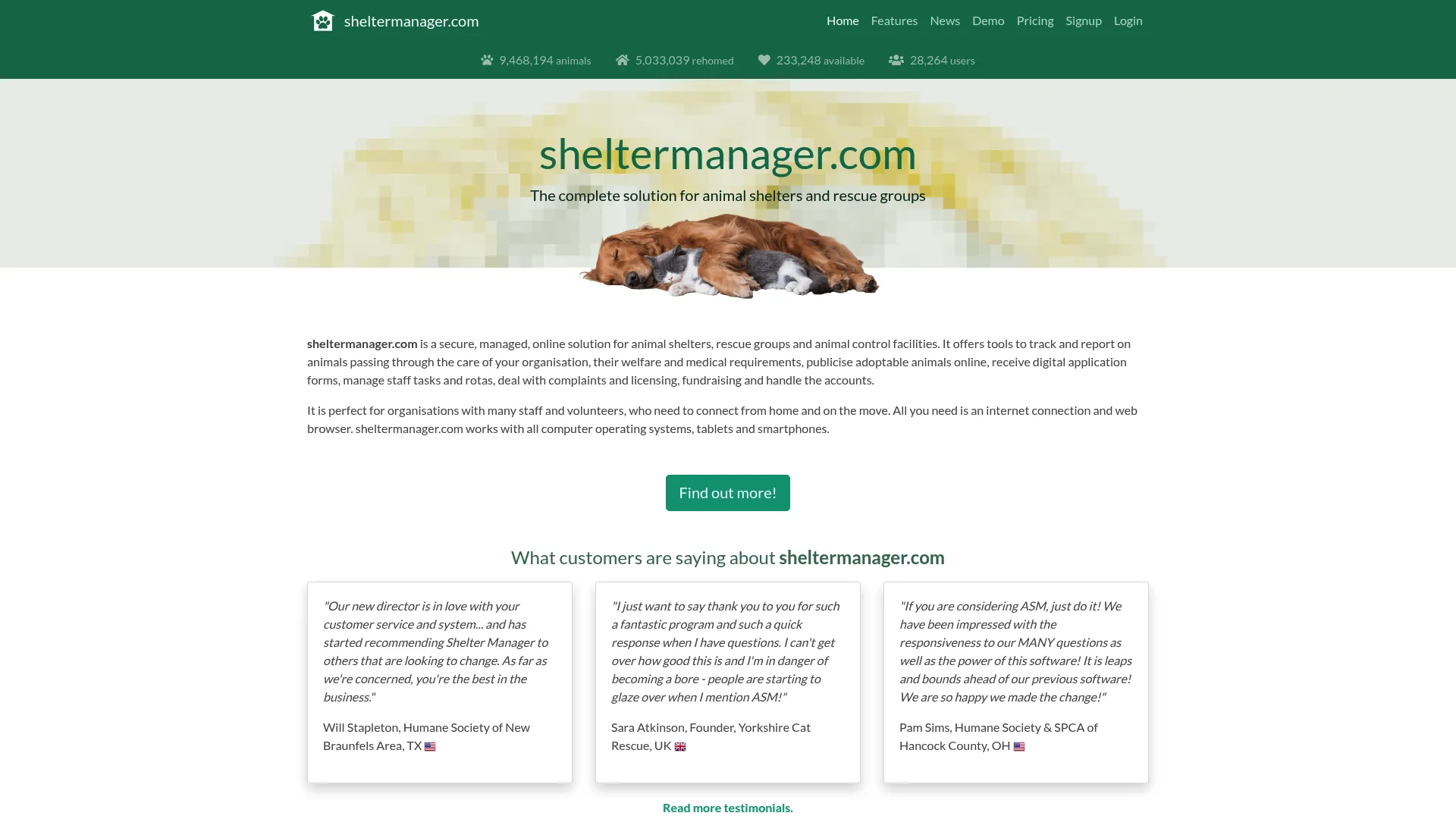
Animal Shelter Manager is hosted and open-source software for animal shelters, rescues, and animal control facilities. It covers the full animal lifecycle, from intake and movements to outcomes, alongside medical, diary, and task management. It also generates documents and publishes adoptable animals directly to an adoption website.
What sets it apart is transparency. Where most vendors gate pricing behind a sales call, Animal Shelter Manager publishes its rates and offers a hosted subscription or a self-hosted open-source path. For a founder who wants to know the cost before booking a demo, that clarity matters.
Best for: Shelters and rescue groups that want hosted shelter management software with published pricing and an open-source option.
Key strengths
- Animal intake, movements, and outcomes tracking
- Medical, diary, and task management
- Document generation and adoption website publishing
Why choose Animal Shelter Manager: It gives you full intake-to-outcome coverage without a quote-request wall, and the open-source route suits teams with technical capacity who want to self-host. That combination of breadth and price transparency is rare in this category.
Pricing: One hosting subscription billed at $130 per 3 months, $220 per 6 months, or $395 per 12 months. Longer terms cost less per month, and all software features are included at every term. No free tier.
2. Petstablished
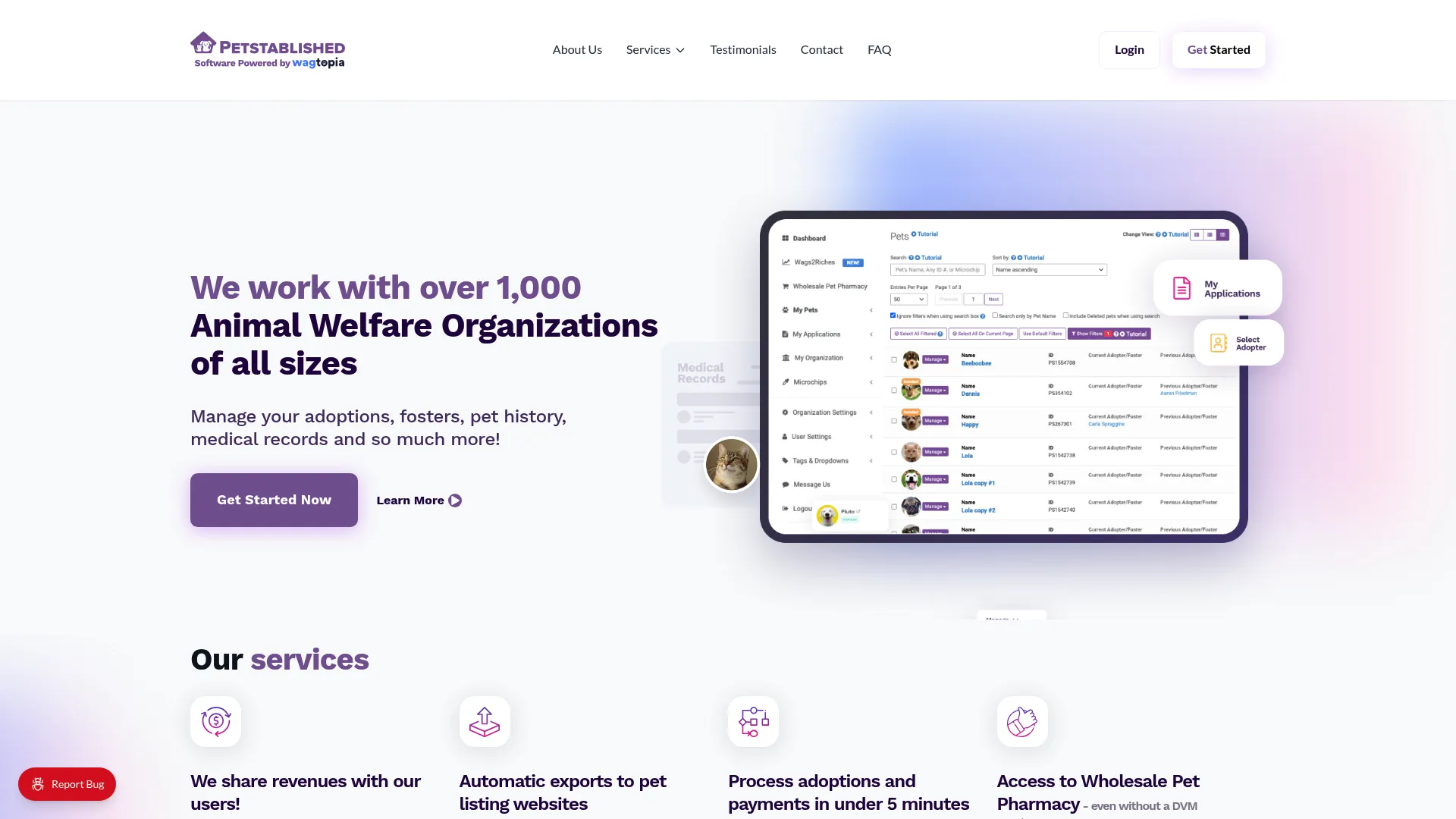
Petstablished is web-based animal welfare management software for shelters and rescues. It handles medical records, application processing, and data distribution through exports and iFrame or API embeds. That embed capability makes it a strong fit for organizations that want adoptable animals showing up on their own website without manual updates.
The adoption-first design shows in the workflow. Applications, medical records, and public listings connect, so a coordinator moving an animal from intake to adoption is not copying data between tools.
Best for: Animal shelters and rescues that need adoption, foster, and medical-record management in one web-based system.
Key strengths
- Medical records tracking
- Application processing
- Exports and iFrame/API embeds
Why choose Petstablished: If adoption syndication and application handling are your daily bottleneck, the embed and export tools reduce manual data entry. The organization gets free access to the software, which lowers the barrier for smaller rescues weighing their first system.
Pricing: Organizations get free access to the software. A one-time $17.99 fee applies for microchip registration through the microchip registry. Public tiered pricing beyond that is not listed.
3. RescueGroups
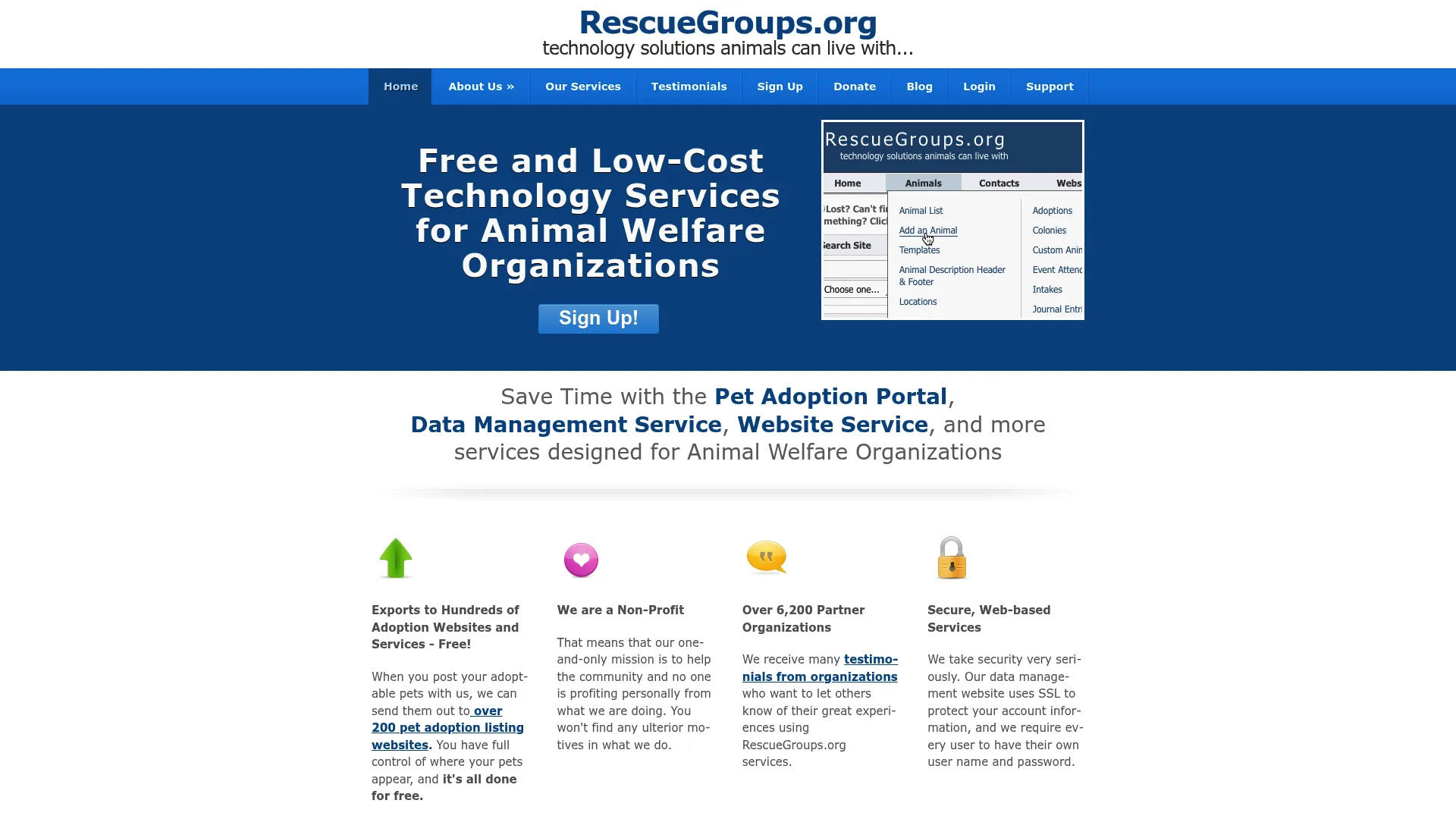
RescueGroups is a nonprofit animal welfare software and web services platform for rescues and shelters. It offers a free Pet Adoption Portal for animal listing and distribution, plus paid data management, website, and online forms services. This modular structure lets you start free and add services as you grow.
For a cash-conscious rescue, the pricing model is the draw. The free portal handles animal management and listing distribution, and the paid services layer on adoption, medical, and contact tracking, customizable web pages, online applications, and photo galleries.
Best for: Animal rescues and shelters that need free or low-cost intake, animal listing, and website tools.
Key strengths
- Free Pet Adoption Portal with listings distribution
- Data Management Service with adoption and medical tracking
- Website Service with online applications and photo galleries
Why choose RescueGroups: You can run core operations on the free portal and pay only for the services you actually need. That pay-as-you-grow structure fits volunteer-run rescues that cannot commit to a flat monthly fee on day one.
Pricing: Pet Adoption Portal is free. Data Management Service is $75/year, Website Service is $100/year, and Online Forms Service is $59/year. A free three-month trial covers the website and data management services.
4. ShelterBuddy
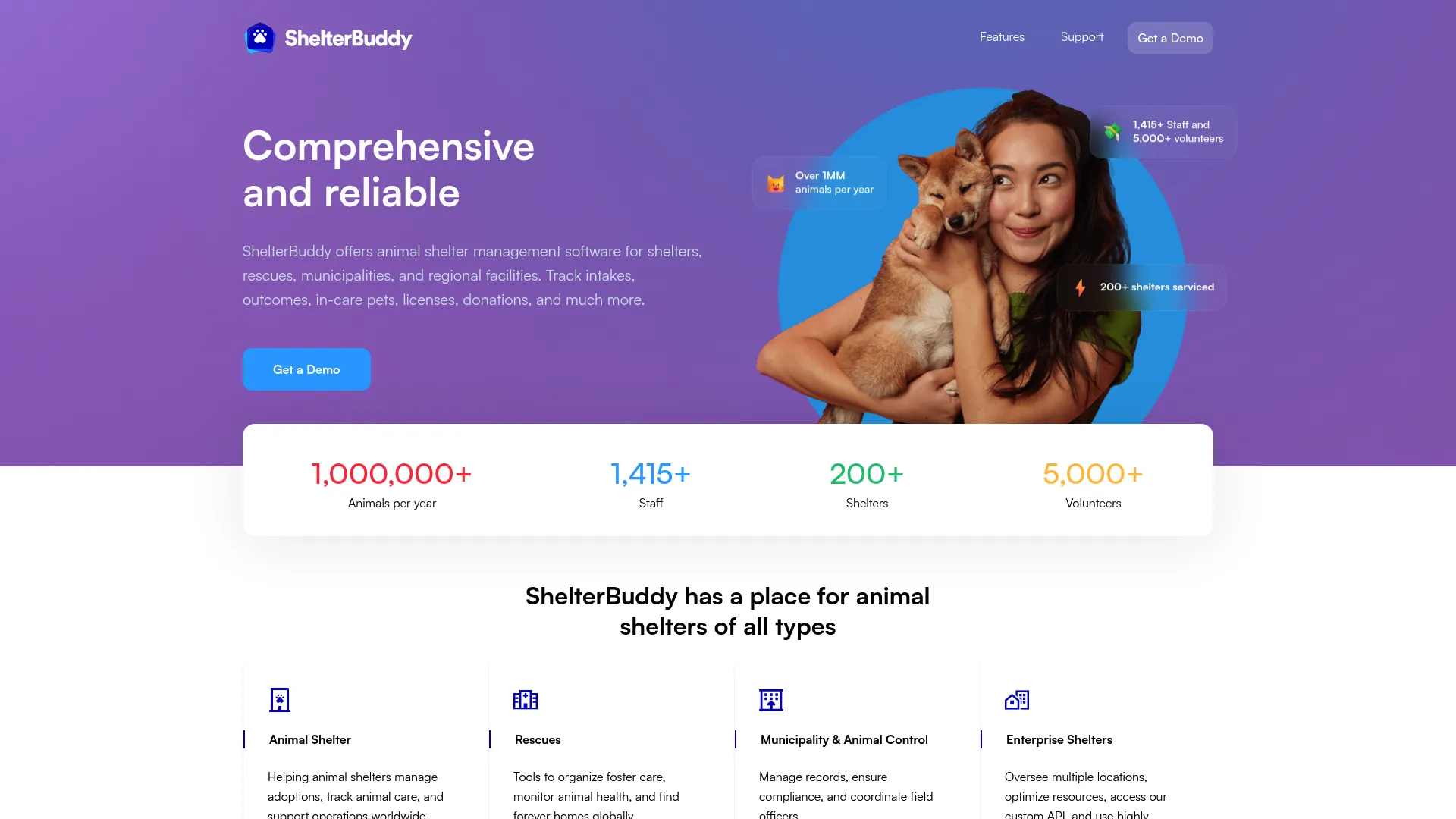
ShelterBuddy is animal shelter management software for shelters, rescues, municipalities, and regional facilities. It tracks intakes, outcomes, in-care pets, licenses, and donations through centralized animal record management. Three plans, Express, Pro, and Gold, scale with reporting depth, API access, and multi-location support.
The tiered structure is built for organizations that grow into more complex operations. A regional facility juggling licensing, donations, and multiple sites gets the reporting and integration depth larger operations need without buying enterprise scope on day one.
Best for: Animal welfare organizations and municipalities that need shelter operations and record management at multiple sites.
Key strengths
- Intake, outcome, in-care, license, and donation tracking
- Centralized animal record management
- Express, Pro, and Gold plans with reporting, API, and multi-location support
Why choose ShelterBuddy: The plan tiers let you match spend to scale, and the donation and licensing tracking suit municipal and regional operations that direct-adoption tools do not cover. It rewards organizations planning for growth.
Pricing: ShelterBuddy lists Express, Pro, and Gold plans. Pricing is provided through a demo or call and finalized on a signed order rather than published on the site.
5. PetPoint
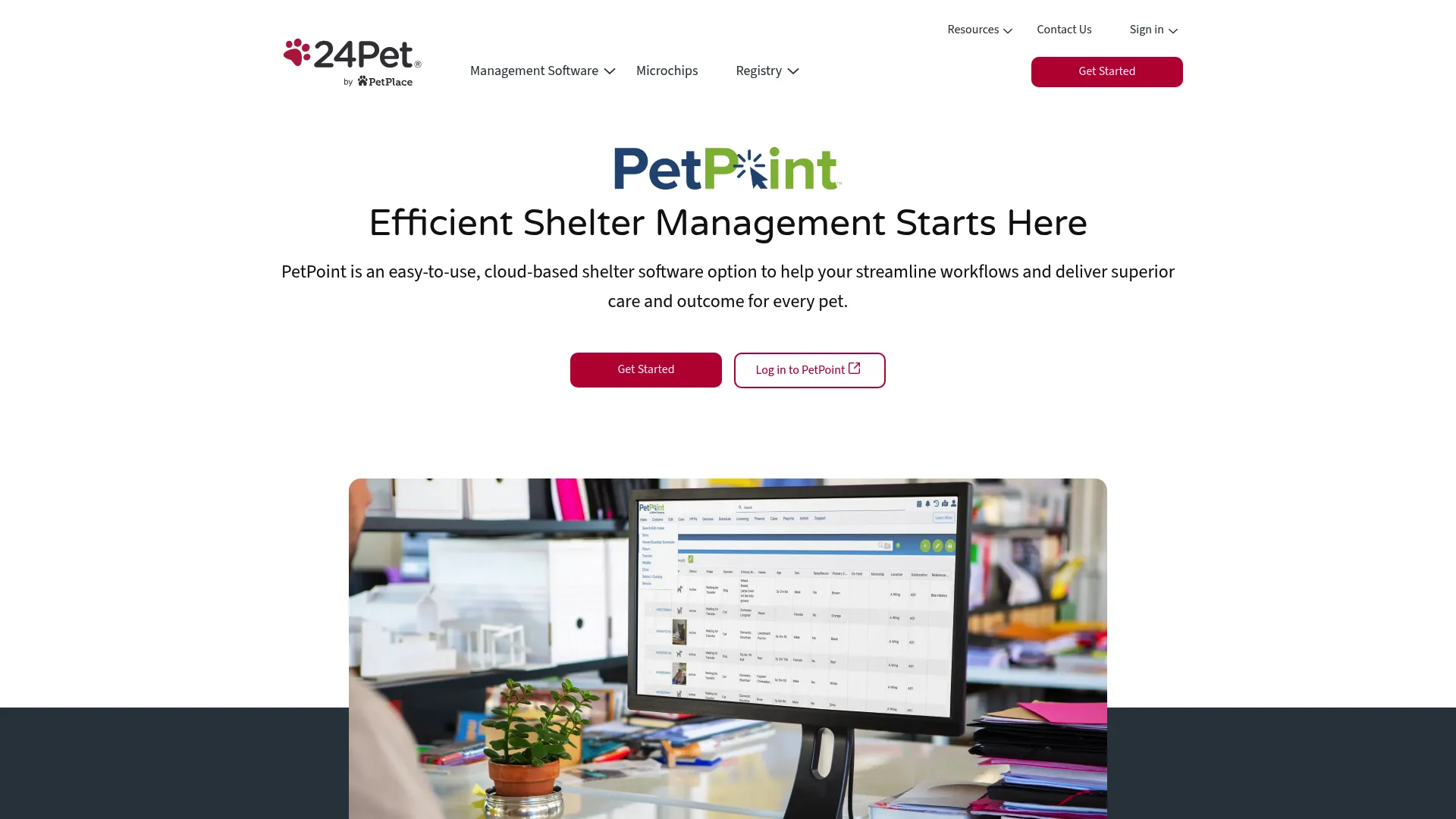
PetPoint is cloud-based shelter management software for animal welfare organizations. It covers animal intake and kennel management, medical care and adoption workflows, and pet inventory management, with built-in access to the 24Petwatch microchip registry. The cloud-first design means no local install and access from any connected device.
The microchip registry integration is the standout. For shelters that microchip on intake or adoption, having the registry inside the same system removes a separate step and a separate login.
Best for: Shelters and municipalities that need cloud operations with workflow, reporting, and integration support.
Key strengths
- Animal intake and kennel management
- Medical care and adoption workflows
- Pet inventory management with 24Petwatch registry access
Why choose PetPoint: If you want cloud access without managing infrastructure and you already work with 24Petwatch microchips, the built-in registry access keeps that workflow in one place. It also folds in exclusive discounts through the Advantage Program.
Pricing: PetPoint uses custom pricing and is not published on the product page. The site notes exclusive discounts available through the Advantage Program.
6. Pawlytics
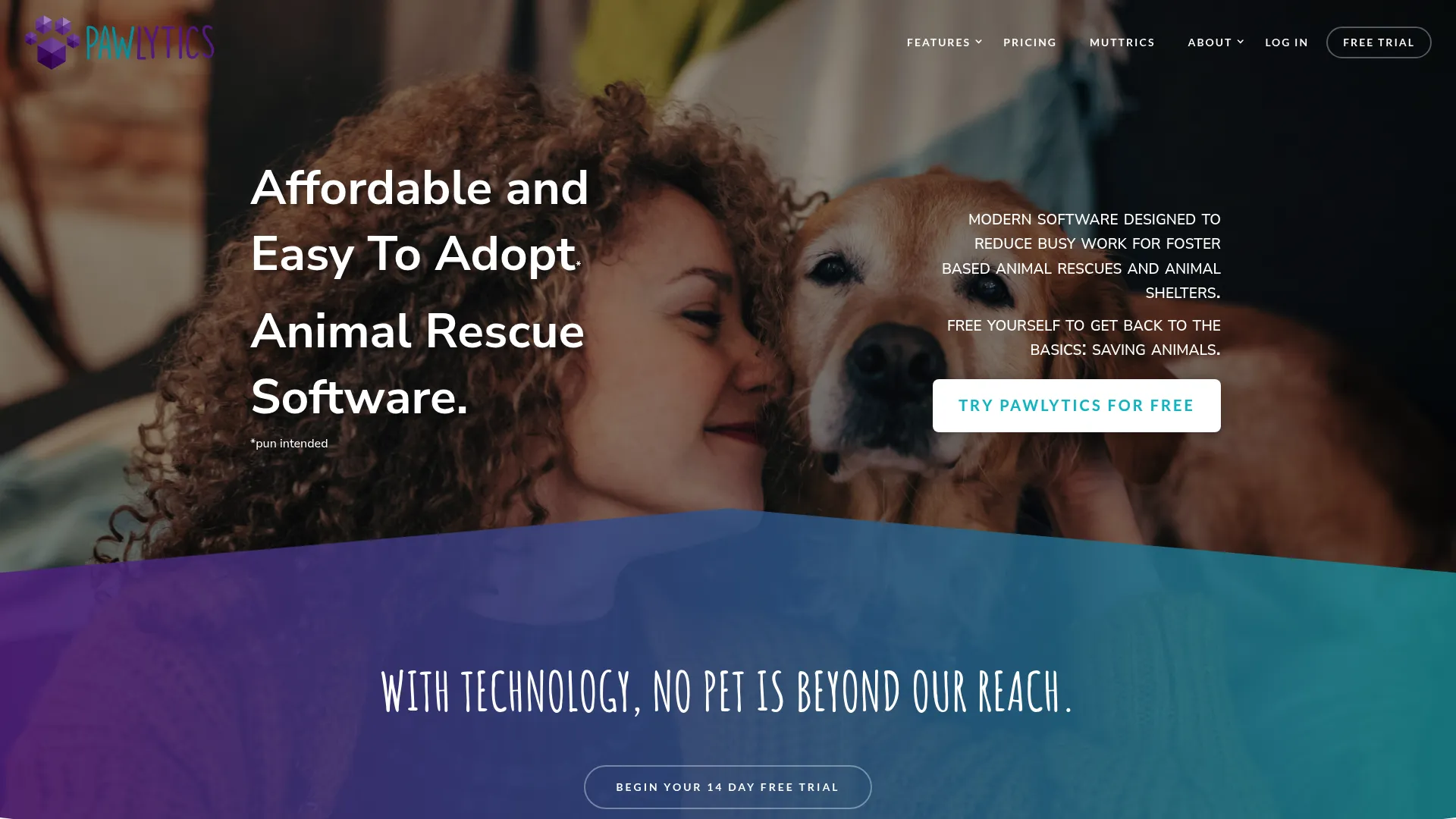
Pawlytics is animal rescue and shelter management software built around centralized intake-to-outcome operations. It handles pet record management, custom forms and applications, and includes unlimited users on every plan. Pricing scales with adoption volume rather than seat count, which suits volunteer-heavy teams.
The unlimited-users model is a practical advantage. Rescues run on volunteers who come and go, and per-seat pricing punishes that. Pawlytics charges by adoption volume instead, so adding a foster coordinator or an intake volunteer costs nothing extra.
Best for: Animal rescues and shelters that need centralized intake-to-outcome operations without per-user fees.
Key strengths
- Pet record management
- Custom forms and applications
- Unlimited users on every tier
Why choose Pawlytics: Volume-based pricing plus unlimited users fits rescues that scale volunteer participation up and down. All features are included at every tier, so you are not locked out of core tools on a starter plan.
Pricing: Small (0 to 24 adoptions and contracts) is $29/month, Medium (25 to 49) is $49/month, and Large (50+) is $1 per adoption and contract per month. All features are included, with a 14-day free trial.
7. Chameleon
Chameleon is animal sheltering software and related services for animal control agencies, humane societies, SPCAs, and other shelter organizations. Its integrated case management covers shelter management, licensing, field operations, cashiering, and veterinary record-keeping, with mapping, barcoding, automation, and reporting built in.
The depth here targets complex operations. Animal control agencies that handle field cases, licensing, and cashiering alongside sheltering get one system instead of several, plus companion products for web licensing, mobile use, email and text communications, pet listings, and data entry.
Best for: Animal control agencies and large humane societies that need integrated case management with field operations.
Key strengths
- Case management across sheltering, licensing, field operations, cashiering, and vet records
- Integrated mapping, barcoding, automation, and reporting
- Companion products for web licensing, mobile, and communications
Why choose Chameleon: For agencies with field officers and municipal responsibilities, the field operations, licensing, and cashiering coverage handles work that adoption-focused tools do not. It carries a 4.4/5 rating on G2.
Pricing: Chameleon uses custom pricing. The site directs prospects to contact sales or request a quote rather than publishing numbers.
8. Doobert
Doobert is animal welfare software for shelters, rescues, and foster programs. Its case management supports unlimited case creation, email and two-way texting, workflows, templates, and macros. Customizable reporting draws on over 50 reportable fields, and Doobert Connect adds 24/7 foster support with veterinary triage and ticket tracking.
The foster support layer is what distinguishes it. Foster networks live or die on communication, and two-way texting plus Doobert Connect's triage help keep fosters supported rather than stranded when a placement runs into trouble.
Best for: Shelters and rescues that need case management, foster coordination, and communication tools in one place.
Key strengths
- Case management with unlimited cases, two-way texting, workflows, and macros
- Customizable reporting with over 50 reportable fields
- Doobert Connect foster support with veterinary triage and ticket tracking
Why choose Doobert: If foster coordination and communication are central to your operation, the texting, workflows, and Connect triage handle the day-to-day gaps that generic shelter tools leave open. A free tier lets you test the fit before committing.
Pricing: Forever Free plan available. Doobert Elite is $99 per month and Doobert Pro is $149 per month. Doobert Connect daily plans and program bundles are offered separately.
Considerations
Before you commit, work through these criteria against your actual operations, not a feature checklist.
Workflow fit by organization type
A municipal animal control agency, a foster-based rescue, and a large humane society run different workflows. Match the tool to yours: field operations and licensing point toward Chameleon or ShelterBuddy, while foster coordination points toward Doobert or Pawlytics. Adoption-first shelters do well with Petstablished or Animal Shelter Manager.
Medical and welfare tracking depth
Look at how the system handles vaccines, treatments, medical alerts, and weight history. Shallow medical records force staff back into spreadsheets. Confirm the tool tracks the medical detail your veterinary workflow actually requires.
Pricing model and hidden costs
Shelter software pricing spans free, monthly, annual, per-adoption, and custom quote structures. Watch for onboarding fees, per-seat charges, and features gated to higher tiers. Volume-based or unlimited-user models suit volunteer-heavy teams; flat annual fees suit stable staffing.
Mobile and cloud access
If officers, fosters, or volunteers work away from a desk, cloud animal shelter software with real mobile access is not optional. Test intake and record updates on a phone before you buy.
Reporting and exports
Board reviews, grant applications, and live-release reporting all depend on clean exports. Confirm the reporting and analytics cover the metrics your funders and leadership ask for, and that you can export raw data when you need it.
Implementation and migration effort
Moving from spreadsheets or Microsoft Access takes planning. Ask about data cleanup, import support, and training. A tool with strong onboarding support saves you weeks of manual re-entry.
Conclusion
The right animal shelter software depends on your size and workflow, not on which vendor has the slickest page.
For most shelters and rescues wanting broad coverage with transparent pricing, Animal Shelter Manager is the strongest overall pick. Cash-conscious rescues should start with RescueGroups and its free portal. Foster-heavy operations get the most from Doobert or Pawlytics. Multi-location and municipal teams should look hard at ShelterBuddy and Chameleon, while PetPoint suits organizations that want cloud operations with microchip registry access. Adoption-first shelters will find Petstablished fits the applications-to-syndication flow.
Next step: shortlist two tools that match your organization type, then run a real test. Load a sample intake, attach a medical record, process a mock adoption application, and pull a report. Do it on a phone if your team works in the field. The tool that survives that test without workarounds is the one that will survive your operations.
FAQs
At minimum, look for intake and animal history, medical and welfare records, adoption workflow with application tracking, reporting and analytics, and public adoption listings. Stronger systems add foster management, volunteer coordination, donor tracking, and mobile access. The right set depends on whether you run a shelter, rescue, foster network, or animal control operation.
Pricing models vary widely. Some tools are free for organizations, like Petstablished, or offer free tiers, like RescueGroups and Doobert. Others charge monthly (Pawlytics from $29), by term (Animal Shelter Manager from $130 per 3 months), or per adoption. Larger platforms like ShelterBuddy, PetPoint, and Chameleon use custom pricing quoted after a demo. Watch for onboarding fees and per-seat charges when comparing.
Cloud-based shelter software wins on accessibility, automatic updates, and low IT overhead, which is why it now holds 54.3% of the market per Future Market Report (2024). You reach records from any device with no local install to maintain. On-premise or open-source options like Animal Shelter Manager suit teams with technical capacity who want to self-host and control their own data infrastructure.
Yes. Foster management software features like foster matching, placement tracking, applications, and volunteer coordination are core to tools built for rescues. Doobert centers foster support with two-way texting and veterinary triage, and Pawlytics handles intake-to-outcome with unlimited users for volunteer-heavy teams. Confirm the tool tracks placements and foster communication, not just kennel intake.
Some do. ShelterBuddy tracks donations alongside intake and licensing, and Animal Shelter Manager includes fundraising and accounts features. Others focus on animal operations and pair better with a dedicated donor database. If fundraising is central to your organization, confirm donor tracking depth before you buy rather than assuming it is included.
Adoption syndication to external listing sites is a common differentiator. Tools like Petstablished offer exports and iFrame or API embeds to push adoptable animals to your website and external platforms, and RescueGroups distributes listings through its Pet Adoption Portal. Confirm which specific external sites a tool syndicates to before committing.
The main work is data cleanup before import: deduplicating records, standardizing fields, and closing out stale entries. Most vendors offer import support and onboarding, so ask what the migration path looks like and whether training is included. Budget time for cleanup, and test the import with a sample batch before moving everything.
Small shelters and rescues should prioritize simplicity, low or predictable cost, and core workflow coverage over enterprise features. RescueGroups lets you start on a free portal, Doobert offers a Forever Free tier, and Pawlytics keeps costs low with volume-based pricing and unlimited users. Pick the tool that covers intake, medical, and adoptions cleanly without charging for scope you will not use.