
Your requirements live in six places right now. A spec doc in Google Drive. A backlog in Jira. Acceptance criteria buried in Slack threads. A stakeholder's edits in a spreadsheet nobody merged back. And the "final" version that turned out not to be final.
Then a requirement changes. Nobody knows which downstream tests, tickets, or approvals it touched. Engineering builds against a stale version. QA tests against another. The result is rework, scope creep, and a launch that slips because two teams were reading two different truths.
That gap is what requirements management software closes. The global market sat at USD 2.1 billion in 2025 and is forecast to reach USD 4.0 billion by 2034 at an 8.2% CAGR, according to MarketIntelo (2025). The reason is unglamorous: over 68% of software development teams in mid-to-large organizations had already implemented requirements management tools by 2023 to manage growing complexity, per Global Growth Insights (2024).
This guide ranks eight tools, defines the category, and gives you a selection framework built around requirements traceability, version control, and stakeholder collaboration, not vendor gloss.
What's inside
This guide is for product managers, systems engineers, QA leads, and engineering leaders comparing a requirements management system to replace spreadsheet workflows or an aging tool.
We picked these requirements management tools on four criteria that actually predict fit:
- Traceability depth: how well the tool links requirements to tests, changes, and releases
- Collaboration and approvals: comments, review cycles, and controlled sign-offs
- Version control and baselines: history, snapshots, and change management
- Ecosystem fit: integrations with Jira, Azure DevOps, and test tools
TL;DR
- Best for enterprise traceability: Jama Connect
- Best for broader lifecycle management: IBM Engineering Requirements Management
- Best for regulated teams and ALM workflows: Siemens Polarion
- Best for DevOps-connected teams: Modern Requirements4DevOps
- Best for structured review and test workflows: codeBeamer ALM
- Best for teams already in Atlassian: Jira Service Management
- Best for formal requirements governance: Rational DOORS Next
- Best for lighter, focused teams: SpecSync
The right pick depends on how deep your traceability needs run and how much governance your stakeholders demand.
What requirements management software is
Requirements management software is a system that centralizes how teams capture, review, approve, trace, version, and control changes to product or system requirements across the lifecycle.
Instead of scattered docs and spreadsheets, it gives you a single source of truth where every requirement has an owner, a status, a history, and links to the work it drives. It replaces "which version is current?" with a definitive answer.
Core capabilities most buyers evaluate:
- Requirements elicitation and capture: structured intake of needs from stakeholders, interviews, and documents
- Traceability matrix: a live map linking requirements to tests, changes, risks, and downstream artifacts
- Version control and baselines: snapshots of the requirement set at a point in time, with full change history
- Approvals and reviews: comment threads, review cycles, and formal sign-offs with controlled edit access
- Audit trail: a record of who changed what, when, and why, for governance and compliance
- Impact analysis: the ability to see what breaks downstream when a requirement changes
- Lifecycle traceability: end-to-end linking from initial requirement through design, build, test, and release
The category overlaps with ALM (application lifecycle management) but is narrower. Requirements management owns the requirement layer; ALM wraps requirements, development, testing, and release into one broader system.
Why it matters for product teams
Ambiguity is expensive, and it compounds. A vague requirement that reaches engineering becomes a wrong build, then a failed test, then a rework cycle that eats a sprint.
Good requirements governance kills that ambiguity before code gets written. Product managers care about version history because it answers the hardest mid-project question: what did we agree to, and what changed since? Impact analysis answers the second hardest: if we change this, what else moves?
That translates to roadmap confidence, tighter stakeholder alignment, and fewer surprises at launch. When a requirement changes, you see the blast radius instead of discovering it in production.
Requirements management vs spreadsheets and docs
Most teams start in spreadsheets. They work until the number of contributors, versions, and comments crosses a line. Here is the practical contrast.
| Capability | Spreadsheets and docs | Requirements management system |
|---|---|---|
| Collaboration | Comments, but no controlled edit access | Review cycles, roles, and sign-offs |
| Traceability | Manual links that rot fast | Live traceability matrix to tests and changes |
| Approvals | Ad hoc, hard to enforce | Formal approvals with an audit trail |
| Searchability | Limited across many files | Central, queryable single source of truth |
| Version history | "final_v3_FINAL.xlsx" | Baselines and full change history |
Spreadsheets are fine for a five-requirement project. They stop scaling the moment traceability and approvals become the bottleneck.
When to use requirements management software
When teams are outgrowing spreadsheets
The tipping point is usually people, not requirements count. Once you have multiple contributors editing the same set, versions fork. Someone's edit gets lost. Two requirements quietly contradict each other, and nobody notices until a build fails.
If you cannot answer "who owns this requirement and which version is live?" in ten seconds, you have outgrown the spreadsheet.
When requirements must stay traceable
Some environments make traceability non-negotiable. Regulated industries need to prove a requirement maps to a test that passed and a change that was approved. Complex products with thousands of interdependent requirements need impact analysis to survive.
If an auditor or a safety reviewer could ever ask "show me the trace from this requirement to its verification," you need requirements traceability built in, not bolted on.
When cross-functional approvals slow delivery
Requirements touch product, design, engineering, QA, and business stakeholders. When sign-offs happen over email and Slack, ambiguity creeps back in and delivery slows.
Structured review workflows and formal approvals compress that. Everyone reviews the same version, comments in one place, and signs off on the record. The handoff to engineering carries less ambiguity and fewer "wait, I never agreed to that" moments.
Comparison table
We ranked these tools by how directly they serve traceability, version control, collaboration, and governance, weighted toward the needs of product and engineering teams managing complex or regulated requirements. Pricing for most enterprise tools in this category is quote-based, so we note that where public numbers are not published.
| # | Product | Best for | Key differentiator | Pricing | G2 rating |
|---|---|---|---|---|---|
| 1 | Jama Connect | Enterprise traceability | Live traceability with AI requirements quality | Request pricing | 4.3/5 |
| 2 | IBM Engineering Requirements Management | Broader lifecycle management | Traceability plus configuration and variant management | Request pricing | Not listed |
| 3 | Siemens Polarion | Regulated ALM workflows | Granular traceability in a full ALM platform | Request pricing | 4.2/5 |
| 4 | Modern Requirements4DevOps | DevOps-connected teams | Requirements native to Azure DevOps | Request pricing | 4.8/5 |
| 5 | codeBeamer ALM | Structured review and test | End-to-end traceability across requirements, risk, tests | Request pricing | 4.3/5 |
| 6 | Jira Service Management | Atlassian-native intake | Request and change workflows in the Atlassian stack | Free, then $20/agent/mo | 4.3/5 |
| 7 | Rational DOORS Next | Formal governance | AI-assisted traceability and baselines | Request pricing | Not listed |
| 8 | SpecSync | Lighter, focused teams | Streamlined, automation-first workflow | First project free, then $2/project | Not listed |
Best 8 requirements management software for 2026
1. Jama Connect
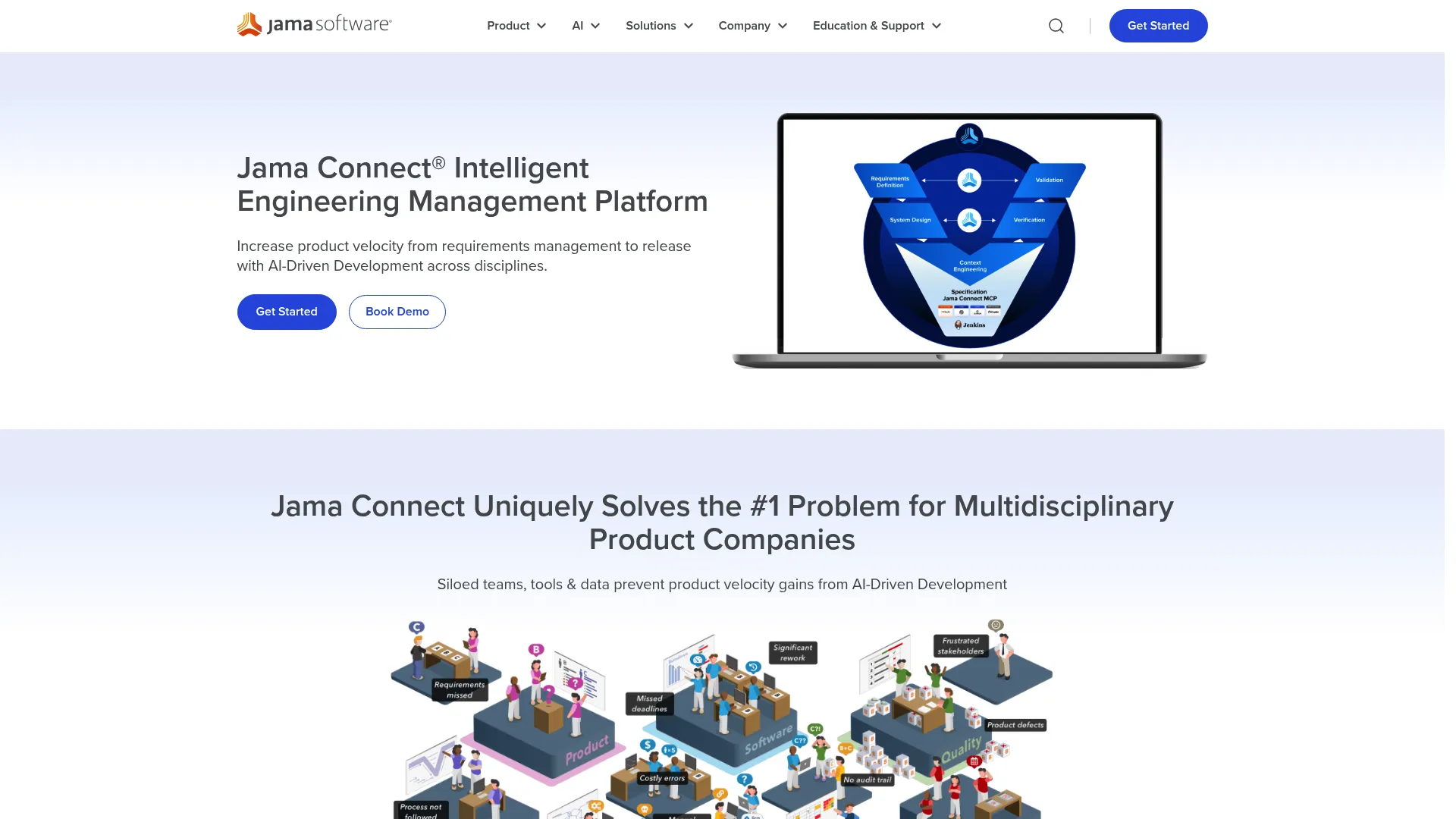
Jama Connect is an AI-powered engineering management platform built for requirements, tests, traceability, risk, and compliance. It is the tool teams reach for when the requirement set is large, interdependent, and subject to review. The differentiator is Live Traceability, which keeps the link between requirements, tests, and downstream artifacts current as things change, so impact analysis stays honest.
Best for: Teams managing complex requirements, traceability, testing, risk, and compliance workflows.
Key strengths
- Live Traceability across requirements, tests, and artifacts
- Requirements Quality checks powered by AI
- Test case generation powered by AI
- Review workflows and formal approvals
- Risk and compliance management support
Why choose Jama Connect: If your organization gets audited or ships safety-relevant products, the traceability and review depth pay for themselves in fewer rework cycles and cleaner compliance evidence. It fits systems engineering and product teams who cannot afford a broken trace.
Jama Connect pricing: Public numeric pricing is not shown; the pricing page directs you to request pricing. Jama discloses four license types, Creator, Stakeholder, Reviewer, and Test Runner, and notes no charge for hosting, reviewers, file storage, and a hosted sandbox.
2. IBM Engineering Requirements Management
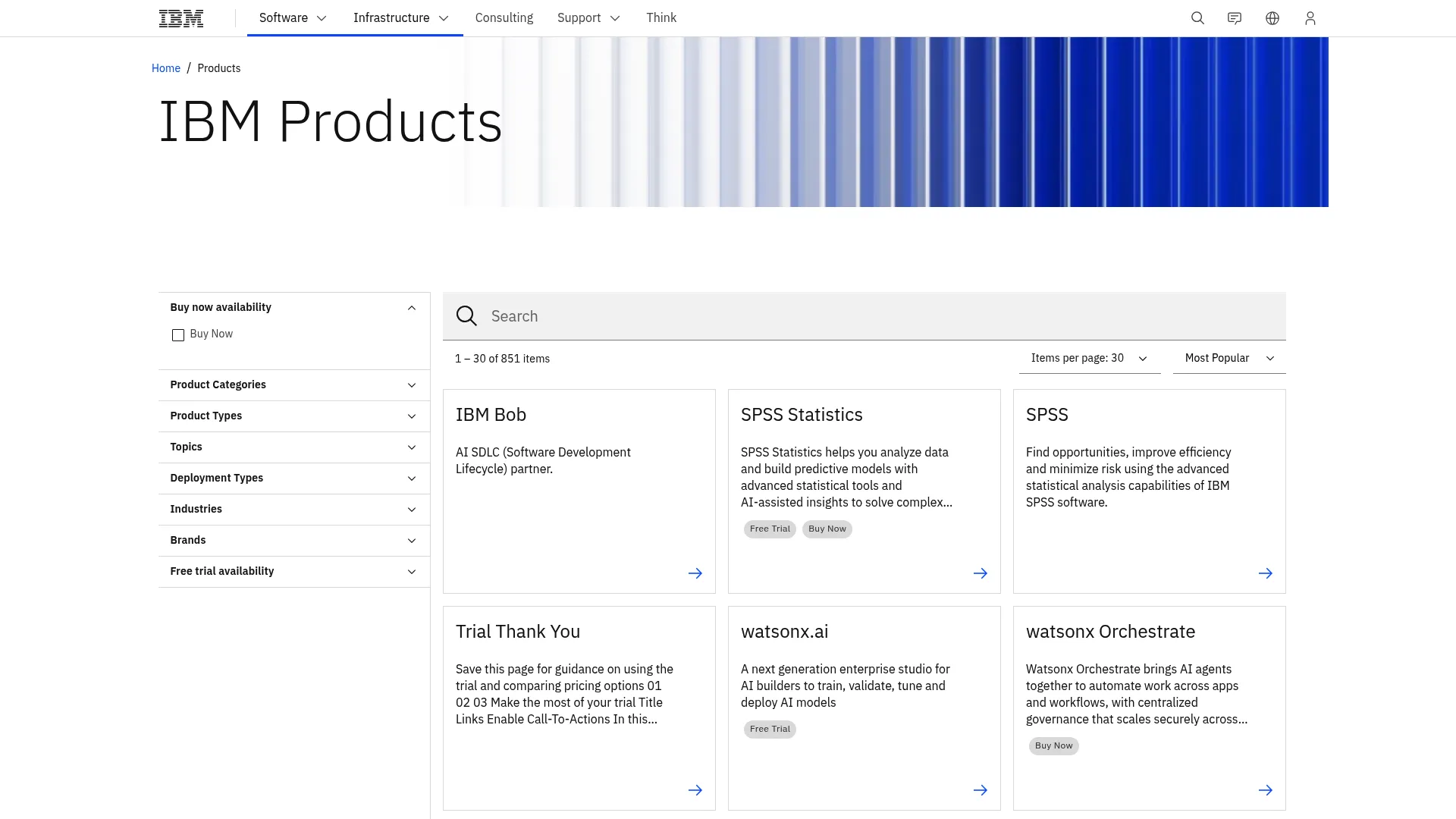
IBM Engineering Requirements Management captures, traces, reviews, and manages complex product requirements across the lifecycle. It is built for regulated engineering teams working on products and systems where lifecycle traceability and configuration control are table stakes. IBM pairs requirements with AI automations and variant management, which matters when one requirement set feeds many product configurations.
Best for: Regulated engineering teams managing traceable requirements for complex products and systems.
Key strengths
- AI automations for requirements work
- Full lifecycle traceability
- Configuration and variant management
- Reviews, metrics, and baselines
- APIs for integration into a broader toolchain
Why choose IBM Engineering Requirements Management: Choose it when requirements are one part of a large engineering program and you need them to sit inside a broader IBM Engineering ecosystem. The scale and variant handling suit aerospace, automotive, and other complex-systems work.
IBM Engineering Requirements Management pricing: IBM does not publish public numeric pricing on its product page. Contact IBM for a quote based on deployment and user needs.
3. Siemens Polarion
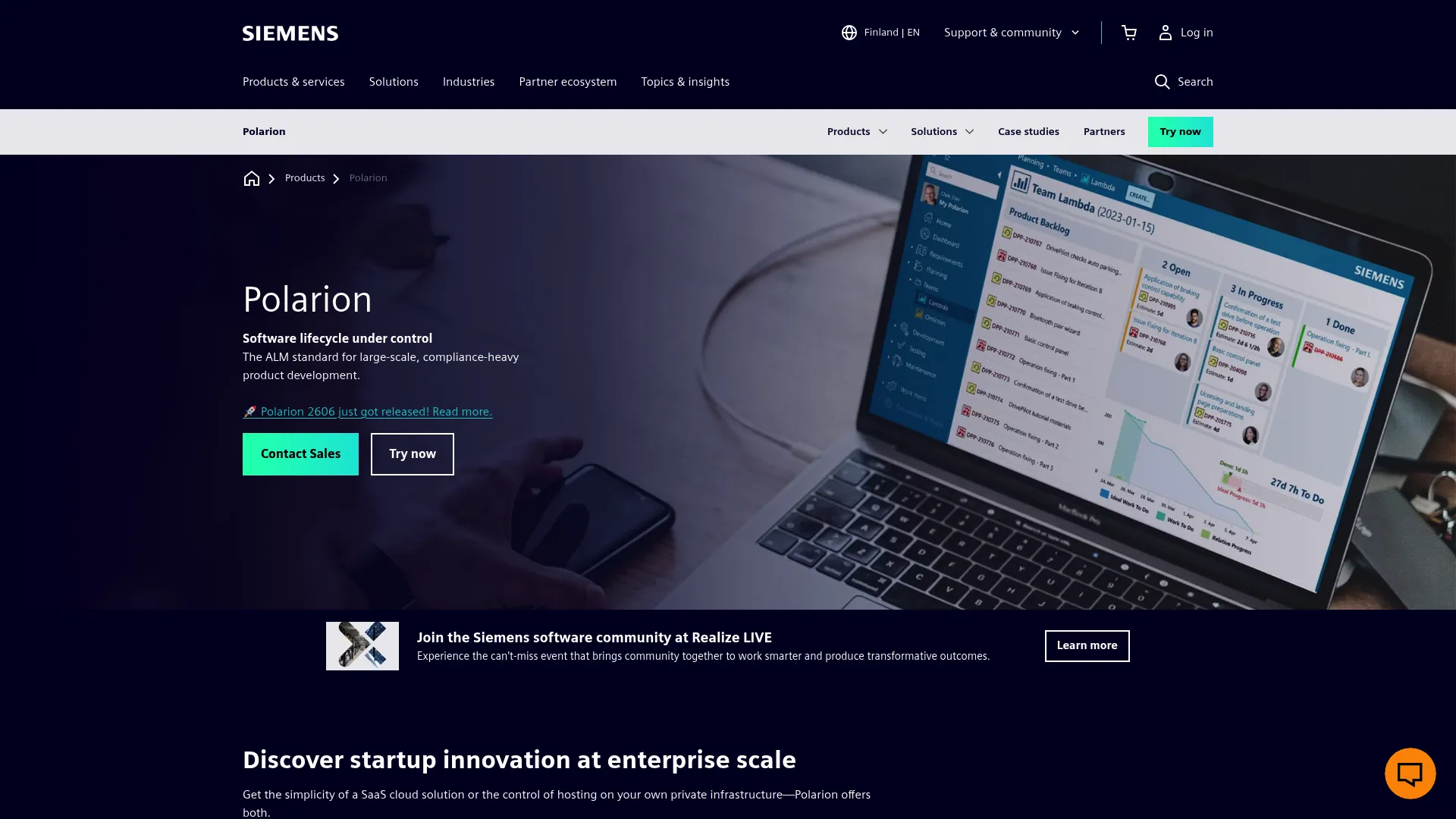
Siemens Polarion is an application lifecycle management platform covering requirements, testing, traceability, and collaboration in one system. It is strong for engineering-heavy teams that want requirements, change control, and verification under one roof rather than stitched across tools. Granular traceability is the standout, giving teams precise links between requirements and everything they touch.
Best for: Large, compliance-heavy teams needing ALM and requirements traceability.
Key strengths
- Granular traceability across the lifecycle
- Secure collaboration for distributed teams
- Advanced reuse of requirements and artifacts
- Change control and baselining
- Full ALM coverage beyond requirements alone
Why choose Siemens Polarion: Pick it when you want an ALM platform, not just a requirements tool, and your team is willing to invest in configuring it to a rigorous process. It rewards regulated product development where traceability and reuse compound over many projects.
Siemens Polarion pricing: Siemens does not publicly display numeric pricing on its licensing page; it directs buyers to contact Siemens Digital Industries Software for a quote.
4. Modern Requirements4DevOps
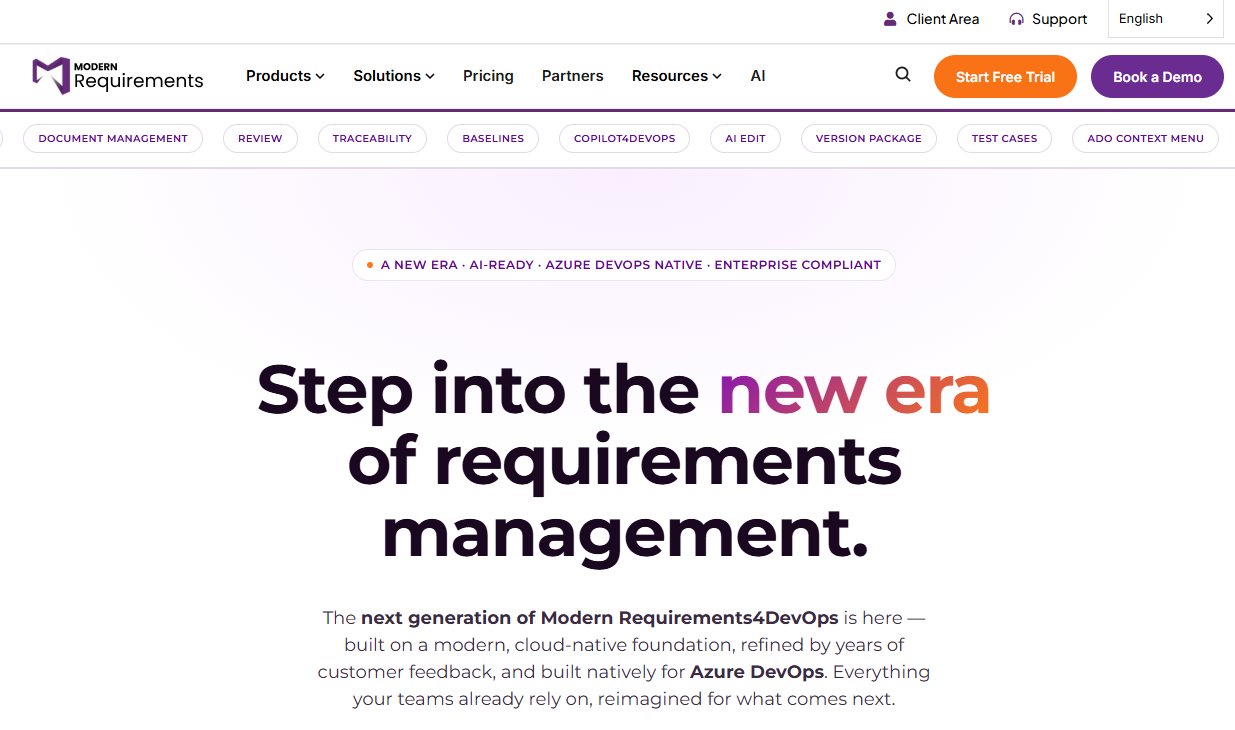
Modern Requirements4DevOps brings requirements authoring, traceability, reviews, baselines, and reporting directly into Azure DevOps. For teams that live in Azure DevOps, it removes the tool-switching tax by keeping requirements in the same place as delivery work. Smart Docs turn requirements into living documents inside the platform, and traceability heatmaps make gaps visible.
Best for: Enterprise teams managing regulated requirements directly in Azure DevOps.
Key strengths
- Smart Docs living requirement documents in Azure DevOps
- Bidirectional traceability with heatmap and matrix analysis
- Review workflows, baselines, and document generation
- Report generation from live requirement data
- AI-assisted authoring in higher tiers
Why choose Modern Requirements4DevOps: If Azure DevOps is already your system of record, this keeps requirements, traceability, and delivery aligned without exporting to a separate tool. That single-environment fit is the whole reason DevOps-centric teams pick it.
Modern Requirements4DevOps pricing: Four packages, Frontier, Frontier AI, Engineering, and Engineering AI, are listed with request-pricing rather than public numbers. A free trial is available.
5. codeBeamer ALM
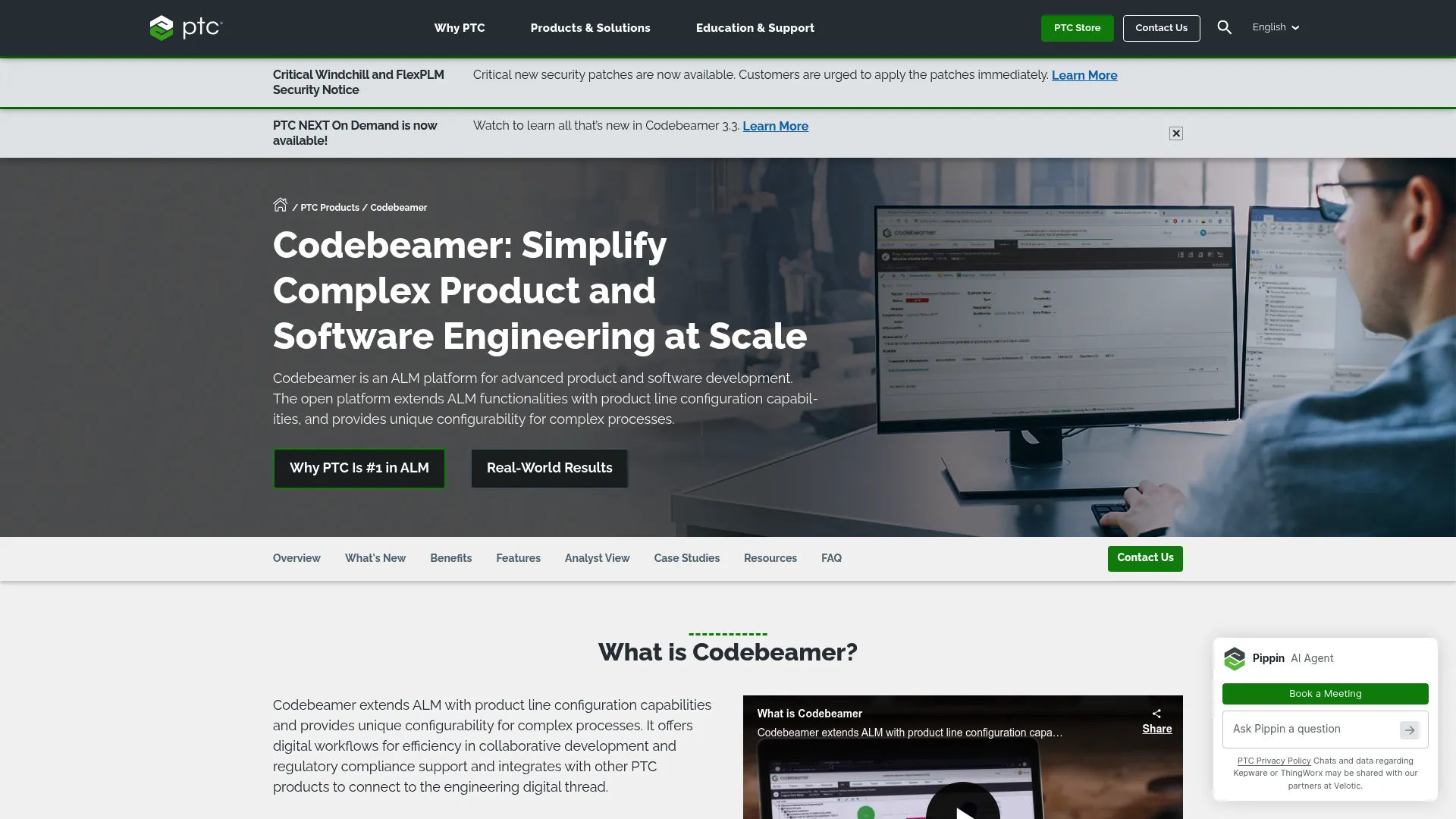
codeBeamer ALM is PTC's application lifecycle management platform for regulated, complex product and software development. It brings requirements, risk, and test management into one place, so review, verification, and release stay connected. The appeal for structured teams is end-to-end traceability with versioning and audit built into the workflow rather than added later.
Best for: Regulated engineering teams needing end-to-end traceability across requirements, risks, tests, and variants.
Key strengths
- Requirements management with versioning
- Risk management linked to requirements
- Test management for verification workflows
- Audit trail across the lifecycle
- Variant and configuration support
Why choose codeBeamer ALM: Choose it when your process spans requirements, risk, and test together and you need each linked with a defensible audit trail. It suits product and engineering teams with mature, structured processes in regulated markets.
codeBeamer ALM pricing: PTC offers flexible licensing based on user roles and usage, with no public dollar price on the product page. PTC also notes free access to Codebeamer+ for qualifying startups through its startups program.
6. Jira Service Management
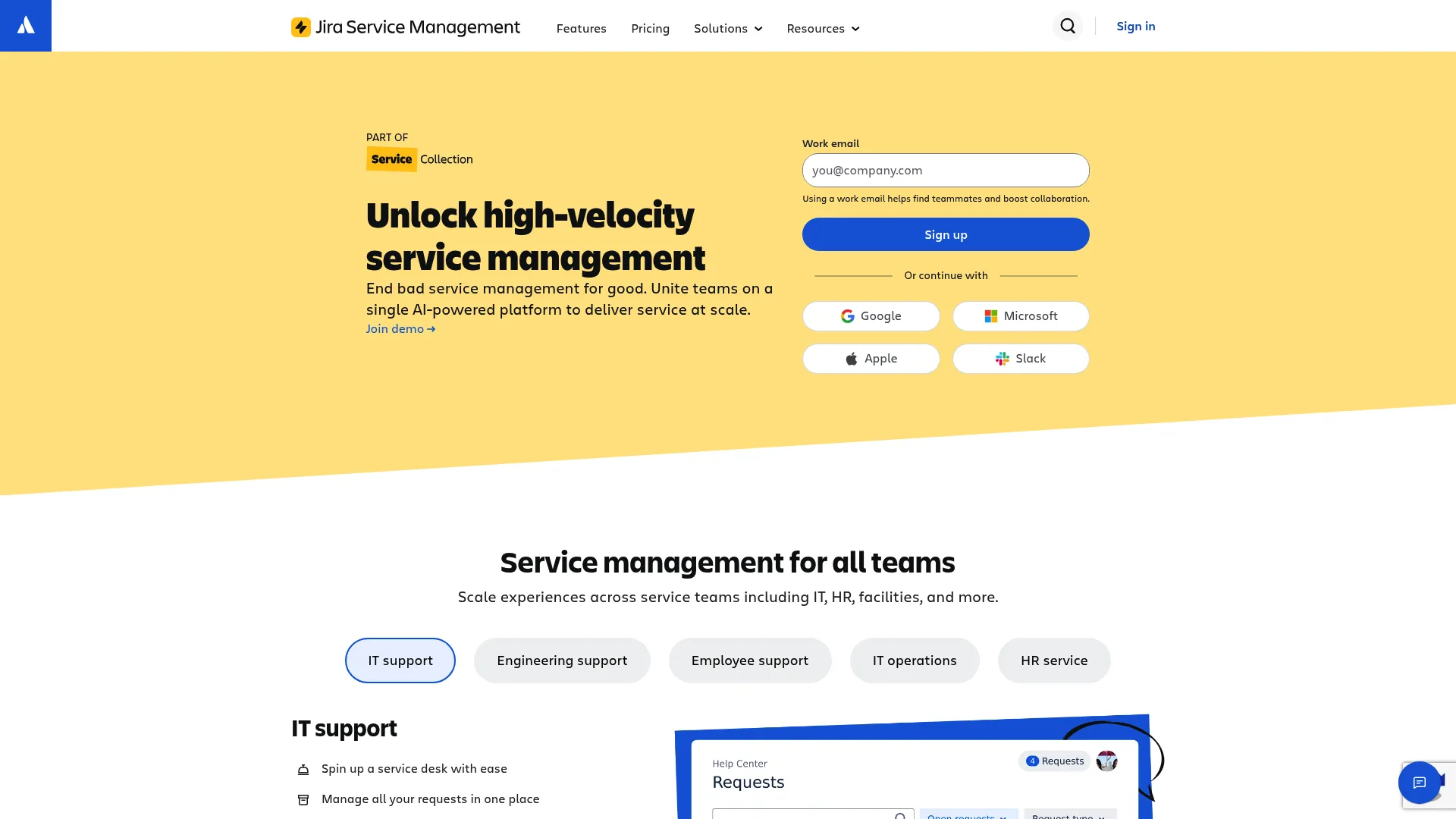
Jira Service Management is Atlassian's service management platform for ITSM and other teams. It is not a dedicated requirements tool, and it should not be framed as one. Where it fits is requirements-adjacent intake: capturing requests, routing them, and running change management workflows for teams already centralized in the Atlassian stack.
Best for: Teams needing an ITSM or service desk platform with Jira and Atlassian ecosystem integration.
Key strengths
- Request management and intake
- Incident management
- Problem and change management workflows
- Native fit with Jira and Confluence
- Approvals and workflow automation
Why choose Jira Service Management: Pick it if your requests, changes, and approvals already live in Atlassian and you want intake and change management in the same stack. Pair it with a dedicated requirements tool when you need baselines and end-to-end traceability, because those are not its focus.
Jira Service Management pricing: A Free plan covers up to 3 agents. Standard is $20 per agent per month and Premium is $51.42 per agent per month. Enterprise pricing is contact-sales only.
7. Rational DOORS Next
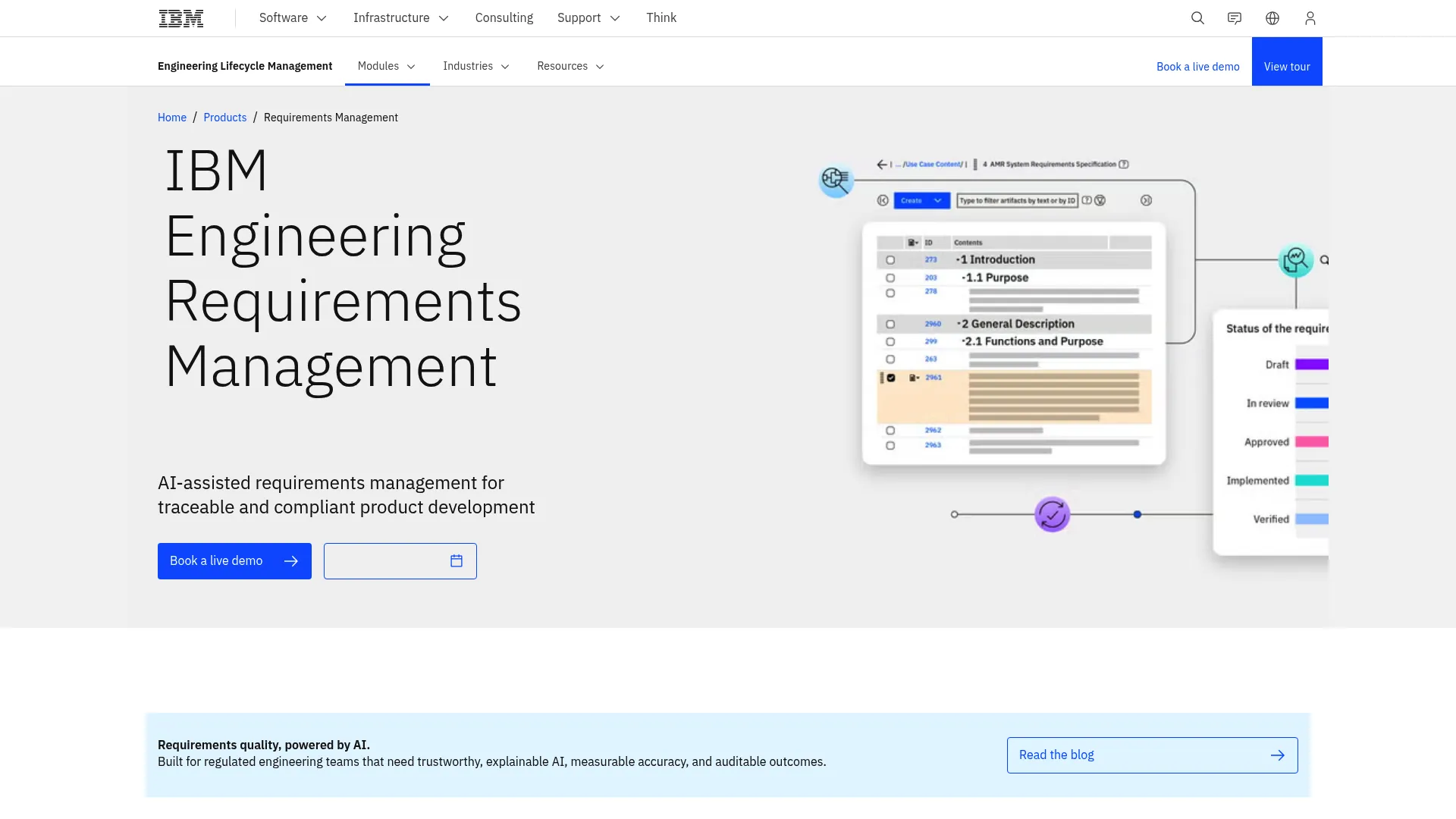
Rational DOORS Next is IBM's AI-assisted requirements management application for traceable, compliant product development. It remains a fixture in large enterprises with strict governance, where baselines, formal traceability, and configuration control are mandatory. The draw is rigor: DOORS Next was built for programs where every requirement must be tracked, versioned, and defensible.
Best for: Regulated engineering teams managing traceable requirements across complex product development.
Key strengths
- AI automations for requirements management
- Formal traceability across the lifecycle
- Configuration and variant management
- Baselines and change snapshots
- Reviews and metrics for governance
Why choose Rational DOORS Next: Choose it for large, complex programs with strict compliance mandates, especially in aerospace, defense, and automotive. It carries the governance depth those programs demand and slots into IBM's broader engineering toolchain.
Rational DOORS Next pricing: IBM does not publish numeric pricing on its product page. Contact IBM for a quote based on your deployment and user count.
8. SpecSync

SpecSync is a streamlined, automation-first tool that reads line items from documents and turns them into structured, linkable records. It suits teams that want a focused layer for capturing and connecting requirements without standing up a heavy enterprise platform. The pull is simplicity and a usage-based price that fits smaller or project-based teams.
Best for: Teams that want a lightweight, automation-first way to capture and structure requirements from documents.
Key strengths
- Reads line items from PDFs, Excel, and scans
- Parses inputs into structured records
- Drafts and sends structured requests
- Automation-first workflow with minimal setup
- Usage-based pricing with no seat fees
Why choose SpecSync: Choose it when you want to move fast on capturing and structuring requirements without committing to an enterprise contract. The per-project model makes it easy to try on a single project before scaling.
SpecSync pricing: The first project is free, then $2 per project. There is no subscription, monthly fee, seat fee, or platform charge, and volume pricing is available for high-volume use.
Considerations
Traceability depth
Check whether the tool links requirements to tests, changes, and releases, not just to each other. Shallow traceability looks fine early and gets expensive later, when a change lands and nobody can see what it breaks. A live traceability matrix that updates as requirements move is worth far more than one you maintain by hand.
Collaboration and approvals
Look for comment threads, review cycles, formal sign-offs, and controlled edit access. Stakeholder collaboration is where ambiguity either dies or survives into the build. The goal is a clean handoff to engineering where everyone reviewed the same version and signed off on the record.
Version control and baselines
Requirements change mid-project, and version control is how you keep that from becoming chaos. Confirm the tool supports baselines, change snapshots, and full history. When someone asks "what did we agree to in Q1?", a baseline answers instantly instead of triggering an archaeology dig.
Integrations and ecosystem fit
Verify integrations with Jira, Azure DevOps, test management, and documentation tools. The best requirements management system is the one that fits how your team already works, not the one that forces a parallel workflow. If requirements live where delivery happens, they stay current.
Governance and reporting
Look for an audit trail, impact analysis, permissions, and status reporting. Leaders need visibility into what changed, who approved it, and what it affects. In regulated environments, that audit trail is not a nice-to-have; it is the evidence you produce when asked.
Conclusion
The right requirements management software depends on three things: how deep your traceability needs run, how much governance your stakeholders demand, and how your team already works.
For enterprise traceability with AI-assisted quality checks, Jama Connect is the strongest all-around pick. For broad lifecycle programs, IBM Engineering Requirements Management and Rational DOORS Next carry the governance depth. Siemens Polarion and codeBeamer ALM suit regulated teams that want requirements inside a full ALM platform. Modern Requirements4DevOps is the clear choice if you live in Azure DevOps, Jira Service Management fits Atlassian-native intake and change management, and SpecSync gives lighter teams a focused, low-commitment start.
Match maturity to tool. If you are outgrowing spreadsheets, start with a system that nails traceability and approvals, then layer in governance as your program grows. Run a pilot on one real project before committing, and measure it against the change-management pain you feel today.
FAQs
It centralizes how teams capture, review, approve, trace, version, and control changes to requirements. Instead of scattered docs and spreadsheets, it gives you a single source of truth where each requirement has an owner, a status, a history, and links to the tests and changes it drives.
Jira is strong for tracking work items and can hold requirements loosely. But dedicated requirements management tools go further on baselines, formal approvals, and end-to-end traceability from requirement to test to change. Many teams run Jira for delivery and a dedicated tool for the requirement layer, connected through integrations.
ALM (application lifecycle management) is the broader system that spans requirements, development, testing, and release. Requirements management is one part of that lifecycle, focused on the requirement layer specifically. Tools like Polarion and codeBeamer wrap requirements inside a full ALM platform, while others focus on requirements alone.
Prioritize traceability to tests and changes, version control with baselines, review and approval workflows, granular permissions, impact analysis, and integrations with your delivery stack. Traceability depth is usually the feature that separates a tool that scales from one that becomes a bottleneck.
Weight governance, auditability, stakeholder review workflows, and ecosystem fit above surface features. Confirm the tool produces a defensible audit trail, supports baselines and impact analysis, and integrates with the tools your teams already use. Run a pilot on a real program before signing a multi-year contract.
Yes, and most teams switch when collaboration and traceability get too hard to manage by hand. The tipping point is usually the number of contributors and versions, not the requirement count. Once edits fork and links rot, a dedicated system pays back quickly in fewer rework cycles.
A traceability matrix maps requirements to their related artifacts, such as tests, changes, risks, and design elements. It lets you see, at a glance, whether every requirement is verified and what a change would affect downstream. A live matrix that updates automatically is far more useful than one maintained manually.