

Your roadmap has 40 items on it. Sales wants three of them moved up. A board member forwarded a competitor's launch and asked "are we doing this?" Support just flagged a bug that three enterprise accounts keep hitting. And your quarterly planning doc is already two weeks out of date.
Sound familiar? The hard part of product roadmapping was never drawing the timeline. It's keeping priorities visible, defensible, and current while five stakeholder groups pull in different directions.
That's the job product roadmap software is built for. The category is growing fast because the problem is real: the global product roadmap software market reached USD 2.13 billion in 2024 and is projected to grow at a 13.7% CAGR to USD 6.61 billion by 2033, according to Growth Market Reports (2024). Teams are investing because a spreadsheet roadmap stops scaling the moment more than one team depends on it.
The right roadmap software connects prioritization to evidence, keeps every audience looking at the same plan, and updates without becoming a second full-time job. Pick wrong and you get a prettier timeline that nobody trusts.
What's inside
This guide covers the best product roadmap software for product managers in 2026. We evaluated tools on the criteria that actually matter when you own the roadmap:
- Prioritization model fit: does it support scoring, customer signal, or qualitative review the way your team actually decides
- Collaboration and roadmap visibility: audience-specific views for leadership, engineering, and adjacent teams
- Ease of maintenance: how painful it is to keep the roadmap current across frequent releases
- SaaS team fit: integrations, governance, and how it scales as the org grows
Every pick below ties roadmap decisions back to customer and business impact, not just internal presentation polish.
TL;DR
- Best for enterprise strategy and insights: Productboard connects customer feedback to prioritization and roadmaps in one operating model.
- Best for clean shared roadmaps: ProductPlan gives you portfolio views and stakeholder alignment without overcomplicating process.
- Best if you already live in Atlassian: Jira keeps roadmap planning next to delivery work for engineering-heavy teams.
- Best for mature product orgs: Aha! offers deep strategy, prioritization, and release planning across a full suite.
- Best single workspace, strategy to delivery: Craft.io pairs frameworks with prioritization and roadmap views.
- Best lightweight strategy layer: ProdPad links customer feedback to ideas to roadmap with strong traceability.
- Best inside a work management system: monday dev puts roadmapping close to sprint execution and cross-functional coordination.
What product roadmap software is
Product roadmap software is a category of product planning software that helps teams plan, prioritize, visualize, and share a product roadmap as a living system rather than a static document.
The difference matters. A static roadmap is a slide you export once a quarter and stop trusting by week two. A living roadmap system stays connected to feedback, priorities, and delivery, so when something shifts, the plan reflects it and everyone sees the change.
Core capabilities most product roadmap tools share:
- Prioritization: scoring models, customer signal, and effort-versus-impact comparison
- Roadmap visualization: timelines, now-next-later boards, portfolio and swimlane views
- Stakeholder sharing: audience-specific views and public or private roadmap links
- Feedback intake: capturing input from sales, support, CS, and research in one place
- Dependencies and release planning: milestones, sequencing, and cross-team coordination
- Progress updates: status changes, versioning, and communication back to stakeholders
Good roadmap software sits between your strategy and your delivery stack. It answers "what are we building, why, and in what order" and keeps that answer current as the product changes.
Why roadmap software matters now
Product strategy gets harder as teams and stakeholders multiply. With one PM and five engineers, a shared doc works fine. Add a second product line, a sales team quoting features to prospects, and a leadership team that wants portfolio visibility, and the doc becomes a liability.
One source of truth solves the coordination tax. When leadership, engineering, and go-to-market all read the same roadmap, you stop re-explaining the same tradeoffs in five different meetings. Decisions get faster because the context is shared.
The maintenance angle is the quiet one. A roadmap only holds trust if it's current. Software that makes updates, versioning, and communication low-effort is what keeps the roadmap alive instead of letting it rot into a document people quietly ignore.
What product managers should look for in product roadmap software
Prioritization model fit
The right tool supports how your team actually decides, not how a vendor thinks you should. Some teams run scoring models like RICE or weighted value-versus-effort. Others lean on customer signal, letting feedback volume and revenue at risk drive sequencing. Many blend both.
Check whether the tool lets you compare customer impact, business impact, and effort in one view. Roadmap prioritization breaks down when those three live in separate spreadsheets. You want the scoring logic visible and defensible, so when someone asks "why is this above that," the answer is in the tool.
Collaboration and stakeholder visibility
You need different views for different audiences. Leadership wants themes and outcomes over a quarter or two. Engineering wants the next sprint's worth of detail and dependencies. Sales wants to know what's shippable and when.
Strong roadmap collaboration features cut meeting overhead by keeping everyone looking at the same underlying plan through the lens they care about. An executive roadmap view shows strategic bets. A delivery view shows the work. Same data, different framing, no separate decks to maintain.
Maintenance and update cadence
Ask the "what breaks if this fails" question. If updating the roadmap means manually syncing three tools, it won't get updated. And a stale roadmap is worse than no roadmap because people make decisions on bad information.
Look for tools that make status changes, versioning, and stakeholder communication manageable. Bonus points if progress updates flow automatically from your delivery tool so the roadmap reflects reality without manual data entry.
Integration and workflow fit
Your roadmap software should not be an island. It needs to connect to Jira or your delivery tracker, your docs, your feedback sources, and your reporting stack. The quality of those integrations directly affects how much maintenance you're signing up for.
Map your stack before you buy. If feedback lives in a support tool and delivery lives in Jira, a roadmap tool that syncs both cleanly saves hours a week. One that requires copy-paste creates the exact spreadsheet mess you're trying to escape.
When product managers use product roadmap software
Aligning leadership on priorities
Roadmap software earns its keep in exec reviews and quarterly planning. When a VP asks why a feature slipped, you show the sequencing logic and the tradeoff you made instead of defending it from memory. Portfolio conversations get easier when leadership can see every product line's plan in one view and understand what each bet is meant to achieve.
Planning releases and launches
Teams use roadmap software to connect strategy to delivery timelines. Release planning is where the roadmap meets reality: milestones, dependencies, and launch coordination across product, engineering, and marketing. A good tool shows what's blocking what, so you find the dependency problem in planning instead of the week before ship.
Turning customer feedback into roadmap decisions
The hard skill is separating signal from noise. Feedback intake and insights features help you weigh customer feedback by segment, revenue, and frequency rather than by whoever complained loudest last. Input sources worth capturing:
- Support and CS tickets flagging recurring friction
- Sales notes on lost or stalled deals
- Product research and user interviews
- Direct feature requests from customers
Product roadmap software comparison
Here's a fast side-by-side before the full reviews. Use it to shortlist two or three tools, then read the detailed sections to check workflow fit.
| # | Product | Best for | Key use case | Pricing | G2 rating |
|---|---|---|---|---|---|
| 1 | Productboard | Enterprise strategy and insights | Connecting customer feedback to prioritization and roadmaps | Custom | Not listed |
| 2 | ProductPlan | Clean shared roadmaps | Portfolio views and stakeholder alignment | Custom, billed annually | 4.3/5 |
| 3 | Jira | Atlassian-native teams | Roadmap planning next to delivery work | Free; Standard $7.91/user/mo | 4.3/5 |
| 4 | Aha! | Mature product orgs | Strategy, roadmaps, and release planning depth | From $9/user/mo | 4.4/5 |
| 5 | Craft.io | Strategy to delivery in one workspace | Frameworks, prioritization, and roadmap views | From $19/editor/mo | 4.5/5 |
| 6 | ProdPad | Lightweight strategy layer | Feedback to ideas to roadmap traceability | Modular pricing | 4.2/5 |
| 7 | monday dev | Roadmapping inside work management | Agile planning close to sprint execution | From €9/seat/mo | 4.7/5 |
Sort your shortlist by how your team decides and where your work already lives. A ratings gap of a tenth of a point matters far less than integration fit and prioritization model fit.
Best 7 product roadmap software for 2026
1. Productboard
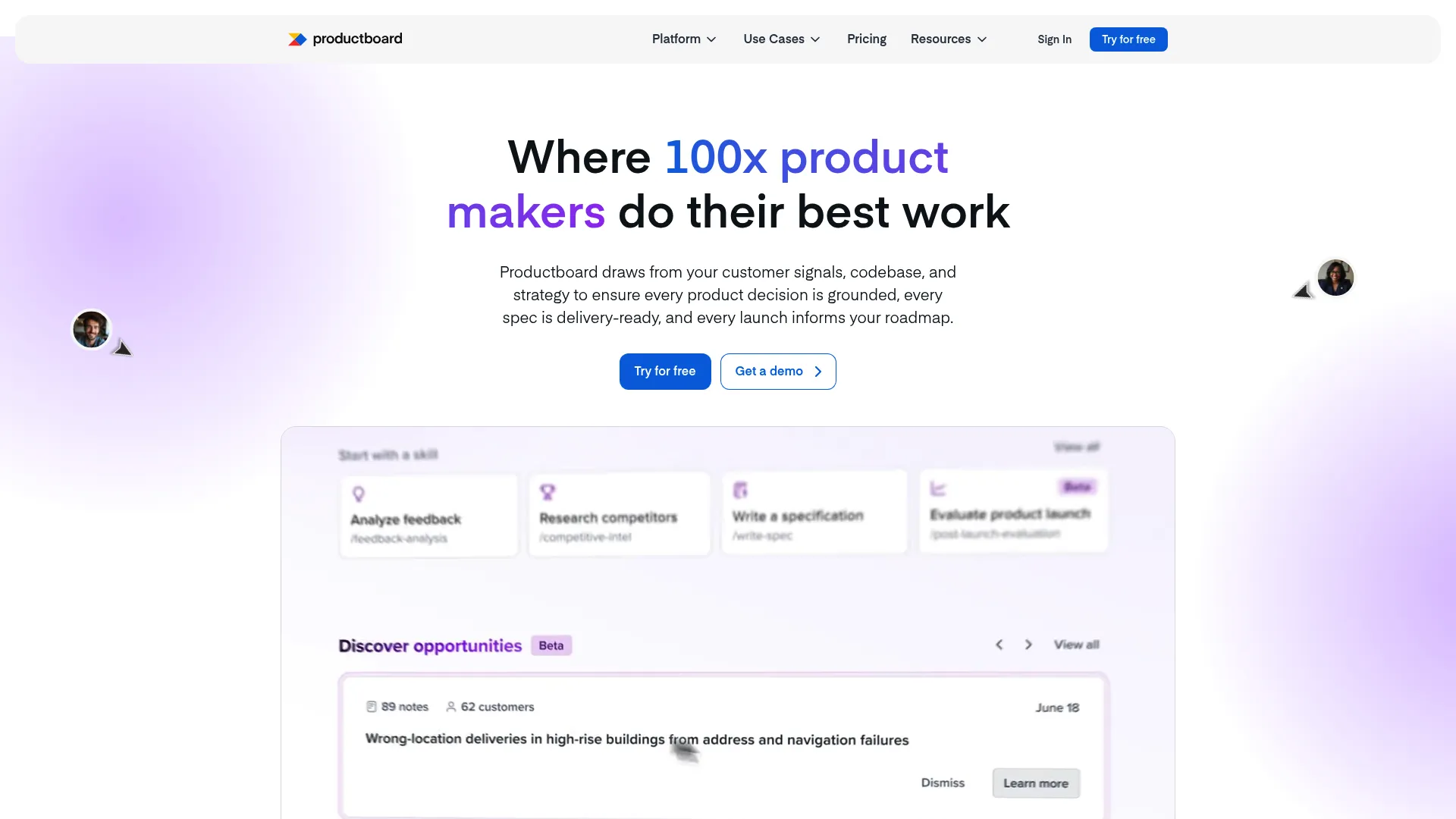
Productboard positions itself as a product management system that keeps engineering, product, and go-to-market teams aligned around one live, shareable plan. It leans hard into the insights-to-roadmap connection: capture customer feedback, tie it to features, prioritize against strategy, and publish roadmaps for different audiences. For product orgs that want a strategic operating model rather than a timeline tool, it's a strong fit.
Best for: Product teams and Heads of Product who want customer insights driving prioritization at scale.
Key strengths
- Customer insights capture linked to features and priorities
- Strategy and objective alignment across the roadmap
- Prioritization scoring tied to evidence
- Audience-specific roadmap views for leadership and delivery
Why choose Productboard: It shines when the connection between customer feedback and what you build is the thing you're trying to make defensible. Enterprise product operations teams get the most value here. Smaller teams may find the platform breadth more than they need day one.
Productboard pricing: Productboard uses custom pricing tied to team size and needs. Contact their sales team for a quote based on your seat count and required capabilities.
2. ProductPlan

ProductPlan is roadmapping and product intelligence software for planning, prioritizing, and sharing roadmaps. Its Product Intelligence Platform connects customer and market intelligence to your roadmap so every priority is grounded in evidence and every team works from the same live plan. The appeal is a clean planning layer: you get shared roadmaps and portfolio visibility without overcomplicating your process.
Best for: Product teams that need shared roadmaps, stakeholder alignment, and objective-linked planning without heavy setup.
Key strengths
- Unlimited roadmaps and viewers
- Portfolio views, prioritization boards, and dependency tracking
- OKR and objective alignment with Jira and Azure DevOps sync
- Clean stakeholder sharing for cross-functional alignment
Why choose ProductPlan: It's the pick when you want roadmap clarity and launch planning without a steep learning curve. Unlimited viewers means the whole org can see the plan without per-seat friction. Teams that want deep custom prioritization frameworks may want to check the scoring flexibility against their process first.
ProductPlan pricing: ProductPlan offers one plan with all features and unlimited viewers, billed annually. Pricing is customized through a consultation rather than listed publicly, so request a quote for your team.
3. Jira
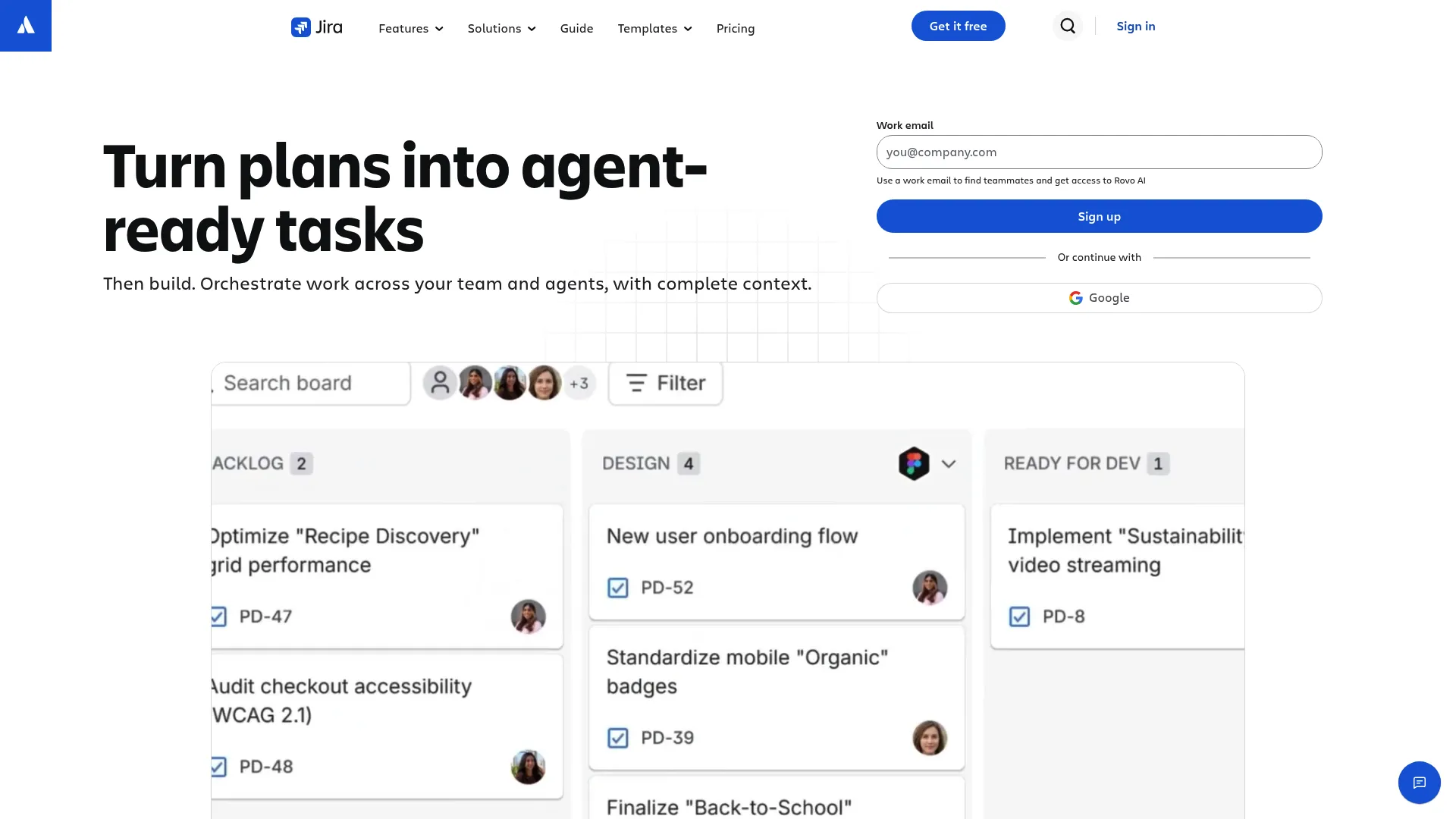
Jira is work management and issue-tracking software from Atlassian for planning, tracking, and releasing work. For roadmap planning, Jira makes the most sense when your team already lives in Atlassian and wants the roadmap sitting next to the delivery work rather than in a separate tool. Timeline views, backlog, and boards keep engineering-heavy teams working in one familiar place.
Best for: Agile and engineering-heavy teams that already use Atlassian and want roadmap planning tied to issue tracking.
Key strengths
- Free plan for up to 10 users
- Backlog, list, board, timeline, calendar, and summary views
- Automations, reporting, dashboards, and AI features
- Tight coupling between roadmap items and delivery work
Why choose Jira: Choose it when delivery visibility matters more than strategy-layer polish and your team is already committed to Atlassian. If you need customer feedback intake and executive roadmap storytelling as first-class features, a dedicated roadmap tool will serve those jobs more directly.
Jira pricing: Jira offers a Free plan for up to 10 users. Standard is $7.91 per user per month and Premium is $14.54 per user per month. Enterprise pricing requires contacting Atlassian's sales team.
4. Aha!
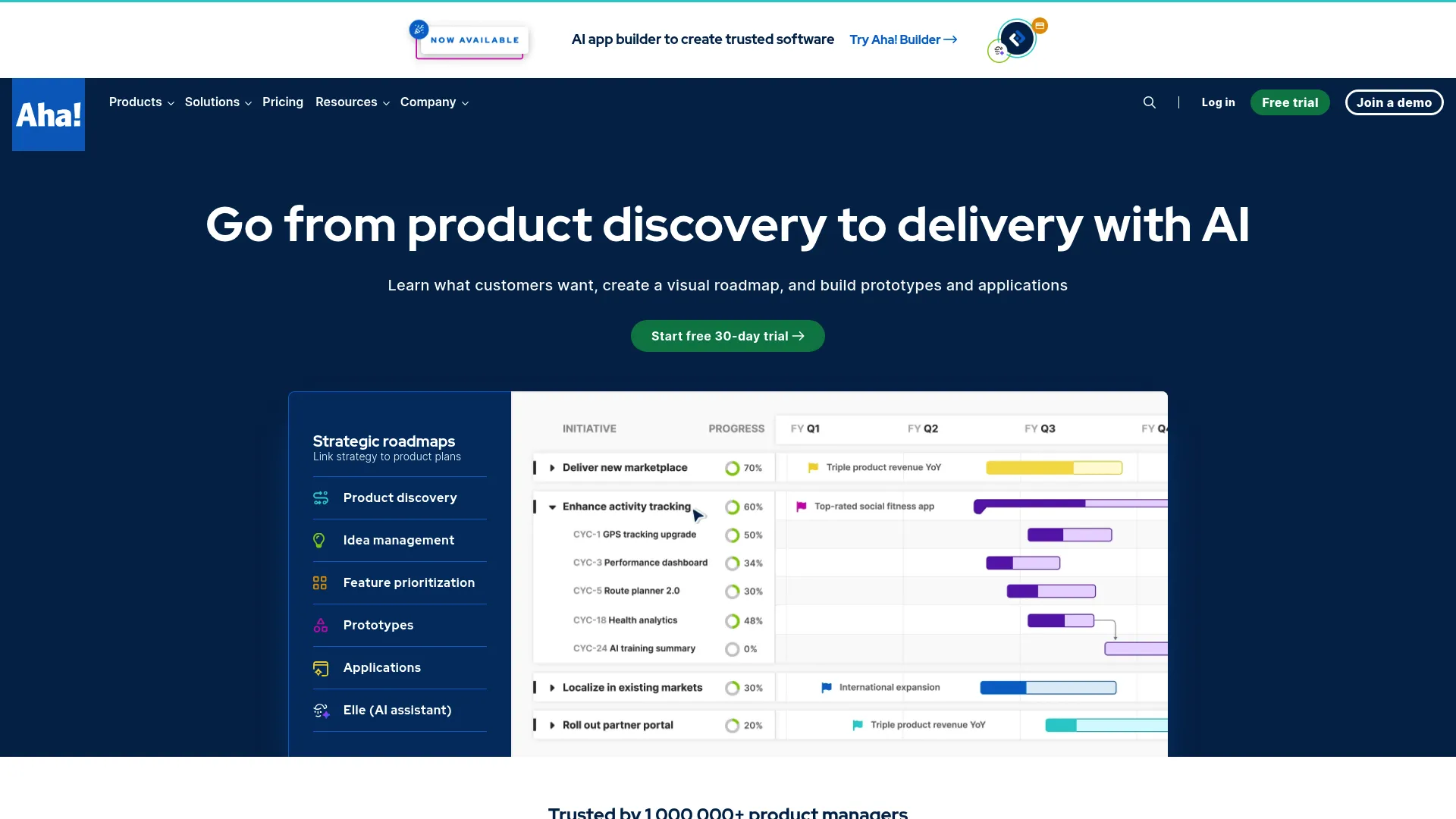
Aha! is AI-powered product management software spanning roadmaps, discovery, ideas, whiteboards, development, teamwork, and knowledge. Aha! Roadmaps is the complete product management solution in the suite, and the depth across strategy, prioritization, and release planning is why it tends to appeal to mature product organizations managing complex planning needs.
Best for: Product teams that want an integrated suite for strategy, roadmaps, feedback, and delivery.
Key strengths
- Product roadmaps and strategy planning
- Idea and feedback management
- AI-assisted whiteboards, prototyping, and documentation
- Release planning depth for complex sequencing
Why choose Aha!: It fits PMs managing multi-product portfolios and formal strategy-to-release workflows. The suite covers a lot of ground, which is the draw for mature orgs and possibly more than early-stage teams need. Evaluate which products in the suite you'll actually use before committing.
Aha! pricing: Aha! sells its products separately. Aha! Builder, Develop, and Teamwork start at $9 per user per month, Discovery at $39, Whiteboards at $18, and Knowledge at $59 per user per month. A free trial is available, and Aha! Roadmaps pricing is provided on request.
5. Craft.io
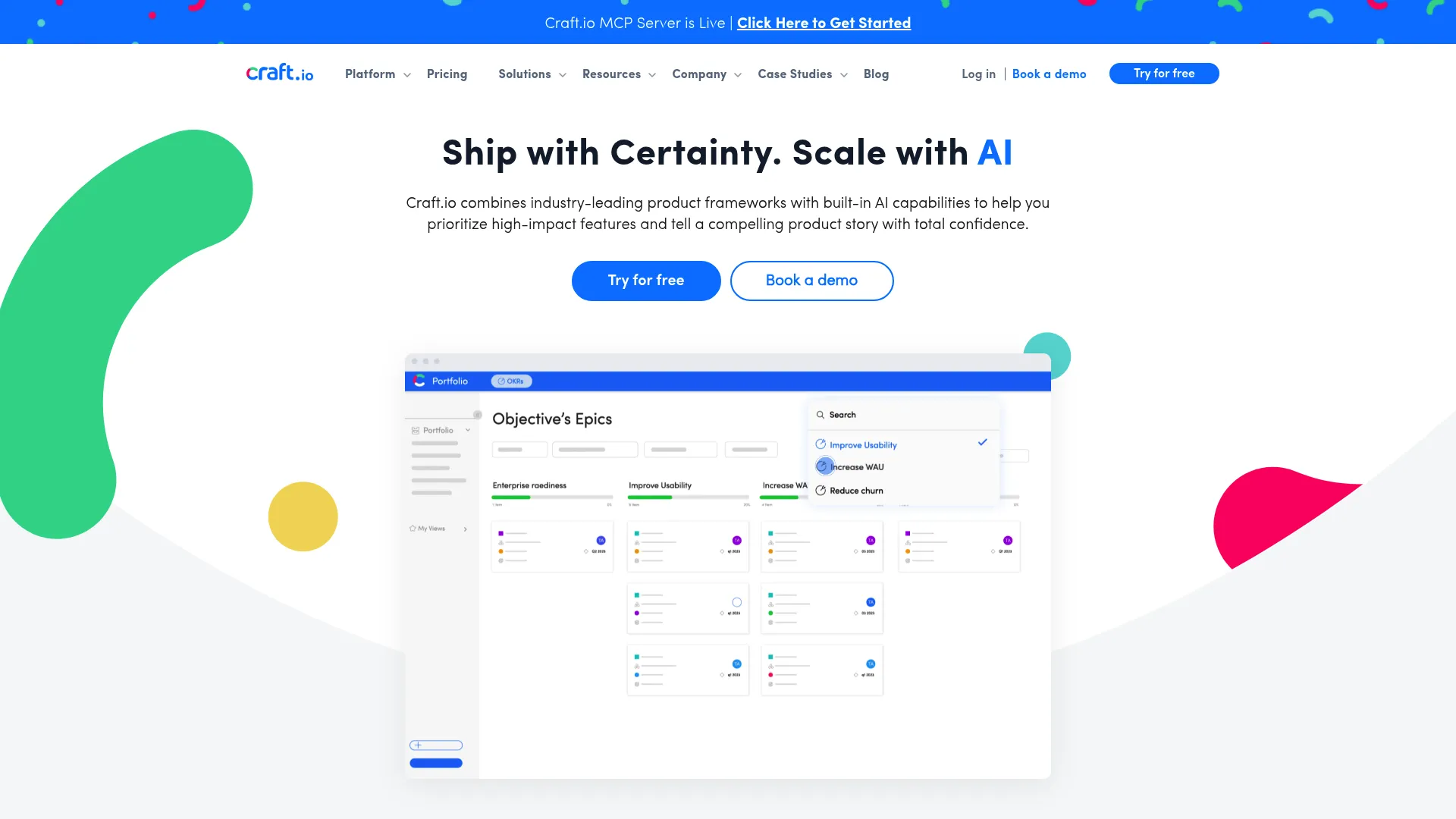
Craft.io is an AI-powered product management platform for strategy, prioritization, roadmapping, and execution. It combines product frameworks with built-in AI capabilities to help you prioritize high-impact features and tell a coherent product story. The pitch is a single workspace that carries you from strategy through delivery without switching tools mid-process.
Best for: Product teams needing one workspace that runs from strategy through delivery.
Key strengths
- Product strategy and OKRs
- Feedback collection and feature definition
- Prioritization, capacity planning, and roadmapping
- Roadmap views tied to feedback-driven planning
Why choose Craft.io: It suits PMs who want prioritization rigor and roadmap views connected to feedback in one place, without stitching together separate tools. Teams deeply invested in a specific external prioritization framework should confirm it maps cleanly to Craft.io's models.
Craft.io pricing: Craft.io Starter is $19 per editor per month billed monthly, or $24 billed yearly. Pro is $79 per editor per month, or $99 yearly. Enterprise is custom and billed annually. A 14-day free trial is available and annual billing saves 20%.
6. ProdPad
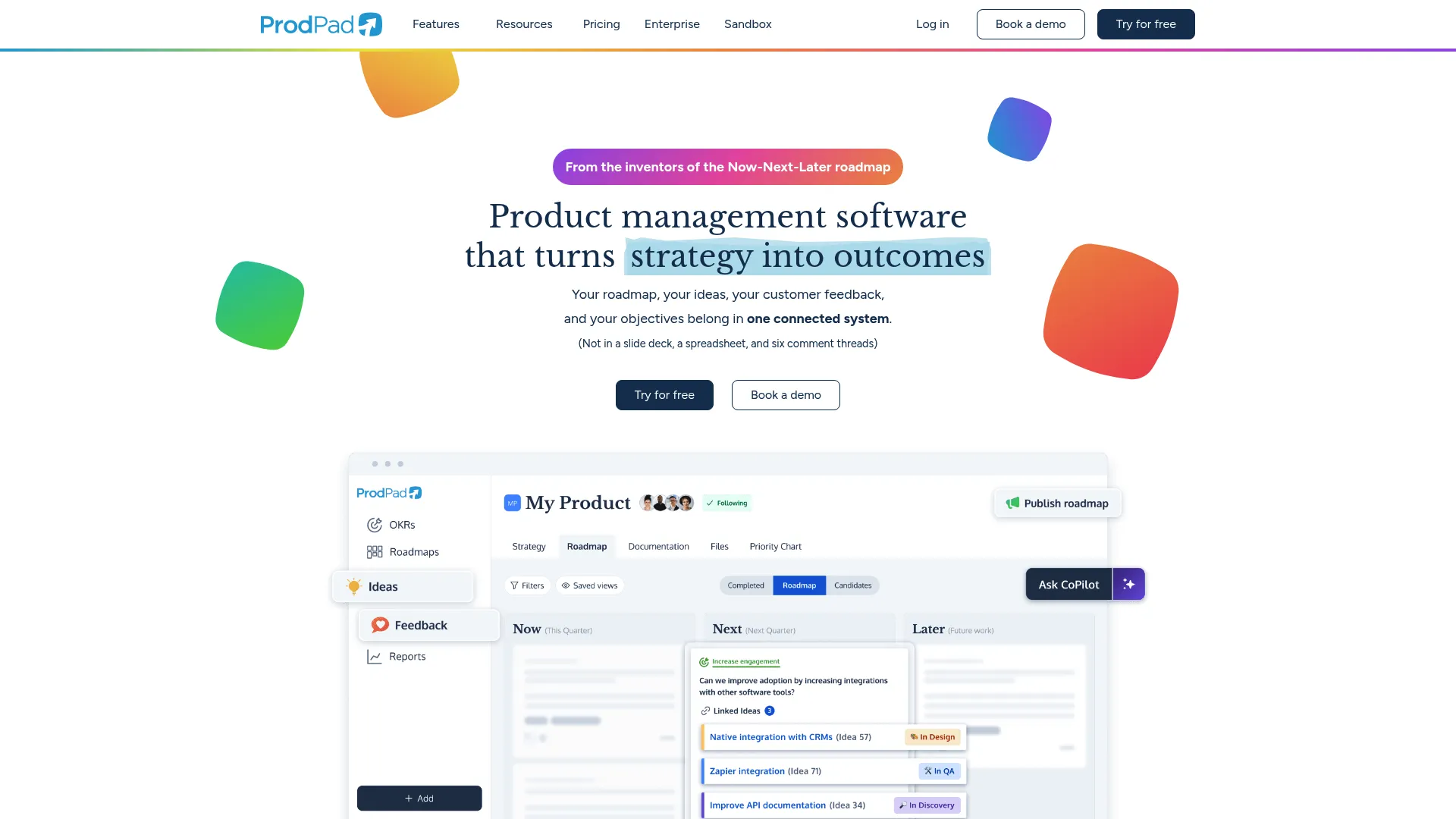
ProdPad is a product management platform for ideas, feedback, roadmaps, objectives, and portfolio reporting. Its strength is traceability: customer feedback flows into ideas, ideas connect to the roadmap, and objectives tie the whole thing to outcomes. PMs who want a lightweight but structured workflow, especially the now-next-later approach, tend to gravitate here.
Best for: Product teams that want a strategy-layer tool for roadmap planning and feedback management.
Key strengths
- Feedback to ideas to roadmap traceability
- Customer feedback capture and signal detection
- Portfolio views, objectives, and reporting
- Now-next-later roadmap structure
Why choose ProdPad: It's the pick when you want a clear line from customer feedback to roadmap decision without the overhead of a heavier platform. The modular approach lets you pay for what you use. Teams that need dense timeline and dependency views may want to confirm those fit their planning style.
ProdPad pricing: ProdPad uses modular pricing where you pay for the modules you need, with monthly or annual billing. A free trial is available, along with free reviewer and contributor access. Contact ProdPad for a quote based on your selected modules.
7. monday dev
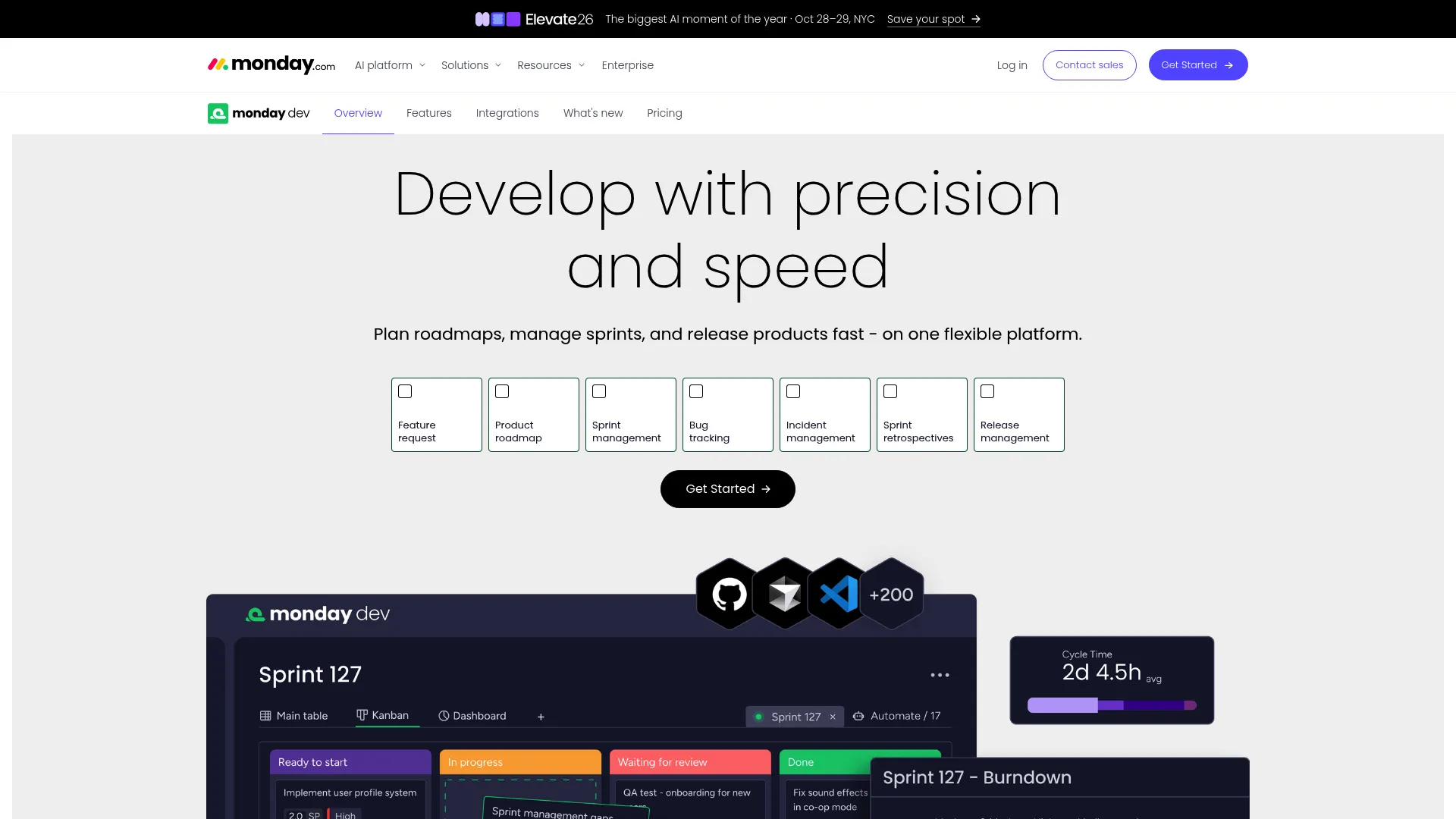
monday dev is an agile software management platform for development, product, and cross-functional teams, built on monday.com's work management foundation. It appeals to teams that want roadmap coordination sitting close to project execution, with sprint management and cross-functional visibility in one customizable workspace. If your org already runs on monday.com, keeping roadmapping in the same environment reduces tool sprawl.
Best for: Teams that need customizable agile planning, tracking, and cross-functional software delivery in one workspace.
Key strengths
- Sprint management
- Git integration
- Docs for knowledge management
- Customizable boards for roadmap and delivery coordination
Why choose monday dev: Choose it when cross-functional coordination and execution proximity matter more than a dedicated strategy layer. The flexibility is the draw and also means more configuration to get right. Teams wanting opinionated product-specific prioritization out of the box should test the setup effort first.
monday dev pricing: monday dev Basic starts at €9 per seat per month, Standard at €12, and Pro at €20, all billed annually. Enterprise is contact sales. A 14-day trial is available and plans start from three users.
Considerations
Prioritization method
Judge whether the tool supports your team's current prioritization process before you judge anything else. If you run RICE or a weighted scoring model, confirm the tool handles custom scoring. If you prioritize on customer signal, check the feedback intake. Decision transparency matters most: the roadmap has to show why something ranks where it does.
Cross-functional adoption
The best tool is the one people actually update and review. A powerful platform nobody opens is worse than a simple one everyone trusts. Think about how leadership, engineering, and adjacent teams will consume the roadmap and whether each gets a view worth checking. Product team alignment lives or dies on adoption, not features.
Integration depth
Map what must connect: Jira or your tracker, docs, customer feedback sources, and analytics. Integration quality directly affects maintenance burden. A clean two-way sync with your delivery tool means the roadmap reflects reality automatically. A weak one means manual updates, which means a stale roadmap within a month.
Reporting and visibility
There's a difference between publishing a roadmap and having a roadmap that informs decisions. Check versioning, audience-specific views, and communication cadence. Roadmap visibility is only useful if the right people see the right slice at the right time, and if changes are communicated rather than silently applied.
Scale and governance
What works for one PM breaks for a product org of twenty. As you grow, permissions, portfolio views, and workflow consistency start to matter. Ask what happens when you add a second product line or a new team. The tool that fits today should not become the constraint next year.
Conclusion
For most product managers evaluating product roadmap software in 2026, the strongest all-around picks are Productboard for insights-driven enterprise strategy, ProductPlan for clean shared roadmaps, and Aha! for depth across a mature product org. If you live in Atlassian, Jira keeps roadmap planning next to delivery. Craft.io works well as a single strategy-to-delivery workspace, ProdPad as a lightweight strategy layer, and monday dev when roadmapping needs to sit inside work management.
Don't buy on feature lists alone. Shortlist two or three tools from this list, then test them against your real roadmap workflows: your actual prioritization model, your stakeholder views, and how painful updates feel after a few sprints. The right tool is the one your team keeps current and your leadership keeps trusting.
FAQs
It depends on team size and workflow maturity. Enterprise teams that want customer insights driving prioritization tend to choose Productboard or Aha!. Teams wanting clean shared roadmaps without heavy setup lean toward ProductPlan. Engineering-heavy teams already in Atlassian often stick with Jira, while smaller teams favor ProdPad's lightweight structure.
At minimum: prioritization that fits how you decide, roadmap visualization, audience-specific stakeholder views, feedback intake, dependency and release planning, and progress updates. Beyond features, integration with your delivery tool and feedback sources determines your maintenance burden, and low maintenance is what keeps a roadmap current and trusted.
Jira works well when your team already lives in Atlassian and wants the roadmap sitting next to delivery work. Timeline views and tight coupling to issues are the strengths. If you need customer feedback intake and executive-level roadmap storytelling as first-class capabilities, a dedicated roadmap tool like Productboard or ProductPlan handles those jobs more directly.
Productboard goes deeper on the insights-to-roadmap operating model, connecting customer feedback to prioritization at scale, which suits larger product operations teams. ProductPlan focuses on clean shared roadmaps and portfolio visibility with unlimited viewers and a lighter learning curve. Choose Productboard for strategic depth, ProductPlan for fast, clear alignment across the org.
Roadmap software answers what you're building, why, and in what order, tied to strategy and customer impact. Project management software answers how the work gets done and tracked. They overlap, which is why tools like Jira and monday dev serve both, but the roadmap is the strategic layer and the project tracker is the execution layer.
Yes, and it's one of the main reasons teams buy it. Audience-specific views let leadership see themes while engineering sees delivery detail, all from the same underlying plan. Shared links and a clear update cadence cut the re-explaining that eats meeting time and keeps every team looking at the current version instead of a stale screenshot.
Cadence depends on your product pace and planning cycle. Most teams refresh detail at least each sprint or planning cycle and revisit strategic themes quarterly. The real rule is simpler: the roadmap should stay current enough that people trust it. The moment stakeholders start double-checking whether it's accurate, it needs updating more often.