You updated your rates on Booking.com this morning. Then Expedia. Then your own site. By lunch, a walk-in filled your last room, and now two OTAs are still showing availability you no longer have. The double booking is coming. You just don't know which channel yet.
That is the daily reality for hotels running distribution by hand. Every OTA you add multiplies the manual updates, the version drift, and the overbooking risk. And the pressure is only growing. In 2024, 61% of hotels globally integrated five or more OTAs simultaneously through channel managers, according to ZUZU Hospitality. Managing that many channels without automated sync is not sustainable.
A hotel channel manager software fixes the underlying problem: it keeps rates, availability, and inventory consistent across every channel from one place, in real time. Choosing the right one is a consolidation decision. You want fewer manual processes, fewer errors, and clean data your revenue team can trust, without adding operational chaos to your stack.
The market reflects how central this has become. The global hotel channel management software market is projected to grow from USD 3.14 billion in 2025 to USD 7.93 billion by 2035, a 9.7% CAGR, per Market Research Future (2024). This guide breaks down the nine strongest options for 2026 and, more importantly, how to match one to your property.
What's inside
This guide covers the best hotel channel manager software for 2026, who each tool fits, and how we shortlisted them. It is written for hotel operators, revenue managers, and owners comparing distribution software to cut manual work and prevent booking errors.
We selected tools based on five criteria that matter most in daily operations:
- OTA connectivity: how many channels connect, and how deep those integrations run.
- PMS integration: whether it plugs cleanly into your property management system.
- Sync reliability: how fast and consistently rate and inventory updates push across channels.
- Usability and support: how quickly your team can operate it without friction.
- Pricing transparency: whether you can predict cost against your property mix.
TL;DR
Short on time? Here are the decision shortcuts:
- Best overall for independent and multi-property hotels: Cloudbeds, for its integrated PMS, channel manager, and booking engine in one platform.
- Best for all-in-one distribution and direct bookings: SiteMinder, with broad channel reach and rate parity insights.
- Best for automation and revenue control: STAAH, for real-time syncing and rule-based distribution.
- Best for revenue and pricing intelligence: RateGain and Lighthouse, for hotels that want deeper demand and rate data.
- Best for smaller independent properties, inns, and B&Bs: GraceSoft and Sirvoy, for simpler setup and transparent entry pricing.
What is a hotel channel manager software?
A hotel channel manager software is a tool that syncs a property's room rates, availability, and inventory across all its online booking channels from a single dashboard, in real time. Instead of updating each OTA manually, you make one change and it pushes everywhere at once.
That single job solves a cascade of problems. When a room books on any connected channel, the channel manager instantly reduces availability across every other channel. This is how a hotel channel management system prevents overbookings and eliminates the rate drift that happens when prices are updated by hand across ten different extranets.
Most systems connect to three layers of your distribution:
- OTAs and booking channels: Booking.com, Expedia, Airbnb, Agoda, and dozens of regional players.
- PMS integration: a two-way link to your property management system so reservations flow into your operations automatically.
- Booking engine, GDS, and metasearch: direct bookings on your own site, global distribution systems used by travel agents, and metasearch platforms like Google Hotel Ads.
The category has become standard infrastructure. In 2024, 73% of hotels globally used channel management to control availability across platforms, according to ZUZU Hospitality.
How hotel channel managers work
The workflow starts at one central dashboard. You set your rates, availability, and restrictions once. The channel manager then distributes that data to every connected channel simultaneously.
The critical mechanism is two-way sync. Updates flow outward, from your dashboard to the OTAs. Reservations flow inward, from any channel back into your channel manager and your PMS. Real-time updates matter because the gap between a booking and the availability change is exactly where overbookings hide. The shorter that gap, the safer your inventory.
Rule-based automation handles the rest. You can set channel-specific pricing, minimum stay rules, and stop-sells that trigger automatically, so the system enforces your strategy without constant manual attention.
Core features to expect
Any credible hotel channel management software should cover these capabilities:
- Real-time inventory and rate sync across all connected channels.
- PMS integration with two-way data flow into operations.
- OTA connectivity to major global and regional booking sites.
- Booking engine integration for commission-free direct bookings.
- Reporting and analytics on channel performance and revenue.
- Rule-based automation for stop-sells, restrictions, and derived rates.
- Channel-specific pricing controls to manage margin per channel.
When to use a hotel channel manager
Reduce manual channel updates
Once a property lists on more than two or three OTAs, manual updates stop scaling. Every rate change or availability adjustment has to be repeated across each extranet, and the risk of a missed update climbs with each channel. This is common for growing independent hotels and multi-property groups where one person cannot realistically keep six or eight channels aligned by hand.
Prevent overbookings and rate drift
Real-time sync keeps inventory consistent so a room sold on one channel disappears from the rest before another guest can book it. This matters most during peak season, flash promotions, and event-driven demand, when rooms sell fast and a lag of even a few minutes can produce a double booking. Consistent rates across channels also protect parity and your relationship with OTAs.
Centralize distribution across channels
When your team needs one place to manage rates, inventory, and channel visibility, a channel manager becomes the control layer for your entire distribution strategy. It ties directly into efficiency, control, and revenue management, giving revenue managers a single view of performance instead of a dozen disconnected extranets.
Comparison table
The table below helps you compare best fit, pricing, and rating at a glance. Tools are sorted by relevance to the keyword. Where a vendor does not publish numeric pricing, it is noted as quote-based.
| # | Product | Intent | Key use case | Pricing | G2 rating |
|---|---|---|---|---|---|
| 1 | Cloudbeds | All-in-one platform | Integrated PMS, channel manager, and booking engine | Custom quote | 4.3/5 |
| 2 | SiteMinder | Distribution breadth | Channel management plus direct bookings and rate insights | Free trial, room-based | Not listed |
| 3 | STAAH | Automation and revenue | Real-time sync with rule-based distribution | Quote-based | 4.5/5 |
| 4 | Lighthouse | Revenue intelligence | Pricing and demand data across distribution | Quote-based | Not listed |
| 5 | RateGain | Enterprise distribution | AI pricing plus channel management at scale | Quote-based | 4.3/5 |
| 6 | eZee Absolute | PMS-centered stack | Cloud PMS with channel syncing and mobile ops | Quote-based | 4.8/5 |
| 7 | GraceSoft | Small property fit | All-in-one PMS and OTA management | From $69/month | Not listed |
| 8 | roommaster | Unified operations | PMS, booking, and channel manager together | Quote-based | 4.5/5 |
| 9 | Sirvoy | Lean and simple | Easy-to-deploy PMS with channel manager | From €0/month | 4.5/5 |
1. Cloudbeds
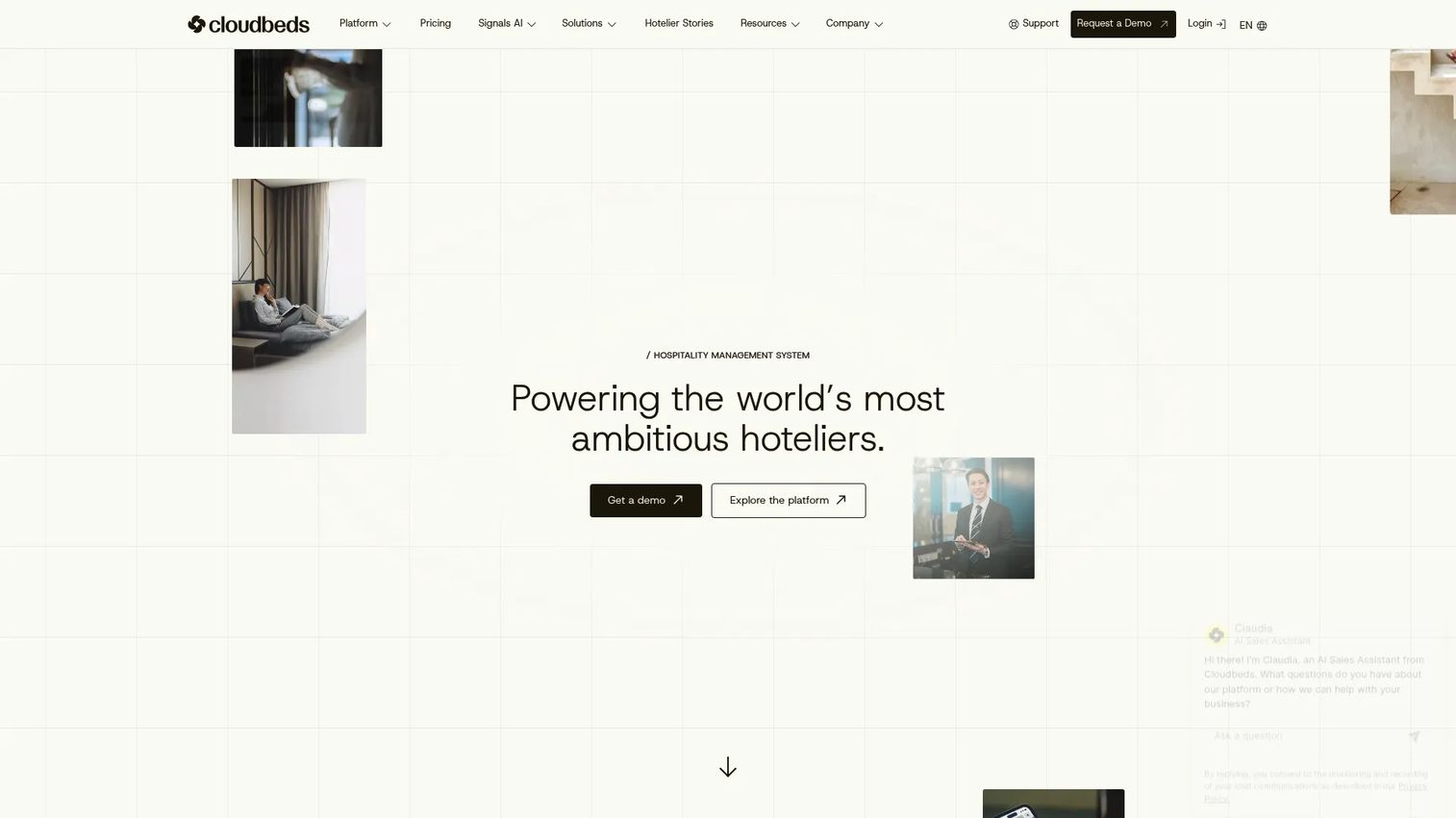
Cloudbeds is an all-in-one hospitality management platform for lodging businesses. Its channel manager sits inside a broader stack that includes a property management system and a commission-free booking engine, so rates, availability, and reservations move through one connected system rather than several bolted-together tools. For a hotel trying to cut manual work, that integration is the core appeal.
Best for: Independent hotels and multi-property lodging operators that want an integrated PMS, channel manager, and booking engine in a single platform.
Key strengths
- Integrated PMS and channel manager: One system for operations and distribution, so reservations flow straight into the front desk.
- Real-time OTA syncing: Availability and rates update across connected channels as bookings happen.
- Commission-free booking engine: Direct bookings on your own site without paying per-reservation commission.
Why choose Cloudbeds: If you are consolidating a fragmented stack, Cloudbeds replaces multiple point tools with one platform. That reduces the version drift and handoff errors that creep in when your PMS, booking engine, and channel manager come from different vendors. It fits operators who value a unified workflow over stitching together best-of-breed pieces.
Cloudbeds pricing: Cloudbeds uses tiered, tailored pricing based on property needs, and its Enterprise tier is quote-based. The public pricing page does not show a numeric starting price, so you request a quote scoped to your property. G2 reviewers rate it 4.3/5.
2. SiteMinder
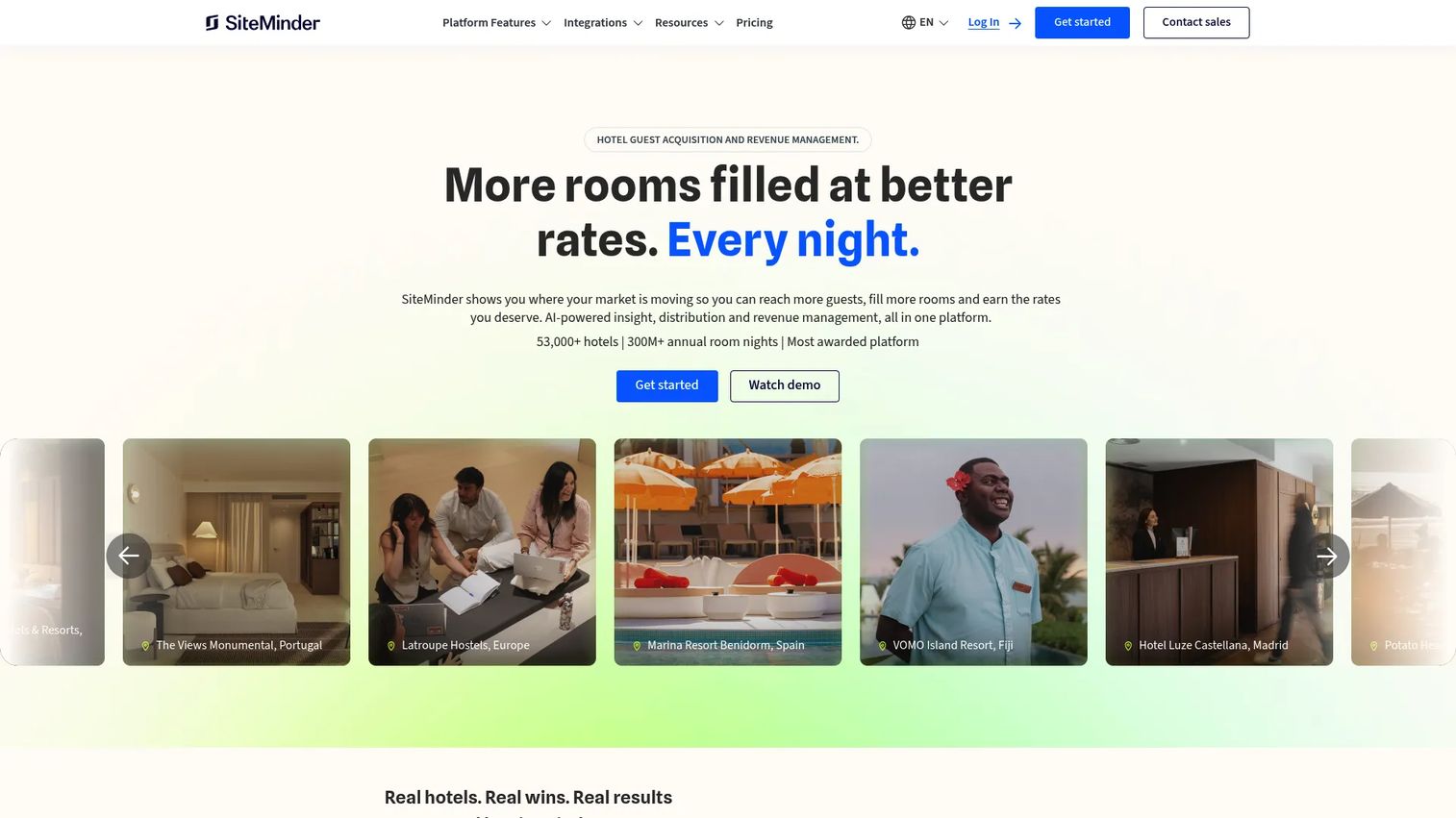
SiteMinder is a hospitality commerce platform that helps hotels manage distribution, direct bookings, and revenue optimization. It is one of the most widely referenced names in the category, and for good reason: its channel manager pairs broad OTA connectivity with a direct booking engine and rate parity insights, giving properties a single view of how they sell across channels.
Best for: Hotels needing an all-in-one channel management and booking platform with broad distribution reach.
Key strengths
- Channel manager: Syncs rates and availability across a wide network of booking channels.
- Direct booking engine: Converts your own site traffic into commission-free reservations.
- Competitor rates and rate parity insights: Surfaces where your pricing sits against the market and flags parity issues.
Why choose SiteMinder: SiteMinder is a common benchmark because its channel network is deep and its platform combines distribution with direct-booking and rate intelligence. It suits properties that want broad distribution control and the data to price against competitors, rather than a bare-bones sync tool.
SiteMinder pricing: SiteMinder offers a 14-day free trial, and pricing is based on room count across its SiteMinder, SiteMinder Plus, and Groups & Chains tiers. The pricing page captured this run showed placeholders rather than public numeric prices, so confirm your exact cost against your room count with the vendor.
3. STAAH
STAAH is hospitality distribution software covering channel management, booking engines, and related guest-revenue tools. Its channel manager focuses on real-time syncing across OTAs, with automation and dashboard visibility designed for hotels that want tighter control over how inventory and rates move. The platform pairs distribution with a direct-booking engine and rate-comparison tooling.
Best for: Hotels and accommodation providers that need strong distribution automation alongside direct-booking tools.
Key strengths
- Channel manager: Syncs rates and availability across OTAs in real time.
- SwiftBook booking engine: Captures direct bookings on your own website.
- WatchMyRate rate-comparison widget: Shows how your rates compare to nearby competitors.
Why choose STAAH: STAAH is strong for hotels that lean on automation to manage distribution. Rule-based controls and real-time syncing reduce the manual attention needed to keep channels aligned, and the added rate-comparison and direct-booking tools give revenue teams more levers in one place. It fits properties that treat distribution as an active revenue function.
STAAH pricing: STAAH does not expose public numeric pricing for its main channel management products on its site; pricing is arranged directly with the vendor. G2 reviewers rate STAAH 4.5/5.
4. Lighthouse
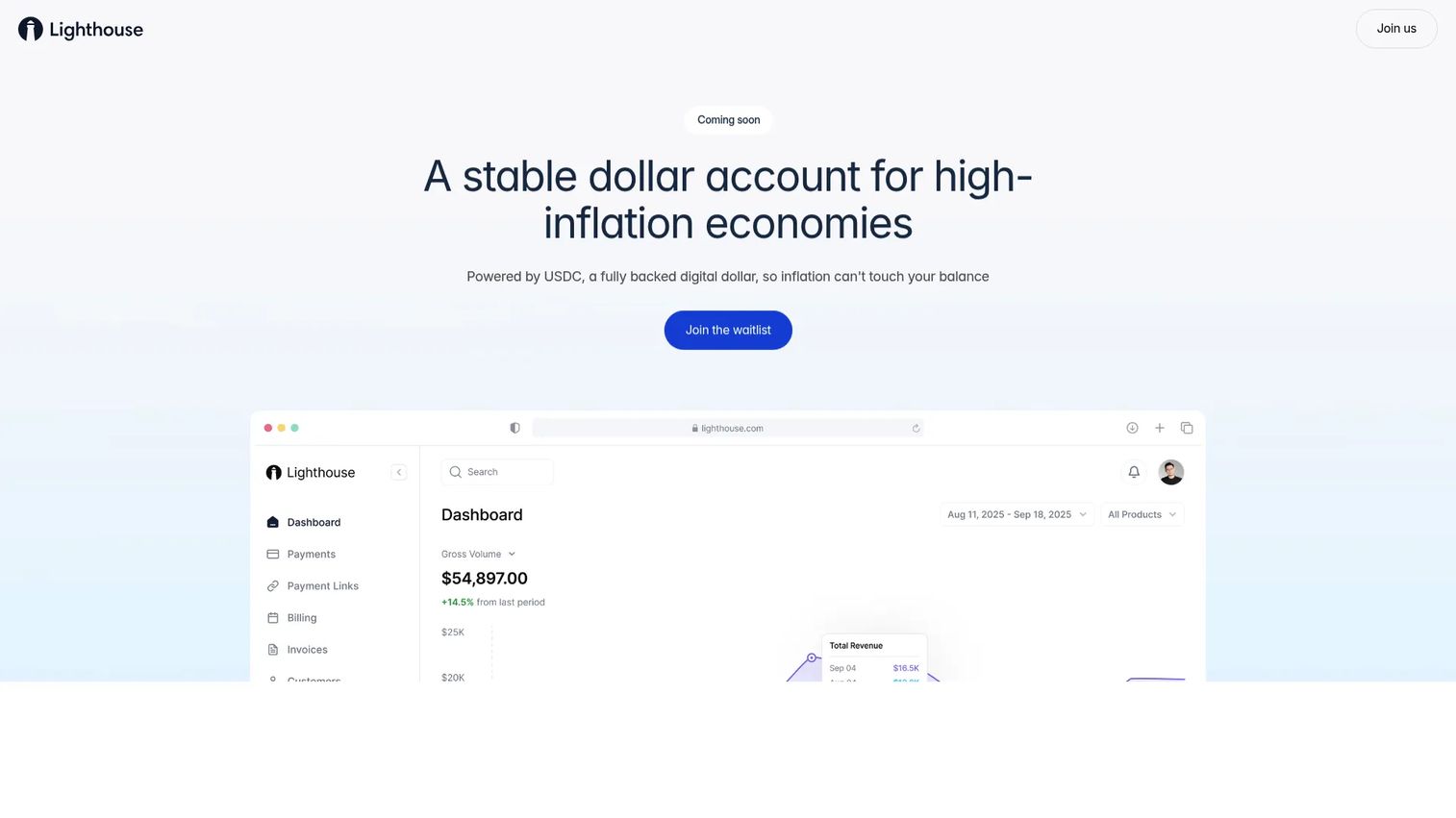
Lighthouse positions channel management as part of a broader revenue and market-intelligence stack for hotels. Rather than treating distribution as a standalone task, it ties channel management to demand, rate, and market data, so revenue teams can make pricing and distribution decisions from the same view. That makes it a fit for properties that want distribution and revenue visibility together.
Best for: Hotels that want channel management embedded in a wider revenue and pricing-intelligence workflow.
Key strengths
- Distribution within a revenue stack: Channel management sits alongside rate and demand insights.
- Market and rate intelligence: Data to inform pricing decisions across channels.
- Revenue operations focus: Built for teams optimizing occupancy and rate together.
Why choose Lighthouse: Lighthouse fits properties where distribution and revenue management are the same conversation. If your revenue manager wants channel control and market data in one place instead of exporting between tools, it consolidates that workflow. It suits hotels ready to treat pricing intelligence as a core part of distribution.
Lighthouse pricing: Lighthouse does not publish a public numeric price for its hotel revenue and distribution products; pricing is arranged through the vendor. Confirm scope and cost against your property mix during evaluation.
5. RateGain
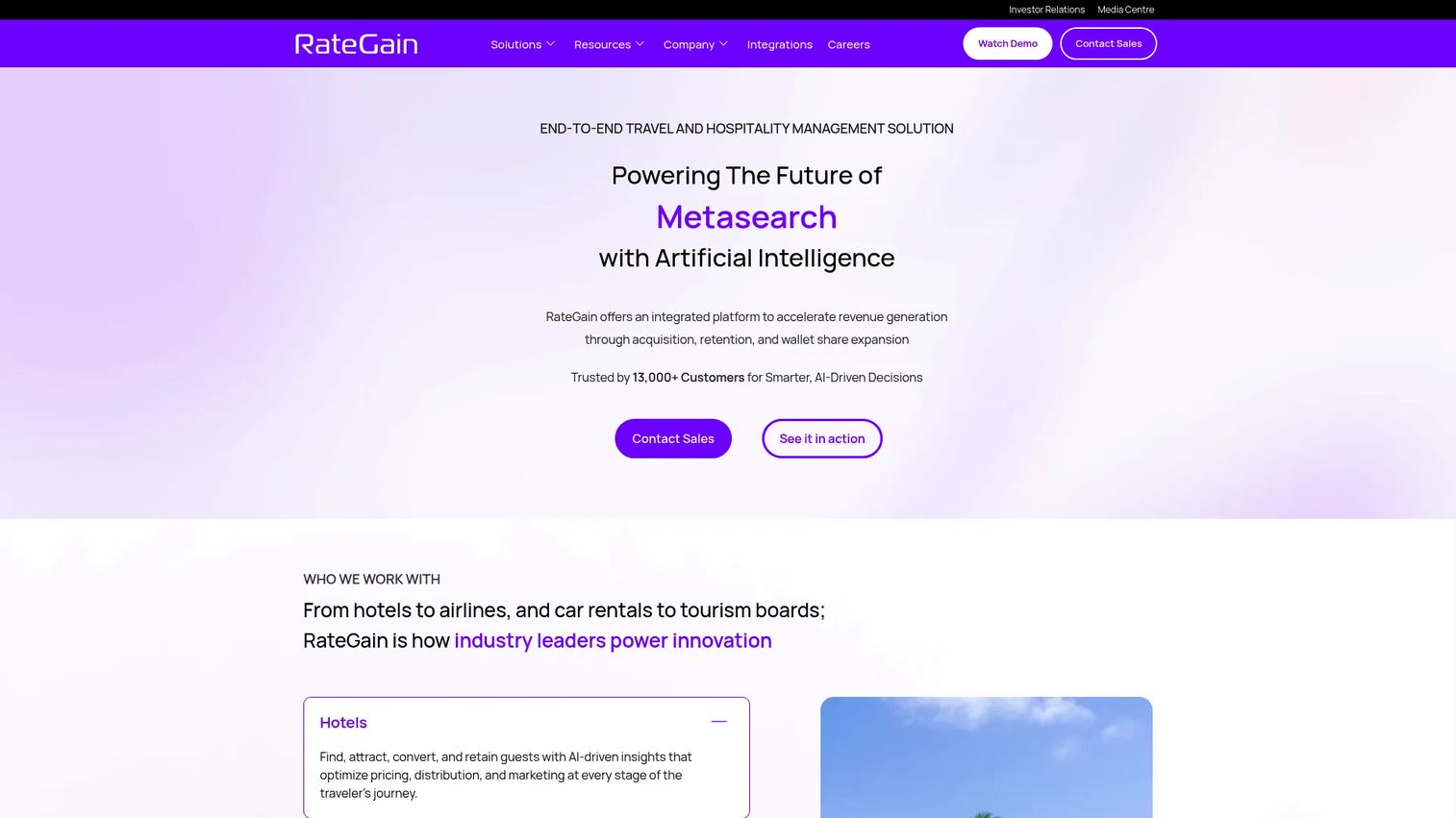
RateGain is a travel and hospitality software company offering data, distribution, and marketing technology. Its channel management sits within an enterprise-grade stack built around AI-powered pricing and demand intelligence, with distribution and content integration handled through developer APIs. That depth makes it a fit for hotels and groups with more complex distribution needs.
Best for: Hotels and travel businesses that need revenue, distribution, and pricing optimization at scale.
Key strengths
- AI-powered pricing and demand intelligence: Data-driven rate recommendations across channels.
- Hotel channel management and distribution: Broad connectivity for complex distribution setups.
- Developer APIs: Booking and content integration for teams that need custom connections.
Why choose RateGain: RateGain fits properties whose channel needs outgrow a simpler sync tool. The combination of AI pricing, wide distribution, and API-level integration suits groups managing many properties, complex rate structures, or deep PMS and revenue workflows. It is an enterprise consideration more than a small-property pick.
RateGain pricing: RateGain does not publish a readable first-party price; its sales motion is demo- and contact-led across multiple products. G2 rates RateGain 4.3/5. Scope pricing against your portfolio size during evaluation.
6. eZee Absolute
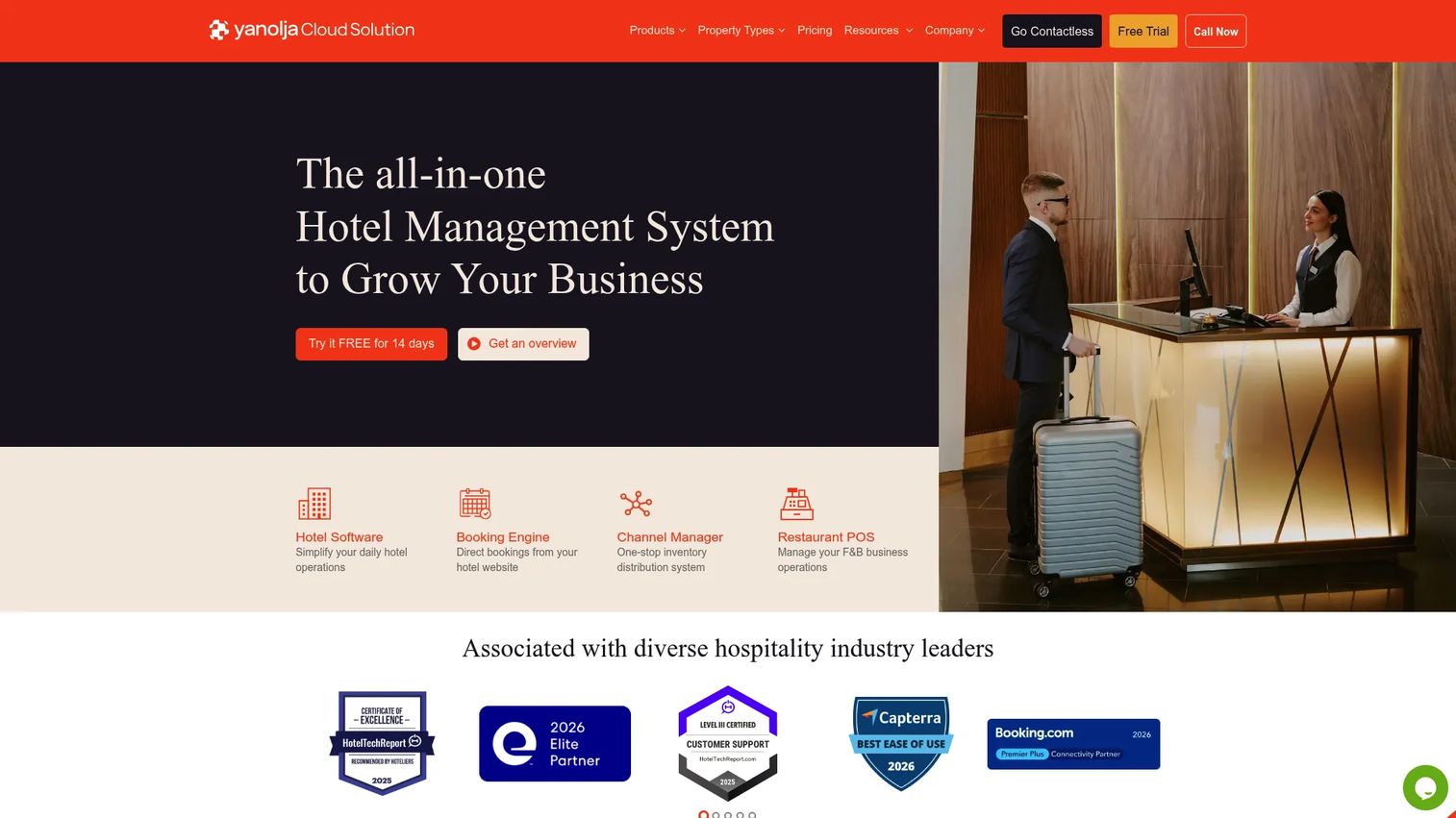
eZee Absolute is a cloud-based hotel property management software with channel syncing built into a PMS-centered workflow. Its strength is operational simplicity: front-office tasks, housekeeping, night audit, and channel distribution all run from one system, with a mobile app for managing operations on the go. For smaller teams, that consolidation cuts tool sprawl.
Best for: Hotels and hospitality properties that want a cloud PMS with channel syncing and mobile operations in one stack.
Key strengths
- Front-office operations: Room allocation, check-in and check-out, and registration cards in one place.
- Housekeeping and night audit: Daily operational tasks handled inside the same system.
- Mobile app: Run hotel operations from a phone, useful for lean teams.
Why choose eZee Absolute: eZee Absolute fits properties that want their PMS at the center and channel syncing as a connected function rather than a separate platform. The operational breadth and mobile access suit smaller teams that need one simple stack instead of several specialized tools.
eZee Absolute pricing: eZee Absolute does not display a public price on its site in this run; pricing is arranged with the vendor. G2 rates it 4.8/5, though from a small number of reviews, so weigh that rating accordingly.
7. GraceSoft
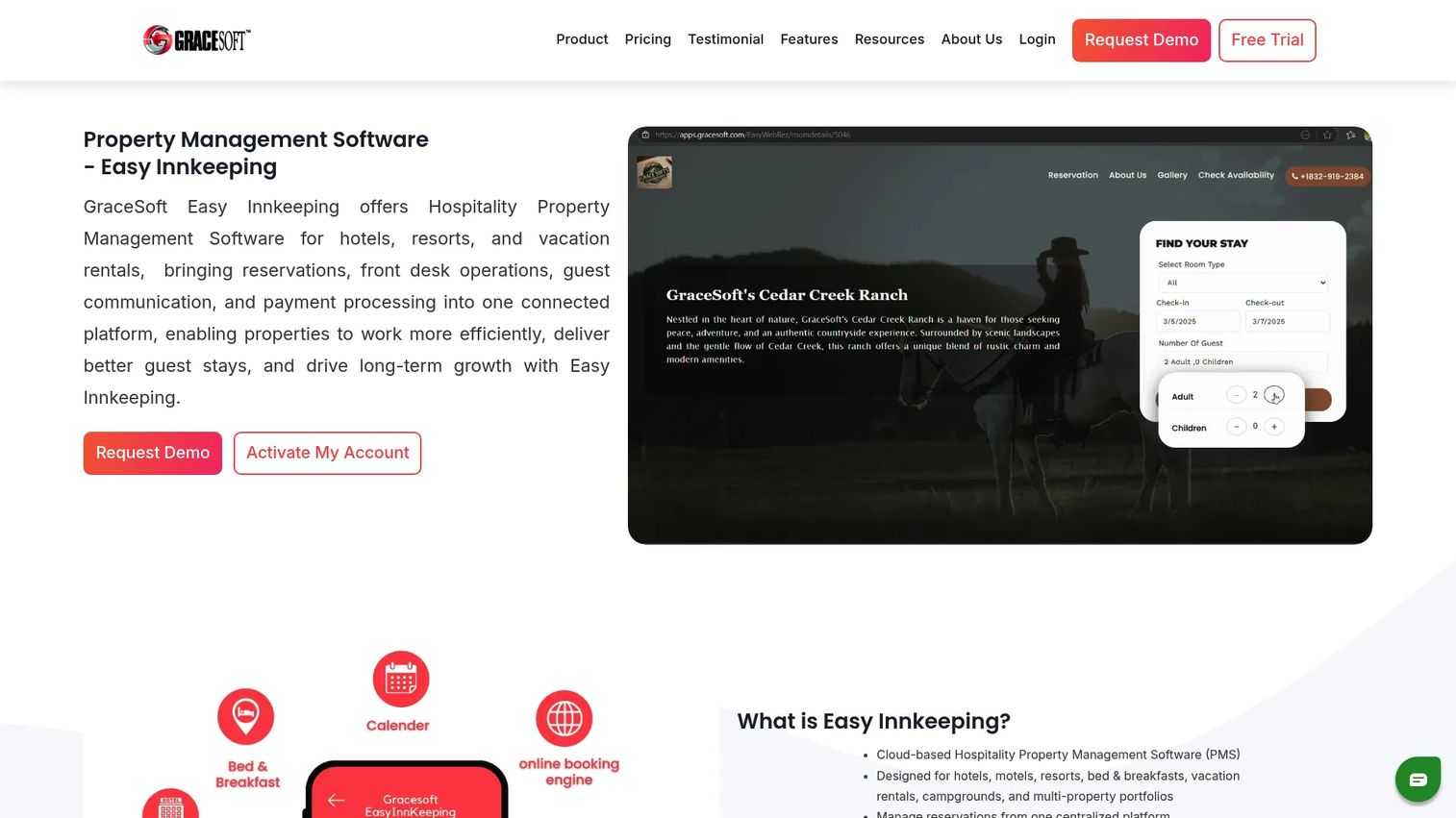
GraceSoft is cloud-based hospitality property management software for hotels, vacation rentals, and other lodging businesses. It centralizes reservations and front-desk management with an online booking engine and guest messaging, and it keeps OTA management straightforward. The interface is simpler and more direct than the enterprise tools on this list, which is exactly the point for smaller operators.
Best for: Small-to-mid-sized hospitality operators, inns, and B&B-style properties needing an all-in-one PMS and booking platform.
Key strengths
- Reservations and front-desk management: Central reservation control in one dashboard.
- Online booking engine: Direct bookings from your own website.
- Guest communication and messaging: Built-in tools to stay in touch with guests.
Why choose GraceSoft: GraceSoft fits small hotels, inns, and B&Bs that want distribution and reservation basics without enterprise complexity. If you need to prevent overbookings and centralize reservations without a steep learning curve or a large budget, its simplicity and transparent entry pricing are the draw.
GraceSoft pricing: GraceSoft publishes a starting price of $69/month, with Basic, Advanced, Premium, and Platinum plans and a free version available. Some higher-tier prices and add-ons are quote-based, so confirm the full cost for your property size.
8. roommaster
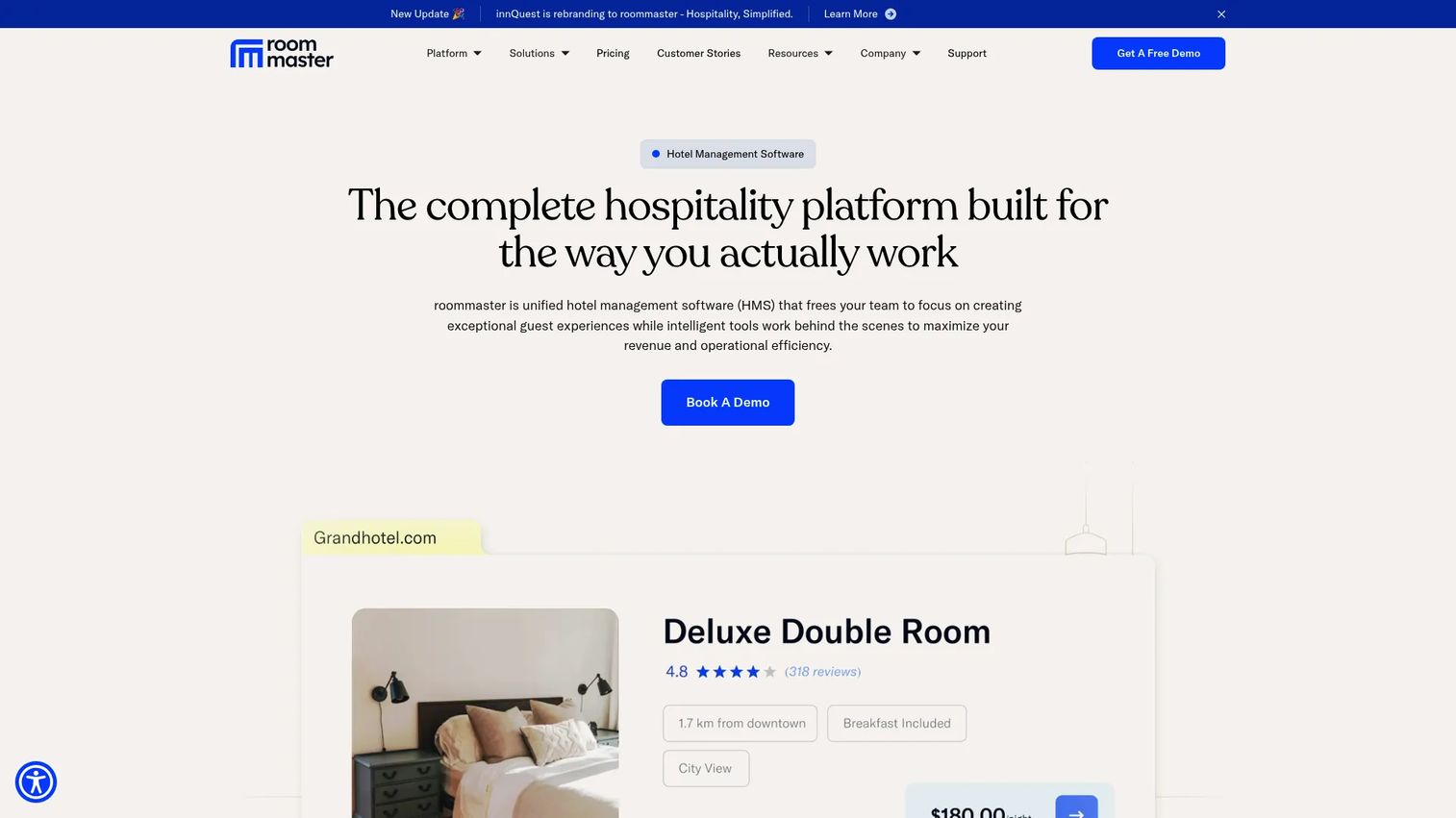
roommaster is all-in-one hotel management software that ties channel management to a full PMS and operations platform. Distribution, inventory control, and booking sit alongside front-desk and operational tools, so reservations from connected channels flow directly into daily operations. It suits hotels that want a unified system rather than a distribution-only tool.
Best for: Hotels seeking a unified PMS, booking engine, and channel manager in one platform.
Key strengths
- PMS and property management: Core front-desk and operations in one system.
- Booking engine: Direct reservations from your website.
- Channel manager and integrations: OTA connectivity that feeds inventory back into operations.
Why choose roommaster: roommaster fits properties that want distribution and operations under one roof. Because the channel manager is native to the PMS, inventory control stays consistent between what guests book online and what your front desk sees. It suits hotels prioritizing an integrated operational picture over a standalone sync layer.
roommaster pricing: roommaster uses quote-based pricing tailored to property size and operational needs, with no public numeric price and no free tier. G2 reviewers rate it 4.5/5. Request a personalized quote scoped to your property.
9. Sirvoy
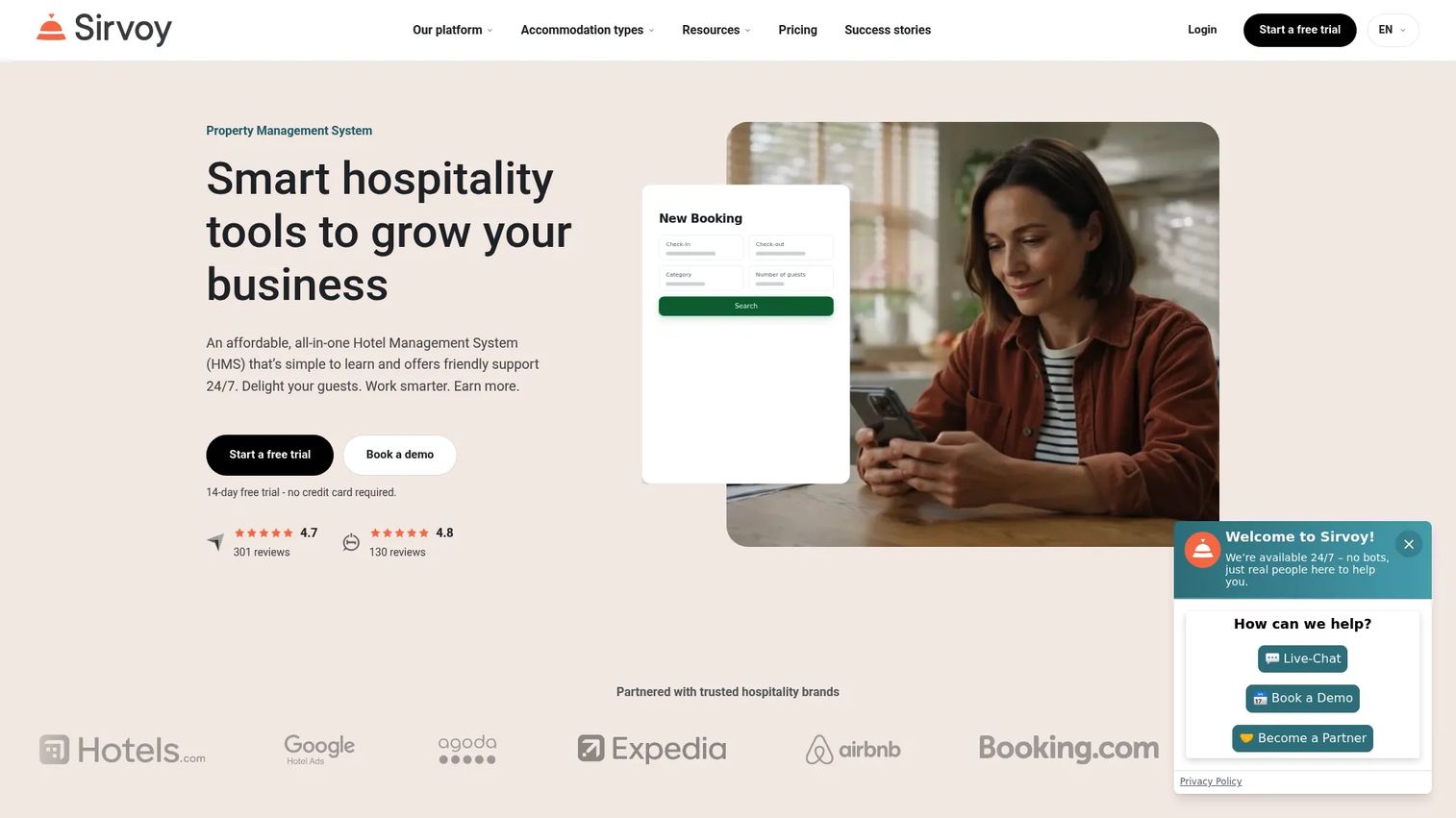
Sirvoy is property management software for accommodation providers, built to be easy to deploy for lean teams. Its channel manager works alongside a front-desk PMS, booking engine, website builder, and automations, so a small property can run distribution and operations from one affordable system. The low barrier to entry is what sets it apart for independents.
Best for: Small hotels, B&Bs, hostels, and other accommodation properties needing an all-in-one PMS with a channel manager.
Key strengths
- Front desk and PMS: Core reservation and operations management.
- Channel manager and booking engine: OTA sync plus direct bookings from your site.
- Website builder and automations: Tools to run a lean property without extra software.
Why choose Sirvoy: Sirvoy appeals to lean teams that want simple, predictable software with a genuine free entry point. If your workflows are straightforward and your budget is tight, its transparent pricing and easy setup make it low-risk to start. It fits owner-operators who want OTA sync and direct bookings without a heavy implementation.
Sirvoy pricing: Sirvoy publishes transparent pricing in euros, starting at €0/month on the Free plan, with Starter and Pro tiers available on monthly or yearly billing. Yearly billing saves roughly 8%. G2 reviewers rate Sirvoy 4.5/5.
How to choose the right channel manager
Shortlisting is easier when you evaluate against your actual property, not a feature checklist. Here is what to weigh before buying.
OTA and channel reach
Confirm the tool connects to every channel you sell on today, plus the ones you plan to add. Regional OTAs matter as much as the global names if your guest mix leans local. Check whether GDS and metasearch connectivity are included or add-ons.
PMS integration and fit
The channel manager should link cleanly to your property management system with two-way sync. If you already run a PMS, verify the integration is native or well-supported, not a fragile connector. If you are open to switching, an all-in-one platform can remove the integration question entirely.
Sync reliability in daily operations
Good sync means updates push fast and consistently, with no lag that opens an overbooking window. Ask how quickly a booking on one channel reflects across the others, and whether the vendor guarantees real-time or near-real-time updates during high-demand periods.
Pricing transparency against your mix
Match pricing to your property size and channel count. Some vendors price by room count, others by tier or quote. Model the cost against your reservation volume so you are not surprised when you scale channels or add properties.
Conclusion
The right hotel channel management system depends on your scale, your PMS stack, and how much revenue control you want. For an integrated PMS, channel manager, and booking engine in one platform, Cloudbeds is the strongest all-in-one pick. SiteMinder leads on distribution breadth and rate insights. STAAH excels for automation-driven revenue control, while RateGain and Lighthouse fit properties that want deeper pricing and market intelligence. For smaller independents, inns, and B&Bs, GraceSoft and Sirvoy deliver distribution basics with transparent entry pricing, and eZee Absolute and roommaster suit teams that want a PMS-centered operational stack.
Your next step is practical: shortlist two or three tools that match your property type, verify each one integrates cleanly with your PMS and every channel you sell on, and compare pricing against your actual room count and reservation volume. The best channel manager is the one that removes manual work and booking errors from your operation, not the one with the longest feature list.
FAQs
A hotel channel manager is software that syncs your room rates, availability, and inventory across all your online booking channels from one dashboard. Change a rate or update availability once, and it pushes to every connected OTA and channel in real time.
It gives you central control over your OTAs and other booking channels. Instead of logging into each extranet to update rates and availability, you manage everything in one place, which reduces manual updates and keeps your inventory and pricing consistent across channels.
A property management system (PMS) handles your internal operations, such as reservations, front desk, check-in and check-out, and housekeeping. A channel manager handles external distribution, syncing rates and availability across booking channels. They are different jobs, but they usually integrate and work together, with the channel manager feeding bookings into the PMS.
When a room books on any connected channel, real-time sync immediately reduces availability across every other channel. That closes the window where two guests could book the same room. Delays create risk: the longer the gap between a booking and the availability update, the higher the chance of a double booking, especially during peak demand.
Independent hotels, boutique properties, hotel groups, B&Bs, hostels, vacation rentals, and any multi-channel operator benefit from a channel manager. The need scales with distribution complexity. Once you sell on more than two or three channels, manual updates become error-prone and time-consuming, and automated sync pays for itself.
Prioritize OTA reach, PMS integration, sync reliability, reporting, booking engine tie-ins, support quality, and pricing transparency. Focus on fit over feature count: the best channel management software for hotels is the one that connects to your channels, works with your PMS, and matches your budget, not the one with the most features you will never use.
Yes, indirectly and directly. Better distribution control improves occupancy by keeping availability accurate across more channels, and it reduces the manual errors and overbookings that cost money and damage guest trust. Many tools also add rate insights and automation that help revenue teams price more competitively, though results depend on how actively you manage distribution.