The clinical team wants faster answers. The CMIO wants fewer alert overrides. The board wants to see the product embedded in hospital workflows before the next fundraise. And somewhere in the middle, you are trying to figure out which type of clinical decision support software actually solves the problem versus which one adds another configuration burden your informatics team doesn't have capacity for.
Clinical decision support tools were adopted by 54.4% of U.S. hospitals in 2026, according to the Journal of the American Medical Informatics Association. Adoption, though, is not the same as impact. The gap between buying a CDS tool and changing clinical behavior is where most healthcare software investments stall.
The FDA's 2026 clinical decision support software guidance clarified the regulatory context for many of these products, but it left buyers to sort out evaluation, deployment, and governance on their own.
This guide does that work for you.
Choosing clinical decision support software means deciding where clinical judgment gets supported, where it gets interrupted, and who remains accountable.
What's inside
This guide is for healthcare SaaS founders, clinical informatics leaders, and operating executives evaluating CDS products across different clinical workflows.
- Nine tools spanning point-of-care reference, diagnostic support, EHR-native CDS, medication knowledge, and care-pathway governance
- Selection criteria: Clinical workflow fit, evidence transparency, EHR interoperability, governance model, and commercial structure
- A plain-English FDA context note on how functionality and intended use affect regulatory classification
- A founder-oriented considerations checklist for reducing evaluation and rollout risk
No single tool wins across all five categories. The right choice follows the clinical job, not the vendor shortlist.
TL;DR
- Best for broad point-of-care evidence: UpToDate, with coverage across 25 specialties and an AI layer grounded in its own content
- Best for structured evidence plus medication support: DynaMedex, which pairs clinical evidence with Micromedex drug data in one subscription
- Best for visual differential diagnosis: VisualDx, built around image-rich diagnostic support and a 50,000-image library
- Best for AI-assisted evidence retrieval: OpenEvidence, free for verified U.S. healthcare professionals
- Best for EHR-embedded enterprise workflows: Epic for Epic environments, Oracle Health for Oracle environments, MEDITECH Expanse for MEDITECH customers
- Best for order-set and care-plan governance: Zynx Health, purpose-built for standardized clinical content management
What is clinical decision support software?
Clinical decision support software is technology that delivers patient-specific or evidence-based information to healthcare professionals during clinical decision-making.
The term covers a wide range of functions. A point-of-care reference tool that a clinician opens to check a drug dose sits in the same category as an EHR-embedded alert that fires when a medication order triggers a safety rule. They serve different clinical moments and require very different implementation approaches.
Common clinical decision support system functions
- Point-of-care evidence summaries: Fast access to clinical topic summaries, guidelines, and treatment recommendations during patient encounters
- Differential diagnosis support: Tools that help clinicians generate and narrow a differential, often using symptom, finding, or image inputs
- Drug interaction and formulary guidance: Medication knowledge that flags interactions, checks dosing, and provides formulary context
- Clinical alerts and reminders: Automated notifications embedded in EHR workflows, triggered by patient data or order events
- Order sets and care pathways: Structured clinical content that standardizes evidence-based ordering across care settings
- Risk prediction models: Algorithms that estimate patient risk using structured clinical data, used to prioritize interventions
The difference between reference tools and workflow-embedded CDS
A reference tool answers a question the clinician already knows to ask. The clinician initiates the query, reviews the content, and decides what to do. Low friction, low configuration, relatively fast to deploy.
Workflow-embedded CDS presents a prompt, recommendation, alert, or action inside an ordering or documentation workflow. The clinician did not ask for it. That changes the usability bar, the governance requirements, and the implementation scope considerably.
How FDA guidance affects the category
The 21st Century Cures Act created exclusions for certain non-device CDS functions. FDA's analysis considers the intended user, the type of recommendation, whether a healthcare professional can independently review the basis for the recommendation, and the type of information the software analyzes.
Functions involving medical images, signals, or time-critical clinical decisions may receive different regulatory treatment than those that display plain text evidence for a clinician to review and act on.
This article is not legal or regulatory advice. Confirm product classification and regulatory responsibilities with qualified counsel and regulatory experts.
When to use clinical decision support software
Give clinicians evidence at the point of care
A clinician sees an unfamiliar presentation and needs a fast, evidence-grounded answer. Point-of-care reference tools like UpToDate and DynaMedex cover this moment. The clinician initiates the query, the tool returns structured content, and clinical judgment applies the result. This is usually the lowest-friction CDS deployment because adoption is self-directed and governance requirements are lighter than for embedded workflow tools.
Standardize high-variation clinical workflows
Some clinical decisions produce wide variation across a health system without clear evidence justification. Order sets, care plans, and clinical pathways address this by embedding evidence-based structure into the ordering workflow. The goal is not removing judgment but providing a structured starting point. Zynx Health and EHR-native CDS within Epic, Oracle Health, and MEDITECH Expanse serve this use case, with the tradeoff being that governance and local configuration work is substantial.
Support medication, diagnostic, and risk-sensitive decisions
Medication safety, differential diagnosis, and patient risk prediction each require a different tool architecture. Drug interaction checking and dosing support need current, frequently updated medication knowledge infrastructure. Visual diagnostic support benefits from image-rich content libraries. Risk models require validation data, monitoring plans, and a clear escalation path when a model fires incorrectly. First Databank covers medication knowledge. VisualDx covers visual diagnosis. Do not buy an alert engine when the real need is point-of-care evidence access.
Clinical decision support software comparison
The table below compares tool categories as much as individual products. Some are individual clinician subscriptions. Others are embedded in a hospital's EHR and require significant implementation work, clinical ownership, and governance infrastructure.
| # | Product | Best for | Key differentiator | Pricing | G2 rating |
|---|---|---|---|---|---|
| 1 | UpToDate | Broad point-of-care evidence access | Evidence summaries across 25 specialties with AI layer | Individual and institutional plans; contact sales for enterprise | 4.8/5 |
| 2 | DynaMedex | Structured evidence plus medication support | DynaMed evidence paired with Micromedex drug data | From $599/year; student plan from $149/year | Not listed on G2 |
| 3 | VisualDx | Visual differential diagnosis | 50,000-image library with AI skin analysis | From $20.83/mo (billed annually); 7-day free trial | Not listed on G2 |
| 4 | OpenEvidence | AI-assisted clinical evidence retrieval | Free for verified U.S. healthcare professionals | Free for verified U.S. HCPs | 4.6/5 |
| 5 | Epic | EHR-embedded CDS for Epic environments | Native alerts, order sets, and chart-context support | Enterprise contract | 4.2/5 |
| 6 | Oracle Health | EHR-embedded CDS for Oracle environments | AI-enabled EHR with clinical intelligence and interoperability | Enterprise contract; API access from $1,000/year | Not listed on G2 |
| 7 | MEDITECH Expanse | CDS for MEDITECH health systems | Integrated EHR with ambient AI and mobile workflows | Enterprise contract | 3.1/5 |
| 8 | Zynx Health | Evidence-based order sets and care-plan governance | Configurable clinical content for care standardization | Enterprise contract | Not listed on G2 |
| 9 | First Databank | Medication knowledge and safety workflows | Drug databases, interaction checking, and ePrescribing support | Enterprise contract | Not listed on G2 |
Best clinical decision support software tools for 2026
Each tool below fits a different part of the clinical decision process. The choice follows the clinical job, the deployment model, and the governance capacity your team can realistically commit to.
1. UpToDate
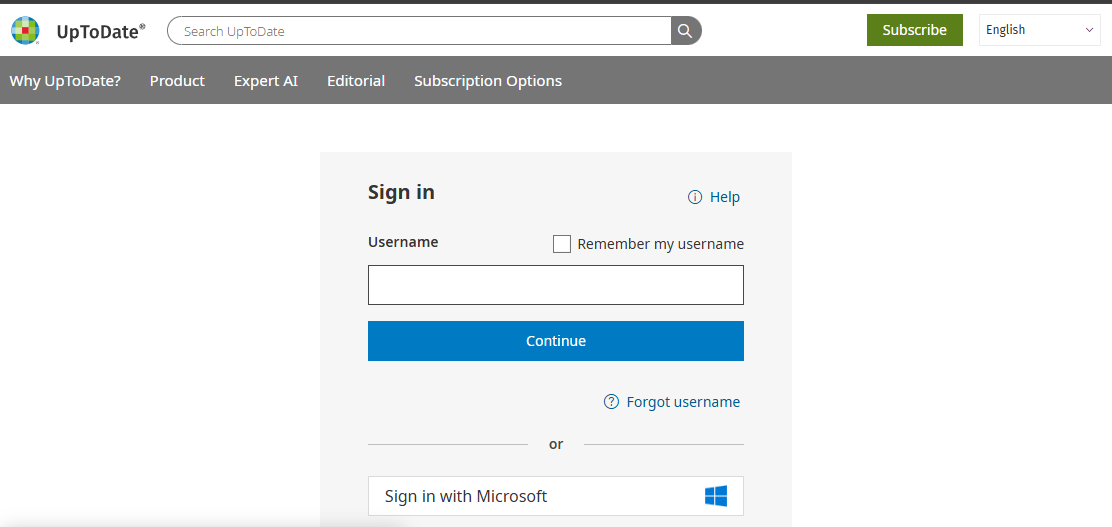
UpToDate is a point-of-care clinical evidence platform used by healthcare professionals to access evidence-based recommendations across 25 medical specialties. It covers clinical topics, treatment guidance, drug information, and patient education materials, and is available on web and mobile with optional offline access. A recent addition, UpToDate Expert AI, delivers AI-generated answers grounded in UpToDate's own clinical content rather than pulling from the open web.
Best for: Health systems, clinical teams, and digital health companies that need widely recognized point-of-care evidence support with broad specialty coverage.
Key features
- Evidence-based clinical topic summaries across 25 specialties
- UpToDate Expert AI grounded in UpToDate content
- Mobile app with voice-enabled search and offline access
- Drug information access integrated with clinical topics
- CME/CE/CPD credit tracking for individual subscribers
Why choose UpToDate: It fits teams prioritizing depth of coverage, clinician familiarity, and fast individual adoption. It is primarily a clinician-initiated reference product, not a replacement for local workflow design or EHR-embedded alert governance.
UpToDate pricing: Individual and small-group subscriptions are available through the UpToDate store, with pricing displayed after selecting country and role. Enterprise institutional plans require contacting sales directly for a quote.
G2 rating: 4.8/5
2. DynaMedex
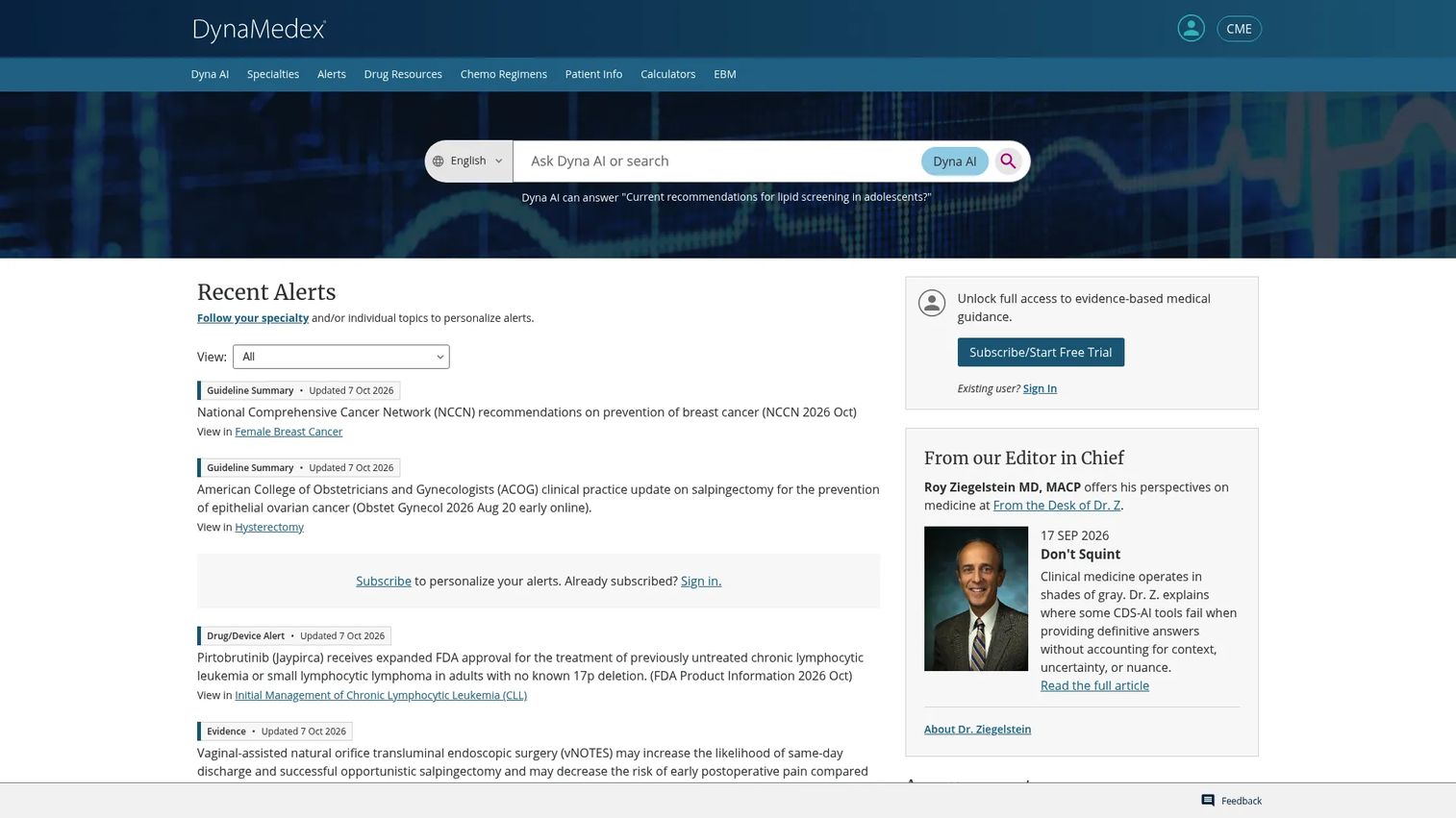
DynaMedex combines DynaMed clinical evidence content with Micromedex medication information in a single subscription. It covers disease management and clinical topic summaries across 35+ specialties alongside Micromedex drug dosing, interaction checking, and IV compatibility data. Daily content updates and personalized specialty alerts keep the information current.
Best for: Clinicians and hospital teams that want both clinical evidence and medication decision support without managing separate subscriptions.
Key features
- Evidence-based content across 35+ medical specialties
- Micromedex drug information, dosing, and interaction checking
- IV compatibility data from Micromedex
- Daily updates with personalized topic and specialty alerts
- Mobile access for clinicians at the point of care
Why choose DynaMedex: The combination of evidence reference and medication knowledge in one product is the core differentiator. Buyers should still plan for local configuration, EHR integration, and clinician adoption work, which the subscription itself does not handle.
DynaMedex pricing: Individual annual plans start at $599/year for the standard DynaMedex subscription. The DynaMedex with Dyna AI tier runs $675/year. A student plan is available at $149/year. Dyna AI is currently offered to individual U.S. subscribers only. Organization-wide pricing requires contacting sales.
G2 rating: DynaMedex has no G2 reviews at the time of writing
3. VisualDx
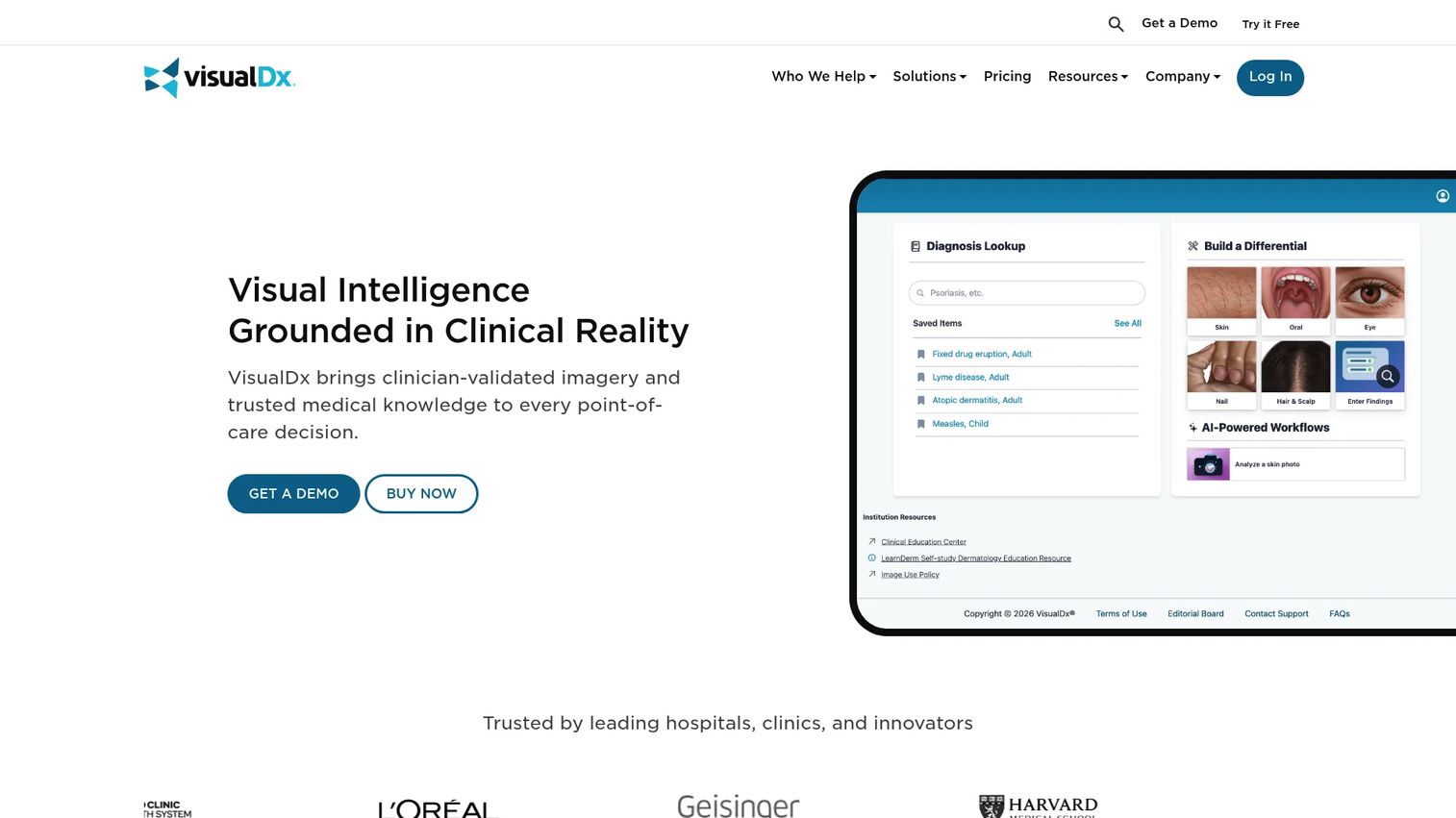
VisualDx is a clinical decision support platform built around image-rich diagnostic content and differential diagnosis tools. It combines clinician-validated medical imagery with structured clinical knowledge to help providers narrow a differential when visual pattern recognition matters. The platform covers dermatology, infectious disease, and other specialties where photographs and clinical images carry diagnostic weight, along with drug reaction references and patient-facing visual explainers.
Best for: Clinical teams that need image-supported differential diagnosis, particularly in specialties where visual findings drive the decision.
Key features
- Differential diagnosis builder using symptoms and findings
- Library of 50,000+ clinical images across skin tones and body sites
- AI-powered skin image analysis
- Drug reaction and adverse effect references
- Patient-facing visual explainers for education
- EHR integration, single sign-on, and API access
Why choose VisualDx: It fills a gap that broad treatment references do not address well. Diagnostic uncertainty with a visual or pattern-recognition component is exactly where it performs best. It is not a general-purpose clinical reference tool.
VisualDx pricing: Individual Core plans start at $20.83/month billed annually ($249.99/year), or $39.99 billed monthly. The Elite plan runs $24.99/month annually ($299.99/year) or $49.99 monthly. A 7-day free trial is available. Institutional pricing requires contacting VisualDx directly.
4. OpenEvidence
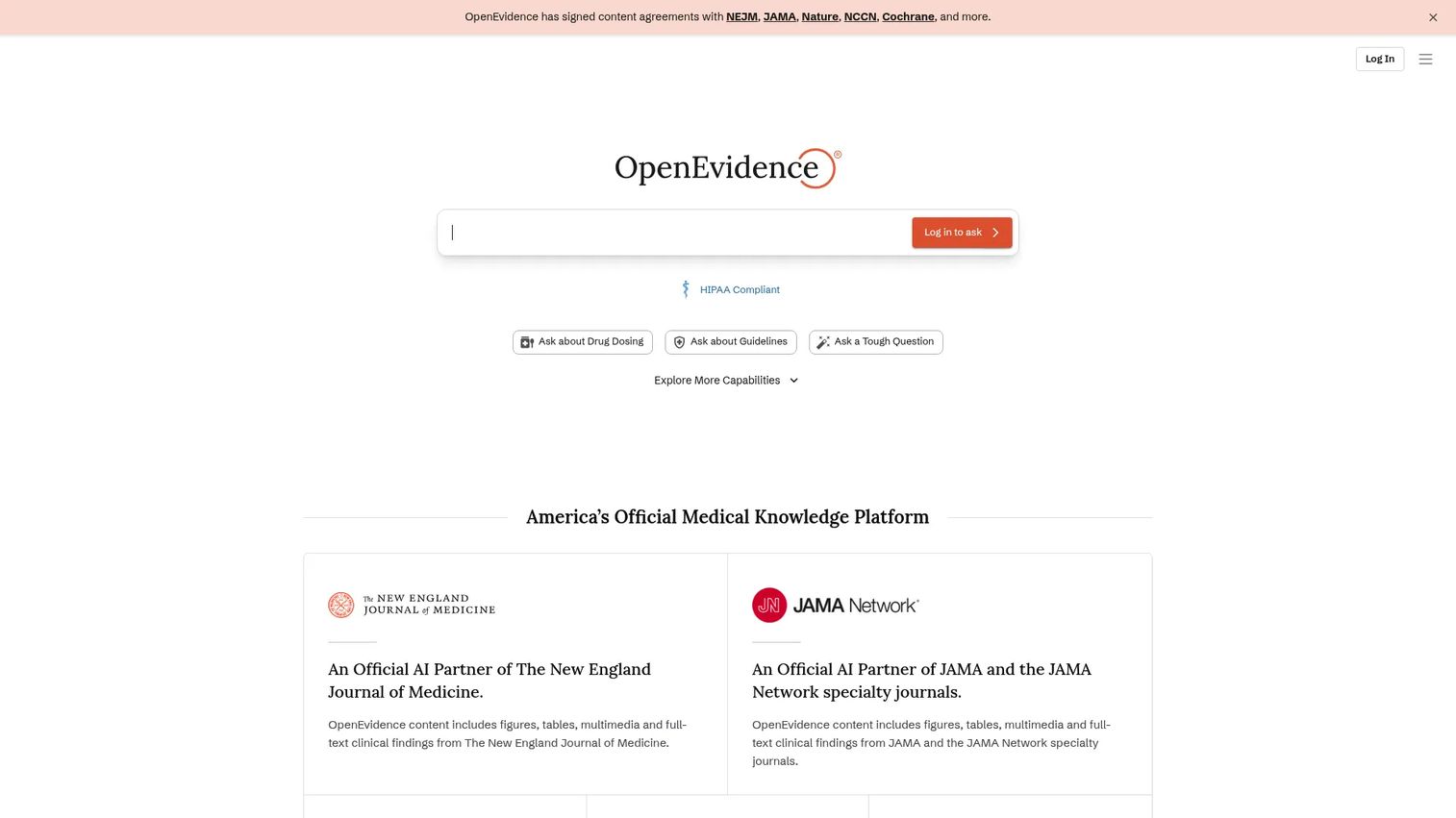
OpenEvidence is a medical information platform that uses AI to help healthcare professionals retrieve evidence-based clinical answers quickly. It returns source-linked responses to natural-language clinical questions, drawing from medical literature and citing the underlying studies. For clinical organizations exploring AI-assisted evidence retrieval, it offers an accessible entry point because it is free for verified U.S. healthcare professionals.
Best for: Clinical organizations exploring AI-assisted evidence retrieval while maintaining a strict review process for cited sources.
Key features
- AI-assisted clinical question answering with source citations
- Natural-language query interface for clinicians
- Rapid literature synthesis with linked references
- Clinician-facing answer interface optimized for point-of-care use
- Evidence-based clinical information from medical literature
Why choose OpenEvidence: The access model is a meaningful differentiator. For verified U.S. HCPs, there is no cost to evaluate it. Buyers should assess source coverage, citation quality, response consistency across query types, and the governance model for how clinicians verify and act on AI-generated answers before broader deployment.
OpenEvidence pricing: OpenEvidence is free for verified U.S. healthcare professionals. No paid individual plans or organization-level pricing tiers were publicly available at the time of writing. Contact OpenEvidence directly for organization-wide access options.
G2 rating: 4.6/5
5. Epic
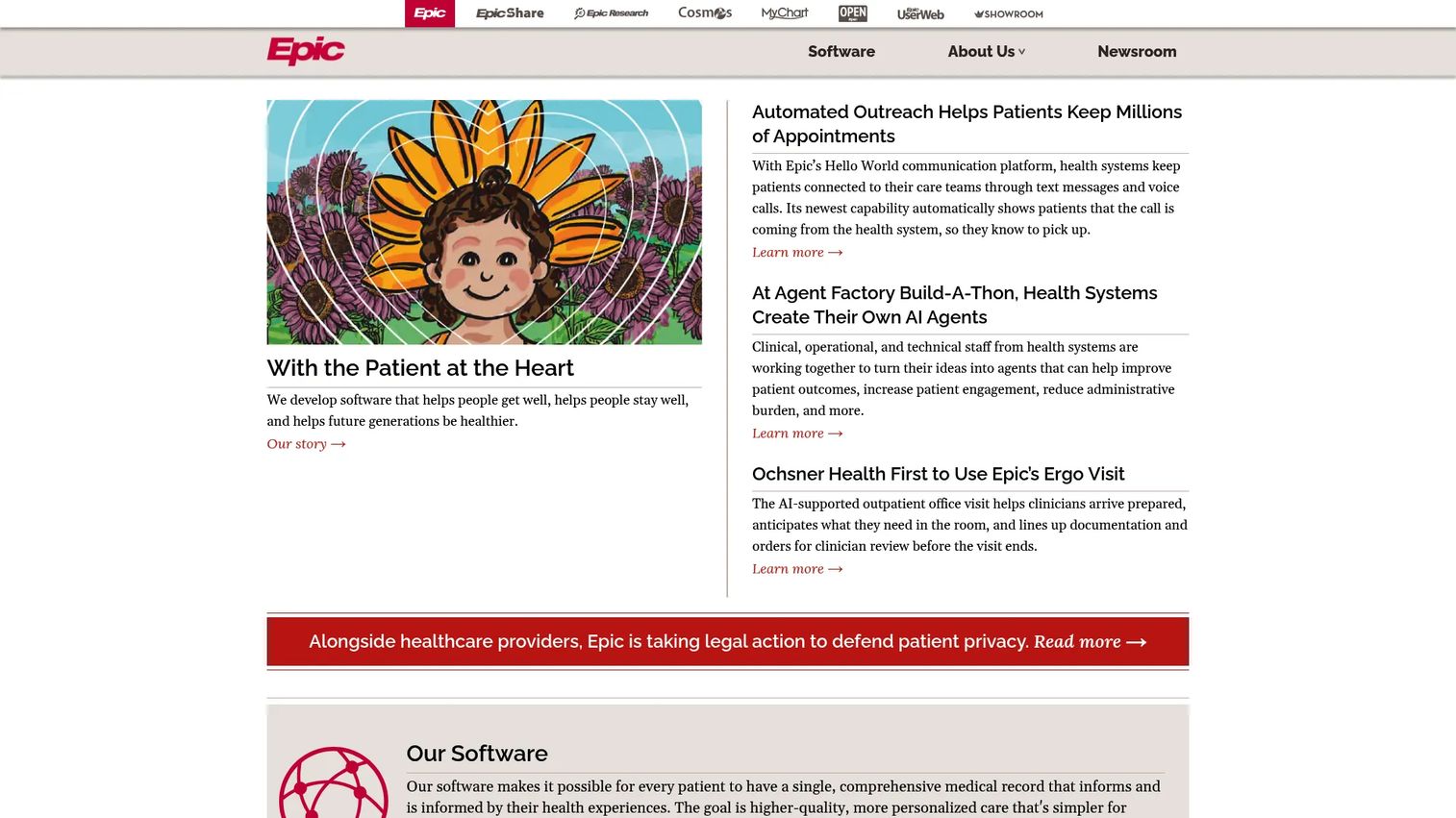
Epic is an integrated EHR platform that embeds clinical decision support directly into clinical workflows for organizations already operating on its system. CDS in Epic includes alerts, reminders, order sets, care pathways, and chart-context recommendations that surface within the ordering, documentation, and scheduling workflows clinicians already use. AI-assisted documentation and workflow support are increasingly part of the Epic environment.
Best for: Large hospitals and health systems operating on Epic that need decision support embedded into the existing chart and ordering workflow rather than as a separate subscription.
Key features
- EHR-integrated alerts and reminders tied to patient data
- Order sets and evidence-based care pathways
- Chart-context decision support within the clinical workflow
- Interoperability through Care Everywhere and FHIR APIs
- AI-assisted clinical documentation and workflow tools
Why choose Epic: Its value depends entirely on your EHR environment and a strong internal informatics team. For Epic health systems, embedded CDS is part of the operating model. For organizations on other platforms, it is not a relevant standalone option.
Epic pricing: Enterprise contracts vary by modules, implementation scope, support, and organization size. Epic does not display pricing and requires direct engagement for contract terms.
G2 rating: 4.2/5
6. Oracle Health
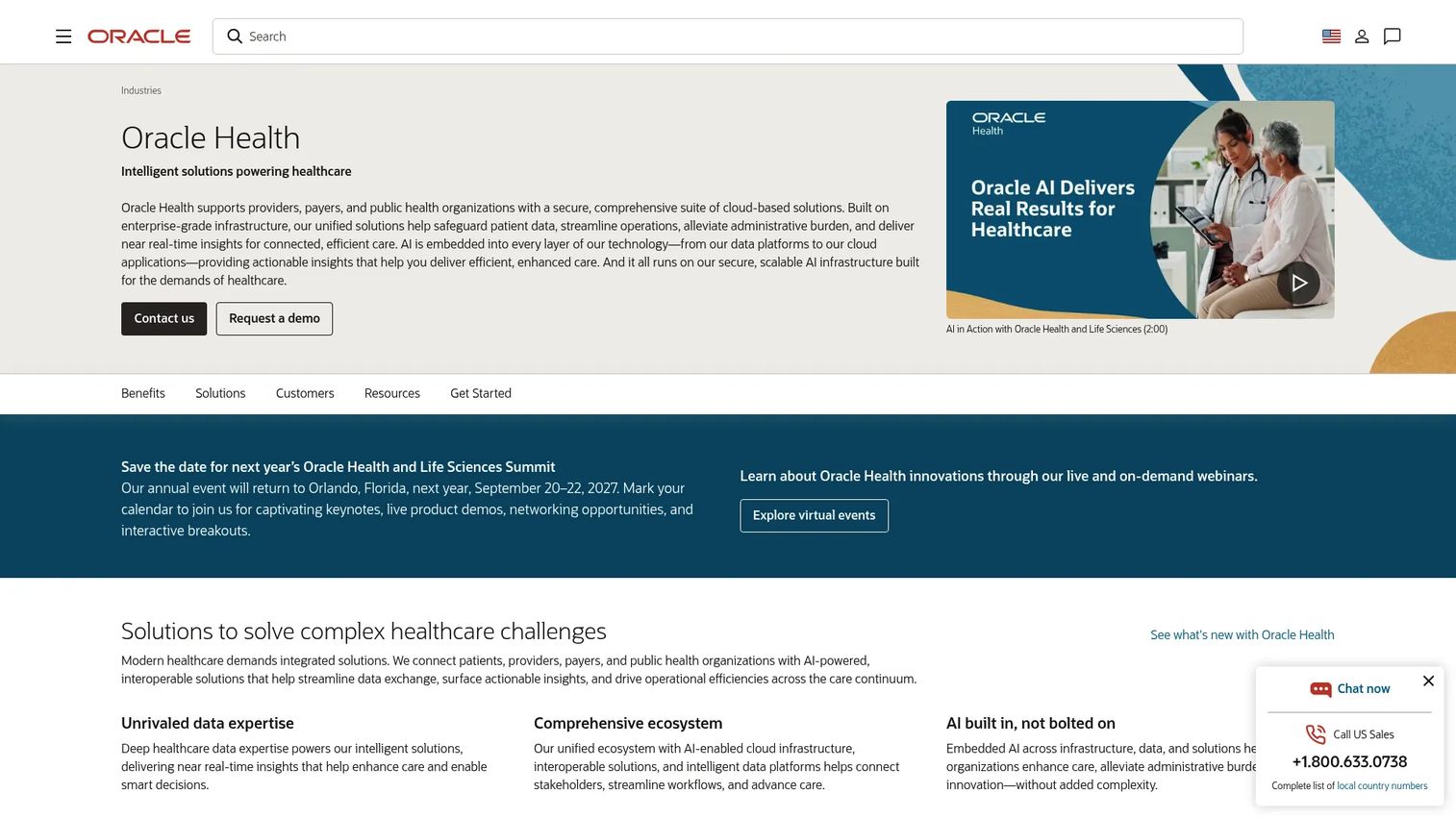
Oracle Health provides cloud-based clinical and operational tools for healthcare organizations, including AI-enabled EHR functionality, interoperability across clinical and administrative workflows, and patient engagement tools. CDS within the Oracle Health environment includes AI-enabled clinical intelligence, voice commands, personalized workflows, and data exchange across systems. Implementation quality and data quality within the environment determine how well embedded CDS actually performs.
Best for: Healthcare organizations operating on Oracle Health that want to improve clinical decision support inside their existing technology environment.
Key features
- AI-enabled EHR with voice commands and clinical intelligence
- Patient timelines and personalized clinical workflows
- Interoperability through Traverse Exchange and FHIR-based data exchange
- Patient engagement tools including portal and scheduled video visits
- Population health and care-coordination capabilities
Why choose Oracle Health: It should be evaluated as part of a broader Oracle Health environment assessment, not as a standalone CDS tool. Organizations not on Oracle Health have no practical reason to consider it for this use case.
Oracle Health pricing: Enterprise clinical contracts require direct engagement with Oracle Health. For developers and certified API access, published annual fees range from $1,000/year for bulk data API access up to $30,000/year for Standard-XL single patient API access, plus a one-time $10,000 first-time implementation setup fee.
7. MEDITECH Expanse
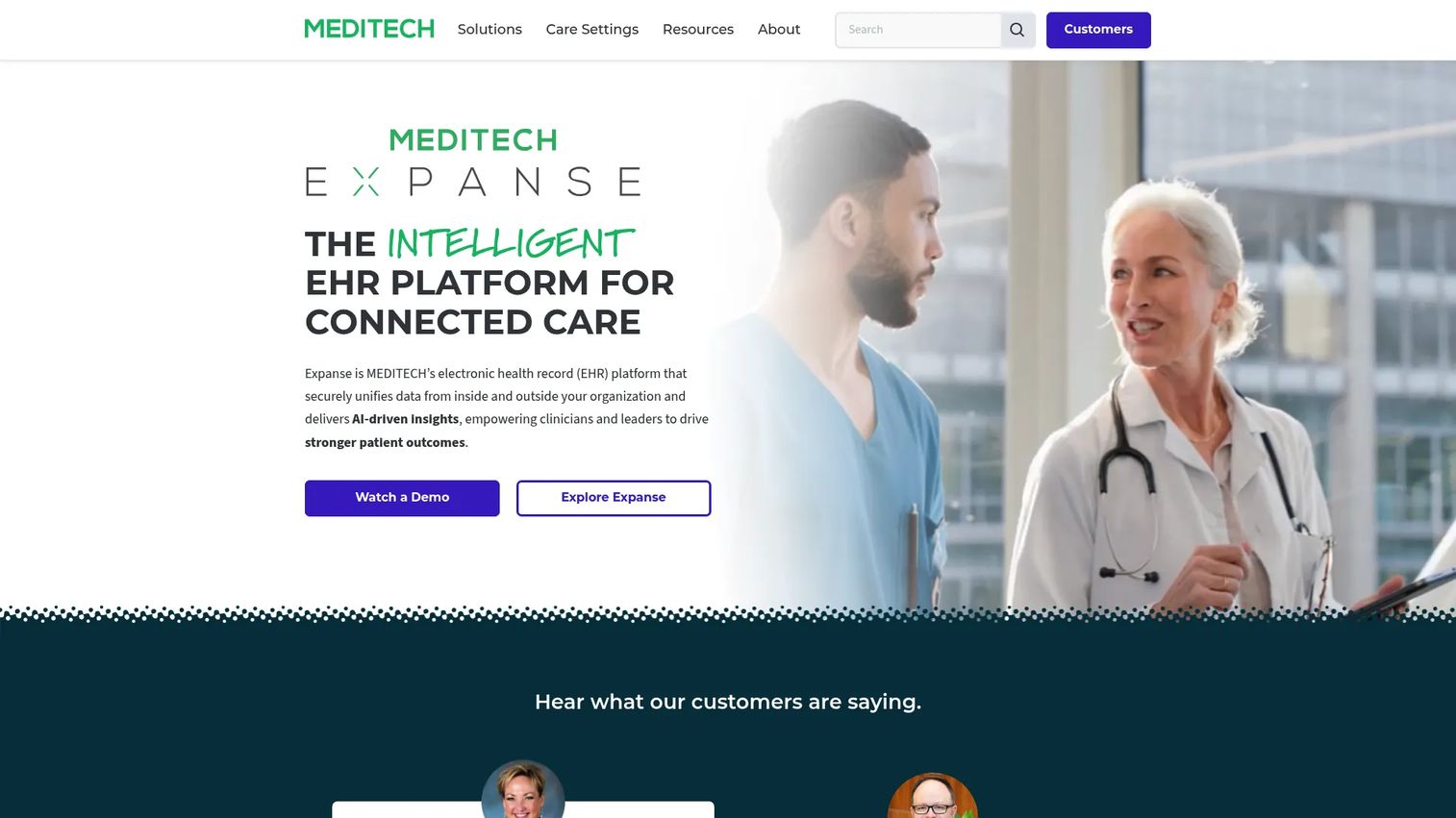
MEDITECH Expanse is an integrated EHR with embedded clinical workflows, ambient AI documentation, mobile clinician tools, and interoperability capabilities. For MEDITECH customers, CDS lives inside Expanse as alerts, reminders, documentation support, and clinical workflow configuration. The AI-powered intelligent search spans structured and unstructured patient data, and the Expanse Now mobile application supports clinicians outside the main workstation environment.
Best for: Hospitals and health systems operating on MEDITECH that want clinical decision support embedded in their existing workflows rather than managing a separate point-of-care subscription.
Key features
- AI-powered intelligent search across structured and unstructured patient data
- Clinical alerts and reminders integrated with the EHR workflow
- Ambient intelligence and generative AI documentation support
- Mobile clinician workflows through Expanse Now and Expanse Point of Care
- Interoperability through Traverse Exchange
Why choose MEDITECH Expanse: It makes sense for current MEDITECH environments where embedded CDS is the goal. Buyers should assess clinical configurability, implementation resources, reporting capabilities, and interoperability with other systems before committing.
MEDITECH Expanse pricing: Contract and licensing terms are negotiated directly with MEDITECH. No numeric pricing is displayed on MEDITECH's official site.
G2 rating: 3.1/5 based on 116 reviews
8. Zynx Health
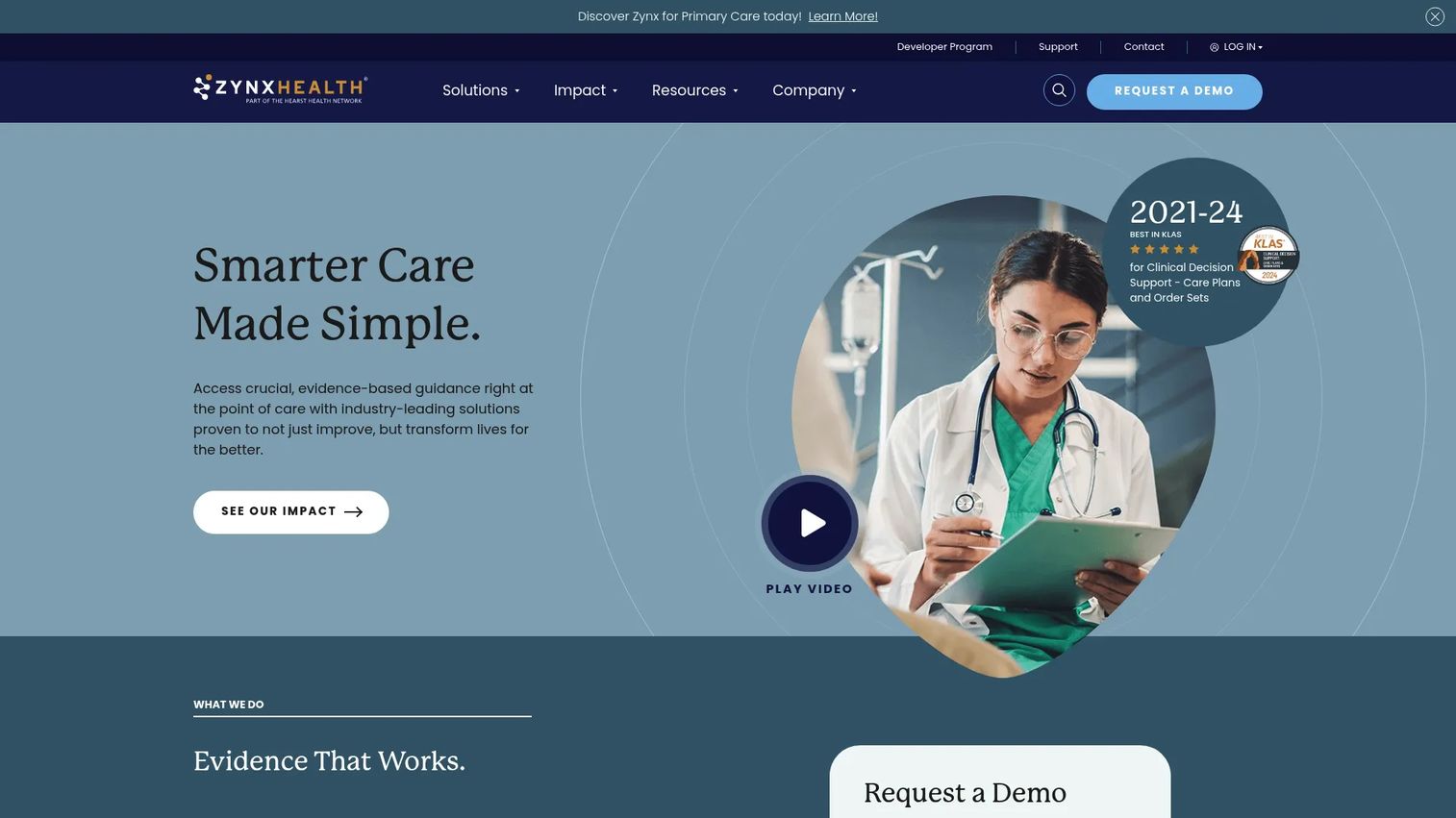
Zynx Health provides evidence-based order sets, care plans, and clinical content governance for healthcare organizations. This is not a general clinician reference tool. It is built for informatics and quality teams that need governed, evidence-backed content to standardize ordering and care delivery across a health system. The content is customizable at the local level, and EHR implementation resources are part of the offering.
Best for: Clinical informatics and quality teams that need managed, evidence-based order sets and care-plan content with a defined governance model.
Key features
- Evidence-based order sets built on current clinical literature
- Care plans and clinical pathways for standardized care delivery
- Customizable clinical content for local care settings
- Clinical content governance tools and update workflows
- EHR implementation support and resources
Why choose Zynx Health: It fits organizations that have identified unwarranted clinical variation and are ready to commit a clinical owner, a governance process, and internal informatics resources to maintain structured content. Without those inputs, the content becomes stale.
Zynx Health pricing: Enterprise pricing depends on scope, content needs, and implementation. Zynx Health directs prospective buyers to request a demo for pricing details. No numeric pricing was available at the time of writing.
G2 rating: Zynx Health has no G2 reviews at the time of writing
9. First Databank
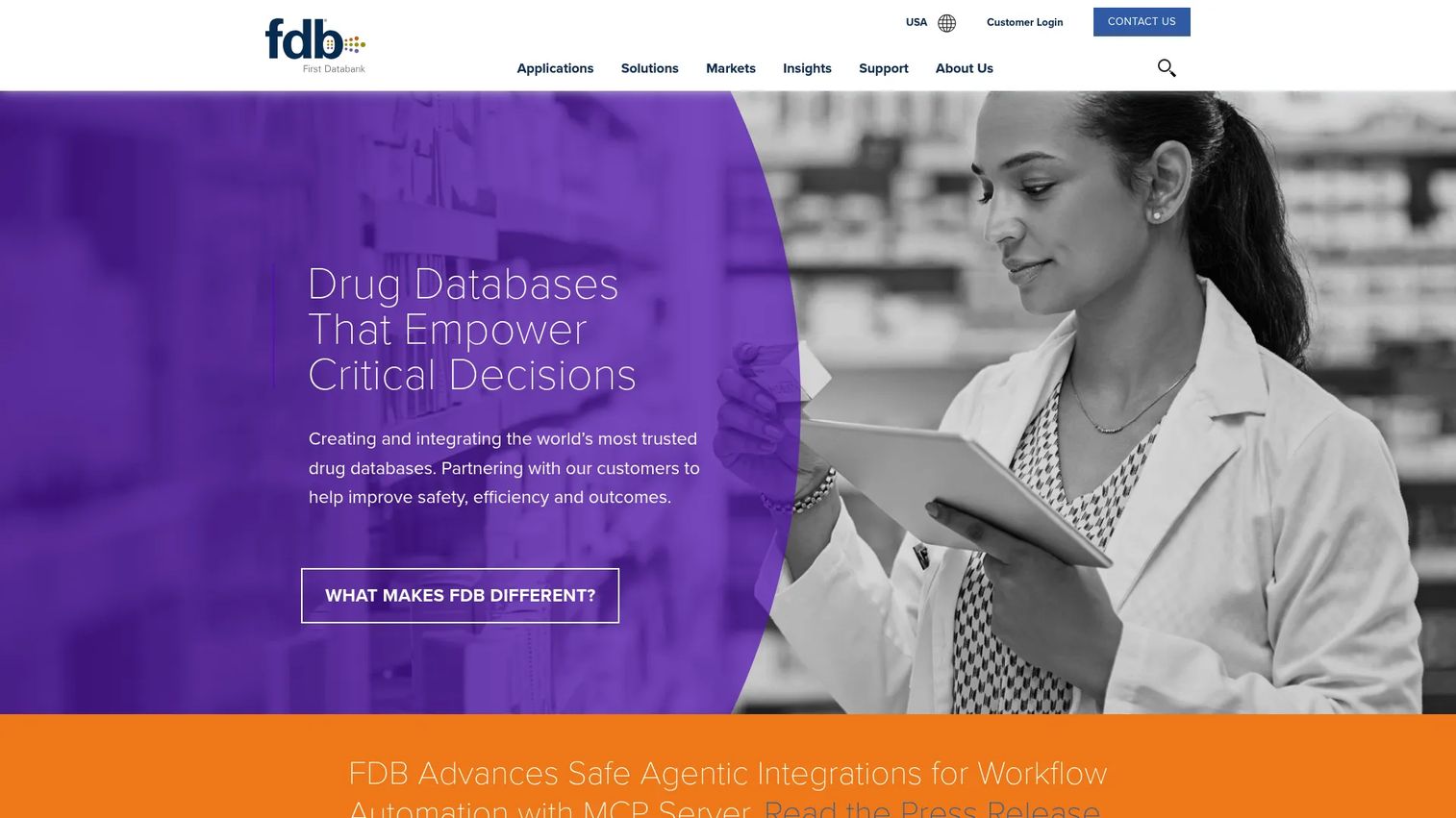
First Databank (FDB) provides drug knowledge databases and medication decision support infrastructure used inside EHRs, pharmacy systems, and clinical applications. Its core products cover drug interaction checking, dosing support, ePrescribing, pharmacy dispensing, and clinical decision support analytics. Healthcare software companies often license FDB content to embed medication knowledge directly into their own clinical workflows, making FDB as much an infrastructure decision as a direct buyer tool.
Best for: Health systems and healthcare software companies that need medication knowledge content and decision support embedded into clinical or pharmacy workflows.
Key features
- Drug knowledge databases covering interactions, dosing, and allergy data
- Drug interaction checking and medication safety alerts
- ePrescribing and pharmacy-dispensing decision support
- Clinical decision support analytics and alert-monitoring tools
- API and workflow integration options for software vendors
Why choose First Databank: It is an infrastructure choice for medication-related decisions. Buyers should evaluate update cadence, interoperability with their EHR or application, data licensing terms, local formulary requirements, and how alerts will be configured and governed after deployment.
First Databank pricing: FDB prices through enterprise contracts. The scope of data products, usage rights, and integration determines the contract terms. Contact FDB sales for pricing details.
Considerations when choosing clinical decision support software
Match the tool to the clinical moment
Clinician-initiated reference lookup and interruptive workflow CDS are fundamentally different clinical interventions. A tool that works well for evidence retrieval will not automatically produce value when configured as an alert engine. Start by identifying the specific clinical moment you are trying to support, then select the tool architecture that fits it.
Evaluate evidence transparency and clinical reviewability
Know what sources power the recommendation, when content was last updated, and what assumptions the tool applies. For AI-enabled CDS, this matters more, not less. Clinicians need to be able to inspect the basis for a recommendation and make an independent judgment, which is also one of the FDA's criteria for non-device CDS classification.
Plan for EHR and workflow integration
Assess whether the tool supports your EHR environment, identity controls, data standards, and APIs before the evaluation goes deep. A standalone reference tool is easier to pilot. Embedded CDS that requires EHR configuration and governance creates a higher integration bar, and a poor implementation often produces worse outcomes than no CDS at all.
Put governance before scale
Require a named clinical owner, an evidence-review process, an escalation path, a monitoring plan, and a release-management process before rollout. CDS deployments without ownership routinely produce stale content, alert fatigue, and clinician distrust. Pilot one service line before committing to system-wide deployment.
Measure the impact and the unintended effects
Track baseline metrics before deployment: Time to answer, alert acceptance rate, order-set adoption, medication safety events, and clinician satisfaction. Avoid implying that any single metric proves clinical benefit. Override rates and unintended workflow changes are as important as acceptance rates.
Conclusion
Clinical decision support software is not one category. The right product follows the clinical job and the implementation capacity your team can sustain.
For broad point-of-care evidence, UpToDate and DynaMedex are the reference standard options for most clinical teams. VisualDx covers visual diagnostic support where image-driven differential matters. OpenEvidence is worth evaluating for AI-assisted evidence retrieval, especially at no cost for individual U.S. clinicians. Epic, Oracle Health, and MEDITECH Expanse serve organizations that need CDS embedded inside an existing EHR environment. Zynx Health addresses order-set and care-plan governance for teams with the informatics ownership to maintain structured content. First Databank is medication knowledge infrastructure for health systems and healthcare software companies that need drug data integrated into clinical workflows.
The next step is not buying a platform. Pick one clinical workflow, identify who owns clinical accountability for it, validate the evidence and integration requirements, and run a controlled pilot. A successful pilot in one service line gives you a repeatable model. A platform-wide rollout without that model gives you a very expensive configuration problem.
Start your journey with Guideflow today!
FAQs
Clinical decision support software is technology that delivers evidence-based or patient-specific information to healthcare professionals during clinical decision-making. Functions include point-of-care evidence references, medication interaction checking, diagnostic support, clinical alerts, order sets, care pathways, and risk prediction models. The exact function determines the implementation approach, governance requirements, and regulatory context for any given product.
An EHR stores and organizes health information across a patient's care record. Clinical decision support software delivers recommendations, evidence, reminders, or structured guidance at specific moments in care delivery. Many health systems deploy CDS inside the EHR through alerts, order sets, and embedded content. Clinician-initiated point-of-care reference tools operate separately and are accessed when the clinician decides to consult them.
Regulatory treatment depends on the intended use, the type of information the software analyzes, and whether healthcare professionals can independently review the basis for any recommendation. The 21st Century Cures Act excluded certain non-device CDS functions from FDA device oversight, but functions involving medical images, signals, or time-critical decisions may receive different treatment. Confirm product classification and regulatory responsibilities with qualified regulatory counsel before making product decisions.
Non-device CDS refers to clinical decision support functions that the 21st Century Cures Act excluded from FDA medical device regulation. The FDA's analysis uses four criteria: The software's intended user, whether it supports or replaces clinical judgment, whether healthcare professionals can independently review the basis for recommendations, and whether it analyzes medical images, signals, or other data types that affect device classification. Not all CDS products meet these criteria, so classification is specific to the product's intended use.
Start with the clinical job: What specific decision or workflow are you trying to improve? Then assess evidence quality and source transparency, EHR integration requirements, clinician usability, governance and ownership requirements, security and data handling, and commercial model. Run a controlled pilot in one service line before system-wide deployment. Measure override rates and adoption before claiming clinical impact.
Software alone cannot solve alert fatigue. Reducing alert burden requires selective triggering based on clinical relevance, a governance process for reviewing and retiring low-value alerts, measurement of override and acceptance rates over time, and ongoing clinical ownership to adjust rules as care patterns change. An alert engine configured without governance typically makes alert fatigue worse, not better.
Track alert acceptance and override rates, order-set adoption, time to clinical answer, clinician satisfaction with the tool, and any unintended workflow effects. For medication CDS, medication safety process indicators are relevant. For diagnostic support, track whether the tool is being used and where it appears in the diagnostic workflow. Avoid framing any of these as proof of clinical outcome improvement without a study design that controls for other variables.
Startups can license medication knowledge content from providers like First Databank, integrate evidence APIs from clinical reference platforms, or connect with EHR workflows through SMART on FHIR standards. Each integration requires planning for clinical governance, evidence update cycles, patient-data handling, product validation, and a regulatory assessment of whether the integrated function affects the product's device classification. Build the governance model before the integration, not after.
The global clinical decision support systems market was valued at $6.4 billion in 2025 and is projected to reach $15.3 billion by 2033, according to Grand View Research (2026). North America accounted for 45.1% of global revenue in 2025. Growth is driven by EHR expansion, AI adoption in clinical settings, and increasing regulatory clarity around software function classification.
Point-of-care CDS responds to a clinician's query by returning evidence, guidelines, or drug information the clinician can review and apply. Predictive CDS uses patient data to estimate risk or recommend action without the clinician initiating a request. Predictive models require validation on a local population, ongoing monitoring for model drift, and a clear process for how clinicians respond when a prediction fires. The governance and regulatory considerations for predictive CDS are typically more demanding than for reference-based tools.