Your customers want to pay from more places. Your finance team wants clean reconciliation and no compliance surprise. Blockchain payment systems sit in the middle of that tension.
B2B stablecoin payments reached approximately $226 billion in 2025, up 733% year over year, according to McKinsey and Artemis (2026). That number tells you something is happening. It does not tell you which system fits your payment job, your gross margin model, or your board's risk appetite.
The question is not whether blockchain payments are interesting. The question is whether any of these systems solves a payment problem your current rails cannot, at a cost and compliance level your finance team can live with.
This guide is a practical shortlist. It covers networks, processors, stablecoin infrastructure, enterprise rails, and public-sector digital currency systems because a Series B founder evaluating payment strategy needs to compare all of them, not just the crypto-native ones.
What's inside
This guide compares 18 blockchain payment systems for founders evaluating payment infrastructure in 2026. Each entry is assessed on:
- Business payment fit: Does it solve a real payment job (checkout, payouts, settlement, cross-border, programmable)?
- Settlement speed and cost profile: What does moving money actually cost?
- Integration path: How hard is it to connect to existing finance and product workflows?
- Compliance and operational readiness: What KYC, AML, and reporting work does it create?
- Best-fit use case: When does this specific system earn its place on the shortlist?
The list mixes networks, processors, stablecoin systems, and enterprise rails because buyers evaluate all of them when asking about blockchain payment systems.
TL;DR
- Best for mainstream payment acceptance: Stripe Payments or PayPal
- Best for stablecoin settlement: Circle, Visa's stablecoin programs, or stablecoin rails broadly
- Best for enterprise and institutional settlement: JPMorganChase or Kinexys (formerly Onyx)
- Best for crypto-native payments: Bitcoin, Ethereum, Coinbase, or BitPay
- Best for cross-border B2B rails: Ripple, Stellar, or Veem
- Best for future public-sector payment infrastructure: CBDCs (monitor now, build later)
What are blockchain payment systems?
Blockchain payment systems are payment networks, processors, wallets, settlement rails, and digital currency systems that use distributed ledger technology to move value between parties.
The mechanics follow a common pattern. A sender initiates a payment from a wallet, payment app, or enterprise system. The transaction is signed or authorized. Network nodes or validators confirm the transaction rules. The transaction is added to a block or ledger update. The recipient's balance updates. Settlement and reconciliation happen on-chain, through a provider layer, or through a combination of both.
Key capabilities across the category:
- Digital asset movement: Crypto, stablecoins, tokenized deposits, or central bank digital currencies
- Validation: Nodes, validators, banks, or permissioned participants confirm transactions
- Settlement: Value moves without the full intermediary stack of card payments
- Programmability: Smart contracts can trigger payments, escrow, splits, or conditional releases
- Transparency: Ledger records can support auditability and reconciliation
- Integration layer: Businesses typically access these systems through gateways, APIs, wallets, or payment processors
Blockchain payment systems are not a single category. Bitcoin is a network and asset. Circle is stablecoin infrastructure. PayPal is a consumer and merchant payment provider. Visa and Mastercard are card networks exploring blockchain in specific settlement contexts. CBDCs are public-sector digital currency systems. Knowing which type you need is the first decision. You can also explore blockchain analysis tools to understand on-chain activity before committing to a rail.
When to use blockchain payment systems
Settle cross-border payments faster
International settlement through correspondent banking is slow and expensive. Blockchain rails can reduce settlement time from days to minutes, depending on the network and provider. This matters when payment lag affects cash visibility, supplier relationships, or the ability to expand into new markets. Relevant options here include Ripple, Stellar, Veem, and stablecoin payment networks.
Accept digital currency from crypto-native customers
Some customers already hold digital assets and prefer to pay with them. Crypto or stablecoin payment processing works for developer platforms, Web3-adjacent products, marketplaces, and global SaaS businesses with international customer bases. Accepting crypto does not mean holding volatile assets on your balance sheet. Most processors offer immediate fiat conversion.
Automate payments with programmable rules
Smart contracts can handle escrow, revenue sharing, usage-based payouts, creator splits, and milestone-based releases. Ethereum and Layer 2 networks support this type of payment logic. Before building on-chain payment automation, validate legal, tax, and reversal requirements with your counsel. Programmable payments are powerful infrastructure, but the legal framework around them still varies significantly by jurisdiction.
Blockchain payment systems comparison
The table below covers all 18 systems in order. Pricing and G2 ratings reflect verified data from official sources and live G2 listings. Networks and public-sector concepts that do not have a G2 profile are marked N/A.
| # | Product | Best for | Key differentiator | Pricing | G2 rating |
|---|---|---|---|---|---|
| 1 | Bitcoin | Decentralized digital currency payments | Most recognized open blockchain payment network | Network fees vary by congestion | N/A |
| 2 | Mastercard | Enterprise blockchain payment programs | Card network reach with blockchain settlement initiatives | Enterprise agreements | 4.5/5 |
| 3 | Stablecoins | Low-volatility digital currency settlement | Fiat-pegged blockchain payments for global transfers | Varies by issuer and provider | 4.2/5 |
| 4 | JPMorganChase | Institutional blockchain settlement | Bank-grade blockchain payment infrastructure | Institutional agreements | 4.4/5 |
| 5 | Onyx (Kinexys) | Permissioned enterprise settlement | JPMorgan blockchain platform for institutional value movement | Institutional agreements | N/A |
| 6 | Coinbase | Crypto payment acceptance and custody | Exchange, wallet, merchant, and institutional crypto stack | From $4.99/month (Coinbase One) | 4.0/5 |
| 7 | PayPal | Consumer crypto payments and merchant reach | Mainstream wallet adoption with digital asset support | From 2.99% + $0.49 per transaction | 4.4/5 |
| 8 | Ethereum | Programmable payments and smart contracts | Smart contract network for payment automation | Gas fees vary by demand | 4.3/5 |
| 9 | Circle | Stablecoin infrastructure | USDC issuer and business payment infrastructure | Free tier available for wallets | 4.2/5 |
| 10 | Ripple | Cross-border enterprise payments | Blockchain network focused on financial institutions | Enterprise agreements | 4.3/5 |
| 11 | BitPay | Crypto checkout for merchants | Merchant processor for crypto payment acceptance | From 2% + 25¢/transaction | 4.0/5 |
| 12 | Veem | Business cross-border payments | SMB payment platform with blockchain payment capabilities | Free plan; Premium $24.99/month | 3.5/5 |
| 13 | Stellar | Low-cost global value transfer | Open network built for asset issuance and payments | Minimal per-transaction fees | 4.6/5 |
| 14 | Abra | Institutional crypto finance | Digital asset custody, yield, and wealth management | From 0.20%/year AUM (Vault) | N/A |
| 15 | CBDCs | Central bank digital currency pilots | Public-sector digital money and settlement rails | Not commercially priced | N/A |
| 16 | Layer 2 networks | Lower-cost blockchain payments | Scale blockchain payments above base-layer networks | Network fees vary by chain | N/A |
| 17 | Stripe Payments | Stablecoin acceptance for businesses | Payment processor with stablecoin capabilities | From 2.9% + 30¢ per transaction | 4.4/5 |
| 18 | Visa | Stablecoin settlement and card-network integration | Global card network testing blockchain settlement | Sandbox free; production via contract | 4.2/5 |
Best 18 blockchain payment systems for 2026
1. Bitcoin
Bitcoin is the original open-source, decentralized peer-to-peer payment network and digital money system. It operates without a central authority, runs on a public blockchain secured by cryptographic proof-of-work mining, and allows anyone with a wallet to send and receive value globally. The Lightning Network extends Bitcoin with near-instant, low-fee payment channels for higher-frequency use.
Best for: Crypto-native businesses that want direct Bitcoin payment support and customers who specifically hold BTC.
Key features
- Global peer-to-peer payments without banks or central authority
- Public blockchain secured by cryptography and proof-of-work mining
- Self-custody through user-controlled wallet private keys
- Fixed monetary supply (21 million BTC cap)
- Lightning Network support for near-instant, lower-fee payments
Why choose Bitcoin: Choose Bitcoin when customer demand specifically centers on BTC payments. For businesses that want to accept Bitcoin without managing wallet infrastructure directly, pair it with a payment processor that handles fiat conversion automatically.
Bitcoin pricing: Bitcoin has no subscription fee. Transaction fees vary by network demand and wallet priority settings, and users typically set these themselves.
2. Mastercard

Mastercard is a global payment network investing in tokenization, digital asset payment programs, and blockchain settlement infrastructure. Its blockchain efforts sit inside its broader payments, processing, and money-movement stack. This is enterprise payment infrastructure, not a crypto checkout plugin.
Best for: Enterprises and fintechs building payment programs that need card-network reach alongside blockchain settlement initiatives.
Key features
- Global payment processing and acceptance network
- Card issuing, digital cards, and tokenization programs
- Account-to-account payments and money movement
- Fraud prevention and cybersecurity services
- Bank and fintech integration partnerships
Why choose Mastercard: Choose Mastercard when blockchain payment strategy needs mainstream financial rails and enterprise partner support. It is strongest when the goal is infrastructure participation, not a quick merchant checkout integration.
Mastercard pricing: Enterprise pricing is handled through direct agreements. Specific program fees depend on product type, market, and partner relationship.
G2 rating: 4.5/5
3. Stablecoins
Stablecoins are digital tokens pegged to fiat currencies, most commonly the US dollar. They combine the speed and programmability of blockchain with price stability tied to a fiat reference. Common examples include USDC and EURC. As a payment category, stablecoins sit between volatile crypto assets and traditional bank transfers. Stablecoin-linked card spending reached $4.5 billion in 2025, up 673% from 2024, according to McKinsey and Artemis (2026).
Best for: Companies that need near-global digital dollar settlement without taking crypto price exposure.
Key features
- Fiat-pegged digital value (typically 1:1 with USD or EUR)
- Blockchain-based transfer across supported chains
- Faster global settlement than correspondent banking
- Wallet and API access through issuer platforms
- Multi-chain availability across major networks
Why choose Stablecoins: Choose stablecoin rails when customers or partners need cross-border settlement without Bitcoin or Ethereum price risk. Finance teams still need controls for issuer risk, chain risk, and reconciliation.
Stablecoin pricing: Costs depend on the issuer, chain transaction fees, wallet provider, and any exchange conversion. Individual providers like Circle publish specific pricing for their products.
G2 rating: 4.2/5
4. JPMorganChase

JPMorganChase is a global financial services firm applying blockchain to institutional settlement, treasury operations, and cross-border payment infrastructure. Its blockchain payment capabilities are relevant for large enterprises, banks, and high-volume treasury operations rather than early-stage SaaS checkout.
Best for: Large institutions evaluating bank-grade blockchain settlement infrastructure with familiar counterparty structures.
Key features
- Institutional payment rails and treasury settlement workflows
- Bank-grade controls and compliance infrastructure
- Commercial and investment banking services
- Asset and wealth management
- Enterprise client coverage across global markets
Why choose JPMorganChase: Choose JPMorganChase when the payment problem is institutional settlement, not consumer crypto checkout. It fits companies where treasury, banking, and compliance teams need familiar counterparty structures and regulatory standing.
JPMorganChase pricing: Pricing is handled through institutional banking relationships. Terms depend on product, volume, and the specific service agreement.
G2 rating: 4.4/5
5. Onyx (Kinexys)

Onyx was J.P. Morgan's blockchain business unit. It has since been rebranded as Kinexys by J.P. Morgan, with Onyx Digital Assets now operating as Kinexys Digital Assets. The platform focuses on permissioned blockchain infrastructure, tokenized fund management, and blockchain-based deposit-token issuance and settlement for institutional participants.
Best for: Institutions that need permissioned blockchain payment infrastructure with bank-backed governance and controlled participants.
Key features
- Permissioned blockchain network for institutional settlement
- Tokenized fund and portfolio management
- Blockchain-based deposit-token issuance
- Digital asset transfer with institutional governance
- Enterprise-grade controls and participant restrictions
Why choose Onyx (Kinexys): Choose Kinexys when the business case requires controlled participants, institutional trust, and settlement workflows tied to banking relationships. It is not a plug-and-play crypto merchant gateway.
Onyx (Kinexys) pricing: Pricing is handled through institutional agreements. Verify current product naming, availability, and participation requirements directly with J.P. Morgan.
6. Coinbase
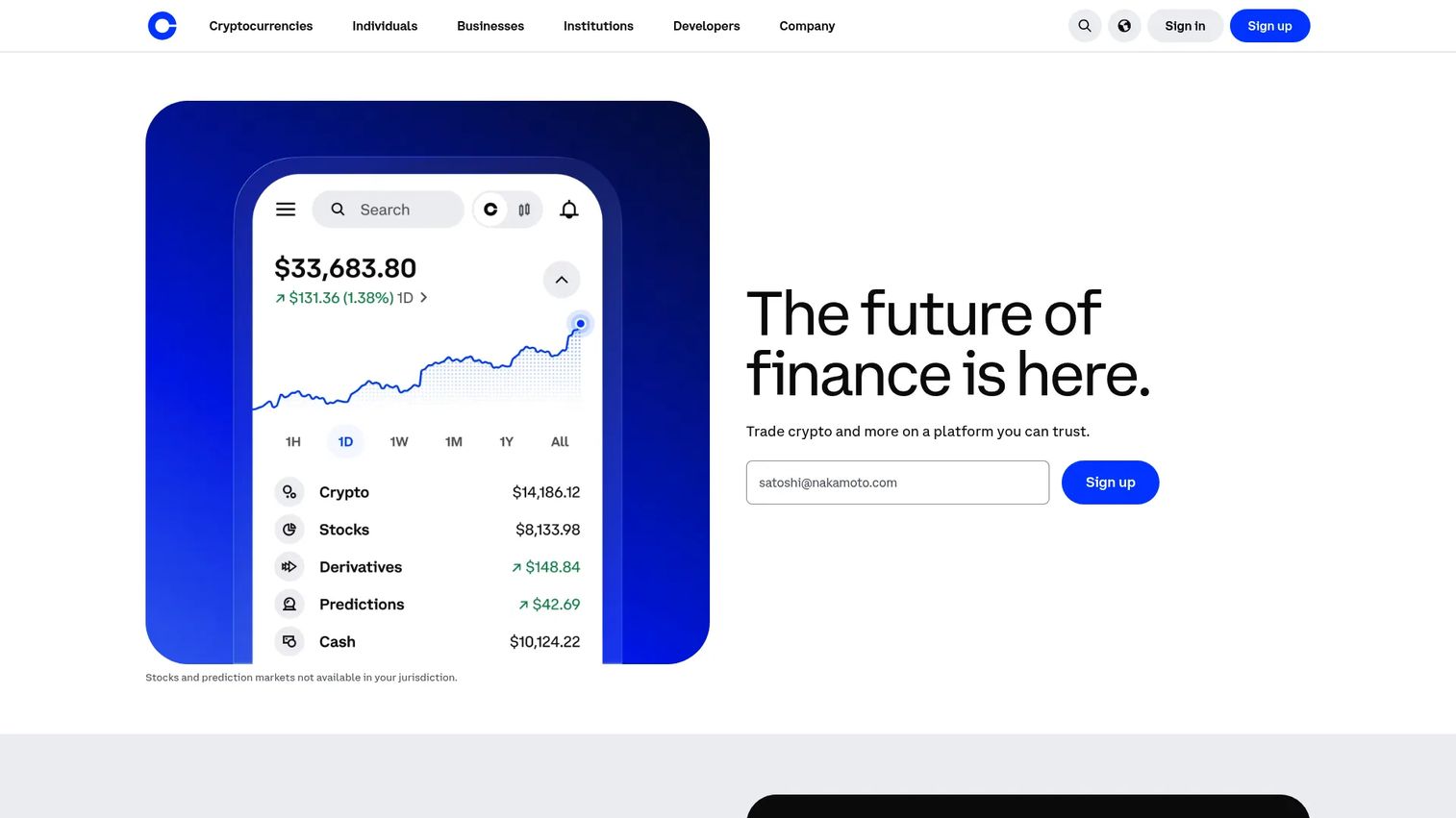
Coinbase is a platform for buying, selling, transferring, storing, and using cryptocurrency. It serves consumers, businesses, institutions, and developers through a broad product stack that includes exchange access, wallet infrastructure, custody services, business payment tools, and developer APIs.
Best for: Businesses that need recognized crypto infrastructure for acceptance, custody, and digital asset access without building wallet and on-chain systems themselves.
Key features
- Buy, sell, transfer, and store cryptocurrency
- Business payments, invoicing, checkouts, and payouts
- Institutional custody with segregated storage options
- Developer APIs and infrastructure for crypto integration
- Coinbase One membership with zero-fee trading benefits
Why choose Coinbase: Choose Coinbase when trust, brand recognition, custody, and crypto asset access matter more than building directly on-chain. It is a strong shortlist option for crypto-native customer bases and teams that want a managed infrastructure layer.
Coinbase pricing: Coinbase One membership starts at $4.99/month (or $49.99/year) and includes benefits like zero trading fees within limits and boosted staking rewards. Commerce and custody products use transaction-based or volume-based pricing.
G2 rating: 4.0/5.
7. PayPal

PayPal is a global payments platform for accepting, sending, and managing payments online and in person. It supports digital asset purchasing for account holders and offers crypto payment options alongside conventional card and wallet checkout. With coverage across 200+ markets, it is one of the most widely recognized checkout options available.
Best for: Companies that want mainstream wallet reach with digital asset payment options to reduce checkout friction for familiar customers.
Key features
- Online checkout accepting PayPal, Venmo, cards, and digital wallets
- In-person payments through POS, card readers, and Tap to Pay
- Crypto buying and digital asset features for account holders
- Payment protection and Seller Protection workflows
- Global payment acceptance across 200+ markets
Why choose PayPal: Choose PayPal when customer familiarity reduces checkout friction. It works best when blockchain support complements conventional merchant payments rather than replacing them.
PayPal pricing: PayPal Checkout starts at 2.99% + $0.49 per transaction. Expanded Checkout (covering more payment types) is 2.89% + $0.29 per transaction. Card-present transactions run 2.29% + $0.09. Rates vary by payment method and market.
G2 rating: 4.4/5.
8. Ethereum
Ethereum is a decentralized blockchain network and software development platform powered by its native cryptocurrency, ETH. It is the primary network for smart contracts, decentralized applications, and programmable payment logic. Its Layer 2 networks extend scalability and reduce transaction costs for higher-volume applications.
Best for: Teams building programmable payment logic with smart contracts, including escrow, automated payouts, revenue splits, and on-chain payment flows.
Key features
- Smart contract execution on the Ethereum blockchain
- Token payment support across the Ethereum ecosystem
- Programmable escrow, splits, and conditional payment releases
- Proof-of-stake consensus with ETH validator staking
- Layer 2 compatibility for lower-cost transactions
Why choose Ethereum: Choose Ethereum when the payment itself needs logic, conditions, or on-chain automation. It is better suited for product-integrated payment flows than simple checkout acceptance.
Ethereum pricing: Ethereum has no subscription fee. Users pay variable gas fees in ETH, determined by network demand and transaction complexity.
G2 rating: 4.3/5.
9. Circle
Circle is a full-stack internet financial infrastructure company. It issues USDC and EURC, both regulated stablecoins redeemable 1:1 for their fiat reference currencies. Its developer products include wallets, smart contracts, cross-chain transfer infrastructure, and the Circle Payments Network for business payment workflows.
Best for: Companies building stablecoin payments around USDC, including global payouts and digital dollar settlement workflows.
Key features
- USDC and EURC stablecoins with 1:1 fiat redemption
- Cross-chain USDC transfers through Circle's Cross-Chain Transfer Protocol
- Wallets and smart contracts with developer API access
- Circle Payments Network for business settlement
- Multi-chain support across major blockchain networks
Why choose Circle: Choose Circle when stablecoin reliability, business payment APIs, and USDC liquidity are central to the payment strategy. It is especially relevant for global payouts and digital dollar settlement where bank wire delays create friction.
Circle pricing: Wallets start with 0 to 1,000 wallets free monthly. Paid wallet tiers start at $0.038 per wallet (Signing API only) or $0.050 per wallet (All-included). Contracts include 0 to 25,000 API calls free monthly, then $0.0005 per call.
G2 rating: 4.2/5.
10. Ripple
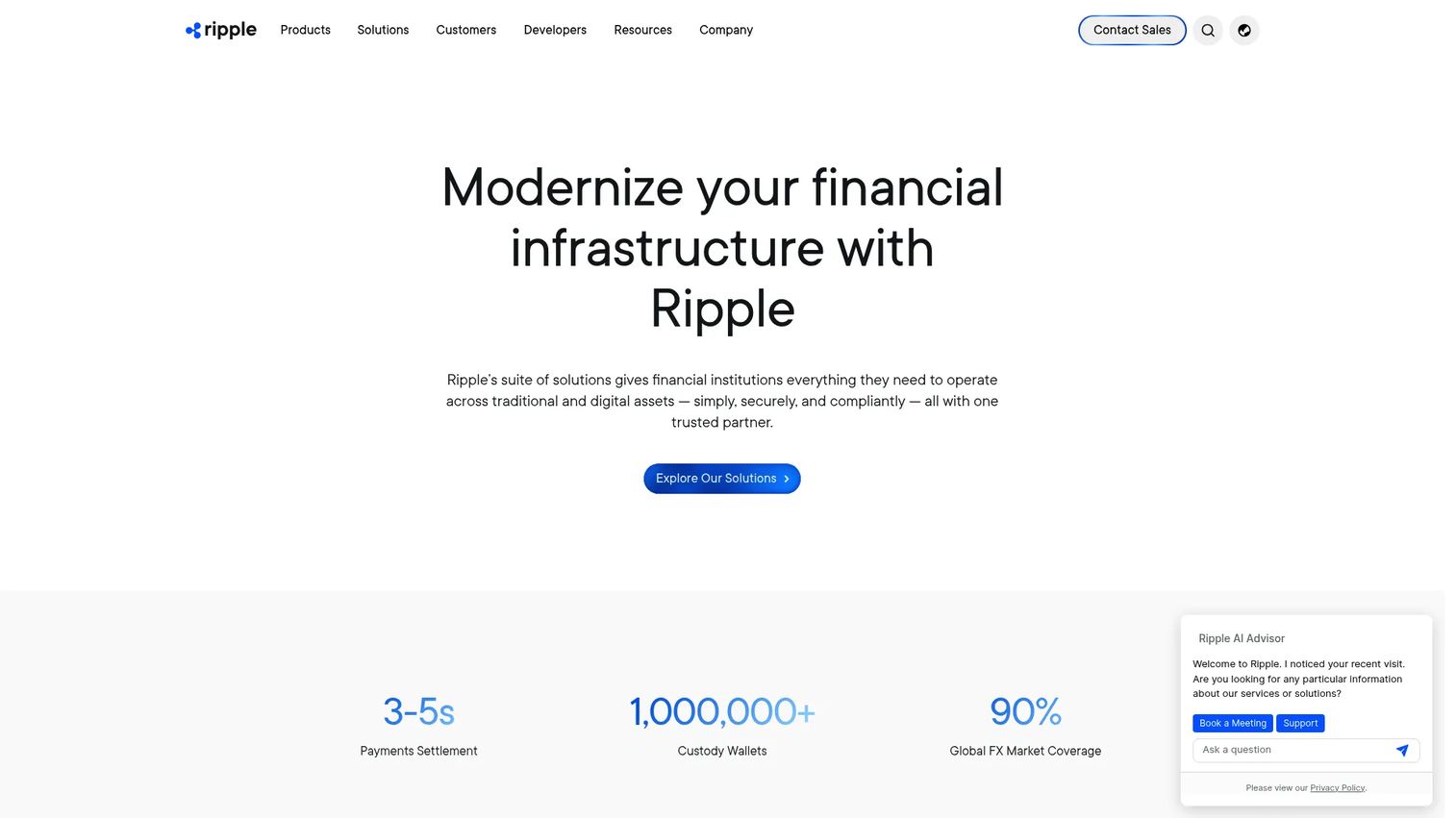
Ripple provides enterprise digital-asset infrastructure for financial institutions. Its core products cover cross-border payments, institutional custody, and stablecoin infrastructure including RLUSD issuance. RippleNet connects financial institutions for stablecoin collection, conversion, and payouts across 60+ markets.
Best for: Financial institutions, fintechs, and payment companies handling cross-border flows at institutional scale.
Key features
- Cross-border payment network across 60+ markets
- Stablecoin collection, conversion, and payout capabilities
- Institutional digital-asset custody with hot, warm, and cold storage
- Ripple Mint APIs for RLUSD issuance and management
- Enterprise payment messaging and settlement workflow support
Why choose Ripple: Choose Ripple when cross-border settlement and financial-institution connectivity are core to the business model. It belongs on the shortlist for fintech infrastructure teams rather than ordinary SaaS merchants.
Ripple pricing: Ripple uses direct enterprise pricing. Terms are negotiated individually with institutional customers.
G2 rating: 4.3/5.
11. BitPay
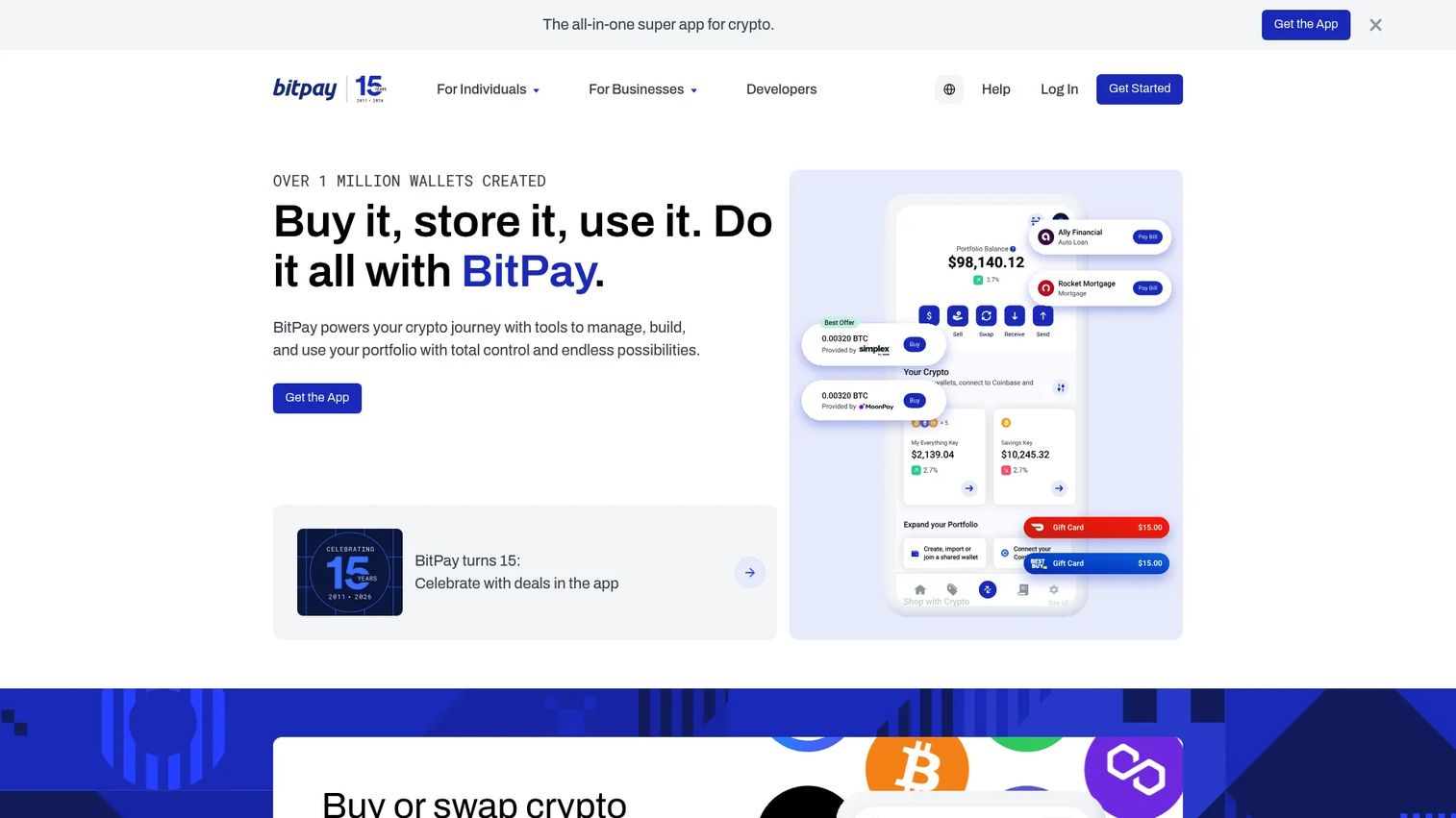
BitPay is a cryptocurrency payment platform for merchants and individuals. It handles crypto checkout, invoicing, wallet payments, and settlement, with options for fiat settlement or crypto retention. It also offers a self-custody wallet and a card product.
Best for: Merchants that want crypto checkout and payment processing without building direct blockchain payment logic or managing wallet infrastructure.
Key features
- Cryptocurrency payment processing with merchant invoicing
- Daily fiat settlement from crypto transactions
- Self-custody crypto wallet for end users
- Buy, sell, and swap cryptocurrency functionality
- Gift-card purchases and crypto bill payments
Why choose BitPay: Choose BitPay when the goal is to accept crypto payments without building direct on-chain logic. It handles the payment processing layer so merchants can focus on their product.
BitPay pricing: Standard merchant processing starts at 2% + 25¢ per transaction for monthly volume under $500,000. Mid-volume (from $500,000) drops to 1.5% + 25¢. High-volume (from $1,000,000) drops to 1% + 25¢. Fees may be higher for high-risk industries.
G2 rating: 4.0/5.
12. Veem
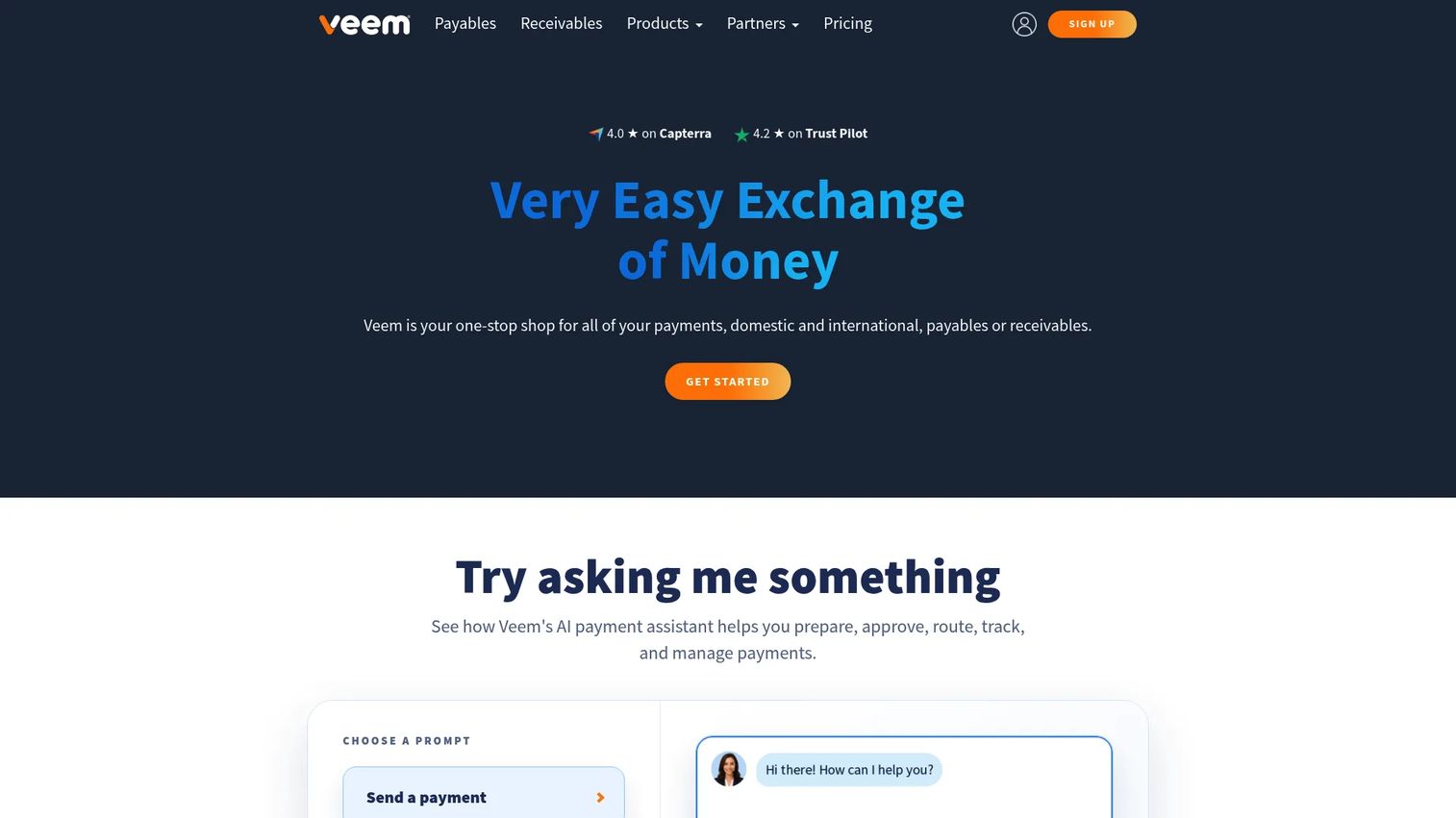
Veem is a business payments platform for sending, receiving, tracking, and reconciling domestic and international payments. It includes blockchain-related payment capabilities alongside conventional payment methods. Its accounting integrations with QuickBooks Online, NetSuite, and Xero make it practical for finance teams managing vendor and contractor payables.
Best for: SMBs and mid-market finance teams managing business cross-border payments and accounts payable workflows.
Key features
- Domestic and international bank transfers
- Payment tracking, reports, and payment requests
- Mass Pay and multi-step approval workflows
- Accounting integrations with QuickBooks Online, NetSuite, and Xero
- Multi-currency wallet and instant deposit options
Why choose Veem: Choose Veem when the problem is B2B payment operations across countries. It fits finance teams that want a business payment workflow with built-in accounting integrations rather than a crypto-native toolset.
Veem pricing: Basic plan is free. Premium is $24.99/month and adds automations, mass payments, approval workflows, accounting integrations, and unlimited free domestic transfers.
G2 rating: 3.5/5.
13. Stellar

Stellar is an open-source, decentralized public blockchain designed for financial products, payments, and asset issuance. Its Stellar Consensus Protocol keeps transaction fees extremely low. Developer tools include the Disbursement Platform, Anchor Platform, Wallet SDK, and Stellar Lab.
Best for: Financial institutions, payment providers, and developers building low-cost cross-border transfer, tokenized assets, and financial applications.
Key features
- Low-cost transactions through Stellar Consensus Protocol
- Native asset issuance with freeze and clawback controls
- Built-in decentralized exchange and cross-currency path payments
- Soroban smart-contract platform for programmable logic
- Developer ecosystem with Disbursement and Anchor platforms
Why choose Stellar: Choose Stellar when payment cost and global transfer accessibility are the primary drivers. It is strongest for builders and payment providers designing their own payment workflows rather than companies looking for a merchant checkout integration.
Stellar pricing: Stellar network fees are minimal and paid per transaction. The Stellar Development Foundation does not charge subscription fees for network access.
G2 rating: 4.6/5.
14. Abra

Abra is a digital-asset wealth management platform offering custody, yield strategies, borrowing, and trading for institutions, advisors, corporate treasuries, and private clients. It uses Fireblocks MPC key management for segregated custody and supports assets including Bitcoin, Ethereum, Solana, and USD stablecoins.
Best for: Institutions, corporate treasuries, and private clients seeking professionally managed digital-asset custody and yield strategies.
Key features
- Segregated custody with Fireblocks MPC key management
- Digital-asset yield strategies across Bitcoin, Ethereum, Solana, and USD stablecoins
- Crypto-backed borrowing against BTC and ETH collateral
- OTC and spot trading across 500+ digital assets
- Mobile-first experience for account management
Why choose Abra: Choose Abra when wallet-based crypto finance and treasury yield strategies are closer to the use case than merchant checkout. It is relevant for understanding the custody and treasury side of blockchain payments, particularly for corporate treasuries evaluating digital-asset exposure.
Abra pricing: The Vault custody product charges 0.20% per year of assets under management, calculated monthly. Bitcoin and USDaf yield strategies carry no management fee. Solana and Ethereum yield strategies are 1.00% per year. The Digital Income Strategy is 2.00% per year.
15. CBDCs
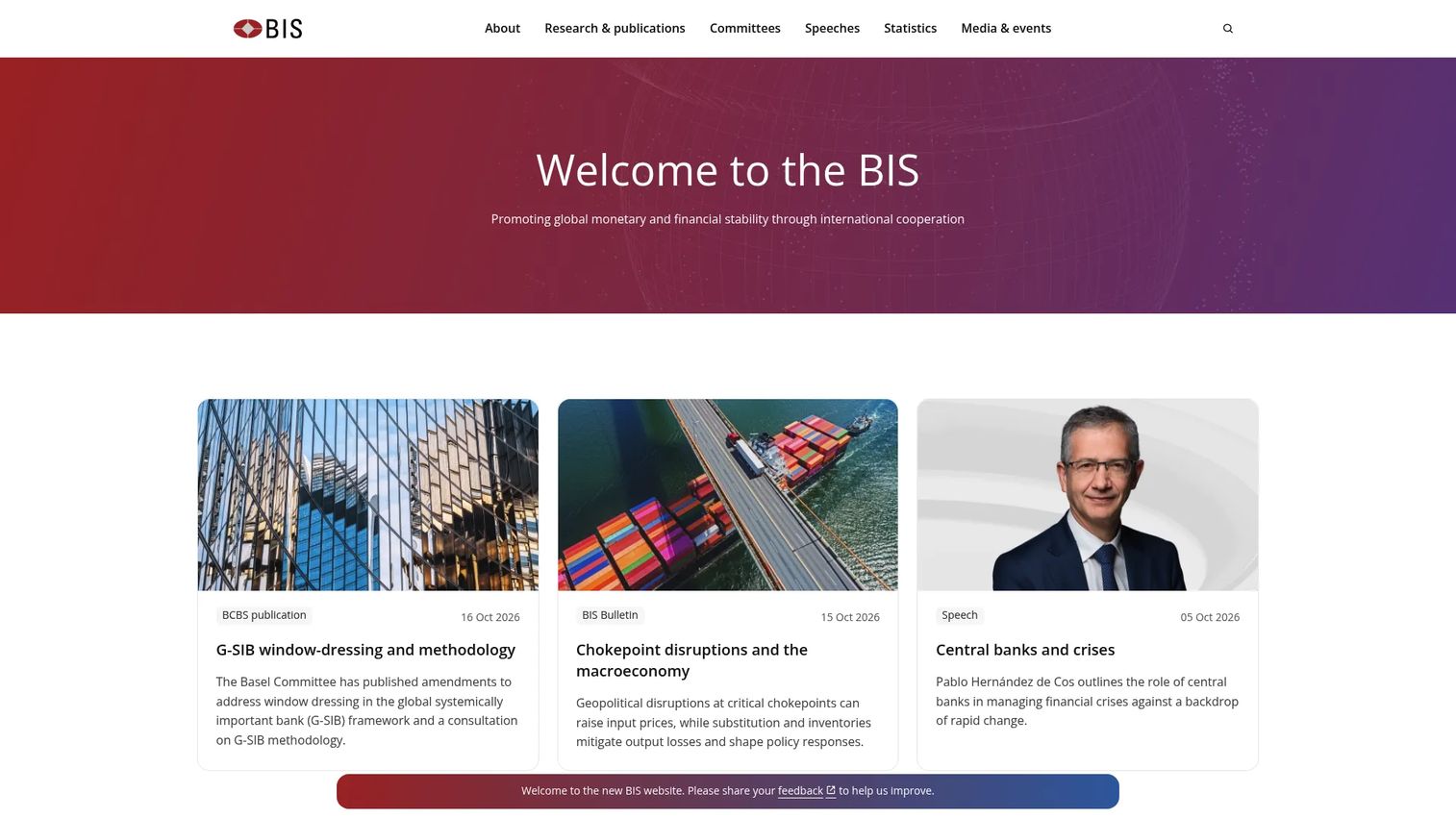
Central bank digital currencies are digital payment instruments denominated in a national unit of account and issued as direct liabilities of central banks. They exist in two primary forms: Retail CBDCs for public use and wholesale CBDCs for interbank settlement. The Bank for International Settlements tracks CBDC research and pilot programs globally.
Best for: Public-sector digital currency infrastructure and future settlement rails, relevant for companies that operate in jurisdictions running active CBDC pilots.
Key features
- Retail CBDC design for public digital payments
- Wholesale CBDC for interbank and settlement use
- Privacy, data-governance, and cybersecurity design considerations
- Offline functionality research for point-of-sale contexts
- Cross-border interoperability exploration between central banks
Why choose CBDCs: Most SaaS founders should monitor CBDCs rather than build around them. Choose CBDC rails only where they are legally available and relevant to your specific market, as commercial availability varies significantly by jurisdiction and pilot status.
CBDCs pricing: CBDCs are not commercial SaaS products and carry no subscription pricing. Costs depend on jurisdiction, banking partners, and payment infrastructure access when pilots do reach implementation.
16. Layer 2 networks
Ethereum Layer 2 networks are separate blockchains that extend Ethereum, process transactions off the main chain, and inherit Ethereum's security guarantees. They use rollup mechanisms, including optimistic and zero-knowledge rollups, to batch transactions and settle them on Ethereum mainnet. Transaction costs on these networks can be significantly lower than base-chain Ethereum fees. By comparison, Ethereum mainnet transactions run approximately $0.055, while Ethereum-backed Layer 2 networks can bring fees down to around $0.0019.
Best for: Teams that need lower-cost blockchain payments at higher volume, where base-layer Ethereum gas fees hurt unit economics.
Key features
- Lower transaction costs than Ethereum mainnet
- Higher transaction throughput with reduced congestion
- Rollup-based scaling (optimistic and zero-knowledge approaches)
- Compatibility across Ethereum-powered applications
- Smart contract compatibility for payment automation
Why choose Layer 2 networks: Choose a Layer 2 network when payment volume makes base-layer fees too expensive. Evaluate liquidity, wallet support, developer tooling, and withdrawal experience before committing to a specific network.
Layer 2 networks pricing: Fees vary by network, congestion, and transaction type. Evaluate fees for the specific Layer 2 network in scope, as they differ across rollup implementations.
17. Stripe Payments
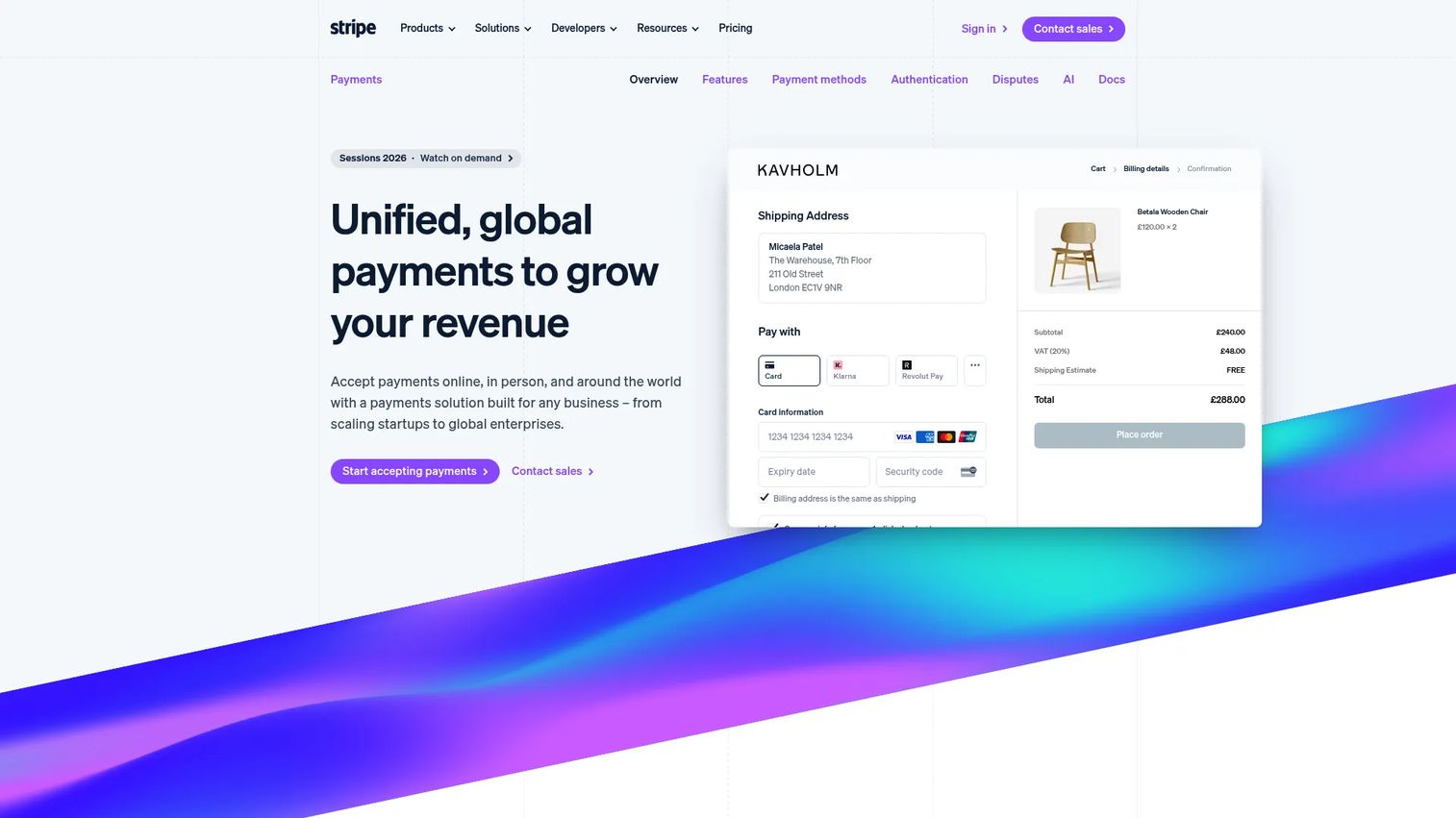
Stripe Payments is an online payments platform for accepting and managing payments across online, in-person, and recurring-payment use cases. It supports a broad range of payment methods including cards, wallets, bank debits, real-time payments, and stablecoins. Its developer APIs and prebuilt checkout interfaces make it a common starting point for SaaS businesses.
Best for: SaaS companies adding stablecoin acceptance alongside conventional payment methods within existing finance and checkout workflows.
Key features
- Prebuilt Checkout and customizable Elements payment interfaces
- Support for cards, wallets, bank debits, and buy now, pay later
- Stablecoin payment support within the Stripe infrastructure
- Payment Links, invoicing, subscriptions, and payout management
- Fraud prevention, dispute handling, and compliance tools
Why choose Stripe Payments: Choose Stripe Payments when blockchain payment support needs to sit beside cards, wallets, and existing revenue workflows. This is typically the lowest-disruption path for SaaS teams already on Stripe.
Stripe Payments pricing: Standard processing starts at 2.9% + 30¢ per successful transaction for domestic cards. Custom packages with volume discounts and IC+ pricing are available through direct agreements. No setup fees or monthly minimums on the standard plan.
G2 rating: 4.4/5 (G2 seller profile, aggregates Stripe products).
18. Visa

Visa is a global digital payment network providing card products, payment solutions, security services, and developer APIs through its VisaNet infrastructure. Visa is exploring stablecoin settlement and blockchain payment infrastructure through pilot programs and bank and fintech partnerships. Developer sandbox access is available at no cost for testing.
Best for: Enterprises and fintechs evaluating blockchain settlement through global payment networks with mainstream card-network compatibility.
Key features
- Global payment network through VisaNet
- Consumer, business, and prepaid card programs
- Fraud prevention and transaction security services
- Visa Developer APIs and sandbox testing environment
- Stablecoin settlement pilots and tokenization capabilities
Why choose Visa: Choose Visa when blockchain payment strategy needs mainstream card-network compatibility. It is most relevant for fintech infrastructure teams, card issuer programs, and enterprise payment partnerships where existing card-network reach matters.
Visa pricing: Developer sandbox access is free. Production pricing is contract-based and varies by product, usage, region, and use case.
G2 rating: 4.2/5 (G2 seller profile, aggregates Visa products and services).
Considerations when choosing blockchain payment systems
Start with the payment job, not the technology
Identify whether the company needs checkout, payouts, settlement, remittances, treasury movement, or programmable payment logic before evaluating any specific system. Bitcoin serves a different job than Veem, which serves a different job than Ethereum. The payment job narrows the shortlist faster than any feature comparison.
Model volatility and conversion exposure
Crypto payments introduce asset price risk if the business holds received assets before conversion. Stablecoins reduce volatility but add issuer risk, reserve questions, and regulatory variables. Founders should decide upfront whether they want to hold, auto-convert, or settle immediately, and build that decision into the vendor selection criteria. You can also evaluate AML software to understand the compliance tooling that sits alongside these payment rails.
Check KYC, AML, tax, and reporting requirements
Blockchain payments do not reduce compliance obligations. Work with legal, finance, and compliance teams before launch. Cross-border payments can trigger different KYC obligations, tax reporting requirements, and AML monitoring by market. Building the compliance framework after launch is significantly more expensive than building it before.
Test reconciliation before rollout
Finance needs transaction IDs, customer mapping, refund policies, and clean accounting exports before any payment system goes live. If the payment rail cannot reconcile cleanly with the existing accounting and CRM stack, it creates board-level reporting pain quickly. For SaaS businesses managing recurring revenue, reconciliation failure is a direct ARR visibility problem.
Validate customer demand before integrating
Do not add crypto checkout because it looks modern. Ask whether target customers hold digital assets, need stablecoin settlement, or face genuine payment friction today. A small pilot, even informally with five to ten customers, reveals whether adoption is real before the engineering and compliance investment scales up.
Conclusion
Blockchain payment systems in 2026 span a wide range: Open networks like Bitcoin and Ethereum, stablecoin infrastructure through Circle, enterprise rails from JPMorganChase and Kinexys, merchant processors like BitPay and Coinbase, card networks exploring settlement like Visa and Mastercard, cross-border rails from Ripple and Stellar, B2B payment operations via Veem, and future-facing infrastructure from CBDCs and Layer 2 networks.
The right system depends on the payment job. For crypto-native and programmable use cases, start with Bitcoin, Ethereum, or Layer 2 networks. For stablecoin settlement, Circle and Stripe Payments are the most accessible starting points for SaaS teams. For enterprise and institutional needs, JPMorganChase and Kinexys operate at that scale. For cross-border B2B movement, Ripple, Stellar, and Veem each serve different parts of that problem.
No single system handles every payment job. The practical next step: Shortlist by payment job, run a finance-led pilot, and test reconciliation before you move meaningful volume.
Start your journey with Guideflow today!
FAQs about blockchain payment systems
Blockchain payment systems are payment networks, processors, wallets, settlement rails, and digital currency systems that use distributed ledger technology to move value between parties. The category includes crypto networks like Bitcoin and Ethereum, stablecoin infrastructure, enterprise bank-backed platforms, merchant payment processors, card networks with blockchain settlement programs, and central bank digital currency projects.
A sender initiates a payment from a wallet, payment app, or enterprise payment system. The transaction is signed and broadcast to the network. Validators or nodes confirm the transaction against network rules. The transaction is added to a block or ledger update, and the recipient's balance updates. Settlement and reconciliation happen on-chain, through a provider layer, or through a combination, depending on the system.
They can be cheaper for cross-border or high-value transactions where correspondent banking fees and exchange margins add up. For small domestic transactions, card payments often remain competitive once you account for blockchain network fees, provider markups, compliance work, and operational overhead. The cost comparison depends on transaction size, destination market, and which provider handles conversion.
Stablecoins carry a meaningfully different risk profile from volatile crypto assets. Price exposure to Bitcoin or Ethereum swings is removed when using a well-collateralized stablecoin. The remaining risks include issuer solvency, reserve composition, regulatory treatment, chain-level smart contract risk, and custody risk. Stablecoins are not risk-free, but they are a materially different category of risk than holding volatile digital assets through a payment cycle.
Yes. Options include payment processors like BitPay or Coinbase Commerce, stablecoin providers like Circle, mainstream processors like Stripe Payments that support stablecoins, or direct blockchain integrations. Founders should validate customer demand first, then work through the finance and compliance requirements before integrating. The integration is rarely the hard part. Reconciliation, tax reporting, and customer refund workflows are where the work concentrates.
A blockchain payment network moves value at the protocol level. Bitcoin and Ethereum are networks. A crypto payment processor gives businesses the checkout interface, invoicing, fiat conversion, reporting, and support layers that sit on top of those networks. BitPay is a processor built on top of Bitcoin. Stripe Payments is a processor that includes stablecoin support on top of underlying blockchain rails. If you want to accept crypto without managing on-chain complexity, you need a processor.
The primary operational risks are: Asset price volatility if conversion is not immediate; regulatory uncertainty, especially for crypto assets and stablecoins across different jurisdictions; transaction irreversibility (most blockchain transactions cannot be reversed, unlike card chargebacks); private key and custody risk; chain congestion affecting fees and speed; and accounting complexity from managing multiple asset types and settlement timings. For a Series B company, the compliance and reconciliation risks typically create more immediate board exposure than the technology risks.
In most business implementations, no. Many companies using blockchain payment systems still rely on banks for fiat on-ramps and off-ramps, fiat settlement, payroll, and compliance infrastructure. Blockchain changes parts of the value movement and settlement layer, particularly for cross-border transfers, programmable payment logic, and stablecoin settlement. The surrounding financial infrastructure, including banking relationships, custodians, and payment processors, continues to play a central role for the foreseeable future.