A single expired certificate can take down a customer-facing service in the middle of a business day. No warning, no gradual degradation, just a hard failure and a wave of browser security errors. The team scrambles, the incident channel lights up, and someone eventually finds the culprit: a TLS certificate nobody was tracking.
This happens more than most teams admit. Certificates live everywhere now. Load balancers, API gateways, internal microservices, third-party integrations, edge nodes, developer environments. Public Certificate Transparency logs recorded 13.75 billion SSL/TLS certificates in Q2 2026, up from 10.33 billion a year earlier, a 33% year-over-year jump in issuance volume, according to TechnologyChecker's analysis of Cloudflare Radar data (2026). The volume keeps climbing, validity windows keep shrinking, and manual tracking in a spreadsheet stops working long before anyone notices.
That is the real problem certificate management software solves. Not just renewal reminders, but full lifecycle control across environments you may not even have a complete map of. The category is growing fast for a reason: the certificate lifecycle management software market is projected to grow from USD 6.19 billion in 2026 to USD 11.05 billion by 2030 at a 15.6% CAGR, per Research and Markets (2026).
For presales and security teams supporting technical validation, this matters twice over. You need certificate automation and centralized inventory to keep your own services healthy, and you need to explain and defend those choices during security review. If you evaluate operational tooling the way you would assess any other part of a stack, the same instincts apply here as when you compare an audit management software shortlist or an ai security posture management platform: coverage, automation depth, governance, and proof.
What's inside
This guide compares seven SSL certificate management software platforms for teams handling both public and private certificates across cloud, hybrid, and on-prem infrastructure. We selected tools based on four criteria: lifecycle automation depth, certificate discovery coverage, protocol and environment support, and enterprise readiness (governance, reporting, and integrations).
It is written for security, IT, DevOps, platform, and presales teams who need to shortlist a certificate lifecycle management platform and then validate technical fit. Every pricing note and rating reflects verified vendor and G2 sources. Where a figure is not public, we say so rather than guess.
TL;DR
- Best for broad enterprise lifecycle operations across many CA types: Sectigo Certificate Manager and Keyfactor Command both centralize discovery, issuance, and renewal at scale.
- Best for large-scale TLS governance and policy control: Venafi TLS Protect focuses on machine identity and TLS certificate management across sprawling inventories.
- Best for teams already inside the CyberArk security ecosystem: CyberArk Certificate Manager fits identity-first security programs.
- Best for cloud-native provisioning inside AWS: AWS Certificate Manager handles issuance and renewal for AWS workloads at no cost for integrated services.
- Best for centralized inventory plus SSH key management: ManageEngine Key Manager Plus pairs certificate tracking with key lifecycle control and a free tier.
- Best for hybrid PKI and digital trust governance: DigiCert Trust Lifecycle Manager unifies public and private certificate handling under one policy layer.
What is SSL certificate management software?
SSL certificate management software is a platform that discovers, issues, deploys, monitors, renews, and revokes SSL/TLS certificates across an organization's infrastructure from a single control point. It gives teams inventory visibility and centralized control over digital certificates that would otherwise be scattered across servers, cloud services, and applications.
Certificate lifecycle management, or CLM, is the broader model these tools implement. A certificate is not a one-time install. It has a lifecycle: it gets discovered or requested, issued by a certificate authority, deployed to an endpoint, monitored for health and expiry, renewed before it lapses, and eventually revoked and replaced. A CLM platform automates and governs every one of those stages so nothing depends on a person remembering an expiration date.
Here is what the lifecycle looks like in practice:
- Discovery. Scan networks, cloud accounts, and endpoints to find every certificate, including the ones nobody documented. Certificate discovery is the foundation, because you cannot manage what you cannot see.
- Issuance and deployment. Request certificates from public or private CAs and push them to the right endpoints automatically.
- Monitoring. Track expiration dates, chain health, weak keys, and policy violations. Certificate monitoring turns a silent countdown into an actionable alert.
- Renewal. Automate certificate renewal so certificates never lapse. This is where certificate automation pays for itself.
- Revocation and replacement. Pull compromised or deprecated certificates and roll out replacements without downtime.
Core capabilities buyers should expect:
- Automated certificate discovery across cloud, on-prem, and hybrid environments
- Public and private certificate support, including private PKI
- Protocol support for ACME, SCEP, and EST to automate enrollment and integration
- Multi-cloud and hybrid deployment coverage
- Role-based access, approval workflows, and audit-ready reporting
- Alerts and dashboards for certificate expiration and compliance status
Strong protocol support is what separates a tool that automates against your existing infrastructure from one that needs constant manual work. ACME drives automated issuance and renewal, SCEP handles device enrollment, and EST covers secure enrollment for modern endpoints. The more of these a CLM platform speaks natively, the less integration effort your team carries.
When to use SSL certificate management software
Replace spreadsheets and manual renewal tracking
The moment your certificate count outgrows a spreadsheet, you have already introduced risk. Manual tracking depends on someone updating a row and remembering to act on it. Miss one renewal and a production service breaks. Dedicated certificate management software removes that single point of human failure with automated renewal and centralized monitoring, which is the difference between outage prevention and an incident postmortem. It also keeps you audit-ready, because every issuance, renewal, and revocation is logged rather than reconstructed from memory.
Standardize certificate operations across cloud, hybrid, and on-prem environments
Distributed infrastructure spreads certificates across environments that rarely share a common console. AWS accounts, on-prem load balancers, Kubernetes clusters, and SaaS integrations each hold their own certificates. Without centralized control, no one has full inventory visibility. A CLM platform pulls all of it into one place and handles both public SSL/TLS certificate management and private PKI, so cloud, hybrid, and multi-cloud environments follow the same policy instead of drifting apart.
Reduce technical validation risk during presales and security review
For presales teams supporting a buying committee, certificate operations often surface in the security questionnaire. Buyers want proof that you manage certificates with governance, not guesswork. A certificate management platform gives you documented lifecycle control, role-based access, and reporting you can show during diligence. That evidence of operational maturity shortens technical validation the same way a clean contract lifecycle management process speeds legal review. It moves the conversation from "trust us" to "here is the audit trail."
Comparison table
We ranked these seven platforms by relevance to teams managing SSL/TLS certificates at scale, weighing lifecycle automation, discovery coverage, protocol and environment support, and enterprise governance. Pricing and G2 ratings reflect verified vendor and G2 sources as of mid-2026. Where a vendor does not publish a price, we note that rather than estimate.
| # | Product | Intent | Key differentiation | Pricing | G2 rating |
|---|---|---|---|---|---|
| 1 | Sectigo Certificate Manager | Enterprise CLM across many CAs | Cloud-native, CA-agnostic, modular ecosystem | 30-day free trial; flat-rate plans (not public) | Not published |
| 2 | Keyfactor Command | Enterprise PKI and machine identity | Discovery plus lifecycle orchestration at scale | Quote-based; 30-day Test Drive | 4.5/5 |
| 3 | Venafi TLS Protect | Large-scale TLS governance | Central policy control for TLS machine identities | Not public | Not published |
| 4 | CyberArk Certificate Manager | Identity-first certificate control | Fits CyberArk security ecosystem | 30-day free trial; pricing not public | Not published |
| 5 | DigiCert Trust Lifecycle Manager | Hybrid digital trust governance | Public and private PKI under one policy layer | Essentials, Advanced, Premium (contact) | 3.8/5 |
| 6 | AWS Certificate Manager | Cloud-native AWS provisioning | Native renewal for AWS-integrated services | No cost for integrated services; export fees apply | 4.5/5 |
| 7 | ManageEngine Key Manager Plus | Centralized cert and SSH key management | Certificates plus key lifecycle in one console | Free (up to 5 keys); Standard by managed keys | 4.5/5 |
1. Sectigo Certificate Manager (SCM)
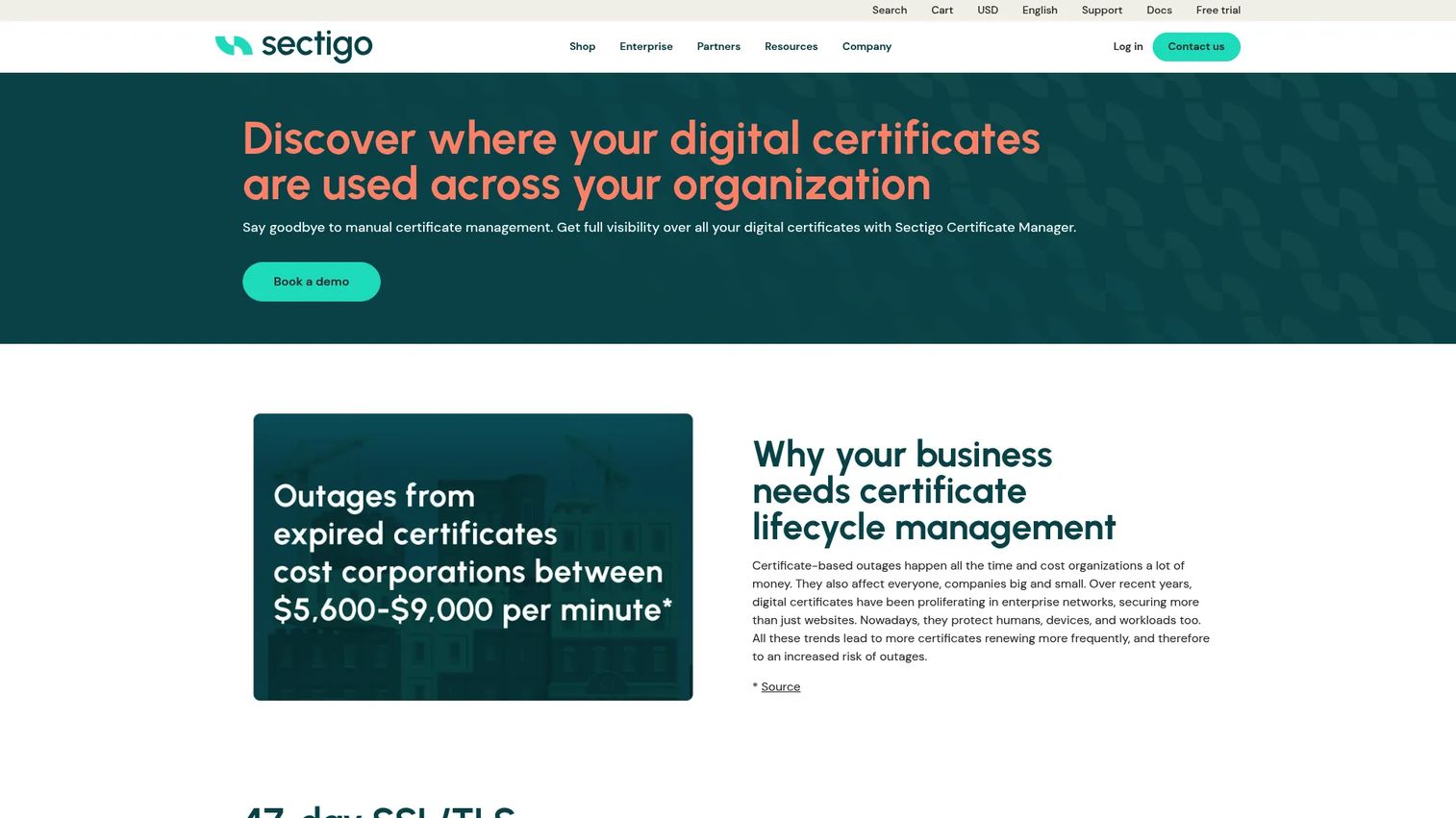
Sectigo Certificate Manager is a cloud-native certificate lifecycle management platform for discovering, issuing, automating, and renewing digital certificates across enterprise environments. Its defining trait is breadth: SCM is CA-agnostic, so it manages certificates from Sectigo and third-party authorities under one console. That matters for enterprises that have accumulated certificates from multiple CAs over the years and want a single source of truth without ripping anything out.
Best for: Organizations needing centralized certificate lifecycle management at scale across many CA types and environments.
Key strengths
- Broad discovery: Finds both public and private certificates across distributed infrastructure so nothing stays hidden.
- End-to-end automation: Automates issuance, deployment, renewal, and revocation to remove manual lifecycle steps.
- Modular ecosystem: 50+ integrations plus modules for SSL/TLS, S/MIME, DevOps, Microsoft CA management, private PKI, and code signing.
Why choose Sectigo Certificate Manager: If your certificate estate spans several CAs and use cases, SCM's modular approach lets you consolidate without forcing a single-vendor model. The cloud-first architecture and deep integration library make it a strong fit for enterprise teams that need public and private certificate coverage in one place, rather than stitching together point tools for each certificate type.
Sectigo Certificate Manager pricing: Sectigo offers a 30-day free trial. Public pages describe SCM Pro as flat-rate subscription pricing, but no numeric price is displayed publicly, so plan on a vendor conversation to scope cost against your certificate volume.
2. Keyfactor Command
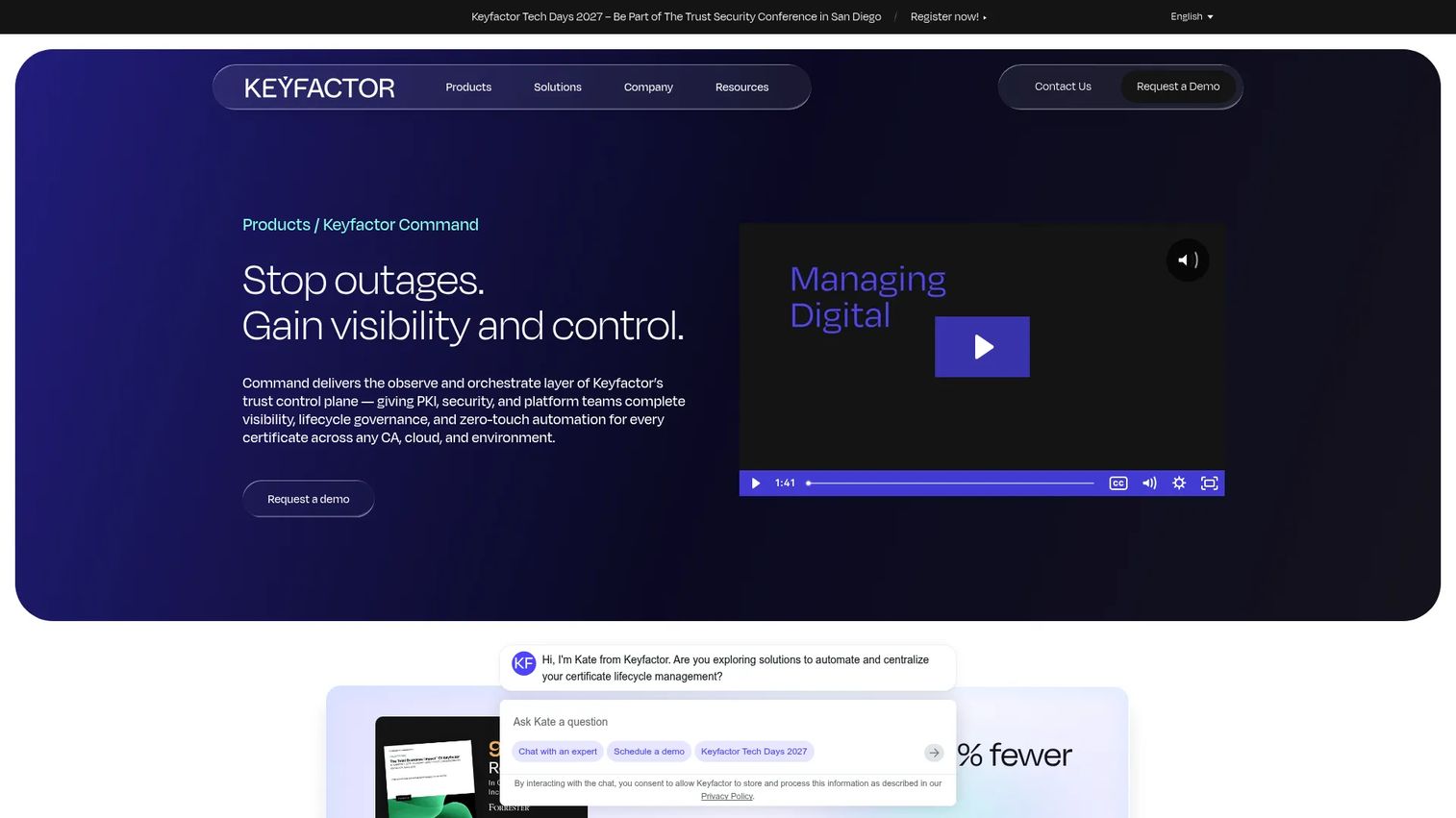
Keyfactor Command is a certificate lifecycle management and machine identity automation platform built for PKI, security, and platform teams. It leans hard into discovery and inventory, then layers lifecycle orchestration on top, which is why it appeals to organizations with sprawling, mixed infrastructure where certificates hide in places nobody remembers deploying them.
Best for: Enterprises needing centralized certificate lifecycle management across large, mixed infrastructure.
Key strengths
- Certificate discovery and inventory: Continuously finds and catalogs certificates across complex environments.
- Lifecycle automation and orchestration: Automates enrollment, renewal, and provisioning at enterprise scale.
- Governance built in: Role-based controls, audit trails, and compliance reporting for accountability.
Why choose Keyfactor Command: Teams wrestling with infrastructure sprawl get the most value here, because Command treats discovery as a first-class capability rather than an afterthought. The governance layer, with role-based access and audit trails, gives security and presales teams the documentation they need for compliance review. Flexible deployment options span self-hosted, SaaS, and Kubernetes-native modules.
Keyfactor Command pricing: Keyfactor does not publish public pricing. The product page offers a 30-day free Test Drive and lists deployment options including on-premises self-hosted, CLAaaS, PKIaaS, SaaS Lite, and Kubernetes container modules. Pricing is quote-based. Keyfactor Command holds a 4.5/5 rating on G2.
3. Venafi TLS Protect
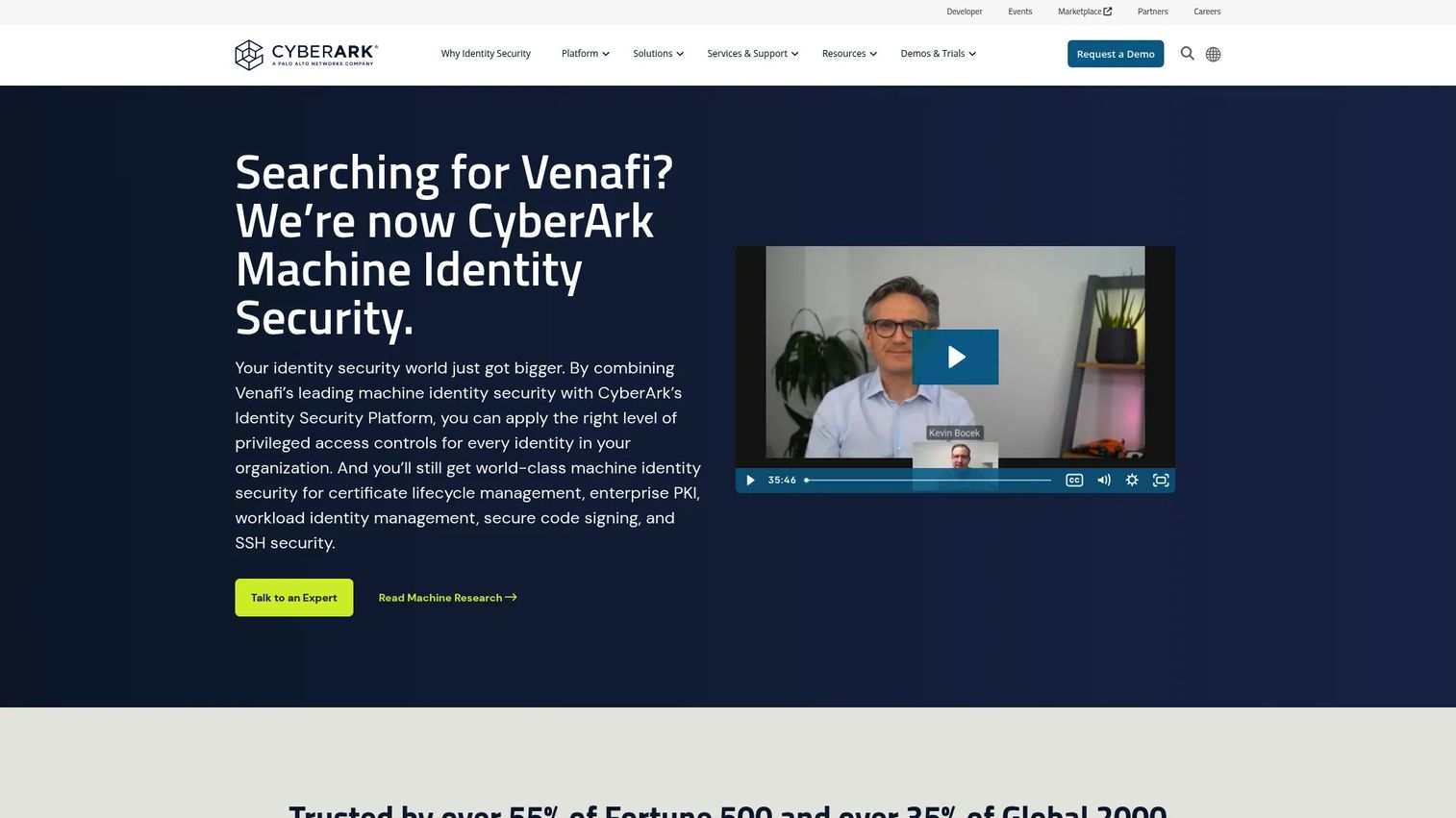
Venafi TLS Protect is enterprise certificate and TLS machine identity management for discovering, monitoring, validating, enrolling, and provisioning digital certificates. Its center of gravity is governance: central policy control over TLS certificates across very large inventories. If your primary concern is enforcing consistent certificate policy and reducing risk across thousands of machine identities, TLS Protect is built for exactly that scenario.
Best for: Organizations managing large-scale TLS certificate inventories and renewals with strict policy requirements.
Key strengths
- Enterprise-wide discovery: Locates certificates across the estate to close inventory gaps.
- Monitoring and validation: Continuously checks TLS certificates for compliance and certificate expiration.
- Automated enrollment: Automates certificate enrollment and provisioning to keep pace with issuance volume.
Why choose Venafi TLS Protect: Teams that prioritize control and compliance over everything else tend to land here. TLS Protect frames certificates as machine identities and applies policy centrally, which is valuable when you have distributed teams issuing certificates and you need a single enforcement point. That governance-first posture makes it a common choice for security-led organizations with mature PKI operations.
Venafi TLS Protect pricing: Venafi does not publish public pricing figures on its product pages. Scope pricing directly with the vendor based on inventory size and deployment model.
4. CyberArk Certificate Manager
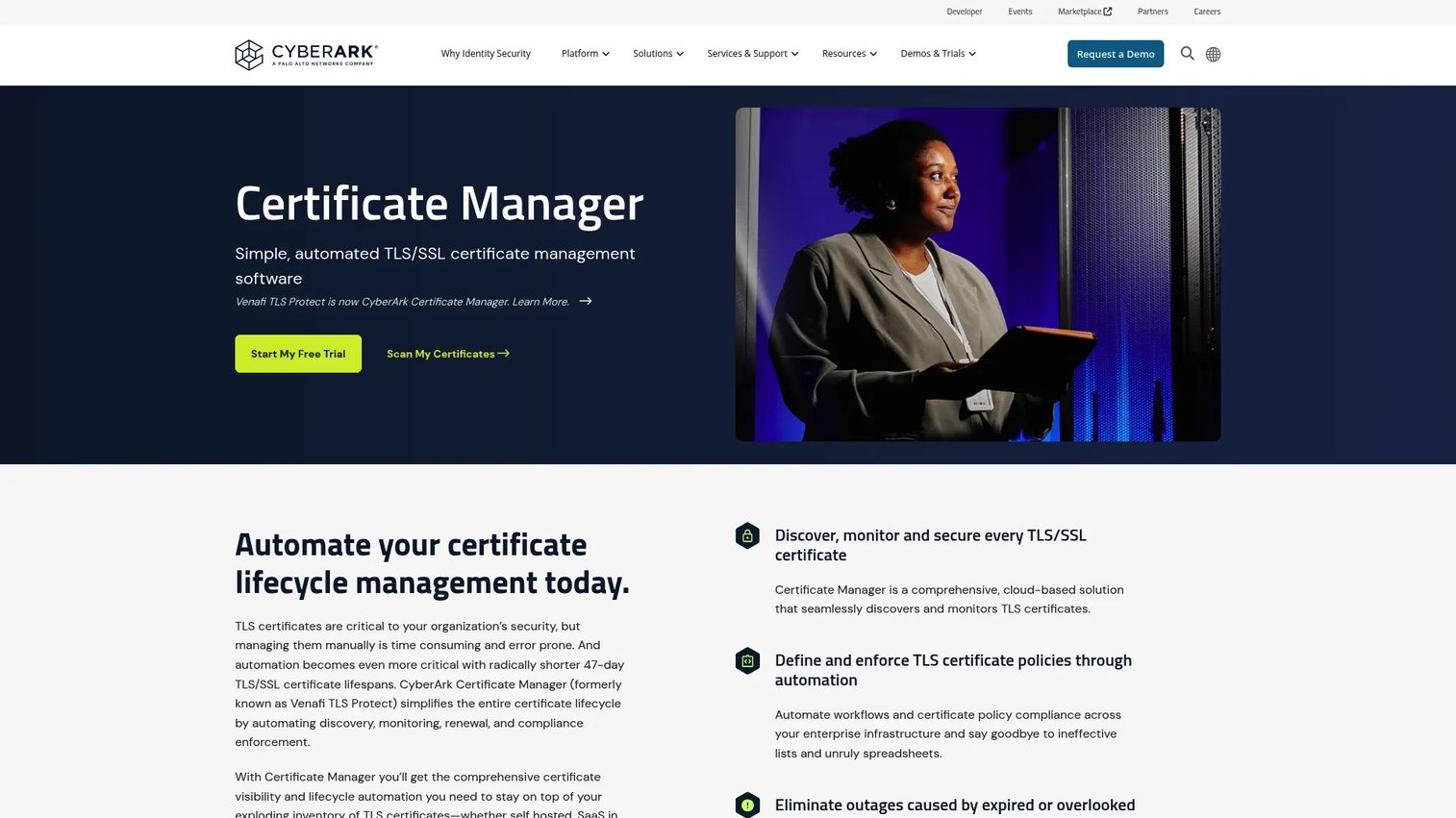
CyberArk Certificate Manager is cloud-based TLS/SSL certificate lifecycle management software for discovering, monitoring, renewing, and enforcing compliance across certificates. Its natural home is inside the broader CyberArk identity security ecosystem, where certificate management sits alongside privileged access and secrets management under one identity-first umbrella.
Best for: Enterprises needing centralized TLS certificate lifecycle automation and compliance control, especially existing CyberArk customers.
Key strengths
- Automated discovery and monitoring: Continuously tracks TLS/SSL certificates across the environment.
- Renewal and policy enforcement: Automates renewal and enforces compliance policy to reduce lapses.
- Flexible deployment: Supports self-hosted, SaaS, and hybrid models to match your infrastructure.
Why choose CyberArk Certificate Manager: If your organization already runs CyberArk for identity and privileged access, folding certificate lifecycle management into the same platform reduces tool sprawl and keeps machine identities under a unified security model. Teams that think about certificates as part of a wider identity strategy, rather than a standalone concern, get the tightest fit here.
CyberArk Certificate Manager pricing: CyberArk does not publish public pricing for Certificate Manager. The product page promotes a 30-day free trial. Scope pricing with the vendor based on your deployment model and certificate volume.
5. DigiCert
DigiCert has a certificate lifecycle management and PKI platform for centralized digital trust governance. It unifies public and private certificate handling under one policy layer, which is why security teams evaluating hybrid infrastructure often shortlist it. The pitch is trust governance: consistent cryptographic policy across every certificate, wherever it lives.
Best for: Enterprises managing certificates and private PKI across hybrid infrastructure.
Key strengths
- Cross-environment discovery: Certificate discovery and inventory across cloud, hybrid, and on-prem environments.
- Policy-based governance: Enforces cryptography and compliance policy centrally.
- Automated workflows: Automated renewal, alerts, and workflow integrations to prevent expiry.
Why choose DigiCert Trust Lifecycle Manager: Teams that need both public SSL/TLS certificates and private PKI under one governance model get a clean fit. DigiCert's long history as a certificate authority means the lifecycle platform is built around trust and policy enforcement, which resonates with security teams that care about auditability and cryptographic standards across a mixed estate.
DigiCert Trust Lifecycle Manager pricing: DigiCert documents three subscription plans, Essentials, Advanced, and Premium, but does not publish numeric pricing; the product is listed as contact-based. It holds a 3.8/5 rating on G2.
6. AWS Certificate Manager
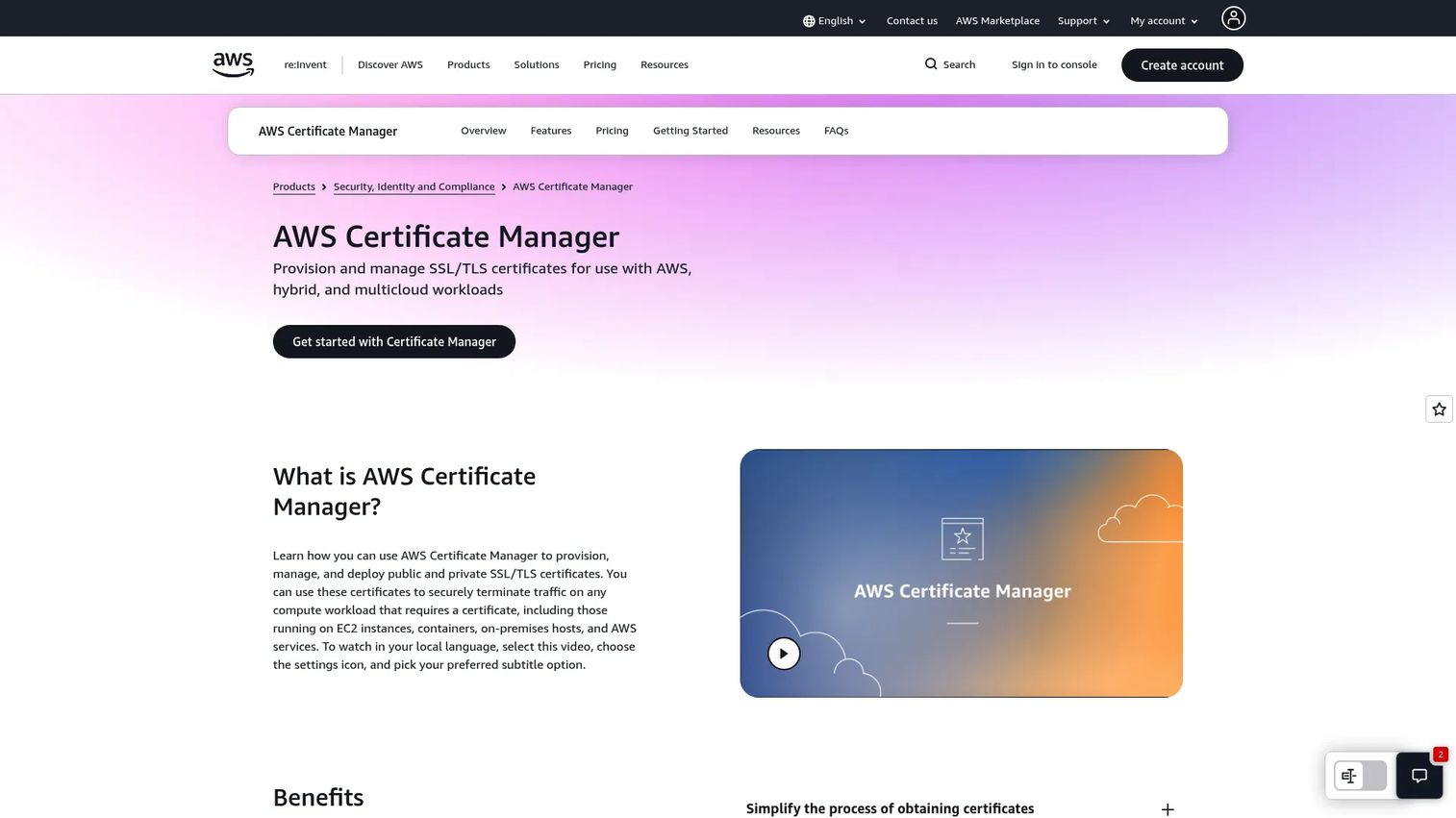
AWS Certificate Manager is an AWS service for provisioning, managing, and deploying SSL/TLS certificates. For teams already operating in AWS, it is the path of least resistance: request a certificate, and ACM handles issuance and managed renewal for services like CloudFront, Elastic Load Balancing, and API Gateway automatically. No renewal reminders, no manual rotation for integrated services.
Best for: Teams that need managed SSL/TLS certificate provisioning for AWS and hybrid workloads.
Key strengths
- Public and private certificate management: Handles both public and private SSL/TLS certificates.
- Managed renewal: Automates certificate renewal for AWS-integrated services with zero manual steps.
- Native AWS integration: Deploys directly to CloudFront, Elastic Load Balancing, and API Gateway.
Why choose AWS Certificate Manager: If your workloads live in AWS, ACM removes certificate renewal from your list of worries for integrated services, at no cost. Where teams need broader multi-cloud or on-prem coverage beyond AWS, they often pair ACM with a dedicated CLM platform that spans the rest of the estate. ACM excels as the cloud-native layer inside AWS rather than a single tool for every environment.
AWS Certificate Manager pricing: ACM issues certificates at no cost for use with integrated AWS services. Exportable public certificates carry per-domain fees: $7.00 per standard fully qualified domain name and $79.00 per wildcard name, charged upon issuance and again on renewal. The first 10,000 export-certificate API calls per account per month are free, then $0.50 per additional 10,000 calls. ACM holds a 4.5/5 rating on G2.
7. ManageEngine Key Manager Plus
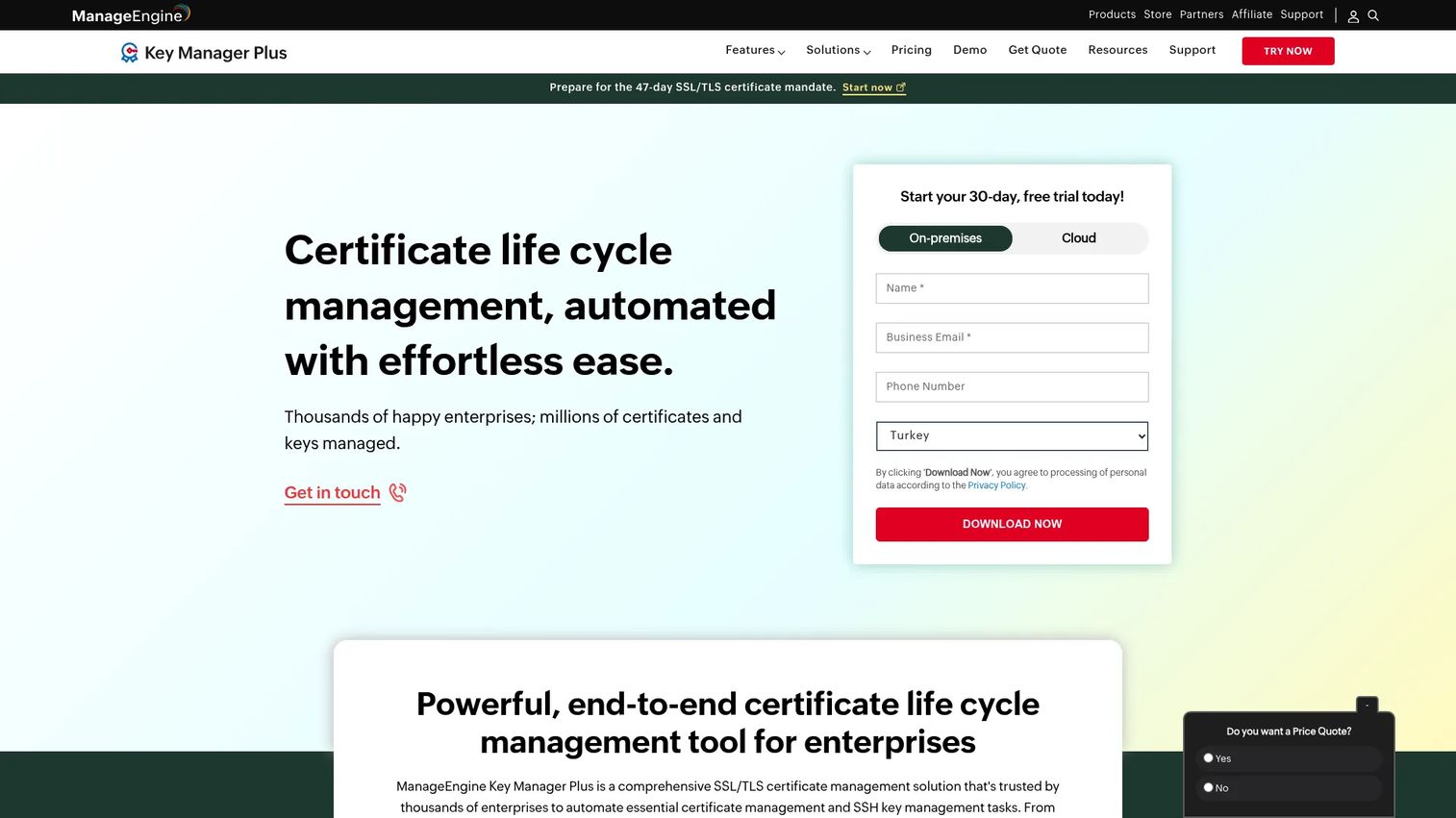
ManageEngine Key Manager Plus is web-based SSH key and SSL/TLS certificate lifecycle management software. Its differentiator is scope: it manages certificates and SSH keys in one console, which suits mid-market and enterprise teams that want broad administrative control over both machine credentials and certificates without running two separate tools.
Best for: Organizations needing centralized SSH key and SSL certificate management with auditing and renewal workflows.
Key strengths
- Automated discovery: Discovers SSH keys and SSL/TLS certificates across the environment.
- Centralized inventory: Manages the full lifecycle from one console for both keys and certificates.
- Auditing and control: Reports, alerts, and access control support accountability and compliance.
Why choose ManageEngine Key Manager Plus: Teams that need certificate renewal tracking and SSH key management together get real consolidation value here, along with operational visibility into both. The auditing, reporting, and access control features fit mid-market and enterprise environments that want administrative depth without enterprise-only pricing gates. The free tier makes it easy to trial against a small subset of your estate first.
ManageEngine Key Manager Plus pricing: An Evaluation edition supports up to 50 keys for 30 days. A Free edition supports up to 5 keys forever. Standard licensing is based on the number of managed keys. It holds a 4.5/5 rating on G2.
Considerations before you buy
Certificate discovery coverage
Check whether the tool can find certificates across all your environments, not just the obvious ones. A platform that scans your primary cloud account but misses internal microservices or a forgotten load balancer leaves you with a false sense of completeness. Inventory gaps are where renewal risk hides, because the certificate you never cataloged is the one that expires without warning. Ask for proof of discovery across cloud, on-prem, and hybrid before you commit.
Protocol support
Verify support for ACME, SCEP, and EST if automation matters to you, and it should. ACME drives automated issuance and renewal, SCEP handles device enrollment, and EST covers modern secure enrollment. Protocol coverage often determines how much manual work is required to integrate the tool with your existing infrastructure. Native support means less glue code and fewer brittle scripts holding your certificate automation together.
Cloud, hybrid, and multi-cloud fit
Confirm how the tool handles mixed environments. Certificate sprawl is usually an infrastructure problem, not just a renewal problem, so a tool that only sees one cloud will not solve it. If you run multi-cloud or hybrid, make sure the platform gives you unified inventory visibility and centralized control across all of it, not a partial view that still leaves you tracking certificates by hand somewhere.
Public and private certificate support
Distinguish between public SSL/TLS certificates and private PKI use cases. Public certificates secure customer-facing endpoints; private certificates secure internal services, devices, and machine-to-machine traffic. Many teams need both, and managing them in separate tools recreates the fragmentation you are trying to eliminate. Confirm the platform covers your full certificate mix.
Governance, reporting, and access control
Evaluate role-based access, approval workflows, and reporting depth. These features tie directly to auditability and operational accountability, which is exactly what security review and compliance audits demand. The same rigor you would apply when comparing a contract management or audit management platform applies here: if you cannot report on who did what and when, you cannot prove control.
Conclusion
The right SSL certificate management software depends on your infrastructure complexity and how deep you need automation to go. Three fit categories cover most teams. For broad enterprise certificate lifecycle management across many CA types, Sectigo Certificate Manager and Keyfactor Command lead on discovery and orchestration. For cloud-native provisioning, AWS Certificate Manager removes renewal from your AWS workload entirely. For centralized operations that span both certificates and keys, ManageEngine Key Manager Plus consolidates the two, while Venafi TLS Protect, CyberArk Certificate Manager, and DigiCert Trust Lifecycle Manager each bring strong governance for policy-driven, hybrid, or identity-first environments.
The goal is the same across all of them: outage prevention, breach prevention, compliance, and centralized control over an inventory that keeps growing. Certificate automation is no longer a nice-to-have when issuance volume climbs 33% year over year. Pick one or two platforms that match your environment type, run them against a real slice of your certificate estate, and measure how much manual work disappears. That trial will tell you more than any feature list.
For teams building out a broader operational stack, it is worth reviewing adjacent tooling too, from application performance monitoring tools that catch the downstream impact of a failed certificate, to marketing automation and customer data platform systems on the GTM side. If you also present or validate technical products for a living, an interactive demo can help you walk buying committees through complex security tooling without a live environment.
Start your journey with Guideflow today!
FAQs
SSL certificate management software is a platform that tracks, issues, renews, and replaces SSL/TLS certificates across their entire lifecycle from one central console. It discovers certificates wherever they live, monitors them for certificate expiration and policy issues, and automates renewal so certificates never lapse unexpectedly. The result is inventory visibility and centralized control over what would otherwise be a scattered, manually tracked set of credentials.
Because a single expired or misconfigured certificate can take down a customer-facing service, trigger a security incident, and create compliance exposure. As certificate counts grow into the thousands and validity windows shrink, manual tracking in spreadsheets stops working. Certificate management software delivers outage prevention, breach prevention, and audit-ready operational visibility, which is why enterprise certificate management is now a standard part of security programs.
Certificate lifecycle management, or CLM, is the broader, lifecycle-oriented model. It covers every stage from discovery and issuance through monitoring, renewal, revocation, and replacement. Certificate management is often used more loosely to describe the same work. In practice, buyers use the terms interchangeably, and most modern platforms marketed as certificate management software are full CLM platforms.
For enterprise environments, prioritize broad certificate discovery across cloud, hybrid, and on-prem, deep lifecycle automation, strong governance with role-based access and audit trails, and support for both public and private certificates. Platforms like Sectigo Certificate Manager, Keyfactor Command, Venafi TLS Protect, and DigiCert Trust Lifecycle Manager are commonly evaluated by enterprises. The best pick depends on your CA mix, environment complexity, and whether certificate management fits inside a wider identity or security ecosystem.
Yes. Most modern platforms are built for cloud, hybrid, and multi-cloud operations, discovering and managing certificates across AWS, Azure, Google Cloud, on-prem data centers, and Kubernetes. Coverage varies by vendor, though, so verify environment support before buying. If you run multi-cloud, confirm the platform gives you unified inventory across all of it rather than a partial view of a single provider.
Look for ACME, SCEP, and EST. ACME automates issuance and renewal, SCEP handles device enrollment, and EST covers modern secure enrollment for endpoints. Protocol support directly affects how much automation you can achieve and how easily the tool integrates with your existing infrastructure. The more of these a platform speaks natively, the less manual scripting your team maintains.
It significantly reduces expiry-related outages by automating certificate renewal and centralizing certificate monitoring. Instead of relying on someone to remember a renewal date, the platform tracks every certificate, alerts on upcoming certificate expiration, and renews automatically before anything lapses. It cannot prevent every failure, but it removes the most common and preventable cause: a certificate nobody was watching.