
Your last engagement survey got a 74% response rate. Leadership praised the participation. Then the results went into a slide deck, got discussed in one meeting, and nothing changed.
That is the real problem with employee listening. Collecting employee feedback is the easy part. Most teams are good at it. The hard part is what happens after the responses land: whether managers see anything useful, whether anyone owns a follow-up, whether the next survey shows the needle moved.
The global employee engagement software market hit USD 1.22B in 2025 and is projected to reach USD 4.47B by 2034, a 15.30% CAGR, according to Fortune Business Insights (2025). Buyers are spending more because the stakes are clear. Silent disengagement turns into resignation letters, and by then the survey data that could have flagged it is six months stale.
So the tool you pick matters less for how it collects data and more for how it closes the loop. This guide compares seven voice of employee software platforms on that basis: listening methods, analytics depth, action planning, and confidentiality. The best employee listening software does not just gather responses. It changes what managers do next.
What's inside
This guide is for HR leaders, People Ops managers, and enablement-adjacent operators who need a system for listening, reporting, and acting on employee feedback, not just running another survey.
We selected and compared platforms on the criteria that actually separate employee survey tools once you get past the pitch:
- Listening methods: pulse surveys, lifecycle listening, and open-text feedback
- Analytics depth: sentiment analysis, benchmarking, and role-based reporting
- Action planning: whether the tool helps managers turn insights into follow-through
- Confidentiality: how individual responses stay protected while managers still get insight
TL;DR
- Best overall for continuous listening: Workday Peakon Employee Voice pairs AI theme detection with manager-ready action planning at scale.
- Best enterprise choice: Perceptyx People Insights Platform is built for organization-wide listening programs and deep EX workflows.
- Best analytics and research depth: Qualtrics XM Platform gives you survey flexibility and advanced analysis beyond a pure engagement tool.
- Best self-serve leader reporting: Paylocity Employee Voice automates surveys across the lifecycle with anonymized, self-serve manager insights.
- Best all-in-one engagement platform: Culture Amp Employee Engagement Platform combines surveys, benchmarking, and action planning in one familiar system.
- Best for straightforward rollout: Quantum Workplace keeps engagement surveys, pulse checks, and manager reporting practical to deploy.
What is voice of employee software?
Voice of employee software is a category of employee engagement survey software that collects employee feedback through surveys and listening methods, analyzes it, and helps organizations turn those insights into action.
It sits between raw survey collection and real change. A basic survey form gathers responses. Voice of employee software adds sentiment analysis, benchmarking, role-based reporting, and action planning so the feedback actually moves decisions. That distinction is why it commands a premium over generic employee survey tools.
Core capabilities to expect:
- Survey programs: engagement, custom, and topic-specific surveys
- Pulse and lifecycle listening: recurring pulse surveys plus onboarding, periodic, and exit moments
- **Sentiment analysis:** natural language processing on open-text comments
- Dashboards and role-based reporting: views tailored to executives, managers, and HR
- Action planning: structured follow-up tied to specific results
- HRIS or workflow integration: syncing people data and pushing insights where teams already work
The best platforms treat benchmarking as a baseline, not a bonus. Comparing your scores against industry norms tells you whether a 3.8 on manager trust is a problem or par. And the strongest employee voice software ties every insight back to an owner and a next step, because a dashboard nobody acts on is just a prettier version of the slide deck problem.
When to use voice of employee software
Improve engagement before problems become churn
Annual surveys catch problems once a year. That is too slow. Recurring pulse surveys let teams spot a dip in a specific department weeks after it starts, not two quarters later in an exit interview.
The value is timing plus visibility. When a manager sees their team's sentiment slide in near real time, they can act while the issue is still fixable. Growth and reorganization are exactly the moments when this matters most, because that is when engagement is most volatile and least visible from the top.
Run lifecycle listening across onboarding, retention, and exit
Employee experience is not one moment. It is a journey, and lifecycle listening maps feedback to each stage of it.
Onboarding surveys tell you whether new hires are ramping or floundering in their first 90 days. Periodic surveys track engagement and retention risk across tenure. Exit surveys reveal why people actually leave, which is rarely the reason they give their manager. Run together, these programs turn scattered anecdotes into a pattern you can act on.
Give managers useful insights without exposing individual responses
Managers need to know their team is struggling with workload. They do not need to know which person said what. That line is where trust lives.
Good confidentiality-safe reporting aggregates responses and suppresses results below a minimum team size, so no individual is identifiable. Self-serve leader dashboards then put those aggregated insights in front of managers directly, without routing everything through HR. When employees trust that their feedback is anonymous, they answer honestly, and honest data is the only kind worth acting on.
Comparison table
Here is how the seven platforms compare at a glance. Pricing for most voice of employee software is quote-based, so treat the pricing column as a starting reference and verify current figures against each vendor's live pricing page and G2 listing before you shortlist.
| # | Product | Best for | Key differentiator | Pricing | G2 rating |
|---|---|---|---|---|---|
| 1 | Workday Peakon Employee Voice | Continuous listening at mid-to-large scale | AI theme detection plus attrition prediction | Custom pricing | 4.6/5 |
| 2 | Paylocity Employee Voice | Teams wanting listening inside an HR suite | Automated lifecycle surveys with self-serve insights | Custom pricing | 4.4/5 |
| 3 | Achievers Voice of Employee | Recognition plus feedback in one platform | Voice module tied to recognition and HRIS sync | Custom pricing | 4.6/5 |
| 4 | Culture Amp Employee Engagement Platform | All-in-one engagement | AI comment summaries with benchmarks and heatmaps | Quote-based | 4.5/5 |
| 5 | Qualtrics XM Platform | Research and analytics depth | Broad experience management with a free survey tier | From $420/month | 4.4/5 |
| 6 | Perceptyx People Insights Platform | Enterprise organization-wide listening | Continuous listening plus AI-assisted action planning | Custom pricing | 4.5/5 |
| 7 | Quantum Workplace Employee Engagement | Straightforward engagement rollout | Validated e9 model with lifecycle surveys | From $15,000 | 4.3/5 |
Read the table by matching your primary need to the "Best for" column, then check the differentiator against how your team plans to act on feedback. The G2 ratings cluster tightly, so the real decision comes down to fit: scale, whether listening lives inside an existing HR suite, and how much research depth you need.
Best voice of employee software for 2026
1. Workday Peakon Employee Voice
Workday Peakon Employee Voice is an AI-powered employee listening platform built for continuous feedback rather than the once-a-year survey model. It collects real-time feedback, surfaces sentiment through natural language processing, and gives managers personalized dashboards tied to benchmarks. For organizations already running Workday, the pull is a listening layer that connects to broader people analytics.
Best for: Mid-to-large organizations that want continuous employee listening with strong manager actionability.
Key features
- Real-time employee feedback and sentiment insights
- AI-powered analytics with NLP and contextual theme detection
- Personalized dashboards with global benchmarks
- Attrition prediction to flag retention risk early
- Action planning tied to specific results
Why choose Workday Peakon Employee Voice: It fits larger teams that need the analytics depth to move from scores to causes. The attrition prediction is the standout, because it reframes employee feedback from a lagging report into an early warning system.
Workday Peakon Employee Voice pricing: Workday does not publish a public price and directs prospects to request a demo, so expect custom, quote-based pricing scaled to your headcount and Workday footprint.
2. Paylocity Employee Voice
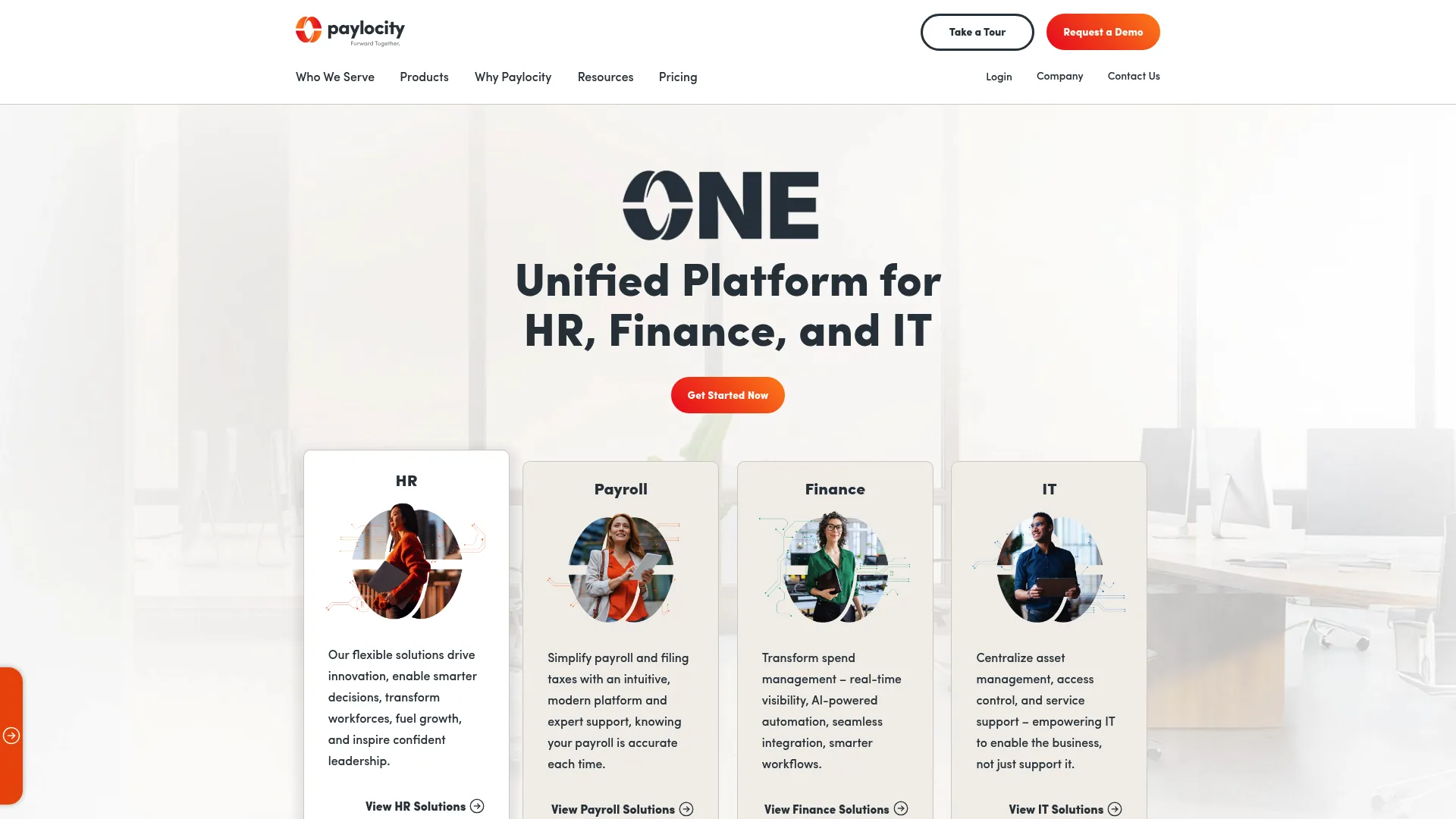
Paylocity Employee Voice is an employee feedback and engagement survey add-on inside Paylocity's broader HR platform. It automates surveys across onboarding, engagement, and exit moments, then delivers anonymized results through self-serve leader dashboards. For teams already on Paylocity for payroll and HR, the appeal is one less system to buy and integrate.
Best for: Mid-market and enterprise teams that want practical survey automation and analytics inside an existing HR suite.
Key features
- Automated onboarding, engagement, and exit surveys
- Employee engagement dashboard with sentiment analysis
- Custom company-specific survey questions
- Anonymized reporting to protect confidentiality
- Action planning tied to survey results
Why choose Paylocity Employee Voice: It fits teams that want lifecycle listening without a heavy research workflow. Because it lives inside the HR platform, the trade-off is scale: it makes most sense when Paylocity is already your system of record rather than a standalone listening buy.
Paylocity Employee Voice pricing: Paylocity does not list a public price for Employee Voice and treats it as an optional add-on, so contact sales for a quote tied to your suite and headcount.
3. Achievers Voice of Employee
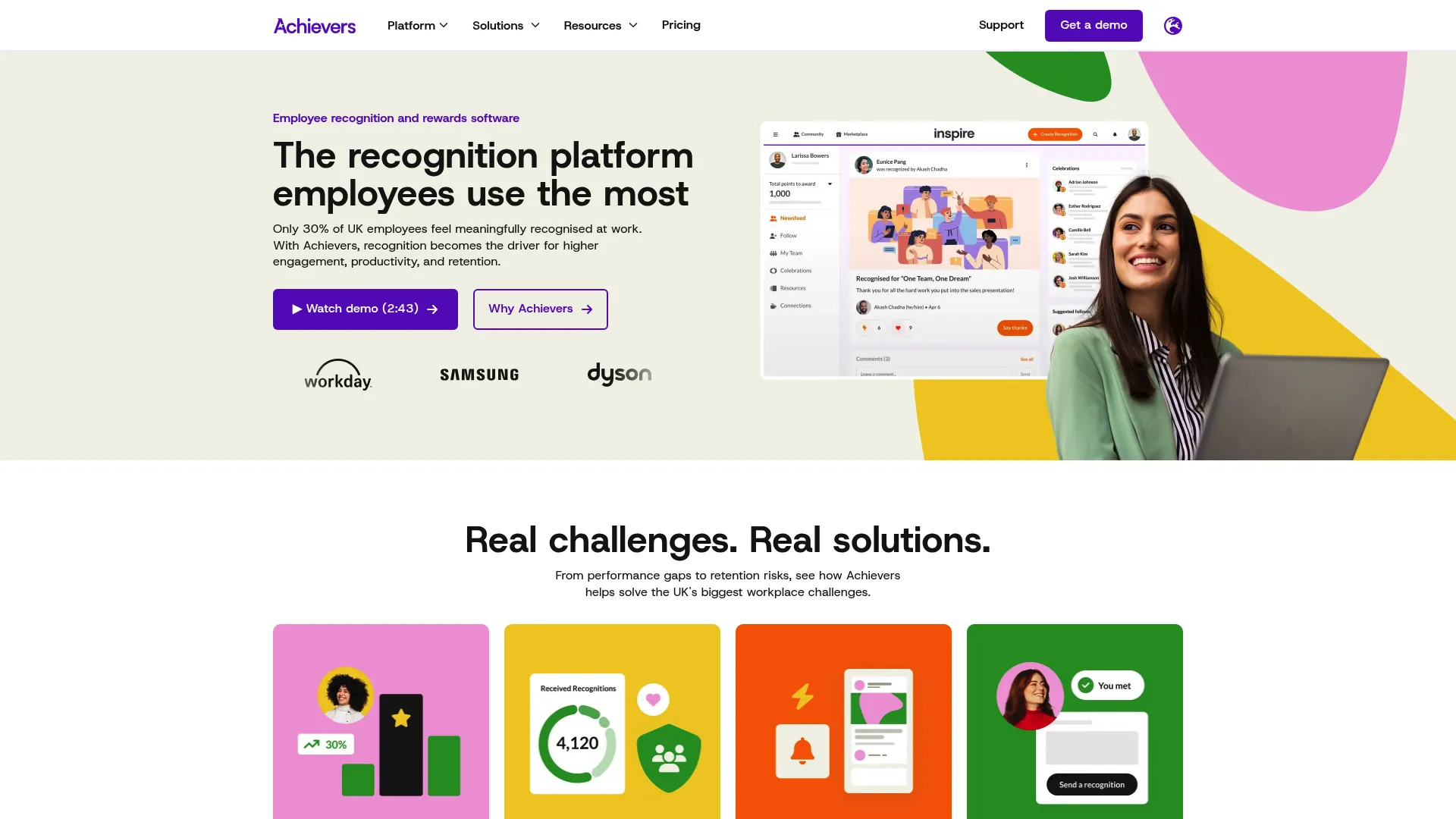
Achievers Voice of Employee pairs continuous feedback formats with a recognition and rewards platform, so listening and appreciation live in the same place. It supports surveys, forms, polls, and quizzes, offers self-serve reporting, and syncs with your HRIS. The differentiator is the connective tissue between feedback and recognition modules.
Best for: Mid-market and enterprise teams that want recognition plus voice of employee feedback in one platform.
Key features
- Surveys, forms, polls, and quizzes
- Pulse surveys and reporting dashboards
- Self-serve reporting and HRIS sync
- 100+ customizable templates
- Recognition and rewards integration
Why choose Achievers Voice of Employee: It fits teams that see feedback and recognition as two halves of the same engagement effort. The broader ecosystem matters here: the value compounds when you use both the listening and recognition modules together rather than the voice module alone.
Achievers Voice of Employee pricing: Achievers does not display public pricing and directs prospects to request a custom quote based on program scope and headcount.
4. Culture Amp Employee Engagement Platform
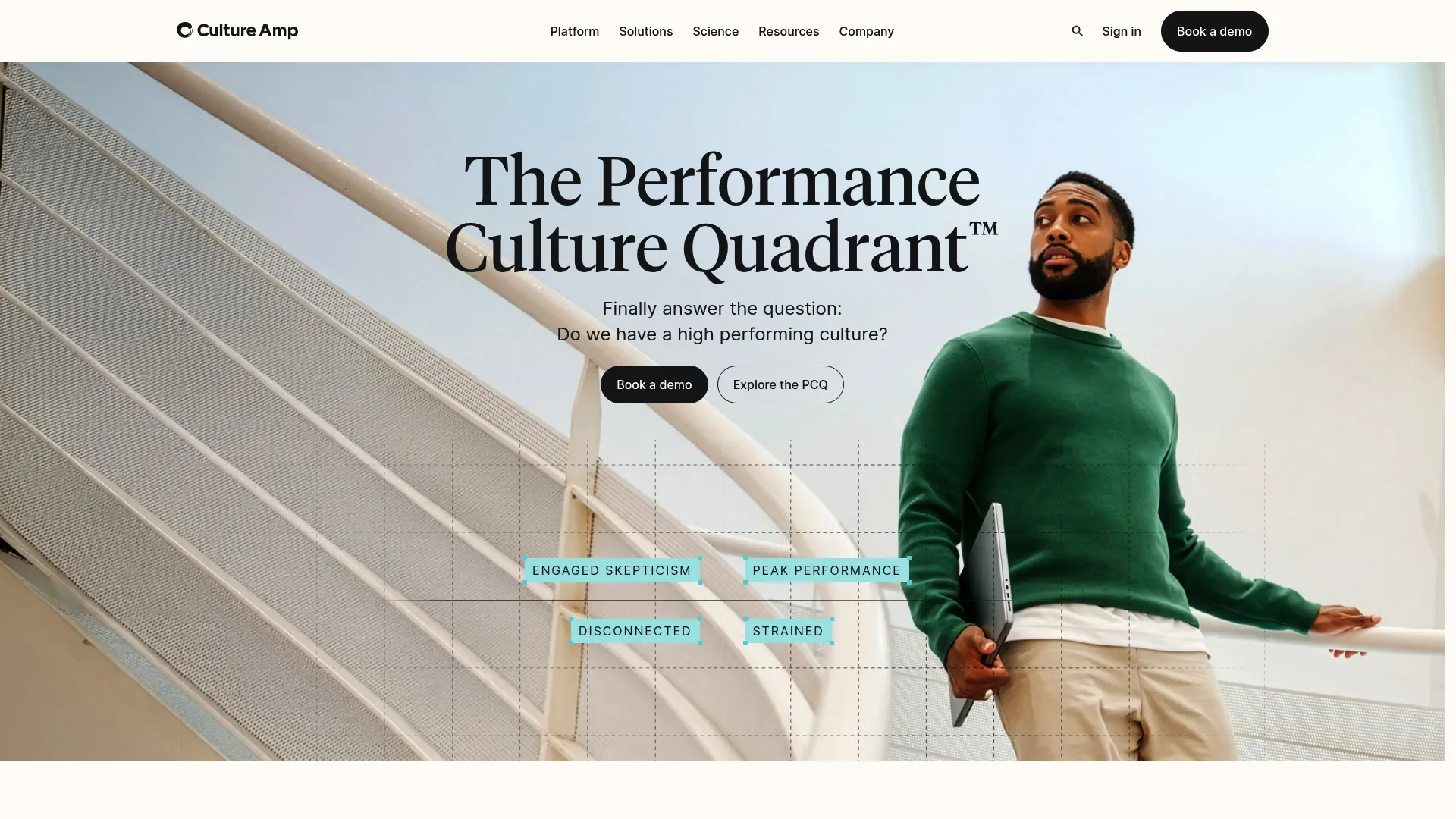
Culture Amp Employee Engagement Platform is a recognizable employee experience platform covering engagement surveying, feedback loops, action planning, and benchmarking. It leans on AI comment summaries to compress open-text feedback into themes, and pairs heatmaps with benchmarks so managers can see where their team sits against norms. It is a common shortlist entry for teams that want a mature analytics story.
Best for: Mid-market and enterprise teams wanting an all-in-one employee engagement platform.
Key features
- Engagement surveys and pulse surveys
- AI comment summaries and AI Coach
- Benchmarks, heatmaps, and dashboards
- Action planning workflows for managers
- Development and performance modules
Why choose Culture Amp Employee Engagement Platform: It fits teams that want breadth without stitching multiple tools together. The benchmarking and heatmap combination is its strength for turning raw scores into a clear "where do we stand" read.
Culture Amp Employee Engagement Platform pricing: Culture Amp bills annually and prices by employee count, product, and service tier. Public numeric pricing is not shown for its Engage plan, so request a quote for current figures.
5. Qualtrics XM Platform
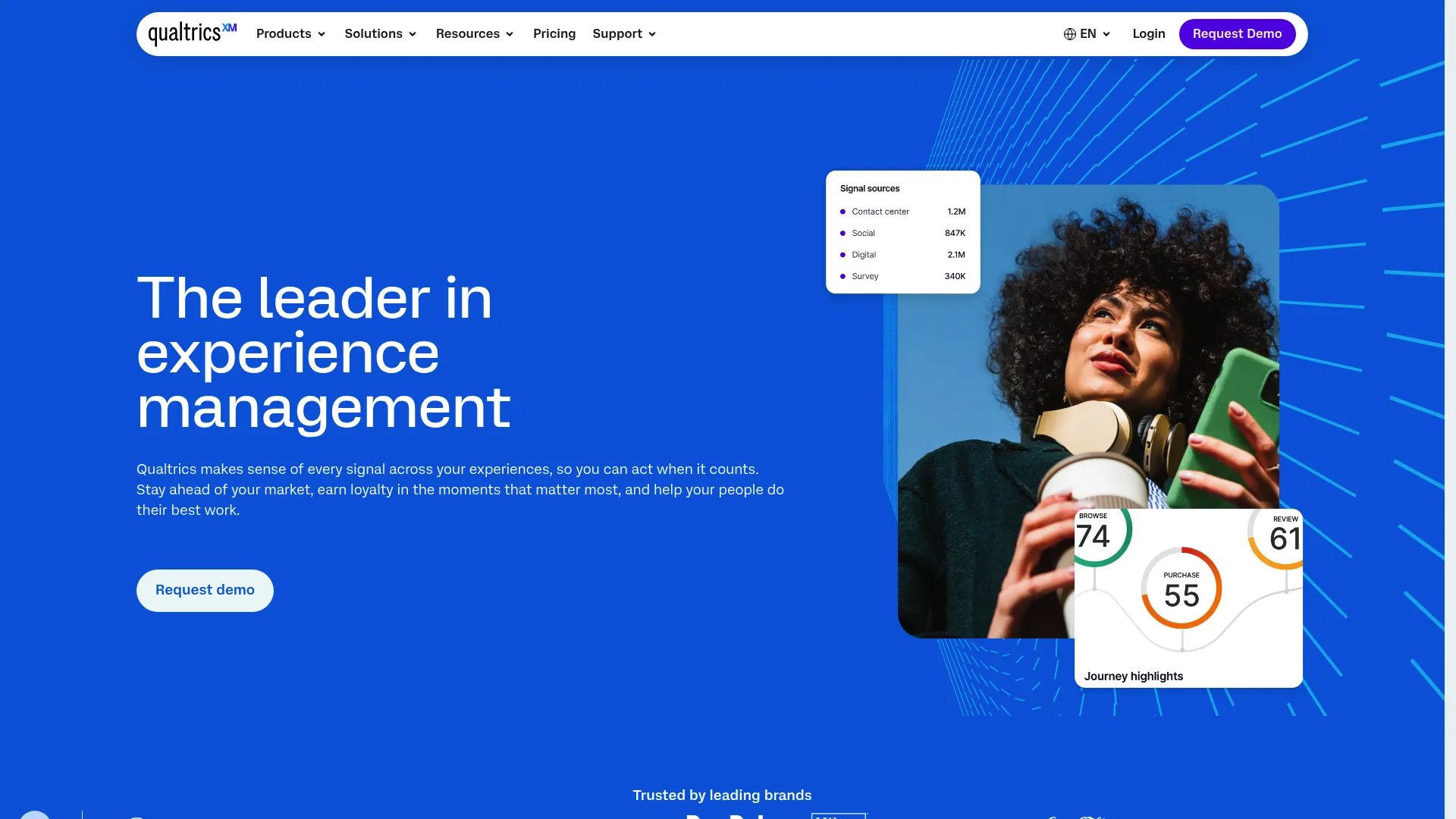
Qualtrics XM Platform is experience management software that spans employee, customer, and research feedback. For voice of employee use, its draw is survey flexibility and advanced analytics that go deeper than a purpose-built engagement tool. It can feel broader than a pure VoE platform, which is exactly why research-heavy teams choose it.
Best for: Mid-market and enterprise teams needing a unified platform for surveys, dashboards, and action workflows.
Key features
- Flexible survey creation and distribution
- Dashboard reporting and analysis
- AI-guided experience management automation
- Advanced text and sentiment analytics
- Action workflows across the platform
Why choose Qualtrics XM Platform: It fits teams that need a strong research and measurement layer, not just engagement scoring. The trade-off is scope: it does more than most VoE buyers strictly need, which is a plus if you have research use cases and overkill if you only want engagement pulses.
Qualtrics XM Platform pricing: A free Qualtrics Surveys account is available. Strategic Research starts at $420/month, billed as $5,040 annually for 1,000 responses shared across users, with enterprise tiers priced by quote.
6. Perceptyx People Insights Platform
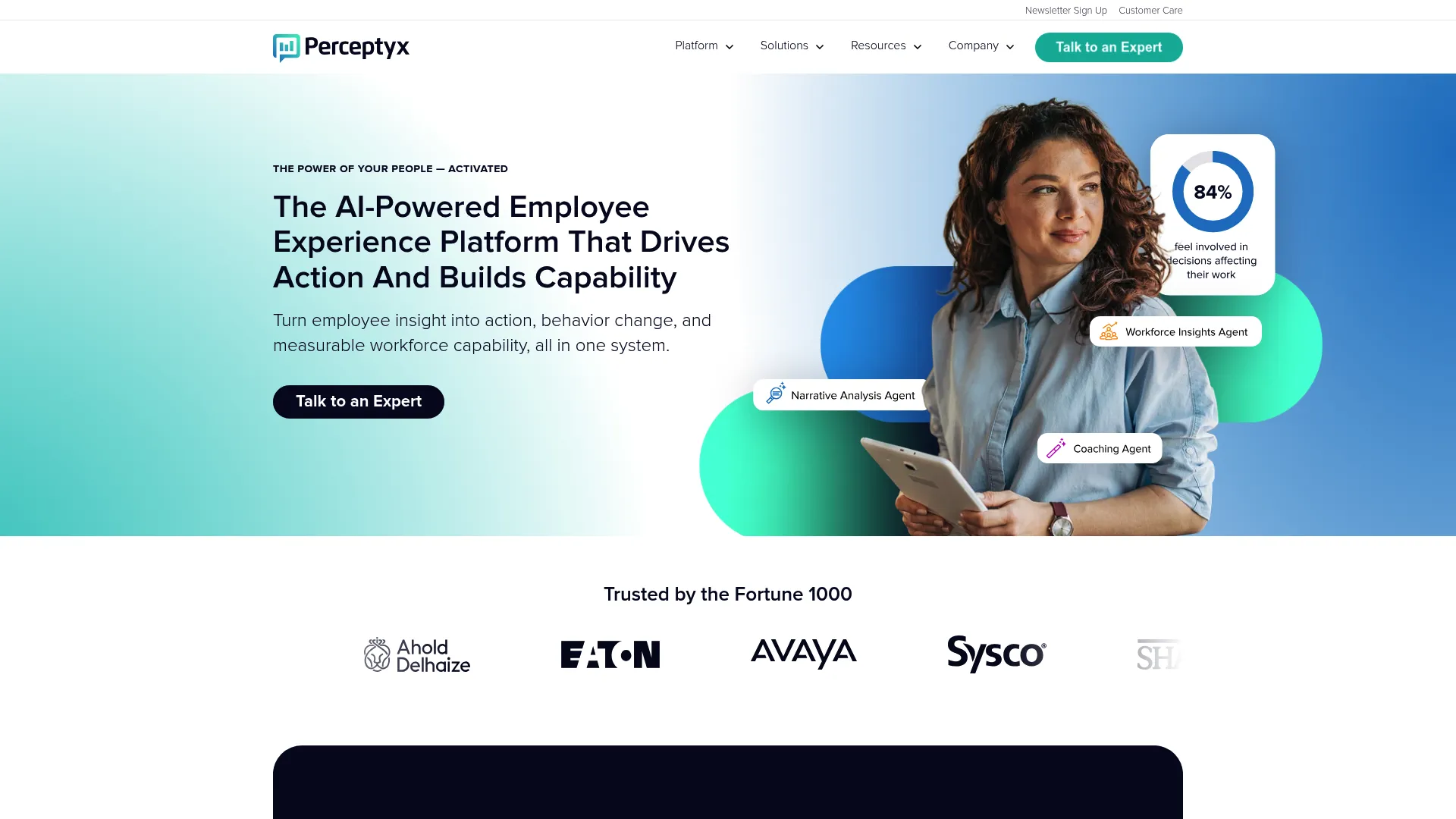
Perceptyx People Insights Platform is an AI-powered employee experience platform built for large-scale listening. It runs continuous listening across surveys and conversations, layers advanced analytics on open-text and narrative feedback, and adds AI-assisted action planning with nudges and coaching. This is a platform for organizations that treat listening as an ongoing program rather than an event.
Best for: Large organizations needing enterprise employee listening and EX action workflows.
Key features
- Continuous employee listening across surveys and conversations
- Advanced analytics with open-text and narrative analysis
- AI-assisted action planning, nudges, and coaching
- Organization-wide listening program design
- Benchmarking across the employee experience
Why choose Perceptyx People Insights Platform: It fits buyers who need depth across many listening moments and a large, distributed workforce. The action planning with nudges is the differentiator, because it pushes follow-through toward managers rather than leaving it in a report.
Perceptyx People Insights Platform pricing: Perceptyx points to transparent, all-in packaging but does not publish a numeric price on its site, so expect a custom quote scaled to your organization.
7. Quantum Workplace Employee Engagement
Quantum Workplace Employee Engagement is an all-in-one platform for engagement surveys, pulse checks, and manager-level reporting. It is built on a scientifically validated e9 engagement model and automates survey invites and reminders across lifecycle moments. The pitch is engagement workflows that teams can roll out without an overly complex implementation.
Best for: Mid-market and enterprise teams wanting an all-in-one listening and engagement platform.
Key features
- Scientifically validated e9 engagement model
- Pulse and lifecycle surveys with automated invites and reminders
- Analytics, benchmarks, and AI-powered action tools
- Manager-level reporting dashboards
- Action planning tied to engagement drivers
Why choose Quantum Workplace Employee Engagement: It fits teams that want a validated engagement framework and practical manager reporting without a long rollout. The e9 model gives you a defensible measurement foundation rather than a homegrown score.
Quantum Workplace Employee Engagement pricing: Pricing is customized by employee count and products selected. Packages start at $15,000 with no implementation fee, billed annually.
Considerations
Before you sign, pressure-test each platform against the criteria that decide whether it changes behavior or just collects data.
Survey flexibility and cadence
Check whether the tool supports the survey types you actually need: annual engagement, recurring pulse surveys, and lifecycle moments. Then verify cadence controls, because a platform that forces a rigid schedule will not match how your teams work. Flexible question libraries and custom questions matter when your priorities shift mid-year.
Confidentiality and role-based access
Confirm the minimum team size for reporting, since suppressing small groups is what keeps individual responses anonymous. Ask how role-based reporting works so executives, managers, and HR each see the right view and nothing more. Confidentiality is not a feature to skim, it is the thing that determines whether employees answer honestly.
Analytics, benchmarking, and reporting depth
Look past dashboards to the analysis underneath. Verify how sentiment analysis handles open-text comments and whether benchmarking compares you against relevant industry norms. Strong analytics and reporting turn a score into a cause, which is the difference between knowing engagement dipped and knowing why.
Action planning and follow-through
This is where most programs stall. Check whether the platform assigns owners, tracks follow-up actions, and shows movement over time. Action planning that lives inside the tool, with reminders and manager nudges, is what closes the loop between survey and change.
Integrations and admin overhead
Confirm HRIS integration so people data flows in without manual uploads, and check what it takes to maintain that sync. Then weigh admin overhead honestly: a powerful platform nobody can run is a shelf-ware risk. Ask how much of the workflow managers can self-serve versus what routes through a central HR admin.
How to choose the right tool for your team
The right voice of employee software depends less on feature counts and more on how your organization plans to act on feedback. For enablement-adjacent operators, the connection is direct: employee feedback systems shape manager coaching, onboarding consistency, and the cross-functional signal that tells you whether messaging and process are landing with frontline teams.
If you need lightweight survey programs
If your priority is running clean engagement and pulse surveys without a research workflow, Paylocity Employee Voice and Quantum Workplace both keep rollout practical. Paylocity fits when you are already on its HR suite, while Quantum Workplace gives you a validated engagement model with a straightforward deployment.
If you need enterprise-grade analytics and benchmarking
For deep analysis at scale, Workday Peakon Employee Voice and Perceptyx lead. Peakon pairs AI theme detection with attrition prediction, while Perceptyx is built for organization-wide continuous listening with AI-assisted action planning across a large, distributed workforce.
If you need self-serve leader reporting
If getting managers into the data without routing everything through HR is the goal, Paylocity Employee Voice and Culture Amp both emphasize self-serve, anonymized dashboards. That matters for manager coaching, because the faster a manager sees a dip, the sooner they can act on it.
If you need a broader people analytics suite
If listening is one piece of a wider measurement need, Qualtrics XM Platform gives you research-grade survey flexibility and analytics beyond engagement, and Culture Amp adds development and performance modules alongside its engagement core.
Conclusion
The seven platforms sort cleanly by buyer fit. Workday Peakon Employee Voice is the strongest all-around pick for continuous listening with manager actionability. Perceptyx is the enterprise choice for organization-wide programs. Qualtrics XM Platform wins on research and analytics depth, Paylocity Employee Voice on self-serve reporting inside an HR suite, and Culture Amp on all-in-one breadth. Quantum Workplace and Achievers Voice of Employee round out the list for teams that want practical rollout or feedback paired with recognition.
The decision comes down to three questions: what survey cadence do you actually need, how strict are your confidentiality requirements, and what does your action planning model look like once the data lands. Answer those honestly and the shortlist narrows fast.
Do not buy on a feature comparison alone. Shortlist two or three platforms that match your fit, then run a demo or a pilot with a real survey against a real team. The gap between a good demo and a good deployment is where most VoE regret lives, and a pilot is the cheapest way to find it before you commit.
FAQs
Voice of employee software collects employee feedback through surveys and listening methods, analyzes it, and helps organizations turn insights into action. It goes beyond a survey form by adding sentiment analysis, benchmarking, role-based reporting, and action planning. The goal is to close the loop between feedback and real change.
Employee engagement software focuses on measuring and improving engagement, often through recurring surveys and scores. Voice of employee software is broader, capturing feedback across the full employee lifecycle and emphasizing the analysis and action that follow. In practice the categories overlap heavily, and most leading platforms do both.
Look for survey programs, pulse and lifecycle listening, sentiment analysis on open-text comments, and dashboards with role-based reporting. Action planning and HRIS integration are what separate a platform that changes behavior from an employee engagement survey software tool that only collects data. Benchmarking against industry norms is the difference-maker for interpreting scores.
Most teams pair one annual or biannual engagement survey with more frequent pulse surveys, often monthly or quarterly. The right cadence depends on how quickly your organization can act on results, since surveying faster than you can respond erodes trust. Lifecycle surveys at onboarding and exit run automatically as those moments occur.
No, not in a well-configured platform. Confidentiality-safe reporting aggregates responses and suppresses results below a minimum team size, so no individual is identifiable. Managers see themes and scores for their team, not who said what, which is exactly what keeps employees answering honestly.
Yes, when it is used to act rather than just report. Recurring pulse surveys and lifecycle listening surface disengagement early, and some platforms add attrition prediction to flag retention risk before people leave. The retention gain comes from managers acting on the signal, not from the survey itself.
Track participation, engagement scores against benchmarks, and sentiment trends over time. Then measure follow-through: how many action plans have owners, how many are completed, and whether scores move on the drivers you targeted. Employee retention and manager coaching improvements are the outcomes that prove the program is working, not just running.
.avif)