The allowance surrender deadline is in three weeks. Your verified emissions are spread across four facilities, two spreadsheets, and one inbox thread that nobody wants to own. The registry balance does not match your internal numbers, and the person who last reconciled it left in Q2.
That is the actual job. Not policy theory, not carbon philosophy. It is reconciling allowances against verified emissions, keeping registry records clean, and producing something an auditor will sign off on without a two-week scramble.
The stakes keep rising. The global emissions trading market was valued at $285.0 billion in 2025 and is projected to reach $1,156.8 billion by 2034, according to Marketintelo. As coverage expands across jurisdictions, the manual approach stops scaling. This guide is a practical shortlist for teams that want less spreadsheet drift and more audit-ready visibility.
What's inside
This guide is for compliance leads, sustainability operators, and founders who own carbon obligations and need to stop routing everything through manual tracking. It covers the systems that matter for cap and trade software workflows in 2026, from official registries to commercial ETS platforms.
We chose the shortlist on:
- Registry support and transaction handling
- Allowance allocation and tracking
- Compliance reporting and verified emissions alignment
- Market and jurisdiction coverage
- Fit with existing finance and operations workflows
The focus stays on software and reference systems for ETS compliance and cap and trade operations, not on policy history.
TL;DR
- Best for EU ETS data workflows: EU ETS official system, the reference point for verified emissions and allowance context.
- Best for U.S. allowance tracking: CAMPD, the EPA data portal for clean air markets monitoring.
- Best for allowance logic reference: Acid Rain Program, the model that defined cap and trade mechanics.
- Best for cross-state trading structures: CSAPR, the interstate allowance compliance framework.
- Best for hands-on EUA management: ETSdesk, built for EU ETS registry and transaction workflows.
- Best for enterprise climate infrastructure: Xeptagon, carbon registry and market platform builder.
- Best for maritime compliance: OneOcean, EU ETS and voyage compliance for shipping operators.
What is emissions trading software?
Emissions trading software helps organizations track allowances, monitor emissions, manage allocations, and keep registry records aligned with the rules of an emissions trading system.
In a cap and trade system, a regulator sets an emissions cap and issues allowances. Covered entities monitor what they emit, report verified emissions, and surrender enough allowances to cover them. Emissions trading software is the operational layer that keeps all of that straight, so compliance does not live in a spreadsheet one person understands.
Core capabilities to expect:
- Allowance allocation and tracking across facilities and accounts
- Emissions monitoring and reporting against verified data
- Registry and transaction management for transfers and holdings
- Compliance deadline support for surrender cycles
- Audit trails and alignment with public data sources
- Auction, banking, and surrender workflow handling
The category sits next to carbon accounting, but it is not the same thing. Carbon accounting measures your footprint. An emissions trading platform manages your regulatory obligation inside a specific ETS: what you hold, what you owe, and what you have surrendered.
The broader tooling market reflects the pull. The emission management software market was valued at $13.5 billion in 2024 and is expected to reach $31.6 billion by 2030, per Global Industry Analysts. That growth tracks the reality that manual allowance tracking does not survive multi-facility, multi-jurisdiction obligations.
Most teams end up combining official registries and data viewers as their source of truth with a commercial ETS compliance software layer for day-to-day operations. The rest of this guide separates the two so you know what each system is for.
When to use emissions trading software
Track allowances across multiple facilities
One facility, one allowance account, one deadline is a spreadsheet problem. Four facilities across two jurisdictions, with transfers, banking, and different surrender dates, is not. Manual tracking breaks when the number of units and moving parts multiplies. Software gives you one place where holdings, transfers, and obligations reconcile against each other.
Prepare compliance submissions faster
Surrender season is where manual processes cost the most time. You are pulling verified emissions from one system, allowance balances from another, and transaction records from a third. Emissions reporting software lets you assemble verified emissions and surrender records without re-keying, so the submission is a review step rather than a rebuild.
Reduce audit risk and spreadsheet drift
Spreadsheets drift. A formula breaks, a tab gets copied, and two versions of the truth exist by month-end. A single system of record gives you traceability: who changed what, when, and against which allowance. That matters when an auditor asks you to prove a surrender number, and it matters more when the person who built the original tracker has left.
Comparison table
The list below separates official reference systems from commercial platforms. Official registries and data viewers are not priced because they are public systems, not products. Commercial vendors use quote-based pricing, so we note that plainly rather than inventing figures. G2 ratings are not published for these systems, so that column reflects what is verifiable.
| # | Product | Best for | Key differentiator | Pricing | G2 rating |
|---|---|---|---|---|---|
| 1 | EU ETS | EU carbon compliance obligations | Official cap and trade market with Union Registry | Not applicable (public system) | Not published |
| 2 | CAMPD | U.S. clean air markets data | EPA emissions and market data portal | Not applicable (public system) | Not published |
| 3 | Acid Rain Program | Allowance logic reference | Original SO2 cap and trade model | Not applicable (public program) | Not published |
| 4 | CSAPR | Cross-state trading structures | Interstate allowance compliance framework | Not applicable (public program) | Not published |
| 5 | ETSdesk | EUA management and transactions | Registry and surrender workflow platform | Quote-based | Not published |
| 6 | Xeptagon | Enterprise climate infrastructure | Carbon registry and Article 6 systems | Quote-based | Not published |
| 7 | OneOcean | Maritime compliance | Voyage, emissions, and EU ETS in one suite | Quote-based | Not published |
Best emissions trading software for 2026
1. EU ETS (European Union Emissions Trading System)
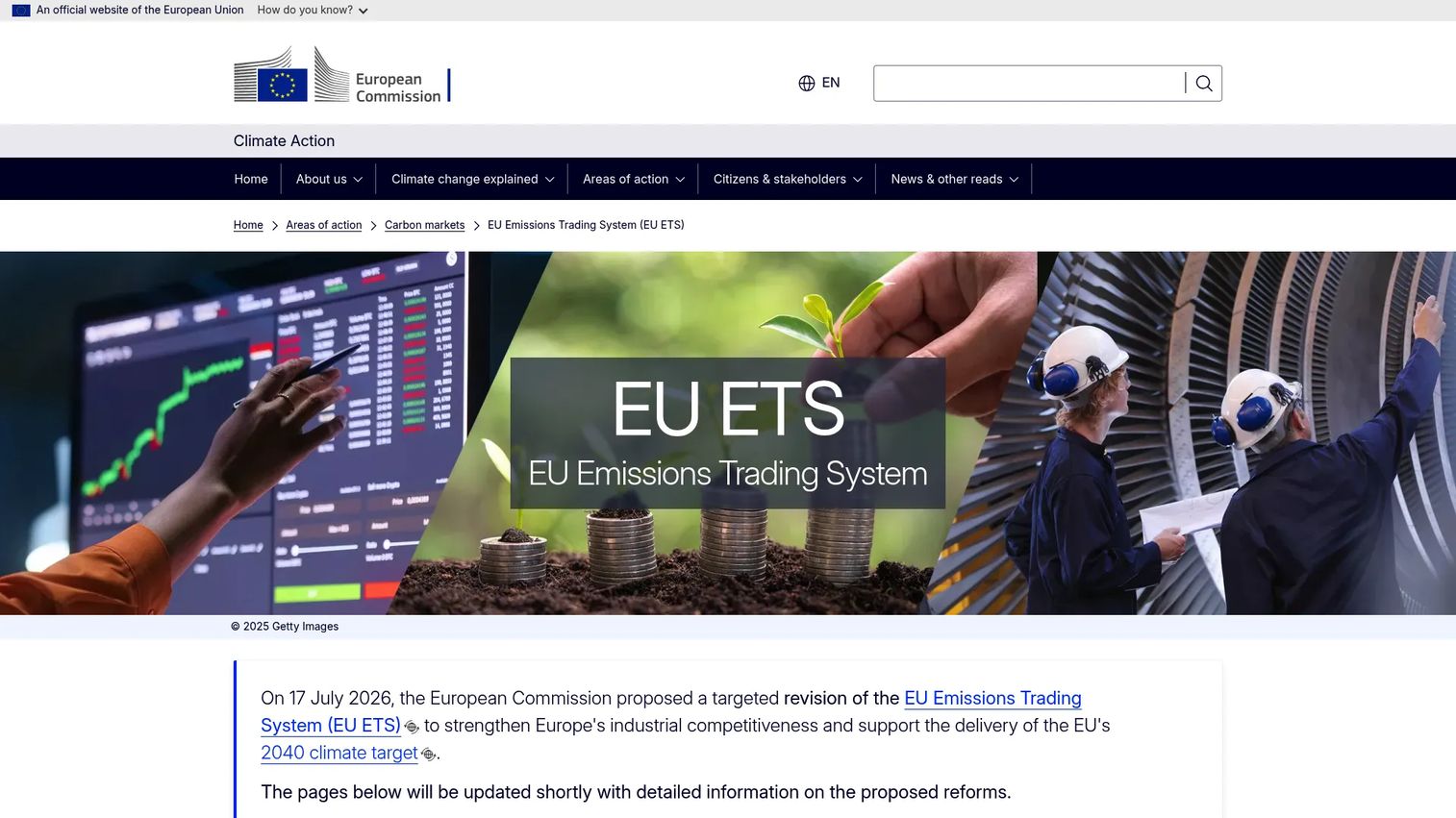
EU ETS is the European Union's cap and trade carbon market for reducing greenhouse gas emissions. If you have EU compliance obligations, this is not a vendor you shortlist. It is the system your obligations live inside, and its official pages are the benchmark for how allowances, auctions, and the Union Registry actually work.
Treat it as your source of truth. When your internal allowance tracking disagrees with the EU ETS framework, the framework wins. Teams use the official system to confirm how free allocation is calculated, how auctioning works, and what monitoring, reporting, and verification requires before surrender.
Best for: Organizations subject to EU carbon compliance obligations that need the authoritative reference for allowance and registry rules.
Key features
- Emissions cap: sets the overall limit
- Auctioning of allowances: primary distribution method
- Free allocation: rules for eligible sectors
- Monitoring, reporting, and verification: the MRV backbone
- Union Registry: official account and transaction ledger
Why choose EU ETS: For any EU-covered entity, the official system anchors every other tool in your stack. Commercial platforms should reconcile back to it, not replace it.
EU ETS pricing: As a regulatory carbon market, the EU ETS has no product price. Allowance costs are set by the market and auctions, not by a subscription.
2. CAMPD
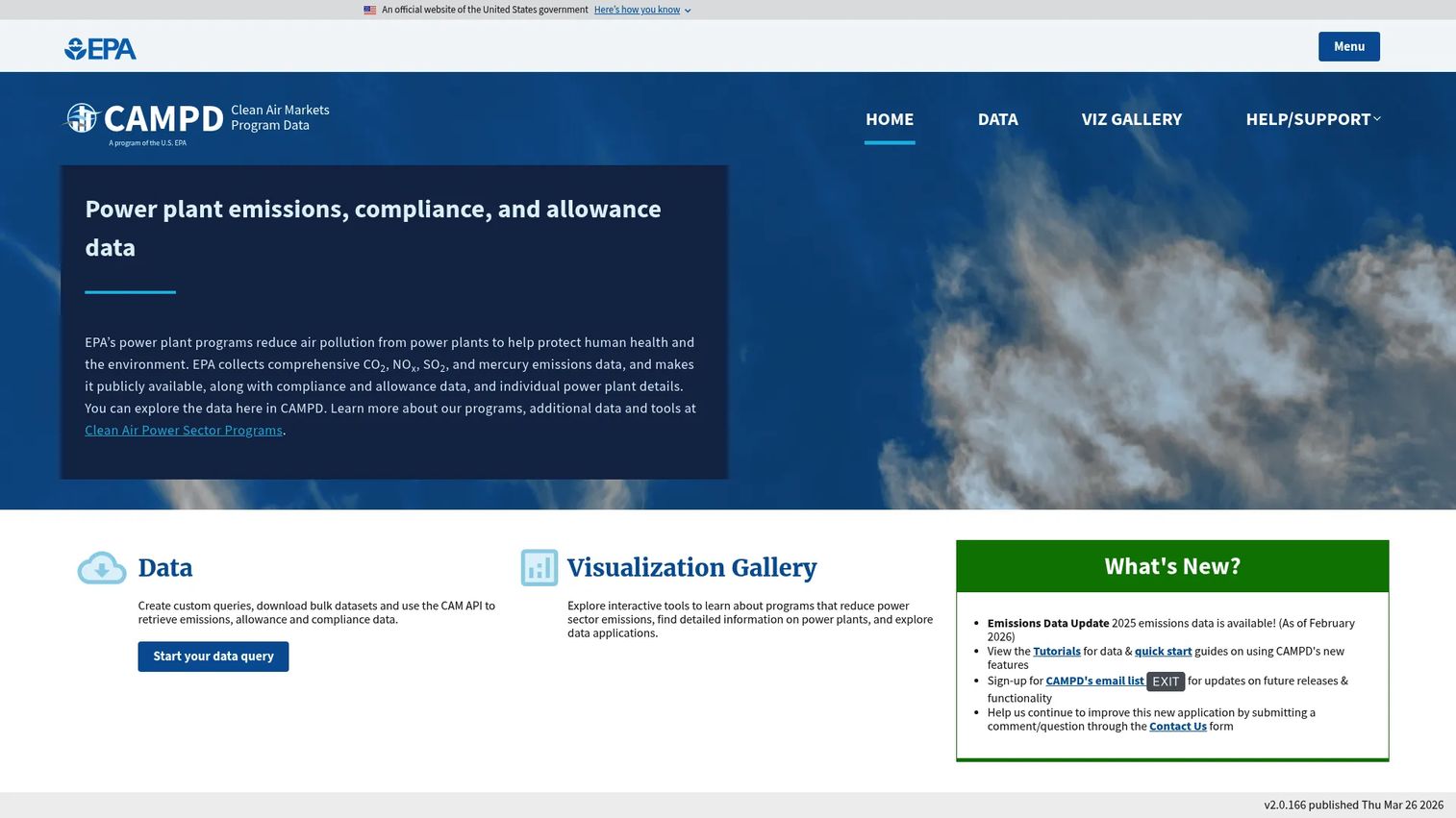
CAMPD is the U.S. EPA's Clean Air Markets Program Data portal for accessing emissions and market data. For U.S. compliance teams, it is the public record you validate against. When you need to confirm reported emissions for a covered unit or pull program data for reconciliation, CAMPD is where that data lives.
The portal supports monitoring, validation, and program visibility. Teams use it to cross-check internal numbers against what has been reported to the EPA, and to download bulk or custom data for their own analysis.
Best for: Public-sector and U.S. regulatory users who need EPA clean air markets data for monitoring and validation.
Key features
- Data portal for Clean Air Markets Program Data
- Bulk data files for large-scale analysis
- Custom data download for targeted queries
Why choose CAMPD: It is the authoritative U.S. emissions data source. Any commercial tracking you run should reconcile against CAMPD's public record before you treat a number as final.
CAMPD pricing: CAMPD is a free public data portal operated by the EPA. There is no subscription or license fee to access the data.
3. Acid Rain Program
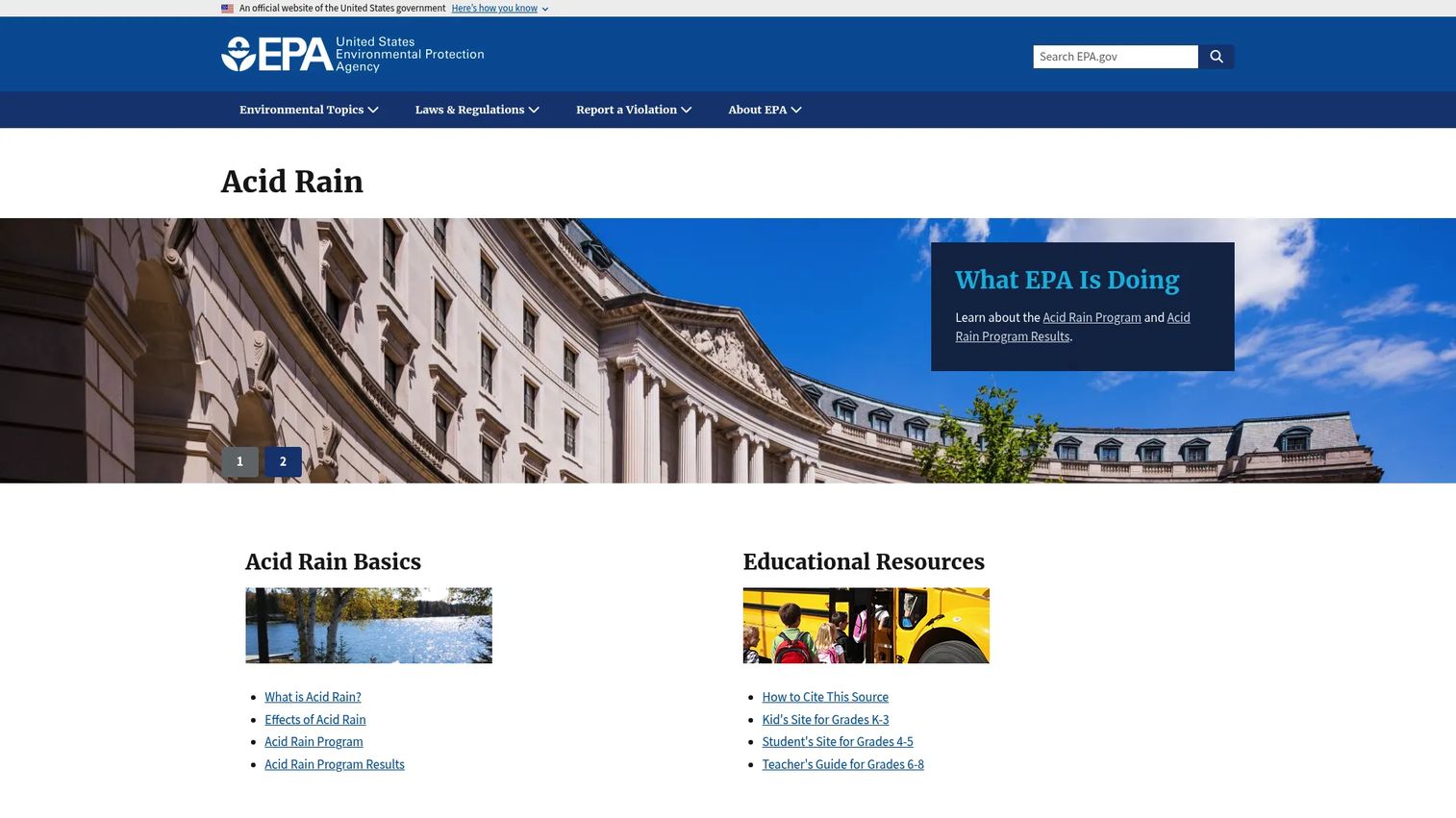
Acid Rain Program is the EPA regulatory program that reduces sulfur dioxide and nitrogen oxides emissions from the power sector through cap and trade. It is the model that defined how allowance trading software should think about caps, allowances, and surrender. Understanding it makes every modern ETS easier to reason about.
Its mechanics are worth knowing even if you never touch the power sector. The program pairs an emissions cap with allowance trading, mandatory monitoring, and automatic penalty logic for shortfalls. That structure, cap plus tradable allowances plus enforced surrender, is the blueprint most systems inherit.
Best for: Power-sector facilities subject to EPA acid rain rules, and anyone who wants the reference model for allowance logic.
Key features
- SO2 emission cap and trade program
- NOx reductions for covered coal-fired units
- Allowance trading and emissions monitoring
Why choose Acid Rain Program: As a program reference rather than a paid tool, it teaches the allowance mechanics that make cross-jurisdiction compliance intuitive. Use it to sanity-check how your own surrender logic should behave.
Acid Rain Program pricing: This is a public EPA regulatory program, not commercial software, so there is nothing to buy or subscribe to.
4. CSAPR
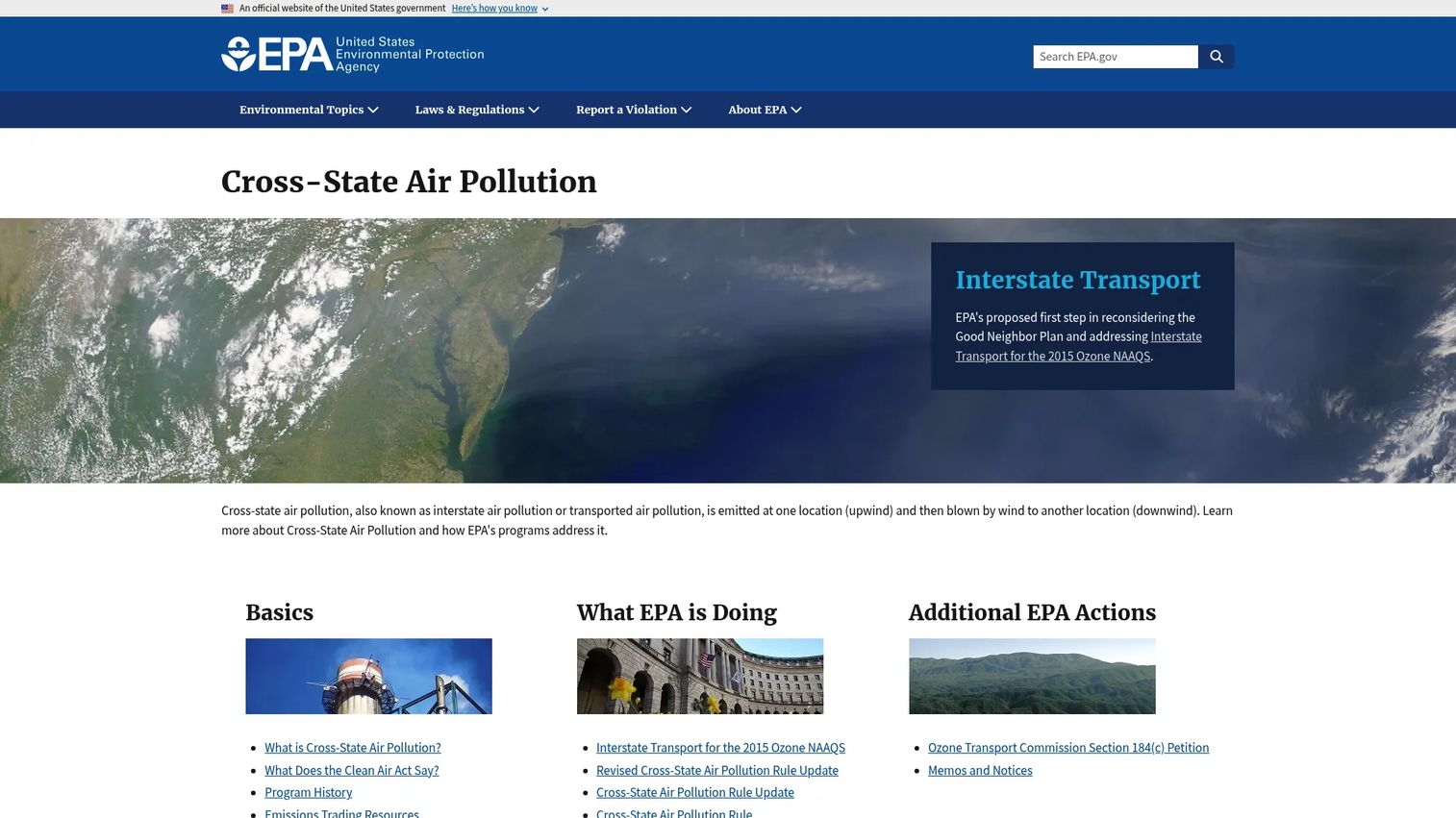
CSAPR is the EPA's Cross-State Air Pollution Rule, addressing interstate transport of air pollution. For buyers evaluating regional trading structures, it is the reference for how cross-state allowance compliance works when emissions in one state affect air quality in another.
The rule matters because it introduces multi-state allowance transfers and reporting into the compliance picture. Regulated utilities operating across state lines use its framework to understand how allowances move, how obligations are allocated, and how reporting ties back to a broader regional cap.
Best for: Public stakeholders and regulated utilities seeking the framework for interstate air pollution and allowance compliance.
Key features
- Cross-state air pollution overview
- Program history and Clean Air Act context
- Links to CSAPR and related regulatory actions
Why choose CSAPR: As a regulatory reference, it clarifies how allowance transfers and reporting behave across jurisdictions. That understanding transfers directly to any multi-region ETS you operate in.
CSAPR pricing: CSAPR is a federal regulatory program, so there is no software cost. Its pages are public and free to reference.
5. ETSdesk
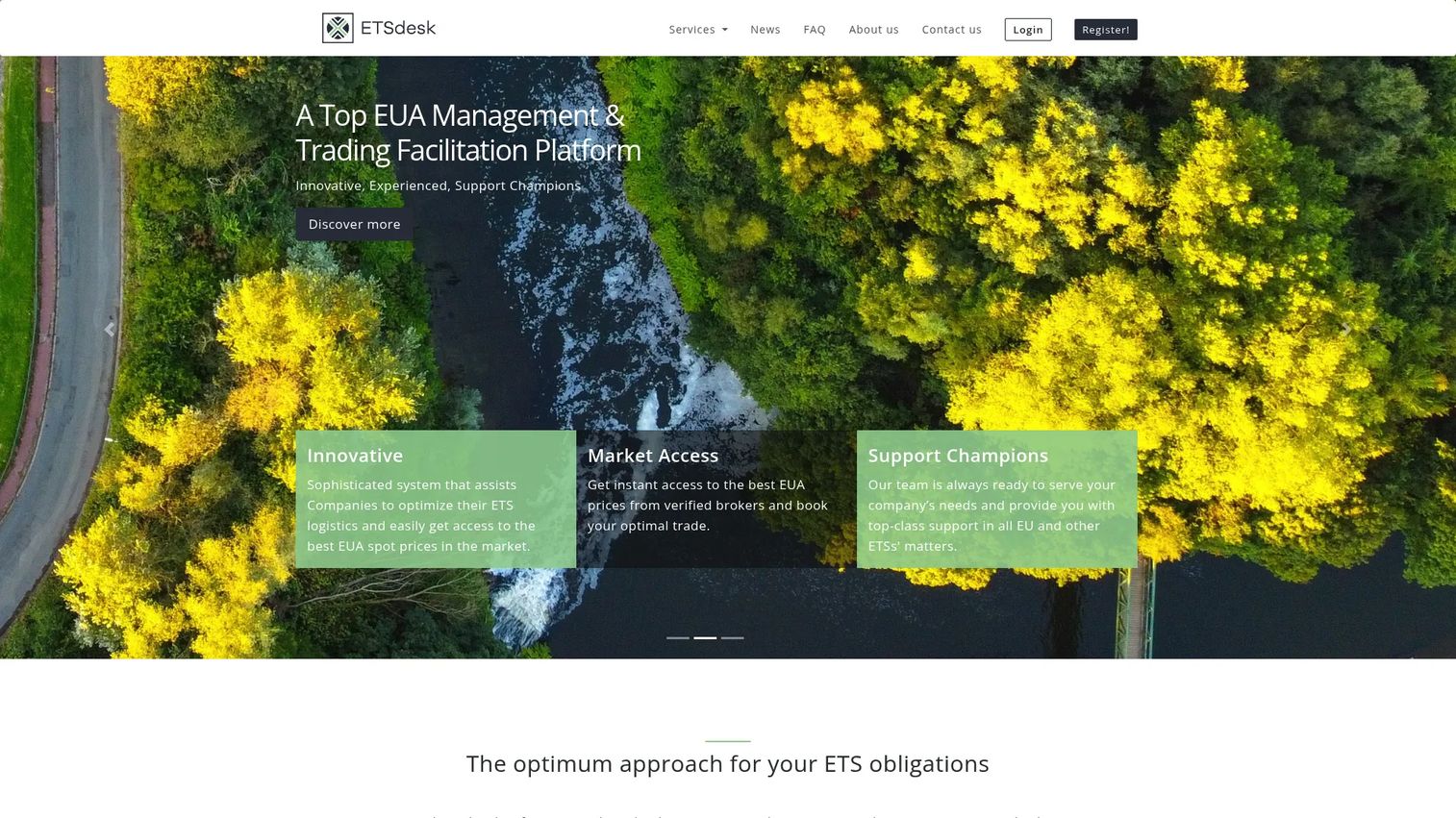
ETSdesk is an EUA management and trading facilitation platform for ETS-related compliance and transactions. This is where the shortlist shifts from reference systems to operational tooling. If your team handles European Union Allowance requests, transfers, and surrender, ETSdesk is built for those day-to-day workflows.
The platform focuses on the practical mechanics of EU ETS operations. It supports EUA requests and transactions, planning across fleets or facilities, and tracking holding accounts and surrender. For teams that spend surrender season reconciling registry balances by hand, that operational focus is the point.
Best for: Companies and brokers managing EU ETS and EUA workflows and compliance records.
Key features
- EUA requests and transactions
- Fleet, location, and facility planning
- Holding accounts and EUA surrender tracking
Why choose ETSdesk: It sits between your internal numbers and the official registry, giving compliance teams a working layer for EUA management rather than another spreadsheet to maintain.
ETSdesk pricing: ETSdesk uses quote-based pricing. The company directs prospects to contact sales for a company-specific quote rather than publishing standard plan prices.
6. Xeptagon

Xeptagon builds government-grade digital infrastructure for climate markets, carbon finance, and Article 6 implementation. This is the clearest enterprise software entry on the list. Where ETSdesk handles operator workflows, Xeptagon builds the registry and market infrastructure that sits underneath a program.
For governments and large enterprises standing up carbon registries or Article 6 systems, Xeptagon addresses allowance issuance, allocation management, transfer tracking, and compliance reporting at the platform level. It fits when you need the registry and transaction backbone itself, not just a client that talks to one.
Best for: Governments and enterprises building climate-market and carbon-registry infrastructure.
Key features
- National carbon registries
- Article 6 systems
- Carbon market and climate finance platforms
Why choose Xeptagon: It targets the infrastructure layer, so it fits programs and enterprises that need to run a registry or market rather than participate in an existing one.
Xeptagon pricing: Xeptagon doesn't publish standard pricing. Given its focus on government and enterprise clients, engagements are quoted per project through direct contact.
7. OneOcean
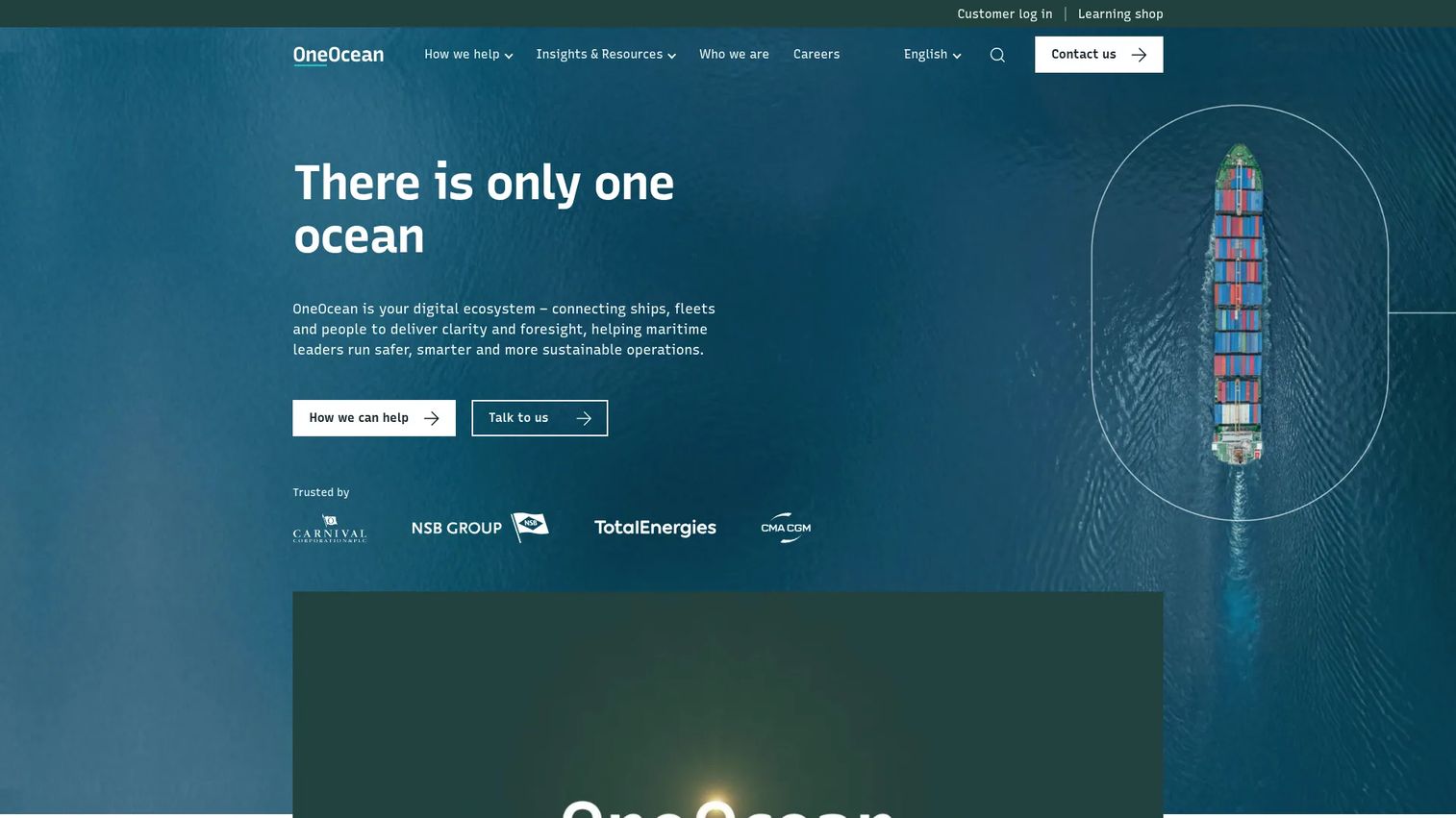
OneOcean is a maritime software suite covering crew management, ship management, compliance, voyage planning, and voyage optimization. As shipping came under EU ETS obligations, maritime operators needed emissions compliance inside their existing voyage workflows rather than bolted on. OneOcean puts EU ETS and related compliance in the same place as routing and performance.
For maritime teams, the value is consolidation. Operators use it to monitor emissions history, manage EUA balances, and keep compliance tasks alongside voyage planning. That keeps the regulatory obligation connected to the operational data that drives it, instead of living in a separate spreadsheet.
Best for: Maritime operators needing integrated crew, compliance, vessel, and voyage workflows including EU ETS.
Key features
- Ship management with 40+ modules
- Voyage planning with routing, weather, and charts
- Voyage performance and emissions optimization
- Regulatory compliance libraries and updates
Why choose OneOcean: For shipping operators, keeping EU ETS compliance inside the same suite as voyage and performance data reduces the reconciliation gap between operations and obligation.
OneOcean pricing: OneOcean doesn't list prices. The company works through demos and direct contact, with pricing quoted to the operator.
Considerations
Before you shortlist, pressure-test each option against the realities of your obligation. The right emissions trading platform depends less on feature counts and more on jurisdiction fit and audit survivability.
Registry coverage
Confirm which jurisdictions and registry actions a tool supports. An emissions trading registry that handles the Union Registry may not touch U.S. programs, and vice versa. Match the tool to the registries you actually report into, not the ones you might someday.
Compliance workflow fit
Check how the tool handles allocations, transfers, monitoring, and surrender end to end. A system that tracks holdings but cannot support the surrender cycle leaves you back in a spreadsheet at the worst possible moment. Trace one full compliance cycle through the tool before you commit.
Reporting and auditability
Ask what evidence the tool preserves. You want traceability on every allowance movement: who did what, when, and against which obligation. Audit-ready means an auditor can follow a surrender number back to its source without you rebuilding the trail by hand.
Data and security controls
Compliance records are sensitive and often tied to financial exposure. Evaluate access controls, data ownership, and how the tool protects registry and transaction information. For enterprise and cross-border operations, this moves from nice-to-have to gating criterion.
Integration and scale
Consider how the tool connects to finance, operations, and reporting systems. Allowances have a balance-sheet impact, so the ability to feed data into finance and reporting matters. A tool that scales with more facilities and jurisdictions saves a painful migration later.
Conclusion
The right pick comes down to jurisdiction and role. If your obligations are European, start with the EU ETS official system as your source of truth and layer ETSdesk on top for EUA management. For U.S. compliance, CAMPD is your data anchor, with the Acid Rain Program and CSAPR as the reference models for allowance and cross-state logic. Governments and enterprises building the infrastructure itself should look at Xeptagon, and maritime operators get the tightest fit from OneOcean.
The pattern is consistent. Official registries and data portals are your source of truth. Commercial platforms are the operational layer that keeps allowance tracking, compliance reporting, and surrender workflows out of fragile spreadsheets and inside an audit-ready system.
Next step: shortlist two tools based on your jurisdiction, then run one full compliance cycle through each. Test the registry actions and the reporting output specifically, because that is where manual processes break and where the right software earns its place.
Start your journey with Guideflow today!
FAQs
It tracks allowances, monitors emissions, manages allocations, and keeps registry records aligned with the rules of an emissions trading system. In practice, it replaces the spreadsheets teams use to reconcile what they hold, what they owe, and what they have surrendered. The goal is one auditable system of record instead of fragmented files.
Carbon accounting measures your footprint across scopes and activities. Emissions trading software manages your regulatory obligation inside a specific ETS: allowance holdings, transfers, and surrender against verified emissions. Roughly 25% of businesses worldwide have adopted carbon accounting solutions, but that is a different job from ETS compliance. Many teams run both because measuring emissions and managing allowances are separate workflows.
It should track allowance holdings, free allocation, auction purchases, transfers, and surrender against verified emissions. It should also reconcile back to the Union Registry, which is the official ledger of record. Look for monitoring, reporting, and verification support, since MRV is the backbone of any valid surrender.
If you manage a single facility with one deadline, a spreadsheet may hold. Once you have multiple facilities, jurisdictions, or transfers, surrender becomes error-prone by hand. Software reduces the reconciliation work and preserves the audit trail, so the surrender submission is a review step rather than a last-minute rebuild.
Yes, that is one of its main jobs. Good tools preserve traceability on every allowance movement, so you can show who changed what, when, and against which obligation. That evidence is what lets an auditor follow a surrender number to its source without a manual investigation. It also protects you when the person who built the original tracker has moved on.
Confirm which registries and registry actions the tool covers, since the Union Registry, U.S. programs, and other jurisdictions differ. Check that it supports the specific transactions you run: transfers, holdings, and surrender. Registry tracking that only reads data is less useful than one that supports the full transaction workflow you rely on.
Map your obligations by jurisdiction first, then match tools to the registries and programs you actually report into. Cross-jurisdiction ETS work means allowances and rules differ by region, so a single tool rarely covers everything. Understanding reference models like CSAPR for cross-state logic helps you evaluate how a platform should handle multi-region transfers and reporting.
Yes, especially since shipping came under EU ETS obligations. Maritime operators benefit from keeping emissions history, EUA balances, and compliance tasks inside the same suite as voyage planning and performance. That consolidation keeps the regulatory obligation connected to the operational data that drives it, rather than in a separate system.