Your sponsorship portfolio lives in a spreadsheet, three inboxes, and a slide deck someone updated last quarter. A renewal deadline slips because the contract sat in a folder nobody owned. Leadership asks what a six-figure deal returned, and the honest answer is a shrug dressed up as a dashboard.
That is the daily reality for teams still running sponsorships on manual coordination. The stakes are not small. The global sponsorship management platform market is expected to grow from USD 2.92 billion in 2025 to USD 6.5 billion by 2035, an 8.4% CAGR, according to WiseGuyReports (2025). The broader sponsorship market is projected to climb from USD 177.44 billion in 2026 to USD 234.46 billion by 2031, per Mordor Intelligence (2026). More money is moving through sponsorships, and more of it now flows through software built to track, approve, and prove it.
Centralized sponsorship software matters because the cost of fragmentation compounds. Every disconnected file is a missed handoff. Every email thread is a decision nobody can reconstruct. Every activity report that cannot tie back to revenue is a budget conversation you lose. The tools below fix that by putting the full sponsorship lifecycle, from evaluation to contracts to ROI reporting, in one system your CFO will actually trust.
What's inside
This guide is for partnership managers, event marketers, sponsorship leads, and growth marketers evaluating sponsorship management software to replace spreadsheets and inbox chaos. We looked at seven platforms across the sponsorship lifecycle: intake and evaluation, contract and asset tracking, approval workflows, dashboards, and ROI reporting.
We selected tools based on four criteria that matter most for this buyer: workflow coverage across the full lifecycle, reporting and analytics depth, automation that cuts manual work, and enterprise readiness (integrations, security, and scale). Pricing and ratings reflect verified sources where publicly available. Where a vendor gates pricing behind a quote, we say so plainly.
TL;DR
- Best overall for structured evaluation and ROO methodology: Sponsorium, for brands managing large sponsorship, philanthropy, and grant portfolios.
- Best for centralized workflow and automation: Trak, for teams cutting manual work across email, spreadsheets, and presentations.
- Best for sports and entertainment operations: KORE, for inventory, deal assembly, and fulfillment at scale.
- Best for partnership-focused portfolio management: Sponsorworks, for brands and rights holders running complex partnership operations.
- Best for flexible multi-program workflows: Optimy, for teams managing sponsorships alongside grants and volunteering.
- Best for event-led sponsorship: Samaaro, for marketers running branded events with CRM-connected execution.
- Best for athlete and creator partnership discovery: OpenSponsorship, for brands running sponsorship campaigns with athletes and creators.
What is sponsorship management software?
Sponsorship management software is a centralized platform that helps teams manage the full sponsorship lifecycle, from evaluating incoming requests to tracking contracts and assets, routing approvals, and reporting on performance and ROI. It replaces the spreadsheets, email threads, and static decks that most sponsorship programs still run on.
The category exists because sponsorship spend is high-stakes and hard to prove. Sports sponsorship alone accounts for 63.34% of global sponsorship revenue in 2025, per Mordor Intelligence, and North America holds 38.11% of the global market. When budgets are that large, leadership wants proof, not activity logs. Software gives sponsorship teams a system of record that connects money spent to outcomes delivered.
Core capabilities you should expect from any serious sponsorship management platform:
- Centralized sponsorship portfolio: one place where every deal, sponsor, and program lives, with status and ownership visible.
- Evaluation and scoring: weighted questionnaires and structured criteria to compare incoming requests objectively.
- Contract and asset tracking: version control on agreements, rights, deliverables, and creative assets.
- Approval workflows: routing that moves requests through the right stakeholders without email chains.
- Dashboards and ROI reporting: performance scorecards that tie sponsorship investment to measurable return.
- Automation and integrations: connections to CRM, finance, and analytics tools that cut repetitive manual work.
The strongest sponsorship reporting software does not just store data. It turns intake, contracts, and activation into a measurable pipeline, which is exactly the shift growth marketers make when they replace static assets with interactive product experiences like Guideflow to prove engagement rather than describe it.
When to use sponsorship management software
Not every team needs a platform on day one. Here is how to know when the switch pays for itself.
Centralize a fragmented sponsorship workflow
If your sponsorship program lives across inboxes, shared drives, and someone's personal spreadsheet, you are paying a coordination tax every week. Handoffs stall. Deadlines slip because ownership is unclear. Sponsor management software pulls intake, deals, and deliverables into one system so nothing falls through the cracks. The payoff is faster handoffs and fewer missed renewal dates.
Prove sponsorship impact with reporting
When leadership stops asking "what did we do" and starts asking "what did we get," activity reports no longer cut it. Sponsorship ROI software gives you dashboards, scorecards, and objective evaluation that connect spend to outcomes. This is the moment most teams buy: a budget review where the numbers need to defend themselves. Reporting depth turns sponsorship from a cost line into a defensible investment.
Manage contracts, assets, and approvals at scale
Once multiple stakeholders, deadlines, and deliverables are in play, manual coordination becomes a risk. A missed clause or an expired right can cost real money. Sponsorship contract management with version control and approval workflows keeps every stakeholder aligned and every deadline visible. This matters most when your portfolio grows past what one person can track in their head.
Comparison table
This table narrows the shortlist fast. Scan the intent and key differentiation columns to find the sponsorship management software that matches your motion, then read the full section for fit and pricing detail.
| # | Product | Intent | Key differentiation | Pricing | G2 rating |
|---|---|---|---|---|---|
| 1 | Sponsorium | Structured evaluation for brand portfolios | ROO methodology, weighted intake, portfolio reporting | Quote-based | Not published |
| 2 | Trak | Workflow automation and centralized tracking | Reduces manual work across email, spreadsheets, decks | Quote-based | Not published |
| 3 | KORE | Sports and entertainment operations | Inventory, deal assembly, fulfillment, rate card intelligence | Quote-based | Not published |
| 4 | Sponsorworks | Partnership portfolio management | AI-native inventory, deal, and rights tracking | Contact sales | 4.8/5 |
| 5 | Optimy | Multi-program impact workflows | Configurable forms, dashboards, workflow automation | From 650€/month | Not published |
| 6 | Samaaro | Event-led sponsorship | Branded events, CRM integrations, analytics | Quote-based | 4.9/5 |
| 7 | OpenSponsorship | Athlete and creator discovery | 25,000+ athlete network, escrow payments | From $2,000/month | 4.0/5 |
Best sponsorship management software for 2026
1. Sponsorium
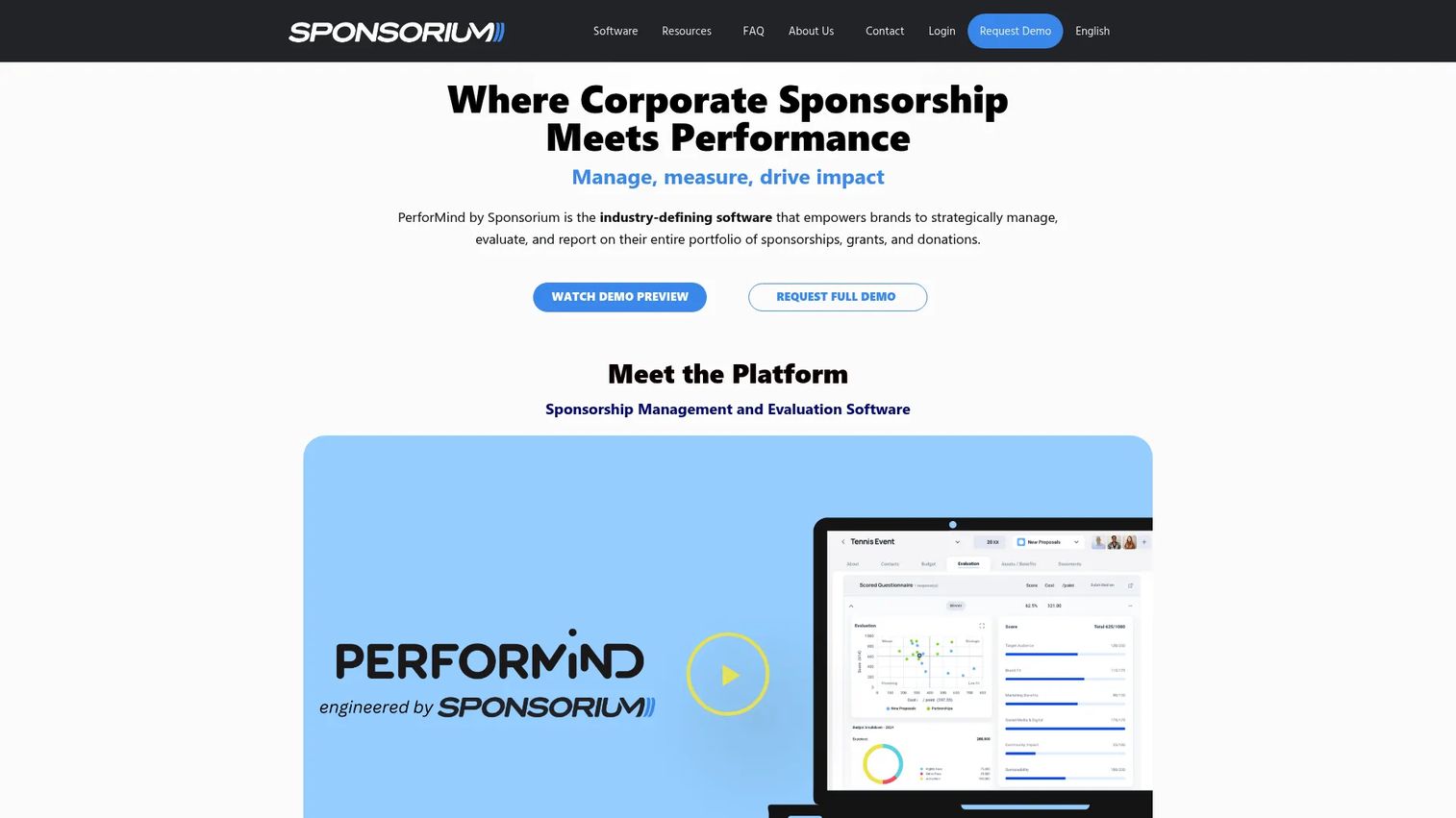
Sponsorium is sponsorship and community investment management software built for brands managing sponsorship, philanthropy, and grant portfolios in one place. It leans hard into structured evaluation, using a weighted web questionnaire to score incoming requests and a centralized store for contracts, assets, and budgets. Its ROO (return on objectives) methodology is the differentiator: it forces every sponsorship to map against defined goals before and after activation.
Best for: Large brands that receive high volumes of sponsorship requests and need an objective, defensible way to evaluate and compare them.
Key strengths
- Weighted intake questionnaire: scores incoming requests against consistent criteria so decisions are objective, not political.
- Centralized asset and contract storage: keeps agreements, budgets, and creative in one accessible system of record.
- Portfolio performance evaluation: measures each sponsorship against its stated objectives for cleaner ROI reporting.
Why choose Sponsorium: If your sponsorship program is drowning in inbound requests and you need a repeatable way to say yes or no with evidence, Sponsorium's evaluation-first design fits. It suits brand and corporate teams where accountability and portfolio-level oversight matter more than event-day logistics.
Sponsorium pricing: Sponsorium does not publish a numeric price list. The site describes pricing as flexible and provides quotes through a demo or contact process. Expect a tailored quote based on portfolio size and workflow depth rather than a public per-seat tier.
2. Trak
Trak positions itself around automation and centralized workflow, built to reduce the manual work that piles up across email, spreadsheets, and presentation decks. The pitch is consolidation: pull tracking, approvals, and reporting into one place so your team spends less time updating status and more time managing relationships. Shared calendars and real-time asset tracking keep multiple stakeholders aligned on deadlines and deliverables.
Best for: Sponsorship and partnership teams whose biggest bottleneck is manual coordination and repetitive reporting work.
Key strengths
- Workflow automation: cuts the repetitive updates that eat sponsorship coordinators' days.
- Centralized pipeline tracking: one shared view of every deal, deadline, and asset in real time.
- Approvals and shared calendars: routes decisions and keeps stakeholders synced without email chains.
Why choose Trak: If your team feels like it spends more time reporting on work than doing it, Trak's automation-first approach targets exactly that friction. It fits sports, events, and partnership operations where the volume of manual tracking has outgrown spreadsheets but the team still wants a fast, centralized system.
Trak pricing: Trak does not display public pricing on its site; offerings are presented on a request-information basis. Reach out for a tailored quote based on your team size and workflow requirements.
3. KORE
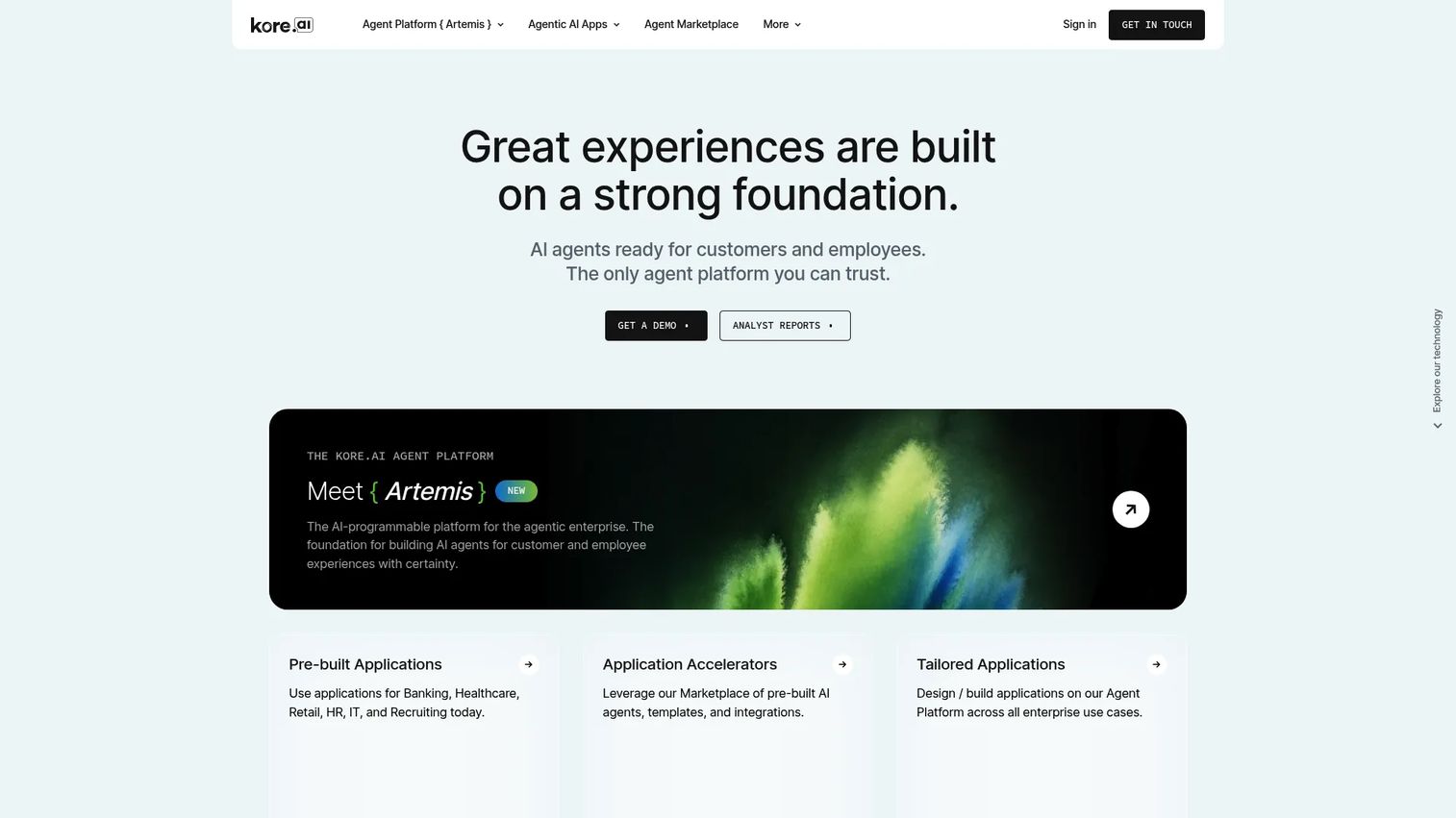
KORE is oriented toward sports, entertainment, and events sponsorship management, where inventory and fulfillment complexity is highest. It handles inventory tracking, deal assembly, contract tracking, and fulfillment, with rate card intelligence to help teams price and package sponsorship assets. Analytics and report templates give sponsorship teams a structured way to show partner engagement and delivery.
Best for: Rights holders and sponsorship teams managing large, complex inventories across sports, entertainment, or event properties.
Key strengths
- Inventory and deal assembly: builds sponsorship packages from tracked, available inventory.
- Contract and fulfillment tracking: follows every deliverable from signature through activation.
- Rate card intelligence: informs pricing and packaging decisions with data, not guesswork.
Why choose KORE: When your sponsorship business runs on sellable inventory, seats, signage, digital placements, activations, KORE's operations depth handles the assembly-to-fulfillment chain that lighter tools skip. It fits teams whose sponsorship revenue depends on packaging and delivering complex inventory at scale.
KORE pricing: KORE does not publish a public price list. Pricing is arranged through direct contact and scoped to the size and complexity of your inventory and operations.
4. Sponsorworks Partnerships Platform
Sponsorworks is an AI-native sponsorship and partnership management platform built for brands and rights holders running complex partnership operations. It combines inventory management, deal, contract, and rights tracking, and a reporting and intelligence layer that gives leaders portfolio-level visibility across every partnership. The emphasis is on managing sponsor relationships and deliverables at scale, not just storing them.
Best for: Large brands and rights holders coordinating complex sponsorship portfolios and ongoing partnership operations.
Key strengths
- Inventory management: tracks and organizes sellable or activatable sponsorship assets.
- Deal, contract, and rights tracking: keeps agreements and entitlements visible and version-controlled.
- Reporting and intelligence: surfaces portfolio performance for leadership decisions.
Why choose Sponsorworks: If you manage partnerships as an ongoing portfolio rather than one-off deals, Sponsorworks' relationship and rights tracking is built for that continuity. Reviewers rate it 4.8/5 on G2, and its AI-native positioning targets teams that want intelligence layered on top of tracking.
Sponsorworks pricing: Sponsorworks lists an Enterprise edition with pricing available on request. The site tailors quotes to organization size and requirements, so expect a personalized quote rather than a public tier.
5. Optimy
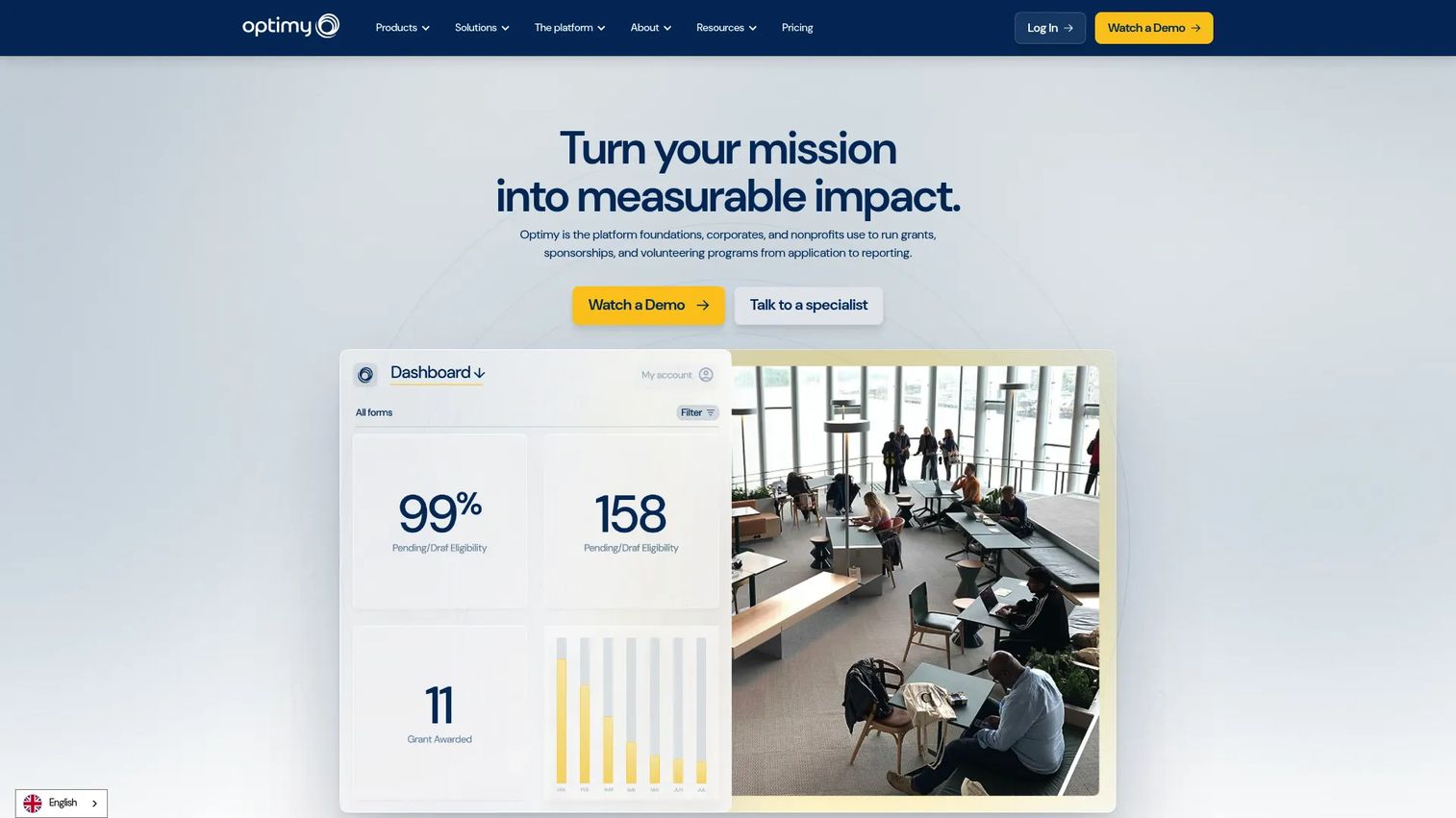
Optimy is a configurable social impact platform that manages sponsorships alongside grants, volunteering, and related programs. That breadth is the point: teams running sponsorships as part of a wider community investment mandate get one platform instead of several. Smart forms handle intake, real-time dashboards and custom KPIs handle reporting, and project management with automatic workflows keeps everything moving.
Best for: Foundations and impact teams that manage sponsorships alongside grants, donations, or volunteering programs.
Key strengths
- Smart forms and submission platforms: standardize intake across sponsorships, grants, and other programs.
- Real-time dashboards and custom KPIs: report on impact against the metrics your team defines.
- Workflow automation and task management: move projects through documents, tasks, and approvals automatically.
Why choose Optimy: If sponsorship is one of several program types your team owns, Optimy's flexibility avoids the trap of buying a narrow sponsorship-only tool. It suits corporate social responsibility, foundation, and impact teams that need configurable workflows and administrative control across multiple program types.
Optimy pricing: Optimy publishes licence plans starting from 650€/month for the Start plan, with Smart and Professional tiers priced on demand. Separate software-with-a-service support packs (Basic at 1,000€/year, Growth at 2,000€/year, Advanced at 5,000€/year) are listed alongside. There is no free tier.
6. Samaaro
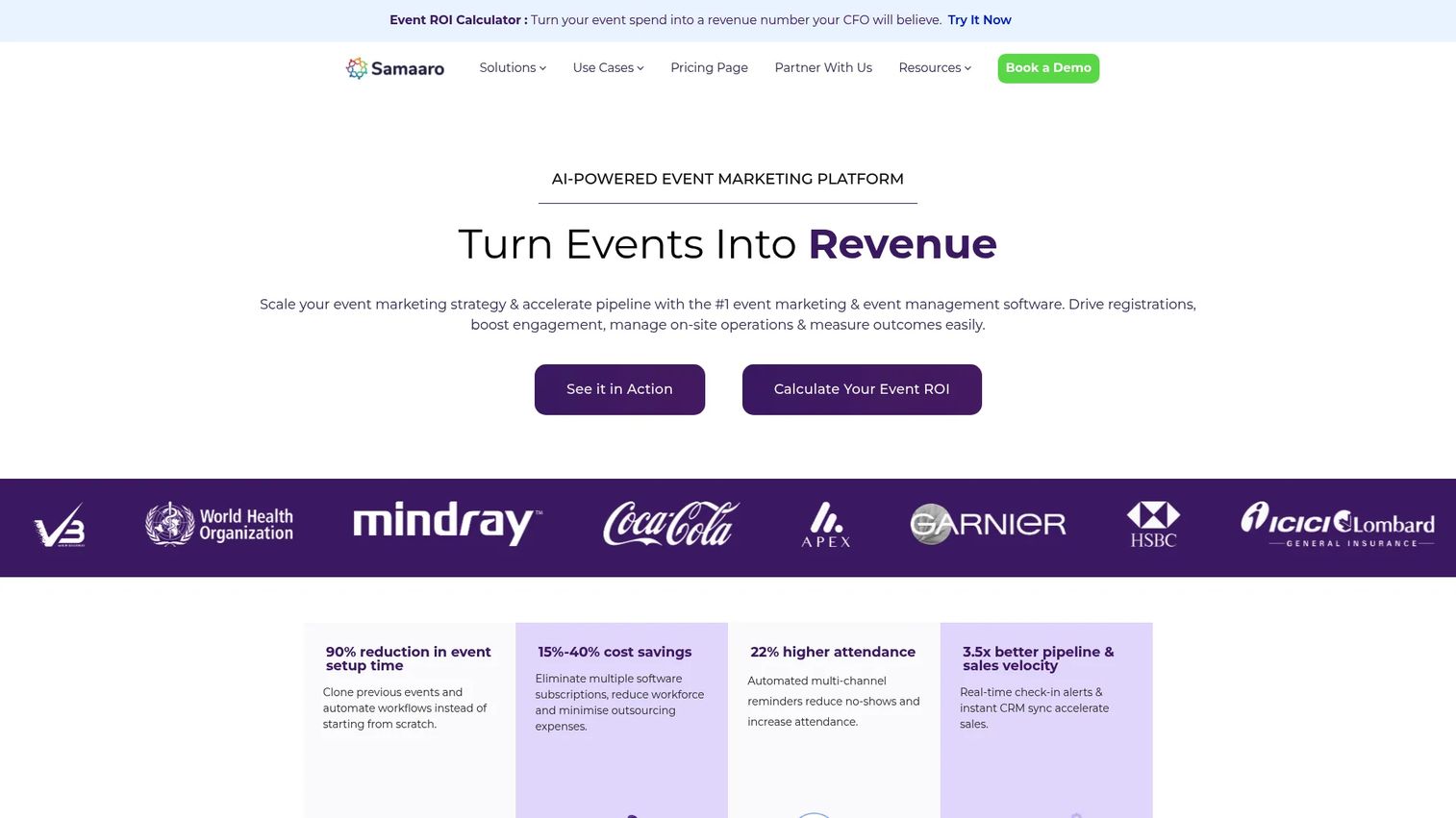
Samaaro is an AI-powered event marketing platform that covers planning, promoting, executing, and measuring branded events, including the sponsorship revenue programs attached to them. For teams whose sponsorships are event-led, this event-first design means sponsorship tracking sits next to the registration, ticketing, and activation data that gives it context. Branded event sites, QR check-in, badging, and CRM integrations round out the execution layer.
Best for: Marketing and go-to-market teams running branded events and webinars where sponsorship is part of CRM-connected execution.
Key strengths
- Unlimited events and registrations: scale event volume without per-event pricing anxiety.
- Branded event sites and check-in: run registration, ticketing, QR check-in, and badging in one place.
- CRM integrations and analytics: connect event and sponsorship data to reporting and workflow automation.
Why choose Samaaro: If your sponsorships live inside events rather than standalone brand deals, Samaaro's event marketing depth gives sponsorship reporting the surrounding context most tools miss. Reviewers rate it 4.9/5 on G2, and the CRM-connected execution fits marketing teams that need event and sponsorship data in one flow.
Samaaro pricing: Samaaro lists two plans, Growth and Scale, without public numeric pricing. The company provides pricing through a demo or estimate and offers a guided proof-of-concept for enterprise teams. There is no free tier.
7. OpenSponsorship
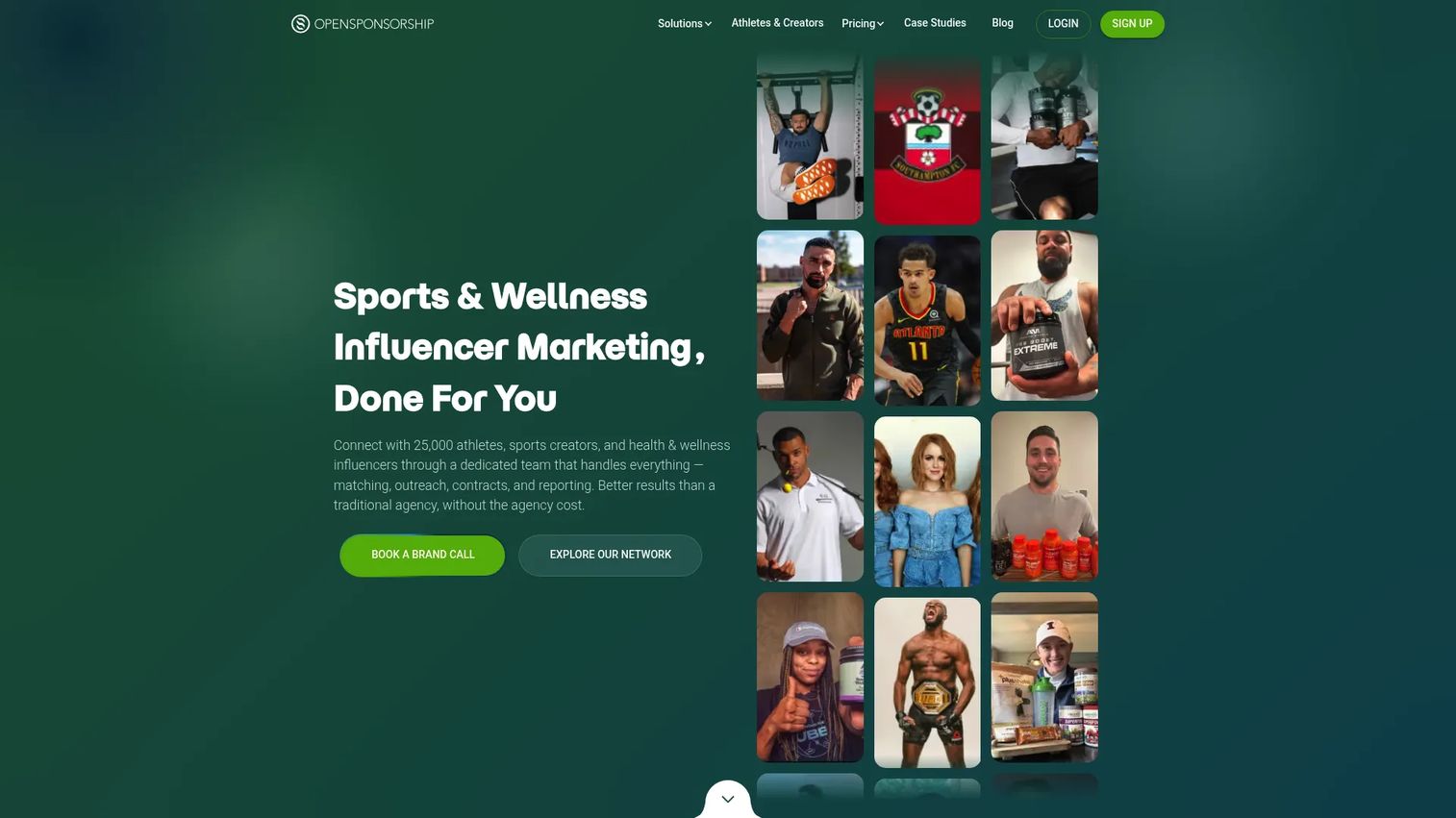
OpenSponsorship is a sports and wellness influencer marketing platform that connects brands with athletes, teams, and creators. It is the most specialized entry here: rather than managing an internal sponsorship portfolio, it handles the discovery, connection, and campaign side of athlete and creator sponsorships. Brands search a network of more than 25,000 athletes, run campaigns, and pay through escrow-secured transactions.
Best for: Brands running athlete or creator sponsorship campaigns that need a marketplace to discover and manage talent.
Key strengths
- 25,000+ athlete network: search and connect with athletes, teams, and creators by fit.
- Escrow-secured payments: protect both sides of the deal with held funds until delivery.
- Platform messaging and campaign management: run outreach and campaigns inside one system.
Why choose OpenSponsorship: If your sponsorship work is outbound, finding and activating athletes and creators rather than managing inbound requests, OpenSponsorship is purpose-built for that motion. Reviewers rate it 4.0/5 on G2, and managed-support plans suit brands that want help running campaigns end to end.
OpenSponsorship pricing: OpenSponsorship offers two brand plans: Full-Service at $2,000 USD/month and Elite at $5,000 USD/month, billed in USD. Brands can create a free account to search the athlete network before committing to a paid plan.
Considerations before you buy
A shortlist is easy. Choosing well takes a few deliberate checks. Run every finalist through these before you sign.
Lifecycle coverage
Map the tool against your actual workflow: intake, evaluation, contracts, approvals, activation, and reporting. A platform strong on evaluation but thin on fulfillment leaves a gap you will feel later. Match coverage to where your team loses the most time today.
Reporting and ROI depth
Ask to see the reporting output, not a marketing screenshot. Can it tie spend to defined objectives? Can you export it in a format your CFO trusts? Sponsorship analytics that leadership believes is worth more than a prettier dashboard.
Integrations
Check whether the tool connects to your CRM, finance system, and analytics stack. Sponsorship data that lives in a silo creates the same fragmentation you are trying to escape. Verify the specific integrations you need before you commit.
Security and enterprise readiness
If procurement, legal, or IT will review the purchase, confirm the platform meets your security and compliance requirements early. Discovering a gap late in the cycle can stall a deal for months.
Conclusion
The right sponsorship management software depends on your motion, not a leaderboard. Choose Sponsorium if structured evaluation and portfolio oversight are your priority. Choose Trak if manual coordination is your bottleneck and automation is the fix. KORE fits sports and entertainment teams managing complex inventory, while Sponsorworks suits ongoing partnership portfolios. Optimy is the flexible pick for teams running sponsorships alongside grants and volunteering, Samaaro is built for event-led sponsorship, and OpenSponsorship owns athlete and creator discovery.
The decision lens stays constant across all seven: ROI measurement, workflow automation, and portfolio control. Whichever way you lean, do not buy on a demo reel alone. Shortlist two or three, then run a real workflow through each, an actual intake, a real contract, a live report, before you commit budget. The tool that survives your own process is the one worth buying.
The same principle applies to how you prove value across your wider stack. Teams tired of static screenshots increasingly turn to interactive product experiences to show engagement rather than claim it. Start your journey with Guideflow today!
FAQs
Sponsorship management software is a centralized platform for running the full sponsorship lifecycle: evaluating incoming requests, tracking contracts and assets, routing approvals, and reporting on performance. It replaces the spreadsheets, email threads, and static decks most programs still rely on. The goal is a single system of record that connects sponsorship spend to measurable outcomes.
Look for centralized portfolio tracking, contract and asset management with version control, structured evaluation and scoring, approval workflows, dashboards, and ROI reporting. Automation and integrations with your CRM, finance, and analytics tools matter just as much, since they cut the manual work that fragmentation creates. The right mix depends on where your team loses the most time today.
It replaces activity logs with objective measurement. Weighted evaluation and scoring let you set defined objectives up front, then dashboards and scorecards measure each sponsorship against those goals after activation. That turns a vague "it went well" into sponsorship ROI reporting your finance team can defend in a budget review.
No. Sports sponsorship is the largest single category, accounting for 63.34% of global sponsorship revenue in 2025 per Mordor Intelligence, but sponsorship management platforms also serve brands, event marketers, nonprofits, foundations, and partnership teams. Tools like Optimy handle sponsorships alongside grants and volunteering, while Samaaro focuses on event-led programs.
Compare lifecycle coverage (intake through reporting), reporting and analytics depth, integration quality with your existing stack, and security or enterprise readiness. Then shortlist two or three and run a real workflow through each. A live test with your own intake, contract, and report reveals fit faster than any feature list.
The two overlap heavily, and many platforms serve both. Sponsorship management tends to be more event- and asset-driven, focused on evaluating requests, tracking deliverables, and proving activation ROI. Partnership management leans toward ongoing relationships and portfolio continuity, which is why a partnership tracker like Sponsorworks emphasizes rights tracking and relationship intelligence over one-off event logistics.
Pricing is often quote-based and varies with workflow depth and team size. Several platforms here, including Sponsorium, Trak, KORE, and Sponsorworks, provide tailored quotes rather than public tiers. Others publish numbers: Optimy starts from 650€/month, and OpenSponsorship runs $2,000 to $5,000 USD/month for its brand plans. Expect to scope pricing to your portfolio size and required integrations.