You manage millions of ad impressions a month. A fraction of that inventory sells at the price it should. The rest leaks value across unfilled slots, low bids, and demand sources you never see clearly. That gap is the difference between a profitable ad business and one that barely covers its hosting bill.
The supply side platform you choose decides how much of that gap closes. It connects your inventory to demand, runs the auction, and pushes yield up impression by impression. Get the choice right and your fill rate, CPMs, and revenue per session all move together. Get it wrong and you spend the year troubleshooting discrepancies instead of growing.
The market backs up the urgency. The global supply side platform market was valued at USD 26.4B in 2025 and is projected to reach USD 64.5B by 2033 at an 11.8% CAGR, according to Metastat Insight (2025). RTB-enabled publishers now integrate with 25 to 30 sell-side platforms on average in 2026, up from around 24 a year earlier, per Jounce Media data cited by AIDigital (2026). More demand paths means more decisions about which platforms actually earn their place.
This guide breaks down eight supply side platforms worth evaluating in 2026, framed around what publishers actually care about: monetization control, demand access, format coverage across CTV monetization and retail media network monetization, and yield optimization. If you also track audience and consent signals across your stack, a customer data platform often sits alongside these tools.
What's inside
This guide is for publishers, ad ops leads, and digital marketers who touch programmatic monetization and need a shortlist before vendor calls. We selected platforms based on four criteria that decide real publisher revenue: demand access and the depth of buyer relationships, format coverage across display, video, CTV, and emerging channels, yield and auction controls including header bidding support, and transparency into auction mechanics and reporting. Each entry explains who the platform fits, where it is strongest, and what to weigh before signing.
TL;DR
- Best for large multi-format publishers: Google Ad Manager, for unified ad serving plus access to deep demand across every format.
- Best for omnichannel and CTV scale: PubMatic and Magnite both bring strong streaming reach and audience packaging.
- Best for transparent auctions: Index Exchange, for clean sell-side decisioning and quality demand.
- Best for independent and mid-tier publishers: Sovrn and Media.net, for accessible monetization and contextual demand.
- Best for curation and retail media: Equativ, for flexible deal packaging across channels.
What is a supply side platform?
A supply side platform (SSP) is software that publishers use to sell ad inventory programmatically, connecting their impressions to demand sources through automated auctions in real time. The SSP meaning is simple at its core: it sits on the seller's side of the ad-tech chain and works to fill each ad slot at the highest price available.
When a user loads a page or a video, the SSP makes that impression available to buyers through real-time bidding and programmatic advertising pipes. Demand-side platforms bid on behalf of advertisers, an ad exchange clears the auction, and the winning bid renders an ad, all in the time it takes the page to load. The whole loop is the engine behind modern publisher inventory monetization.
Key capabilities publishers expect from an SSP in 2026:
- Demand access: Direct connections to major DSP buyers, ad exchanges, and curated marketplaces so inventory reaches the widest pool of bidders.
- Auction and yield controls: Floor pricing, header bidding integration, unified auction logic, and yield optimization tools that lift CPMs.
- Format coverage: Display, native, online video, CTV, audio, and increasingly DOOH monetization and retail media network monetization.
- Deal types: Open auction, private marketplaces, preferred deals, and programmatic guaranteed for direct-sold revenue.
- Transparency and reporting: Clear logs of bids, wins, discrepancies, and supply path so publishers can audit revenue.
- Identity and data: First-party data activation, seller defined audiences, and consent management to keep targeting alive without third-party cookies.
The strongest SSPs combine all six. Cloud-based platforms now make up the majority of the market, representing 69.4% of the SSP market in 2025 and growing at 12.3% CAGR through 2033, per Metastat Insight (2025).
When to use a supply side platform
Monetize open auction inventory at scale
If you run a high-traffic site or app and most of your revenue comes from programmatic, an SSP is the core of your stack. It maximizes fill and CPMs across remnant and open-market inventory without a direct sales team for every dollar. This is the default use case and where yield optimization compounds fastest.
Package premium and direct-sold deals
When you have advertiser relationships worth protecting, SSPs let you run private marketplaces, preferred deals, and programmatic guaranteed alongside open auctions. You keep direct revenue, add automation, and give buyers a cleaner path to your best inventory. Premium publishers lean on this to defend high CPMs.
Expand into CTV, audio, and retail media
If your inventory is moving beyond display into streaming video, audio, or commerce surfaces, you need an SSP built for those formats. CTV monetization and retail media network monetization carry different auction dynamics and identity requirements than the open web. Pick a platform with proven reach in the channels you are growing into.
Comparison table
Here is how the eight platforms compare on intent, key strength, and verified ratings. Pricing across this category is sales-led, so most platforms route publishers through a contact or qualification flow rather than listing public rates.
| # | Product | Intent | Key use case | Pricing | G2 rating |
|---|---|---|---|---|---|
| 1 | Google Ad Manager | Unified ad serving plus demand | Large multi-format publishers managing direct and programmatic | Sales-led, no public price | 4.2/5 |
| 2 | PubMatic | Omnichannel programmatic | Large publishers needing CTV and audience packaging | Sales-led, no public price | 3.2/5 |
| 3 | Magnite | Independent omnichannel scale | Media owners monetizing streaming and online video | Sales-led, no public price | 3.5/5 |
| 4 | Index Exchange | Transparent sell-side auctions | Premium web, mobile, and video publishers | Sales-led, no public price | Not listed |
| 5 | OpenX | Curated quality supply | Publishers wanting curation and quality controls | Sales-led, no public price | 3.2/5 |
| 6 | Sovrn | Independent publisher monetization | Independent publishers and creators | Free sign-up, sales-led upgrades | 3.7/5 |
| 7 | Media.net | Contextual monetization | Publishers leaning on contextual and open-web demand | Sales-led, no public price | 4.0/5 |
| 8 | Equativ | Curation and retail media | Teams needing flexible deal packaging | Sales-led, no public price | 4.0/5 |
1. Google Ad Manager

Google Ad Manager is Google's ad monetization platform for publishers and app developers, combining a full-featured ad server with SSP-grade demand access. It manages ad sales, yield, formats, and reporting in one place, which is why it sits at the center of so many large publisher stacks. For publishers with significant direct sales plus heavy programmatic volume, it unifies both motions under a single decisioning layer.
Its reach is the draw. Google Ad Manager taps demand from Google's own buyers plus third-party exchanges and bidders, giving inventory exposure to one of the deepest demand pools in programmatic advertising. That breadth, combined with unified yield management, is hard to match for publishers running display, video, native, and app formats together.
Best for: Publishers and app developers monetizing inventory across multiple ad formats and demand sources at scale.
Key strengths
- Unified ad sales and yield management: Run direct-sold and programmatic demand through one auction so every impression competes for the highest bid.
- Broad format support: Serve video, native, and custom ad formats across web and app from a single platform.
- Analytics and brand safety: Deep reporting, insights, and brand safety controls give publishers visibility into where revenue comes from.
Why choose Google Ad Manager: If you need one platform to handle both your direct deals and your programmatic monetization at volume, the unified auction and demand depth are the strongest reasons to start here. It fits publishers who have outgrown simpler setups and want serving, yield, and reporting in one system.
Google Ad Manager pricing: Public pricing is not displayed on the official site. The product uses a qualification and signup flow, and some publishers may need AdSense first before accessing full features. Reach out through Google's contact flow for terms tied to your inventory volume.
2. PubMatic

PubMatic is an AI-powered ad tech platform serving publishers, media buyers, and commerce media in one omnichannel system. For large publishers, it pairs a sell-side monetization platform with a buy-side platform, which means demand and supply meet with fewer intermediaries in between. That structure supports cleaner supply path optimization and stronger yield.
The platform's strength shows in CTV and audience packaging. PubMatic has built deep reach across streaming, mobile, and omnichannel inventory, making it a fit for publishers whose growth is moving into video and connected TV. Its AI layer drives optimization across both the publisher platform and the media buying platform.
Best for: Large publishers and media buyers needing a unified programmatic advertising platform with strong omnichannel reach.
Key strengths
- AI-powered publisher platform: Optimize yield across formats with machine-driven auction and floor decisions.
- Omnichannel support: Monetize CTV, mobile in-app, and web inventory from one platform.
- Commerce and media buying: Connect publisher supply directly with buyers and commerce media demand.
Why choose PubMatic: Publishers chasing CTV and omnichannel growth get a platform built for those channels, with demand and supply tied together to reduce the hops between buyer and seller. It suits teams that want scale and audience packaging in one place.
PubMatic pricing: No public pricing numbers are listed on the brand site. PubMatic presents its offerings as solution and platform pages with a sales-led process. Contact the team for pricing matched to your inventory and channel mix.
3. Magnite
Magnite is an independent sell-side ad platform for media owners and buyers, built for omnichannel programmatic at scale. As one of the largest independent SSPs, it gives publishers a demand path that does not run through a walled garden, which matters to media owners who want negotiating leverage and transparency. Its scale across formats makes it a core option for large supply.
Magnite's streaming reach is its headline strength. The platform carries deep CTV and OTT monetization capabilities alongside display, audio, mobile in-app, and online video supply. Add audience and identity tools plus direct curation and activation, and publishers can package premium inventory for buyers without losing control of their yield.
Best for: Large media owners and buyers needing omnichannel programmatic advertising infrastructure with strong streaming reach.
Key strengths
- Streaming CTV and OTT monetization: Access deep connected TV demand built for the channel's auction dynamics.
- Broad supply access: Monetize display, audio, mobile in-app, and online video from one independent platform.
- Audience and curation tools: Use identity tools plus direct curation and activation to package premium deals.
Why choose Magnite: If your inventory mix is heavy on streaming and video, or you want an independent SSP outside the major walled gardens, Magnite's scale and CTV depth make it a strong shortlist entry. It fits publishers prioritizing omnichannel reach and demand transparency.
Magnite pricing: Pricing is not publicly disclosed on the brand site and appears to be quote-based. Contact Magnite directly for terms tied to your channels and volume.
4. Index Exchange
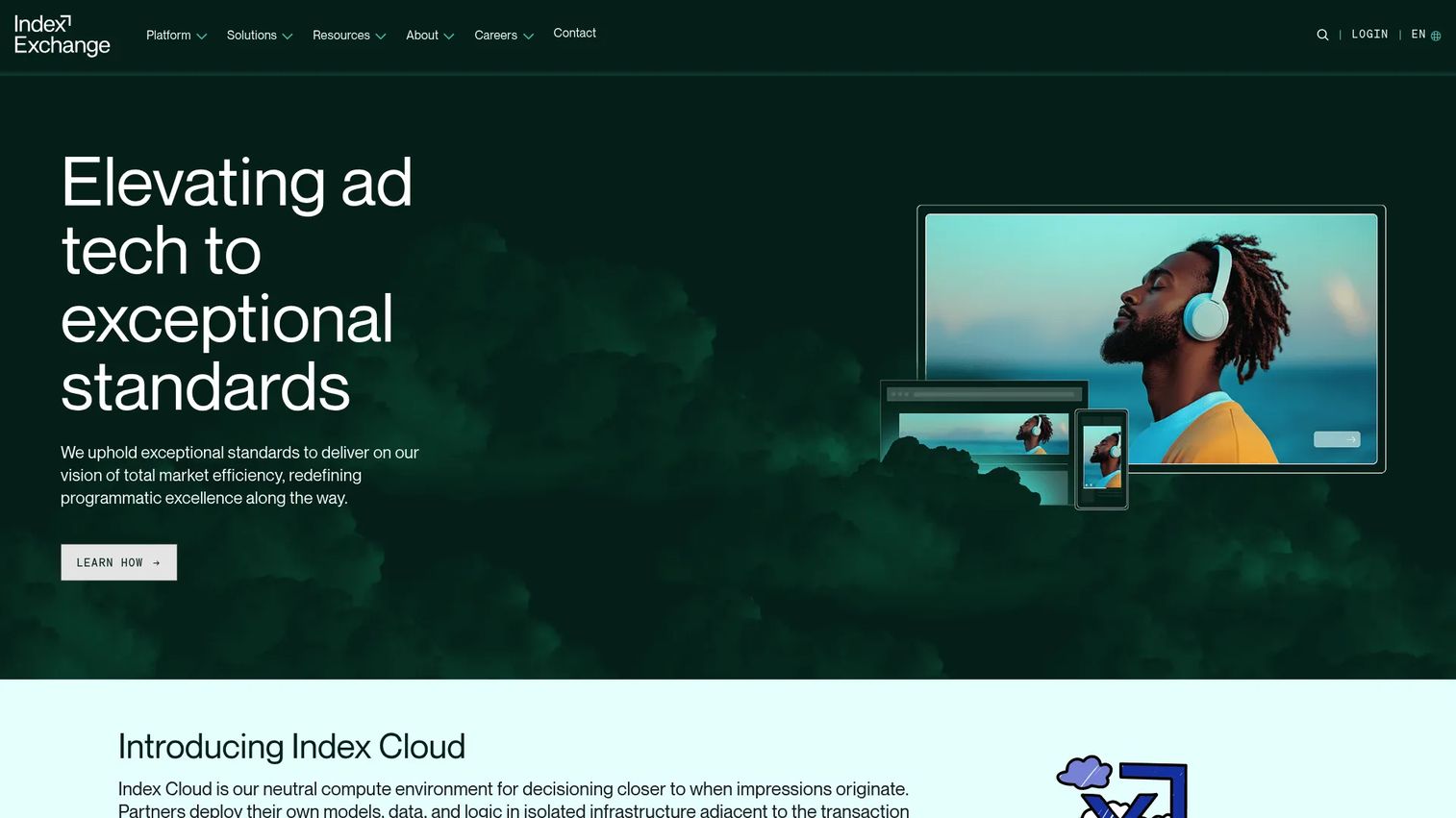
Index Exchange is a global supply-side platform and ad exchange known for transparent auctions and quality demand connections. For publishers who have grown frustrated with opaque auction mechanics, Index built its reputation on clear sell-side decisioning that publishers can audit. That transparency is the reason it shows up on so many premium publisher shortlists.
The platform's tooling supports the full sell-side workflow. Index Cloud brings partner intelligence closer to the impression, Index Marketplaces handle sell-side decisioning, optimization, and measurement, and its data and analytics layer reports across transactions, supply, demand, deals, and brands. For premium web, mobile, and video inventory, that combination gives publishers control plus visibility.
Best for: Publishers and media owners seeking programmatic monetization and transparent sell-side decisioning.
Key strengths
- Index Cloud: Bring partner intelligence closer to the impression for sharper auction decisions.
- Index Marketplaces: Run sell-side decisioning, optimization, and measurement in one workflow.
- Deep analytics: Report across transactions, supply, demand, deals, and brands for full visibility.
Why choose Index Exchange: Publishers who value clean auctions and quality demand over sheer volume of intermediaries will find Index's transparency hard to beat. It fits premium web, mobile, and video publishers who want to audit exactly where revenue comes from.
Index Exchange pricing: No public pricing page or visible price is listed on the brand site. Pricing appears to be contact-based, so reach out for terms suited to your inventory.
5. OpenX

OpenX is a programmatic advertising technology company offering an intelligent SSP plus related ad-tech products. Its focus on curated, quality supply makes it a fit for publishers and agencies that want control over which buyers and deals reach their inventory. The platform pairs monetization with quality controls that protect both revenue and brand context.
OpenX's product suite covers the full supply-side workflow. OpenX Select handles curation, supply-side targeting, and deal creation, OpenX Build provides a software suite for building advertising solutions, and OpenX Exchange runs a global marketplace for quality omnichannel supply. That combination lets publishers shape demand rather than simply accept whatever bids arrive.
Best for: Publishers, agencies, and ad-tech teams operating programmatic supply-side advertising infrastructure with curation needs.
Key strengths
- OpenX Select: Run curation, supply-side targeting, and deal creation to shape demand quality.
- OpenX Build: Use a software suite to build custom advertising solutions on top of the platform.
- OpenX Exchange: Tap a global marketplace for quality omnichannel supply.
Why choose OpenX: Publishers who want to curate demand and protect inventory quality, rather than just maximize raw fill, get strong controls here. It fits teams that treat supply path and buyer quality as a priority alongside yield.
OpenX pricing: Pricing is not publicly available on the brand site. OpenX directs visitors to contact sales or request a demo, so reach out for terms tied to your supply.
6. Sovrn
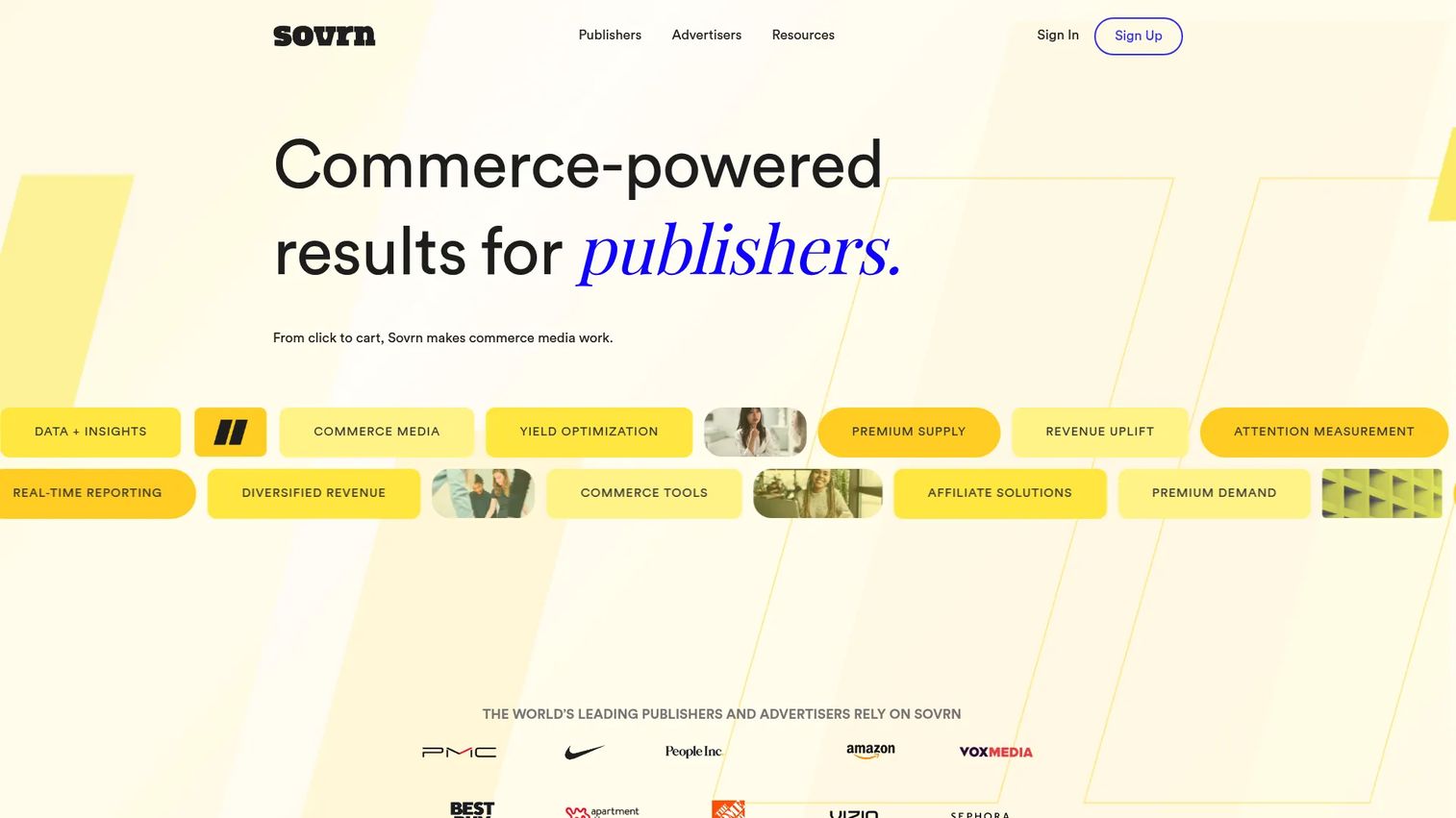
Sovrn is a publisher monetization platform spanning advertising, commerce, creator, and data products. Its accessibility makes it a strong fit for independent publishers and creators who want real programmatic monetization without an enterprise-scale ad ops team. A free sign-up flow lowers the barrier to getting started.
Beyond display advertising, Sovrn helps publishers monetize through commerce and affiliate links, which opens a second revenue stream alongside ads. Real-time analytics and reporting give publishers visibility into what is working. For independent sites balancing ad revenue and affiliate income, that mix is the appeal.
Best for: Independent publishers and creators monetizing traffic through ads, affiliate links, and data products.
Key strengths
- Advertising tools: Access programmatic demand and software tools built for publishers.
- Commerce and affiliate monetization: Add affiliate link revenue alongside display advertising.
- Real-time analytics: Track performance across revenue streams in one reporting view.
Why choose Sovrn: Independent publishers who want to monetize both ad inventory and commerce traffic without heavy overhead get an accessible, multi-stream platform. The free sign-up makes it easy to test against your current setup.
Sovrn pricing: Sovrn offers a free sign-up flow. Public pricing for paid tiers is not shown on the brand site, which uses sign-up and contact flows instead. Start free and contact the team for advanced products.
7. Media.net

Media.net is a sell-side platform for publishers and advertisers focused on contextual, programmatic monetization and premium open-web inventory. Its contextual demand makes it a fit for publishers who want targeting that holds up without heavy reliance on third-party cookies. That contextual focus is increasingly relevant as identity signals shift.
The platform supports header bidding and a range of formats including search, display, native, and video. Publishers leaning on open-web inventory get access to contextual demand plus the format flexibility to monetize across page types. For sites with strong editorial context, that pairing drives relevant fill.
Best for: Publishers seeking contextual ad monetization and programmatic revenue optimization across the open web.
Key strengths
- Contextual advertising: Match demand to page context for targeting that survives cookie deprecation.
- Header bidding support: Compete demand fairly across bidders to lift CPMs.
- Multi-format coverage: Monetize search, display, native, and video inventory.
Why choose Media.net: Publishers with strong editorial context who want contextual demand and open-web monetization get a platform built around that approach. It fits sites prioritizing relevance and format range over walled-garden scale.
Media.net pricing: No public pricing or plan list is shown on the official site, which routes visitors to contact and sales forms. Reach out for terms matched to your inventory and formats.
8. Equativ

Equativ is an end-to-end media platform for advertisers and publishers, covering curation, retail media, creative enhancements, and AI-driven advertising. For publishers wanting flexible monetization across channels, Equativ packages deal types and curation in one platform. Its breadth across formats and motions makes it a versatile shortlist entry.
The platform's curation tooling stands out. Maestro by Equativ powers curation, AI-powered planning and optimization tunes performance, and creative enhancements span CTV, video, display, and native. Add retail media solutions, and publishers get coverage across the channels where ad spend is growing fastest. That flexibility supports both open-market and curated deal monetization.
Best for: Teams needing a programmatic media platform for curation, monetization, and retail media across channels.
Key strengths
- Maestro curation: Package and curate deals across channels in one platform.
- AI-powered optimization: Plan and optimize campaigns with machine-driven decisioning.
- Multi-format creative and retail media: Enhance creative across CTV, video, display, and native, plus retail media solutions.
Why choose Equativ: Publishers and teams that want curation, retail media, and multi-format coverage in one platform get strong flexibility here. It fits operators building across emerging channels rather than a single format.
Equativ pricing: Pricing is not publicly listed on the brand site and appears to be sales-led. Equativ holds a 4.0/5 rating on G2. Contact the team for terms tied to your channels and curation needs.
Considerations when choosing a supply side platform
The right SSP depends on your inventory mix, demand access needs, and how much control you want over auctions. Run every shortlist candidate through these checks before you commit.
Demand access and buyer quality
Look past the raw count of connected DSPs and exchanges. What matters is the quality and directness of demand for your specific inventory. Ask each platform which buyers spend on inventory like yours, and whether they offer direct paths or curated marketplaces that lift CPMs.
Format and channel coverage
Match the platform to where your inventory is heading, not just where it is now. If CTV monetization, audio, DOOH monetization, or retail media network monetization are part of your roadmap, confirm the SSP has proven reach in those channels before you build around it.
Yield and auction controls
Evaluate floor pricing logic, header bidding integration, and how the platform handles unified auctions. Strong yield optimization tooling separates platforms that passively fill inventory from ones that actively push CPMs higher. Ask to see the controls, not just the dashboard.
Transparency and supply path
Demand clear reporting on bids, wins, and discrepancies. Supply path optimization is a buyer priority in 2026, so platforms that offer clean, auditable supply paths get more demand. Transparency protects your revenue and your standing with buyers.
Identity and first-party data
With third-party cookies fading, ask how each SSP activates first-party data and seller defined audiences. The platforms that keep targeting alive through publisher data and contextual signals will hold CPMs better than those still leaning on legacy identity.
Conclusion
There is no single best supply side platform, only the best fit for your inventory and demand needs. Large multi-format publishers with direct sales usually start with Google Ad Manager for unified serving and demand depth. Publishers chasing CTV and omnichannel scale weigh PubMatic and Magnite. Premium publishers who value clean auctions look hard at Index Exchange, while OpenX appeals to teams that want curation and supply quality.
Independent publishers and creators get accessible monetization from Sovrn and contextual demand from Media.net. Teams building across curation and retail media find flexibility in Equativ.
Your next step is practical: list your inventory by format and channel, rank your top three demand priorities, then run two or three platforms in parallel against your current setup. Measure fill, CPMs, and revenue per session over a real billing cycle. The platform that moves those numbers most on your actual inventory is the right one, regardless of where it ranks on any list.
FAQs
A supply side platform is software that publishers use to sell ad inventory programmatically. It connects each impression to demand sources through real-time auctions and works to fill every ad slot at the highest available price, automating publisher inventory monetization across formats.
SSP stands for supply-side platform. In advertising, it sits on the seller's side of the ad-tech chain, helping publishers and app developers offer inventory to buyers through programmatic advertising and real-time bidding, the mirror image of a demand-side platform used by advertisers.
SSPs maximize publisher revenue by exposing inventory to many demand sources at once, running auctions that drive up CPMs, and filling slots that would otherwise go unsold. They add yield optimization tools, floor pricing, and deal types like private marketplaces and programmatic guaranteed to lift revenue per impression.
An SSP is the publisher's tool for managing and optimizing inventory across multiple demand sources. An ad exchange is the marketplace where the auction itself clears between buyers and sellers. SSPs often connect to several exchanges, so they work together rather than competing for the same job.
Header bidding lets publishers offer inventory to multiple SSPs and exchanges at once, before the ad server's direct-sold demand, so all bidders compete fairly in a unified auction. It typically raises CPMs by removing the waterfall priority that let some demand undercut true market value.
Publishers focused on CTV monetization often shortlist PubMatic and Magnite, both of which carry deep streaming and connected TV reach built for the channel's auction dynamics. The best fit depends on your specific inventory, demand relationships, and how much omnichannel coverage you need alongside CTV.
Evaluate demand access and buyer quality, format coverage across display, video, CTV, and retail media, yield and auction controls including header bidding, transparency into bids and supply path, and identity tooling for first-party data. The right balance depends on your inventory mix and growth roadmap.
Supply path optimization is how buyers reduce the number of redundant hops between their demand and a publisher's inventory, favoring the cleanest, most transparent paths. For publishers, offering a clear, auditable supply path through your SSP attracts more buyer spend and protects CPMs in 2026.