

You already paid for the traffic. The ad clicked, the cart filled, the buyer reached checkout. Then they bought one thing and left.
That gap between "one purchase" and "the purchase they'd have happily said yes to" is where most revenue leaks out. Not because the demand isn't there. Because the offer showed up at the wrong moment, in the wrong place, with no way to measure whether it worked.
The numbers back this up. Global upsell and cross-sell platforms for commerce are projected to grow from $3.8B in 2025 to $10.2B by 2034 at a 14.2% CAGR, according to MarketIntelo (2025). Teams are pouring money into this category because the math is simple: expansion revenue from existing buyers costs far less than net-new acquisition.
But "upsell software" is not one category. It's five. Checkout tools live at the point of sale. Post-purchase tools work the moment after the card clears. Page builders control the merchandising surface. Subscription and monetization platforms drive expansion inside recurring revenue. And restaurant POS systems raise order value in person. Pick the wrong archetype for your channel and even a great tool underperforms.
This guide compares seven upsell and cross-sell software tools by where they fit in the revenue journey, not by feature hype.
What's inside
This guide is for eCommerce operators, revenue teams, subscription businesses, SaaS monetization teams, and restaurant operators comparing upsell and cross-sell software in 2026.
We selected tools based on four things that actually decide fit:
- Offer placement: where in the journey the tool triggers an offer (cart, checkout, post-purchase, POS, or account)
- Analytics: whether it reports business impact like AOV and take rate, not just clicks
- Integrations: how well it plugs into your existing checkout, CRM, payments, or POS stack
- Personalization and trust: whether offers can be relevant and value-first, not pushy
The list spans eCommerce, SaaS monetization, and restaurant upsells so you can match a tool to your channel.
TL;DR
- Best for restaurant operations: Upsell, for POS, QR ordering, gift cards, and add-on prompts in one platform
- Best for checkout and thank-you-page offers: Upsell (formerly ReConvert) again, plus BOLD Upsell for AI-driven cross-sells across the shopper journey
- Best for post-purchase one-click offers: CartHook, built to monetize the moment right after the card clears
- Best for page building and merchandising control: Shogun, for owning product pages and running offer experiments
- Best for enterprise software monetization: Portfolio Monetization (Thales), for licensing, entitlement, and usage-based expansion
- Best for upsell signal detection: Sentinel Pulse, for surfacing expansion timing inside your CRM
- Best for subscription and membership stacks: Outseta, for billing, CRM, and lifecycle in one system
What upsell software is
Upsell software increases order value or expansion revenue by presenting the right offer at the right time, then measuring whether that offer worked. It sits on top of a checkout, a cart, a POS terminal, or a subscription account and prompts a buyer to add, upgrade, or bundle before they finish.
Upsell and cross-sell are related but distinct. An upsell moves the buyer to a bigger version of what they already want: a larger size, a higher tier, a longer plan. A cross-sell adds a complementary item: batteries with the flashlight, onboarding with the software seat. Most upsell and cross-sell software handles both, and the strongest offers blend them.
There are five main software archetypes. Match the archetype to your channel before you shortlist products:
- Checkout upsell software: presents offers at the cart and checkout, where intent is highest
- Post-purchase upsell software: triggers one-click offers on the thank-you page, after the buyer has already committed
- Page builders: control product and landing pages so the offer, bundle, and merchandising live where you want them
- Subscription and monetization tools: drive tier upgrades, seat expansion, and usage-based revenue for SaaS and membership businesses
- Restaurant POS systems: raise order value in person through add-on prompts, combos, and QR ordering
The AI layer is growing fast underneath all five. The AI-assisted upselling market is expected to expand from $3.41B in 2025 to $38.41B by 2035, a 27.4% CAGR, per Market.us (2025). That matters because AI-driven order bumps hit an average acceptance rate of roughly 37.8%, rising to 42.1% during peak events, according to the same source.
When to use upsell software
Increase average order value at checkout
Checkout is where intent peaks. The buyer has already decided to spend, so the cost of considering one more item is low. Checkout upsell software works best here because it catches that moment without derailing the purchase.
Use it for:
- Cart add-ons that complement the main item
- Bundles that raise perceived value at a small price bump
- One-click offers that skip re-entering payment details
Automated upselling delivers conversion benchmarks of 15 to 30%, and businesses running it can see up to 3x revenue lift, per SalesGenie (2026). The lift comes from timing, not pressure.
Expand revenue from existing customers
For subscription and SaaS businesses, the upsell lives inside the account, not the cart. This is tier upgrades, seat expansion, and usage-based growth. It ties directly to retention and lifetime value, since an existing customer who upgrades is both more valuable and more likely to stay.
The tools here read usage signals, flag accounts ready to expand, and surface the offer at renewal or at a usage threshold. Done well, expansion revenue compounds quarter over quarter.
Improve restaurant or in-person order value
In a restaurant, the upsell happens at the counter, the table, or the QR menu. POS upsell prompts suggest a combo, a side, or an upgrade at the moment of ordering. The best implementations keep service fast and feel like a helpful suggestion, not a script.
This is where operational simplicity matters most. If the prompt slows the line or confuses the kitchen display, it costs more than it earns.
Comparison table
The table below is the fastest way to narrow the field. Scan by "best for" to match a tool to your channel, then read the full section for the two or three that fit. Pricing and ratings reflect verified public sources at the time of writing; where a figure isn't publicly listed, we note it in the section instead of guessing.
| # | Product | Best for | Key differentiation | Pricing | G2 rating |
|---|---|---|---|---|---|
| 1 | Upsell | Restaurant and Shopify upsell funnels | Post-purchase, cart, checkout, and thank-you-page offers in one app | From $19.99/mo | Not listed |
| 2 | BOLD Upsell | Shopify AOV across the journey | AI Smart Offers across product page, cart, checkout, post-purchase, email | Free; paid from $25/mo | 4.2/5 |
| 3 | CartHook | Post-purchase one-click offers | 1-click post-purchase upsells with A/B testing | From 1% of post-purchase revenue | 3.3/5 |
| 4 | Shogun | Page building and merchandising | Page builder plus A/B testing and Smart Pages | Free; paid from $39/mo | 4.6/5 |
| 5 | Portfolio Monetization | Enterprise software monetization | Licensing, entitlement, and usage intelligence | Custom | 4.5/5 |
| 6 | Sentinel Pulse | Upsell signal detection in CRM | Sentinel data visualized in Salesforce and Dynamics | Custom | Not listed |
| 7 | Outseta | Subscription and membership stacks | Billing, CRM, email, and help desk in one system | From $47/mo | 4.6/5 |
1. Upsell
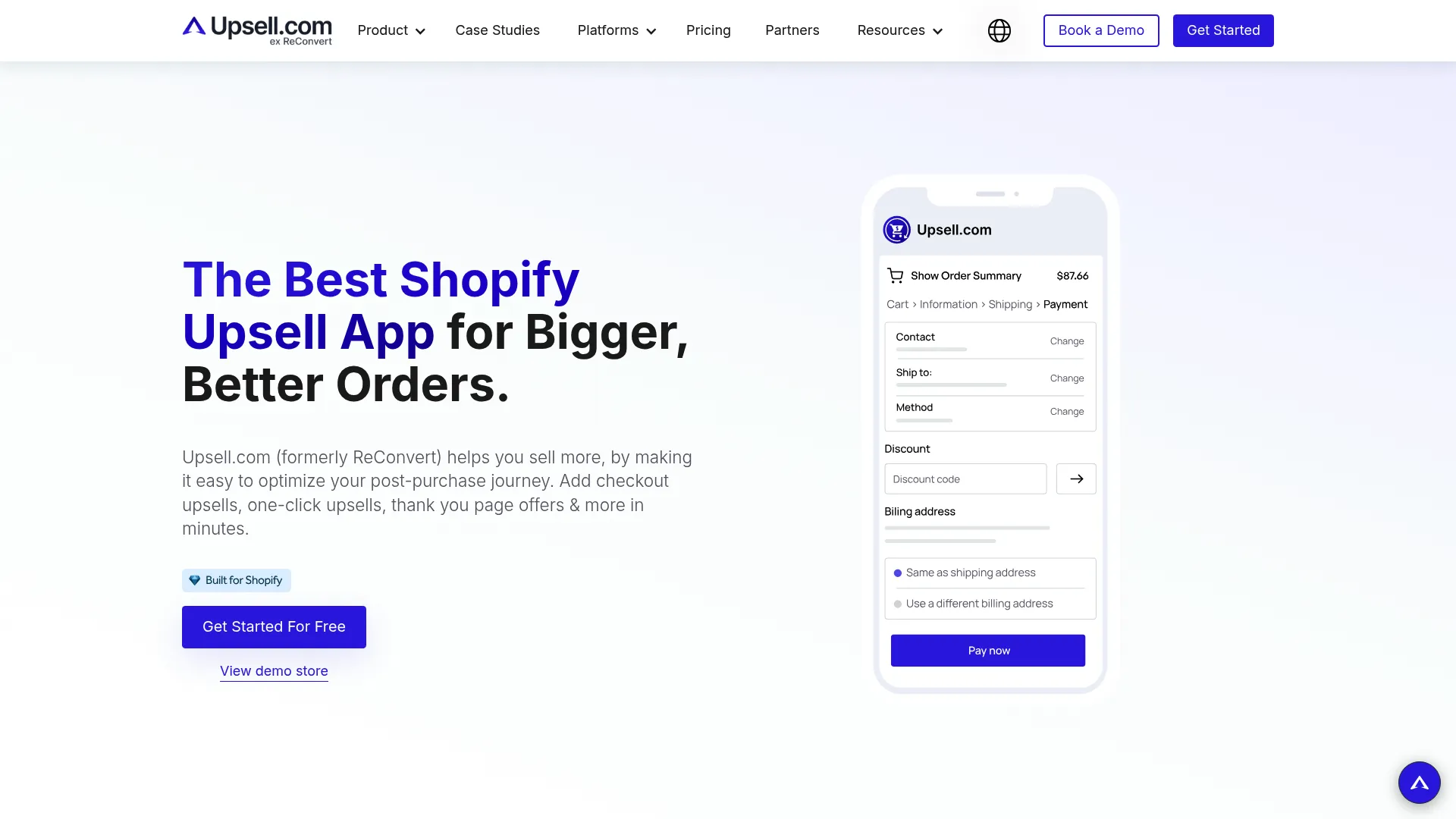
Upsell is a revenue-focused upsell platform built for Shopify merchants, and it also carries strong operational value for restaurant and omnichannel teams. Formerly known as ReConvert, it builds no-code upsell funnels across the cart, checkout, product page, and thank-you page. The pitch is straightforward: turn one order into a bigger one without touching code.
The platform's strength is coverage across the journey. You can trigger a one-click post-purchase upsell after the card clears, add cross-sells to the thank-you page, and run cart and checkout offers, all from one app. For restaurant and omnichannel operators, the surrounding stack (order management, QR ordering, gift cards, and kitchen display context) makes it more than a single-surface tool.
Best for: Shopify merchants and omnichannel operators who want revenue-focused upsell funnels without developer time.
Key strengths
- One-click post-purchase upsells: monetize the moment after checkout
- Thank-you page customization and cross-sells: raise AOV after purchase
- Cart, product page, and checkout upsell flows: cover the full journey
Why choose Upsell: It fits teams that want offers across multiple surfaces in one place, rather than stitching together separate cart, checkout, and post-purchase apps. The no-code builder keeps setup off the engineering roadmap.
Upsell pricing: Plans start at $19.99/month for up to 200 orders per month, with a 14-day free trial. Higher usage tiers scale up automatically as order volume grows, and larger revenue accounts move to a contact-sales tier.
2. BOLD Upsell
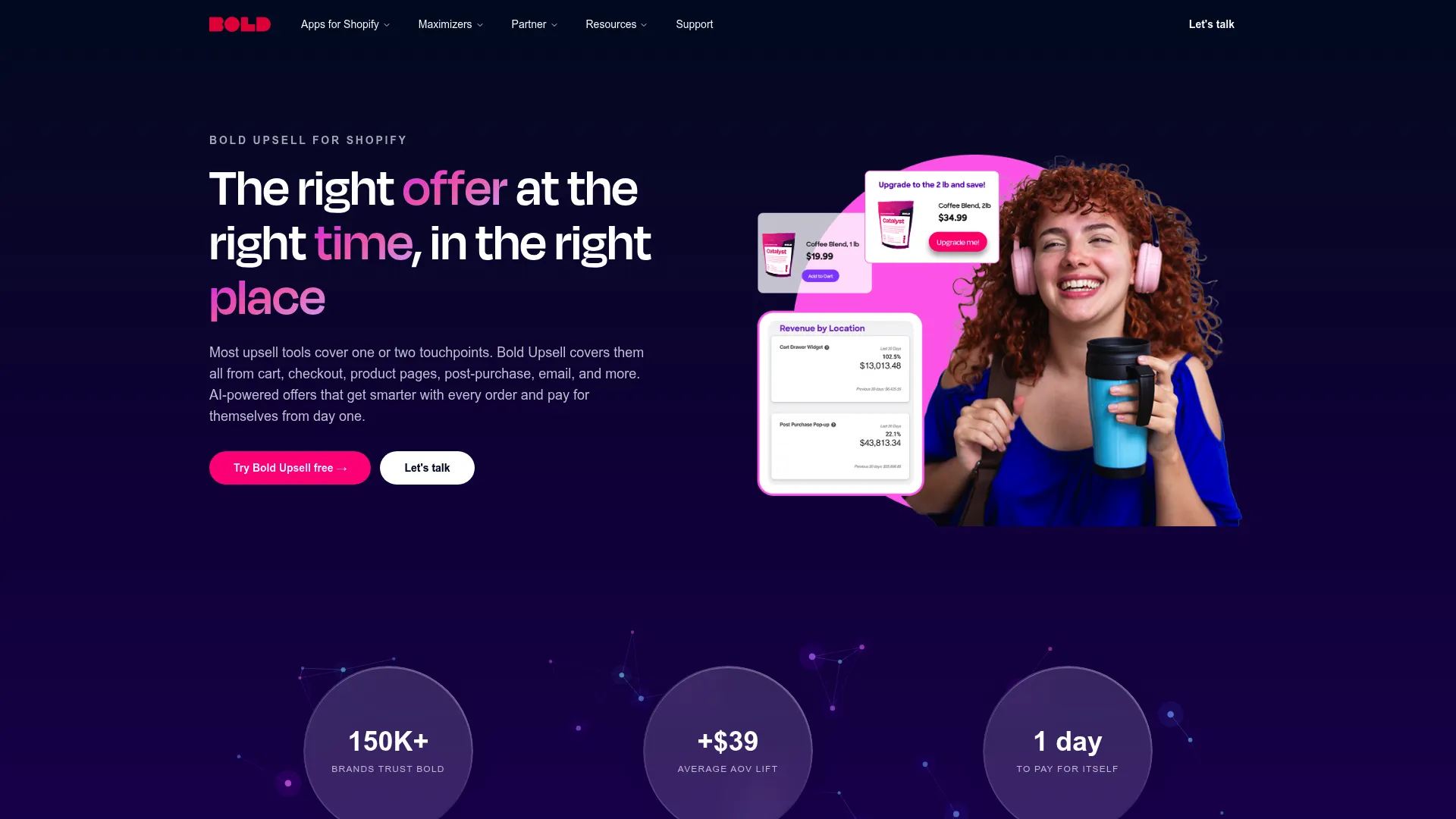
BOLD Upsell is an AI-powered Shopify app for increasing average order value across the shopper journey. Its differentiator is placement breadth combined with AI Smart Offers that personalize what each shopper sees. Instead of one static offer, the tool adapts recommendations to the cart and the shopper.
Offers can appear on the product page, in the cart, in the cart drawer, at checkout, post-purchase, and even in email. That range lets you build full funnels of upsells, cross-sells, and downsells rather than a single prompt. For merchants who want offer personalization without building recommendation logic themselves, the AI layer does the heavy lifting.
Best for: Shopify merchants who want AI-driven upsells and cross-sells across multiple touchpoints.
Key strengths
- AI Smart Offers: personalized upsells and cross-sells per shopper
- Multi-surface placement: product page, cart, checkout, post-purchase, email
- Funnels: chain upsells, cross-sells, and downsells together
Why choose BOLD Upsell: It suits merchants who want personalization and placement variety in one app, and who value a free entry point to test before committing budget. The AI recommendations reduce the manual work of picking which product to offer where.
BOLD Upsell pricing: The Essential plan is free for stores under 50 orders per month. Standard is $25/month, Complete is $50/month, and Enterprise is $500/month billed annually at $6,000/year. SmartFlex usage tiers apply above 500 views per month, with the first 0 to 500 views free.
3. CartHook
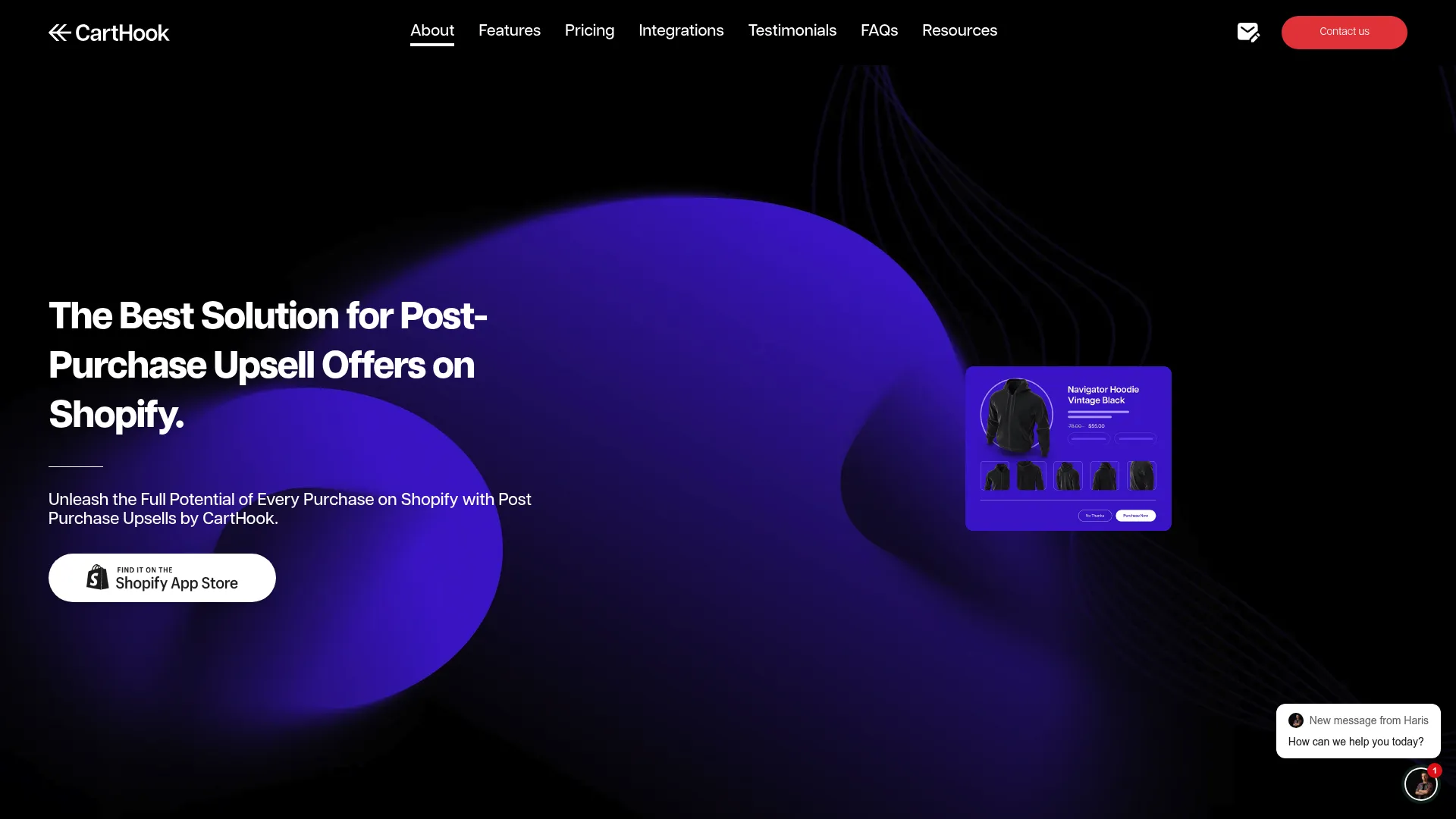
CartHook is a Shopify app focused on post-purchase upsells and checkout optimization. It specializes in the moment right after the card clears, when the buyer has already committed and friction is lowest. That timing is the whole thesis: no re-entering payment details, no new decision about whether to trust you.
The no-code drag-and-drop builder lets you construct one-click post-purchase offers, then test them with built-in A/B testing and real-time analytics. Because the offer sits after checkout, it can't hurt the original conversion, which makes it a low-risk place to experiment with order-value lift.
Best for: Shopify merchants who want post-purchase upsells to lift AOV without risking the initial checkout.
Key strengths
- 1-click post-purchase upsells: capture revenue after the sale
- No-code drag-and-drop builder: launch offers without developers
- A/B testing and real-time analytics: measure lift, not just clicks
Why choose CartHook: Teams choose it when they want to monetize the moment after purchase specifically, keeping the main checkout untouched. It's a focused post-purchase upsell software play rather than a full-journey suite.
CartHook pricing: Pricing is usage-based, starting at 1% of post-purchase revenue, tied to monthly orders and revenue. The brand site displays usage-based pricing rather than a fixed plan table.
4. Shogun
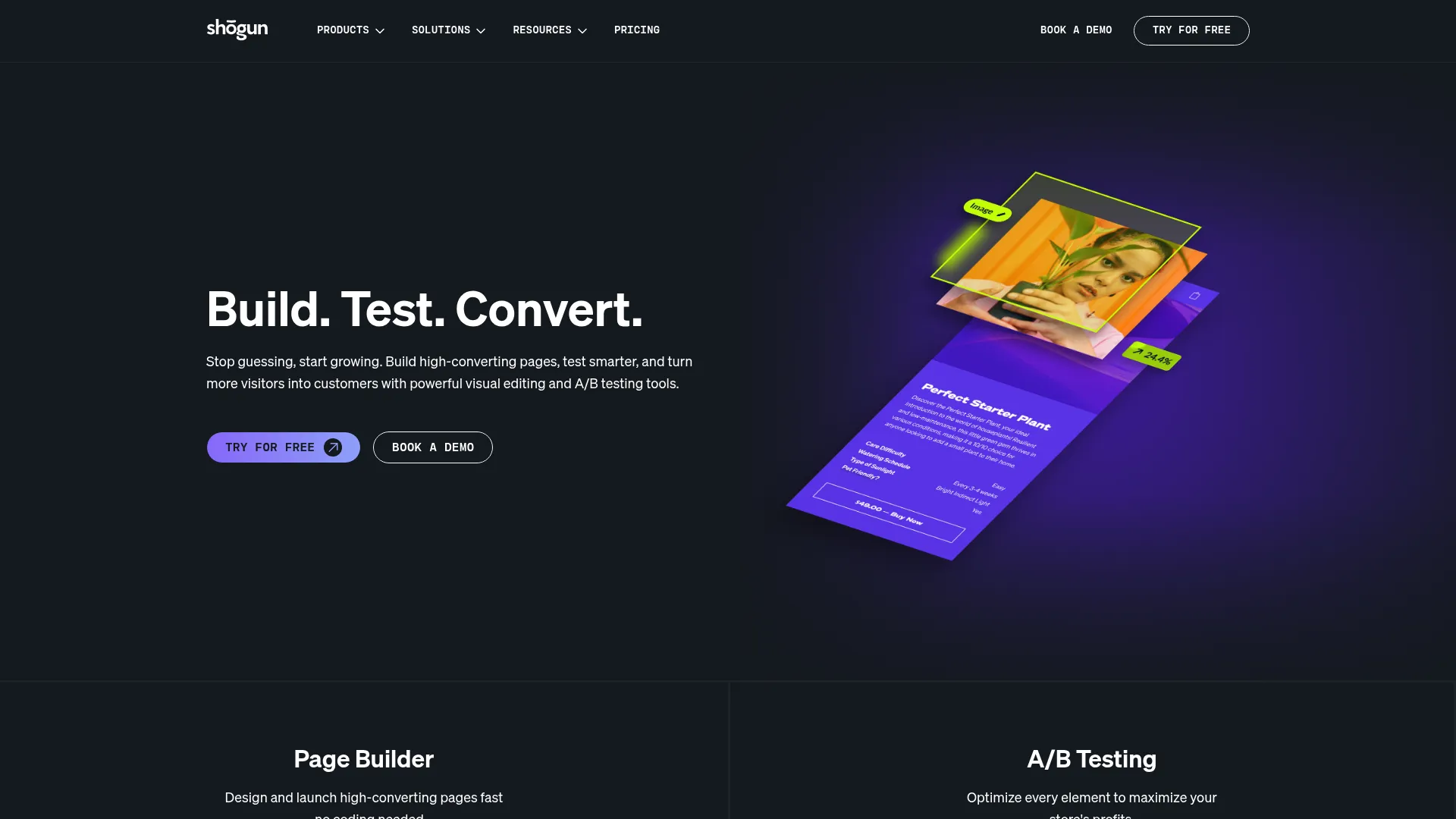
Shogun approaches upsell from a different angle: it's an eCommerce page-building and optimization tool for Shopify and BigCommerce teams. Rather than injecting offers into a checkout, it lets you own the merchandising surface where the offer lives. If you want full control over how a bundle, upgrade, or cross-sell is presented, the page is where you win.
The Page Builder, A/B Testing, Smart Pages, and AI Section Builder let teams design product pages, run experiments, and personalize experiences without heavy developer involvement. That makes it the upsell layer for teams who treat merchandising and offer presentation as a design and testing problem, not just a plugin.
Best for: Shopify and BigCommerce teams that want to build and optimize pages, and the offers on them, without deep developer support.
Key strengths
- Page Builder: design product and landing pages visually
- A/B Testing: experiment with offer presentation and layout
- Smart Pages and AI Section Builder: personalize and speed up page creation
Why choose Shogun: It fits teams whose upsell strategy depends on merchandising control and experimentation rather than checkout-injected prompts. You trade a plug-and-play offer engine for full ownership of the page experience.
Shogun pricing: A free Draft Mode plan is available. Paid plans are Build at $39/month, Grow at $199/month, and Advanced at $499/month, with annual billing discounts shown on the pricing page.
5. Portfolio Monetization
Portfolio Monetization is Thales's software monetization portfolio, built for enterprise software vendors rather than eCommerce carts. Here the upsell isn't a thank-you-page offer, it's a packaging and pricing decision baked into how the software is licensed and consumed. Expansion happens through entitlements, tiers, and usage, not add-to-cart prompts.
The portfolio handles software licensing, entitlement management, and software usage intelligence. That combination lets vendors manage bundles, enforce pricing models, and expand revenue through usage-based growth. For software companies with complex monetization motions, it operates at the portfolio level: which features are gated, which tiers exist, and how usage converts to expansion revenue.
Best for: Enterprise software vendors that need licensing and entitlement controls to drive packaging and usage-based expansion.
Key strengths
- Software licensing: control access and enforce entitlements
- Entitlement management: manage tiers, bundles, and feature gating
- Software usage intelligence: turn consumption data into expansion signals
Why choose Portfolio Monetization: It suits software vendors whose expansion motion runs through licensing and packaging, not a storefront. This is revenue expansion software for a fundamentally different channel than checkout tools.
Portfolio Monetization pricing: Pricing is not published publicly. Thales routes prospects through a demo, free trial, or contact-sales flow rather than displaying prices.
6. Sentinel Pulse
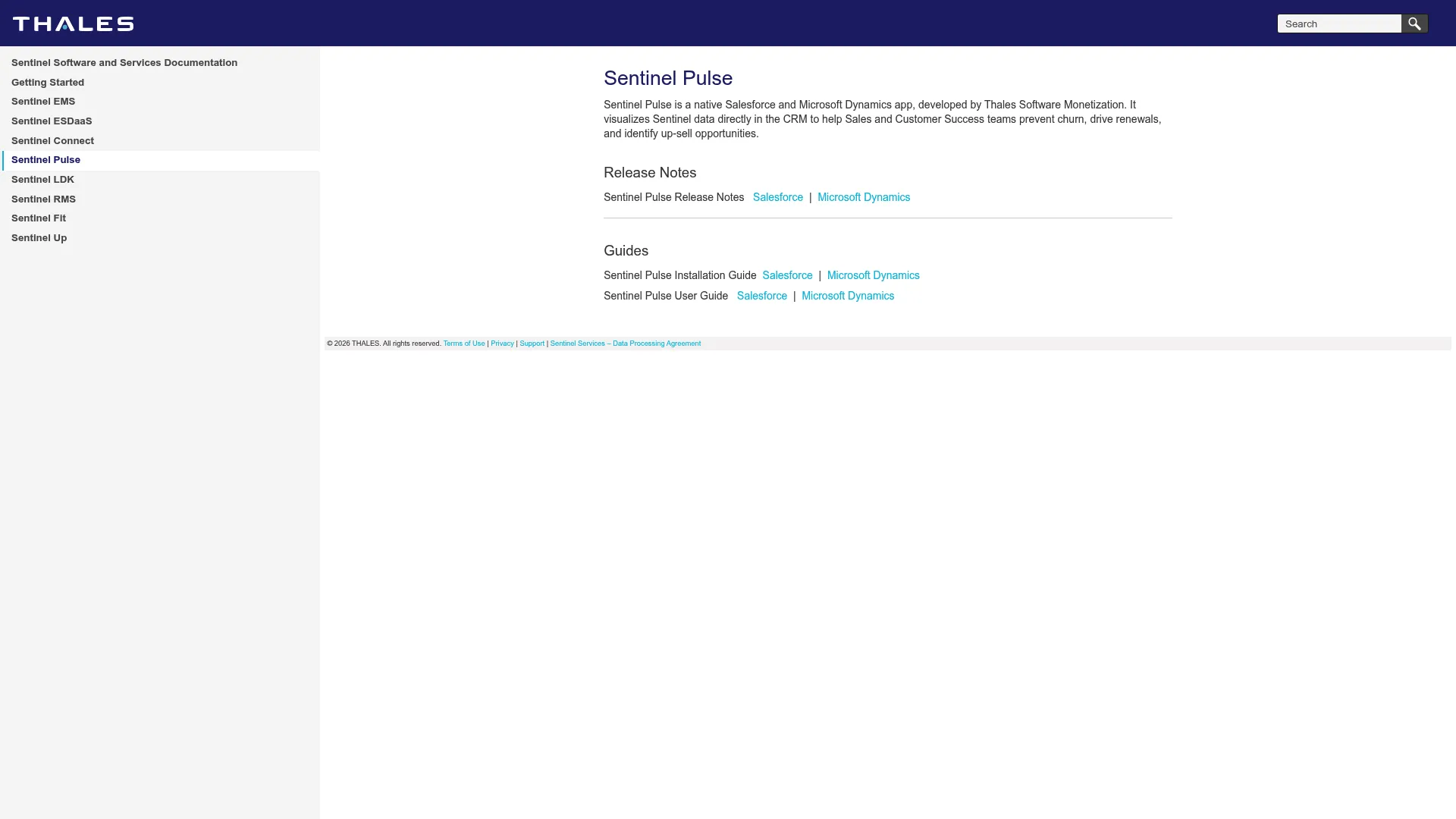
Sentinel Pulse is a native Salesforce and Microsoft Dynamics app from Thales that visualizes Sentinel data inside your CRM. It's not a front-end offer engine. It's the signal layer that tells sales and customer success teams when an account is ready to expand. Think of it as the measurement and readiness side of the upsell, not the prompt itself.
The app surfaces entitlement, expiration, and activation data directly in the CRM, maps accounts to customers, and sends proactive notifications when engagement or expiry crosses a threshold. That turns raw usage into upsell analytics a rep can act on, right where they already work.
Best for: Thales customers using Salesforce or Microsoft Dynamics who want CRM-based visibility into Sentinel data.
Key strengths
- CRM dashboards: entitlement, expiration, and activation data in one view
- Account-to-customer mapping: connect usage to the right account
- Proactive notifications: alerts on engagement and expiry thresholds
Why choose Sentinel Pulse: It fits teams that already run Sentinel and want expansion timing surfaced inside their CRM instead of a separate report. It pairs naturally with a monetization portfolio, adding the "when to upsell" signal on top of the "how to package" layer.
Sentinel Pulse pricing: No public pricing is available for this product. Access is handled through Thales's sales and product channels.
7. Outseta
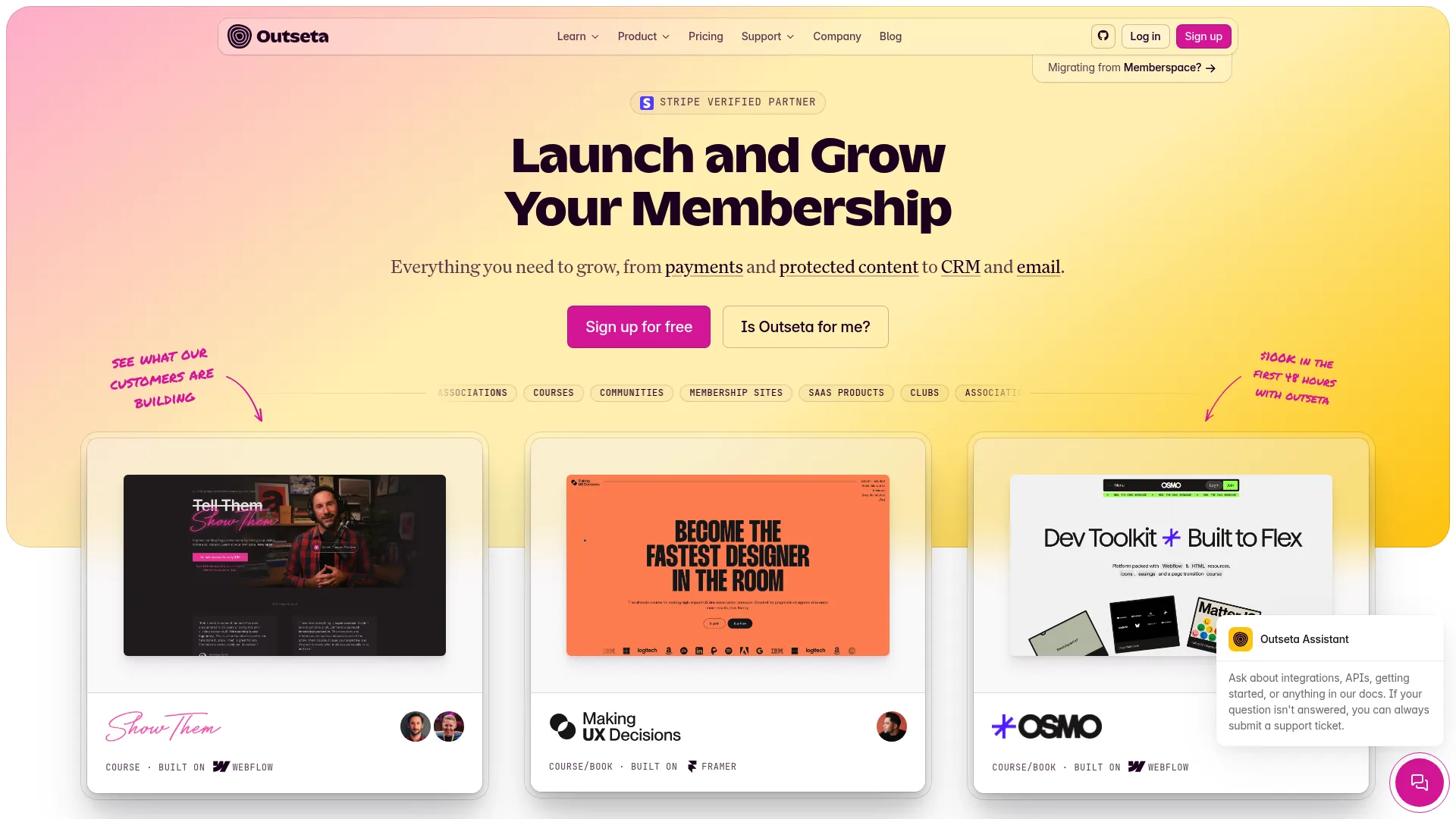
Outseta is an all-in-one platform for SaaS and membership businesses, bundling billing, CRM, email marketing, and a help desk into one system. For upsell and expansion, the value is consolidation: subscription upgrades, plan changes, and lifecycle nurture all run from a single tool instead of five stitched-together apps.
Because billing and CRM live together, expansion becomes an operational workflow rather than a data-reconciliation project. You can manage payments and subscriptions, gate content with authentication, and run the email and support motions that drive renewals and upgrades. For a lean team building recurring revenue, one system keeps the whole motion visible.
Best for: SaaS and membership teams that want one system for billing, auth, CRM, email, and support.
Key strengths
- Payments and subscription management: handle upgrades and plan changes
- Authentication and gated content: tie access to subscription tiers
- CRM, email marketing, and help desk: run the full lifecycle in one place
Why choose Outseta: It fits teams that want a simpler operating stack for membership or SaaS monetization, managing growth from one system rather than integrating separate billing, CRM, and support tools. The trade-off is breadth over depth in any single function.
Outseta pricing: Plans start at Founder for $47/month, Start-up for $87/month, Growth for $127/month, and 50K for $497/month. All plans include unlimited team members and a 7-day free trial.
Considerations before you buy
Where the offer appears
Map the tool to the exact stage where your revenue expansion happens. A checkout upsell tool won't help a SaaS expansion motion, and a licensing platform won't lift a Shopify cart.
- Product page, cart, or checkout for eCommerce intent
- Thank-you page for post-purchase offers
- POS terminal for in-person order value
- CRM or account for subscription and seat expansion
Placement shapes conversion more than offer copy does.
How you measure lift
Look for tools that report business impact, not just activity. A dashboard full of impressions tells you nothing about revenue.
- Average order value (AOV)
- Take rate and acceptance rate
- Revenue per visitor
- Upsell conversion rate
- Expansion revenue for subscription models
If a tool shows clicks but can't tie them to order value or expansion, treat that as a gap.
How personalization works
Generic offers underperform because they ignore what the buyer actually wants. Check how the tool decides what to show.
- Rule-based: you set the logic manually
- Behavior-based: offers adapt to what the shopper does
- Segment-based: offers vary by customer group
- Account-based: offers tie to a specific account's usage
For example, offering batteries to someone who just bought batteries wastes the slot. Behavior-based logic avoids that.
What it connects to
The best tool fits the stack you already run. Validate integrations before you commit.
- CRM (Salesforce, Dynamics, and similar)
- Checkout and payments
- POS and order management
- Analytics and reporting
- Support and email systems
A tool that doesn't sync with your system of record creates manual work that erodes any lift it produces.
What trust looks like
Every upsell either builds or erodes the relationship. The tool should support a value-first experience where the offer feels relevant, not pushy. Avoid anything that interrupts the buyer with irrelevant prompts or hides the real price. A well-timed, relevant offer raises both order value and repeat purchase rate.
Conclusion
There is no single best upsell software, only the best fit for where your revenue expansion happens. If you run a restaurant or Shopify store and want offers across the journey, Upsell covers cart, checkout, and post-purchase in one app. For AI-driven personalization across the Shopify shopper journey, BOLD Upsell earns the shortlist. For pure post-purchase one-click offers, CartHook is purpose-built.
If your upsell strategy is really a merchandising problem, Shogun gives you page-level control and experimentation. For enterprise software vendors, Portfolio Monetization handles licensing and usage-based expansion, and Sentinel Pulse surfaces the expansion signal inside your CRM. For subscription and membership teams that want billing, CRM, and lifecycle in one place, Outseta consolidates the stack.
Upsell software works when placement, offer design, and measurement line up. A great tool in the wrong channel still underperforms. So start with the table, match the archetype to your buyer journey stage, then shortlist the two or three tools that fit your channel and integrate with your stack.
FAQs
Upsell software prompts the buyer to choose a bigger or higher-value version of what they're buying, like a larger size or a premium tier. Cross-sell software adds a complementary item, like a case with a phone. Most upsell and cross-sell software handles both, and the strongest offers combine them at the same moment.
It depends on where you want the offer to appear. For full-journey Shopify funnels, Upsell and BOLD Upsell both cover cart, checkout, and post-purchase. For pure post-purchase one-click offers, CartHook is purpose-built. For merchandising and page-level control, Shogun lets you own the offer presentation and run experiments.
Restaurant operators need POS, QR ordering, gift cards, and add-on prompts that keep service fast. Upsell fits this well, combining upsell funnels with the operational stack a restaurant runs on. The key is that in-person prompts feel like a helpful suggestion at the counter or table, not a slowdown at the register.
Track average order value, upsell conversion rate, take rate, and revenue per visitor for eCommerce, plus expansion revenue for subscription models. Acceptance rate tells you whether the offer resonates. Ignore tools that report only impressions and clicks, because activity without a link to order value or expansion doesn't prove business impact.
Both work, and the right choice depends on friction and basket type. Checkout upsells catch peak intent but can add a decision before the sale closes. Post-purchase upsell software triggers after the card clears, so it can't hurt the original conversion. Many teams run both, using post-purchase offers as a low-risk place to experiment.
Prioritize CRM, checkout, payments, POS, and analytics, since those are the systems the offer and its data flow through. For subscription businesses, CRM integrations decide whether expansion signals reach the sales team. A tool that doesn't sync with your system of record forces manual reconciliation that eats into any revenue lift.
Yes. Subscription and account-based tools drive tier upgrades, seat expansion, and renewals, which raise lifetime value and reduce churn. Outseta consolidates billing and CRM for membership and SaaS teams, while Sentinel Pulse surfaces expansion timing inside the CRM. Expansion revenue from existing customers usually costs far less than net-new acquisition.
Focus on relevance, timing, and clear value. Show an offer that genuinely complements what the buyer wants, at a moment that fits the journey, at a transparent price. Behavior-based and segment-based personalization help, since they avoid irrelevant prompts. A well-timed, relevant offer raises order value and repeat purchases, while a pushy one erodes trust and costs future sales.