
A shelf reads empty in the system but full in the aisle. A self-checkout lane freezes during the dinner rush. A cooler fails overnight and a thousand dollars of inventory spoils before anyone notices. None of these are mysteries. They are blind spots, and they exist because store activity, devices, and data live in separate silos that never talk to each other.
Retail IoT software is the layer that connects them. It ties sensors, cameras, point-of-sale terminals, RFID tags, and edge hardware into a system that turns raw store activity into action. The market reflects how fast this is happening. The Internet of Things in retail market is expected to grow from $93.55 billion in 2025 to $847.52 billion by 2035, according to Precedence Research (2025). Cloud-based retail IoT solutions alone are forecast to grow at a 31.5% CAGR over the next decade.
For a product manager or retail operator, the question is not whether IoT belongs in the store. It is which software earns a place in the stack without creating a brittle implementation that decays the moment hardware or store layouts change. That is a buying decision, not a definition exercise. The tools below span device management, edge infrastructure, shelf intelligence, supply chain visibility, and cloud IoT platforms, so you can match the category to the problem you actually have.
If you evaluate software the way you evaluate any product surface, you already know the pattern. The same instinct that makes teams reach for interactive demos and other demo automation formats applies here: prove the thing works in your environment before you commit budget. We carried that bias into this list.
What's inside
This guide covers retail IoT software used for retail inventory visibility, self-checkout automation, shelf intelligence, supply chain optimization, and store analytics. It is written for retail operators, IT leaders, and product managers comparing platforms mid to late in the buying journey, not for readers looking for a generic internet of things in retail primer.
We selected the seven tools below on four criteria: retail fit (does it solve a real store problem, not just a generic IoT one), operational breadth (how many use cases it covers), integration maturity (how it connects to existing systems), and buyer relevance (whether a PM can scope a phased rollout around it). Pricing and G2 ratings reflect publicly available data at the time of writing.
TL;DR
- Best overall for IoT-connected retail operations: Apptricity, for real-time asset and inventory visibility across complex environments.
- Best for device management and connected retail infrastructure: Datablaze, for carrier-agnostic connectivity and live sensor monitoring.
- Best for edge-enabled smart retail environments: Scale Computing, for low-latency store-edge automation.
- Best for cloud IoT platform depth: AWS IoT, for teams building custom retail IoT systems at scale.
- Best for Microsoft-centric enterprise shops: Microsoft Azure IoT, for governance and standardized device connectivity.
- Best for grocery and supply chain visibility: UNFI, for demand and distribution-connected operations.
- Best for cooler, asset, and shelf monitoring: Vision Group, for AI shelf execution and connected equipment monitoring.
What is retail IoT software?
Retail IoT software connects physical store devices, sensors, and assets to a software layer that captures, analyzes, and acts on real-time store data. It sits between the hardware in your aisles and the dashboards your teams use to run operations.
In practice, the category spans a set of repeatable capabilities. The strongest platforms cover several of these, not just one.
- Inventory and shelf visibility: smart shelves, shelf sensors, and RFID in retail that track stock levels and trigger replenishment.
- Self-checkout and PoS automation: connected terminals, mobile point-of-sale, and PoS backup that keep lanes moving and uptime high.
- Supply chain and logistics tracking: asset and shipment tracking that gives real-time visibility from warehouse to shelf.
- Customer experience and personalization: beacon-based personalization and localization that adapt offers in the moment.
- Store layout and foot traffic analytics: sensors and cameras that feed store analytics on dwell time, conversion, and merchandising.
- Security, compliance, and data handling: encryption, access control, and data governance that keep connected systems auditable.
The distinction that matters for buyers: some products are full platforms, some are device-and-connectivity layers, and some are infrastructure that other software runs on. Knowing which layer you are buying prevents the most common implementation mistake, which is buying a connectivity tool and expecting it to deliver analytics out of the box.
When to use retail IoT software
Most retailers do not need every capability at once. The fastest path to value is to start with the problem that costs you the most, then expand. Here is how to pattern-match.
Improve inventory visibility
Shelf sensors, RFID, and real-time dashboards earn their keep when stockouts and shrink are eating margin. If associates spend hours walking aisles to confirm what the system already should know, that is labor you can recover. Retail inventory visibility tools shine in high-SKU environments where a stockout is a lost sale and an overstock is dead capital. Start here when your inventory accuracy sits below the high 90s.
Automate checkout and store workflows
Self-checkout automation, mobile point-of-sale, and PoS backup matter most when customer flow breaks down at the lane. A frozen terminal during peak hours does not just cost one sale, it pushes a queue out the door. Connected checkout software keeps uptime measurable and gives you a fallback when a primary system fails. Prioritize this when checkout is your visible bottleneck and labor is hard to staff.
Optimize customer experience and layout
Foot traffic analytics, beacons, and localization come into play when you want to merchandise on evidence rather than instinct. Knowing where shoppers pause, where they abandon, and which displays convert lets you treat the floor like a landing page you can A/B test. This is the right starting point for omnichannel retail teams connecting in-store behavior to online engagement.
Comparison table
The table below sorts the seven tools by relevance to retail IoT software as a category, not by company size. Use it to scan intent and the single use case each tool does best before reading the full sections. Pricing and G2 ratings reflect publicly available data at the time of writing; several vendors price by quote.
| # | Product | Intent | Key use case | Pricing | G2 rating |
|---|---|---|---|---|---|
| 1 | Apptricity | Asset and inventory visibility | Real-time retail inventory and supply chain tracking | Custom (contact sales) | 3.5/5 |
| 2 | Datablaze | Device and connectivity management | IoT connectivity, GPS tracking, sensor monitoring | From $25/month (data plan) | 4.8/5 |
| 3 | Scale Computing | Edge infrastructure | Store-edge automation and HCI | From $5,600/year | Not listed |
| 4 | UNFI | Grocery and supply chain | Wholesale distribution and demand visibility | Quote-based | Not listed |
| 5 | Vision Group | Shelf and asset monitoring | AI shelf execution and cooler monitoring | Quote-based | Not listed |
| 6 | AWS IoT | Cloud IoT platform | Custom large-scale retail IoT builds | Usage-based | 4.3/5 |
| 7 | Microsoft Azure IoT | Enterprise cloud IoT | Governed device connectivity at scale | Free tier, then usage-based | 4.3/5 |
1. Apptricity
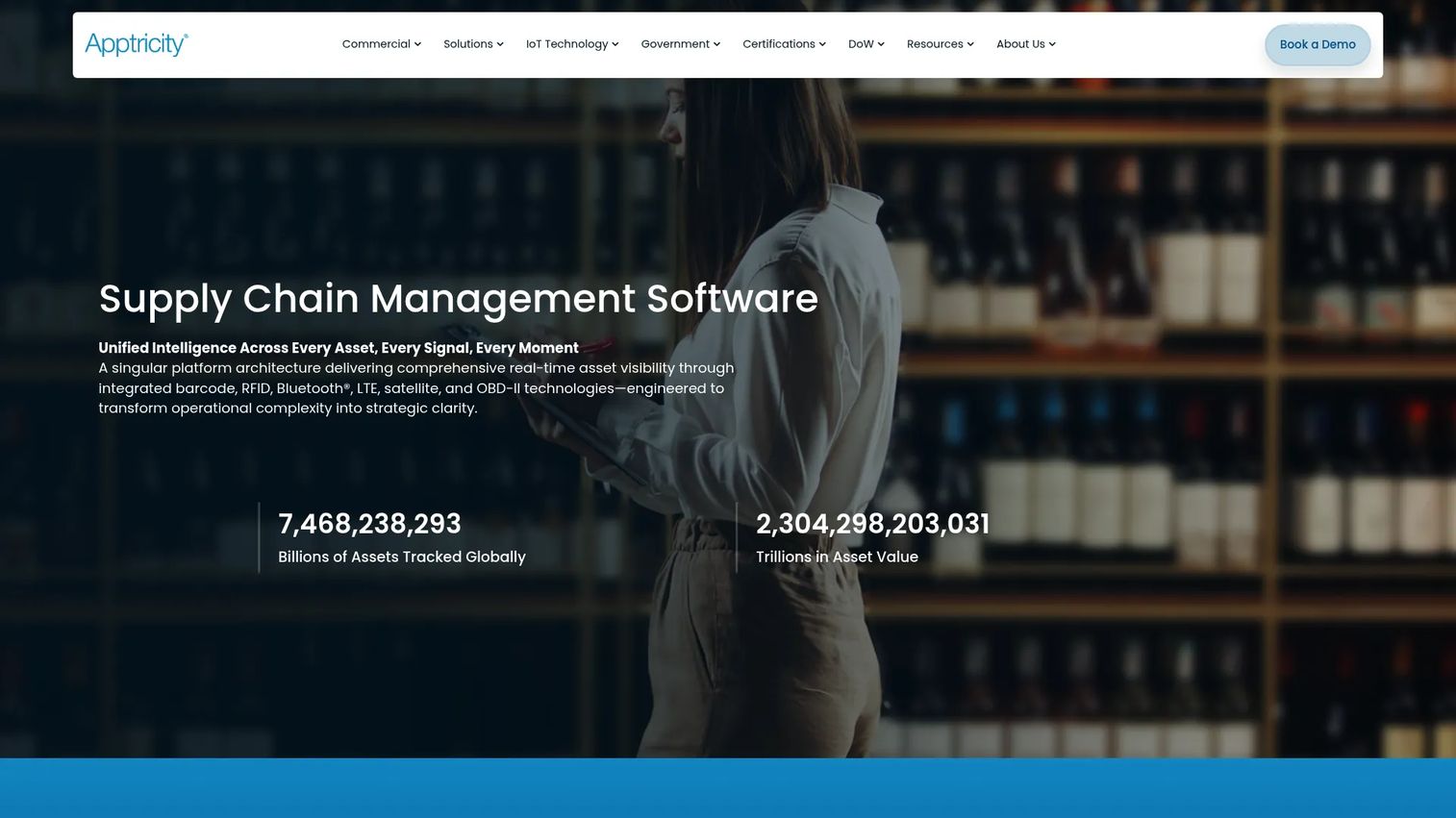
Apptricity is enterprise supply chain execution and spend management software built around real-time asset, inventory, and equipment visibility. It uses IoT, RFID, and GPS to track where things are and what state they are in, which makes it a strong fit for retail teams that treat inventory accuracy as a margin lever rather than an afterthought. The platform also covers travel and expense automation, so larger organizations get asset tracking and spend control in one system.
Best for: Enterprises and government organizations that need connected asset tracking and inventory control across complex, multi-site environments.
Key strengths
- Real-time asset visibility: IoT, RFID, and GPS combine to show where inventory and equipment are at any moment.
- Asset, inventory, and equipment tracking: one tracking layer spans stock, fixed assets, and gear, reducing the count of disconnected systems.
- Travel and expense automation: approval and audit workflows extend the platform beyond inventory into spend governance.
Why choose Apptricity: For a PM weighing operational lift, Apptricity consolidates several tracking jobs into one platform, which cuts the integration surface you have to maintain across releases. It suits organizations with the scale to justify an enterprise rollout and the need for audit-grade visibility. Smaller single-store operators will find it heavier than they need.
Apptricity pricing: Apptricity does not publish public pricing. The site routes buyers to contact sales or book a demo, which is typical for enterprise asset platforms scoped per deployment. Expect a quote based on site count, asset volume, and the modules you enable.
2. Datablaze
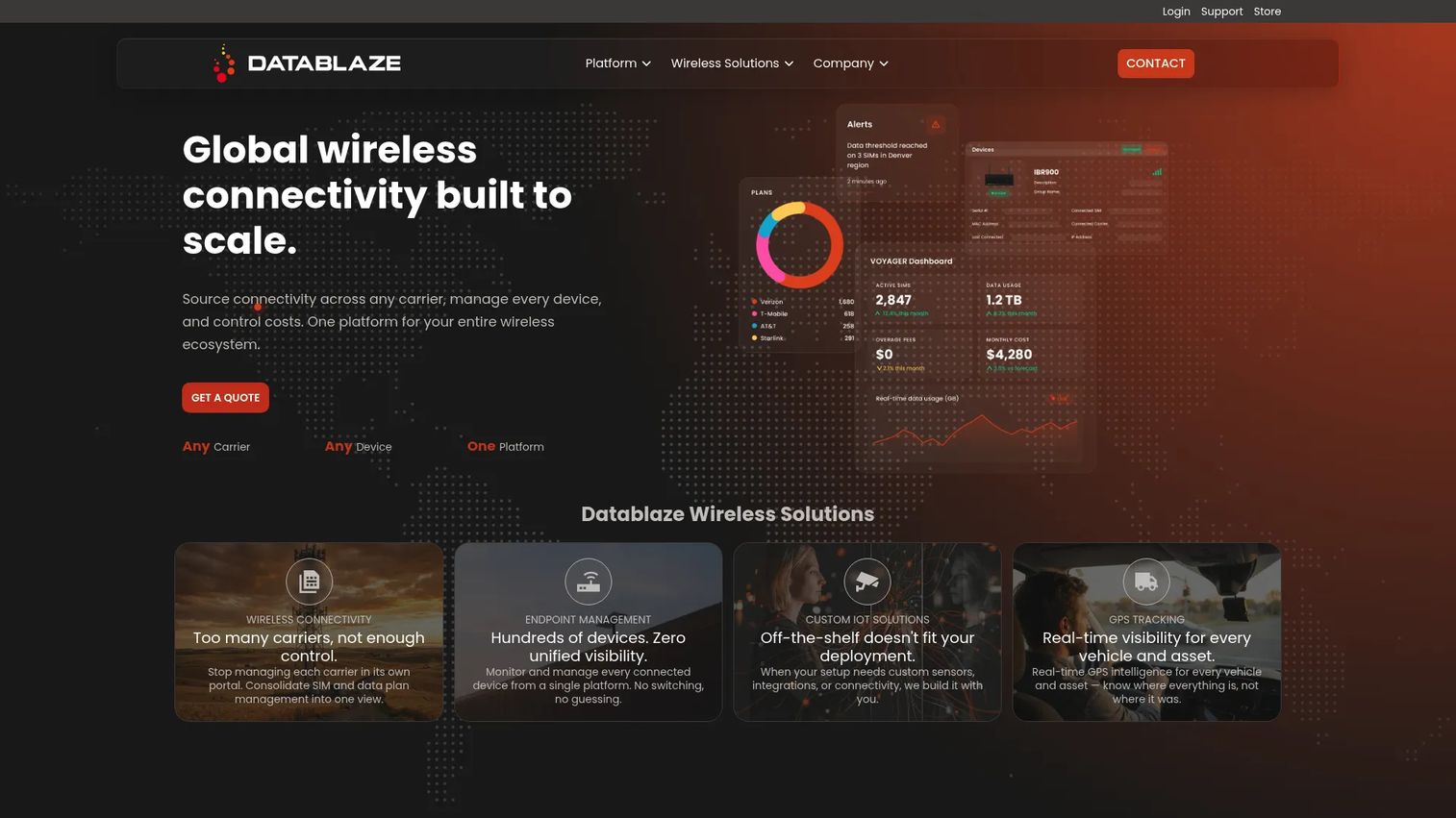
Datablaze is a managed wireless connectivity and IoT provider whose VOYAGER platform centralizes SIMs, devices, billing, GPS tracking, and sensor monitoring. For retailers running connected hardware across many locations, the value is operational continuity: keeping devices online, tracking assets in motion, and watching sensor data from one place. It is the connectivity and device-management layer that sits underneath store IoT, not an analytics suite.
Best for: Businesses that need carrier-agnostic IoT connectivity, device management, and fleet or GPS tracking across distributed sites.
Key strengths
- Multi-carrier connectivity and SIM management: carrier-agnostic data keeps devices online without locking you to one network.
- Device management and GPS tracking: monitor and manage connected hardware and track moving assets from a central console.
- IoT sensor monitoring and reporting: live sensor data feeds reporting on conditions like temperature, location, and uptime.
Why choose Datablaze: If your retail IoT challenge is keeping devices connected and assets visible rather than running deep store analytics, Datablaze handles the layer most platforms assume you already have. It pairs well with analytics tools that consume its data. Teams looking for shelf intelligence or checkout software will need to layer those on top.
Datablaze pricing: Datablaze publishes hardware and data-plan pricing on its store. Data plans start at $25 per month, with $35 and $45 options shown, and GPS tracker hardware such as the Falcon Wired tracker listed at $189.00 one-time. VOYAGER platform pricing itself is not publicly listed and is scoped per deployment. There is no free tier.
3. Scale Computing
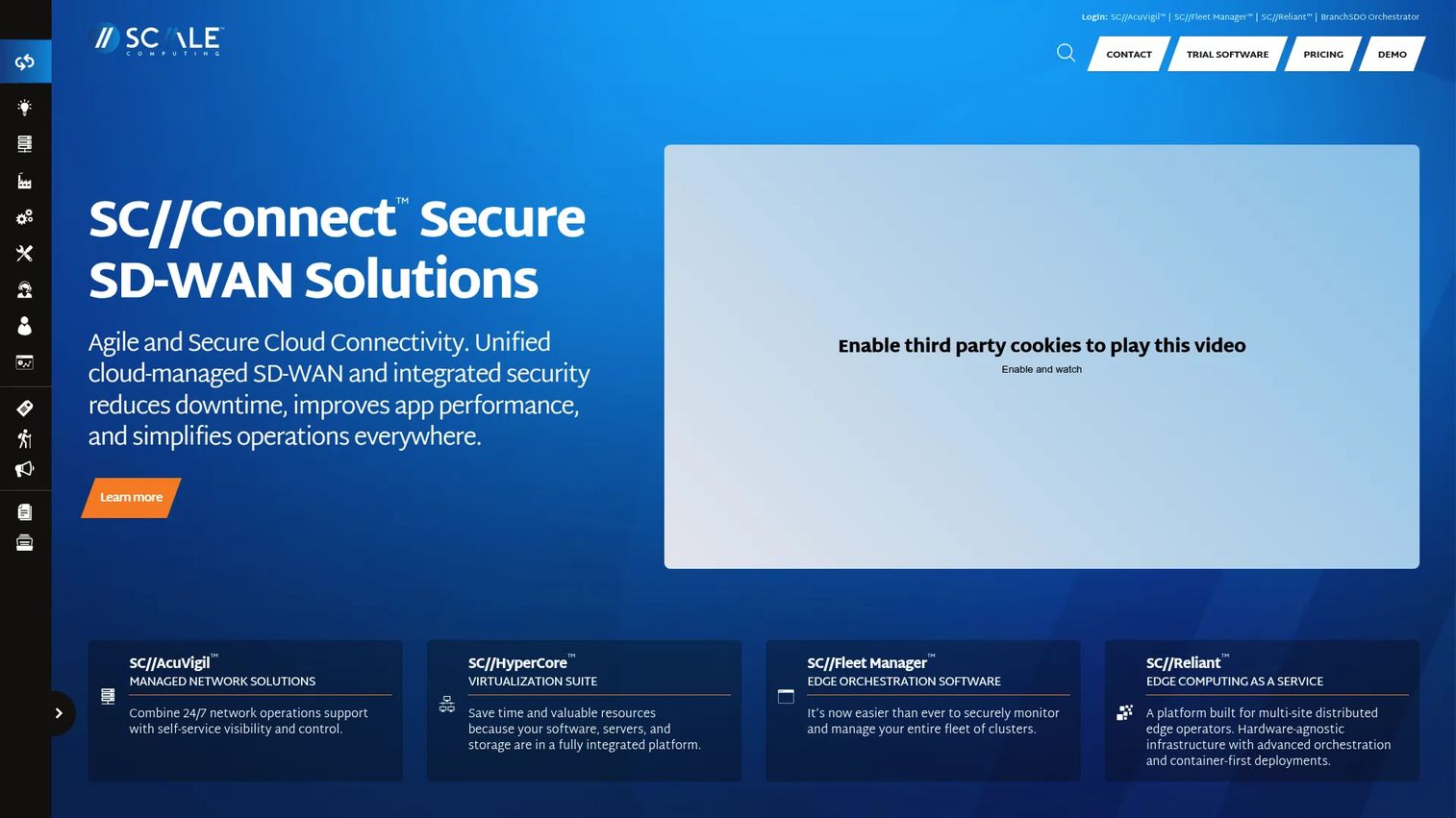
Scale Computing provides edge computing and hyperconverged infrastructure that powers latency-sensitive retail environments. Its platform combines virtualization, servers, storage, backup, disaster recovery, and fleet management into one self-healing stack. For retail, the relevance is the store edge: running checkout, inventory, and analytics workloads locally so they keep working even when the network to the cloud hiccups.
Best for: Organizations that need simplified edge or HCI infrastructure to run smart retail workloads across many distributed store sites.
Key strengths
- Scale Computing Platform: combines virtualization, servers, storage, backup, and fleet management in one stack.
- SC//HyperCore: a self-healing hypervisor and software layer built for distributed, lightly staffed sites.
- SC//Fleet Manager: cloud-hosted monitoring and management for clusters across hundreds of locations.
Why choose Scale Computing: Edge infrastructure matters when latency or connectivity loss would stop the store. Running retail automation at the edge means a self-checkout lane or inventory scan does not wait on a round trip to the cloud. Scale Computing is infrastructure, not a retail application, so you run your store software on top of it.
Scale Computing pricing: Public pricing is available for the Professional Essentials offering at $5,600 per year, based on a five-year term. Other offerings appear quote-based and are not publicly priced on the primary site. There is no free tier.
4. UNFI
UNFI is a wholesale food distributor and services provider connecting retailers and suppliers across North America. While it is not a pure software vendor, its retailer and supplier services tie into the demand and distribution side of connected store operations, which is where grocery IoT lives. For grocers, the relevance is assortment, demand visibility, and the supply chain optimization that keeps shelves stocked with the right products.
Best for: Grocery retailers and suppliers seeking a wholesale distribution partner with demand and assortment visibility.
Key strengths
- Broad assortment: natural, organic, specialty, and conventional products in one distribution relationship.
- North American distribution network: scale and reach that supports demand visibility across regions.
- Retailer, supplier, and media services: services that extend beyond product into operations and merchandising.
Why choose UNFI: For grocery operators, the connected-store conversation starts with the supply chain feeding the shelf. UNFI fits teams that want a distribution partner woven into demand and assortment decisions, rather than a standalone device platform. It is a different layer of the stack than the sensor and analytics tools elsewhere on this list.
UNFI pricing: UNFI does not publish a public software-style pricing page. Pricing is quote-based and tied to the distribution and services relationship rather than a per-seat software plan. Scope it through a direct conversation about volume and services.
5. Vision Group
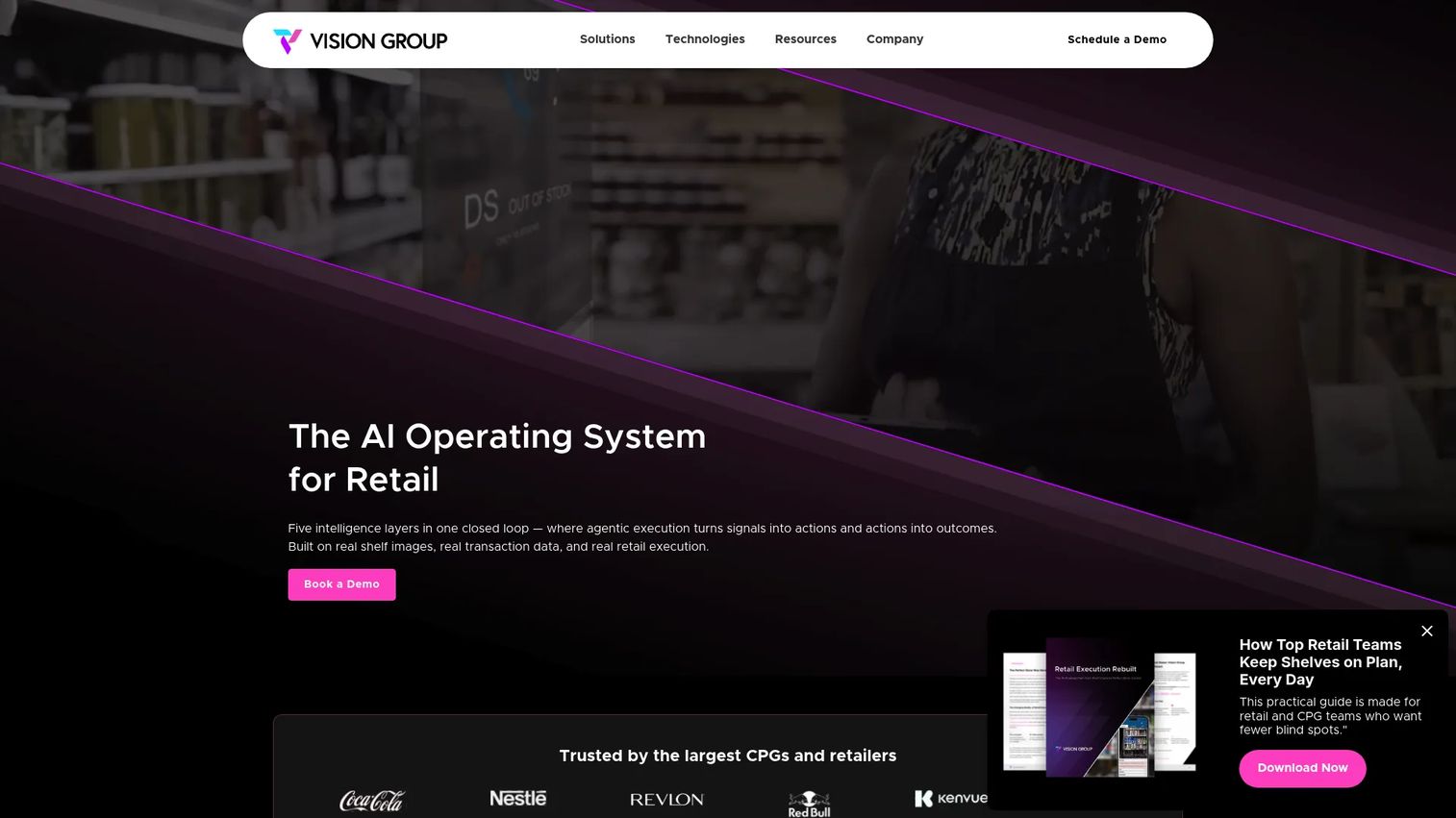
Vision Group is a retail AI software company focused on shelf execution, product data, demand forecasting, assortment, and IoT monitoring. Its image recognition checks planogram compliance, flags pricing errors, and detects out-of-stocks, while its IoT layer monitors coolers and connected assets. For grocery and cold-chain operators, that combination targets two expensive problems at once: shelf accuracy and equipment uptime.
Best for: CPG and retail teams that need AI-driven shelf execution paired with connected cooler and asset monitoring.
Key strengths
- AI shelf image recognition: automated planogram compliance checks replace manual shelf audits.
- Pricing error and out-of-stock detection: flags revenue leaks before they compound across a store.
- Retail IoT cooler and asset monitoring: watches equipment health to cut spoilage and downtime.
Why choose Vision Group: Smart cooler monitoring and asset visibility translate directly into shrink reduction and uptime, two metrics that show up fast on a P&L. A failing cooler caught early is inventory saved. Vision Group fits teams that already run a shelf-execution motion and want connected monitoring inside the same system.
Vision Group pricing: Vision Group does not expose public pricing on its site. Pages route to a demo or contact-sales conversation, so pricing is scoped per deployment based on store count and the modules you enable.
6. AWS IoT
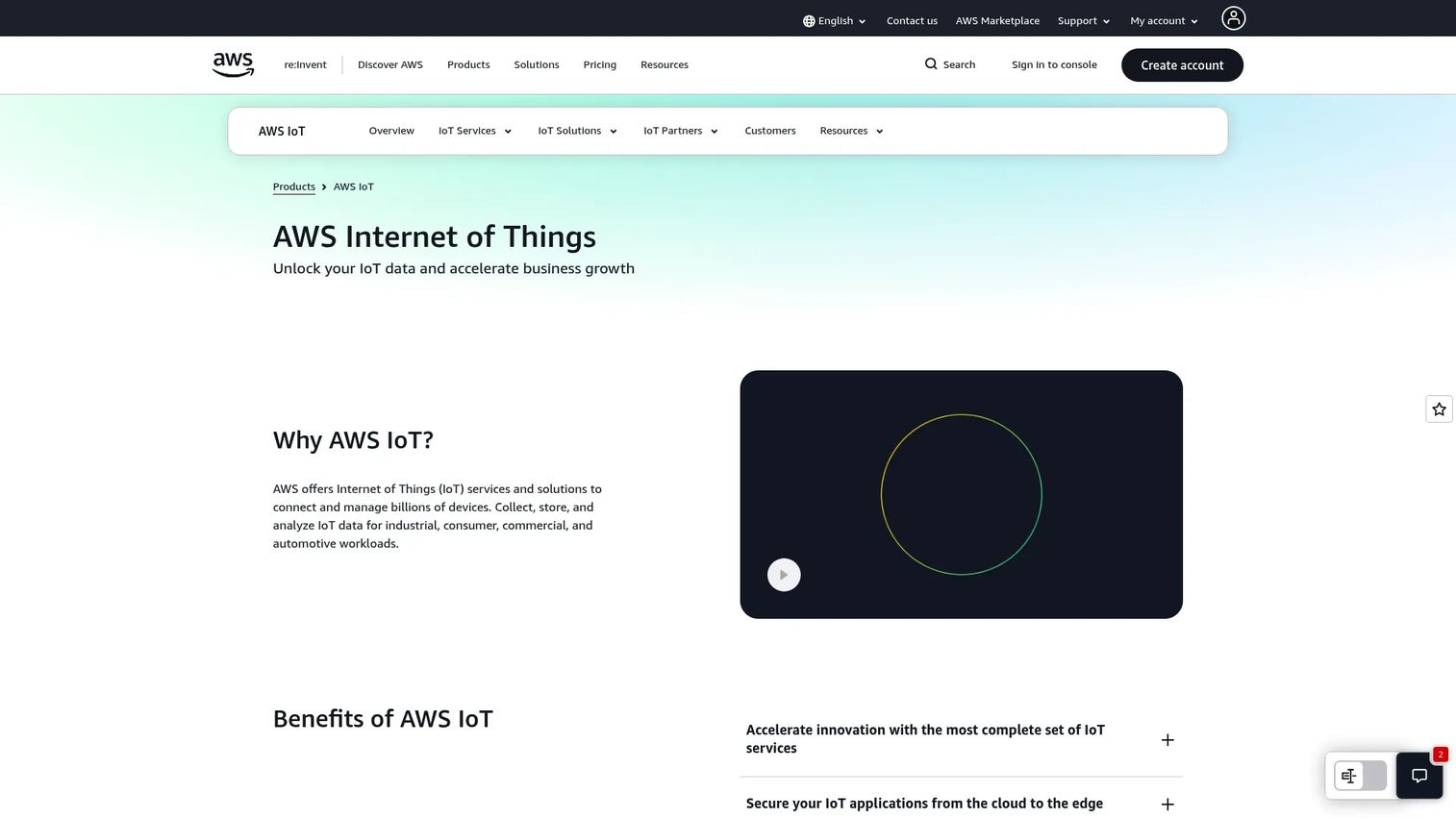
AWS IoT is Amazon's suite of cloud and edge services for connecting, managing, securing, and analyzing devices at scale. It is the choice for teams building custom retail IoT systems rather than buying a packaged retail application. AWS IoT Core handles device connectivity and message routing, device management covers over-the-air updates, and Device Defender monitors security. The breadth of the AWS ecosystem means you can extend into analytics, machine learning, and edge computing without leaving the platform.
Best for: Enterprises and product teams building large-scale, custom retail IoT solutions on AWS.
Key strengths
- Device connectivity and message routing at scale: connect and route data from large device fleets reliably.
- Device management and over-the-air updates: manage and update connected hardware remotely across stores.
- Security monitoring via Device Defender: continuous security monitoring and mitigation for connected fleets.
Why choose AWS IoT: If you have engineering bandwidth and want full control over how your retail IoT system is built, AWS IoT gives you the depth and integration flexibility to design exactly what you need. The ecosystem strength is the differentiator: edge, analytics, and ML are all adjacent services. This is a build, not a buy, so factor in the engineering investment.
AWS IoT pricing: AWS IoT uses usage-based pricing, billed by the volume of messages, device connectivity, and the specific services you consume. There is no flat software fee. Model your costs against expected device count and message frequency, since usage-based billing scales with traffic rather than seats.
7. Microsoft Azure IoT
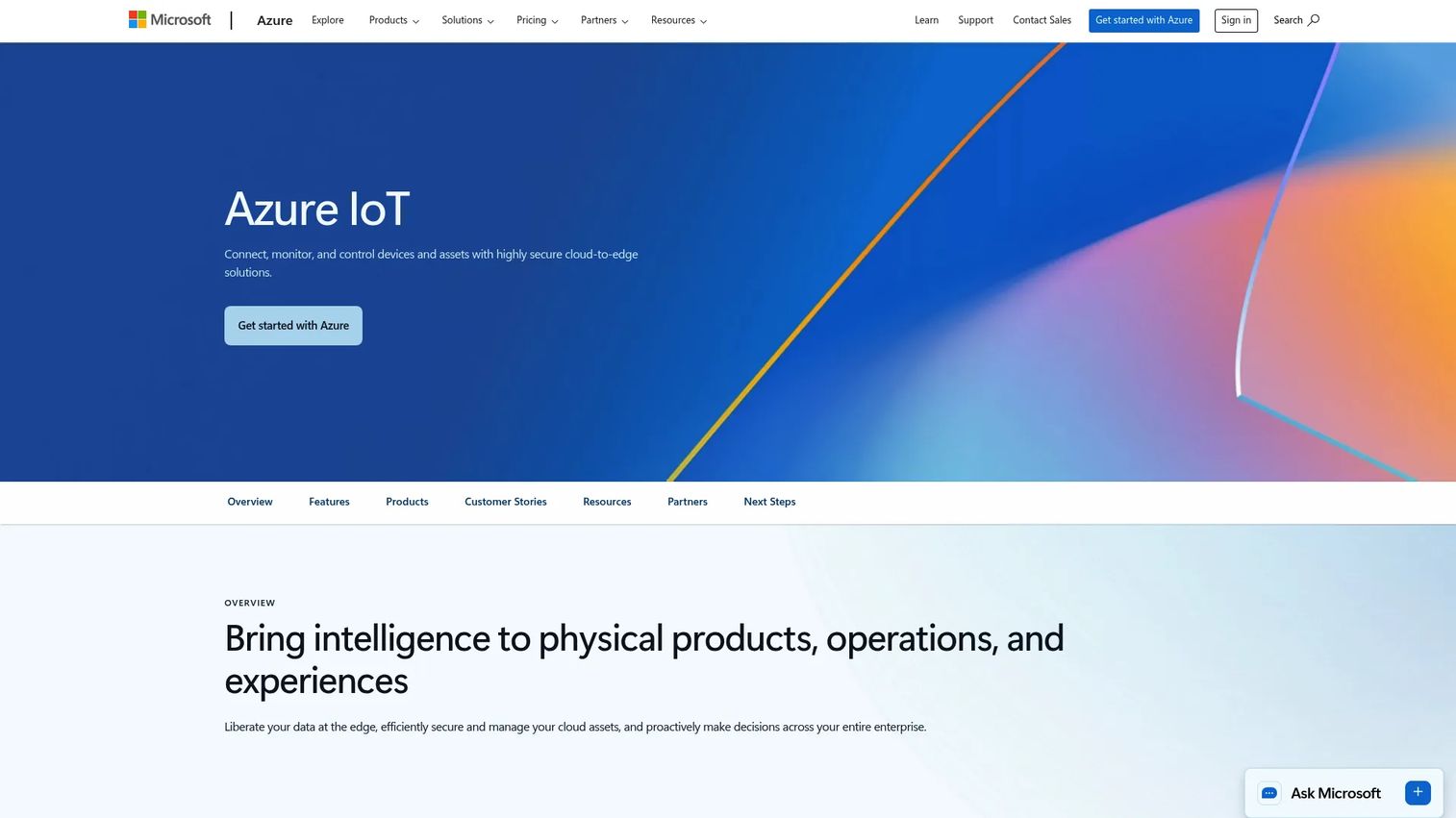
Microsoft Azure IoT is Microsoft's cloud-to-edge IoT suite for connecting, monitoring, and controlling devices and assets. It fits enterprise retail teams already standardized on Microsoft, where Azure IoT Hub, digital twins, and edge services slot into existing governance and identity infrastructure. The platform supports industrial scenarios like condition monitoring and predictive maintenance, which map directly onto retail equipment and cold-chain use cases.
Best for: Enterprises building secure, governed IoT device and asset connectivity on the Microsoft stack.
Key strengths
- Connect and secure billions of devices: built to scale device connectivity across large fleets.
- Scalable solutions with a partner ecosystem: a broad partner network to build retail-specific scenarios.
- Industrial IoT support: condition monitoring and predictive maintenance for equipment and assets.
Why choose Microsoft Azure IoT: For enterprises standardizing on Microsoft, Azure IoT reduces the governance and integration work of adding a connected-store layer. Identity, security, and cloud services already align, which lowers the cross-team friction a PM has to manage. Like AWS, this is a platform you build on, so plan for the engineering and configuration involved.
Microsoft Azure IoT pricing: Azure IoT Hub offers a free tier for low-volume use, then Basic and Standard tiers priced per IoT Hub unit per month. The paid-tier numeric pricing was not publicly displayed at the time of writing, so model costs against device count and message volume through the Azure pricing calculator. The free tier makes it straightforward to validate a small pilot before committing.
Considerations before you buy
The right tool depends on which layer of the stack you are filling and how you plan to roll it out. Before you commit, evaluate against these criteria.
Integration depth
Retail IoT software earns its value by connecting to what you already run: PoS, ERP, inventory systems, and analytics. Confirm which integrations exist natively versus what requires custom work. A connectivity layer like Datablaze and an analytics layer like Vision Group solve different jobs, so map the data flow end to end before buying.
Implementation readiness and phased rollout
Few teams should deploy every capability at once. Decide whether you are buying a packaged application or infrastructure you build on, then scope a phased rollout starting with the highest-cost problem. A narrow first use case, like cooler monitoring or one store's checkout uptime, validates value before you scale.
Security, data governance, and compliance
Connected devices expand your attack surface. Evaluate encryption, access control, device-level security monitoring, and how each platform handles data governance. For PMs, this is a non-negotiable gate, not a nice-to-have, especially as device counts climb into the thousands per chain.
Scalability and maintainability
A system that works in one store but decays across a hundred is a liability. Look for fleet management, over-the-air updates, and centralized monitoring that keep the implementation from rotting as hardware and store layouts change. Maintainability across releases is where the real operating cost lives.
Conclusion
There is no single best retail IoT software, because the category spans different layers of the stack. Apptricity leads for connected asset and inventory visibility across complex environments. Datablaze owns the device and connectivity layer. Scale Computing runs the store edge. Vision Group pairs AI shelf execution with cooler monitoring, and UNFI connects grocery operations to the supply chain. For teams building custom systems, AWS IoT and Microsoft Azure IoT offer the deepest platform control, with the choice often coming down to which cloud you already standardize on.
The decision hinges on whether you need software for device management, store analytics, checkout automation, or cloud IoT infrastructure. The smart move is to shortlist two or three tools, weigh them on integration effort and data needs, and validate the highest-cost use case in a single store before scaling. Prove value where the problem is most expensive, then expand from evidence rather than instinct.
Start your journey with Guideflow today!
FAQs
Retail IoT software connects physical store devices, sensors, and assets to a software layer that captures and acts on real-time data. It links shelf sensors, cameras, PoS terminals, RFID tags, and edge hardware into connected store operations so teams can see and respond to what is happening across locations. The goal is turning scattered store activity into a single, actionable view.
It captures stock data automatically through shelf sensors, RFID in retail, and connected scanners, then surfaces it on real-time dashboards. Instead of associates walking aisles to confirm counts, the system flags low stock, misplaced items, and discrepancies as they happen. That tightens inventory accuracy, cuts stockouts, and reduces the labor spent on manual checks.
Self-checkout automation depends on two layers: edge infrastructure that runs checkout workloads locally with low latency, and connectivity software that keeps terminals online with PoS backup. Edge platforms like Scale Computing keep lanes running even during a network interruption, while connectivity providers keep devices reachable. The best fit depends on whether your bottleneck is latency, uptime, or both.
IoT tracks assets and shipments in real time using GPS, RFID, and sensors, so you know where inventory is from warehouse to shelf. It triggers alerts on delays, temperature excursions, and discrepancies, and feeds demand visibility that informs replenishment. The result is fewer surprises in the supply chain and faster reaction when something goes wrong.
Prioritize integration depth with your PoS, ERP, and analytics systems, then security and data governance, since connected devices expand your attack surface. Evaluate analytics depth and whether the platform delivers insight or just raw data. Finally, weigh scalability and maintainability, because a system that works in one store but decays across a hundred is a liability. For broader context on evaluating connected systems, this overview of AI cybersecurity solutions is a useful companion read.
Yes, when scoped narrowly. A single high-value use case, like cooler monitoring or checkout uptime, can pay for itself without a full platform rollout. Start with the problem that costs the most, use a phased rollout, and expand only after the first deployment proves value. Small stores rarely need every capability at once.
Encryption of data in transit and at rest, granular access control, and device-level security monitoring are the baseline. Data governance matters too, since IoT systems collect customer and operational data that may fall under privacy regulations. Treat security as a gate in your evaluation, not a feature you bolt on later, especially as device counts grow.
Product managers should anchor on KPIs first: inventory accuracy, checkout uptime, shrink reduction, or whatever metric the deployment targets. Then weigh implementation burden, maintainability across hardware and layout changes, and the operational lift on store teams. The same discipline applies as with any tool you evaluate, including how teams compare options in adjacent categories like marketing automation software: tie the purchase to a measurable outcome and a rollout you can actually sustain.