

A prospect checks your Google rating before they ever land on your site. They see a three-month-old one-star review with no response. Then they check Yelp, where the listing is missing your new address. Then a Facebook recommendation thread with two complaints and no reply. You did not even know those reviews existed.
This is the everyday reality for most marketing and operations teams. Reviews live everywhere, and almost none of them live where you can see them at once. BrightLocal's Local Consumer Review Survey 2026 found that 97% of consumers read reviews online, and 41% now say they "always" read reviews when browsing for a business. Roughly half of consumers are also asking AI tools for business recommendations, which means your review signals now feed both human buyers and AI answers.
For a product marketing manager, this is not a vanity problem. Review volume and sentiment feed your proof points, your positioning, and your case study pipeline. A credibility gap on a third-party site quietly undercuts every landing page you ship. The fix is not "ask for more reviews" in a spreadsheet. It is a system that collects, monitors, responds to, and showcases reviews from one place.
That is what review management software does. The right platform turns scattered feedback into a defensible asset: cleaner local SEO, faster responses, and social proof you can put to work across your funnel. If reviews feed your positioning, you may also want to explore product marketing software tools that help turn that proof into messaging.
What's inside
This guide is for marketing managers, product marketing managers, small-business owners, multi-location brand managers, and agency operators shortlisting a review management platform. We focused on tools that do the core jobs well rather than the longest feature list.
Each tool was assessed against four criteria:
- Review collection and generation: request reviews at scale via email, SMS, and QR.
- Multi-channel monitoring and response: centralize Google, Yelp, Facebook, and industry sites, with AI-assisted replies.
- Analytics and local SEO: sentiment analysis, listings management, and reporting that ties to visibility.
- Integrations and pricing transparency: CRM, helpdesk, and marketing tool fit, plus clear per-tier or per-location pricing.
TL;DR
Short on time? Here are the decision shortcuts pulled from the list below.
- Best overall for multi-location brands: Birdeye, for centralized AI-assisted reviews, listings, and social across locations.
- Best for local and SMB messaging: Podium, for SMS-driven review requests inside one customer inbox.
- Best for enterprise and regulated brands: Reputation, for review, listing, and survey management at scale.
- Best for agencies and local SEO: BrightLocal, for review tracking plus rank and citation tools.
- Best for ecommerce and Shopify: Yotpo, for product reviews, visual UGC, and loyalty.
- Best for small-business set-and-forget: NiceJob, for automated review generation and social proof.
What is review management software?
Review management software is a platform that helps businesses collect, monitor, respond to, and showcase customer reviews across multiple sites from a single dashboard. Instead of switching between Google, Yelp, Facebook, and industry listings, teams manage every review in one place.
It overlaps with reputation management software but is narrower. A review management tool focuses on the review lifecycle. Broader online reputation management also covers brand mentions, listings accuracy, social signals, and sentiment across the web. Many platforms now span both, which is why the lines blur in vendor marketing.
Core features of a review management system usually include:
- Review generation and automation: request reviews after a purchase or interaction via email, SMS, and QR codes.
- Multi-channel monitoring: track reviews from Google, Yelp, Facebook, and industry-specific sites.
- Response workflows with AI: draft and approve on-brand replies, often with AI-assisted suggestions.
- Sentiment analysis: surface themes and trends across thousands of reviews.
- Listings management and local SEO: keep location data accurate across directories.
- Review widgets: embed reviews and ratings on your site as social proof.
- Analytics and benchmarking: compare locations, periods, and competitors.
- Integrations: connect to CRM, helpdesk, and marketing automation platforms.
Together these turn a reactive scramble into a repeatable process. The strongest review generation software also feeds AI search, since fresh, structured review data increasingly shapes how AI tools recommend businesses. If local visibility is your priority, our roundup of local SEO software covers tools that pair well with review platforms.
When to use review management software
Not every team needs a full platform on day one. These three situations are the clearest triggers.
Generate and request reviews at scale
If review volume is flat or you rely on staff to "remember" to ask, automation is the fix. An online review management platform sends timed requests after a purchase or service via email, SMS, or QR code. That steady flow lifts your average rating, feeds your local visibility, and gives product marketing a fresh stream of proof points to mine. Manual asks do not scale past a single location. If QR codes are part of your collection mix, see our guide to the best QR code generator software.
Monitor and respond across every channel
When reviews are scattered across Google, Yelp, Facebook, and industry sites, response times slip and negative reviews sit unanswered. A review management platform centralizes every channel into one inbox, often with AI-drafted replies you approve before posting. Fast, on-brand responses protect your reputation and signal to future buyers that you are paying attention.
Turn reviews into social proof and local visibility
Reviews are wasted if they only live on third-party sites. Embeddable widgets, accurate listings, and clean structured data improve local pack rankings and AI-search presence. They also give marketers defensible social proof for landing pages and campaigns. The same instinct drives teams to invest in interactive product demos: once reviews build trust, you still need to show the product experience to convert evaluators. For broader stack planning, see our marketing automation software roundup.
Review management software compared
Here is how the 12 tools stack up at a glance. Pricing and G2 ratings reflect each vendor's published figures and current G2 listing. Verify the latest numbers before you buy, since several vendors update pricing throughout the year.
| # | Product | Intent | Key use case | Pricing | G2 rating |
|---|---|---|---|---|---|
| 1 | Birdeye | Multi-location reputation | AI reviews, listings, social at scale | Custom | 4.7/5 |
| 2 | Podium | Local and SMB messaging | SMS-driven review requests and inbox | Custom (Core, Pro, Signature) | 4.5/5 |
| 3 | Reputation | Enterprise reputation | Reviews, listings, surveys at scale | From $0/location/mo (60-day trial) | 4.6/5 |
| 4 | BrightLocal | Agencies and local SEO | Reviews plus rank and citation tools | From $29/mo | 4.6/5 |
| 5 | Synup | Agency listings and reviews | White-label client management | From $79/mo | 4.5/5 |
| 6 | ReviewTrackers | Analytics-driven teams | Review monitoring across 100+ sites | Location-based | 4.6/5 |
| 7 | GatherUp | Agencies and multi-location | Review collection and widgets | From $99/mo | 4.5/5 |
| 8 | Grade.us | Agencies | White-label review funnels | From $99/mo | 4.6/5 |
| 9 | Yotpo | Ecommerce | Product reviews, UGC, loyalty | From $89/mo | 4.3/5 |
| 10 | Trustpilot Business | Public trust signals | Open reviews and TrustBox widgets | From $99/mo | 3.4/5 |
| 11 | NiceJob | Small business | Automated review generation | From $75/mo | 4.8/5 |
| 12 | SOCi | Enterprise multi-location | Localized marketing and reputation | Custom | 4.5/5 |
The 12 best review management software tools for 2026
Each tool below includes who it fits, key strengths, why you would choose it, and verified pricing where vendors publish it.
1. Birdeye
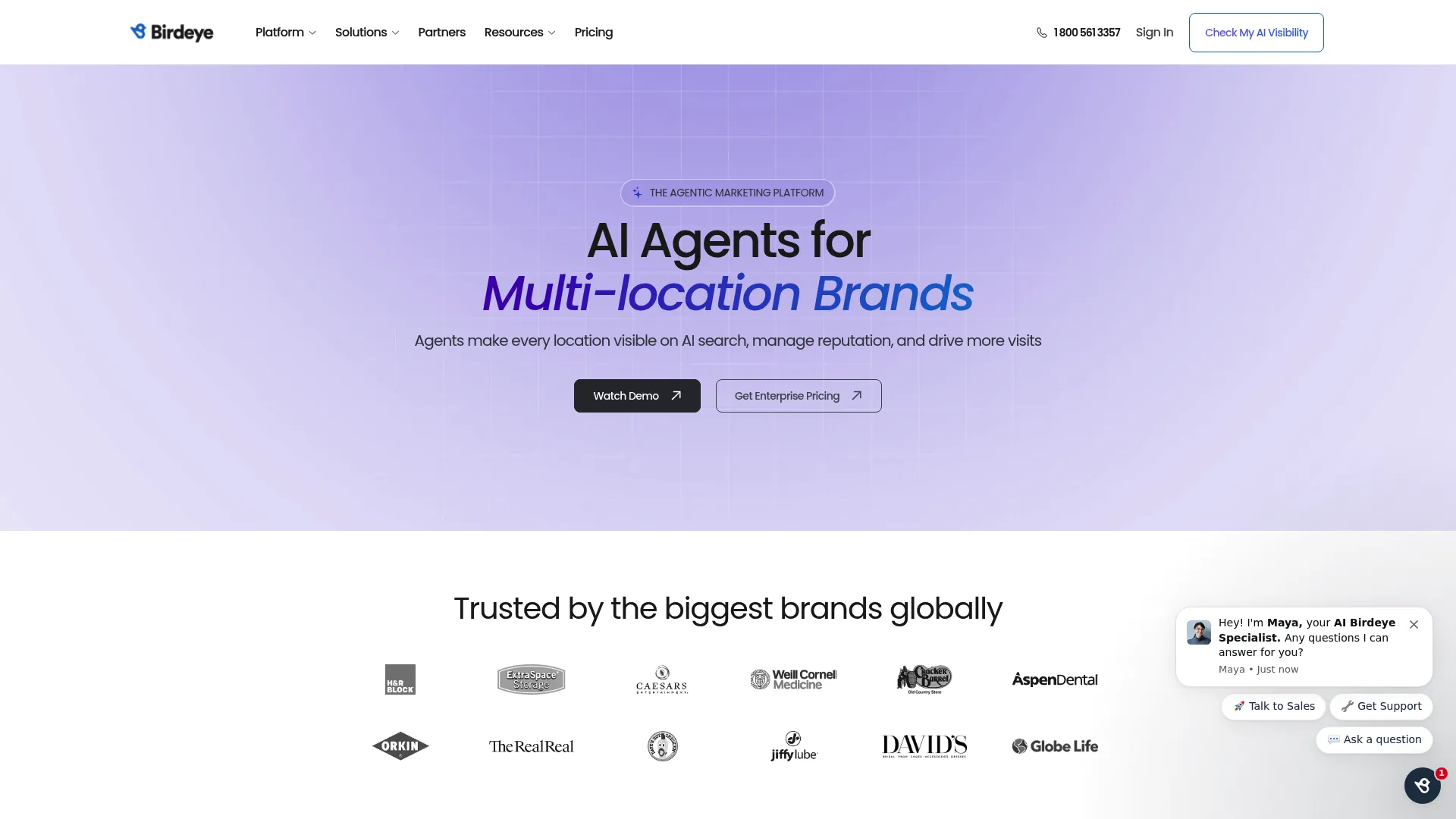
Birdeye is an agentic marketing platform for multi-location brands that uses AI agents to manage local presence, reputation, customer engagement, and experience. It pairs review generation and AI-assisted responses with listings sync, social, and messaging in one system. It is one of the most widely cited tools across competitor roundups for good reason: it covers the full review lifecycle at scale.
Best for: Enterprise and multi-location brands that need centralized AI-assisted management of listings, reviews, social, messaging, and customer experience.
Key strengths
- Reviews AI: generates, monitors, and responds to reviews across Google, Yelp, and Facebook with on-brand replies.
- Listings AI: syncs location information across 50+ sites to keep data accurate.
- Multi-location engagement: social, messaging, surveys, insights, and competitor tracking in one platform.
Why choose Birdeye: If you run dozens or hundreds of locations, Birdeye consolidates reviews, listings, and customer engagement into a single dashboard. It holds a strong 4.7/5 on G2 across thousands of verified reviews, which signals consistent satisfaction among multi-location teams. It is heavier than an SMB needs, but that breadth is the point at scale.
Birdeye pricing: Birdeye does not publish flat plan prices. Pricing is customized based on the products you select, the number of locations you manage, and your contract structure, and the pricing page uses a configurator rather than named public tiers. Request a quote to scope it to your location count.
2. Podium
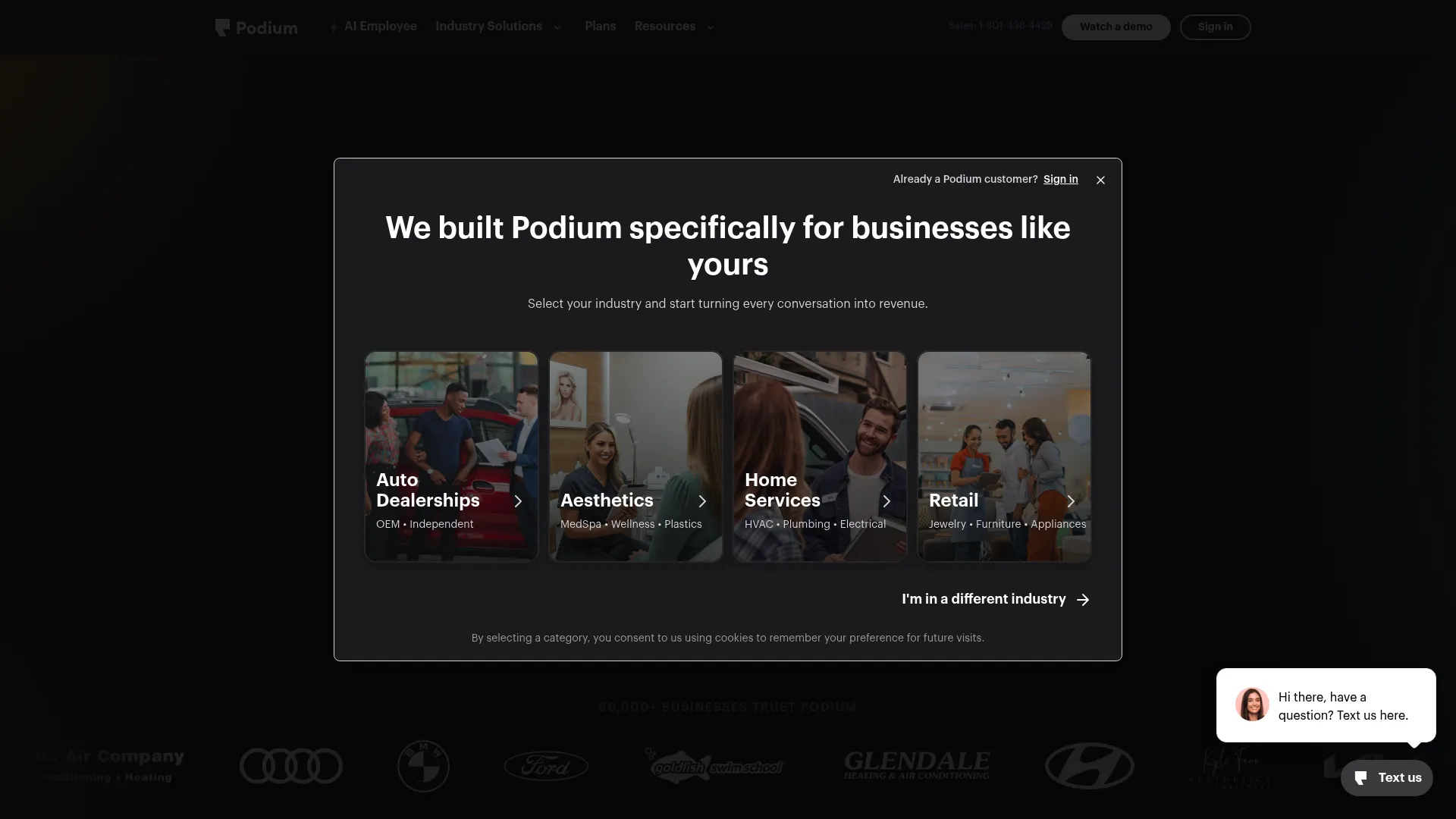
Podium is an AI-native communications platform for local businesses that uses AI Employees to manage customer conversations, lead response, booking, reviews, and follow-up. Its review engine leans on text messaging, which tends to lift response rates over email-only requests. Everything lives in one inbox alongside calls, web chat, and reviews. For SMS-led programs, our guide to SMS marketing software is a useful companion.
Best for: Local businesses that want SMS-driven review requests plus AI-assisted lead conversion and messaging in one place.
Key strengths
- Text-to-review: sends automated review invites by SMS to capture more reviews faster.
- All-in-one inbox: unifies text, calls, web chat, and reviews in a single view.
- AI Employee: responds to leads 24/7, qualifies them, and books appointments.
Why choose Podium: Podium fits service businesses where most customer contact already happens by text. The same inbox that converts leads also requests and manages reviews, so you avoid stitching tools together. It holds a 4.5/5 on G2. If your motion is email-first or ecommerce, other tools fit better.
Podium pricing: Podium directs visitors to request a custom quote rather than showing public prices. Its pricing page lists Core, Pro, and Signature plans, each scoped to a quote. Ask for pricing tied to your channel mix and seat count.
3. Reputation
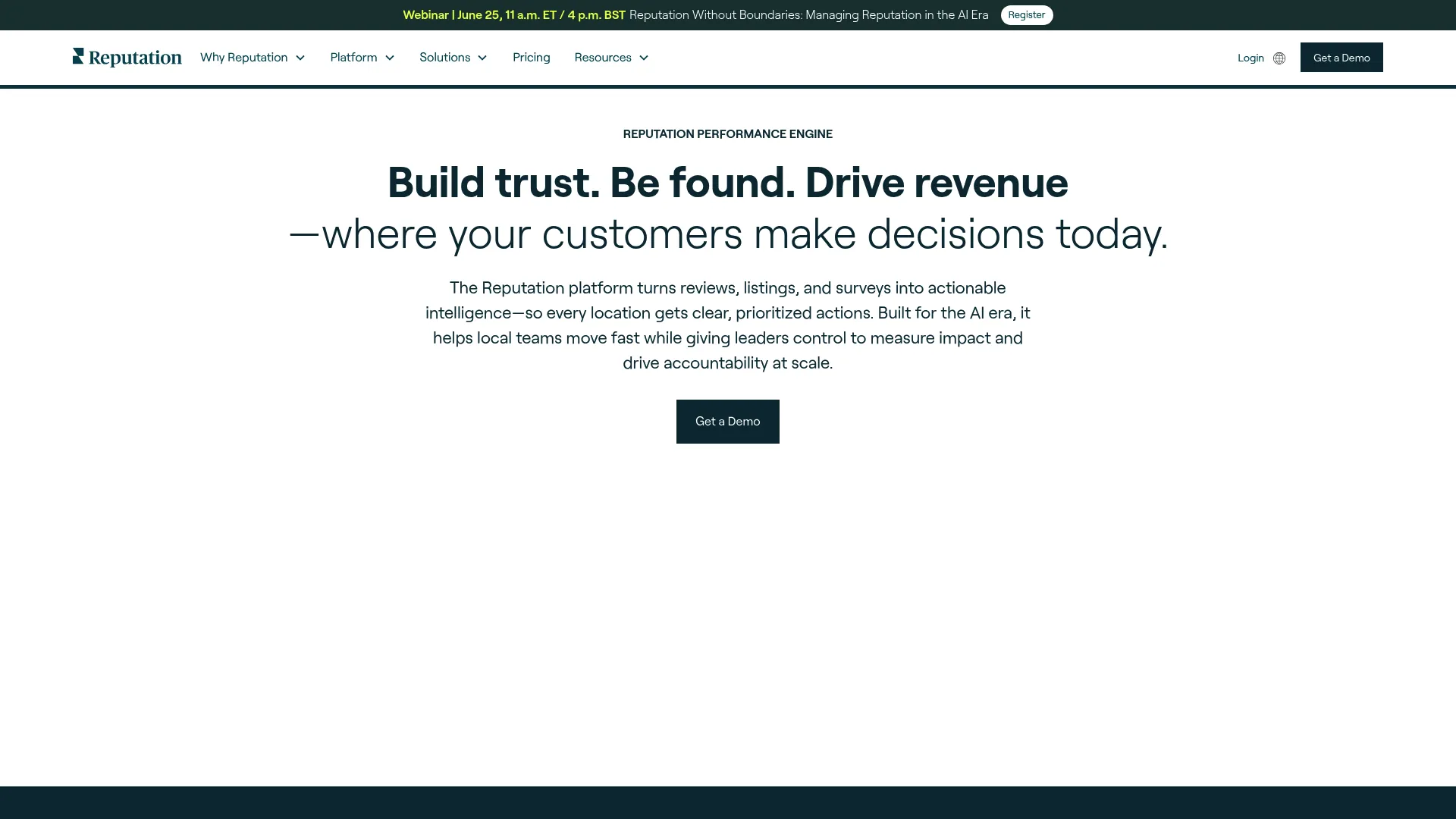
Reputation is an AI-native reputation performance platform for managing reviews, listings, surveys, social signals, insights, and local customer feedback at scale. It is built for large organizations, especially regulated sectors like healthcare, automotive, and hospitality. The platform turns reviews, listings, and surveys into prioritized actions rather than raw data.
Best for: Multi-location and enterprise brands that need centralized reputation, review, listing, survey, and social management.
Key strengths
- Reviews and Review Booster: review generation, monitoring, and AI-assisted responses across sites.
- Listings and local SEO: structured, always-current location data for visibility.
- Insights at scale: surveys, competitive insights, social suite, and custom reporting.
Why choose Reputation: Reputation suits organizations with many locations and strict governance needs. It consolidates reviews, listings, and surveys into one system and surfaces what to act on first. It holds a 4.6/5 on G2. For a small single-location business, this is more platform than you need.
Reputation pricing: Rep Starter is listed at $0 per location per month as a 60-day free trial for businesses with five or fewer locations. Paid plans are Rep Core at $80 per location per month, Rep Core plus Pulse at $115, and Rep Core plus Surveys at $150. Enterprise Scale for 500+ locations is custom priced.
4. BrightLocal
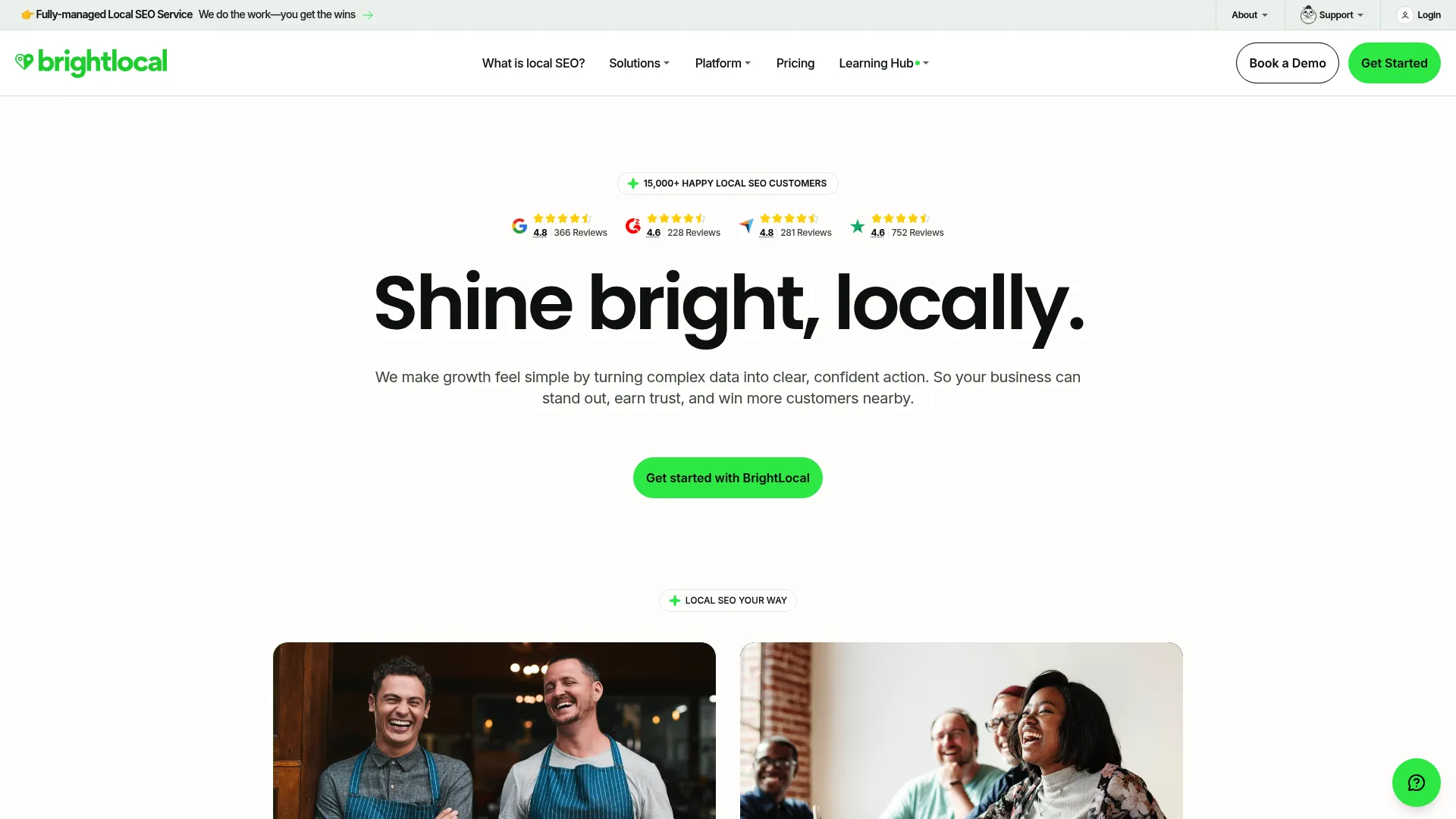
BrightLocal is a local SEO platform for tracking rankings, managing listings, monitoring reviews, building citations, and accessing managed local SEO services and APIs. Reviews sit inside a broader local search toolkit, which is why agencies favor it. You get review generation, monitoring, and response alongside rank tracking and citation tools. Compare it with other options in our SEO tools roundup.
Best for: Local businesses, agencies, and consultants managing local SEO visibility, citations, listings, and reputation together.
Key strengths
- Review generation: email, SMS, and in-store campaigns to grow review volume.
- Local rank tracking: geo-grid visibility monitoring tied to your review performance.
- Citation and listings management: keep business data accurate across directories.
Why choose BrightLocal: BrightLocal is the pick when reviews are one part of a local SEO program, not the whole job. Agencies use it to manage rankings, citations, and reviews for many clients from one account. It holds a 4.6/5 on G2. Review features sit in the Grow tier, so check the tier map against your needs.
BrightLocal pricing: Track starts at $29 per month, Manage at $37, and Grow at $44, each billed annually. Review monitoring, response, and generation campaigns live in the Grow tier. The pricing page noted an increase effective July 1, 2026, so confirm current figures.
5. Synup
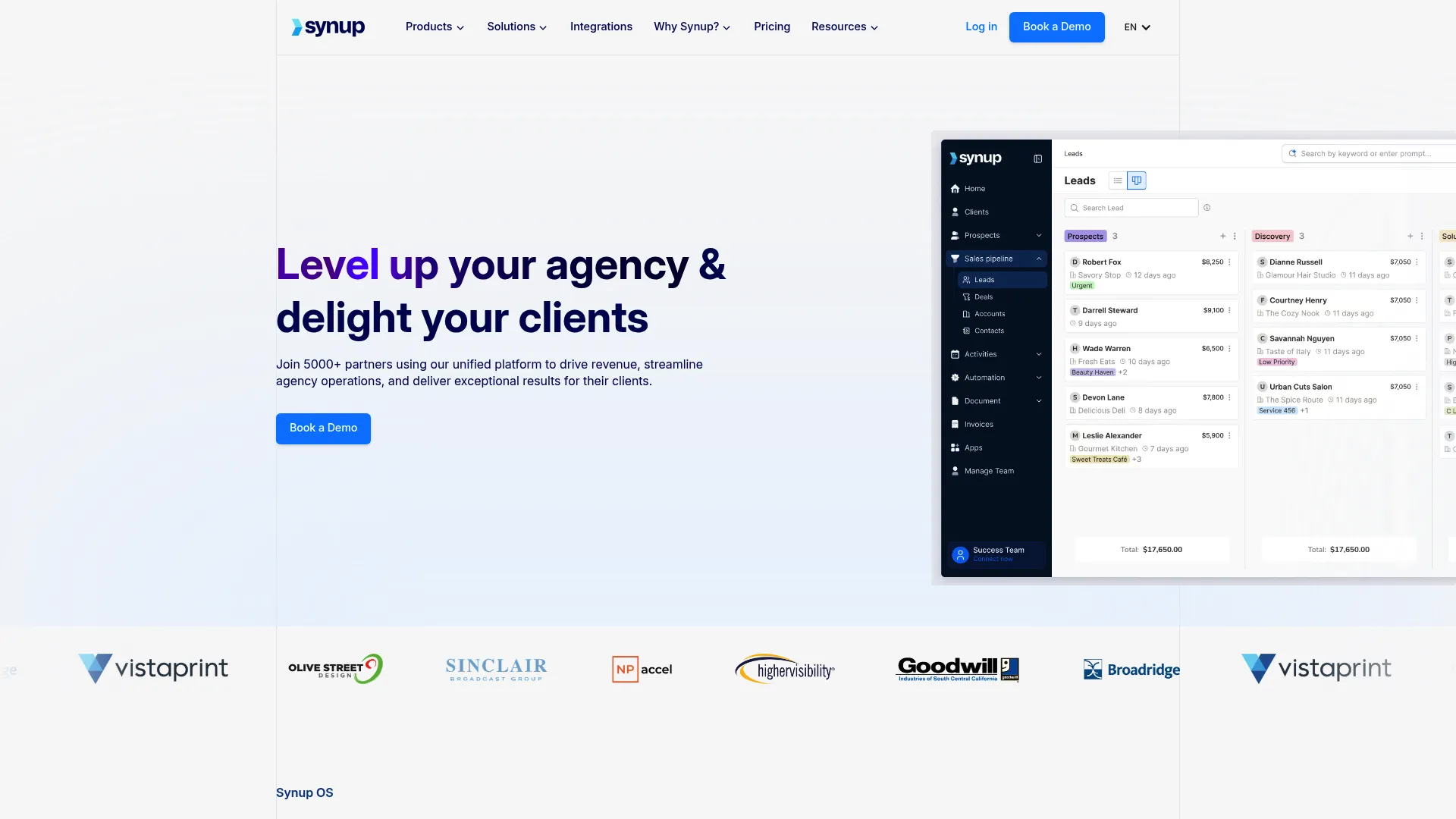
Synup is an agency-focused operating system and local marketing platform for managing client listings, reviews, social media, SEO reporting, CRM, invoicing, and white-label client experiences. It combines listing management with review automation, AI responses, and sentiment analysis. Agencies run multiple clients and locations from a single white-labeled platform.
Best for: Marketing agencies and resellers that need a white-label platform to manage listings, reviews, social, and client operations at scale.
Key strengths
- Listing management: bulk edits, duplicate suppression, and structured data updates across directories.
- Review management: monitoring, automations, AI responses, sentiment analysis, and review generation.
- Agency operations: white-labeled client app, API access, proposals, invoicing, and reporting dashboards.
Why choose Synup: Synup fits agencies that want listings plus reviews plus client billing in one operating system. The white-label client app and reporting let you scale across many accounts without extra tools. It holds a 4.5/5 on G2. A single-location business will not use most of the agency operations layer.
Synup pricing: Synup OS plans start with Startup at $79 per month billed annually, covering up to five team members and 25 managed locations. Agency and Scale tiers increase included team members, client accounts, and locations. Add-ons include Reviews Pro at $20 per location per month and Listings Pro at $35.
6. ReviewTrackers
ReviewTrackers is online reputation management software for monitoring reviews, improving customer acquisition and retention, analyzing customer experience, and managing local listings. It aggregates reviews from 100+ sources and focuses on surfacing trends. The strength here is analytics depth rather than heavy automation.
Best for: Multi-location and data-driven teams that need review monitoring, response workflows, and customer experience analytics.
Key strengths
- Wide monitoring: tracks reviews across 100+ review sources in one place.
- Experience analytics: dashboards, keywords, alerts, and competitor insights.
- Response and amplification: AI review responses plus the Amplify review widget.
Why choose ReviewTrackers: Choose ReviewTrackers when sentiment trends and experience analytics drive your decisions, not just review collection. It integrates with tools like Slack, Zendesk, and Jira to route feedback to the right team. It holds a 4.6/5 on G2. If you need aggressive review generation campaigns, pair it or look elsewhere.
ReviewTrackers pricing: ReviewTrackers uses location-based pricing and directs buyers to request a custom quote. Its plans page references Data Only, Starter, and Essential tiers, with pricing scoped per location and billed annually. Contact the team for figures tied to your location count.
7. GatherUp
GatherUp is an online reputation management platform for collecting, monitoring, responding to, and showcasing customer reviews and feedback. It supports review collection by email, SMS, QR codes, and custom links, plus monitoring across 100+ sites. Agencies and multi-location brands use it to scale review generation cleanly.
Best for: Small businesses, multi-location brands, and agencies that need scalable review generation and reputation management.
Key strengths
- Multi-channel collection: request reviews via email, SMS, QR codes, and custom feedback links.
- Wide monitoring: track reviews across 100+ sites with in-app responding.
- Showcase tools: AI-crafted replies, review widgets, and automated social sharing.
Why choose GatherUp: GatherUp balances simplicity for SMBs with the multi-location and agency features larger teams need. Every plan includes SMS and email credits, monitoring, surveys, and integrations, so you are not nickel-and-dimed on basics. It holds a 4.5/5 on G2. The Listings Hub is an add-on, so factor that in.
GatherUp pricing: Small Business starts at $99 per month for one location. Multi Location is $60 per month per location, with annual billing saving 20%. Agency pricing is quote-based. All plans include up to 300 SMS and 3,000 email credits per location per month, plus AI-crafted replies and widgets.
8. Grade.us
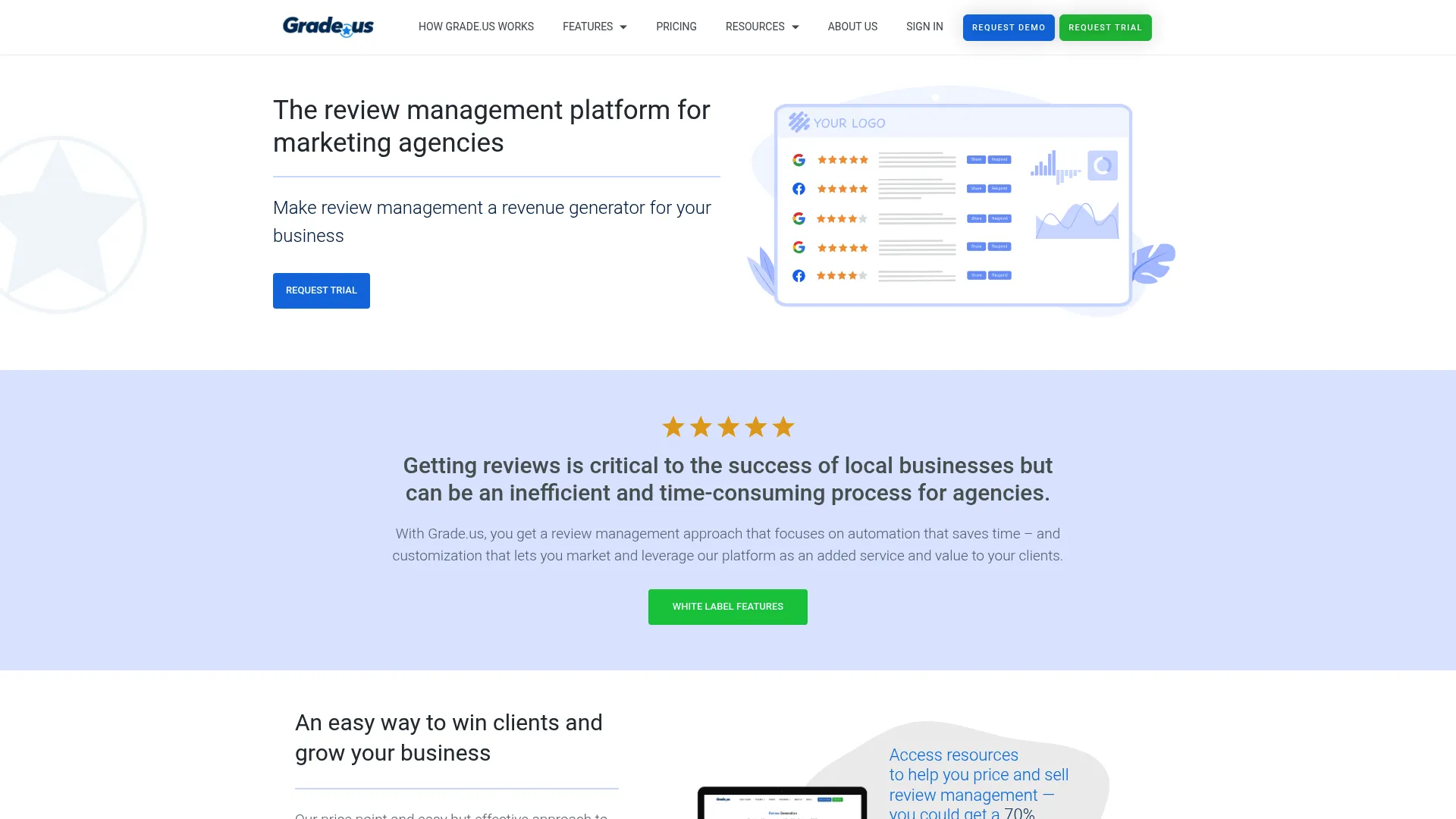
Grade.us is a white-label review management and marketing platform for agencies, marketers, SEOs, and multi-location businesses. It centers on customizable review funnel landing pages plus monitoring and branded reporting. Agencies run review programs on their own custom domain for every client. Pair these funnels with one of the best landing page builders for higher conversion.
Best for: Marketing agencies and SEOs that need white-label review generation, monitoring, and multi-client management.
Key strengths
- Review funnels: customized review funnel landing pages to route happy customers to public sites.
- Monitoring: track reviews across third-party review sites.
- White-label control: custom URLs, white-label notifications, and branded reports.
Why choose Grade.us: Grade.us is built for agencies that want their brand front and center, not the vendor's. The drip campaigns and funnel pages make it easy to operationalize review generation across many clients. It holds a 4.6/5 on G2. A single business with one location may not need the white-label layer.
Grade.us pricing: Small Business is $99 per month for one location. Multi Location is $60 per month per location for 2 to 10 locations. The Agency plan is shown at $400 or more per month for 10+ seats. Annual billing saves 20%, and a 14-day free trial is available.
9. Yotpo
Yotpo is an ecommerce retention platform for collecting and displaying reviews and UGC, building loyalty and referral programs, and syndicating customer content across channels. It is an official Shopify partner with strong adoption among online stores. Reviews here are about product-level proof and conversion, not local listings.
Best for: Ecommerce brands that want combined reviews, UGC, loyalty, and referrals for retention and conversion.
Key strengths
- Product review collection: capture reviews with photo and video UGC.
- On-site display: AI review summaries, smart sorting, widgets, and filters.
- Retention tools: loyalty and referral programs with rewards and VIP tiers.
Why choose Yotpo: Yotpo fits Shopify and ecommerce brands where product reviews and visual UGC drive on-site conversion. Pairing reviews with loyalty and referrals keeps customer content and retention in one platform. It holds a 4.3/5 on G2. For local or multi-location service businesses, a listings-focused tool fits better.
Yotpo pricing: Yotpo Reviews and UGC offers a Free tier, Starter at $89 per month, Pro at $169 per month, and Premium at $699 per month. Starter and Pro include up to 500 orders per month, while Premium covers up to 1,000. Loyalty and referrals are priced separately.
10. Trustpilot Business
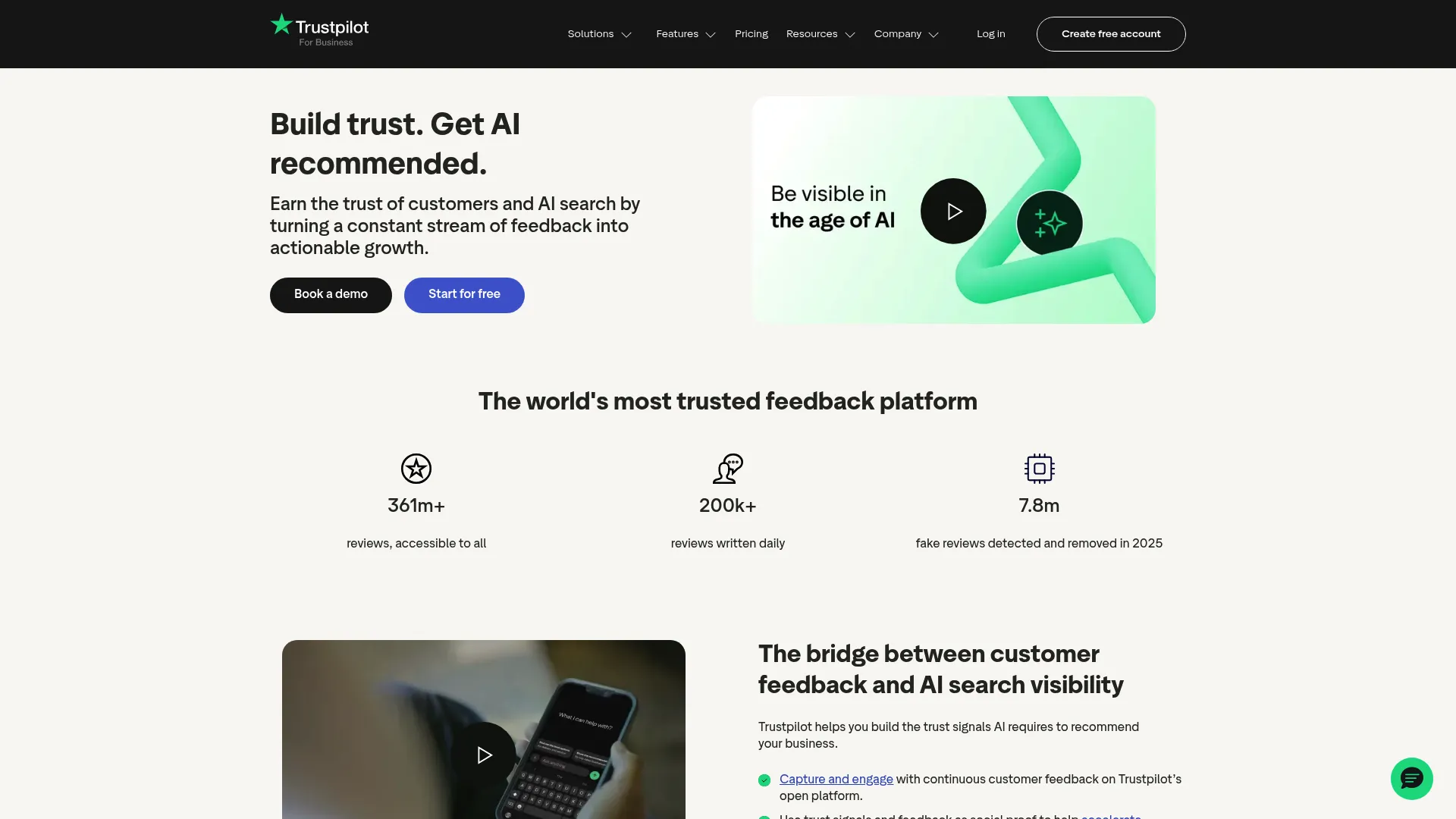
Trustpilot Business is a customer review management platform for collecting reviews, showcasing trust signals, improving visibility, and analyzing customer feedback. Its open, consumer-facing platform carries strong public trust recognition. Businesses send invitations and embed TrustBox widgets to surface their TrustScore.
Best for: Businesses that want to collect reviews and display public trust signals across marketing channels.
Key strengths
- Automated invitations: send review requests at scale to grow verified reviews.
- TrustBox widgets: drag-and-drop widgets to showcase reviews and TrustScore on your site.
- Review analytics: insights to track sentiment and improve credibility.
Why choose Trustpilot Business: Choose Trustpilot when public, independent trust signals matter for your category. The open platform and recognizable TrustScore give buyers a familiar credibility cue on landing pages and ads. Its G2 rating sits at 3.4/5, so weigh reviewer feedback against your needs. Contracts are prepaid annually.
Trustpilot Business pricing: A Free account includes 50 review invitations per month. Paid plans start with Starter at $99 per month, Plus at $319 per month per domain, and Premium at $799 per month per domain, each billed upfront annually. Enterprise pricing is available on request, and the initial term is 12 months prepaid.
11. NiceJob

NiceJob is reputation marketing software for local businesses that automates review generation, referrals, and social media content. It is built to run with minimal hands-on effort, sending requests and reminders automatically. Social proof widgets then turn existing reviews into new leads. Teams pairing reviews with referrals often layer in brand advocacy software to amplify happy customers.
Best for: Small local service businesses that want to automate customer review collection, referrals, and reputation marketing.
Key strengths
- Automated requests: review invites and follow-up reminders run on autopilot.
- Social proof widgets: showcase reviews on your website to convert visitors.
- Referral campaigns: automated customer referral programs to grow new business.
Why choose NiceJob: NiceJob is the set-and-forget option for SMBs that lack time to manage reviews manually. It holds a 4.8/5 on G2, the highest rating in this list, which reflects strong satisfaction among small businesses. It is purpose-built for local service businesses rather than large multi-location or ecommerce operations.
NiceJob pricing: The Reviews plan is $75 per month and includes automated review requests, monitoring, social proof widgets, and integrations. The Pro plan is $125 per month and adds referral campaigns, AI review replies, competitor SEO insights, and NPS surveys. A 14-day free trial is available.
12. SOCi
SOCi provides an agentic AI workforce for multi-location brands to manage local visibility across AI search, local SEO, social media, reviews, pages, ads, chat, surveys, and locators. Reviews sit inside a broad localized marketing platform built for franchises and enterprises. It manages reputation across hundreds or thousands of locations. For the social side of that footprint, see our social media management tools comparison.
Best for: Multi-location enterprises and franchises that need centralized, AI-assisted local search, social, and reputation management.
Key strengths
- Listings and local SEO: manage listings across hundreds of networks at scale.
- Reputation management: monitor and respond to reviews across many locations.
- Localized social: create, publish, and engage with social content per location.
Why choose SOCi: SOCi fits enterprise marketing teams that treat reviews as one channel within localized marketing. The AI workforce coordinates listings, social, reviews, and AI search across a large location footprint. It holds a 4.5/5 on G2. For a single location or small team, this is more platform than the job requires.
SOCi pricing: SOCi does not publish public pricing on its site, and its pages use demo and get-started calls to action. The company has noted simplified pricing and packaging but does not list prices or tier names publicly. Request a demo to scope pricing to your location count and product mix.
What to consider when choosing review management software
Use this checklist to narrow your shortlist before any demo.
Channel coverage
Confirm which review sites and listings the tool supports, including Google, Yelp, Facebook, and any industry-specific platforms you depend on. Coverage varies widely, and a tool that monitors 100+ sites is not useful if it misses the two that matter most to your buyers. Map the channels where your reviews actually live first.
Review generation and automation
Check the request channels available, such as email, SMS, and QR, plus drip campaigns and volume limits per tier. Some plans cap SMS or email credits per location, which can throttle a busy multi-location program. Match request volume to your actual customer flow so you do not outgrow the tier.
AI-assisted responses and brand voice control
Many tools now offer AI-drafted replies, but quality and control differ. Evaluate tone control, brand rules, and approval workflows so responses stay on-brand before they post. The best AI response features use your review history and brand guidelines to keep replies context-aware rather than generic.
Analytics, sentiment, and local SEO
Assess sentiment analysis, benchmarking, and reporting you can export, plus listings and local-SEO impact. For a product marketing manager, this is where reviews become positioning input: themes, objections, and proof points. Fresh reviews and accurate listings also feed local pack rankings and AI-search visibility.
Integrations and pricing transparency
Confirm CRM, helpdesk, and marketing automation integrations, then read the per-tier pricing carefully. Watch for per-location versus per-seat models, since costs scale very differently across them. For reputation management software for small business, prioritize tools with transparent, low entry pricing.
Conclusion
The right review management platform depends on your channel mix, location count, and team. Birdeye is the strongest all-rounder for multi-location brands that want AI-assisted reviews, listings, and social in one place. Podium fits local businesses that live in SMS, while Reputation suits enterprise and regulated organizations managing reviews and surveys at scale.
For agencies and local SEO, BrightLocal and Grade.us lead, with Synup and GatherUp covering multi-client and listings-heavy programs. Ecommerce and Shopify brands should start with Yotpo for product reviews and loyalty. Small businesses that want hands-off review growth get the most from NiceJob, and large franchise operations should look at SOCi.
Your next step is simple. Shortlist two tools that match your channel mix and location count, then start a trial or request a quote. Test the review request flow and the AI response quality with your own data before you commit. A week of hands-on testing tells you more than any feature list. And once reviews build trust, close the loop with an interactive demo that lets evaluators experience your product firsthand.
FAQs
Review management focuses on collecting, responding to, and showcasing customer reviews across sites like Google, Yelp, and Facebook. Reputation management software is broader, covering brand mentions, listings accuracy, social signals, and sentiment across the web. Many platforms now do both, which is why the categories often overlap in vendor marketing.
Entry tiers for SMB-focused tools typically start around $29 to $99 per month, while per-location plans often run $20 to $150 per location monthly. Enterprise and multi-location platforms like Birdeye and SOCi use custom pricing scoped to location count. Expect per-location billing for multi-location brands and per-seat or flat pricing for smaller teams.
Look for review generation and automation across email, SMS, and QR, plus multi-channel monitoring of Google, Yelp, Facebook, and industry sites. Add AI-assisted responses with tone control, sentiment analysis, listings management, review widgets, and reporting. Integrations with your CRM, helpdesk, and marketing tools round out a complete review management system.
Yes. Many tools now offer AI-drafted replies that use your review history and brand rules to generate context-aware, on-brand responses. Most keep a human in the loop with approval workflows and tone control, so you review suggestions before they post. This lets teams respond faster without sounding robotic.
For most small businesses, yes, especially for automating review requests and improving local SEO. A small flow of fresh, positive reviews lifts your local pack visibility and builds trust before a first visit. Lower-cost tools like NiceJob and GatherUp offer SMB-friendly entry pricing that pays back quickly.
Fresh, positive reviews and accurate listings improve your visibility in Google's local pack and increasingly in AI-generated results. Consistent review volume and structured location data signal trust to search engines and AI tools alike. Listings management features keep your business data accurate across the directories that feed local rankings.
Multi-location brands tend to choose Birdeye, Reputation, or SOCi for location-level dashboards and listings management at scale. These platforms centralize reviews, listings, and reporting across many locations and use AI to coordinate responses. Match the choice to your location count, governance needs, and whether you need social and survey tools alongside reviews.