Your sales team quotes a boat in one system. Service logs the rigging work in another. Accounting reconciles it all in a third. Meanwhile the boat is still listed as available on your website, a lead texts about it, and nobody sees the message for two days. That deal is gone.
Running a marine dealership on disconnected tools costs you more than time. It costs deals, accurate inventory counts, and the ability to see what is actually happening across sales and service on any given day. Boat dealers manage demo vessels, service fleets, units awaiting delivery, and rental programs, and every one of those needs to stay in sync with your books and your website.
The demand for software that ties this together is growing. Boat dealers account for 13.2% of global marina management software revenue in 2025, per MarketIntelo, and the broader marine management software market is projected to grow from USD 4.55 billion in 2025 to USD 7.61 billion by 2031 at an 8.95% CAGR, according to Mordor Intelligence. Adoption is accelerating because the manual approach breaks down as soon as you add a second location or a busy service season.
This guide is a buyer's shortlist for the dealership operators who have to make that call. Not a feature dump. A practical comparison of the platforms that actually run marine and boat dealerships, judged on the workflows that matter: inventory, service, sales, follow-up, accounting, and website publishing.
What's inside
This guide is written for marine and boat dealership owners, general managers, and operations leads evaluating a dealer management system. We selected the seven platforms below on four criteria: genuine fit for boat and marine dealerships, breadth across sales, service, parts, and accounting, practical implementation for a small-to-midsize dealer team, and operational credibility with real dealers in the field.
For each tool we cover sales and quoting, service scheduling and work orders, inventory management, CRM and customer follow-up, accounting and QuickBooks integration, mobile access, texting, integrations, and website inventory sync. Pricing and ratings reflect verified public sources where available.
TL;DR
- Best all-around marine and RV DMS: DealerRock, a cloud-based platform with transparent public pricing and sales, service, and inventory modules.
- Best 100% marine-focused fit: Winboats, built only for boat dealerships with real-time inventory and automated website feeds.
- Best for broad dealership operations: Ideal Computer Systems, covering inventory, service, parts sourcing, and payments across departments.
- Best for modular multi-store operations: Lightspeed DMS, with modular pricing and multi-location parts and lead workflows.
- Best for transparent, contract-free pricing: BiT DMS, starting at $238/month with embedded texting and no setup or training fees.
- Best for parts-heavy dealers wanting QuickBooks: Commander and Total Control, both industry-specific systems built around parts, service, and accounting workflows.
What is boat dealer software?
Boat dealer software is a dealer management system (DMS) that combines sales, inventory, service, parts, accounting, and customer follow-up for marine and boat dealerships in one platform. It replaces the patchwork of spreadsheets, standalone POS, and disconnected accounting that most dealers start with.
Marine dealer management software is built around the specific operations of a boat dealership: tracking boats, motors, and trailers as inventory, managing rigging and repair work orders, quoting and invoicing across sales and service, and keeping website listings current as units move. The core modules you should expect:
- Inventory management: Real-time tracking of boats, motors, trailers, and parts inventory, including units awaiting delivery and demo vessels.
- Service workflow: Service scheduling, work orders, and technician time tracking that connect to parts and billing.
- Sales and quoting: Quoting, deal building, and invoicing that pull from live inventory.
- CRM and follow-up: Lead tracking, customer records, and follow-up so no inquiry sits unanswered.
- Accounting and QuickBooks integration: General ledger built in or a clean sync to QuickBooks so you are not double-entering.
- Mobile access and texting: A mobile app and two-way texting so sales and service can work from the lot and the shop.
- Website inventory sync: Automated inventory publishing that keeps your website and listing feeds current.
The point of an all-in-one, cloud-based DMS is repeatability. One system, one source of truth, and workflows that do not depend on any single person remembering to update three places.
When to use a dealer management system
Run a dealership from one system
If your team re-keys the same customer, boat, or price into more than one place, you need a single platform. Double entry is where errors and stale data start. A dealer management system means a quote, a deposit, a work order, and the accounting entry all reference the same record. That is what lets a general manager see the real state of sales and service without chasing three people for exports.
Keep inventory and website listings in sync
Boat inventory moves. A unit sells, a trade comes in, a price changes for a boat show. When your DMS pushes inventory to your website and listing feeds automatically, your online availability matches your lot in real time. Website inventory sync removes the lag that sends buyers inquiries about boats you already sold, and it stops your team from manually updating listings during your busiest weeks.
Coordinate sales, service, and follow-up
The handoffs are where deals and repeat business leak. A quote should flow into a deal, a sold boat should open a rigging work order, and every lead and service customer should land in your CRM for follow-up. When quoting, work orders, and texting live in the same system, your team stops losing track of who to call back and which boat is waiting on parts.
Comparison table
Seven platforms, sorted by how squarely they fit a marine and boat dealership. Pricing and ratings reflect verified public sources at the time of writing. Where a vendor does not publish pricing or does not have a verifiable public rating, the cell is left blank rather than estimated.
| # | Product | Intent | Key use case | Pricing | G2 rating |
|---|---|---|---|---|---|
| 1 | DealerRock | All-around marine + RV DMS | Cloud sales, service, and inventory in one system | From $390/month | - |
| 2 | Winboats | 100% marine-focused DMS | Real-time inventory with automated website feed | Demo-based | - |
| 3 | Ideal Computer Systems | Broad dealership operations | Cross-department inventory, service, and parts sourcing | Quote-based | 3.5/5 |
| 4 | Lightspeed DMS | Modular multi-store DMS | Multi-location parts, service, and lead workflows | From $450/month | - |
| 5 | BiT DMS | Transparent, contract-free DMS | Modular sales, service, and parts with texting | From $238/month | 4.5/5 |
| 6 | Commander | Parts-focused industry DMS | Automatic parts pricing with QuickBooks | Quote-based | - |
| 7 | Total Control | Integrated marine + RV DMS | Sales, parts, service, and POS in one system | Quote-based | - |
1. DealerRock
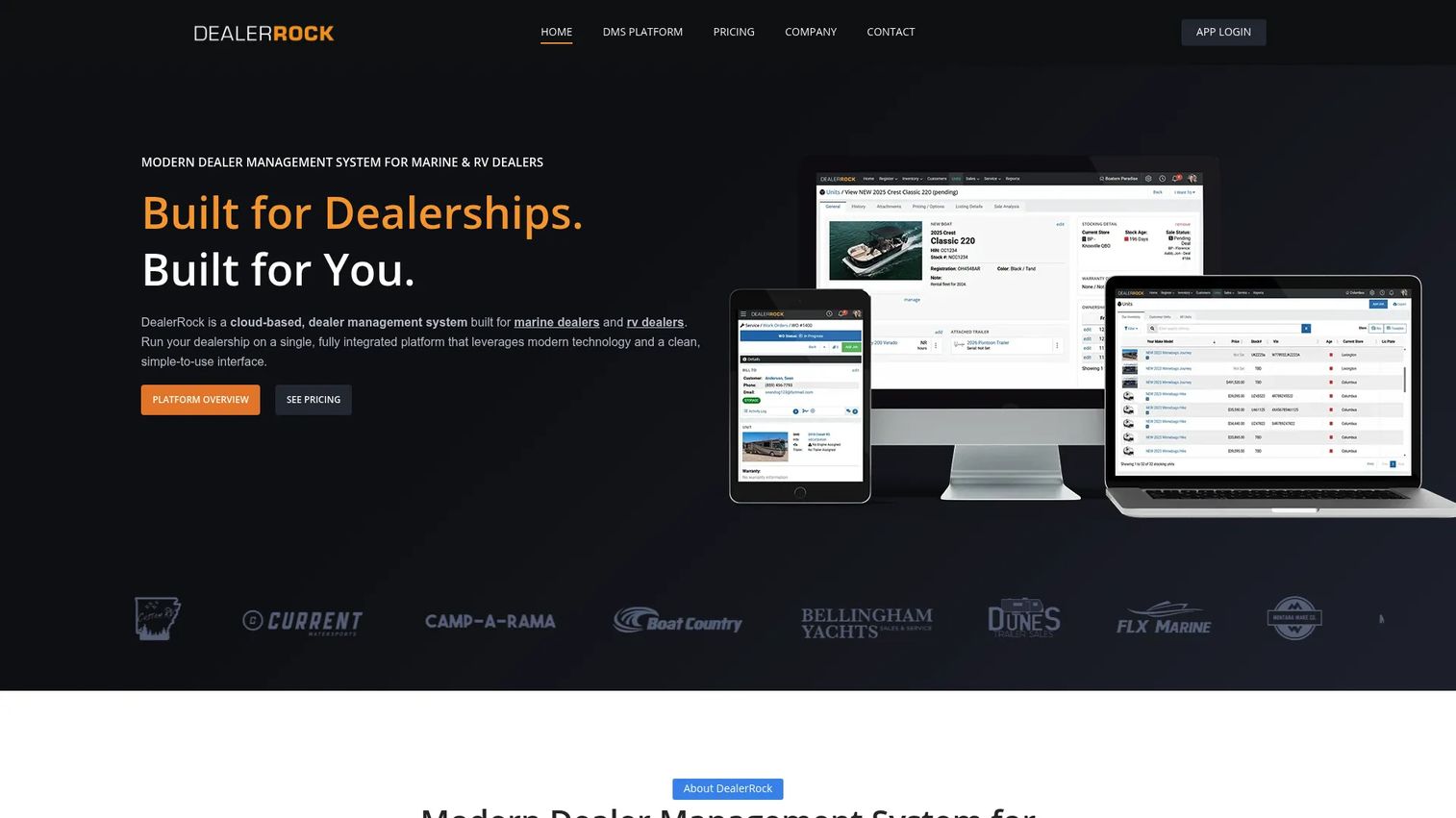
DealerRock is a cloud-based dealer management system built for marine and RV dealerships that want sales, service, and inventory running in one place. It publishes its pricing openly, which is rare in this category, and it is structured so a dealer can start with the modules they need and add as they grow. The cloud model means no on-premise server to maintain and no version to fall behind on.
Best for: Marine and RV dealers who want an all-in-one, cloud-based DMS with pricing they can see before a sales call.
Key strengths
- Inventory management: Track boats, motors, trailers, and parts inventory in one real-time system across your dealership operations.
- Sales and CRM tools: Manage leads, quoting, and customer follow-up so inquiries do not fall through the cracks.
- Service management and work orders: Open, schedule, and track work orders that connect to parts and billing.
Why choose DealerRock: The transparent pricing is the tell. Most vendors in this space route everything through a demo request, so a dealer who wants to compare cost against modules without a sales cycle gets a clear starting point here. The cloud-based, multi-store-ready architecture also fits a dealer planning to add a second location without re-platforming.
DealerRock pricing: DealerRock publishes public pricing. Sales Core starts at $390/month, Service Core at $490/month, and the Complete plan at $790/month, all billed monthly, with add-ons and an enterprise option available. There is no free tier. Full details are on the DealerRock pricing page.
2. Winboats
Winboats is marine dealership management software built for boat dealers and nothing else. That single-industry focus shows up in how it handles inventory: boats, motors, and trailers tracked in real time, with an automated website feed that pushes live pricing, media, specs, and status to your site. If you sell boats and only boats, the workflows are shaped to match.
Best for: Marine boat dealerships that want an all-in-one DMS purpose-built for the industry rather than adapted from a general dealer tool.
Key strengths
- Marine-specific DMS: Sales, service, parts, accounting, and customer management designed for boat dealership operations.
- Real-time inventory: Track boats, motors, and trailers with live availability across sales and service.
- Automated website feed: Push live pricing, media, specs, and unit status to your website with inventory publishing that stays current.
Why choose Winboats: The 100% marine focus is the differentiator. A dealer who has fought general-purpose dealer software into a marine-shaped hole will recognize the value of a system where boats, motors, and trailers are first-class objects, and where the website feed is built for how boat inventory actually moves.
Winboats pricing: Winboats does not publish public pricing and works through a demo-request flow. Dealers evaluating it should request a walkthrough and a quote scoped to their store size and module needs. Ask about the website feed setup and accounting during that conversation.
3. Ideal Computer Systems
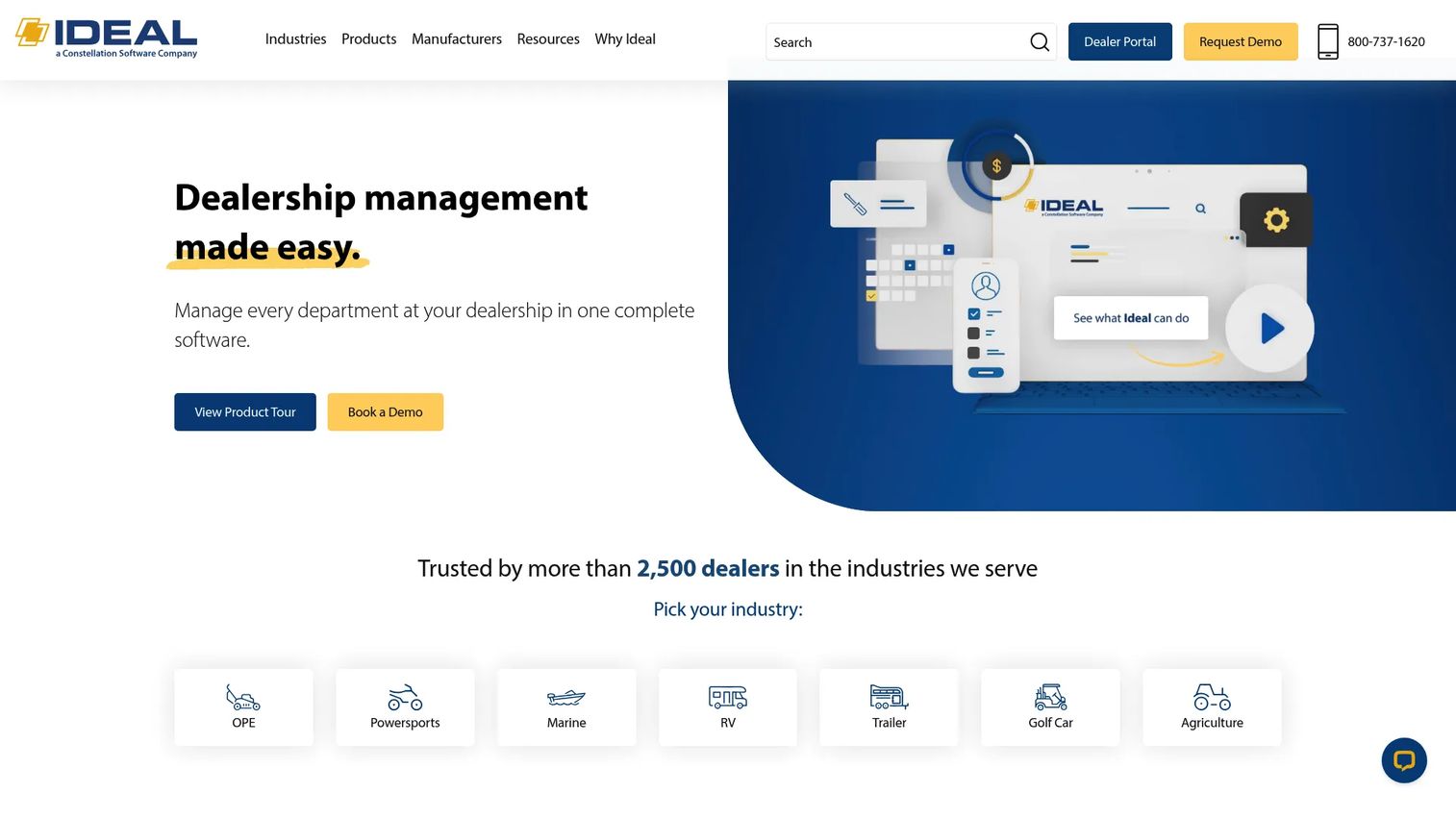
Ideal Computer Systems is a dealer management system covering marine alongside powersports, OPE, RV, trailer, golf car, and agriculture dealerships. That breadth means the inventory, service, parts, and payments modules are built to handle mixed-inventory dealers, and the parts sourcing tools are a genuine strength for shops that live and die by parts availability.
Best for: Dealerships that need a full DMS to manage operations across departments, especially those carrying more than just boats.
Key strengths
- All-in-one cloud DMS: A single cloud-based system spanning inventory, service, parts, marketing, and payments.
- Cross-department operations: Manage inventory, service, price files, and payments together across your dealership.
- Automated price and inventory sync: Keep price lists and inventory current through built-in sync integrations.
Why choose Ideal Computer Systems: The parts sourcing and supply-chain tools matter for dealers whose service revenue depends on getting parts fast. The multi-industry coverage also fits a dealer who sells boats plus trailers or powersports and wants one system rather than a marine-only tool that ignores the rest of the lot.
Ideal Computer Systems pricing: Ideal does not display public pricing. The vendor provides a detailed quote that includes monthly payments, training, and implementation, so you get a scoped number rather than a list price. It holds a 3.5/5 rating on G2. Request a quote through the vendor's how-to-buy page.
4. Lightspeed DMS
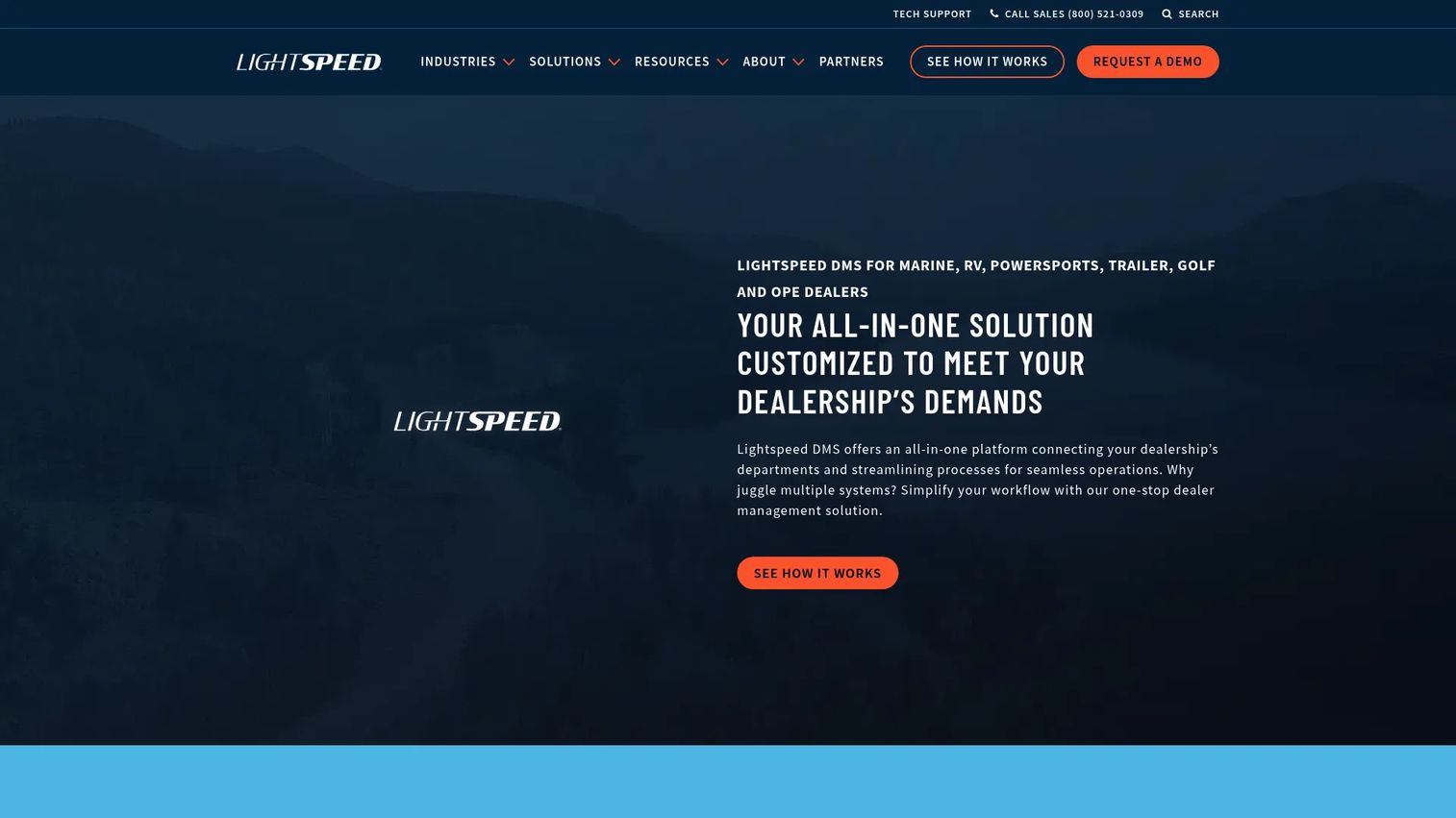
Lightspeed DMS is a cloud-based dealer management system serving marine along with powersports, RV, trailer, outdoor power equipment, and golf car dealerships. Its modular structure and multi-store features are the draw: transferring parts between locations, syncing service templates, and reassigning leads across stores are built in, which makes it a fit for dealers running more than one rooftop.
Best for: Dealerships needing an industry-specific DMS with modular pricing and real multi-location workflows.
Key strengths
- Unified DMS: Sales, service, parts, and accounting in one platform across your dealership operations.
- Multi-store features: Transfer parts, sync service templates, and reassign leads across locations.
- OEM and lender integrations: Connect to OEMs, lenders, and third-party partners to reduce manual data entry.
Why choose Lightspeed DMS: The multi-store workflows are the reason a growing dealer group looks here. Moving parts between locations and reassigning leads across stores from one system removes the manual reconciliation that eats a multi-location operator's week. The modular pricing lets you scale what you pay with the size and complexity of the operation.
Lightspeed DMS pricing: Lightspeed uses modular pricing that scales from $450/month to $3,000+/month based on dealership size and complexity, per its pricing page. There is no public tier list and no free tier. Request a scoped quote to see where your operation lands in that range.
5. BiT DMS
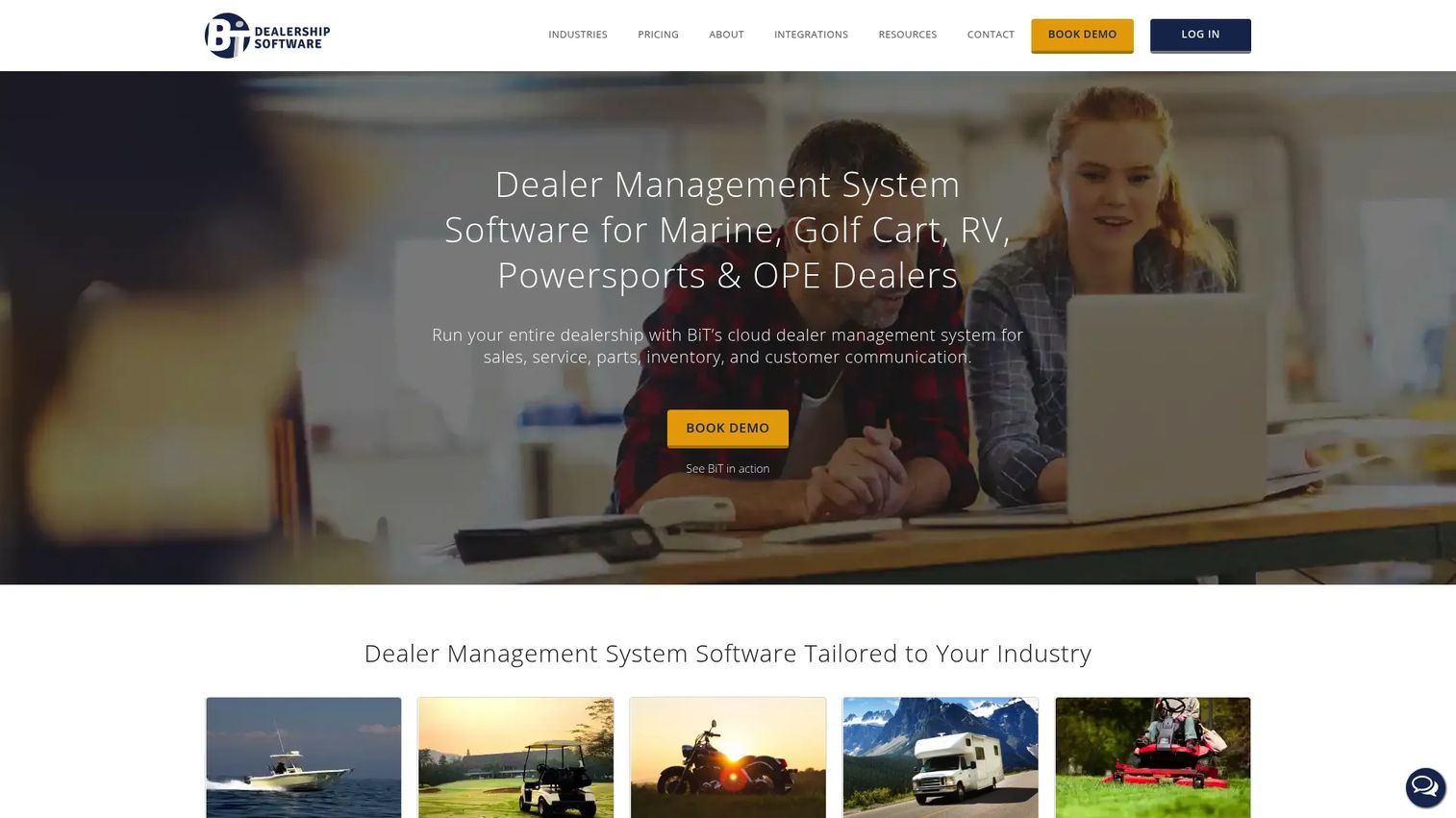
BiT DMS is a cloud-based dealer management system for marine, powersports, RV, golf cart, and OPE businesses that has been serving dealers for decades. It stands out on pricing transparency and structure: modular, contract-free, and with embedded text messaging as a first-class feature rather than a bolt-on. For a dealer who wants to know exactly what they are paying, this is the clearest option on the list.
Best for: Dealerships and service centers wanting an industry-specific DMS with texting and modular workflows without a long-term contract.
Key strengths
- Sales and CRM: Track leads, quotes, and customer follow-up across sales and service.
- Service and work order management: Schedule service, manage work orders, and connect labor to parts and billing.
- Parts and inventory management: Track parts inventory and boat inventory in one real-time system.
Why choose BiT DMS: The pricing model fits a dealer burned by long contracts and surprise fees. No setup fees, no training fees, and no contracts are stated on the pricing page, and embedded texting keeps customer follow-up inside the system. It carries a 4.5/5 rating on Capterra, which is the strongest verifiable public score in this group.
BiT DMS pricing: BiT uses modular pricing starting at $238/month for two modules, with additional modules starting at $119/month, and embedded text messaging starting at $99/month. There is no free tier. The vendor states no setup fees, no training fees, and no contracts. See the BiT DMS pricing page for the module calculator.
6. Commander
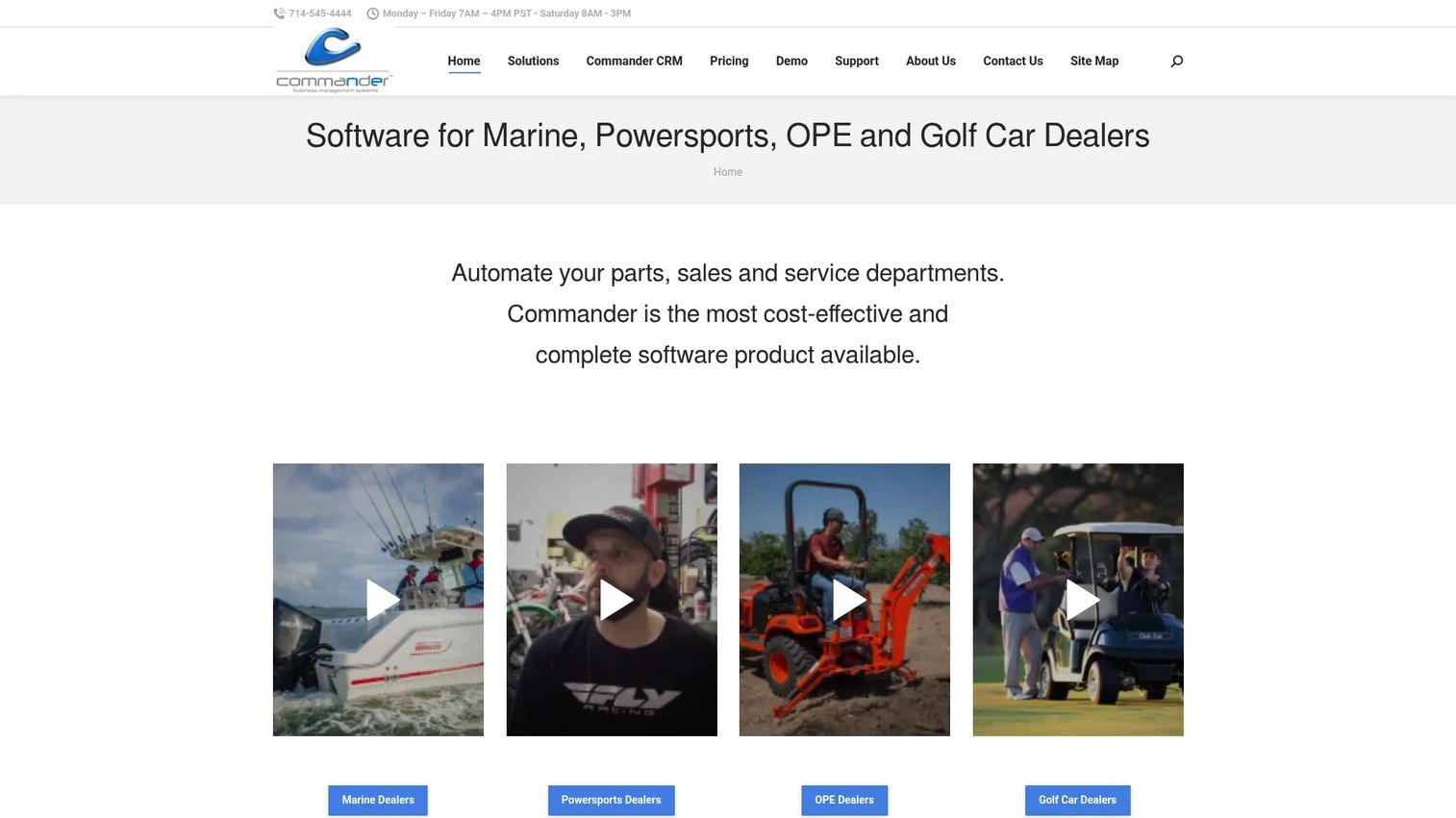
Commander is dealer management software for marine, powersports, OPE/AG, and golf cart businesses. Its standout is automatic parts price updating, which matters a great deal to dealers whose margins depend on keeping thousands of parts priced correctly. Paired with QuickBooks integration, it fits a parts-and-service-heavy dealer who already runs accounting in QuickBooks and does not want to change it.
Best for: Dealers needing an industry-specific DMS with automated parts pricing and a clean QuickBooks connection.
Key strengths
- Automatic parts price updating: Keep parts inventory priced correctly without manual updates across the catalog.
- Full dealership workflows: Manage parts, service, sales, and accounting in one system.
- QuickBooks integration: Connect to QuickBooks so accounting stays in the tool your bookkeeper already uses.
Why choose Commander: The automatic parts price updating is the reason a parts-driven dealer looks here. If your service department carries a deep parts catalog, keeping prices current by hand is a constant tax, and automating it protects margin. The QuickBooks integration means you keep your existing accounting workflow instead of migrating your books.
Commander pricing: Commander uses quote-based pricing. The vendor states there is no upfront cost and offers three pricing tiers, but does not publish numeric prices. Request a quote through its pricing page and ask which tier covers parts pricing automation and the QuickBooks sync.
7. Total Control
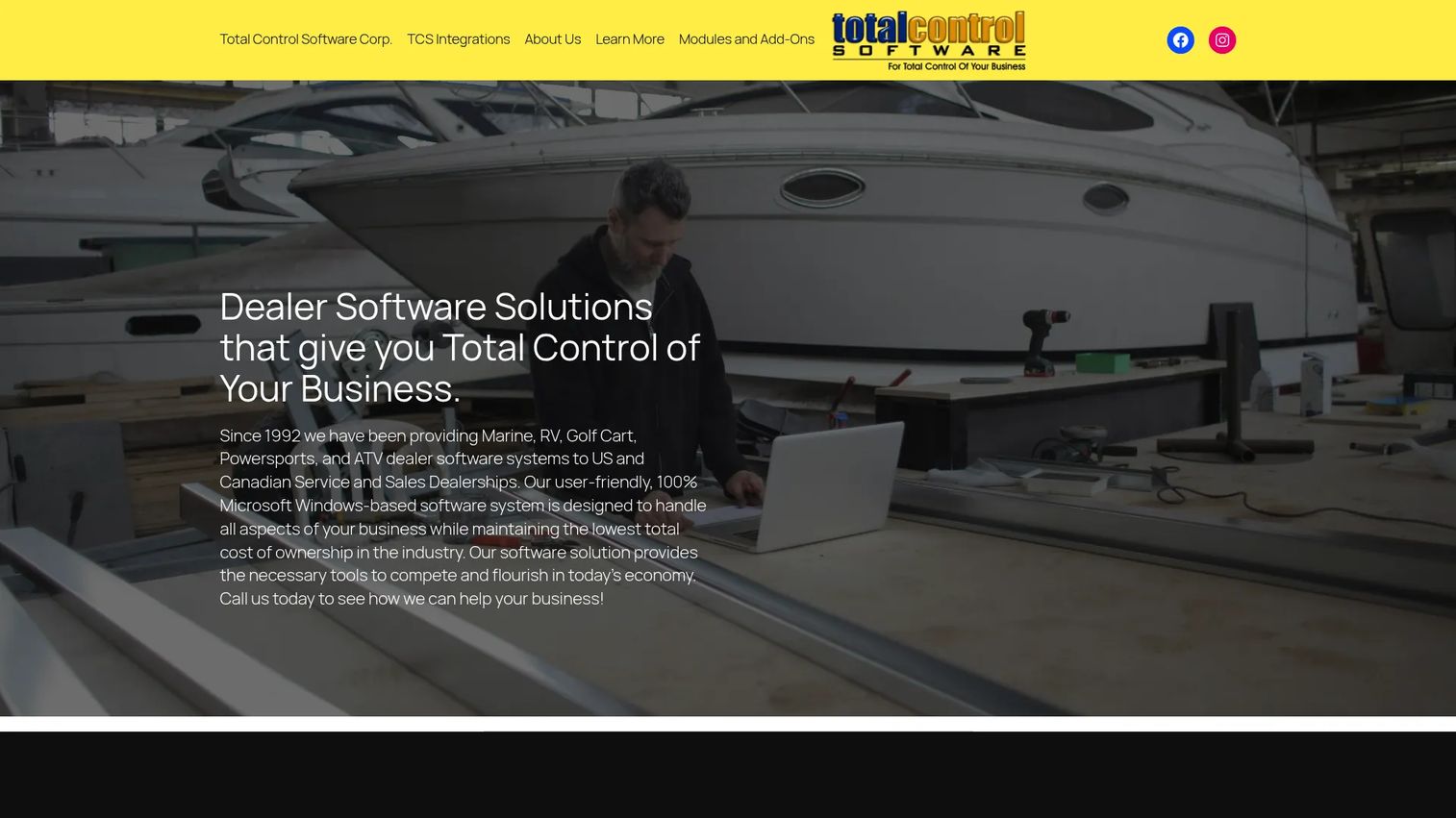
Total Control is dealership management software for marine, RV, powersports, ATV, and golf cart dealers. It covers the full stack of dealership operations, sales, inventory, parts, service, and point of sale, plus add-ons for storage, service scheduling, and time clock. For a mixed-inventory dealer who wants one integrated system rather than a marine-only tool, it is a broad fit.
Best for: Marine, RV, powersports, ATV, and golf cart dealerships needing an integrated DMS across sales, parts, service, and POS.
Key strengths
- Integrated dealership management: Sales, inventory, and customer relationships in one platform.
- Parts, service, and POS: Parts inventory, service workflow, and point-of-sale modules that work together.
- Operational add-ons: Storage, service scheduling, and time clock modules to extend the core system.
Why choose Total Control: The add-on modules for storage and service scheduling matter for marine dealers who also run winter storage or a busy service bay. A dealer carrying boats alongside RVs or powersports gets one system covering all of it, with POS built in for the parts counter and the service desk.
Total Control pricing: Total Control does not publish public pricing and directs prospects to call or request a personalized quote. Scope your quote around the core modules plus any add-ons like storage or service scheduling that fit your dealership, and confirm the POS and inventory workflows in a walkthrough.
Considerations before you buy
The differences between these platforms are less about feature checklists and more about how they fit the way your dealership actually runs. Work through these before you commit.
Module fit for your inventory mix
If you sell only boats, a marine-only system shapes its inventory around boats, motors, and trailers. If you carry RVs, trailers, or powersports too, a multi-industry DMS keeps everything in one place. Match the tool to your actual lot, not an idealized one.
Accounting and QuickBooks integration
Decide up front whether you want built-in accounting or a QuickBooks sync. If your bookkeeper lives in QuickBooks, a clean integration saves a migration and keeps your books where they are. Confirm the sync is two-way and covers the transactions you care about.
Website inventory sync and follow-up
Ask exactly how inventory publishing works. Does it push to your website and third-party listing feeds automatically, with pricing, photos, and status? And can leads and texts route into the CRM so follow-up does not depend on someone checking a separate inbox?
Implementation, training, and contracts
The first-week reality matters. Ask about data migration from your current system, training time for your team, and whether the vendor requires a long-term contract. Transparent pricing and no-contract terms lower the risk of a bad fit.
Conclusion
The right boat dealer software depends on your inventory mix, your accounting setup, and how many rooftops you run. For an all-around marine and RV DMS with pricing you can see before a call, DealerRock is the clearest starting point. For a dealer who sells only boats and wants a system built for that, Winboats is the purpose-built fit. If your accounting lives in QuickBooks and your parts catalog is deep, Commander and its automatic parts pricing deserve a look, and Ideal Computer Systems brings the broadest cross-department operations. For transparent, contract-free pricing with texting built in, BiT DMS is hard to beat, while Lightspeed DMS and Total Control cover the multi-store and mixed-inventory operators.
Do not try to pick from a page. Shortlist two or three that match your inventory and accounting reality, then book demos and run your real workflows through each: quote a boat, open a work order, and watch the website feed update. The system that handles your actual day without friction is the one to buy.
FAQs
Boat dealer software is a dealer management system that combines sales, inventory, service, parts, accounting, and customer follow-up for marine and boat dealerships in one platform. It replaces disconnected spreadsheets, standalone POS, and separate accounting so a dealer runs the whole operation from a single source of truth.
For most dealers, yes. When inventory and service share one system, a sold boat can open a rigging work order automatically, parts pulled for a repair decrement inventory, and billing pulls from the same records. Keeping them separate creates double entry and stale counts, which is exactly the friction a DMS exists to remove.
The core set is real-time inventory management for boats, motors, and trailers, service scheduling and work orders, sales quoting and invoicing, a CRM for lead tracking and follow-up, accounting or QuickBooks integration, and automated website inventory sync. Mobile access and texting are increasingly important so sales and service teams can work from the lot and the shop.
It is important for any dealer whose bookkeeping already runs in QuickBooks. A clean, two-way QuickBooks integration means you do not re-enter transactions or migrate your books to a new general ledger. Platforms like Commander build around this, so confirm the sync covers the transaction types your accounting relies on.
Yes. Website inventory sync is a core capability of modern marine dealer software. When a unit sells, a price changes, or a trade comes in, the system pushes updated pricing, photos, specs, and status to your website and listing feeds automatically, so your online availability matches your lot without manual updates.
Cloud-based systems remove the on-premise server, keep every location on the current version, and let staff work from the lot, the shop, or home. Adoption reflects this: marine dealerships are adopting AI-enabled and cloud DMS modules at a 34% annual rate, per OS For Your Business (2025). For most dealers, cloud is the practical default.
Run your real workflows, not a canned tour. Ask to quote a boat, open a service work order, watch a unit publish to the website, and see how a lead or text lands in the CRM. Also ask about data migration from your current system, training time, contract terms, and how accounting or QuickBooks integration is handled.
Match each vendor to your inventory mix, accounting setup, and number of locations first. Then compare on module fit, pricing transparency, implementation and training, contract terms, and verifiable ratings where available. Shortlist two or three, book demos, and put your actual daily operations through each before deciding.