Local SEO software helps businesses rank in Google Maps and the local 3-pack by managing citations, tracking local rankings, monitoring reviews, and optimizing Google Business Profiles. For businesses that depend on nearby customers finding them online, these tools turn scattered local marketing tasks into a manageable system.
With 80% of consumers searching locally each week, the difference between showing up when someone searches "plumber near me" and being invisible often comes down to whether you're actively managing your local presence. This guide breaks down 12 local SEO tools by use case, pricing, and the specific problems each one solves best.
What's inside
This guide covers the best local SEO software for ranking in Google Maps and the local 3-pack, managing citations, tracking reviews, and optimizing Google Business Profiles. You'll find tools evaluated for small businesses, agencies, and multi-location enterprises. Each recommendation includes pricing, G2 ratings, and the specific use case where the tool performs best.
TL;DR
Best all-in-one local SEO software: BrightLocal for agencies and small businesses needing audits, tracking, and review management in one platform
Best for citation building: Whitespark for specialized NAP consistency across directories
Best for grid-based rank tracking: Local Falcon for visualizing Google Maps performance across service areas
Best for enterprise listings: Yext for high-volume directory synchronization
Free starting point: Google Business Profile as the foundational tool every local business uses
For showcasing local services: Guideflow for creating interactive demos that let prospects experience your local business offerings
What is local SEO software
Local SEO software helps businesses appear in location-based searches, the Google local 3-pack, and Google Maps results. The local 3-pack refers to the three business listings that appear at the top of Google search results with a map. Businesses in this position receive 126% more traffic and 93% more actions than those ranked below.
Local SEO tools handle four core functions:
Rank tracking: Monitor positions in local search results and Google Maps across multiple geographic points
Citation management: Build, audit, and maintain consistent business information across online directories (your Name, Address, and Phone number, or NAP)
Review management: Collect, monitor, and respond to customer reviews from multiple platforms
GBP optimization: Manage posts, photos, Q&A, and attributes on your Google Business Profile
When to use local SEO tools
For small businesses with physical locations
Single-location businesses benefit from local SEO software when they want to appear in searches like "coffee shop near me" or "plumber in [city name]." The primary focus here is optimizing your Google Business Profile and consistently collecting customer reviews.
For agencies managing multiple clients
Local SEO software for agencies requires features like white-label reporting, multi-client dashboards, and scalable citation management. You're juggling dozens or hundreds of locations, so efficiency matters. Look for bulk editing capabilities and automated reporting.
For multi-location enterprises
Enterprises with hundreds of locations face unique challenges: maintaining brand consistency, tracking performance per location, and responding to reviews at scale. The right software provides centralized control while allowing location-specific customization.
Local SEO software comparison
# | Product | Best for | Key differentiator | Pricing | G2 rating |
|---|---|---|---|---|---|
1 | BrightLocal | All-in-one local SEO | Audit + tracking + citations + reviews | From $39/mo | 4.6/5 |
2 | Whitespark | Citation building | Specialized NAP management | From $33/mo | 4.5/5 |
3 | Semrush Local | Comprehensive SEO | Listing management + broader SEO suite | From $30/mo add-on | 4.5/5 |
4 | Local Falcon | Rank tracking | Grid-based Google Maps visualization | From $24/mo | 4.8/5 |
5 | Localo | GBP optimization | AI-driven competitor protection | From $19/mo | 4.7/5 |
6 | Yext | Enterprise listings | High-volume directory sync | Custom pricing | 4.4/5 |
7 | Synup | Multi-location brands | Cloud-based reputation management | From $34.99/mo | 4.5/5 |
8 | Local Viking | GBP automation | Automated posting and management | From $20/mo | 4.6/5 |
9 | Moz Local | Listing distribution | Data aggregator partnerships | From $14/mo | 4.5/5 |
10 | Birdeye | Review management | Multi-channel review collection | Custom pricing | 4.7/5 |
11 | Podium | Customer communication | SMS-based review requests | Custom pricing | 4.6/5 |
12 | Google Business Profile | Free foundation | Direct Google integration | Free | N/A |
1. BrightLocal
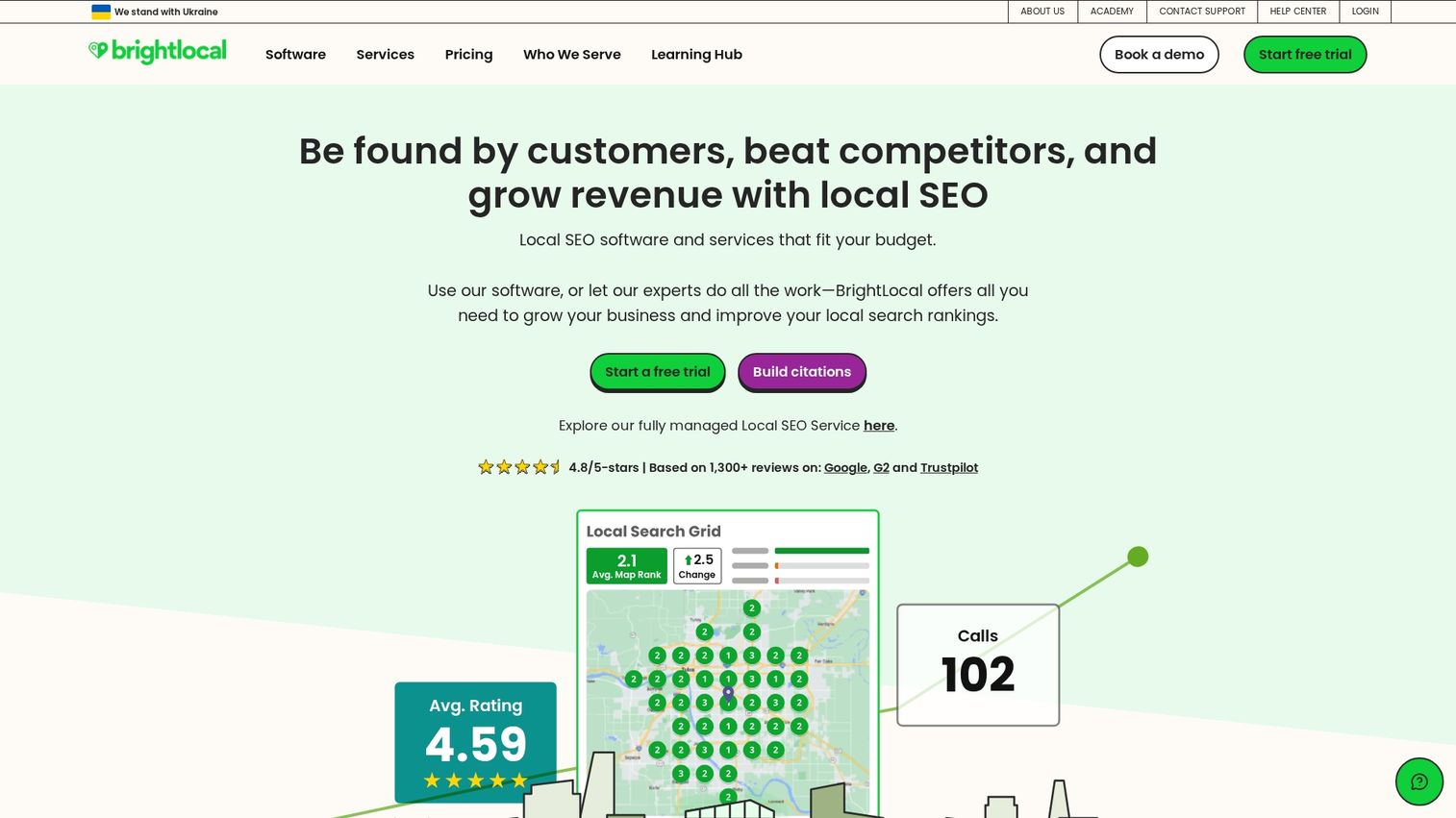
BrightLocal is an all-in-one local SEO management software for auditing, tracking, and managing reviews and citations. It handles the full local SEO workflow without requiring multiple subscriptions.
Best for: Agencies and small businesses needing comprehensive local search software.
Key strengths
Local rank tracking across search engines and Google Maps with geo-grid visualization
Citation building and cleanup tools that identify inconsistencies across directories
Review monitoring with response workflows and sentiment analysis
White-label reporting for agencies with automated scheduling
Why choose BrightLocal: It handles the full local SEO workflow from audit to ongoing management. The learning curve is manageable, and the pricing scales reasonably as you add locations.
Pricing: Plans start at $39/month for single locations, with agency plans from $59/month.
2. Whitespark
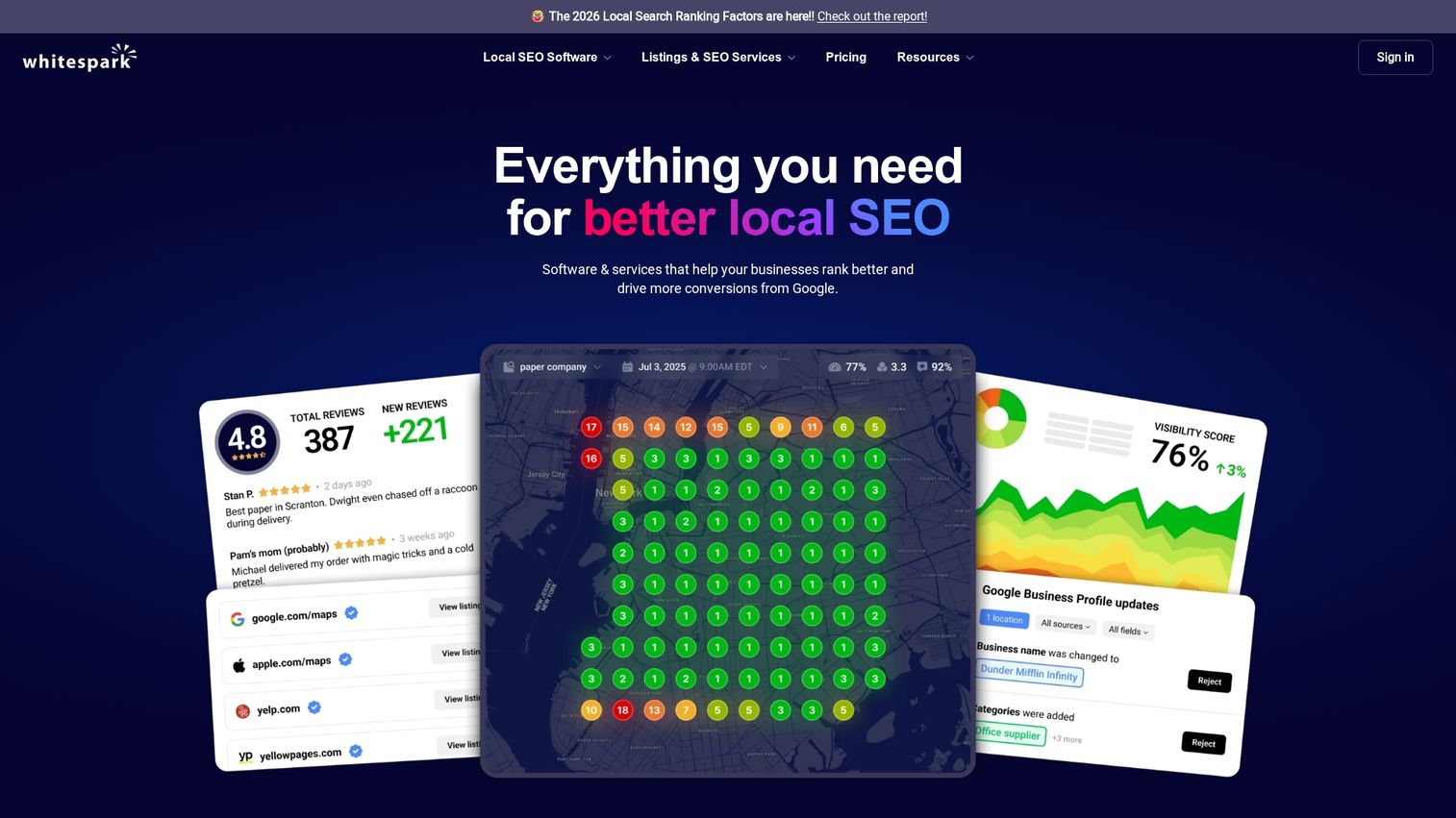
Whitespark is a specialized local SEO tool focused on citation building and understanding local search ranking factors. While other tools try to do everything, Whitespark goes deep on citations.
Best for: Businesses prioritizing NAP consistency and citation audits.
Key strengths
Citation finder that discovers where competitors are listed
Citation builder for creating new listings across relevant directories
Local rank tracker with city and neighborhood-level tracking
Link prospecting specifically for local backlink opportunities
Why choose Whitespark: It's known as the citation specialist. If your local rankings are suffering due to inconsistent or missing citations, this is where you start.
Pricing: Plans start at $33/month for citation tools, with rank tracking available separately.
3. Semrush Local
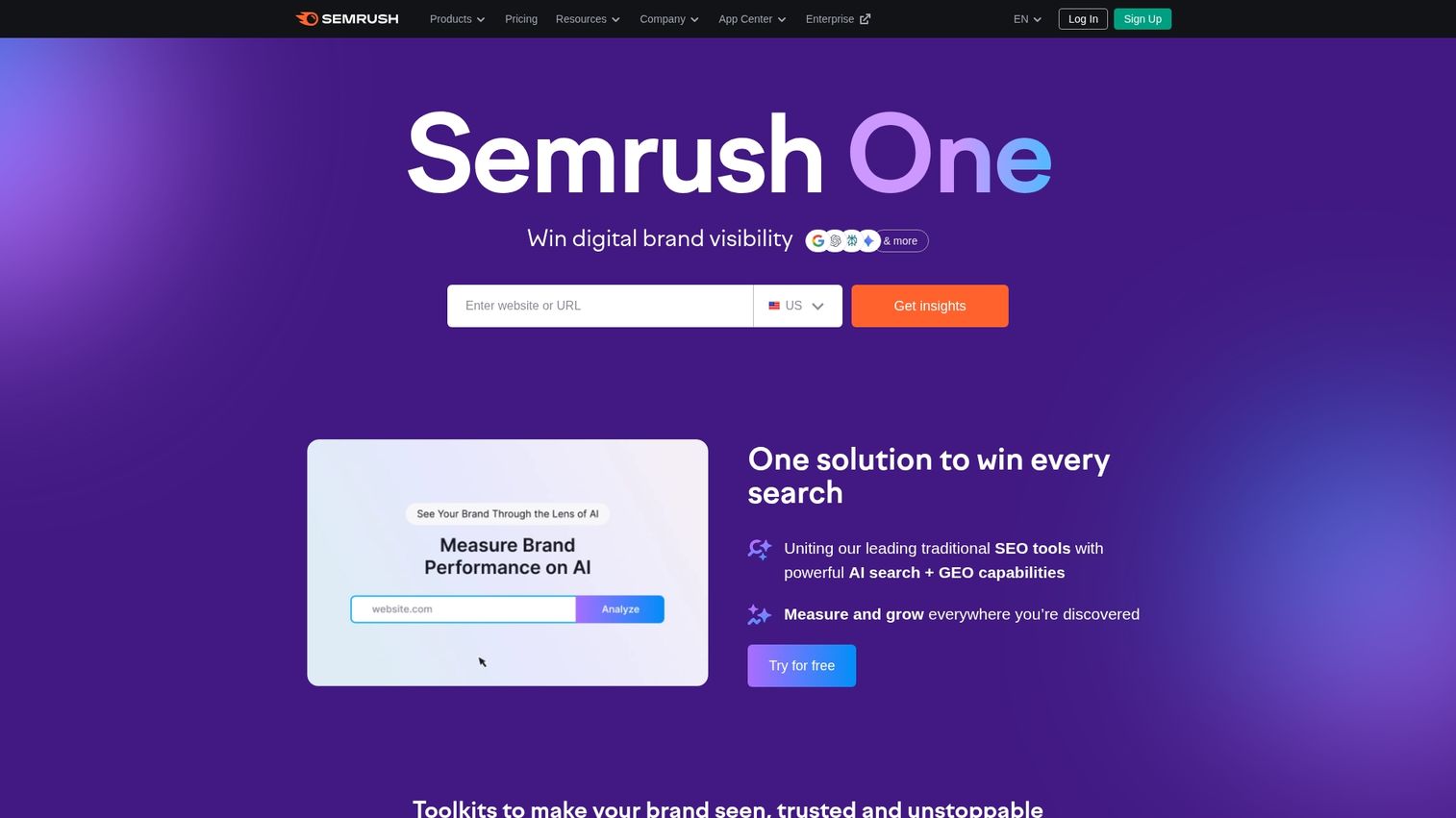
Semrush Local is a local SEO toolkit within the broader Semrush platform, offering listing management and review tracking alongside general SEO capabilities.
Best for: Teams already using Semrush for general SEO who want integrated local SEO marketing software.
Key strengths
Listing management that distributes business data across 70+ directories
Review monitoring dashboard aggregating feedback from multiple platforms
Position tracking for local keywords with competitor comparison
Integration with Semrush's keyword research, site audit, and backlink tools
Why choose Semrush Local: It combines local SEO with broader SEO insights in one platform. If you're already paying for Semrush, adding local capabilities makes sense.
Pricing: Local SEO tools are available as an add-on starting at $30/month per location.
4. Local Falcon
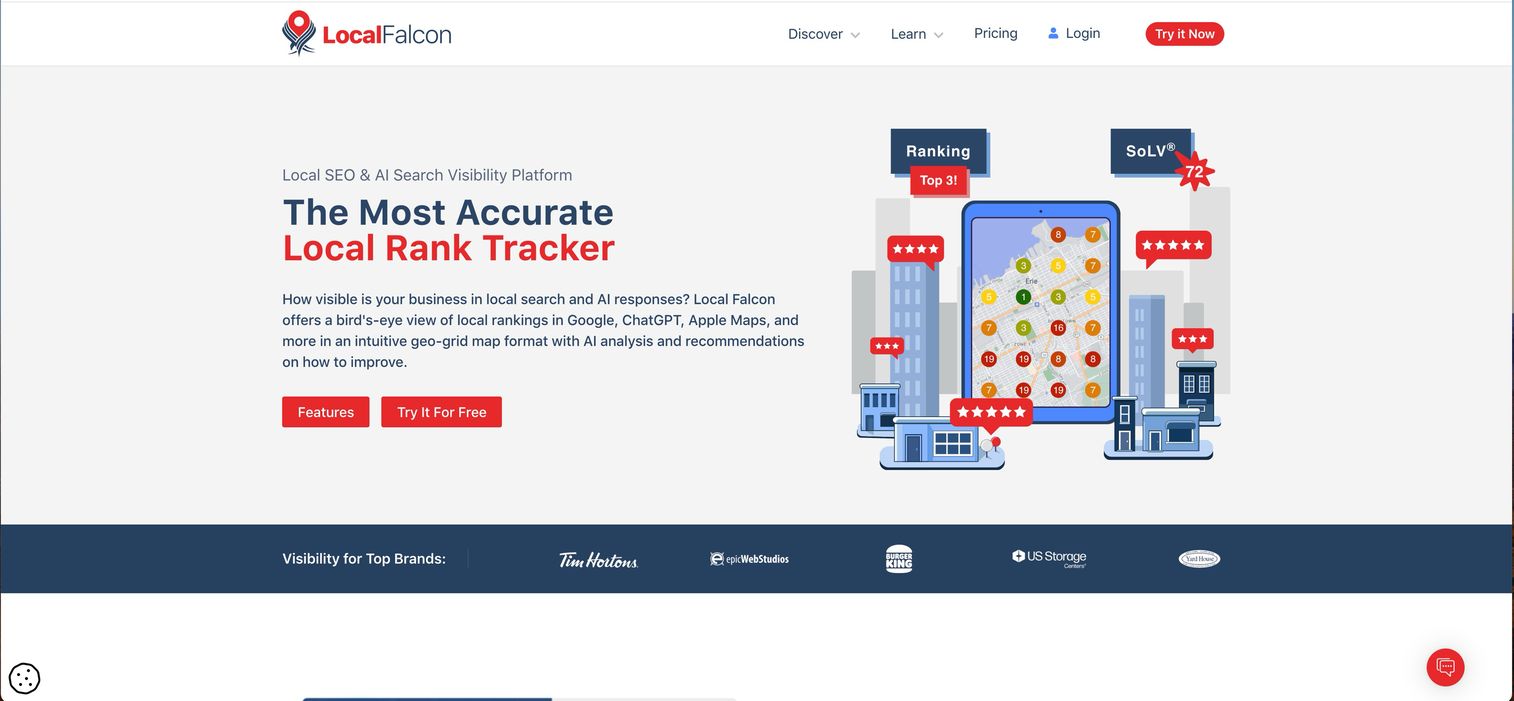
Local Falcon is a specialized grid-based rank tracking tool for visualizing Google Maps performance. Rather than showing a single ranking position, it displays how you rank across dozens of points in your service area.
Best for: Agencies and businesses needing hyperlocal ranking visibility.
Key strengths
Grid-based rank tracking that shows positions across multiple geographic points
Visual heatmaps displaying local search performance at a glance
Competitor tracking to see how rivals perform in specific neighborhoods
Share of local voice reporting to benchmark against competition
Why choose Local Falcon: A single-point rank tracker might show you're #3, but Local Falcon reveals you're #1 in the north side and #8 in the south.
Pricing: Plans start at $24/month for 1,000 scan credits.
5. Localo
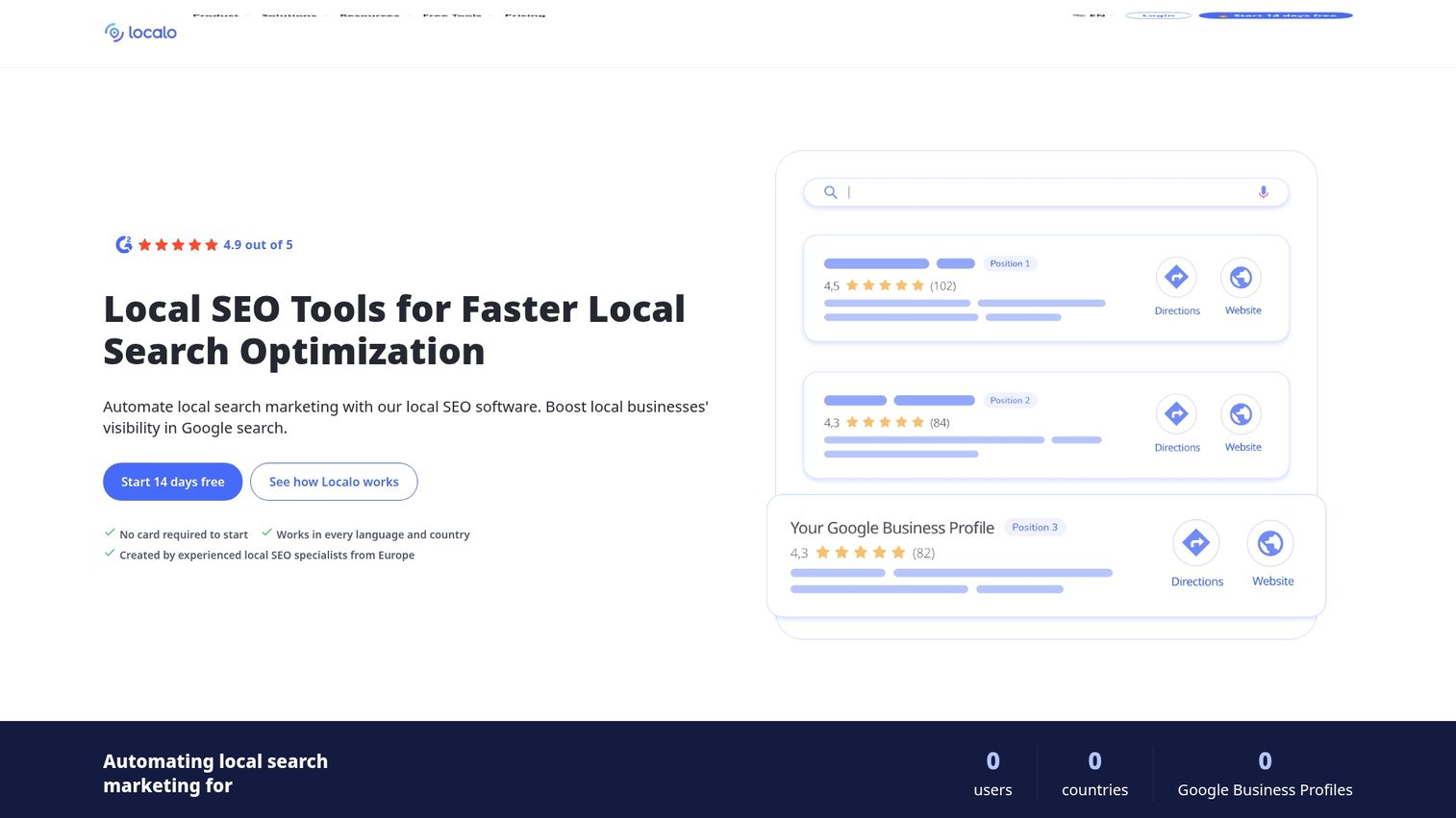
Localo is an AI-driven local SEO tool focused on Google Business Profile optimization and competitor monitoring. It's designed to be approachable for business owners who aren't SEO experts.
Best for: Small businesses and agencies wanting automated GBP improvements.
Key strengths
AI-powered optimization suggestions that tell you exactly what to fix
Competitor tracking with alerts when rivals make changes
Google Posts scheduling to keep your profile active
Task-based interface that guides you through improvements step by step
Why choose Localo: It offers a user-friendly interface with AI assistance, making it ideal for businesses new to local SEO.
Pricing: Plans start at $19/month with a free tier available for basic features.
6. Yext
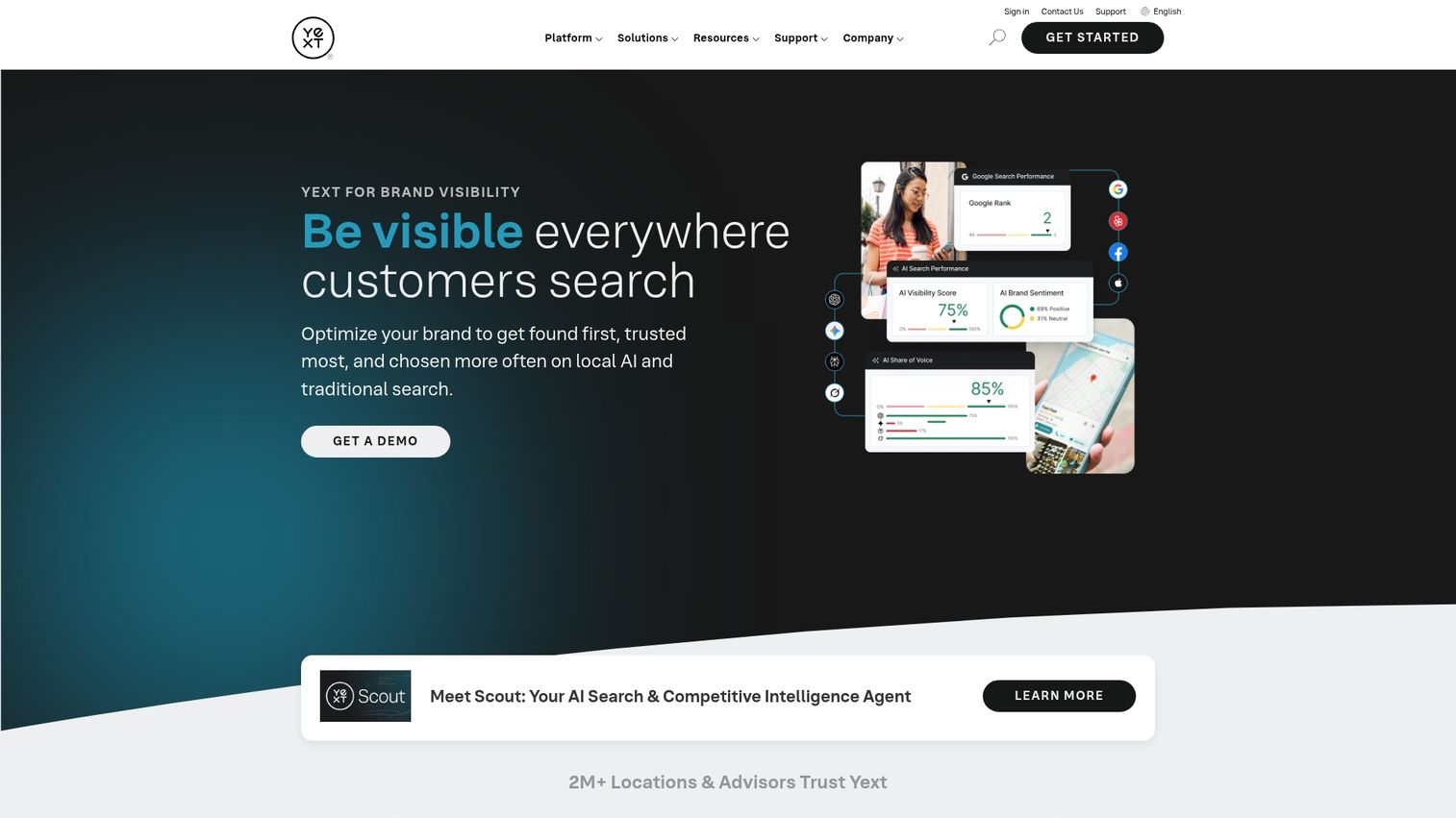
Yext is an enterprise-level local SEO software for managing listings at scale across its extensive publisher network. When you update information in Yext, it pushes to directories in real-time through direct API connections.
Best for: Large organizations and franchises with many locations.
Key strengths
Direct API integrations with major directories for real-time synchronization
Brand consistency controls to maintain standards across locations
Knowledge graph management for structured data
Duplicate suppression to eliminate conflicting listings
Why choose Yext: It's the premier choice when you require instant, accurate updates across hundreds of directories simultaneously.
Pricing: Enterprise pricing is custom based on location count and features.
7. Synup
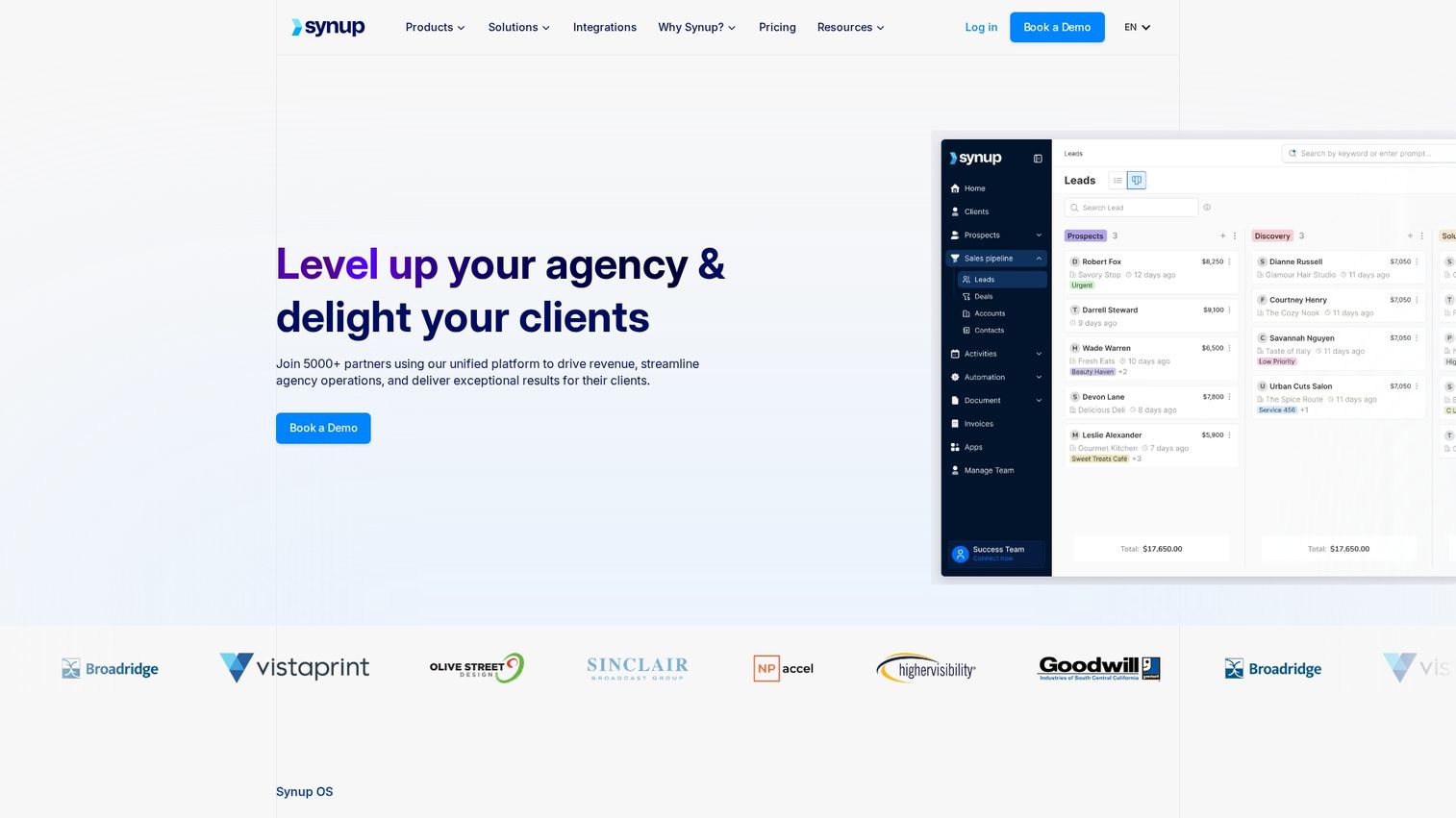
Synup provides cloud-based local SEO programs for managing listings and reputation across multiple locations. It's built for growing brands that want operational efficiency without enterprise complexity.
Best for: Multi-location brands wanting streamlined local presence management.
Key strengths
Centralized listing management dashboard for all locations
Review monitoring and response tools with team workflows
Local analytics and reporting with location-level breakdowns
API access for custom integrations with existing systems
Why choose Synup: It features a clean interface focused on operational efficiency. If you're managing 10-100 locations and want something more modern than legacy enterprise tools, Synup fits well.
Pricing: Plans start at $34.99/month per location.
8. Local Viking
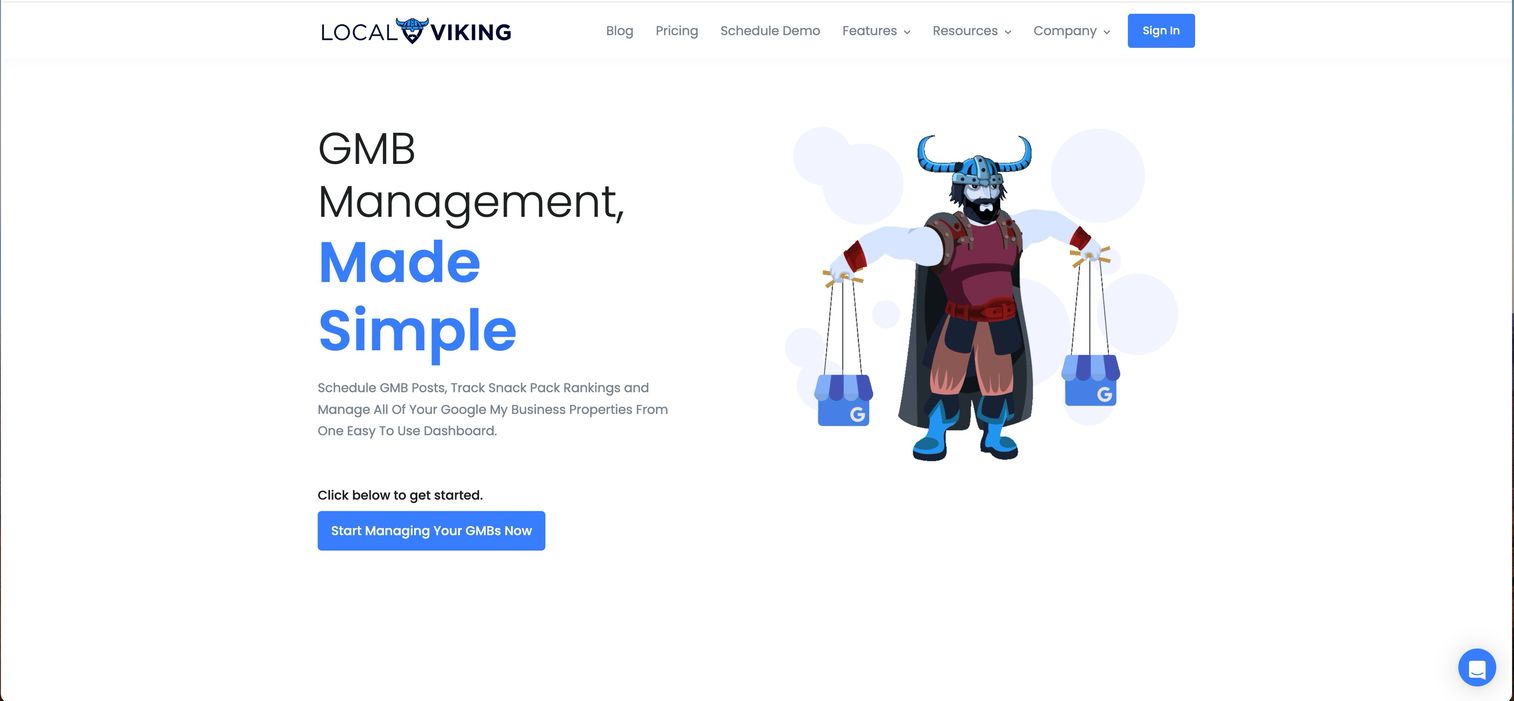
Local Viking is a specialized tool for automated Google Business Profile management and Google Maps visibility. It's particularly strong on posting and automation.
Best for: Businesses focused specifically on GBP optimization and posting automation.
Key strengths
Automated GBP post scheduling with content recycling
Rank tracking with geo-grid reports similar to Local Falcon
GBP audit and optimization tools identifying improvement opportunities
Multi-location management from a single dashboard
Why choose Local Viking: It has strong automation capabilities for teams wanting to maintain an active GBP presence without daily manual work.
Pricing: Plans start at $20/month for basic features.
9. Moz Local
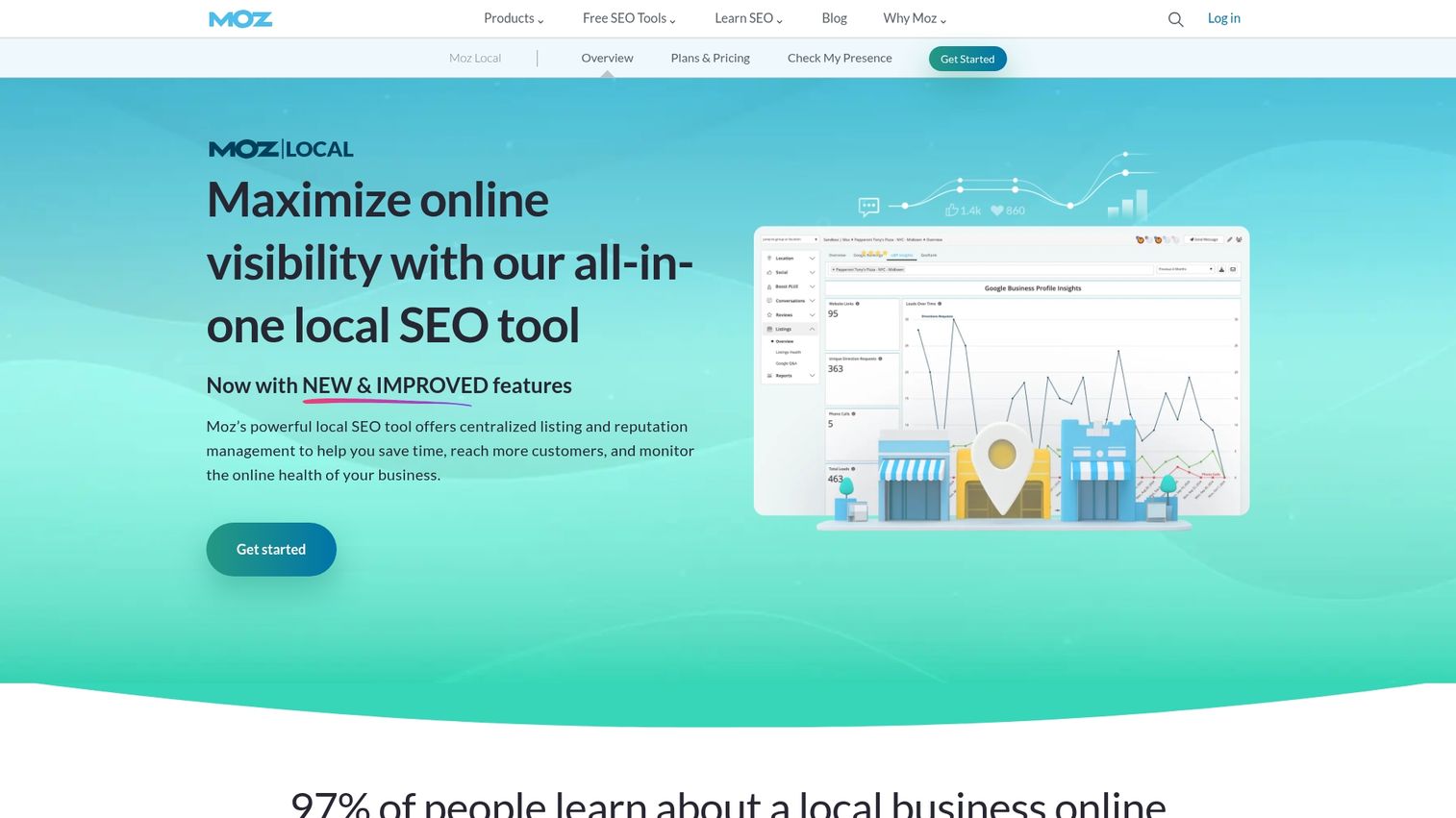
Moz Local is a listing management tool that distributes business data through major data aggregators. It leverages Moz's SEO expertise with a focus on listing accuracy.
Best for: Businesses wanting broad listing distribution through data aggregator partnerships.
Key strengths
Distribution to major data aggregators (Factual, Foursquare, Neustar Localeze)
Duplicate listing detection and removal
Review monitoring across platforms
Profile completeness scoring to identify gaps
Why choose Moz Local: It leverages Moz's renowned SEO expertise with a strong focus on listing accuracy and distribution through aggregators.
Pricing: Plans start at $14/month per location.
10. Birdeye
Birdeye is an experience marketing platform with strong review management and local SEO capabilities. It excels at turning customer interactions into reviews.
Best for: Service businesses prioritizing review generation and customer feedback.
Key strengths
Multi-channel review collection via SMS, email, and in-person requests
Review response tools with AI-assisted reply suggestions
Sentiment analysis to understand customer feedback trends
Listing management across major directories
Why choose Birdeye: If reviews are your bottleneck, Birdeye addresses that directly.
Pricing: Custom pricing based on location count and features.
11. Podium
Podium is a customer communication platform that includes review management and local business SEO tools. It's built around text messaging as the primary customer interaction channel.
Best for: Local service businesses wanting to collect reviews via text messaging.
Key strengths
SMS-based review requests with high response rates
Unified inbox for customer messages across channels
Payment processing integrated with conversations
Webchat integration for website visitors
Why choose Podium: Text-based review requests consistently outperform email for response rates.
Pricing: Custom pricing based on features and location count.
12. Google Business Profile
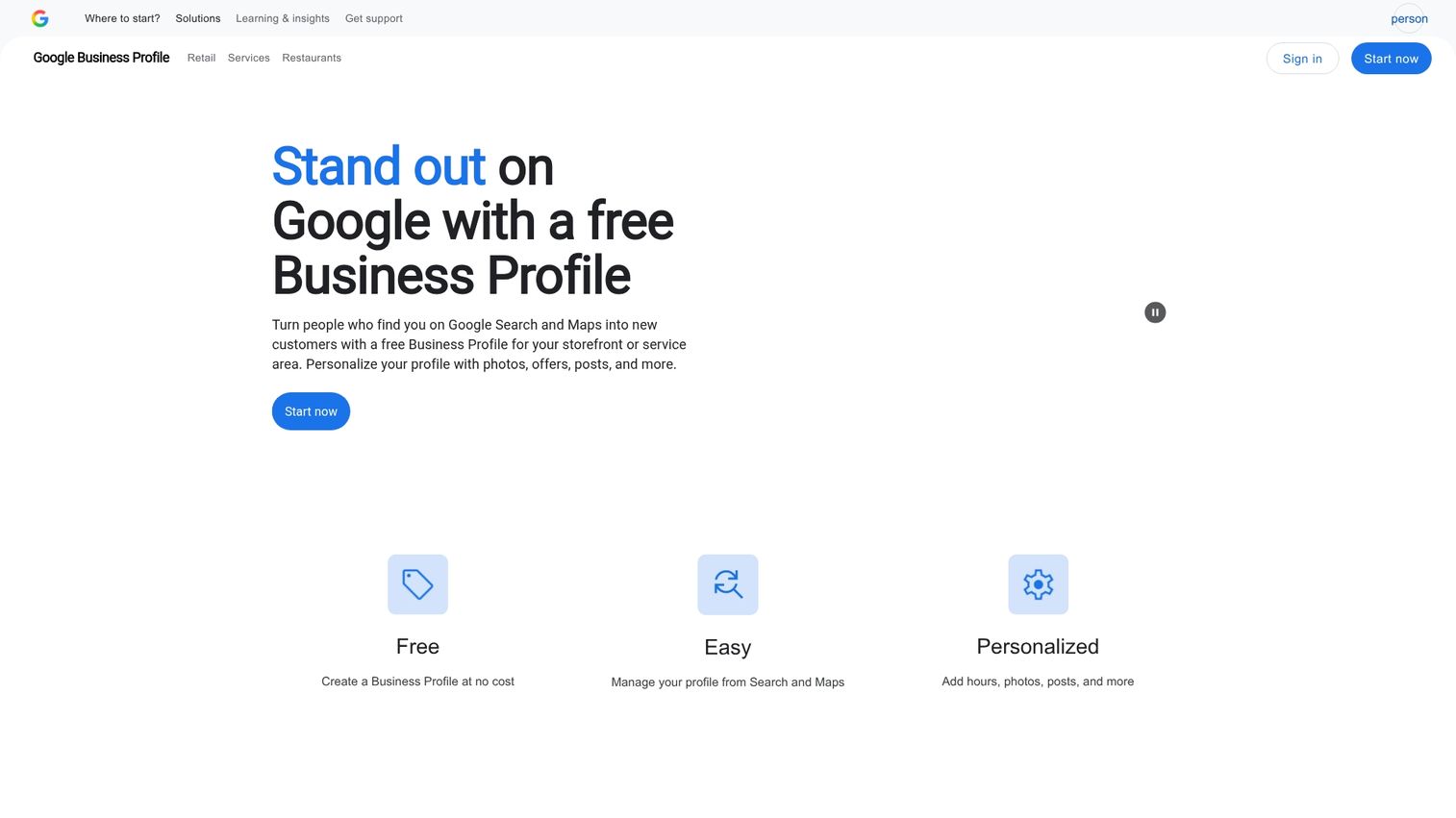
Google Business Profile is the free, foundational local SEO tool that every local business uses. All other tools in this list are designed to optimize and enhance your GBP performance.
Best for: Every local business as the essential starting point.
Key strengths
Direct control of your Google listing appearance
Post updates, photos, offers, and events
Respond to reviews directly from the platform
View search and discovery insights showing how customers find you
Why choose Google Business Profile: You can't rank in the local pack without it, and the insights it provides are invaluable even if you add paid tools later.
Pricing: Free.
Key features in best local SEO software
Local rank tracking
Local rank tracking monitors your business's positions in the local 3-pack and on Google Maps for target keywords. Look for geo-grid tracking to see rankings across a service area rather than just from one point. Competitor monitoring helps you benchmark performance, while historical data reveals whether your efforts are working over time.
Citation management
Citations are mentions of your business's Name, Address, and Phone number across online directories. NAP consistency is a critical ranking factor because it signals to Google that your business information is accurate. Key features include citation building to create new listings, cleanup tools to fix inconsistencies, and monitoring to protect your data from unauthorized changes.
Review monitoring and response
With 97% of consumers reading reviews when evaluating local businesses, review management features help you collect, monitor, and respond to customer feedback. This includes aggregating reviews from multiple platforms into one dashboard, providing workflows for timely responses, and tracking sentiment to understand customer perceptions.
Google Business Profile optimization
GBP optimization is central to all local SEO programs. Features focus on enhancing your listing through post scheduling, photo and video management, Q&A monitoring, and attribute optimization. An active, complete GBP signals to Google that your business is legitimate and engaged with customers.
Reporting and white-label analytics
Reporting capabilities prove value to stakeholders. For agencies, this means white-label options and automated scheduling. For businesses, it means clear performance tracking to measure ROI. The best tools connect ranking improvements to business outcomes like calls, direction requests, and website visits.
Local SEO software for agencies vs small businesses
What agencies look for in local SEO marketing software
White-label reporting: Branded reports for professional client delivery
Multi-client dashboards: Manage dozens or hundreds of clients efficiently from a single interface
Scalable pricing: Per-location or bulk pricing models that grow with the agency
Team collaboration: User roles and permissions to manage access and workflows
API access: Integration with other agency tools for a seamless product marketing stack
What small businesses prioritize
Ease of use: Simple interfaces without steep learning curves
All-in-one value: Fewer tools that cover more ground
Affordable entry points: Free tiers or low monthly costs
GBP focus: Tools that directly help optimize the most important ranking factor
Review collection: Easy ways to request and manage customer reviews
How to measure ROI from local SEO programs
Track local search visibility changes
Measure ranking improvements in the local 3-pack and Google Maps over time. Establish a baseline before you begin, track geographic coverage with grid-based tools, and monitor keyword visibility trends.
Monitor lead attribution and conversions
Connect local SEO efforts to actual business leads. Track phone calls, direction requests, and website clicks directly from your Google Business Profile. Use UTM tracking for website links and call tracking numbers to attribute conversions accurately.
Calculate improvements in cost per acquisition
Compare customer acquisition costs before and after investing in local SEO. Calculate the value of increased organic local visibility and compare it to paid alternatives like Google Ads. Local SEO often delivers lower cost-per-lead than paid advertising once rankings are established.
How to choose the right local SEO management software
Define your primary use case
First, identify your main focus. Are you prioritizing rank tracking, citation management, review generation, or do you want all-in-one coverage? Different tools excel at different functions, so matching a tool to your primary goal is the most important step.
Evaluate integration requirements
Check for compatibility with your existing tools like CRM systems, reporting platforms, and other marketing software. Tools that integrate with your existing stack create seamless workflows and reduce manual data entry.
Compare pricing to feature value
Evaluate cost against the features you'll actually use. Avoid paying for enterprise capabilities a small business won't touch, but also be wary of cheap tools lacking critical features for growth.
Test free trials before committing
Always take advantage of free trial periods. Consider setting up sandbox environments to thoroughly test interface usability, data accuracy, support responsiveness, and reporting quality.
Build your local search software stack for better rankings
Start with the free foundation: Google Business Profile. Every local business uses this regardless of what paid tools you add later.
Next, add an all-in-one tool like BrightLocal if you want comprehensive coverage, or choose specialized tools based on your biggest gap. If citations are your weakness, start with Whitespark. If you lack visibility into where you rank geographically, Local Falcon fills that gap.
For agencies working on client go-to-market strategies, interactive demos can showcase local business services to prospects before they ever pick up the phone.
Start your journey with Guideflow today!
FAQs about local SEO software
Local SEO improvements typically become visible within 4-12 weeks. Citation cleanup and GBP optimization often show faster results, while building review volume and local authority takes longer. Competitive industries may require 6+ months of consistent effort.
Yes, local SEO tools are specifically designed to help you optimize the factors Google uses for Maps rankings. This includes ensuring your GBP is complete, generating positive review signals, and maintaining consistent citations across directories.
Local SEO tools focus on location-based ranking factors like your Google Business Profile, citations, and local pack positions. General SEO software targets broader organic website rankings in traditional search results.
All-in-one platforms like BrightLocal can cover most requirements for small businesses and agencies. However, many professionals add specialized tools for specific functions like grid tracking or advanced review generation.
Accuracy varies by tool. Grid-based trackers like Local Falcon provide highly granular data across specific geographic points. Simpler tools may only track rankings from a single centralized point, which is less precise for service-area businesses.
Look for tools with strong Google Business Profile optimization features that allow you to define and manage your service area. Rank tracking tools supporting service-area radius tracking are also essential.
Yes, most comprehensive local SEO tools monitor and help you manage reviews across multiple platforms including Google, Facebook, Yelp, and industry-specific review sites.
Listings created through data aggregators typically persist after cancellation. However, you lose access to ongoing management, monitoring, and optimization features. Direct changes made to your Google Business Profile remain intact.