A picker walks 12 miles a shift. Most of that distance is not productive work. It is travel between a poorly placed SKU and the pack station, repeated thousands of times a day across a floor where fast-movers sit in back corners and slow-movers hog the golden zone.
That travel is a cost you can measure and cut. The dynamic slotting and storage optimization software market sits at roughly USD 0.7 billion in 2026 and is projected to reach USD 3.1 billion by 2036, growing at a 16.0% CAGR, according to Future Market Insights (2026). The reason for that growth is simple: warehouse operations leaders finally have tools that turn inventory placement into a solvable optimization problem instead of a tribal-knowledge guessing game.
Slotting software exists to answer one question at scale: where should each item live so that picking is fast, replenishment is rare, and space is used well? The best warehouse optimization software does this continuously, adjusting to velocity shifts, seasonality, and product affinity instead of freezing placement into rules that decay the moment demand changes. The payoff shows up as travel time reduction, better picking accuracy, labor cost reduction, and higher space utilization.
This guide compares eight tools that solve that problem in different ways. Some are pure slotting engines. Some are enterprise warehouse platforms where slotting is one module in a larger execution stack. The right pick depends on your warehouse complexity, your existing WMS, and whether you need what-if analysis before you touch a single pallet.
What's inside
This is a comparison of eight slotting software tools for warehouse and supply chain teams evaluating their options for 2026. We selected and ordered them by relevance to the slotting job specifically, not general warehouse breadth.
We weighed four criteria that matter most to a shortlist decision:
- Dynamic slotting depth: how well the tool re-slots as velocity, seasonality, and affinity change.
- Simulation and what-if analysis: whether you can model moves before executing them.
- ROI and KPI visibility: how clearly the system proves travel, labor, and space gains.
- WMS integration: how cleanly it connects to the data that powers recommendations and execution.
The list spans specialized slotting-first systems and broad enterprise platforms, so you can match the tool to your operation rather than the other way around.
TL;DR
For readers who want the shortlist before the detail:
- Best for specialized dynamic slotting: Lucasware, for AI-guided optimization built around distribution-center picking.
- Best for ROI and simulation-led planning: FORTNA OptiSlot DC, for digital twin slotting and what-if scenario previews.
- Best for AI-driven continuous re-slotting: JASCI AI Dynamic Slotting, for real-time SKU reassignment inside a cloud WMS.
- Best for enterprise warehouse networks: Manhattan Associates and Blue Yonder, for slotting inside a full execution and planning stack.
- Best for WMS-led execution plus slotting: Made4net and ASC Software, for teams that want placement decisions and operations in one platform.
The theme across all of them: slotting produces the biggest labor cost reduction and travel time reduction when it runs on clean data and gets validated before physical moves.
What is slotting software?
Slotting software is a warehouse optimization tool that analyzes inventory movement and recommends where each SKU should be stored to minimize picker travel, reduce replenishment, and improve space utilization.
The core distinction buyers need to understand is how often placement changes.
- Fixed slotting assigns each SKU a permanent home. It is simple to manage and works for stable inventories where velocity rarely shifts.
- Hybrid slotting keeps some items fixed while allowing others to move, balancing predictability with responsiveness.
- Dynamic slotting re-evaluates placement continuously based on live demand, moving fast-movers into the golden zone and demoting slow ones as patterns change.
Dynamic slotting is where most modern tools compete, because it captures gains that fixed rules leave on the floor. To evaluate any slotting system, you need a working grasp of the concepts these tools operate on:
- Velocity analysis: ranking SKUs by pick frequency, often through ABC analysis, to prioritize high-movers.
- Product affinity: placing items frequently ordered together near each other to shorten pick paths.
- Seasonality: adjusting placement ahead of demand peaks so seasonal items sit in prime locations only when they earn it.
- Warehouse geometry: accounting for aisle layout, rack height, and travel distance in every recommendation.
- Congestion avoidance: spreading high-volume picks to prevent bottlenecks in the same aisle or zone.
- What-if modeling: simulating a proposed slotting change to forecast its impact before committing labor.
AI slotting software adds continuous learning on top of these, so the system improves recommendations as it observes more order history. Digital twin slotting takes it further, building a virtual model of the warehouse where teams test scenarios against real constraints without risking live operations.
When to use slotting software
Not every warehouse needs a dedicated slotting engine on day one. Here is how to recognize when the investment pays back.
Reduce travel time in high-volume pick operations
When pickers make thousands of trips a day, the distance to each SKU becomes a direct labor cost lever. A few feet saved per pick compounds fast at volume. If travel is your largest controllable labor expense, slotting software turns that distance into a KPI you can actively shrink through better placement in the golden zone.
Re-slot fast-changing inventories without guesswork
Seasonality, promotions, and product launches break manual slotting rules the moment demand shifts. A spreadsheet built in January is wrong by March. Dynamic slotting keeps placement aligned to current velocity and affinity patterns, so your floor reflects what is selling now rather than what sold last quarter.
Validate changes before moving inventory
Physical re-slotting costs labor and risks disruption. Moving thousands of SKUs on a hunch is expensive when the hunch is wrong. Simulation and what-if analysis let you model a proposed layout, forecast the travel and labor impact, and confirm the ROI before anyone touches a pallet. This is the difference between a data-backed move and an expensive experiment.
Comparison table
The table below summarizes all eight tools by intent, primary use case, pricing, and rating. Pricing and ratings for enterprise warehouse software are often quote-based, so verify current figures with each vendor before you shortlist. Tools are ordered by relevance to the slotting job specifically.
| # | Product | Intent | Key use case | Pricing | G2 rating |
|---|---|---|---|---|---|
| 1 | Lucasware | Specialized optimization | AI-guided warehouse optimization and voice workflows | Contact for pricing | 4.1/5 |
| 2 | FORTNA OptiSlot DC | Slotting-first + services | Digital twin slotting and what-if scenario preview | Contact for pricing | Not listed |
| 3 | JASCI AI Dynamic Slotting | AI dynamic slotting | Real-time SKU reassignment in a cloud WMS | From $2,295/mo | Not listed |
| 4 | ASC Software | WMS-adjacent slotting | Slotting inside a broader supply chain suite | Contact for pricing | Not listed |
| 5 | Manhattan Associates | Enterprise execution | Slotting within full warehouse and labor optimization | Contact for pricing | 4.0/5 |
| 6 | Blue Yonder | Supply chain planning | Slotting inside an AI-driven planning stack | Contact for pricing | 4.1/5 |
| 7 | Körber | Enterprise orchestration | Slotting within multi-site fulfillment automation | Contact for pricing | Not listed |
| 8 | Made4net | WMS-led execution | Slotting plus warehouse execution in one platform | Contact for pricing | 4.5/5 |
1. Lucasware
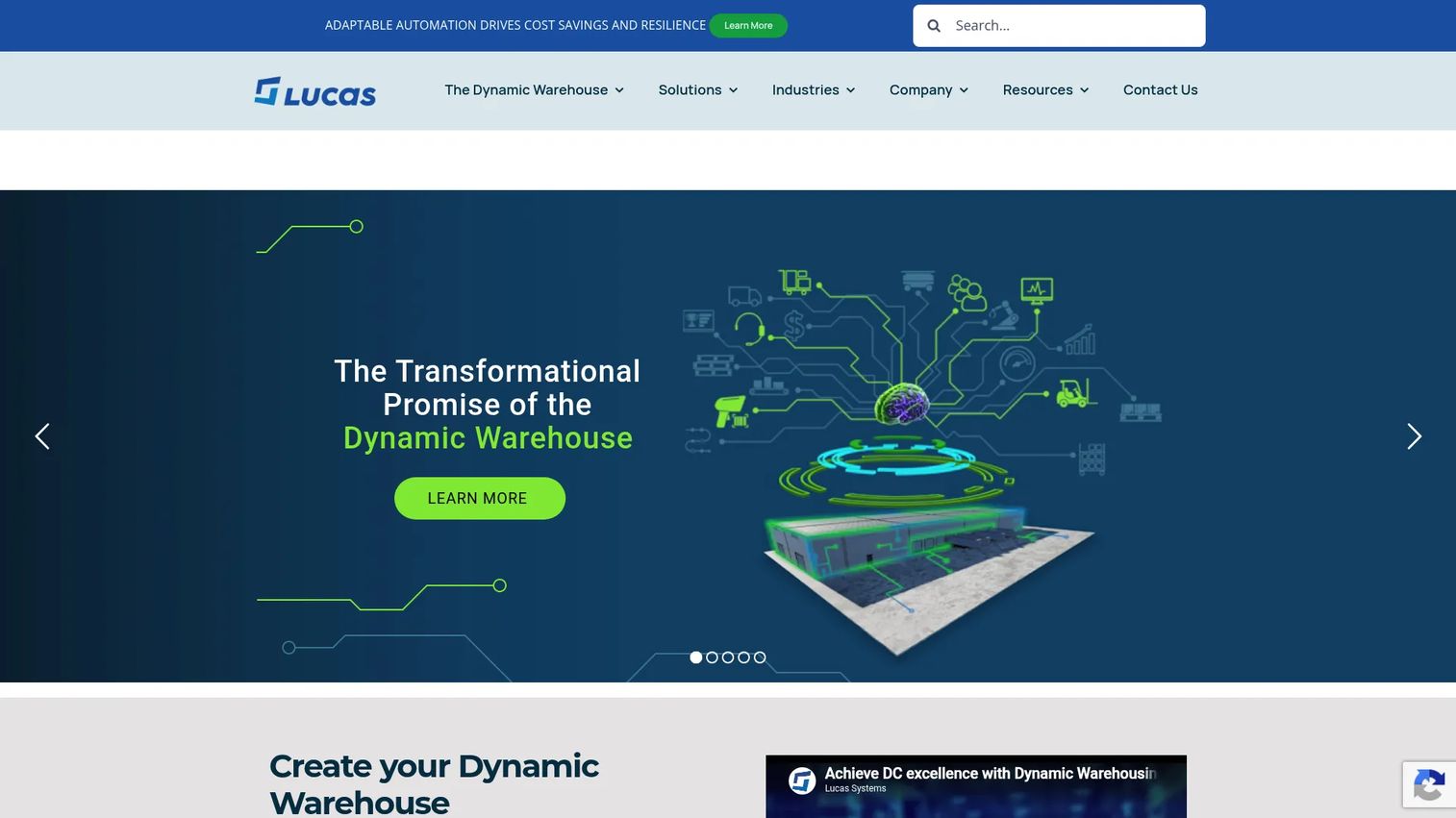
Lucasware builds warehouse optimization software for distribution centers, combining AI-driven orchestration with voice-directed and multi-modal workflows. Its slotting capability sits inside a broader optimization approach that ties placement decisions to how work actually flows through the floor, so recommendations reflect real picking patterns rather than static rules. The platform is built for operations that want optimization and execution guidance working together.
Best for: distribution centers that want AI-guided warehouse optimization and voice workflows in one system.
Key strengths
- AI-based optimization and orchestration: continuously tunes placement and work assignment as demand and picking patterns shift.
- Voice-directed and multi-modal workflows: connects slotting decisions directly to how pickers execute on the floor.
- Integration with robots and enterprise systems: fits slotting into automated and semi-automated fulfillment environments.
Why choose Lucasware: it suits teams that treat slotting as part of a wider optimization problem rather than an isolated report. If your floor already runs voice picking or automation, tying placement to those workflows through one vendor reduces the gap between a recommendation and the labor that executes it. It is a strong fit for operations leaders who want the optimization logic close to the execution layer.
Lucasware pricing: Lucasware does not publish pricing on its site. Its pages direct visitors to request a demo or contact sales, which is typical for distribution-center optimization software scoped to warehouse size and workflow. Expect a quote-based engagement. On G2, the Lucas Warehouse Optimization Suite holds a 4.1/5 rating.
2. FORTNA OptiSlot DC
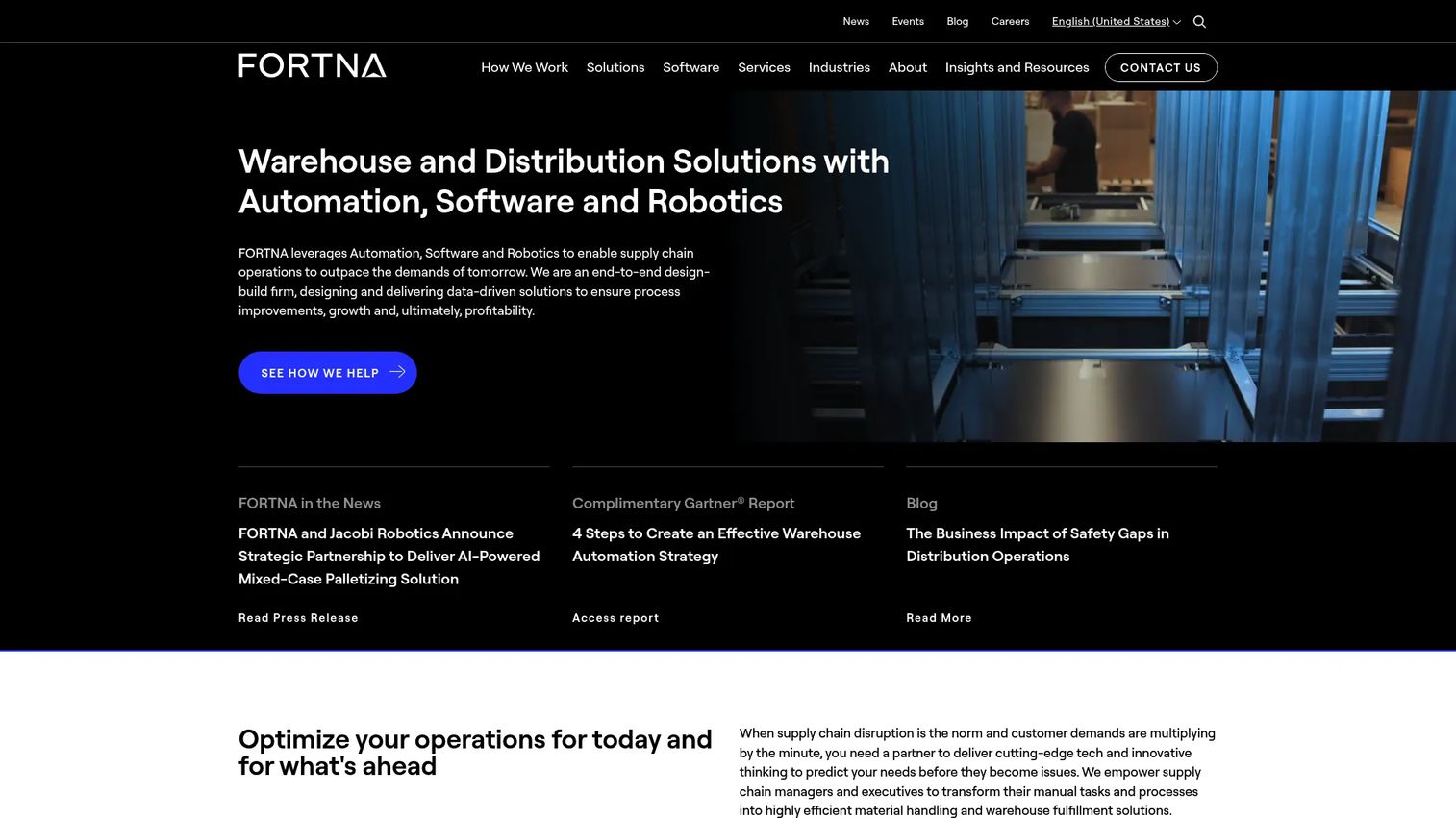
FORTNA OptiSlot DC is warehouse slotting software focused on optimizing inventory placement across distribution centers. It leans into data-driven slotting backed by advanced algorithms and digital twinning, which lets teams preview scenarios before committing to physical moves. For buyers who want to prove ROI before disrupting the floor, its what-if scenario preview is the headline capability.
Best for: distribution centers that want simulation-led slotting optimization to lift productivity and space utilization.
Key strengths
- Intelligent, data-driven slotting optimization: bases placement on actual order and movement data rather than legacy rules.
- Advanced algorithms and digital twinning: models the warehouse virtually so scenarios run against real constraints.
- What-if scenario preview: forecasts the impact of a slotting change before anyone moves inventory.
Why choose FORTNA OptiSlot DC: the simulation angle makes it a strong fit for teams that need to defend a re-slotting investment with numbers before execution. Digital twin slotting reduces the risk of moving thousands of SKUs on assumption, and FORTNA's services credibility helps operations that want implementation support alongside the software. It is well suited to enterprise distribution environments planning seasonal or structural layout changes.
FORTNA OptiSlot DC pricing: FORTNA does not display public pricing for OptiSlot DC. Its product pages confirm capabilities and benefits but route buyers through a contact flow, so expect a quote scoped to your operation. No G2 rating for this specific product was available at the time of writing.
3. JASCI AI Dynamic Slotting
JASCI AI Dynamic Slotting is AI-driven warehouse slotting inside JASCI's cloud WMS platform. It continuously learns and reassigns SKU locations in real time, using AI Slotting Controls to govern rules, constraints, and location parameters. Rather than a periodic re-slotting exercise, it treats placement as a live, self-adjusting process that responds to demand as it happens.
Best for: warehouses that want AI-assisted dynamic slotting embedded inside a broader cloud WMS.
Key strengths
- Continuous real-time reassignment: relocates SKUs as velocity and order patterns shift, without waiting for a scheduled review.
- AI Slotting Controls: keeps automated decisions inside the rules, constraints, and parameters you define.
- Automation integration: works with AMRs, AGVs, goods-to-person systems, and putaway robots.
Why choose JASCI AI Dynamic Slotting: the pairing of continuous AI slotting with rules-based governance suits operations that want automation but not a black box. You get real-time updates constrained by the guardrails you set, which matters in complex fulfillment flows with robotics. Because slotting lives inside the WMS, the data powering recommendations and the system executing them share one source of truth.
JASCI AI Dynamic Slotting pricing: JASCI publishes transparent platform pricing. The Brand WMS plan starts at $2,295 per month and the 3PL WMS plan at $2,495 per month, both billed annually, with an Enterprise Automation tier priced on a custom basis. Dynamic Slotting is presented as part of the broader platform rather than a separately priced product. There is no free tier.
4. ASC Software
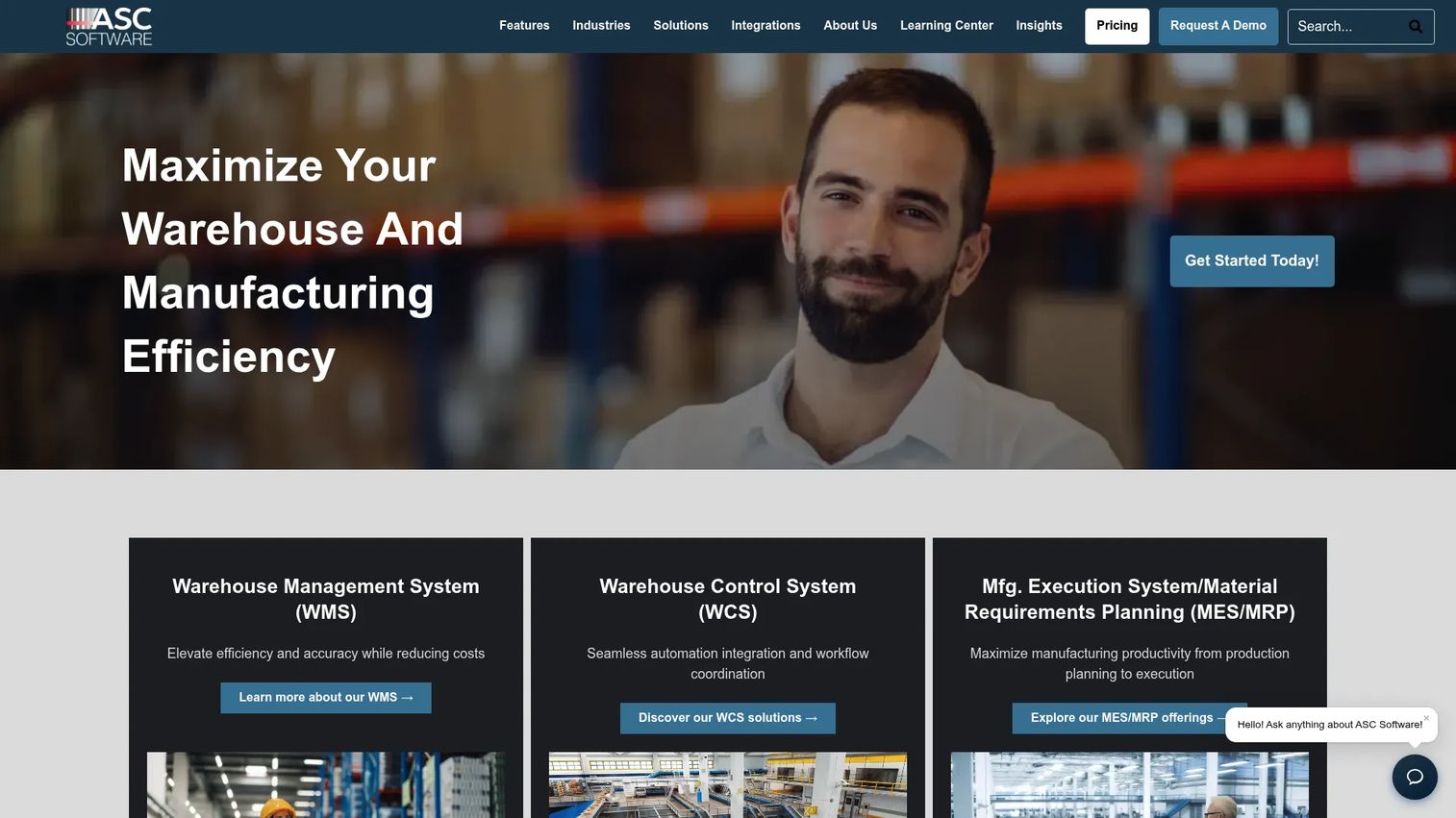
ASC Software provides supply chain software spanning warehouse, distribution, manufacturing, and 3PL operations. Its slotting capability sits within a broader inventory and order management suite, which makes it the more education-forward, WMS-adjacent option for teams building a slotting process inside a larger warehouse system rather than buying a standalone engine.
Best for: mid-market to enterprise supply chain teams that want slotting inside a wider WMS, MES, and WCS platform.
Key strengths
- Inventory management: connects slotting decisions to live stock positions and movement data.
- Order management: aligns placement with how orders actually flow through the operation.
- Warehouse metrics: surfaces the KPI reporting needed to measure slotting impact over time.
Why choose ASC Software: it fits teams that want slotting as one capability inside a broader supply chain platform rather than a point solution bolted on. If you are standardizing warehouse, manufacturing, and distribution operations together, using ABC analysis and slotting strategy inside the same system reduces integration overhead. It suits operations that value context and measurement around placement rather than pure optimization horsepower alone.
ASC Software pricing: ASC Software does not display a public price on its site, and its pricing page routes buyers toward a scoped conversation. Expect quote-based pricing tied to modules and operation size. No reliable G2 rating for the warehouse software was confirmed at the time of writing.
5. Manhattan Associates
Manhattan Associates is an enterprise supply chain and omnichannel commerce software provider. Its slotting capability lives inside a full warehouse management platform, where placement decisions feed directly into labor optimization, order fulfillment, and broader execution workflows. For large operations, that integration is the point: slotting is not a separate report but a lever inside the system already running the floor.
Best for: large manufacturers, distributors, and retailers that need slotting inside unified supply chain and commerce operations.
Key strengths
- Warehouse management: runs slotting as part of the same platform executing picking, packing, and shipping.
- Order and transportation management: ties placement decisions to downstream fulfillment and outbound flow.
- Supply chain planning: connects slotting to demand and inventory planning across the network.
Why choose Manhattan Associates: it is the natural choice for enterprises already standardized on Manhattan's ecosystem, where slotting benefits from shared data across warehouse, labor, and order systems. That breadth suits complex, high-volume operations that need slotting to coordinate with labor management rather than run in isolation. It is built for scale rather than for a single warehouse running a point solution.
Manhattan Associates pricing: Manhattan does not publish public pricing and uses demo and contact flows instead, so pricing is quote-based and scoped to enterprise deployments. On G2, Manhattan Associates holds a 4.0/5 seller rating.
6. Blue Yonder
Blue Yonder delivers AI-powered supply chain management software spanning planning, execution, visibility, and retail operations on a common data cloud. Slotting sits inside its warehouse capabilities as one element of a much larger optimization stack, benefiting from integrated AI and machine learning forecasting that connects placement to demand signals upstream.
Best for: large enterprises that want slotting inside an AI-driven, end-to-end supply chain platform.
Key strengths
- End-to-end supply chain platform: unifies planning and execution on a common data cloud.
- Integrated AI/ML forecasting: feeds demand and velocity signals into warehouse and placement decisions.
- Warehouse, transportation, and control tower capabilities: positions slotting within a broad execution and visibility layer.
Why choose Blue Yonder: it fits organizations already invested in Blue Yonder's planning systems, where slotting gains from forecasting that anticipates seasonality and demand shifts before they hit the floor. The AI/ML backbone means placement decisions draw on the same signals driving upstream planning. It is best for enterprises optimizing the whole chain rather than a single warehouse in isolation.
Blue Yonder pricing: Blue Yonder does not publish public pricing on its site, and pricing appears to be quote-based rather than displayed. On G2, Blue Yonder holds a 4.1/5 seller rating.
7. Körber
Körber is a global technology company providing intelligent manufacturing and supply chain solutions, including warehouse automation and intralogistics. Slotting fits within its broader distribution and fulfillment orchestration, making it relevant for operations that need placement optimization as one part of a much larger automation and warehouse management footprint.
Best for: large enterprises that need end-to-end industrial automation with slotting inside multi-site fulfillment.
Key strengths
- Warehouse automation and intralogistics: connects slotting to the physical automation moving inventory.
- Software and AI for industrial operations: applies optimization across warehouse and manufacturing contexts.
- Pharma and life sciences depth: supports regulated, complex fulfillment environments alongside general distribution.
Why choose Körber: it suits multi-site or enterprise operations needing broad warehouse orchestration where slotting is one component of a wider automation strategy. If your roadmap includes intralogistics automation and cross-site fulfillment, sourcing slotting from the same vendor keeps placement aligned with the automation executing it. It is built for operations with scale and complexity that outgrow point solutions.
Körber pricing: Körber does not display public pricing or plan figures on its site, and engagements are scoped through direct contact. No current G2 rating from a primary listing was confirmed at the time of writing.
8. Made4net
Made4net is a supply chain execution software provider focused on warehouse management and related logistics. Its slotting support sits inside a configurable, cloud-based WMS, so placement decisions and warehouse execution run in the same platform. For teams that want practical operational execution alongside slotting rather than a separate optimization engine, that consolidation is the draw.
Best for: mid-market to enterprise operations that want configurable WMS and slotting support in one platform.
Key strengths
- Cloud-based warehouse management system: runs slotting decisions inside the system executing daily operations.
- Labor management: connects placement optimization to the labor cost it is meant to reduce.
- Yard management and appointment scheduling: extends execution context beyond the four walls of the warehouse.
Why choose Made4net: it fits teams that want slotting decisions and warehouse execution unified rather than integrated after the fact. The configurable WMS foundation means placement recommendations connect directly to labor and operational data, so the system tracks whether slotting actually reduces travel and handling. It suits operations that value practical execution and measurement over standalone optimization depth.
Made4net pricing: Made4net does not display a public first-party price and presents pricing as quote or demo based. On G2, Made4net holds a 4.5/5 rating based on a small number of reviews.
Considerations
Before you shortlist, run each candidate through this checklist. The right slotting system is the one that fits your data, your floor, and your ability to prove ROI.
Data quality and WMS integration
Slotting recommendations are only as good as the data behind them. Confirm the tool ingests clean order history, SKU dimensions, and velocity data, and that it connects to your WMS, since that integration powers both the recommendations and their execution. A slotting engine disconnected from your system of record creates manual reconciliation work that erodes the gains.
Simulation and what-if analysis
The ability to model a change before executing it separates low-risk optimization from expensive guesswork. Look for what-if analysis or digital twin slotting that forecasts travel, labor, and space impact, so you can validate the ROI before committing floor labor to a physical move.
Support for seasonality and affinity rules
A tool that only ranks SKUs by velocity misses half the picture. Confirm it handles product affinity, seasonality, and constraint rules, so placement reflects how orders are actually composed and how demand shifts across the year rather than a single static snapshot.
Congestion and warehouse geometry
Optimal placement on paper can create bottlenecks in practice. Check that recommendations account for aisle layout, rack height, travel distance, and congestion avoidance, so the system does not concentrate high-volume picks in one zone and stall the floor.
KPI reporting and ROI proof
You will need to defend the investment. Verify the system reports on pick rate, travel distance, labor hours, replenishment moves, and space utilization, so you can tie slotting changes to measurable outcomes and prove ROI against the KPIs leadership cares about.
Conclusion
The best warehouse slotting optimization software depends less on a single winner and more on what you are actually solving for.
If you want specialized, AI-guided optimization tied closely to execution, Lucasware fits distribution centers running voice and automation. If simulation matters most, FORTNA OptiSlot DC leads on digital twin slotting and what-if scenario previews. For continuous, rules-governed AI re-slotting inside a cloud WMS, JASCI AI Dynamic Slotting is the direct pick. Enterprises standardized on a broad platform will find slotting well integrated inside Manhattan Associates, Blue Yonder, or Körber, while ASC Software and Made4net suit teams wanting slotting and warehouse execution in one system.
The decision comes down to three questions: do you need pure slotting optimization, broader WMS capabilities, or simulation-led planning? Answer that, then shortlist two or three tools that match your warehouse complexity and integration needs. Prioritize the ones that prove their impact on travel time reduction, picking accuracy, labor cost reduction, and space utilization, because those KPIs are what justify the investment.
FAQs
Slotting software analyzes inventory movement and recommends where each item should be stored for faster picking, less replenishment, and better space use. It ranks SKUs by velocity, factors in affinity and constraints, and places items so pickers travel less. The best systems update these recommendations continuously as demand changes.
Dynamic slotting is usually better when item velocity changes often, because it moves fast-movers into prime locations as demand shifts and demotes slow ones automatically. Fixed slotting can still work well for stable inventories where placement rarely needs to change. Many operations use a hybrid approach, keeping some items fixed while re-slotting the rest.
It improves productivity mainly by cutting travel time. Better placement shortens pick paths, reduces unnecessary moves, and keeps high-volume items in the golden zone. Fewer replenishment trips and less congestion compound the effect, so pickers complete more orders in the same shift.
At minimum, it needs order history, SKU dimensions, velocity data, and warehouse layout. Product affinity patterns and seasonality signals improve recommendation quality further. Clean, current data from your WMS is what makes the recommendations trustworthy, so data quality is often the real constraint.
Yes, and it usually should. WMS data powers the recommendations, and the WMS often executes the resulting moves. A tight integration means placement decisions and execution share one source of truth, which reduces manual reconciliation. Some platforms combine both slotting and WMS functions in a single system.
Track pick rate, travel distance, labor hours, replenishment moves, and storage utilization before and after a slotting change. Compare the labor cost saved against the software and re-slotting effort. Tools with what-if analysis let you forecast this ROI before executing, which lowers the risk of the investment.
A WMS executes warehouse operations such as receiving, picking, packing, and shipping. A slotting system optimizes where inventory is placed to make those operations more efficient. They are complementary, and some platforms bundle slotting inside the WMS so placement and execution run together.
Smaller operations may still benefit if SKU velocity is volatile, labor is tight, or space is constrained. When demand shifts often or every square foot counts, better placement pays back even at smaller scale. Warehouses with stable inventory and ample space may see less urgency and can start with simpler fixed or hybrid rules.