You launched the mobile campaign in twenty minutes. Spend started flowing the same day. Three weeks later, your CFO asks the only question that matters: did it work? And you can't answer cleanly.
That's the real problem with mobile advertising. Launching is trivial. Measuring is brutal. Mobile inventory is fragmented across in-app and mobile web, attribution breaks the moment a user jumps between a browser and an app, and most platforms report conversions in numbers that never reconcile with your analytics. The global mobile advertising market is projected to reach USD 254.4 billion in 2025 and climb toward USD 581.6 billion by 2034, according to the IMARC Group (2025). More than 82% of people aged 10 and up own a mobile phone. The audience is undeniable. The question is whether your stack can prove what your spend actually produced.
Most marketers solve the wrong half of this. They chase reach. More impressions, more networks, more placements. But reach was never the bottleneck. Fit was. The right mobile ad platform matches your channel mix, your inventory needs, and your attribution setup, not just your audience size. Picking it wrong means paying for impressions you can't measure and conversions you can't trust. If your campaigns lean on app installs, your tracking depends heavily on mobile attribution platforms and clean event data feeding your attribution reporting.
And there's the objection every growth marketer says out loud: "I already pay for enough tools." Fair. This guide is about choosing fewer, better-fit platforms, not adding to the pile.
What's inside
This guide compares 7 mobile advertising software platforms for marketers who need to choose, not just learn what mobile ads are. We selected platforms on five criteria that actually drive buying decisions: targeting controls, ad format coverage, measurement depth, inventory access, and fit for different budgets and use cases.
The list mixes mainstream ad platforms with DSP-style mobile advertising solutions, because most teams need both. We also separate the three jobs that confuse buyers most: in-app advertising, app-store discovery, and mobile web advertising. Each platform here earns its place by doing at least one of those jobs better than a generic alternative.
TL;DR
- Best overall for broad mobile campaign management: Google Ads, for search, display, YouTube, and app promotion in one auction-based platform.
- Best for social-first mobile reach: Meta Ads, for mobile-native creative and deep audience segmentation across Facebook, Instagram, and Audience Network.
- Best for Microsoft ecosystem and lower-cost search traffic: Bing Ads, for intent-driven search inventory beyond Google.
- Best for in-app monetization and mobile inventory: AdMob, for publishers and advertisers meeting inside apps.
- Best for omnichannel DSP and local attribution: Viant, for geofencing, foot-traffic measurement, and programmatic mobile ads.
- Best for app-store discovery: Apple Search Ads, for iOS install intent at the point of search.
- Best for mobile growth and device-level distribution: Digital Turbine, for full-funnel mobile advertising and monetization.
What mobile advertising software is
Mobile advertising software is any platform used to plan, buy, target, optimize, and measure ads served on mobile devices. That covers a wider range of tools than the name suggests. A mobile advertising platform can be an ad network, a demand-side platform (DSP), a search ad platform, or an app-store ad tool. Each accesses different inventory and serves a different stage of the funnel.
At a functional level, every mobile advertising platform does some combination of these jobs:
- Audience targeting: device, OS, location, demographics, interests, and behavior.
- Inventory access: the publishers, apps, exchanges, and properties where your ads can appear.
- Creative delivery: serving the right ad format to the right placement.
- Bidding: competing in real-time auctions for impressions.
- Reporting: impressions, clicks, conversions, and spend.
- Attribution: connecting an ad exposure to a downstream action like an install or purchase.
The mobile ad ecosystem connects four players. Publishers (apps and mobile sites) supply the inventory. Ad exchanges auction it. DSPs buy it programmatically on behalf of advertisers. App stores run their own closed ad marketplaces for install campaigns. Understanding where a platform sits in that chain tells you what it's good for.
Key concepts buyers need before comparing tools
Before you compare mobile ad networks, get fluent in the metrics. CPM (cost per thousand impressions) prices reach. CPC (cost per click) prices intent. CTR (click-through rate) measures how often people who see an ad actually tap it. Conversions are the downstream actions that matter to revenue, installs, signups, purchases. Attribution is the model that assigns credit for those conversions back to specific ads.
Targeting on mobile splits three ways. Device targeting narrows by hardware and screen. OS targeting separates iOS from Android, which matters more than it sounds because measurement works differently on each. Location-based targeting, including geofencing and proximity targeting, drives local and retail campaigns.
The split that trips up most marketers: in-app advertising runs inside mobile apps, while mobile web advertising runs in the mobile browser. They use different inventory, different tracking, and often different creative. Plan for them separately.
Ad formats and placement types
Format determines where in the funnel an ad performs. Banner ads sit at the top or bottom of a screen and work for low-cost awareness. Native ads blend into feed content and earn higher engagement. Interstitial ads take over the full screen at natural breaks and convert well for installs. Rewarded video gives users an in-app benefit for watching, which is the workhorse of mobile game monetization. Display and video span awareness and consideration. Search and app-store placements capture the highest intent, people actively looking.
| Format | Typical funnel stage | Common use case |
|---|---|---|
| Banner | Awareness | Low-cost reach inside apps and mobile web |
| Native | Awareness to consideration | Feed-integrated content and brand campaigns |
| Interstitial | Consideration to conversion | App installs and high-impact moments |
| Rewarded video | Engagement | In-app monetization and opt-in views |
| Search / app-store | Conversion | Install intent and high-intent demand capture |
Why this category matters now
Mobile is not a channel anymore. It's the default surface. With 82%+ of people aged 10 and up carrying a phone, per the IMARC Group (2025), the question stopped being whether to advertise on mobile. The pressure now is proving that mobile spend produced revenue, not just impressions. That's why measurement depth and clean attribution matter more than raw reach when you pick a platform. A campaign you can't measure is a campaign you can't defend in a budget review.
When to use mobile advertising software
Launch app installs or reactivation campaigns
App-centric teams should prioritize app-store and in-app placements. These campaigns live or die on audience targeting and conversion tracking, not impression volume. You need to reach people likely to install, then prove the install came from your ad. Creative and bidding controls matter more here than raw reach, because a poorly targeted install campaign burns budget on users who churn the same day. Pair these with strong mobile attribution so you can tie installs back to the ad that drove them.
Run local or location-based promotions
Local businesses and field teams need geofencing and proximity targeting. Drawing a radius around a store, an event, or a competitor's location lets you serve ads to people who are physically nearby. The payoff is foot-traffic attribution: measuring whether an ad exposure led to a real-world visit. Omnichannel DSPs are useful here because they connect mobile exposure to in-store visits and tie both into one report.
Balance acquisition with remarketing
Most mobile programs lean too hard on net-new acquisition and ignore the cheaper win: re-engaging users who already visited, installed, or abandoned. Mobile ad platforms can sequence messaging across touchpoints, using audience segmentation to show the right follow-up to the right cohort. In-app and mobile web inventory often work best together here, catching a user in the browser and again inside an app they already use.
Comparison table
Verify current pricing and ratings on each vendor's site before you commit budget, since auction-based platforms change terms often. The right platform depends on your channel mix, attribution needs, and audience type, not on which one has the most features.
| # | Product | Intent | Key differentiation | Pricing | G2 rating |
|---|---|---|---|---|---|
| 1 | Google Ads | Broad mobile reach and performance | Search, display, YouTube, and app promotion in one auction platform | Auction-based; no public plan pricing | 4.3/5 |
| 2 | Meta Ads | Social-first mobile reach | Mobile-native creative and deep audience segmentation | Auction-based; from USD 5/day budget | 4.2/5 |
| 3 | Bing Ads | Lower-cost search intent | Search inventory beyond Google across Microsoft and partners | Auction-based; no public plan pricing | 4.3/5 |
| 4 | AdMob | In-app monetization and inventory | Ad mediation across mobile networks | Free to use; revenue from ads shown | 4.3/5 |
| 5 | Digital Turbine | Mobile growth and distribution | Device-level app and content discovery | Custom; no public pricing | 4.7/5 |
| 6 | Apple Search Ads | App Store discovery | iOS install intent at point of search | Cost-per-tap; no minimum spend | 4.2/5 |
| 7 | Viant | Omnichannel DSP and local attribution | Household ID identity resolution and measurement | Custom; tailored to client needs | 4.2/5 |
1. Google Ads
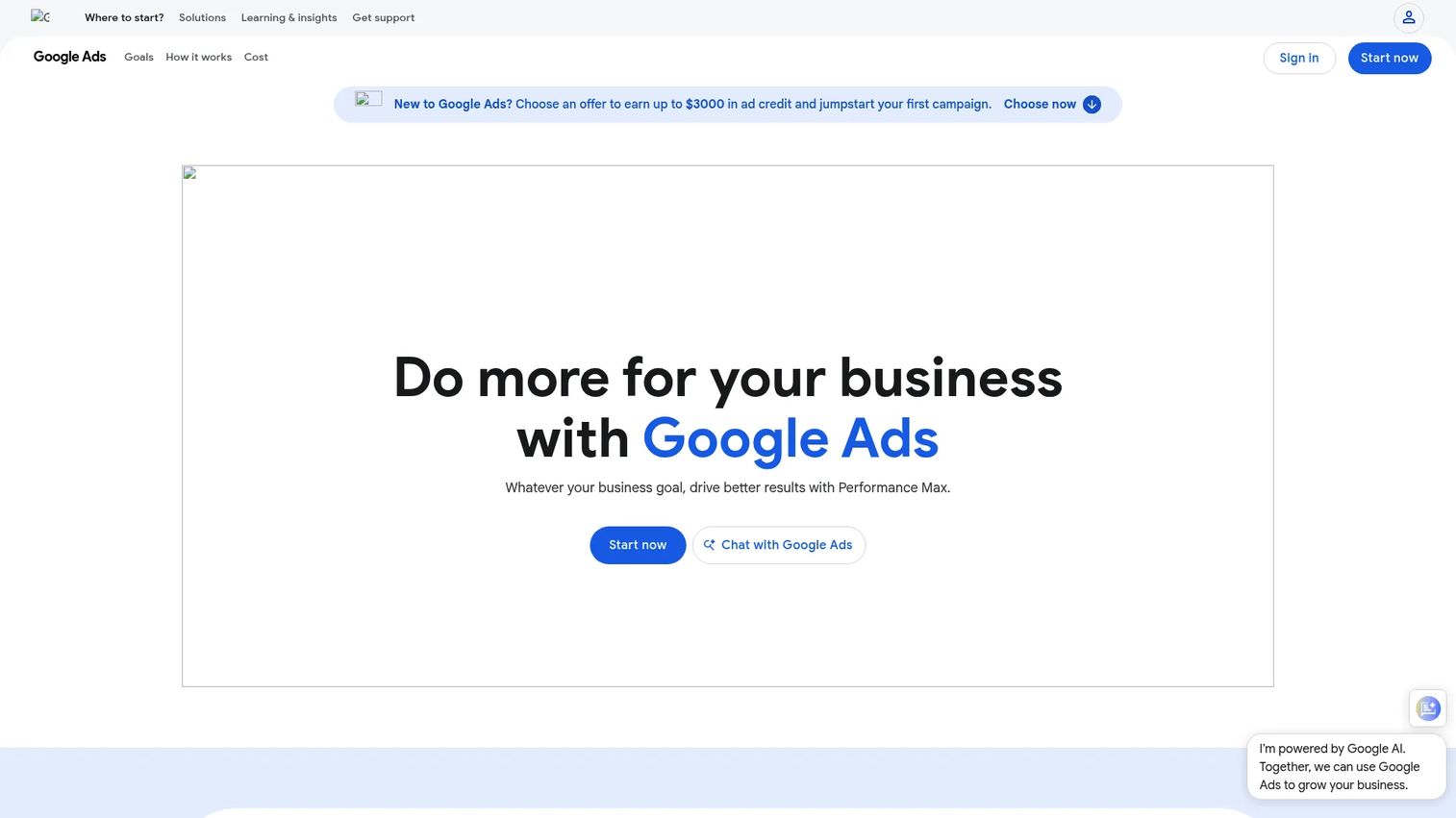
Google Ads is the default starting point for most mobile programs, and for good reason. It gives you many ways to be seen across Google properties, search, display, YouTube, and app promotion, inside a single auction-based platform. For a marketer who needs broad mobile reach without stitching together separate tools, that consolidation is the whole pitch.
The app promotion side is built for mobile growth teams. You can reach people interested in apps like yours to drive installs, or choose to re-engage current users to drive more in-app actions. That covers both acquisition and reactivation in one campaign type. Device targeting and OS targeting let you narrow to the hardware and platform that converts, which matters when iOS and Android perform differently.
Best for: businesses that want paid search and cross-channel mobile advertising on Google properties, all managed in one place.
Key strengths
- Scale and inventory: Access to search, display, YouTube, and Shopping inventory from one platform.
- Bid optimization: Automated bidding strategies that tune toward installs, conversions, or value.
- Audience targeting: Device, OS, geography, and interest targeting for precise mobile reach.
Why choose Google Ads: It's the most flexible option for teams that run multiple campaign types and want one platform to manage search, display, video, app promotion, and remarketing. The auction model means you control spend, and the cross-channel reach means you rarely outgrow it. For marketers proving ROI, the depth of conversion tracking is the real draw.
Google Ads pricing: Google Ads does not publish subscription-style plan prices. You control your own ad spend and pay per click or per lead depending on campaign type, so real cost depends on CPC and CPM competition in your category. There's no platform fee to start. G2 reviewers rate it 4.3/5.
2. Meta Ads
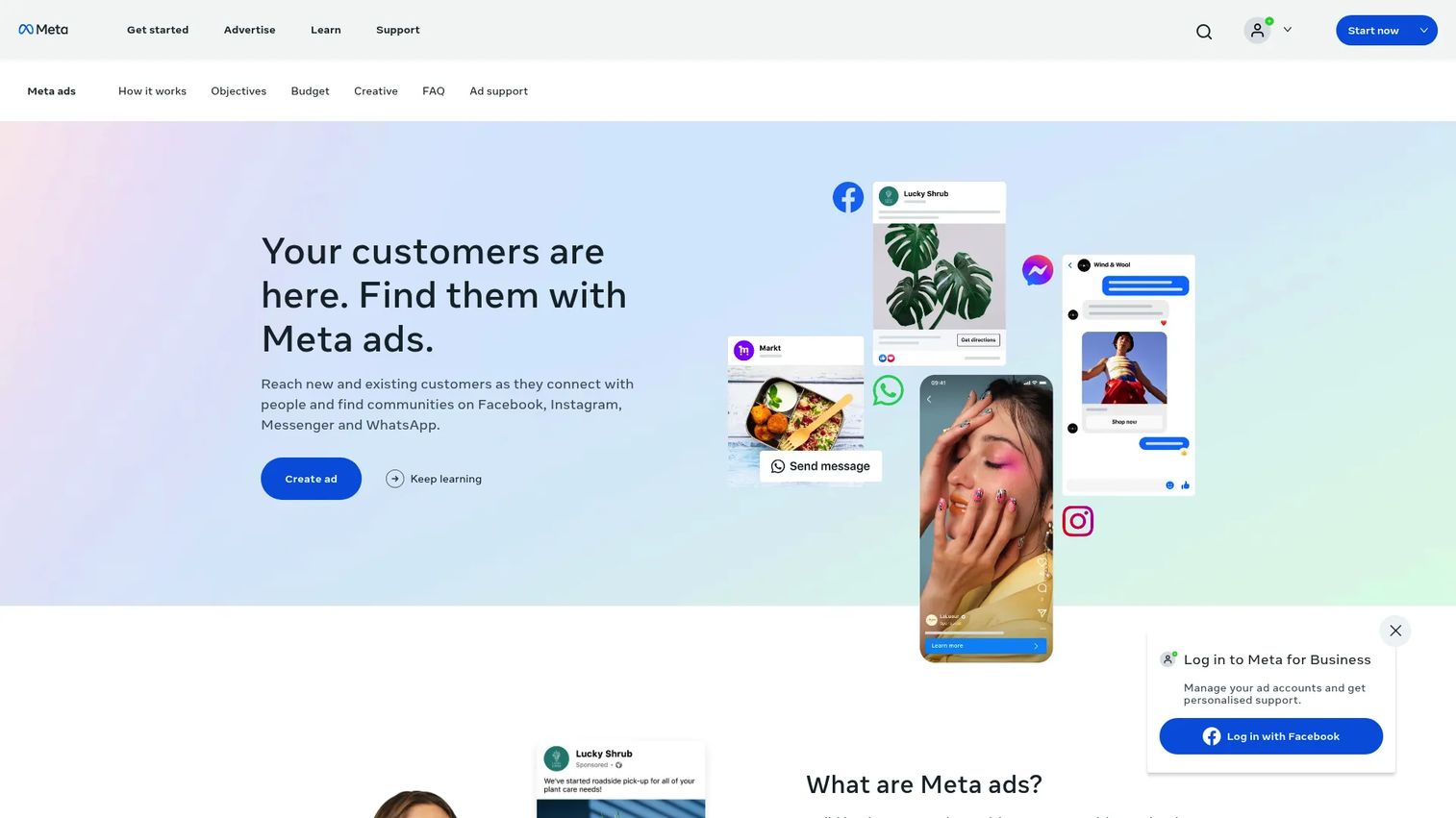
Meta Ads is the strongest option when your audience lives in social feeds. It runs paid campaigns across Facebook, Instagram, Messenger, and the Audience Network, which extends Meta's reach into third-party apps. For mobile-first creative and granular audience segmentation, few platforms match its depth.
Meta's strength is in how an impression gets priced and placed. Every time there's a chance to show your ad to someone in your audience across Meta platforms such as Facebook, Instagram, and Messenger, it enters an ad auction. That auction balances your bid, estimated action rate, and ad quality, so well-built creative earns cheaper placements. You can buy and run Instagram ads in three ways, giving smaller teams a low-friction entry. Ads that click to message let you reach relevant audiences and send those who click directly into a conversation thread, which works well for high-consideration mobile purchases.
Best for: businesses wanting broad social ad reach with detailed audience targeting and multi-placement campaign tools.
Key strengths
- Audience targeting: Detailed interest, behavior, and lookalike segmentation across Meta's user base.
- Ad creative and placements: Native, video, and feed formats optimized for mobile screens.
- Campaign objectives: Budget controls and objective-based optimization for installs and re-engagement.
Why choose Meta Ads: It's the go-to for creative testing and social discovery, where the format and the feed matter as much as the targeting. Teams running app installs, re-engagement, and brand campaigns get strong mobile-native placements and a mature auction. If your buyers scroll before they search, Meta belongs in the stack.
Meta Ads pricing: Meta Ads is budget-based, not plan-based. Cost depends on campaign factors like audience, placement, and competition, and Meta recommends starting with at least USD 5 per day. You can set daily or lifetime budgets and there's no platform subscription fee. G2 reviewers rate Facebook for Business 4.2/5.
3. Bing Ads
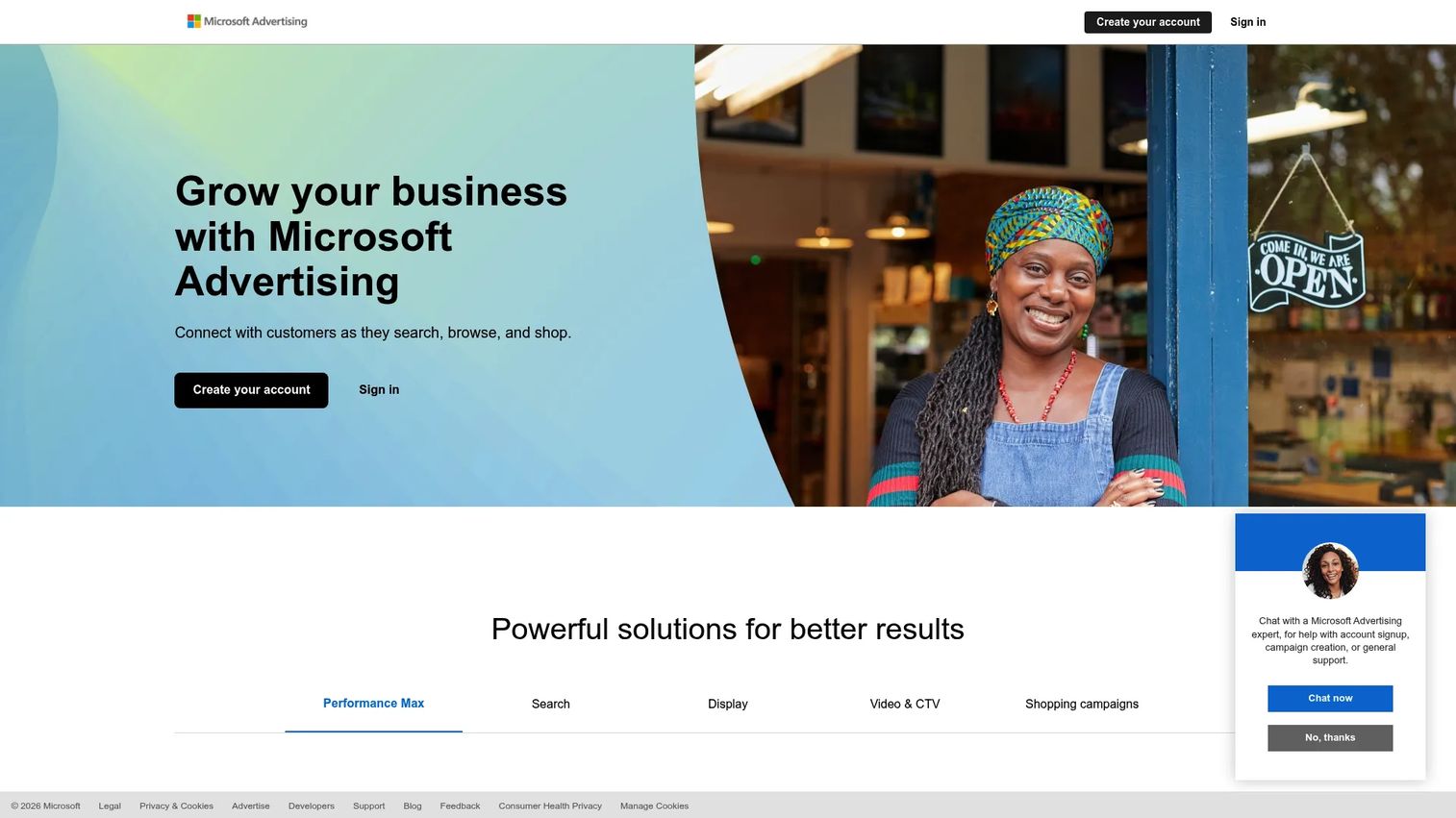
Bing Ads, now branded Microsoft Advertising, runs search, display, video, retail, and performance campaigns across Microsoft and partner inventory. Its value for mobile marketers is intent-driven search traffic that sits beyond Google, often at a lower CPC because competition is thinner.
For teams wanting search inventory beyond a single provider, Bing extends reach across Bing, Yahoo, DuckDuckGo, and partner properties. It supports device, geography, language, and schedule controls, so you can isolate mobile traffic and tune bids for it specifically. Copilot-assisted campaign creation speeds up setup for smaller teams without a dedicated paid-search specialist. The mobile search audience here skews differently than Google's, which can surface incremental conversions a Google-only program misses.
Best for: advertisers wanting Microsoft Search access plus cross-channel campaign management.
Key strengths
- Search reach: Ads across Bing, Yahoo, DuckDuckGo, and partner inventory.
- Display and native: Placements across Microsoft properties for awareness and consideration.
- Bid optimization: Copilot-assisted setup and automated bidding for efficient CPC.
Why choose Bing Ads: It's the practical second search channel for marketers who've maxed out Google and want incremental, intent-driven mobile reach. Lower competition often means lower CPCs, which can improve blended search efficiency. If you measure search performance by CPC and conversion quality, Bing earns a test budget.
Bing Ads pricing: Microsoft Advertising does not expose public plan pricing or tier names. Like other search platforms, it's auction-based, so cost depends on keyword competition and your bids. There's no platform subscription to start a campaign. G2 reviewers rate Microsoft Advertising 4.3/5.
4. AdMob
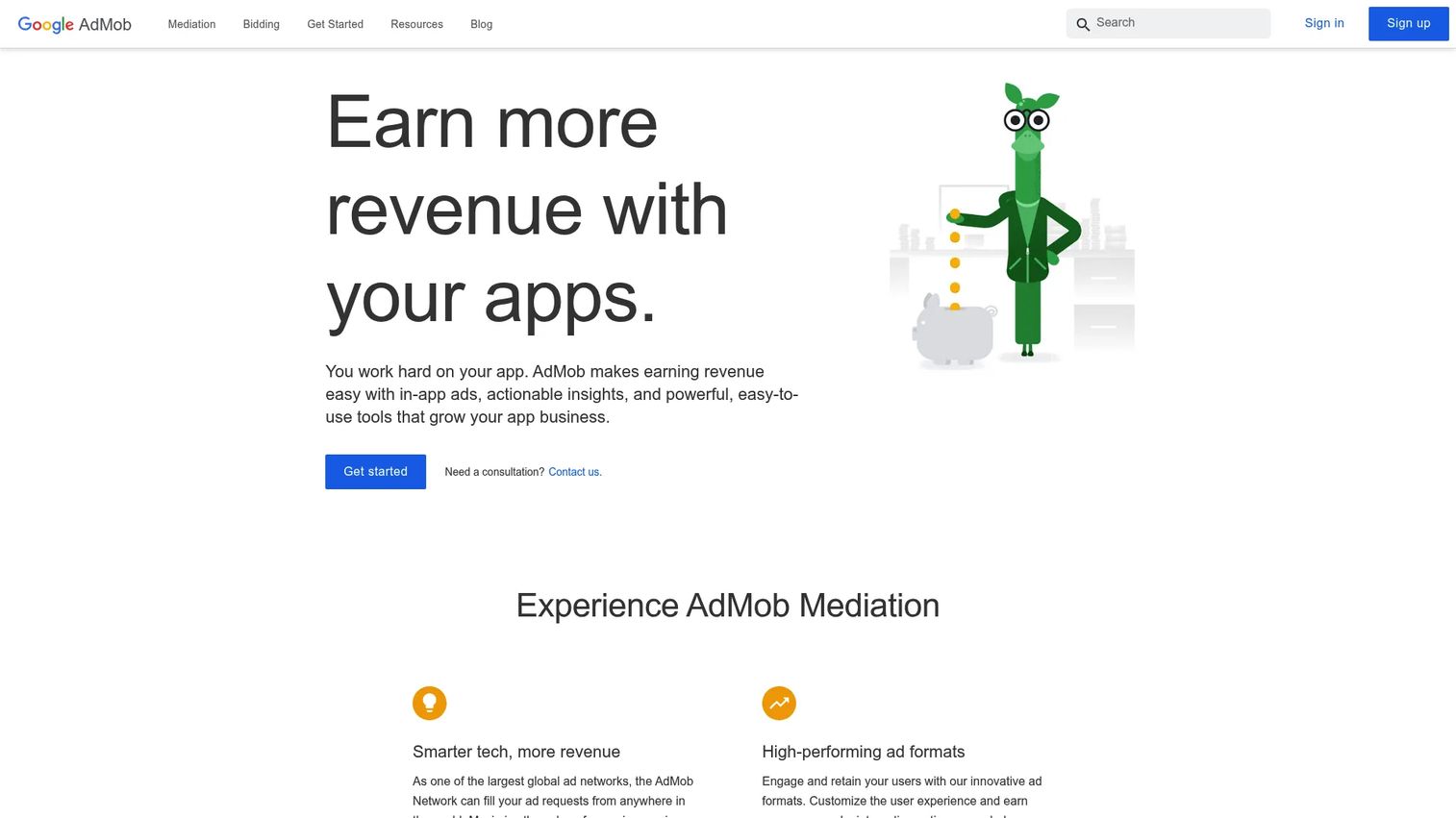
AdMob is Google's mobile app monetization platform, and it sits on the supply side of the mobile ad ecosystem. It helps app developers earn revenue by showing ads inside their apps, while connecting advertiser demand to that in-app inventory. If your mobile strategy involves both buying in-app placements and understanding where in-app inventory comes from, AdMob is the reference point.
It supports the full range of mobile ad formats, banner, native, interstitial, and rewarded video, which gives publishers and advertisers flexibility in how ads appear. Ad mediation across multiple mobile ad networks lets a publisher fill inventory at the best available price, and bidding pulls demand into a unified auction. Analytics and reporting tie into Google Analytics for Firebase, so engagement and revenue data live alongside product usage.
Best for: mobile app developers monetizing with in-app ads and mediation, and advertisers who want access to that in-app inventory.
Key strengths
- Ad formats: Rewarded, native, banner, and interstitial placements for in-app advertising.
- Ad mediation: Fills inventory across multiple mobile ad networks for better yield.
- Analytics: Reporting through Google Analytics for Firebase ties revenue to product usage.
Why choose AdMob: It's the natural fit for teams inside the Google ecosystem who need a clear line between in-app inventory, mediation, and reporting. Publishers monetize without managing a dozen network integrations. Advertisers reach engaged in-app audiences with high-impact formats like rewarded video.
AdMob pricing: AdMob is free to use. Google states there's no cost to the platform itself; revenue comes from the ads shown in your app, and Google shares ad revenue with developers. That makes it a low-barrier entry for in-app monetization. G2 reviewers rate Google AdMob 4.3/5.
5. Digital Turbine
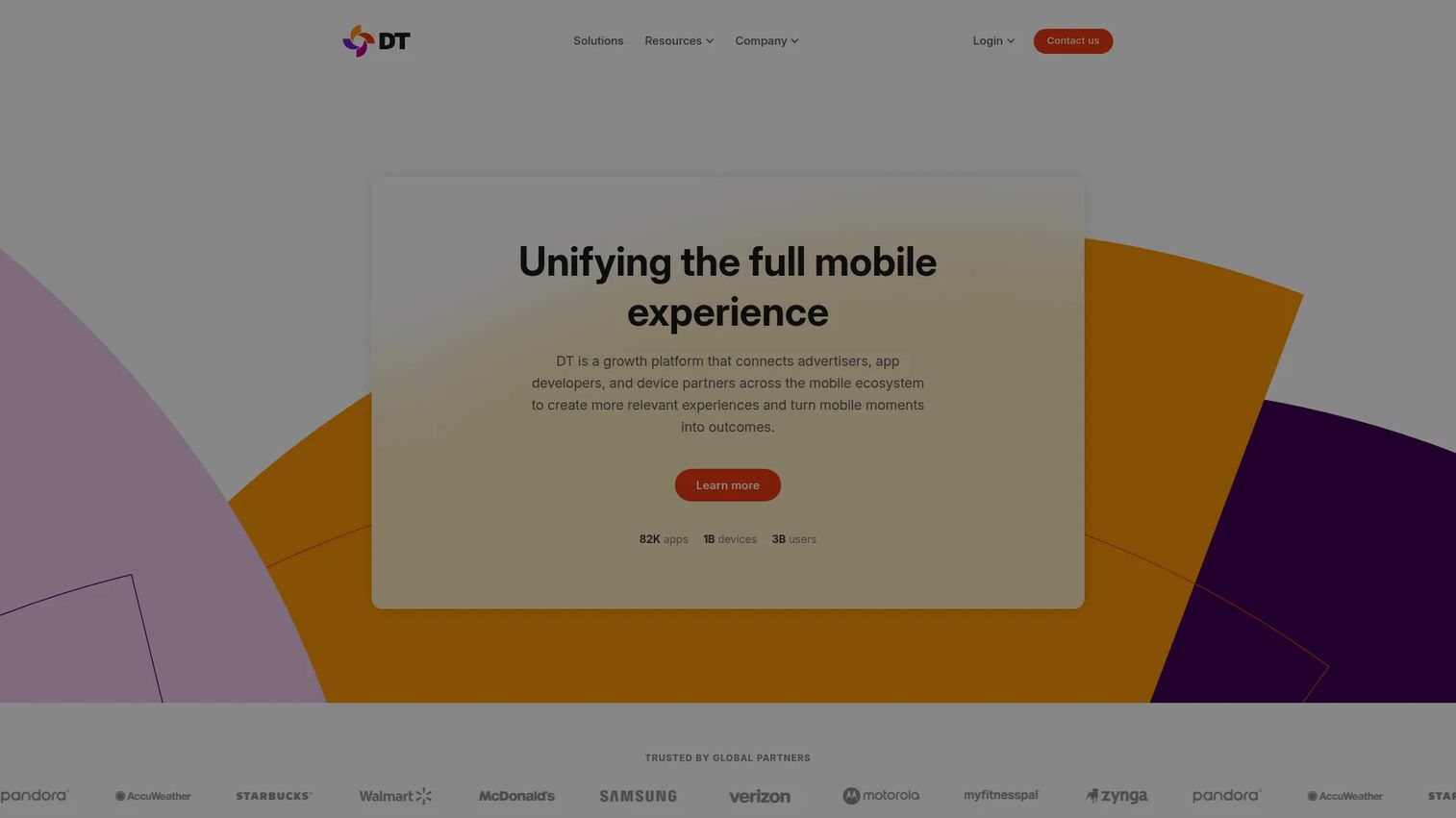
Digital Turbine is a mobile growth and monetization platform that serves advertisers, app developers, and device partners. Its differentiator is device-level reach: it can place apps and content discovery experiences directly on devices, a distribution channel most ad platforms can't touch. For mobile growth teams that need more than feed and search placements, that's a meaningful edge.
The platform spans the full funnel. DT Launchpad handles app distribution, DT Ads covers full-funnel advertising and monetization, and DT Ignite drives device-level app and content discovery. That combination gives advertisers richer in-app placement options and more specific mobile audience controls than a standard ad network. For teams running large-scale user acquisition, the device-level angle reaches users at moments most campaigns miss.
Best for: enterprises needing mobile user acquisition, monetization, and device-level distribution.
Key strengths
- DT Launchpad: App distribution that reaches users at the device level.
- DT Ads: Full-funnel advertising and monetization in one platform.
- DT Ignite: Device-level app and content discovery for differentiated reach.
Why choose Digital Turbine: It's the option for larger mobile advertisers who want distribution beyond the usual feed and search inventory. The device-level placement model and full-funnel coverage suit enterprise user-acquisition teams with scale and complexity. G2 reviewers give it a 4.7/5 rating, the highest on this list.
Digital Turbine pricing: Digital Turbine does not publish public pricing on its site. Like most enterprise mobile growth platforms, terms are arranged directly, so cost depends on your scale and the products you use across DT Launchpad, DT Ads, and DT Ignite. Contact the vendor for a tailored quote. G2 reviewers rate it 4.7/5.
6. Apple Search Ads
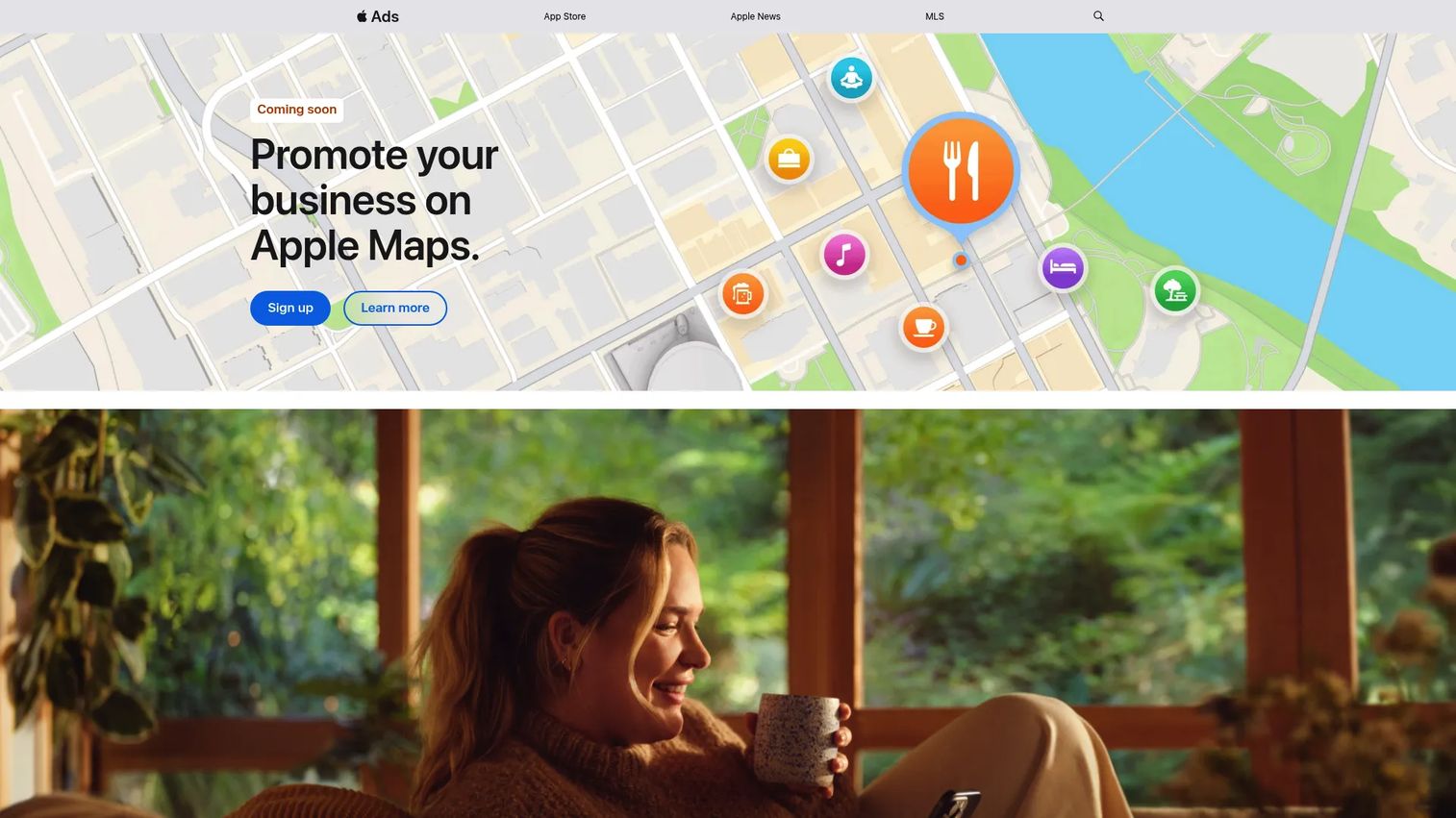
Apple Search Ads, now Apple Ads, is the self-serve platform for promoting apps across the App Store. For iOS-focused growth teams, it captures the highest-intent moment in the mobile install journey: the second someone searches the App Store for what your app does. App store ads here convert because they meet demand at the exact point of intent.
It places ads on the App Store Today tab, Search tab, search results, and product pages, giving you several surfaces for app promotion. Keyword-based search campaigns support broad and exact match, so you can bid on branded terms, category keywords, and competitor names. Custom product pages, audience settings, and campaign APIs give larger teams the controls to scale. Apple reports industry-leading conversion rates over 60% for ads at the top of search results, which reflects how strong install intent is at that moment.
Best for: app developers and marketers buying App Store search and browse placements directly from Apple.
Key strengths
- App Store placements: Ads on the Today tab, Search tab, search results, and product pages.
- Keyword campaigns: Broad and exact match for branded and category terms.
- Campaign controls: Custom product pages, audience settings, and campaign APIs.
Why choose Apple Search Ads: It's the cleanest fit for iOS-only or iOS-heavy growth teams that want to own App Store visibility. Buying branded search protects your install funnel; bidding category keywords captures new demand. With install intent that high, the channel often delivers efficient cost-per-install.
Apple Search Ads pricing: Apple Ads uses cost-per-tap pricing with no minimum spend, so you pay only when someone taps your ad. New accounts can receive a USD 100 promo credit to start testing. Final cost depends on keyword competitiveness. G2 reviewers rate it 4.2/5.
7. Viant
Viant is an AI-powered programmatic advertising platform built around an omnichannel DSP. It matters for teams that need both mobile reach and stronger measurement than a standard ad platform provides. Where most tools stop at clicks, Viant connects programmatic mobile ads to real-world outcomes through identity resolution and measurement.
For local, retail, and omnichannel campaigns, it brings the targeting that mobile demands. Geofencing and proximity targeting reach users by location. Dynamic creative tailors the ad to the audience and context. Foot-traffic attribution measures whether a mobile exposure drove a physical store visit. Household ID identity resolution ties exposures across devices to a single household, which sharpens both targeting and measurement. You can go beyond brand awareness and measure CTV and mobile campaigns against KPIs like site visits and in-store purchasing.
Best for: advertisers needing a buy-side omnichannel DSP with identity and measurement tools.
Key strengths
- Omnichannel DSP: Programmatic buying across mobile, CTV, display, and audio.
- Household ID: Identity resolution that connects exposures across devices.
- Advanced measurement: Foot-traffic attribution and outcome-based reporting.
Why choose Viant: It's the pick for marketers who need more than a single-channel ad platform and care deeply about mobile ad attribution. The combination of geofencing, dynamic creative, and foot-traffic measurement suits retail and local campaigns where the conversion happens offline. Viant's AI-powered tools help optimize spend toward measurable outcomes.
Viant pricing: Viant does not publish a public price. The company says pricing is flexible and tailored to client needs, so cost depends on your channels, data usage, and scale. Reach out for a custom quote based on your campaign mix. G2 reviewers rate Viant 4.2/5.
Considerations before you buy
Targeting and inventory fit
Match the platform's targeting to your audience and its inventory to where they spend time. Device targeting, OS targeting, and location-based controls matter for local and app campaigns. Confirm the platform reaches the in-app or mobile web inventory your buyers actually use before you commit.
Measurement and attribution depth
This is where most mobile spend leaks. Check how the platform handles mobile ad measurement and whether its attribution model matches your reporting. Cross-reference with your attribution software and any customer data platform so the numbers reconcile instead of fighting each other.
Ad format coverage
A platform is only as useful as the formats it serves into the placements you care about. If you need rewarded video for in-app monetization or interstitials for installs, confirm support. Awareness campaigns lean on banner and native; conversion campaigns lean on search and app-store placements.
Integrations and reporting
Your mobile ad platform has to feed the rest of your stack. Verify it connects to your analytics, CRM, and reporting tools, and that exports match the granularity you need. Clean integration is what makes audience segmentation and cross-channel reporting possible.
Cost and operating model fit
Auction-based platforms can work for almost any budget when tightly controlled, but the operating model differs. Search and social reward hands-on optimization; DSPs reward strategy and data. Pick the model your team can actually run, not the one with the most features.
Conclusion
The right mobile advertising software is the one that matches your primary objective, not the one with the longest feature list. If you want broad reach and performance control in one place, start with Google Ads. If your audience lives in social feeds, Meta Ads gives you the creative depth and segmentation to win there. Need incremental search at a lower CPC? Add Bing Ads. Monetizing or buying in-app inventory points you to AdMob, while device-level distribution at scale is Digital Turbine's lane.
For iOS install intent, nothing matches Apple Search Ads at the point of App Store search. And when local, retail, or omnichannel measurement is the priority, Viant's DSP, geofencing, and foot-traffic attribution earn the spend.
The pattern across all of them: reach is easy, measurement is the differentiator. Start with the platform that fits your main mobile objective, then validate attribution before you scale spend. A campaign you can measure is a campaign you can defend, and a defensible number is what buys you the budget to grow.
FAQs
Mobile advertising software is any platform used to plan, buy, target, optimize, and measure ads served on mobile devices. The category includes ad platforms, demand-side platforms (DSPs), mobile ad networks, and app-store ad tools. Each accesses different inventory and serves different stages of the funnel, from awareness through install and conversion.
In-app advertising runs inside mobile apps, while mobile web advertising runs in the mobile browser. They use different inventory, different tracking methods, and often different creative formats. In-app placements support formats like rewarded video and interstitials; mobile web leans on banner and native. Plan and measure them as separate channels, then combine the data for a full picture.
App-install campaigns typically need a mix of search, social, and in-app placements. Apple Search Ads captures iOS install intent at the App Store, Google Ads drives installs across search, display, and YouTube, and Meta Ads reaches install-ready audiences in social feeds. The best choice depends on your platform mix and where your audience discovers apps.
Local campaigns depend on geofencing, proximity targeting, and foot-traffic attribution. Omnichannel DSPs like Viant connect a mobile ad exposure to a real-world store visit, which standard ad platforms can't measure as cleanly. Look for location-based targeting controls and outcome measurement that ties exposure to in-store action.
Measurement spans impressions, CTR, installs, conversions, CPA, and ROAS, all connected through an attribution model. Mobile measurement partners (MMPs) and analytics integrations help reconcile platform-reported numbers with your own data. The quality of your measurement depends heavily on clean event tracking and a setup that matches how your buyers actually move between mobile web and apps.
Evaluate six things: targeting controls, inventory access, ad format coverage, measurement and attribution depth, integrations, and cost model. Channel fit matters more than feature count. A platform that reaches your exact audience with measurable attribution beats a feature-rich tool that doesn't match your channel mix or reporting stack.
Yes, when you focus. Smaller teams should prioritize one or two channels with clear attribution rather than spreading thin across many. Auction-based platforms like Google Ads, Meta Ads, and Apple Search Ads can work well on modest budgets when tightly controlled. Start with a narrow use case, prove the attribution, then scale what works.