You've built a demo library. You've created custom walkthroughs for three verticals. You've trained two junior sales enablement specialists, answered a 200-question security questionnaire, and still found time to run four live demos this week.
Then leadership asks: "What's the ROI of all that?"
And you don't have a clean answer.
You're not alone. According to the Sales Enablement Collective, 49% of sales enablers disagree with their own leadership on which metrics matter most. That's not a minor misalignment. That's half the room arguing about what to measure while deals are moving (or stalling) in the background.
Most sales enablement metrics articles list 60+ numbers without explaining which ones matter for presales teams, or what to do when a metric looks bad. This guide covers 25 metrics that connect sales enablement activity to deal outcomes, with benchmarks, tracking methods, and practical next steps for each one. If you're also evaluating tools to support your presales workflow, check out our roundup of the best presales software tools.
TL;DR
- Sales enablement metrics fall into three categories: performance (deal outcomes), proficiency (skill and readiness), and productivity (time and efficiency). Track at least two from each.
- The metrics that matter most for presales teams are technical win rate, demo-to-close conversion, time to productivity, and content engagement, not just quota attainment.
- Tracking metrics without benchmarks is noise. This guide includes realistic ranges for B2B SaaS teams at the mid-market level.
- Start with 5 to 7 metrics, not 25. Add complexity only after you can act on the first set.
- Every metric should drive a decision. If a number hasn't changed anything you do in the last 90 days, drop it.
What are sales enablement metrics (and how are they different from KPIs)?
A sales enablement metric is a quantifiable data point that measures how well your enablement activities (content, training, tools, processes) help your sales team close deals. That's it. No jargon needed.
The confusion starts when people use "metrics" and "KPIs" interchangeably. They're related, but they're not the same thing.
A metric is any measurable data point. A KPI (key performance indicator) is a metric that's been selected as a key indicator of success for a specific goal. All KPIs are metrics, but not all metrics are KPIs.
Here's a concrete example: demo completion rate is a metric. If your sales team decides that demo completion rate above 65% is the threshold for a qualified opportunity, it becomes a KPI. The number didn't change. The decision to tie it to a specific business goal did.
| Attribute | Metric | KPI |
|---|---|---|
| Definition | Any measurable data point | A metric tied to a specific business goal |
| Example | Number of demos delivered | Demo-to-close conversion rate > 25% |
| Who sets it | Anyone tracking data | Leadership, aligned to OKRs |
| Actionability | Descriptive | Prescriptive |
This distinction matters more than it seems. When your VP of Sales says "we need better enablement KPIs," they're asking for a small set of numbers tied to business outcomes. When your RevOps team says "we need to track more enablement metrics," they're asking for broader data coverage. Different requests. Different outputs.
Why the distinction matters for presales teams
Here's the problem most SEs face: they get measured on AE-owned KPIs.
Quota attainment. Revenue closed. Pipeline generated. These are important numbers, but they're outcomes of many factors. The AE's negotiation skill, pricing decisions, champion strength, competitive timing. A sales enablement specialist can run a flawless demo and still lose the deal because the prospect's budget got frozen.
That doesn't mean sales enablement shouldn't track performance metrics. It means they also need metrics that reflect their direct contribution: demo-to-close rate, technical win rate, content engagement, POC conversion. These are the numbers that tell you whether the SE's work is landing, independent of the 15 other variables that determine whether a deal closes.
If you're a presales manager building a business case for headcount or tooling, you need both. Performance metrics show the business impact. Proficiency and productivity metrics show what your sales team actually controls. The right sales analytics software can help you pull these numbers together in one place.
The goal of this article is to give you the full picture, filtered through the lens of "can an sales enablement actually influence this number?"
The three categories of sales enablement metrics
Most frameworks for measuring sales enablement effectiveness organize metrics into three categories: Performance, Proficiency, and Productivity. This framework appears across multiple industry sources, and it holds up because it captures the full picture of how enablement works.
Performance metrics
Performance metrics measure deal outcomes: win rate, deal size, cycle length, revenue. These are lagging indicators. By the time they move, the enablement activity that caused the change happened weeks or months ago.
They're the metrics leadership cares about most. They're also the hardest to attribute directly to sales enablement work.
Proficiency metrics
Proficiency metrics measure skill and readiness: training completion, certification rates, time to productivity, demo quality scores. These are leading and lagging indicators in sales measurement. They predict future performance before it shows up in the revenue numbers.
For presales teams, proficiency metrics are often the most actionable. You can improve demo quality this week. You can't improve last quarter's win rate.
Productivity metrics
Productivity metrics measure efficiency and time allocation: content usage, demo prep time, sales enablement utilization rate, time spent on non-selling activities. These tell you whether your sales team is spending time on the right things.
Here's why tracking from all three categories matters: performance metrics alone are too lagging. Proficiency metrics alone are too disconnected from revenue. Productivity metrics alone can be gamed (you can reduce demo prep time by skipping prep). You need the combination to get a clear signal.
25 sales enablement metrics to track
This is the core section. Each metric includes what it measures, how to calculate it, a benchmark range for B2B SaaS mid-market teams, why it matters for presales, and what to do if the number is off.
Performance metrics (deal outcomes)
1. Win rate
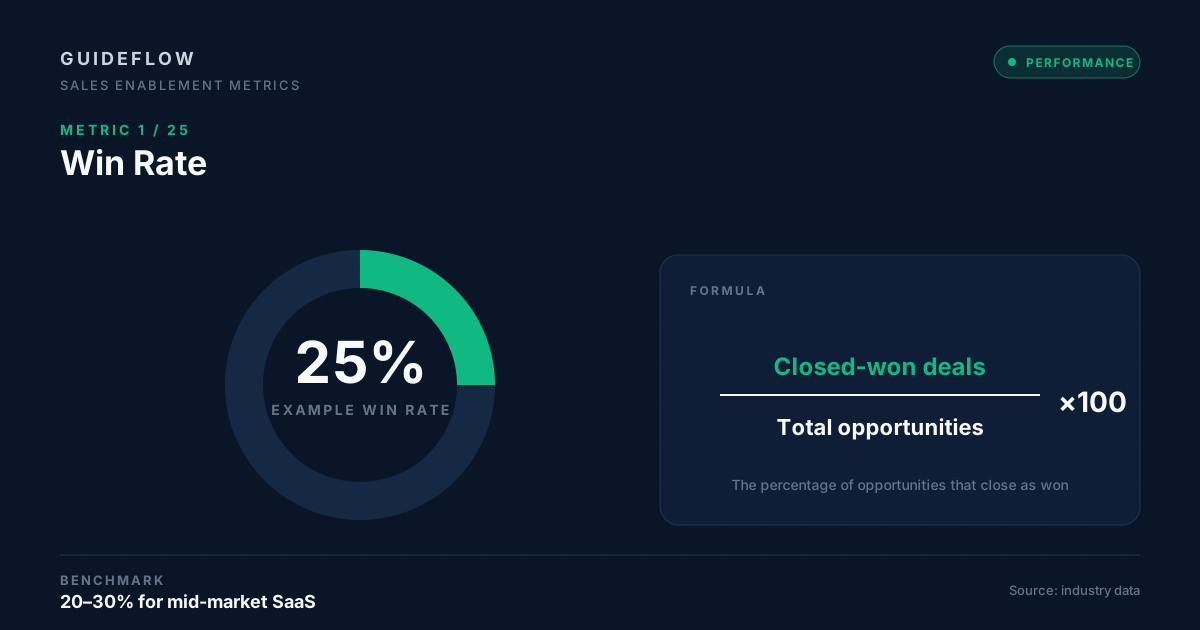
What it measures: The percentage of opportunities that close as won.
Formula: Closed-won deals / total opportunities × 100
Benchmark: 20 to 30% for mid-market SaaS.
Why it matters for presales: A low win rate with high sales enablement involvement suggests demos or technical validation aren't landing. If sales enablement specialists are on 80% of deals and win rate is below 20%, the problem might be qualification, demo quality, or both.
If it's off: Review lost-deal feedback for "didn't understand the product" or "competitor had a better demo" signals.
2. Competitive win rate
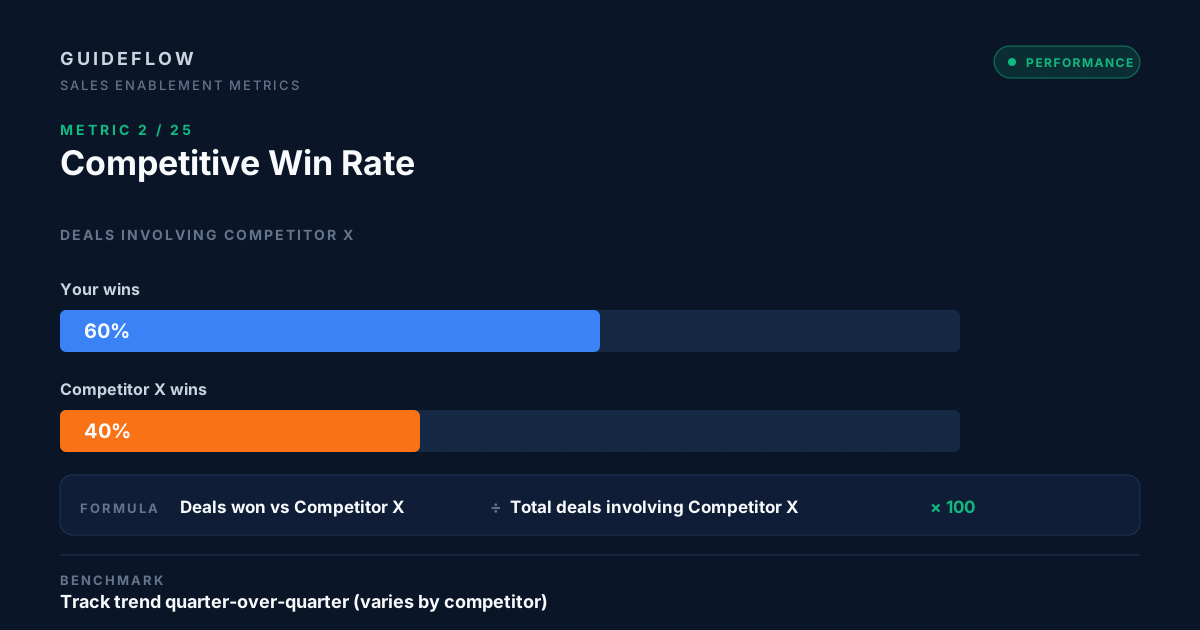
What it measures: Deals won against a specific competitor versus total deals where that competitor was present.
Formula: Deals won vs. Competitor X / total deals involving Competitor X × 100
Benchmark: Varies by competitor. Track the trend quarter over quarter.
Why it matters for presales: This shows whether your demo and technical positioning are stronger or weaker than the alternative. A declining competitive win rate against one specific competitor is a clear signal that your battlecards or demo narrative need updating. Competitive intelligence tools can help you systematize the data collection behind this metric.
If it's off: Run a win/loss analysis focused on that competitor. Identify the specific technical objections you're losing on.
3. Average deal size
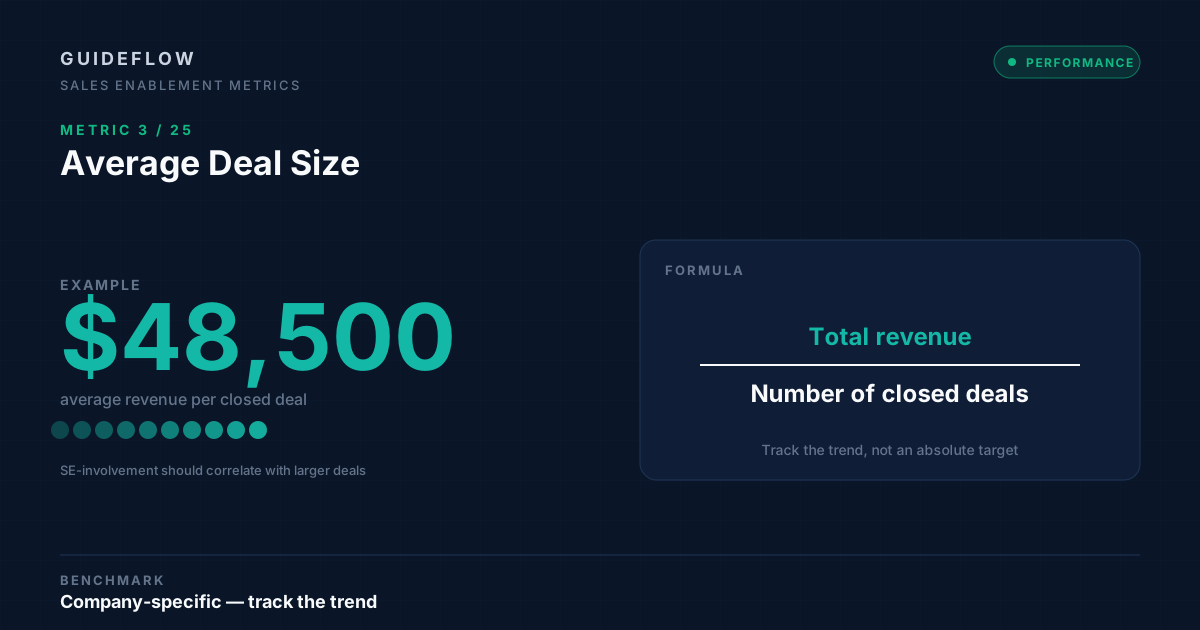
What it measures: The mean revenue per closed deal.
Formula: Total revenue / number of closed deals
Benchmark: Company-specific. Track the trend.
Why it matters for presales: Sales enablement involvement in larger deals should correlate with higher deal sizes. If it doesn't, the sales enablement specialist is being pulled into deals that don't need technical support, or the SE isn't effectively expanding scope during technical discussions.
If it's off: Audit which deals involve sales enablement and whether sales enablement involvement correlates with larger deal values.
4. Sales cycle length
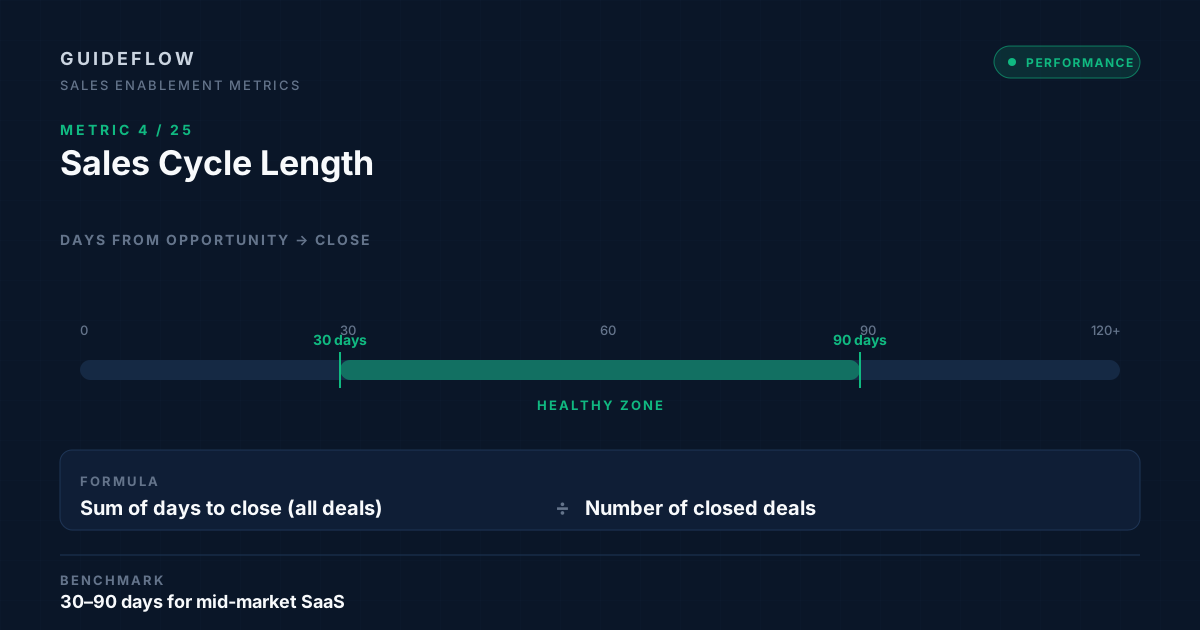
What it measures: Average days from opportunity creation to close.
Formula: Sum of days to close for all deals / number of closed deals
Benchmark: 30 to 90 days for mid-market SaaS.
Why it matters for presales: Long cycles often indicate stalled technical evaluations, unclear POC criteria, or security review bottlenecks. Sales enablement specialists sit at the center of all three.
If it's off: Map where deals stall by stage. If the bottleneck is between "demo delivered" and "technical validation complete," that's an sales enablement-influenced problem.
5. Quota attainment rate
What it measures: Revenue closed versus quota target.
Formula: Revenue closed / quota target × 100
Benchmark: 60 to 70% of reps hitting quota is typical across B2B SaaS.
Why it matters for presales: It's the ultimate lagging indicator. If quota attainment improves after an enablement investment, you have a strong signal. But it moves slowly and is influenced by too many variables to be your primary sales enablement metric.
If it's off: Don't panic. Look at the leading indicators (proficiency and productivity) first.
6. Pipeline velocity
What it measures: The speed at which revenue moves through your pipeline.
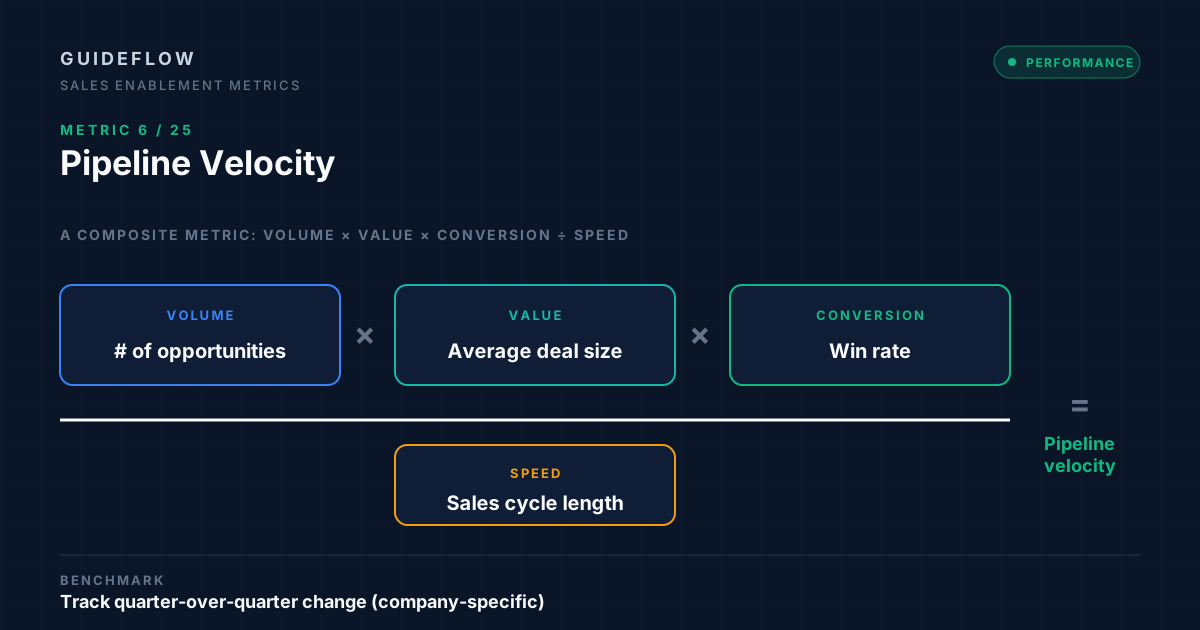
Formula: (Number of opportunities × average deal size × win rate) / sales cycle length
Benchmark: Company-specific. Track quarter-over-quarter change.
Why it matters for presales: Pipeline velocity captures the combined effect of sales enablement activities on deal flow. It's the single best "composite" sales performance metric because it accounts for volume, value, conversion, and speed simultaneously. Revenue operations software can automate this calculation across your pipeline.
If it's off: Identify which variable is dragging. Is it fewer opportunities, smaller deals, lower win rate, or longer cycles?
7. Revenue influenced by sales enablement
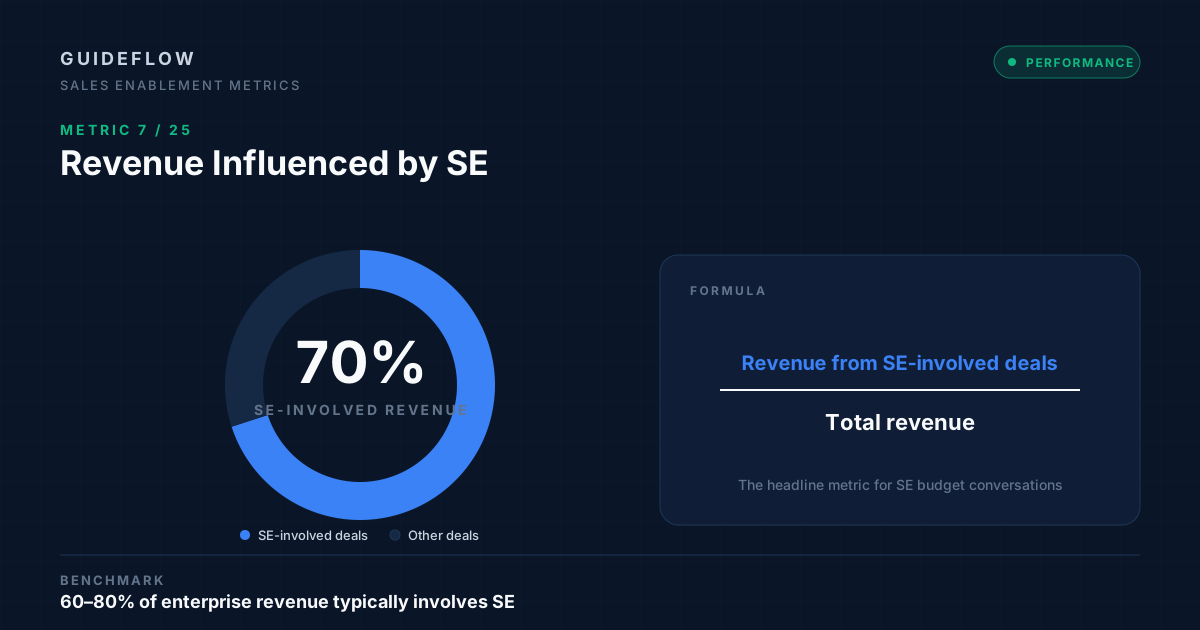
What it measures: Revenue from deals where a sales enablement specialist was actively involved.
Formula: Sum of revenue from sales enablement-involved deals / total revenue × 100
Benchmark: 60 to 80% of enterprise revenue typically involves sales enablement participation.
Why it matters for presales: This quantifies the SE team's contribution to the number. If you're a presales manager making a headcount case, this is the metric that gets attention in budget conversations.
If it's off: If sales enablement-influenced revenue is low, either SEs aren't being pulled into the right deals or deal tagging in the CRM is inconsistent. A well-configured CRM software is essential for accurate tagging.
8. Demo-to-close conversion rate
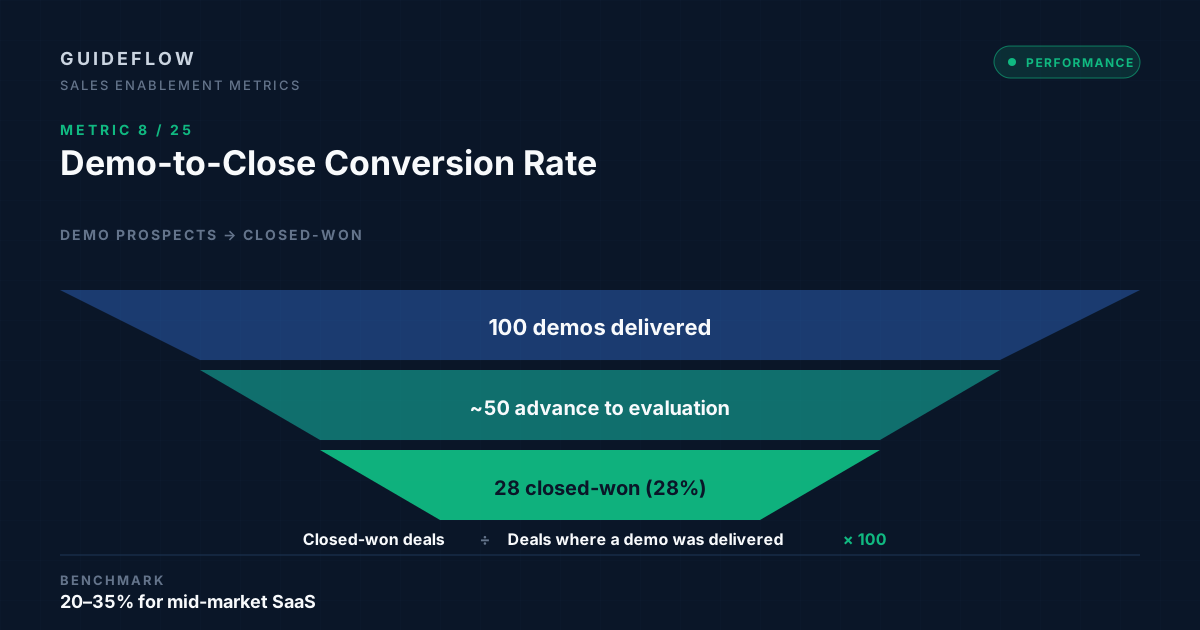
What it measures: The percentage of deals where a demo was delivered that ultimately close.
Formula: Deals closed-won / deals where a demo was delivered × 100
Benchmark: 20 to 35% for mid-market SaaS.
Why it matters for presales: This directly measures demo effectiveness. It's the single most important metric for a sales enablement specialist who wants to know: "Are my demos working?"
If it's off: Record and review demos. Look for patterns: weak discovery, unclear value mapping, too much feature-walking, not enough problem-solving. Shifting from live-only demos to interactive demos can help prospects self-serve and revisit key features, often improving conversion.
Proficiency metrics (skill and readiness)
9. Time to productivity (ramp time)
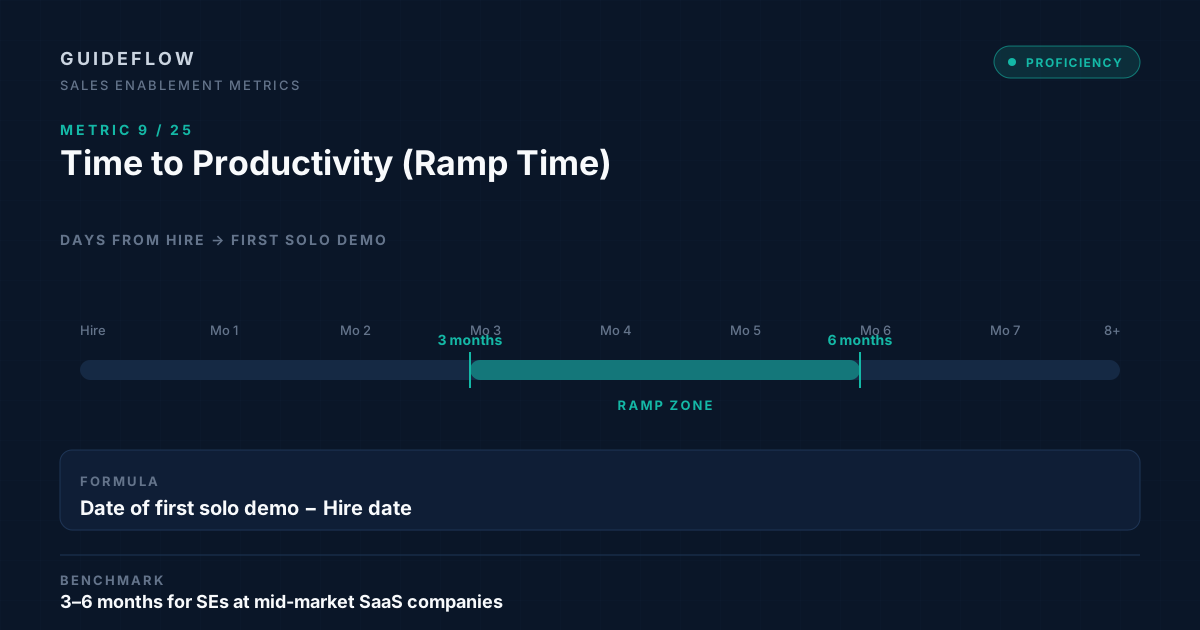
What it measures: Days from hire to first solo demo (or first closed-won deal with sales enablement involvement).
Formula: Date of first solo demo minus hire date
Benchmark: 3 to 6 months for SEs at mid-market SaaS companies.
Why it matters for presales: Reducing ramp time is one of the strongest ROI arguments for enablement investment. If you can get a new SE productive two months faster, that's two months of additional deal coverage.
If it's off: Audit your onboarding program. Are new SEs getting structured demo practice, or are they shadowing for weeks with no clear milestones? Dedicated sales onboarding software can formalize the ramp process.
10. Training completion rate
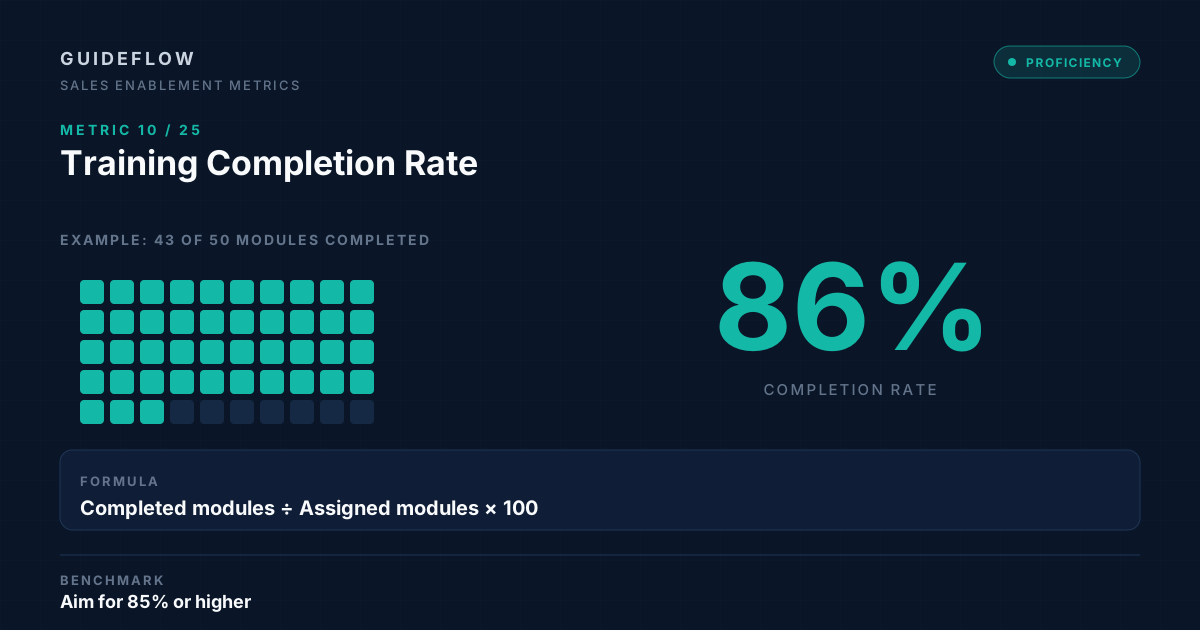
What it measures: Percentage of assigned training modules completed by the sales team.
Formula: Completed modules / assigned modules × 100
Benchmark: Aim for 85%+.
Why it matters for presales: Incomplete training correlates with inconsistent demo quality. If your sales team completes 50% of training, you're getting 50% of the benefit.
If it's off: Check whether the training is relevant, accessible, and time-boxed. Long, generic courses get abandoned. Short, role-specific modules get finished. The right sales training software makes a measurable difference here.
11. Certification pass rate
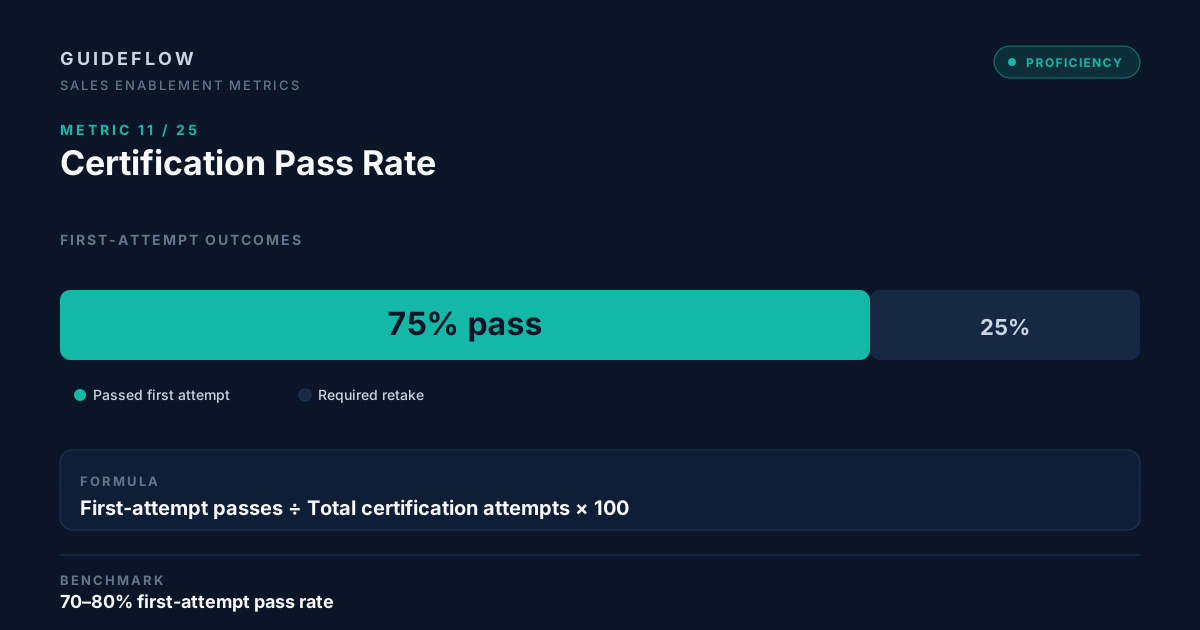
What it measures: Percentage of SEs passing product or technical certifications on first attempt.
Formula: First-attempt passes / total certification attempts × 100
Benchmark: 70 to 80%.
Why it matters for presales: It indicates depth of product knowledge. A low pass rate might mean the certification is too hard, or it might mean the training isn't preparing SEs for the right material.
If it's off: Compare certification content to actual demo scenarios. If the cert tests features nobody demos, the cert needs updating, not the SEs.
12. Demo quality score
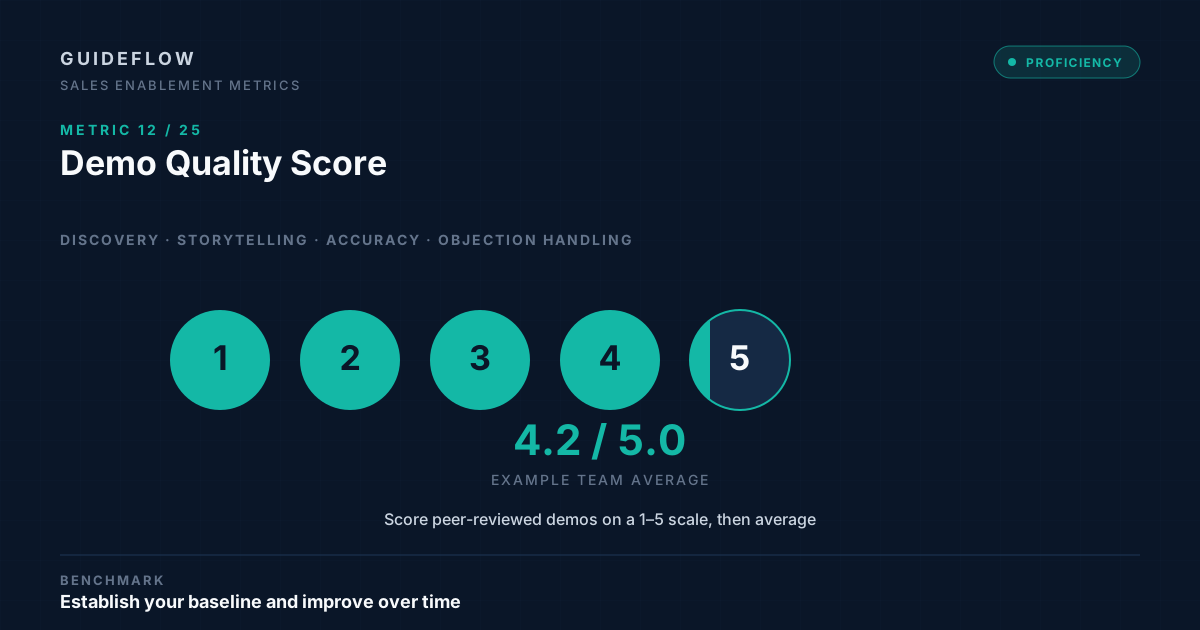
What it measures: Internal scoring of demo recordings across dimensions like discovery, storytelling, technical accuracy, and objection handling.
Formula: Average score across reviewed demos (typically 1 to 5 scale)
Benchmark: Establish your own baseline and track improvement over time.
Why it matters for presales: This is the most direct measure of SE skill. It's also the most underused because it requires someone to actually watch and score demos.
If it's off: Implement peer review. Have senior SEs score two demos per week from junior sales team members. The feedback loop matters more than the score itself. Sales coaching software can streamline this review process with structured scorecards and recording analysis.
13. Technical win rate
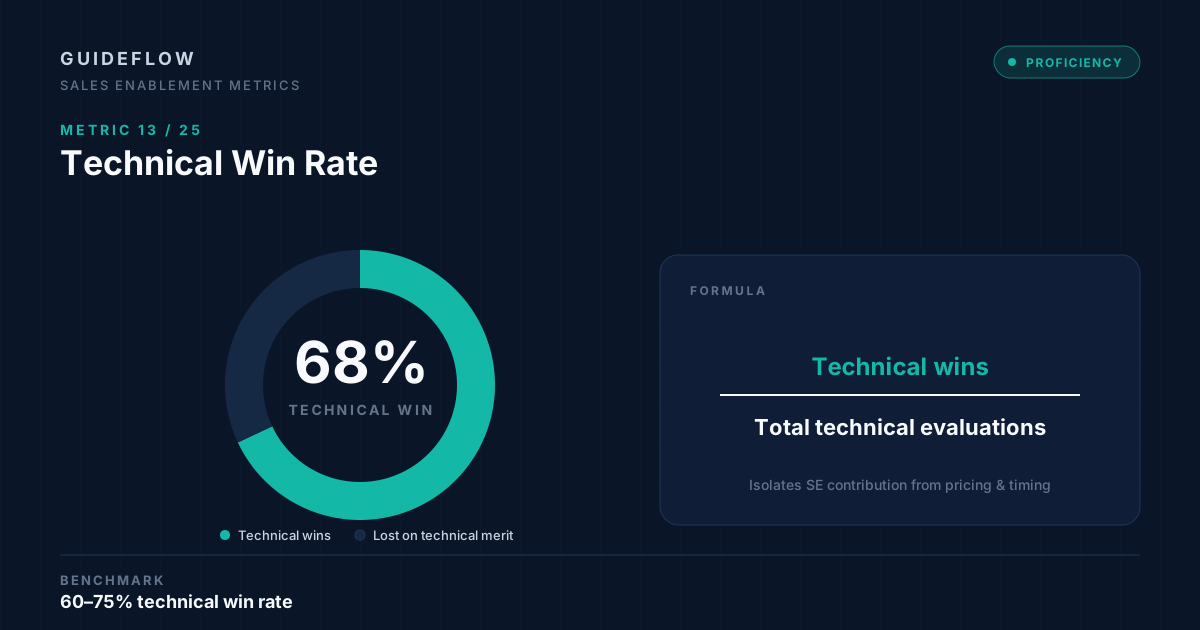
What it measures: Deals where the technical evaluation was won, even if the deal was lost on commercial terms.
Formula: Technical wins / total technical evaluations × 100
Benchmark: 60 to 75%.
Why it matters for presales: This isolates sales enablement contribution from pricing, timing, and champion strength. If your technical win rate is 70% but your overall win rate is 22%, the gap tells you the problem is commercial, not technical.
If it's off: Dig into the technical losses. Are they product gaps, demo execution issues, or competitive positioning problems?
14. POC conversion rate
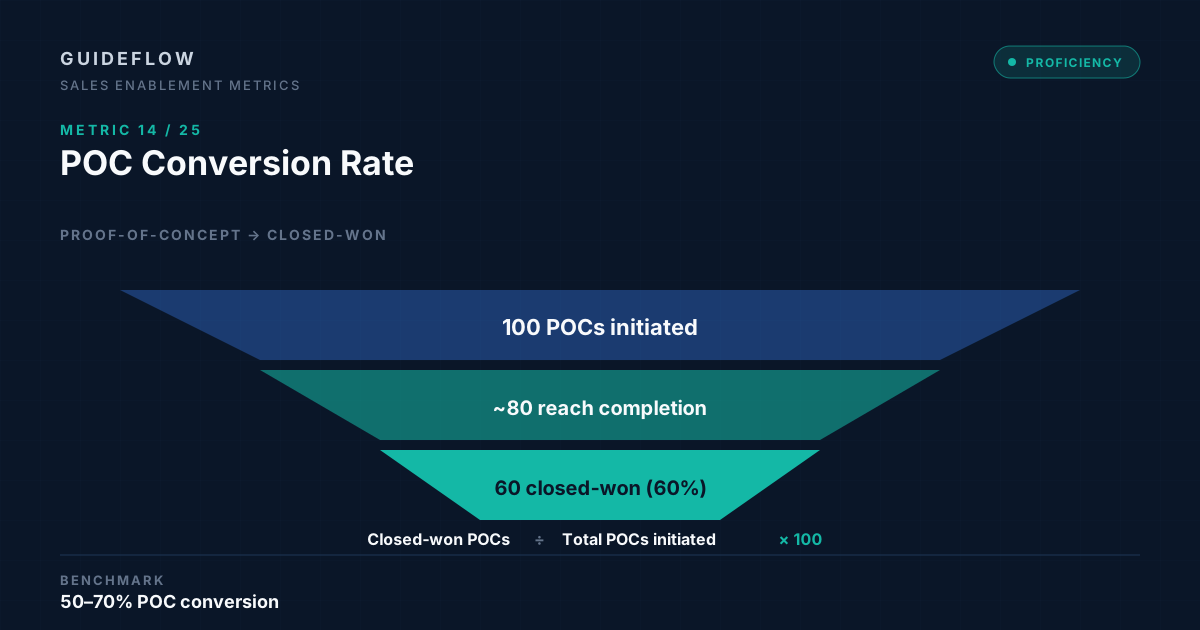
What it measures: POCs that convert to closed-won versus total POCs initiated.
Formula: Closed-won POCs / total POCs initiated × 100
Benchmark: 50 to 70%.
Why it matters for presales: A low POC conversion rate suggests POC scope, success criteria, or execution needs work. POCs are expensive (sales enablement time, infrastructure, customer coordination). If fewer than half convert, you're burning resources.
If it's off: Review POC entry criteria. Are you running POCs for unqualified deals? Tighten the criteria: require documented success criteria and executive sponsor before starting. Consider using a sandbox environment to reduce the overhead of full POC builds while still giving prospects hands-on experience.
15. Objection handling effectiveness
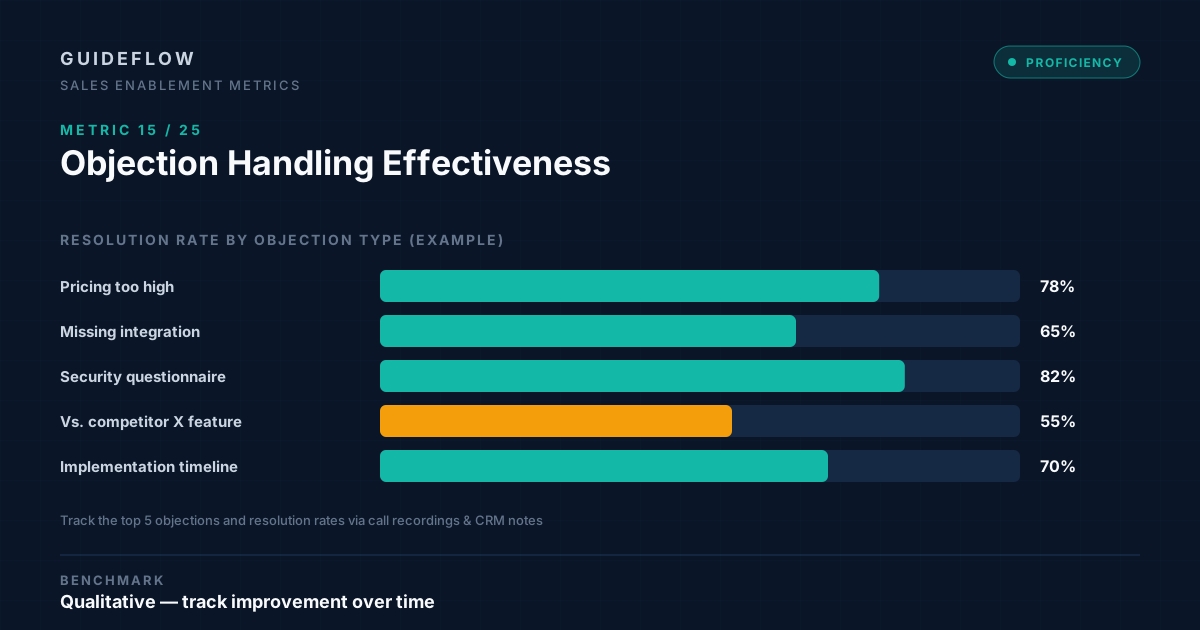
What it measures: Percentage of common objections successfully resolved during technical discussions.
Formula: Track the top 5 objections and resolution rates via call recordings or CRM notes.
Benchmark: Qualitative. Track improvement over time.
Why it matters for presales: It shows whether enablement content (battlecards, competitive intel, technical FAQs) is being used effectively in live conversations.
If it's off: Identify which objections stump your sales team most often. Create specific response frameworks and practice them in team sessions.
Productivity metrics (time and efficiency)
16. Content usage rate
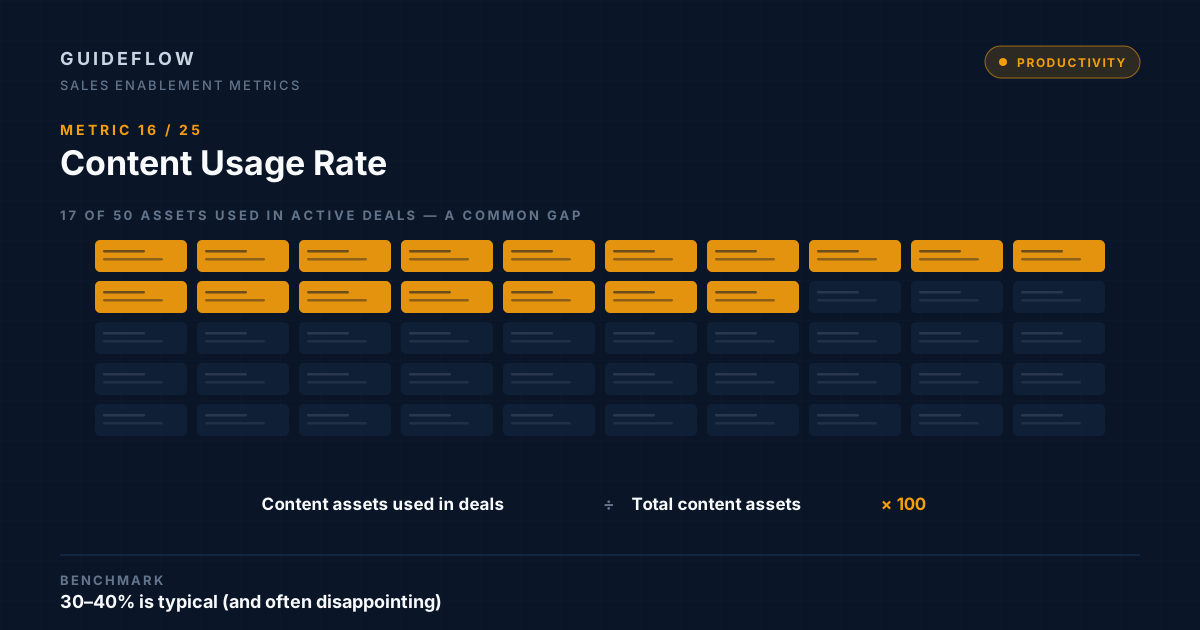
What it measures: Percentage of enablement content (decks, one-pagers, battlecards, demo scripts) actively used by the sales team.
Formula: Content assets used in deals / total content assets available × 100
Benchmark: 30 to 40% is typical. And yes, that's disappointing.
Why it matters for presales: If content isn't used, the time spent creating it was wasted. A 30% usage rate means 70% of your content library is dead weight.
If it's off: Survey your SEs. Ask which content they actually use and why. The usual reasons for low usage: content is outdated, hard to find, or irrelevant to current deal scenarios.
17. Content engagement by prospects
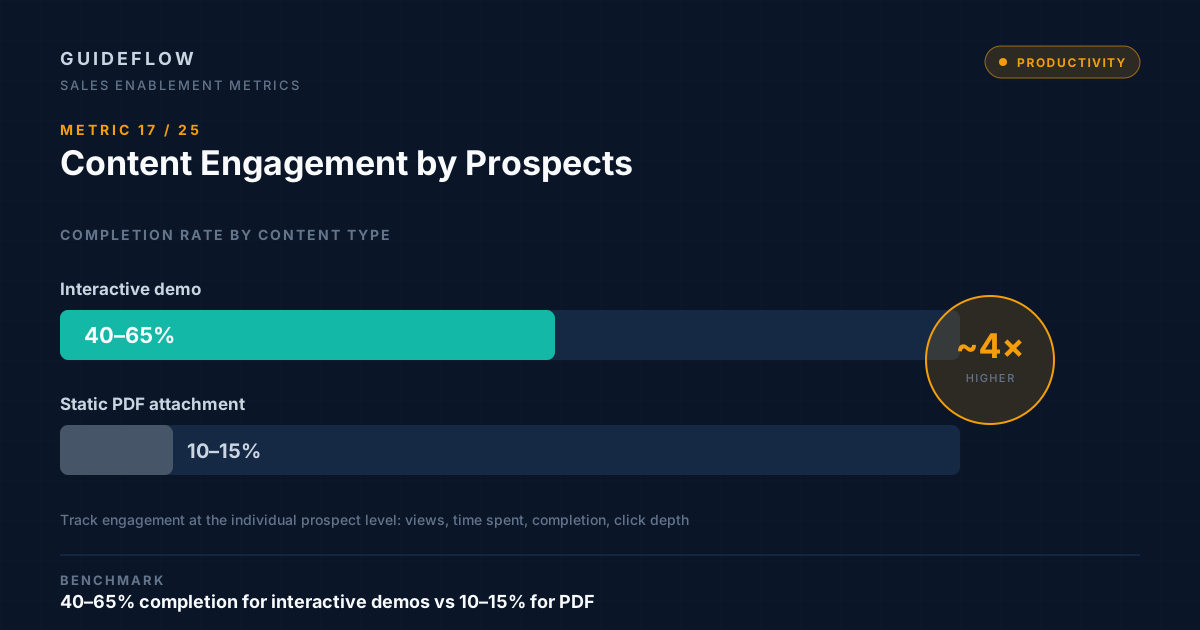
What it measures: How prospects interact with shared content: views, time spent, pages viewed, completion rates.
Formula: Varies by content type and platform.
Benchmark: Interactive demos typically see 40 to 65% completion rates versus 10 to 15% for static PDF attachments.
Why it matters for presales: It shows whether your content is reaching and engaging the buyer. Aggregate views are less useful than prospect-level data: which specific prospects viewed which content, how far they got, and what they clicked.
If it's off: Shift from static to interactive content formats. Track engagement at the individual prospect level so SEs can tailor follow-up conversations based on what the buyer actually reviewed. Guideflow's analytics features provide exactly this kind of step-level engagement data.
18. Demo prep time
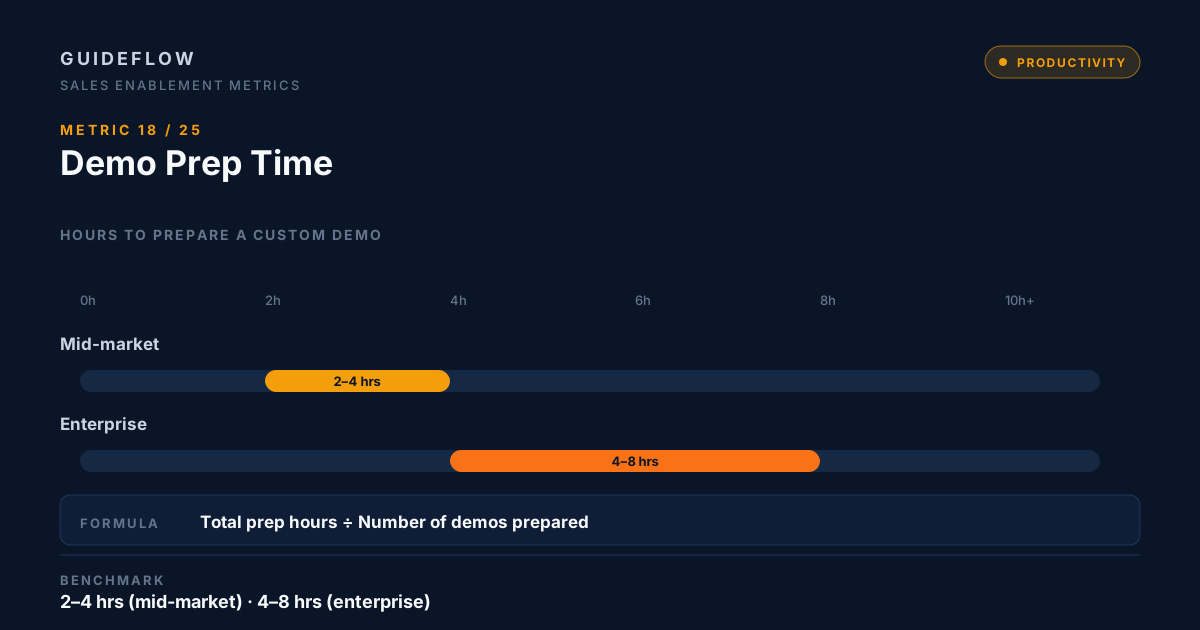
What it measures: Average hours spent preparing a custom demo.
Formula: Total prep hours / number of demos prepared
Benchmark: 2 to 4 hours for mid-market, 4 to 8 hours for enterprise.
Why it matters for presales: Reducing prep time without sacrificing quality is the core productivity lever for SEs. If your sales team spends 6 hours prepping a mid-market demo, something is wrong with your demo infrastructure.
If it's off: Invest in reusable demo environments, templates, and modular demo flows that can be customized quickly rather than built from scratch each time. A demo center with pre-built, reusable modules can cut prep time significantly.
19. Sales enablement utilization rate
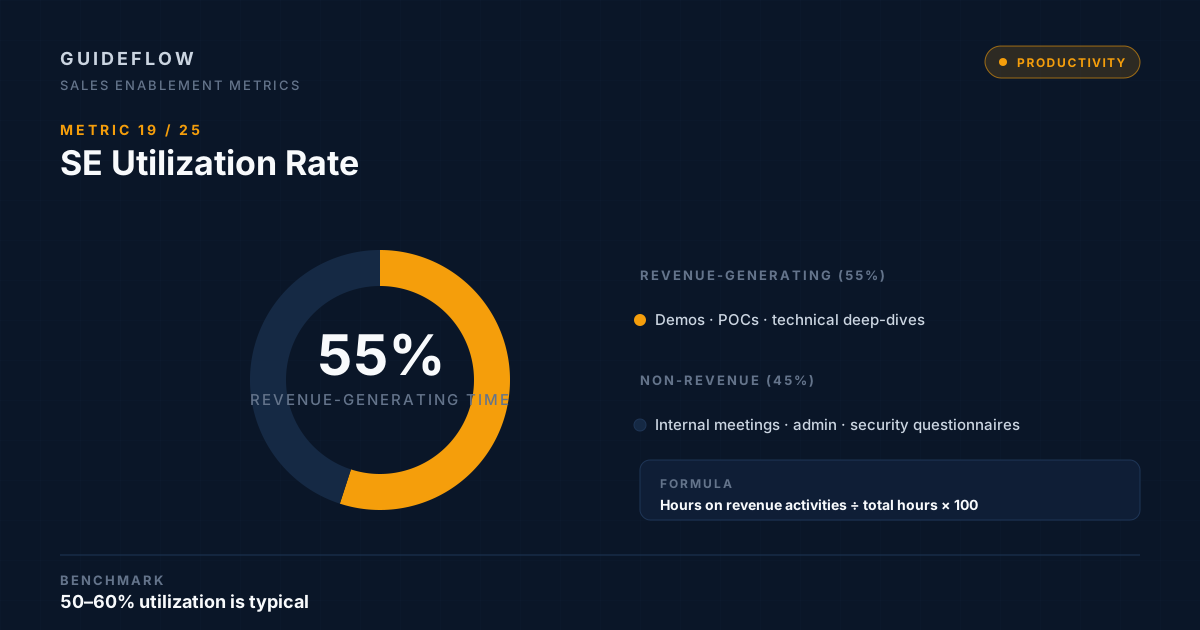
What it measures: Percentage of SE time spent on revenue-generating activities versus non-revenue activities.
Formula: Hours on revenue activities (demos, POCs, technical deep-dives) / total working hours × 100
Benchmark: 50 to 60% utilization is typical.
Why it matters for presales: If your SEs spend 40% of their time on internal meetings, admin tasks, and security questionnaires, they have less time for the work that directly moves deals.
If it's off: Audit time allocation for one week. Categorize every activity. The sales results usually surprise people.
20. SE-to-AE coverage ratio efficiency
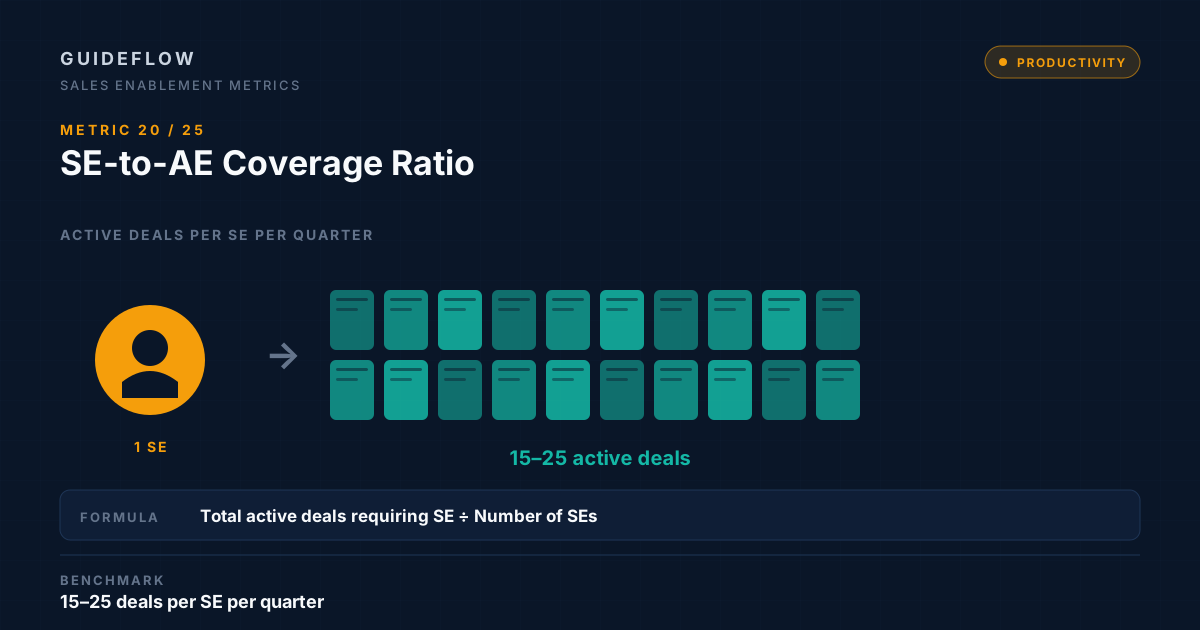
What it measures: Active deals per SE per quarter.
Formula: Total active deals requiring sales enablement involvement / number of SEs
Benchmark: 15 to 25 active deals per SE.
Why it matters for presales: It indicates whether the sales team is right-sized. If SEs are covering 30+ deals each, quality will suffer. If they're covering 8, you might be overstaffed or underutilizing the team.
If it's off: If the number is too high, either hire or tighten sales enablement engagement criteria. If too low, check whether AEs are pulling SEs in early enough.
21. Content creation time
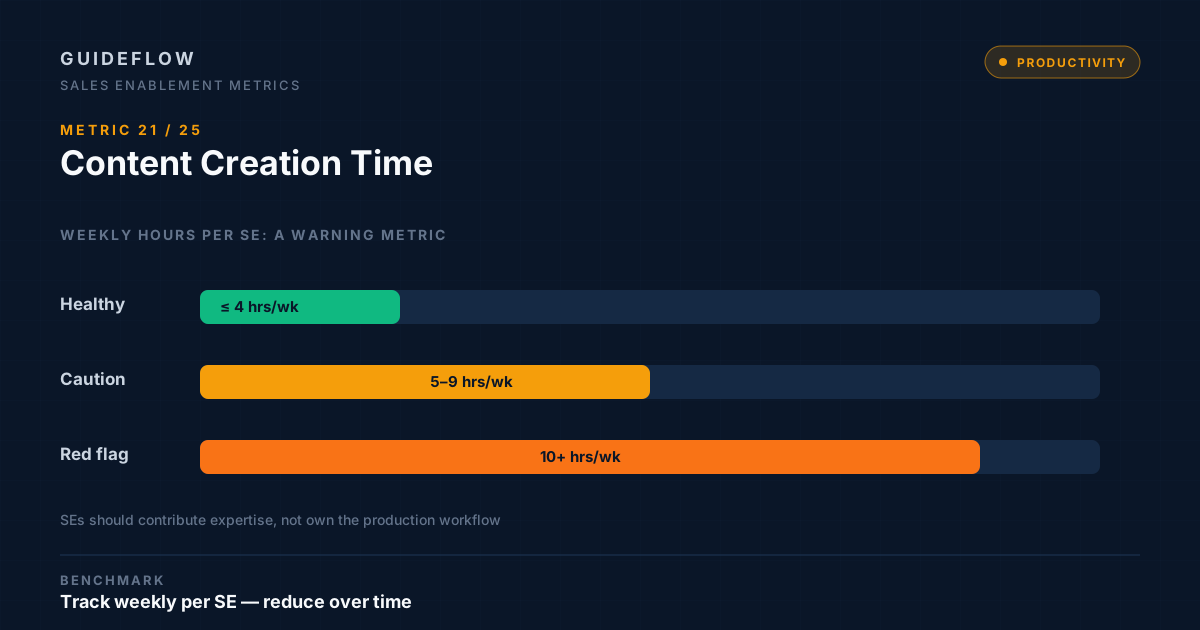
What it measures: Hours spent creating new enablement assets (demo scripts, competitive docs, technical guides).
Formula: Track weekly hours spent on content creation per SE.
Benchmark: Track and reduce. If SEs spend 10+ hours per week on content creation, they have less time for deals.
Why it matters for presales: Content creation is important, but it's not an SE's primary job. If your SEs are spending more time building decks than running demos, the enablement function has a gap.
If it's off: Centralize content creation with a dedicated enablement resource. SEs should contribute expertise, not own the production workflow.
22. Response time to technical questions
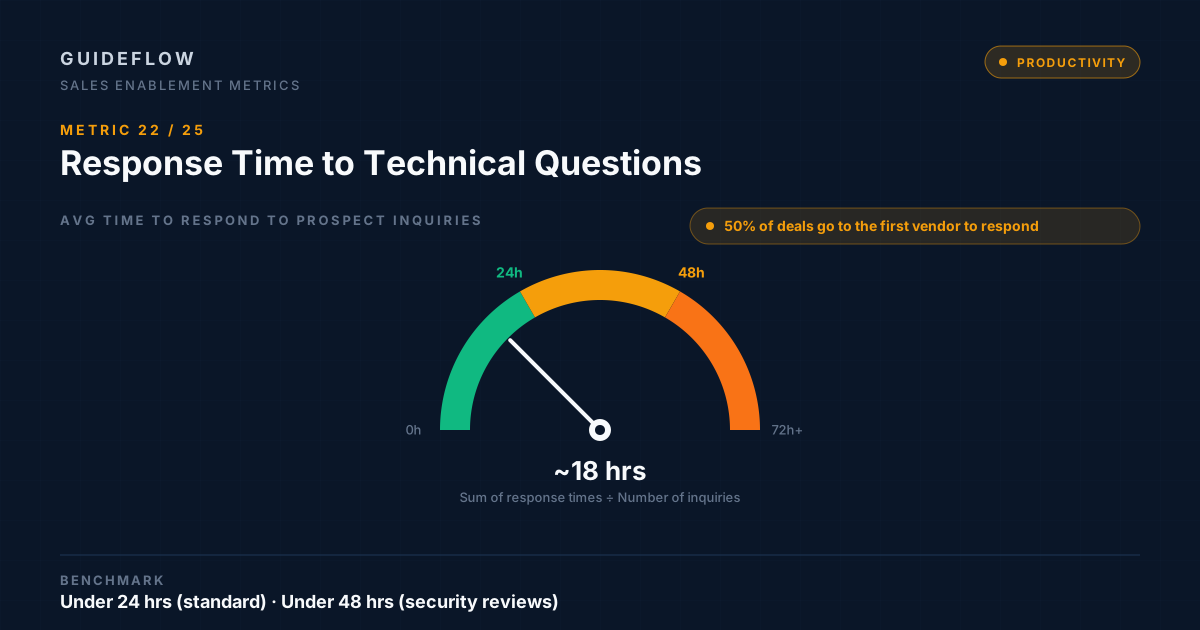
What it measures: Average time to respond to prospect technical inquiries (RFPs, security questionnaires, integration questions).
Formula: Sum of response times / number of inquiries
Benchmark: Under 24 hours for standard questions. Under 48 hours for complex security reviews.
Why it matters for presales: Slow responses stall deals. Research shows that 50% of deals go to the first vendor to respond. Every hour of delay is a competitive disadvantage.
If it's off: Build a response library for common questions. Pre-approve standard answers for security and compliance questions so SEs don't start from scratch each time.
23. Tool adoption rate
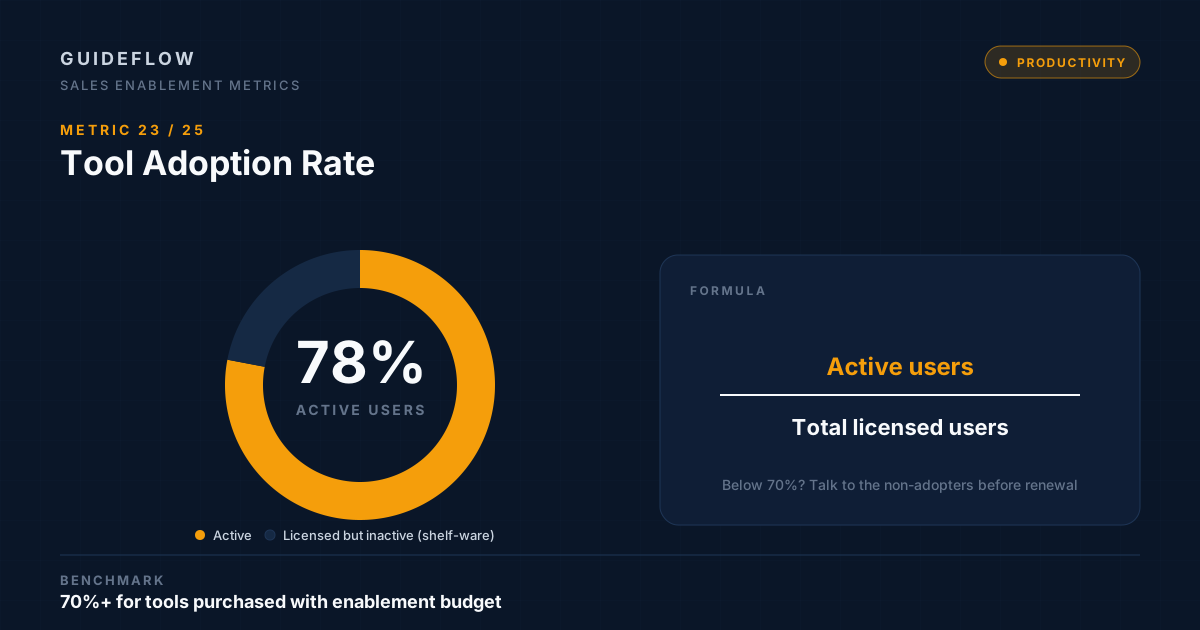
What it measures: Percentage of the sales team actively using enablement tools (CRM, demo platforms, content hubs).
Formula: Active users / total licensed users × 100
Benchmark: 70%+ for tools purchased with enablement budget.
Why it matters for presales: Unused tools are wasted budget. If you bought a demo platform and only 40% of SEs use it, you're paying for shelf-ware.
If it's off: Talk to the non-adopters. The reasons are usually: the tool is too complex, doesn't fit their workflow, or they weren't trained on it properly.
24. Meeting-to-opportunity conversion
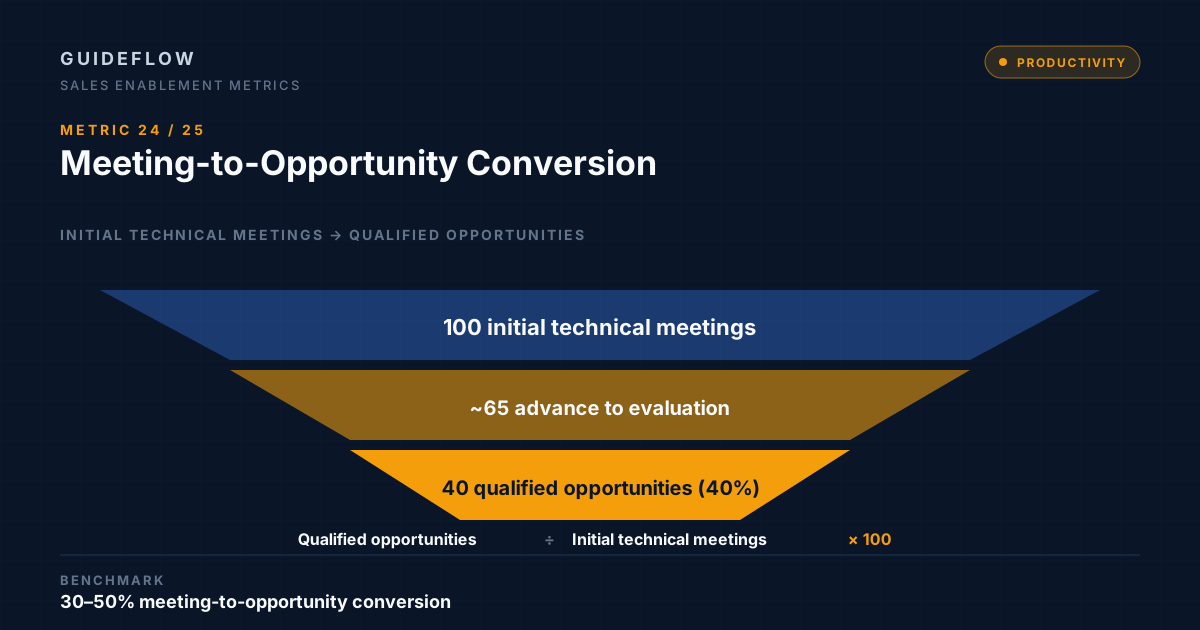
What it measures: Percentage of initial technical meetings that convert to qualified opportunities.
Formula: Qualified opportunities / total initial technical meetings × 100
Benchmark: 30 to 50%.
Why it matters for presales: It measures whether SE involvement in early-stage calls is helping qualification or just consuming time. If conversion is below 30%, SEs might be joining calls that don't need technical depth yet.
If it's off: Tighten the criteria for when an SE joins a call. Require the AE to complete a technical qualification checklist before requesting sales enablement support.
25. Follow-up content effectiveness
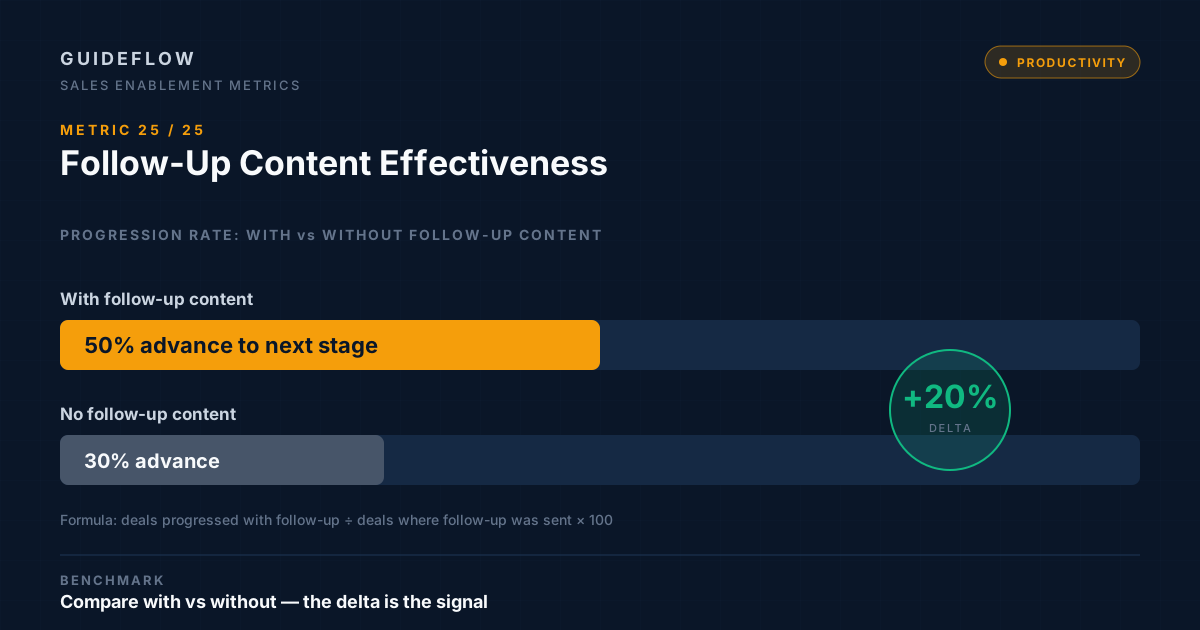
What it measures: Percentage of deals where follow-up content (post-demo recaps, interactive walkthroughs, technical summaries) was shared and the deal progressed to the next stage.
Formula: Deals progressed with follow-up content / deals where follow-up content was sent × 100
Benchmark: Compare against deals where no follow-up content was sent. The delta is your signal.
Why it matters for presales: It quantifies the value of post-meeting enablement. If deals with follow-up content progress 20% more often than deals without, you have a strong case for making follow-up content a standard part of the sales enablement workflow.
If it's off: Test different follow-up formats. Interactive walkthroughs that let prospects revisit the demo on their own time tend to outperform static PDF recaps. You can share interactive demos via link or embed to make follow-up seamless.
How to measure sales enablement: a step-by-step process
Knowing which metrics exist is the easy part. Measuring sales enablement effectively means building a system that turns data into decisions. Here's how.
Step 1. Define your enablement goals before choosing metrics
Start with 2 to 3 specific goals. Not "improve sales performance." Something like: "Reduce sales enablement ramp time from 4 months to 2 months" or "Increase demo-to-close rate from 18% to 25%."
Output: A written goal statement with a target number and timeline.
Choosing metrics before goals is the number one reason enablement measurement fails. You end up tracking everything that's easy to measure instead of everything that matters.
Step 2. Select 5 to 7 metrics across all three categories
Pick at least one performance, one proficiency, and one productivity metric. Resist the urge to track all 25 from day one. You'll track everything and act on nothing.
Output: A one-page sales enablement scorecard with your selected metrics.
Step 3. Establish baselines from the last 90 days
Pull current data from your CRM, call recording tools, and content platforms. If you can't find the data for a metric you selected, that tells you something important about your tracking infrastructure.
Output: A baseline snapshot document showing current values for each metric.
Without baselines, you can't measure improvement. "Win rate went up" means nothing if you don't know where it started.
Step 4. Set up your tracking infrastructure
Map each metric to a data source: CRM fields, demo platform analytics, training LMS, content engagement tools. Some metrics (like win rate) live natively in your CRM. Others (like demo engagement) require a dedicated tool.
Output: A metric-to-source mapping document.
Demo engagement tools, for example, can provide step-level analytics that CRM alone can't capture: which steps a prospect viewed, where they dropped off, how long they spent on each section. This granularity matters when you're trying to figure out why demos aren't converting. Platforms with built-in integrations can sync this engagement data directly into your CRM and marketing stack.
Step 5. Build a reporting cadence
Not all metrics need the same review frequency:
- Weekly: Productivity metrics (content usage, demo prep time, response time)
- Monthly: Proficiency metrics (training completion, demo quality scores)
- Quarterly: Performance metrics (win rate, cycle length, pipeline velocity)
Output: A reporting calendar with owners assigned to each metric.
The cadence logic is simple: productivity metrics change fast and need fast feedback loops. Performance metrics are lagging and quarterly review is sufficient. Reviewing everything weekly creates noise.
Step 6. Review, interpret, and adjust
The final step is iteration. Review metrics in context. A dip in win rate during Q4 might be seasonal, not a sign that enablement is failing. A spike in demo prep time after a product launch is expected, not alarming.
Output: A quarterly review meeting with a standard agenda: review each metric, identify one action per metric, and decide whether any metrics should be added or dropped.
Here's a useful rule: if a metric hasn't driven a single decision in 90 days, drop it and replace it with one that will.
Best practices for tracking sales enablement metrics
Start with metrics your sales team can actually influence
SEs should track technical win rate and demo engagement before quota attainment. Quota is an outcome of many factors. Demo quality is something you control. Start with what you can change, then connect it to what leadership cares about.
Connect every metric to a decision
If a metric can't answer the question "what should we change?", it's noise.
Example: "Content usage rate dropped from 35% to 20% last quarter." That should trigger a specific investigation: is the content outdated? Hard to find? Irrelevant to current deals? The metric points to the question. The investigation provides the answer.
Use qualitative data to explain quantitative trends
A drop in win rate doesn't tell you why. Pair it with lost-deal interviews, call recording reviews, or SE feedback. The number tells you something changed. The qualitative data tells you what.
This is where measuring sales effectiveness gets practical. Numbers without context are just numbers.
Build a sales enablement scorecard
Structure it simply: 5 to 7 metrics, current value, target, trend (up/down/flat), and owner. This is the document you bring to leadership meetings. It should fit on one page.
| Metric | Current | Target | Trend | Owner |
|---|---|---|---|---|
| Demo-to-close rate | 22% | 28% | ↑ | SE Manager |
| Time to productivity | 4.5 months | 3 months | ↓ | Enablement Lead |
| Content usage rate | 32% | 50% | → | Content Ops |
| Technical win rate | 64% | 70% | ↑ | SE Manager |
| Demo prep time | 3.5 hrs | 2.5 hrs | → | SE Team |
A scorecard like this takes 10 minutes to update weekly and gives leadership everything they need without a 30-slide deck.
Track demo and content engagement at the prospect level
Aggregate metrics (total content views) are less useful than prospect-level engagement data. You want to know which prospects viewed which content, how far they got, and what they clicked. This is where interactive demo analytics provide signal that static content analytics can't.
Tools like Guideflow track step-level engagement, completion rates, and drop-off points, giving SEs data they can use in follow-up conversations. Instead of guessing what a prospect found interesting, you can see exactly which features they explored and where they stopped.
This is one approach among several, but the principle holds regardless of tool: prospect-level engagement data is more actionable than aggregate views.
Revisit your metrics quarterly
The metrics you track should evolve as your sales team and goals change. A team focused on reducing ramp time will track different proficiency metrics (sales training KPIs like certification pass rates and time to first solo demo) than a team focused on improving enterprise win rates (competitive win rate, POC conversion).
Common mistakes when measuring sales enablement
1. Tracking too many metrics at once
What it looks like: A 30-row dashboard that nobody opens after the first week. Every meeting starts with "let me pull up the numbers" and ends with "we should look into that."
What works instead: 5 to 7 metrics with clear owners and a decision tied to each one. If you can't explain why you're tracking a metric in one sentence, you shouldn't be tracking it.
2. Measuring activity instead of outcomes
What it looks like: Tracking "number of demos delivered" without tracking "demo-to-close conversion." More demos doesn't mean better demos. A sales team that runs 100 demos with a 15% close rate is underperforming a team that runs 60 demos with a 30% close rate.
What works instead: Pair every activity metric with an outcome metric. Demos delivered pairs with demo-to-close rate. Training modules completed pairs with certification pass rate.
3. Ignoring the SE's perspective on metric selection
What it looks like: Leadership picks metrics that sound good in board decks but don't reflect what SEs actually do. "Revenue per SE" looks clean on a slide but tells you nothing about whether the SE's work is effective.
What works instead: Involve 2 to 3 senior SEs in the metric selection process. They'll flag which metrics are gameable and which are meaningful. They'll also tell you which data is actually available in your systems.
4. Using metrics to punish instead of improve
What it looks like: Low demo quality scores leading to performance reviews instead of coaching conversations. SEs stop submitting recordings for review. The metric becomes toxic.
What works instead: Frame metrics as diagnostic tools, not scorecards for blame. A low demo quality score should trigger "what support does this person need?" not "why is this person underperforming?"
5. Never updating your metrics framework
What it looks like: Tracking the same 5 enablement KPIs for three years even though the sales team doubled, the product changed, and the ICP shifted from mid-market to enterprise.
What works instead: Quarterly review of whether each metric still drives a decision. Kill metrics that have gone stale. Add new ones that reflect current priorities.
What to do next
You don't need to implement all 25 metrics tomorrow. Here are five things you can do in the next 24 hours:
Use the three-category framework. Choose at least one from performance, proficiency, and productivity. Write them down.
Open your CRM and pull the last 90 days of data for each metric. If you can't find the data, that tells you something about your tracking infrastructure. Write down what's missing.
Use a spreadsheet. Five columns: metric, current value, target, trend, owner. Share it with your manager or sales team lead.
Don't try to move all five. Pick the one with the biggest gap between current and target, and design one experiment to close it.
If you're sending follow-up content (decks, demos, walkthroughs) without knowing whether prospects engage with it, you're flying blind. Use a tool that tracks engagement at the individual level so you can connect content activity to deal progression.
Sales enablement metrics benchmarks by category
Use this table as a quick reference. Bookmark it, screenshot it, or paste it into your scorecard template.
| Category | Metric | Benchmark (B2B SaaS, mid-market) | Primary data source |
|---|---|---|---|
| Performance | Win rate | 20 to 30% | CRM |
| Performance | Competitive win rate | Track trend QoQ | CRM + competitive intel |
| Performance | Average deal size | Company-specific | CRM |
| Performance | Sales cycle length | 30 to 90 days | CRM |
| Performance | Quota attainment rate | 60 to 70% of reps hitting quota | CRM |
| Performance | Pipeline velocity | Track QoQ change | CRM (calculated) |
| Performance | Revenue influenced by SE | 60 to 80% of enterprise revenue | CRM (SE tagging) |
| Performance | Demo-to-close conversion | 20 to 35% | CRM + demo platform |
| Proficiency | Time to productivity | 3 to 6 months | HR/Onboarding system |
| Proficiency | Training completion rate | 85%+ | LMS |
| Proficiency | Certification pass rate | 70 to 80% | LMS |
| Proficiency | Demo quality score | Establish baseline | Internal review process |
| Proficiency | Technical win rate | 60 to 75% | CRM (custom field) |
| Proficiency | POC conversion rate | 50 to 70% | CRM |
| Proficiency | Objection handling effectiveness | Track top 5 objections | Call recordings + CRM |
| Productivity | Content usage rate | 30 to 40% | Content platform |
| Productivity | Content engagement by prospects | 40 to 65% (interactive demos) | Demo/content analytics |
| Productivity | Demo prep time | 2 to 4 hrs (mid-market) | Time tracking/self-report |
| Productivity | SE utilization rate | 50 to 60% | Time tracking |
| Productivity | SE-to-AE coverage ratio | 15 to 25 deals per SE | CRM |
| Productivity | Content creation time | Track and reduce | Time tracking |
| Productivity | Response time to technical questions | Under 24 hours | CRM/ticketing system |
| Productivity | Tool adoption rate | 70%+ | Tool admin dashboards |
| Productivity | Meeting-to-opportunity conversion | 30 to 50% | CRM |
| Productivity | Follow-up content effectiveness | Compare with/without | CRM + content analytics |
A note on these benchmarks: they vary by segment (SMB vs. enterprise), industry, and sales motion (product-led vs. sales-led). These ranges are starting points for mid-market B2B SaaS sales teams, not universal targets. Use them to calibrate, then build your own baselines.
Conclusion
The goal of tracking sales enablement metrics isn't to build a bigger dashboard. It's to make better decisions about where your sales team spends time, which content works, and what's actually moving deals.
Start with 5 metrics. Build baselines. Act on the data. Drop what doesn't drive decisions. Add what does.
The metrics to measure success of sales enablement will look different for every sales team. But the principle is the same: measure what you can influence, connect it to what leadership cares about, and iterate every quarter.
If you want to see how prospects engage with your demo content, step by step, start tracking with Guideflow.
Start your journey with Guideflow today!
FAQs about sales enablement metrics
A metric is any measurable data point related to enablement activities. A KPI is a metric that's been selected as a key indicator of progress toward a specific business goal. All KPIs are metrics, but most metrics never become KPIs. Choose 5 to 7 metrics as your KPIs and tie each one to a specific target.
Start with 5 to 7 metrics across performance, proficiency, and productivity categories. Tracking more than 10 metrics at once typically leads to dashboard fatigue and no action on any of them. You can always add more after you've proven you can act on the first set.
Technical win rate, demo-to-close conversion rate, time to productivity, and content engagement by prospects. These metrics directly reflect SE contribution rather than AE-owned outcomes like quota attainment. They're also the metrics presales managers can use to build a credible business case for headcount and tooling.
Compare the cost of enablement activities (tools, content creation time, training hours) against improvements in metrics that tie to revenue: win rate, deal size, sales cycle length, and pipeline velocity. Track these before and after enablement investments. The delta, multiplied by average deal value, gives you a defensible ROI number.
A one-page document that tracks 5 to 7 key metrics with their current value, target, trend direction, and owner. It's the simplest way to report enablement impact to leadership without building complex dashboards. Update it weekly, review it monthly, and use it as the foundation for quarterly planning conversations.
Productivity metrics (content usage, demo prep time) weekly. Proficiency metrics (training completion, demo quality) monthly. Performance metrics (win rate, cycle length) quarterly. Reviewing everything at the same cadence wastes time and creates noise that makes it harder to spot real signals.
Use a demo platform that provides prospect-level analytics: which steps they viewed, where they dropped off, how long they spent, and whether they completed the full walkthrough. Interactive demo tools track this data automatically and can sync it to your CRM, giving SEs actionable follow-up intelligence tied to specific deals.
Qualitative metrics capture subjective assessments: buyer feedback from post-demo surveys, SE self-assessments of demo quality, lost-deal interview themes, and sales team satisfaction with enablement content. They explain the "why" behind quantitative trends and are essential for turning a declining number into an actionable improvement plan.