The real challenge in 2026 isn't finding analytics tools. It's finding one that actually connects to your existing stack without creating another data silo. This guide covers 13 sales analytics tools, from CRM-native platforms to revenue intelligence and demo engagement analytics, with honest evaluations of what each does best. Sales analytics software uses AI to gather, analyze, and visualize sales data from your CRM, emails, and calls to create actionable reports. According to Gartner, the average B2B purchase now involves 8.4 stakeholders, which means revenue teams rely on clear visibility into every deal to coordinate effectively.
So here's what we did: we looked at the tools that sales ops and revenue teams are actually using day-to-day, talked to people running these systems at scale, and focused on what matters. That includes implementation complexity, CRM integration depth, forecasting accuracy, and whether the thing will still be useful when you're managing 200 deals instead of 20.
What's inside
This guide covers 13 sales analytics tools for 2026 that help you cut through scattered data and consolidate your reporting stack. We picked them based on how well they integrate with existing CRMs, how accurate their forecasting is, how actionable their insights are, and whether they actually help your team close deals instead of just generating more reports.
TL;DR
- Sales analytics software centralizes data from your CRM, calls, and emails to provide real-time dashboards, predictive forecasting, and performance insights.
- Top categories include CRM-native analytics (Salesforce, HubSpot), revenue intelligence platforms (Gong, Clari), BI tools (Tableau, Zoho Analytics)
- Buyer engagement data is the missing layer most teams overlook. Traditional pipeline metrics tell you where deals are, but not what prospects actually care about.
- Your selection depends on your primary use case: improving forecast accuracy, enabling rep coaching, capturing intent signals, or streamlining operational reporting.
What is sales analytics software
Sales analytics software is technology that collects, organizes, and analyzes sales data from multiple sources to create actionable reports and dashboards. It centralizes information from your CRM, email, calls, and meetings into a single source of truth for revenue teams.
Core capabilities include:
- Data centralization: Consolidates information from email, CRM, calls, and meetings into unified profiles.
- Real-time dashboards: Visualizes pipeline health, deal progress, and rep activity as it happens.
- Predictive forecasting: Uses historical patterns to project future revenue, with AI models improving accuracy by 10–20%.
- Conversation intelligence: Analyzes calls and emails to surface coaching insights and deal risks.
- Performance metrics: Tracks rep activity and identifies behaviors that correlate with closed deals.
This category spans a range of tools, from CRM-native features and standalone BI platforms to specialized revenue intelligence software. The best choice depends on whether you're primarily trying to improve forecasting, enable better coaching, or capture buyer engagement signals that pipeline data alone can't reveal.
When to use sales analytics software
For pipeline visibility and forecasting
Use sales analytics software when your team requires accurate revenue predictions and proactive deal risk identification. Predictive AI insights and robust pipeline management capabilities help surface problems before they become losses. If your current forecasting process involves spreadsheets and gut feelings, you're likely missing at-risk deals until it's too late.
For rep performance and coaching
Sales analytics tools help managers identify specific coaching opportunities and replicate the behaviors of top-performing reps. Conversation intelligence features analyze call recordings to surface what's working. Without this data, coaching becomes generic advice rather than targeted skill development.
For buyer engagement and intent signals
Here's where most teams have a blind spot. Traditional pipeline metrics tell you where deals are in your process, but not what prospects actually care about. Demo engagement analytics reveal which features resonate, where buyers spend time, and when they drop off. That's the difference between knowing a deal is "in negotiation" and knowing the prospect is stuck on pricing concerns.
For revenue operations and reporting
Leadership teams benefit from consolidated reporting across the full revenue funnel. This requires analytics that connect to your entire existing tech stack to create a unified view of performance. If your weekly forecast meeting involves pulling data from five different tools, you're wasting hours that could go toward actually closing deals.
Sales analytics software comparison
| # | Product | Intent | Key differentiation | Pricing | G2 rating |
|---|---|---|---|---|---|
| 1 | Salesforce Sales Cloud | Enterprise CRM analytics | Native AI and revenue intelligence | From $25/user/mo | 4.4/5 |
| 2 | HubSpot Sales Hub | Integrated sales reporting | User-friendly with robust reporting | Free + paid tiers | 4.4/5 |
| 3 | Gong | Conversation intelligence | AI-driven call and deal analysis | Contact sales | 4.8/5 |
| 4 | Clari | Revenue forecasting | AI-powered forecast accuracy | Contact sales | 4.5/5 |
| 5 | Tableau | Advanced data visualization | Complex multi-source datasets | From $15/user/mo | 4.4/5 |
| 6 | Zoho Analytics | Accessible BI platform | Pre-built connectors and AI insights | From $24/mo | 4.3/5 |
| 7 | Pipedrive | Visual pipeline analytics | Intuitive deal velocity tracking | From $14/user/mo | 4.3/5 |
| 8 | Freshsales | AI-powered lead scoring | Built-in Freddy AI insights | Free + paid tiers | 4.5/5 |
| 9 | People.ai | Activity capture and enrichment | Automated CRM data enrichment | Contact sales | 4.4/5 |
| 10 | Outreach | Sales engagement analytics | Sequence and pipeline attribution | Contact sales | 4.3/5 |
| 11 | Revenue Grid | Guided selling intelligence | Real-time deal coaching signals | Contact sales | 4.5/5 |
| 12 | Mixpanel | Product-led sales analytics | Event-based behavioral data tied to pipeline | Free + from $20/mo | 4.6/5 |
| 13 | Mediafly Intelligence360 | Revenue intelligence + enablement | Forecasting and content engagement (formerly InsightSquared) | Contact sales | 4.3/5 |
1. Salesforce Sales Cloud
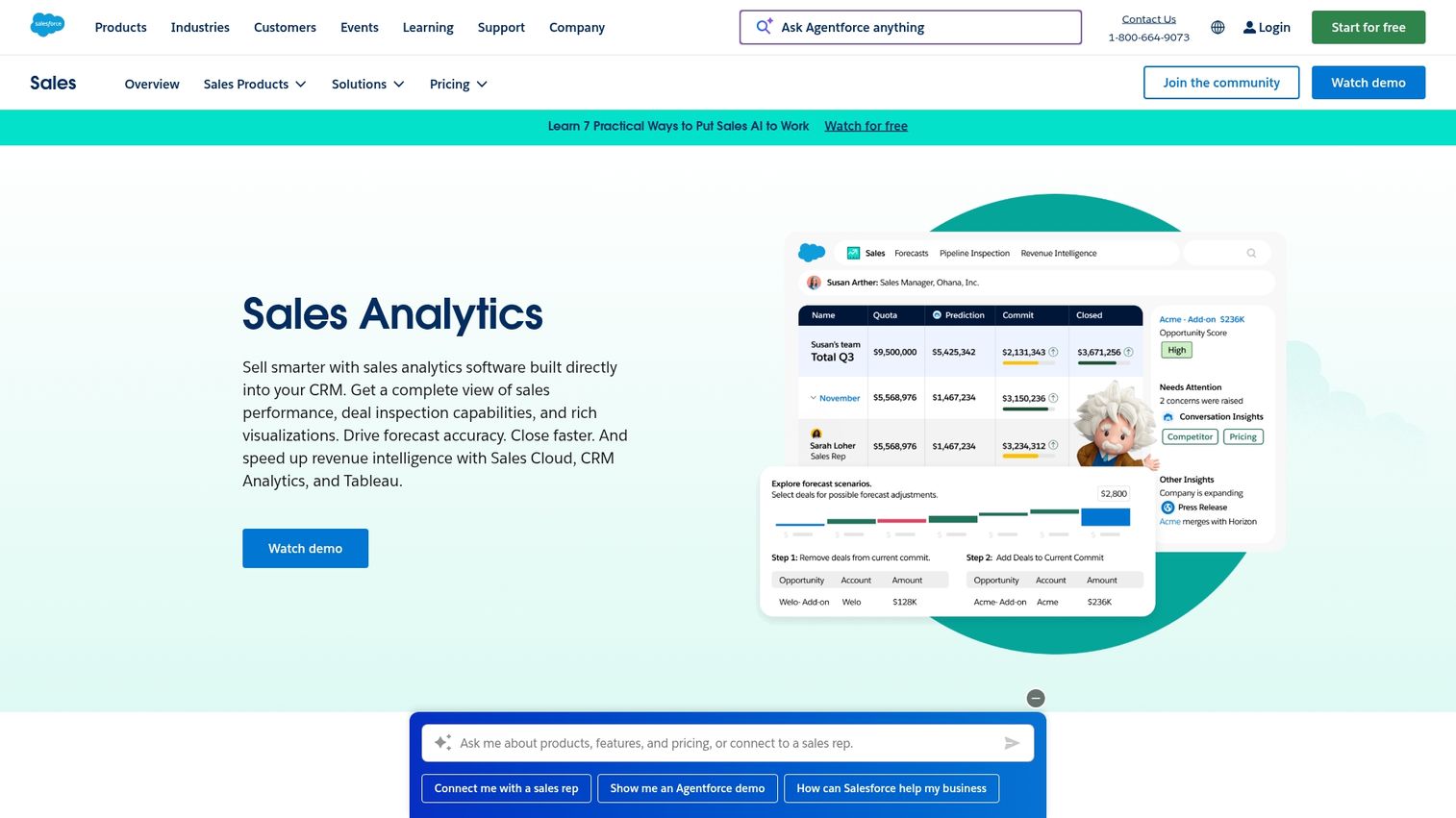
Salesforce Sales Cloud is a comprehensive CRM with native, AI-driven analytics powered by Einstein. It provides forecasting, pipeline inspection, and revenue intelligence capabilities integrated into a single platform.
If your organization already runs on Salesforce, the native analytics eliminate the integration headaches that come with bolting on third-party tools. Einstein AI adds predictive lead scoring and opportunity insights without requiring a separate data science team.
Best for: Enterprises that want forecasting, pipeline inspection, and revenue intelligence within their existing Salesforce ecosystem.
Analytics often requires exporting data for deeper analysis - this tutorial shows how to bridge Salesforce's native reporting with external BI tools
Key strengths
- AI-powered forecasting and predictions that improve accuracy over time
- Deep pipeline visibility and inspection with drill-down capabilities
- Highly customizable dashboards and reports for different stakeholder requirements
- Native integration across the entire Salesforce ecosystem
Salesforce pricing
Starter edition begins at $25/user/month. Professional, Enterprise, and Unlimited tiers scale up with additional features. Einstein AI capabilities require higher-tier plans or add-ons.
2. HubSpot Sales Hub
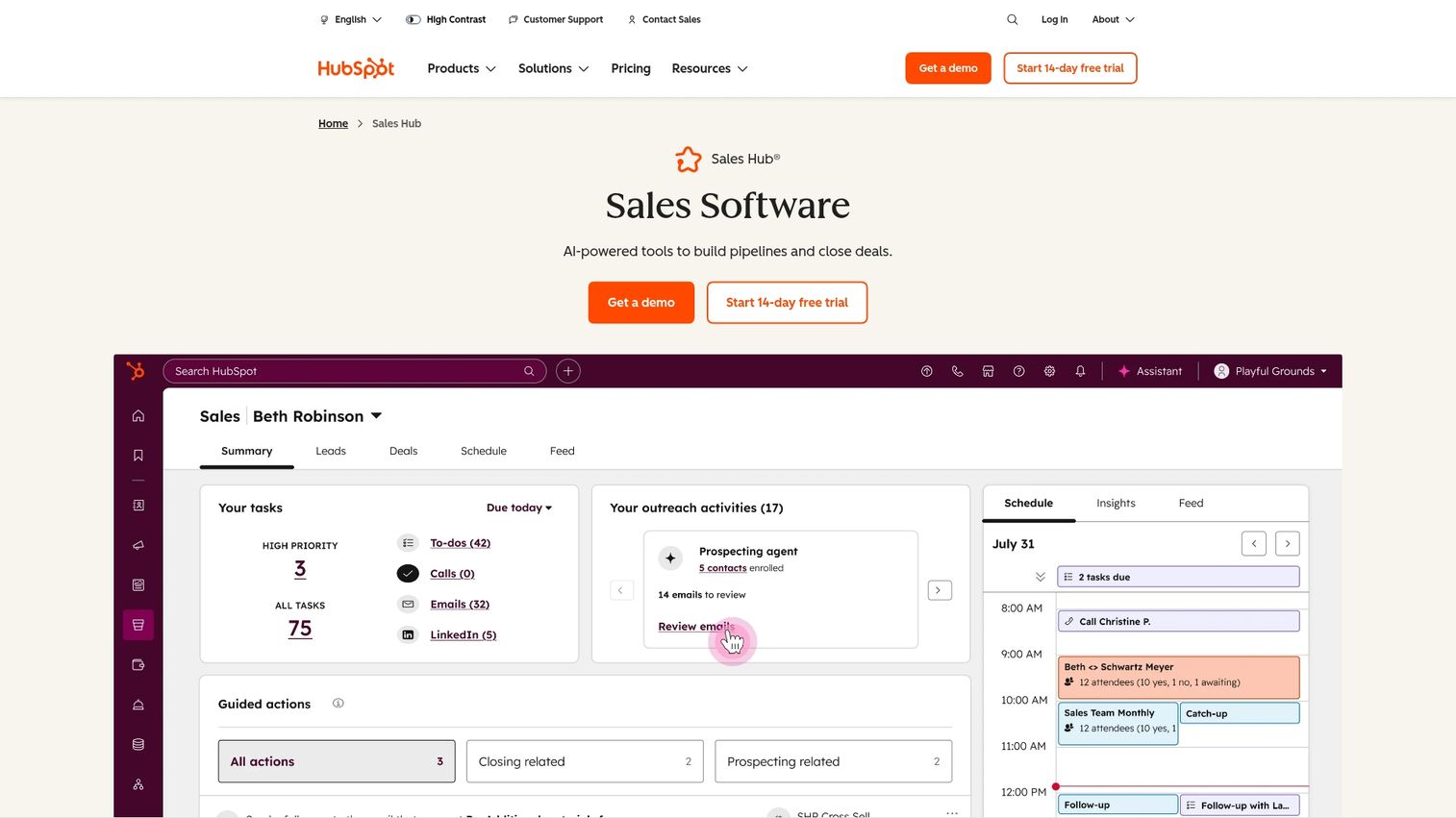
HubSpot Sales Hub is a user-friendly sales analytics solution with deeply integrated reporting. It's designed for teams that want accessible sales data without a heavy implementation process.
The strength here is simplicity. HubSpot's reporting works out of the box, and non-technical users can build custom dashboards without SQL knowledge. The tradeoff is less flexibility for complex, multi-source analytics compared to enterprise BI tools.
Best for: SMBs and mid-market companies wanting accessible sales analytics that don't require a dedicated admin.
Analytics power users customize dashboards - this tutorial shows how to refine HubSpot's sales reporting views for actionable insights
Key strengths
- Extensive library of pre-built reports covering common sales metrics
- Visual deal tracking and pipeline management with drag-and-drop simplicity
- Built-in email and sequence analytics for outbound performance
- Clean, intuitive interface that reduces training time
HubSpot pricing
Free CRM includes basic reporting. Starter begins at $15/user/month, with Professional and Enterprise tiers unlocking advanced analytics, forecasting, and custom reporting.
3. Gong
Gong is a revenue intelligence platform that specializes in conversation analytics. It analyzes calls, emails, and meetings to surface actionable coaching insights and identify deal risks before they become losses.
What makes Gong different is the depth of conversation analysis. It doesn't just tell you that a deal is at risk. It tells you that your rep talked 70% of the time, didn't ask about budget, and the prospect mentioned a competitor three times. That's coaching gold.
Best for: Teams prioritizing call coaching, deal inspection, and understanding what top performers do differently.
Key strengths
- Advanced conversation intelligence for calls, emails, and meetings
- AI-driven deal risk scoring that surfaces problems early
- Actionable rep coaching insights with specific behavioral recommendations
- Automatic CRM sync for activities and insights without manual entry
Gong pricing
Contact sales for pricing. Gong typically works with mid-market and enterprise teams, with pricing based on user count and feature requirements.
4. Clari
Clari is a revenue operations platform focused on improving forecast accuracy and overall pipeline health. It's built for revenue leaders who require high confidence in their quarterly projections.
The platform excels at identifying revenue leak, which is the gap between what your pipeline says and what will actually close. If your forecasts are consistently off by 15-20%, Clari's AI models can help pinpoint where deals are slipping.
Best for: Revenue leaders who require accurate forecasting and clear visibility into pipeline health for board-level reporting.
Key strengths
- AI-driven forecasting with documented accuracy improvements
- Granular pipeline analytics and health scoring across deal stages
- Revenue leak identification to catch slipping deals early
- Board-ready reporting and visualizations for executive communication
Clari pricing
Contact sales for pricing. Clari primarily serves mid-market and enterprise revenue teams with custom implementations.
5. Tableau
Tableau is an enterprise-grade business intelligence platform designed for advanced data visualization. It handles complex, multi-source datasets and provides highly flexible reporting capabilities.
Tableau is the right choice when your analytics requirements go beyond what CRM-native tools can handle. If you're pulling data from multiple systems and require custom visualizations that update in real-time, Tableau delivers. The learning curve is steeper, but the flexibility is unmatched.
Best for: Teams with complex, multi-source datasets that require custom visualizations and advanced analytics.
Key strengths
- Powerful drag-and-drop data visualization for complex datasets
- Connectors for multi-source data including CRMs, databases, and cloud services
- Fully customizable dashboards and reports for any use case
- Native integration with Salesforce for seamless CRM analytics
Tableau pricing
Tableau Viewer starts at $15/user/month. Creator and Explorer licenses scale up with additional capabilities. Enterprise pricing is custom.
6. Zoho Analytics
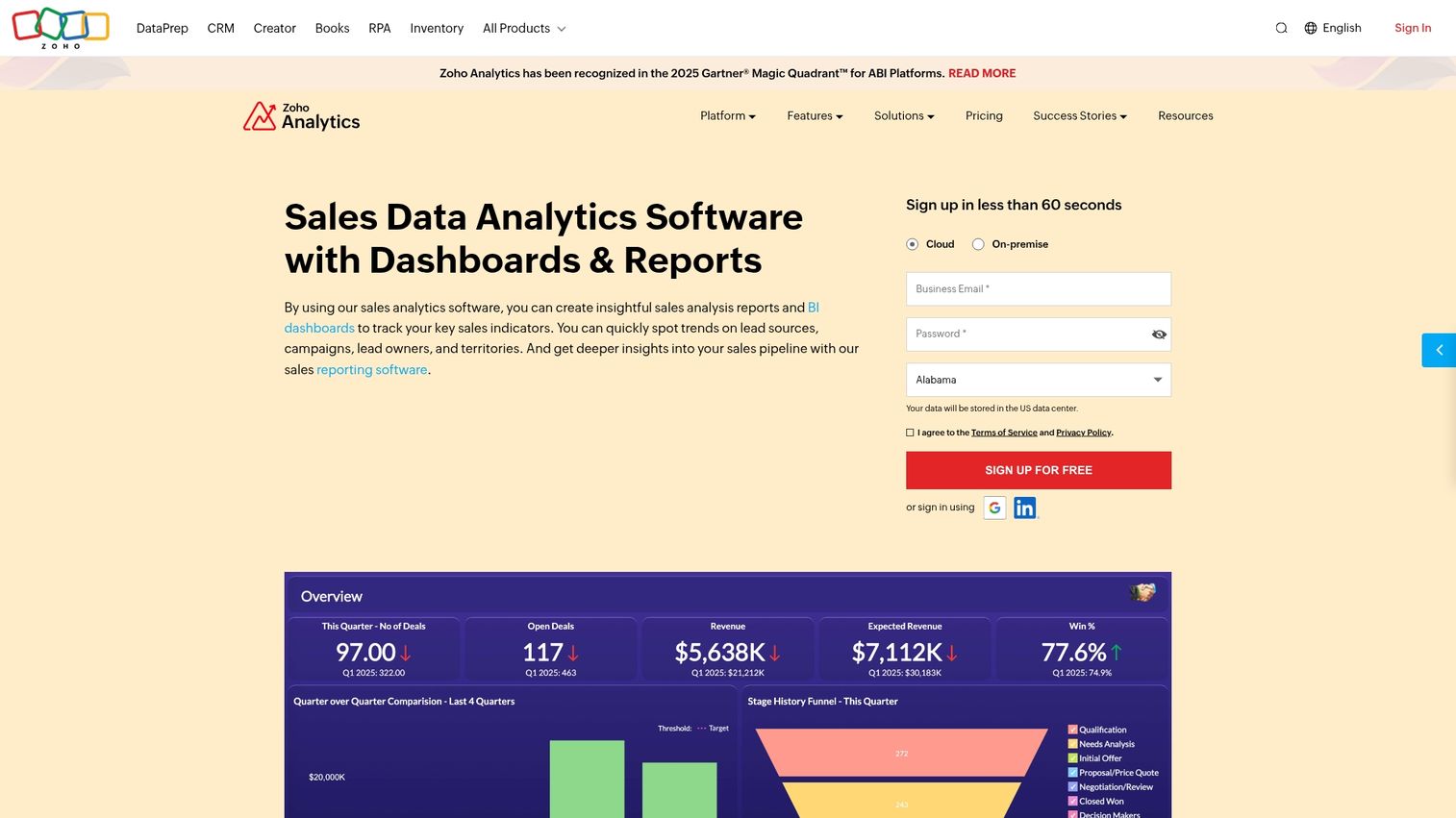
Zoho Analytics is an accessible sales analytics platform with a wide range of pre-built connectors. It offers AI-powered insights without enterprise-level pricing, making it a strong choice for teams already in the Zoho ecosystem.
The platform strikes a balance between ease of use and analytical depth. You get drag-and-drop report building plus AI-powered forecasting, without the implementation complexity of enterprise BI tools.
Best for: Teams already using Zoho CRM or those wanting AI-powered insights at a mid-market price point.
Key strengths
- Pre-built connectors for Zoho CRM and 500+ other data sources
- Drag-and-drop report and dashboard builder for non-technical users
- AI-powered forecasting and smart alerts for proactive insights
- Embedded analytics option for custom applications
Zoho pricing
Basic plan starts at $24/month for 2 users. Standard, Premium, and Enterprise tiers scale with users, data volume, and features.
7. Pipedrive
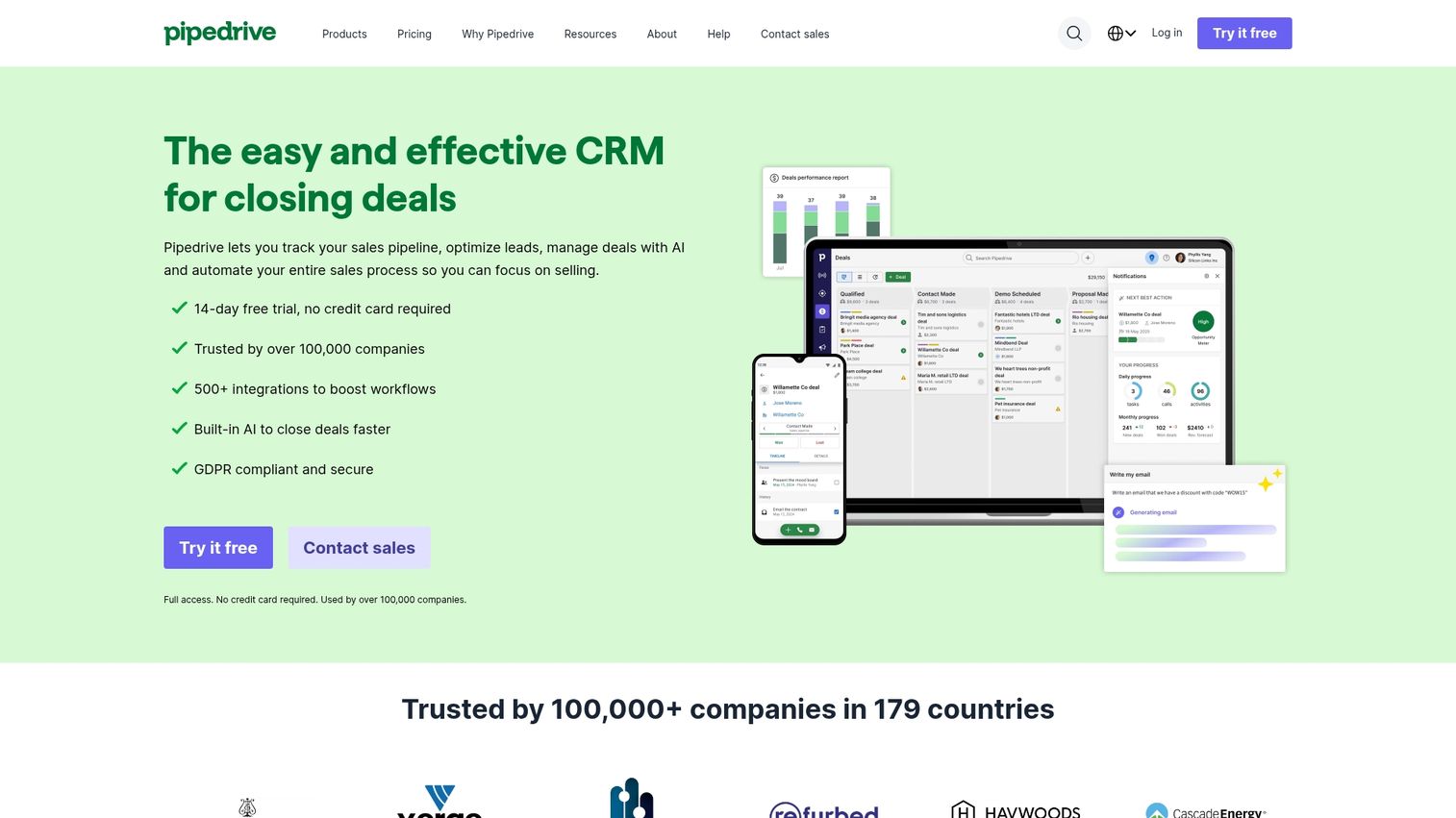
Pipedrive is a CRM with highly visual pipeline analytics built directly into its core product. It's designed for sales teams that prioritize tracking pipeline velocity and prefer a visual approach to deal management.
Pipedrive's strength is its visual simplicity. You can see your entire pipeline at a glance, track deal velocity, and identify bottlenecks without digging through complex reports. It's less powerful than enterprise tools but far easier to adopt.
Best for: Sales teams that prioritize visual pipeline management and deal velocity tracking over complex analytics.
Key strengths
- Highly visual and intuitive sales pipeline with drag-and-drop deals
- Deal velocity and sales cycle metrics for performance tracking
- Customizable activity tracking and reporting for rep management
- Integrated goal setting and progress tracking for team alignment
Pipedrive pricing
Essential plan starts at $14/user/month. Advanced, Professional, and Enterprise tiers add features like workflow automation and advanced reporting.
8. Freshsales
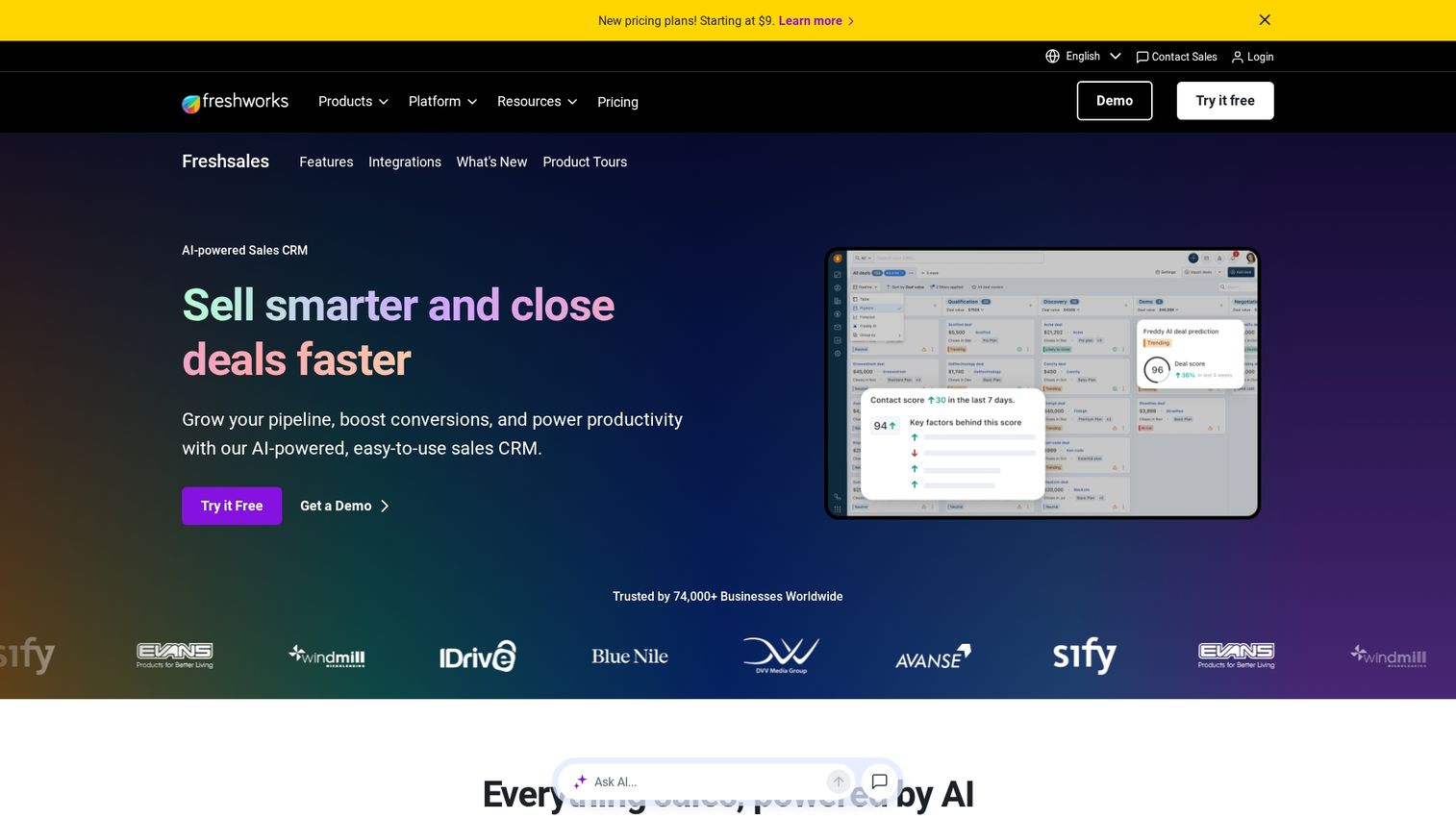
Freshsales is a CRM platform that includes built-in sales analytics capabilities. It's designed for growing teams that want AI-powered lead scoring and deal insights without complex setup.
Freddy AI, the platform's built-in assistant, provides lead scoring and deal recommendations out of the box. If you're a growing team that doesn't have time for extensive configuration, Freshsales gets you to useful insights faster.
Best for: Growing teams that want AI-powered lead scoring and deal insights without lengthy implementation.
Key strengths
- AI-powered lead scoring through Freddy AI
- Pipeline analytics with deal decay visualization to spot stalling deals
- Built-in email tracking and engagement analytics for outbound
- Customizable reporting dashboards without technical setup
Freshsales pricing
Free tier available for up to 3 users. Growth plan starts at $9/user/month, with Pro and Enterprise tiers adding advanced AI and analytics features.
9. People.ai
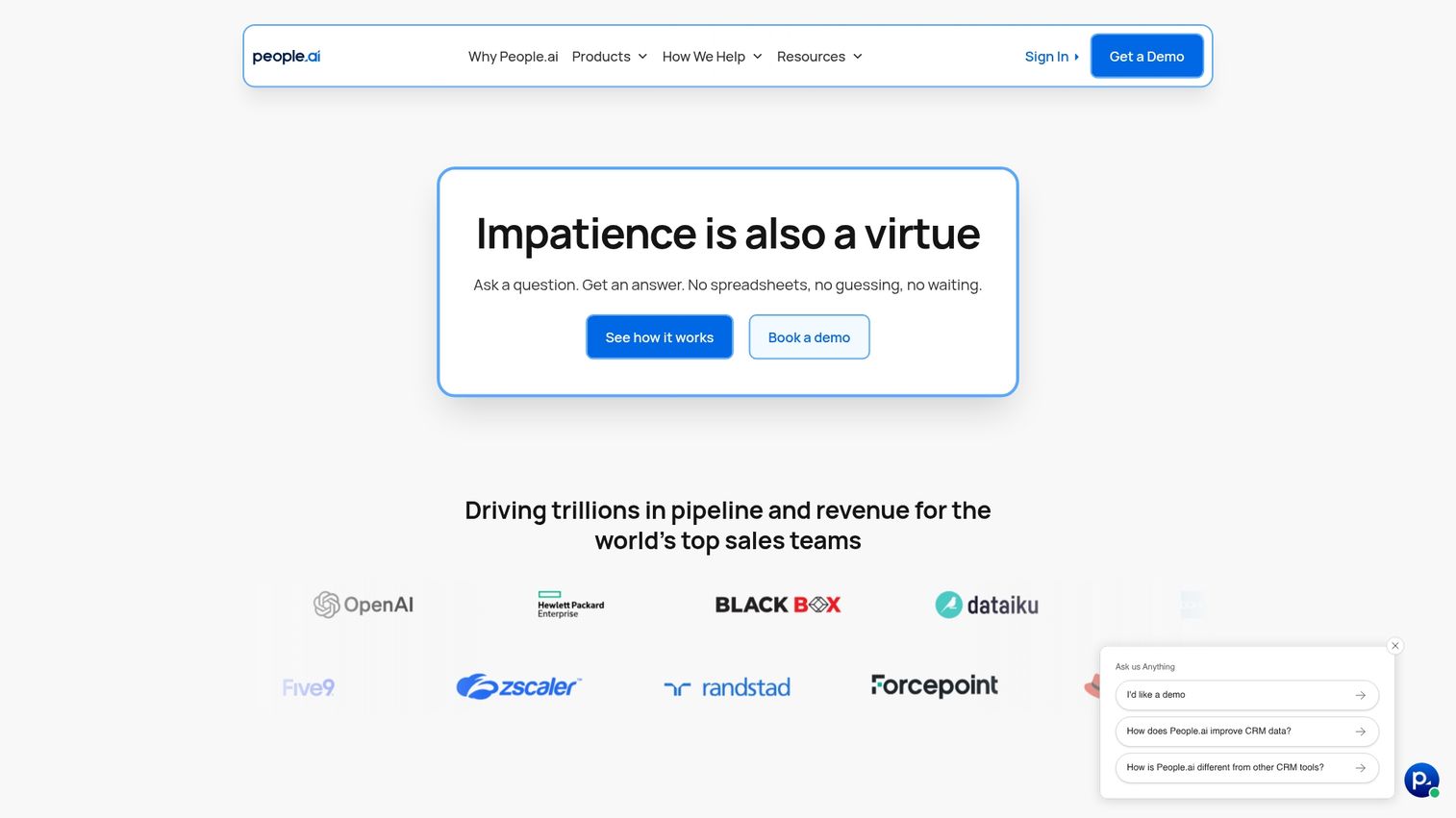
People.ai is a revenue intelligence platform that uses automated activity capture to enrich CRM data. It eliminates manual data entry while providing deep analytics on account and contact engagement.
The core value proposition is data quality. If your CRM is full of incomplete records because reps don't log activities, People.ai captures everything automatically. Better data in means better analytics out.
Best for: Enterprise teams that want to eliminate manual data entry while gaining deep engagement analytics.
Key strengths
- Automatic capture of all sales activity including emails, meetings, and calls
- Account and opportunity engagement scoring for prioritization
- AI-driven opportunity and pipeline insights based on complete data
- Automated CRM data enrichment without rep effort
People.ai pricing
Contact sales for pricing. People.ai primarily serves enterprise revenue teams with complex CRM environments.
10. Outreach
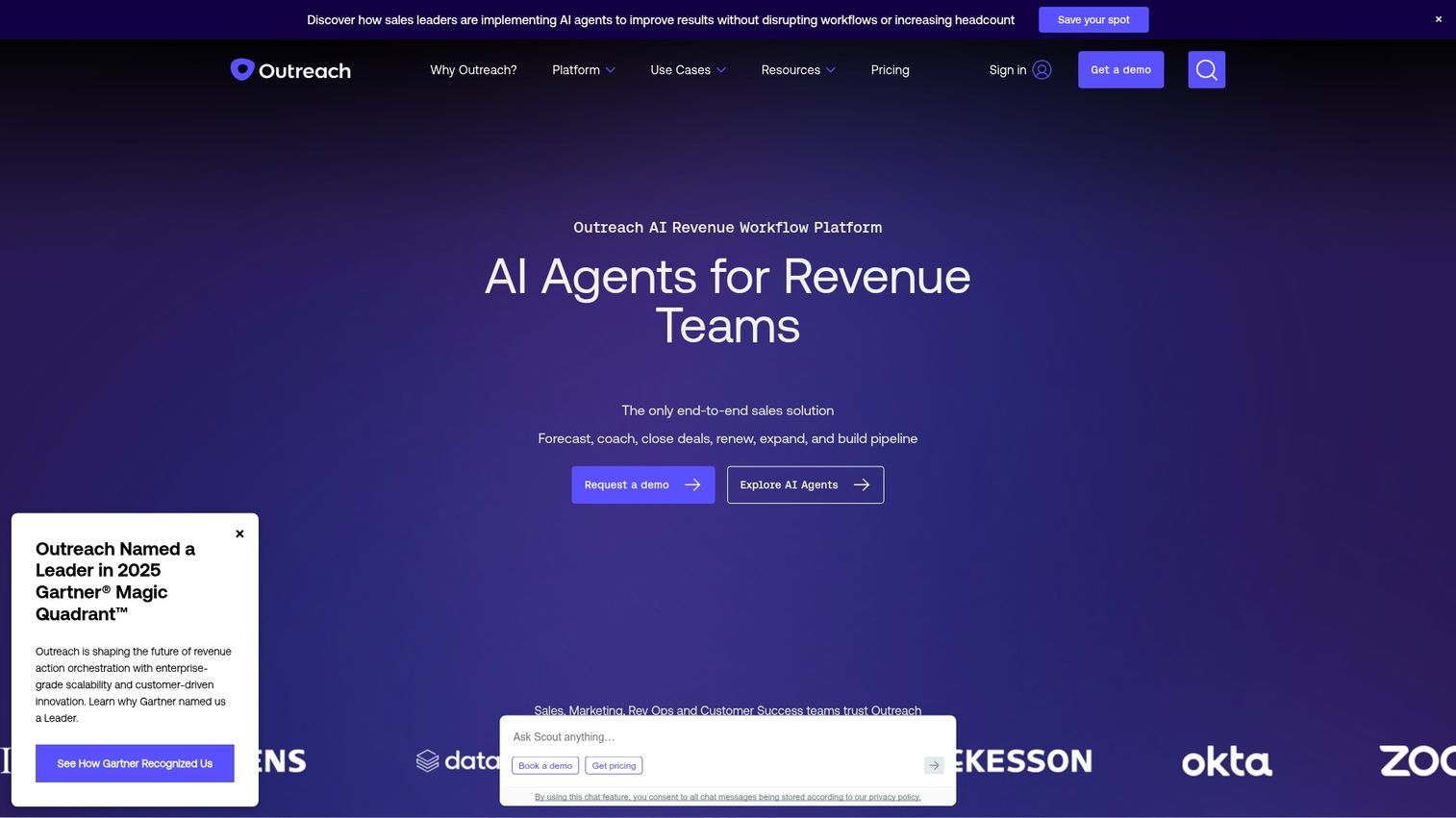
Outreach is a sales engagement platform with powerful analytics built in. It's designed for teams running outbound sequences who require performance insights on rep activity, sequence effectiveness, and pipeline generation.
If outbound is a significant part of your motion, Outreach's analytics show you exactly which sequences, templates, and timing patterns drive results. You can A/B test messaging and see the impact on pipeline, not just open rates.
Best for: Teams running outbound sequences who require analytics on rep activity and pipeline attribution.
Key strengths
- Detailed sequence and template analytics for optimization
- Rep productivity and performance metrics for coaching
- A/B testing for messaging with statistical significance
- Pipeline generation and revenue attribution tracking
Outreach pricing
Contact sales for pricing. Outreach serves teams of various sizes with pricing based on user count and feature requirements.
11. Revenue Grid
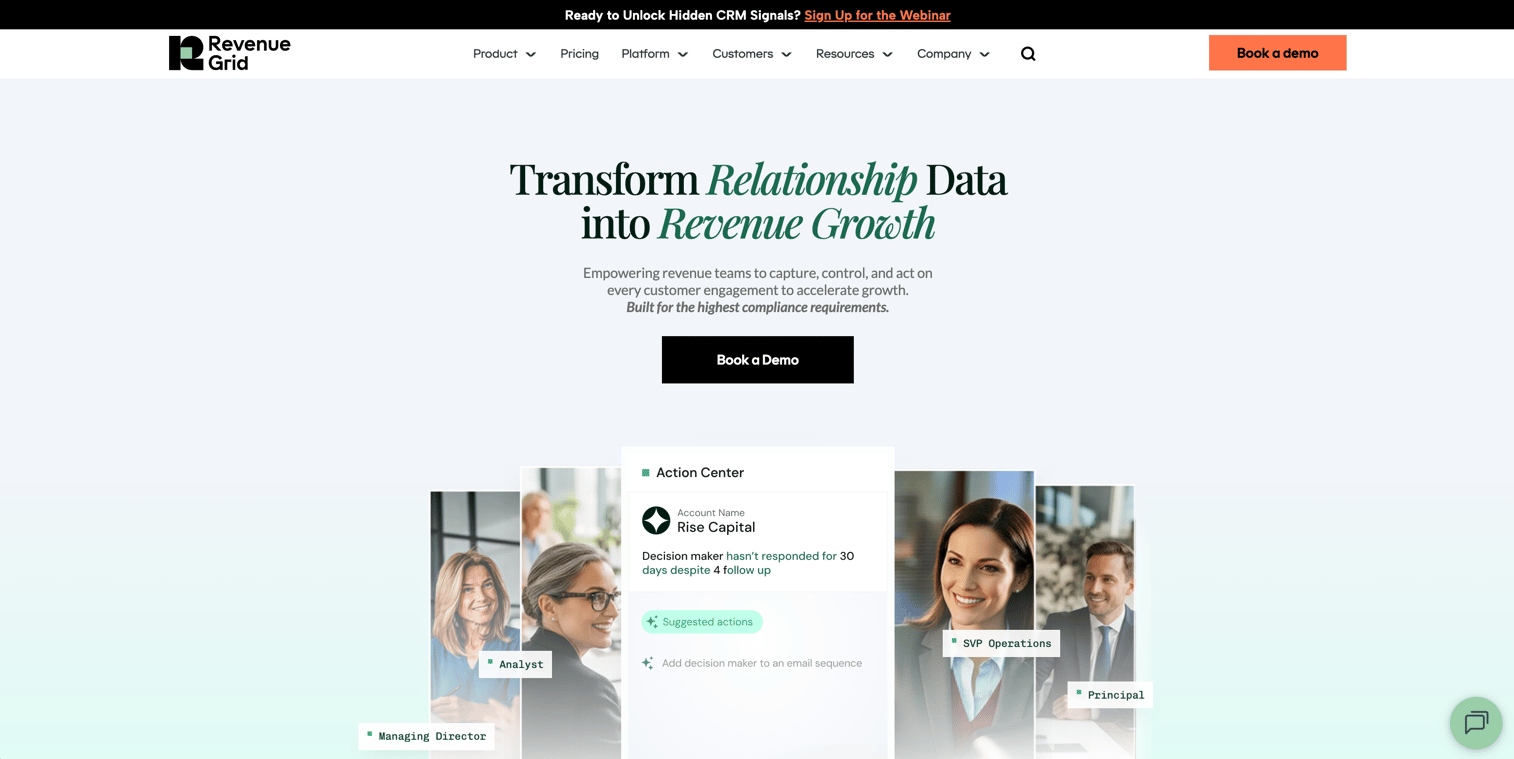
Revenue Grid is a revenue intelligence platform that provides guided selling capabilities. It offers real-time deal coaching and automated activity synchronization within existing CRM workflows.
The guided selling approach is what sets Revenue Grid apart. Instead of just showing you data, it tells reps what to do next based on deal signals. That's particularly valuable for newer reps who don't yet have the pattern recognition of veterans.
Best for: Teams that want real-time deal coaching and next-best-action recommendations within their CRM.
Key strengths
- AI-powered deal guidance with next-best-action signals
- Automated activity capture and CRM sync for data completeness
- Revenue signals to identify at-risk deals before they slip
- Deep integration with Salesforce for seamless workflows
RevenueGrid pricing
Contact sales for pricing. Revenue Grid offers various tiers based on team size and feature requirements.
12. Mixpanel
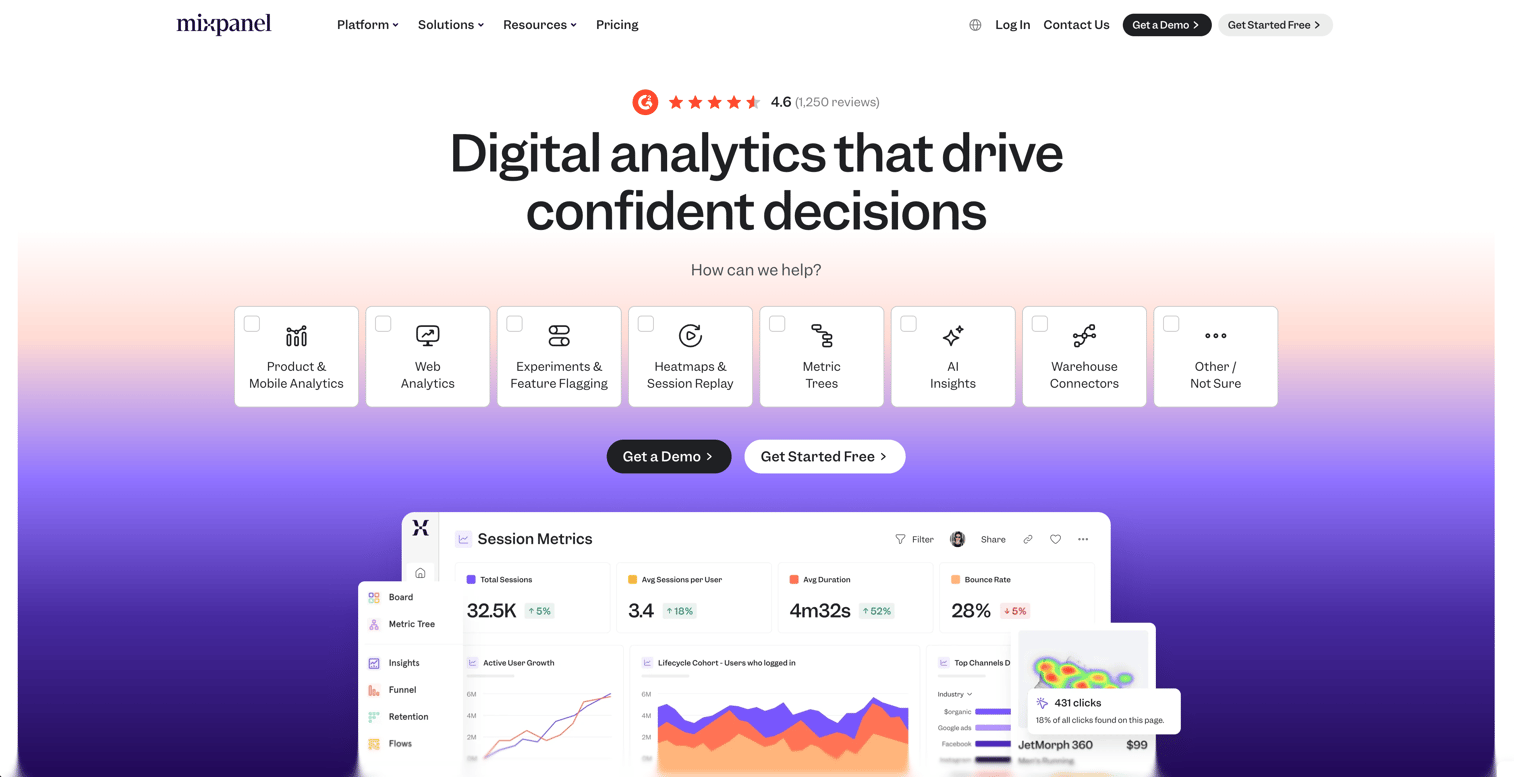
Mixpanel is a product analytics platform that can be effectively applied to sales data analysis. It's designed for product-led sales teams that track user behavior and product adoption alongside traditional pipeline metrics.
For PLG companies, Mixpanel connects product usage and sales outcomes. You can see which features correlate with conversion, identify power users who are ready for expansion, and understand the behaviors that predict churn.
Best for: Product-led sales teams that connect user behavior and product adoption to pipeline metrics.
Key strengths
Deep user behavior and engagement analytics at the event level
- Funnel analysis to identify conversion drop-offs in product flows
- Cohort tracking to analyze user groups over time
- Flexible event-based reporting for custom metrics
Mixpanel Pricing
Free tier available for up to 20M events/month. Growth plan starts at $20/month, with Enterprise pricing custom.
13. Mediafly Intelligence360
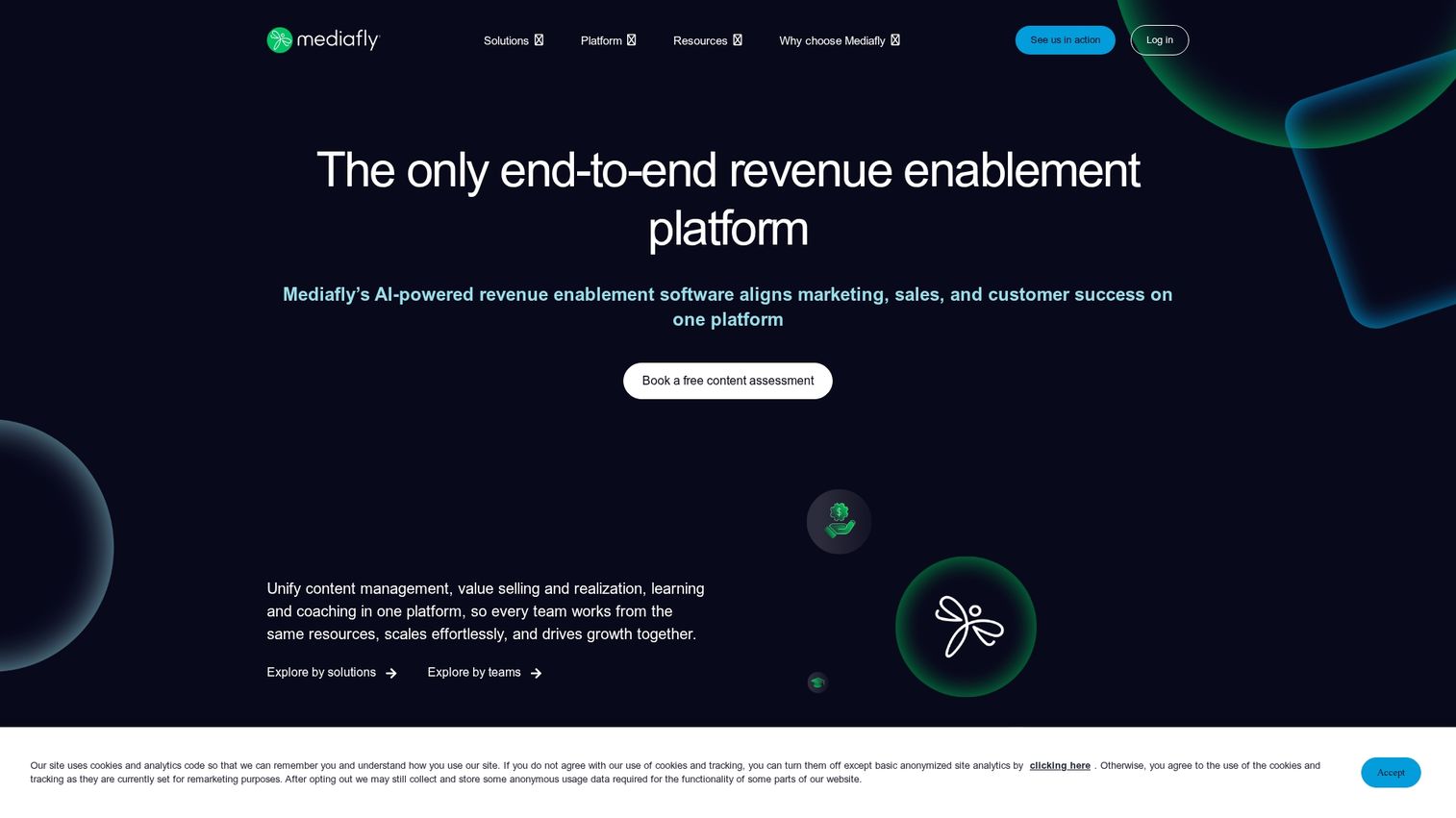
Mediafly Intelligence360 is a sales enablement analytics platform. It helps teams understand how content engagement and buyer readiness correlate with pipeline data, connecting marketing and sales efforts.
If your sales team uses a lot of content in the sales process, Mediafly shows you what's actually working. You can see which decks, case studies, and videos correlate with closed deals, and which ones prospects ignore entirely.
Best for: Teams that want to understand how content engagement correlates with revenue outcomes.
Key strengths
- Detailed content engagement analytics across all sales materials
- Buyer engagement tracking throughout the sales cycle
- Insights from sales presentations and meetings for optimization
- CRM integration to link content to revenue outcomes
Mediafly pricing
Contact sales for pricing. Mediafly serves mid-market and enterprise teams with content-heavy sales processes.
How to choose the best sales analytics tool
Define your primary use case
First, identify whether your primary goal is improving forecasting, enabling rep coaching, capturing engagement signals, or streamlining operational reporting. Different tools excel at different jobs.
If forecasting accuracy is your main concern, Clari or Salesforce Einstein are strong choices. If coaching is the priority, Gong's conversation intelligence is hard to beat. If you want to understand what prospects actually care about during evaluation, demo engagement analytics fill a gap that pipeline data can't.
Evaluate CRM integration depth
Data silos undermine the value of any analytics tool, with 68% of data professionals citing them as their top concern. Check for native, seamless connections to your CRM.
The best platform for sales data analytics is one that works with your existing stack rather than requiring you to rebuild workflows around it.
Look for integrations with Salesforce, HubSpot, Slack, and your marketing automation tools. If data has to be manually exported and imported, adoption will suffer.
Assess AI and automation capabilities
Modern sales analytics solutions use AI for predictive forecasting, conversation intelligence, and automated activity capture. With 87% of sales organizations now using AI according to Salesforce's 2026 State of Sales report, these features reduce manual work and surface insights that humans would miss.
However, AI is only as good as the data it's trained on. If your CRM data is incomplete or inconsistent, even the best AI models will produce unreliable outputs. Consider whether you require data quality improvements before investing in advanced AI features.
Consider total cost and implementation time
Address the hidden costs beyond the subscription fee. Enterprise platforms like Salesforce and Gong may require months of implementation and dedicated admins. More agile tools offer faster time-to-value but may lack depth for complex use cases.
| Factor | Enterprise tools | Mid-market tools | Lightweight tools |
|---|---|---|---|
| Implementation time | 2-6 months | 2-4 weeks | Days |
| Admin requirements | Dedicated admin | Part-time admin | Self-serve |
| Customization depth | Extensive | Moderate | Limited |
| Total cost of ownership | High | Medium | Low |
Turn sales analytics into pipeline growth
The best sales analytics software centralizes your data, surfaces actionable insights, and connects directly into your team's existing workflows. But pipeline data alone only tells part of the story.
To get a complete picture of revenue health, combine traditional pipeline analytics with buyer engagement data. Understanding what prospects actually do during evaluation, which features they explore, where they spend time, and when they drop off, gives you intent signals that CRM data can't capture.
That's the difference between knowing a deal is "in negotiation" and knowing exactly what the prospect cares about.
Start your journey with Guideflow today!
FAQs about sales analytics software
Sales analytics broadly refers to analyzing sales data for reporting and forecasting. Revenue intelligence specifically focuses on capturing and analyzing buyer interactions like calls, emails, and meetings to surface real-time deal insights and coaching opportunities. Revenue intelligence platforms like Gong add a layer of conversation analysis that traditional analytics tools don't provide.
Yes, most modern sales analytics tools offer native integrations with major CRMs like Salesforce and HubSpot. This allows for automatic data synchronization, eliminating manual entry and preventing duplicate records. Before selecting a tool, verify the depth of integration. Some offer basic data sync while others provide bi-directional updates and embedded analytics within the CRM interface.
Pricing varies widely based on capabilities and scale. CRM-native analytics may be included in your existing subscription. Standalone tools range from free tiers for basic reporting to enterprise contracts exceeding $100,000/year for advanced AI and conversation intelligence. Most mid-market tools charge $50-150/user/month.
Core metrics include pipeline value, win rate, sales cycle length, deal velocity, rep activity levels, and conversion rates between funnel stages. However, the most important metrics depend on your specific challenges. If forecasting is your problem, focus on forecast accuracy and pipeline coverage. If rep performance varies widely, track activity metrics and conversion rates by rep.
CRM reporting covers basic pipeline data, but standalone sales analytics tools add advanced layers like predictive AI, conversation intelligence, and cross-platform data consolidation. If your CRM reports answer all your questions, you may not require additional tools. If you're constantly exporting data to spreadsheets for analysis, a dedicated analytics platform will save significant time.
Demo analytics reveal which product features prospects explore, where they spend the most time, and when they drop off. This adds buyer intent signals that pipeline data alone cannot capture. Traditional analytics tell you a deal is in a certain stage. Demo engagement analytics tell you what the prospect actually cares about, which helps reps tailor their approach.
Small teams typically benefit from CRM-native analytics found in HubSpot or Pipedrive. These tools require minimal setup and are easy to use without a dedicated admin. Avoid enterprise platforms that require extensive configuration. The best tool for a small team is one that provides useful insights on day one, not after a three-month implementation.
Implementation time varies dramatically. Lightweight tools like Pipedrive or HubSpot can be productive within days. Mid-market platforms typically require 2-4 weeks for proper setup and training. Enterprise solutions like Salesforce with Einstein or Gong may take 2-6 months for full implementation, including data migration, customization, and user training.