The average sales rep takes 3-4 months to reach full productivity. For companies hiring aggressively, that's thousands of hours and significant revenue left on the table while new hires figure things out.
Sales onboarding software compresses that timeline by replacing ad-hoc training with structured learning paths and interactive product walkthroughs. Reps build skills in practice environments before they're in front of real prospects.
Research published in Harvard Business Review found that formal onboarding can drive 62% greater productivity among new hires. This guide covers 10 platforms that help teams get new reps selling faster, along with evaluation criteria and measurement frameworks to find the right fit.
What this guide covers
This guide covers everything you need to evaluate and select sales onboarding software. You'll find a clear definition of the category, guidance on when dedicated software makes sense, and a comparison table of top platforms. It also includes detailed reviews of 10 tools, selection criteria, and measurement frameworks.
What sales onboarding software actually does and how it differs from general LMS platforms
When to invest in dedicated onboarding tools versus relying on existing systems
Side-by-side comparison of 10 platforms with pricing, ratings, and best-fit scenarios
Evaluation criteria and metrics to measure onboarding success
TL;DR
Sales onboarding software helps new reps learn products, processes, and skills faster through structured learning paths, practice environments, and progress tracking.
Guideflow stands out for teams wanting reps to learn products through hands-on, clickable walkthroughs they can explore at their own pace.
Look for platforms with CRM integration, interactive learning formats, AI coaching, and analytics that connect training to revenue outcomes.
The right tool depends on team size, technical resources, and whether you prioritize structured courses, video coaching, or self-serve product exploration.
What is sales onboarding software
Sales onboarding software is a category of tools designed to help new sales reps reach productivity faster. The platforms combine content delivery, practice environments, and progress tracking to reduce ramp time. Ramp time refers to the period between a rep's start date and when they consistently hit quota.
The core purpose is straightforward: get new hires selling effectively without relying entirely on manager shadowing or tribal knowledge.
How sales onboarding platforms differ from traditional LMS
A traditional Learning Management System handles company-wide training across departments. It's built for compliance courses, HR onboarding, and general skill development. Sales onboarding platforms, on the other hand, are purpose-built for revenue teams.
Aspect | Traditional LMS | Sales onboarding platform |
|---|---|---|
Content focus | General corporate training | Sales-specific skills, product knowledge, competitive positioning |
Integrations | HR systems, compliance tracking | CRM, conversation intelligence, sales engagement tools |
Practice methods | Quizzes, video completion | Role-play simulations, deal scenarios, product walkthroughs |
Analytics | Completion rates, compliance status | Pipeline correlation, ramp time, win rate by training completion |
The difference matters because sales reps learn differently than other employees - 75% prefer learning by doing over traditional online courses. They practice objection handling, understand competitive positioning, and demonstrate product knowledge in real conversations.
Core capabilities of modern sales training and onboarding software
When evaluating platforms, you'll encounter common features across the category:
Structured learning paths: Sequential courses and certifications that guide reps through foundational knowledge
Interactive product training: Hands-on product walkthroughs where reps explore features without needing live environment access
AI-powered coaching: Simulated conversations where reps practice pitches and objection handling with feedback
Knowledge base access: Searchable content for just-in-time learning during deals
Progress tracking: Visibility into completion, comprehension, and readiness metrics
CRM integration: Connects learning activity to actual selling behavior and outcomes
When to use a sales onboarding platform
Not every team benefits from dedicated software. Here's when it typically makes sense.
Scaling a growing sales team
When you're hiring multiple reps per quarter, manual onboarding becomes inconsistent. According to Gallup, only 12% of employees strongly agree their organization onboards well.
One manager might spend three hours walking through the product while another sends a few links and hopes for the best. A platform ensures every rep gets the same foundational training regardless of who hired them or which office they join.
Reducing extended ramp times
If new reps take six months or longer to close their first deal, something in the onboarding process is broken. Structured pathways and practice opportunities accelerate readiness.
Standardizing training across locations
Distributed teams face a specific challenge: the rep in Austin might learn a completely different pitch than the rep in London. Platforms ensure consistent messaging, product knowledge, and process training regardless of location or time zone.
Supporting remote and hybrid onboarding
Remote hires miss hallway learning and casual shadowing. They can't overhear how a senior rep handles a tough objection or watch a demo in real-time.
Sales onboarding tools provide self-serve training and async practice that compensates for the lack of in-person exposure. Guideflow's training and onboarding solution is purpose-built to support distributed sales teams.
Sales onboarding tools comparison table
No. | Product | Best for | Key differentiation | Pricing | G2 rating |
|---|---|---|---|---|---|
1 | Guideflow | Interactive product learning | Self-serve product walkthroughs reps explore independently | Free + paid from $40/mo | 5.0/5 |
2 | Mindtickle | Enterprise enablement | End-to-end onboarding, coaching, and content management | Custom pricing | 4.7/5 |
3 | Allego | Video-based learning | Peer learning and video practice with coaching workflows | Custom pricing | 4.6/5 |
4 | Spekit | In-app learning | Contextual training embedded in existing tools | Custom pricing | 4.6/5 |
5 | Trainual | SMB process documentation | Playbook creation and role-based training paths | From $250/mo | 4.7/5 |
6 | Lessonly by Seismic | Content-integrated training | Lesson builder with Seismic content management | Custom pricing | 4.7/5 |
7 | Brainshark | Video content creation | Video coaching and readiness scorecards | Custom pricing | 4.4/5 |
8 | Showpad | Unified content and training | Combined content management and learning modules | Custom pricing | 4.6/5 |
9 | Highspot | AI-guided selling | Content, training, and guided selling in one platform | Custom pricing | 4.7/5 |
10 | Gong | Call-based coaching | Training from real call recordings and deal data | Custom pricing | 4.8/5 |
Recommended sales onboarding platforms reviewed
1. Guideflow
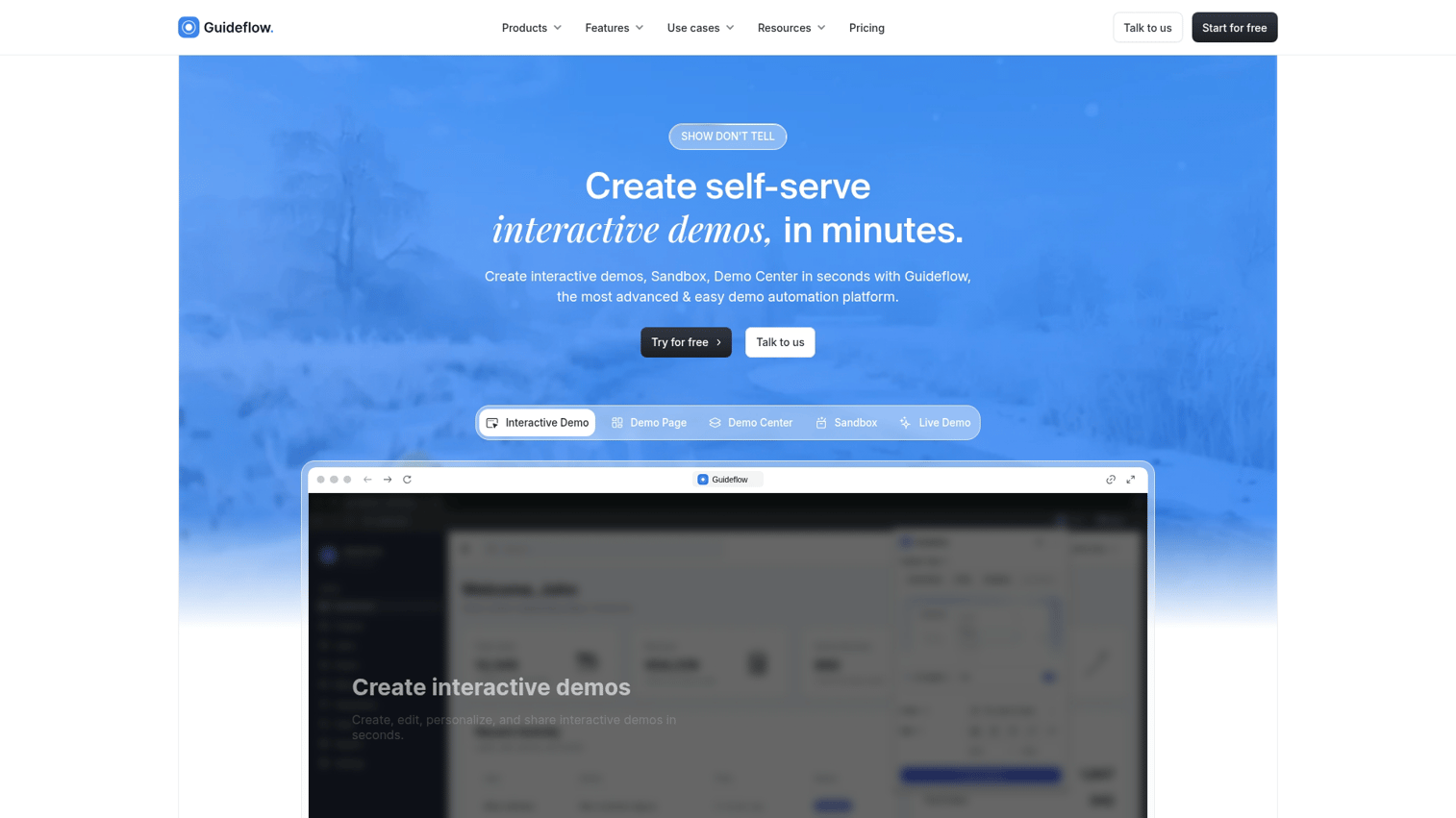
Guideflow takes a different approach to sales onboarding by focusing on how reps actually learn products. Instead of watching videos or reading documentation, new hires explore clickable, interactive demos that simulate the real product experience.
The platform lets you capture product flows directly from your browser in a few clicks. Follow the workflow as you normally would, hit finish, and you have a step-by-step interactive guide. From there, you can add tooltips, callouts, and branching paths using a no-code editor.
For sales onboarding specifically, Guideflow solves a common problem: new reps often struggle to demo products confidently because they haven't spent enough time using them. This is why building comprehensive demo libraries becomes critical.
Key strengths
Self-paced product exploration: Reps learn by doing, not watching, which improves retention and demo confidence
No sandbox maintenance: Unlike live environments, interactive demos don't require data cleanup or environment management
Personalization for scenarios: Create different walkthroughs for different buyer personas or use cases
Analytics on engagement: Track which product areas reps explore most and where they get stuck
Fast content updates: When the product changes, update the walkthrough in minutes rather than re-recording videos
Why choose Guideflow
Pick Guideflow when product knowledge is the bottleneck in your onboarding. If reps struggle to demo confidently or take too long to understand feature workflows, interactive product walkthroughs accelerate that learning. The platform also serves double duty since the same demos reps use for training can be shared with prospects for self-serve evaluation.
Guideflow pricing
Free: $0/month (5 guideflows, unlimited viewers, 7-day analytics)
Solo: $40/month (unlimited guideflows, advanced analytics, AI features)
Growth: $499/month
Advanced: $1,499/month
Enterprise: From $2,999/month
2. Mindtickle
Mindtickle is a comprehensive revenue enablement platform that covers the full spectrum of sales readiness. The platform combines onboarding programs, ongoing coaching, content management, and conversation intelligence in a single system.
For enterprise teams with complex products and long sales cycles, Mindtickle provides the structure to ensure consistent training across large, distributed organizations. The platform includes AI-powered role-play where reps practice pitches and receive automated feedback before engaging real prospects.
Key strengths
Structured onboarding programs: Build multi-week curricula with courses, certifications, and milestones
AI coaching and role-play: Reps practice conversations with AI buyers and receive feedback on messaging, pacing, and objection handling
Conversation intelligence: Analyze real calls to identify coaching opportunities and reinforce training
Readiness scoring: Quantify rep preparedness across knowledge, skills, and behaviors
Why choose Mindtickle
Choose Mindtickle when you have enterprise-grade enablement infrastructure requirements. The platform works well for organizations with 100+ reps, complex products, and formal training requirements. Implementation typically takes several weeks and requires dedicated enablement resources.
Mindtickle pricing
Custom pricing based on team size and modules.
3. Allego
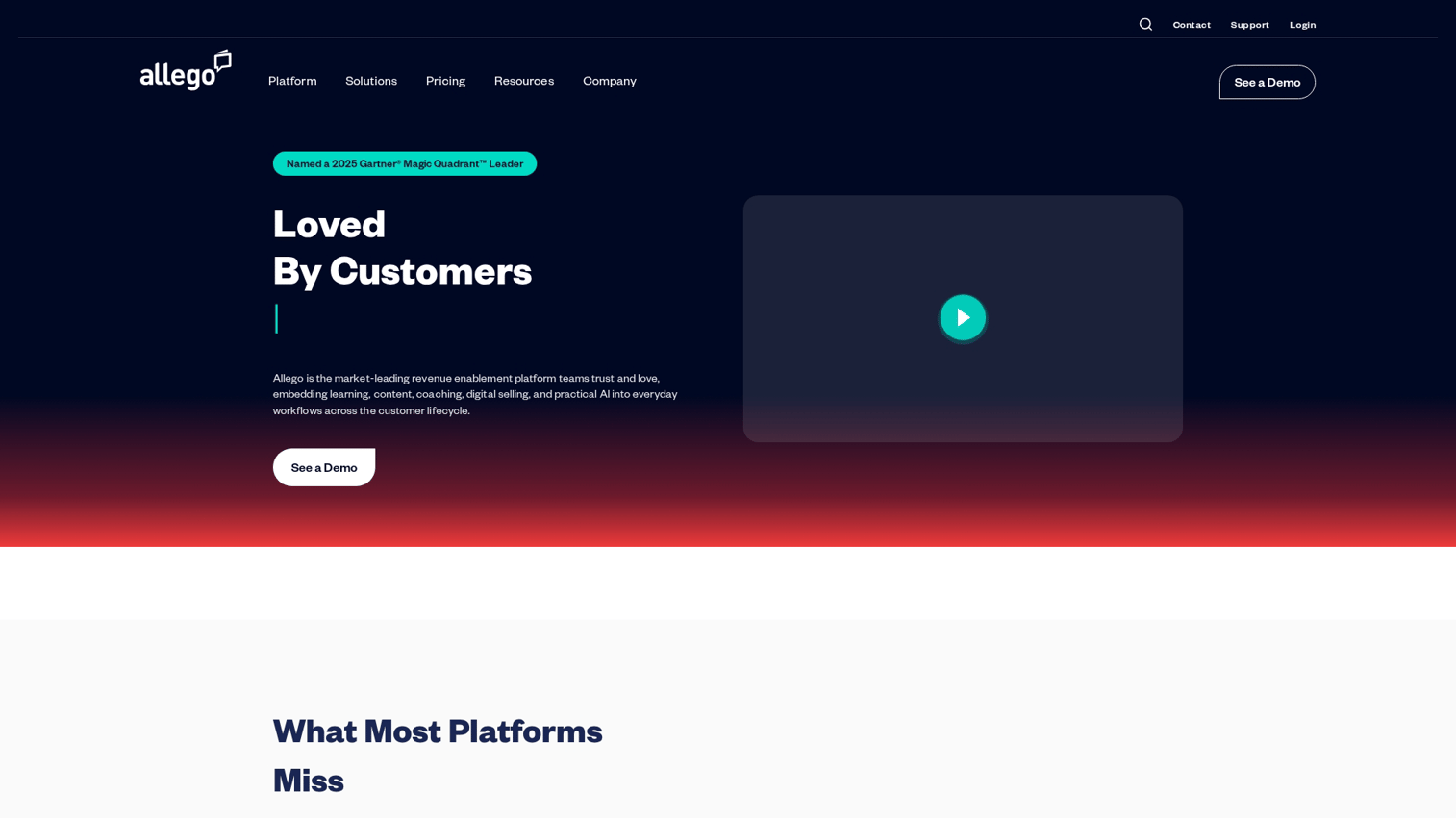
Allego focuses on video-based learning and peer coaching. The platform makes it easy for reps to record practice pitches, share successful call snippets, and learn from top performers through video content.
The mobile-first design means reps can consume training content between meetings or during commutes. Allego also includes conversation intelligence to analyze calls and identify coaching moments.
Key strengths
Video practice and feedback: Reps record pitches and receive manager or peer feedback asynchronously
Peer learning: Surface and share winning talk tracks and successful call recordings across the team
Mobile-first experience: Training content designed for consumption on phones and tablets
Coaching workflows: Structured processes for managers to review rep performance and provide guidance
Why choose Allego
Choose Allego when video-based learning and peer coaching are central to your enablement approach. The platform works well for teams that want to capture and share institutional knowledge from top performers.
Allego pricing
Custom pricing.
4. Spekit
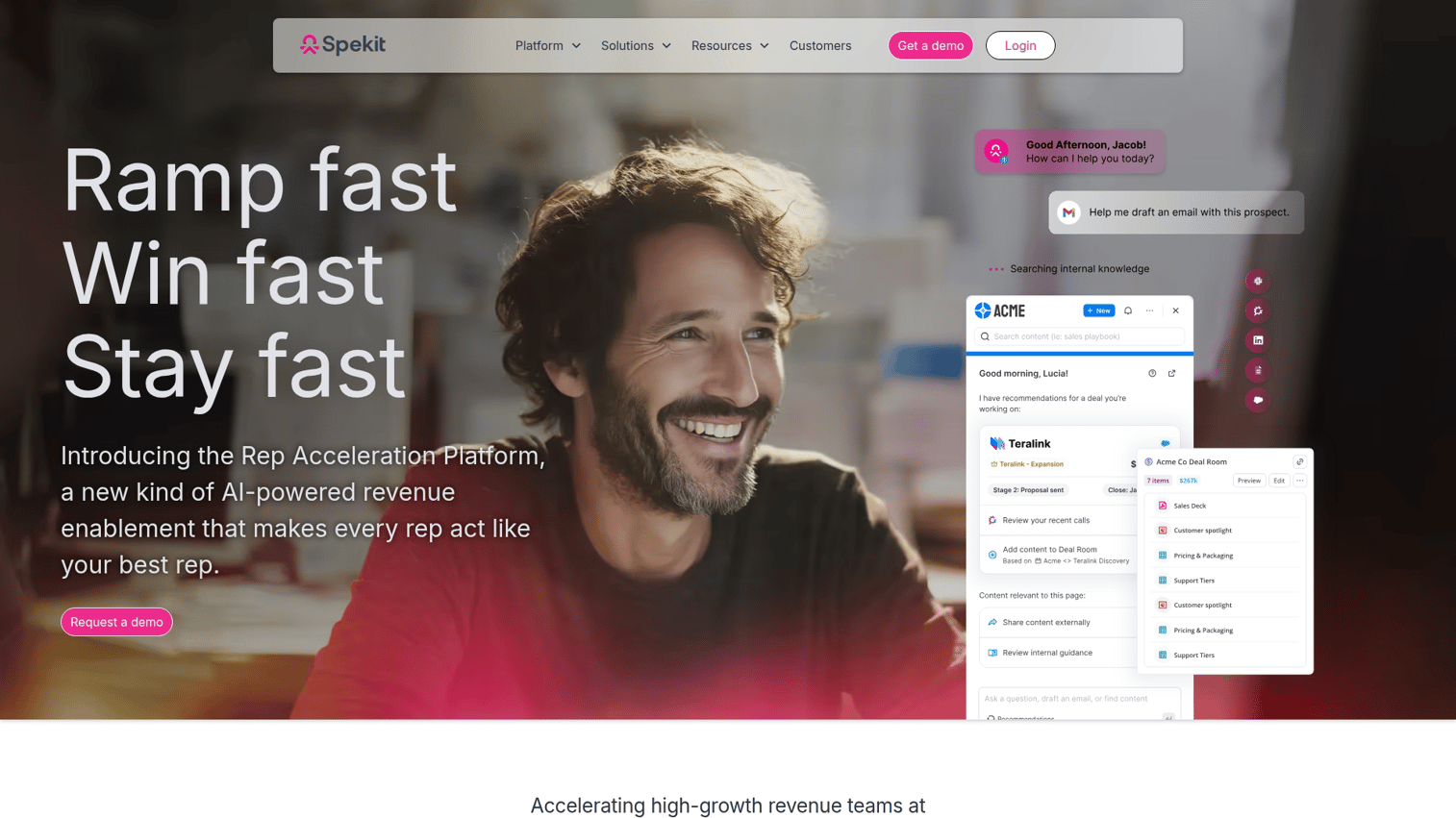
Spekit embeds learning directly into the tools reps already use. Instead of pulling reps out of their workflow to complete training, Spekit surfaces contextual guidance inside Salesforce, Outreach, LinkedIn, and other applications.
This just-in-time approach means reps get answers when they need them, not days earlier during a training session they've already forgotten.
Key strengths
In-app learning overlays: Contextual tips and guidance appear inside existing tools without switching applications
Salesforce integration: Deep integration surfaces field definitions, process guidance, and best practices within CRM workflows
Knowledge base: Searchable content reps can access from anywhere with a browser extension
Change management: Push updates and new information to reps proactively when processes change
Why choose Spekit
Choose Spekit when your primary challenge is knowledge retention and just-in-time access. The platform works well for teams with complex CRM configurations or frequent process changes where reps benefit from guidance in the moment.
Spekit pricing
Custom pricing based on team size and integrations.
5. Trainual
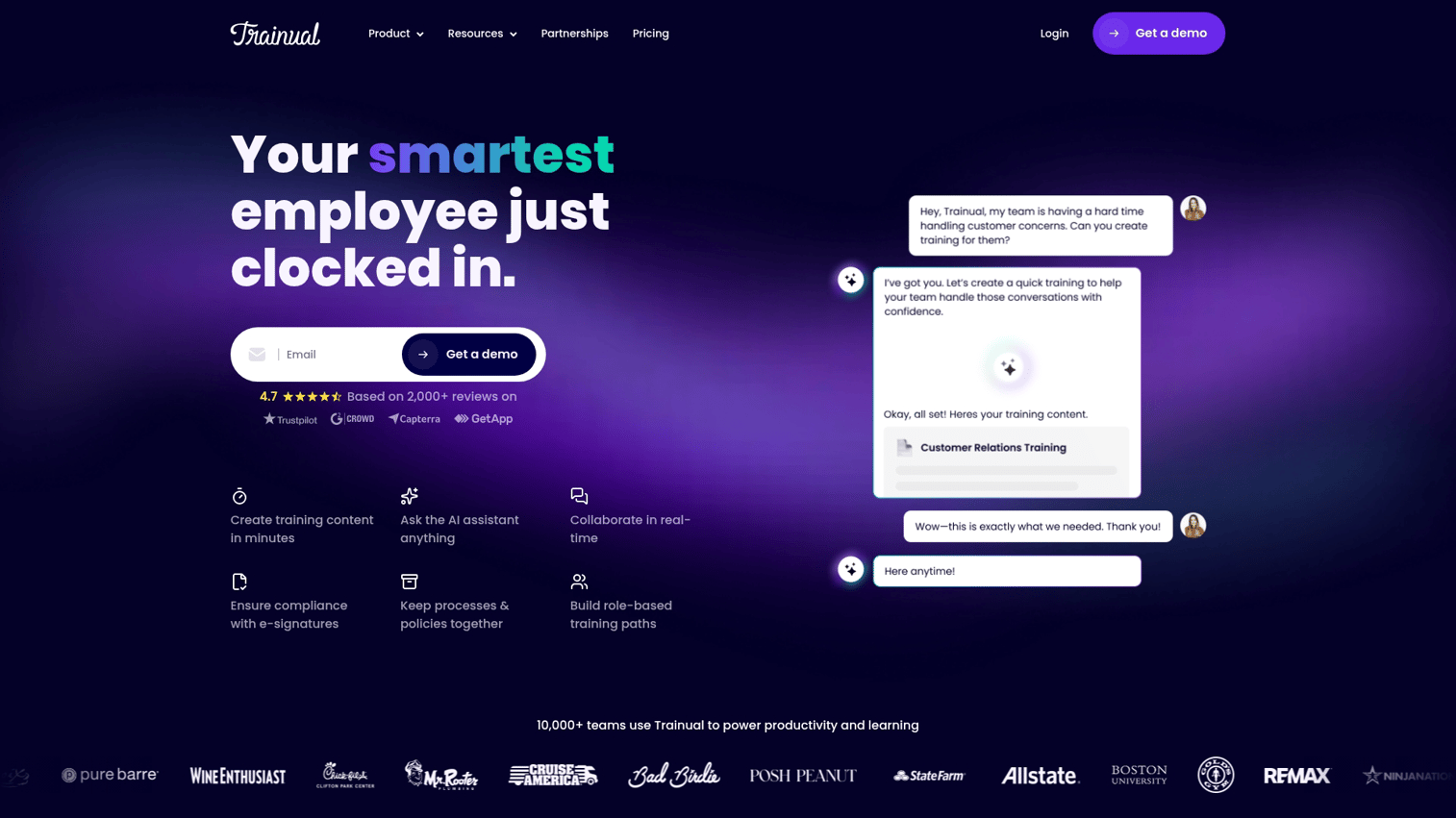
Trainual is a process documentation and training platform designed for small and mid-sized businesses building their first structured onboarding program. The platform makes it easy to document playbooks, create role-based training paths, and track completion.
Unlike enterprise platforms, Trainual prioritizes simplicity and fast implementation. Most teams can have their first training content live within days.
Key strengths
Playbook creation: Document processes, policies, and best practices in a structured, searchable format
Role-based paths: Assign different training content based on job function and seniority
Knowledge testing: Built-in quizzes to verify comprehension
Simple interface: Minimal learning curve for both administrators and learners
Why choose Trainual
Choose Trainual when you're building onboarding infrastructure for the first time and want something operational quickly. The platform works well for teams under 100 people who want structure without enterprise complexity.
Trainual pricing
Plans start at $250/month for up to 50 employees. Pricing scales with team size.
6. Lessonly by Seismic
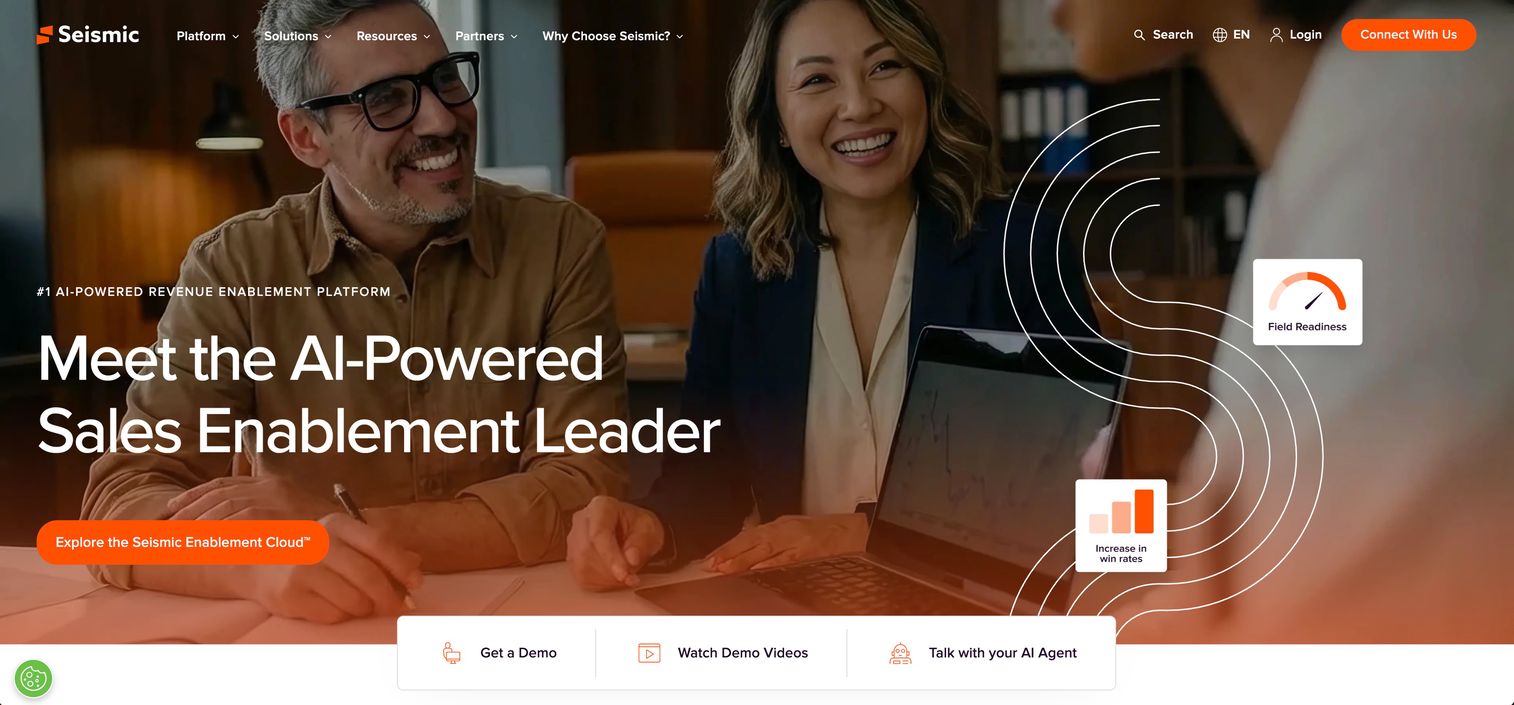
Lessonly, now part of Seismic, combines lesson creation with the broader Seismic content management ecosystem. The platform includes a drag-and-drop lesson builder, practice scenarios, and coaching workflows.
For teams already using Seismic for sales content, Lessonly provides a natural extension into training and enablement.
Key strengths
Lesson builder: Create interactive training content with text, video, and practice exercises
Practice scenarios: Reps complete written or video responses to simulated situations
Coaching tools: Managers review practice submissions and provide structured feedback
Seismic integration: Training connects directly to sales content and collateral
Why choose Lessonly
Choose Lessonly when you're already invested in the Seismic ecosystem or want tight integration between training content and sales collateral.
Lessonly pricing
Custom pricing as part of Seismic platform.
7. Brainshark
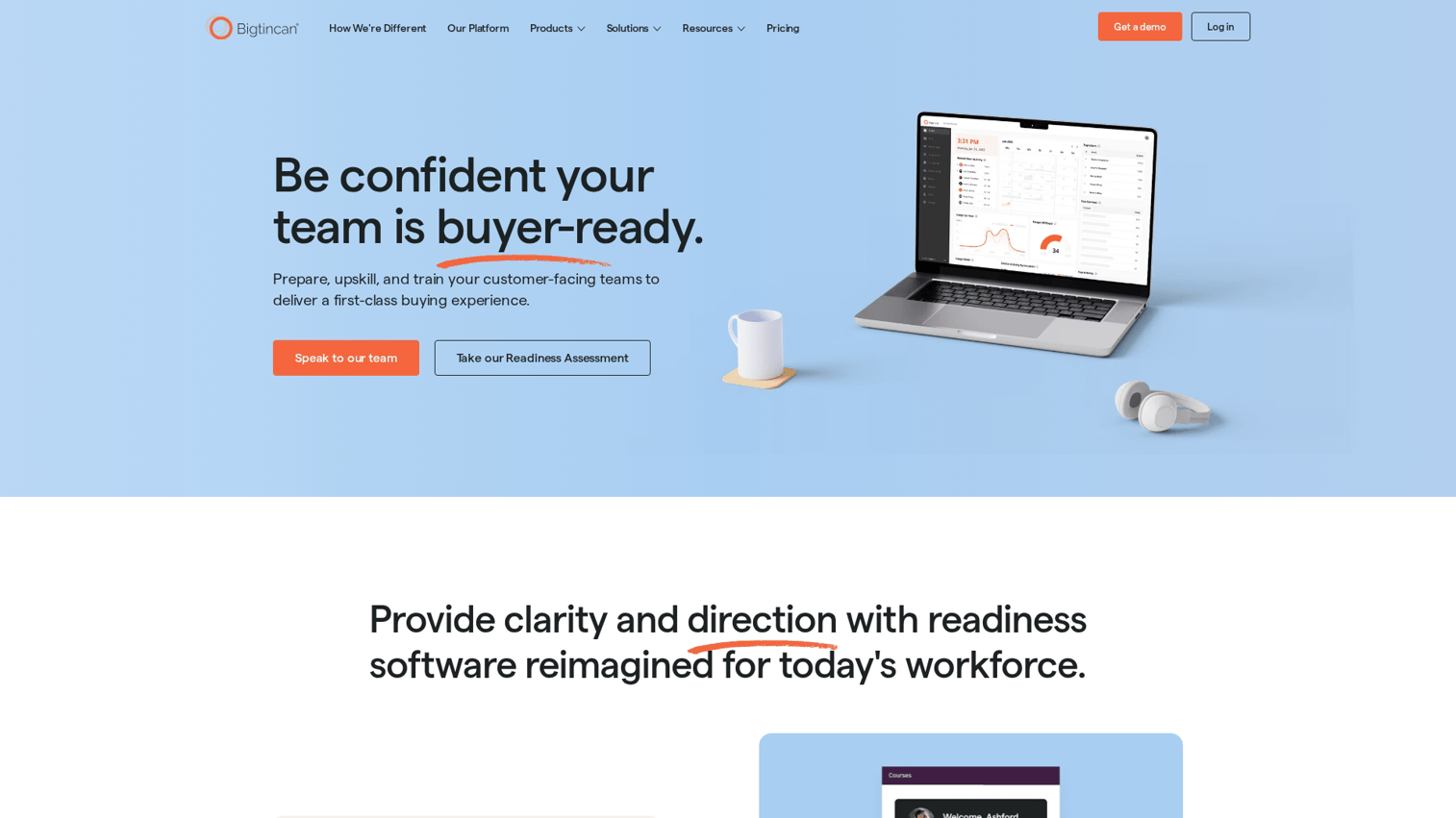
Brainshark focuses on video-based training content creation and sales readiness assessment. The platform makes it easy to create video courses, track completion, and measure readiness through scorecards.
The content authoring tools allow non-technical users to produce professional training videos without external production resources.
Key strengths
Video content creation: Build training videos with screen recording, voiceover, and interactive elements
Video coaching: Reps submit video practice for manager review and feedback
Readiness scorecards: Aggregate view of rep preparedness across multiple dimensions
Assessments: Knowledge checks and certifications to verify learning
Why choose Brainshark
Choose Brainshark when video content creation is a priority and you want to produce training materials in-house. The platform works well for teams with dedicated enablement resources who create substantial original content.
Brainshark pricing
Custom pricing.
8. Showpad
Showpad combines sales content management with training and coaching capabilities. The platform provides a unified system where reps access both the content they share with buyers and the training that helps them use it effectively.
This integration means training can reference actual sales collateral, and content usage data can inform coaching priorities.
Key strengths
Unified content and training: Single platform for sales assets and learning materials
Training modules: Create courses with video, documents, and interactive elements
Seller engagement analytics: Track how reps use content and identify coaching opportunities
Buyer engagement tools: Share content with prospects and track engagement
Why choose Showpad
Choose Showpad when you want to consolidate content management and training into a single platform. The integration works well for teams where content usage is a key indicator of rep readiness.
Showpad pricing
Custom pricing based on modules and team size.
9. Highspot
Highspot is a sales enablement platform that combines content management, training, and AI-powered guided selling. The platform uses AI to recommend content and next actions based on deal context.
For enterprise teams, Highspot provides comprehensive enablement infrastructure with strong analytics and governance capabilities.
Key strengths
Content management: Centralize sales assets with AI-powered search and recommendations
Training and coaching: Build courses, certifications, and coaching programs
Guided selling: AI recommends content and actions based on deal stage and buyer signals
Analytics: Track content usage, training completion, and revenue impact
Why choose Highspot
Choose Highspot when you have enterprise enablement requirements with AI-powered guidance. The platform works well for large organizations with complex sales processes and substantial content libraries.
Highspot pricing
Custom pricing.
10. Gong
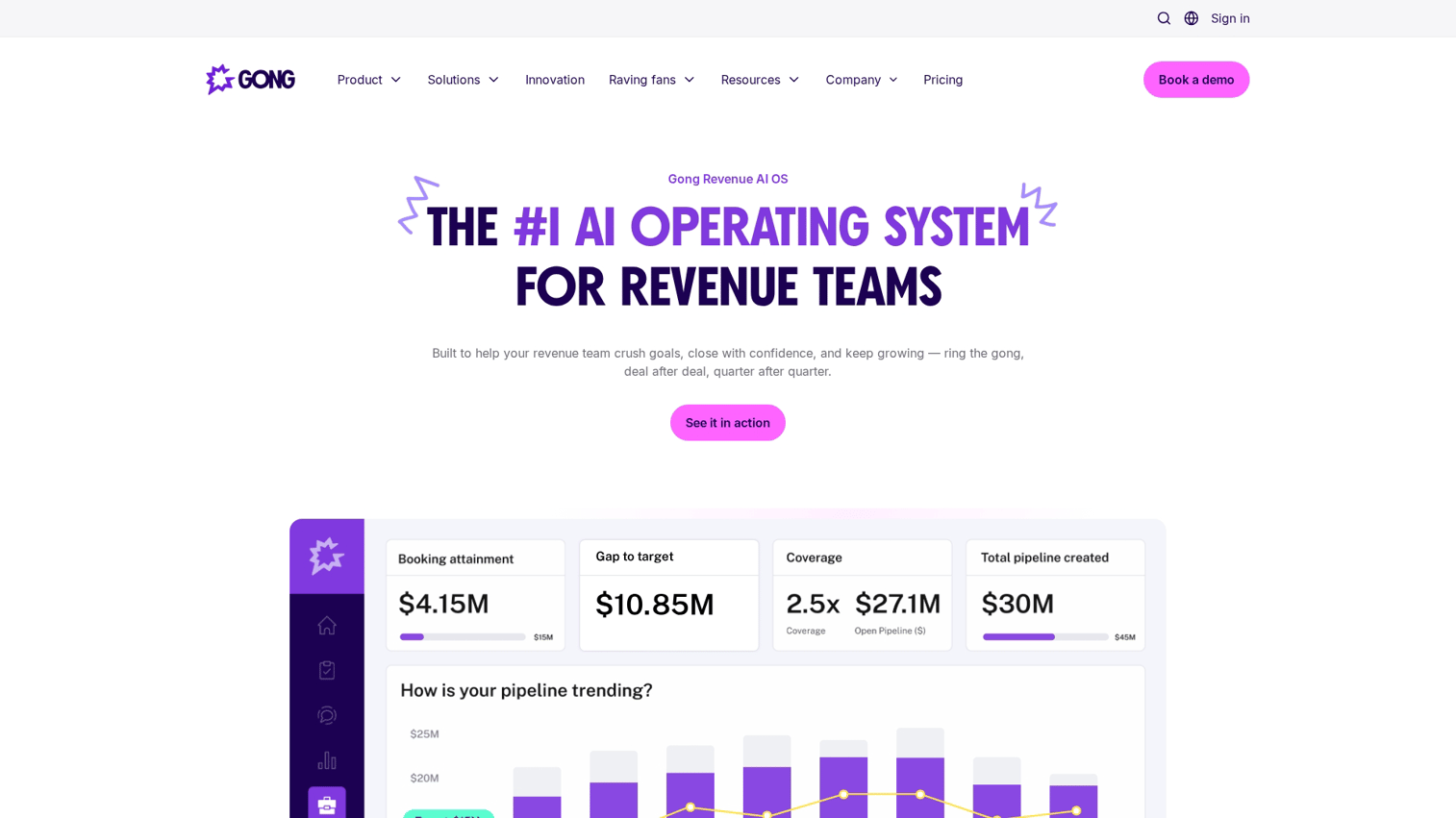
Gong is primarily a revenue intelligence platform, but its conversation intelligence capabilities make it valuable for sales onboarding. New reps can learn from real call recordings, understand what top performers do differently, and receive coaching based on actual conversations.
Rather than simulated practice, Gong enables learning from real customer interactions.
Key strengths
Conversation intelligence: Analyze calls to identify patterns, topics, and coaching opportunities
Deal analytics: Understand what behaviors correlate with won deals
Coaching from real calls: Train reps using actual successful conversations rather than hypothetical scenarios
Market insights: Aggregate conversation data to understand competitive mentions and buyer concerns
Why choose Gong
Choose Gong when you want onboarding grounded in real customer conversations. The platform works well for teams that value learning from actual calls over simulated practice.
Gong pricing
Custom pricing based on team size and modules.
What to look for in sales onboarding software
CRM and tech stack integration
The onboarding platform connects to your CRM and existing tools. This connection ensures training activity links to actual deals and reduces context switching for reps. Check for native integrations with your CRM (Salesforce, HubSpot), sales engagement tools (Outreach, Salesloft), communication platforms (Slack, Teams), and calendar and email.
Interactive and self-serve learning
Modern reps expect to learn by doing, not just watching videos. Look for platforms offering interactive product demos, simulations, and hands-on practice. Self-serve content lets reps learn at their own pace and revisit material when they want a refresher.
AI-powered coaching and roleplay
AI roleplay simulates sales conversations where reps practice pitches, objections, and discovery with an AI buyer. This provides safe practice before real prospect calls. AI coaching analyzes rep performance and provides feedback without requiring manager time for every practice session.
Analytics that connect to revenue outcomes
Completion rates alone don't indicate readiness. Look for platforms that track knowledge retention, practice performance, and correlate training with pipeline and win rates.
Content creation and maintenance speed
Onboarding content goes stale quickly as products and messaging evolve. Evaluate how easy it is to create, update, and version training materials. Capture-based tools let you update product walkthroughs in minutes rather than re-recording entire video courses.
How to measure sales onboarding success
Early ramp metrics for weeks one through four
Leading indicators show whether reps are progressing through onboarding effectively:
Training completion: Courses and certifications finished on schedule
Knowledge checks: Quiz and assessment scores above threshold
Practice performance: Roleplay and simulation ratings
Product familiarity: Demo competency evaluations from managers
Pipeline and quota attainment indicators
Lagging indicators show real business impact:
Time to first meeting: Days until rep books qualified meetings independently
Time to first opportunity: Days until rep creates pipeline
Time to first close: Days until rep wins a deal
Ramp to quota: Months until rep consistently hits target
Knowledge retention and certification benchmarks
One-time training doesn't stick. Measure ongoing retention through periodic assessments and refresher completion. Certifications on key topics like product knowledge, competitive positioning, and sales process provide structured checkpoints throughout the first year.
How to build your sales onboarding stack
Audit current state: Document your existing onboarding process and identify gaps. Note where reps struggle and what takes longest.
Define "ramped": Clarify what "ramped" means for your team. Is it first deal closed? Consistent quota attainment? Certified on all products?
Map your workflow: Identify where training happens today. CRM? Video calls? Product environment? This reveals integration requirements.
Prioritize features: Rank the evaluation criteria based on your specific challenges. Product knowledge gaps call for different solutions than process compliance issues.
Start with one use case: Don't overhaul everything at once. Pick the highest-impact area and prove value before expanding.
Measure and iterate: Track early metrics and adjust. The first version of your onboarding program won't be perfect.
FAQs about sales onboarding software
Sales onboarding software is purpose-built for revenue teams with CRM integration, deal simulations, and sales-specific analytics. A general LMS handles company-wide training but lacks the sales workflow connections and practice formats reps use to become effective sellers.
Implementation varies by platform complexity and team size. Lightweight tools like Trainual or Spekit can be operational within days. Enterprise platforms like Mindtickle or Highspot typically require several weeks for integrations, content migration, and administrator training.
Mindtickle, Allego, and Lessonly consistently rank among the highest-rated platforms on G2 and Gartner Peer Insights. However, ratings reflect user satisfaction within specific use cases. The best fit depends on your team size, technical resources, and learning approach.
Interactive demos let new reps explore product functionality hands-on without needing a live environment or sandbox access. This accelerates product familiarity and builds demo confidence before reps present to prospects. Reps learn by doing rather than watching, which improves retention.
Most teams see measurable improvement within one to two quarters of implementing structured onboarding. Significant ramp time reduction depends on content quality, manager involvement, and consistent process enforcement.
Yes, even teams with a few reps benefit from documented processes and self-serve training. However, lightweight tools like Trainual or Spekit often fit better than enterprise platforms. The key is matching platform complexity to team size and available administrative resources.
Using one platform for both simplifies content management and provides continuity. Reps don't learn multiple systems, and analytics can track progress from onboarding through ongoing development. Some teams prefer specialized tools for initial onboarding and separate solutions for continuous learning, but consolidation typically reduces friction.