You can keep the forest plan in one system, load tickets in another, and contractor payments in a spreadsheet. The trouble starts when a delayed truck, a missed harvest target, or a disputed settlement forces someone to rebuild the story by hand.
That rebuild costs time your operations team doesn't have. According to the Journal of Forestry (2023), only 16.1% of surveyed foresters reported using decision-making software, even as 67.6% use digital tools for forest management broadly. The gap between having data and being able to act on it is where most operational problems live.
The right forestry management software creates a usable operating record across field work, timber movement, and planning. This guide maps the category clearly, states buying criteria plainly, and ties each tool to the operational workflow it fits.
What's inside
This guide is for forestry operators, logging contractors, forest managers, and executives assessing the category for the first time or replacing a fragmented stack.
- 10 forestry software tools across ERP, forest planning, inventory, harvest operations, transport, and field mapping
- Evaluation criteria: Operational fit, field usability, data and integration requirements, and commercial model
- A comparison table with verified pricing and G2 ratings
- Selection advice for timber companies, forest managers, logging contractors, and urban forestry teams
TL;DR
- Best for forestry ERP and timber settlements: TRACT
- Best for planning and optimization across complex operations: Remsoft
- Best for connected forest to mill operations: Trimble Forestry
- Best for integrated forest inventory and property management: Connected Forest
- Best for GIS-led field inventory: Tree Plotter INVENTORY or Forest Metrix
- Best for specialist road layout and engineering workflows: RoadEng Forest Engineer
What is forestry software?
Forestry software is a category of digital tools used to plan, manage, measure, and document forest operations, from inventory and silviculture through harvesting, timber transport, mill delivery, and financial settlement.
Core types of forestry software
The category splits into five distinct workflow groups. Conflating them leads to buying a planning tool when you need a dispatch system, or a field inventory app when you need a forestry ERP.
- Forestry ERP and operations platforms: For contracts, settlements, load tracking, invoicing, and production across companies.
- Forest planning and optimization tools: For resource modeling, harvest scheduling, scenario analysis, and long-range capital decisions.
- Forest inventory and GIS platforms: For tree records, field collection, stand data, inspections, and spatial analysis.
- Logging and contractor management tools: For crews, jobs, equipment, dispatch, haulage, and billing.
- Specialist engineering software: For forest road design, terrain analysis, and infrastructure planning.
Key capabilities to look for
When evaluating any platform in this category, verify these capabilities against your actual workflows:
- Mobile field data collection with offline support
- GPS, GIS, and mapping integrations
- Stand, tract, tree, or log inventory records
- Harvest planning and production reporting
- Load, transport, dispatch, and delivery tracking
- Contractor, settlement, invoicing, and payment workflows
- Scenario planning, analytics, and KPI reporting
- Role-based access, auditability, and data exchange
What forestry software does not replace
A platform does not replace operational discipline, clean field processes, or agreed data ownership. Software should reduce rekeying and improve visibility, but your team must decide which system becomes the source of truth before configuration begins. Assign that call before you sign a contract.
When to use forestry software
Standardize field to office records
Operators running paper tickets, emailed spreadsheets, and disconnected GPS files spend significant time reconciling data after every shift. A forestry field data collection system with standardized mobile forms, audit trails, and synchronized records removes that gap. The test is whether field crews can collect and submit a real workflow without creating a parallel process.
Coordinate timber from harvest to delivery
Load tracking, dispatch, transport coordination, mill delivery, log inventory, and contractor reconciliation cross multiple teams and systems. This is where data breaks create financial consequences: Disputed settlements, unreconciled loads, and missing proof of delivery. Forestry logistics software that connects these handoffs gives operations leaders a single place to resolve discrepancies.
Plan harvests and capital decisions with better data
Long-range resource modeling, harvest scheduling, road planning, and scenario analysis matter when small planning errors produce downstream cost or supply chain problems. Forest planning software turns historical stand data and yield models into defensible allocation decisions.
Forestry software comparison
The table below compares 10 forestry software tools by operational fit, key differentiator, pricing model, and G2 rating. Pricing and G2 ratings were verified in October 2026 from vendor pricing pages and live G2 listings.
| # | Product | Best for | Key differentiator | Pricing | G2 rating |
|---|---|---|---|---|---|
| 1 | TRACT | Timber companies needing ERP and settlement workflows | Integrated production, traceability, inventory, and finance | Custom pricing | N/A on G2 |
| 2 | Remsoft | Complex forest planning and enterprise resource decisions | Optimization, planning, operations, and forest intelligence | Custom pricing | N/A on G2 |
| 3 | Trimble Forestry | Forest-to-mill operational coordination | Connected workflows across land, harvest, logistics, and processing | Custom pricing | 4.3/5 (CFHarvest) |
| 4 | Connected Forest | Property, inventory, and forest management workflows | End-to-end connected forestry ecosystem | Custom pricing | 4.3/5 (CFHarvest) |
| 5 | Silvacom FMS | Forest managers needing spatial land and operational records | GIS-integrated forest management with AI query assistant | Custom pricing | N/A on G2 |
| 6 | Tree Plotter INVENTORY | GIS-focused tree inventory teams | Spatial tree inventory, mobile field collection, map-based management | Request pricing | 4.5/5 |
| 7 | Forest Metrix | Field inventory and timber cruising teams | Mobile inventory collection, forestry measurement, on-device reporting | From $1,000/year | N/A on G2 |
| 8 | Logger's Edge | Logging contractors managing jobs and crews | Load tickets, payments, reconciliation, and profitability in one system | From $135/month | N/A on G2 |
| 9 | Forestree | Local governments managing urban forest records | Tree inspections, works prioritization, and risk management | Custom pricing | N/A on G2 |
| 10 | RoadEng Forest Engineer | Road design and engineering specialists | Forest road alignment, terrain modeling, and corridor design | Custom pricing | 4.8/5 |
Best 10 forestry software tools for 2026
1. TRACT
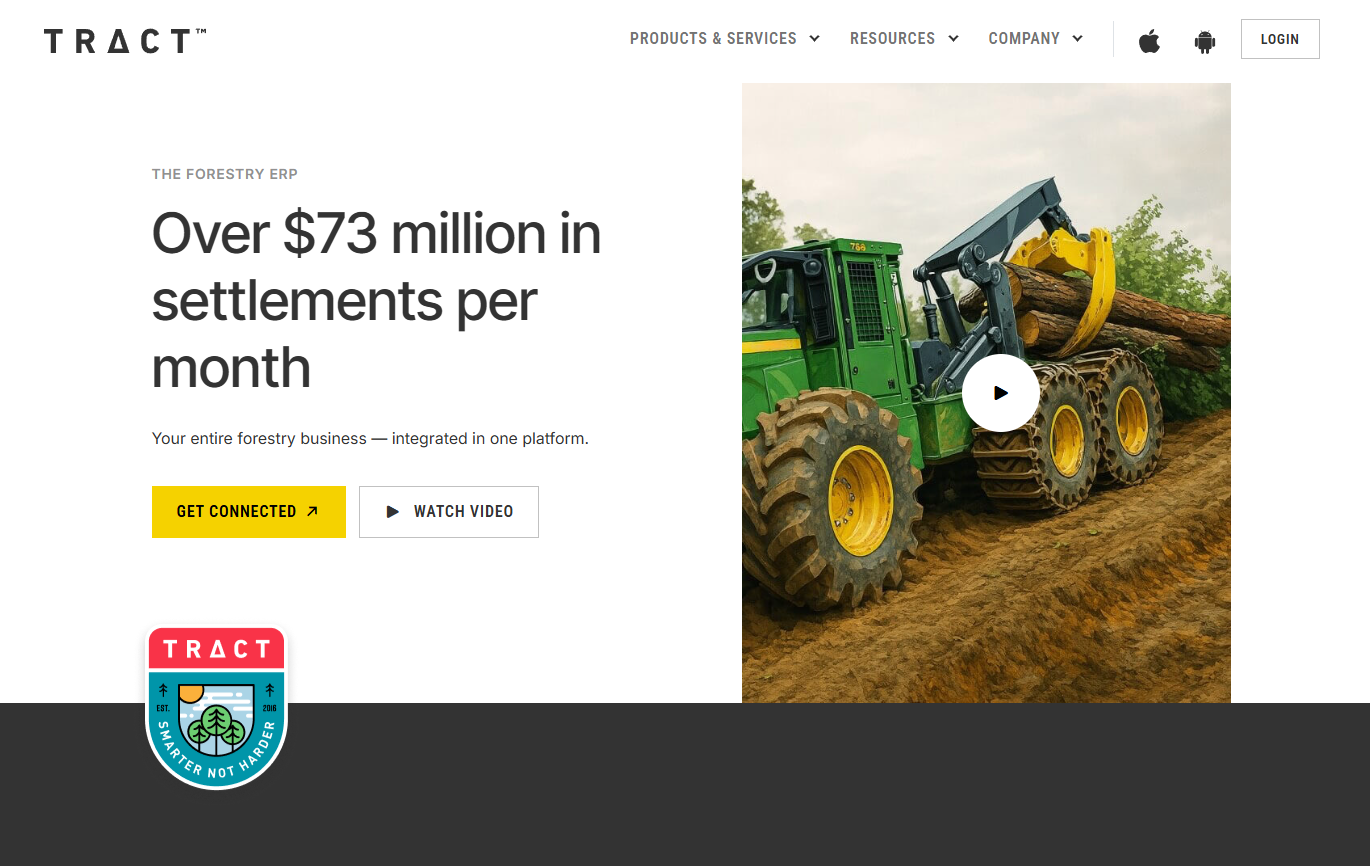
TRACT is a forestry ERP platform built for wood dealers, timberland owners, and institutional timber investors. It covers the full operational and financial loop: Production management, timber traceability, log inventory, contract management, accounting, settlements, invoicing, and driver payments. Mobile field apps with GPS and offline functionality keep field crews connected, and the platform syncs with QuickBooks and NetSuite for accounting continuity.
Best for: Timber operators that need to connect field activity, timber movement, and financial reconciliation in one system.
Key features
- Real-time load and production tracking
- AI-powered ticket scanning for faster data entry
- Automated forestry settlements and contract management
- Log inventory management and reporting
- Mobile field apps with GPS and offline support
- QuickBooks and NetSuite synchronization
Why choose TRACT: TRACT fits organizations where traceability, timber transactions, and settlement accuracy carry material financial consequences. If your biggest operational problem is disputed settlements or missing load records, this is where to start.
TRACT pricing: TRACT uses custom pricing based on operation size, transaction volume, and required modules. Contact their team directly for a quote that reflects your scale.
Capterra reviewers rate TRACT at 4.7/5 across 12 reviews, which is the best available signal given no verified G2 listing was found at time of publication.
2. Remsoft
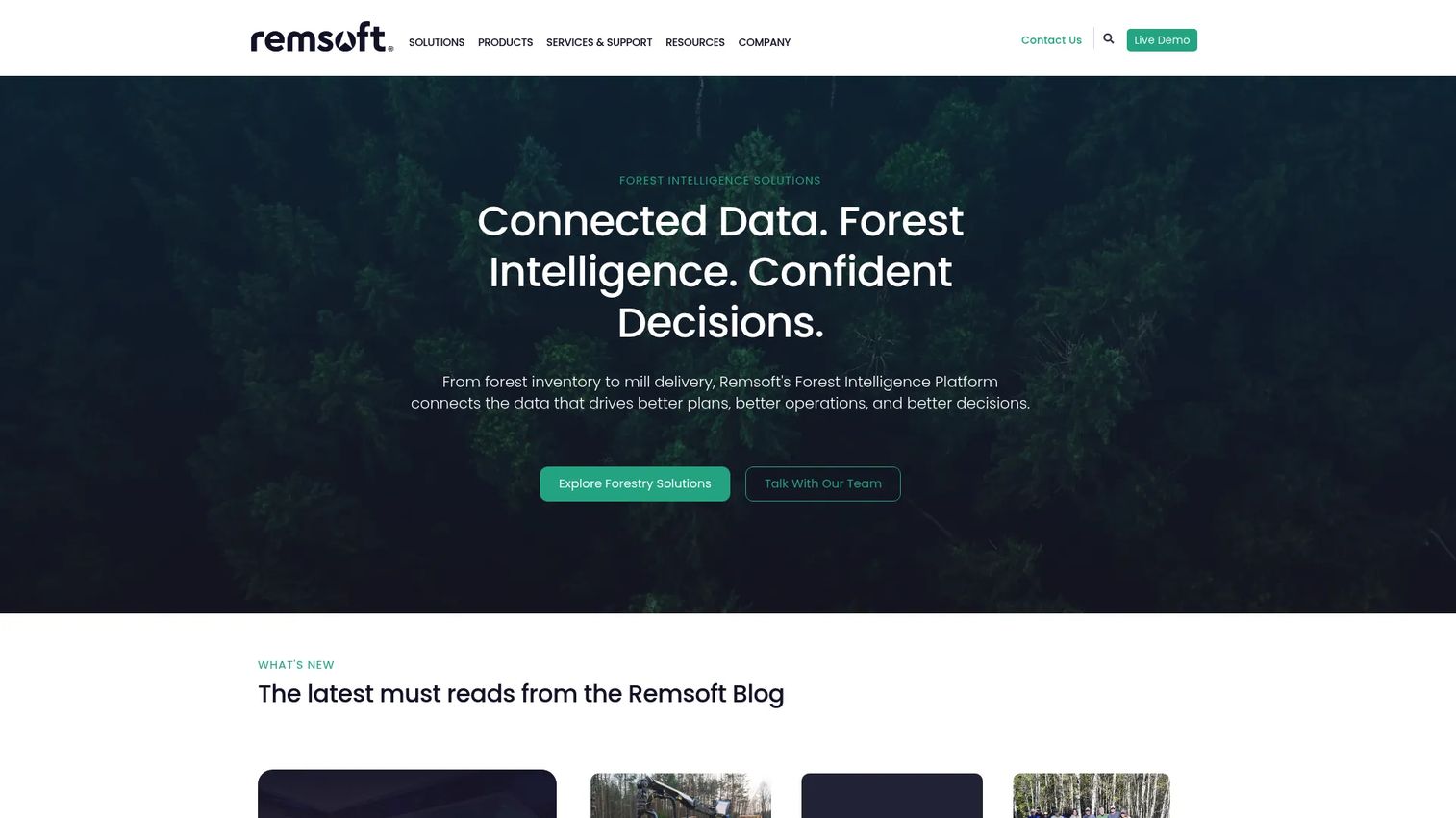
Remsoft provides forest intelligence, planning, optimization, and operations software for forestry organizations managing complex resource decisions. The platform covers forest inventory, land and asset management, scenario modeling, harvest-schedule optimization, and real-time operations planning. Transportation, logistics, MRO inventory, and maintenance management extend the platform into supply chain execution.
Best for: Forestry organizations that need to balance long-range resource plans with operational scheduling and supply chain visibility.
Key features
- Forest inventory, land, and asset management
- Scenario modeling and harvest-schedule optimization
- Real-time forestry operations planning and monitoring
- Transportation and logistics workflows
- Analytics and business intelligence reporting
Why choose Remsoft: This is a planning-first platform. If your biggest problem is making better allocation and scheduling decisions across land, supply, and delivery, Remsoft fits. Use a real planning scenario in the evaluation rather than a generic demo.
Remsoft pricing: Remsoft directs prospects to contact sales. Cost drivers include modules selected, operational complexity, user count, and integration requirements. No public pricing tiers were verified at time of publication.
3. Trimble Forestry
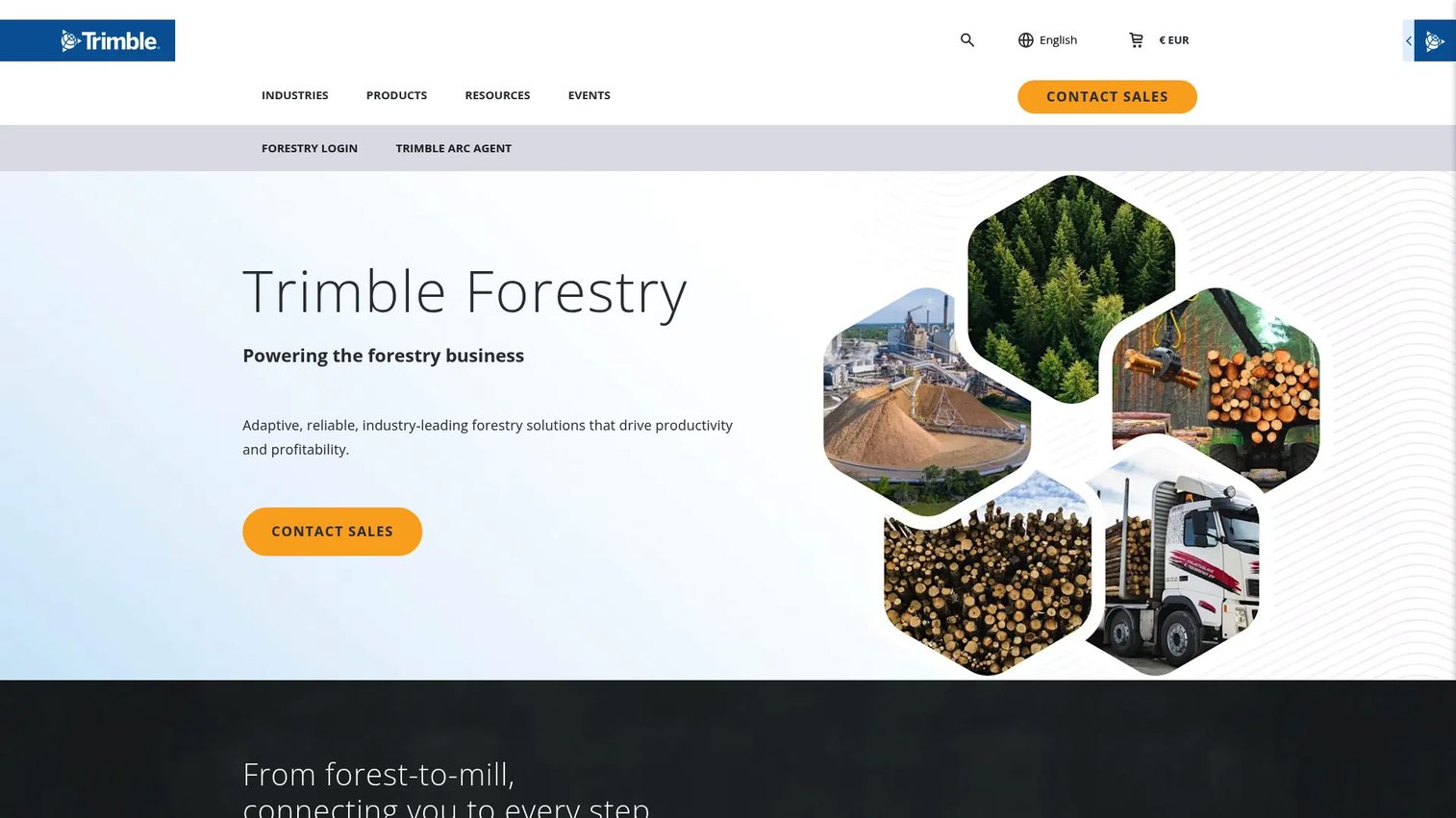
Trimble Forestry is a connected suite for enterprise forestry organizations managing end-to-end operations. The platform spans forest and land resource management with spatial records, silviculture, and GIS integration; wood procurement, inventory, and supply-chain management; logistics optimization, load tracking, and dispatch; and mill production, log-yard optimization, and ERP. Multiple modules under the Trimble family address different workflow layers.
Best for: Larger forestry organizations coordinating land, procurement, harvest, transport, and mill operations from a connected data environment.
Key features
- Forest and land resource management with GIS integration
- Wood procurement, inventory, and timber tracking
- Dispatch, routing, load tracking, and logistics optimization
- Mill production and log-yard management
- Field data capture and mobile workflows
Why choose Trimble Forestry: The breadth of connected forest-to-mill workflows is the main differentiator. Start by identifying the single handoff costing the most time, whether that's harvest to transport or transport to mill receiving, then choose modules around that bottleneck before expanding.
Trimble Forestry pricing: Trimble Forestry product pages direct prospects to contact sales. No public pricing figures or plan tiers were verified at time of publication.
G2 rates Trimble CFHarvest, a core Trimble Forestry product, at 4.3/5.
4. Connected Forest
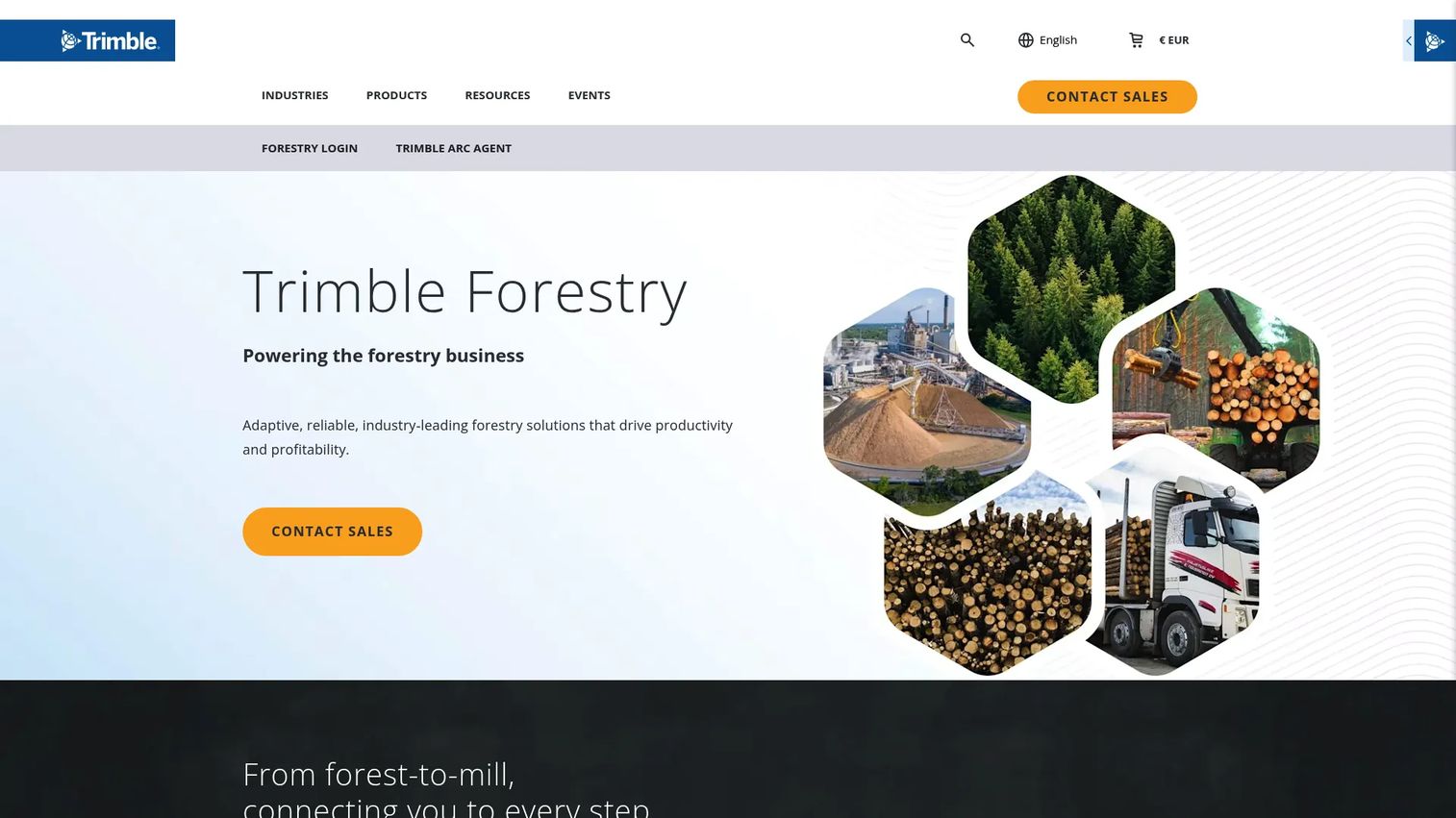
Connected Forest is Trimble's forestry technology ecosystem, connecting land, forest, fiber, harvesting, logistics, and mill operations under a single platform architecture. Where Trimble Forestry describes the broader product family, Connected Forest is the ecosystem framing that ties forest planning and management, harvest operations control, and wood procurement into a continuous supply chain view.
Best for: Forest companies, landowners, contractors, and mills managing end-to-end forestry operations and requiring consistent data across every operational handoff.
Key features
- Forest planning and management records
- Harvest operations control and production tracking
- Wood procurement, supply-chain visibility, and timber traceability
- Field data integration and operational reporting
- Multi-stakeholder coordination across land, transport, and mill
Why choose Connected Forest: The value proposition is continuity. Buyers who currently operate across disconnected systems for planning, field data, logistics, and processing benefit from a single data model. Establish data ownership for property records and field submissions before rollout.
Connected Forest pricing: No first-party pricing is shown on Trimble's official forestry page. A sales conversation is required to scope the right modules and commercial terms.
G2 rates CFHarvest, a Connected Forest product, at 4.3/5.
5. Silvacom FMS
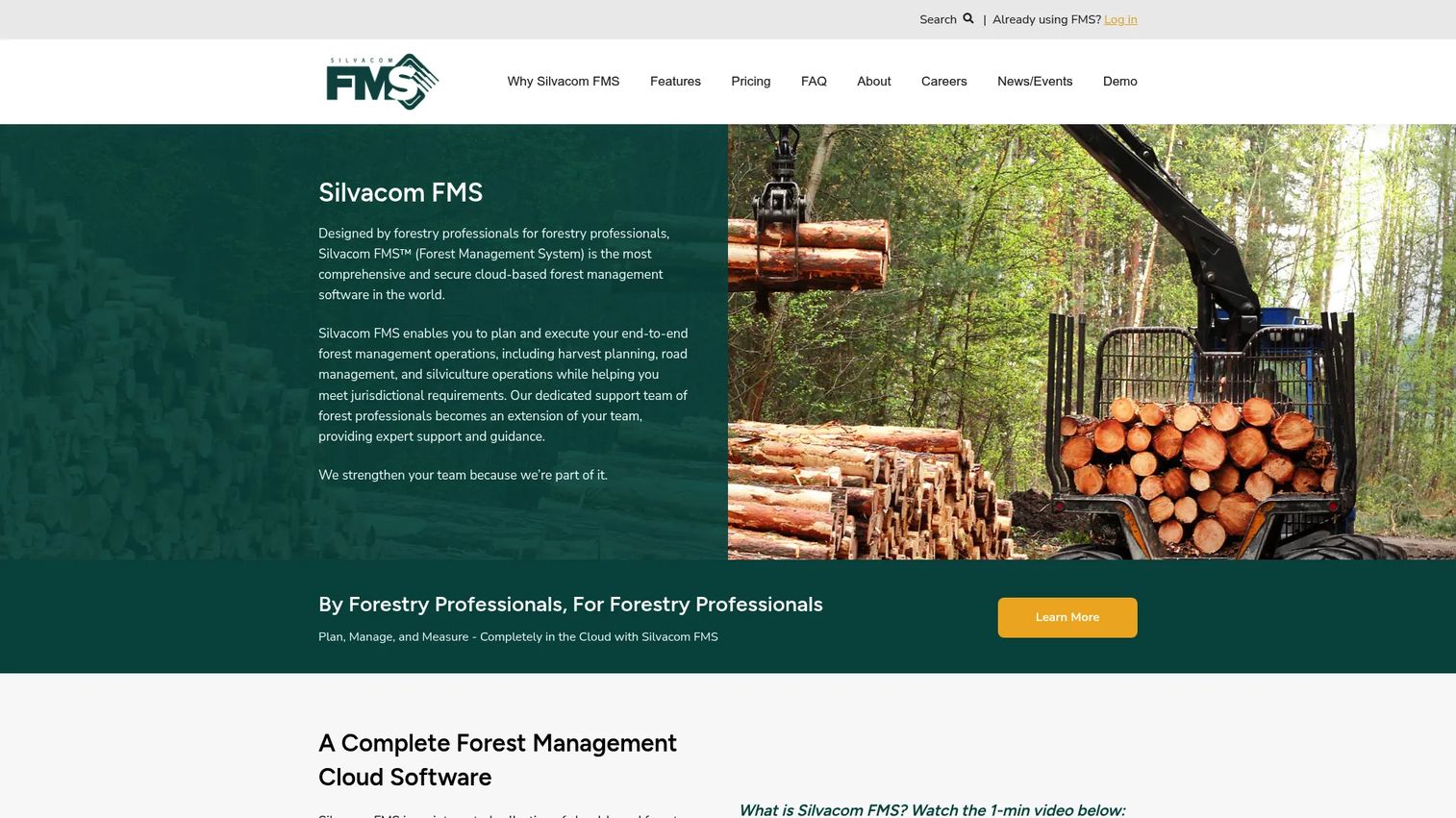
Silvacom FMS is a cloud-based geospatial forest management system for forestry companies, cooperatives, and government teams. The platform handles harvest planning and tracking, road permitting with linear referencing, silviculture planning and regulatory submissions, GIS mapping with in-app spatial editing, and harvest variance tracking. A built-in AI assistant called Sappy supports natural-language data and spatial queries.
Best for: Forest managers that want to organize land, operational, and GIS-based mapping data in a dedicated forestry management platform.
Key features
- Harvest planning, tracking, and variance reporting
- Road permitting, structures, events, and linear referencing
- Silviculture planning and regulatory submissions
- GIS mapping with in-app spatial editing
- Sappy AI assistant for natural-language data queries
Why choose Silvacom FMS: Generic project or asset management software cannot model forestry data structures well. Silvacom FMS is purpose-built for the combination of spatial records, regulatory compliance, and operational planning that forest management requires.
Silvacom FMS pricing: Silvacom FMS uses a monthly SaaS subscription covering software, hosting, and maintenance. Exact pricing requires a quote from the vendor, with cost driven by organization size and module scope.
6. Tree Plotter INVENTORY
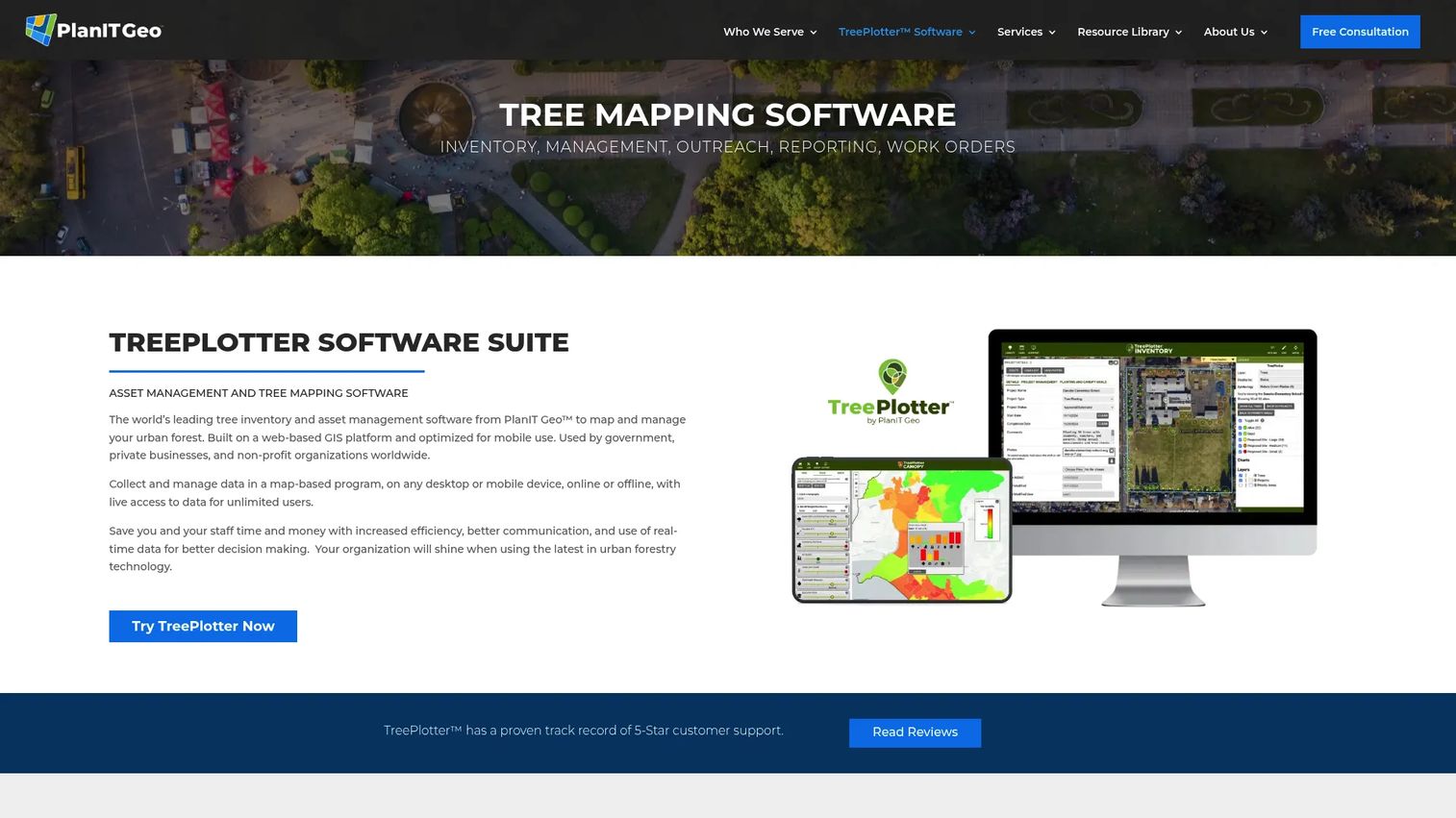
Tree Plotter INVENTORY by PlanIT Geo is a GIS-based tree inventory and management platform for municipalities, campuses, nonprofits, and consultants. The platform supports field data collection and management, interactive maps with filtering and saved templates, dashboards, canned and custom reports, inspection records, and live updates from web and mobile devices. Web API integrations connect to Esri and other enterprise systems.
Best for: Municipal forestry teams, campuses, utilities, and land managers whose primary unit of management is the individual tree or mapped urban forest asset.
Key features
- Map-based tree inventory with filtering and color-coding
- Mobile field data collection online and offline
- Tree inspection records, work history, and data queries
- Dashboards, canned reports, and custom reporting
- Web API integrations including Esri
Why choose Tree Plotter INVENTORY: The scope test here is straightforward. If your team needs stand-level supply chain management, this is not the right fit. If your team needs accurate tree-level records, inspection workflows, and map-based reporting, Tree Plotter INVENTORY is built for exactly that job.
Tree Plotter INVENTORY pricing: Plans span Base, Complete, Advanced, and Enterprise tiers for public entities, and Base, Complete, and Enterprise for private entities. All tiers require a pricing request from the vendor.
G2 rates Tree Plotter INVENTORY at 4.5/5.
7. Forest Metrix
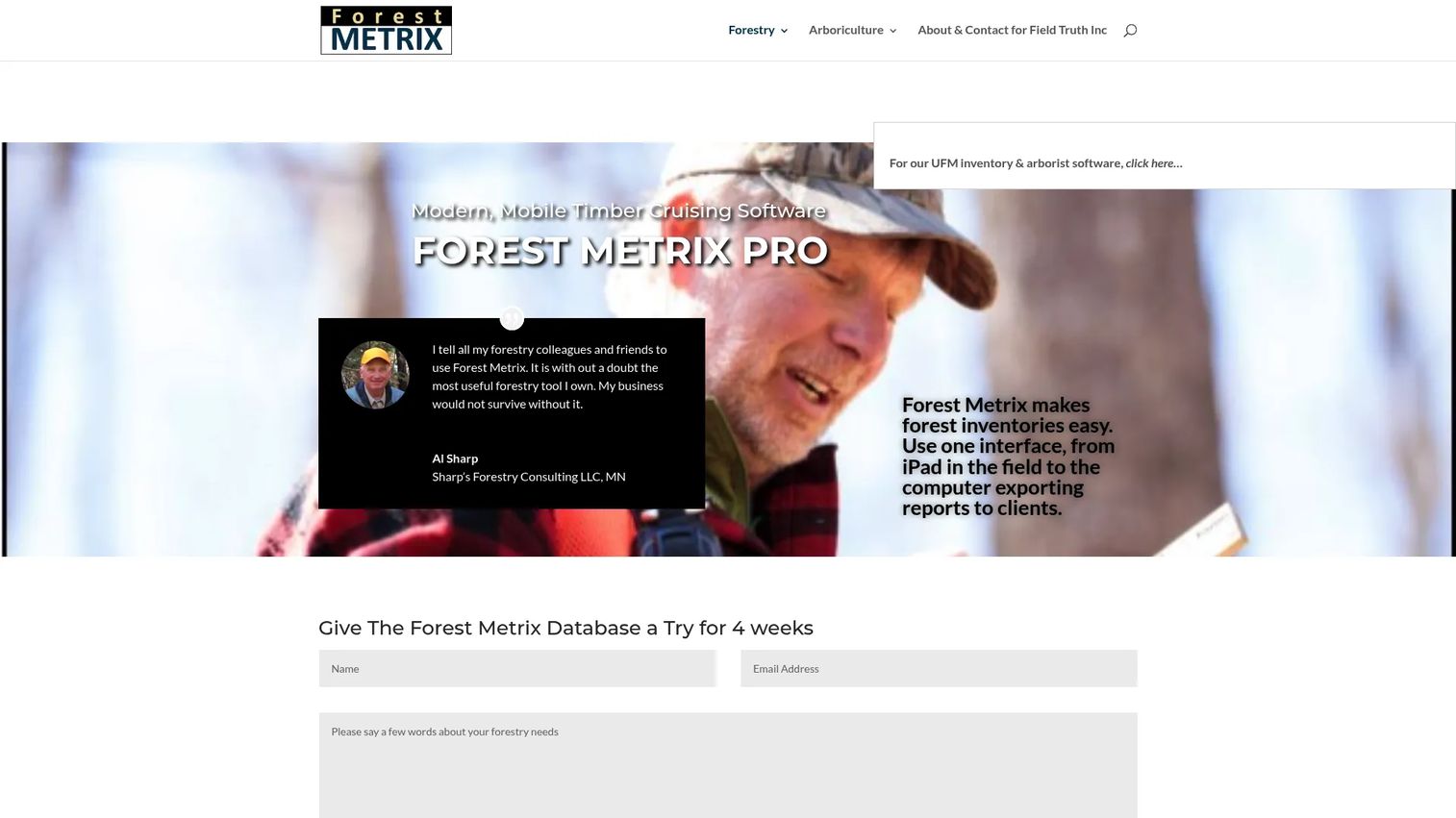
Forest Metrix is mobile and desktop software for forest inventories, timber cruising, and arborist tree management. The platform covers GPS-enabled mobile data collection, customizable inventory protocols and merchantable specifications, on-device reports, maps, and proposals, and tree risk assessments with treatment records. A four-week trial is available.
Best for: Foresters and arborists collecting inventory or timber cruising data in the field who need accurate measurement workflows and on-device reporting without returning to a desktop.
Key features
- Forest inventory, timber cruising, and mobile data collection
- Customizable inventory protocols and merchantable specs
- GPS, mapping, and camera integration
- On-device reports, maps, and proposals
- Tree risk assessments, appraisals, and work prioritization
Why choose Forest Metrix: The practical case for Forest Metrix is fewer errors on return from the field. Buyers should evaluate how data exports or integrations connect with their planning and reporting systems before committing to a full rollout.
Forest Metrix pricing: Forest Metrix Pro starts at $1,000 annually. Forest Metrix Pro Plus, which adds Excel analytics, runs $1,500 annually. A four-week trial is available with no credit card required.
8. Logger's Edge
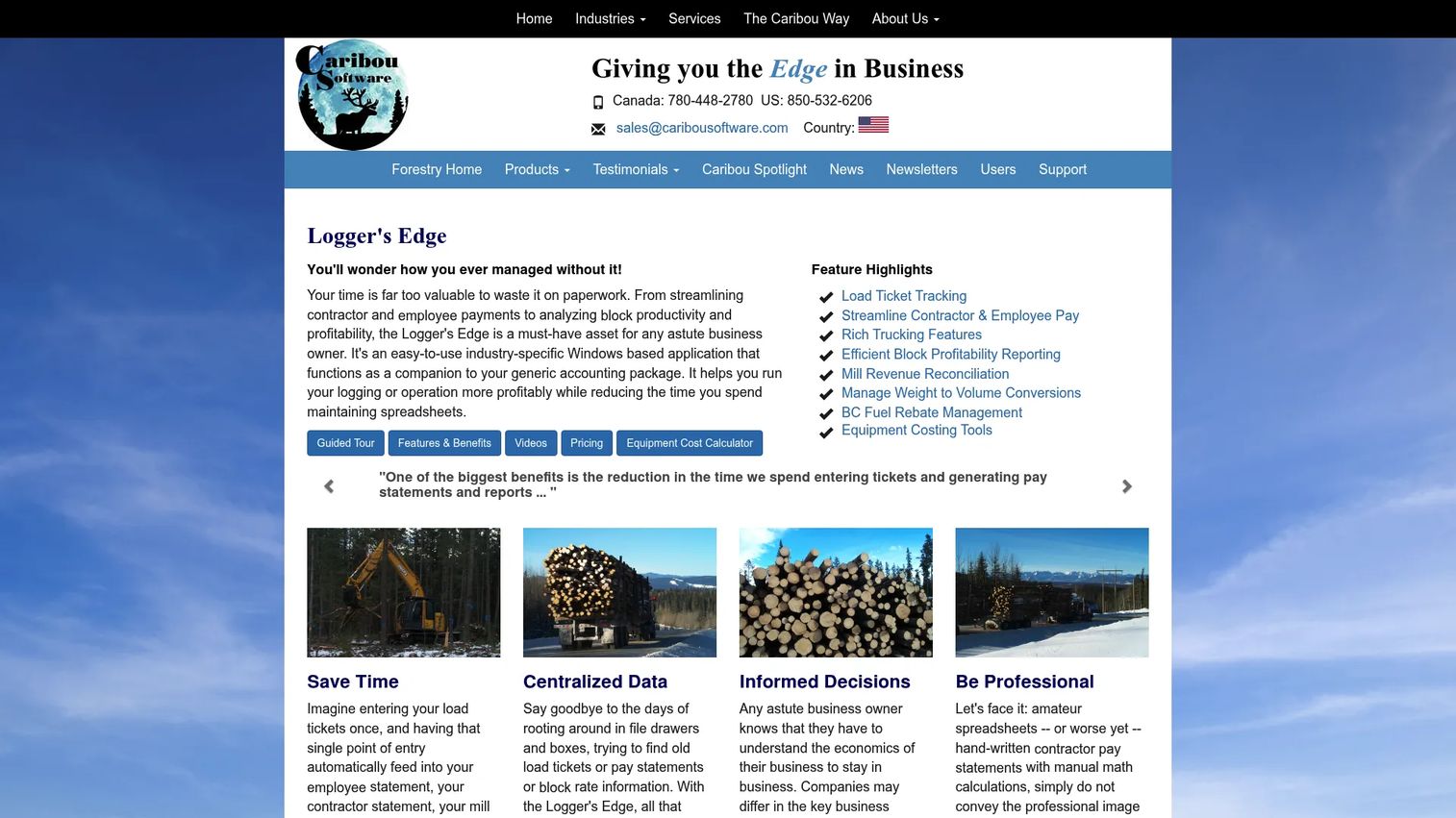
Logger's Edge by Caribou Software is Windows-based forestry software built for logging and timber companies. The platform handles load-ticket tracking, electronic imports, contractor and landowner payment management, trucking and cycle-time tracking, block and tract profitability reporting, mill revenue reconciliation, and timber-tax reporting. Both subscription and traditional upfront license options are available.
Best for: Small and mid-sized logging, timber, and log-hauling companies needing integrated ticket tracking, payment management, and profitability reporting in a single tool.
Key features
- Load-ticket tracking and electronic imports
- Contractor, employee, landowner, and trucker payment management
- Block and tract profitability and production reporting
- Mill revenue reconciliation
- IFTA, 1099, and timber-tax reporting
Why choose Logger's Edge: This is a practical first step for contractors who need to replace job-level spreadsheets before investing in a broader forestry platform. The focus is operational record-keeping and financial reconciliation at the job level, not long-range planning or enterprise supply chain management.
Logger's Edge pricing: Subscription plans run $135/month for Small Loggers, $185/month for Mid-Size Loggers, and $250/month for Large Loggers, billed quarterly or annually. Traditional upfront licenses are also available, starting at $4,750 for Small Loggers.
9. Forestree
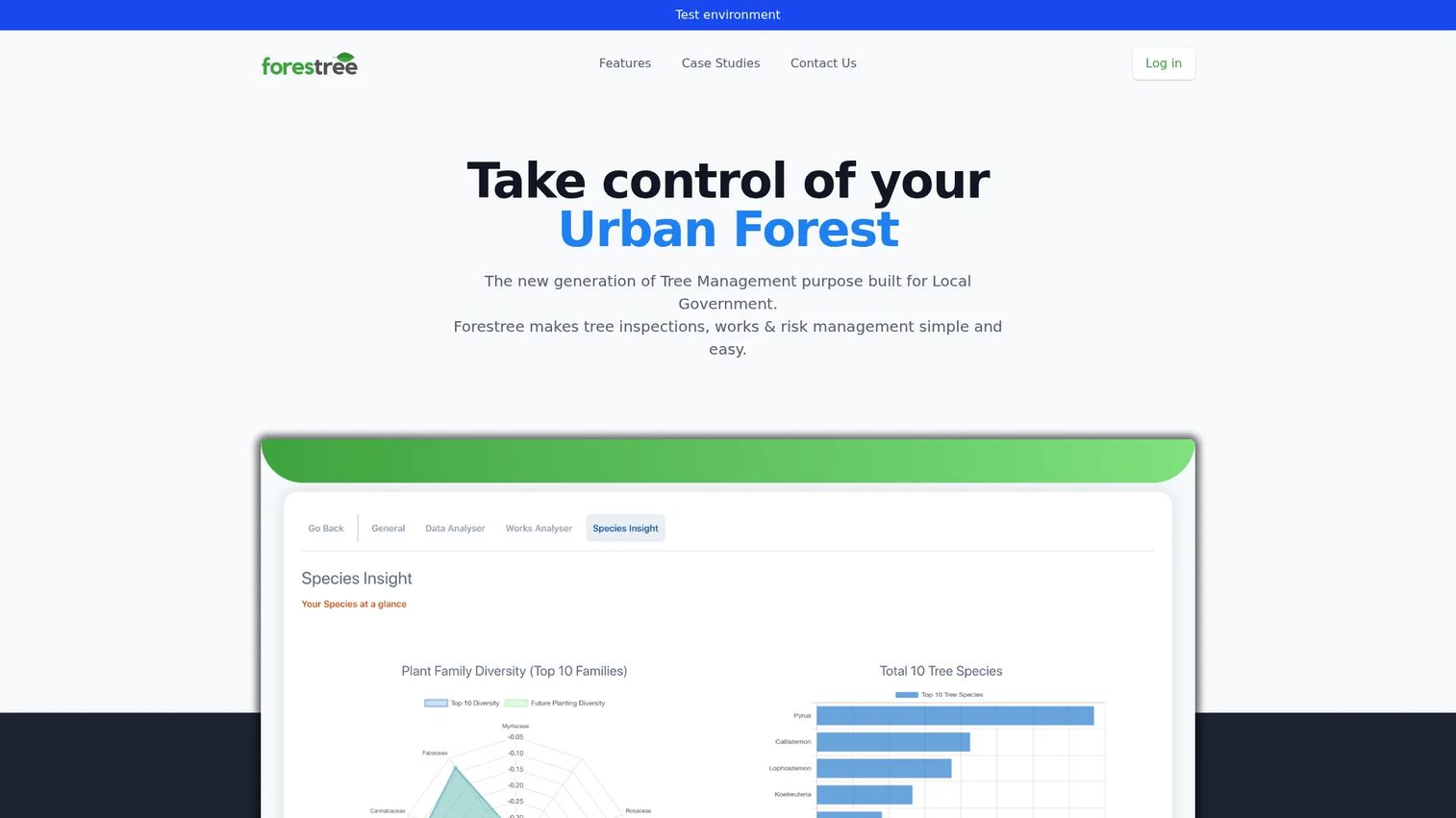
Forestree is tree management software purpose-built for local governments managing urban forest inspections, works, risk, planting, and reporting. The platform supports customizable users, contractors, and tree attributes; scheduled inspection automation; tree works prioritization and history; species-list management; TRAQ risk assessment; and integrations with systems including Pathway, TechnologyOne, and Power BI.
Best for: Local governments that need a structured system for managing public trees, urban forest inspections, maintenance workflows, and associated risk records.
Key features
- Tree inspections with scheduled-inspection automation
- Tree works prioritization, assignment, and history
- TRAQ risk assessment
- Planting planning and species-list management
- APIs for integrations including TechnologyOne and Power BI
Why choose Forestree: Forestree fits the specific operational shape of a local government urban forest team. Before standardizing a core workflow on this platform, validate integration depth with your existing systems and confirm support coverage for your jurisdiction.
Forestree pricing: No first-party pricing page was found at time of publication. Contact Forestree directly for commercial terms. Capterra lists A$1,290 per month as a reference point, though that figure should be confirmed with the vendor.
10. RoadEng Forest Engineer
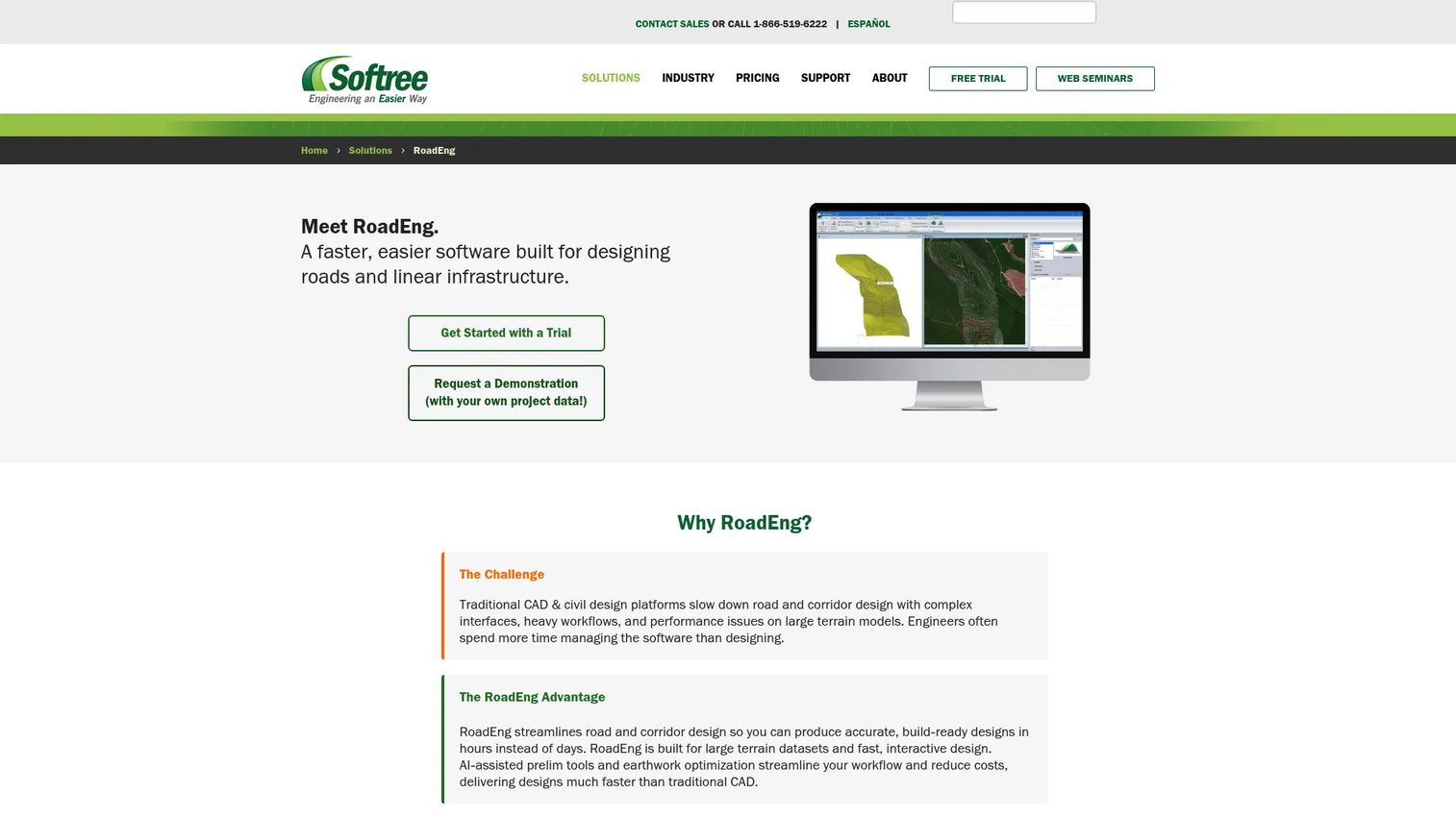
RoadEng Forest Engineer by Softree Technical Systems is specialist software for designing forest roads and linear infrastructure. The platform combines survey data management, 3D terrain modeling, corridor design, cable harvest planning, and support for large UAV and LiDAR point sets exceeding 10 million points. Perpetual license, annual subscription, and network/enterprise concurrent-use licensing are all available.
Best for: Forestry engineering teams, consultants, and government agencies designing roads, access routes, and terrain-aware infrastructure where alignment and earthwork economics matter.
Key features
- Survey Map Module for P-Line and Traverse data with Bluetooth and GPS interfaces
- 3D terrain modeling and cable harvest planning
- Corridor design through the Location Module
- Optional Softree Optimal earthwork add-on
- Support for large UAV/LiDAR point sets
Why choose RoadEng Forest Engineer: Broad forestry management platforms rarely cover road design in enough depth. RoadEng Forest Engineer fits as a specialist addition to an existing forestry operations stack when terrain, alignment, and access design are central to project economics. The key integration question is how road design outputs move into harvest planning, GIS, contractor scopes, and field execution.
RoadEng Forest Engineer pricing: Pricing is custom and depends on product selection, license type, business size, and project goals. Perpetual, annual subscription, and network/enterprise options are available. A free 3-week trial requires no credit card.
G2 rates RoadEng Forest Engineer at 4.8/5.
Considerations when choosing forestry software
Match the platform to the operational unit you manage
A tree inventory tool, a forest estate planning system, and a timber settlement platform solve different jobs. Start with the workflow that creates the most costly data break today: Trees, stands, tracts, loads, jobs, or deliveries. Buying a planning platform to solve a dispatch problem wastes implementation time and budget.
Confirm field adoption before buying enterprise breadth
A broad platform fails when crews cannot collect accurate data in the field. Test offline access, GPS behavior, mobile forms, and sync behavior using a real workflow with actual connectivity conditions before committing to a company-wide rollout.
Map system of record boundaries
Decide where accounting, GIS, contractor data, dispatch, equipment records, and planning data will live before configuring anything. A new forestry platform should reduce duplicate entry, not create another disconnected database. If two systems both claim to own load records, reconciliation problems follow.
Evaluate implementation ownership and data migration
Ask who will clean historical records, configure permissions, train field users, and own ongoing changes. Assign a named operational owner before contract signature. A founder or executive sponsor can initiate the purchase, but the system must have a dedicated internal owner on day one of rollout.
Price the workflow, not the license
The software subscription is only part of the investment. Add implementation, integrations, GIS data cleanup, mobile devices, training, and internal time when comparing options. Total first-year cost is the number that matters, not the per-seat rate.
How to choose the right forestry software for your team
If you run timber operations with settlements and traceability requirements
Start with TRACT. Its strongest fit is when timber movement, log inventory, contractor payments, and financial reconciliation belong in the same workflow. Evaluate how it connects to your existing accounting, fleet, and mapping systems before signing.
If long-range harvest decisions drive financial outcomes
Evaluate Remsoft. It is designed for resource modeling, planning, optimization, and operational scheduling. Run a real planning scenario in the evaluation, not a generic product walkthrough.
If you manage an end-to-end forest-to-mill operation
Evaluate Trimble Forestry or Connected Forest. Identify the operational handoff costing the most time, such as harvest to transport or transport to mill receiving. Choose modules around that bottleneck, then expand after adoption is proven.
If field inventory quality is the immediate constraint
Evaluate Tree Plotter INVENTORY or Forest Metrix. Tree Plotter INVENTORY fits tree-level, GIS-centered management for urban forestry teams. Forest Metrix fits forestry inventory and timber cruising in the field. Run a live field test with representative plots and real connectivity conditions before selecting either.
If forest roads are the primary technical challenge
Evaluate RoadEng Forest Engineer as a specialist tool. Confirm how road design outputs connect to your harvest planning, GIS, and field execution stack. It belongs alongside a broader operations platform, not as a standalone system for companies managing the full harvest-to-delivery cycle.
Conclusion
Forestry software is not one category. It spans ERP-grade settlement and timber tracking platforms, long-range planning and optimization systems, GIS-led field inventory tools, contractor-oriented logging software, and specialist road engineering applications.
The right shortlist depends on where your operational truth breaks down: In the forest, at the roadside, in the truck, at the mill, or in the back office.
TRACT handles timber operations and financial reconciliation. Remsoft fits complex planning and resource decisions. Trimble Forestry and Connected Forest connect forest-to-mill workflows. Silvacom FMS organizes land, spatial data, and regulatory records. Tree Plotter INVENTORY and Forest Metrix serve accurate field inventory collection. Logger's Edge fits contractor-level job and ticket management. Forestree suits urban government tree programs. RoadEng Forest Engineer handles specialist road design.
Shortlist two or three tools based on your most expensive operational handoff. Then test each option using one real forest, one current workflow, and the people who must use the system after rollout.
FAQs
Forestry software covers forest inventory, land records, harvest planning, field data collection, timber tracking, transport and dispatch, production management, and financial settlement. The exact scope depends on the operating model. A logging contractor needs different capabilities than a large forest company managing multiple tenures, or a municipality tracking its urban tree inventory.
"Forestry software" is the broader category, covering everything from contractor job management to enterprise ERP. "Forest management software" more often refers to platforms focused on land, inventory, planning, silviculture, and regulatory compliance. Some platforms extend into timber operations, transport, and mill supply, while others stay narrowly within the management records layer.
Field data collection with offline support, GIS and mapping integrations, inventory records at the stand or tree level, harvest planning, production tracking, transport visibility, contractor payment workflows, reporting, and data exchange with accounting or ERP systems are the core capabilities. Prioritize the workflows your team runs every week rather than building a checklist of every possible feature.
Many field-oriented systems support offline workflows, but requirements vary significantly by platform and plan tier. Test map downloads, form completion, GPS capture, photo attachments, and data synchronization under real site conditions before rollout. Cell coverage and device behavior on-site should drive your evaluation, not vendor claims made during a demo.
Cost depends on module breadth, users, acreage, inventory volume, integrations, implementation services, and support level. Enterprise platforms like TRACT, Remsoft, and Trimble Forestry use custom pricing. Logger's Edge starts at $135 per month on a subscription. Forest Metrix starts at $1,000 annually. Compare total first-year cost, including migration and training, rather than license fees alone.
Logging contractors should prioritize job management, production tracking, crew workflows, load records, reporting, and billing support. Logger's Edge was built specifically for this use case, with load-ticket tracking, contractor payments, and profitability reporting at the job and block level. A full forestry ERP or planning platform can be excessive if the immediate problem is job-level execution.
Map-based tree inventory tools work best when individual trees are the unit of record. Tree Plotter INVENTORY fits municipalities, campuses, and consultants managing urban forestry data with GIS-centered field collection, inspection records, and map-based reporting. Forest Metrix fits foresters doing timber cruising and field inventory with customizable protocols and on-device reporting.
ERP platforms fit cross-functional workflows where finance, settlements, inventory, and operations must reconcile in one system. Specialist tools fit teams with a high-value, narrow need such as field inventory, road engineering, or long-range harvest optimization. The deciding question is whether the problem crosses financial and operational boundaries or stays within a single workflow. If settlement accuracy and timber traceability are both broken, start with an ERP. If only field data quality is broken, start with a specialist inventory or cruising tool.