A customer adds 22 items to their cart at 9 a.m. Three are out of stock by the time a picker grabs them. The driver gets dispatched to the wrong window. The ETA text never fires. The customer calls support, and now your margin on that order is gone.
That is what happens when ordering, inventory, dispatch, and customer communication live in four different systems that do not talk to each other. Grocery delivery breaks at the seams, not in the middle. The order looks fine until the moment a real-world constraint, a sold-out SKU, a late driver, a missed substitution, hits a system that was not built to absorb it.
The market is moving fast enough that those seams matter more every quarter. The global grocery delivery software market is projected to reach $15.94B by 2033, up from $5.67B in 2025, a 13.8% CAGR per Cognitive Market Research (2026). Same-day delivery already captured 47.9% of online grocery market share in 2025, according to Market Research Future (2025). Buyers expect fast, accurate fulfillment, and the software underneath either delivers it or quietly costs you orders.
If you are evaluating grocery delivery software right now, the hard part is not finding tools. It is telling them apart. Some platforms own the entire storefront-to-doorstep journey. Others do one slice, last-mile routing, extremely well and assume you already have the rest. This guide separates those categories so you pick based on your actual problem, not on whoever has the densest feature page. We selected platforms based on workflow coverage, POS and inventory sync, routing and tracking, and business-model flexibility.
What's inside
This list covers software for grocery ordering, fulfillment, pickup, delivery, and last-mile coordination. Some entries are full ecommerce platforms that handle the storefront, the catalog, payments, and dispatch. Others are logistics layers that plug into whatever ordering system you already run.
We chose the nine platforms here on five criteria that matter to operators trying to scale without chaos:
- Workflow coverage across ordering, fulfillment, and delivery
- POS and inventory sync to prevent overselling and substitution errors
- Routing, dispatch, and real-time tracking
- Business-model flexibility (single-vendor, multi-vendor, hybrid, pickup, delivery)
- Implementation fit and speed to launch
No tool ranks first on all five. The right pick depends on which problem is bleeding the most.
TL;DR
- Best overall for end-to-end grocery delivery operations: Hyperzod, for a white-label ordering, fulfillment, and growth stack across single and multi-vendor models.
- Best for last-mile routing and driver visibility: Onfleet, for route optimization, live tracking, and proof of delivery.
- Best for retailers wanting a broad grocery platform: Instacart Platform, for omnichannel commerce plus retail network reach.
- Best for stores wanting workflow depth plus POS sync: MyCloudGrocer or eGrowcery, for tight in-store and online consistency.
- Best for routing plus billing workflows: Delivery Biz Pro, for recurring delivery operators who need fewer moving parts.
- Best for local grocers prioritizing pickup and delivery: Local Express or Freshop, for owned omnichannel control.
What is grocery delivery software?
Grocery delivery software is the software that powers online grocery ordering, fulfillment, dispatch, tracking, and customer communication for a grocer or delivery operator. It connects the storefront a customer shops from to the systems that pick, pack, route, and deliver the order.
A complete grocery ordering system usually covers these capabilities:
- Storefront or ordering experience: a branded website, app, or kiosk where customers browse and check out
- Inventory and POS sync: real-time stock accuracy so you do not sell what you do not have
- Driver assignment and route optimization: automated dispatch and efficient routing across orders
- Delivery windows and scheduling: time-slot management for delivery and curbside pickup
- Notifications, ETAs, and proof of delivery: order updates, live tracking, and confirmation at the door
- Reporting and operational controls: order, fulfillment, and performance data in one place
The biggest distinction inside this category is between end-to-end platforms and last-mile tools. An end-to-end grocery delivery ecommerce software stack owns the storefront, the catalog, payments, fulfillment, and often dispatch. A last-mile tool focuses purely on delivery execution, routing, tracking, driver apps, and proof of delivery, and assumes your ordering and inventory live elsewhere.
That difference decides almost everything about your shortlist. POS integration for grocery stores, weighted items, substitutions, and curbside pickup software all behave differently depending on which type of platform you anchor on. Get the category right first, then compare features inside it.
When to use grocery delivery software
Not every grocer needs the same software. The right starting point depends on which part of the operation is breaking. Here is how to match the tool to the problem.
Launch a branded grocery ordering and delivery channel
If you rely only on third-party marketplaces, you rent your customer relationship and hand over the margin. A self-owned channel changes that. White-label grocery delivery software lets you launch a branded website and app where you control pricing, promotions, customer data, and the full experience.
No-code platforms shorten this from a multi-month engineering project to a configurable rollout. You own the channel, the catalog, and the customer, instead of competing for visibility inside someone else's app.
Improve dispatch, routing, and ETA accuracy
Sometimes the storefront is fine and the breakdown is downstream. Orders come in clean, then fall apart in dispatch: drivers double back, ETAs drift, customers call to ask where their groceries are.
When delivery execution is the core problem, a last-mile delivery software layer is the fix. Route optimization, automated driver assignment, and live tracking tighten the gap between order and doorstep. You keep your existing ordering system and bolt on the logistics layer that makes it reliable.
Sync inventory and fulfillment across store systems
Overselling and bad substitutions are inventory problems wearing a customer-service costume. If your online catalog does not reflect what is actually on the shelf, every busy hour produces refunds, swaps, and angry texts.
This is where grocery order fulfillment software earns its keep. Online grocery store software that syncs POS, inventory, and ecommerce in real time keeps stock accurate, narrows substitutions, and keeps pickers moving. When in-store and online run off the same source of truth, the whole operation calms down.
Grocery delivery software compared
The table below compares each platform by intent, key use case, pricing, and current G2 rating. Use it to separate full ecommerce platforms from logistics-only tools before you read the detail sections. A food and grocery delivery platform that owns the storefront solves a different problem than a routing tool, and the pricing models reflect that.
| # | Product | Intent | Key use case | Pricing | G2 rating |
|---|---|---|---|---|---|
| 1 | Hyperzod | End-to-end platform | White-label ordering, fulfillment, and growth across single and multi-vendor models | From $29/mo per module, plus 0.99% per-order fee | 5.0/5 |
| 2 | Onfleet | Last-mile logistics | Route optimization, live tracking, proof of delivery | From $619/mo | 4.6/5 |
| 3 | Instacart Platform | End-to-end platform | Omnichannel commerce plus retail network reach | Contact sales | 4.2/5 |
| 4 | Local Express | End-to-end platform | Owned omnichannel commerce for grocers | Contact sales | 4.8/5 |
| 5 | MyCloudGrocer | Ecommerce platform | White-label storefront with POS and loyalty sync | Contact sales | 3.5/5 |
| 6 | eGrowcery | Ecommerce platform | Branded storefront plus picking and fulfillment | Contact sales | Not rated |
| 7 | Mercatus | Ecommerce platform | Commerce, loyalty, and personalization for grocers | Contact sales | 4.5/5 |
| 8 | Freshop | Ecommerce platform | Online ordering, click and collect, delivery | Contact sales | Not rated |
| 9 | Delivery Biz Pro | Delivery platform | Recurring delivery with routing and billing | Free tier available | 3.5/5 |
The 9 best grocery delivery software platforms
1. Hyperzod
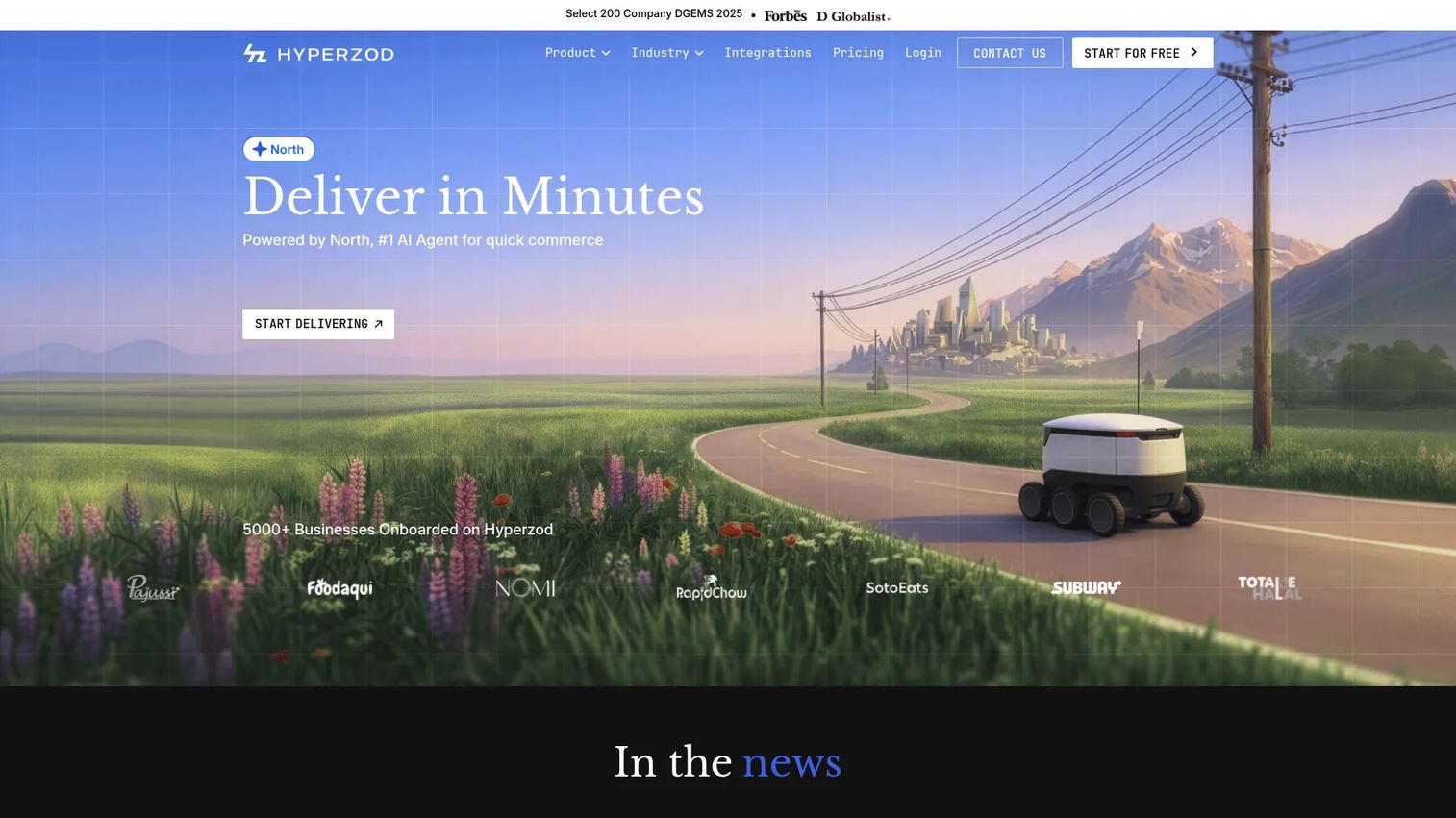
Hyperzod is a white-label quick commerce and delivery platform that gives you branded ordering, merchant, driver, and admin workflows in one stack. It is built for operators who want to launch a complete grocery or multi-vendor marketplace without stitching together separate ordering, fulfillment, and logistics tools. The tri-app architecture, an ordering website plus mobile, merchant, and driver apps, means the customer, the store, and the courier all run inside the same system.
Best for: operators who want one platform for ordering, fulfillment, dispatch, and growth across single-vendor, multi-vendor, or hybrid models.
Key strengths
- No-code theme builder: a drag-and-drop builder for your branded storefront, so you launch without an engineering project.
- White-label apps: an ordering website and mobile apps under your brand, plus a driver app for live order tracking.
- Multi-model support: single-vendor, multi-vendor, and hybrid marketplaces, with inventory management, payments, and growth automation built in.
Why choose Hyperzod: it covers the widest slice of the workflow in this list. For a founder who wants to stand up a branded grocery delivery app solution and own ordering, fulfillment, and growth from day one, Hyperzod reduces the number of vendors you have to integrate and maintain. The multi-vendor grocery software flexibility also means you are not locked into a single business model as you scale.
Hyperzod pricing: module-based and transparent. The Ordering Website starts at $29/month, the Ordering App at $99/month, and the Merchant App and Driver App at $79/month each. A 0.99% per-order success fee applies, along with an optional one-time $300 setup fee per module. Yearly billing is offered at 20% off. A free tier is available to start. On G2, Hyperzod holds a 5.0/5 rating.
2. Onfleet
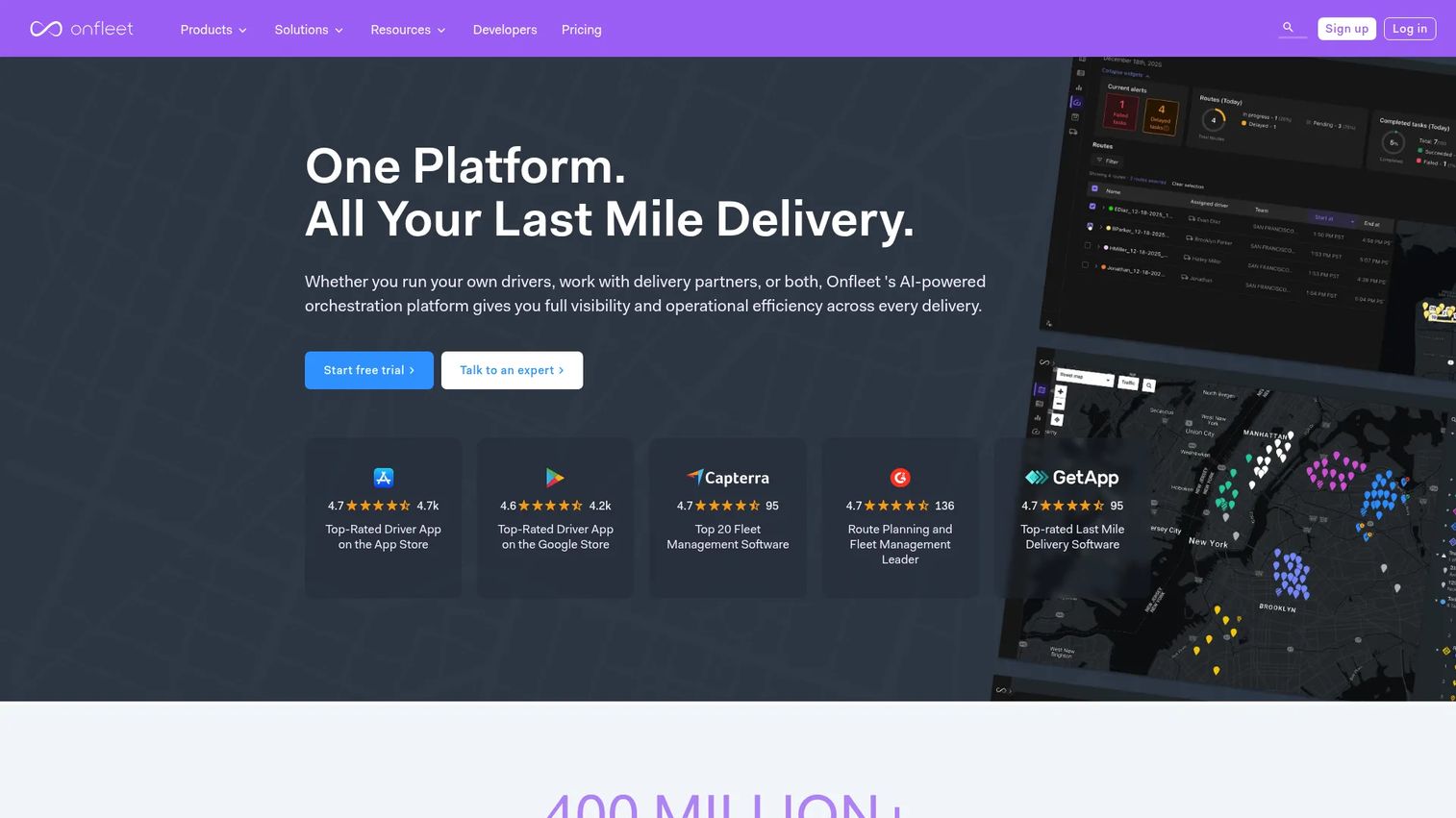
Onfleet is last-mile delivery management software for dispatch, tracking, and proof of delivery. It is not a storefront suite. It is the logistics layer you add when ordering already works and the breakdown is everything that happens after the order is placed. For grocery, that means keeping perishables moving, giving customers accurate ETAs, and proving the order arrived.
Best for: grocers and delivery operators who need last-mile orchestration with real-time tracking on top of an existing ordering system.
Key strengths
- Route optimization and auto-dispatch: efficient routing and automated driver assignment that cut idle time and backtracking.
- Real-time visibility and notifications: live delivery tracking plus customer messaging that reduces "where is my order" calls.
- Proof of delivery: photos, signatures, barcode scanning, and ID verification at the door.
Why choose Onfleet: if your storefront and inventory are handled but dispatch is chaos, Onfleet is the focused fix. It plugs into existing ecommerce and POS workflows and handles the part of the operation that touches the customer last and matters most for freshness. The route optimization software and driver app for grocery delivery are the core of the platform, not afterthoughts.
Onfleet pricing: the Launch plan starts at $619/month and includes 2,500 delivery or pickup tasks. Scale starts at $1,349/month for 5,000 tasks, and Enterprise starts at $3,099/month for 10,000+ tasks. A 14-day free trial is available. On G2, Onfleet holds a 4.6/5 rating.
3. Instacart Platform
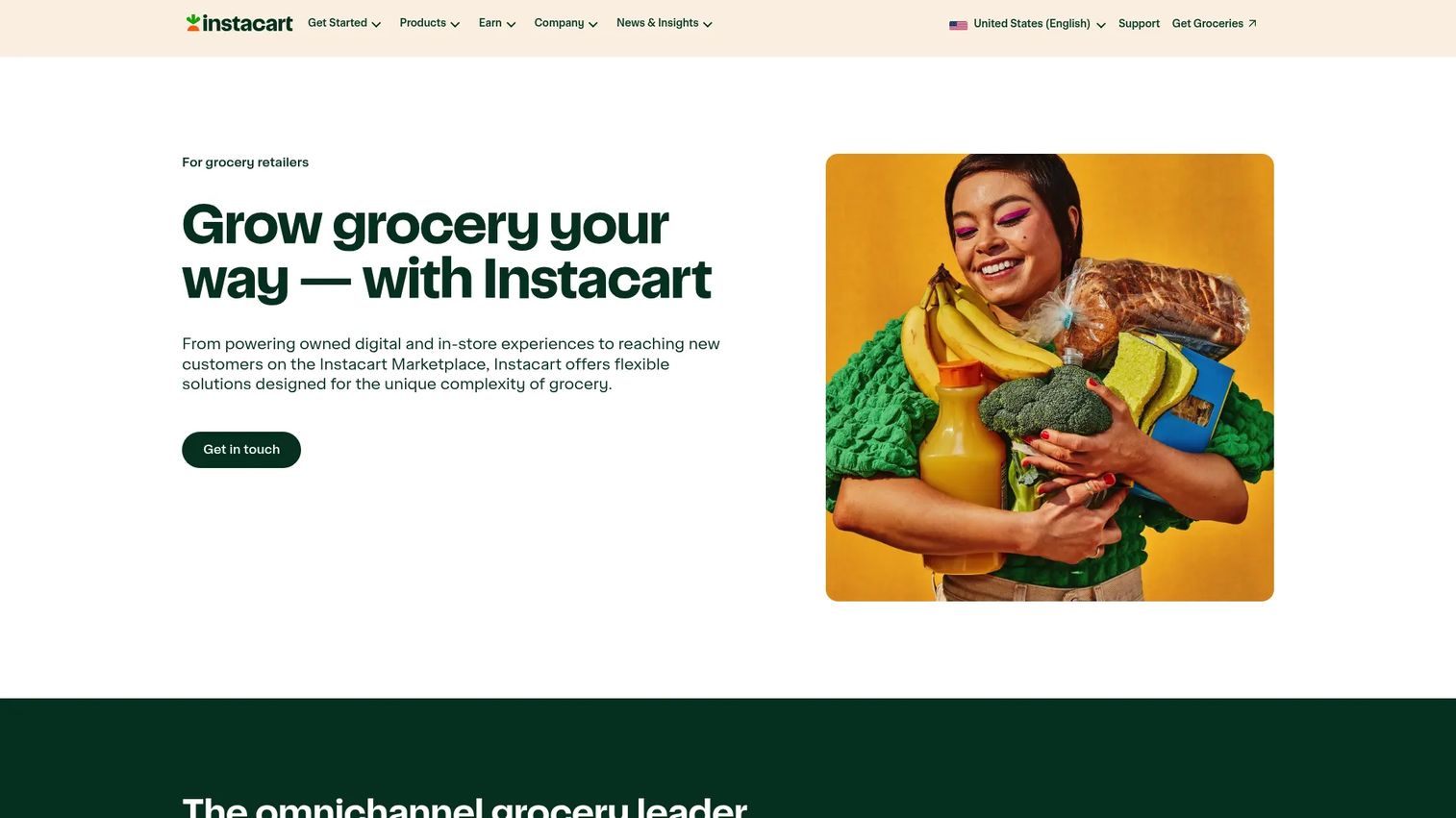
Instacart Platform is Instacart's enterprise grocery stack for retailers, spanning ecommerce, connected-store, retail media, AI, and data tools. It pairs white-label storefronts with the reach and fulfillment infrastructure Instacart built across its consumer network. For retailers that want a fast launch plus marketplace-scale capabilities, this is the broad-platform option.
Best for: grocery retailers wanting an enterprise omnichannel commerce stack with same-day delivery and grocery pickup software workflows.
Key strengths
- White-label storefronts: branded ecommerce sites built on Instacart's commerce technology.
- AI-driven shopping features: search, recommendations, substitutions, and Buy It Again that lift basket size and reduce friction.
- Retail media and fulfillment tech: built-in monetization plus the fulfillment infrastructure behind a same-day grocery delivery platform.
Why choose Instacart Platform: the draw is reach plus enablement. You get a branded storefront and the connected-store and retail media layers that larger grocers use to compete on convenience. Pickup and delivery are both first-class, so you are not bolting curbside on later.
Instacart Platform pricing: Instacart does not publish public pricing for its enterprise platform; the enterprise pages route prospects to contact sales. On G2, the Instacart Retailer Platform holds a 4.2/5 rating.
4. Local Express
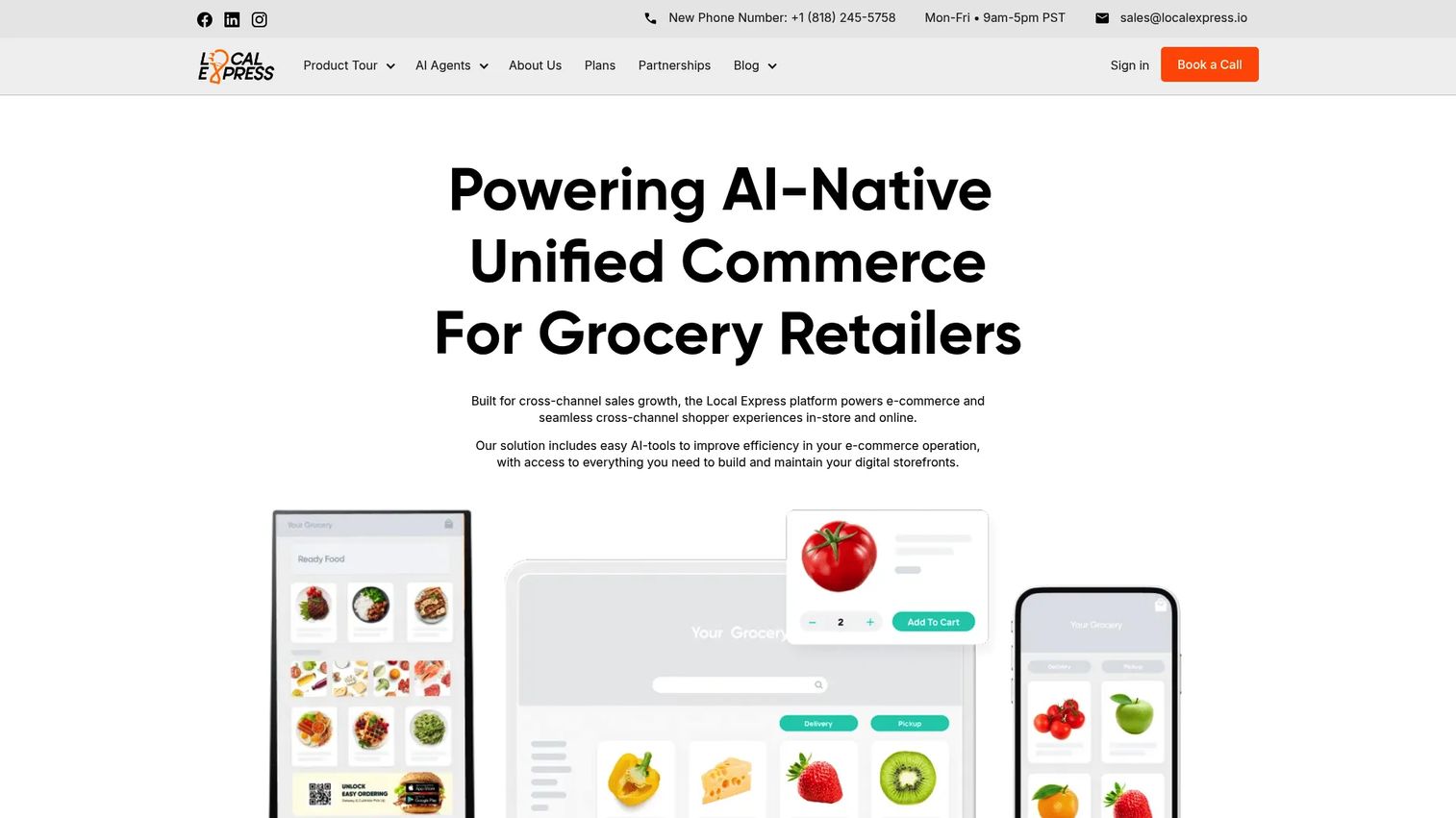
Local Express is a unified commerce platform for grocery retailers and other food businesses. It is built for independent and regional grocers who want to own the full customer journey, online storefront, mobile app, kiosk, pickup, and delivery, instead of renting it from a marketplace. The pitch is control over the whole journey with real-time sync underneath.
Best for: independent and regional grocers who want an owned omnichannel stack with tight POS and inventory sync.
Key strengths
- Real-time POS and inventory sync: order, stock, and pricing stay aligned across in-store and online.
- Branded surfaces: website, mobile app, and kiosk support under your brand.
- AI agents: automation for shopping, pricing, catalog enrichment, analytics, and inventory.
Why choose Local Express: for a grocer who wants ownership without building from scratch, Local Express covers ordering, fulfillment, pickup, and delivery in one place. The real-time sync is the operational anchor, it keeps the catalog honest so substitutions and overselling stay rare during peak hours.
Local Express pricing: the plans page describes the offering but does not list public numeric pricing, so pricing is quote-based via the vendor. On G2, Local Express holds a 4.8/5 rating.
5. MyCloudGrocer
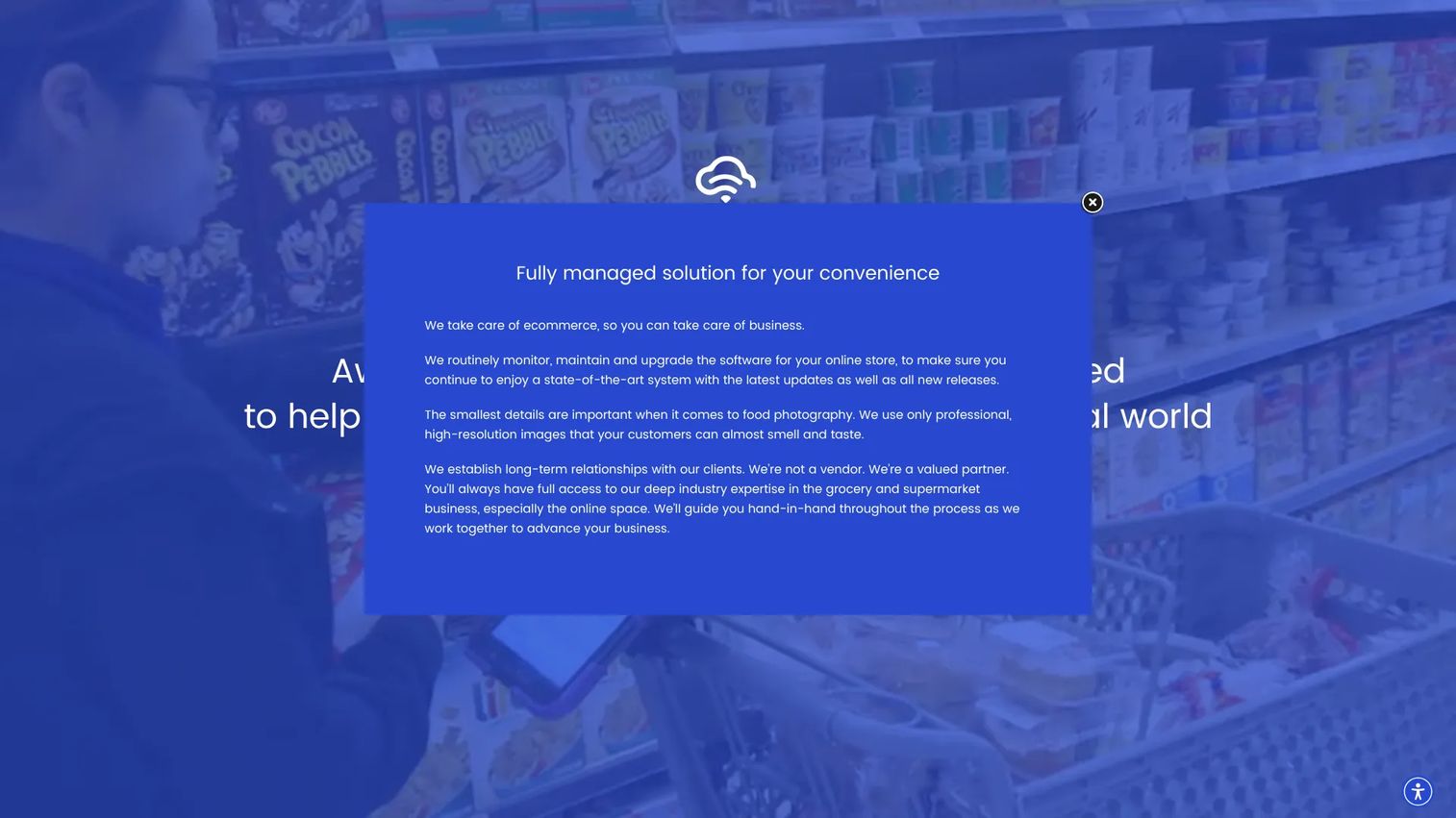
MyCloudGrocer is white-label grocery ecommerce software built for supermarkets and grocers. It focuses on a polished shopper experience across desktop, mobile, and native apps, backed by the integrations that keep online and in-store consistent. For operators managing both channels, the priority is stock accuracy and a shopping experience that feels native to the store.
Best for: grocers and supermarket chains that want a managed white-label online storefront with strong POS and loyalty integration.
Key strengths
- Multi-surface shopping: a consistent experience across desktop, mobile, and native apps.
- Grocery-native features: shoppable recipes, digital circulars, favorites, and quick re-order.
- Deep integrations: POS, credit card processor, and loyalty program connectivity.
Why choose MyCloudGrocer: the value is in-store and online consistency. With inventory sync software tying the catalog to the POS, substitutions and stock accuracy stay under control, the two issues that quietly drive grocery refunds. For a grocer that wants the storefront handled and managed, this keeps the shopper experience tight.
MyCloudGrocer pricing: the site uses contact and demo-based selling and does not publish public pricing. On G2, MyCloudGrocer holds a 3.5/5 rating.
6. eGrowcery
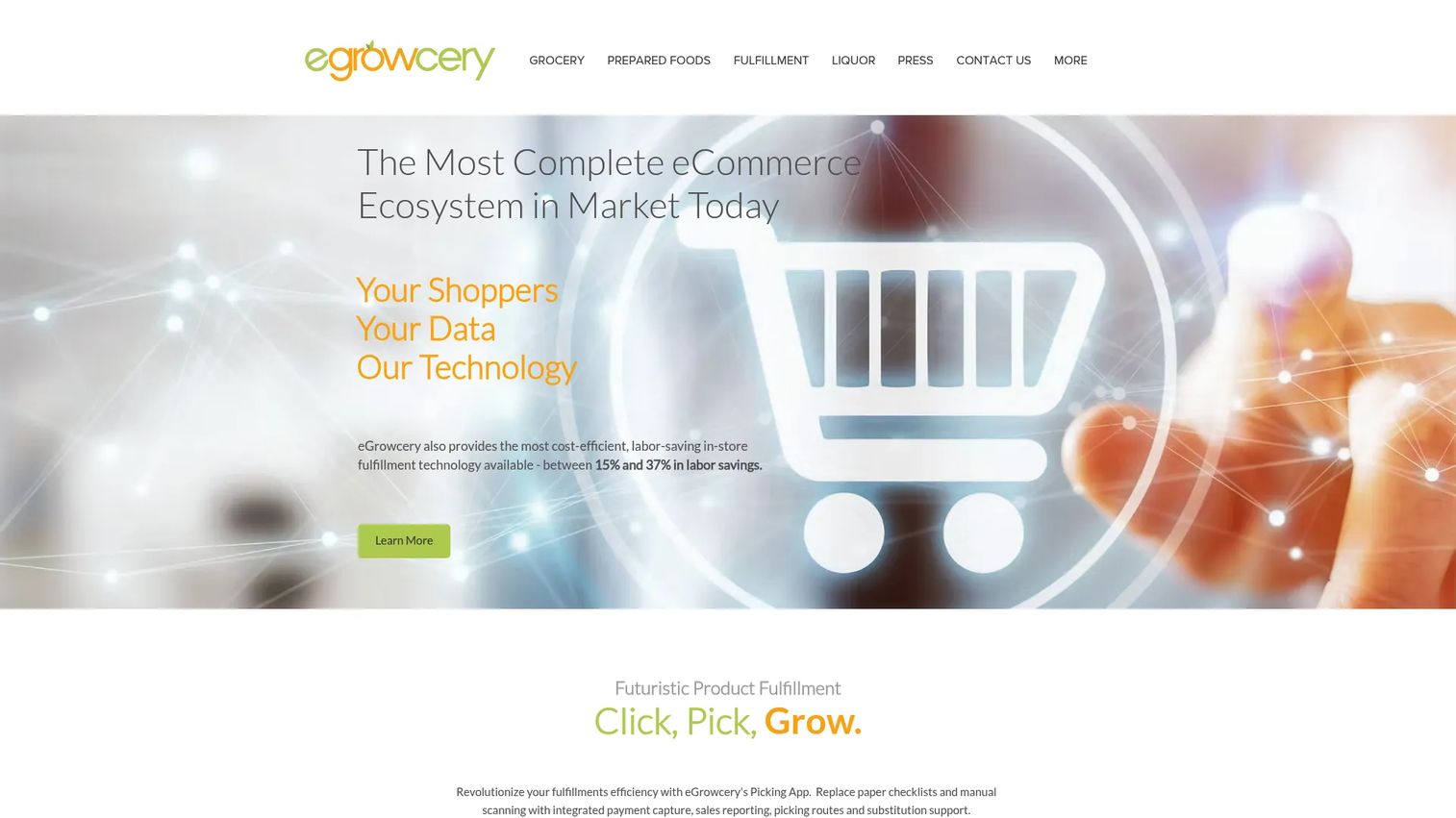
eGrowcery is a white-label SaaS ecommerce and fulfillment platform for grocery and specialty food retailers. It pairs branded storefronts with backend and picking tools, giving grocers store-led digital commerce with tight operational control. The picking app, with barcode scanning and offline mode, signals a platform built for the realities of in-store fulfillment.
Best for: independent grocers and specialty food retailers who need a branded ecommerce and fulfillment stack with real operational control.
Key strengths
- White-label storefronts: branded online grocery shopping across desktop, tablet, and mobile.
- Operational fulfillment: a picking app with barcode scanning and offline mode for the store floor.
- Specialty support: prepared foods, catering, and liquor handling built in.
Why choose eGrowcery: it leans into the fulfillment side that many storefront tools skip. The picking app and POS and back-office integration mean the inventory sync software actually reaches the people pulling orders. For grocers who fulfill in-store and need pickup, delivery, and online ordering to stay coordinated, that operational depth matters.
eGrowcery pricing: pricing is not publicly listed; the site routes visitors to a demo and contact sales. A current third-party rating was not available at the time of writing.
7. Mercatus
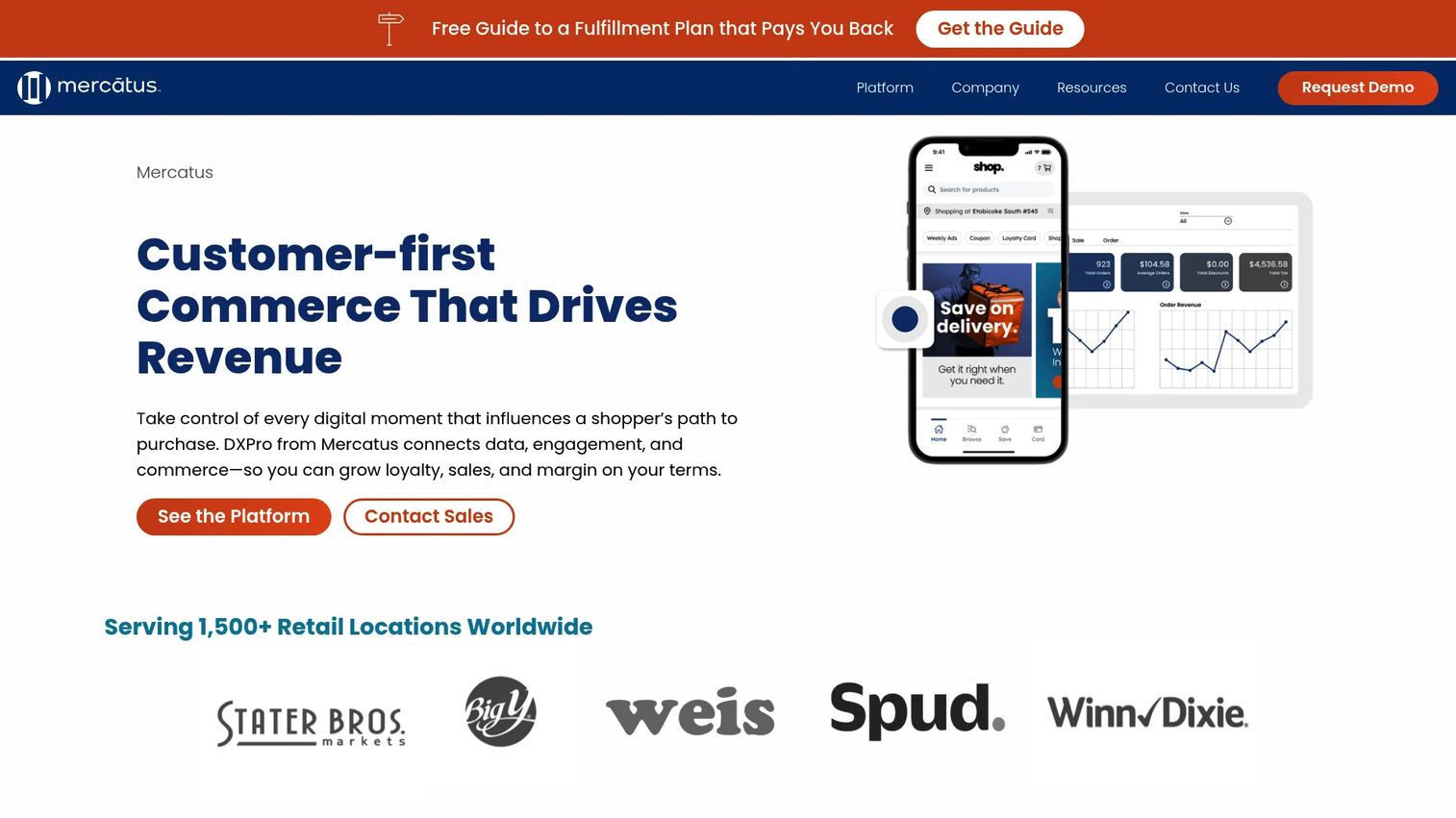
Mercatus is a grocery-focused digital commerce and personalization platform for grocers. It is built for larger grocers and chains that run more complex programs, loyalty, promotions, and customer data unified across channels. The emphasis is on customer experience and engagement, backed by the commerce and fulfillment layers underneath.
Best for: regional grocers and chains needing an end-to-end ecommerce and customer engagement platform with deeper loyalty and personalization.
Key strengths
- Unified customer data: a CDP that ties shopper behavior across channels into one profile.
- Personalized engagement and loyalty: targeted offers and loyalty programs that drive repeat orders.
- Commerce and fulfillment: mobile shopping plus the fulfillment workflows to back it.
Why choose Mercatus: for a grocer whose differentiation is loyalty and merchandising, not just delivery, Mercatus puts customer data at the center. The personalization and promotions tooling fits chains running sophisticated programs, and the retail system integrations keep it connected to existing infrastructure. It is the heavier platform for operators with heavier requirements.
Mercatus pricing: pricing is not publicly displayed; the site routes visitors to request a demo or contact sales. On G2, Mercatus holds a 4.5/5 rating.
8. Freshop
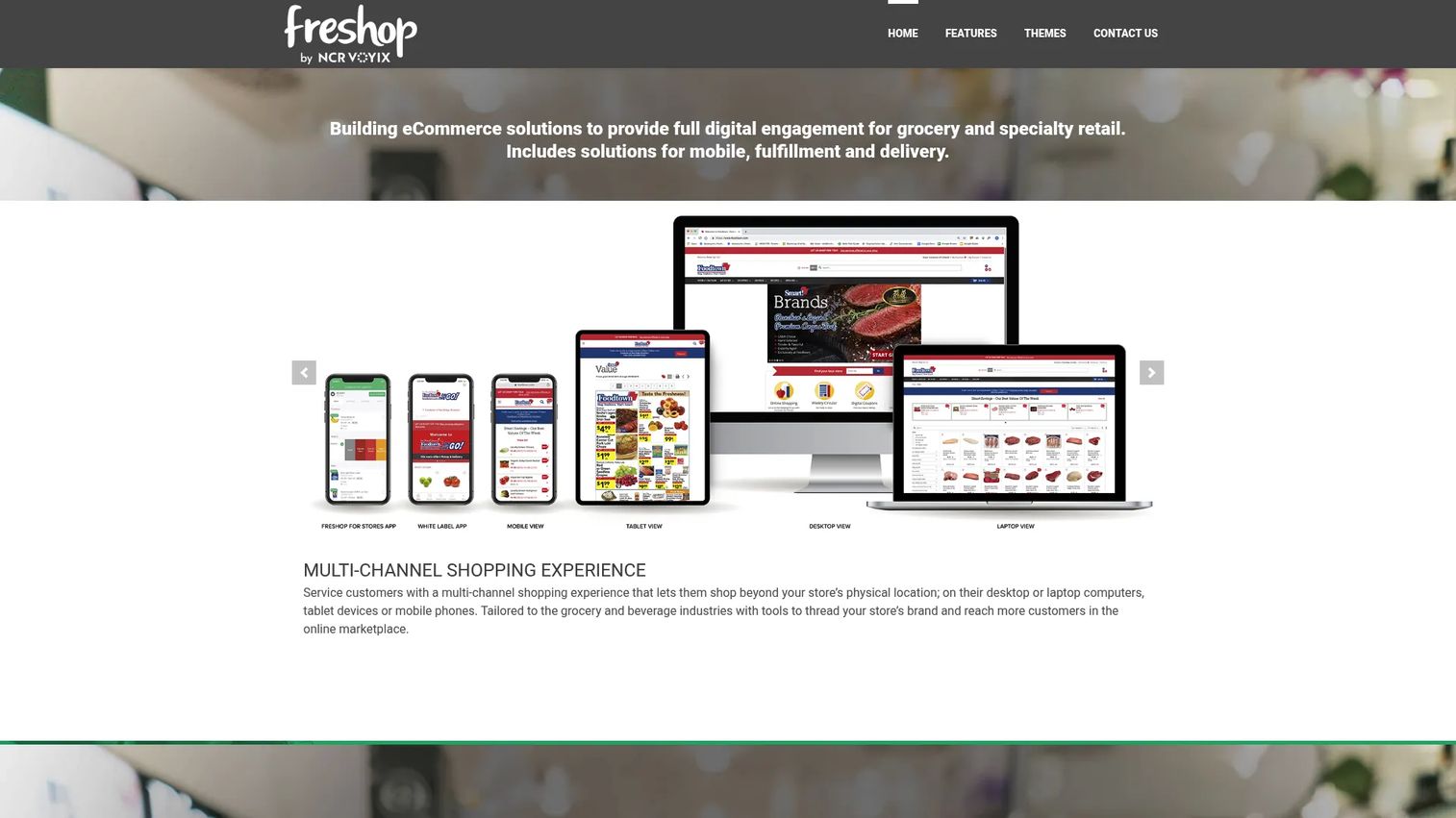
Freshop is a grocery and specialty retail ecommerce platform for online shopping, fulfillment, and delivery. It is practical software for independent grocery teams that need solid operations without overbuilding. The feature set covers the core grocery workflows, click and collect, delivery, and the shopper-facing tools that drive repeat baskets.
Best for: independent grocers and specialty retailers who need branded online ordering and fulfillment without enterprise overhead.
Key strengths
- Flexible fulfillment: click and collect, delivery, and endless aisle or direct-to-home options.
- Marketing built in: digital weekly ads and circulars to drive demand.
- Operational tools: fulfillment tools and shopper apps for the people picking and packing.
Why choose Freshop: it hits the sweet spot for teams that want grocery-specific order handling, including weighted items and the substitution logic groceries demand, without standing up a heavy enterprise platform. For an independent grocer launching online ordering and curbside, Freshop covers the essentials in one place.
Freshop pricing: pricing is not publicly displayed; the site directs visitors to contact sales or request a demo. A current third-party rating was not available at the time of writing.
9. Delivery Biz Pro
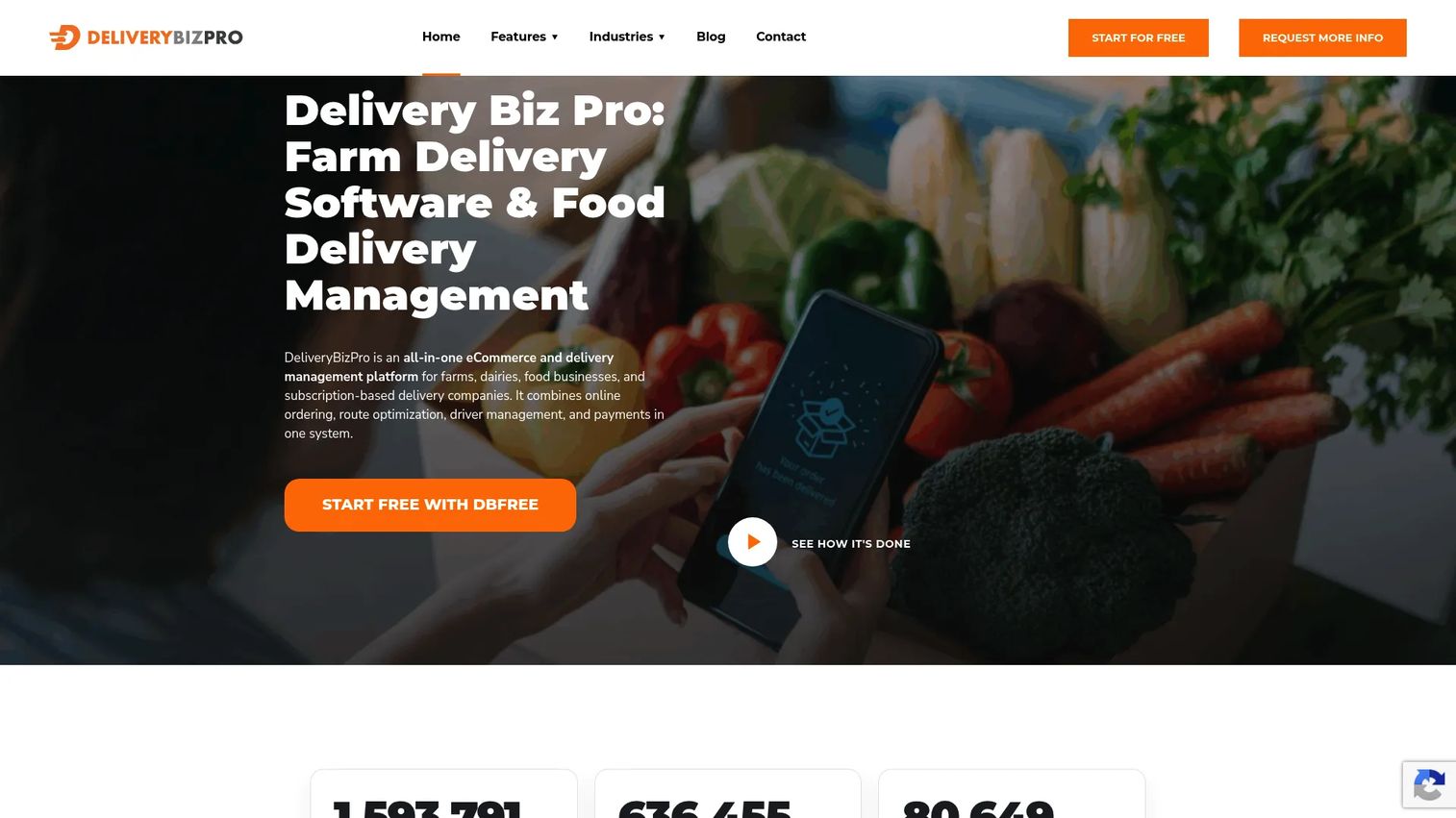
Delivery Biz Pro is an all-in-one ecommerce and delivery management platform built for recurring local delivery businesses. Think farms, dairies, food hubs, and other operators running subscription-style routes. It combines the storefront, CRM, billing, and routing in one system, so delivery-led operators get fewer moving parts.
Best for: farms, dairies, food hubs, and recurring local delivery operators who want ordering, routing, and billing in a single tool.
Key strengths
- Online storefront and marketplace: a customer-facing shop plus CRM.
- Routing and scheduling: route optimization and delivery scheduling, with a driver app and proof of delivery.
- Recurring billing: subscription payments via DBPay, plus SNAP and EBT support.
Why choose Delivery Biz Pro: the recurring-billing plus routing combination is what sets it apart. For operators whose model is repeat orders on fixed routes, having billing, dispatch, and the storefront in one system removes the integration overhead of stitching tools together. The route optimization software and driver app handle the logistics side without a separate vendor.
Delivery Biz Pro pricing: there is a free DBP Free tier and a Pro free trial. The site states you can use it free up to $500,000/year in volume before paid commerce pricing applies. On G2, Delivery Biz Pro holds a 3.5/5 rating.
How to choose grocery delivery business software
The shortlist gets shorter fast once you answer one question: which part of the operation is actually breaking? Here is the buyer's checklist to run before you commit.
Define the primary problem first
Storefront, inventory, dispatch, or last-mile, name the one that costs you the most right now. An end-to-end platform like Hyperzod, Local Express, or Mercatus solves the full journey. A focused tool like Onfleet solves delivery execution. Buying the wrong category is the most expensive mistake here.
Check POS and inventory sync depth
Ask exactly how the platform keeps the online catalog aligned with the shelf. Real-time sync is the difference between rare substitutions and a refund queue. Confirm it works with your specific POS, not a generic integration list.
Confirm business-model flexibility
Single-vendor today might be multi-vendor next year. Platforms like Hyperzod support single, multi, and hybrid models, which protects you from a re-platform later. If pickup and delivery both matter, confirm both are first-class, not bolted on.
Map implementation and time-to-launch
A no-code, white-label rollout ships in weeks. A custom build does not. For a founder who needs repeatability without a long engineering project, speed to launch is a real line item, weigh it against the team overhead each option adds.
Verify routing and tracking fit your volume
Pricing on logistics tools often scales with task volume. Check the task limits at each tier against your actual order count, and confirm the driver app and real-time order tracking match how your couriers work.
Pick the category, then the tool
The split running through this whole list is simple: end-to-end grocery commerce platforms versus delivery execution tools. Hyperzod, Instacart Platform, Local Express, MyCloudGrocer, eGrowcery, Mercatus, and Freshop own the storefront and fulfillment. Onfleet and Delivery Biz Pro anchor on logistics, routing, dispatch, and the part of the order that reaches the customer's door.
Decide first whether your real problem is storefront, inventory, dispatch, or last-mile. That single decision narrows nine options to two or three. Then run a practical test: shortlist two platforms, map them against your current workflow gaps, and pilot the one that closes the most.
Grocery fulfillment software earns its place by removing operational chaos, not by adding features you will never configure. Pick the platform that fixes the seam that is bleeding, get it live, and measure whether orders get cleaner. That is the whole game.
FAQs
Grocery delivery software powers online grocery ordering, fulfillment, dispatch, tracking, and customer communication. A customer places an order through a storefront or app, the system checks inventory and routes the order to a picker, then assigns a driver and sends ETAs and proof of delivery. Online grocery delivery software ties these steps together so the order stays accurate from cart to doorstep.
Not always. If you buy an end-to-end food and grocery delivery platform, ordering, fulfillment, and dispatch usually come in one stack. You add a dedicated last-mile delivery software layer when your storefront already works but routing, tracking, and proof of delivery need to be tighter than your current system handles. Many operators run a full platform first and add a logistics tool only when delivery volume demands it.
Most full platforms here handle both. Instacart Platform, Local Express, MyCloudGrocer, eGrowcery, Mercatus, and Freshop all support pickup and delivery, so curbside pickup software is built in rather than added on. If pickup is a core part of your model, confirm that time-slot scheduling and store-side fulfillment for pickup are first-class, not an afterthought.
It is one of the most important things to verify. POS integration for grocery stores keeps your online catalog aligned with actual shelf stock, which is what prevents overselling and bad substitutions. Without real-time sync, every busy hour turns into a refund and swap queue. Confirm the platform integrates with your specific POS, not just a generic list.
Stock accuracy, picking tools, and substitution logic top the list. Good grocery order fulfillment software gives pickers a clear queue, supports barcode scanning, handles weighted items, and manages substitutions when an item runs out. Real-time inventory sync underpins all of it, since a fulfillment workflow is only as good as the stock data feeding it.
Yes. Platforms like Hyperzod support single-vendor, multi-vendor, and hybrid marketplaces, so you can run one store or many under the same system. Multi-vendor grocery software matters if you plan to add partner stores or operate a marketplace, because re-platforming later is costly. Confirm the model flexibility before you commit, even if you start single-vendor.
Route optimization software sequences stops efficiently so drivers cover more deliveries in less time with less backtracking. A driver app for grocery delivery gives couriers turn-by-turn routing, order details, and a way to capture proof of delivery. Together they tighten ETA accuracy and reduce the "where is my order" support calls that eat margin on perishable deliveries.
Start with the primary problem: storefront, inventory, dispatch, or last-mile. Then compare workflow coverage, POS and inventory sync depth, business-model flexibility, and time-to-launch. Run a pilot with two finalists mapped against your real workflow gaps. The goal of online grocery delivery software is repeatable operations without chaos, so weigh how much each tool reduces, rather than adds to, your team's overhead.