

Your CRM says one thing. Your product analytics say another. Your last round of customer interviews sits in a Google Doc nobody has opened since. And you are the one who has to walk into the QBR and explain what customers actually want.
This is the real problem with "customer insights platform" as a search. It is one phrase covering four different jobs. Some tools unify scattered data into one profile. Some analyze behavior. Some store qualitative findings. Some activate segments and journeys. They all call themselves customer insights platforms, and they are not the same purchase.
That confusion is expensive. The customer intelligence platform market is projected to grow from USD 3.09 billion in 2024 to USD 13.81 billion by 2030, at roughly a 28 percent CAGR, according to Grand View Research (2024). More budget flowing into the category means more chances to buy the wrong class of tool and end up with shelfware.
For a product marketing manager, the stakes are specific. You need positioning that holds up under proof, segmentation you can defend, and a straight line from insight to a business outcome. Buy an analytics tool when you needed a research repository, and none of that happens. This guide separates the categories first, then maps seven strong tools to the job each one actually solves.
What's inside
This guide is for PMMs, growth marketers, and analytics leads evaluating the category, not a single vendor. Every tool here was chosen for how clearly it solves one of the four jobs the keyword hides.
We compared tools on:
- Unified customer profiles and identity resolution: can it stitch data into one view
- Analysis depth: behavioral analytics, segmentation, predictive signal
- Workflow coverage: research, repository, activation, or reporting
- Integrations and ease of use: does it fit your stack and your team
The list spans all four classes: data unification, qualitative research, insight repository, behavioral analytics, and market research.
TL;DR
- Best for enterprise customer data unification: Dynamics 365 Customer Insights
- Best for SQL-heavy data teams: Databricks Lakehouse Platform
- Best for AI-moderated qualitative research: Conveo
- Best for insight repository and collaboration: Dovetail
- Best for fast behavioral and website insight: Hotjar
- Best for product and growth analytics: Mixpanel
- Best for consumer and market research: GWI
The short version: match the tool to your bottleneck. Fragmented data needs unification. Weak product understanding needs analytics. Scattered research needs a repository. Do not buy a data platform to solve a research problem.
What is a customer insights platform
A customer insights platform is software that collects, connects, analyzes, or activates customer data so teams can understand behavior and make better decisions. The ambiguity is baked into the definition. The same phrase describes a data unification engine, a behavioral analytics tool, a qualitative research suite, an insight repository, and a market research panel.
That is why buyers get burned. A tool built to unify CRM, web, and product data does not synthesize customer interviews. A tool built to store research findings does not orchestrate journeys. Both are "customer insights platforms."
Core capabilities you will see across the category:
- Identity resolution: matching records to one person across systems
- Unified customer profiles: a single view across CRM, web, support, and product
- Segmentation and personalization: grouping customers and tailoring experiences
- Predictive analytics: churn, lifetime value, and propensity scoring
- Journey orchestration or activation: triggering targeting across channels
- Insight collaboration and sharing: making findings usable across teams
Some platforms cover one of these deeply. Few cover all of them well. When you read "customer insights solutions" on a vendor site, your first question is which of these six jobs they actually mean.
When to use a customer insights platform
Unify fragmented customer data
Reach for a data unification platform when the same customer exists five times across your stack. CRM has one record, the product database another, support a third, marketing a fourth. Nobody can answer a basic question like "how many active accounts renewed" without a manual export. That is an identity resolution and unified customer profile problem, not an analytics one.
Turn analysis into action
Sometimes the job is not reporting, it is doing something with the report. You already know which segment is churning. What you need is to trigger a targeted campaign, personalize the onboarding, or orchestrate a journey based on that signal. When activation is the bottleneck, a platform with segmentation and journey orchestration earns its place over a pure dashboard.
Replace scattered insight workflows
When research recordings, survey exports, dashboards, and slide decks live in seven places, decisions slow down. A repository or research platform pulls qualitative evidence into one searchable source of truth. PMMs feel this most: you cannot defend positioning when the proof is buried across Slack threads and old decks.
Comparison table
The table below maps each tool to the job it does best. Read it as a category map, not a ranking. A market research panel and a lakehouse are not competing for the same budget line, even though they share a keyword.
| # | Product | Best for | Key differentiator | Pricing | G2 rating |
|---|---|---|---|---|---|
| 1 | Dynamics 365 Customer Insights | Enterprise data unification and journeys | CDP plus journey orchestration in the Microsoft stack | From $250/pack/month, paid yearly | 4.0/5 |
| 2 | Databricks Lakehouse Platform | SQL-heavy data teams | Unified data, analytics, and AI on a lakehouse | Pay-as-you-go, free tier | 4.6/5 |
| 3 | Conveo | AI-moderated qualitative research | AI-led video and voice interviews at scale | Enterprise from $45,000/year | 5.0/5 |
| 4 | Dovetail | Insight repository and collaboration | AI-native research repository and synthesis | Free plan; Enterprise custom | 4.5/5 |
| 5 | Hotjar | Fast website and behavior insight | Heatmaps, recordings, and feedback in one | Free tier available | 4.3/5 |
| 6 | Mixpanel | Product and growth analytics | Behavioral analytics plus experimentation | Free plan; Growth from $0 | 4.5/5 |
| 7 | GWI | Consumer and market research | Audience profiling and panel data | Free plan; Plus $150/user/month | 4.4/5 |
Best customer insights platforms for 2026
1. Dynamics 365 Customer Insights
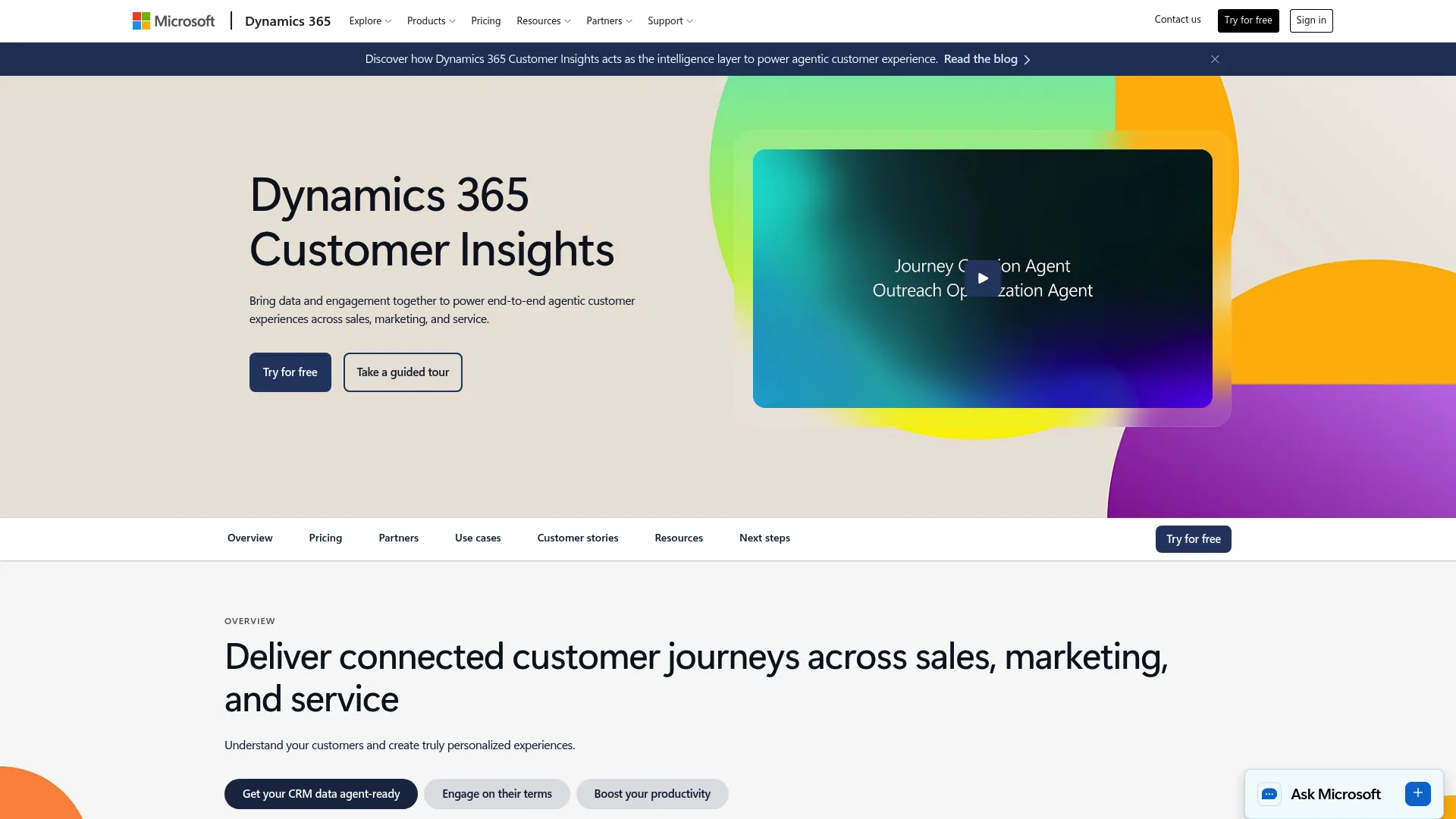
Dynamics 365 Customer Insights is Microsoft's customer data platform and journey orchestration solution. It unifies transactional, demographic, and behavioral data into customer profiles, then lets teams act on those profiles across channels. Microsoft splits it into two parts: Customer Insights - Data for unification and Customer Insights - Journeys for orchestration. If your company already runs on Microsoft, that lineage matters.
Best for: Teams that need a CDP plus journey orchestration inside the Microsoft ecosystem.
Key strengths
- Unifies transactional, demographic, and behavioral data into profiles
- Orchestrates personalized customer journeys across touchpoints
- Copilot-assisted insights, segmentation, and content creation
Why choose Dynamics 365 Customer Insights: This is the pick when data unification and activation are the same project, and you want both inside tooling your team already trusts. It fits enterprises with Microsoft-centric stacks more than scrappy teams looking for a lightweight tool.
Dynamics 365 Customer Insights pricing: A free trial is available. Capacity-based tiers for Interacted People start at $250 per pack per month, paid yearly, with higher tiers at $300 and $500. Unified People capacity starts at $2,000 per pack per month, paid yearly. A Customer Insights Attach license is $1,000 per tenant per month, paid yearly.
2. Databricks Lakehouse Platform
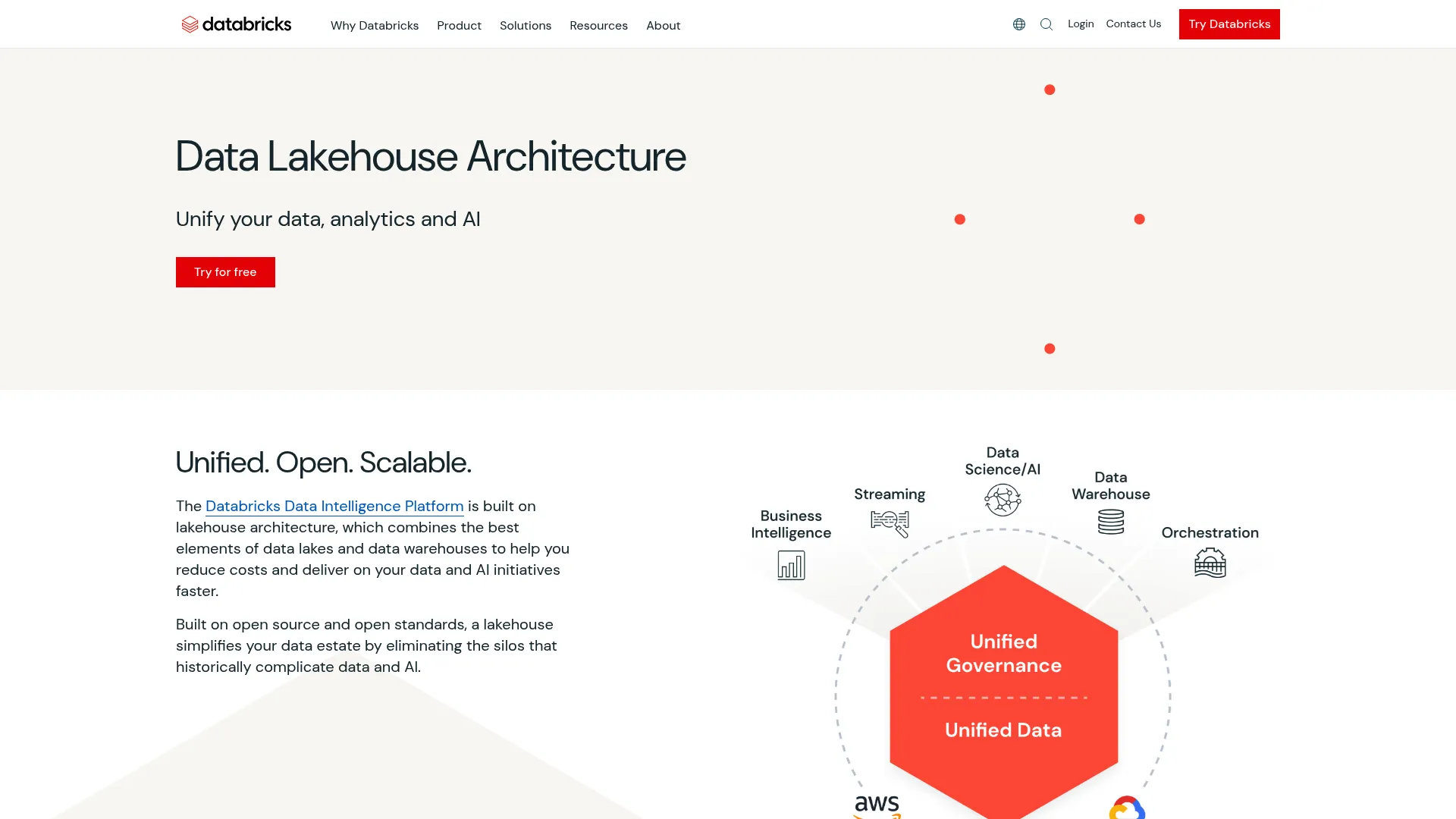
Databricks Lakehouse Platform unifies data, analytics, governance, and AI on a single lakehouse architecture. It is built on open source projects including Apache Spark, Delta Lake, and MLflow. This is not a packaged CX layer. It is the foundation a data team builds one on, covering data engineering, warehousing, governance, real-time streaming, and data science in one place.
Best for: Organizations needing a unified platform for data engineering, analytics, governance, and AI.
Key strengths
- Unified architecture for storage, processing, governance, and AI
- Built on open source: Apache Spark, Delta Lake, MLflow
- Supports engineering, warehousing, streaming, data science, and AI
Why choose Databricks: Choose it when your team wants to build customer insights, not buy a fixed template. Identity resolution, churn scoring, and lifetime value models all become custom work your data engineers own. That is the right trade for technical organizations and the wrong one for a marketing team without engineering support.
Databricks pricing: Databricks uses pay-as-you-go pricing with no up-front cost and offers committed-use contracts for larger commitments. A free tier is available. The public pricing page does not display a fixed starting number, since spend depends on usage.
3. Conveo
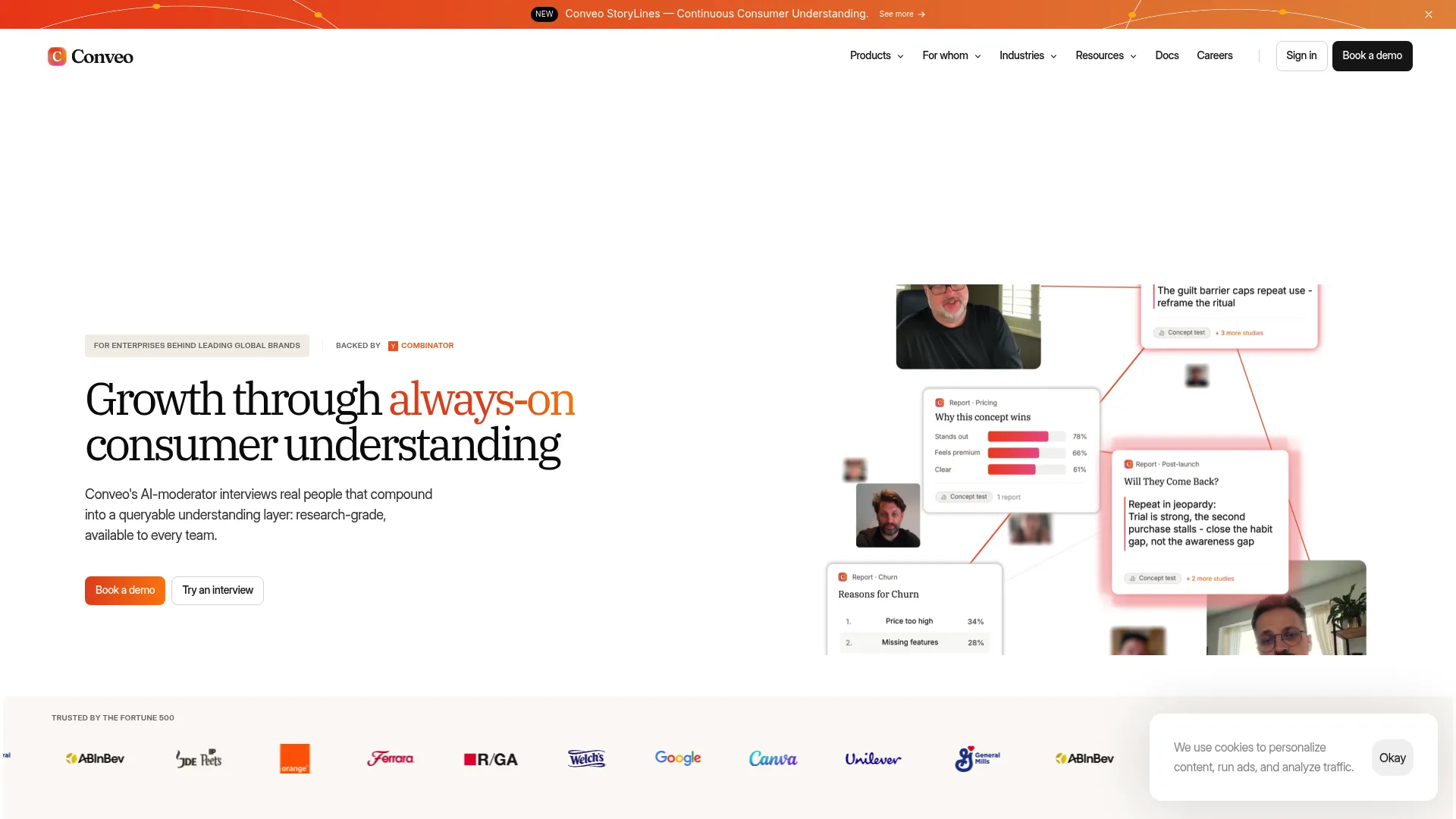
Conveo is an AI-powered qualitative research platform for running, analyzing, and sharing video interviews. It runs AI-led video and voice interviews, then handles study design, recruitment, analysis, and insight sharing in one platform. For teams that want to scale customer conversations without booking every session by hand, this is where qualitative research gets faster.
Best for: Enterprise research teams needing AI-moderated interviews and cross-study insight management.
Key strengths
- AI-led video and voice interviews at scale
- Study design, recruitment, analysis, and sharing in one place
- Thematic analysis, quote stitching, and exportable insight cards
Why choose Conveo: It fits teams that need volume of customer conversations and fast synthesis, not a single moderated study a quarter. The AI moderation is the differentiator. It also carries an enterprise price tag, so it suits research-heavy organizations more than a two-person growth team.
Conveo pricing: Conveo offers a Pay & Go option priced on request and an Enterprise plan starting at $45,000 per year. There is no free tier. Pay-as-you-go pricing is available without a publicly listed number.
4. Dovetail
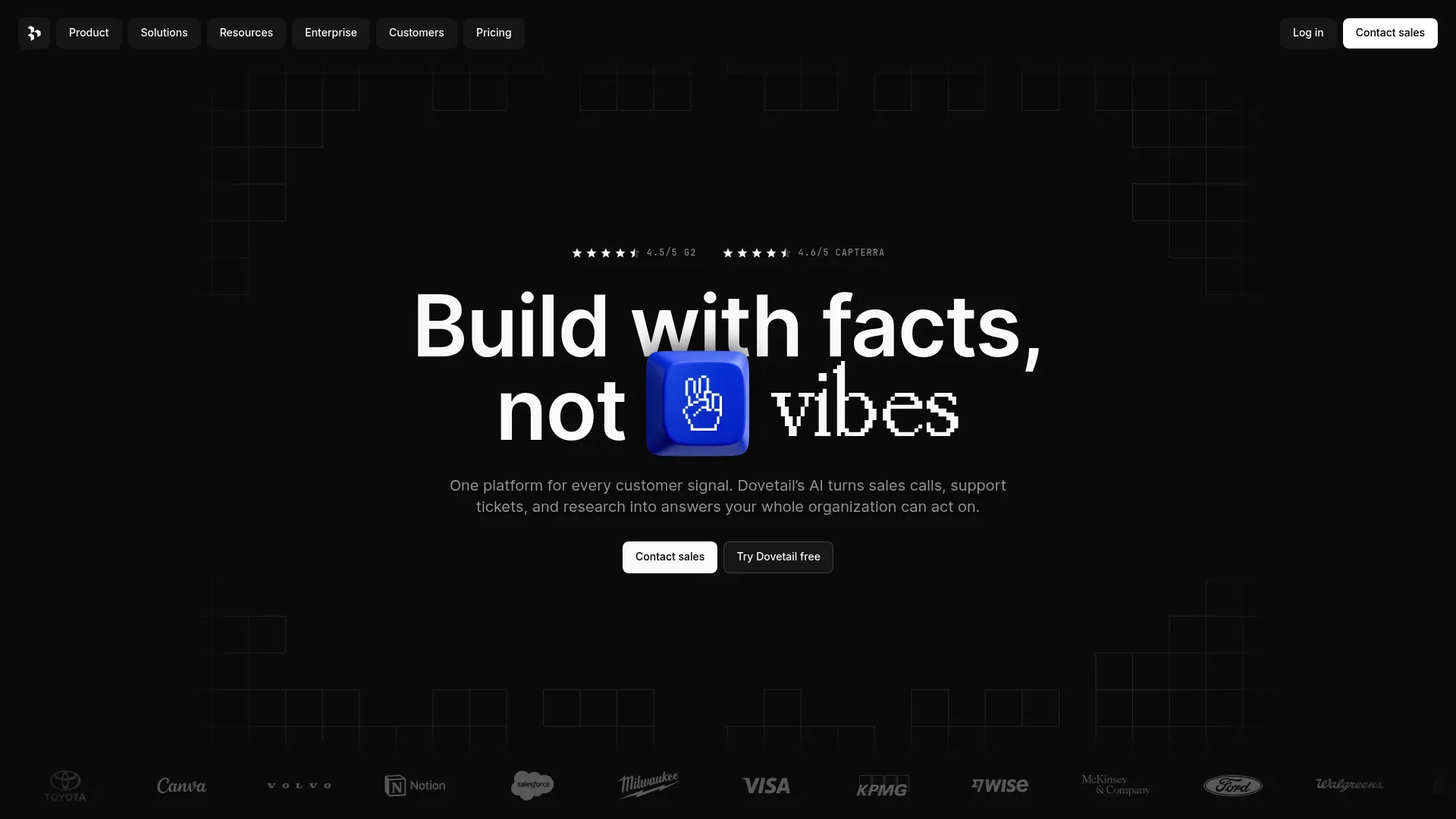
Dovetail is an AI-native customer intelligence platform for turning feedback and research data into insights. It is the repository play: transcription, summaries, highlights, and evidence-backed chat pull qualitative findings into one searchable home. For PMMs and researchers drowning in recordings and notes, this is the source of truth that stops insights from dying in a folder.
Best for: Teams needing a customer research repository and AI-assisted synthesis.
Key strengths
- Free plan with one channel, one project, and chat
- AI Projects with transcription, summaries, and evidence-backed chat
- Channels for continuous AI analysis of high-volume feedback
Why choose Dovetail: It fits cross-functional teams that need one place for customer learning, shared across product, UX, and marketing. The free plan lets you test the workflow before committing. If your problem is scattered qualitative evidence rather than raw data unification, this is the class of tool you want.
Dovetail pricing: A Free plan is available at $0 per user per month, no card required. The Enterprise plan uses custom pricing and adds Docs for shareable insight reports and dashboards. Pricing is in USD only.
5. Hotjar
Hotjar, now part of Contentsquare, is a product experience insights platform for understanding user behavior and feedback. Heatmaps, session recordings, and surveys give you fast signal on how people actually use your site. When the question is "where are visitors dropping off on this page," Hotjar answers it without a heavyweight analytics buildout.
Best for: Teams that need quick behavioral insights from heatmaps, recordings, and user feedback.
Key strengths
- Heatmaps that show where users click and scroll
- Session recordings of real user behavior
- Surveys and interviews for direct feedback
Why choose Hotjar: It fits teams that want website-level customer journey insights fast, without standing up a full data stack. It excels at the qualitative "why" behind behavior on specific pages. Pair it with an event analytics tool when you also need funnel and retention numbers across the whole product.
Hotjar pricing: You can get started free with no credit card required. Hotjar now routes pricing through Contentsquare, and the public pricing page did not display a fixed paid tier number at the time of writing. Check the current Contentsquare pricing page for exact plan costs.
6. Mixpanel
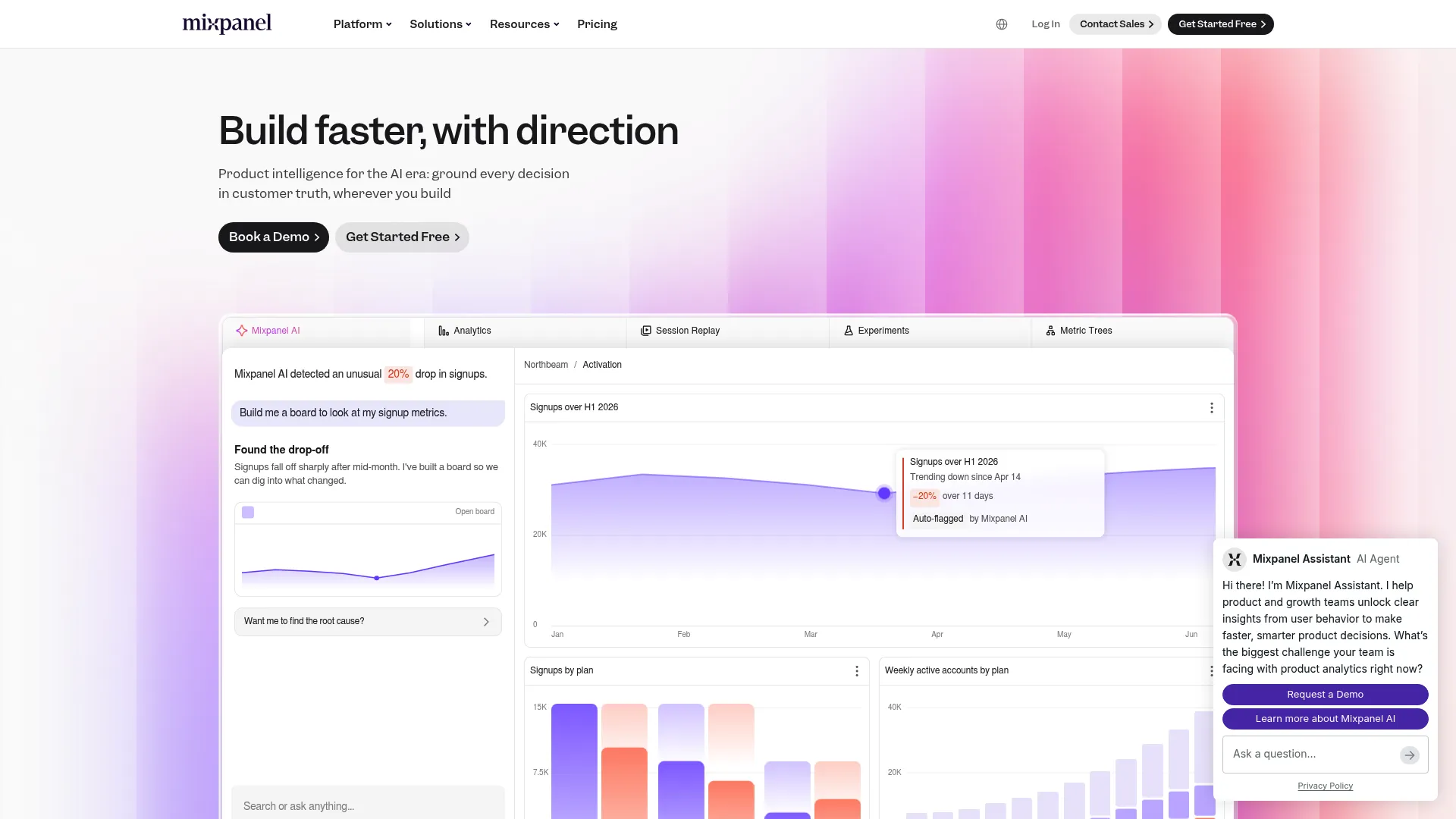
Mixpanel is a behavioral analytics and experimentation platform for product, growth, and engineering teams. It is event-based: funnels, retention, flows, and cohorts show you what users actually do inside your product. If your customer data insights need to answer "which actions predict retention," Mixpanel is built for that question.
Best for: Teams that need self-serve product analytics plus experimentation in one platform.
Key strengths
- Product analytics with funnels, retention, flows, and cohorts
- Session replay and heatmaps
- Experiments, feature flags, and AI-assisted analytics
Why choose Mixpanel: It fits product and growth teams that care about in-product behavior more than raw data warehousing. Self-serve analysis means PMMs can build a cohort without waiting on a data engineer. Combine it with a repository tool when you also need the qualitative context behind the numbers.
Mixpanel pricing: The Free plan is free forever. The Growth plan starts at $0 with usage-based pricing that scales with volume. Enterprise is quote-based. Eligible startups can get the first year free through the startup program.
7. GWI
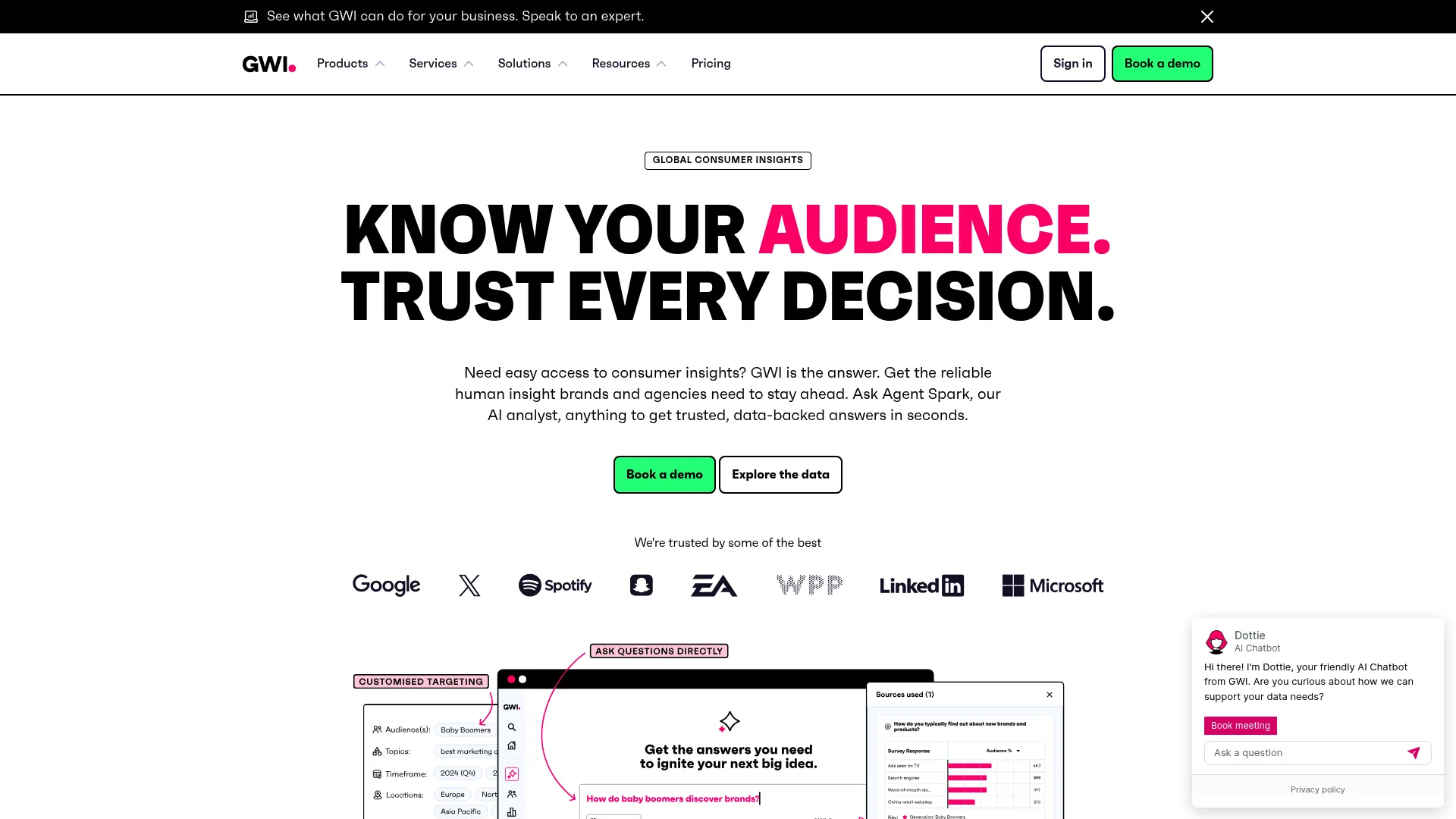
GWI is a human insights and consumer research platform providing audience data, charts, dashboards, crosstabs, and AI-assisted analysis. Where the other tools read your own customers, GWI reads the market. Audience profiling and segmentation on survey-based panel data tell you what consumers think beyond your product telemetry.
Best for: Teams needing consumer audience insights and research data for marketing decisions.
Key strengths
- Audience profiling and segmentation on panel data
- Charts, dashboards, and crosstabs for analysis
- Agent Spark AI analyst for faster answers
Why choose GWI: It fits teams that need market-level intelligence and brand tracking rather than data on their existing users. For PMMs building positioning against a category, external consumer research is proof product analytics cannot give you. It is a different job from behavioral analytics, and both can live in the same stack.
GWI pricing: A Free plan is available at $0 per month. The Plus plan is $150 per user per month. Teams and Pro plans require contacting sales for a quote. Pricing is shown in USD, EUR, and GBP.
Considerations
Check whether you need data unification or research workflow
The single most expensive mistake is buying the wrong class. A CDP will not synthesize interviews. A repository will not resolve identities across systems. Name your bottleneck first: fragmented data, weak behavioral understanding, scattered qualitative evidence, or slow activation. Then shortlist.
Check integrations and source coverage
Verify that the platform connects to the sources you actually run. CRM, product analytics, support tickets, survey tools, and your data warehouse each matter differently depending on the job. A tool that reads everything except your system of record leaves you exactly where you started.
Check collaboration and governance
Insights only pay off when the whole team can use them. Look for permissions, versioning, and shared visibility across PMM, product, insights, and growth. A single searchable source of truth beats five private dashboards every time.
Check activation and output quality
Ask whether the platform only informs decisions or also drives them. Some tools stop at the report. Others push segments into targeting, personalization, and journey orchestration. If action is your bottleneck, a reporting-only tool will disappoint no matter how good the charts look.
Check total cost of ownership
Sticker price is the smallest number. Factor implementation, data prep, and the ongoing human effort to keep the system useful. A pay-as-you-go lakehouse and a fixed enterprise research contract carry very different operational costs. Price the work, not just the license.
Conclusion
The best customer insights platform depends on the job, not the buzzword. Enterprise data unification points to Dynamics 365 Customer Insights. Technical teams that want to build their own layer choose Databricks. Qualitative research at scale runs on Conveo. A shared insight repository lives in Dovetail. Fast website behavior signal comes from Hotjar. In-product analytics belong in Mixpanel. Market and consumer research is GWI's domain.
Start by naming your current bottleneck before you shortlist anything. Is it fragmented data, weak behavioral understanding, scattered research, or slow activation? Write that down first. The category ambiguity that makes this search hard disappears the moment you know which of the four jobs you are solving.
Then run a small pilot against one real question your team keeps failing to answer. The right tool proves itself in the first week by answering it faster than your current workaround.
FAQs
A CDP is one type of customer insights platform focused on unifying customer data into a single profile through identity resolution. "Customer insights platform" is the broader term and also covers analytics, research, and repository tools. Every CDP is a customer insights platform, but not every customer insights platform is a CDP.
Conveo is strongest for AI-moderated interviews at scale, running video and voice conversations and synthesizing them quickly. Dovetail is best when the priority is storing and searching qualitative evidence across studies. Choose Conveo to run the research, and Dovetail to organize what comes out of it.
Mixpanel is built for behavioral product analytics, with funnels, retention, cohorts, and experimentation in one place. Hotjar complements it for website-level heatmaps and session recordings. Mixpanel answers what users do across the product; Hotjar shows why they behave that way on specific pages.
Not usually. BI tools like general dashboards excel at broad business reporting across finance, ops, and sales. Customer insights platforms specialize in customer-specific data, behavior, and research. Many teams run both, feeding insight platform outputs into their wider BI layer rather than replacing it.
It depends on the job. For unification, prioritize identity resolution and integration coverage. For analytics, prioritize segmentation and predictive signal. For research, prioritize synthesis and a searchable repository. Across all of them, collaboration and governance decide whether insights actually get used.
Map it to your bottleneck. If you cannot understand customers, you need research or analytics tools. If you understand them but cannot act, you need an activation and journey orchestration platform. Buying activation tooling to fix an understanding gap, or vice versa, is how tools become shelfware.
Yes, platforms like Dynamics 365 Customer Insights combine unified profiles with journey orchestration in one system. That pairing suits enterprises that want unification and activation as a single project. Smaller teams often get more value from specialized tools that each do one job well and integrate through their existing stack.