You've got a notebook in the truck, a spreadsheet on the laptop, and a couple of apps on your phone that half sync. When a cow calves at 5 a.m. or a treatment gets logged during a busy processing day, the record lands wherever is closest. Three weeks later, at tax time or a vet visit, you're stitching the story back together from memory.
That fragmentation is the real problem, not the number of features any single tool has. The global livestock management software market was valued at $3.2 billion in 2025 and is forecast to reach $6.5 billion by 2034 at an 8.7% CAGR, according to MarketIntelo (2025). Growth like that means more options, more marketing, and more noise to cut through.
Here's what actually decides fit: your farm type, your species mix, whether records get created in the field or at a desk, and whether you plan to link scales, EID readers, or sensors. According to MarketGrowthReports (2024), 57% of farm managers now use mobile livestock apps for real-time animal tracking, and over 62% of new deployments run on cloud infrastructure. Software that assumes you're always at a desk with signal has already lost the plot. This guide compares seven tools against those criteria so you pick on workflow, not feature count.
What's inside
This guide is for farm owners, ranch managers, cattle and sheep producers, and mixed-livestock operators who want to replace notebooks, spreadsheets, and disconnected apps with one system for animal records, breeding, health treatments, weights, movements, and pasture data.
We selected tools based on four things that matter in the field:
- Farm-type and species fit - cattle-only versus mixed versus large operations
- Mobile and offline access - records you can capture away from a desk or signal
- Reporting and analytics depth - from simple record keeping to profitability data
- Hardware integration - scales, EID readers, and sensors where relevant
No tool wins every category. The right pick is the one that matches how you already work.
TL;DR
- Best for small to mid-sized or mixed farms on a budget: FarmKeep, with a genuine free tier and mobile-first records.
- Best all-in-one for mixed farms: Farmbrite, covering livestock, crops, accounting, and team tasks in one place.
- Best for ranchers who need mapping and grazing: AgriWebb, with interactive maps, offline field capture, and team management.
- Best for offline field record keeping across species: Herdwatch, strong on cattle, sheep, pasture, and breed-association reporting.
- Best cattle-only record keeping: CattleMax, purpose-built for cow-calf and registered herds with unlimited users.
- Best for data-heavy commercial producers: Breedr, combining traceability, weighing, and supply-chain coordination.
- Best for sensor-driven dairy monitoring: CowManager, using ear and milk sensors for real-time health and fertility signals.
What is livestock management software?
Livestock management software is a digital system for recording, tracking, and reporting on animals across their lifecycle, replacing paper records and spreadsheets with structured, searchable data.
Most tools in this category track:
- Animal IDs and inventory - individual or mob-level identification, tags, and headcounts
- Breeding records - matings, pregnancy checks, calving and lambing, and lineage
- Health and treatment logs - vaccinations, medicines, withdrawal periods, and vet visits
- Movements - births, deaths, purchases, sales, and paddock transfers
- Weight tracking - weigh-ins, average daily gain, and performance over time
- Pasture and grazing - paddock records, rotations, and grazing plans
- Reports - compliance filings, breed-association exports, and financial summaries
It helps to separate two things people often lump together. Cattle management software and herd management software focus specifically on animals: records, breeding, health, and performance. Broader farm management software adds crops, equipment, accounting, and team operations on top of the animal layer. A cattle-only operation may only need the former. A mixed farm running livestock, hay, and equipment usually wants the latter. Knowing which side you're on cuts your shortlist in half before you compare a single feature.
When to use livestock management software
Track animals in the field
Most records get created away from the office: a birth in a back paddock, a treatment during processing, a transfer at the gate. If the tool assumes desk access and steady signal, those records get scribbled on your hand and lost. A good livestock management app captures data on a phone or tablet and holds it when there's no connection.
Offline livestock records matter more than any dashboard. Log the birth, the medicine, or the weight where it happens, then let it sync when you're back in range. That single capability separates tools built for real farm work from tools built for demos.
Manage mixed-species or growing herds
Your species mix reshapes the shortlist. A cattle-only tool is simpler and often cheaper, but it won't hold sheep, goats, or poultry cleanly. Run more than one species and you want explicit multi-species support, not a cattle app with a workaround.
Growth changes things too. Add team members, more paddocks, or a second enterprise, and you'll want a broader platform with roles, permissions, and operational reporting rather than a single-user records tool.
Capture weights, performance, and profitability data
Simple record keeping tells you what happened. Analytics tell you what it cost and what to do next. Weight tracking, average daily gain, and profitability data turn records into decisions about culling, feed, and sale timing.
This is where hardware earns its place. Link a scale or an EID reader and weigh-ins flow straight into the record with no re-keying. On sensor-driven operations, wearable monitors push health and fertility signals automatically. Hardware matters most when the volume of data makes manual entry the bottleneck.
Comparison table
The table below is a fast differentiator by farm type and workflow. Use it to narrow to two or three tools, then read the full sections. Pricing and ratings reflect verified vendor and review-site values as of mid-2026; where a vendor gates pricing behind a quote, we've said so plainly.
| # | Product | Intent | Key differentiation | Pricing | G2 rating |
|---|---|---|---|---|---|
| 1 | FarmKeep | Small to mid or mixed farms | Free tier plus mobile-first records, breeding, and production | Free; Premium from $8/mo (annual) | Not listed |
| 2 | Farmbrite | Mixed farms wanting all-in-one | Livestock, crops, accounting, and team tasks together | From $59/mo | 4.7/5 |
| 3 | AgriWebb | Ranchers needing mapping and grazing | Interactive farm map, offline capture, team management | Add-ons from $100/yr; base by quote | 4.0/5 |
| 4 | Herdwatch | Multi-species field record keeping | Cattle, sheep, pasture, plus breed-association export | Free tier; Pro $49 first 6 months | Not listed |
| 5 | CattleMax | Cattle-only operations | Complete cattle records with unlimited users | From $15/mo (Commercial) | Not listed |
| 6 | Breedr | Data-heavy commercial producers | Traceability, weighing, supply-chain coordination | Pro plan; Enterprise by quote | Not listed |
| 7 | CowManager | Sensor-driven dairy monitoring | Ear and milk sensors for health and fertility | By quote | Not listed |
1. FarmKeep
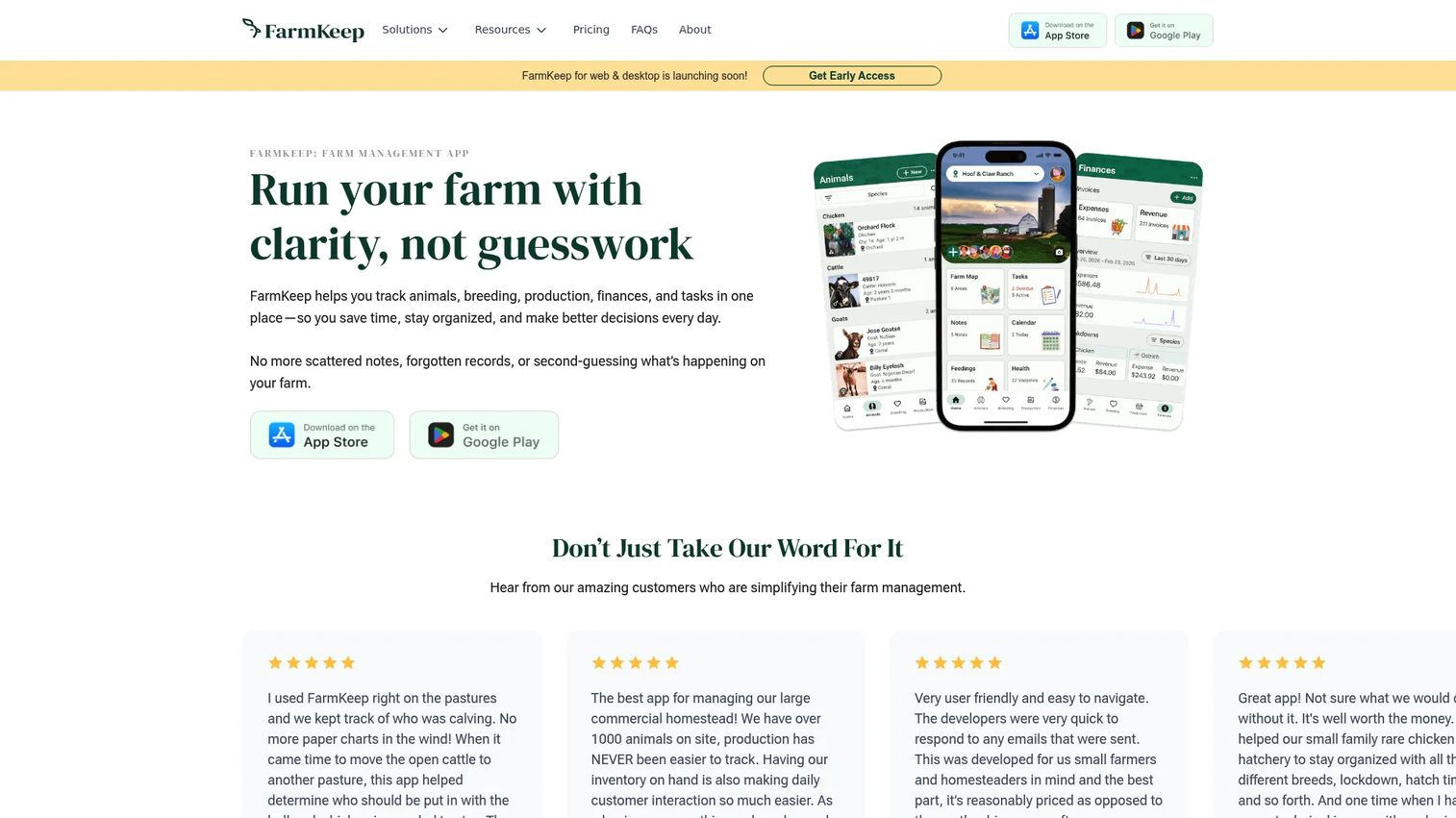
FarmKeep is farm management software for livestock, breeding, production, finances, and tasks, built to be mobile-first so records get created where the work happens. It leans practical rather than analytics-heavy, which suits operators who want clean records without a steep setup. For a small farm replacing a notebook and a spreadsheet, it's an easy first system.
Best for: Small to mid-sized and mixed farms that need mobile records for animals, breeding, and day-to-day operations without a big monthly commitment.
Key strengths
- Livestock record keeping: Track animals, IDs, and inventory from your phone in the field or at the desk.
- Breeding management: Log matings, pregnancy, and offspring so lineage and due dates stay in one place.
- Production and yield tracking: Record output and production data alongside the animals that generated it.
Why choose FarmKeep: The free tier is real, not a crippled trial, which makes it a low-risk starting point for a first-time software buyer. It's deliberately simpler than platforms built around deep profitability analytics or sensor workflows, so if your priority is fast, reliable record keeping over heavy reporting, that simplicity is the point. Mixed and smaller operations get the most value here.
FarmKeep pricing: The Basic plan is free forever and includes a 14-day trial of Premium. Premium runs $8/month on annual billing ($95.99/year) or $9.99 billed monthly. A Commercial plan is available with custom pricing for larger operations. Pricing is confirmed on FarmKeep's own pricing page as of mid-2026.
2. Farmbrite
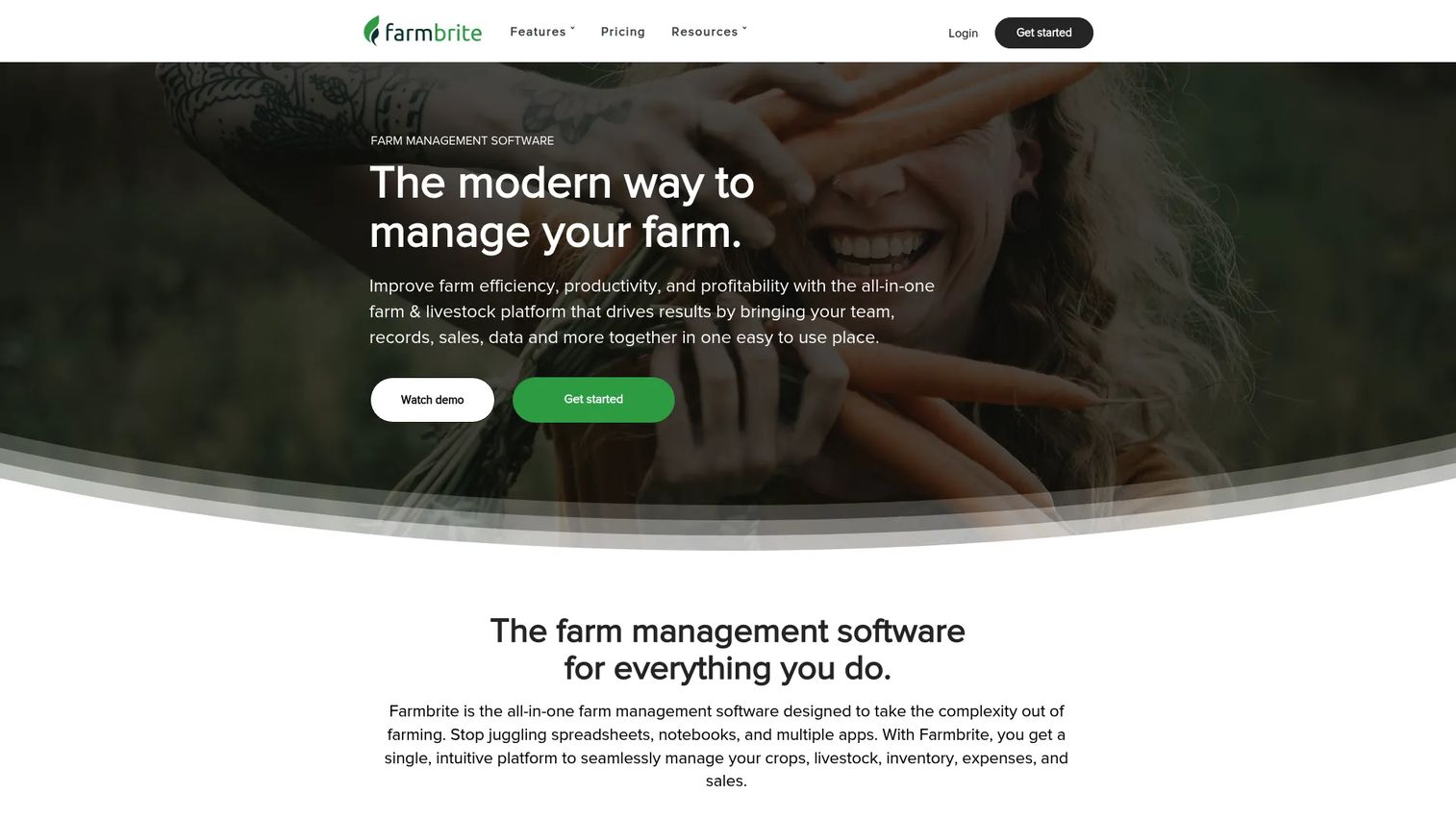
Farmbrite is farm management software for crops, livestock, accounting, and team operations. Where cattle-only tools stop at the animal, Farmbrite keeps going into finances, task management, and crop records, making it a genuine all-in-one for a diversified operation. If you run livestock alongside hay, produce, or equipment, that breadth is the draw.
Best for: Mixed farms that want one system for livestock, crops, accounting, and operations instead of stitching several tools together.
Key strengths
- Livestock and crop management: Handle animals and fields in the same platform, useful for mixed enterprises.
- Farm accounting and financial reporting: Bookkeeping and reports live next to your operational data, not in a separate ledger.
- Task, work, and team management: Assign work, track jobs, and coordinate a team from one place.
Why choose Farmbrite: It fits operators who think of the farm as a business, not just a herd. The accounting and team features earn their keep once you have staff and multiple enterprises. It carries a 4.7/5 rating on G2, which reflects that breadth landing well with all-in-one buyers. It sits at a higher entry price than a records-only app because it does substantially more.
Farmbrite pricing: Essentials starts at $59/month (or $590/year). Performance is $79/month ($790/year) and Premium is $109/month ($1,090/year). A standalone Farm Accounting plan is $119/year, and Enterprise Solutions are custom-priced. A free trial is offered. Pricing is confirmed on Farmbrite's pricing page as of mid-2026.
3. AgriWebb
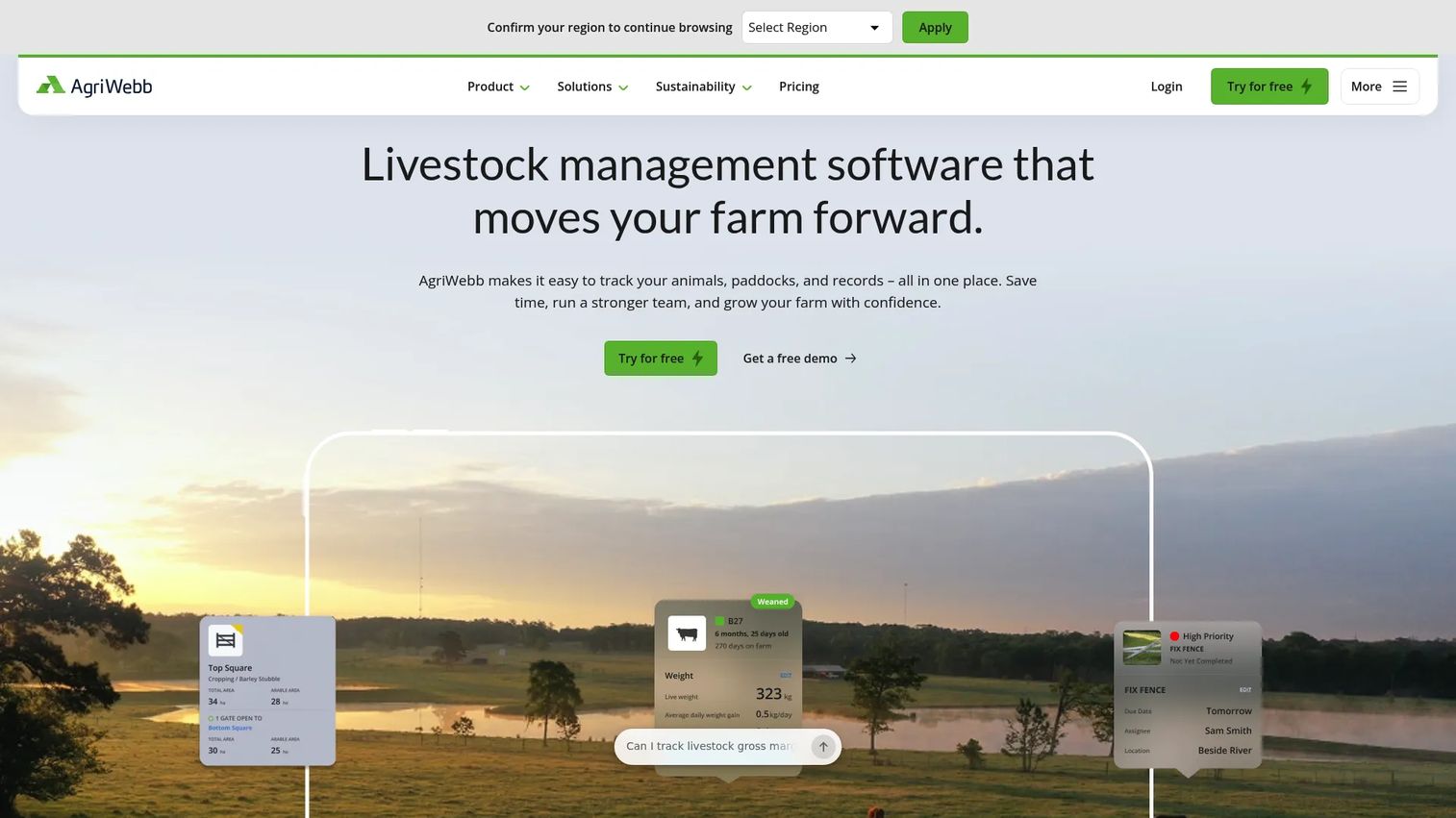
AgriWebb is livestock and farm management software for digital record keeping, mapping, and operational reporting. Its standout is the interactive ranch and farm map, which ties animal records and grazing to actual paddocks rather than abstract lists. For pasture management and rotational grazing, that spatial view changes how you plan.
Best for: Ranchers and larger operations that need livestock records, mapping, and grazing management together in one platform.
Key strengths
- Interactive ranch and farm map: See livestock, paddocks, and grazing on a real map of your land.
- Livestock record keeping and reconciliation: Track animals and reconcile mob counts so inventory stays accurate.
- Team and task management: Assign and track work across staff, useful once more than one person logs data.
Why choose AgriWebb: It suits operations that have outgrown simple record keeping and need operational depth: mapping, reconciliation, grazing planning, and team collaboration. Offline field capture means records hold without signal and sync later. It carries a 4.0/5 rating on G2 from a small number of reviews, so weigh that against your own trial. It's built for pasture-driven ranching more than dairy sensor workflows.
AgriWebb pricing: AgriWebb's pricing page uses a calculator and lists plan tiers (Essentials, Essentials+, Performance) without a public base price in the captured content, so the base subscription is quote-based. Add-ons have public annual prices: a Movement planner at $100/year and a Grazing planner at $150/year. A free trial and monthly or yearly billing are indicated. Confirm your base price directly with AgriWebb.
4. Herdwatch
Herdwatch is livestock, herd, and pasture management software for ranchers and farmers, built around reliable field use. It works offline on phone, tablet, or desktop, which is exactly what you want when records get created at the gate or in a back paddock. Strong reporting and breed-association exports round it out.
Best for: Livestock producers who need dependable mobile herd and pasture record management across cattle and sheep.
Key strengths
- Offline record keeping: Log births, treatments, and movements on phone, tablet, or desktop with no signal, then sync.
- Cattle, sheep, and pasture management: Multi-species support plus paddock records in one app.
- Reporting, breeding, health, and performance tracking: Generate reports and export to breed associations without re-keying.
Why choose Herdwatch: For teams that create most records in the field, the offline-first design is the whole point, and multi-species support means it won't box you into cattle only. The reporting and export strengths help with compliance and association filings. It's a strong fit for producers who value cattle record keeping and field data capture over dairy sensor automation.
Herdwatch pricing: A free tier is available. A Pro offer runs $49 for your first six months, with annual Pro and Pro+ plans priced by farm size (some figures are quote-based on the pricing page). Herdwatch reviews on Capterra sit around 4.4/5. Confirm the plan price for your herd size directly with Herdwatch.
5. CattleMax
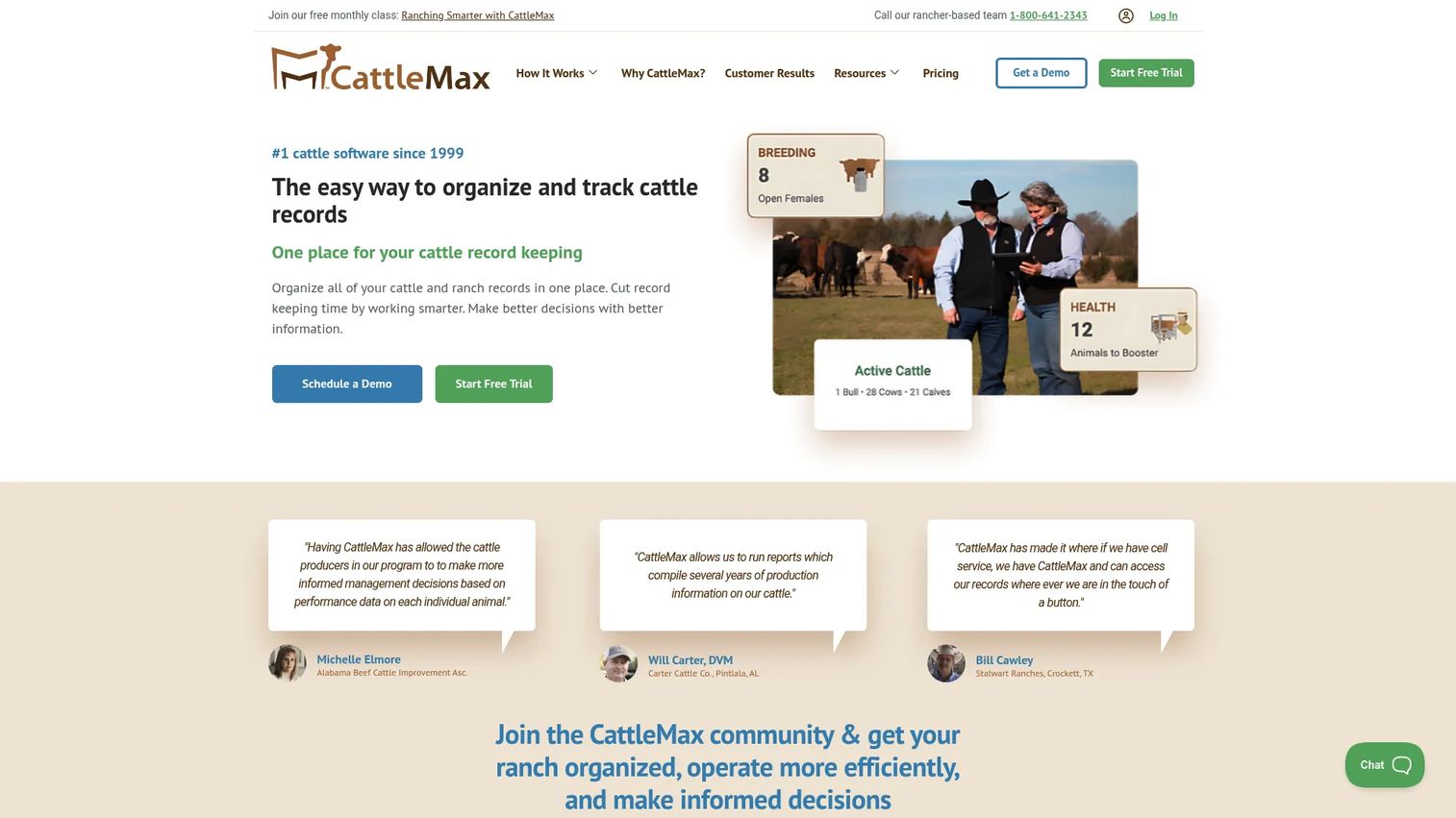
CattleMax is cloud-based cattle and ranch management software for tracking herd, health, breeding, pasture, and financial records. It's cattle-first by design, which makes it clean and focused for cow-calf and registered operations that don't need crop or multi-species clutter. Unlimited users is a genuine differentiator for family operations and ranch teams.
Best for: Cow-calf and registered cattle operations that need herd, health, breeding, and ranch record keeping in one focused system.
Key strengths
- Complete cattle records with breeding and pregnancy tracking: Full herd history, matings, and pregnancy status in one place.
- Pasture maps and records: Tie animals to paddocks and track pasture use.
- Unlimited users plus income and expense log: Add the whole team at no per-seat cost, with financial records alongside.
Why choose CattleMax: A cattle-only platform is the right call when you run one species and want depth over breadth. Registered breeders benefit from the breeding and reporting focus, and the unlimited-user model suits multi-person ranches. It won't manage crops or non-cattle species, and that focus is exactly why it stays simple. Equipment inventory, calendars, and reports fill out the ranch side.
CattleMax pricing: The Commercial plan is publicly listed at $15/month per account. A Registered plan exists for registered-breed operations, though its price isn't published in the material reviewed. A 21-day free trial is available. Pricing is confirmed on CattleMax's own pages as of mid-2026.
6. Breedr
Breedr is livestock management software and a supply-chain platform for cattle and sheep producers, aimed at data-heavy operators who want more than basic records. It combines herd and flock management with weighing, traceability, and supply-chain coordination, so performance data connects to how animals actually move to market. For commercial producers benchmarking growth and margins, that's the appeal.
Best for: Cattle and sheep operations that need livestock record keeping plus performance data and supply-chain coordination.
Key strengths
- Herd and flock management: Track cattle and sheep records across the full lifecycle.
- Movements, births, deaths, and regulatory reporting: Keep traceability and compliance filings current.
- Weighing, breeding, and medicine tracking: Capture weights and treatments to drive performance benchmarking.
Why choose Breedr: It appeals to producers who treat data as a decision tool, not just a compliance chore. The weighing and traceability focus supports EID reader integration and performance analysis that simpler apps don't attempt. It's more than a records tool, so it fits operators ready to use that depth rather than those wanting the lightest possible system.
Breedr pricing: Breedr Pro is shown on the pricing page with a calculator based on livestock count, alongside £0 monthly and annual entry values and a 30-day trial. An Enterprise & Advisors plan requires an enquiry. Because the calculator drives the standard subscription figure, confirm your price for your herd size directly with Breedr.
7. CowManager
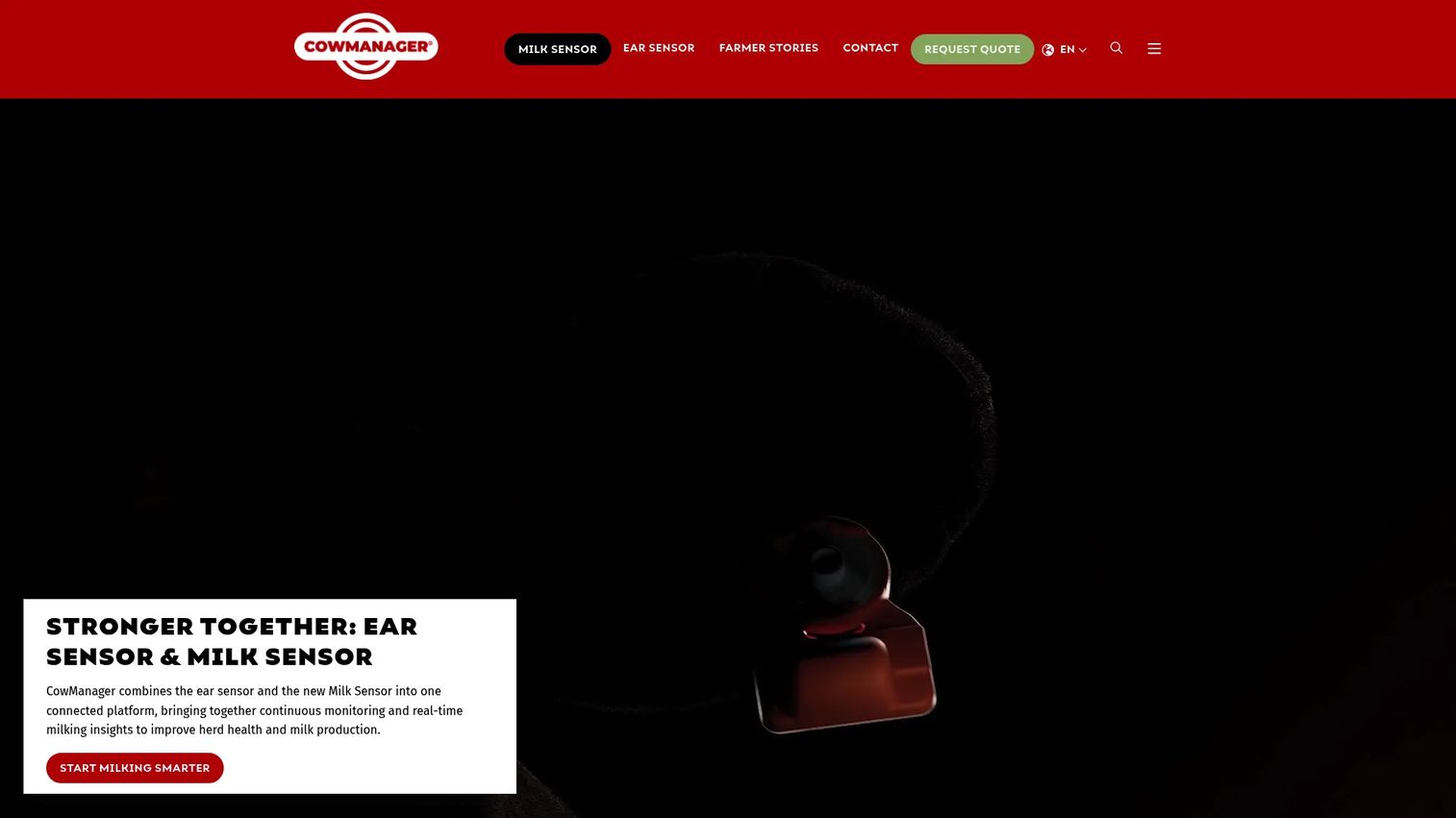
CowManager is a dairy cow monitoring system that uses ear and milk sensors to track health, fertility, transition, nutrition, and youngstock. It's a different category from a records app: instead of you logging data, the sensors capture it continuously and surface signals automatically. For dairies chasing early health and heat detection, that automation is the whole value.
Best for: Large dairy farms that want real-time cow health and fertility monitoring with automated sorting workflows.
Key strengths
- Ear sensor monitoring: Track activity, rumination, eating, and ear temperature per animal, continuously.
- Milk Sensor: Monitor udder health at the quarter level during milking.
- Health, Fertility, and workflow modules: Cover transition, nutrition, youngstock, Find my Cow, MultiView, and Auto Drafting.
Why choose CowManager: This fits sensor-centric operations where the value comes from automated monitoring and high signal from data, not manual entry. If your priority is catching sick or in-heat cows earlier and automating drafting, the hardware layer earns its cost. It's built for dairy monitoring specifically, so a cow-calf or mixed farm wanting simple records would look at a records-first tool instead.
CowManager pricing: CowManager routes prospects to request a quote, and no public price was visible on the pages reviewed. Because sensor hardware plus software is priced per operation, request a quote sized to your herd and the modules you need.
Considerations before you buy
Farm type and species mix
Decide first whether you need cattle-only depth or multi-species breadth. A cattle-only tool stays simpler and cheaper; a mixed-farm platform holds more but asks for more setup. Match the tool to your actual operation, not the one you might have someday.
Mobile and offline capability
Records get made in the field, so test how the app behaves with no signal. Create a birth, a treatment, and a weigh-in offline, then confirm they sync cleanly. If a tool stumbles here, it will lose data where you can least afford it.
Reporting and hardware fit
Know whether you need simple records or profitability analytics, and whether you'll link scales, EID readers, or sensors. Check exports for the breed associations or compliance bodies you file with. Confirm the specific hardware you own is supported before you commit.
Pricing and trial
Free tiers and trials exist across this list, so use them. Log two weeks of real data before you pay, and factor whether pricing is per-user or flat, since unlimited-user models change the math for teams.
Conclusion
The best livestock management software is the one that fits your farm type, species mix, and field workflow, not the one with the longest feature list. If you run a small or mixed farm and want a low-risk start, FarmKeep and Herdwatch both offer free tiers and strong mobile records. For an all-in-one that covers crops and accounting, Farmbrite is the broadest. Ranchers who live by pasture and paddocks should look hard at AgriWebb, while cattle-only operations get clean depth from CattleMax.
For data-heavy commercial producers, Breedr connects performance to supply chain, and dairies chasing automated health and fertility signals should evaluate CowManager's sensors. Pick two or three that match how you already work, run real data through their trials for two weeks, and buy on offline reliability and reporting fit. That test tells you more than any spec sheet.
FAQs
It's used to record and track animals across their lifecycle: IDs and inventory, breeding, health and treatment logs, movements, weights, and pasture. It replaces notebooks and spreadsheets with structured data you can search, report on, and export for compliance or breed associations.
Yes, especially when there's a free tier or low-cost plan. FarmKeep is free forever at the basic level and Herdwatch offers a free tier, so small farms can replace paper records without a big commitment. Start free, log real data, and upgrade only if you need the depth.
Prioritize reliable mobile and offline capture, breeding and pregnancy tracking, health and treatment logs, and weight tracking. Check that reports export to the breed associations or compliance bodies you file with, and confirm any scale or EID reader you own is supported.
Several do. Herdwatch is built around offline record keeping on phone, tablet, or desktop, and AgriWebb captures data offline and syncs later. Always test offline capture during a trial, since that's where records are most likely to go missing.
Farmbrite handles livestock and crops together with accounting and team tools, and Herdwatch supports cattle, sheep, and pasture. FarmKeep also works for mixed operations. A cattle-only tool like CattleMax is less suited to multi-species farms.
Yes. Most tools here track breeding records, health and treatment logs, and weights. Breedr adds weighing and performance benchmarking, CattleMax focuses on breeding and pregnancy, and CowManager uses sensors to capture health and fertility signals automatically.
Common integrations include weigh scales, EID (electronic ID) readers, and wearable sensors. Breedr supports weighing and traceability workflows, while CowManager relies on ear and milk sensors. Always confirm your specific hardware model is supported before buying.
Start with a free tier or trial and log two weeks of real records. Move to paid when you hit a real limit, such as needing more animals, team users, accounting, mapping, or hardware integration. Also weigh per-user versus flat pricing, since unlimited-user models like CattleMax's change the total cost for teams.