Your energy spend is probably scattered across a dozen places right now. Utility bills sit in a shared drive. Interval data lives in a metering portal nobody logs into. Facilities dashboards run in one silo, and your sustainability team stitches emissions numbers together in a spreadsheet the night before a board meeting. When the CFO asks a simple question, "how much did we spend on energy last quarter, and where," the answer takes three people and two days to assemble.
That fragmentation is expensive. The global energy management software market is projected to grow from USD 60.94 billion in 2026 to USD 105.17 billion by 2032, a compound annual growth rate of 9.3%, according to Research and Markets (2024). The reason is straightforward: energy is a controllable cost, and companies that centralize the data find waste, avoid peak demand penalties, and prove savings faster than teams working from bills alone.
The problem you are actually solving is visibility. Not more meters, not more dashboards, but one source of truth that connects usage, cost, forecasting, and reporting. That is the difference between reacting to a surprise bill and preventing it. If you run multiple sites, an industrial operation, or a portfolio under ESG scrutiny, the software you pick decides whether energy stays a black box or becomes a line item you actually manage.
This same "consolidate the signal, act on it faster" logic shows up across operational stacks, whether you are evaluating application performance monitoring tools or audit management software. Energy is no different: the platform that wins is the one that turns scattered data into decisions.
What's inside
This guide compares nine real energy management software options built for enterprise and multi-site buyers. Some are power quality and industrial monitoring platforms. Others focus on facility energy, sustainability reporting, or grid-side orchestration. We picked them to cover the full range of operating models, not just one.
We evaluated each on five criteria: monitoring depth (how granular the data gets), analytics and forecasting, reporting and ESG support, integrations with meters, BMS, and utility systems, and operational fit for the job you are actually trying to do. Pricing and G2 ratings are included where verified, and omitted where a vendor keeps them behind a sales conversation.
TL;DR
- Best for multi-site facility energy visibility: GridPoint, for portfolio-wide monitoring, asset diagnostics, and demand management across commercial sites.
- Best for industrial and power quality monitoring: Electro Industries/GaugeTech, for standards-based power metering and AI-driven energy analysis in power-sensitive environments.
- Best for ESG and emissions reporting: IBM Envizi, for auditable Scope 1, 2, and 3 accounting tied to enterprise sustainability reporting.
- Best for Microsoft-native teams: Microsoft Sustainability Manager, for unifying environmental data inside an existing Microsoft ecosystem.
- Best for enterprise breadth: Schneider Electric, for buyers who want building, power, and industrial software from a single vendor.
- Best for utility and grid-side operators: EnergyHub, for distributed energy resource management and virtual power plant programs.
What is energy management software?
Energy management software is a digital platform that collects, monitors, analyzes, and optimizes how an organization uses energy across its facilities, equipment, and operations. It turns raw meter data, utility bills, and building system feeds into a single view of consumption, cost, and performance so teams can cut waste and report accurately.
A capable energy management platform typically covers:
- Real-time energy monitoring: live consumption data at the meter, asset, site, and portfolio level.
- Centralized dashboards: one interface that consolidates usage, cost, and trends across every location.
- Analytics and forecasting: benchmarking, load profiling, and predictive models that anticipate demand.
- Anomaly detection and alerts: automatic flags for spikes, leaks, equipment faults, and unusual usage patterns.
- ESG and compliance reporting: carbon emissions tracking and audit-ready outputs for Scope 1, 2, and 3.
- Integrations: connections to meters, building management systems (BMS), IoT sensors, and utility data feeds.
The category spans several operating models. Some tools function as an energy monitoring platform for industrial power quality. Others act as energy tracking software for facilities, or ESG reporting software for sustainability teams. The strongest energy management software solutions combine monitoring, analytics, and reporting so one platform serves finance, facilities, and sustainability at once. Cloud-based deployment now captures roughly 60% of the market, per a 2025 LinkedIn market analysis, reflecting demand for scalable, AI-integrated systems.
When to use energy management software
Reduce energy waste across multiple sites
If you run more than a handful of facilities, one-off reporting stops working fast. You need portfolio-wide visibility to compare sites, spot outliers, and standardize performance. Energy efficiency software surfaces usage trends across locations, benchmarks similar buildings against each other, and shows which sites drift from expected consumption. That is when a platform earns its place: when the question shifts from "what did this building use" to "which of my forty buildings is wasting the most, and why."
Forecast demand and prevent peak penalties
Peak demand charges can quietly dominate a bill. When real-time alerts and predictive analytics matter, industrial energy management software helps you see load building before it triggers a penalty. Demand management features let you shift loads, stagger equipment startups, and respond to price signals. The payoff is avoiding surprise charges instead of explaining them after the fact. Load forecasting also feeds procurement decisions, so you buy energy on better terms.
Prove savings and ESG progress to leadership
At some point energy stops being a facilities problem and becomes a board problem. When leadership wants carbon visibility, audit-ready numbers, and proof that efficiency projects paid off, sustainability reporting becomes decision-critical. The right energy tracking software connects consumption to emissions, ties savings to specific initiatives, and produces reports that survive due diligence. This is where operational accountability meets investor scrutiny, and clean data wins.
Comparison table
We ranked these platforms by relevance to enterprise and multi-site energy management, weighting monitoring depth, analytics, and portfolio visibility most heavily. Grid-side and media-resource entries sit lower because they serve narrower buying contexts. Pricing reflects publicly verified figures; several vendors scope pricing during sales, and we note that rather than guess.
| # | Product | Intent | Key differentiation | Pricing | G2 rating |
|---|---|---|---|---|---|
| 1 | GridPoint | Multi-site facility energy optimization | Asset-level metering, diagnostics, and demand response | Quote-based | Not listed |
| 2 | Electro Industries/GaugeTech | Industrial power quality and monitoring | Standards-based metering plus AI energy analysis | From $3,947 (CommunicatorPQA Pro) | Not listed |
| 3 | Schneider Electric | Enterprise cross-industry energy stack | Building, power, and industrial software from one vendor | From $350/yr (select software) | 4.4/5 |
| 4 | IBM Envizi | ESG and emissions reporting | Auditable Scope 1, 2, 3 accounting | Custom pricing | 4.3/5 |
| 5 | Microsoft Sustainability Manager | Sustainability data unification | Microsoft ecosystem fit, Copilot insights | From $4,000/tenant/mo | 4.4/5 |
| 6 | Honeywell Forge | Industrial and building operations | AI-enabled operations across asset portfolios | Contact sales | Not listed |
| 7 | Brightly | Facility and utility data tracking | Asset, maintenance, and capital planning | Contact sales | 4.2/5 |
| 8 | EnergyHub | Utility and grid-side DER management | Cross-DER orchestration and VPP programs | Contact sales | Not listed |
| 9 | Energy Digital | Market overview and research resource | Energy-industry media and analysis, not a platform | Contact sales | Not listed |
1. GridPoint

GridPoint is energy intelligence software for commercial buildings that helps operators optimize energy use, equipment performance, and grid participation. It meters at the asset, site, and portfolio level, then layers real-time diagnostics and automated control on top. For multi-site operators, that combination turns monitoring into action rather than another dashboard to watch.
Best for: Multi-site commercial operators, from retail chains to corporate real estate, that need energy optimization and demand management, not just reporting.
Key strengths
- Portfolio metering: Energy visibility at the asset, site, and portfolio level so you can compare buildings and find outliers fast.
- Real-time diagnostics: Asset monitoring with live diagnostics and historical trends that surface equipment faults before they waste energy.
- Automated control: Scheduling, alerts, and demand response that shift load automatically instead of relying on manual intervention.
Why choose GridPoint: If your problem is actionability, GridPoint fits because it pairs granular metering with the ability to actually control equipment across a distributed portfolio. Retail, corporate real estate, and multi-site operations teams get diagnostics plus scheduling in one platform, which closes the gap between spotting waste and fixing it.
GridPoint pricing: GridPoint does not publish dollar pricing on its site. The company directs prospects to book a meeting and mentions a free energy analysis and a three-month pilot, so you can validate value before committing to a contract. Expect quote-based pricing scoped to your portfolio size and site count.
2. Electro Industries/GaugeTech
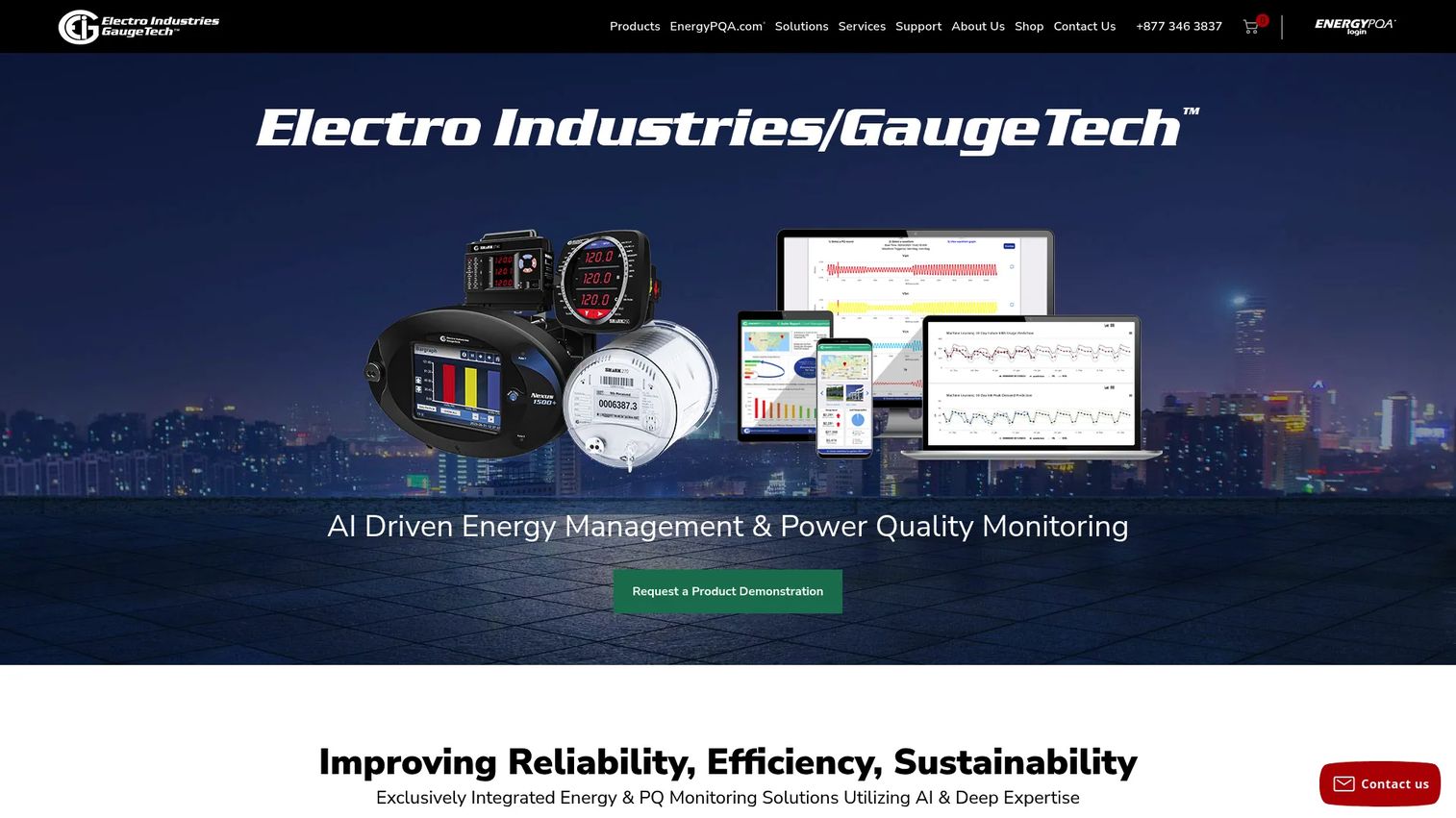
Electro Industries/GaugeTech provides AI-driven energy management and power quality monitoring, built around precision metering hardware and software. Its EnergyPQA.com system pairs standards-based power monitoring with analytics, making it a strong fit for environments where power quality is not a nice-to-have but a reliability requirement.
Best for: Industrial, commercial, and utility facilities that need power quality monitoring alongside energy management in power-sensitive operations.
Key strengths
- Standards-based metering: Precision power and energy metering products that hold up in demanding industrial and utility environments.
- AI energy analysis: The EnergyPQA.com system applies AI-driven analysis to energy and power quality data for optimization.
- Power monitoring software: CommunicatorPQA delivers detailed power monitoring, reporting, and alerting for reliability-critical sites.
Why choose Electro Industries/GaugeTech: When power quality and reliability sit at the center of your operation, this platform stands out for standards-based monitoring and executive-grade reporting. Facilities that cannot tolerate power disturbances get metering accuracy plus the analytics to catch issues early, which matters more than a generic energy dashboard.
Electro Industries/GaugeTech pricing: CommunicatorPQA power monitoring software has public pricing. The Pro tier runs from $3,947 to $11,680 per license, and a Lite tier is available. Support and training services range from $541 to $3,623. The EnergyPQA energy management system is presented as request-a-demo and contact-sales, with no public numeric price.
3. Schneider Electric
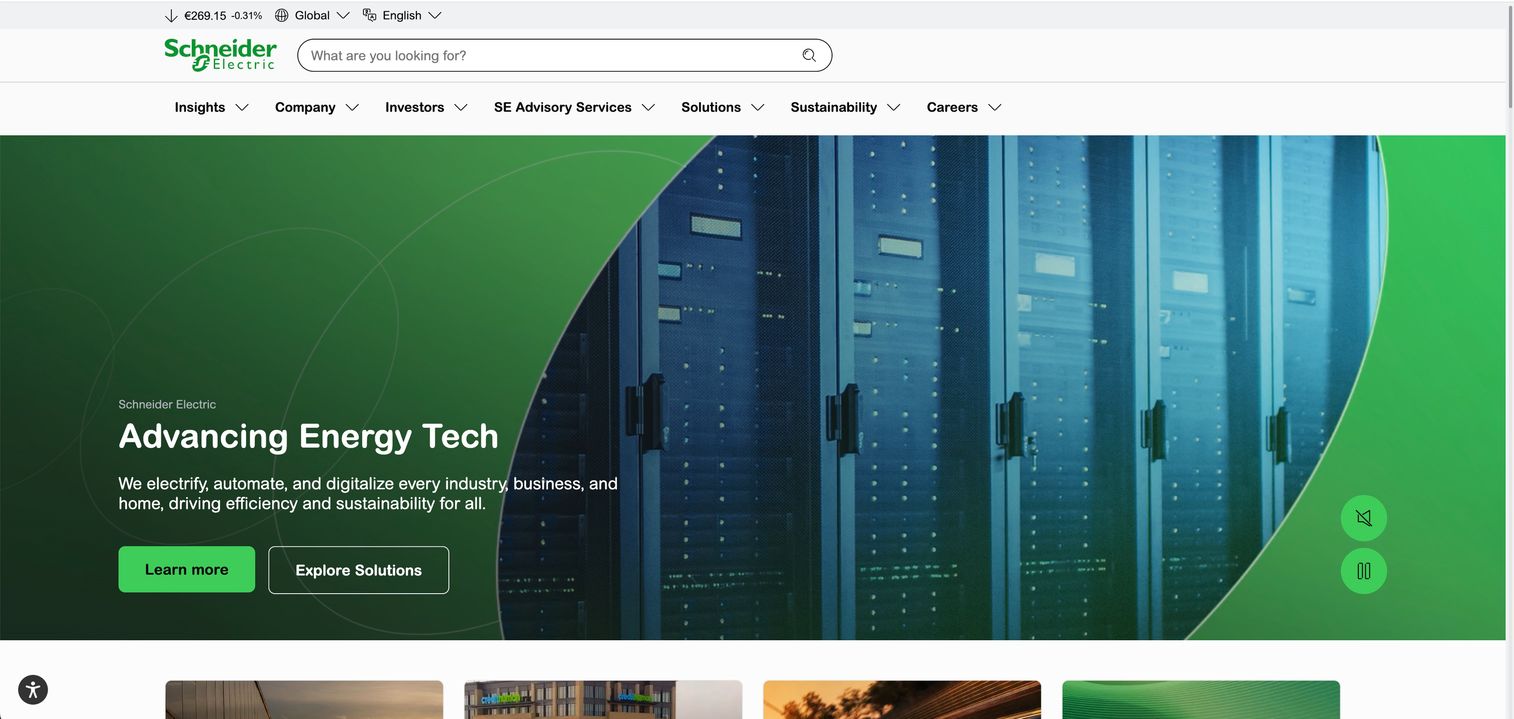
Schneider Electric is a global energy management and automation company that offers industrial, building, and power software alongside hardware and services. The breadth is the point: rather than buying monitoring, controls, and reporting from separate vendors, you can source an integrated stack from one company that spans buildings, microgrids, and utility infrastructure.
Best for: Enterprises that need electrical, building, and industrial automation software plus hardware from a single vendor with deep deployment options.
Key strengths
- Industrial software portfolio: A wide catalog covering power monitoring, building management, and industrial automation under one roof.
- Building management: Software that ties HVAC, lighting, and energy systems together for facility-level optimization.
- Energy monitoring software: Power monitoring and energy management tools that scale from a single building to critical infrastructure.
Why choose Schneider Electric: The trade-off with Schneider is complexity for breadth. If you want ecosystem depth and the ability to standardize on one vendor across buildings, power, and microgrids, few competitors match the portfolio. Enterprises with distributed, heterogeneous infrastructure benefit most from consolidating on a single stack.
Schneider Electric pricing: Schneider does not publish a single brand-wide price. Some individual software subscriptions are visible, such as a circuit breaker advanced testing offer at $1,700 per year and a switchboard commissioning offer at $350 per year. Broader software pricing is typically quote-based. Schneider Electric holds a 4.4/5 rating on G2.
4. IBM Envizi
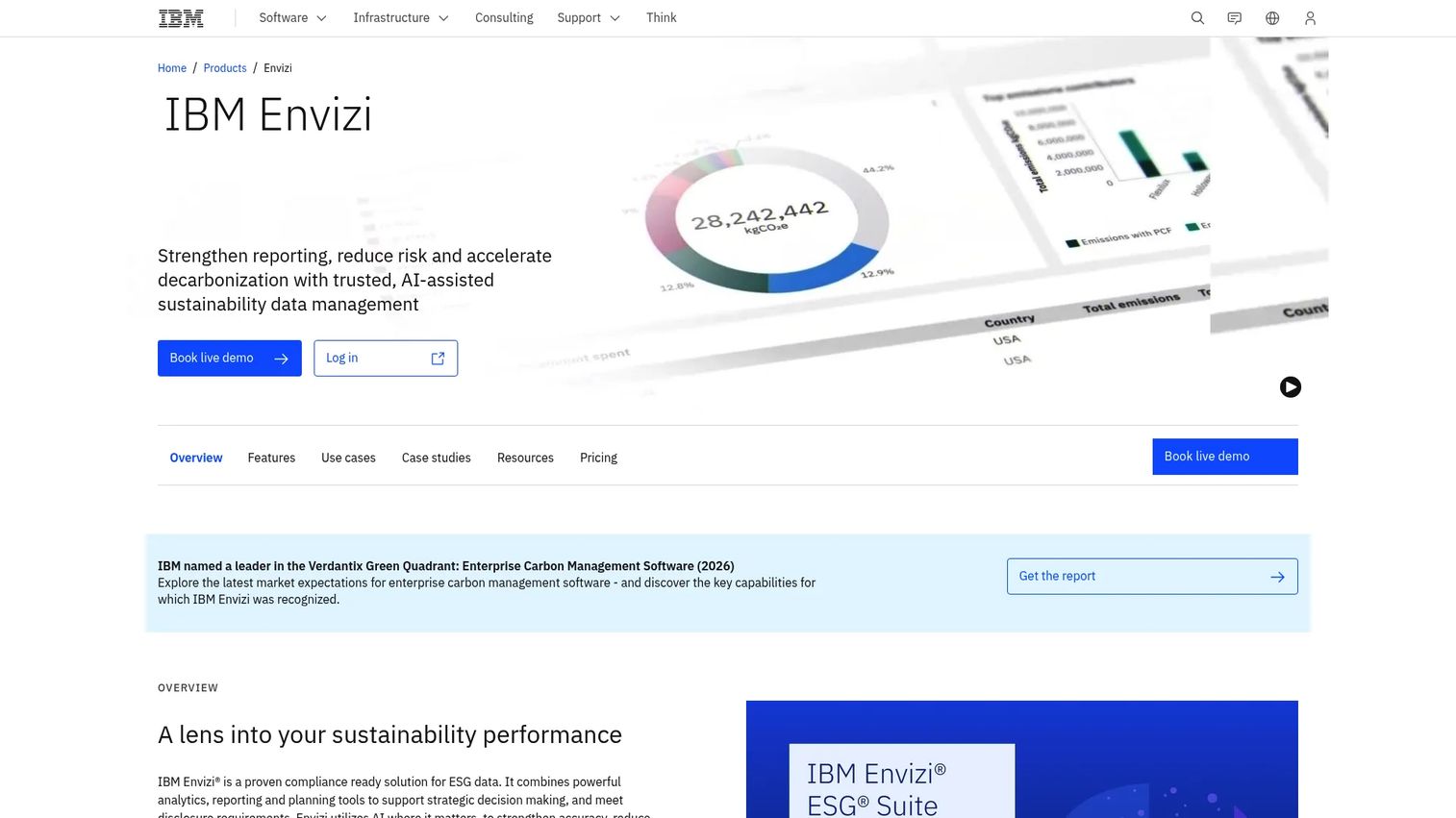
IBM Envizi is an AI-assisted ESG data management, reporting, and decarbonization suite. It matters most when your energy data has to connect to sustainability metrics and enterprise reporting. Envizi consolidates fragmented data, applies governance, and produces auditable outputs, which is exactly what leadership and auditors demand.
Best for: Enterprises that need auditable ESG, emissions, and sustainability reporting workflows tied to energy consumption.
Key strengths
- Automated data ingestion: Automated ESG data ingestion and tagging that pulls scattered energy and emissions data into one system.
- GHG accounting: Greenhouse gas emissions accounting and reporting across Scope 1, 2, and 3.
- Audit readiness: Audit trails, data health checks, and supply chain intelligence that hold up under scrutiny.
Why choose IBM Envizi: If your energy management problem is really a reporting and governance problem, Envizi fits because it treats data quality and auditability as first-class features. Sustainability teams reporting to boards and regulators get consolidated data and defensible numbers rather than a spreadsheet they have to trust.
IBM Envizi pricing: IBM does not publish a numeric price. Pricing is tailored to data volume and scoped during sales, with account bundles named Essentials, Standard, and Premium, each on a 12-month minimum term. IBM Envizi holds a 4.3/5 rating on G2.
5. Microsoft Sustainability Manager
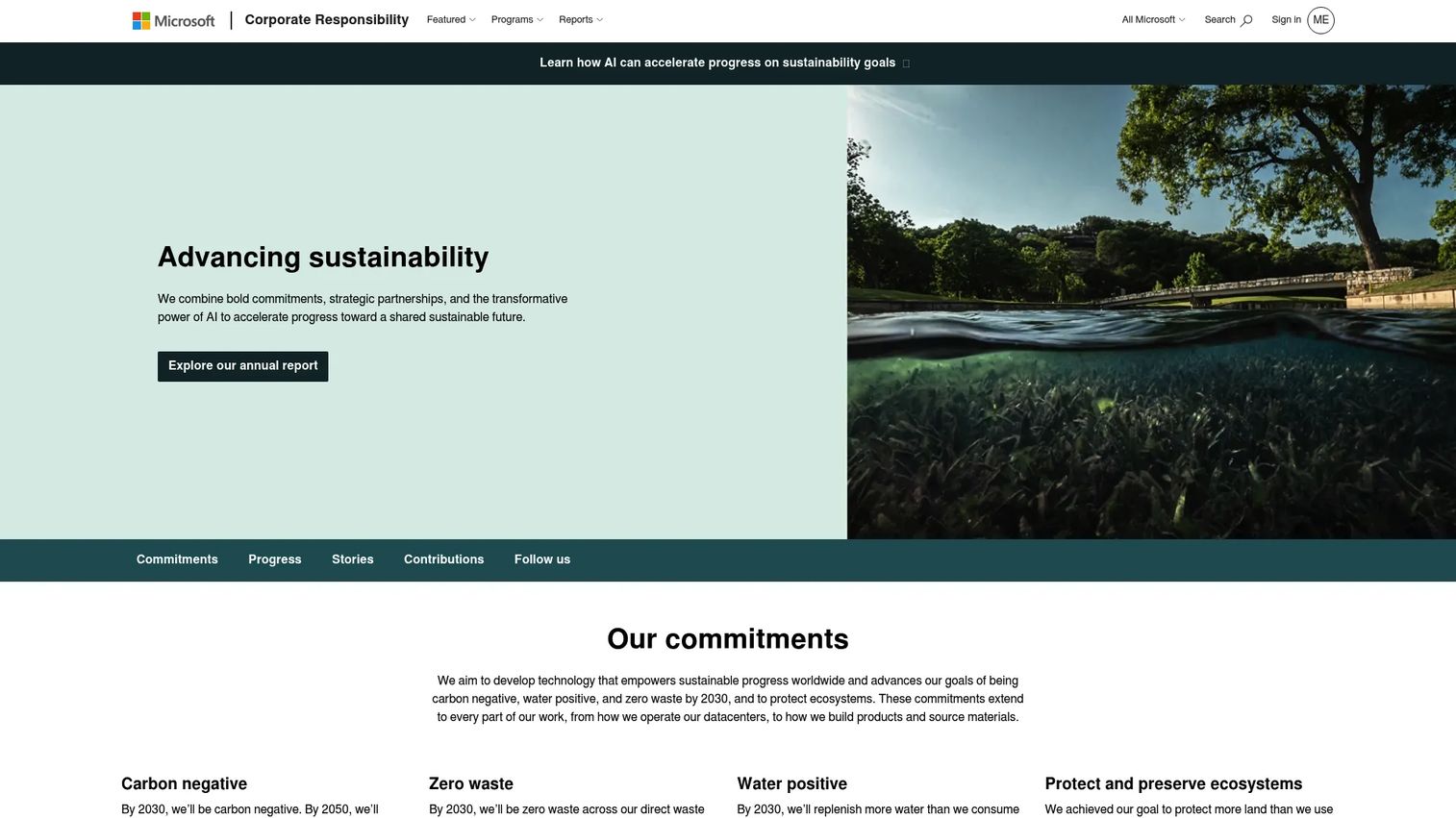
Microsoft Sustainability Manager is Microsoft's software for tracking, analyzing, and reporting environmental impact data. Its strongest angle is enterprise data unification for teams already deep in the Microsoft ecosystem. If your data lives across Microsoft services, aggregating carbon, water, and waste data here removes a lot of manual stitching.
Best for: Organizations already invested in Microsoft tooling that want a native platform to manage sustainability data and reporting.
Key strengths
- Environmental data tracking: Tracking and analytics for carbon, water, and waste across the organization.
- Copilot insights: Copilot-powered insights and reporting that speed up analysis and narrative reporting.
- Ecosystem fit: Native alignment with the Microsoft data estate, reducing integration overhead for existing customers.
Why choose Microsoft Sustainability Manager: This platform excels at reporting and data aggregation for Microsoft-centric enterprises. It centralizes emissions and environmental data cleanly, and for granular operational energy monitoring at the meter or asset level, many teams pair it with dedicated monitoring systems. That pairing gives finance and sustainability one reporting layer while facilities keep their real-time controls.
Microsoft Sustainability Manager pricing: Pricing is public. The Essentials tier is US$4,000 per tenant, per month, and the Premium tier is US$12,000 per tenant, per month, with Premium including everything in Essentials plus additional capabilities. Microsoft Sustainability Manager holds a 4.4/5 rating on G2.
6. Honeywell Forge

Honeywell Forge is Honeywell's AI-enabled industrial operations platform for connecting assets, data, and workflows to improve efficiency, safety, and autonomy. For building and industrial operators, it provides facility optimization and analytics inside a broader enterprise operations context, so energy visibility connects to the rest of your operational picture.
Best for: Large industrial or building operators seeking enterprise operations software with energy and asset visibility built in.
Key strengths
- AI-enabled operations: AI-enabled applications and services that drive intelligent, more autonomous operations.
- Asset contextualization: Connects and contextualizes existing assets using domain-specific models, so data becomes actionable.
- Broad domain coverage: Supports industrial operations, connected buildings, life sciences, supply chain, and OT cybersecurity.
Why choose Honeywell Forge: For large building portfolios and operational leaders, Forge stands out because it surfaces anomalies and portfolio oversight inside a platform built for enterprise operations at scale. Organizations that want energy analytics as part of a wider operations layer, rather than a standalone tool, benefit from the contextualization Honeywell brings.
Honeywell Forge pricing: Honeywell does not publish public pricing for Forge. The company directs prospects to contact sales, so pricing is scoped to your deployment. Expect enterprise packaging aligned to the domains and asset base you connect.
7. Brightly
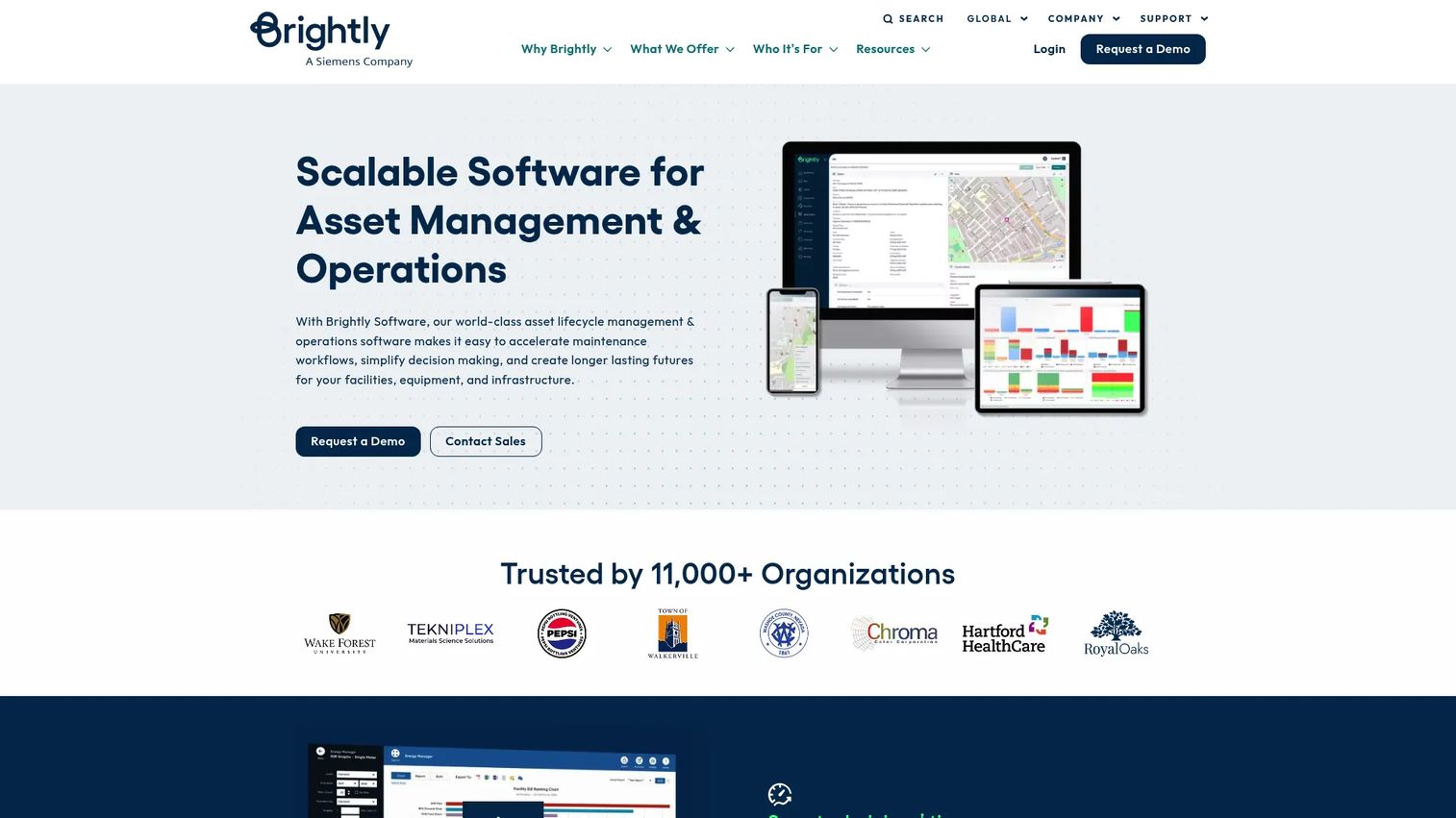
Brightly is cloud-based enterprise asset management software for maintenance, facilities, and capital planning. For operations teams, it centralizes facility and asset data so utility tracking and sustainability visibility live alongside maintenance workflows rather than in a separate silo. That consolidation appeals to teams that want fewer disconnected systems.
Best for: Mid-market to enterprise operations teams that want asset, maintenance, and facilities data unified with energy and utility tracking.
Key strengths
- AI-assisted maintenance: AI-assisted maintenance workflows that connect equipment health to energy and operational performance.
- Asset lifecycle management: Asset lifecycle and work order management across facilities and portfolios.
- Capital planning: Capital planning and forecasting so energy and asset investments are prioritized with data.
Why choose Brightly: If your energy tracking needs sit inside a broader facilities and maintenance mandate, Brightly fits because it treats energy as part of asset operations. Teams managing large facility portfolios get utility tracking and sustainability visibility without adding a standalone energy tool to an already crowded stack.
Brightly pricing: Brightly does not publish public pricing. The site directs visitors to request a demo and contact sales, so pricing is scoped to your product mix and portfolio. Brightly Asset Essentials holds a 4.2/5 rating on G2.
8. EnergyHub
EnergyHub is a grid-edge DERMS platform for utilities to manage distributed energy resources and virtual power plants. This is a different buying context from a facility energy dashboard. If you are a utility or grid-adjacent operator building flexibility programs, EnergyHub orchestrates distributed resources across your service territory rather than monitoring a single building.
Best for: Utilities building and operating virtual power plants and distributed energy resource flexibility programs.
Key strengths
- Cross-DER orchestration: Coordinates diverse distributed energy resources across a utility footprint.
- Utility integrations: Connects into utility systems to run programs at grid scale.
- Dynamic load shaping: Shapes load dynamically to balance the grid and support demand response.
Why choose EnergyHub: Choose EnergyHub when your problem is grid-side, not facility-side. Utilities running DER and VPP programs get an orchestration platform purpose-built for distributed resources, which is a fundamentally different job than tracking consumption inside your own buildings. Match it to the operating model before comparing it to facility tools.
EnergyHub pricing: EnergyHub does not publish public pricing. The site presents a request-a-demo flow, and pricing is scoped through direct conversation given the utility-program nature of deployments.
9. Energy Digital
Energy Digital is a B2B energy-industry media and advertising platform from BizClik, not a software vendor. We include it as a market overview resource rather than a monitoring tool. When you want to map the landscape, read how buyers compare platforms across analytics, grid, ESG, and building optimization, Energy Digital is a useful research stop before you shortlist.
Best for: Buyers and energy brands who want market context, news, and research before committing to a specific platform.
Key strengths
- Industry news and analysis: News and articles that track vendors, trends, and market movements across energy.
- Events and webinars: Events and webinars that surface how operators evaluate and deploy energy tools.
- Research and data: Research reports and data services for market-level context.
Why choose Energy Digital: Treat Energy Digital as a market map, not a purchase. It helps you understand the vendor landscape and current thinking before you evaluate actual energy management software solutions. That framing matters: it informs your shortlist, but the operational job still needs a monitoring or reporting platform from earlier in this list.
Energy Digital pricing: Energy Digital does not publish numeric pricing. As a media and advertising platform, its offerings are quote-based through a contact-us flow rather than software subscription tiers.
Considerations before you buy
Picking energy management software is less about feature counts and more about matching the tool to the operational job. Use this checklist to pressure-test any shortlist.
Data sources and integrations
Map every data source you have: utility bills, interval meters, BMS, IoT sensors, and submeters. Confirm the platform ingests them cleanly and automates utility bill entry. A tool that cannot connect to your existing meters and systems will leave you doing manual data work, which defeats the purpose. The same integration discipline applies whether you are choosing energy software or evaluating a customer data platform for the rest of your stack.
Monitoring depth versus reporting depth
Decide whether your primary need is granular real-time monitoring or clean, auditable reporting. Industrial and facility teams weight monitoring depth; sustainability teams weight reporting and ESG outputs. Many platforms lean one way. Knowing which you need first prevents buying a reporting tool when you actually need meter-level control.
Deployment and operating model
Match the software to how you operate. Facility teams need building-level monitoring. Industrial sites need power quality. Sustainability teams need emissions accounting. Utilities need grid-side orchestration. A single vendor rarely wins every category, so buy for the job in front of you, not a feature checklist.
Security and total cost
Enterprise energy data touches operational infrastructure, so verify security posture, access controls, and data ownership. Then model total cost, licensing, implementation, and ongoing services, against projected savings and avoided penalties. The best energy cost reduction software pays for itself through demand management and waste reduction, so make the payback math explicit. Buyers evaluating adjacent enterprise tools like contract management software or audit management should run the same total-cost test.
Conclusion
The right energy management software depends entirely on the operational job you are solving. GridPoint and Honeywell Forge fit multi-site facility and building operators who need actionable control. Electro Industries/GaugeTech and Schneider Electric suit industrial and power-sensitive environments where reliability and breadth matter. IBM Envizi and Microsoft Sustainability Manager win when the real problem is ESG and emissions reporting to leadership. EnergyHub serves a different world entirely: grid-side orchestration for utilities. Energy Digital rounds it out as a research resource before you shortlist.
The buying lesson is simple. Choose based on the operational job, not the feature list. A power quality monitoring platform and a carbon reporting suite are both "energy management software," but they solve opposite problems.
Your practical next step: build a short list around three things. First, catalog your data sources. Second, define whether monitoring or reporting is your primary need. Third, decide your deployment model. Then evaluate two or three platforms against that specific reality. That focus will save you from buying an impressive tool that solves someone else's problem.
FAQs
Energy management software is a platform that monitors, analyzes, and optimizes how an organization uses energy across facilities and operations. It centralizes meter data, utility bills, and building system feeds into one view of consumption and cost. The goal is to reduce waste, forecast demand, avoid peak penalties, and report accurately on energy and emissions.
Prioritize real-time monitoring, centralized dashboards, analytics and forecasting, anomaly detection, and ESG reporting. Integrations with meters, BMS, IoT, and utility systems matter just as much, since a platform is only as good as the data it can ingest. For multi-site buyers, portfolio-level benchmarking and utility bill automation are essential.
Start with your data sources and your primary job. If you need portfolio-wide visibility and control, prioritize energy monitoring software with strong benchmarking and demand management. If reporting to leadership is the driver, weight ESG and emissions accounting. Then confirm the platform integrates with your existing meters and systems before shortlisting.
Commercial real estate, retail, manufacturing, utilities, healthcare, education, and government all use energy management tools. Industrial operations lean toward power quality and monitoring platforms. Facility-heavy organizations use building energy and utility tracking software, while sustainability-focused enterprises adopt ESG and carbon reporting suites.
Yes. Many platforms include carbon emissions tracking and audit-ready reporting for Scope 1, 2, and 3. Tools like IBM Envizi and Microsoft Sustainability Manager specialize in ESG reporting software, consolidating energy and emissions data into defensible outputs. This is often what turns energy from a facilities task into a board-level metric.
Enterprise platforms typically offer access controls, encryption, audit trails, and compliance with security standards, since energy data connects to operational infrastructure. Security depth varies by vendor, so verify data ownership, access management, and certifications during evaluation. Treat it with the same rigor you would apply to any system touching operational technology.
Energy monitoring software focuses on collecting and displaying consumption data in real time. Energy management software goes further, adding analytics, forecasting, optimization, control, and reporting on top of that monitoring. Monitoring tells you what is happening; management helps you change it and prove the impact.
If you manage multiple sites or accounts, yes. Utility bill management automation removes manual data entry and catches billing errors, while interval data imports give you the granular, time-stamped usage that powers demand management and forecasting. Together they turn scattered utility data into a reliable source of truth for decisions.