You listed the same SKU on Amazon, eBay, your Shopify store, and TikTok Shop. It sold three times in an hour. You only had two in stock.
Now you are issuing refunds, eating fees, and watching your seller metrics drop on the channel that drives most of your revenue. This is the daily reality of multichannel retailing without a system underneath it: stock counts drift, orders pile up in four different dashboards, and someone on your team spends an hour every morning reconciling numbers by hand.
The market reflects how common this problem has become. More than 84% of mid-to-large U.S. retailers now operate across four or more sales channels, according to Market Growth Reports (2024). The same research finds that over 70% of omnichannel retailers have already adopted multichannel retail software to manage the sprawl. The global market for these platforms sat at USD 11.61 billion in 2024 and is projected to reach USD 25 billion by 2035, per WiseGuyReports (2024).
The cost of doing this manually is not abstract. It shows up as oversold orders, delayed shipments, pricing mismatches, and the slow tax of duplicate work. The right multi channel ecommerce software removes most of that by syncing inventory, centralizing orders, and pushing accurate listings to every channel from one place.
This guide breaks down eight platforms worth evaluating in 2026, what each one does best, and how to match them to your channel mix. If your team also relies on visual buyer enablement, our roundups of marketing automation software tools and the best AI sales tools pair well with operational tooling like this.
What's inside
This guide compares multi channel retail software for sellers managing marketplaces, online storefronts, and physical retail operations side by side. It is built for marketplace-heavy sellers, ecommerce ops teams, and retailers blending online sales with POS.
We chose the eight tools below against four criteria that decide real-world fit:
- Inventory synchronization across every connected channel
- Order management that centralizes fulfillment and reduces manual reconciliation
- Marketplace integration depth and channel coverage
- Pricing visibility and workflow fit for the way your team actually operates
Each entry covers what the tool is, who it fits, and why it stands out.
TL;DR
- Best for marketplace integration and channel connectors: CedCommerce, with broad marketplace apps for Amazon, Walmart, eBay, Etsy, and TikTok Shop.
- Best for centralized listings and inventory for SMB sellers: Sellbrite, with a free plan and simple multi-channel order handling.
- Best for ecommerce accounting sync: Webgility, for sellers running QuickBooks who need back-office automation.
- Best for enterprise marketplace orchestration: ChannelEngine, with deep product data control across many global marketplaces.
- Best for feed quality and data distribution: Feedonomics, a managed feed management platform for high-quality catalog syndication.
- Best for shipping plus inventory: Veeqo, with a free shipping plan and optional inventory automation.
What is multichannel retail software?
Multichannel retail software is software that centralizes product listings, inventory, orders, and product data across multiple sales channels so retailers manage everything from one system instead of logging into each marketplace and storefront separately.
The most common point of confusion is omnichannel vs multichannel. Multichannel emphasizes presence and synchronization: you sell across many channels, and the software keeps inventory, listings, and orders aligned across all of them. Omnichannel goes further, unifying the customer journey itself so a shopper can move between web, app, and store with continuous context, shared carts, and connected loyalty. Multichannel is about operational consistency across channels. Omnichannel is about a single, seamless customer experience layered on top of that consistency.
Most channel management software shares a core set of capabilities:
- Product data management: Create and maintain one source of truth for product information, then push channel-specific variations to each marketplace.
- Inventory sync: Keep stock counts accurate across channels in near real time to prevent overselling.
- Order routing and order management: Pull orders from every channel into one queue, then route them to fulfillment or a WMS.
- Marketplace integration: Connect to Amazon, Walmart, eBay, Etsy, and other channels through prebuilt connectors.
- Analytics, POS integration, and ERP integration: Surface sales performance and connect the back office, including accounting and warehouse systems.
The strongest platforms add real-time inventory visibility and order fulfillment automation, so growth does not depend on adding headcount every time you add a channel.
When to use multichannel retail software
Use it when inventory errors are costing sales
When the same SKU moves across Shopify, Amazon, eBay, and other channels, a sale on one channel has to decrement stock everywhere else within seconds. Without inventory synchronization, you oversell, cancel orders, and damage your seller ratings on the exact channels you depend on. Multichannel retail software prevents that by syncing stock counts centrally and pushing updates to every channel as orders come in.
Use it when orders are piling up across systems
Pulling orders from four dashboards, copying them into a shipping tool, and updating tracking by hand does not scale. Centralized order management consolidates every channel's orders into one queue, automates routing and fulfillment, and cuts the duplicate work that slows shipping and frustrates customers. For growing teams, this is often the first process that breaks, and the first one worth fixing.
Use it when your channel mix keeps expanding
The moment you add a new marketplace, a retail location, or a social commerce channel, complexity multiplies faster than headcount. A single system for sales channel synchronization means each new channel plugs into existing inventory and order workflows instead of becoming another silo. If your roadmap includes more channels in 2026, the system you choose now determines how painful that expansion feels.
Comparison table
The table below sorts tools by relevance to multichannel retail, with verified pricing and G2 ratings where available. Use it to shortlist two or three before reading the full sections.
| # | Product | Intent | Key differentiation | Pricing | G2 rating |
|---|---|---|---|---|---|
| 1 | CedCommerce | Marketplace integration and connectors | Broad marketplace apps plus store-development services | Varies by product | Not listed |
| 2 | Sellbrite | Centralized listings and inventory | Simple multi-channel listing and order control | Free; paid from $29/mo | 4.7/5 |
| 3 | Webgility | Ecommerce accounting sync | Order-level reconciliation with QuickBooks | From $69/mo | Not listed |
| 4 | ChannelEngine | Enterprise marketplace orchestration | Deep product data control across global marketplaces | From €8/mo | 4.3/5 |
| 5 | Listing Mirror | Listings and inventory management | Per-marketplace pricing and bulk listing edits | From $69/mo | 4.6/5 |
| 6 | Feedonomics | Feed management and optimization | Managed, high-quality feed syndication | Custom quote | 4.4/5 |
| 7 | Veeqo | Shipping plus inventory management | Free shipping with optional inventory automation | Free; inventory from $19/mo | 4.5/5 |
| 8 | Channable | Product feed and marketplace automation | Rule-based feed control plus PPC automation | From €59/mo | 4.5/5 |
1. CedCommerce
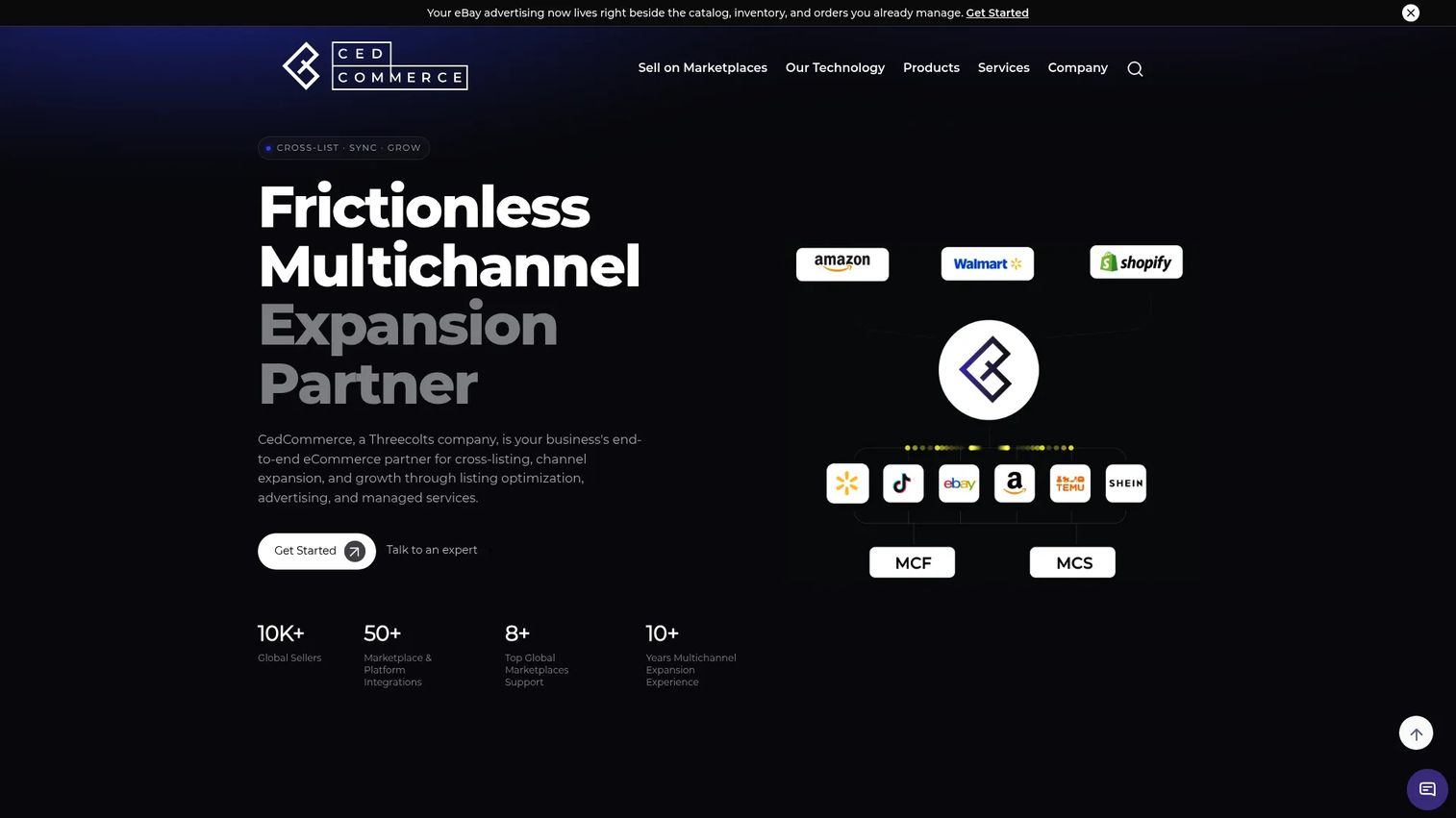
CedCommerce is an ecommerce software and services company built around marketplace integrations, importers, and store-development services. It connects storefronts to channels like Amazon, Walmart, eBay, Etsy, and TikTok Shop, then keeps inventory, orders, and product data synced across them. For sellers whose growth depends on adding marketplace connectors quickly, it is the most channel-broad option on this list.
Best for: Merchants who need a wide set of marketplace connectors plus hands-on ecommerce services to set them up.
Key strengths
- Wide marketplace coverage: Connect to major marketplaces through dedicated integration apps for each channel.
- Inventory, order, and product sync: Keep stock, orders, and catalog data aligned across every connected channel.
- Services layer: Store setup, theme customization, custom app development, and migration support beyond the software itself.
Why choose CedCommerce: CedCommerce fits sellers who want both the connectors and the team to implement them. If you are launching on several new marketplaces at once and want help with listing, inventory, and order sync rather than a pure self-serve tool, the combined software-and-services model removes a lot of setup friction. It suits operators who would rather lean on a partner than staff up internally.
CedCommerce pricing: Pricing is structured per product and module rather than as a single brand-wide plan, so costs depend on which marketplace apps and services you use. Check the specific integration you need on the CedCommerce site for current pricing on that module.
2. Sellbrite
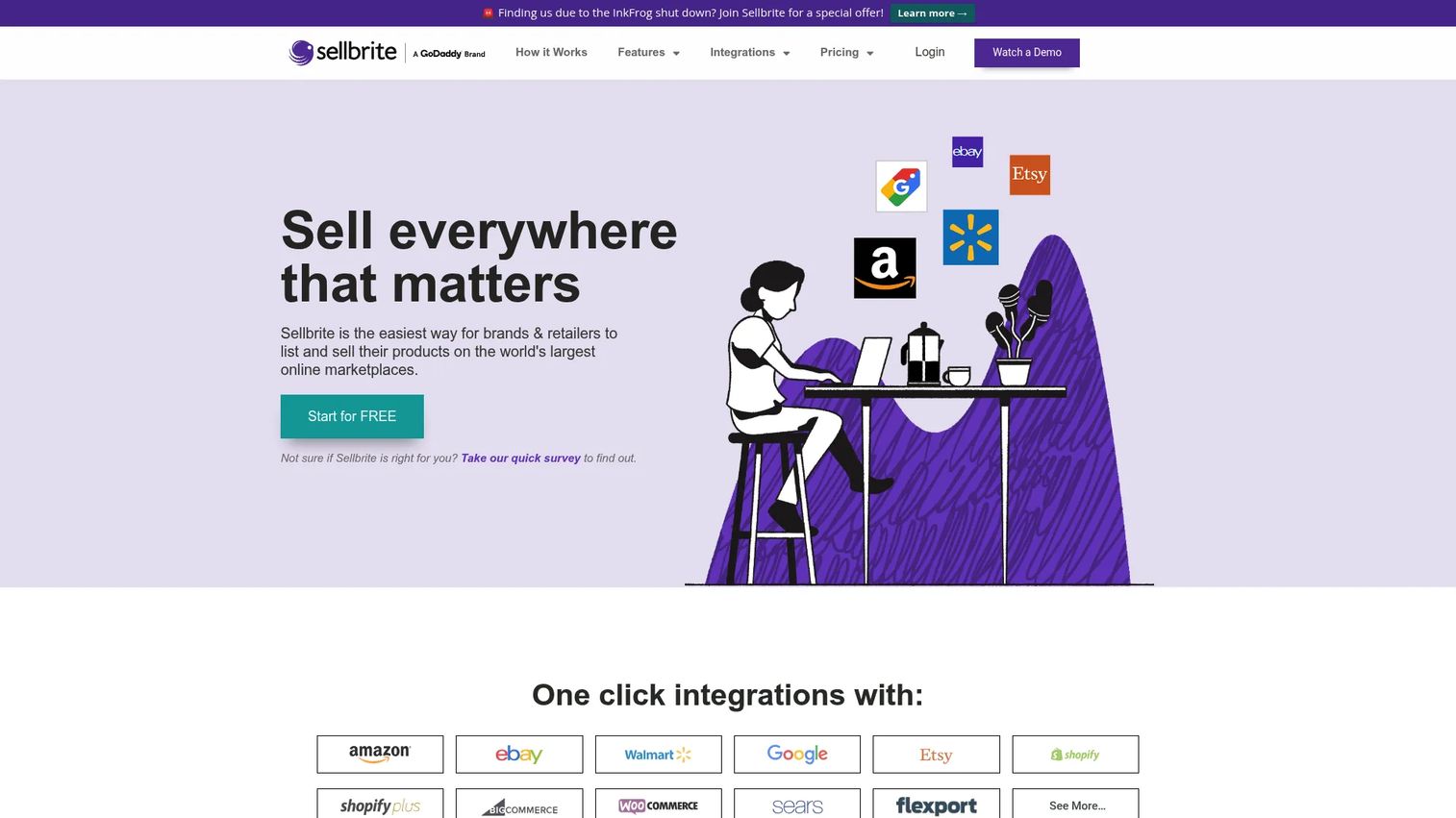
Sellbrite is multi-channel ecommerce management software for listing products, syncing inventory and prices, and fulfilling orders across marketplaces. It is built to be straightforward, which makes it a strong fit for brands and retailers that want centralized control without a heavy implementation. You list once, then publish to multiple channels and let Sellbrite keep stock and pricing aligned.
Best for: Small to mid-market sellers who want centralized listings, inventory sync, and order management without complexity.
Key strengths
- Bulk listing across channels: Create and publish product listings to multiple sales channels at once.
- Inventory and price sync: Keep stock counts and prices aligned across every channel to prevent overselling.
- Centralized order fulfillment: Pull multi-channel orders into one place and fulfill from a single queue.
Why choose Sellbrite: Sellbrite earns its 4.7/5 G2 rating largely on ease of use. For sellers who feel the pain of manual listing updates but do not need enterprise feed logic, it hits the sweet spot. The free plan lets smaller operators centralize before committing budget, and the order-volume pricing scales as the business grows.
Sellbrite pricing: Sellbrite offers a Forever Free plan supporting up to 30 orders per month. Paid plans start at $29/month for Pro 100, then move to $79/month for Pro 500 and $179/month for Pro 2K, billed monthly and tiered by order volume. An optional FBA add-on is available for $19/month.
3. Webgility
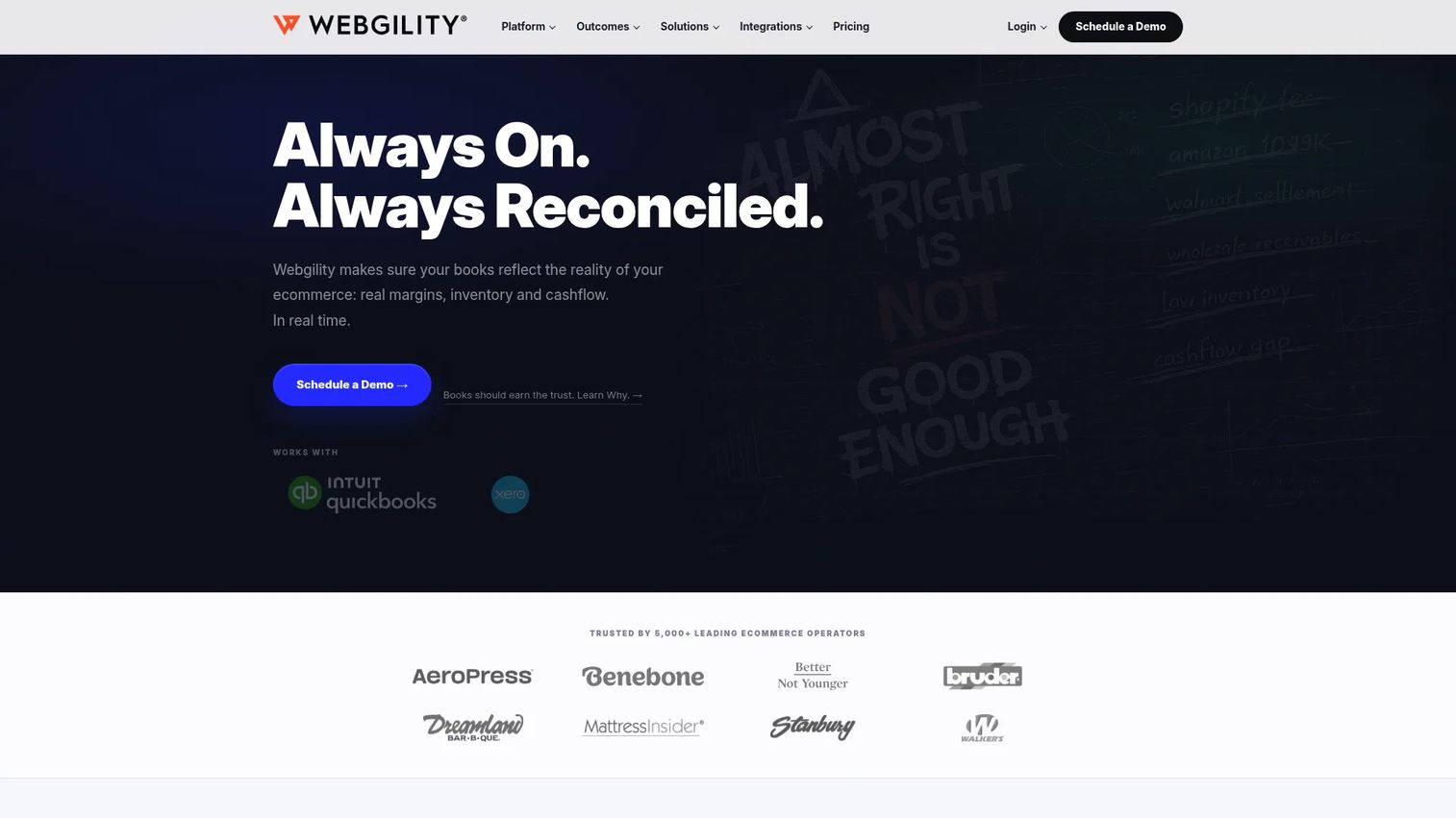
Webgility is ecommerce accounting automation and reconciliation software for multichannel sellers. Rather than focusing on listings, it sits at the back office, syncing orders and inventory into your accounting system so your books reflect real margins, inventory, and cash flow. For teams already running QuickBooks, it closes the gap between selling across channels and accounting for it accurately.
Best for: Growth-stage multichannel sellers who need accounting sync and order-level reconciliation, especially QuickBooks users.
Key strengths
- Order-level reconciliation: Match every channel order against fees, payouts, and deposits for accurate books.
- Inventory sync: Keep stock aligned between sales channels and your accounting or inventory records.
- Accounting automation: Push orders, refunds, and fees into accounting automatically instead of manual entry.
Why choose Webgility: Webgility solves the problem most listing tools ignore: making your financials match reality once orders flow in from many channels. If month-end close is consuming days because you are reconciling marketplace payouts by hand, Webgility is the back-office automation layer that fits alongside whatever listing tool you already use.
Webgility pricing: Plans start at $69/month for Pro, billed annually, or $79/month billed monthly. Plus runs $109/month annually, Advanced $129/month annually, Complete $299/month annually, and Complete Enterprise $599/month annually, with monthly billing priced higher across all tiers. Add-ons are available, and there is no free tier.
4. ChannelEngine
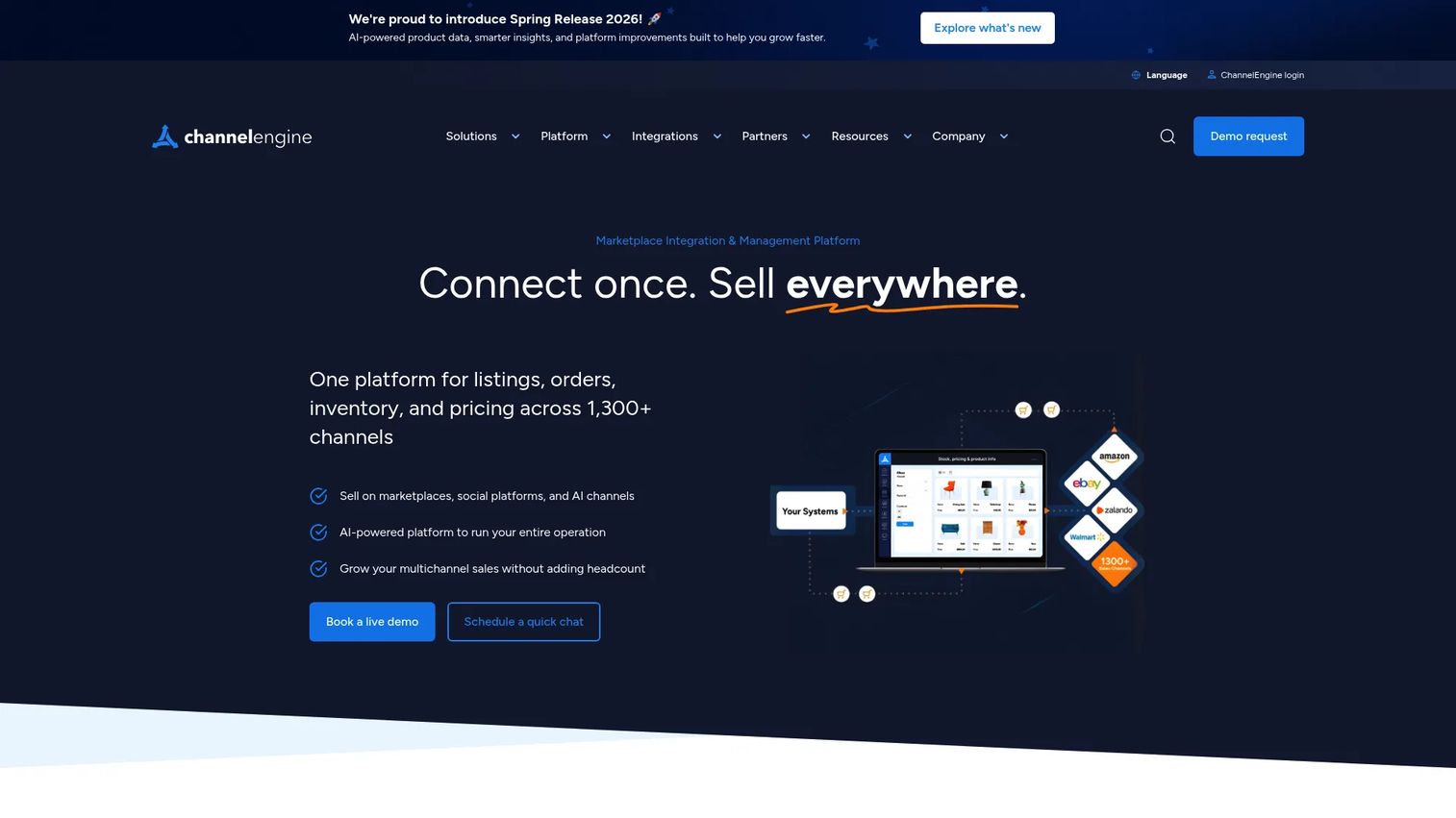
ChannelEngine is a marketplace integration and management platform for brands and retailers selling across many online channels at once. It is built for scale, with strong product information syndication, pricing and promotion controls, and order and inventory management across a large marketplace network. For teams managing dozens of marketplaces internationally, it functions as a central orchestration layer.
Best for: Mid-market to enterprise brands and retailers selling across multiple marketplaces, including international channels.
Key strengths
- Product information and syndication: Control catalog data centrally and push it to every connected marketplace.
- Pricing and promotion management: Set and adjust pricing and promotions across channels from one place.
- Order and inventory management: Centralize orders and keep inventory accurate across a broad channel network.
Why choose ChannelEngine: ChannelEngine fits brands whose complexity comes from breadth: many marketplaces, multiple regions, and large catalogs that need consistent product data everywhere. With a 4.3/5 G2 rating and GMV-based pricing, it is positioned for teams that have outgrown simpler tools and need enterprise-grade product data control and reporting across global channels.
ChannelEngine pricing: Pricing is based on GMV and integration requirements, with three public tiers: Start, Grow, and Scale, shown from 8 per month on the entry tier. The Scale tier is listed at 149 per month, and the company invites teams to request tailored pricing for larger requirements.
5. Listing Mirror
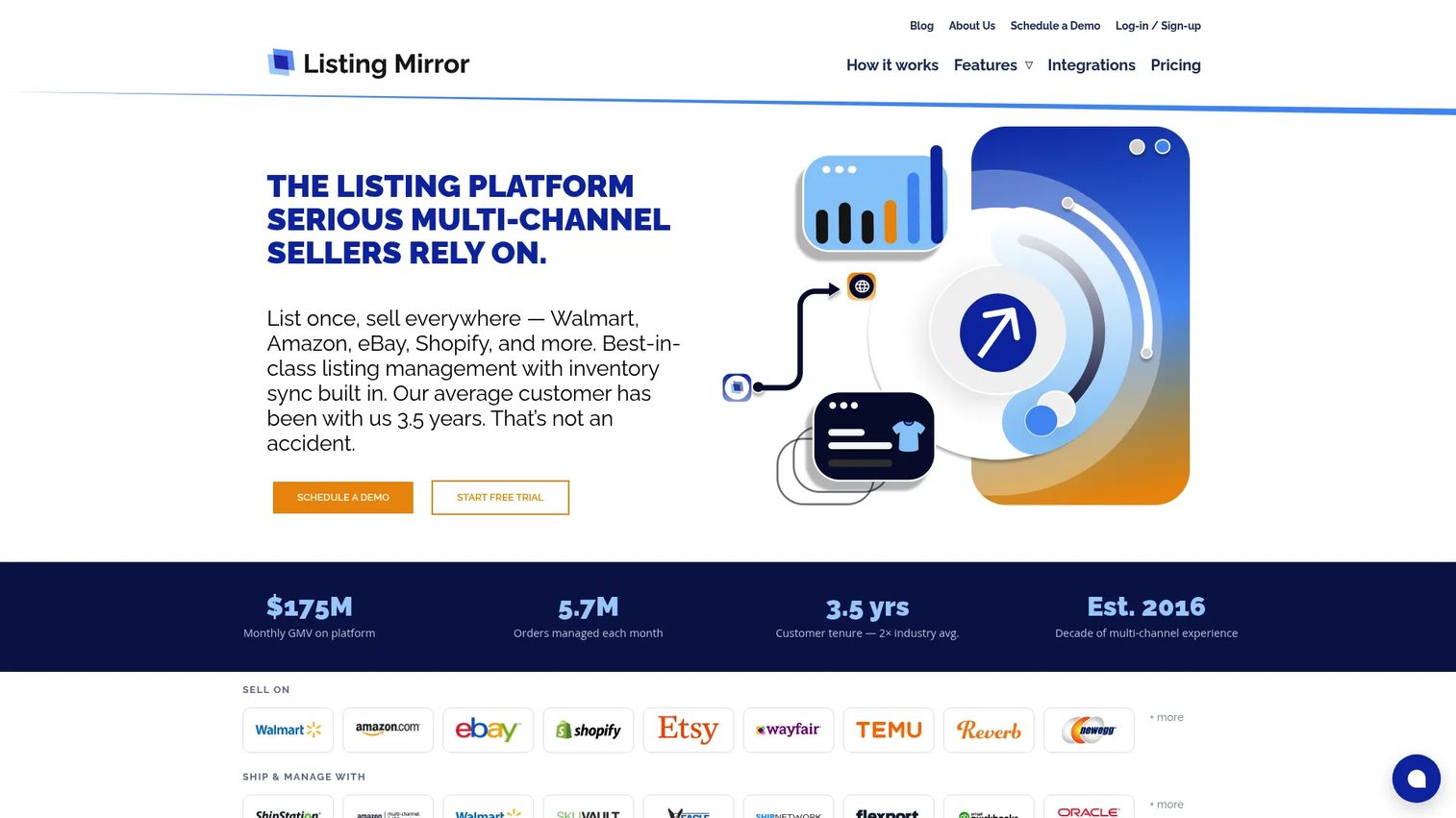
Listing Mirror is multi-channel ecommerce software centered on listings, inventory control, pricing, and order management. It helps teams create and bulk-edit listings across marketplaces, keep inventory synced centrally, and apply per-marketplace pricing rules. For sellers juggling several storefronts and marketplaces, it keeps product data and stock aligned without constant manual updates.
Best for: Ecommerce sellers managing listings, inventory, and pricing across multiple marketplaces from one workspace.
Key strengths
- Listing creation and bulk editing: Build and update listings across marketplaces in bulk instead of channel by channel.
- Centralized inventory sync: Keep stock counts aligned across every connected channel automatically.
- Per-marketplace pricing rules: Apply pricing rules and channel-specific pricing to protect margins.
Why choose Listing Mirror: Listing Mirror suits operators who want practical, day-to-day control over how products appear and price across channels. With a 4.6/5 G2 rating, it is a dependable middle ground between lightweight listing tools and heavy enterprise platforms. The tiered structure scales from small catalogs to large SKU counts as you grow.
Listing Mirror pricing: Plans start at $69/month for Starter, then move through Bronze at $129/month, Silver at $199/month, Gold at $279/month, and Platinum at $349/month, with higher-volume Platinum 25K and Platinum 50K tiers at $499/month and $699/month. Tiers offer separate Listing Only and Listing & Inventory pricing, and a free trial gives full access for up to 10 products over 30 days.
6. Feedonomics
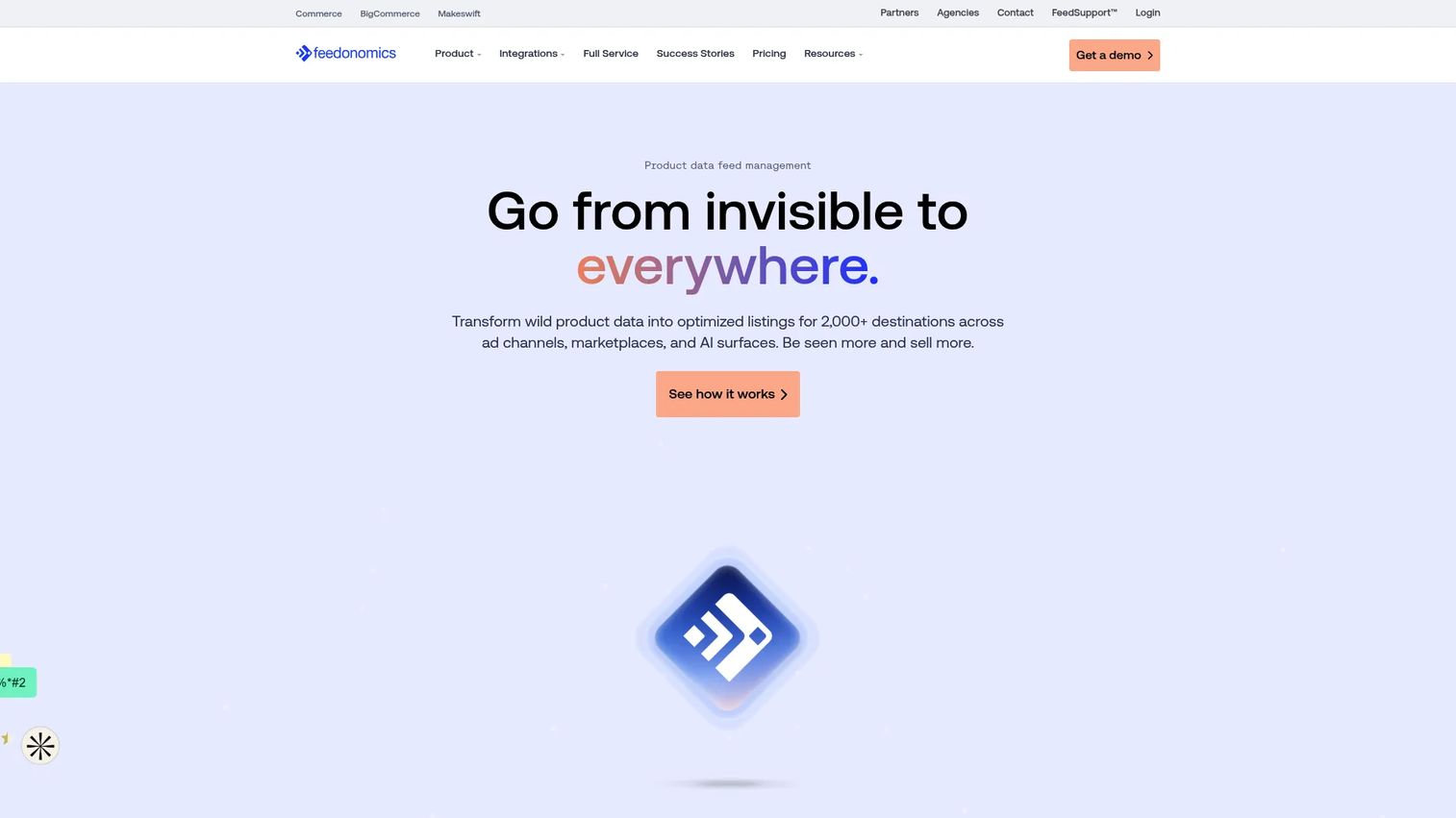
Feedonomics is a feed management and product data optimization platform for multichannel commerce. It focuses on the quality of the data you distribute, normalizing catalogs and syndicating optimized feeds across ad platforms, marketplaces, and ecommerce platforms. For brands where feed quality directly affects discoverability and conversion, it is the most distribution-focused option here.
Best for: Brands that need managed, high-quality feed optimization across many sales channels and marketplaces.
Key strengths
- Managed feed management: Customized feed handling with quote-based service plans and a managed team.
- Broad integrations: Connect across ad platforms, marketplaces, and ecommerce platforms for wide distribution.
- Order sync and catalog optimization: Synchronize orders and optimize catalogs for each channel's requirements.
Why choose Feedonomics: Feedonomics fits teams that treat product data as a competitive lever, not a chore. If your listings underperform because feeds are messy or inconsistent across channels, the managed model takes that work off your plate. With a 4.4/5 G2 rating, it is built for scaling distribution where feed accuracy matters more than self-serve simplicity.
Feedonomics pricing: Feedonomics uses customized, quote-based pricing tailored by SKU count, channel type, number of channels, and service level. There is no public starting price, so you request a quote based on your catalog and channel requirements.
7. Veeqo
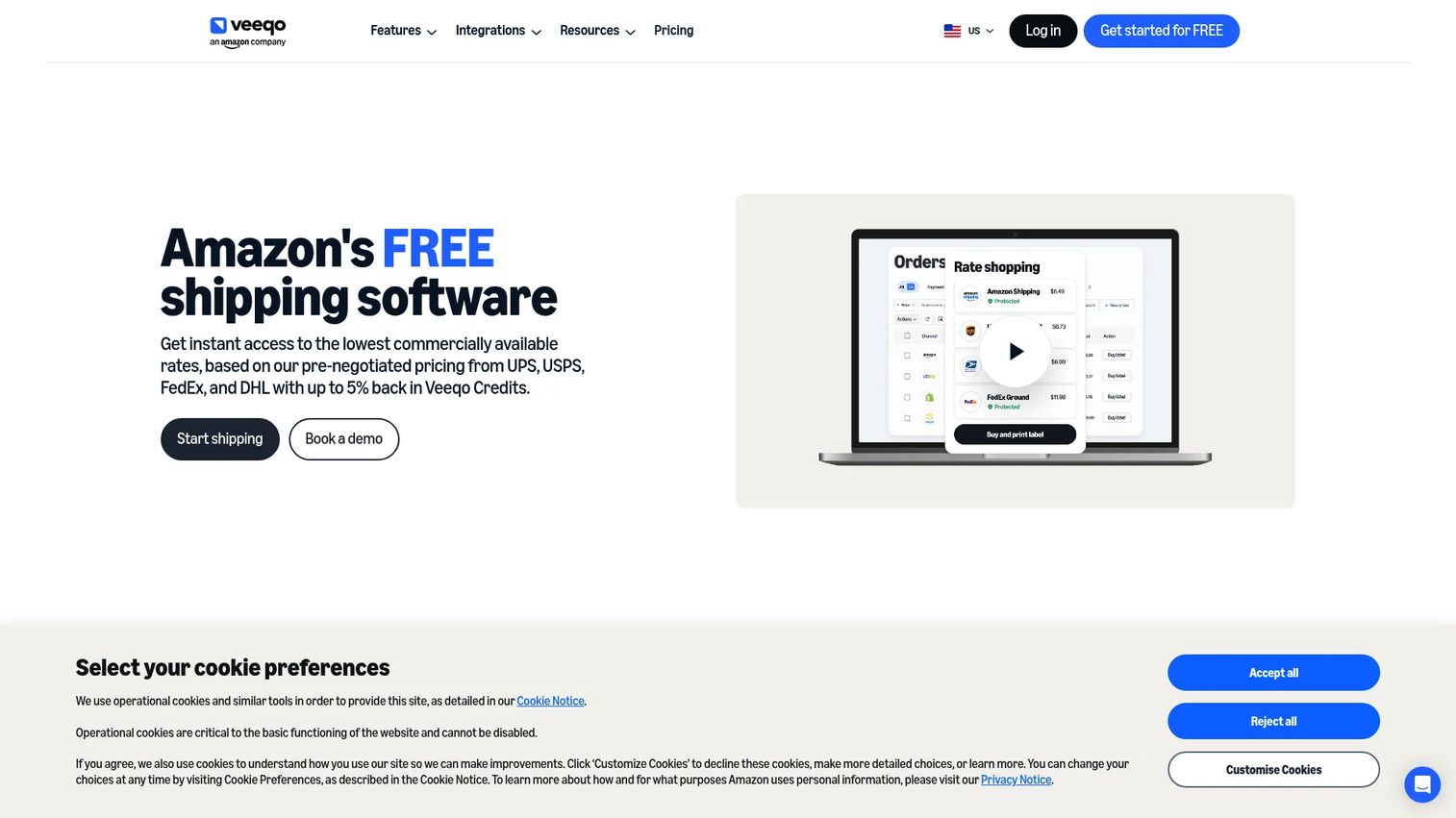
Veeqo is ecommerce shipping and inventory management software for multichannel sellers. It centralizes channels into one dashboard, keeps stock synced, and adds shipping label purchasing and rate shopping on top. It leans more toward being an operations and fulfillment hub than a pure marketplace listing tool, which makes it a fit for sellers focused on getting orders out the door efficiently.
Best for: Multichannel sellers who need low-cost shipping plus optional inventory automation in one operations hub.
Key strengths
- Free shipping plan: Buy labels and rate-shop carriers without a subscription on the shipping tier.
- Inventory management: Automated stock sync across channels with inventory planning support.
- Warehouse workflow tools: Digital picking and warehouse features for order fulfillment automation.
Why choose Veeqo: Veeqo appeals to smaller teams that want operational simplicity and a strong shipping workflow without a big upfront cost. The free shipping plan lowers the barrier to entry, and inventory automation is there when you need it. If your bottleneck is fulfillment efficiency rather than listing breadth, Veeqo's operations focus fits well.
Veeqo pricing: The Shipping plan is free, including label purchasing and rate shopping. Paid plans add inventory and enterprise features, with Inventory starting from $19/month and High Volume from $350/month, priced by order volume on a usage-based monthly model. Veeqo holds a 4.5/5 G2 rating.
8. Channable
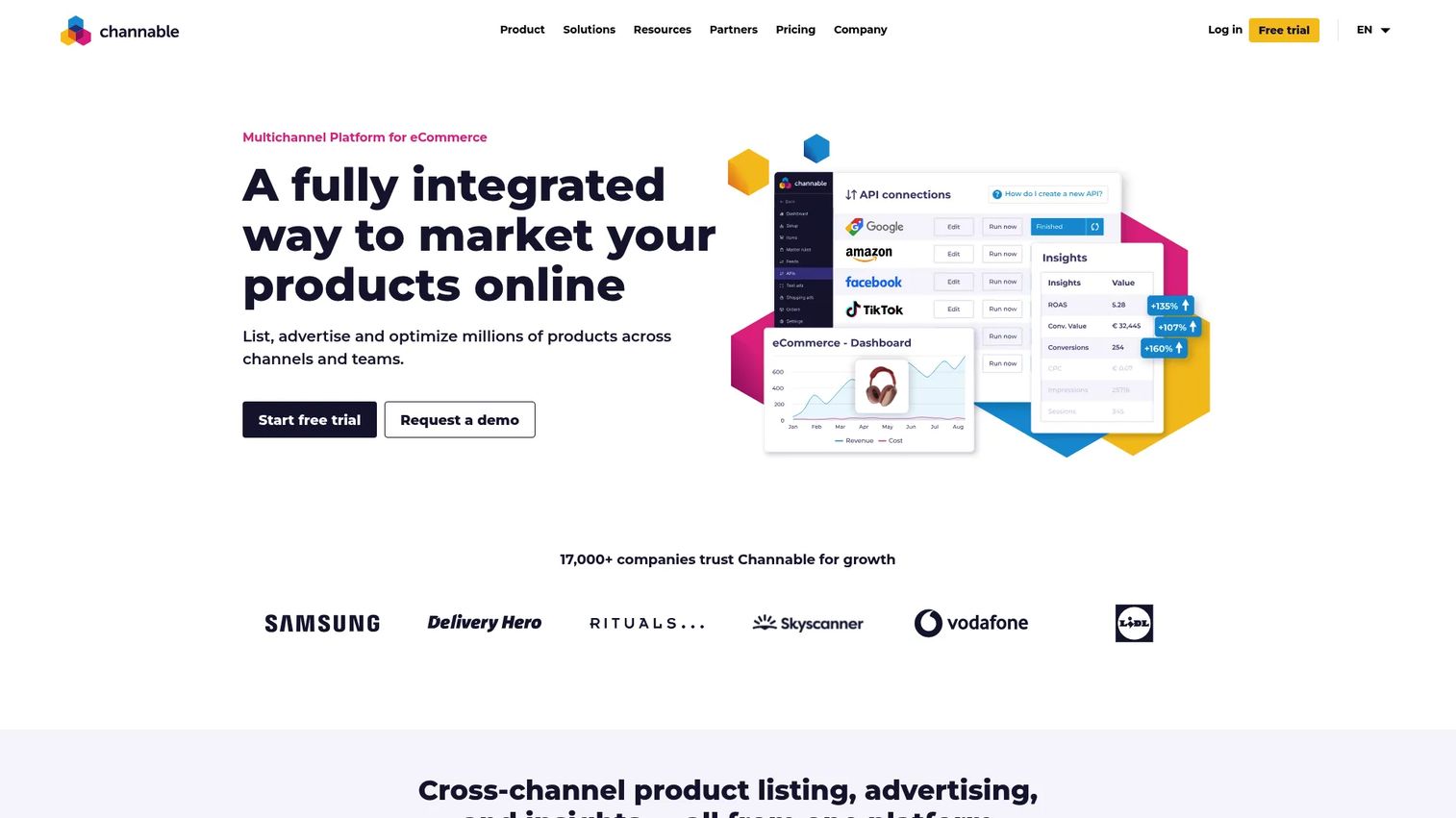
Channable is a multichannel ecommerce platform for product feed management, marketplace integration, PPC optimization, and dynamic ads. Its strength is rule-based control: you map and transform product data, customize how items appear per channel, and automate distribution to marketplaces and ad platforms. For marketers and operators who want granular control over channel-specific listings, it offers more configurability than most.
Best for: Retailers, brands, and agencies that need one platform to manage product data and automate multichannel commerce.
Key strengths
- Rule-based feed management: Build feed rules with quality checks to control exactly how products appear per channel.
- Marketplace integrations: Connect to marketplaces with real-time stock updates and channel templates.
- PPC campaign automation: Automate ad campaigns with bid and budget optimization alongside feeds.
Why choose Channable: Channable fits teams that want product feed management and advertising automation in the same tool, with the data-mapping control to fine-tune every channel. With a 4.5/5 G2 rating and a modular structure, it scales from a single feed to complex multi-channel, multi-region setups. It suits marketers who care as much about how products perform in ads as how they sync in inventory.
Channable pricing: Pricing is modular: a package based on items, projects, and channels, plus a Core plan and optional modules. Core Standard starts at €59/month, Core Plus at €79/month, and the Creatives Standard module at €30/month. A free trial is available, and actual cost varies by package and add-ons.
Considerations before you buy
Before committing to any platform, work through this checklist against your actual channel mix and operations.
Channel and integration coverage
Confirm the tool connects to every channel you sell on today, plus the ones on your 2026 roadmap. Check the depth of each marketplace integration, not just whether the connector exists. A shallow connector that syncs inventory but not orders will still leave you doing manual work.
Inventory and order accuracy
The whole point is real-time inventory visibility and reliable order routing. Ask how fast stock updates propagate across channels and how the system handles edge cases like partial fulfillment, returns, and bundles. Test order fulfillment automation against your real workflow during a trial.
Back-office and systems fit
If accounting accuracy matters, verify accounting, POS integration, WMS integration, and ERP integration support before you buy. A listing tool that ignores the back office can create as much reconciliation work as it removes. Map where each system needs to talk to the others.
Pricing model and total cost
Match the pricing model to how you scale. Order-volume pricing, GMV-based pricing, and per-SKU models all behave differently as you grow. Project your costs at next year's volume, not today's, so you are not surprised when a successful quarter pushes you into a higher tier.
Support and onboarding
For complex setups, support quality and onboarding determine whether you get value in weeks or months. Check whether onboarding is self-serve, guided, or fully managed, and confirm support availability matches your operating hours.
Conclusion
The right choice depends on where your pain actually lives. For marketplace-first sellers who need broad connectors, CedCommerce and ChannelEngine lead, with ChannelEngine reaching into enterprise and international scale. For inventory and order-heavy operators, Sellbrite and Veeqo keep stock and fulfillment tight, while Listing Mirror balances listings and inventory control. For teams that need accounting or feed precision, Webgility owns the back office, and Feedonomics and Channable own product feed management and distribution.
Before you shortlist a vendor, do one thing first: audit your current channel sprawl and map your inventory sync gaps. Write down every channel you sell on, where orders currently land, and which steps still happen by hand. That map will tell you whether you need a marketplace connector, an operations hub, an accounting layer, or a feed engine. Match the tool to the gap, not the other way around, and your 2026 retail operations software will earn its place in the stack instead of adding to the sprawl.
FAQs
Multichannel retail software helps retailers manage product listings, inventory, and orders across multiple sales channels from one place. Instead of logging into each marketplace and storefront separately, you control everything centrally and let the software keep data synchronized. It is the backbone of organized multichannel retailing.
In the omnichannel vs multichannel comparison, multichannel focuses on presence and synchronization: you sell across many channels and keep inventory, listings, and orders aligned. Omnichannel goes further by unifying the customer journey itself, so shoppers move between web, app, and store with shared context, carts, and loyalty. Multichannel is operational consistency; omnichannel is a seamless customer experience built on top of it.
The features that matter most are inventory synchronization, order management, marketplace integration, analytics, and accounting or ERP integration. Strong product feed management and real-time inventory visibility separate the better tools from the rest. Prioritize the capabilities that match your biggest current bottleneck.
Yes, if it offers real-time inventory visibility and timely sales channel synchronization. When a sale on one channel instantly decrements stock everywhere else, you avoid selling stock you no longer have. Check how fast updates propagate across channels before you buy, since lag is where overselling sneaks back in.
In most cases, yes. Nearly every tool in this guide connects to Shopify and Amazon, two of the most common channels in any multi channel ecommerce integration setup. Verify the exact integration depth and channel coverage for your specific channels, since connector quality varies between order sync, inventory sync, and listing management.
It can be, especially once manual listing updates and inventory errors start eating real time. Tools like Sellbrite and Veeqo offer free or low-cost entry plans, so small sellers can centralize before scaling. The trigger is usually the first oversold order or the first hour lost to reconciliation.
Focus on integrations, pricing model, support quality, inventory accuracy, and whether the tool fits your specific channel mix. Test order management and inventory sync against your real workflow during a trial, not just a demo. Project your costs at next year's volume so the pricing model still works as you grow your ecommerce channel management.