You send out an RFP. Twelve suppliers respond. Now you have twelve documents, three spreadsheets tracking scores, four internal reviewers commenting in email threads, and one version of the requirements that nobody is sure is current.
That is the real problem RFx software solves. Not "efficiency" in the abstract. The specific chaos of running a request-for-anything process across scattered files, misaligned stakeholders, and evaluation criteria that drift between suppliers.
The market reflects the pain. The global RFx automation software market is projected to grow from USD 2.5 billion in 2024 to USD 6.8 billion by 2033, at an 11.2% CAGR, according to EVWTC Market Insights (2024). More than 65% of mid-size and large enterprises have adopted automated RFP tools to reduce manual work and standardize evaluation, per Global Growth Insights (2025).
The reason is simple. Manual RFx management does not fail at small scale. It fails when volume grows, when more people touch each event, and when audit readiness stops being optional. This guide breaks down six platforms, explains where RFI, RFP, and RFQ actually differ, and gives you the buying criteria that matter for procurement teams.
What's inside
This guide is for procurement leaders, sourcing managers, and operations teams evaluating software to run RFIs, RFPs, RFQs, and related supplier selection workflows. We selected and compared platforms on four criteria:
- RFx lifecycle coverage across RFI, RFP, RFQ, and RFB
- Collaboration, approvals, and content reuse for cross-functional teams
- Analytics, scorecards, and audit trails for evaluation and compliance
- Cloud access and workflow automation that scale with event volume
No vendor fluff. Just what each tool is genuinely built for and who should shortlist it.
TL;DR
- Best for AI-assisted response management: SiftHub, for presales and bid teams drowning in repetitive RFP and questionnaire work.
- Best for centralized collaboration and knowledge reuse: Responsive, for enterprises managing RFPs, RFIs, and DDQs at scale.
- Best for supplier collaboration and process simplification: DeepStream, for procurement teams running configurable source-to-contract workflows.
- Best for healthcare-focused compliance workflows: RFX Solutions, for organizations that need credentialing and survey readiness.
- Best for broader procurement orchestration: Mercanis, for teams wanting AI-native sourcing across the S2C lifecycle.
- Best for sourcing and supplier selection efficiency: Fairmarkit, for enterprise teams automating repeatable purchase events.
What is RFx software
RFx software is a cloud-based platform that helps procurement teams create, distribute, evaluate, and audit supplier requests across the sourcing lifecycle. The "x" is a placeholder. It covers RFI (request for information), RFP (request for proposal), RFQ (request for quotation), and sometimes RFB (request for bid).
Instead of running each event through email, Word templates, and disconnected spreadsheets, RFx management software centralizes the whole process. Requirements, supplier responses, internal scoring, approvals, and the record of who did what all live in one system.
Here are the features that matter most:
- Template creation: Reusable RFI, RFP, and RFQ structures so every event starts from a consistent baseline.
- Centralized content library: A single source for approved questions, answers, and boilerplate so teams stop rewriting the same content.
- Workflow automation: Routing, reminders, and deadlines that move events forward without manual chasing.
- Collaboration and approvals: Shared visibility for procurement, SMEs, and stakeholders, with structured sign-off.
- Audit trails: Time-stamped records of edits, submissions, and decisions for compliance and dispute defense.
- Analytics and reporting: Scorecards, dashboards, and comparison views that make supplier evaluation objective.
- Supplier response tracking: Real-time status on who has responded, what is outstanding, and where an event stands.
Together these turn RFx from a document-wrangling exercise into a repeatable, defensible system.
When to use RFx software
Run a repeatable sourcing process
If your team runs the same categories of supplier events month after month, spreadsheets stop scaling. RFx software gives you standardized templates, consistent scoring, and a workflow that runs the same way every time. That consistency is what makes results comparable across events and easy to explain to finance or an auditor.
Replace manual document wrangling
Version control is often the real bottleneck, not response quality. When five people are editing requirements and suppliers are submitting responses in different formats, a centralized content library and single source of truth end the drift. Everyone works from the current version, and every change is tracked.
Improve cross-functional collaboration
RFx decisions rarely sit with procurement alone. Legal, finance, IT, and technical SMEs all weigh in. When those stakeholders need shared visibility into requirements, responses, and scores, a collaborative platform replaces the email chains and status meetings that slow decisions down.
Comparison table
Short, buyer-friendly summaries of each platform. Pricing and ratings reflect verified public sources where available. Where a vendor does not publish figures, we note that rather than guess.
| # | Product | Best for | Key differentiator | Pricing | G2 rating |
|---|---|---|---|---|---|
| 1 | SiftHub | AI-assisted response management | AI enterprise search with source-attributed answers | Quote-based | 4.5/5 |
| 2 | Responsive | Enterprise response management and knowledge reuse | Centralized content library at scale | From $5,000/year (Lite) | 4.5/5 |
| 3 | DeepStream | Supplier collaboration and RFx simplification | Configurable source-to-contract workflows | Quote-based | Not listed |
| 4 | RFX Solutions | Healthcare compliance and centralized oversight | Credentialing and survey readiness | Sales-assisted | Not listed |
| 5 | Mercanis | Modern procurement and strategic sourcing | AI-native S2C procurement suite | Quote-based | 4.6/5 |
| 6 | Fairmarkit | Sourcing automation and supplier selection | Agentic sourcing and RFx execution | Quote-based | 4.6/5 |
Best 6 tools for RFx management
1. SiftHub
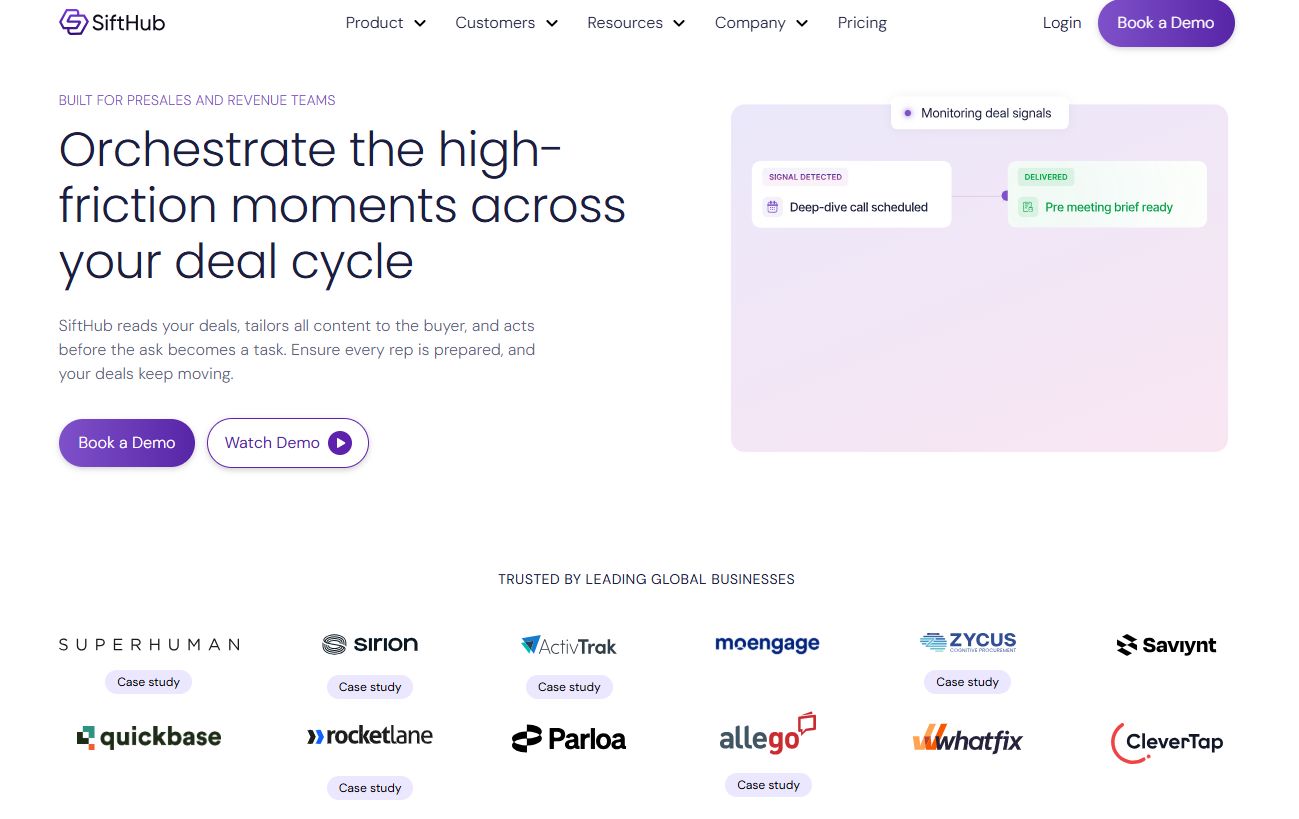
SiftHub is an AI RFP platform built for presales, sales engineering, and bid teams. It uses AI enterprise search across product docs, RFPs, CRM records, and call transcripts to draft source-attributed answers. For teams handling repetitive RFI and RFP questions, that source attribution is the part that matters, because it lets reviewers trust and verify each response.
The workflow fit is strongest where the same questions recur across events. SiftHub surfaces the best existing answer, generates a draft, and points back to where it came from. That cuts the manual rewriting that eats bid-team time.
Best for: Mid-market and enterprise presales, SE, and proposal teams that need RFP and questionnaire automation.
Key strengths
- AI enterprise search across docs, RFPs, CRM, and transcripts
- RFP and security questionnaire automation
- Source-attributed answers for verification
- Sales collateral and follow-up generation in common work tools
Why choose SiftHub: Pick SiftHub when response volume and repetition are your bottleneck, not sourcing workflow itself. It fits teams responding to RFx rather than issuing it.
SiftHub pricing: Pricing is quote-based. The pricing page asks you to request a quote and does not display public prices. SiftHub holds a 4.5/5 rating on G2.
2. Responsive
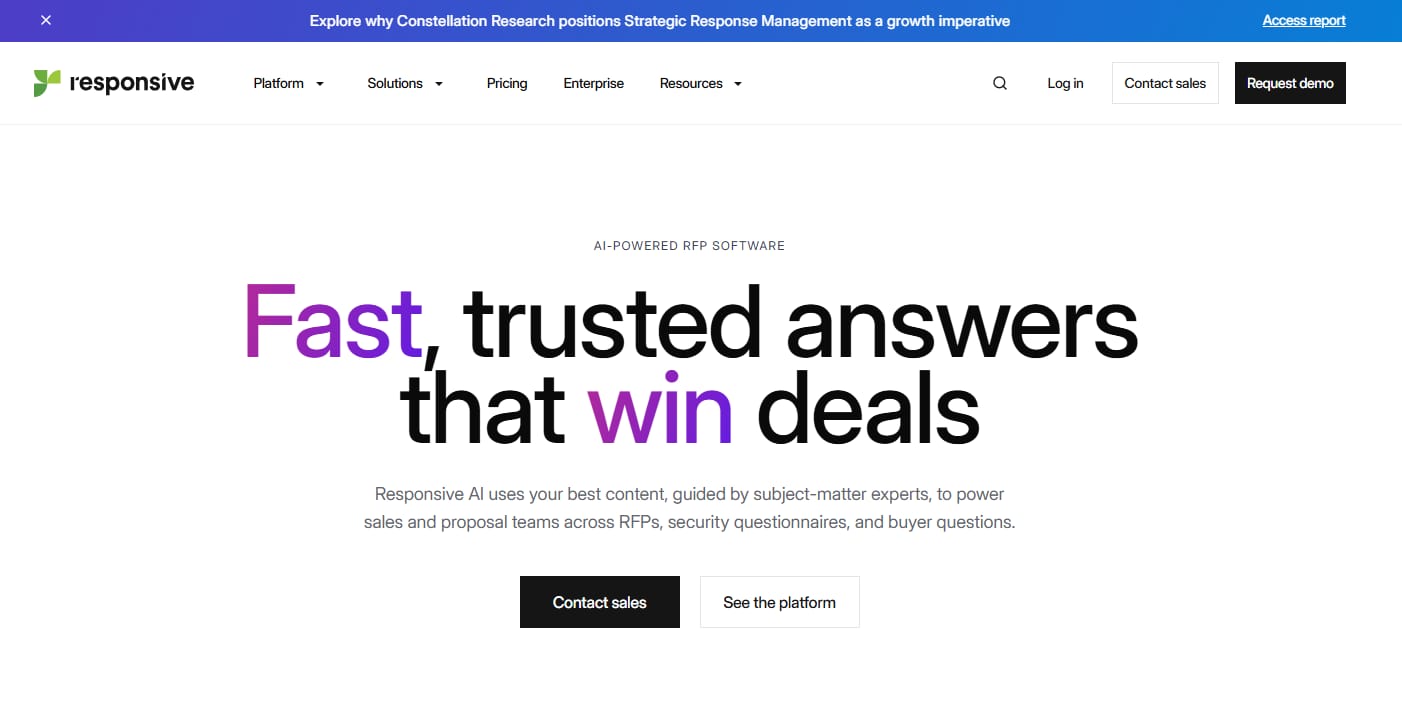
Responsive, formerly RFPIO, is a strategic response management platform built to handle RFPs, RFIs, DDQs, and security questionnaires at scale. Its center of gravity is the centralized content library, which lets teams reuse approved answers and keep responses consistent across dozens of concurrent events.
For procurement and response teams alike, the payoff is less rework. AI-powered response support drafts from existing content, collaboration workflows route reviews to the right SMEs, and standard integrations connect it to the rest of the stack. Teams reduce duplicated effort and keep answers on-message.
Best for: Teams managing RFPs, RFIs, DDQs, and security questionnaires at high volume.
Key strengths
- Centralized content management for answer reuse
- AI-powered response support
- Collaboration workflows with SME routing
- Standard integrations with existing tools
Why choose Responsive: Choose it when knowledge reuse and answer consistency across many events are your primary concerns. It scales well for large teams with heavy response loads.
Responsive pricing: Pricing is annual and based on a platform fee, user licenses, and add-ons. The Lite Edition starts at $5,000/year for 5 users. Emerging, Growth, and Enterprise editions require contacting sales. Responsive holds a 4.5/5 rating on G2.
3. DeepStream
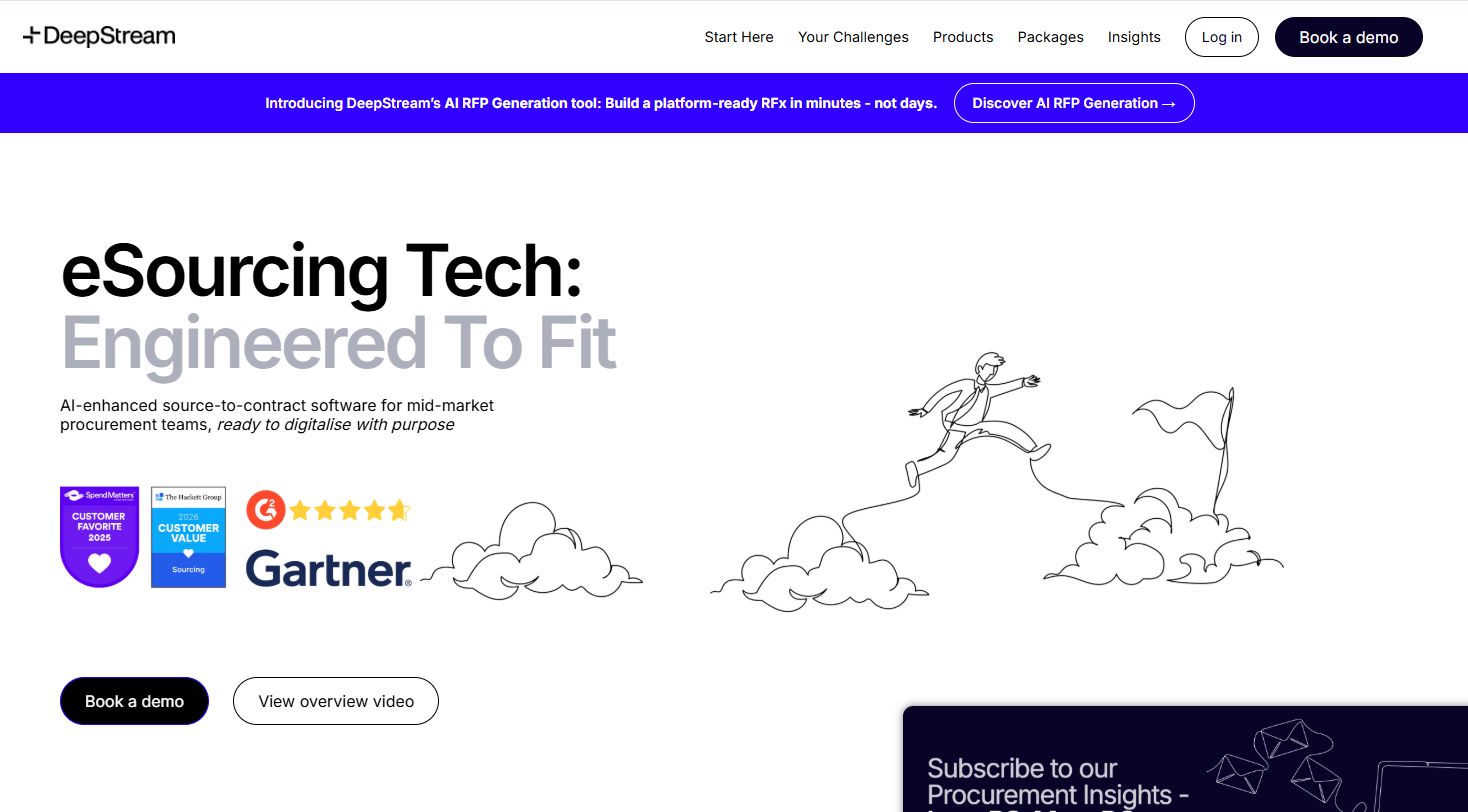
DeepStream is an AI-enhanced eSourcing and RFx platform for procurement teams. It focuses on running RFx events and sourcing workflows through a configurable source-to-contract process, so teams keep context from first request to signed contract instead of losing it between tools.
That continuity is the differentiator. Supplier discovery and pre-qualification feed into RFx events, and contract management and integrations close the loop. For mid-market teams, the configurability means the platform bends to your process rather than forcing a rewrite of it.
Best for: Mid-market procurement teams needing configurable RFx and source-to-contract workflows.
Key strengths
- RFx events and sourcing workflows
- Supplier discovery and pre-qualification
- Contract management and integrations
- Configurable source-to-contract process
Why choose DeepStream: Choose it when you want RFx tightly connected to the wider sourcing and contracting lifecycle, not a standalone response tool. It suits teams that value workflow continuity.
DeepStream pricing: Public plan names are Starter, Essential, Pro, and Enterprise, but the site does not show numeric prices. Pricing is based on required functions and business size, so you request a quote.
4. RFX Solutions
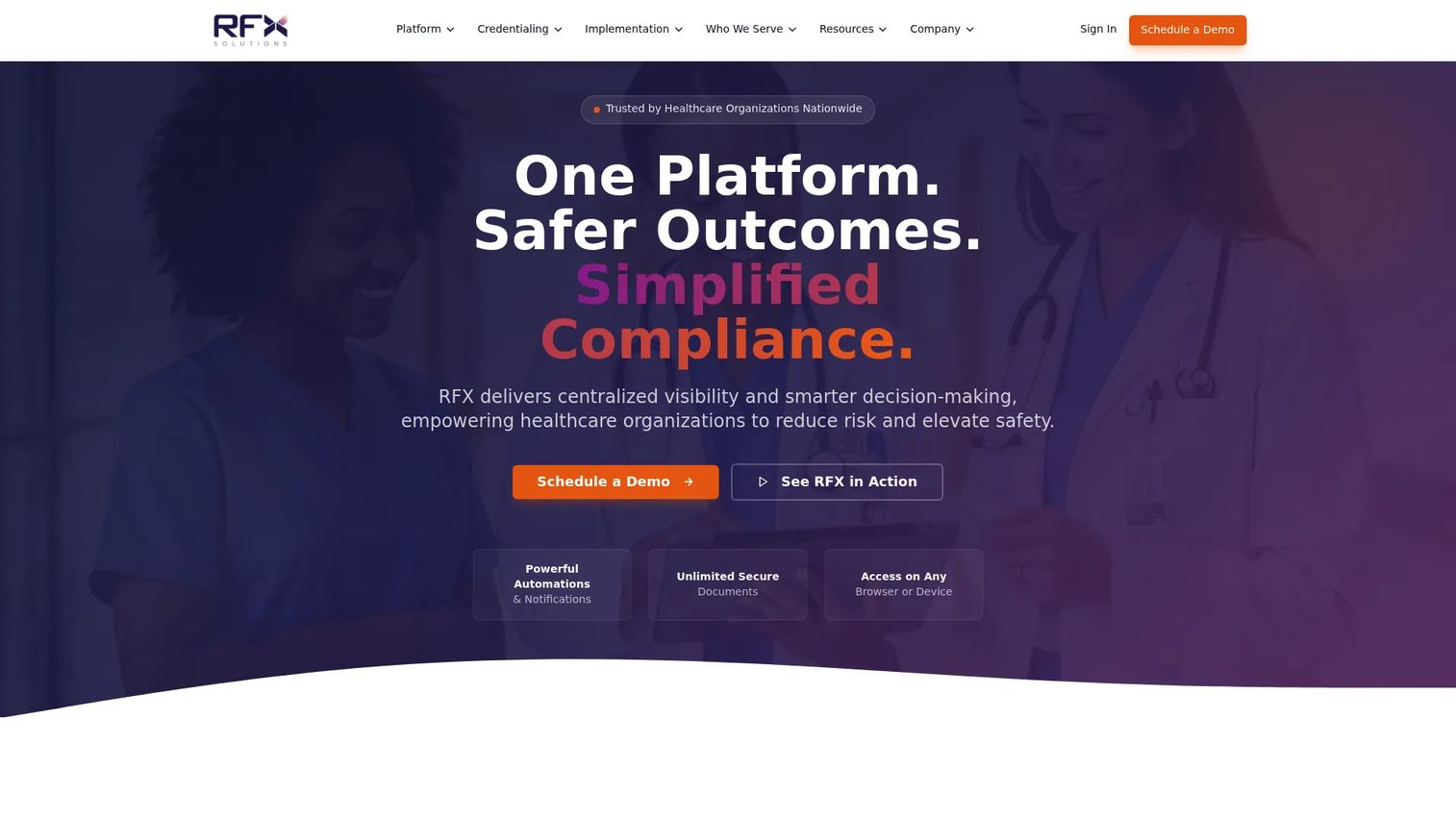
RFX Solutions is a healthcare compliance platform rather than a general-purpose RFx tool, and it earns its place on this list for compliance-heavy environments. It covers credentialing, records management, safety reporting, contracts, and document control, with a strong emphasis on centralized oversight and survey readiness.
If your procurement work sits inside a healthcare organization where compliance and audit readiness dominate, this vertical focus is the point. It is built around the credentialing and verification workflows that generic RFx platforms do not address.
Best for: Healthcare organizations that need an all-in-one compliance and survey-readiness platform.
Key strengths
- Provider credentialing and primary source verification
- Sanctions monitoring and incident reporting
- Staff records, learning management, and electronic binders
- Centralized compliance oversight
Why choose RFX Solutions: Choose it when compliance, credentialing, and survey readiness are your actual requirements. For general multi-category sourcing, a broader RFx platform is the better fit.
RFX Solutions pricing: Pricing is sales-assisted and not published publicly. Contact the vendor for a quote based on your organization's needs.
5. Mercanis
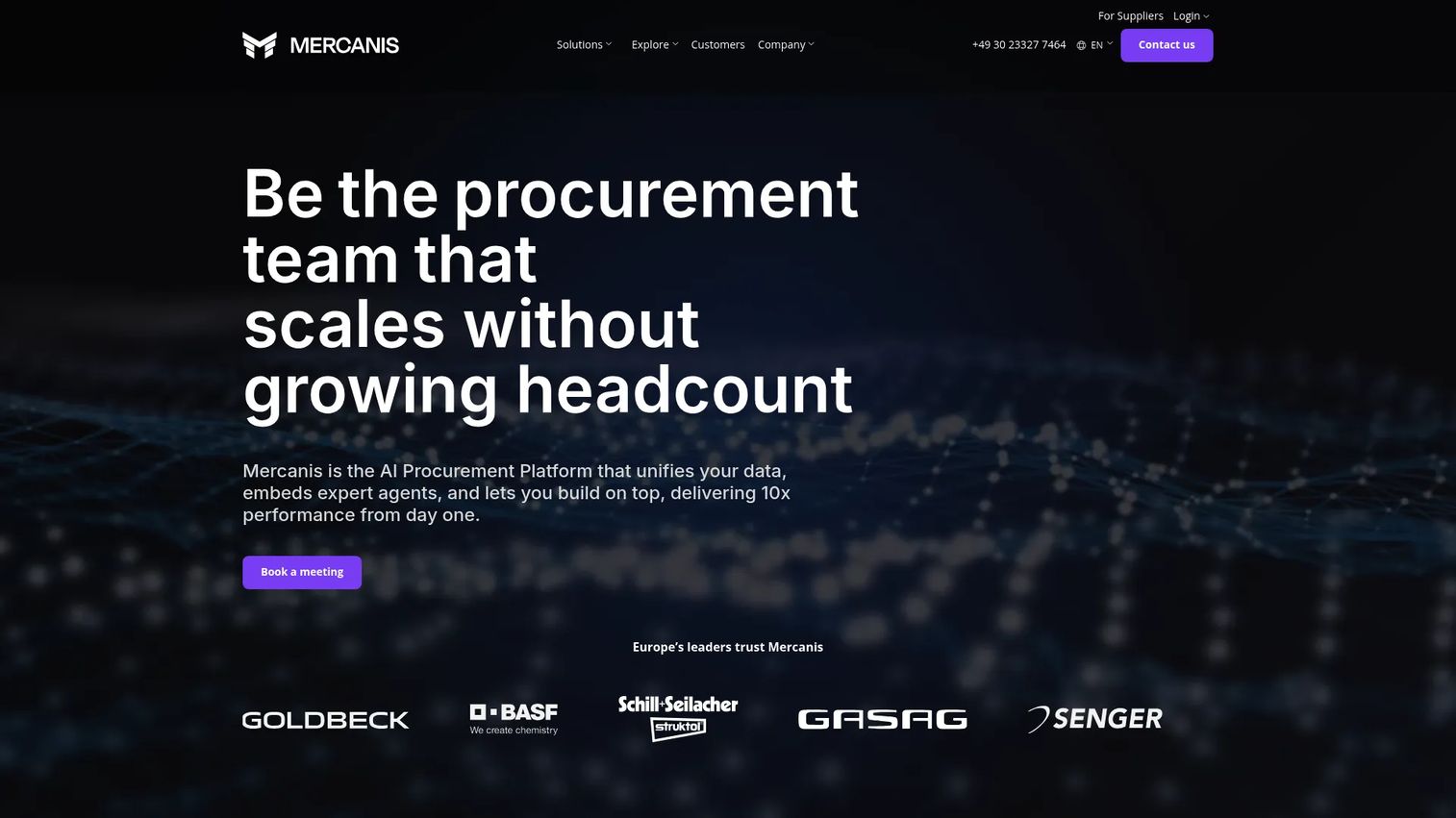
Mercanis is an AI-native procurement suite that covers sourcing, supplier management, contracts, and procurement automation. For teams that want RFx procedures inside a broader source-to-contract system, it brings structure, collaboration, and visibility across sourcing events rather than isolating the RFx step.
The breadth is the draw. Sourcing and RFx sit alongside supplier onboarding, spend analysis, and contract management with AI-assisted clause tracking. Guided buying and approval workflows keep requisitions moving. For mid-market and enterprise teams, that means one platform for more of the procurement lifecycle.
Best for: Mid-market and enterprise procurement teams seeking an AI-native S2C platform.
Key strengths
- Supplier management: onboarding, qualification, performance tracking
- Sourcing, RFx, and eAuctions
- Contract management with AI-assisted clause and risk tracking
- Spend analysis and supplier performance analytics
Why choose Mercanis: Choose it when you want procurement orchestration beyond RFx, with sourcing, contracts, and spend analytics in one suite. It fits teams consolidating tools.
Mercanis pricing: Mercanis references a pricing page, but public numeric prices are not displayed, so pricing is quote-based. Mercanis holds a 4.6/5 rating on G2.
6. Fairmarkit
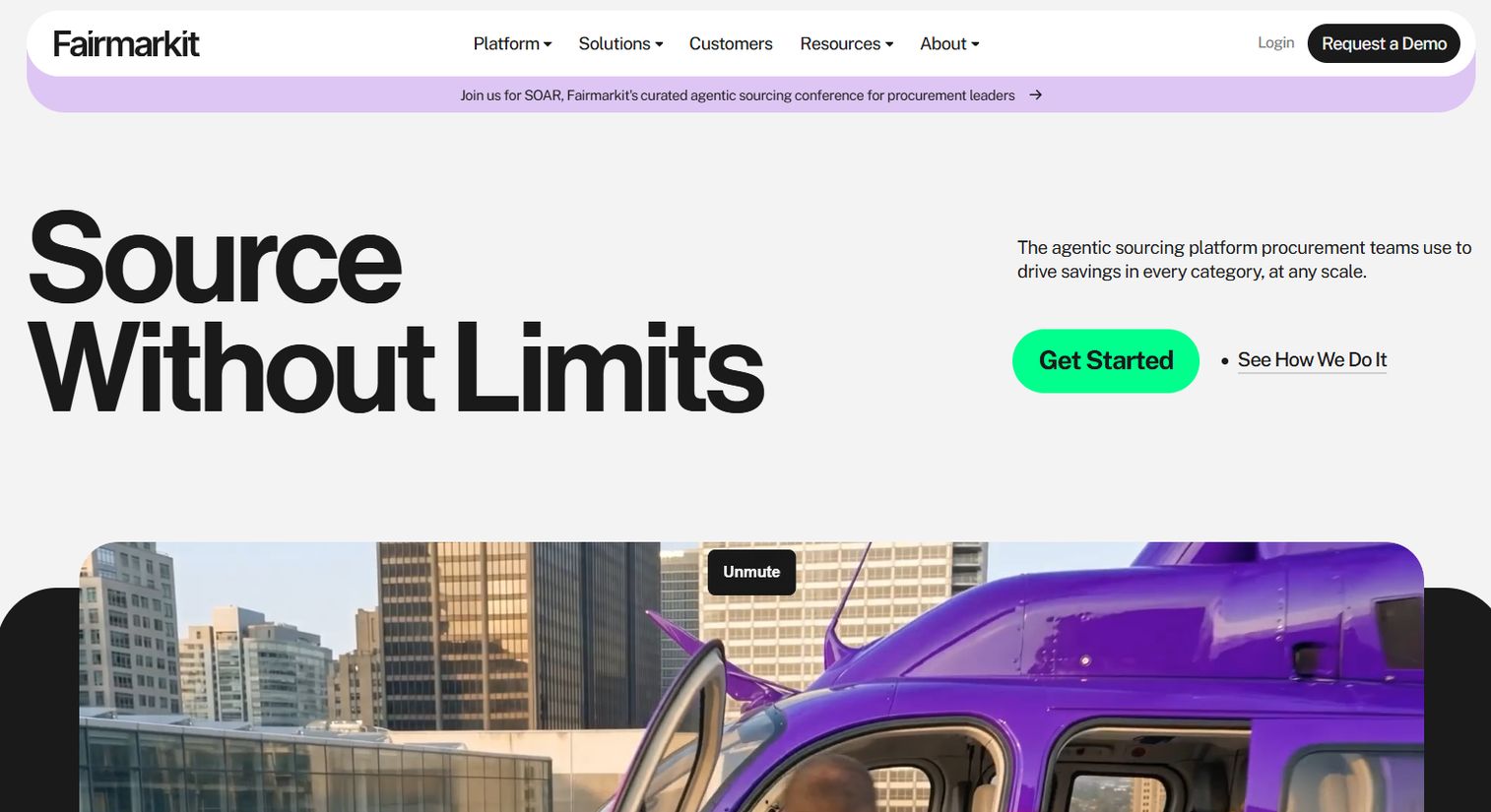
Fairmarkit is an AI-powered autonomous sourcing platform aimed at enterprise procurement teams automating repeatable purchase events. Its agentic model, with an Intake Agent, Supplier Discovery Agent, and RFx Execution Agent, is built to move teams faster through structured sourcing and evaluation.
The focus is speed on repeatable events. When a team runs many similar purchases, Fairmarkit automates intake, finds suppliers, and executes the RFx, reducing the manual steps between a request and a sourced result. That is where the efficiency gains show up.
Best for: Enterprise procurement teams automating sourcing and RFx workflows.
Key strengths
- Intake Agent for structured request capture
- Supplier Discovery Agent for finding vendors
- RFx Execution Agent for automated events
- Speed on repeatable purchase events
Why choose Fairmarkit: Choose it when sourcing velocity across high-volume, repeatable events is the goal. It fits large teams that want automation over manual RFx handling.
Fairmarkit pricing: No public pricing page or numeric prices are available. Sales is quote-based via demo request. Fairmarkit holds a 4.6/5 rating on G2.
Considerations before you buy
The shortlist narrows fast once you match tools to your actual workflow. Here is what to weigh.
Match workflow depth to team size
A five-person team running a dozen events a year needs different depth than an enterprise running hundreds. Buying a heavy source-to-contract suite for a light workload adds friction without payback. Buying a narrow response tool for a broad sourcing mandate leaves gaps. Match the platform's scope to your real event volume.
Need for knowledge reuse
If your team answers the same questions across events, a centralized content library and AI-assisted response support pay for themselves quickly. If most events are one-off and category-specific, prioritize workflow and supplier collaboration over content reuse.
Audit trail and compliance requirements
Regulated industries and public-sector procurement demand defensible records. Confirm the platform captures time-stamped audit trails of edits, submissions, scores, and approvals. In healthcare specifically, credentialing and survey readiness may outweigh general sourcing features.
Supplier collaboration depth
Some tools treat suppliers as recipients. Others make them active participants with portals, clarifications, and structured response flows. If your events involve back-and-forth with vendors, weight collaboration depth heavily.
Integration fit with your procurement stack
RFx software rarely runs alone. Check for connections to your ERP, contract management, and analytics tools. Poor integration turns a promising platform into another silo your team has to reconcile by hand.
Conclusion
There is no single best RFx software. There is the one that fits your process.
For general lifecycle control across RFI, RFP, and RFQ, DeepStream is a strong starting point. If your bottleneck is response volume and repetition, SiftHub and Responsive are built for exactly that. For broader procurement orchestration, Mercanis and Fairmarkit bring sourcing, supplier management, and automation into one system. And if you operate in healthcare, RFX Solutions addresses the compliance and credentialing work generic tools skip.
Start by mapping your real workflow complexity. Count your annual event volume, list the stakeholders who touch each event, and name your hardest compliance requirement. Then shortlist two or three platforms that match that reality and run a scoped trial on a live event. The right tool earns its place in your stack within the first sourcing cycle, not in a feature demo.
FAQs
RFx is an umbrella term for the family of formal supplier requests procurement teams issue during sourcing. The "x" stands in for the specific request type, most commonly RFI, RFP, and RFQ. The RFx meaning is simply "request for [something]," and the term lets teams talk about the sourcing process without naming one document type.
An RFI (request for information) gathers general details about suppliers and their capabilities early in sourcing. An RFP (request for proposal) asks shortlisted suppliers to propose a full solution, including approach and pricing. An RFQ (request for quotation) asks for exact pricing on clearly defined goods or services. In short: RFI explores, RFP evaluates solutions, RFQ compares prices.
Yes. RFx software captures time-stamped audit trails of every edit, submission, score, and approval across an event. That record makes supplier decisions defensible during internal reviews, disputes, or regulatory audits. Manual processes spread across email and spreadsheets rarely produce a reliable trail, which is why audit readiness is a common reason teams adopt a platform.
Move off spreadsheets when event volume grows, when more stakeholders touch each event, or when version control starts causing errors. The tipping point is usually when you cannot confidently answer who changed what, or when comparing responses across suppliers becomes manual and inconsistent. If audit or compliance pressure is rising, that alone justifies the switch.
Prioritize RFx lifecycle coverage, a centralized content library, workflow automation, collaboration and approvals, audit trails, and analytics with scorecards. The right weighting depends on your work. Response-heavy teams value content reuse and AI drafting, while sourcing-heavy teams value supplier collaboration and source-to-contract continuity.
They overlap but are not identical. RFx software focuses on creating, distributing, and evaluating supplier requests. Sourcing software is broader, often covering supplier discovery, eAuctions, spend analysis, and contracts alongside RFx. Many modern platforms combine both, so the distinction matters most when you are deciding how much of the procurement lifecycle you want in one tool.
RFB stands for request for bid, sometimes used interchangeably with RFQ or invitation to bid. It asks suppliers to submit a competitive bid, typically for well-defined work such as construction or public-sector contracts. It sits within the same RFx family as RFI, RFP, and RFQ, and many platforms support it as another request template.
It gives procurement, legal, finance, IT, and technical SMEs shared visibility into one version of requirements, responses, and scores. Collaboration workflows route reviews to the right people, approvals are structured rather than ad hoc, and everyone works from the current version. That replaces the email threads and status meetings that slow cross-functional supplier decisions down.