Raw smart meter reads are not billable. They arrive with gaps, duplicates, and anomalies that billing teams cannot touch. Operations teams need exceptions flagged before customers call. Regulatory teams need audit trails before anyone asks. And none of that happens until a meter data management system (MDMS) turns the raw data into something trustworthy.
The scale of this problem is growing fast. Global smart meter installations are projected to reach 3.9 billion by 2035, up from 2.1 billion in 2025, according to Transforma Insights (2026). Advanced meters already account for 76.8% of U.S. electric meters in operation, per the U.S. Energy Information Administration. Every one of those meters generates interval data that needs to be collected, validated, estimated, edited, stored, and routed before it becomes operationally useful.
The MDMS is the data trust layer that makes that happen. Choose the wrong one and you inherit a multi-year integration tax. Choose the right one and billing accuracy, AMI operations, and revenue protection all improve from the same platform.
This guide compares 16 meter data management systems to help you shortlist the right vendors for your architecture and your first business case.
What's inside
This guide is for utility technology leaders, operators, and advisors evaluating meter data management software in 2026. Tools were selected from active MDMS category results, utility vendor pages, and product directories. Selection criteria:
- VEE and billing determinant depth: How well the system handles validation, estimation, and editing before data reaches CIS or billing platforms
- AMI and head-end integration: Compatibility with major AMI networks and communication technologies
- Cloud scalability and deployment fit: SaaS, cloud, or on-premises options for different operating models
- Analytics, revenue protection, and operational use cases: Support for forecasting, exceptions, theft detection, and settlement
Pricing and G2 ratings should be verified live before any procurement decision.
TL;DR
- Best for large multi-service utilities: Oracle Utilities Meter Data Management, for utilities that want MDMS tightly wired into customer, billing, and operations platforms
- Best for SAP-centered utilities: SAP Cloud for Energy, when meter data processes must connect to SAP enterprise infrastructure
- Best for industrial time-series operations: AVEVA PI System, when meter data needs to sit alongside plant and grid operational data
- Best for grid modernization programs: Siemens Gridscale X, where smart grid and network operations matter as much as billing accuracy
- Best for AMI-heavy deployments: Itron Enterprise Edition Meter Data Management, particularly when the metering network is already Itron
- Best for AI-led revenue protection: C3 AI Revenue Protection, when the business case is leakage reduction rather than foundational meter-to-cash
What is a meter data management system?
A meter data management system is utility software that collects, validates, estimates, edits, stores, and distributes meter data from smart meters, AMI networks, and related metering infrastructure.
MDMS is not a database. Raw reads from the field arrive with gaps, duplicate entries, clock errors, and consumption anomalies. Before any of that data can support billing or operations, the MDMS applies VEE rules (validation, estimation, and editing) to detect the problems and produce clean, audit-ready records. Those records then feed customer information systems (CIS), billing platforms, settlement engines, and analytics tools downstream.
The system typically receives data from head-end systems connected to AMI networks, manual meter reads, or legacy meter data collection tools. From there it calculates billing determinants and routes exceptions to workflow queues for review. It also supports operational functions including outage analysis, load forecasting, demand response, and customer portals.
Key capabilities to look for in meter data management software:
- Meter data collection and normalization: Ingesting reads from multiple head-end systems and communication technologies
- VEE rule engine: Configurable validation, estimation, and editing for gaps, duplicates, and anomalies
- Long-term interval data storage: Retention of high-frequency reads at scale, with archiving and governance controls
- Billing determinant calculation: Producing the quantities CIS and billing systems need for invoicing
- AMI and head-end integration: Pre-built connectors or open APIs for major AMI platforms
- CIS and billing integration: Data exchange with customer systems, billing engines, and settlement platforms
- Exception management and workflow queues: Routing exceptions to the right teams for resolution
- Analytics and loss detection: Forecasting, theft detection, and revenue protection reporting
- Regulatory reporting and audit controls: Audit trails, data retention policies, and regulatory outputs
- Data governance and archiving: Retention management for long-term interval data
Electric, gas, and water utilities all depend on these capabilities, though the specific integration requirements vary by utility type and regulatory environment.
When to use meter data management systems
Turn smart meter reads into billable data
Raw interval reads cannot go directly into billing. Utilities need VEE processing, exception handling, and billing determinant calculation before sending data to CIS or billing platforms. Without this layer, missed reads become estimated bills, duplicate reads create overcharges, and audit failures become regulatory exposure. Any utility running time-of-use rates or tiered pricing depends on this process running cleanly every cycle.
Modernize AMI and smart grid operations
AMI rollouts generate far more interval data than legacy billing systems were built to handle. The MDMS sits between smart meters, head-end systems, grid applications, and customer platforms, absorbing and organizing the volume. This layer becomes especially important for utilities expanding into outage and voltage visibility, distributed energy resources (DER) monitoring, or EV load awareness, where operational data needs to connect to the same trusted foundation as billing data.
Detect losses and improve utility performance
Revenue protection and operational analytics both start with clean meter data. Non-technical losses from meter tampering, unbilled connections, or metering errors are hard to find in raw reads but visible in a well-configured MDMS with exception management and anomaly detection. Utilities that treat their MDMS as a revenue assurance platform, not only a data repository, typically surface leakage faster and prioritize field investigations more effectively.
Meter data management systems comparison
The table below gives a starting-point comparison across all 16 tools. Use it to identify shortlist candidates, then verify deployment model, integration requirements, utility type fit, and current pricing directly with each vendor before an RFP conversation.
| # | Product | Best for | Key differentiator | Pricing | G2 rating |
|---|---|---|---|---|---|
| 1 | Oracle Utilities Meter Data Management | Large multi-service utilities | Deep integration across MDMS, CIS, and customer platforms | Quote-based | N/A |
| 2 | SAP Cloud for Energy | SAP-centered utilities | Meter and energy data connected to SAP enterprise workflows | Quote-based | N/A |
| 3 | AVEVA PI System | Operational time-series environments | Industrial data historian across utility and plant operations | Quote-based | 4.6/5 |
| 4 | Siemens Gridscale X Meter Data Management | Grid modernization programs | Smart grid alignment across metering, grid data, and network operations | Quote-based | 3.8/5 |
| 5 | Itron Enterprise Edition Meter Data Management | AMI-heavy utilities | Metering vendor depth plus MDMS and settlement modules | Quote-based | 5.0/5 |
| 6 | Landis+Gyr Gridstream Meter Data Management System | Utilities using Gridstream infrastructure | MDMS tied to smart metering and Gridstream network deployments | Quote-based | N/A |
| 7 | Fluentgrid MDMS | Utilities in emerging smart-grid markets | MDMS inside a broader digital utility operations suite | Quote-based | N/A |
| 8 | Terranova Advanced Metering Management | Advanced metering operations | AMM and MDMS workflows across gas, water, and electricity | Quote-based | N/A |
| 9 | Ferranti MECOMS 365 | Microsoft-aligned utilities | Utility processes built on Microsoft Dynamics 365 and Azure | Quote-based | N/A |
| 10 | Honeywell Connexo | Connected device and AMI management | Multi-vendor data collection across grid devices and networks | Quote-based | N/A |
| 11 | Energyworx Platform | Cloud-native energy data management | Cloud platform for high-volume energy data processing and analytics | Quote-based | N/A |
| 12 | Hansen GENERIS Platform | Legacy-to-modern transformation | Utility data management within the Hansen portfolio | Quote-based | N/A |
| 13 | Cuculus Zonos Platform | Smart metering and IoT rollouts | Modular platform for metering, device, and energy data operations | Quote-based | N/A |
| 14 | BCITS UtilityIQ | Integrated utility operations | Utility software suite with meter data capabilities | Quote-based | N/A |
| 15 | C3 AI Revenue Protection | Loss detection and revenue assurance | AI-led anomaly detection for non-technical loss identification | Quote-based | N/A |
| 16 | Energy21 EBASE | Energy data and market operations | Configurable energy data platform for settlement and portfolio processes | Quote-based | N/A |
Best 16 meter data management systems for 2026
1. Oracle Utilities Meter Data Management
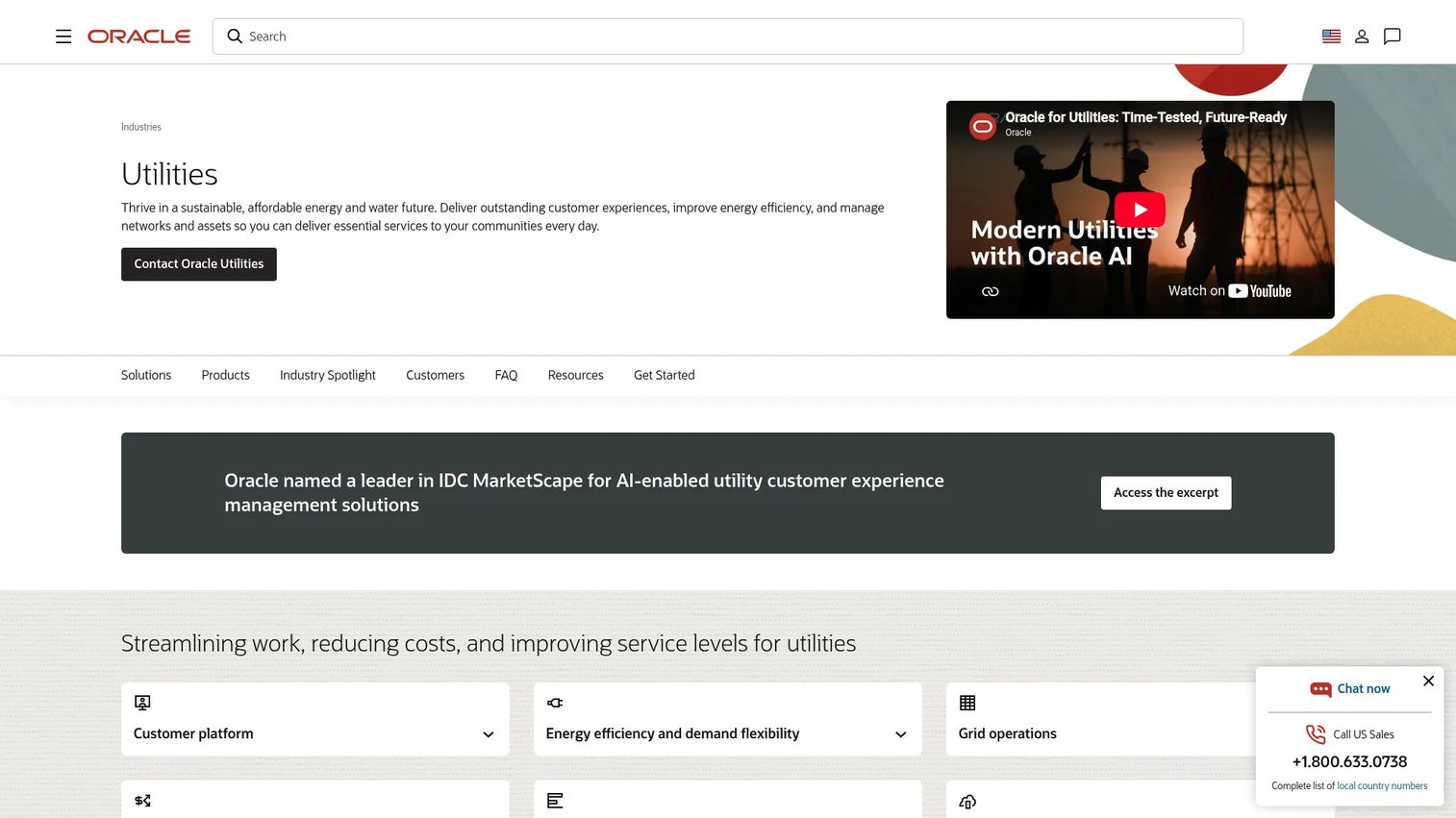
Oracle Utilities Meter Data Management is a scalable MDMS designed for electric, gas, and water utilities running high volumes of smart meter data. It handles the full meter-to-cash workflow, from automated data capture and synchronization through VEE, billing determinant support, and CIS integration. The platform includes smart device management, exception analytics, and information lifecycle management for archiving and storage optimization.
Best for: Large utilities that want MDMS tightly connected to customer, billing, and utility operations systems within one vendor architecture.
Key features
- Automated meter data capture and synchronization
- VEE with usage calculations and exception queues
- Smart device management and smart-grid gateway integrations
- Service order management: Connects, disconnects, meter pings
- Operational analytics, dashboards, and machine-learning insights
Why choose Oracle Utilities MDM: Oracle is the default choice when the utility already runs Oracle Utilities Customer Cloud Service or similar Oracle platforms. The integration depth across MDMS, CIS, and billing reduces data-flow complexity at enterprise scale, though implementation planning should account for module scope and data retention requirements.
Oracle Utilities MDM pricing: Pricing is quote-based. Contact Oracle sales with meter count, deployment model (SaaS, cloud, or on-premises), and module assumptions to get a meaningful cost estimate.
2. SAP Cloud for Energy
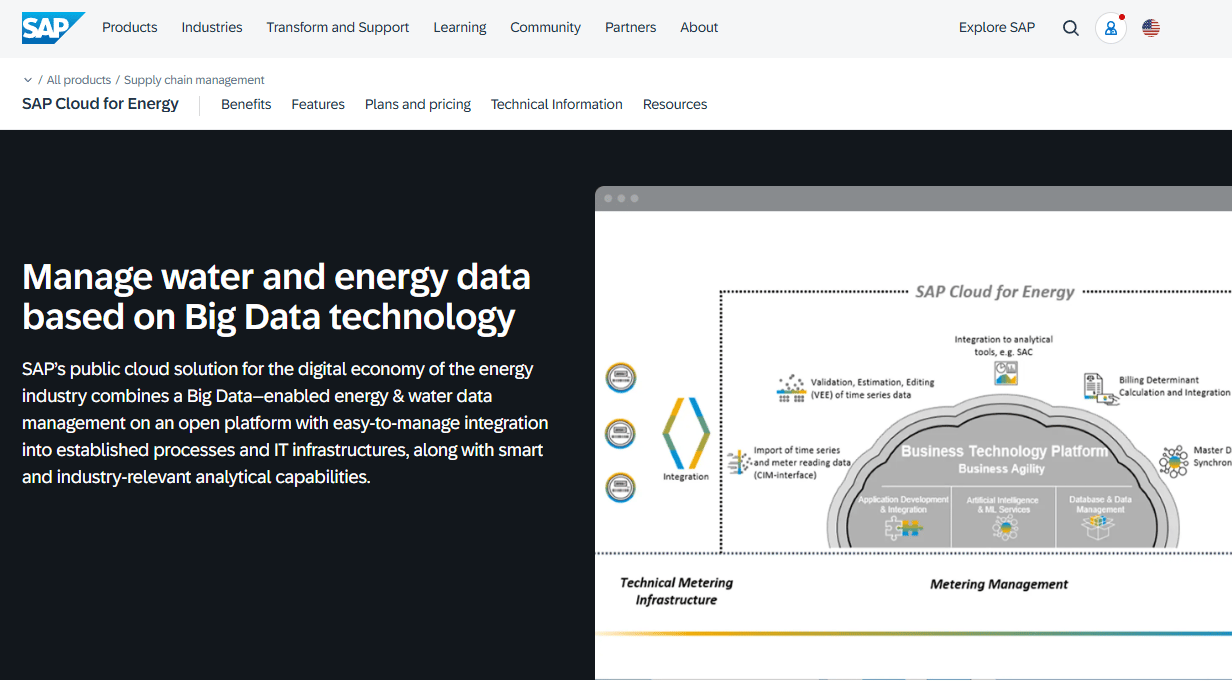
SAP Cloud for Energy is a public-cloud energy and water data management platform for storing, validating, monitoring, and analyzing metering data. It offers a central cloud repository for large volumes of measurement and time-series data, with automated validation, completion rules, device master-data synchronization, and APIs for billing determinant calculation. The platform integrates with SAP S/4HANA Utilities and SAP Utilities, making it a natural fit for organizations already running SAP infrastructure.
Best for: Utilities and energy organizations that run SAP enterprise systems and need meter data processes connected to those workflows.
Key features
- Central cloud repository for measurement and time-series data
- Automated validation, completion, and configurable validation rules
- Device master-data synchronization and history
- APIs for managing measurement data and billing determinant calculation
- Integration with SAP S/4HANA Utilities and SAP Utilities
Why choose SAP Cloud for Energy: The main reason to consider it is existing SAP commitment. If your utility's billing, finance, and operational processes already run on SAP, connecting meter data through the same vendor reduces integration overhead and simplifies governance. Buyers evaluating it as a standalone MDMS should verify whether the current product packaging covers the VEE depth their billing cycle requires.
SAP Cloud for Energy pricing: SAP lists a non-commercial cloud test and demo edition for partners but does not publish a numerical price for production deployments. Contact SAP sales for production packaging, module inclusions, and meter-volume assumptions.
3. AVEVA PI System
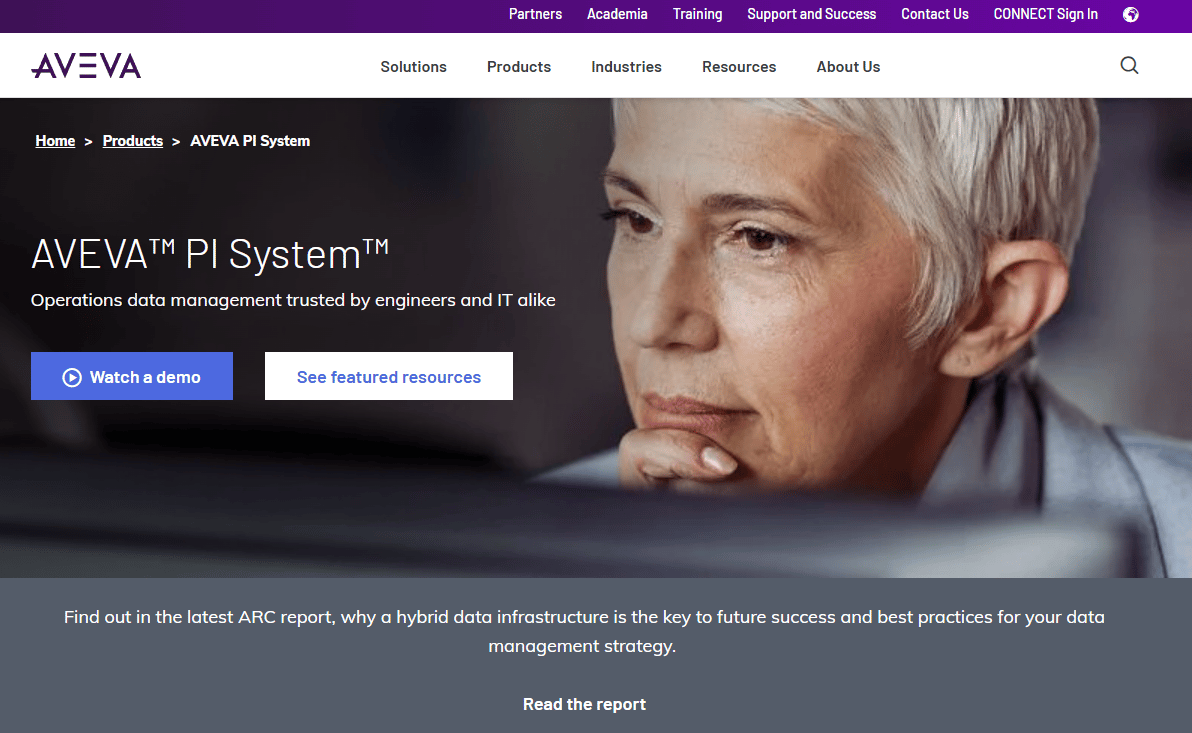
AVEVA PI System is an industrial operations data management platform for collecting, storing, contextualizing, enriching, and delivering real-time operational data. It is widely used in utilities, manufacturing plants, and energy environments where high-frequency time-series data from meters, sensors, and assets needs to sit in a single operational data layer.
Best for: Utilities and industrial organizations that need meter data connected to broader operational time-series data across plants, grids, and assets.
Key features
- Vendor-neutral real-time data collection with buffering and connectivity options
- High-volume time-series data storage and contextualization
- Event tracking, notifications, and trend analysis
- Self-service dashboards and secure data delivery to analytics tools
- Asset context and data enrichment capabilities
Why choose AVEVA PI System: Choose it when the operational visibility problem is larger than meter-to-cash. PI System excels at connecting meter reads to asset and plant data, giving engineers and grid operators a single source of operational truth. It is not a billing-first MDMS, so utilities that need deep VEE and CIS integration should evaluate whether a purpose-built MDMS or PI System fits the primary job better.
AVEVA PI System pricing: Licensing runs through AVEVA PI Data Infrastructure and AVEVA Flex credits. Pricing is determined through an account representative and is not published.
G2 rates AVEVA PI System at 4.6/5.
4. Siemens Gridscale X Meter Data Management
Siemens Gridscale X Meter Data Management is meter data management software for electric, water, and gas utilities that automates data quality processes, supports billing accuracy, and connects to broader grid software. It applies VEE processes for automated quality detection and resolution, supports Event and Data Action Management (EDAM) for built-in automation, and includes a Revenue Protection add-on for identifying operational and commercial losses. Deployment is cloud SaaS with per-meter scalability.
Best for: Utilities prioritizing smart grid modernization alongside meter data management, where grid software alignment matters as much as billing.
Key features
- Automated meter data quality detection and resolution using VEE
- Support for electric, water, and gas meters
- Event and Data Action Management for built-in workflow automation
- Revenue Protection add-on for operational and revenue loss identification
- Cloud SaaS deployment with per-meter scalability and open APIs
Why choose Siemens Gridscale X: Strong fit for utilities where the MDMS decision is part of a broader distribution grid modernization program. The Siemens grid software context means the platform connects naturally to grid analytics and network operations, which separates it from billing-focused MDMS platforms. Verify current module availability and integration depth with Siemens before including it in an RFP.
Siemens Gridscale X pricing: Quote-based. Contact Siemens sales with meter count, utility type, and deployment requirements.
G2 rates Gridscale X at 3.8/5, though this covers the broader platform rather than the MDMS module specifically.
5. Itron Enterprise Edition Meter Data Management

Itron Enterprise Edition Meter Data Management is enterprise-scale MDMS software for residential, commercial, industrial meters, and IoT sensors. It centralizes collection, processing, storage, and analysis of smart device data, events, and alarms, and supports real-time data collection, validation, reporting, and analytics. The IEE MDM Settlements module adds interval data settlement capabilities and is available standalone or as an add-on.
Best for: Utilities and cities already invested in Itron metering, AMI, or related meter operations tools that want MDMS from the same vendor.
Key features
- Centralized collection, processing, storage, and analysis of smart-device data
- Real-time data collection, validation, and reporting
- IEE MDM Settlements module for interval data settlement
- Support for residential, commercial, industrial meters, and IoT sensors
- Analytics extensions for operational and billing reporting
Why choose Itron Enterprise Edition MDM: The strongest argument is reducing stack fragmentation. When the metering network and MDMS come from the same vendor, integration is typically more straightforward and vendor accountability is clearer. If Itron is already central to the field infrastructure, adding the MDMS from the same portfolio shortens the integration surface significantly.
Itron Enterprise Edition MDM pricing: Pricing is sales-led with no figure on the Itron website. Contact Itron sales for meter-count, module, and deployment assumptions.
G2 rates this product at 5.0/5, based on one review.
6. Landis+Gyr Gridstream Meter Data Management System
Landis+Gyr Gridstream Meter Data Management System is a utility-focused MDMS that stores, validates, processes, and analyzes smart meter data for billing and grid operations. It provides advanced VEE for register and interval data, long-term repository storage for billing and non-billing sensor data, business process automation, exception management workflows, and analytics for outage optimization, theft detection, and customer engagement. Integration follows standards including IEC 61968 CIM, MultiSpeak, and SAP MDUS interfaces.
Best for: Electric, gas, and water utilities that want MDMS aligned with Landis+Gyr smart metering and Gridstream infrastructure deployments.
Key features
- Advanced VEE for register and interval data
- Long-term repository for billing and non-billing sensor data
- Business process automation and exception management workflows
- Analytics for outage optimization and theft detection
- Standards-based integration: IEC 61968 CIM, MultiSpeak, SAP MDUS
Why choose Landis+Gyr Gridstream MDMS: The main evaluation question is how tightly the MDMS integrates with existing head-end, CIS, and grid systems. For utilities already committed to Landis+Gyr infrastructure, the Gridstream MDMS reduces the integration design effort significantly. Utilities evaluating it alongside other-vendor AMI should verify the integration connector depth before assuming parity.
Landis+Gyr Gridstream MDMS pricing: Quote-based. Contact Landis+Gyr sales directly with your meter count, network technology, and integration requirements.
7. Fluentgrid MDMS
Fluentgrid MDMS is a meter data management system for large utilities modernizing smart metering, meter data management, and grid operations workflows. It handles VEE, real-time meter data processing, and advanced analytics, with multi-vendor head-end system (HES), AMI, and AMR interoperability. The platform supports aggregations, event subscriptions, bill determinants, automated alerts, and service orders, and integrates with CIS, CRM, GIS, OMS, DSM, analytics platforms, and customer self-service portals.
Best for: Utilities seeking MDMS as part of a broader smart utility software stack, particularly in markets active in smart grid modernization.
Key features
- VEE rule engine for interval and register data
- Real-time meter data processing and advanced analytics
- Multi-vendor HES, AMI, and AMR interoperability
- Aggregations, event subscriptions, and bill determinants
- Integration with CIS, GIS, OMS, and self-service portals
Why choose Fluentgrid MDMS: Choose it when the buyer wants MDMS combined with adjacent digital utility capabilities in one suite. The integration coverage across CIS, GIS, and OMS is broad, which can reduce the number of point integrations required. Be precise about which modules are included in the base platform versus optional additions before finalizing scope.
Fluentgrid MDMS pricing: Quote-based. Ask sales for module inclusions, meter count assumptions, deployment model, and support terms.
8. Terranova Advanced Metering Management

Terranova Advanced Metering Management (TAMM) is a digital enablement platform for smart metering processes and utility user workflows across gas, water, and electricity networks. It supports more than 170 smart meter and concentrator models, and automates collection, processing, communication, dashboards, and diagnostic management of metering data. Components include a Meter Data Management system, Head-End System, Communication Network Manager, and TAMM Mobile for field operations.
Best for: Utility companies and distribution system operators requiring vendor-agnostic smart metering and meter data management across gas, water, or electricity networks.
Key features
- Support for over 170 smart meter and concentrator models
- Automated collection, processing, dashboards, and diagnostic management
- Integration with meter-to-cash and monitoring systems via standard connectors
- Configurable KPIs, cartographic analysis, and encrypted data protection
- TAMM Mobile component for field operations
Why choose Terranova AMM: The device coverage breadth makes it worth evaluating for utilities operating mixed-vendor metering fleets. The meter-to-cash integration connectors reduce custom development for billing, and the TAMM Mobile component supports field operations alongside data management. Focus the evaluation on VEE depth and billing determinant output quality relative to your CIS requirements.
Terranova AMM pricing: Quote-based. Contact Terranova sales with meter count, device mix, and integration requirements.
9. Ferranti MECOMS 365
Ferranti MECOMS 365 is a cloud-based utility platform for energy and water organizations, built on Microsoft Dynamics 365 and Azure. It covers customer engagement, CIS, billing, payment, product management, contract management, and meter data management within a single platform. The MDMS component handles smart meter communication, meter reading, VEE, exception management, and consumption analytics.
Best for: Energy suppliers, water utilities, heat providers, and grid operators that want utility processes built around Microsoft Dynamics 365 and Azure infrastructure.
Key features
- Meter data management with smart meter communication and VEE
- Exception management and consumption analytics
- Customer information system with billing and payment workflows
- Customer engagement including omnichannel communication and self-service
- Built on Microsoft Dynamics 365 and Azure
Why choose Ferranti MECOMS 365: The right fit when Microsoft alignment is a strategic architecture decision rather than a coincidence. Utilities already licensed on Dynamics 365 can often reduce incremental licensing and integration cost by consolidating CIS, billing, and MDMS in one platform. Evaluate whether the MDMS module's VEE depth fits the utility's AMI volume and billing cycle complexity before assuming suite consolidation covers all requirements.
Ferranti MECOMS 365 pricing: Quote-based, typically through Ferranti or Microsoft partner channels. Contact sales with utility type, customer count, meter volume, and module requirements.
10. Honeywell Connexo

Honeywell Connexo is an open utility software platform for integrating grid devices and head-end systems, collecting data, and gaining network insights. It supports multi-vendor data collection across grid devices and network technologies, integrates with legacy systems through standards-based connectors, provides exception-based issue alerts with self-healing of minor issues, and delivers unified dashboards for network and ecosystem health.
Best for: Utilities managing connected devices and multi-vendor AMI infrastructure alongside meter data collection and network visibility.
Key features
- Multi-vendor data collection across grid devices and network technologies
- Standards-based integration with legacy systems
- Exception-based alerts and self-healing of minor network issues
- Security across access, authentication, encryption, monitoring, and reporting
- Unified dashboards for network and ecosystem health
Why choose Honeywell Connexo: Useful for utilities that see MDMS as part of a connected device operations layer rather than a billing-first data processor. The open architecture supports multi-vendor environments where device diversity is high. Verify current MDMS-specific VEE capabilities and CIS integration depth with Honeywell before including it in a billing-focused shortlist.
Honeywell Connexo pricing: Quote-based. Contact Honeywell with device count, network technology mix, and integration requirements.
11. Energyworx Platform
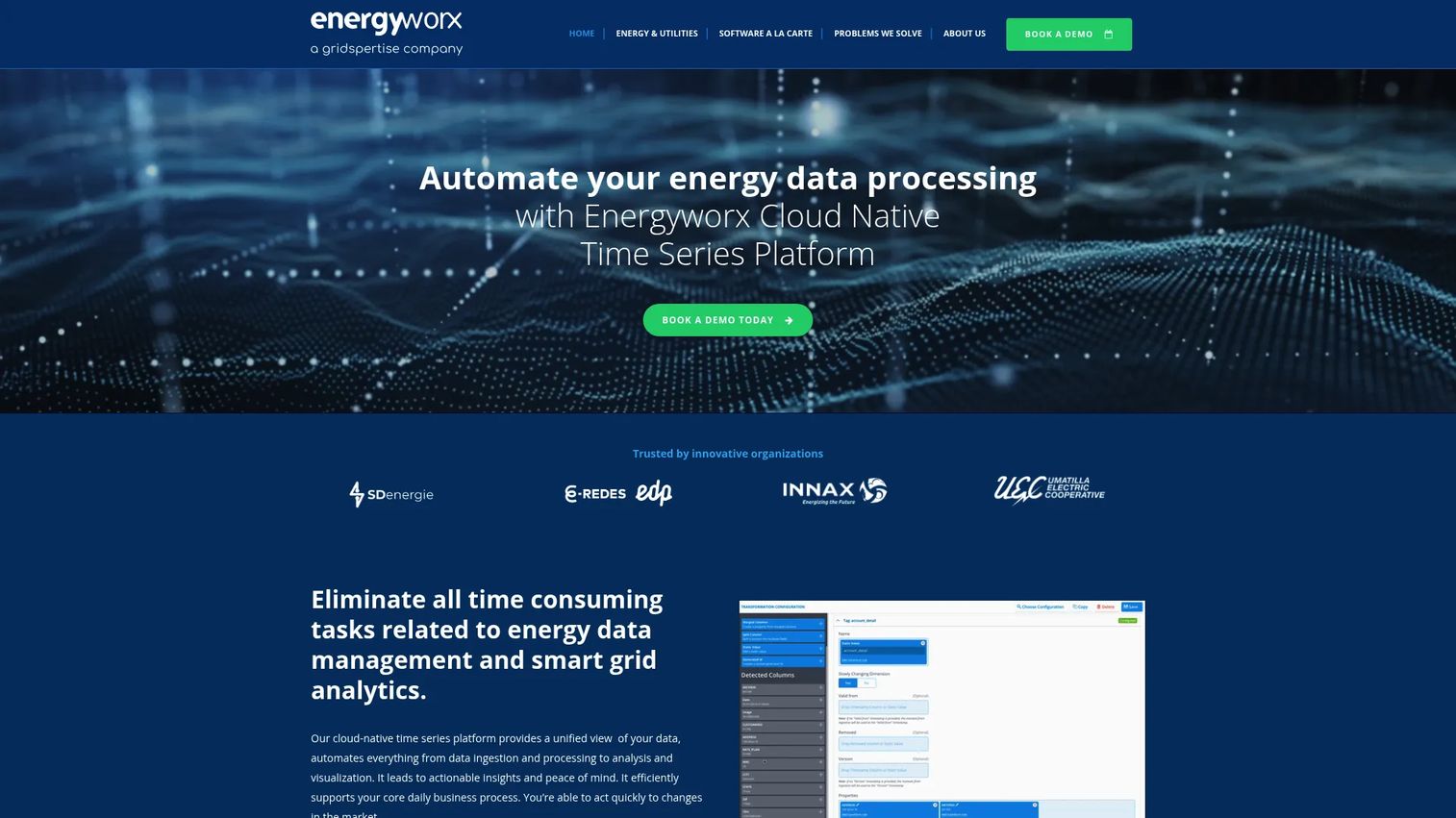
Energyworx Platform is a cloud-native time-series platform for energy data management, meter processing, and smart grid analytics. It supports data ingestion from meters and other sources, automated VEE, configurable business rules, machine-learning forecasting, and modular energy data management. It serves utilities, energy suppliers, metering companies, and large energy users that need to process high volumes of energy data with flexibility.
Best for: Utilities, energy suppliers, and metering companies that need cloud-native processing of high-volume energy and meter data with analytics built in.
Key features
- Data ingestion from meters and multiple source types
- Automated VEE with configurable business rules
- Machine-learning forecasting and analytics pipelines
- Modular energy data management and smart-grid analytics
- Cloud-native, scalable architecture
Why choose Energyworx: The strongest case is for teams moving away from rigid on-premises data stacks. The cloud-native architecture and modular design mean you can scope to the capabilities you need rather than purchasing a full enterprise suite. Evaluate it for utility retailers, DSOs, and organizations where data processing flexibility and analytics depth matter more than legacy suite consolidation.
Energyworx Platform pricing: Quote-based. Contact Energyworx sales with meter volume, data processing requirements, and module scope.
12. Hansen GENERIS Platform
Hansen GENERIS Platform is a meter data platform associated with Hansen's former Enoro product portfolio, described as flexible, scalable, automated, and open. Available information indicates integration with over 100 standard interfaces, flexible reporting, and advanced search for automatic and ad-hoc reporting. Buyers evaluating this product should verify its current maintenance status, product roadmap, and support model directly with Hansen before shortlisting.
Best for: Utilities already in the Hansen portfolio or evaluating legacy modernization paths where existing GENERIS installations need to be assessed or migrated.
Key features
- Integration with over 100 standard interfaces
- Flexible reporting functionality
- Advanced search for automatic and ad-hoc reporting
Why choose Hansen GENERIS: This entry is most relevant for utilities with existing Hansen installations evaluating their options. For utilities starting fresh, confirm whether GENERIS represents an actively developed product or a legacy system within the Hansen portfolio before building an RFP around it. Hansen's current go-forward product positioning should drive the conversation.
Hansen GENERIS pricing: Quote-based. Contact Hansen directly for current product status, support terms, and licensing model.
13. Cuculus Zonos Platform
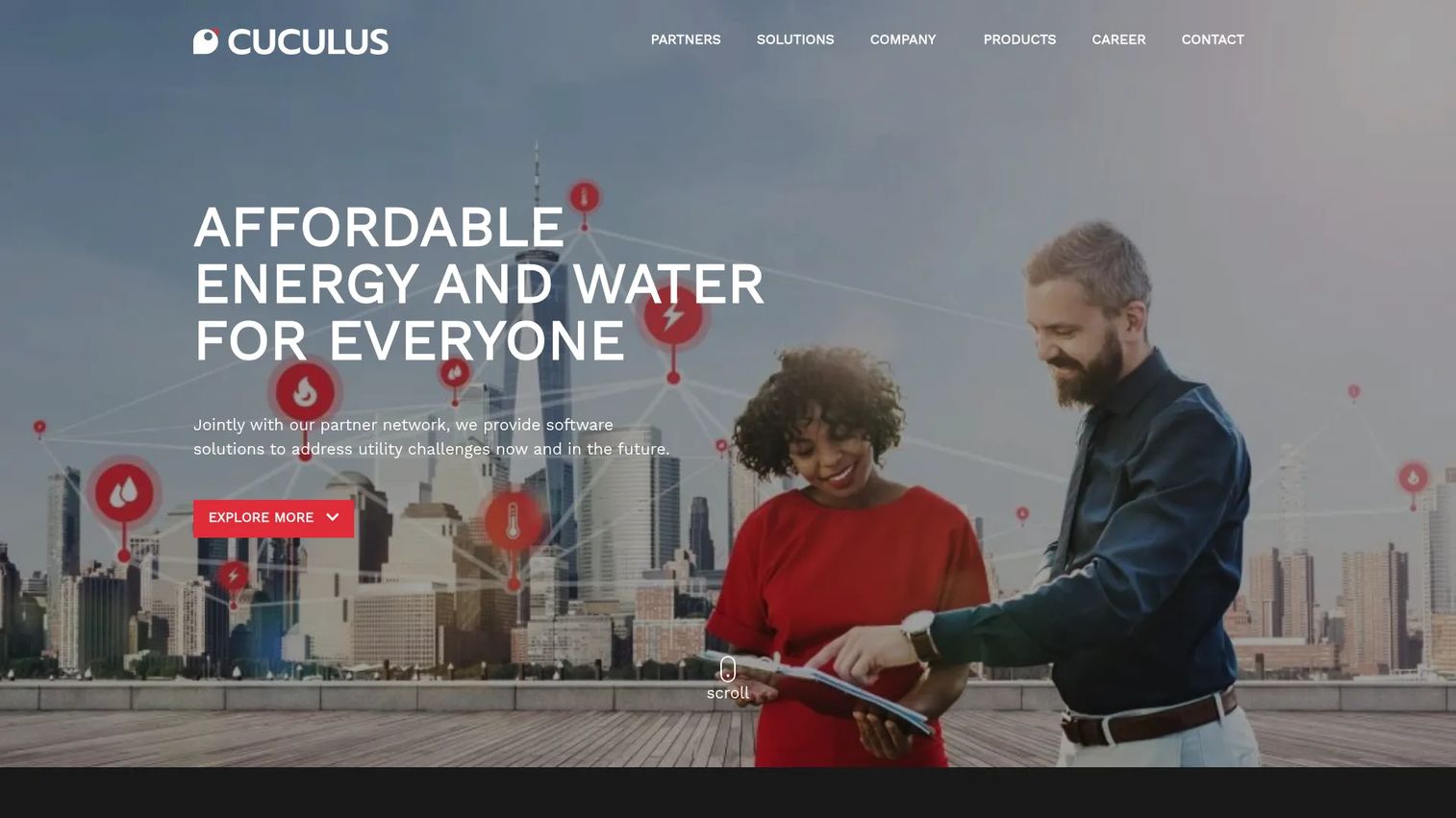
Cuculus Zonos Platform is a modular IoT platform for critical infrastructure, including smart metering, smart city, and smart grid applications. It includes a Head End System and Advanced Meter Management for large smart meter infrastructures, a Meter Data Management module for processed metering data and upstream billing applications, and supports multi-utility operations across electricity, water, gas, heat, and cooling. The platform scales to millions of meters and billions of meter readings.
Best for: Utility companies and critical infrastructure operators that need scalable smart metering, meter data management, and smart grid software in a modular platform.
Key features
- Head End System and Advanced Meter Management for large infrastructures
- Meter Data Management module for billing application support
- Multi-utility support: Electricity, water, gas, heat, and cooling
- Multi-vendor and multi-communication technology support
- Scalability for millions of meters and billions of readings
Why choose Cuculus Zonos: Good fit for utilities and service providers building smart metering programs where the MDM module is part of a broader platform decision rather than a standalone procurement. The multi-utility and multi-vendor coverage is broad, but evaluate whether the MDMS module's billing determinant output and CIS integration depth meet your billing cycle requirements.
Cuculus Zonos pricing: Quote-based. Contact Cuculus with meter volume, utility type, and module requirements.
14. BCITS UtilityIQ
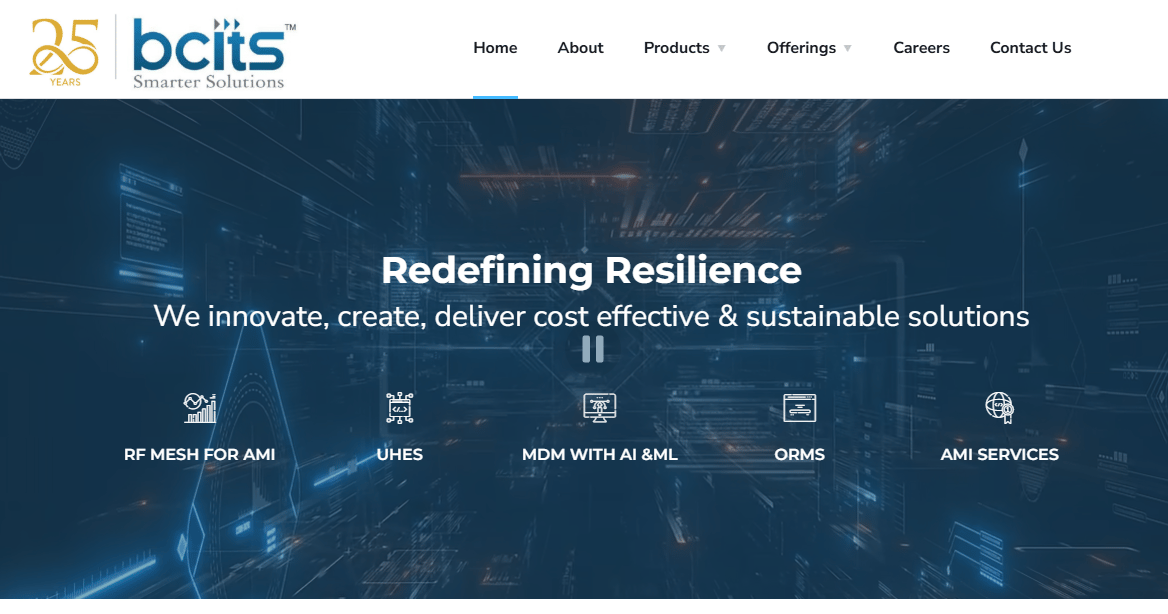
BCITS offers utility software solutions including smart meter data management capabilities. The current BCITS product portfolio includes offerings such as bSmart MDM alongside other utility operations modules. Buyers should verify the current product name, module scope, and platform architecture directly with BCITS, as the product lineup may differ from earlier market descriptions.
Best for: Utilities evaluating integrated utility software with meter data capabilities and operational modules from a specialist utility software provider.
Key features
- Meter data workflows and processing
- Utility operations modules
- Billing and consumer data support
- Reporting dashboards
Why choose BCITS: Evaluate it when suite breadth and utility process coverage are priorities alongside MDMS capability. Confirm with BCITS which products and modules are current, what the implementation path looks like, and what regional markets the team actively supports before building an evaluation around a specific product name.
BCITS pricing: Quote-based. Contact BCITS with utility type, meter volume, module requirements, and hosting preference.
15. C3 AI Revenue Protection
C3 AI Revenue Protection is an enterprise AI application for utilities that identifies energy theft and non-technical losses to improve revenue recovery. It analyzes energy meter data and customer characteristics to identify signals of non-technical loss, fraud, and meter anomalies, then supports proactive customer engagement and field investigation prioritization to increase revenue recovery rates.
Best for: Utilities focused on non-technical loss detection and revenue assurance when meter data infrastructure is already in place.
Key features
- Analysis of energy meter data and customer characteristics for anomaly signals
- Identification of non-technical loss and fraud patterns
- Support for proactive customer engagement and revenue recovery
- Investigation queue prioritization using AI modeling
Why choose C3 AI Revenue Protection: This is not a replacement for foundational meter data management. It sits on top of meter data to find leakage, prioritize field investigations, and recover revenue that standard billing processes miss. Choose it when the business case is driven by demonstrated leakage rather than foundational AMI modernization. Utilities without a clean, reliable MDMS layer underneath should address that first.
C3 AI Revenue Protection pricing: Enterprise pricing with no figure on the C3 AI website. Contact C3 AI sales for scoping, module structure, and consumption-based pricing details.
16. Energy21 EBASE
Energy21 EBASE is an energy data management and time-series platform for organizing, analyzing, and optimizing energy operations. It supports configurable processes, validations, formulas, dashboards, tasks, and aggregations, with time-series views, APIs, and configurable integration tooling for data exchange. Features include data quality validation, meter structuring and aggregation, virtual administrations, and price calculations.
Best for: Energy producers, suppliers, balancers, and industrial consumers that need configurable energy data management connected to market processes and settlement.
Key features
- Configurable validations, formulas, dashboards, tasks, and aggregations
- Time-series views and dashboards for energy data visualization
- APIs and configurable integration tooling for data exchange
- Data quality validation, meter aggregation, and price calculations
- Virtual administrations and portfolio process support
Why choose Energy21 EBASE: Most relevant for buyers whose meter data connects to market communication, settlement, and portfolio management rather than regulated utility billing cycles. Clarify whether EBASE covers the regulatory MDMS requirements specific to your market before treating it as a full MDMS replacement. The stronger fit is for energy retailers, DSOs, and market participants operating across settlement and portfolio processes.
Energy21 EBASE pricing: Quote-based. Contact Energy21 with your use case, data volume, and integration requirements.
Considerations when choosing meter data management systems
Validate VEE depth before feature breadth
VEE is the core workflow, and its quality determines billing confidence. Test how each system handles missed reads, duplicate intervals, clock errors, meter exchanges, and estimated consumption before evaluating analytics or reporting features. Ask vendors to demonstrate exception queue behavior and show how audit trails are maintained through the estimation process.
Map every integration before the RFP
Integration risk typically outweighs license cost in MDMS projects. Before shortlisting, map your full data flow: Head-end systems, AMI network technologies, CIS, billing engine, OMS, DMS, data lakes, settlement platforms, customer portals, and regulatory reporting systems. The number of pre-built connectors versus custom API work will drive both cost and timeline more than most vendor slides acknowledge.
Check performance against your meter volume
Ask vendors for benchmark assumptions tied to your actual meter count, interval frequency, reads per hour, data retention period, and concurrent user load. Cloud claims need meter-volume proof. A platform that performs at 500,000 meters may behave differently at 5 million, and the difference often lives in indexing, archiving, and query response time rather than core processing.
Separate billing needs from analytics needs
Some meter data management systems are billing-first platforms with analytics added on. Others are operational data or analytics platforms that support billing as one output. The shortlist should match the business case that justifies the investment. A utility buying on billing accuracy grounds needs different VEE depth than one buying on grid analytics or revenue protection grounds.
Force pricing clarity around modules and deployment
Enterprise MDMS pricing varies by meter count, module selection, hosting model, implementation scope, support tier, and managed services. A license quote without these inputs is not a cost model. Ask each vendor for a five-year total cost estimate that includes implementation, integration, training, ongoing support, and upgrade costs before comparing vendors on price.
Conclusion
The right MDMS depends on the first business case that justifies the project. Start there before building a shortlist.
For large utilities running multi-service operations, Oracle Utilities MDM and Itron Enterprise Edition both offer enterprise depth, with the difference being whether Oracle or Itron infrastructure already dominates the architecture. SAP Cloud for Energy makes the most sense when SAP runs the broader enterprise. Siemens Gridscale X fits utilities where grid modernization is the organizing decision rather than billing alone.
For operational data and analytics use cases, AVEVA PI System fits environments where meter data needs to connect to plant and grid operational data in a single layer.
For cloud-native processing and flexibility, Energyworx is worth evaluating alongside traditional MDMS vendors, particularly for utilities or energy retailers moving away from on-premises data stacks.
For revenue assurance on top of existing meter data infrastructure, C3 AI Revenue Protection addresses leakage detection without replacing foundational MDMS functions.
Ferranti MECOMS 365, Fluentgrid, Terranova, Cuculus, and Energy21 each serve specific architecture or market contexts, with Ferranti strongest for Microsoft-aligned utilities and the others worth evaluating for regional fit and suite breadth.
Build your shortlist around the workflow that pays for the project first: Billing accuracy, AMI modernization, revenue protection, or operational visibility. Then run an architecture workshop before issuing an RFP.
FAQs
A meter data management system (MDMS) is utility software that collects, validates, estimates, edits, stores, and distributes meter data from smart meters, AMI networks, and related metering infrastructure. It processes raw reads into trusted records used for billing, operations, analytics, and regulatory reporting. Electric, gas, and water utilities all depend on MDMS to turn field data into operationally useful information.
AMI (advanced metering infrastructure) is the physical and communications infrastructure that includes smart meters, network equipment, and head-end systems. MDMS is the software layer that receives data from AMI, applies VEE rules, stores interval data, and distributes it to billing and operations systems. AMI generates the reads; the MDMS turns those reads into records the business can act on.
Raw meter reads arrive with gaps where meters failed to communicate, duplicate entries from retransmissions, clock errors, and consumption values outside expected ranges. Without VEE processing, these problems flow directly into billing and create overcharges, undercharges, and audit failures. Estimation fills gaps where reads are missing, editing corrects systematic errors, and the audit trail produced by the VEE process supports regulatory compliance and customer dispute resolution.
Yes, when VEE rules, billing determinant calculation, and CIS integration are configured correctly and maintained as the meter fleet evolves. Software alone does not fix poor meter data governance or stale VEE rules. The biggest accuracy gains come from testing exception handling before go-live, keeping VEE rules current as tariff structures change, and monitoring exception queue resolution rates as an ongoing operational metric.
Enterprise MDMS pricing is quote-based across all major vendors. Cost drivers include meter count, module selection, hosting model (cloud SaaS vs on-premises), implementation scope, integration complexity, support tier, and managed services. A license quote without these inputs does not reflect total cost of ownership. Ask vendors for a five-year total cost model that includes implementation, integration, training, and support before making comparisons.
At minimum, an MDMS needs integrations with head-end systems receiving data from AMI networks, the CIS or billing platform consuming billing determinants, and any settlement or regulatory reporting systems downstream. Broader integration requirements typically include OMS for outage data, DMS for grid operations, data lakes or analytics platforms, customer portals, and demand response systems. Mapping these data flows before vendor selection prevents scope surprises during implementation.
Cloud MDMS typically improves scalability, reduces infrastructure maintenance burden, and speeds up software updates. On-premises deployment may remain relevant for utilities with regulatory requirements around data residency, latency constraints from existing architecture, or significant prior investment in on-premises infrastructure. The right deployment model depends on your security framework, integration architecture, and operating model, not on a general preference for cloud or on-premises technology.
Start with the business case that justifies the project: Billing accuracy, AMI modernization, revenue protection, or operational analytics. That first use case should define the VEE depth, integration requirements, and deployment model you need. Score vendors against those criteria, then assess implementation risk, integration connector depth, and vendor track record with utilities of similar size and type. Reference calls with comparable utility customers reveal more than any vendor demonstration.