Organic traffic dropped last quarter. Leadership wants a reason. You pull up your backlink profile and see a spike of referring domains from sites you've never heard of.
Now what?
This is exactly where most SEO audits go wrong. The instinct is to flag everything suspicious and disavow aggressively. But according to BuzzStream and Citation Labs (2025), 66% of link builders already struggle to identify which backlink tactics are working. Adding panic-driven disavow files to that mix makes the problem worse, not better.
The real job of a toxic backlink checker isn't to give you a list of links to delete. It's to give you enough signal to make a defensible decision: Which flagged links warrant outreach, which deserve a disavow entry, and which are low-risk enough to ignore.
The tools in this guide do that job differently. Some are built for guided audit workflows. Others are link intelligence databases you use manually. A few are designed specifically for penalty recovery.
What's inside
This guide compares 11 toxic backlink checkers for 2026, covering tools for growth marketers, SEO managers, agencies, and site owners investigating suspicious link profiles.
Tools were selected based on:
- Toxicity or spam scoring quality
- Backlink database depth and freshness
- Disavow and removal workflow support
- Pricing relative to what your existing SEO stack may already cover
TL;DR
- Best all-around toxic backlink checker: Semrush Backlink Audit offers a guided audit workflow with AI-based toxicity scoring
- Best for budget-conscious SEO teams: SE Ranking Backlink Checker covers backlink analysis and monitoring at lower entry pricing
- Best for disavow and cleanup workflows: WebCEO Toxic Backlink Checker handles end-to-end remediation
- Best free starting point: Google Search Console gives you first-party link data at no cost
- Best for link authority metrics: Majestic built Trust Flow and Citation Flow specifically for link quality analysis
- Best for penalty recovery specialists: LinkResearchTools and cognitiveSEO go deepest on unnatural link detection and risk scoring
What is a toxic backlink checker?
A toxic backlink checker is an SEO tool that analyzes links pointing to a domain or URL and flags backlinks that may appear spammy, unnatural, manipulative, or irrelevant to your site's topic.
Not every low-quality link will hurt you. Search engines operate systems designed to detect and discount link spam, which means many suspicious backlinks get ignored algorithmically rather than penalized. The practical upside: A flagged link on a report is not automatically a threat to your rankings.
What these tools actually do is build a prioritized review queue. They score inbound links against criteria like domain reputation, anchor text patterns, link attributes, and referral source quality, then surface the ones that look most out of place.
Key features to look for
- Backlink discovery: Crawling and indexing links pointing at your domain
- Referring domain analysis: Quality and relevance signals at the domain level
- Anchor text analysis: Detecting over-optimized or manipulative anchor patterns
- Link attribute detection: Identifying dofollow vs. nofollow vs. sponsored links
- Toxicity or spam scoring: A numeric or categorized risk signal per link
- Disavow file export: Formatting domain or URL lists for Google's Disavow Tool
- Lost and new backlink tracking: Alerting you when links appear or disappear
- Scheduled alerts: Automated monitoring for new referring domains
- Competitor backlink comparison: Benchmarking your profile against rivals
- Database freshness: How recently the tool's index was updated
Why toxicity scores vary across tools
Different tools use different models. One platform may flag a directory site as toxic; another may treat it as benign. This disagreement is normal and reflects the fact that no single algorithm perfectly predicts manual actions. Cross-referencing at least two tools before acting on a disavow file reduces false positives.
A word on disavow files
Google's Disavow Tool exists as a last resort for sites facing manual actions or confirmed negative SEO campaigns. Using it incorrectly can disavow links that were helping your rankings. Treat disavow as a documented decision, not an automated export.
When to use a toxic backlink checker
Audit a traffic drop after suspicious link growth
Sudden organic drops rarely have one cause, but a spike in referring domains from low-quality sources is worth investigating. A bad backlink checker helps you separate a natural link fluctuation from a pattern that warrants action. Avoid assuming backlinks are the cause before ruling out technical issues, algorithm updates, and content quality changes.
Review links before creating a disavow file
Before submitting anything to Google's Disavow Tool, run a backlink audit to prioritize which domains genuinely warrant inclusion. Export the flagged links, review each domain manually, and document why you're including it. A disavow file built from a scoring threshold alone, without manual review, is a common and costly mistake.
Monitor negative SEO and low-quality outreach fallout
If you run PR, affiliate, or link-building campaigns, new backlinks appear regularly, and not all of them are intentional or clean. Scheduled alerts from a spam backlink checker let you catch problematic referring domains before they accumulate. This matters especially for agencies managing multiple client profiles.
Toxic backlink checker tools comparison
Tools in this category vary more than most SEO categories. Database size affects how many links you see. Toxicity models affect what gets flagged. Disavow workflow quality affects how much manual work follows the report.
The table below reflects verified pricing and G2 ratings as of November 2026.
| # | Product | Best for | Key differentiator | Pricing | G2 rating |
|---|---|---|---|---|---|
| 1 | Semrush Backlink Audit | All-around toxic link audits | AI-based Toxicity Score with guided audit workflow | From $117.33/mo | 4.4/5 |
| 2 | SE Ranking Backlink Checker | Budget SEO teams | Backlink analysis plus monitoring in one plan | From $103.20/mo | 4.7/5 |
| 3 | WebCEO Toxic Backlink Checker | Disavow and cleanup workflows | Configurable toxicity criteria and disavow file management | From $36/mo | 4.7/5 |
| 4 | Ahrefs Site Explorer | Deep backlink discovery | Large link index with link gap and anchor analysis | From $29/mo | 4.5/5 |
| 5 | Moz Link Explorer | Spam Score and DA benchmarking | Spam Score plus Domain Authority | N/A | N/A |
| 6 | Majestic | Trust and topical link metrics | Trust Flow and Citation Flow | From $49.99/mo | 4.3/5 |
| 7 | Google Search Console | Free first-party link data | Links reported directly by Google, no third-party index | Free | 4.7/5 |
| 8 | Linkody | Lightweight backlink monitoring | Daily alerts with disavow export | From €13.90/mo | N/A |
| 9 | Monitor Backlinks | Ongoing monitoring and alerts | Backlink alerts plus disavow support | N/A | N/A |
| 10 | cognitiveSEO | Unnatural link detection | Penalty recovery and link risk scoring | From $129.99/mo | 4.4/5 |
| 11 | LinkResearchTools | Advanced link risk audits | Link Detox with deep link-risk workflows | From $599/mo | 4.0/5 |
Best 11 toxic backlink checker tools for 2026
1. Semrush Backlink Audit
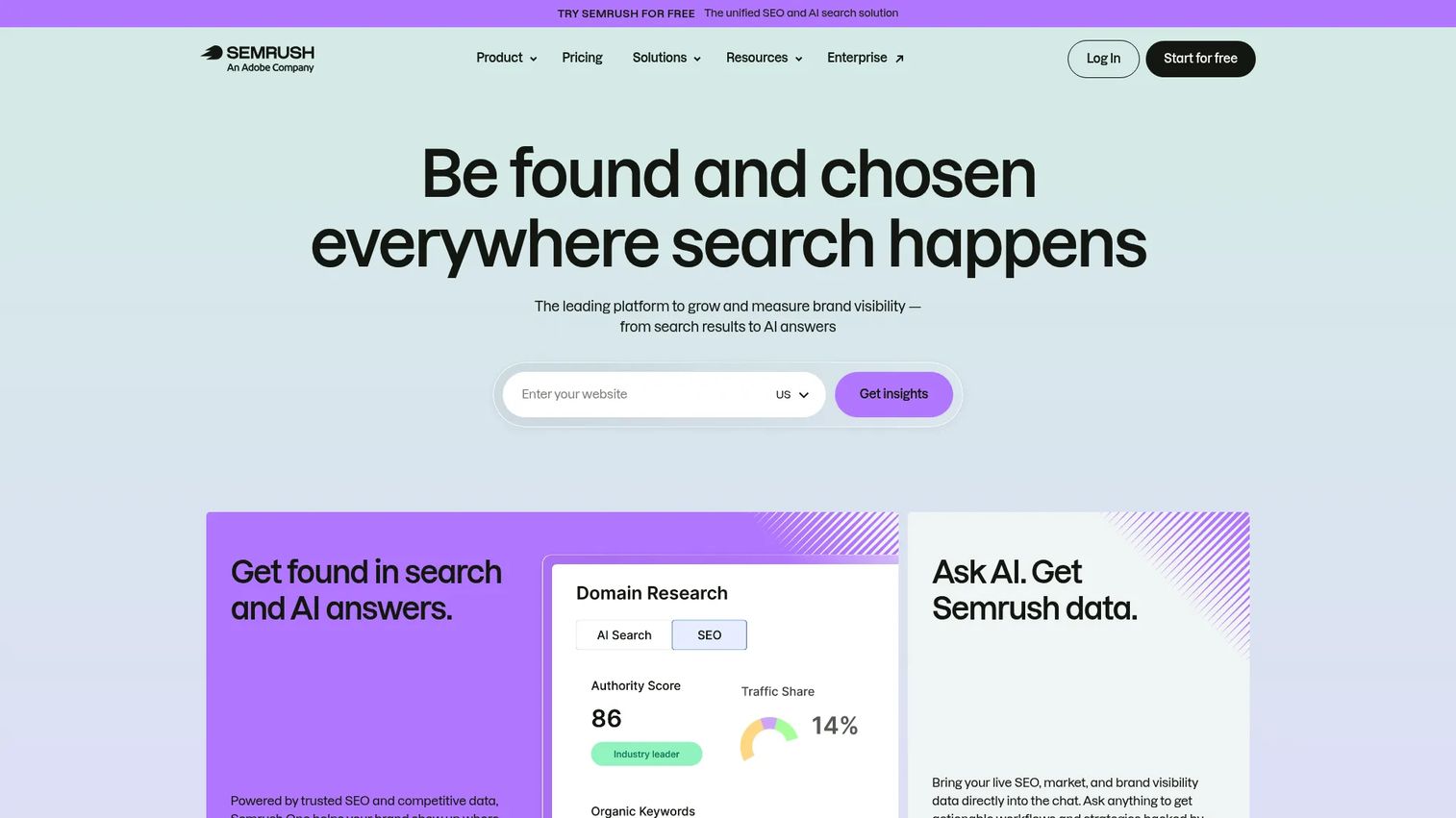
Semrush Backlink Audit is the toxic backlink detection module within Semrush's SEO Classic toolkit. It evaluates your link profile against 50+ parameters and assigns an AI-based Toxicity Score to each backlink, grouping them into categories for review. The tool connects directly to Google Search Console and Google Analytics for deeper context, and it includes an outreach module for requesting link removals before turning to disavow.
Best for: Growth and SEO teams that want a guided audit workflow inside a broader SEO platform.
Key features
- AI-based Toxicity Score across 50+ evaluation parameters
- Built-in outreach for link removal requests
- Disavow file export and direct Google Search Console integration
- Anchor text and referring domain analysis
- New, lost, and broken backlink monitoring with alerts
Why choose Semrush Backlink Audit: If your team already uses Semrush for keyword research or competitive analysis, the Backlink Audit adds meaningful depth without a separate subscription. The guided workflow helps teams that don't want to interpret raw link data themselves.
Semrush Backlink Audit pricing: Plans start at $117.33/month (Pro, billed annually) or $139/month on a monthly basis. Backlink Audit is included across Pro, Guru ($208.33/mo annually), and Business ($416.66/mo annually) tiers.
G2 rating: 4.4/5
2. SE Ranking Backlink Checker
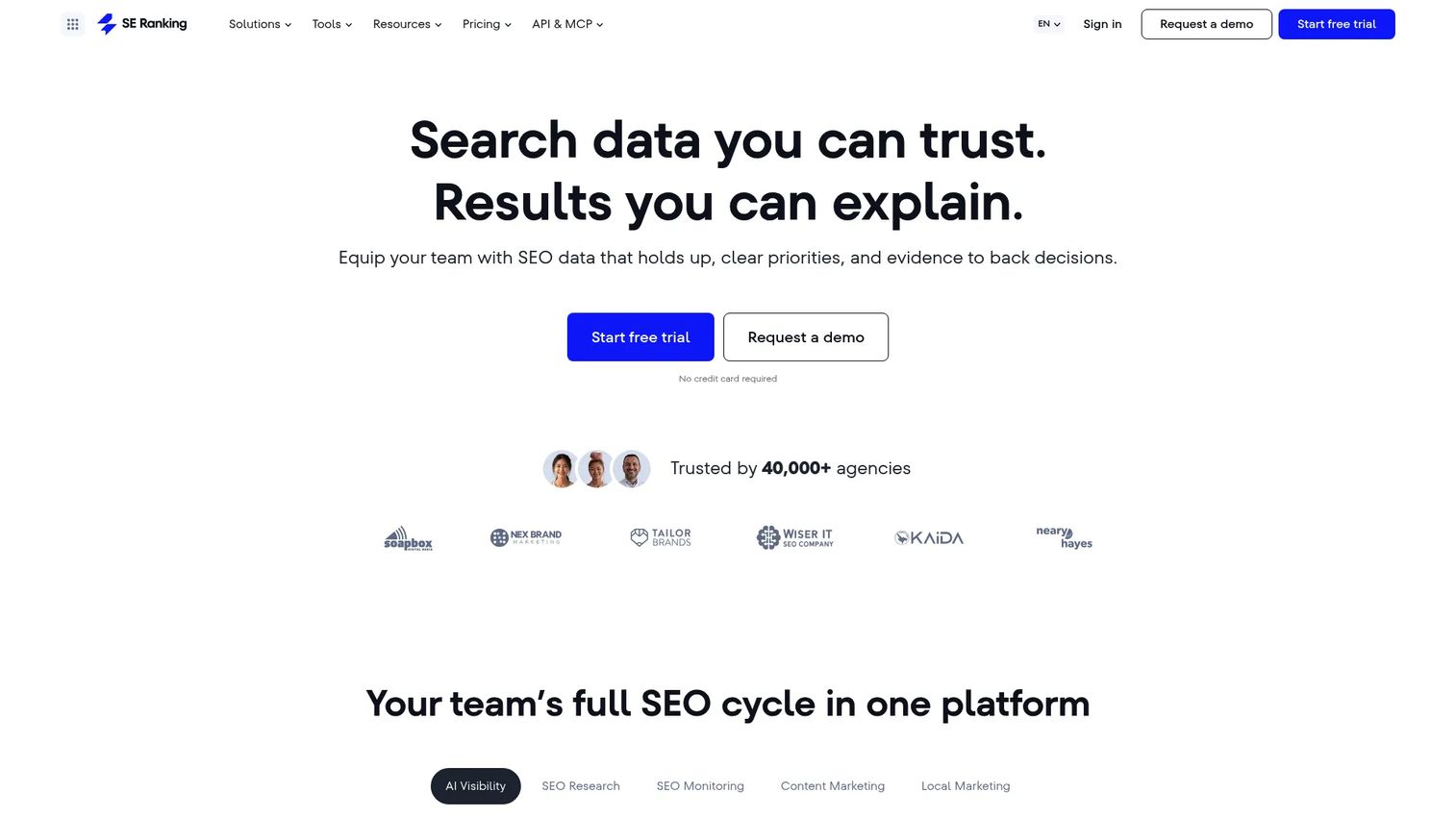
SE Ranking Backlink Checker covers backlink profile analysis, toxicity scoring, and ongoing monitoring within a single platform. It reports Domain Trust and Page Trust alongside toxicity indicators, giving you two signal types for evaluating link quality. The Backlink Gap Analyzer lets you compare your profile against competitors to find both risks and opportunities in one workflow.
Best for: Budget-conscious SEO teams and agencies that need backlink analysis, monitoring, and rank tracking under one subscription.
Key features
- Domain Trust and Page Trust scores per referring domain
- Toxic backlink detection with filtering by risk level
- Backlink Gap Analyzer for competitive comparison
- New, lost, and broken link tracking
- Anchor text and dofollow/nofollow breakdown
Why choose SE Ranking Backlink Checker: SE Ranking hits a practical price-to-capability ratio. Teams consolidating tools will find the combination of backlink checker, rank tracker, and site auditor within one plan more cost-effective than buying each separately.
SE Ranking Backlink Checker pricing: The Core plan starts at $103.20/month (monthly billing). Backlink Checker is included in all plans. A fully functional 14-day trial is available. Enterprise pricing is custom.
G2 rating: 4.7/5
3. WebCEO Toxic Backlink Checker
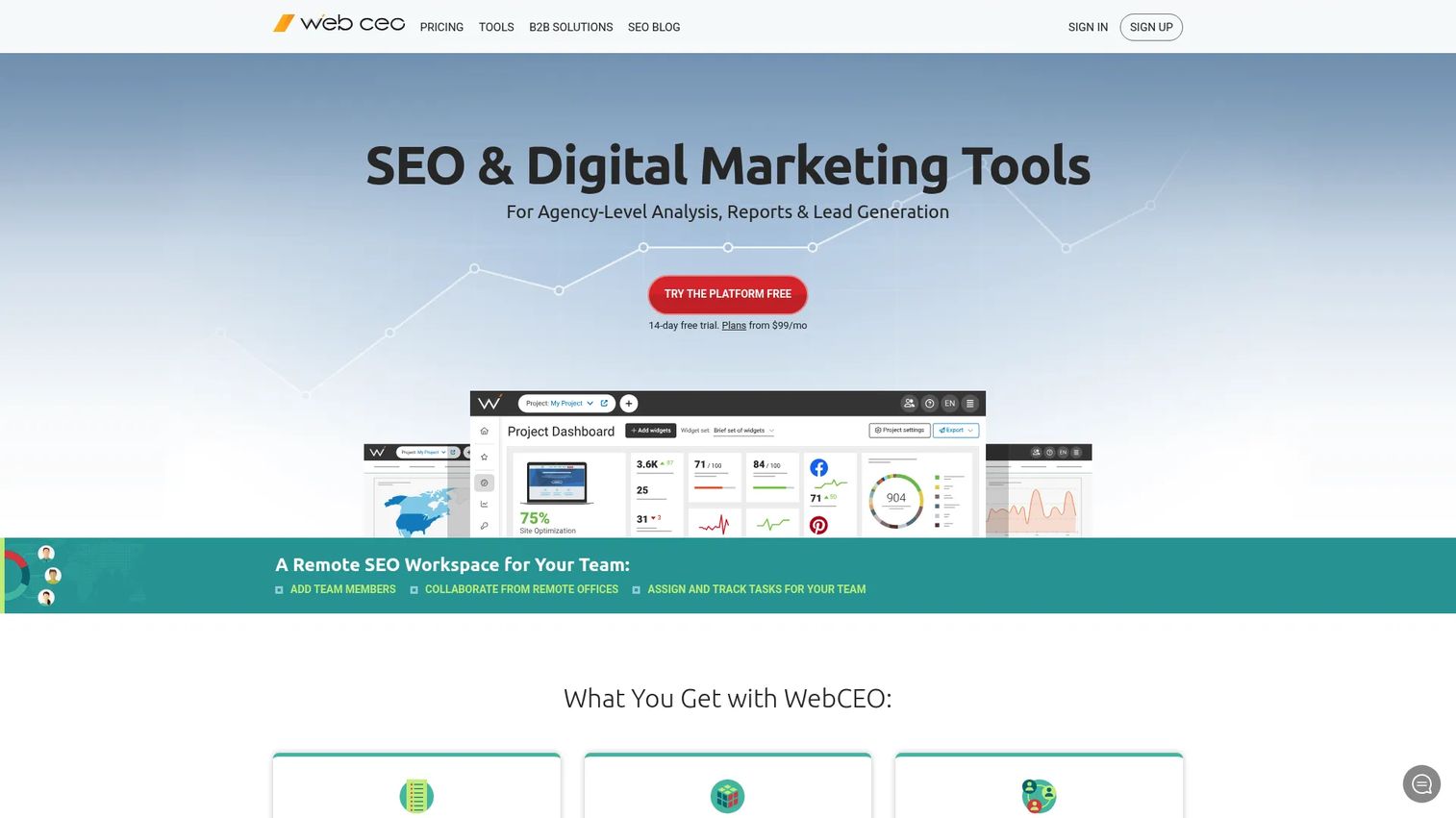
WebCEO's Toxic Backlink Checker focuses on turning a backlink audit into an operational cleanup process. Its configurable toxicity formula lets you adjust which criteria contribute to a link's risk score, drawing on Trust Flow, Citation Flow, organic traffic, and domain age as inputs. WebCEO uses Majestic's backlink data as its index source, which matters for understanding the coverage you're working with.
Best for: Agencies and SEO teams managing link cleanup workflows for multiple clients or sites.
Key features
- Configurable toxicity formula using Trust Flow, Citation Flow, domain age, and traffic signals
- Disavow file generation, import, and export
- Scheduled backlink scans with email alerts
- Backlink monitoring for new and lost links
- Partner link monitoring for outreach relationship management
Why choose WebCEO Toxic Backlink Checker: Its disavow workflow is more operationally complete than most tools in this price range. For teams that move from link audit to outreach to disavow repeatedly across clients, the structured process saves meaningful time.
WebCEO Toxic Backlink Checker pricing: Plans start at $36/month for Solo (minimum 3-month commitment) or $32/month billed annually. Startup is $119/month. A 14-day trial is advertised on the WebCEO site.
G2 rating: 4.7/5
4. Ahrefs Site Explorer
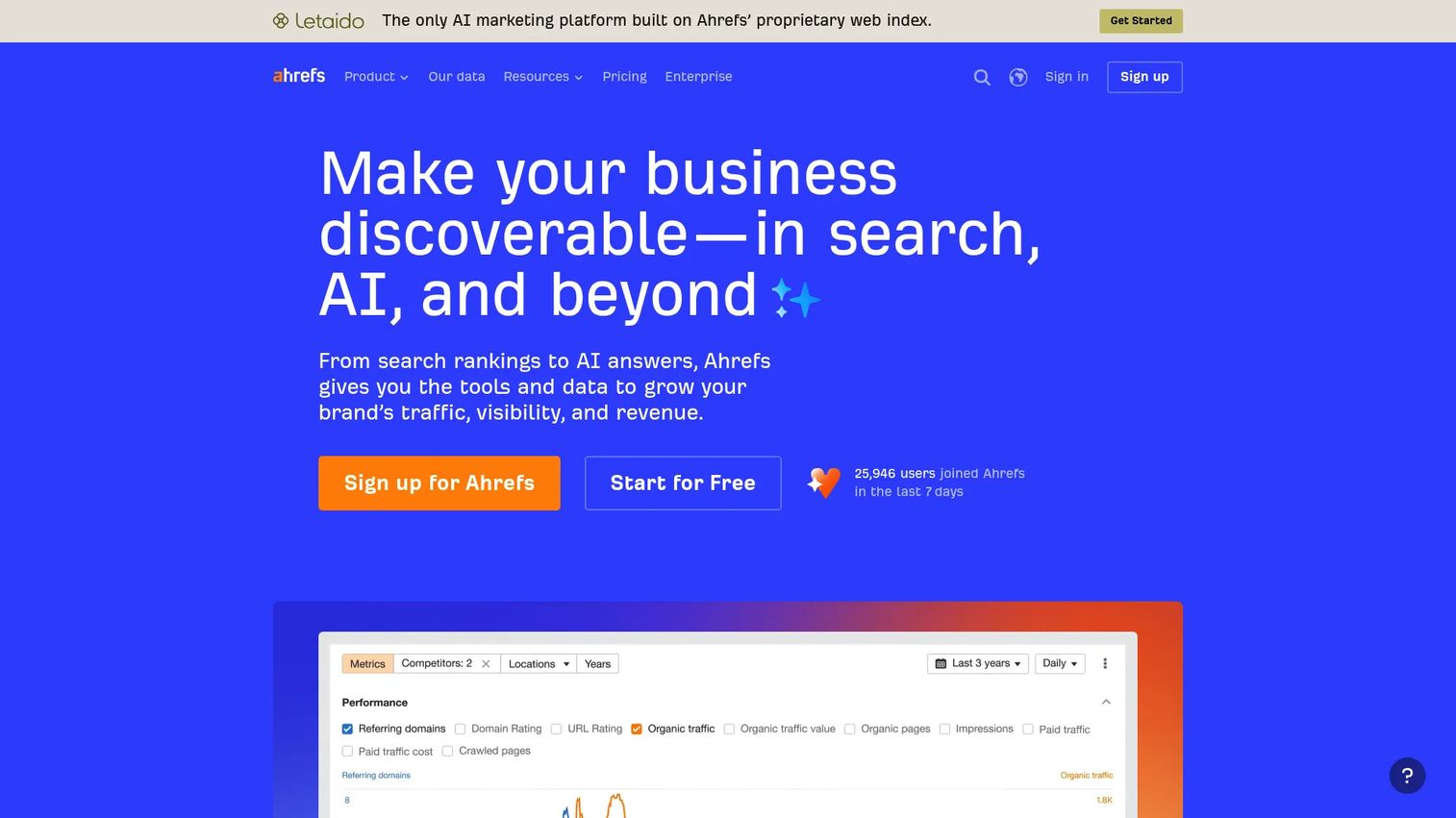
Ahrefs Site Explorer is primarily a backlink intelligence tool rather than a dedicated toxic backlink checker. It gives you a large and regularly updated link index, detailed referring domain reports, and competitive link analysis through Link Intersect. Identifying unnatural or spammy links with Ahrefs requires more manual judgment than tools with built-in toxicity scores, but the depth of data it surfaces is hard to match.
Best for: Advanced SEO teams and agencies that need comprehensive backlink discovery and competitor link gap analysis.
Key features
- Site Explorer with full backlink and referring domain data
- Link Intersect for competitive backlink comparison
- Anchor text report for detecting over-optimized patterns
- Lost and new backlink tracking
- Referring domain filtering by DR, traffic, and link type
Why choose Ahrefs Site Explorer: Ahrefs earns its place for teams that want the largest possible view of their link profile. The tradeoff is that you'll need to build your own review criteria rather than relying on a pre-built toxicity score.
Ahrefs Site Explorer pricing: The Starter plan is $29/month. Lite starts at $129/month, Standard at $249/month, and Advanced at $449/month. Enterprise pricing requires contacting sales. Ahrefs also offers free Webmaster Tools for site owners checking their own domain.
G2 rating: 4.5/5
5. Moz Link Explorer
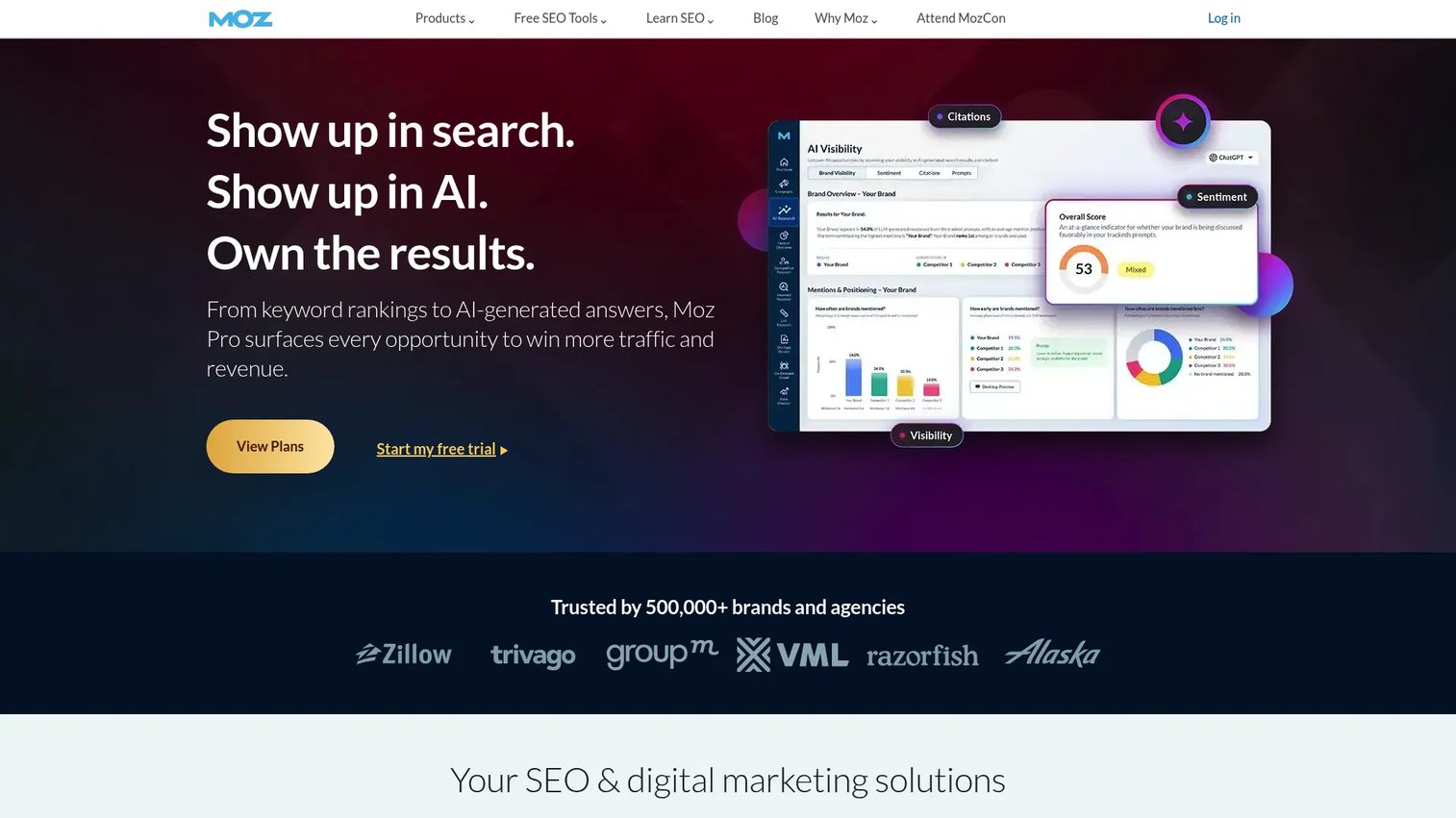
Moz Link Explorer is Moz Pro's backlink analysis tool, best known for its Spam Score and Domain Authority metrics. Spam Score assigns each linking domain a risk percentage based on correlations with penalized sites, giving teams a quick filter for potentially problematic links. Domain Authority is widely understood by marketing leadership, which helps when you're explaining backlink quality to stakeholders who don't work in SEO day to day.
Best for: Small teams and marketers who want familiar quality benchmarks and a lower learning curve for backlink review.
Key features
- Spam Score per linking domain (0 to 100% scale)
- Domain Authority for quality benchmarking
- Linking domain and page-level analysis
- Anchor text reporting
- Lost and new link tracking
Why choose Moz Link Explorer: Moz works well when your team already uses Domain Authority as a reporting metric, or when you need backlink context without investing in a full enterprise SEO suite. Pricing and G2 data for Moz Pro could not be verified from first-party sources at the time of publication; check the Moz website directly for current plan details and ratings before purchase.
Moz Link Explorer pricing: Pricing and G2 data were unavailable from first-party sources during drafting. Visit moz.com/products/pro for current plan pricing and feature access.
6. Majestic
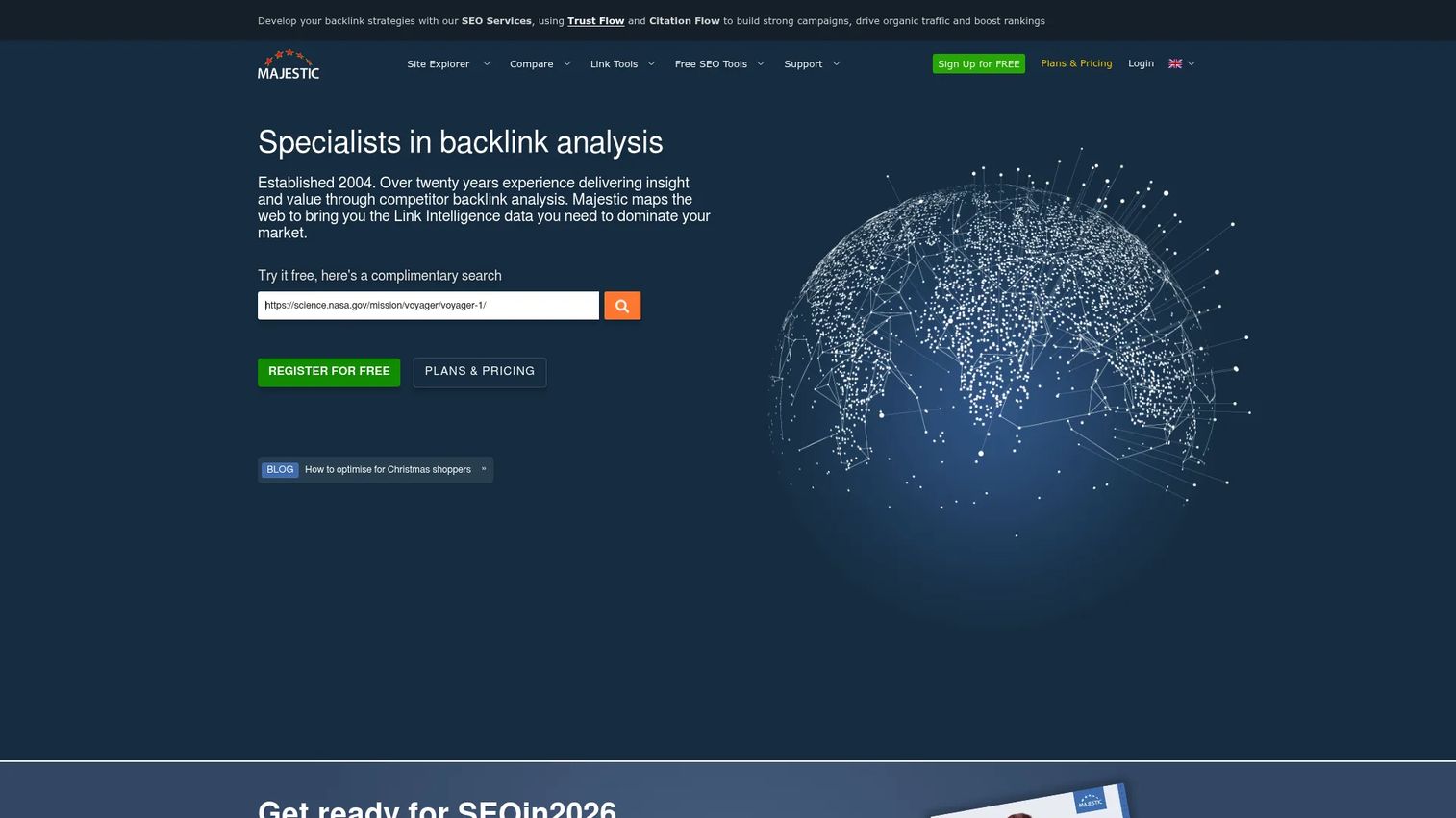
Majestic built its reputation on two proprietary metrics: Trust Flow, which measures the quality of a site's inbound links relative to trusted seed sites, and Citation Flow, which reflects link volume. The gap between these two metrics often signals manipulative link patterns. Topical Trust Flow adds category relevance, letting you spot links from sites in completely unrelated niches.
Best for: SEO practitioners and agencies that need deep link quality metrics and historical backlink context for manual review.
Key features
- Trust Flow and Citation Flow for every linking domain
- Topical Trust Flow for assessing link relevance by category
- Fresh Index for recent links and Historic Index for older patterns
- Bulk Backlink Checker for large-scale domain analysis
- API access on the API plan
Why choose Majestic: Majestic functions as a link intelligence database rather than a guided audit platform. It's strongest when you need to evaluate link quality at scale or cross-reference a third-party data source against tools with built-in remediation workflows.
Majestic pricing: The Lite plan starts at $49.99/month (or $41.67/month billed annually). Pro is $99.99/month ($83.33/month annually). A free test-drive option is available for initial exploration.
G2 rating: 4.3/5
7. Google Search Console
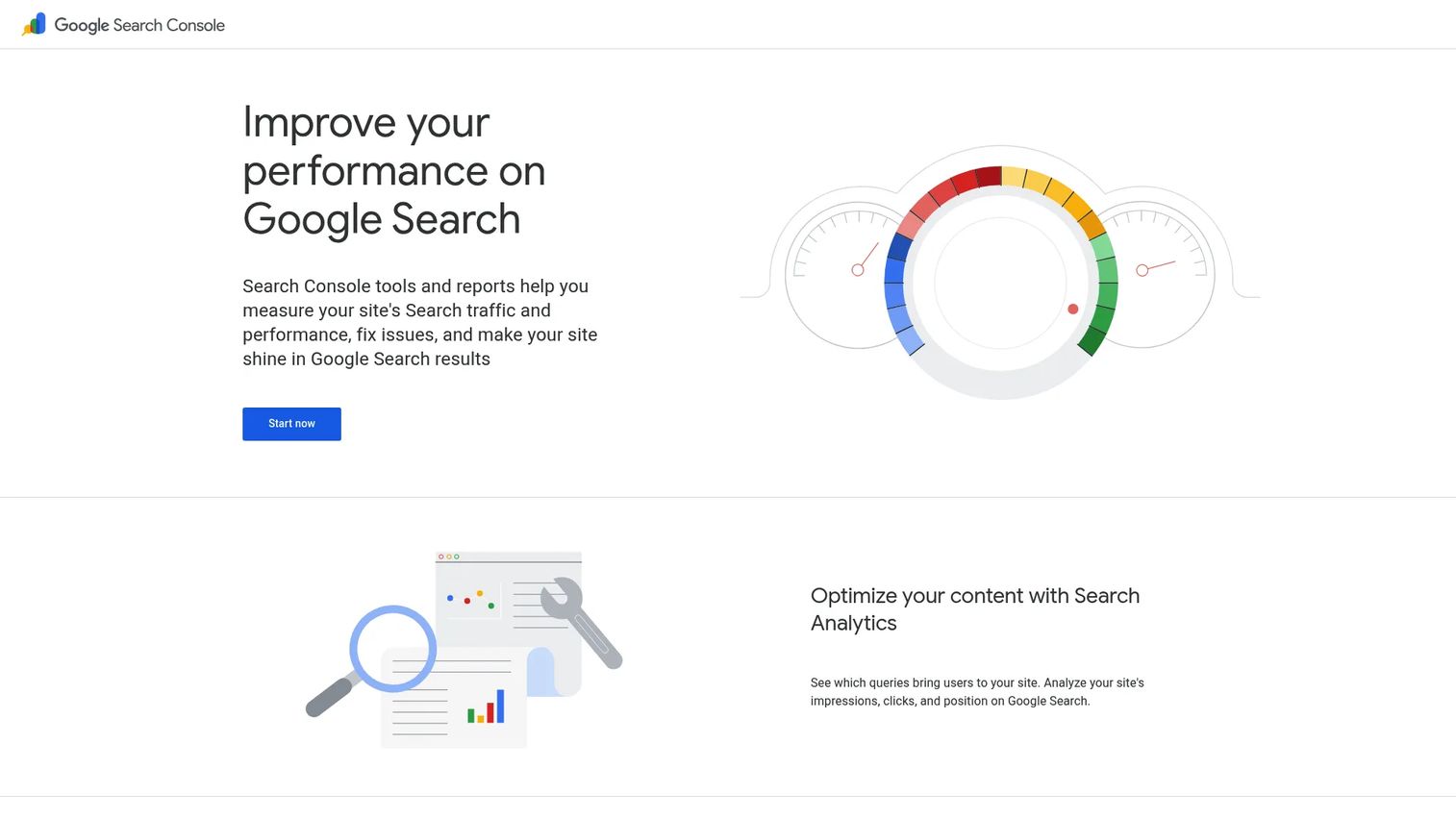
Google Search Console is the free starting point for any backlink audit. Its Links report shows the domains linking to your site according to Google's own crawl data, which makes it the most authoritative single source for owned-site link information. It won't give you a toxicity score, but it will show you whether Google has flagged a manual action against your site for unnatural links.
Best for: Any site owner who wants a free baseline of first-party link data before committing to a paid backlink audit tool.
Key features
- Top linking sites with link counts
- Top linked pages on your domain
- Anchor text examples per linking domain
- Manual Actions report for penalty visibility
- URL Inspection for indexing and crawl status
Why choose Google Search Console: It's free and comes directly from Google. Use it to verify whether a manual action exists before running any disavow workflow, and cross-reference what third-party tools flag against what Google actually sees. No third-party index matches Google's coverage for your own site.
Google Search Console pricing: Free.
G2 rating: 4.7/5
8. Linkody
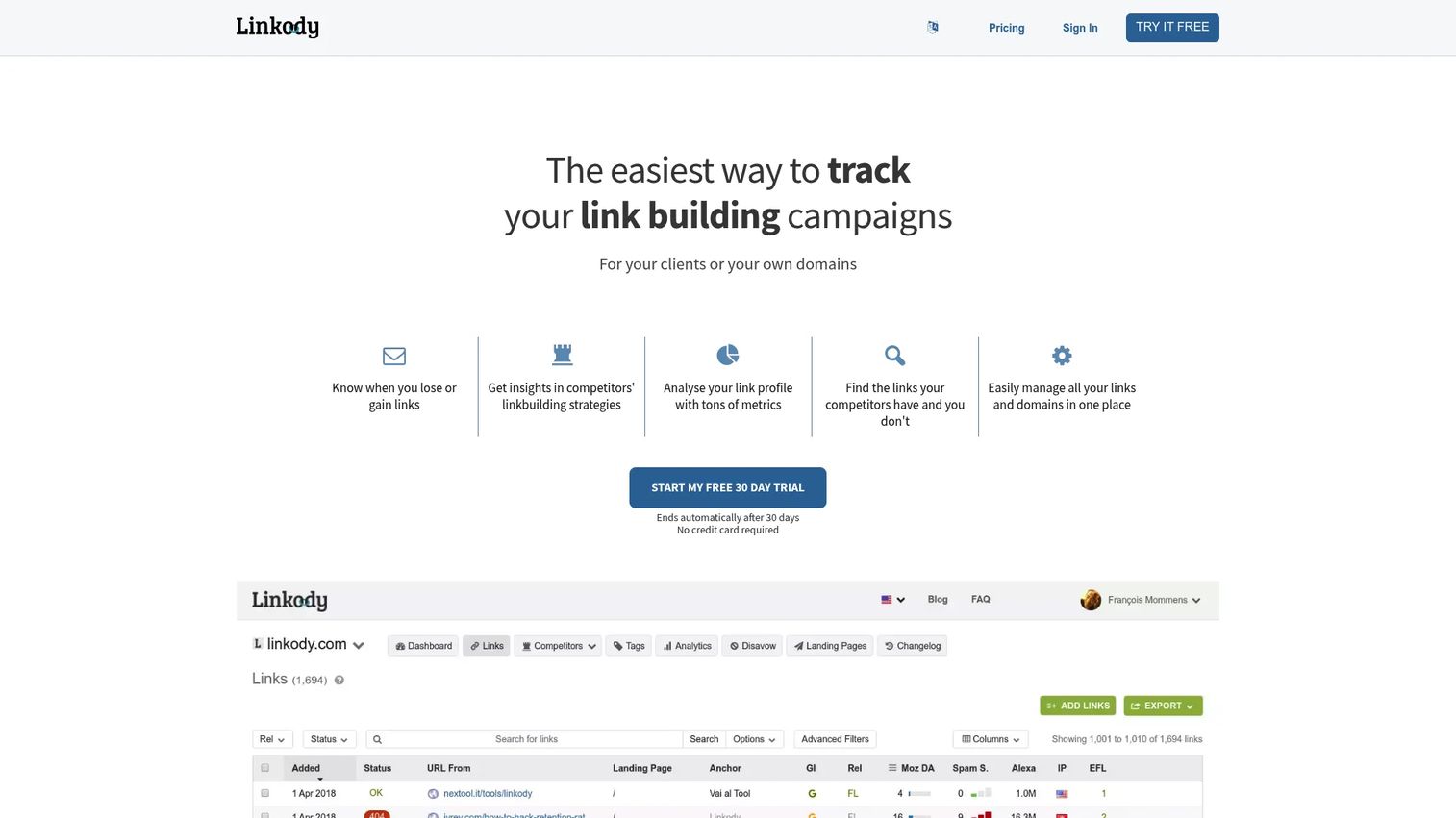
Linkody is a lightweight backlink monitoring tool built for teams that want ongoing visibility into link changes without the overhead of a full SEO suite. It monitors your backlinks continuously and sends email alerts when new links appear or existing ones are lost. A disavow tool is included, and competitor backlink tracking is available across all plans.
Best for: Small businesses, freelancers, and agencies that need reliable backlink change monitoring at a lower monthly cost.
Key features
- 24/7 backlink monitoring with email alerts for new and lost links
- SEO metrics per backlink including domain and page authority signals
- Competitor backlink tracking and Link Intersect analysis
- Disavow tool with export support
- PDF and CSV exports for client reporting
Why choose Linkody: Linkody is the right fit when the primary need is staying informed about backlink changes rather than running forensic audits. Its pricing is well below the enterprise SEO suite range, which matters for agencies billing clients on tighter margins.
Linkody pricing: Plans start at €13.90/month for the Webmaster plan (monthly billing) or €10.50/month billed annually. A 30-day free trial is available with no credit card required.
9. Monitor Backlinks
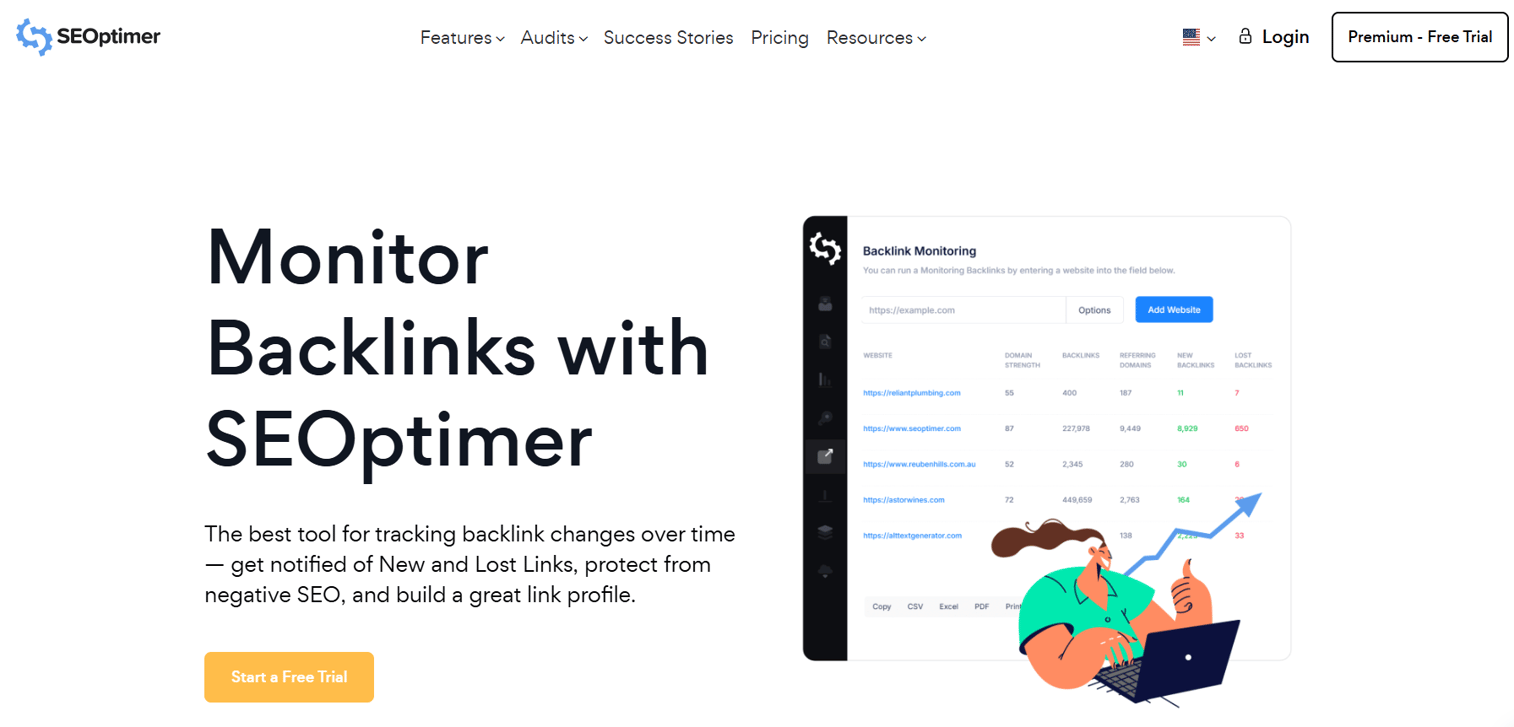
Monitor Backlinks is a backlink monitoring and alert tool for teams that want regular updates on their link profile without running full audits on demand. It tracks keyword rankings alongside backlink changes and includes basic disavow support for managing flagged links. The tool is pitched at smaller teams and site owners who want a practical dashboard for daily backlink visibility.
Best for: Teams that want backlink alerts and simple disavow support in a compact, low-overhead tool.
Key features
- Backlink alerts for new and lost links
- Keyword rank tracking alongside link monitoring
- Competitor backlink monitoring
- Disavow support for flagged domains
- Dashboard showing link quality signals
Why choose Monitor Backlinks: It suits teams that have already completed an initial audit and want to maintain ongoing awareness rather than run repeated deep investigations. It's less suited for teams that need enterprise-grade audit depth.
Monitor Backlinks pricing: Visit monitorbacklinks.com directly for current plan details before purchasing.
10. cognitiveSEO
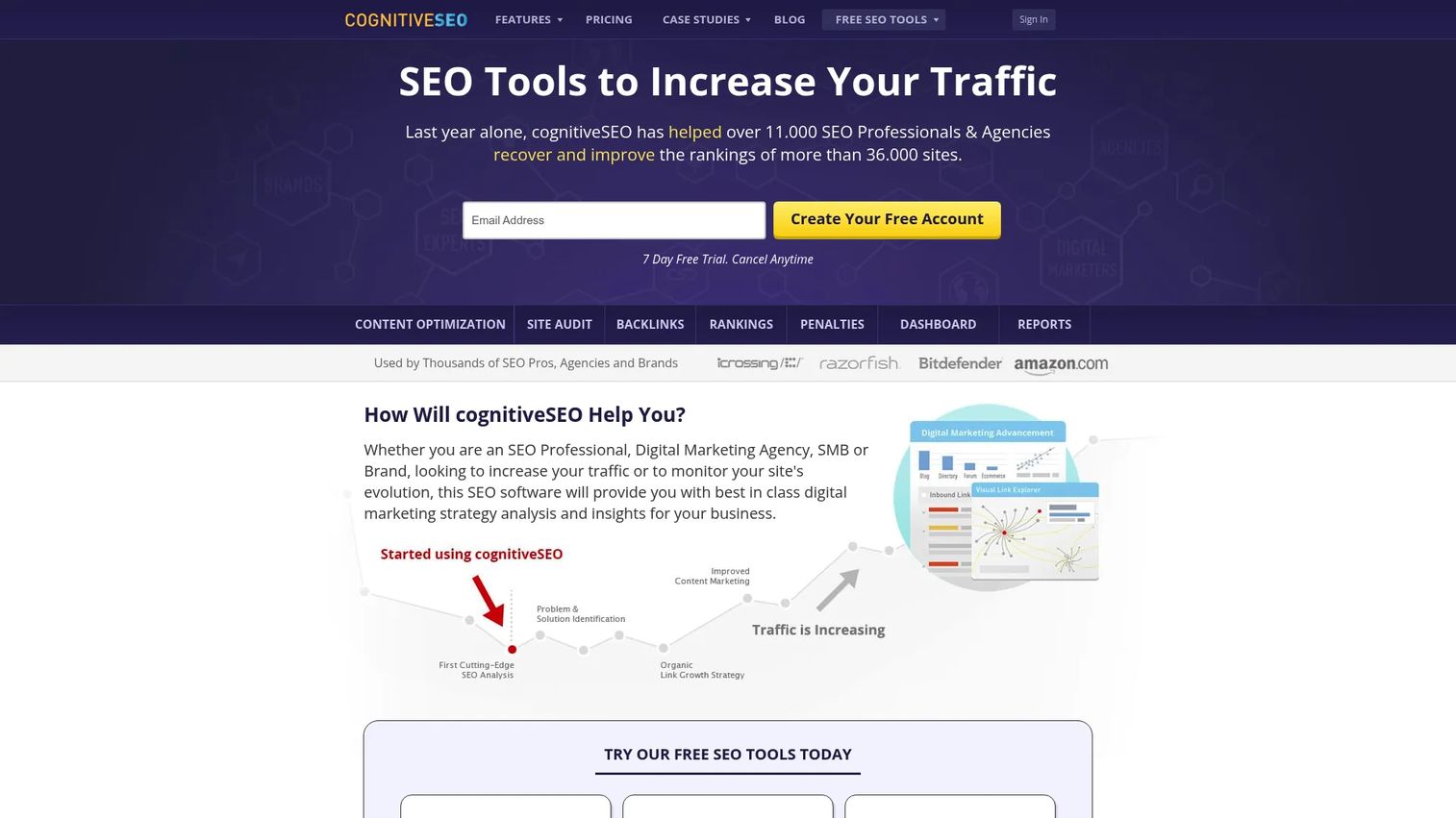
cognitiveSEO covers backlink analysis, unnatural link detection, keyword research, rank tracking, and site auditing in a single platform. Its Unnatural Link Detection feature assigns a risk score per link and surfaces patterns associated with penalty-triggering profiles, making it a practical choice for teams dealing with historic aggressive link building or investigating a suspected Google penalty.
Best for: SEO teams auditing unnatural link patterns, investigating penalties, or managing high-risk historic link profiles.
Key features
- Unnatural Link Detection with per-link risk scoring
- Anchor text analysis for over-optimization signals
- Disavow file creation and export
- Rank tracking with keyword-level visibility
- Site audit with JavaScript crawling support
Why choose cognitiveSEO: Its penalty recovery workflow is more purpose-built than general-purpose SEO suites. For teams where the question is "did past link building create a problem," cognitiveSEO gives you the analysis depth to answer it. Manual review is still essential; the tool surfaces patterns, not verdicts.
cognitiveSEO pricing: Plans start at $129.99/month (Starter) or $89/month billed annually. Premium is $199/month monthly. A 7-day free trial is available.
G2 rating: 4.4/5
11. LinkResearchTools
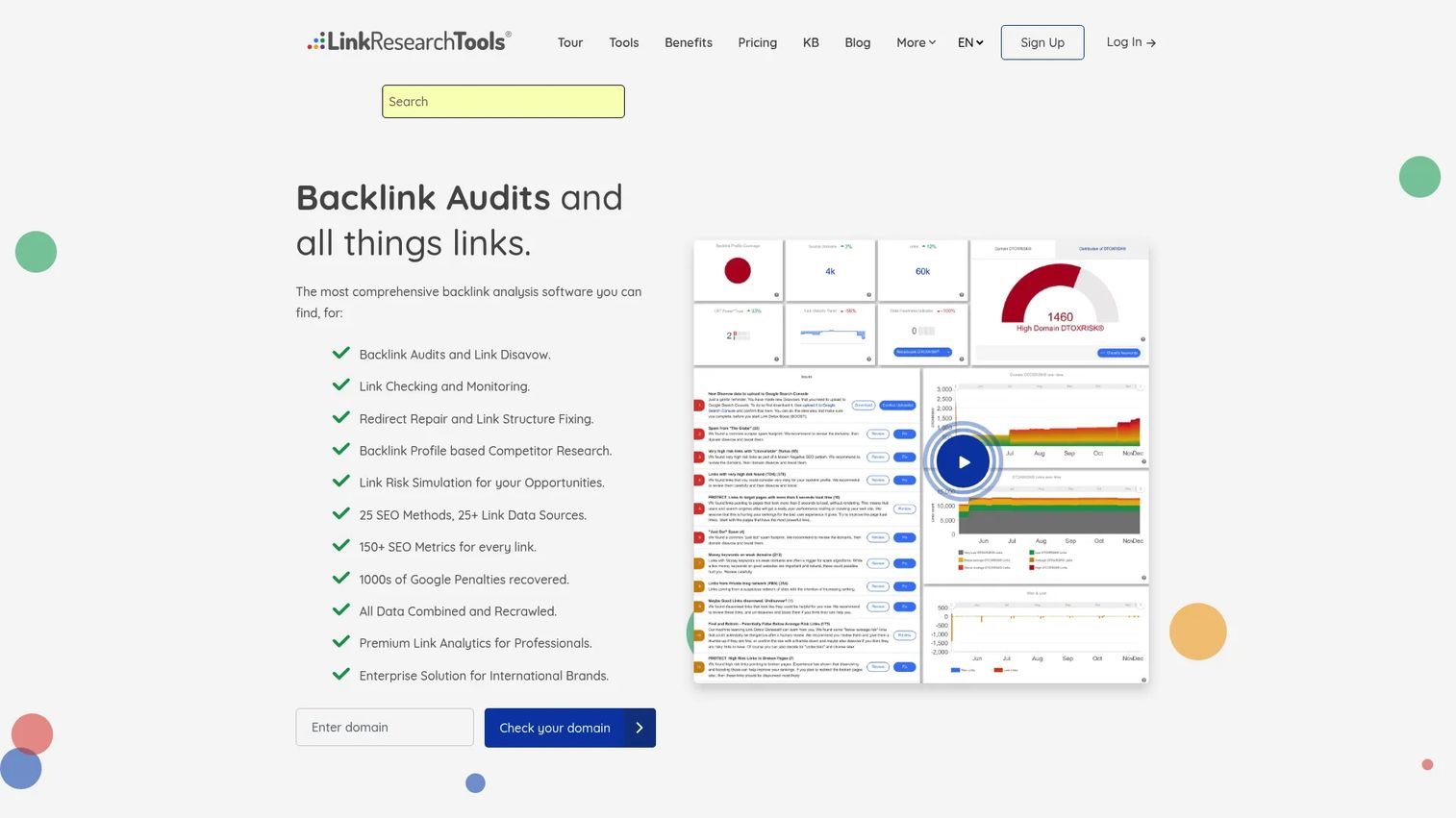
LinkResearchTools aggregates link data from multiple sources, recrawls it for freshness, and runs it through its Link Detox risk scoring engine. It is the most technically deep option on this list, designed for SEO consultants and agencies handling severe backlink problems, complex penalty recovery projects, or large-scale link audits where precision matters more than speed.
Best for: Advanced SEO consultants, agencies, and in-house teams managing serious backlink risk or multi-site penalty recovery.
Key features
- Link Detox with automated link-risk scoring across aggregated data sources
- Link Simulator for evaluating the potential impact of new links
- Competitor backlink analysis and link gap reporting
- Link monitoring with change alerts
- Disavow support with documentation workflow
Why choose LinkResearchTools: The depth of its link-risk analysis justifies the price for teams where a backlink mistake carries real financial consequences. If your SEO program is primarily routine monitoring rather than forensic investigation, the entry cost may exceed what the use case warrants.
LinkResearchTools pricing: Plans start at $599/month (Superhero Small). A 7-day trial is available for $17. Standard tier is $999/month, and Plus is $2,499/month. Enterprise pricing is bespoke.
G2 rating: 4.0/5
Considerations when choosing a toxic backlink checker
Check database coverage before trusting the score
No backlink index sees the full web. Tools with smaller databases will miss links that larger ones catch, and vice versa. Before acting on a disavow file, compare samples from at least two tools to identify patterns rather than relying on a single source's coverage.
Separate scoring from decision-making
A toxicity score creates a prioritized review list. It does not make the removal decision for you. Before disavowing a domain, check the linking page manually: Does it look like a real site, is the link contextually relevant, and is there organic traffic? A single metric rarely answers all three questions.
Look for a clean disavow workflow
Good tools export clean domain-level lists in Google's required format, with the ability to annotate why each domain was included. That documentation matters if Google ever requests clarification about your disavow file, and it protects you from accidentally re-disavowing domains you later clean up.
Match the tool to your reporting workflow
Growth marketers report upward to leadership that may not understand SEO nuance. Tools with clean exports, visual dashboards, and plain-language risk summaries make it easier to explain what you found and why action is or isn't warranted. Complexity is a liability when you're presenting risk to a CFO.
Check whether your SEO stack already covers it
This is the consolidation question every digital marketer asks. If you already pay for Semrush, Ahrefs, or SE Ranking, their backlink audit features may be sufficient for routine checks. Standalone tools like Linkody, Monitor Backlinks, or dedicated deep-dive platforms like LinkResearchTools add value primarily when the built-in features of your current suite fall short.
Conclusion
The right toxic backlink checker depends more on how you intend to act on the data than on which tool flags the most links.
For most growth marketing teams, Semrush Backlink Audit is the strongest all-around choice, combining AI-based Toxicity Score with a guided audit and outreach workflow. SE Ranking offers comparable functionality at a lower entry price, making it a solid pick for smaller teams or agencies watching margins. WebCEO, cognitiveSEO, and LinkResearchTools go deeper on remediation and penalty recovery, which matters when the risk profile is high. Google Search Console stays free and irreplaceable as the first-party baseline before any disavow action. Ahrefs and Majestic are the strongest for raw link intelligence when manual review is part of your process.
The bigger risk in this workflow isn't the tool you pick. It's acting before you have enough signal. Start with a free export from Google Search Console, compare it against one paid backlink database, then review flagged domains before you remove or disavow anything.
FAQs
A toxic backlink checker is an SEO tool that analyzes inbound links pointing to a domain and flags those that show spam, unnatural, manipulative, or low-quality signals. It evaluates factors like domain reputation, anchor text patterns, link attributes, and referring site relevance, then produces a risk score or category for each link to help teams prioritize manual review.
Google Search Console is the free starting point. Its Links report shows which domains link to your site according to Google's own crawl data, and its Manual Actions report tells you whether a penalty has been applied. Free tiers and trials on tools like Ahrefs, Linkody, and Majestic can supplement this with broader database coverage, but paid plans typically give you stronger scoring, disavow export, and monitoring features.
Common signals include links from domains with no organic traffic, spammy or scraped content, irrelevant site categories, manipulative anchor text, known link network participation, hacked or malware-flagged pages, and patterns of sudden mass link acquisition. No single factor confirms a link is harmful. Most tools aggregate several signals into a composite score, which is why manual review of flagged links is still necessary.
No. Toxicity scores produce a review queue, not a deletion list. Disavowing too aggressively can remove links that contribute positively to your rankings. Review each flagged domain manually, check whether outreach to request removal makes sense first, and only submit a disavow file when you have documented justification for each included domain.
They can in certain cases, particularly when a manual action has been issued or when an aggressive paid link scheme is involved. For most sites, however, search engines are designed to detect and discount link spam algorithmically, meaning many suspicious links get ignored rather than penalized. A spike in flagged domains warrants investigation, but it doesn't automatically mean rankings will drop.
A backlink checker discovers inbound links and reports metrics like referring domains, anchor text, and link attributes. A toxic backlink checker adds a risk scoring layer, flagging links that match spam patterns and providing workflows for outreach, disavow file management, and ongoing monitoring. Many general SEO tools include both functions, while some tools focus specifically on the toxic-link detection and cleanup side.
Monthly checks are reasonable for active SEO programs. Beyond the regular cadence, run a backlink audit after major organic traffic drops, after completing large link-building campaigns, and whenever you spot an unexpected spike in referring domains from unfamiliar sources. Teams running affiliate or PR campaigns should also set up automated alerts to catch problematic new links as they appear.
Agencies typically need scheduled scans, clean client exports, multi-site management, and disavow file support. Semrush, SE Ranking, WebCEO, cognitiveSEO, and LinkResearchTools all offer features that address those requirements at different price points. SE Ranking and WebCEO hit a practical balance of functionality and cost for agencies managing multiple clients. LinkResearchTools is worth the premium when a client's situation involves serious penalty risk.