Most merchants are not short on customer data. They are short on a system that turns that data into repeat revenue without the founder or VP personally inspecting every campaign.
According to Constant Contact's 2025 SMB benchmark, 44% of small businesses globally now call email their most effective marketing channel, up from 23% in 2024. The demand for owned-channel marketing is real. The challenge is that the tools to run it range from free newsletter builders to enterprise CDPs costing six figures annually, and the wrong pick creates tool sprawl rather than repeatable revenue.
The right merchant marketing software gives a marketing leader clean customer data, automated campaigns across email and SMS, loyalty or ecommerce workflows, and reporting that survives a board meeting. Without that foundation, campaigns stay manual, churn stays opaque, and the founder stays in every customer conversation.
What's inside
This guide compares 20 merchant marketing software tools for local merchants, ecommerce brands, retail teams, and SaaS companies serving merchants. Tools were selected based on:
- Merchant use-case fit (loyalty, email, SMS, ecommerce automation, or omnichannel)
- Customer data and segmentation capability
- Pricing transparency and verified G2 review presence
- Stack fit for growing teams at Series B and beyond
This is a buying guide, not a directory.
TL;DR
- Best overall CRM-led platform: HubSpot combines marketing, sales, and CRM in one system a VP Marketing can operate from day one
- Best for ecommerce retention: Klaviyo runs email and SMS campaigns driven by purchase data, abandoned cart behavior, and predictive analytics
- Best for small merchants: Constant Contact, Mailchimp, and Brevo offer fast campaign setup at accessible price points
- Best for local loyalty programs: AppCard and FiveStars connect loyalty and promotions to store-level behavior
- Best for enterprise omnichannel: Braze and Salesforce Marketing Cloud handle complex, high-volume engagement across app, email, SMS, and web
- Best for customer data foundation: Twilio Segment unifies data before it hits any campaign tool
What is merchant marketing software?
Merchant marketing software helps merchants attract customers, drive repeat purchases, run promotions, manage loyalty programs, and deliver personalized campaigns across channels including email marketing, SMS marketing, mobile, web, ecommerce storefronts, and in-store experiences.
Core jobs merchant marketing software handles
- Customer list growth and contact capture
- Email campaign creation and automation
- SMS outreach and permission-based messaging
- Loyalty program enrollment and rewards management
- Promotions, coupons, and personalized offers
- Behavioral segmentation and customer profiling
- POS and ecommerce platform integrations
- Campaign analytics and revenue attribution
- Omnichannel journey orchestration
How this category differs from generic marketing software
Merchant marketing tools sit close to the transaction. They connect to purchase history, SKU-level behavior, store visit data, loyalty points, coupon redemptions, or ecommerce events. A general-purpose CRM or email tool may not have those data hooks built in.
What founders evaluating this category should care about
For a Series B founder, the questions are: Does this give a VP Marketing a repeatable retention motion? Does it produce clean metrics that survive board scrutiny? Does it reduce churn without requiring the founder in every campaign decision? Tools in this category range from simple email builders to full customer data platforms, and the right choice depends on the merchant motion you are running.
When to use merchant marketing software
Drive repeat purchases without manual campaign work
Merchants need a system for winback sequences, replenishment reminders, seasonal promotions, and loyalty marketing journeys. Manual batch-and-blast campaigns break down once customer segments multiply beyond three or four groups. The right platform automates those flows so the team manages rules and creative, not list exports.
Connect customer data across stores and online channels
A POS system, an ecommerce store, a CRM, and an email tool all holding separate customer records produce four different customer profiles for the same buyer. Merchant marketing software that integrates those sources lets a team act on what customers actually bought, not what they signed up to receive. This matters especially for ecommerce personalization at scale.
Give marketing leaders a repeatable retention motion
A founder should not need to inspect every winback campaign. The tool should let a Head of Growth set up lifecycle flows, monitor completion rates and revenue attribution, and iterate without pulling in engineering. Clean reporting on email open rates, SMS conversions, and loyalty redemptions means the marketing leader can own the number.
Merchant marketing software comparison
The table below covers all 20 tools in relevance order. Pricing and G2 ratings reflect verified figures from each vendor's pricing page and G2 listing.
| # | Product | Best for | Key differentiator | Pricing | G2 rating |
|---|---|---|---|---|---|
| 1 | HubSpot | CRM-led marketing teams | CRM, automation, and sales handoff in one platform | Free; paid from $7/seat/mo | 4.4/5 |
| 2 | Constant Contact | Small merchants, local businesses | Fast email and SMS setup, no technical expertise required | From $12/mo | 4.1/5 |
| 3 | Klaviyo | Ecommerce and DTC brands | Revenue-focused email and SMS with purchase data integration | Free plan; paid tiers scale with profiles | 4.6/5 |
| 4 | Mailchimp | Small teams, early automation | Broad email, automation, and audience segmentation | Free; paid from $13/mo | 4.3/5 |
| 5 | ActiveCampaign | Behavior-driven automation | Deep automation builder with CRM and lifecycle workflows | From $15/mo | 4.4/5 |
| 6 | Optimove | Data-rich enterprise merchants | Customer-led lifecycle marketing with predictive AI | Custom pricing | 4.6/5 |
| 7 | AppCard | Grocery and retail merchants | Loyalty, personalized offers, and POS-connected campaigns | Contact sales | N/A |
| 8 | FiveStars | Local brick-and-mortar businesses | Simple loyalty and repeat-visit marketing for local merchants | Contact sales | 4.1/5 |
| 9 | Braze | Enterprise, mobile-first brands | Real-time cross-channel engagement at enterprise scale | Contact sales | 4.5/5 |
| 10 | Twilio Segment | Data-mature marketing teams | Customer data platform unifying all sources before campaigns | Free; Team from $120/mo | 4.5/5 |
| 11 | Iterable | Growth teams, lifecycle campaigns | Cross-channel orchestration with experimentation tools | Contact sales | 4.4/5 |
| 12 | Blueshift | Predictive personalization | AI-driven segmentation and product recommendations | From $1,250/mo | 4.4/5 |
| 13 | MoEngage | Mobile-first and app-driven brands | Push, email, SMS, and in-app from one engagement platform | Custom pricing | 4.5/5 |
| 14 | CleverTap | App-first retention teams | Real-time mobile engagement with behavioral analytics | From $85/mo | 4.6/5 |
| 15 | Customer.io | Technical growth teams | Event-based messaging tied to product behavior | From $100/mo | 4.4/5 |
| 16 | Emarsys | Retail and enterprise ecommerce | Omnichannel automation purpose-built for retail | Contact sales | 4.2/5 |
| 17 | Shopify Marketing Automation | Shopify merchants | Native store-data automations with no third-party setup | Free (10K emails/mo included) | N/A |
| 18 | Omnisend | Ecommerce brands, mid-market | Email, SMS, and push with ecommerce segmentation built in | Free; Standard from $11.20/mo | 4.6/5 |
| 19 | Brevo | Cost-conscious growing teams | Email, SMS, CRM, and automation at accessible price points | Free; Starter from $9/mo | 4.5/5 |
| 20 | Salesforce Marketing Cloud | Enterprise Salesforce users | AI-powered journey orchestration across every channel | From $1,500/org/mo | N/A |
Best 20 merchant marketing software tools for 2026
1. HubSpot
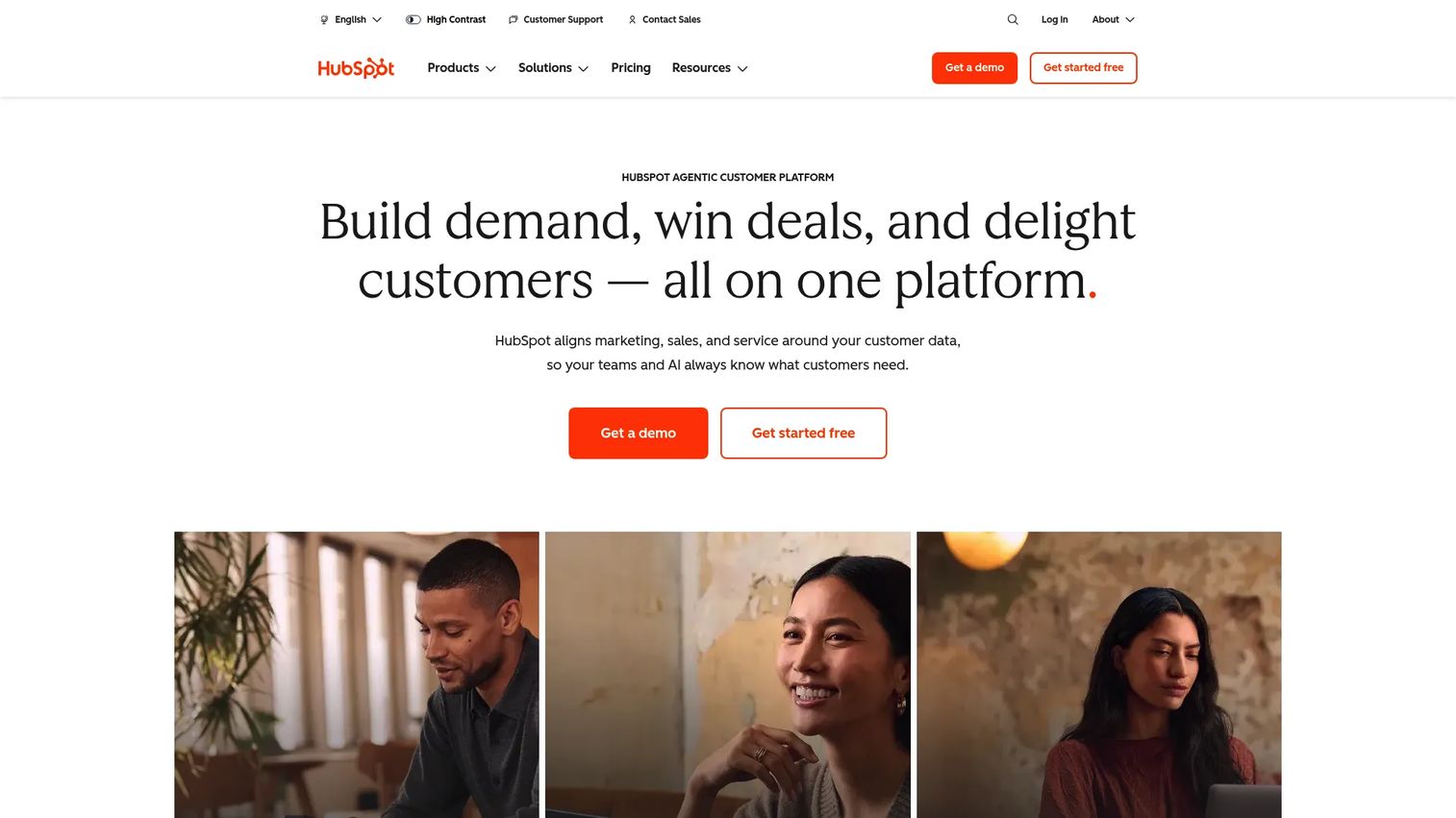
HubSpot is an all-in-one customer platform combining CRM, marketing automation, sales tools, and customer service in a single system. For merchant-facing teams, the value is consolidation: A VP Marketing, a sales lead, and a RevOps manager can all work from the same contact records, lifecycle stages, and deal pipeline. Marketing Hub covers email campaigns, landing pages, forms, automation workflows, and revenue reporting.
Best for: Growing teams that want CRM, marketing automation, and sales handoff in one system without stitching together separate tools.
Key features
- CRM with unified contact records and lifecycle stages
- Email campaign builder with templates and A/B testing
- Marketing automation workflows with behavioral triggers
- Landing pages and lead capture forms
- Revenue attribution and pipeline reporting
Why choose HubSpot: Choose HubSpot when stack consolidation matters more than channel depth. A founder who wants one system the whole GTM team operates, with clean metrics that roll up into board-level reporting, gets more operating leverage from HubSpot than from piecing together best-of-breed point tools.
HubSpot pricing: Free plan available. Marketing Hub Starter starts at $7/seat/month, Professional at $800/month, and Enterprise at $3,600/month. Contact count drives cost at paid tiers.
G2 rating: 4.4/5
2. Constant Contact
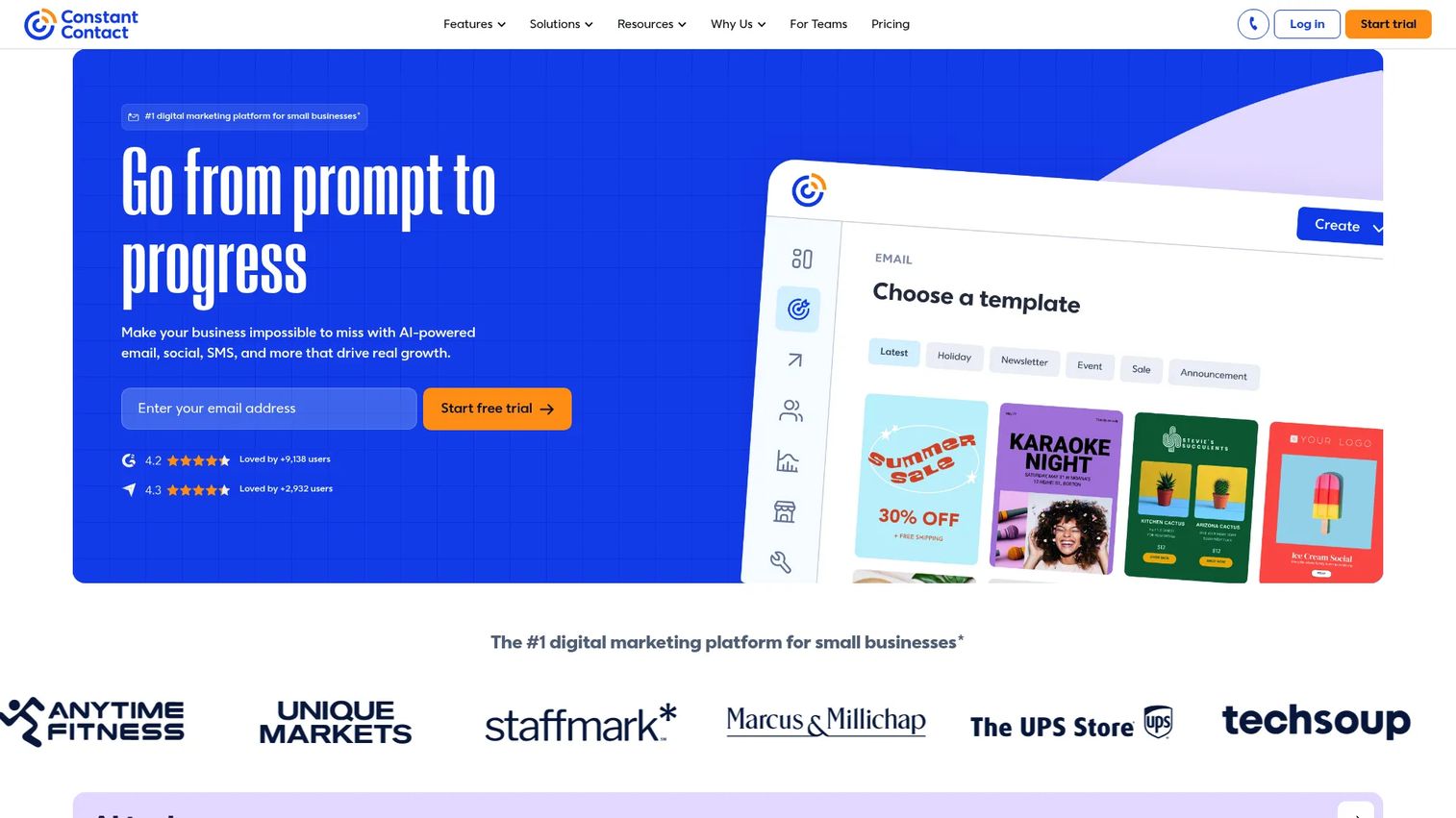
Constant Contact is a digital marketing platform built for small businesses and local merchants that need consistent email campaigns without a technical marketing team. It covers email templates, contact list management, social posting, event marketing, and SMS on higher-tier plans. The interface prioritizes speed to launch over automation depth.
Best for: Small merchants and service businesses that need fast campaign setup and consistent outreach without building complex automation.
Key features
- Email templates with drag-and-drop editing
- Contact list management and basic segmentation
- SMS marketing on Standard and Premium plans
- Social media posting tools
- Event marketing and RSVP tracking
Why choose Constant Contact: When the core need is reliable email cadence and the team has limited marketing resources, Constant Contact delivers without a steep learning curve. It fits operators who need campaigns running in week one, not month three.
Constant Contact pricing: No free tier, but a free trial is available. Lite starts at $12/month, Standard at $35/month, and Premium at $80/month. Prices scale with contact count.
G2 rating: 4.1/5
3. Klaviyo
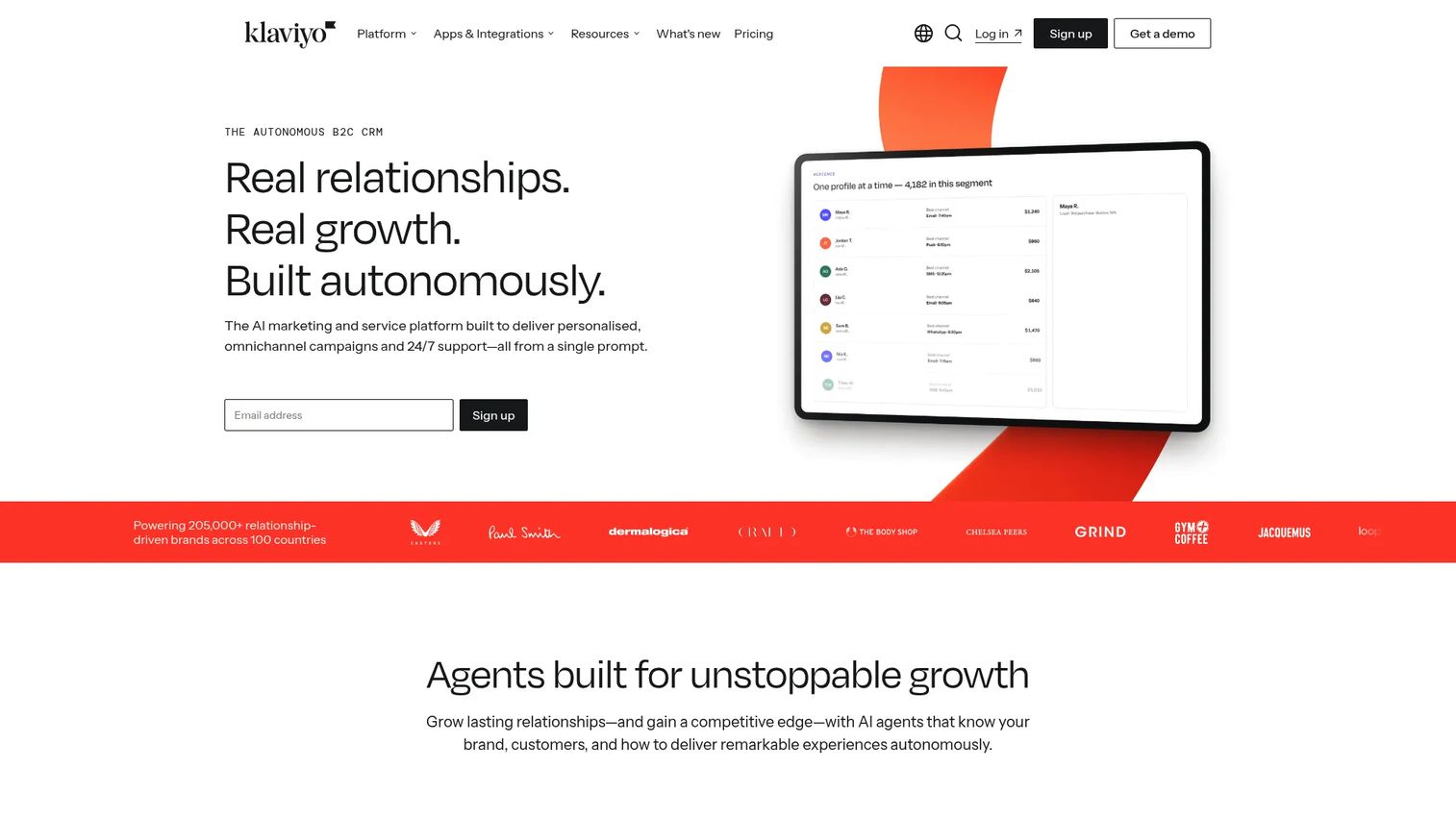
Klaviyo is a unified customer platform built for ecommerce and DTC brands that want revenue-focused email marketing and SMS tied directly to purchase behavior. It integrates with Shopify and other ecommerce platforms to pull product catalog data, transaction history, and browsing behavior into segmentation and automation flows. Abandoned cart sequences, post-purchase follow-ups, and predictive analytics are core capabilities.
Best for: Ecommerce merchants and retail brands that want campaigns driven by what customers actually bought, not just their email address.
Key features
- Ecommerce segmentation by purchase history and predicted behavior
- Email and SMS automated flows (abandoned cart, winback, replenishment)
- Predictive customer analytics and lifetime value modeling
- Product recommendation blocks in email
- 350+ integrations including Shopify, WooCommerce, and BigCommerce
Why choose Klaviyo: If repeat purchase and owned-channel revenue are the primary metrics, Klaviyo's commerce data model gives a marketing team targeting precision that general-purpose email tools can't match. The tradeoff is that pricing scales with active profiles, so fast-growing contact lists need active list hygiene.
Klaviyo pricing: Free plan includes up to 250 active profiles and 500 email sends per month. Paid Email and Email + SMS tiers scale with active profile count and message volume. Request a quote for exact figures above the free tier.
G2 rating: 4.6/5
4. Mailchimp
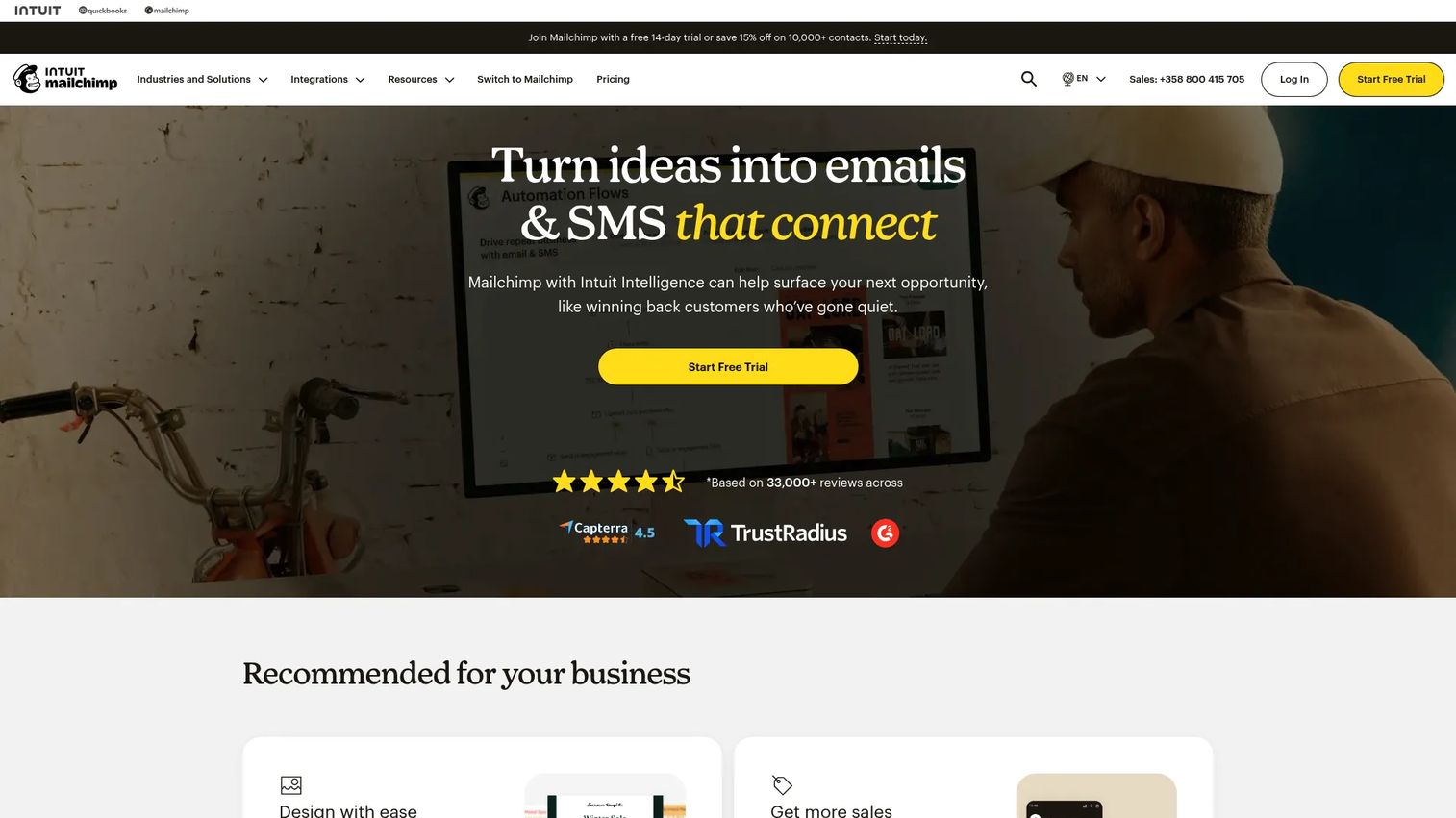
Mailchimp is one of the most widely used email and marketing platforms for small teams and early-stage ecommerce merchants. It covers email campaigns, customer journey automation, landing pages, audience segmentation, and basic ecommerce integrations. The platform has expanded over the years to include SMS and generative AI tools for content creation.
Best for: Small teams graduating from newsletter-only marketing who need email automation, audience segmentation, and landing pages in one place.
Key features
- Email campaign builder with drag-and-drop and code editor
- Customer journey automation with conditional steps
- Audience segmentation with behavioral and demographic filters
- Landing pages and signup forms
- SMS marketing and ecommerce integrations
Why choose Mailchimp: Mailchimp works well when the team needs a broad platform with a recognizable interface and a wide integration ecosystem. It fits merchants earlier in their marketing maturity who want solid email basics plus room to grow.
Mailchimp pricing: Free plan available for up to 250 contacts. Essentials starts at $13/month, Standard at $20/month, and Premium at $350/month. Both contact count and monthly send volume affect pricing at scale.
G2 rating: 4.3/5
5. ActiveCampaign
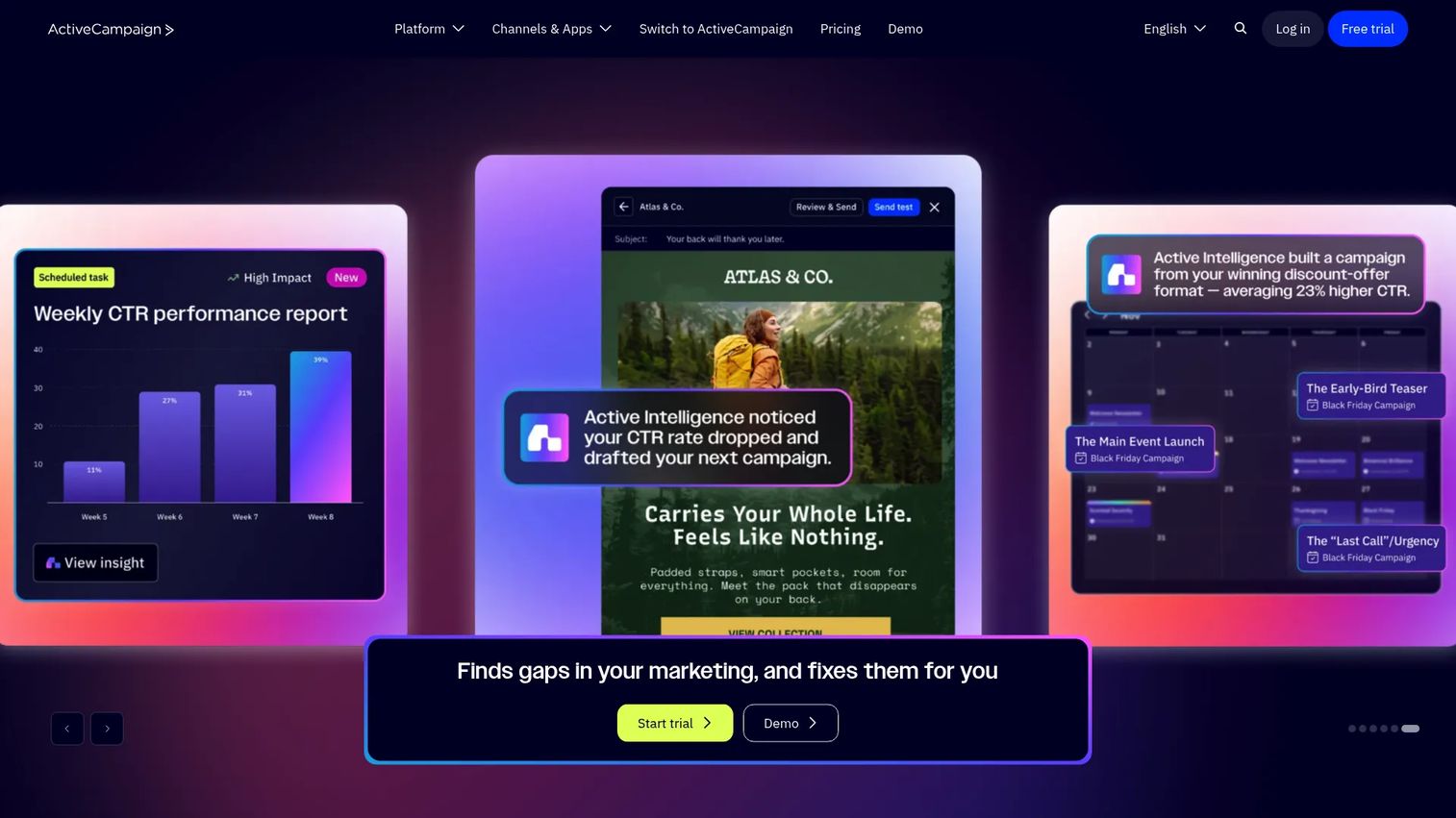
ActiveCampaign is an automation-heavy marketing platform with a visual workflow builder, CRM, email and SMS campaigns, lead scoring, and behavioral segmentation. It fits merchants and merchant-facing SaaS teams that need more automation logic than basic email platforms offer, including multi-step nurture, winback sequences, and sales handoff triggers.
Best for: Merchants and SaaS teams that need behavior-based marketing automation with CRM integration and detailed lifecycle workflows.
Key features
- Visual automation builder with conditional branching
- Email marketing with personalization and A/B testing
- CRM and sales pipeline with deal stage automation
- Behavioral segmentation and lead scoring
- SMS and WhatsApp messaging
Why choose ActiveCampaign: Choose ActiveCampaign when workflows are the bottleneck, not list size. It handles complex multi-step automations that would be clunky to build in simpler tools, and the CRM keeps sales and marketing working from the same contact records.
ActiveCampaign pricing: A 14-day free trial is available. Email plans start at $15/month for the Starter tier. Plus, Professional, and Enterprise plans add channels, users, and automation depth. Contact count drives cost at each tier.
G2 rating: 4.4/5
6. Optimove
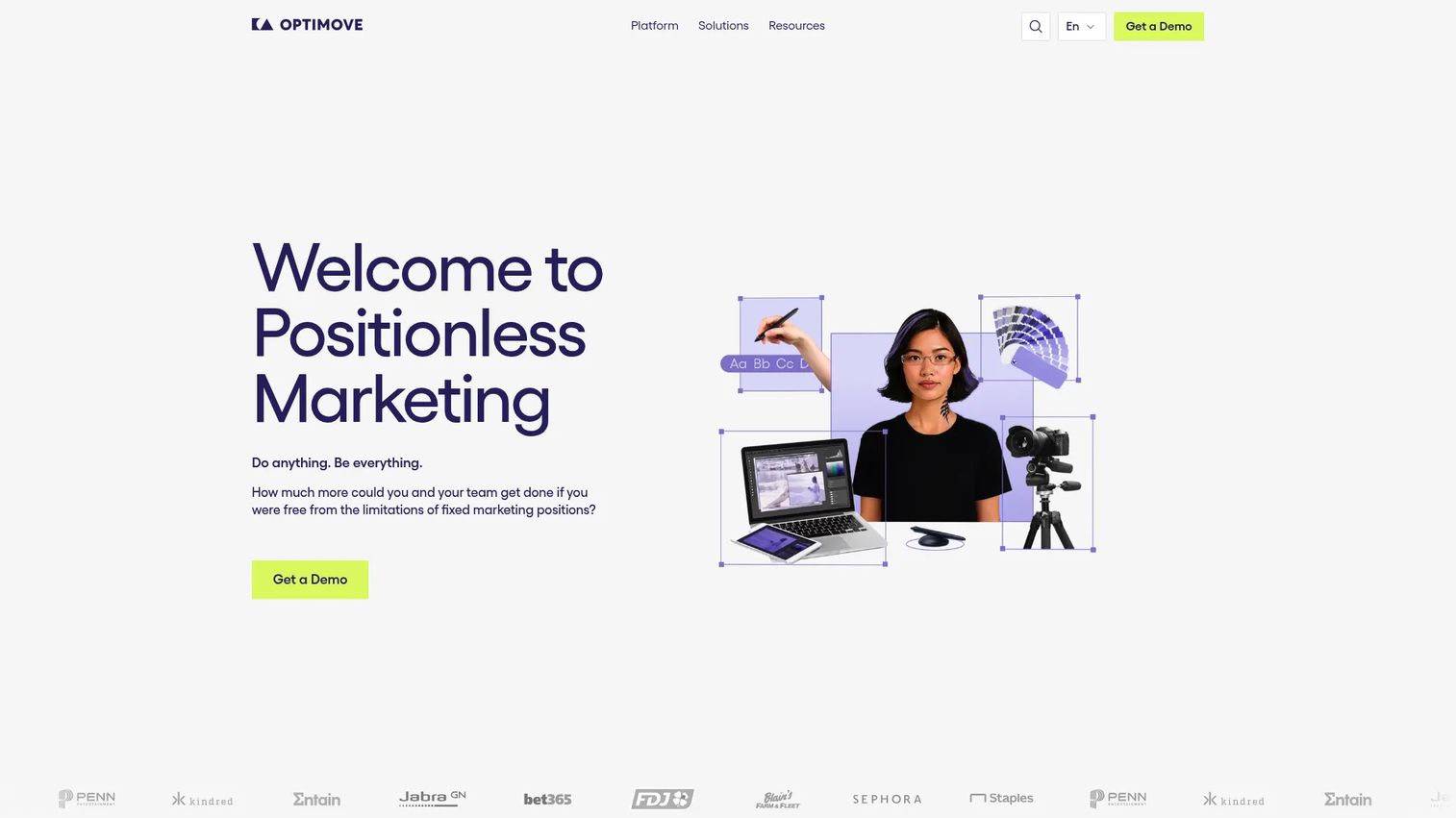
Optimove is a customer-led marketing platform combining unified customer profiles, predictive AI, multichannel campaign orchestration, personalization, and gamification. It positions itself as a "positionless marketing" platform where AI decisioning replaces campaign-by-campaign manual logic. It is built for enterprises with enough customer data to make predictive models meaningful.
Best for: Larger merchants and enterprise consumer brands that want customer analytics and campaign orchestration tied to lifecycle stage and predicted behavior.
Key features
- Unified customer profiles with predictive segmentation
- AI next-best-action decisioning across 20+ recommendation models
- Multichannel orchestration across email, SMS, mobile, web, and ad networks
- Gamification, loyalty programs, and branded reward mechanics
- Campaign measurement and incrementality reporting
Why choose Optimove: It fits teams ready to move from channel-level campaigns to customer-led marketing, where the platform decides when and what to send rather than the team scheduling individual blasts. The depth requires a marketing team with data maturity to configure and maintain it.
Optimove pricing: Custom pricing. Cost depends on customer data volume, active profiles, channel usage, and required capabilities. Contact Optimove's sales team for a scoped quote.
G2 rating: 4.6/5
7. AppCard
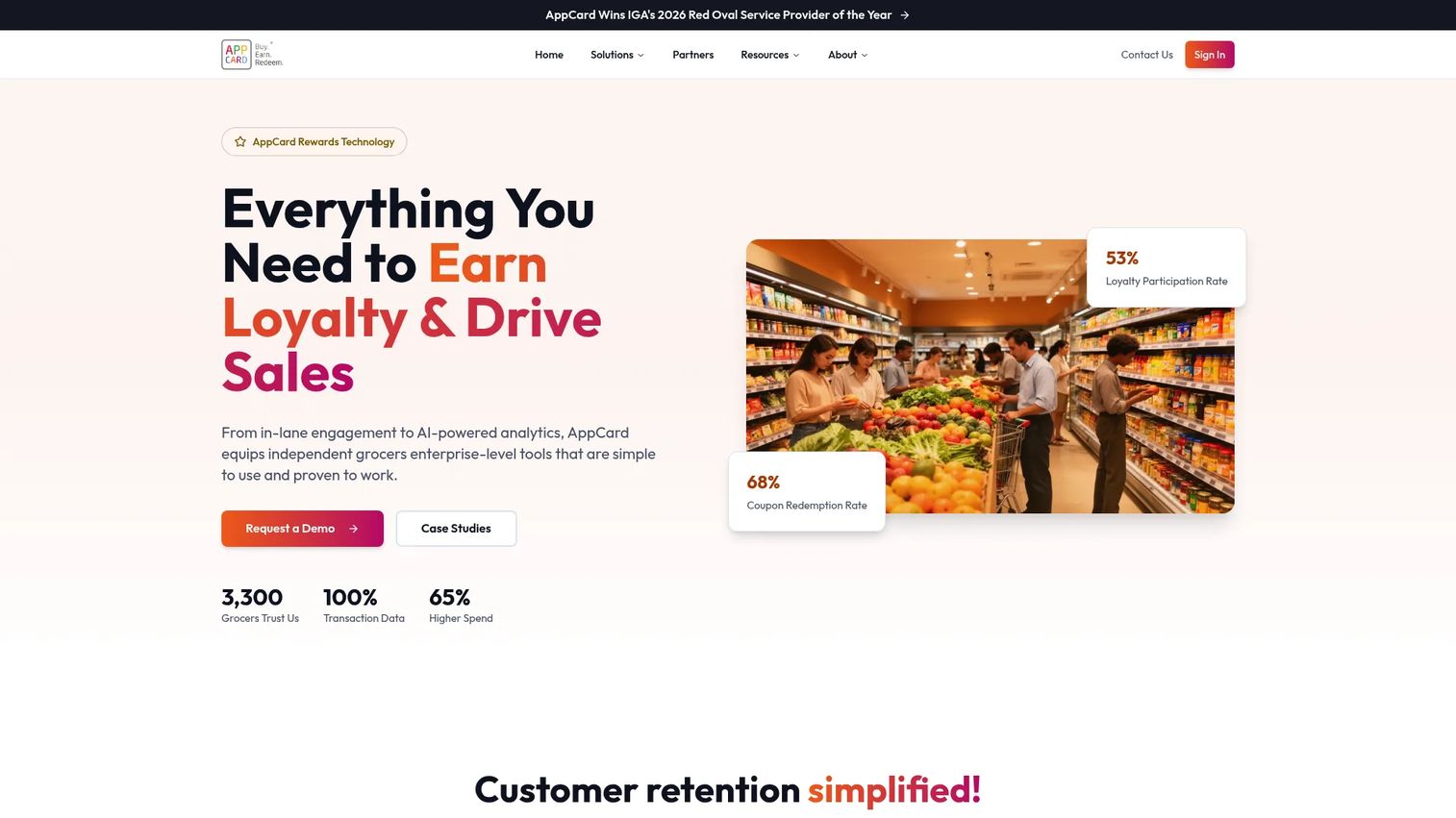
AppCard is a data-driven loyalty, personalized marketing, digital coupons, and customer retention platform built for independent grocers and multi-location retailers. It captures item-level transaction data across payment types, powers personalized offers and digital circulars, and connects loyalty to POS-level purchase behavior. It also offers retailer-branded Visa Signature card programs.
Best for: Independent grocers and multi-location retailers that need loyalty and promotions tied directly to what each shopper buys.
Key features
- Real-time item-level transaction data capture across payment types
- Personalized offers via SMS, email, and in-app push notifications
- AI-powered promotion engine and digital coupon creation
- Digital circulars with clickable products and shopping list features
- Dashboard with 100+ reports across locations
Why choose AppCard: AppCard is the strongest fit for merchants where offer redemption and shopper-level personalization are central to repeat revenue, particularly in grocery and convenience retail where basket size and visit frequency drive the business.
AppCard pricing: AppCard prices by sales contact based on location count and transaction volume. The retailer-branded card program is listed at $20 per card with no implementation fee or subscription charge for that specific product.
8. FiveStars
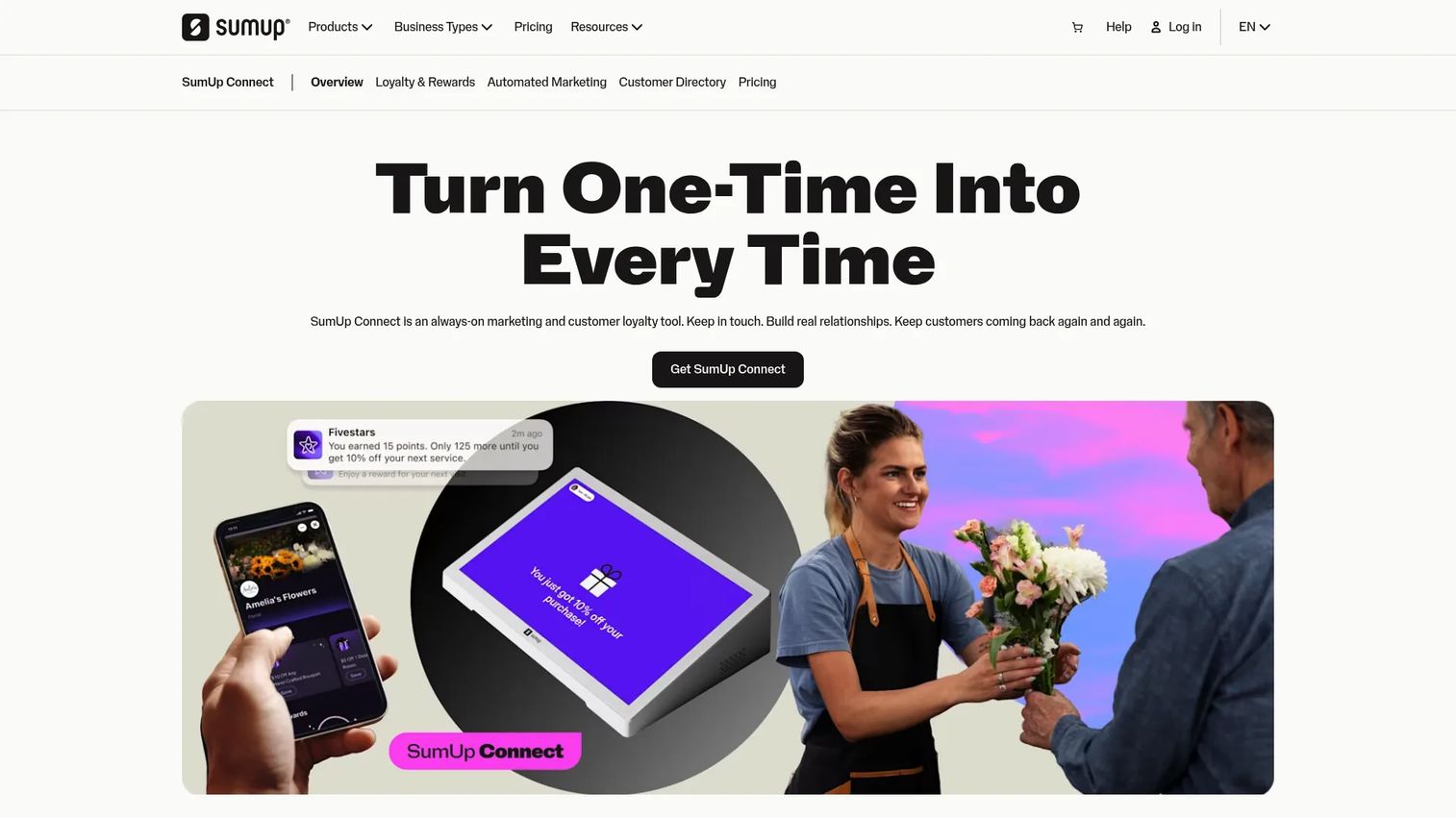
FiveStars is an all-in-one marketing, payments, and loyalty marketing software platform for local businesses. It covers digital loyalty enrollment, rewards management, automated SMS and email outreach, targeted promotions, and customer reactivation campaigns. The platform also provides customer acquisition through network-matching capabilities.
Best for: Local merchants including restaurants, salons, and service businesses that want simple repeat-visit marketing and loyalty without enterprise complexity.
Key features
- Digital rewards and loyalty program enrollment
- Automated retention marketing via SMS, email, and app notifications
- Targeted promotions and customer segmentation by visit behavior
- Customer acquisition through network matching
- Dashboard and mobile app reporting
Why choose FiveStars: FiveStars fits merchants where the primary metric is repeat visits and local customer retention, not multi-channel campaign orchestration. It is designed for operators who want a working loyalty program running quickly, without a dedicated marketing team to manage it.
FiveStars pricing: Contact the sales team for flexible pricing packages. Plan structure and contract terms vary by business size and location count.
G2 rating: 4.1/5
9. Braze
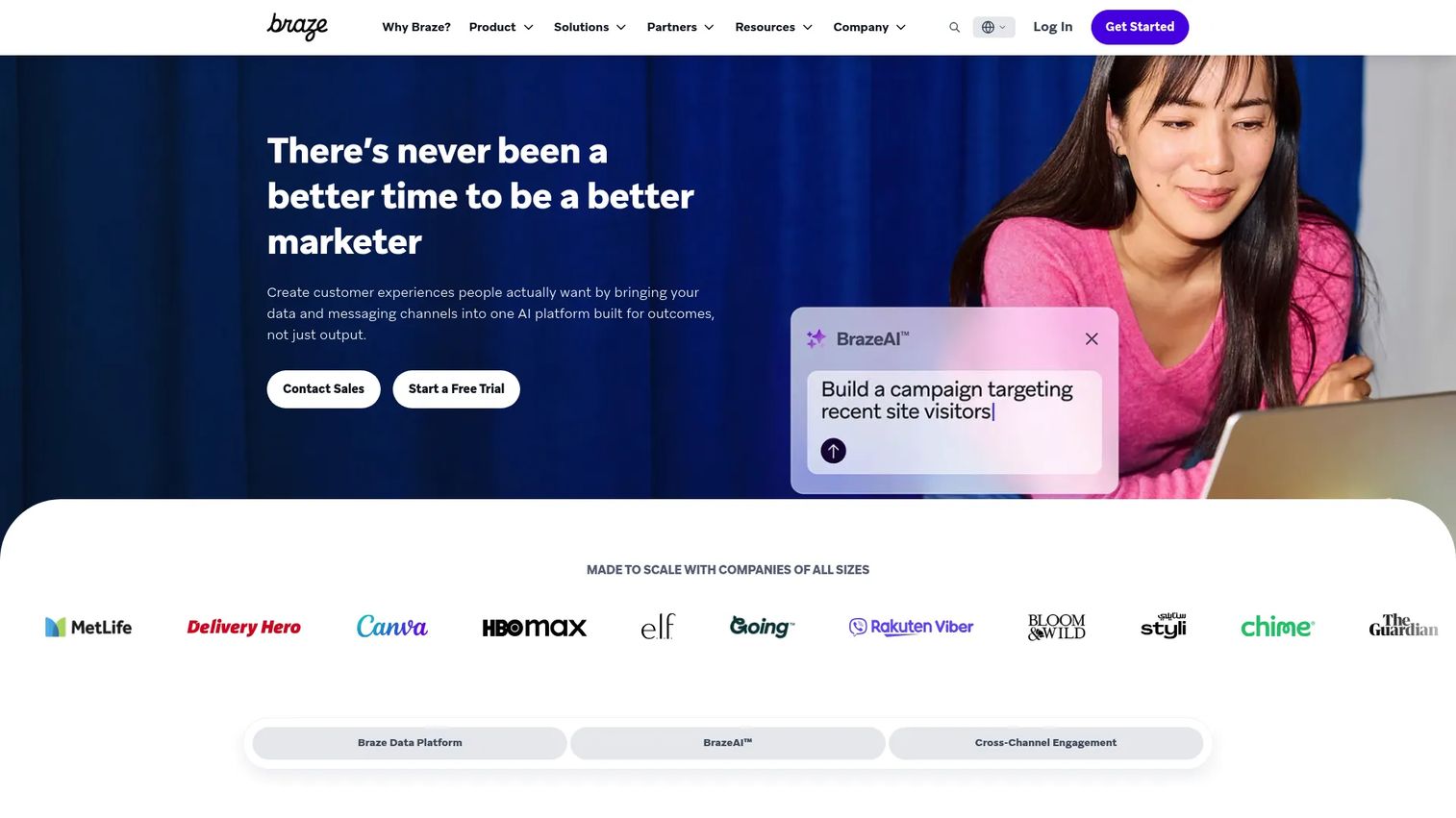
Braze is an enterprise customer engagement platform for brands that need personalized, real-time messaging across email, push notifications, SMS, WhatsApp, in-app messages, and web. It is purpose-built for high-volume, multi-channel engagement where personalization logic, experimentation, and real-time triggering are non-negotiable. Journey orchestration, AI-powered optimization, and cross-channel analytics are core strengths.
Best for: Enterprise merchants and consumer brands with mobile-first customer bases that need real-time, personalized engagement at scale.
Key features
- Real-time cross-channel messaging across email, push, SMS, in-app, and WhatsApp
- BrazeAI-powered personalization, optimization, and decisioning
- Journey orchestration with real-time triggers and audience splitting
- Experimentation tools for content and timing
- Campaign analytics and revenue impact measurement
Why choose Braze: Choose Braze when the merchant's customer engagement spans multiple channels simultaneously and the team needs experimentation, real-time triggers, and enterprise governance in a single platform. It is more implementation-intensive than mid-market tools, so factor in onboarding time.
Braze pricing: Braze offers four platform editions: Go, Select, Pro, and Enterprise. All require a sales conversation for pricing. Budget expectations vary significantly by message volume, channels, and account size.
G2 rating: 4.5/5
10. Twilio Segment
Twilio Segment is a customer data platform that collects, standardizes, unifies, and activates customer data across marketing tools, analytics systems, and data warehouses. It is not a campaign tool itself. Its value is building the data foundation that makes every downstream campaign tool more accurate. Identity resolution, audience building, and 700+ integrations are core capabilities.
Best for: Data-mature merchant teams that need a unified customer data layer before their campaign tools can do meaningful personalization.
Key features
- Real-time customer event collection and routing
- Identity-resolved unified customer profiles
- Audience building and activation across 700+ destinations
- Data quality governance with Protocols
- Warehouse sync and reverse ETL capabilities
Why choose Twilio Segment: Choose it when the core problem is fragmented data across POS, ecommerce, CRM, and analytics tools, not campaign creation. Segment is infrastructure, not execution. Teams that deploy it before buying campaign tools get dramatically cleaner segmentation in every tool downstream.
Twilio Segment pricing: Free plan includes up to 1,000 monthly tracked users. Team plan starts at $120/month for 10,000 monthly tracked users. Business and Customer Data Platform tiers carry custom pricing based on volume.
G2 rating: 4.5/5
11. Iterable
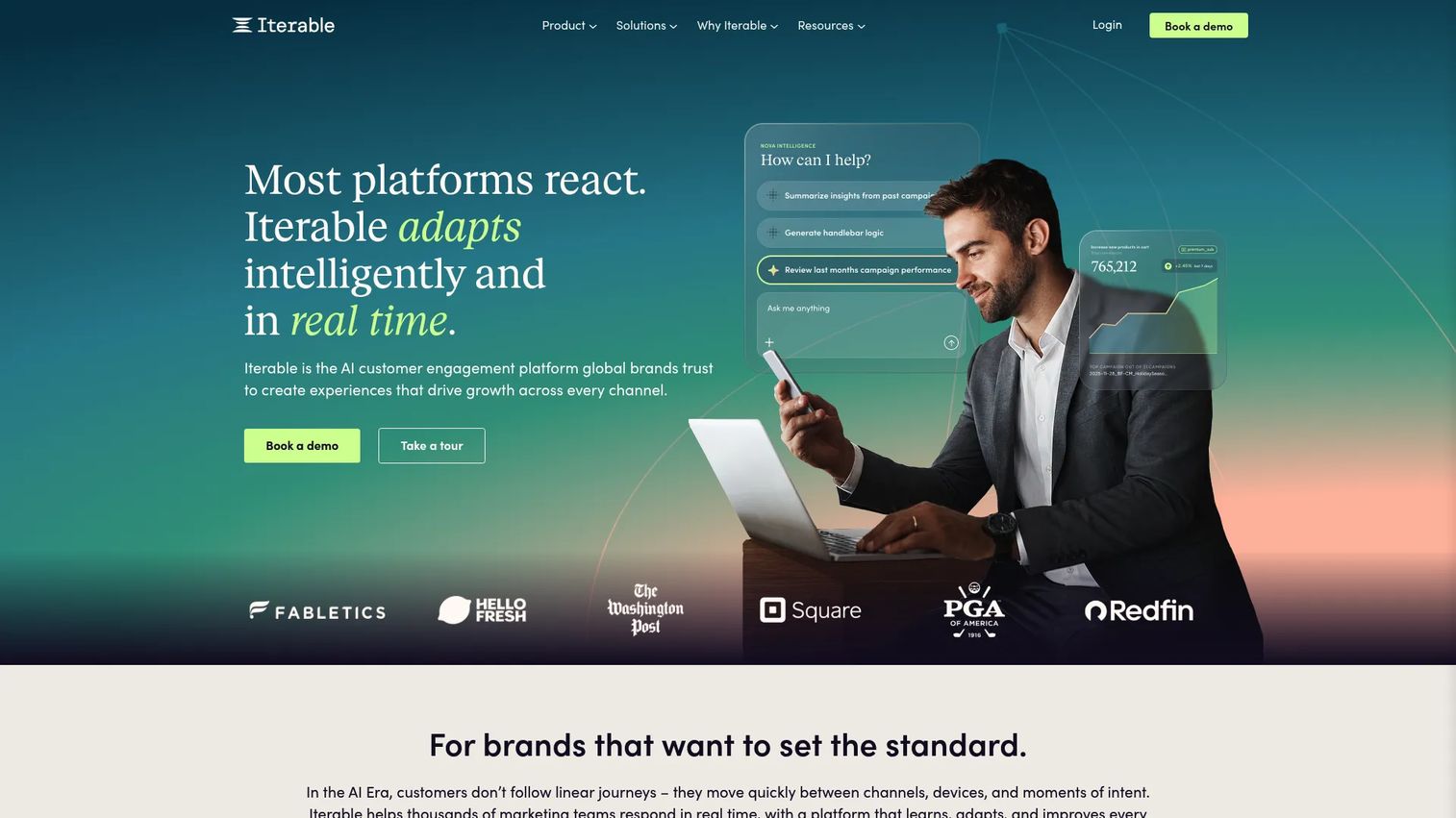
Iterable is an AI-powered customer engagement platform for brands running personalized lifecycle campaigns across email, SMS, push notifications, in-app messages, web push, and WhatsApp. It includes journey orchestration, AI decisioning agents, audience segmentation, campaign experimentation, and data integrations. It is positioned for enterprise and growth-stage teams managing complex lifecycle programs.
Best for: Growth teams that have outgrown single-channel campaigns and need cross-channel lifecycle coordination with experimentation built in.
Key features
- AI-powered journey orchestration with real-time triggers
- Cross-channel campaigns across email, SMS, push, in-app, and web push
- Audience segmentation with behavioral and predictive filters
- Campaign experimentation and performance analytics
- Data Sync and Smart Ingest for warehouse and event data
Why choose Iterable: It fits when lifecycle stage, not just campaign type, determines what a customer receives and when. The AI agents can automate message selection and timing decisions that would otherwise require manual campaign logic.
Iterable pricing: Pricing is sales-led and varies by channel usage, message volume, and account configuration. Contact Iterable's team directly for a quote.
G2 rating: 4.4/5
12. Blueshift
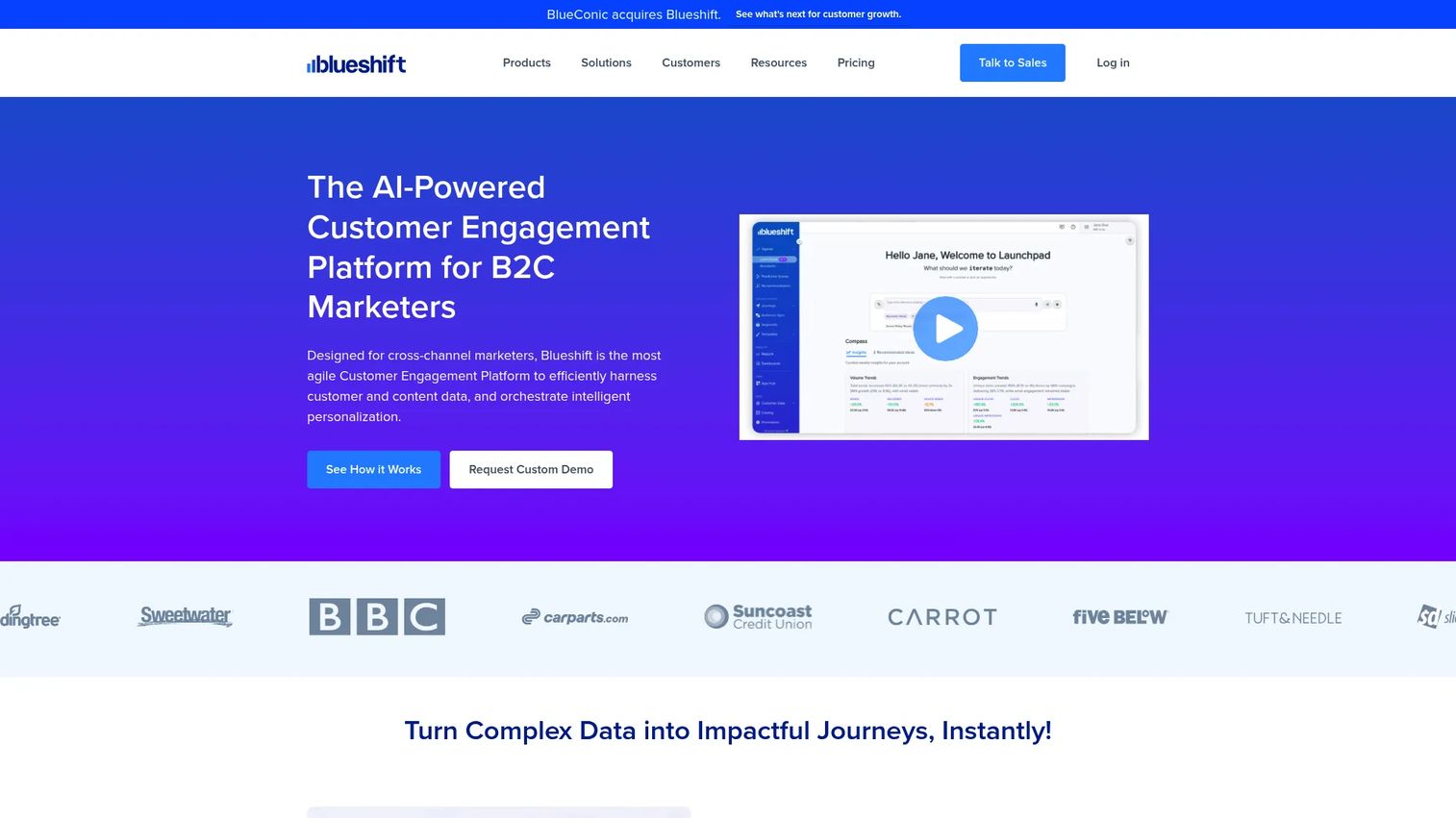
Blueshift is an AI-powered customer engagement platform that combines a customer data platform with predictive segmentation, cross-channel campaign execution, and product or content recommendations. It is built for B2C marketing teams that want behavioral data and AI to drive what each customer sees across email, SMS, mobile, web, push, and paid media.
Best for: Merchants that want predictive personalization and product recommendations built into campaign logic, not bolted on afterward.
Key features
- Real-time customer data unification and profile creation
- AI-powered predictive, generative, and agentic decisioning
- Cross-channel campaigns across email, SMS, mobile, web, and paid media
- Dynamic audience segmentation and multi-step journey orchestration
- Product and content recommendations with testing and optimization
Why choose Blueshift: It fits when personalization quality depends on behavioral signals and product catalog data, and the team wants those signals to flow automatically into campaign logic rather than managing separate segmentation exports.
Blueshift pricing: Starter plans begin at $1,250/month billed annually. Growth and Enterprise tiers add recommendations, predictive optimization, advanced analytics, household profiles, SSO, and audit trails. Request pricing for Growth and Enterprise directly.
G2 rating: 4.4/5
13. MoEngage
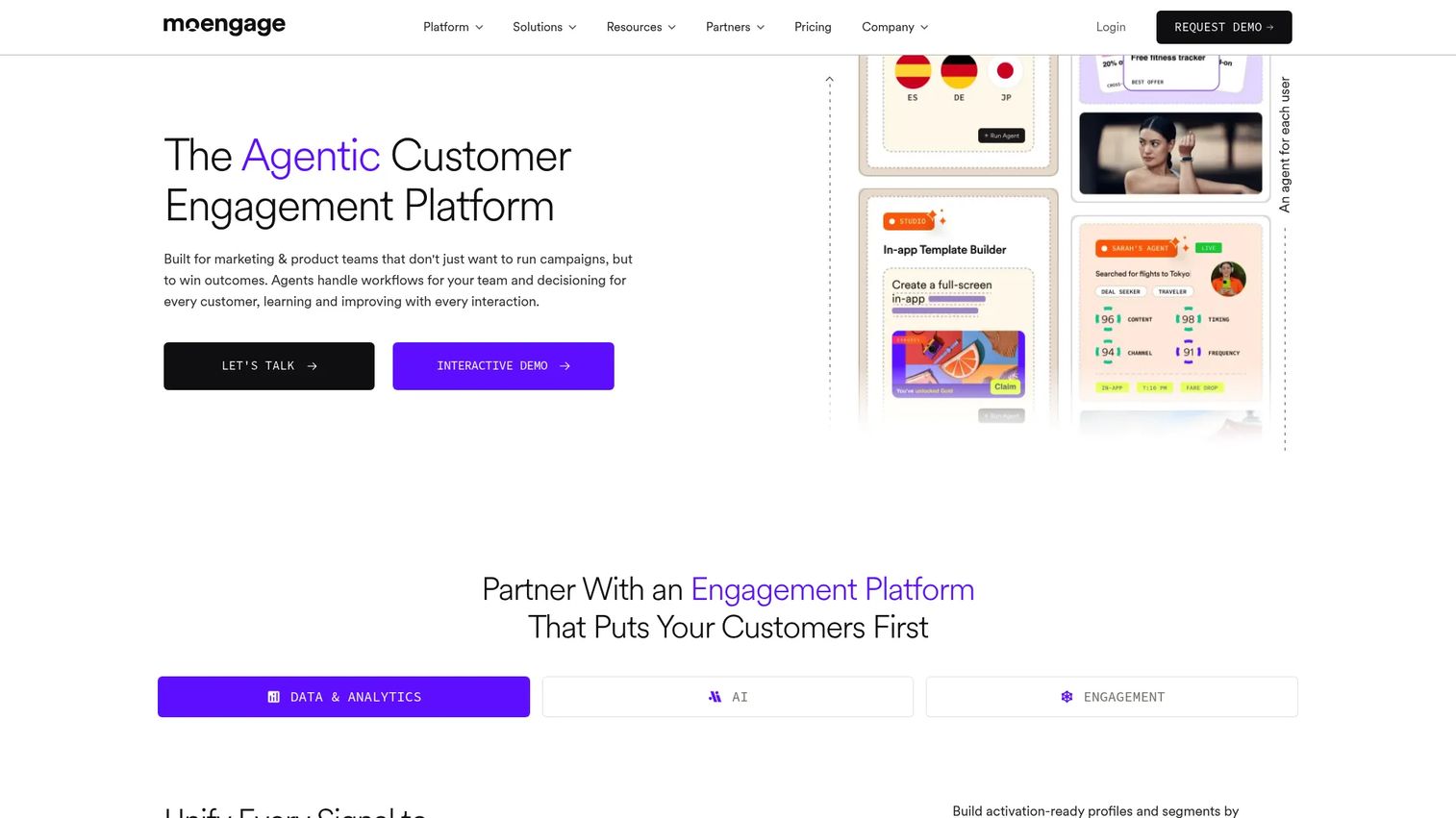
MoEngage is an agentic customer engagement platform for mobile-first and omnichannel merchants. It handles push notifications, email, SMS, in-app messaging, web personalization, and customer journey orchestration from one platform. Analytics and segmentation are built in, and AI-powered optimization tools drive send-time and content decisions.
Best for: Mobile-first merchants and consumer brands where app engagement is central to customer retention and repeat purchase.
Key features
- Push notifications and in-app messaging
- Email and SMS campaigns with behavioral triggers
- Customer journey builder with AI-powered optimization
- Web and app personalization based on user behavior
- Engagement analytics and funnel reporting
Why choose MoEngage: When the merchant's primary retention surface is a mobile app, MoEngage delivers engagement across push, in-app, email, and SMS from one platform without needing separate app engagement and email tools.
MoEngage pricing: MoEngage offers Growth and Enterprise plans, plus separately packaged Personalize and Inform products. All require a sales conversation for pricing. Cost depends on monthly active users and selected channels.
G2 rating: 4.5/5
14. CleverTap
CleverTap is a customer engagement and retention platform for app-first merchants, marketplaces, and consumer brands. It combines behavioral analytics, real-time segmentation, omnichannel campaign execution, journey orchestration, and experimentation tools. The Core plan includes CleverAI-assisted features at an accessible entry price.
Best for: App-first merchants and digital businesses that need retention campaigns tied to real-time user behavior and app lifecycle events.
Key features
- Behavioral analytics and real-time user segmentation
- Omnichannel campaigns across push, email, SMS, in-app, and web
- Journey orchestration with conditional branching
- Campaign experimentation and A/B testing
- Retention analytics and cohort reporting
Why choose CleverTap: It fits merchants where retention depends on understanding and acting on in-app behavior quickly. The behavioral analytics layer is native, not a third-party integration, which shortens the gap between signal and campaign action.
CleverTap pricing: Core plan starts at $85/month, covering omnichannel engagement, behavioral segmentation, and analytics. Pro and Ultimate tiers add advanced AI decisioning, deeper personalization, and governance tools. Request a demo for Pro and Ultimate pricing.
G2 rating: 4.6/5
15. Customer.io
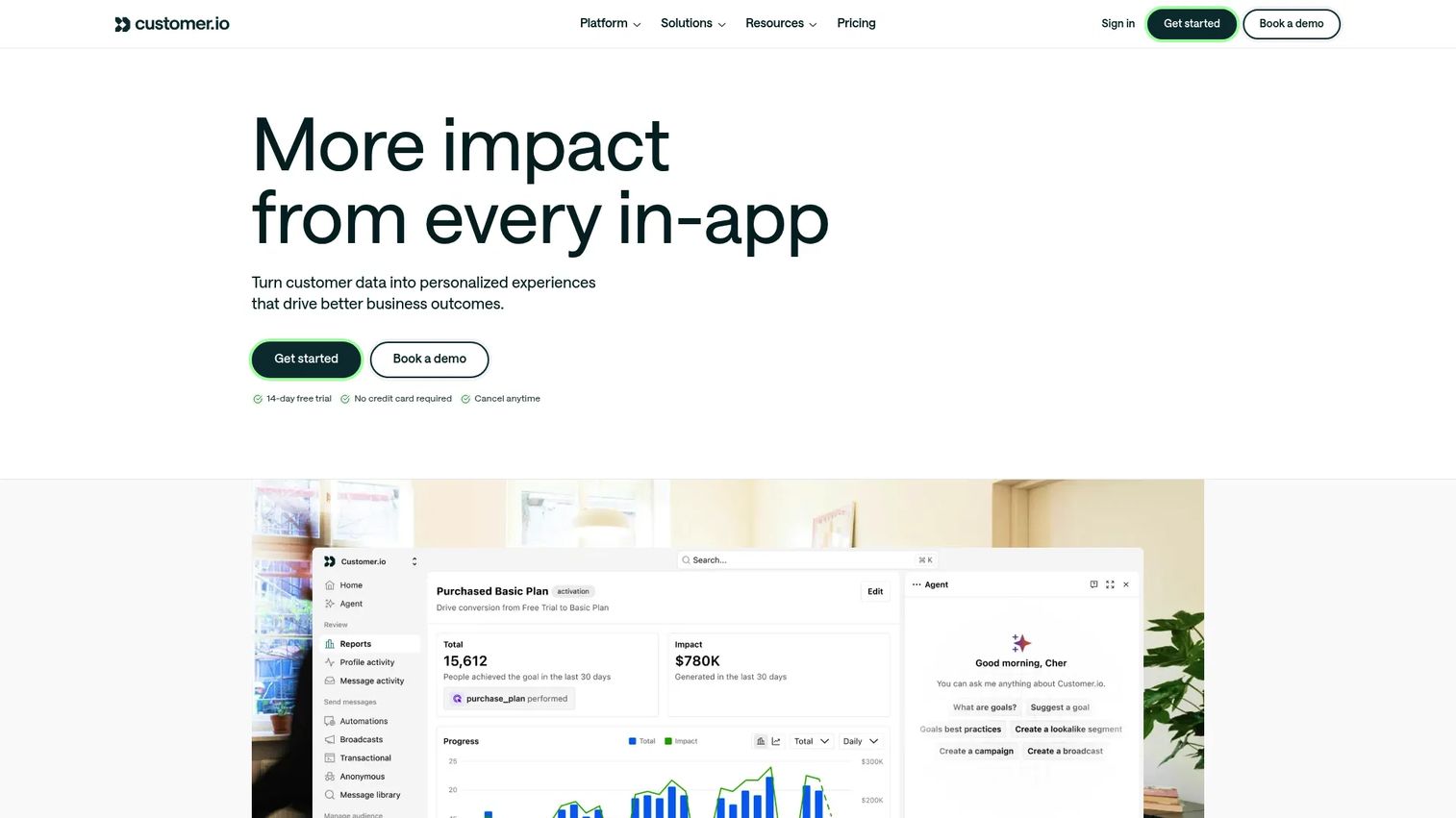
Customer.io is a customer engagement platform built for technical growth teams that want event-driven email, SMS, push, in-app, and webhook-based messaging tied to product behavior. It is a strong fit for SaaS companies serving merchants, or digital merchants with product-event data, who need behavior-based lifecycle campaigns without a heavyweight enterprise platform.
Best for: Technical growth and lifecycle teams that run campaigns triggered by product events and want granular segmentation without a complex enterprise setup.
Key features
- Visual workflow builder with event-based campaign triggers
- Multi-channel messaging via email, SMS, push, in-app, Slack, and webhooks
- Liquid personalization and A/B testing
- Data integrations, warehouse sync, and reverse ETL
- Custom objects and behavioral segmentation
Why choose Customer.io: When campaigns are driven by what users do in a product rather than when they were last emailed, Customer.io's event model gives the team a level of trigger specificity that general-purpose email tools can't match. A 14-day free trial is available before committing.
Customer.io pricing: Essentials starts at $100/month covering 5,000 profiles and 1 million emails per month. Premium starts at $1,000/month billed annually with expanded volume and features. Enterprise pricing requires a sales conversation.
G2 rating: 4.4/5
16. Emarsys
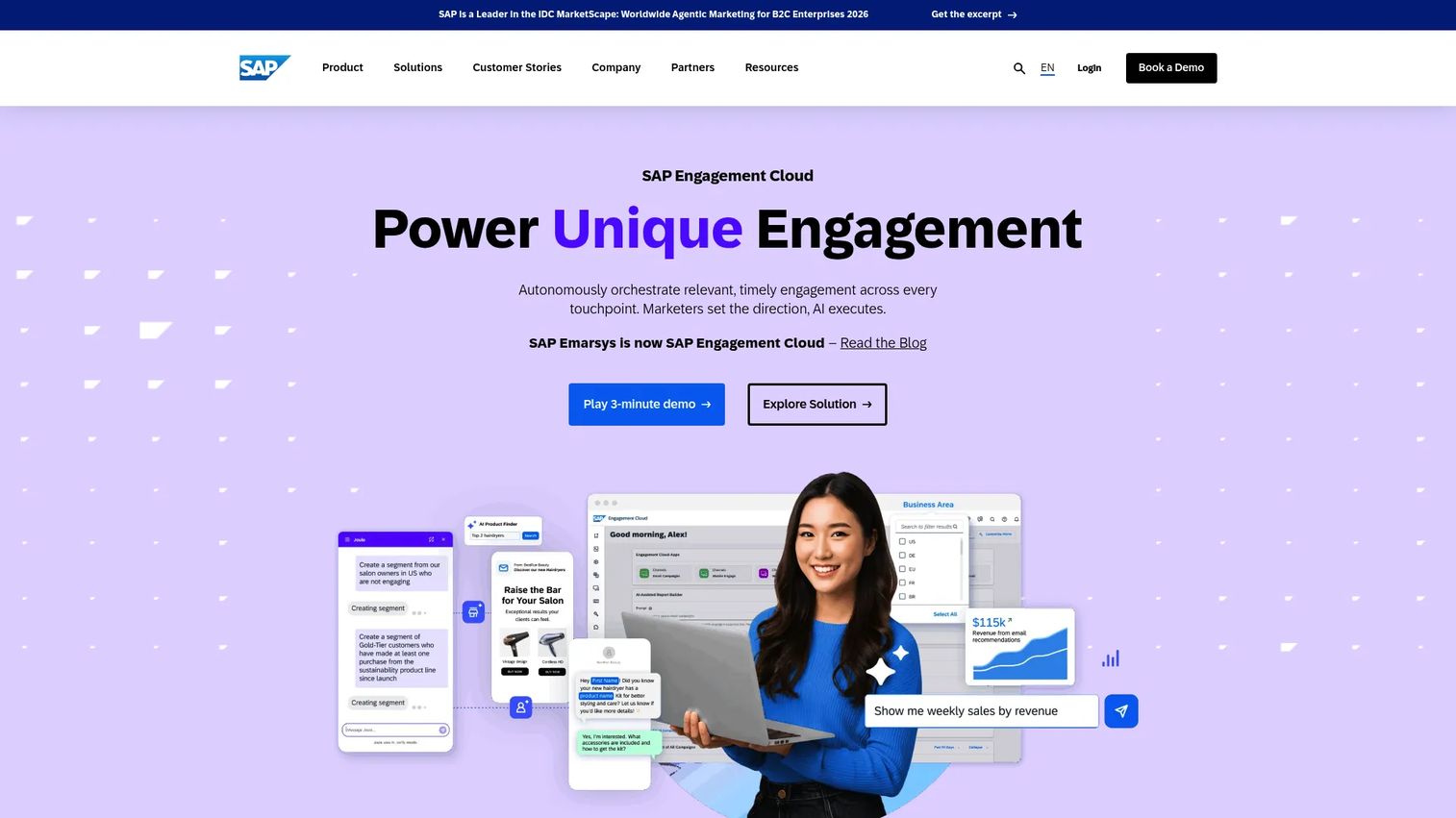
Emarsys (now branded SAP Engagement Cloud) is an omnichannel customer engagement platform purpose-built for retail and ecommerce teams. It covers email, SMS, mobile, web, digital ads, direct mail, and loyalty programs, with retail-specific data models and AI-powered personalization built into campaign management software.
Best for: Enterprise and mid-market retail brands that need omnichannel campaign orchestration with retail-native data models and customer lifecycle automation.
Key features
- Cross-channel automation across email, SMS, mobile, web, and direct mail
- Unified customer, product, and behavioral data
- Loyalty programs with tiers, incentives, and personalized interactions
- AI-powered personalization and predictive intelligence
- Customer lifecycle analytics and strategic dashboards
Why choose Emarsys: It fits larger merchants already running at enterprise scale with complex campaign governance requirements. The retail-native data model and SAP ecosystem integration make it a logical fit for organizations with Salesforce or SAP infrastructure.
Emarsys pricing: Contact the sales team to request a quote. Implementation scope, customer volume, and required channels all affect the final price.
G2 rating: 4.2/5
17. Shopify Marketing Automation
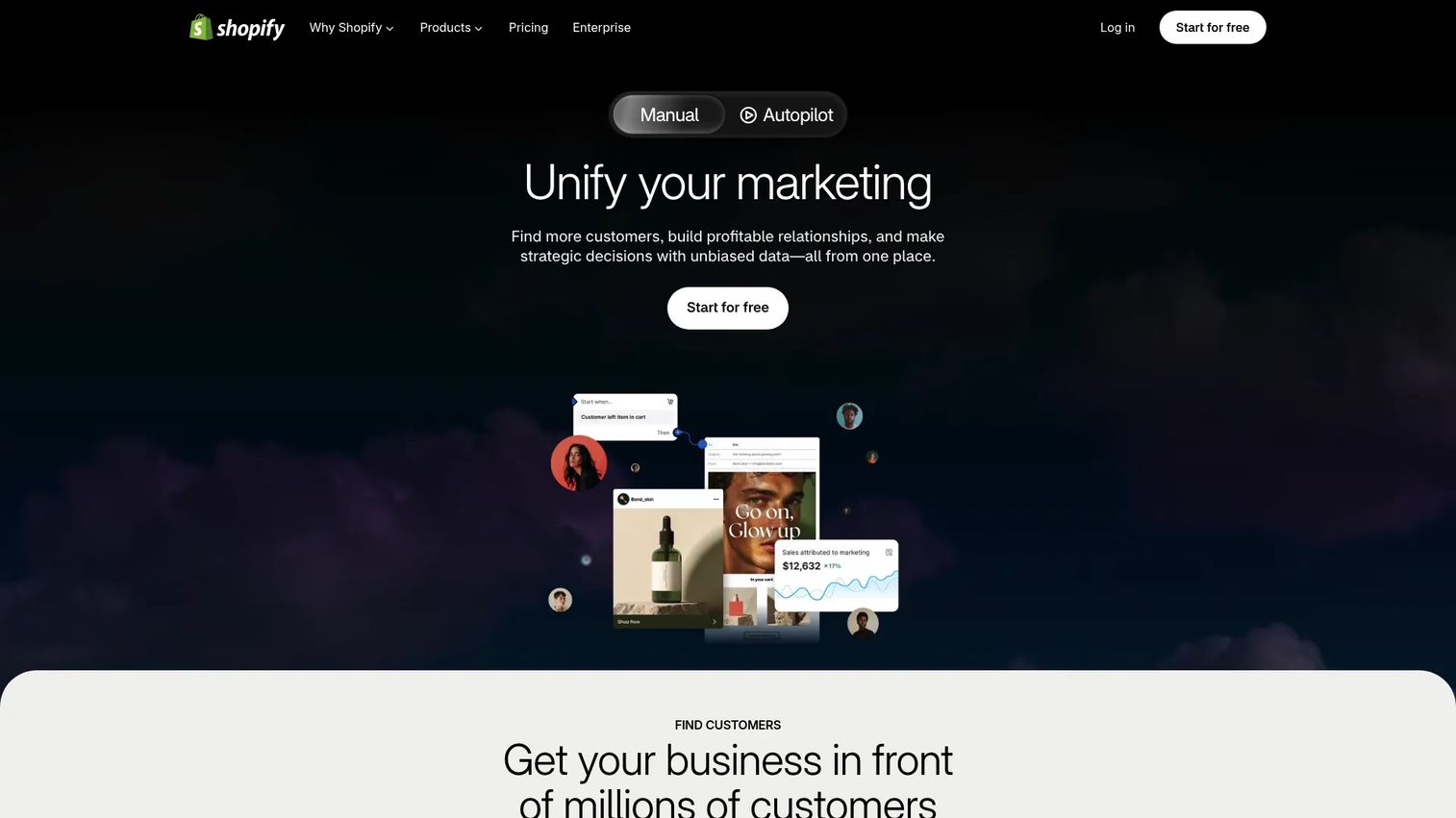
Shopify Marketing Automation is Shopify's built-in suite of merchant marketing tools, including Shopify Messaging for email and SMS campaigns, Shopify Forms for lead capture, behavior-based customer segmentation, marketing automations, and Shopify Inbox for customer chat. For Shopify merchants, it removes the need for a third-party email tool at the early stages.
Best for: Shopify merchants that want native store-data automation before adding a standalone marketing platform.
Key features
- Shopify-native email and SMS campaigns via Shopify Messaging
- Behavior-based customer segmentation from store data
- Abandoned checkout and winback automations
- Lead capture with Shopify Forms
- Customer chat automation via Shopify Inbox
Why choose Shopify Marketing Automation: It is the fastest path from store behavior to a working campaign workflow for Shopify merchants. There is no integration overhead, and customer segment data is live from the store.
Shopify Marketing Automation pricing: Shopify Forms, Automations, Segmentation, and Shopify Inbox are included with eligible Shopify plans. Shopify Messaging includes 10,000 free emails per month, with additional volume billed at $1 per 1,000 emails. SMS costs are charged separately.
18. Omnisend
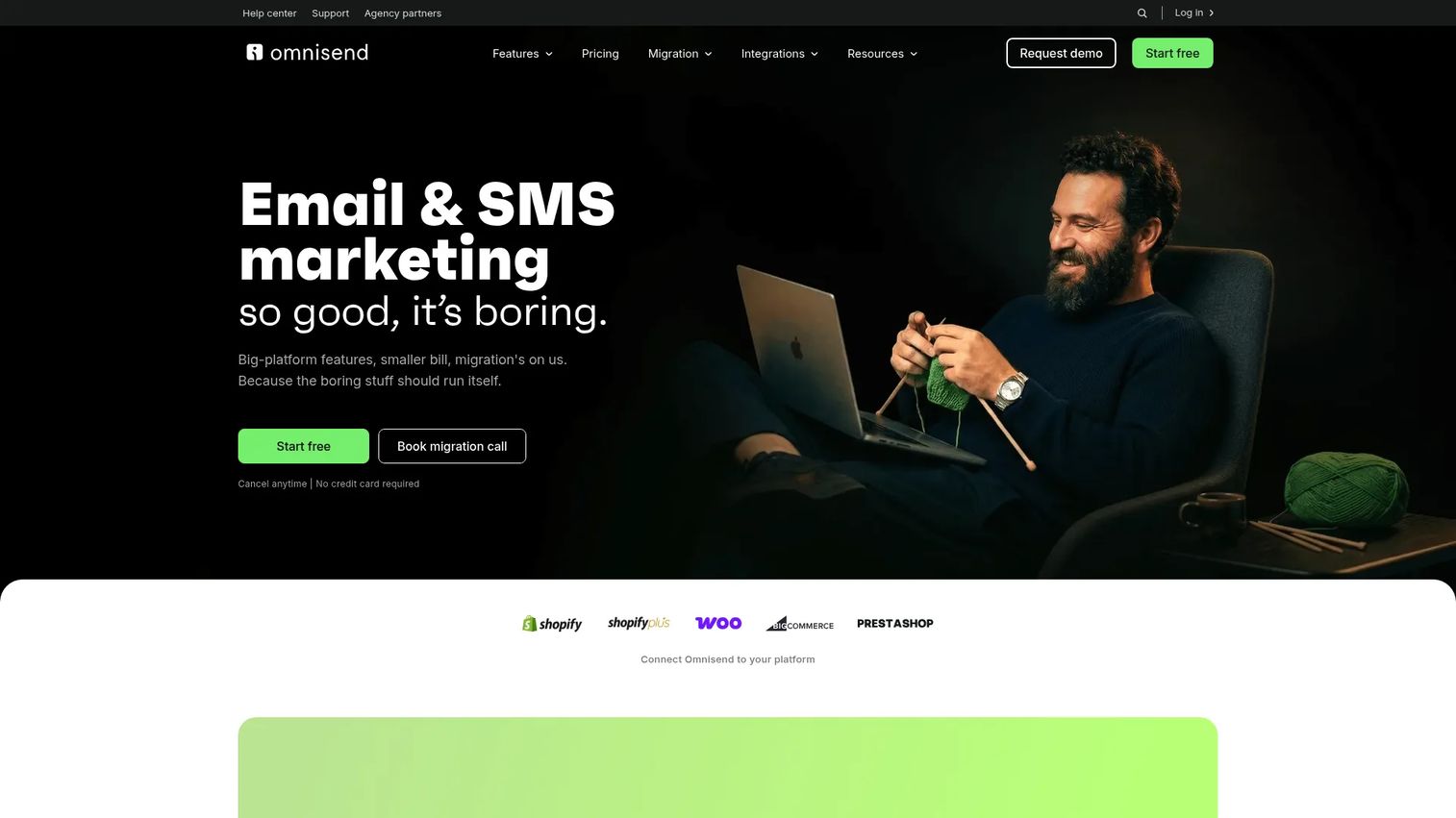
Omnisend is an ecommerce-focused email marketing and SMS marketing platform for merchants who want automation workflows, popups, product pickers, and ecommerce segmentation without enterprise complexity. It integrates natively with Shopify, WooCommerce, and BigCommerce, and positions itself as the middle ground between a simple newsletter tool and a full-stack CDP.
Best for: Ecommerce merchants that need email, SMS, and web push with commerce-aware segmentation and automation at a price point below enterprise platforms.
Key features
- Email and SMS automation workflows with ecommerce triggers
- Ecommerce segmentation by purchase behavior and cart activity
- Signup forms and popup builder for list growth
- Product picker for promotional email content
- Web push notifications and abandoned cart flows
Why choose Omnisend: It fits ecommerce merchants that want more commerce context than a general email tool provides, but are not ready for the complexity or cost of an enterprise engagement platform. The free plan lets teams validate core workflows before committing to paid tiers.
Omnisend pricing: Free plan available. Standard starts at $11.20/month and Pro starts at $41.30/month, both billed monthly. Prices scale with contact list size and SMS volume.
G2 rating: 4.6/5
19. Brevo
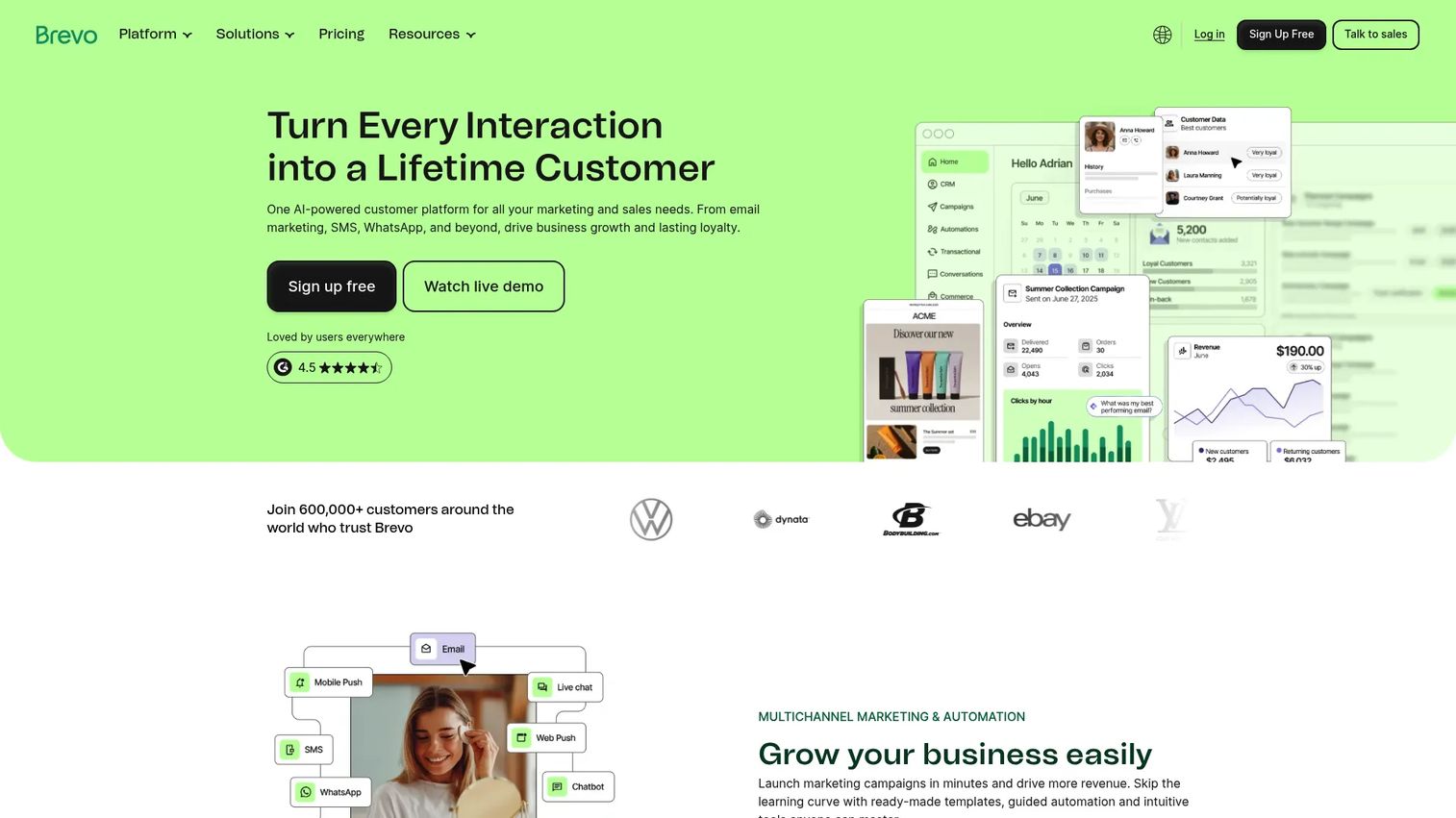
Brevo is an all-in-one marketing and CRM platform covering email, SMS, WhatsApp, web push, marketing automation, and transactional messaging. It is positioned as an affordable alternative for small to mid-sized merchant teams that need more than a basic newsletter tool but are not ready for a mid-market platform's price tag.
Best for: Cost-conscious merchants and growing teams that need email, SMS, automation, and CRM basics without a large monthly commitment.
Key features
- Email marketing with drag-and-drop and HTML editors
- SMS and WhatsApp campaigns with behavioral triggers
- Marketing automation based on contact behavior and lifecycle stage
- CRM and sales pipeline for lead and deal management
- Transactional email and SMS messaging
Why choose Brevo: When budget control is a real constraint and the team needs more than email, Brevo covers SMS, automation, and CRM at a price point that fits earlier-stage operations. The free plan's 300 daily email sends give enough room to test core workflows.
Brevo pricing: Free plan available with 300 emails per day. Starter begins at $9/month, Standard at $18/month, and Professional at $499/month. Enterprise pricing is custom. Annual billing saves 10% across paid tiers.
G2 rating: 4.5/5
20. Salesforce Marketing Cloud
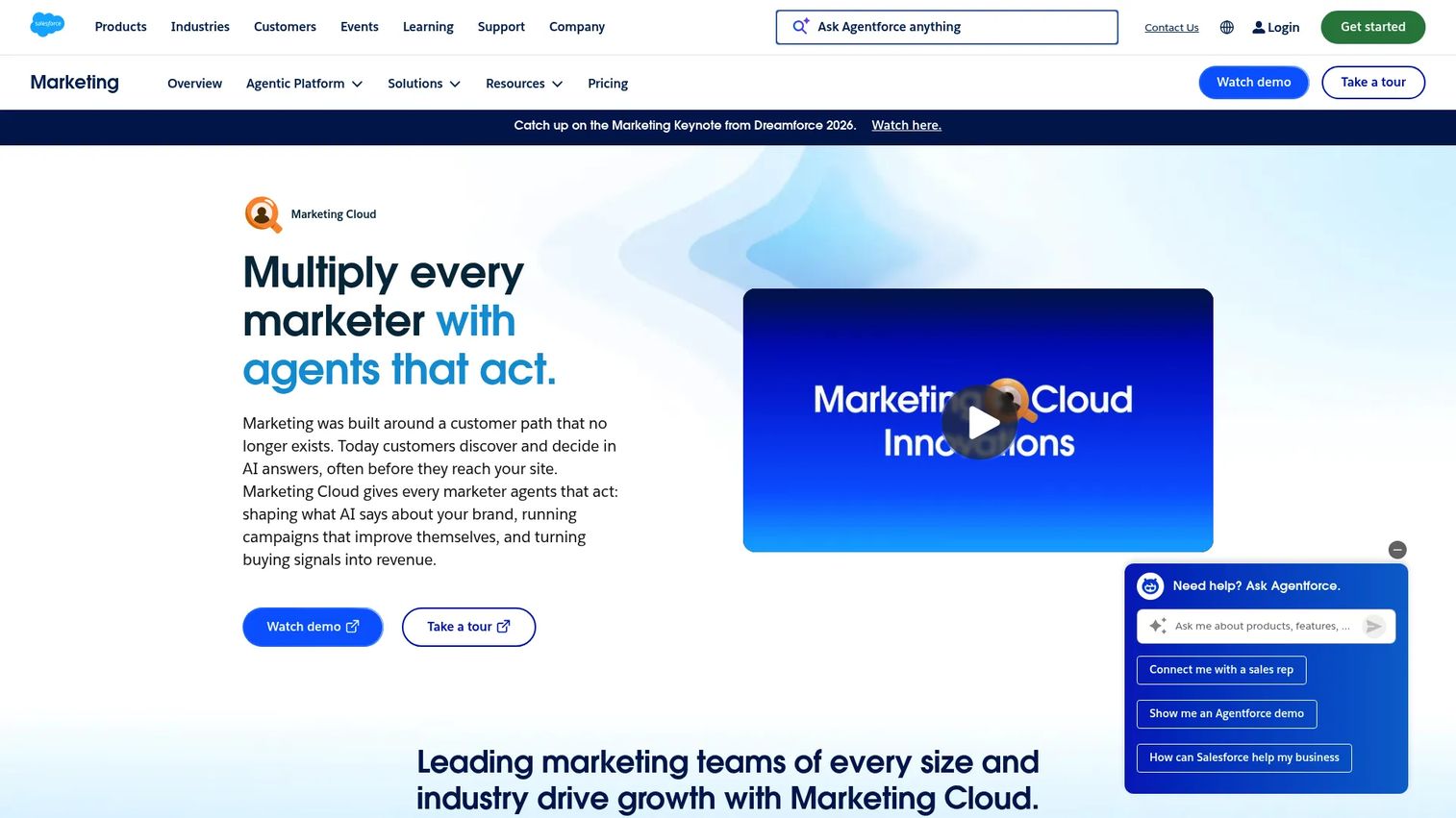
Salesforce Marketing Cloud is an AI-powered enterprise marketing platform for organizations running complex, personalized, multi-channel marketing programs that need deep Salesforce CRM integration. It covers email, SMS, web, WhatsApp, customer data with Data 360, real-time personalization via Agentforce, journey orchestration, and enterprise analytics.
Best for: Enterprise merchants already invested in the Salesforce ecosystem that need large-scale campaign governance, advanced personalization, and loyalty management in one platform.
Key features
- AI agent-assisted campaign creation and optimization via Agentforce
- Multi-channel journey orchestration across email, SMS, web, and WhatsApp
- Real-time personalization using Data 360
- Loyalty Management with tiers and reward mechanics
- Enterprise analytics and marketing intelligence dashboards
Why choose Salesforce Marketing Cloud: Choose it when governance, Salesforce CRM integration, and enterprise-scale orchestration matter more than time-to-first-campaign. The platform rewards organizations with dedicated marketing ops resources and an existing Salesforce footprint.
Salesforce Marketing Cloud pricing: Marketing Cloud Next Growth Edition starts at $1,500/org/month billed annually. Advanced Edition starts at $3,250/org/month. Salesforce Personalization is $8,000/org/month and Loyalty Management is $20,000/org/month, both billed annually.
Considerations when choosing merchant marketing software
Start with the merchant workflow
Map the core workflow before evaluating tools. A local restaurant needs loyalty and SMS. An ecommerce brand needs abandoned cart flows and replenishment reminders. A multi-location retailer needs POS-connected campaigns and location-level reporting. Picking a tool without matching it to the workflow creates a platform that collects subscription fees but does not change revenue.
Check your data source of truth
Merchant marketing depends on usable customer data. Before evaluating campaign templates or email editors, identify where customer purchase data lives: POS, ecommerce platform, CRM, or a separate analytics tool. A tool with no integration to that data source cannot run behavior-based campaigns regardless of its feature set. POS and ecommerce platform integrations should be verified, not assumed.
Model the real cost
Entry-tier pricing rarely reflects what a scaling merchant actually pays. Cost drivers include contact count, SMS credits, monthly email send limits, number of user seats, implementation fees, onboarding packages, and professional services for CDPs and enterprise platforms. A $120/month plan for a 10,000-user team can become $800/month once the contact list hits 50,000. Model at 12 months of expected growth, not current list size.
Validate first-week value
Ask each vendor what the team can launch in week one. The answer should be a specific campaign type: Abandoned cart flow, loyalty winback email, birthday offer, or inactive customer reactivation. If the answer is "finish implementation first," that is a signal about time-to-value that matters for burn rate.
Match governance to scale
Small merchants need speed and simplicity. Multi-location and enterprise merchants need user permissions, approval flows, role-based access, data controls, and location-level reporting. A tool that works for a single-store operator will create governance problems when a franchise adds 20 locations.
Conclusion
The merchant marketing software category spans a wide range, from free email builders to enterprise CDP-backed engagement platforms at $20,000/month.
For CRM-led teams, HubSpot and ActiveCampaign give marketing and sales a shared system. For ecommerce retention, Klaviyo, Omnisend, and Shopify Marketing Automation run campaigns on commerce data without heavy setup. Local merchants building repeat visits should look at FiveStars and AppCard first. Enterprise brands needing omnichannel scale at governance depth should evaluate Braze, Emarsys, or Salesforce Marketing Cloud. Teams that need data foundations before campaigns should start with Twilio Segment.
The practical next step: Shortlist three tools based on your core merchant workflow, then test one real campaign in each. An abandoned cart flow, a winback sequence, or a loyalty enrollment email will reveal more about fit in two weeks than any demo or feature comparison.
Start your journey with Guideflow today!
FAQs
Merchant marketing software helps merchants attract customers, retain them, and drive repeat purchases through tools such as email campaigns, SMS outreach, loyalty programs, customer segmentation, and ecommerce or POS integrations. It sits closer to the transaction than general-purpose marketing software, using purchase history, visit frequency, and behavioral data to personalize campaigns.
Constant Contact, Mailchimp, Brevo, FiveStars, and AppCard are strong starting points for small merchants. Constant Contact and Brevo are best for email and SMS without technical setup. Mailchimp suits teams that need email automation with a wide integration library. FiveStars and AppCard address local loyalty and repeat-visit marketing specifically.
Klaviyo, Omnisend, and Shopify Marketing Automation are the strongest fits for ecommerce merchants. Klaviyo runs purchase-data-driven email and SMS with predictive analytics and abandoned cart flows. Omnisend adds web push and a product picker at a mid-market price point. Shopify Marketing Automation is the fastest path to working campaigns for Shopify merchants using native store data.
They often need both, and they serve different functions. Loyalty software rewards repeat behavior through points, discounts, and membership benefits. Marketing automation triggers campaigns based on customer behavior, such as a winback email after 30 days of inactivity. As a merchant's customer base grows, manual campaign scheduling breaks down and automation becomes necessary to maintain consistent outreach.
Cost depends on contact list size, SMS and email volume, number of user seats, channels required, and implementation scope. Simple email tools start under $15/month. Mid-market platforms with ecommerce segmentation run $50 to $500/month. Enterprise platforms for omnichannel engagement, CDPs, and loyalty management typically range from $1,250 to $20,000+/month billed annually. SMS credits and implementation fees add to the base subscription at most tiers.
Start with customer segmentation by purchase behavior, email and SMS campaign tools, and integration with the existing POS or ecommerce platform. After those basics work, evaluate loyalty or promotion support, reporting tied to campaign revenue, and workflow automation for repeat purchase or winback sequences.
Yes. CRM software stores customer and sales records, contact histories, and deal stages. Merchant marketing software activates those records through campaigns, loyalty programs, offers, and automated retention workflows. Many platforms combine both: HubSpot includes a CRM with its marketing tools, and ActiveCampaign layers marketing automation on top of a built-in CRM.
Focus on operating leverage, not feature lists. The right question is whether a VP Marketing or Head of Growth can build a repeatable retention motion with clean reporting, without requiring the founder's involvement in individual campaigns. Ask what the team can launch in week one, how campaign performance maps to revenue metrics the board tracks, and whether the tool replaces something currently duct-taped together or adds a new subscription.