Your conversion rate stalled three quarters ago. You added more traffic. You tested new creative. You rebuilt the cart flow. The number barely moved.
Most growth marketers read that as a traffic problem. It usually isn't. It's a relevance problem. The homepage shows the same hero to a first-time visitor and a loyal customer. The category page sorts by the same default for everyone. The email sequence ignores what someone just browsed. You're treating distinct shoppers like one anonymous crowd, and the crowd converts at the lowest common rate.
The economics back this up. Companies that excel at personalization generate around 40% more revenue than peers, according to Envive (2024). And 65% of ecommerce stores report higher conversion rates after adopting personalization capabilities, per the same Envive analysis. The category itself is expanding fast: Zion Market Research (2024) projects the ecommerce personalization tools market will grow from USD 258.5M in 2023 to USD 1.86B by 2032, a 24.5% CAGR.
So the question isn't whether personalization works. It's which ecommerce personalization software earns its place in a stack you're actively trying to consolidate, and which one ties to revenue your CFO will believe. This guide ranks ten platforms by buyer fit, not brand size. If you're weighing adjacent stacks too, our roundups of AI customer service software and AI content creation tools pair well with a personalization build.
What's inside
This guide covers ecommerce personalization software across four use cases: website personalization, lifecycle messaging, merchandising and product discovery, and cross-channel orchestration. It's built for growth marketers, ecommerce leads, and CRM teams who need defensible ROI and fewer overlapping tools.
We selected platforms on five criteria: channel coverage (web, email, SMS, app, search), data maturity required to get value, integration quality with your existing stack, realistic time to value, and pricing clarity. Each entry names who it fits best, so you can match a tool to your buying trigger instead of reverse-engineering it from a feature list.
TL;DR
- Best overall for enterprise omnichannel teams: Insider One, for unified profiles and personalization across web, app, email, SMS, and search.
- Best for anonymous-first personalization: DynamicYield, for real-time targeting before a visitor identifies.
- Best for commerce content plus search: Bloomreach, when you want personalization, merchandising, and CMS in one place.
- Best for formal enterprise governance: Adobe Experience Cloud and Salesforce Marketing Cloud, when CDP and journey orchestration sit inside an existing suite.
- Best for a simpler, ecommerce-first stack: Nosto, for onsite recommendations and merchandising with faster setup.
- Best for search and discovery as the conversion lever: Algolia, Constructor, and Coveo, when product finding is where revenue leaks.
What is ecommerce personalization software?
Ecommerce personalization software is a platform that tailors the shopping experience to each visitor in real time, using behavioral, transactional, and profile data to adjust content, product recommendations, search results, and messaging across channels.
Most platforms in this category combine the same core capability buckets. The strongest ecommerce personalization tools cover several of these well rather than one in isolation.
- Customer segmentation: Group shoppers by behavior, lifecycle stage, value, or affinity, including anonymous-first personalization that acts before a visitor logs in.
- Product recommendations: Surface relevant items on homepages, product pages, and carts using collaborative filtering, affinity, and AI ranking.
- Real-time content: Swap heroes, banners, and offers based on live signals, the foundation of real-time ecommerce personalization.
- Lifecycle messaging: Trigger personalized email, SMS, and push tied to browse and purchase behavior.
- Search and merchandising: Rank, filter, and curate results so the right products surface for the right shopper.
- Experimentation: Run A/B testing and multivariate experiments to prove lift instead of guessing.
- Analytics: Attribute revenue, track conversion, and report on AOV impact.
Two architectural patterns matter when you compare a website personalization platform against a broader suite. CDP-driven personalization unifies identity and data first, then activates it across channels, which suits omnichannel personalization at scale. Onsite-first engines focus on web and merchandising, which suits brands that want quick wins without a heavy data project. Neither is universally better. The right pick depends on your data maturity and channel mix.
When to use ecommerce personalization software
Lift conversion on high-traffic pages
Use website personalization tools to tailor homepages, category pages, and product pages to intent. A returning shopper sees continued browsing; a paid-social arrival sees the campaign's hero. This is where most brands see the fastest conversion rate optimization wins because the traffic already exists.
Personalize lifecycle and messaging
Connect browse and purchase behavior to email, SMS, and push so the message matches the moment. A cart abandoner gets a different sequence than a lapsed buyer. Done well, lifecycle personalization lifts both repeat purchase rate and AOV without raising acquisition spend.
Reduce abandonment and grow retention
Use real-time triggers and personalized recommendations to recover carts, surface complementary products, and bring buyers back. Retention compounds: a small lift in repeat purchase rate moves LTV:CAC more than most top-of-funnel tactics. For teams building reorder logic, our list of agentic AI platforms covers automation worth pairing here.
Comparison table
The ranking starts with omnichannel enterprise fit because that's where personalization compounds across the most surfaces. From there it moves toward onsite-first and search-led tools that win on specific levers. Pricing for most enterprise platforms here is quote-based, so treat the figures below as starting context, not final quotes.
| # | Product | Intent | Key differentiation | Pricing | G2 rating |
|---|---|---|---|---|---|
| 1 | Insider One | Omnichannel personalization + CDP | Unified profiles across web, app, email, SMS, search | Custom | 4.8/5 |
| 2 | DynamicYield | Onsite experience optimization | Anonymous-first targeting and experimentation | Custom | 4.5/5 |
| 3 | Bloomreach | Commerce content + search | Personalization, merchandising, and CMS unified | Custom | 4.6/5 |
| 4 | Adobe Experience Cloud | Enterprise experience suite | Experience Platform CDP + journey orchestration | Custom | 4.1/5 |
| 5 | Salesforce Marketing Cloud | CRM-connected lifecycle | Cross-channel journeys tied to Salesforce data | From $25/user/mo | 4.0/5 |
| 6 | Oracle Marketing | Enterprise campaign orchestration | Unified data + multichannel automation (Eloqua) | From $2,000/yr | NR |
| 7 | Nosto | Ecommerce-first personalization | Onsite recommendations and merchandising | Custom | 4.6/5 |
| 8 | Algolia | Search and discovery | Fast, customizable AI search with PAYG tiers | Free, then usage-based | 4.5/5 |
| 9 | Constructor | Catalog-scale discovery | AI-native search and product discovery | Custom | 4.8/5 |
| 10 | Coveo | AI relevance across surfaces | Generative answering + unified index | Free tier, then custom | 4.3/5 |
1. Insider One
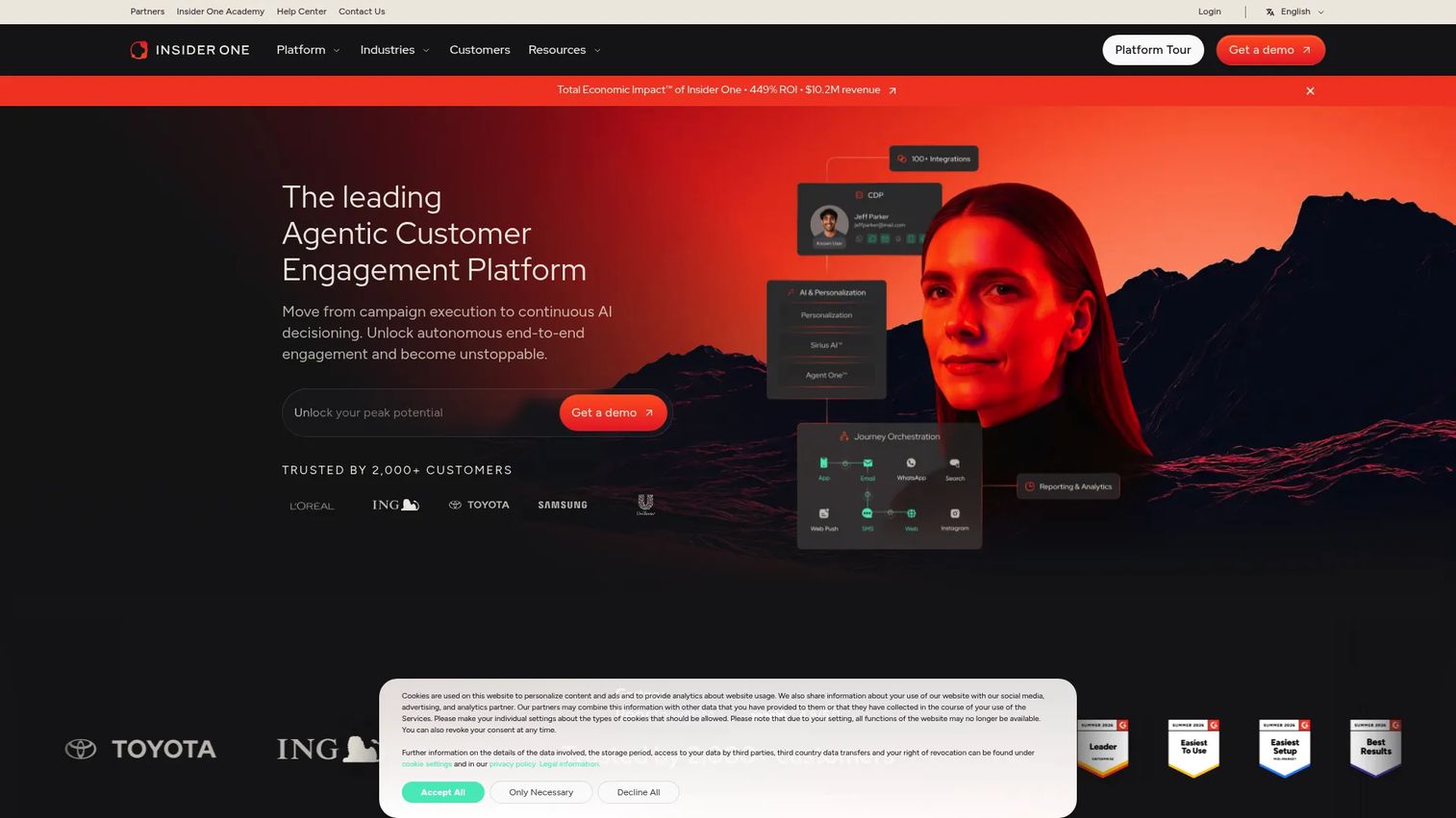
Insider One is an AI-powered customer engagement and marketing platform that pairs a customer data platform with personalization across web, app, email, SMS, WhatsApp, and site search. It unifies fragmented behavioral and profile data into a single view, then activates it across every channel a shopper touches. For teams chasing omnichannel personalization without stitching five point tools together, it offers the widest surface area on this list.
Best for: Enterprise marketing teams that want unified profiles driving personalization across every channel from one platform.
Key strengths
- Unified CDP: Builds a single customer profile so segments stay consistent across web, app, and messaging.
- Cross-channel orchestration: Designs and triggers journeys spanning email, SMS, WhatsApp, push, and web in one flow.
- Breadth of channels: Personalizes onsite content, product recommendations, and even site search from the same data layer.
Why choose Insider One: If your core problem is data living in silos and experiences that contradict each other across channels, Insider One earns its place by consolidating identity, segmentation, and activation. It ranks first here because it covers the most surfaces well, which is exactly what enterprise omnichannel teams need to prove compounding ROI rather than channel-by-channel wins.
Insider One pricing: Insider One does not publish public plan prices; pricing is quote-based and arranged through a demo. It holds a 4.8/5 rating on G2, the highest among the broad omnichannel suites on this list.
2. DynamicYield
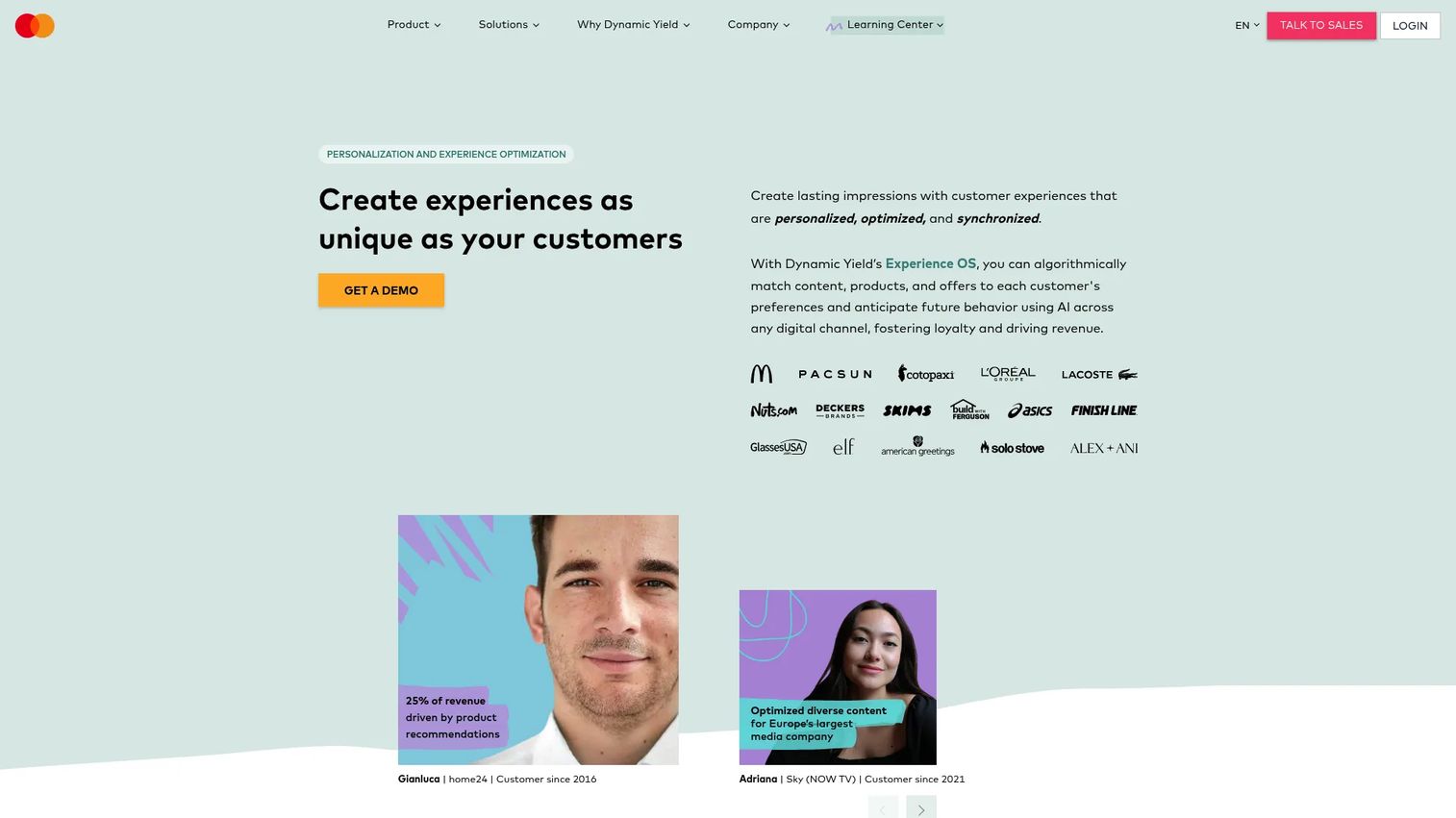
DynamicYield is an enterprise personalization and experience optimization platform for web, mobile, and cross-channel journeys. Its strength is acting on live behavioral signals, including anonymous-first personalization that adapts the experience before a visitor ever identifies. That makes it a strong fit when most of your traffic is unknown and you want to lift conversion on the first session.
Best for: Large ecommerce teams that need deep onsite personalization paired with rigorous experimentation.
Key strengths
- Real-time targeting: Adjusts content and offers on live signals, ideal for real-time ecommerce personalization on first-touch traffic.
- Predictive recommendations: Surfaces product recommendations using behavioral and predictive targeting.
- Built-in experimentation: Runs A/B testing and multivariate experiments so lift is measured, not assumed.
Why choose DynamicYield: Most of your visitors are anonymous, and the highest-leverage moment is the first session. DynamicYield is built for exactly that, pairing onsite personalization with experimentation so you can prove which variations move conversion. It fits teams that treat optimization as a continuous program, not a one-time project.
DynamicYield pricing: DynamicYield does not display public pricing; product pages route to a sales contact. It carries a 4.5/5 rating on G2.
3. Bloomreach
Bloomreach is an AI-powered commerce personalization platform spanning marketing automation, ecommerce search, and content. It unifies customer data, then drives personalized experiences across email, SMS, web, mobile, ads, search, and a headless CMS. For teams that want personalization, merchandising, and content delivery under one roof, it reduces the number of vendors in the discovery and engagement layer.
Best for: Enterprise commerce teams that want personalization, search, and content tooling unified rather than bolted together.
Key strengths
- Marketing automation: Coordinates lifecycle messaging across email, SMS, web, mobile, and ads from unified data.
- Search and merchandising: Delivers ecommerce search, merchandising controls, and product recommendations.
- Headless content: Pairs a CMS with omnichannel personalization for consistent experiences across surfaces.
Why choose Bloomreach: When search, content, and lifecycle each sit in a different tool, experiences drift and reporting fragments. Bloomreach consolidates that layer, which is why it suits commerce teams optimizing the full discovery-to-purchase path. Pricing scales with customer count, catalog size, and event volume, so it rewards brands with the data to feed it.
Bloomreach pricing: Bloomreach uses custom pricing based on customer count, catalog size, and event volume, with quotes arranged on request. It holds a 4.6/5 rating on G2.
4. Adobe Experience Cloud
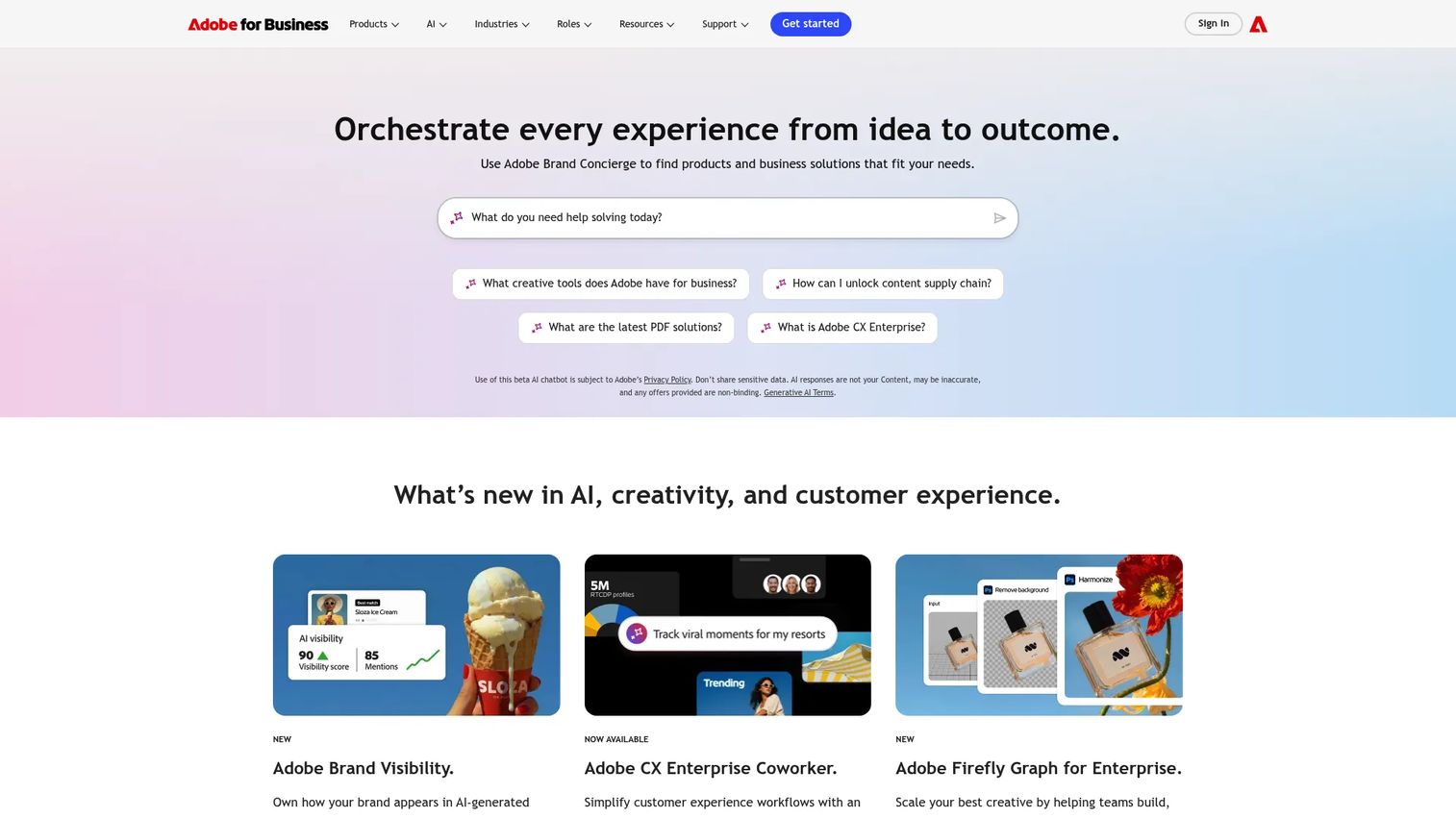
Adobe Experience Cloud is Adobe's enterprise customer experience platform spanning marketing, analytics, commerce, content, and personalization. Built on Adobe Experience Platform, it combines a CDP, journey orchestration, and content management with the experimentation and analytics ecosystem large organizations already standardize on. It's a fit for teams with formal governance, security review, and procurement processes.
Best for: Large organizations that need an integrated experience platform with CDP and journey orchestration under formal governance.
Key strengths
- Experience Platform CDP: Centralizes identity and data to power CDP-driven personalization at enterprise scale.
- Journey orchestration: Coordinates customer journeys across channels with granular control.
- Content and DAM: Manages content and digital assets alongside personalization in one ecosystem.
Why choose Adobe Experience Cloud: If your organization already runs Adobe analytics or content tools and needs personalization that satisfies legal, security, and RevOps, the integrated suite reduces vendor sprawl and clears governance hurdles. It rewards teams with the resources to operate it and the data maturity to feed the CDP.
Adobe Experience Cloud pricing: Adobe offers packages for businesses of all sizes but does not publish a starting price for Experience Cloud. It carries a 4.1/5 rating on G2.
5. Salesforce Marketing Cloud
Salesforce Marketing Cloud is Salesforce's marketing automation platform for cross-channel campaigns, personalization, and customer journey orchestration. Its biggest advantage is proximity to CRM data: if your customer records, service history, and pipeline already live in Salesforce, lifecycle personalization can draw on that context directly. That makes journeys richer and reporting cleaner for Salesforce-native teams.
Best for: Enterprise teams already standardized on Salesforce that want cross-channel journeys built on existing CRM data.
Key strengths
- Cross-channel automation: Builds and triggers campaigns across email, mobile, web, and ads.
- AI-assisted campaigns: Uses AI to assist campaign creation and optimization.
- Journey orchestration: Maps personalized journeys tied to CRM and lifecycle data.
Why choose Salesforce Marketing Cloud: The case is strongest when Salesforce is already your system of record. Pulling personalization onto the same data foundation cuts integration work and keeps attribution consistent with the rest of your revenue reporting, the kind your CFO already trusts.
Salesforce Marketing Cloud pricing: Salesforce Starter begins at $25 USD/user/month, billed monthly or annually. Marketing Cloud Next editions start at $1,500 USD/org/month (Growth) and $3,250 USD/org/month (Advanced), billed annually, with a dedicated Personalization add-on at $8,000 USD/org/month. It holds a 4.0/5 rating on G2.
6. Oracle Marketing
Oracle Marketing is Oracle's AI-powered marketing suite for B2B and B2C campaign automation, orchestration, and customer data unification. Built around Eloqua, Responsys, and Unity, it suits mature enterprise marketing operations that need cross-channel orchestration sitting on a unified data foundation. It's a fit for organizations with the ops maturity to run a full suite rather than a single onsite engine.
Best for: Enterprises that need Oracle-native marketing automation and campaign orchestration at scale.
Key strengths
- Unified customer data: Consolidates customer data as the foundation for orchestration.
- AI-driven orchestration: Coordinates campaigns across channels with AI assistance.
- Multichannel automation: Delivers personalized marketing across multiple channels from one suite.
Why choose Oracle Marketing: For enterprises already in the Oracle ecosystem, keeping marketing automation native reduces integration friction and centralizes data governance. It rewards mature marketing ops teams with the processes and headcount to run a comprehensive suite.
Oracle Marketing pricing: Oracle publishes a banded price list. Eloqua Marketing Basic starts at $2,000 per year and Standard at $4,000 per year, with Enterprise pricing dependent on contact volume. A current G2 rating was not available at the time of writing.
7. Nosto
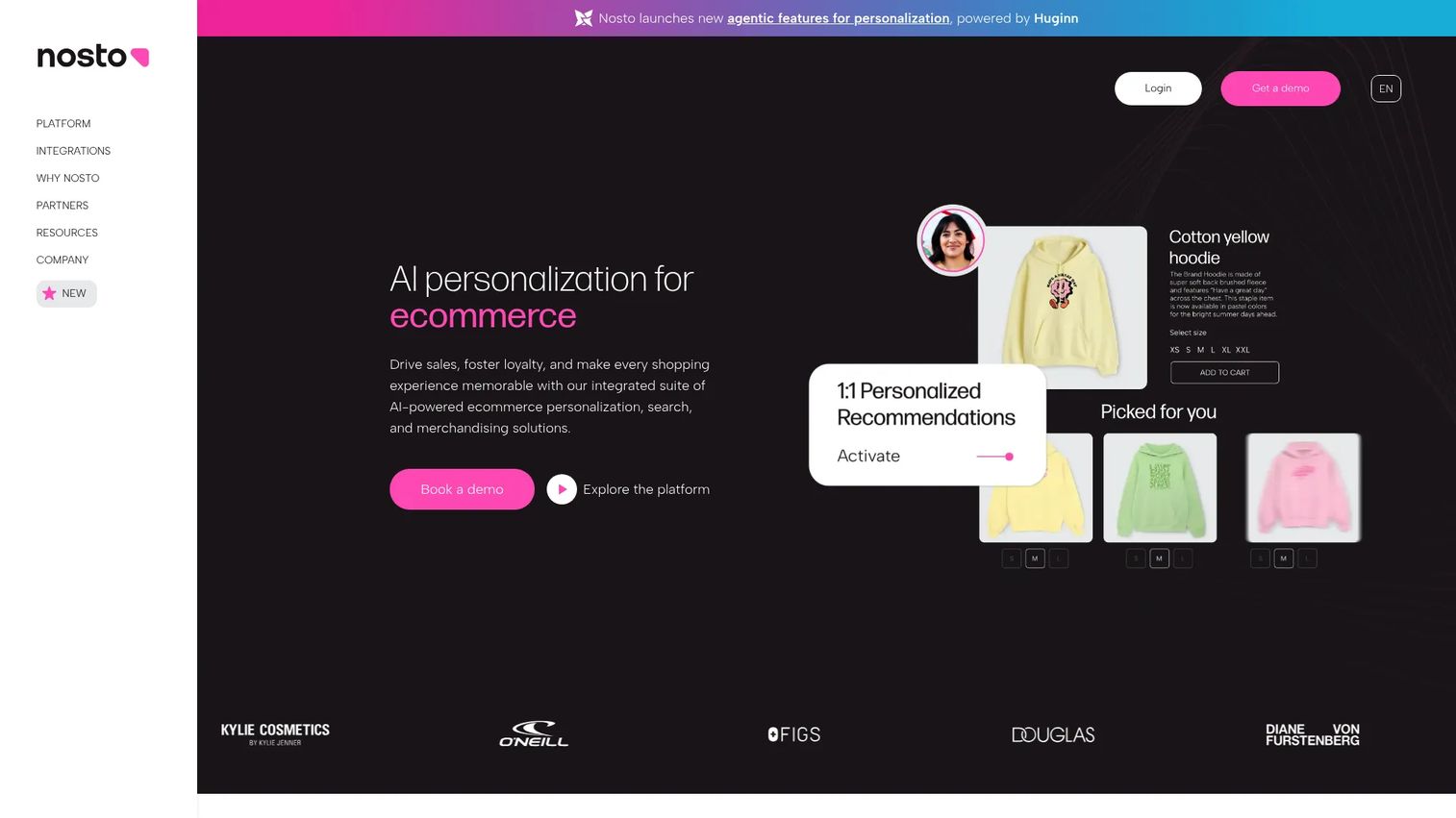
Nosto is an AI-powered commerce experience platform for onsite personalization, search, merchandising, and content. It's the most ecommerce-first option on this list, with modular capabilities you can adopt in pieces rather than committing to a full data overhaul. That makes it the simpler-stack choice for brands that want onsite wins without a long implementation runway.
Best for: Mid-market and enterprise ecommerce brands that want modular onsite personalization and merchandising with faster time to value.
Key strengths
- Personalized search and merchandising: Combines personalized search, category merchandising, and product recommendations.
- Dynamic bundles and UGC: Adds dynamic bundles, pop-ups, and shoppable user-generated content.
- Built-in optimization: Includes A/B testing and personalized emails to prove and extend lift.
Why choose Nosto: If you want a website personalization software you can stand up quickly and expand module by module, Nosto fits. Its ecommerce focus means recommendations and merchandising work out of the box, which suits lean growth teams without a dedicated data engineering function.
Nosto pricing: Nosto uses modular custom pricing with no rigid tiers, based on business volume, selected modules, and support needs; quotes are arranged through a demo. It holds a 4.6/5 rating on G2.
8. Algolia
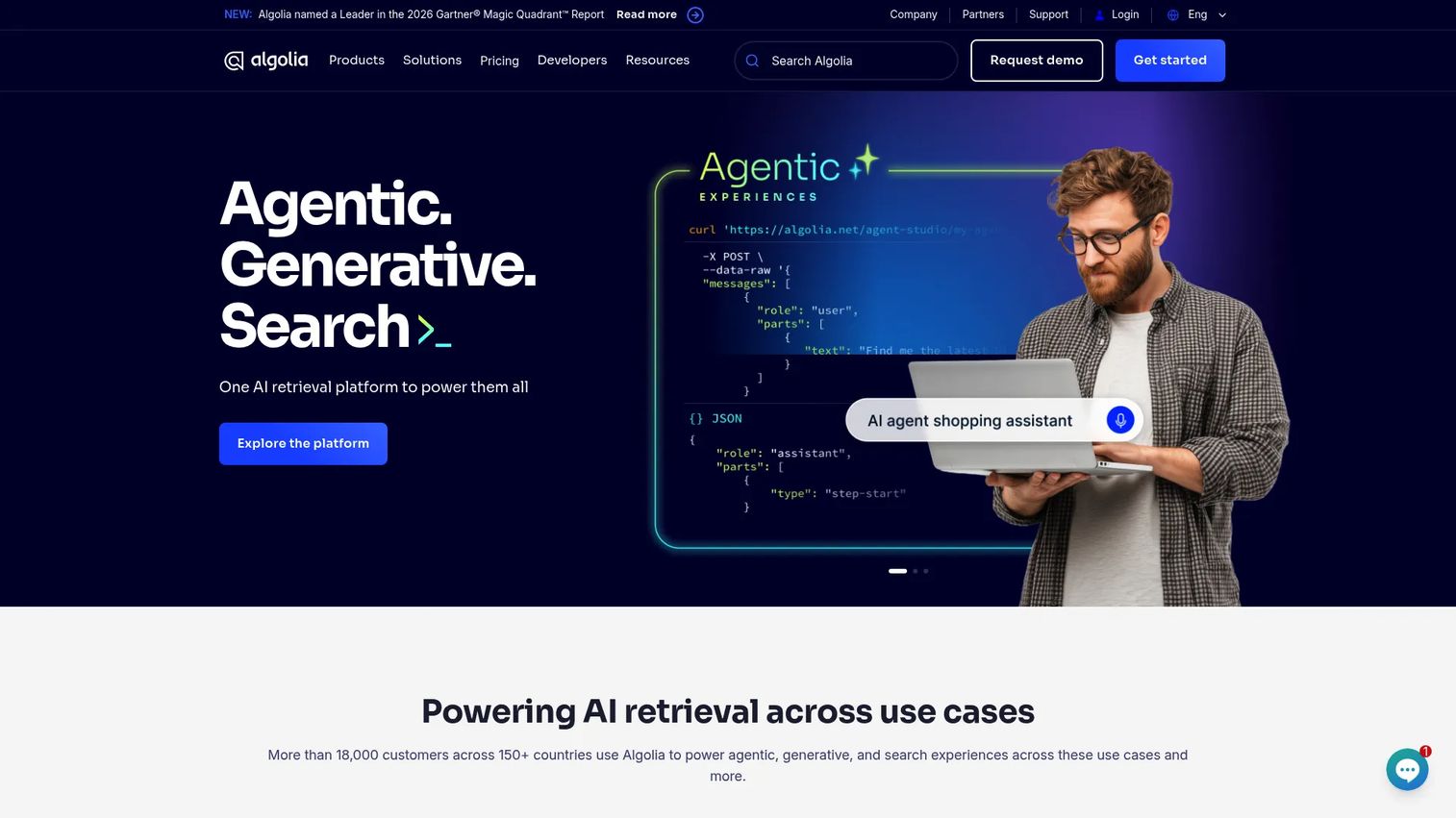
Algolia is an AI search and discovery platform for websites and apps. When shoppers can't find products, no amount of homepage personalization recovers the sale, which is why search is often the most underrated conversion lever in ecommerce. Algolia delivers fast, customizable search with semantic matching, autocomplete, and query suggestions that put the right products in front of intent-driven shoppers.
Best for: Teams where search quality is a major revenue lever and developers want a customizable, fast discovery layer.
Key strengths
- Keyword and browse: Powers fast keyword search and browse across catalogs.
- AI semantic search: Adds semantic and vector matching so results reflect intent, not just exact terms.
- Autocomplete and suggestions: Speeds product finding with autocomplete and query suggestions.
Why choose Algolia: Search-driven shoppers convert at far higher rates, so improving relevance often beats another homepage test. Algolia's transparent, usage-based pricing also makes it one of the easier platforms here to start small and scale, which appeals to teams that want to tie spend directly to search volume.
Algolia pricing: Algolia's Build plan is free. Grow and Grow Plus are pay-as-you-go, with Grow billed at $0.50 per additional 1K search requests and $0.40 per additional 1K records. Elevate is enterprise, contract-based. It holds a 4.5/5 rating on G2.
9. Constructor
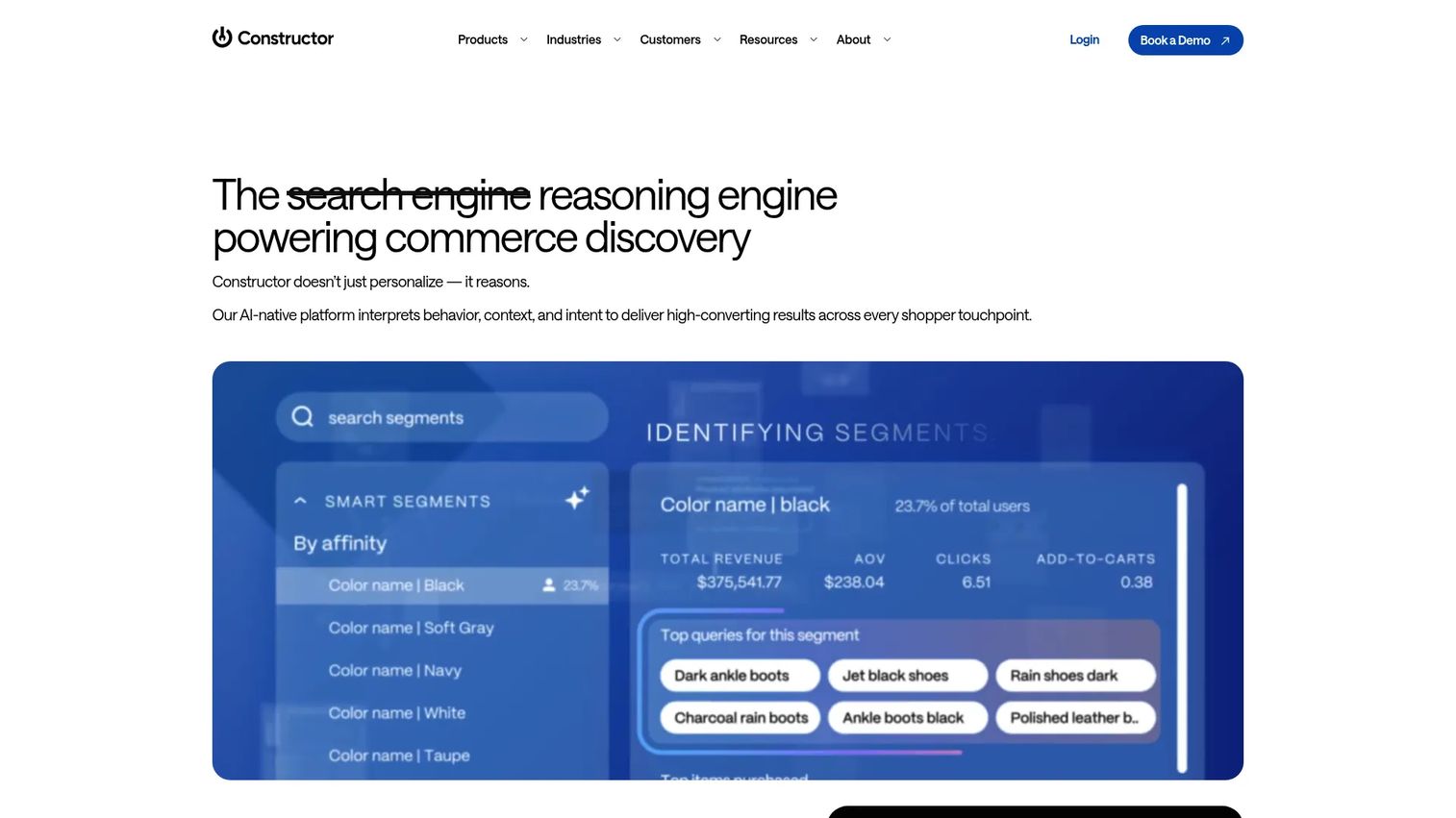
Constructor is an AI-native ecommerce search and product discovery platform built for catalog scale. Its Commerce Reasoning Engine personalizes search, browse, recommendations, and collections based on individual shopping behavior, with merchandiser controls to steer outcomes. For large catalogs where default sort buries revenue, that behavioral personalization is the difference between found and lost products.
Best for: Enterprise ecommerce teams improving onsite search, browse, and product discovery at catalog scale.
Key strengths
- Commerce Reasoning Engine: Personalizes search and discovery on individual behavior, not static rules.
- AI agents: Adds an AI Shopping Agent and AI Product Insights Agent for discovery and merchandising.
- Merchandiser controls: Gives teams browse, recommendations, collections, and retail media controls.
Why choose Constructor: When your catalog is large enough that relevance, not inventory, is the bottleneck, Constructor's behavioral approach to search and merchandising fits. It rewards teams that treat product discovery as a continuous optimization surface tied directly to revenue.
Constructor pricing: Constructor does not publish public pricing; it appears quote-based and is arranged through sales. It carries a 4.8/5 rating on G2, the highest among the search-led platforms here.
10. Coveo
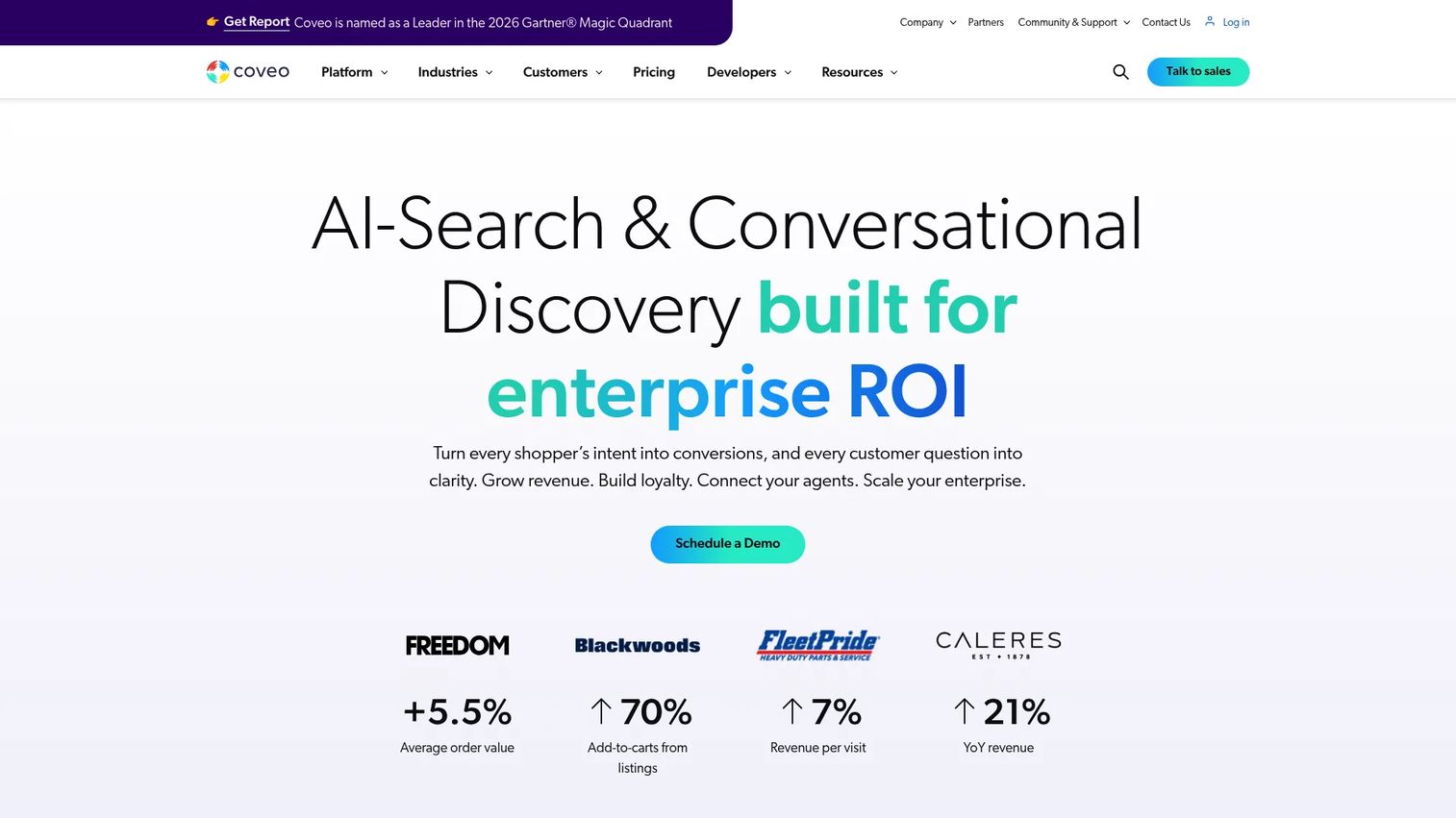
Coveo is a composable AI search and generative experience platform for enterprises, spanning commerce, service, website, and workplace experiences. It pairs a unified index with AI search, recommendations, and generative answering, which makes it a fit for teams that need relevance across both product discovery and content. The breadth is what sets it apart when personalization has to extend beyond the storefront.
Best for: Enterprises needing AI-powered search, recommendations, and generative answers across commerce and content experiences.
Key strengths
- Generative answering: Returns AI-generated answers, not just result lists.
- Unified index: Connects multiple content and product sources into one searchable layer.
- AI search and recommendations: Delivers relevance-driven results and product recommendations across surfaces.
Why choose Coveo: When your personalization need spans commerce and content, support, or self-service, Coveo's unified index and generative layer cover more ground than a storefront-only search tool. It fits enterprises with strong product discovery and content requirements that want one relevance engine across them.
Coveo pricing: Coveo offers Pro and Enterprise tiers with a free starting option, but does not publish dollar pricing on its first-party pages. It holds a 4.3/5 rating on G2.
Considerations before you buy
Channel coverage versus depth
Decide whether you need broad omnichannel personalization across web, email, SMS, and app, or deep excellence on one surface like search. Suites like Insider One and Bloomreach cover breadth; Algolia, Constructor, and Coveo go deep on discovery. Buying both breadth and depth from one vendor is rare, so map your highest-leverage channel first.
Data maturity required
Some ecommerce personalization platforms need a clean, unified data foundation before they deliver. CDP-driven personalization from Adobe or Oracle rewards teams with mature data; onsite-first engines like Nosto deliver faster with less upfront work. Be honest about your current data hygiene.
Integration with your existing stack
Check that the platform connects to your CRM, ESP, analytics, and ecommerce platform without custom engineering. The "what does this replace?" question matters here: the best buy often consolidates two tools you already pay for. For adjacent automation, our roundup of AI customer service software and best AI agents is worth a scan.
Time to value and measurement
Ask how long until first measurable lift, and how the tool attributes revenue. A platform you can't tie to conversion, AOV, or retention is hard to defend at budget time. Prioritize tools with built-in A/B testing so lift is proven, not assumed.
Conclusion
The right ecommerce personalization platform depends on your stack maturity, channel mix, and data readiness, not brand prestige.
If you're an enterprise omnichannel team consolidating tools, Insider One offers the widest surface area, with Adobe Experience Cloud, Salesforce Marketing Cloud, and Oracle Marketing strong when you're already standardized on those ecosystems. If most of your traffic is anonymous, DynamicYield's real-time targeting fits. For commerce content plus search in one place, Bloomreach. For a simpler, ecommerce-first stack with faster time to value, Nosto. And when product discovery is where revenue leaks, Algolia, Constructor, and Coveo turn search into a conversion lever.
Don't buy on the demo alone. Shortlist one or two finalists, run a 60 to 90 day pilot against a real use case like cart recovery or category-page conversion, and measure lift against a holdout. Let the data, not the sales deck, make the call.
Start your journey with Guideflow today!
FAQs
Ecommerce personalization software tailors the shopping experience to each visitor in real time, adjusting content, product recommendations, search results, and messaging based on behavioral, transactional, and profile data. The goal is higher conversion, larger AOV, and stronger retention by showing each shopper what's most relevant instead of a one-size-fits-all storefront.
It depends on your fit. Insider One leads for enterprise omnichannel personalization, DynamicYield for anonymous-first and experimentation, Bloomreach for commerce content plus search, Nosto for a simpler ecommerce-first stack, and Algolia, Constructor, and Coveo for search-led discovery. Match the tool to your highest-leverage channel and data maturity, not its market share.
Lean teams without a dedicated data engineering function usually do best with an onsite-first platform like Nosto, which delivers recommendations and merchandising out of the box and expands module by module. Search-led tools like Algolia also let you start small with usage-based pricing and scale as volume grows.
Prioritize customer segmentation (including anonymous-first), real-time content, product recommendations, lifecycle messaging, search and merchandising, built-in A/B testing, and revenue attribution. Just as important is integration quality with your CRM, ESP, analytics, and ecommerce platform, so the tool consolidates your stack instead of adding to it.
They replace a single default experience with relevant content, recommendations, and search results tied to each shopper's intent. Envive (2024) reports that 65% of ecommerce stores see higher conversion after adopting personalization, and companies that excel at it generate around 40% more revenue than peers. The lift comes from reducing friction between intent and the right product.
Run experiments against a holdout group and measure incremental lift in conversion rate, AOV, and repeat purchase rate, then translate that into revenue and payback period. Favor platforms with built-in A/B testing and clean revenue attribution so the numbers hold up in front of finance.
For brands selling across web, app, email, and SMS, yes, because inconsistent experiences across channels erode trust and conversion. Omnichannel personalization built on a unified profile keeps segments and messaging consistent everywhere, which compounds ROI across more surfaces than a single-channel tool can.
A CDP unifies customer identity and data into a single profile and is the data foundation. A personalization platform activates that data to change what each shopper sees and receives. Some suites like Adobe Experience Cloud and Insider One bundle both, which is why CDP-driven personalization is a common architecture for omnichannel teams; standalone onsite engines focus on activation and connect to a separate CDP.