A terminal can lose control long before cargo stops moving. It happens when berth planning lives in one system, yard moves get tracked in another, gate activity comes through radio calls, and billing catches up days later. By that point, the shift data is already stale.
Terminal complexity is a coordination problem spanning cargo, equipment, transport modes, and commercial processes simultaneously. According to Port Technology International (2025), 86% of terminal professionals already use terminal operating systems and planning tools, yet only 30% have adopted real-time analytics. The gap between deployment and meaningful operational visibility is where throughput gets lost.
Picking the right terminal operating system software closes that gap. The right platform creates one operational picture for the whole team instead of forcing planners, equipment operators, and billing staff to reconcile disconnected data after every shift.
This guide covers 10 terminal operating systems for 2026, with verified pricing, current G2 ratings, and practical guidance for the operators and executives creating a vendor shortlist.
What's inside
- Who this is for: Terminal executives, operations leaders, and founders evaluating vertical logistics platforms or planning a TOS implementation
- How tools were selected: Operational fit for distinct terminal types, depth of automation and equipment connectivity, integration coverage, and commercial workflow support including billing controls
- What you'll find: A comparison table with verified pricing and ratings, one section per tool, a buyer checklist, and eight FAQs covering real evaluation questions
TL;DR
- Best for large container and multi-terminal operations: Navis Terminal Operating System, with configurable planning across yard, gate, vessel, and equipment workflows
- Best for marine terminal workflows: Tideworks Mainsail, covering vessel, cargo, gate, inventory, and billing in one environment
- Best for rail and intermodal operations: Tideworks Intermodal Pro, purpose-built for high-volume rail ramp and truck coordination
- Best for multi-cargo and mixed transport terminals: Solvo.TOS, supporting vessels, rail, road, and multi-cargo simultaneously
- Best for multimodal control with equipment integration: ICT Logistics TOS, connecting planning, gate automation, and equipment instructions
- Best for smaller ports seeking an accessible operating view: MarineBerth, with transparent per-berth pricing and a browser-based interface
What is a terminal operating system?
A terminal operating system is software that plans, controls, and monitors cargo, equipment, yard, gate, vessel, rail, and truck activity at a port, terminal, inland depot, or intermodal facility.
Core workflows a terminal operating system manages
- Vessel and berth planning: Call scheduling, berth allocation, marine arrival coordination, and departure sequences
- Yard inventory: Container placement, cargo location tracking, and dwell management across stacks and blocks
- Gate operations: Truck appointment scheduling, vehicle recognition, turnaround tracking, and driver workflows
- Rail and intermodal: Train arrivals, wagon handling, ramp operations, and container handoffs between modes
- Equipment tasks: Work orders and routing for cranes, reach-stackers, straddle carriers, AGVs, and mobile operators
- Cargo documentation: Inspections, weighbridge processes, verified gross mass recording, and special-cargo handling
- Commercial controls: Tariff management, billable-event capture, invoicing accuracy, and customer reporting
Technologies that extend a TOS
- EDI connections for shipping lines, customs authorities, and trade partners
- APIs linking to ERP, TMS, Port Community Systems, and customer portals
- OCR, RFID, and GPS for asset and cargo visibility
- Equipment control interfaces for automation programs
- Cloud deployment supporting central reporting across multiple sites
What a TOS is not
A TOS is broader than a yard management tool, which focuses only on vehicle and trailer movement inside a single yard. It differs from a Port Community System, which coordinates information flows between port stakeholders but does not control terminal execution. The TOS becomes the operating layer that connects planning, execution, visibility, and commercial control into one environment.
When to use terminal operating system software
Replace fragmented terminal coordination
When planners rely on spreadsheets, radio calls, and isolated gate systems, delays in one area cascade across the whole operation. A TOS gives the team a shared execution layer so a berth change reaches the yard planner, the equipment dispatcher, and the gate controller in the same moment rather than through a sequence of calls.
Prepare for terminal automation
Equipment automation produces more data and more operational dependencies than manual processes. A TOS that can issue, sequence, and synchronize tasks with cranes, AGVs, and mobile equipment turns that data into coordinated action rather than noise. Evaluate this fit before selecting automation hardware.
Standardize multi-site terminal operations
Port groups and inland networks running multiple sites need consistent data structures, shared operating rules, and central reporting. A TOS with multi-terminal capabilities lets each site run its own operation while giving leadership the consolidated view required for investment decisions and performance benchmarking.
Terminal operating systems comparison
Platform fit depends on terminal type, cargo mix, transport modes, and integration requirements. Most vendors in this category price by quote because implementation scope, module selection, site count, and automation depth all affect total cost significantly. The table below reflects verified current data; G2 ratings are shown where a verified score exists.
| # | Product | Best for | Key differentiator | Pricing | G2 rating |
|---|---|---|---|---|---|
| 1 | Navis Terminal Operating System | Large container and multi-terminal operations | Broad terminal control across yard, gate, vessel, and equipment | Contact vendor for quote | 4.5/5 |
| 2 | Tideworks Mainsail | Marine terminals | Integrated vessel, yard, gate, cargo, and billing workflows | Contact vendor for quote | Not listed on G2 |
| 3 | Tideworks Intermodal Pro | Rail and intermodal terminals | Real-time rail planning with graphical drag-and-drop dispatch | Contact vendor for quote | Not listed on G2 |
| 4 | Solvo.TOS | Mixed-cargo ports and inland terminals | Vessel, rail, truck, multi-cargo, documentation, and billing | Individually calculated | Not listed on G2 |
| 5 | OPUS Terminal | Container terminal operators | Integrated planning, yard allocation, vessel, and KPI reporting | Contact vendor for quote | Not listed on G2 |
| 6 | TBA Autostore TOS | Container ports and inland terminals | Real-time container control with equipment and ERP integration | Contact vendor for quote | 3.7/5 |
| 7 | MarineBerth | Smaller ports seeking accessible TOS interface | Browser-based port operations with per-berth transparent pricing | From $400/berth/month | Not listed on G2 |
| 8 | GullsEye | Terminals prioritizing operational dashboards | Real-time 3D monitoring with trade, CRM, and ERP connectivity | Contact vendor for quote | 4.7/5 |
| 9 | ContPark | Inland depots and intermodal yards | Cloud-based yard, gate, billing, and EDI/API integration | Contact vendor for quote | 4.5/5 |
| 10 | ICT Logistics TOS | Multimodal terminals with equipment automation | Planning, gate automation, equipment control, and multi-terminal visibility | Contact vendor for quote | Not listed on G2 |
Best 10 terminal operating systems for 2026
Each platform below serves a distinct operating model. Read the overview and the "Why choose" section to confirm fit before requesting a demonstration.
1. Navis Terminal Operating System
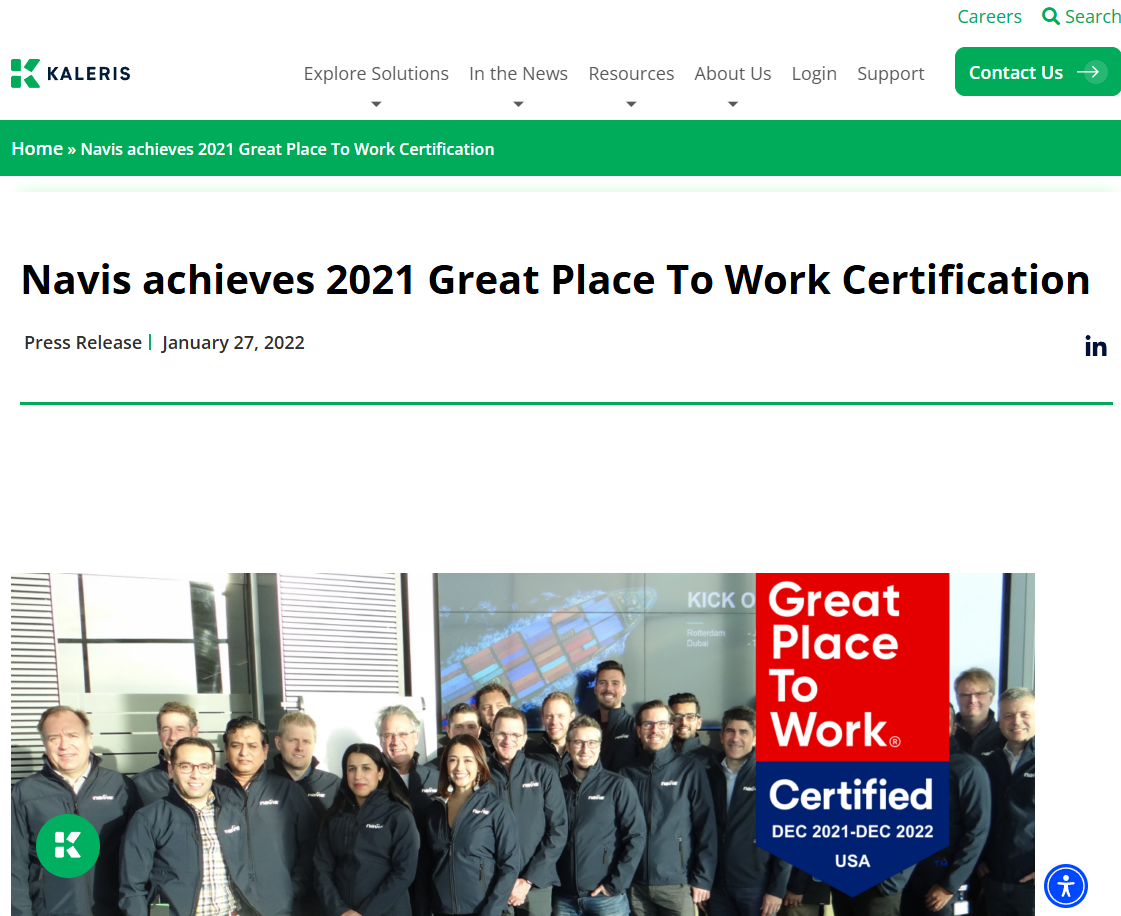
Navis Terminal Operating System, now part of Kaleris, is a container terminal operating system serving large-scale container, general-cargo, mixed-cargo, and automated terminal environments. It covers yard planning, equipment routing, vessel coordination, gate operations, and EDI connectivity within a configurable platform. Navis has been deployed at major container ports globally and is one of the most referenced names in port terminal operating system discussions.
Best for: Large container terminals and multi-terminal groups needing configurable planning, execution, and real-time operational visibility across connected workflows.
Key features
- Advanced yard planning and optimization across stacks and blocks
- Real-time operational visibility with KPI monitoring dashboards
- Equipment routing, dispatching, and task optimization for cranes and yard vehicles
- Automation support spanning yard, transport, quay, and gate operations
- EDI and API connectivity for shipping lines, customs, and Port Community Systems
Why choose Navis: Navis suits organizations that need depth and configurability across a complex container terminal environment. Treat the implementation as a transformation program with process mapping, integration build, and training phases, not a software deployment with a short setup window.
Navis pricing: Navis sells through direct vendor engagement and structures contracts around terminal scale, module selection, integration scope, and deployment model. Contact the Kaleris sales team for a project-specific quote.
G2 rating: 4.5/5
2. Tideworks Mainsail
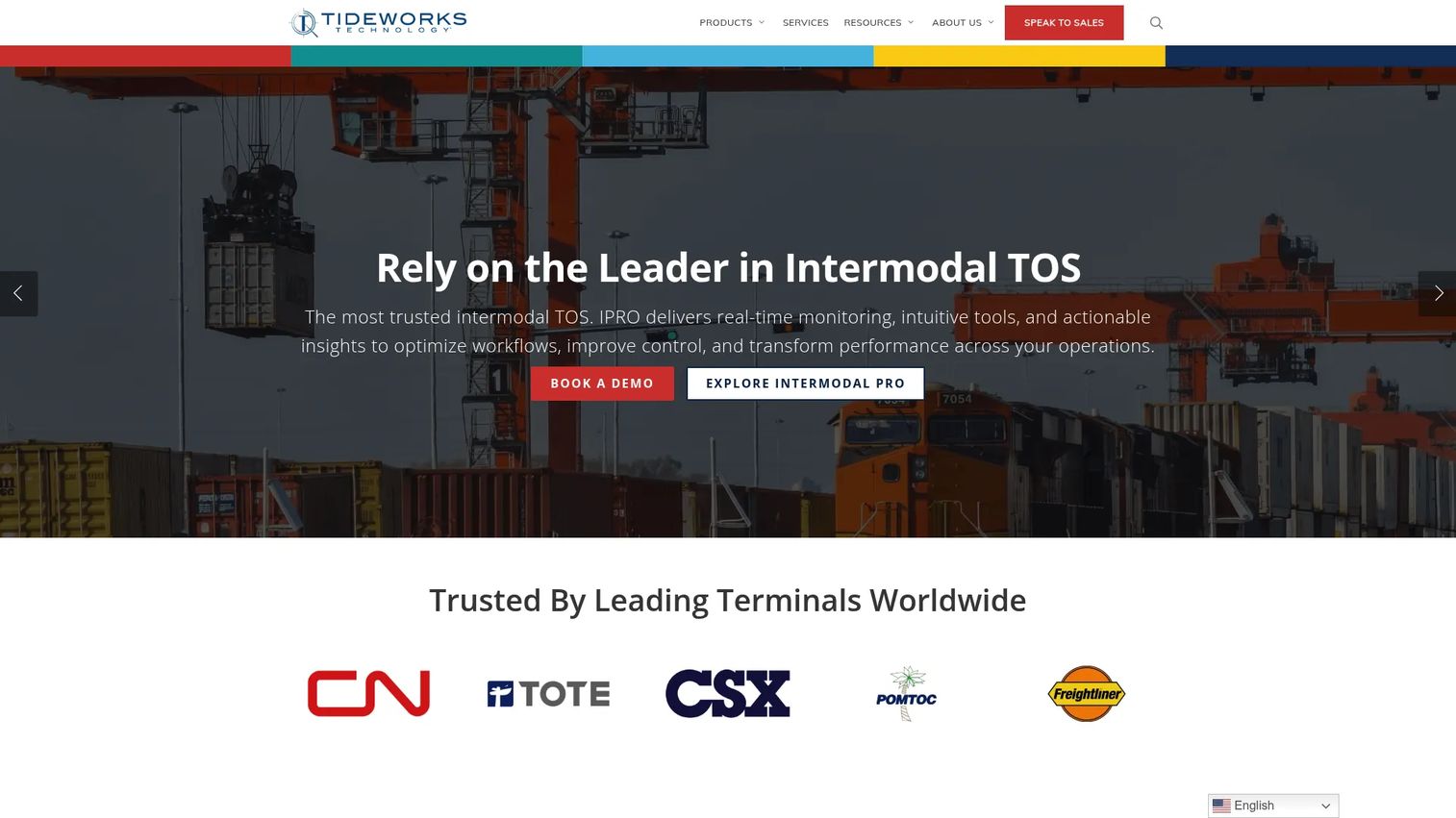
Tideworks Mainsail is a marine terminal operating system designed for operators who need integrated control across vessel operations, cargo inventory, yard management, gate workflows, and billing. The platform supports configurable roles, screens, and workflows so each terminal can adapt the interface to its operating model. Third-party integrations include port community systems, OCR, license plate recognition, and RFID for asset and container visibility.
Best for: Marine terminal operators needing configurable, integrated control across vessel, yard, gate, cargo, and commercial billing workflows.
Key features
- Real-time operational visibility with dynamic recaps and ad-hoc reporting
- Configurable workflows, user roles, and screen layouts per terminal
- Comprehensive billing controls and inventory management
- Third-party integrations: Port community systems, OCR, LPR, and RFID
- Advanced reporting with custom data views and export options
Why choose Tideworks Mainsail: Marine terminals that lose billable events between gate, yard, and vessel workflows will find Mainsail's tight link between operations and commercial processes valuable. Buyers should test billing exception handling and contract-specific tariff rules during the evaluation, not after go-live.
Tideworks Mainsail pricing: Tideworks does not display pricing on its website. Contact the Tideworks sales team to discuss module scope, site requirements, and implementation approach.
3. Tideworks Intermodal Pro
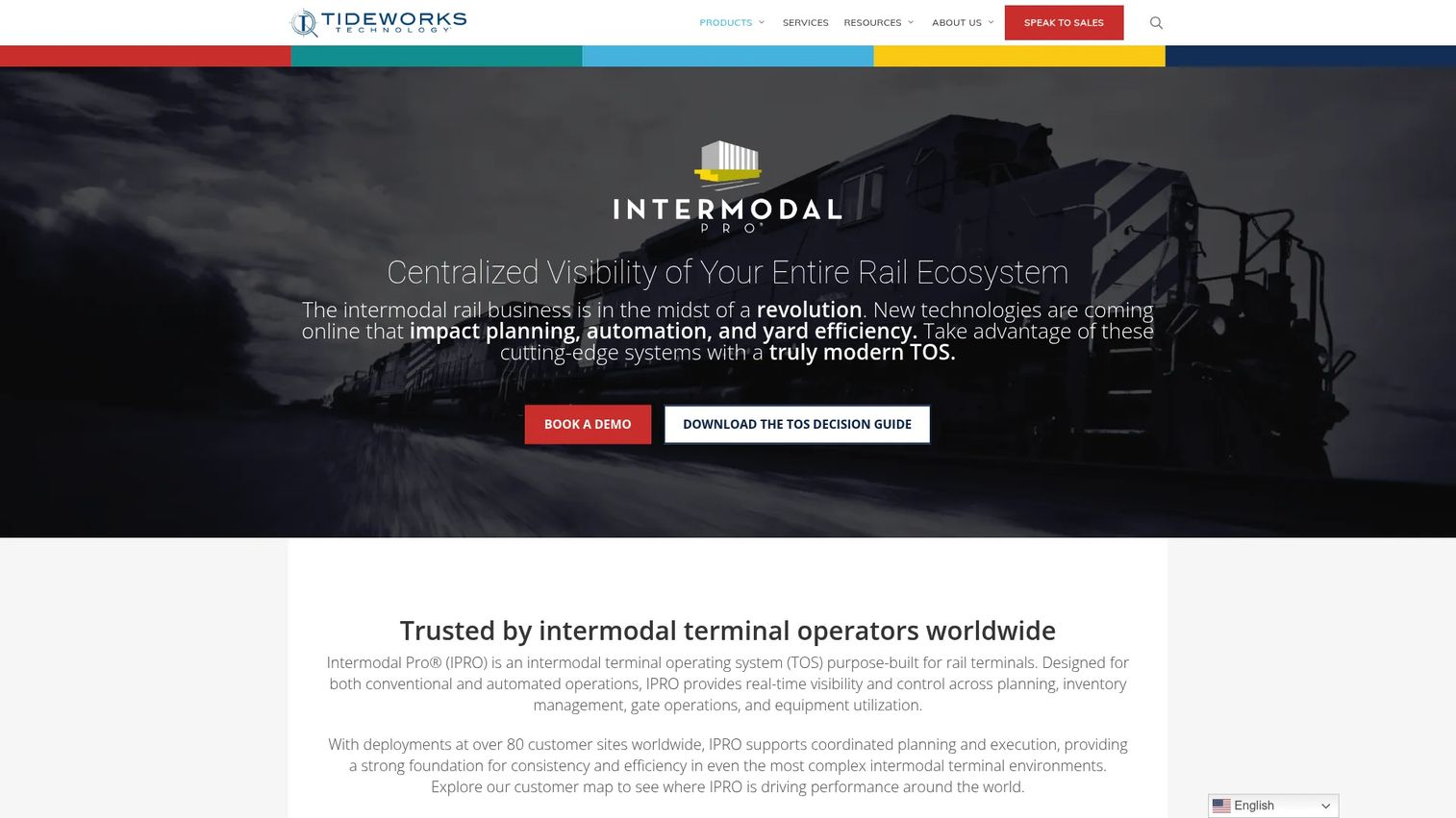
Tideworks Intermodal Pro (also known as IPRO) is a terminal operating system purpose-built for rail and intermodal terminal operations. It provides real-time visibility and control across rail planning, container inventory, gate operations, and equipment utilization. The graphical drag-and-drop interface for ramping and de-ramping work allocations distinguishes it from general-purpose TOS platforms, which typically require more manual configuration for rail-specific workflows.
Best for: Rail and intermodal terminal operators managing high-volume container flows across train arrivals, yard inventory, and truck handoffs.
Key features
- Graphical drag-and-drop planning for ramping and de-ramping work allocations
- Real-time rail planning with color-coded container status and electronic work-order dispatch
- Flexible yard planning for tracks, yard blocks, chassis blocks, and train parameters
- Integration with DGPS, mobile devices, and equipment software interfaces
- Extensive custom reporting without custom development requirements
Why choose Tideworks Intermodal Pro: Rail ramps and inland intermodal terminals have operating logic that differs substantially from marine terminals. Intermodal Pro is built around those workflows rather than adapting a marine TOS to fit. Validate train arrival sequencing, ramp workflow, and gate volume compatibility with the vendor before committing.
Tideworks Intermodal Pro pricing: Tideworks does not display pricing. Contact the sales team directly to discuss rail terminal scope, integration requirements, and implementation plan.
4. Solvo.TOS
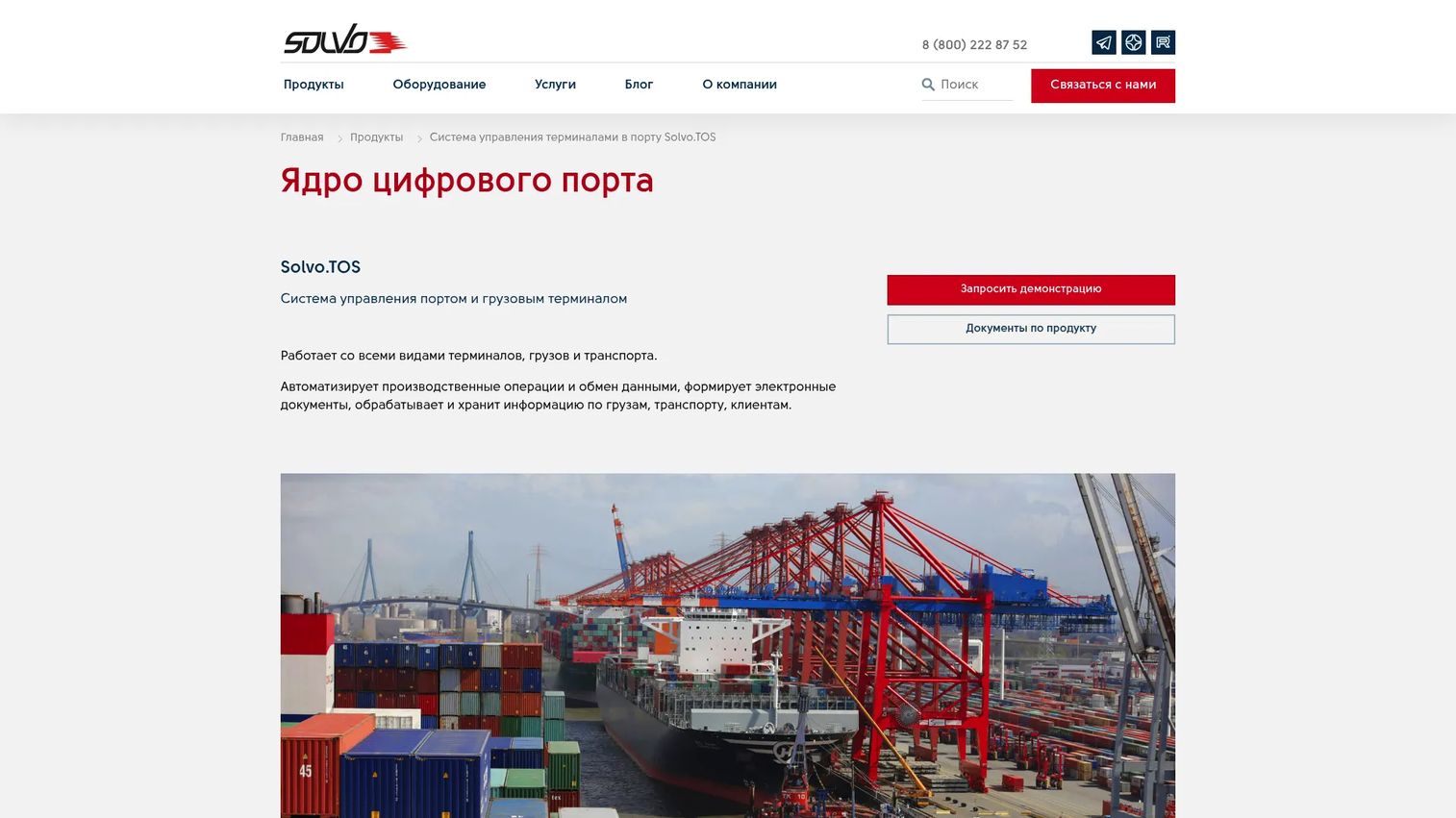
Solvo.TOS is a terminal operating system for managing ports, dry ports, rail terminals, and multimodal cargo facilities. It handles vessel and berth planning, rail and road workflows, cargo storage, equipment task management, documentation, data exchange with customs and shipping lines, and billing and KPI reporting. The platform supports containers, bulk, general cargo, reefer, empty containers, and RoRo operations within a single system.
Best for: Ports, inland terminals, rail freight stations, and mixed-cargo operators needing one operating environment across multiple cargo types and transport modes.
Key features
- Vessel and berth planning with full marine arrival coordination
- Rail, truck, and gate workflow management across modes
- Multi-cargo support: Containers, bulk, general, reefer, RoRo, and empties
- Equipment task assignment and yard coordination
- Electronic data exchange with customs, shipping lines, and supply-chain partners
Why choose Solvo.TOS: Terminals that handle more than one cargo type often force planners to switch between specialized tools. Solvo.TOS addresses that directly by covering the full range in a single environment. Test the vendor's handling of your highest-risk workflow, not only the standard container flow, before selecting.
Solvo.TOS pricing: Pricing is calculated individually based on functional requirements, project scope, system configuration, and support conditions. Contact Solvo for a project-specific estimate.
5. OPUS Terminal
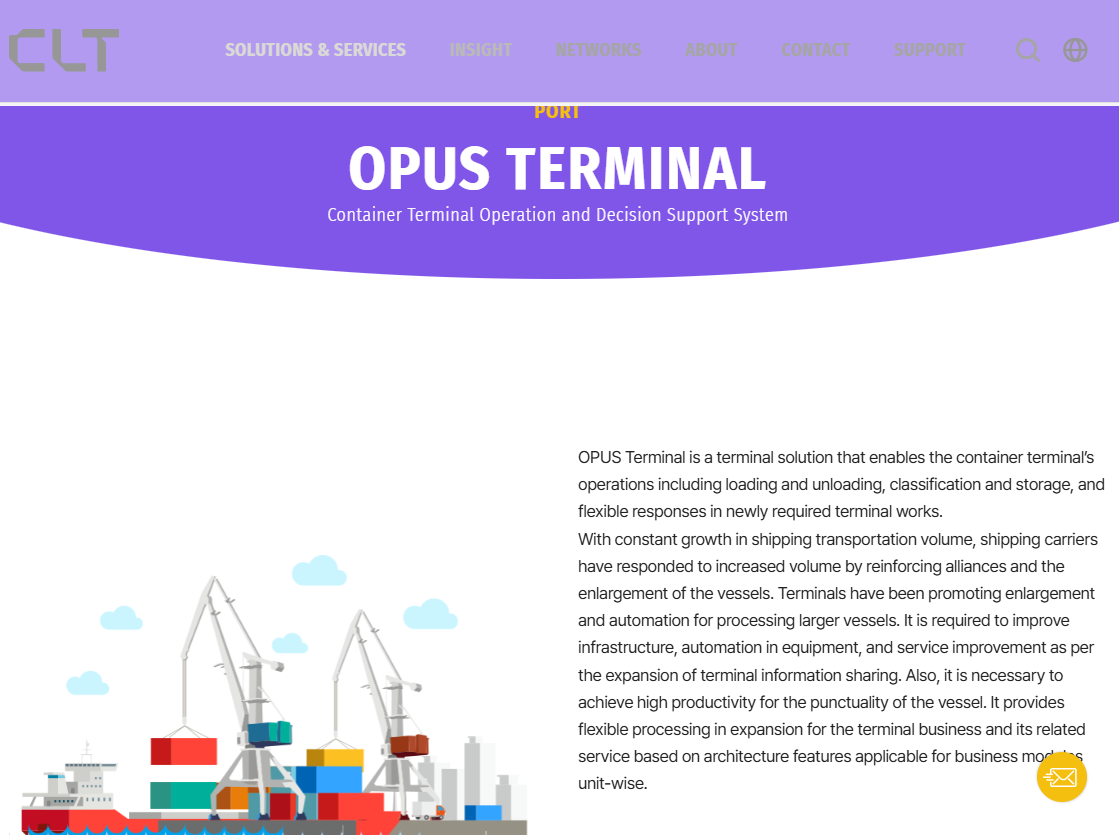
OPUS Terminal is an integrated terminal operating system for container terminal planning, yard allocation, vessel and berth management, equipment interfaces, and KPI reporting. The platform supports graphical vessel and mobile terminal device (VMT/PDA) workflows and includes IoT readiness for connected terminal environments. It covers the planning and execution layers that container terminal teams need to coordinate across shift changes.
Best for: Container terminal operators that need an integrated planning and operational control environment with KPI visibility and equipment interfaces.
Key features
- Advanced vessel planning with graphical interface support
- Yard allocation with container placement and block management
- Global truck pooling and gate coordination
- Graphical VMT/PDA support for mobile equipment operators
- IoT readiness for connected terminal devices
Why choose OPUS Terminal: Container terminal teams evaluating OPUS Terminal should ask the vendor to demonstrate exception management workflows, not only the standard planned-flow scenario. The way a platform handles crane breakdowns, late vessel arrivals, or gate congestion tells you more about operational fit than a smooth demo sequence.
OPUS Terminal pricing: OPUS Terminal does not display pricing. Contact the vendor sales team to discuss terminal scope, integration requirements, and implementation approach.
6. TBA Autostore TOS
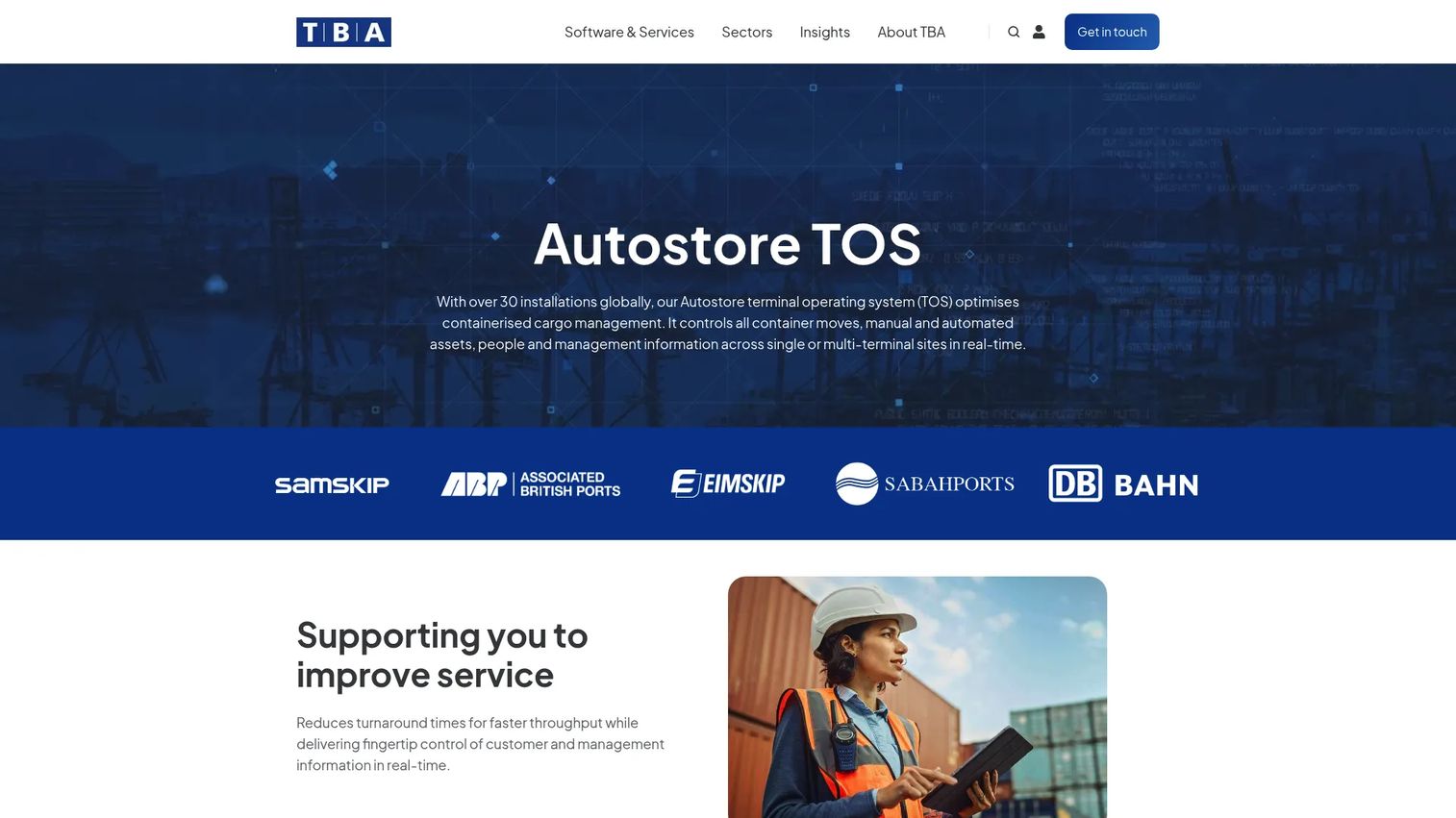
TBA Autostore TOS is a terminal operating system from TBA Group for managing containerised cargo, operational assets, people, and information across container terminals and inland yards. It provides real-time container inventory and cargo visibility, equipment control for cranes and AGVs, and integration with ERP, finance, HR, and third-party systems. Mobile applications for iOS and Android support field teams on-site.
Best for: Container ports and inland terminals needing real-time operational control with equipment management, cargo visibility, and ERP integration.
Key features
- Real-time container inventory and cargo visibility across the terminal
- Equipment control integration for cranes and AGVs
- Integration with ERP, finance, HR, and third-party systems
- Advanced simulation and optimisation tools for planning scenarios
- Mobile applications for iOS and Android for field teams
Why choose TBA Autostore TOS: Port groups and terminal operators that need to connect operational data across equipment, people, and financial systems will find TBA's integration coverage relevant. Assess automation compatibility and operational reporting depth before selection, particularly if the terminal runs AGV or automated crane equipment.
TBA Autostore TOS pricing: TBA Group directs all pricing enquiries through direct sales contact. Reach out to discuss terminal scope, equipment integration requirements, and implementation model.
G2 rating: 3.7/5 based on 3 reviews
7. MarineBerth
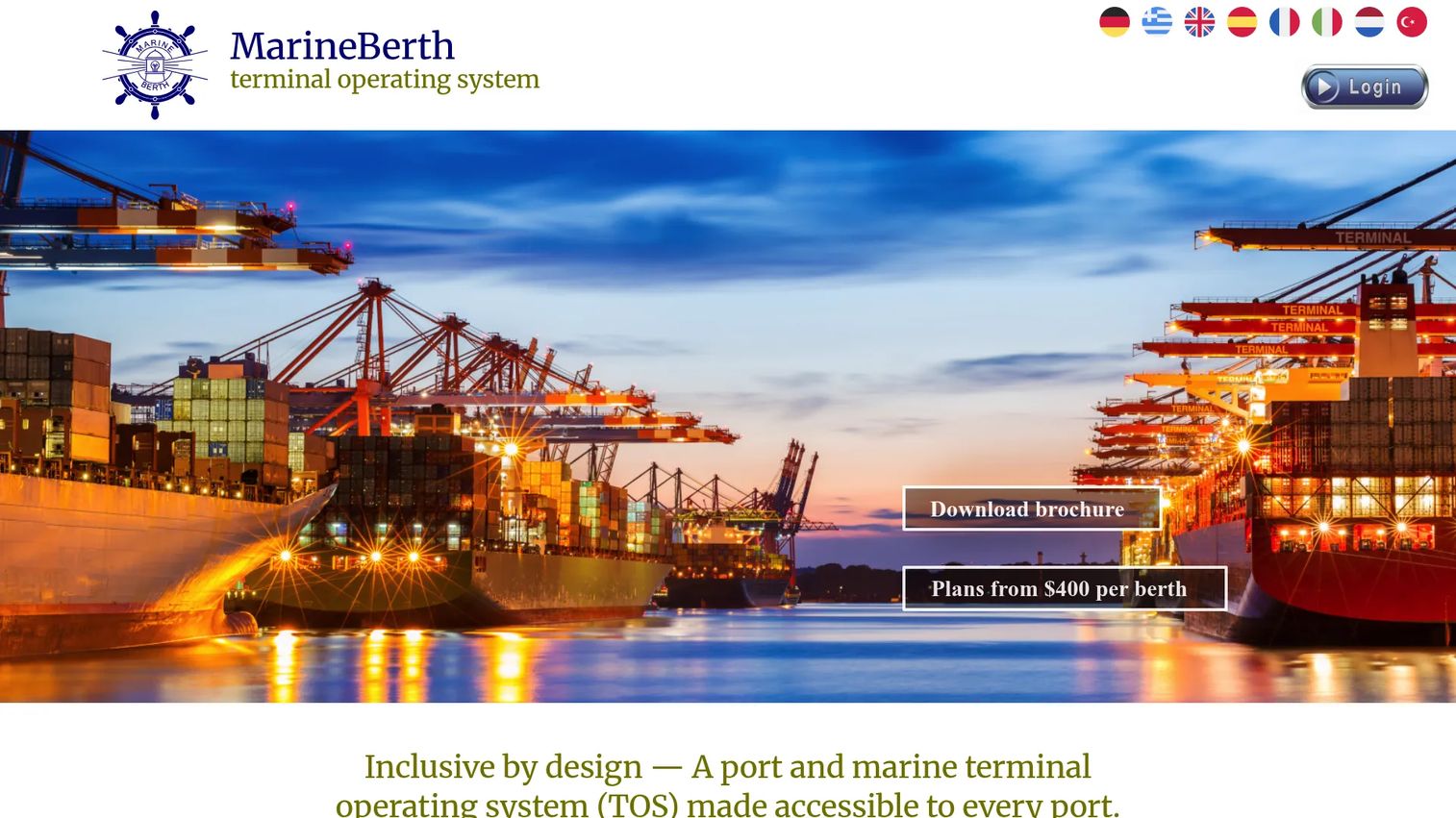
MarineBerth is a port and marine terminal operating system for managing vessel scheduling, cargo operations, crew movement, and stakeholder communication. The platform is browser-based and designed for ports that need clear operational oversight without starting from a large enterprise deployment. An optional PortWatch desktop application adds a graphical port overview for teams that want a visual real-time display.
Best for: Smaller ports and marine terminals seeking operational visibility and stakeholder coordination with a straightforward, accessible interface.
Key features
- Vessel scheduling and movement management
- Cargo operations management with real-time visibility
- Crew movement administration
- Real-time information sharing with port-community stakeholders
- Optional PortWatch desktop graphical port overview
Why choose MarineBerth: MarineBerth is one of the few platforms in this category with publicly listed pricing, which simplifies the early evaluation stage considerably. Buyers with complex billing requirements, deep EDI needs, or multi-cargo workflows should verify that those specific capabilities are covered before committing.
MarineBerth pricing: Plans start at $400 per berth per month (Basic), $600 per berth per month (Professional, includes PortWatch), and $800 per berth per month (Enterprise, adds telephone support and 20 hours of remote assistance monthly). Prices exclude taxes; a one-time PortWatch setup fee applies where applicable.
8. GullsEye
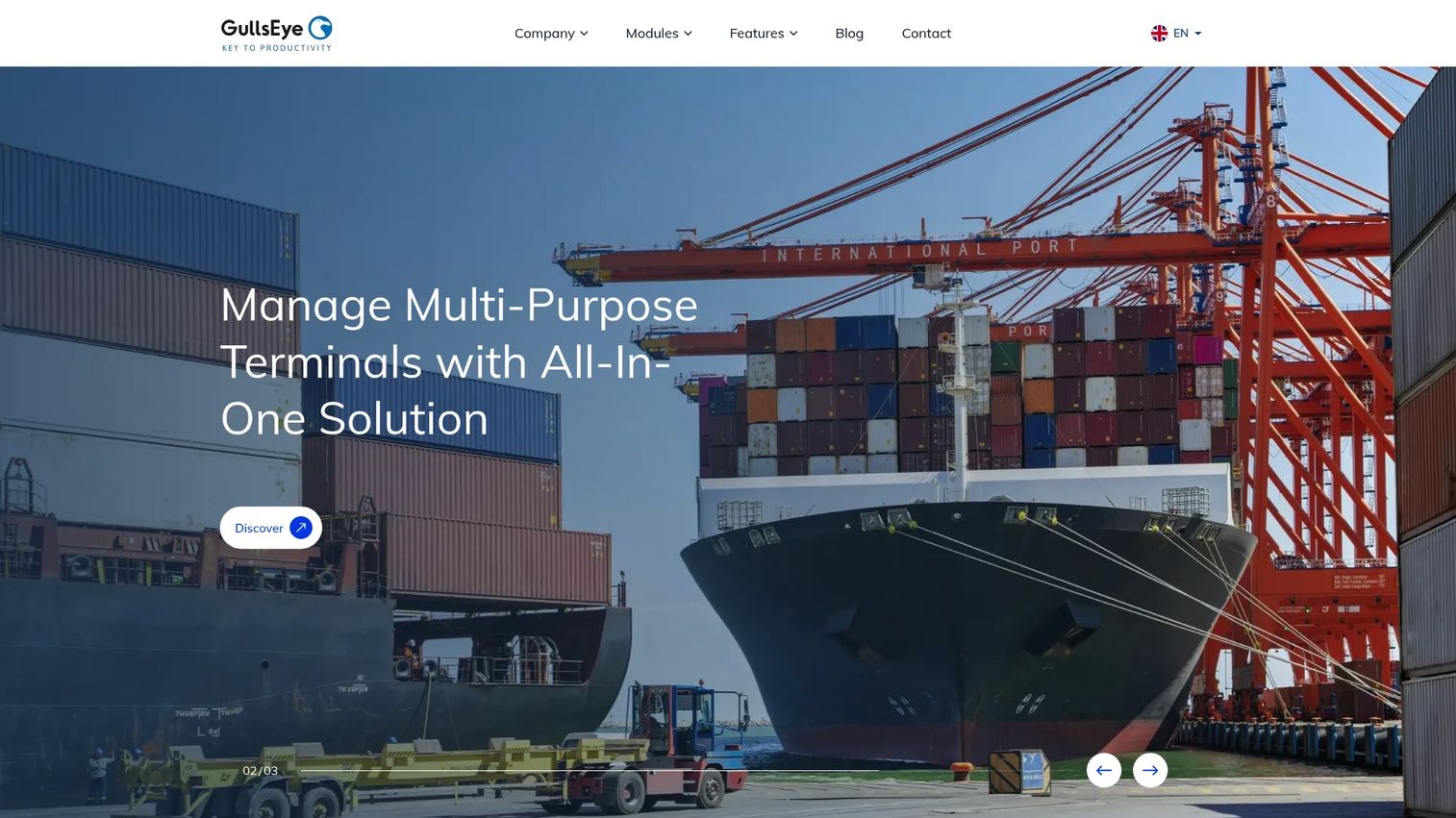
GullsEye provides a Gen2 Terminal Operating System for container, general cargo, liquid cargo, RoRo/Ropax, and rail terminal operations. The platform offers real-time 3D monitoring of containers, equipment, yards, warehouses, tanks, and vessels alongside planning tools for berth, yard, crane, and loading/discharging operations. Trade and CRM capabilities cover contract management, pricing, invoicing, accruals, and bank integrations.
Best for: Ports and multi-purpose terminals that need real-time operational visibility, graphical planning tools, and integrated commercial management including invoicing and contract controls.
Key features
- Real-time 3D monitoring of containers, equipment, yards, and vessels
- Graphical berth, yard, crane, and vessel planning interfaces
- Trade and CRM: Contract management, pricing, invoicing, and accruals
- ERP, CRM, hardware, OCR, weighing-scale, and kiosk integrations
- Optimization tools for berth, yard, crane, and cargo operations
Why choose GullsEye: Terminals that want stronger operational visibility paired with integrated commercial management, including invoicing and bank connectivity, should evaluate GullsEye's trade and CRM layer alongside the core TOS capabilities. Buyers should validate whether vessel, yard, gate, and rail workflow depth matches their specific operating model.
GullsEye pricing: GullsEye does not display pricing. Contact the sales team to discuss terminal type, cargo mix, and integration requirements.
G2 rating: 4.7/5 based on 3 reviews
9. ContPark
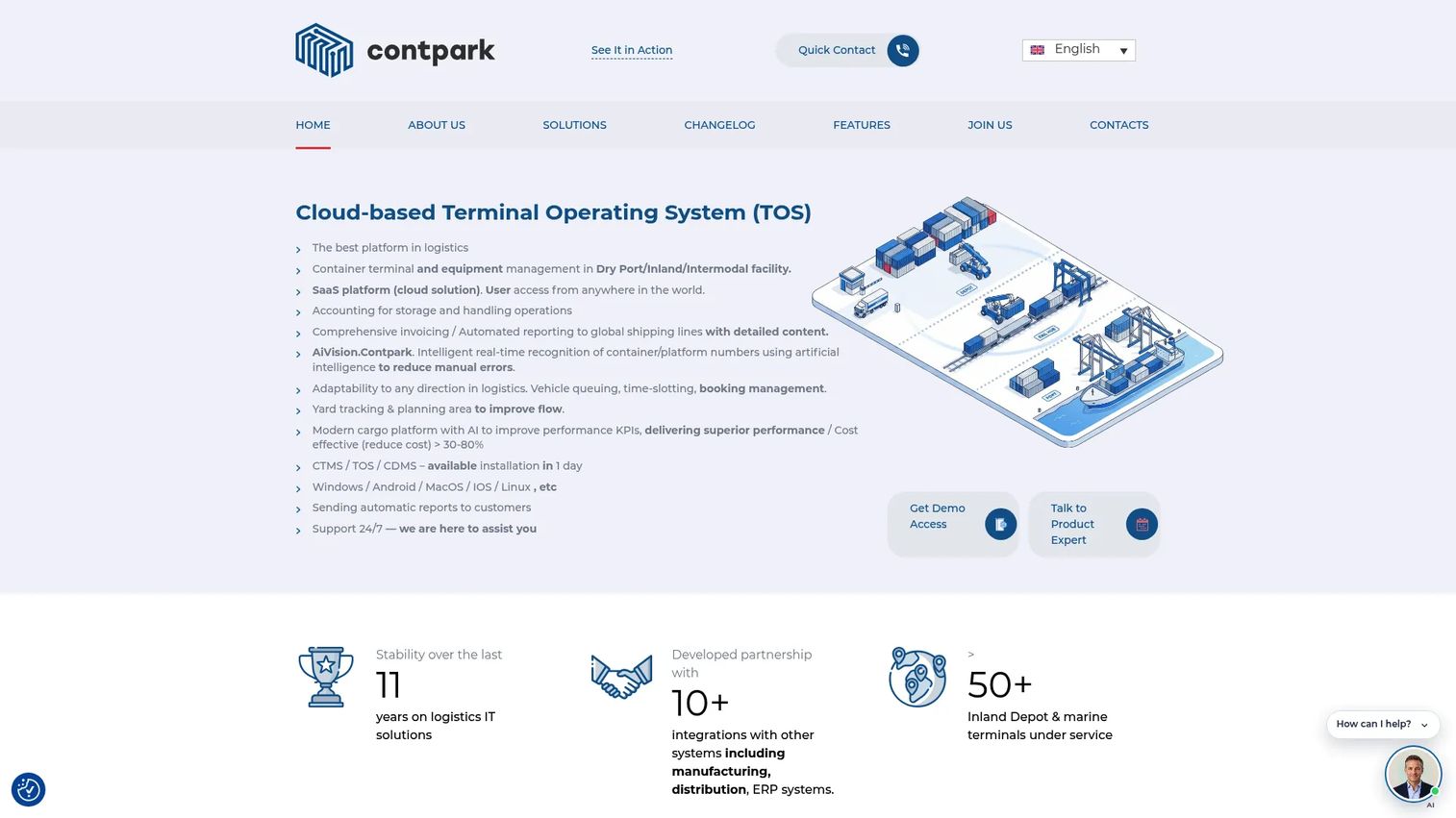
ContPark is a cloud-based terminal operating system for container terminals, inland depots, dry ports, and intermodal yards. It covers container and yard tracking, gate management with vehicle time-slot scheduling, 2D/3D yard visualization, crane and equipment task assignment, automated billing and storage-fee calculation, and EDI/API integrations including CODECO and COARRI message types. AI-assisted features support container recognition, placement planning, and repair-code matching.
Best for: Container terminals, inland depots, and intermodal yards needing integrated yard control, gate management, billing automation, and logistics connectivity.
Key features
- Container and yard tracking with real-time inventory visibility
- Gate management with vehicle time-slot scheduling and booking workflows
- 2D/3D yard visualization and storage planning
- Automated billing, invoicing, and storage-fee calculation
- EDI/API integrations including CODECO and COARRI messaging
Why choose ContPark: Inland operators and dry port managers who need terminal management connected closely to customs, shipping-line EDI, and customer information flows will find ContPark's integration scope relevant. Evaluate whether the platform supports your cargo mix, customs process, and billing exception rules before finalizing the shortlist.
ContPark pricing: ContPark directs pricing enquiries through its sales team. Contact the vendor to discuss depot size, module requirements, and integration scope.
G2 rating: 4.5/5 based on 1 review
10. ICT Logistics TOS
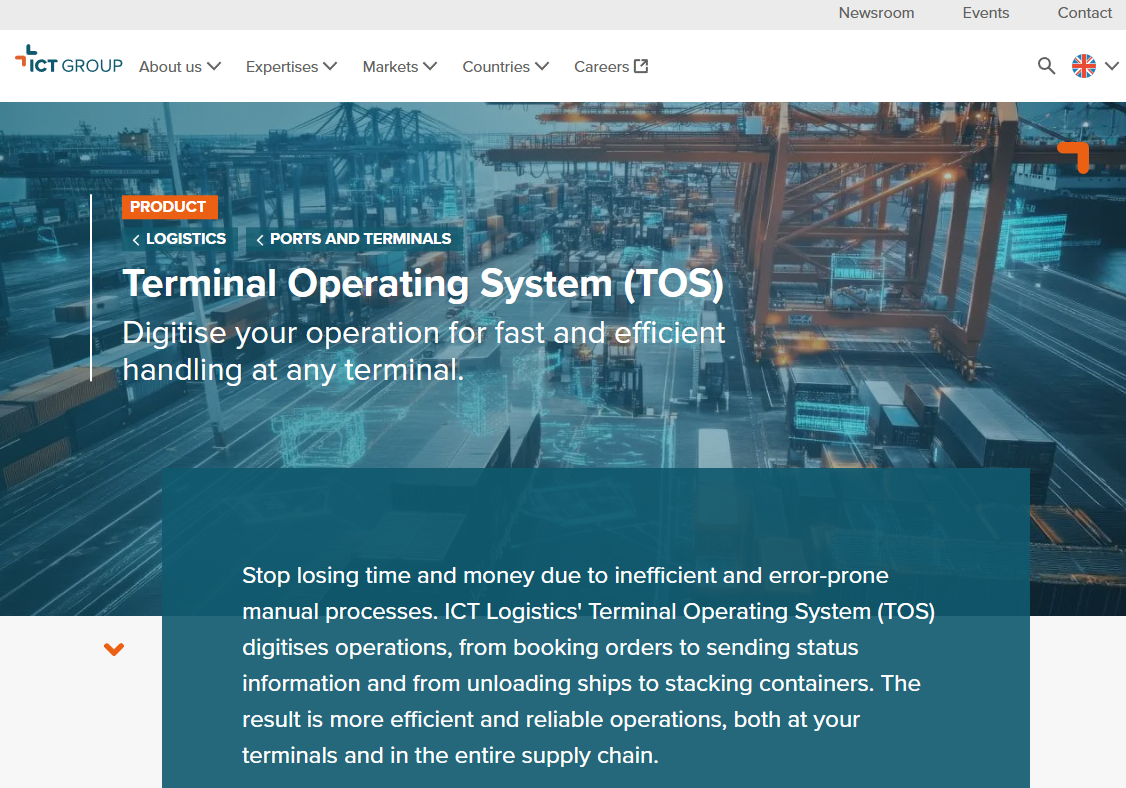
ICT Logistics TOS is a terminal operating system that digitizes, automates, and coordinates multimodal terminal operations across road, rail, inland waterway, and short-sea transport modes. It covers digital planning, control, and monitoring of terminal processes; configurable workflow modules for task and compliance checks; carrier slot booking; automated vehicle, train, and wagon recognition; and centralized visibility across multiple terminals. Integration with SmartECS enables vendor-independent equipment control for cranes and yard machines.
Best for: Port, depot, and multimodal terminal operators needing centralized control of container flows, gate automation, and equipment coordination across connected sites.
Key features
- Digital planning, control, and monitoring across multimodal terminal processes
- Carrier slot booking with automated vehicle, train, and wagon recognition
- Integration with SmartECS for vendor-independent equipment control
- Centralized real-time visibility across multiple terminal sites
- Integration with intermodal TMS for road, rail, inland-waterway, and short-sea transport
Why choose ICT Logistics TOS: Terminals planning or running equipment automation programs should verify equipment control integration against their current crane and yard machine vendor landscape. The SmartECS connection is designed to be vendor-independent, but compatibility with specific equipment systems requires validation during the sales process.
ICT Logistics TOS pricing: ICT Logistics does not display pricing. Contact the sales team to discuss site count, equipment integration requirements, and implementation approach.
Considerations when choosing terminal operating systems
Match the platform to terminal type and cargo mix
A container transshipment terminal, bulk facility, inland depot, and rail ramp do not run the same workflows. Start with cargo type, transport modes, gate model, and automation maturity before comparing features. A platform that excels at container operations may require significant configuration or customization to handle bulk or RoRo cargo reliably.
Map the integration architecture before selecting software
Require a documented inventory of ERP, TMS, billing, customs, Port Community System, OCR, RFID, weighbridge, EDI, and equipment control dependencies before evaluating vendors. A TOS only improves visibility when operational data arrives on time and in a format the system can process. Missing integrations create manual workarounds that erode the productivity gains the software is meant to deliver.
Test automation support against the actual equipment environment
Ask whether the terminal operating software can coordinate tasks with cranes, AGVs, straddle carriers, and reach-stackers already in use at the site. Do not accept generic "automation ready" claims without a live workflow demonstration using your equipment control system or a comparable equivalent.
Treat billing accuracy as a core operating requirement
Evaluate tariff models, billable-event capture, exception handling, audit trails, and invoicing controls during the selection process. This is where operational complexity becomes margin protection. A missed billable event does not appear on a throughput dashboard, but it does appear on the P&L.
Plan implementation as a process change program
Include data migration, yard design, process mapping, integration build, user training, cutover planning, and post-launch support when scoping the project. The terminal management software alone does not create a repeatable operating system. Implementation success depends on how thoroughly the process design work precedes the technical configuration.
Conclusion
The right terminal operating system depends on what your terminal actually does, not on feature volume. Here is the shortlist framed by operating model:
- Navis Terminal Operating System for large container and multi-terminal environments with complex automation requirements
- Tideworks Mainsail for marine terminal operators needing tight integration between waterside and landside workflows including billing
- Tideworks Intermodal Pro for rail ramps and intermodal terminals where train arrivals and ramp workflows are the primary constraint
- Solvo.TOS for multi-cargo ports and inland terminals handling containers alongside bulk, general, or RoRo cargo
- OPUS Terminal for container terminal planning and operational control with KPI reporting
- TBA Autostore TOS for container ports connecting operational data with equipment control and ERP
- MarineBerth for ports that need accessible marine terminal visibility and prefer transparent per-berth pricing
- GullsEye for multi-purpose terminals that want real-time operational dashboards and integrated commercial management
- ContPark for inland depots and intermodal yards needing cloud-based yard control with billing automation and EDI connectivity
- ICT Logistics TOS for multimodal terminals combining equipment automation with gate booking and multi-site control
The next step is a practical one: Shortlist two or three platforms that match your terminal's operating model, then use vendor calls to test the highest-risk workflow and the integration your team is most dependent on. That single-scenario test tells you more than any product demonstration of the happy path.
FAQs about terminal operating systems
A terminal operating system is the software layer that plans, controls, and monitors cargo, equipment, yard, gate, vessel, rail, and truck operations at a port, marine terminal, inland depot, rail terminal, or intermodal facility. It connects planning, execution, and commercial workflows into one operating environment rather than leaving each function in a separate tool.
A yard management system focuses on vehicle, trailer, container, and inventory movement within a single yard boundary. A TOS covers the full terminal operation: Vessel calls, berth allocation, gate processes, rail workflows, cargo documentation, equipment task management, integrations with external partners, and billing controls. The TOS is the broader system; a yard management tool is one component it may replace or incorporate.
The answer depends on terminal size, automation maturity, number of sites, and integration requirements. Navis and OPUS Terminal address container terminal complexity at scale. TBA Autostore TOS and ContPark are worth evaluating for container operations with ERP integration or cloud deployment priorities. For any container terminal shortlist, test yard planning depth, berth coordination, gate workflows, equipment connectivity, and billing controls specifically, not the general capability list.
Most TOS platforms coordinate rail arrivals, wagon workflows, truck visits, gate appointments, container handoffs, and yard activity. Tideworks Intermodal Pro and ICT Logistics TOS are built specifically around rail and multimodal operating logic. Buyers should validate the exact intermodal workflow because rail ramps and marine terminals use different sequencing, planning tools, and data structures.
The core integration set includes EDI for shipping lines, customs, and trade partners; APIs for ERP, TMS, and Port Community Systems; OCR, RFID, and GPS for asset and cargo visibility; weighbridge connections for verified gross mass; equipment control interfaces for automation programs; and customer portal access for real-time shipment data. The right set for your terminal depends on local operating requirements and your existing technology stack. For more on evaluating complex software stacks, see our guide to account management software evaluation frameworks.
Most terminal operating software vendors price by quote. Total cost depends on terminal volume, number of sites, module selection, integration build, equipment automation scope, deployment model, data migration, training, and ongoing support. MarineBerth is the exception, with transparent plans starting at $400 per berth per month. For all other platforms on this list, contact the vendor directly and ask for a phase-by-phase cost breakdown tied to your specific scope.
Yes. A TOS records operational events that trigger charges, applies tariff logic to those events, generates invoices, and preserves audit trails for dispute resolution. The buyer should test exception handling, contract-specific billing rules, and late-event capture during evaluation. Missed billable events are the most common source of revenue leakage in manual or semi-automated terminal billing workflows. Reviewing how software handles exception workflows is similar to evaluating billing and invoice processes in other software categories.
Timeline depends on process complexity, legacy data volume, integration count, terminal automation requirements, user training scope, and cutover approach. A straightforward inland depot with limited integrations runs differently from a multi-berth container terminal with equipment automation and customs connectivity. Ask vendors for a phase-by-phase implementation plan tied to your highest-risk workflows, not a generic range. For practical frameworks on evaluating enterprise software timelines, the approach used in enterprise search software evaluations applies similar decision logic.