You added 40 people last year. Your workforce data now lives in three systems that do not talk to each other. Payroll knows hours. HRIS knows headcount. Benefits knows enrollment. And somewhere in a spreadsheet, someone is trying to reconcile all of it into Forms 1094-C and 1095-C before an IRS deadline nobody wants to miss.
This is the moment ACA compliance stops being a back-office chore and becomes a real operational risk. The Affordable Care Act requires applicable large employers to track eligibility, prove coverage was affordable, and file accurate forms every year. Miss a threshold, misclassify a variable-hour worker, or file late, and the penalties compound fast. The IRS does not send warnings before it sends assessments.
The market has responded. The broader regulatory compliance management software market is projected to grow from USD 27.8 billion in 2024 to USD 68.8 billion by 2032, a 12% CAGR, according to Credence Research (2024). Healthcare-specific compliance software is climbing even faster, from USD 3.8 billion in 2025 to roughly USD 13.2 billion by 2035, per Precedence Research (2025). Employers are buying because manual tracking does not scale and the cost of getting it wrong keeps rising.
Choosing the right ACA compliance software is really a decision about how much of the work you want to own versus hand off. Some tools give you deep automation and a clean compliance dashboard. Others wrap the software in a services team that files on your behalf. The difference between software-only and software plus services determines whether your finance lead spends ACA season monitoring a system or managing a fire drill. If your broader stack decisions overlap with tools like contract lifecycle management software or audit management, the same buying logic applies: automation depth, integration fit, and how much human support comes with the license.
What's inside
This guide compares seven ACA compliance software options for employers that need eligibility tracking, affordability calculations, forms generation, IRS reporting, and penalty management. It is written for HR leaders, benefits administrators, finance operators, and founders who own back-office tooling and want fewer manual workflows.
We selected and ranked tools based on four criteria that matter most for scaling employers:
- ACA reporting workflow depth: how completely the tool handles 1094-C and 1095-C generation, filing, and corrections.
- Penalty and risk controls: compliance monitoring, error checks, and deadline management.
- Payroll and HRIS integration: how cleanly the tool aggregates hours, headcount, and enrollment data.
- Services support and implementation fit: whether you get software only or software plus a services team.
We noted public pricing where vendors publish it and marked where it is quote-based.
TL;DR
Short on time? Here are the decision shortcuts.
- Best for software plus services on complex workforces: Benefitfocus pairs benefits administration with ACA reporting support and penalty response.
- Best for payroll-adjacent consolidation: ADP folds ACA compliance into a broader payroll and HCM ecosystem, so year-end filing lives next to the data that feeds it.
- Best for full HR, IT, and payroll consolidation: Rippling lets compliance workflows sit inside one workforce system.
- Best for global and distributed teams: Deel fits employers managing international workers who still carry US ACA obligations.
- Best for small and growing teams: Gusto bundles simpler, payroll-linked compliance with low admin overhead.
- Best for a managed payroll partner: Paychex backs its ACA reporting software with a services team and long compliance track record.
What is ACA compliance software?
ACA compliance software is a system that helps employers track health coverage eligibility, calculate affordability, generate required tax forms, and file them with the IRS and applicable states to meet Affordable Care Act obligations.
For applicable large employers, it functions as a system of record for compliance rather than a one-time filing utility. The strongest ACA compliance management software handles the full annual cycle and monitors risk in between deadlines.
Core capabilities to expect:
- Eligibility tracking: measuring hours across measurement, administrative, and stability periods to determine full-time status.
- Affordability calculations: testing offered coverage against IRS affordability safe harbors.
- Forms generation: producing Forms 1094-C and 1095-C accurately and at volume.
- IRS and state mandate reporting: electronic filing with the IRS plus state-level filings where individual mandates apply.
- Compliance monitoring: flagging classification issues, coverage gaps, and approaching deadlines before they become penalties.
- Audit readiness: maintaining a documented trail of offers, coverage, and calculations.
Think of ACA tracking software as the layer that turns scattered payroll, HRIS, and benefits data into defensible employer mandate reporting. Whether you buy software alone or software plus services depends on how much internal capacity you have to run it.
When to use ACA compliance software
Not every employer needs a dedicated ACA compliance solution on day one. Here is when the switch from spreadsheets to software pays for itself.
When employee counts and hour tracking get messy
Manual Excel workflows work until they do not. Once you cross the 50 full-time-equivalent threshold and add variable-hour, seasonal, or part-time staff, the eligibility math gets unforgiving. Measurement periods overlap. People move between statuses. One misread column and a full-time employee never gets a coverage offer. Software automates the hour aggregation and status determination that spreadsheets quietly get wrong.
When filing risk becomes a board-level issue
Penalties under the employer mandate are not rounding errors. An inaccurate or missed filing can trigger IRS assessments that land on the finance team's desk with no warning. For a scaling company, that is an unbudgeted liability and an uncomfortable board conversation. ACA compliance software with strong compliance monitoring gives leadership visibility into filing status and risk before deadlines pass, which matters as much as the filing itself. This is the same instinct that drives contract management discipline: catch the exposure before it becomes a problem.
When payroll and HR data live in different systems
ACA reporting needs hours from payroll, headcount from HRIS, and coverage from benefits. When those live in separate tools, reconciliation is manual and error-prone. ACA software with real payroll integration and HRIS integration aggregates the data automatically, so you are not stitching sources together by hand every January. Clean data aggregation is the single biggest driver of accurate reporting.
When you need software plus services
Some teams have the ops capacity to run compliance software themselves. Others do not. If your team is small, your workforce is complex, or filing risk keeps you up at night, software plus services makes sense. A services team handles filing, corrections, and IRS notices, so your people are not learning tax code on deadline. The trade-off is cost, but for many scaling employers, offloading the risk is worth it.
Comparison table
We ranked these tools by relevance to ACA compliance buyers, weighting reporting depth, penalty controls, integration fit, and services support. Pricing reflects publicly listed figures where vendors publish them; several route to custom quotes based on employee count and scope.
| # | Product | Intent | Key differentiation | Pricing | G2 rating |
|---|---|---|---|---|---|
| 1 | ACA Global | GRC and managed compliance for financial services | ComplianceAlpha platform plus advisory and managed services | Quote-based | Not listed |
| 2 | Benefitfocus | Benefits administration plus ACA reporting | Software plus services with penalty response and dashboards | Quote-based | 4.3/5 |
| 3 | ADP | Payroll-adjacent ACA compliance management | ACA inside a broader payroll and HCM ecosystem | Quote-based | 4.4/5 |
| 4 | Rippling | Unified HR, IT, payroll, and compliance | Compliance workflows inside one workforce system | Quote-based | 4.8/5 |
| 5 | Deel | Global HR and payroll with US compliance | Fits distributed and international workforces | From $5/employee/mo | 4.8/5 |
| 6 | Gusto | SMB payroll with bundled compliance | Simple, payroll-linked compliance, low overhead | From $49/mo + $6/person | 4.6/5 |
| 7 | Paychex | Payroll-led ACA with services backing | Managed provider with long compliance track record | Quote-based | 4.1/5 |
1. ACA Global
ACA Global, part of ACA Group, sits at the enterprise end of this list. It provides governance, risk, and compliance advisory services plus RegTech software for financial services firms through its ComplianceAlpha platform. This is a GRC-first offering built for regulated industries where compliance workflow management is a core operational function, not a seasonal task.
Best for: Financial services firms that need GRC software combined with advisory and managed services.
Key strengths
- ComplianceAlpha GRC platform: A unified environment for compliance workflow management, monitoring, and regulatory reporting.
- Trade surveillance and monitoring: Continuous compliance monitoring built for regulated financial firms.
- Managed compliance services: A services team that supports the compliance function directly, not just software access.
Why choose ACA Global: This is the pick when compliance is a firm-wide regulatory discipline rather than an annual ACA filing exercise. It fits organizations that already think in terms of GRC and RegTech, and that want advisory depth alongside the software. Buyers evaluating it purely for Affordable Care Act reporting should confirm module fit against their specific employer mandate reporting needs, because the platform's center of gravity is broader financial compliance.
ACA Global pricing: Pricing is customized based on firm needs, scope, complexity, and selected modules. No public price is listed, so expect a scoped quote after a conversation about your requirements.
2. Benefitfocus
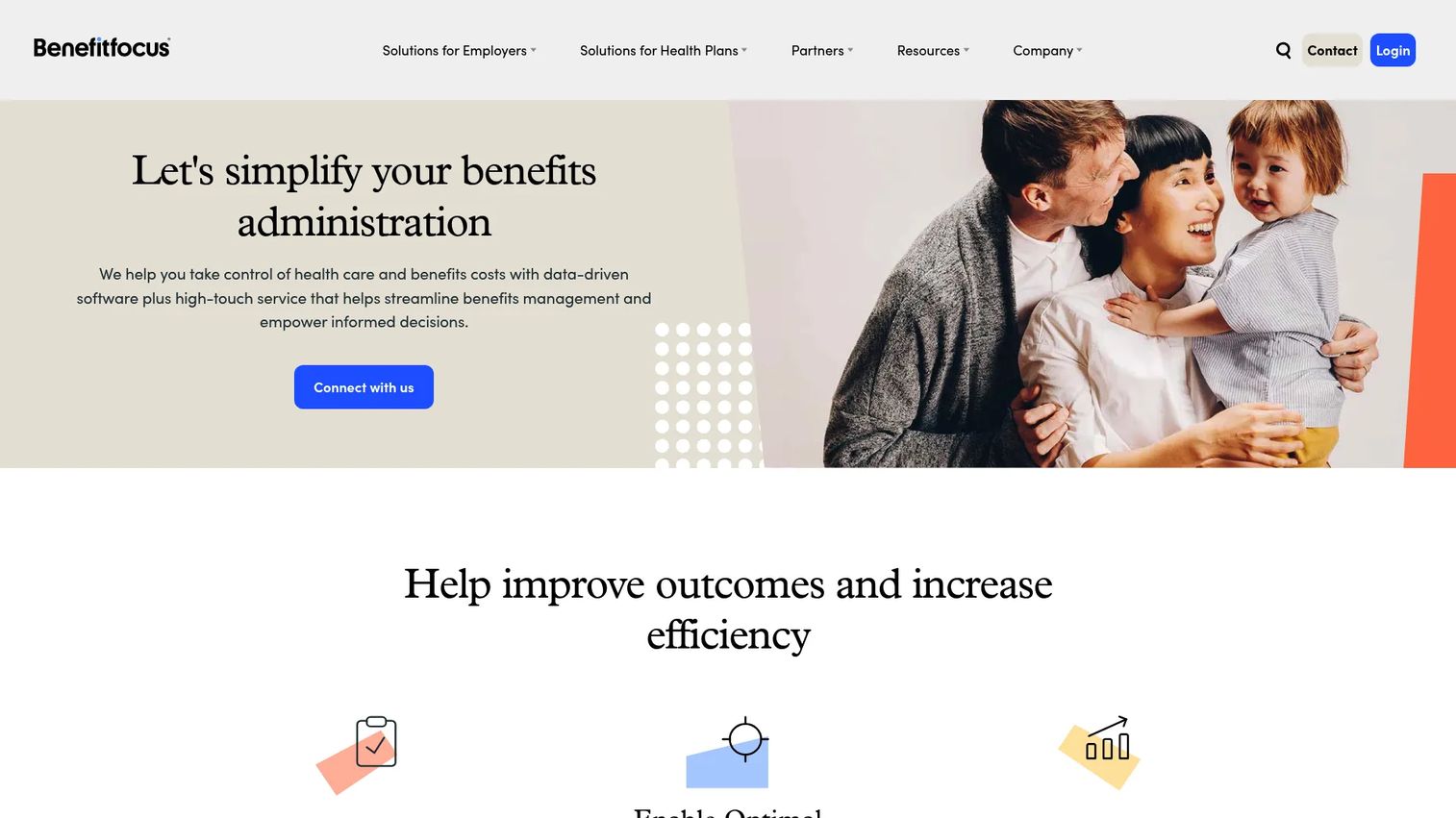
Benefitfocus is a cloud-based benefits administration platform for employers, health plans, and brokers, and it pairs that core with strong ACA compliance support. Because benefits enrollment data already lives inside the platform, the jump to eligibility tracking, affordability checks, and reporting is short. That data proximity is what makes it a natural fit for employers with more complex workforces.
Best for: Mid-market and enterprise organizations that need benefits administration and ACA reporting software in one place.
Key strengths
- Benefits administration and enrollment: Coverage and enrollment data lives natively, feeding cleaner ACA calculations.
- Data aggregation across sources: Pulls the eligibility and affordability inputs needed for accurate reporting.
- Reporting and filing support: Handles Forms 1094-C and 1095-C generation with penalty response workflows.
Why choose Benefitfocus: This is the software plus services option for employers whose workforce complexity makes DIY filing risky. The workflow runs from data aggregation to eligibility, affordability, and filing, with dashboard visibility across the process and support for state mandate reporting where individual mandates apply. If your team wants a partner rather than a tool, Benefitfocus fits.
Benefitfocus pricing: Benefitfocus does not publish public pricing. Plans are presented on a demo and contact basis, so pricing is scoped to your organization. It holds a 4.3/5 rating on G2.
3. ADP
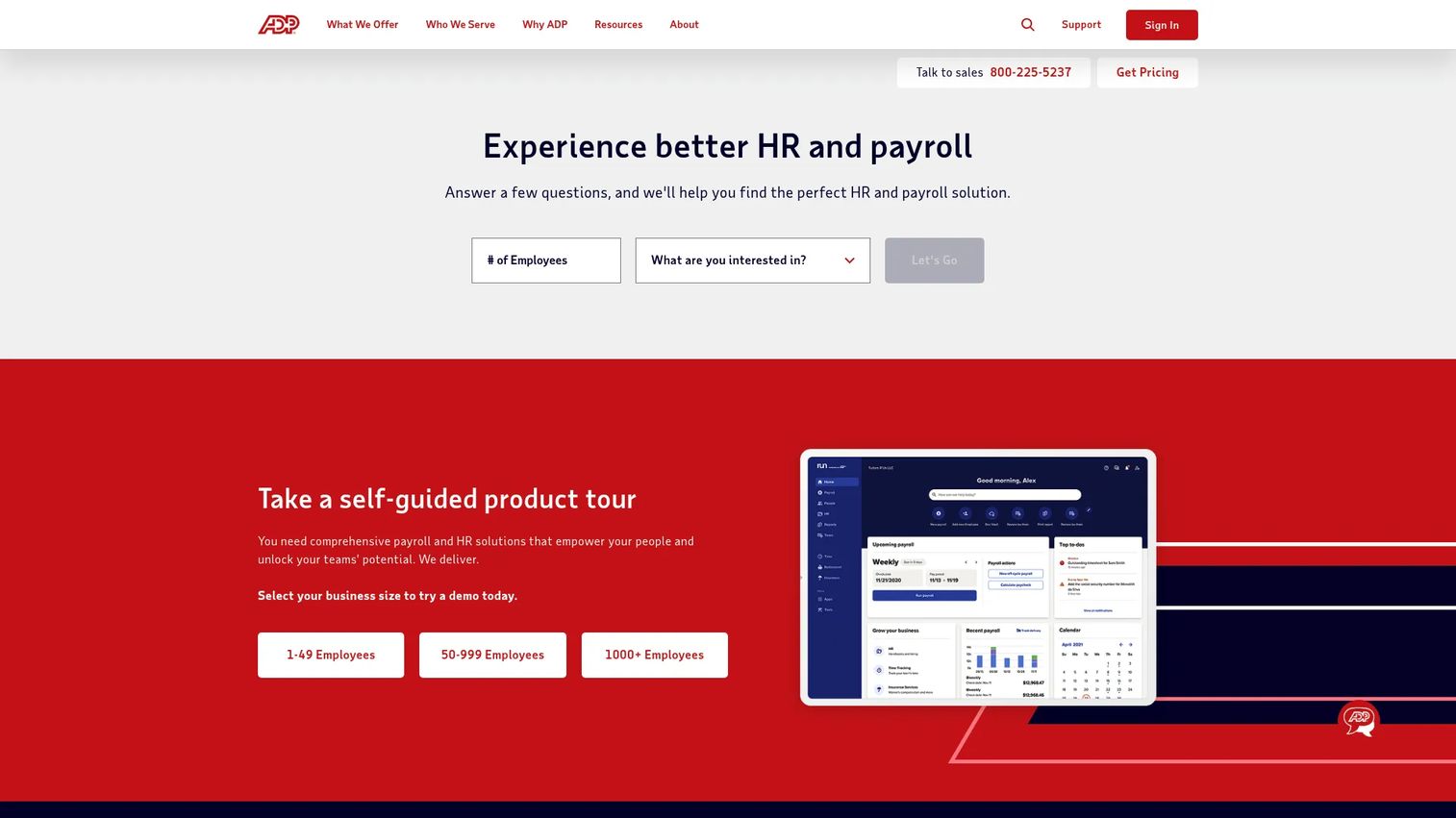
ADP delivers global payroll, HR, time, and workforce management software and services, with ACA compliance management folded into that broader ecosystem. The advantage is adjacency: the hours and headcount data that drive ACA reporting already sit inside ADP, so year-end filing draws from the same source that runs payroll. For teams that want fewer systems, that consolidation is the whole point.
Best for: Businesses that need payroll plus HR and time-and-attendance at small, midsized, or enterprise scale, with ACA compliance included.
Key strengths
- Payroll and HCM adjacency: ACA eligibility and hour data flows from the same system that runs payroll.
- Automated calculations and monitoring: Affordability and full-time status calculations plus government compliance monitoring.
- Year-end filing support: Forms 1094-C and 1095-C generation and IRS reporting inside the platform.
Why choose ADP: For founders and operators who want fewer moving parts, running ACA compliance next to payroll removes an entire data reconciliation step. There is no exporting hours to a separate ACA tool and hoping the numbers match. If you already use or are considering ADP for payroll and HCM, the compliance layer is a logical extension rather than another vendor to manage.
ADP pricing: ADP routes buyers to a sales flow for pricing rather than publishing numbers, so cost depends on employee count and the modules you select. It holds a 4.4/5 rating on G2.
4. Rippling
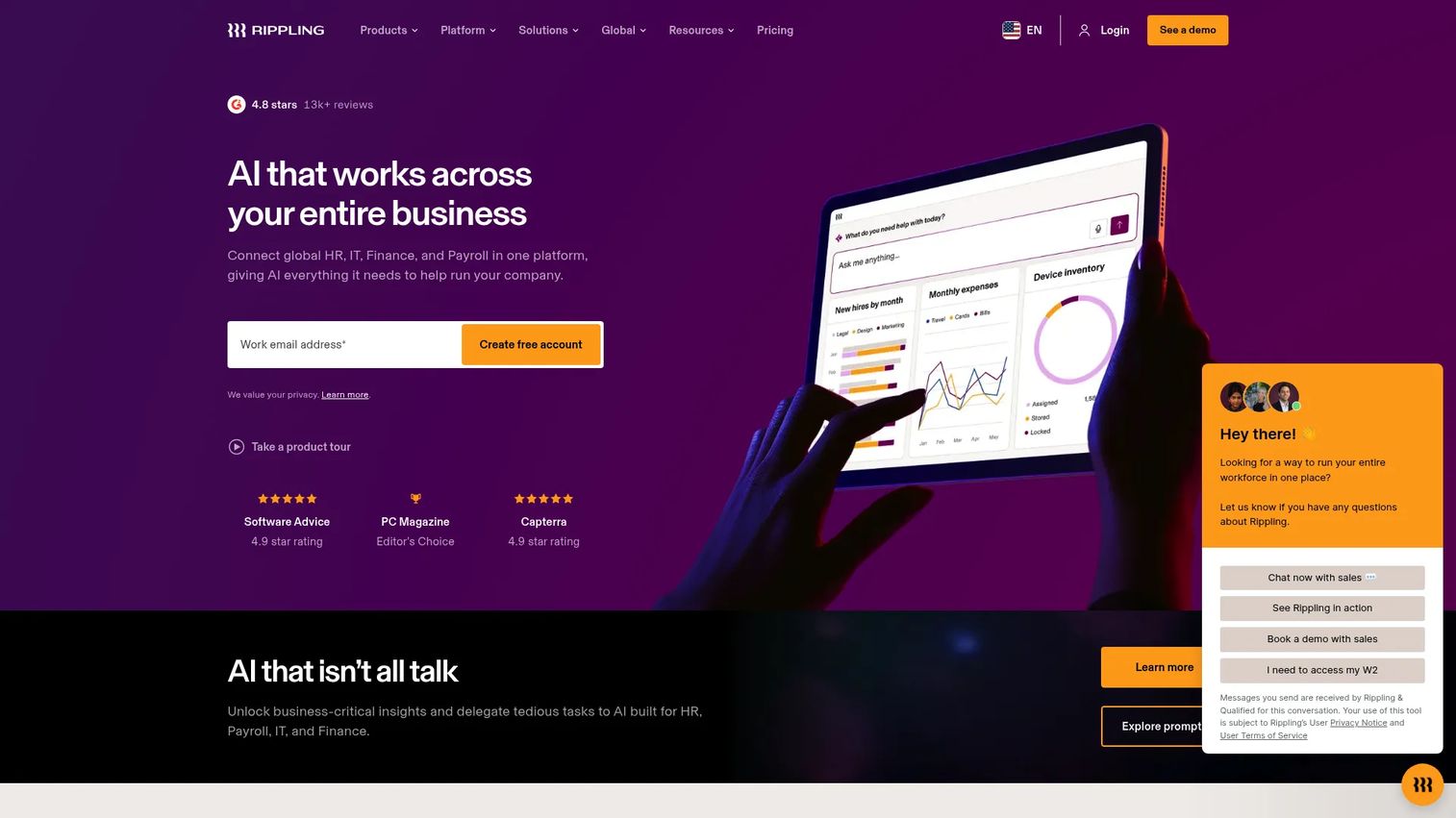
Rippling is a workforce management platform that unifies HR, IT, payroll, and spend operations. ACA compliance sits inside that broader system rather than standing alone, which appeals to buyers looking to consolidate compliance workflows into one place. When payroll, benefits, and time and attendance already run through Rippling, the compliance data has nowhere to fragment.
Best for: Companies that want one system for HR, IT, payroll, and workforce compliance.
Key strengths
- Unified HR, IT, and payroll platform: One source for the data that feeds employer mandate reporting.
- Modular products: Payroll, benefits, and time and attendance connect natively, supporting cleaner eligibility tracking.
- Workflow automation: Automation across onboarding, offboarding, approvals, and compliance tasks.
Why choose Rippling: The pitch is consolidation. Instead of stitching ACA data across payroll, HRIS, and benefits tools, Rippling keeps it in one system with heavy workflow automation. For a scaling company already rethinking its stack, folding compliance into a platform that also handles device management and spend can reduce both tool count and reconciliation work. Confirm the depth of ACA-specific reporting against your filing requirements during evaluation.
Rippling pricing: Rippling uses quote-based pricing and is modular, with most products billed per employee, per month, plus some monthly base fees. There is no free tier. It holds a strong 4.8/5 rating on G2.
5. Deel
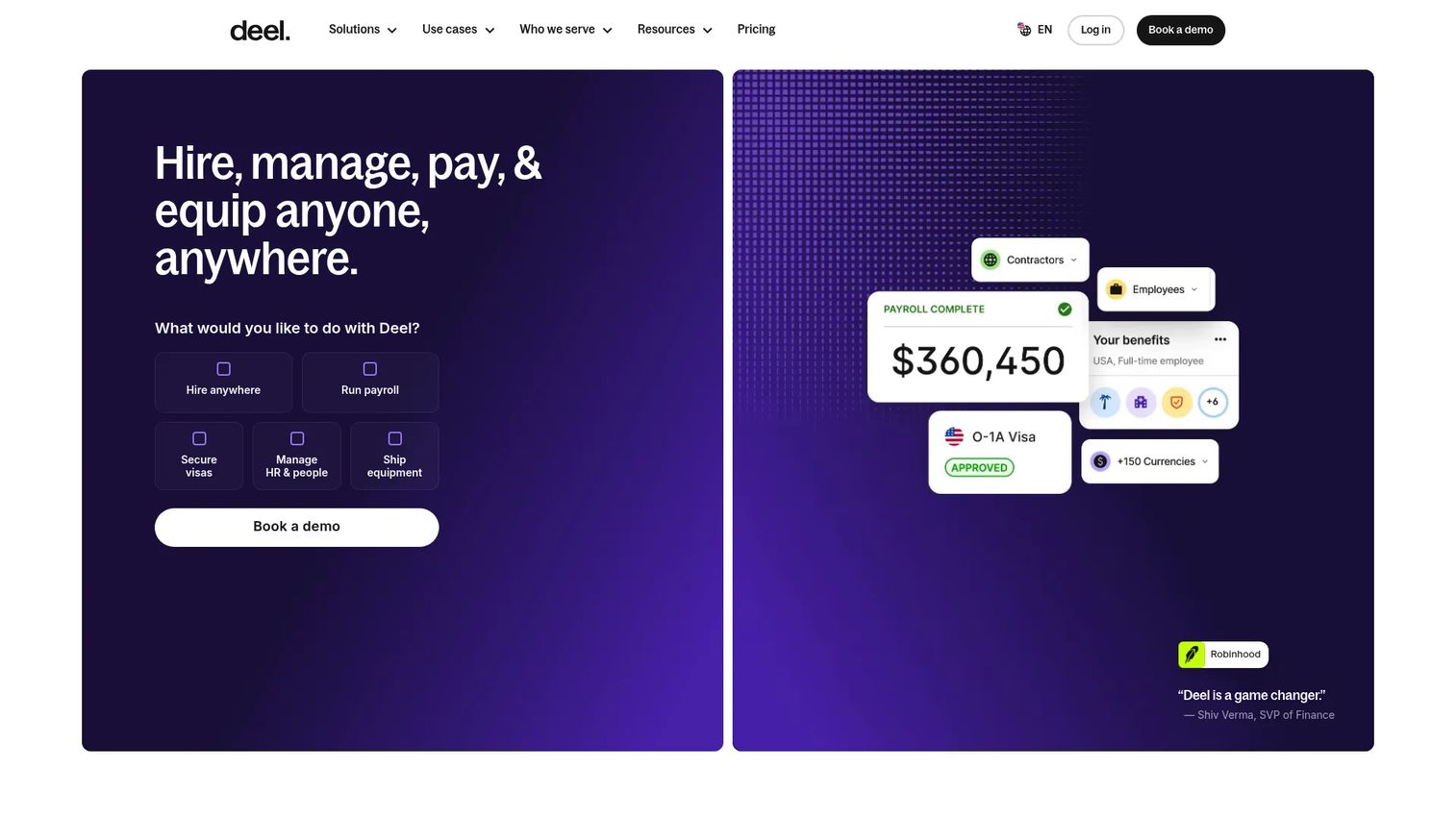
Deel is a global HR platform for hiring, paying, and managing distributed teams, spanning employer of record, contractor management, and global payroll. For employers with US staff, ACA obligations still apply, and Deel's value shows up when your workforce is spread across countries and worker classifications. If part of your team is domestic and part is international, the buying criteria shift toward a platform that handles both.
Best for: Companies hiring, paying, and managing international workers who still carry US ACA obligations.
Key strengths
- Employer of record hiring: Compliant hiring across borders, useful when classification complexity is high.
- Contractor management and payments: Clean records that support accurate worker classification for ACA purposes.
- Global payroll and HR modules: Domestic and international payroll data in one platform.
Why choose Deel: Distributed and international workforces change the compliance picture. Deel is built for that reality, so employers juggling multiple countries and classifications get a single platform rather than a US-only tool bolted onto a global team. Buyers focused strictly on domestic ACA reporting should verify that Deel's US employer mandate reporting matches their filing needs, since its core strength is global workforce operations.
Deel pricing: Deel publishes public pricing across modules. HR Basic starts at $5 per employee per month, global payroll from $29 per employee per month, PEO at $125 per employee per month, and contractor management from $49 per contractor per month. There is no free tier. It holds a 4.8/5 rating on G2.
6. Gusto
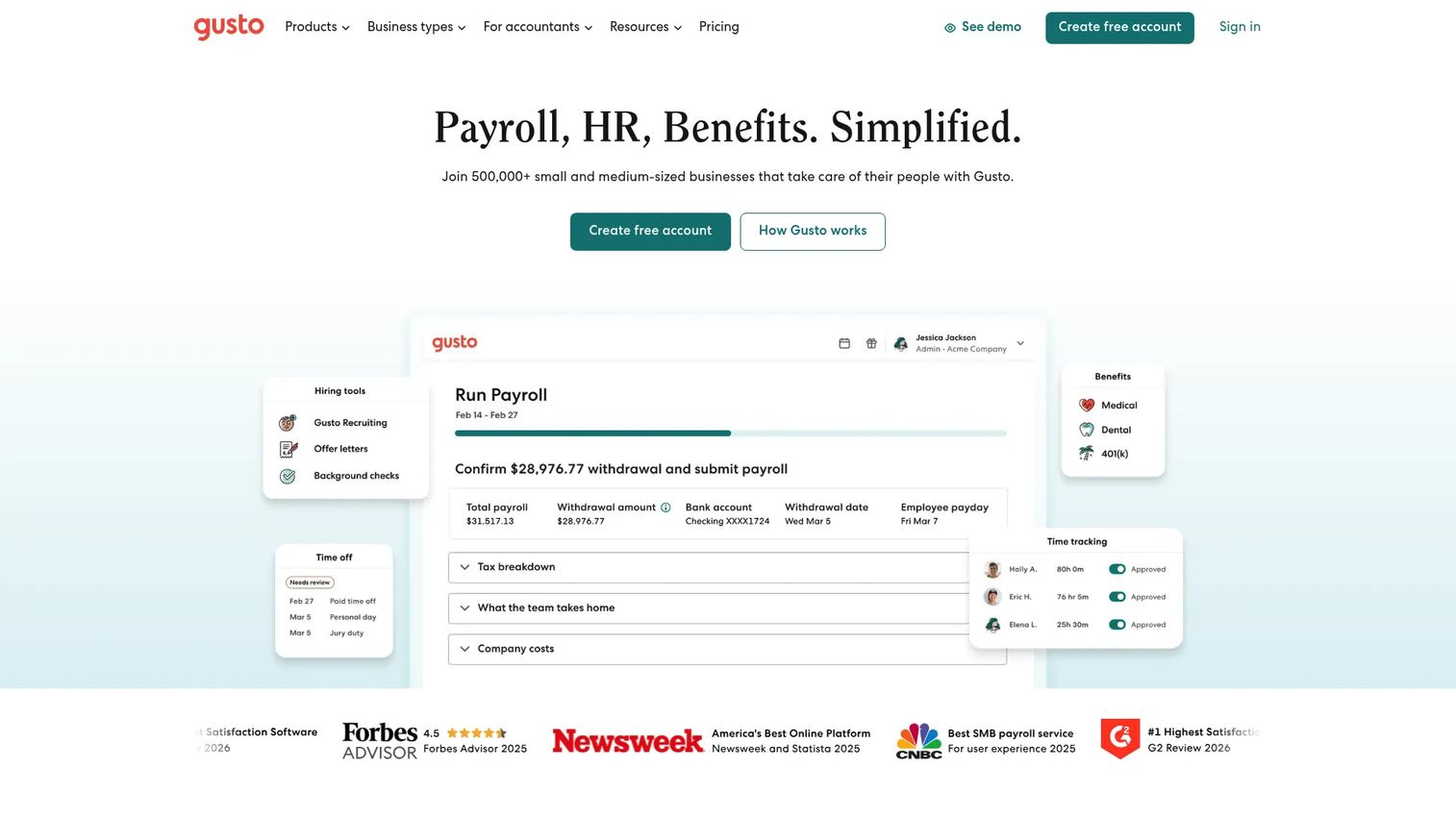
Gusto is an all-in-one payroll, benefits, and HR platform built for small and growing businesses. Its ACA compliance support is linked directly to payroll, which keeps the admin overhead low for teams that do not have a dedicated benefits administrator. For earlier-stage companies crossing the ALE compliance threshold for the first time, Gusto's simplicity is the draw.
Best for: Small businesses that want payroll, benefits, and HR in one easy-to-run platform.
Key strengths
- Full-service payroll with tax filing: Hours and coverage data feed compliance directly.
- Employee benefits administration: Enrollment data supports eligibility and affordability calculations.
- HR tools including onboarding and time tracking: Cleaner inputs for full-time status determination.
Why choose Gusto: When your team is small and your workforce is not deeply complex, Gusto's payroll-linked compliance keeps ACA manageable without a heavy admin layer. The all-in-one model means fewer tools to reconcile and a shorter learning curve. Growing companies value the low overhead and the fact that compliance rides along with payroll rather than requiring a separate system.
Gusto pricing: Gusto publishes public plans. Contractor Only is $35 per month plus $6 per contractor, Simple is $49 per month plus $6 per person, Plus is $80 per month plus $12 per person, and Premium is $180 per month plus $22 per person. It is month-to-month with no long-term contract and holds a 4.6/5 rating on G2.
7. Paychex
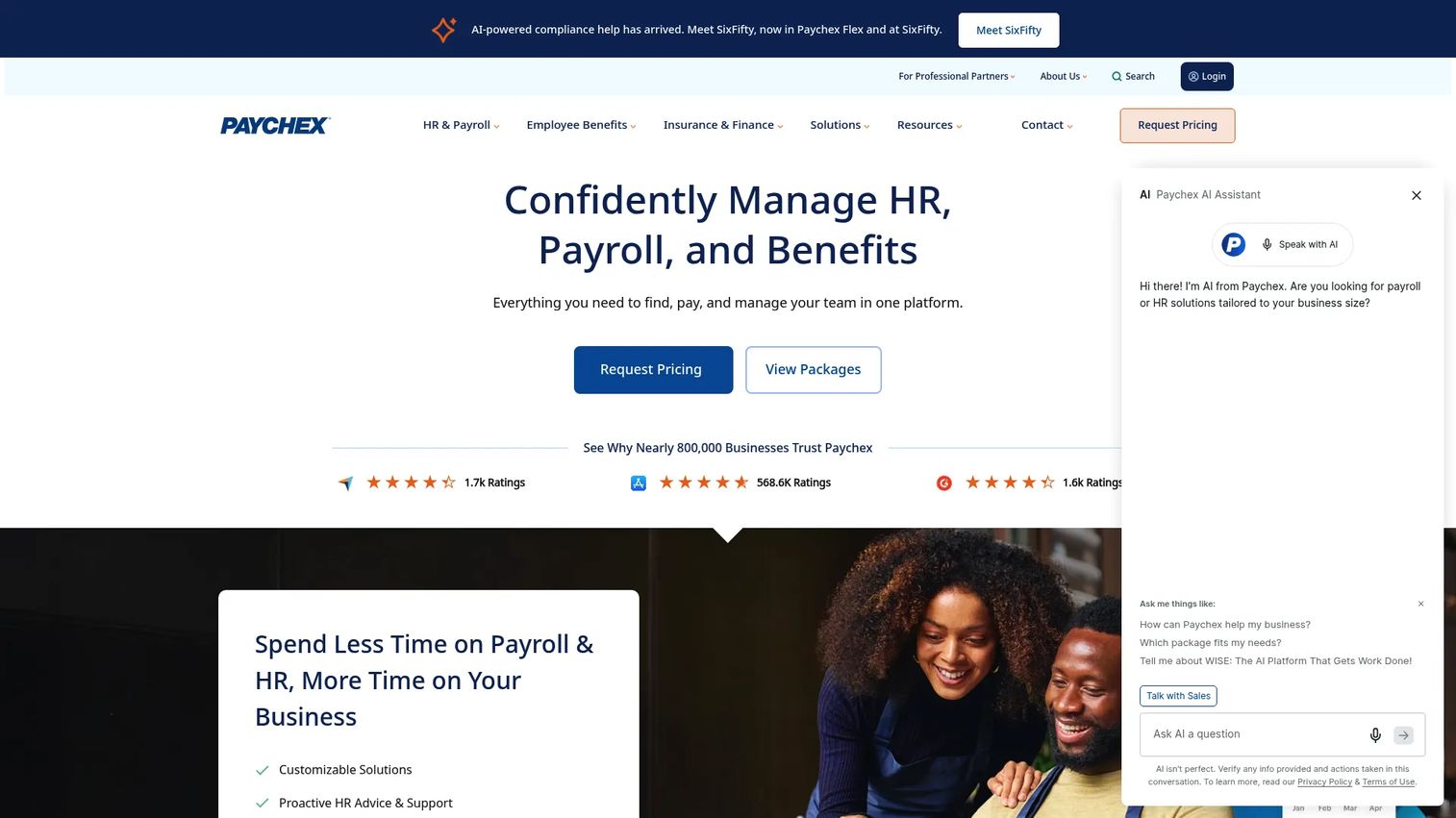
Paychex provides payroll, HR, benefits, and compliance solutions for businesses of varying sizes, with ACA support backed by a services team. This is a payroll-led compliance model: the same provider that runs your payroll also helps with ACA reporting and IRS filing. For employers who prefer a managed partner over a standalone software layer, that combination is the appeal.
Best for: Businesses that want a single vendor for payroll, HR, benefits, and compliance support.
Key strengths
- Payroll processing with compliance assistance: ACA data draws from the payroll system directly.
- Time and attendance: Hour tracking that feeds full-time status and eligibility.
- Compliance and benefits administration support: A services team assists with reporting and filing.
Why choose Paychex: Some buyers do not want to own the compliance workflow at all. Paychex's software plus services model lets a services team handle the heavy lifting of ACA reporting software and filing support, which reduces the burden on lean internal teams. The long track record as a payroll and compliance provider is reassuring for employers who value stability over building compliance expertise in-house.
Paychex pricing: Paychex does not publish public pricing; cost depends on employee count and business needs, and the site directs buyers to request a quote. Plan tiers include Paychex Flex Select, Pro, and Enterprise. It holds a 4.1/5 rating on G2.
Considerations
Before you commit to any ACA compliance solution, run your shortlist through this checklist. The gaps show up fast once you know where to look.
Payroll and HRIS integration
The single most important factor. If the tool cannot pull hours from payroll and headcount from your HRIS automatically, you are back to manual reconciliation. Confirm exactly which systems it connects to and how data aggregation actually works in practice, not just on the feature sheet.
Support for variable-hour employees
Variable-hour, seasonal, and part-time staff are where eligibility tracking gets hardest. Ask how the tool handles measurement, administrative, and stability periods, and whether it flags employees approaching full-time status before an offer is due.
IRS and state filing coverage
Confirm the tool generates Forms 1094-C and 1095-C, files electronically with the IRS, and supports state mandate reporting where individual mandates apply. State coverage is where thinner tools fall short.
Software-only versus software plus services
Be honest about internal capacity. Software-only gives you control and lower cost but assumes you have the ops bandwidth to run it. Software plus services costs more but offloads filing, corrections, and IRS notices to a team that does this daily. Match the model to your risk tolerance and staffing.
Audit trail and reporting visibility
You want a documented record of offers, coverage, and calculations, plus a compliance dashboard that shows filing status and risk in real time. Audit readiness is cheap insurance against an expensive IRS conversation.
Implementation speed
Ask how long onboarding takes and whether the vendor helps migrate historical data. A tool that is not live before your next filing deadline does not help this year.
Conclusion
The right ACA compliance software depends less on feature checklists and more on how you want to divide the work between your team and a system.
A few clear patterns emerge from this list. If your internal ops capacity is limited but you still want control, lean toward automation depth: tools like Rippling and ADP that keep compliance data inside a platform you already run reduce reconciliation without adding a services bill. If filing risk and staffing are your real concerns, choose software plus services: Benefitfocus and Paychex put a team between you and the IRS. And if payroll and HR tooling decisions are already in motion, consolidation wins: folding ACA into a system you are adopting anyway beats bolting on a standalone layer.
For smaller or earlier-stage teams, Gusto keeps compliance simple and payroll-linked. For distributed and international workforces, Deel handles the classification complexity a US-only tool cannot. For heavily regulated financial firms, ACA Global's GRC depth is a different category of buyer entirely.
Start by scoring your top two picks against the considerations checklist, book a demo with each, and confirm integration fit before your next filing window. The best ACA compliance solution is the one your team will actually run without heroics every January.
FAQs
ACA compliance software is a system that tracks health coverage eligibility, calculates affordability, generates Forms 1094-C and 1095-C, and supports filing with the IRS and applicable states. It turns scattered payroll, HRIS, and benefits data into accurate employer mandate reporting and monitors risk between deadlines.
Payroll gives you hours, which is a starting point, but ACA compliance needs more: eligibility determination across measurement periods, affordability safe harbor testing, forms generation, and IRS filing. Some payroll platforms include ACA tracking software as a module, while others require a dedicated tool. Confirm whether your payroll provider actually files 1094-C and 1095-C or just holds the data.
Prioritize eligibility tracking for variable-hour employees, affordability calculations against IRS safe harbors, accurate Forms 1094-C and 1095-C generation, payroll and HRIS integration for clean data aggregation, IRS and state reporting, and an audit trail. Compliance monitoring that flags risk before deadlines is what separates strong tools from basic filing utilities.
Neither is universally better; it depends on your capacity. Software-only fits teams with the ops bandwidth to run compliance in-house and want control at lower cost. Software plus services fits complex workforces or lean teams that would rather a services team handle filing, corrections, and IRS notices. Match the model to your staffing and risk tolerance.
It reduces penalty avoidance risk through compliance monitoring that catches classification errors, tracks approaching filing deadlines, validates affordability calculations, and maintains audit-ready documentation. By automating eligibility determination and flagging employees approaching full-time status, it prevents the missed coverage offers that trigger IRS assessments under the employer mandate.
Yes, and this is one of the main reasons employers buy it. Variable-hour, seasonal, and part-time employees make eligibility tracking hard because status shifts across measurement, administrative, and stability periods. Good ACA tracking software automates the hour aggregation and status determination that spreadsheets get wrong, and flags workers approaching full-time thresholds before an offer is due.
HR software manages people operations broadly: hiring, onboarding, performance, and time off. ACA compliance software focuses specifically on Affordable Care Act workflows like eligibility tracking, affordability calculations, and IRS reporting. Some platforms combine both, letting compliance ride inside a broader HRIS, while standalone ACA tools focus only on filing and penalty management.
Start with integration fit: the tool must connect to your payroll and HRIS to aggregate data automatically. Then weigh the service model against your internal capacity, confirm IRS and state filing coverage plus audit readiness, and check implementation speed against your next filing deadline. Score your shortlist against those factors and book a demo before committing.