Your dispatcher builds tomorrow's routes in a spreadsheet. Your drivers text updates that never make it back to the office. A customer calls asking where their delivery is, and nobody can answer without three phone calls. Every one of those gaps costs you a stop, a truck-hour, or a customer.
Propane operations run on coordination, and coordination breaks down when dispatch, routing, and driver updates live in separate places. As delivery volume grows, that fragmentation stops being an annoyance and starts eating margin. The global propane market is projected to grow from 205.39 million tons in 2025 to 260.88 million tons by 2031, a 4.07% CAGR according to Mordor Intelligence (2025). More volume means more stops, more trucks, and more room for manual processes to fail quietly.
The tech is catching up to that demand. A LPGas Magazine benchmarking study (2023) found that 95% of propane retailers already run two or more technology tools alongside their fuel delivery systems, while just under 20% still resist delivery software entirely. That gap is where the operators pulling ahead are separating from the ones stuck reconstructing yesterday's routes by hand.
This guide breaks down the platforms worth evaluating and how to match one to how you actually run deliveries. If you build interactive product experiences of your own, Guideflow sits in an adjacent category, but the evaluation discipline here, matching a tool to a real workflow gap, applies whether you're buying propane dispatch software or anything else in your stack.
What's inside
This list covers propane delivery and management software for operators evaluating dispatch, routing, driver mobility, and office workflow coverage. It's written for owners and operations leaders comparing systems before a purchase, especially those feeling the strain of manual routing or disconnected office-to-field communication.
We selected and ordered tools based on four criteria that matter most for a working propane operation:
- Routing and dispatch depth: how the tool plans stops, optimizes routes, and pushes work to drivers.
- Driver mobility: mobile access, proof of delivery, and field updates that sync back to the office.
- Real-time visibility and reporting: tracking, analytics, and the customer communication layer.
- Fit and access model: cloud-based access, modular architecture, and how well it slots into an existing stack.
TL;DR
Short on time? Here are the quick picks:
- Best for broad propane operations: Cargas Energy, for back-office, dispatch, and service coverage in one system.
- Best for browser-based workflow access: FuelMor, for operators who want remote-ready dispatch and delivery workflows.
- Best for modular back-office plus mobile delivery: RCC, pairing its Fuel Distribution System with the MOGO truck interface.
- Best for route optimization and delivery dispatch: Shipday, for operations-first teams that want a driver app and real-time tracking fast.
- Best for AI-assisted dispatch orchestration: DispatchNode, for teams exploring automation-first call handling and dispatch.
- Best for enterprise fuel and commercial depth: PDI Technologies, for operators with broader petroleum and wholesale needs.
- Best for fleet visibility and tracking: Gorilla Fleet Intelligence, for tracking-heavy operations prioritizing telematics and compliance.
What is propane delivery software?
Propane delivery software is an operational system that manages dispatch, route planning, driver coordination, delivery execution, and customer records for propane and fuel distributors. It connects the office and the field so a single delivery moves cleanly from scheduled, to routed, to delivered, to invoiced without anyone rekeying data.
The strongest propane management software treats delivery as one connected workflow rather than a series of disconnected tasks. Instead of a dispatcher exporting a route to paper and a driver reporting back by phone, the office dispatches deliveries and the field executes them inside the same system, with updates flowing both directions in real time.
Modern propane software systems typically include:
- Dispatch software: assign stops, sequence deliveries, and handle reschedules from a central board.
- Route optimization: build efficient routes that cut miles, truck-hours, and missed delivery windows.
- Driver app: a mobile device interface for delivery details, proof of delivery, and field updates.
- Real-time tracking: live visibility into where trucks are and which stops are complete.
- Tank monitoring integration: pull tank levels to trigger just-in-time deliveries and prevent runouts.
- Customer portal: let customers view accounts, request deliveries, and pay online.
- Reporting and analytics: measure delivery efficiency, driver productivity, and margin by route.
- Office-to-driver coordination: scheduling, billing, and customer records connected in one place.
Propane tank monitoring is accelerating this shift. The tank level monitoring solution market is forecast to grow from USD 3.95 billion in 2025 to USD 10.13 billion by 2033, a 12.5% CAGR according to ProMarketReports (2025). As more tanks report their own levels, delivery software becomes the layer that turns that signal into a routed, dispatched delivery.
When to use propane delivery software
Not every operation needs the same system at the same time. Here's how to tell which pressure you're actually feeling.
Route planning is creating waste
When a dispatcher spends the first hour of every morning sequencing stops by hand, routing has become a bottleneck. Manual planning tends to over-serve some areas and strand trucks in others. You see it in the numbers: too many miles per gallon delivered, stops that fall outside efficient windows, and reschedules that ripple through the whole day. Propane routing software that optimizes stops automatically recovers those truck-hours and puts them back into deliveries.
Drivers need better field visibility
When drivers carry paper manifests and call the office to confirm changes, information lags behind reality. A driver app fixes the disconnect: real-time delivery details, digital proof of delivery, and updates that sync back the moment a stop is complete. That mobile device access means the office knows what's delivered without waiting for end-of-day paperwork, and customers get accurate answers when they call.
Office teams need one operational system
When scheduling lives in one tool, billing in another, and customer records in a third, every handoff is a chance to drop something. Bringing dispatch, deliveries, invoicing, and customer communication into one propane company software platform removes the rekeying and the reconciliation. The office dispatches deliveries, the field executes, and billing follows automatically from what was actually delivered.
Comparison table
The table below summarizes each platform by buyer intent, primary use case, pricing, and third-party rating where available. Pricing and ratings reflect what each vendor publishes or what a verified third-party source reported at the time of writing. Several propane software systems price by quote, which is common for operations software configured per fleet, module, and integration scope.
| # | Product | Intent | Key use case | Pricing | G2 rating |
|---|---|---|---|---|---|
| 1 | Cargas Energy | Broad propane operations | Back-office, dispatch, and service workflows | Quote-based | 4.0/5 |
| 2 | FuelMor | Browser-based workflows | Routing, dispatch, and delivery management | Not publicly listed | Not listed |
| 3 | RCC | Modular back-office plus mobile | FDS back-office with MOGO truck interface | Annual subscription, quote-based | Not listed |
| 4 | Shipday | Route optimization and dispatch | Driver app, tracking, and delivery dispatch | Free plan; paid from $19/mo | Not listed |
| 5 | DispatchNode | AI-assisted dispatch | AI call handling and crew dispatch | From $99/mo | Not listed |
| 6 | PDI Technologies | Enterprise fuel and wholesale | Petroleum, retail, and back-office depth | Not publicly listed | 4.3/5 |
| 7 | Gorilla Fleet Intelligence | Fleet visibility and tracking | ELD, telematics, and maintenance workflows | Not publicly listed | Not listed |
1. Cargas Energy
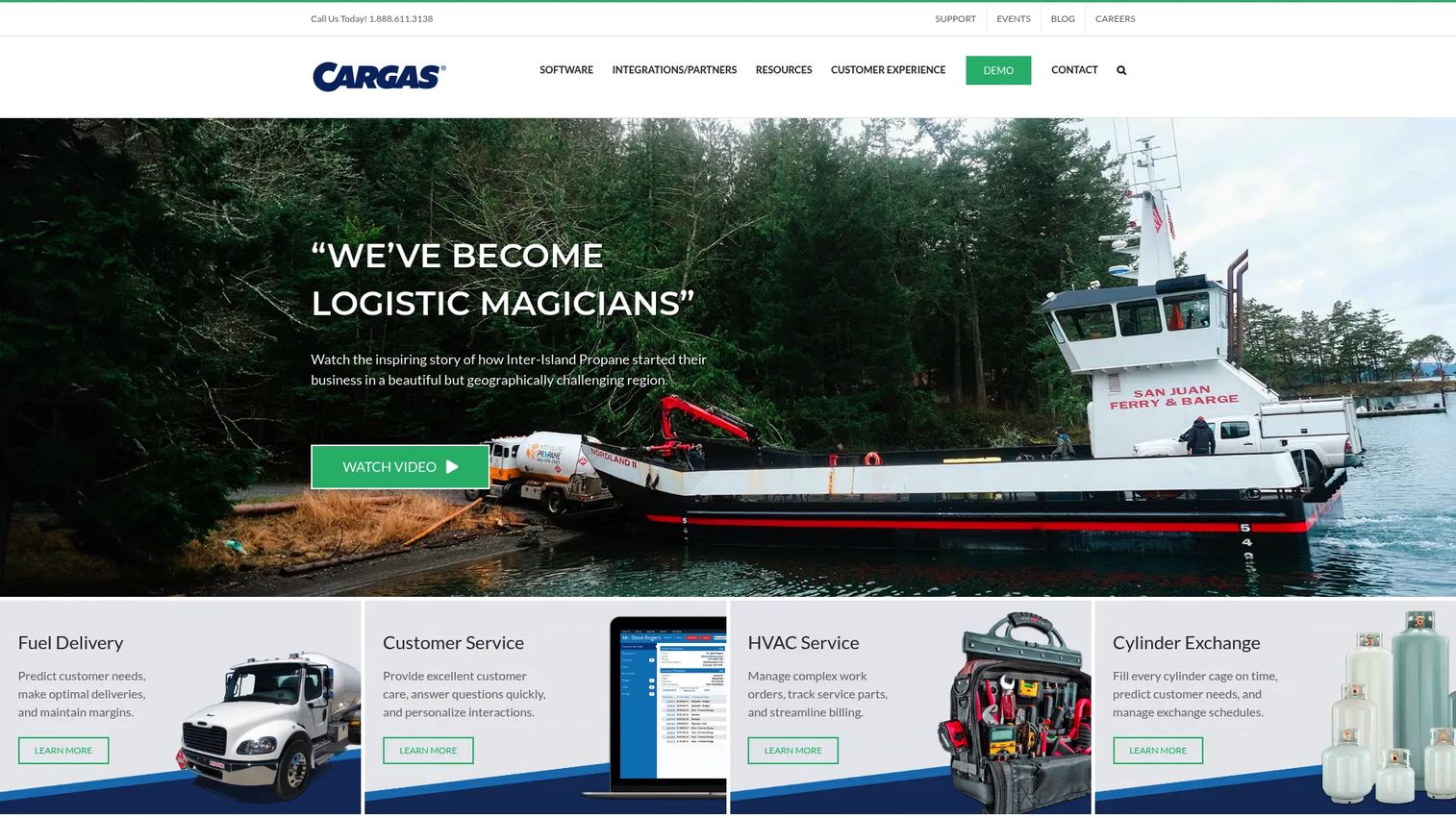
Cargas Energy is fuel delivery and service software built for propane and heating-oil businesses. It leans into all-in-one operational coverage, spanning back-office accounting, dispatch, and service management so a growing operator can run most of the business inside one platform rather than stitching tools together.
The system covers fuel delivery, customer service, HVAC service, and cylinder exchange, which makes it a fit for operators whose business extends beyond straight delivery. If you run service trucks alongside delivery trucks and want scheduling, billing, and customer records connected, that breadth is the draw.
Best for: Fuel delivery companies needing back-office, dispatch, and service operations in one system.
Key strengths
- Budget plans and automatic payments: smooth out seasonal cash flow and reduce manual billing work.
- Tank monitor integrations: pull tank levels into delivery planning to prevent runouts and time deliveries.
- Cash flow and credit collections tools: keep receivables tight during peak season.
Why choose Cargas Energy: Choose it when your operation spans delivery and service and you want one system rather than several. The service and cylinder-exchange coverage is what separates it from delivery-only tools, and the tank monitor integration supports a just-in-time delivery model as more of your tanks report their own levels.
Cargas Energy pricing: Cargas Energy does not publish a public price. Pricing is customized per customer based on users, vehicles, modules, integrations, customizations, and implementation scope, and the company directs prospects to request a quote. On G2, Cargas Energy holds a 4.0/5 rating.
2. FuelMor
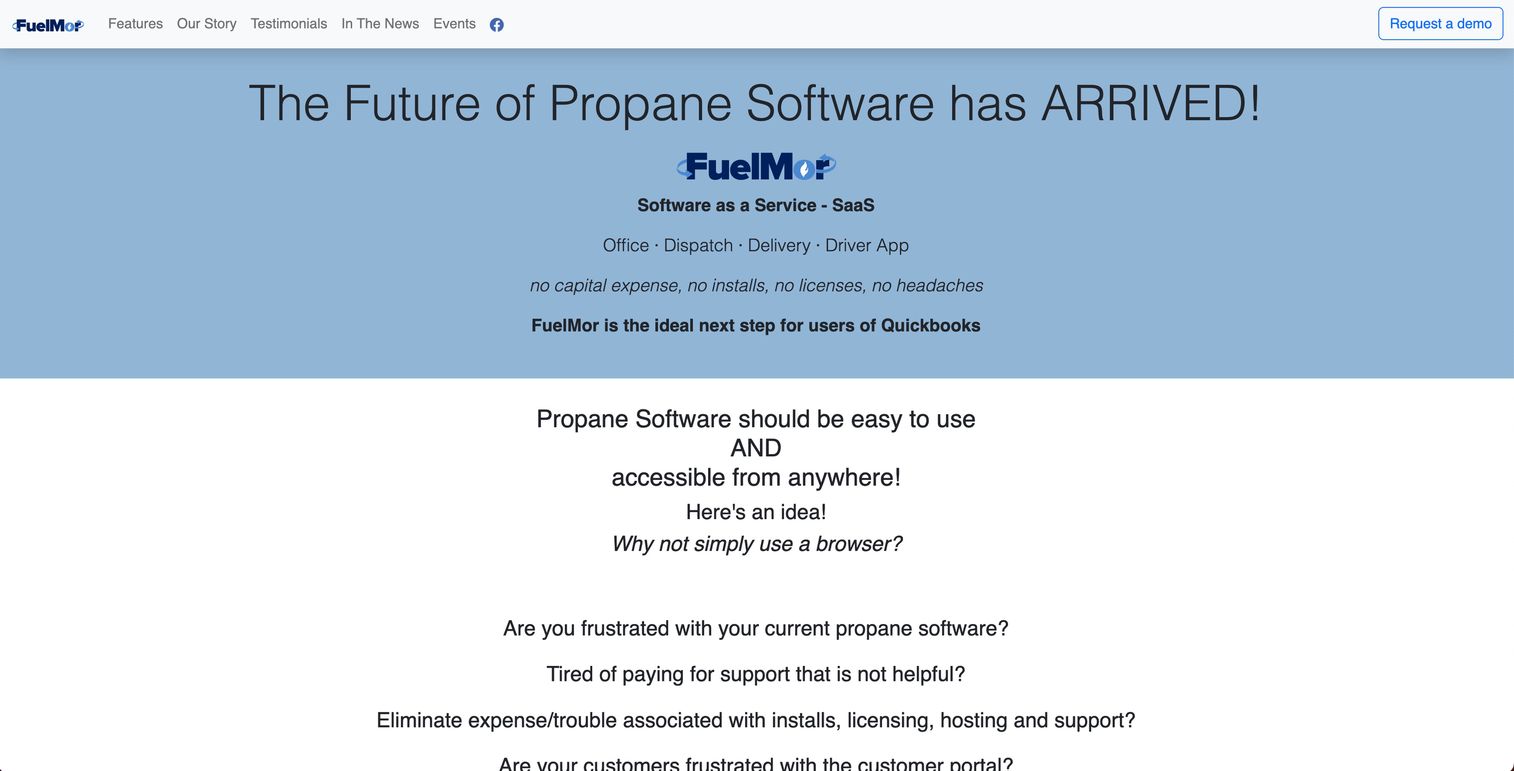
FuelMor is fuel and propane delivery software focused on managing routes, deliveries, tanks, and customer accounts. Its positioning centers on browser-based access and remote-work readiness, which appeals to operators who want their dispatch and delivery workflows reachable from anywhere without a heavy on-premise install or capital expense.
The platform covers the office-to-field spine of a propane operation: route creation and optimization, dispatch, delivery review and posting, customer account invoicing, and tank monitoring. Because it runs in the browser, office staff and managers can work from home, a second location, or the road while keeping the same view of the operation.
Best for: Fuel and propane delivery operators who want browser-based dispatch and back-office workflow management.
Key strengths
- Route creation, optimization, and dispatch: plan efficient routes and push work to the field from one place.
- Delivery review, posting, and invoicing: turn completed deliveries into billed accounts without rekeying.
- Tank rental plans and tank monitoring: manage rented tanks and pull levels into delivery planning.
Why choose FuelMor: Choose FuelMor when browser-based access and remote flexibility matter as much as feature depth. For operators moving off a legacy desktop system, the cloud-based propane software model removes the server and the capital outlay while keeping routing, dispatch, and billing connected.
FuelMor pricing: FuelMor does not list public pricing, so expect to contact the vendor for a quote based on your fleet size and workflow needs. A third-party rating was not available at the time of writing.
3. RCC
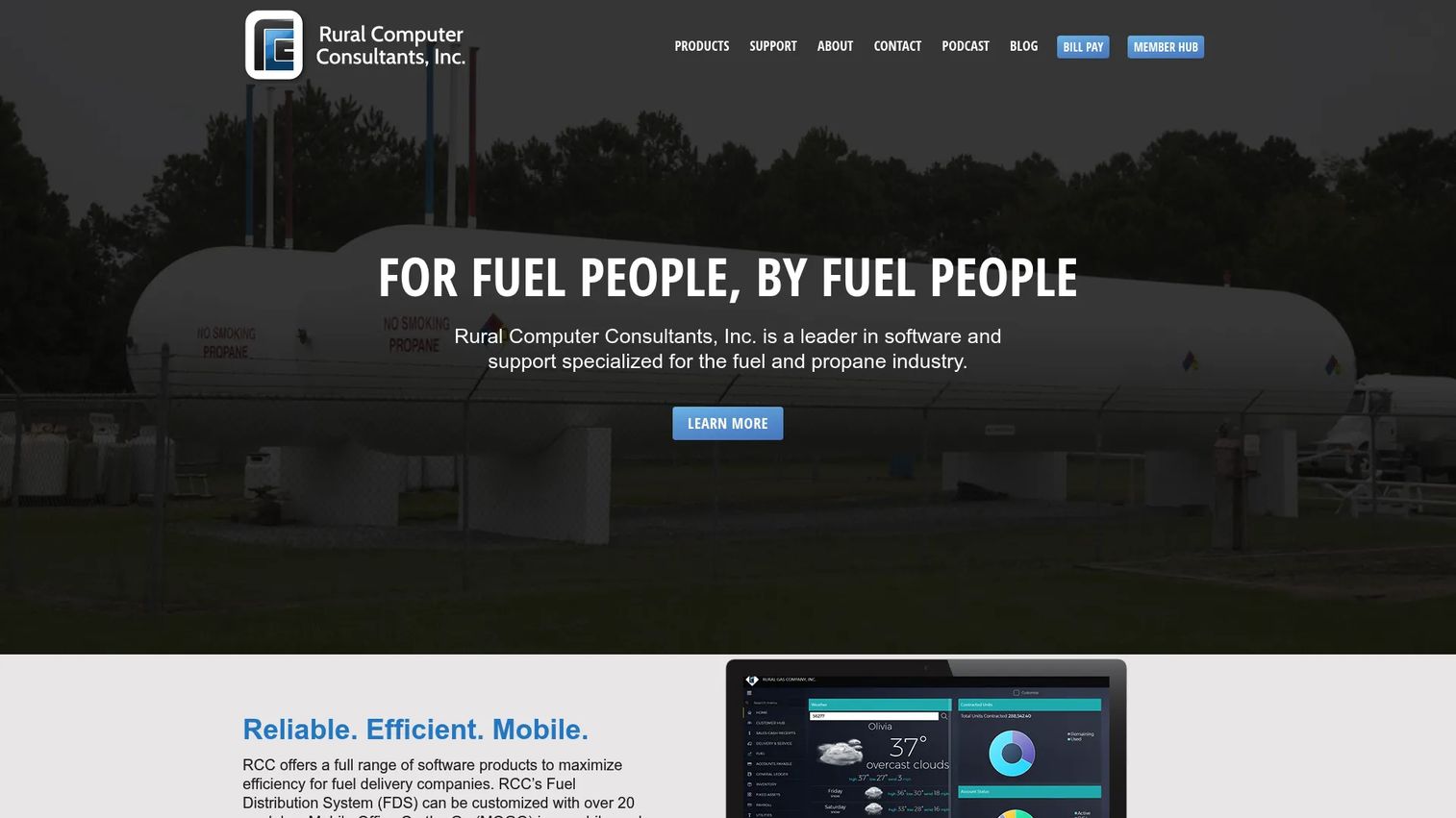
RCC provides software and support for fuel and propane delivery businesses, built around its Fuel Distribution System back-office platform and the MOGO mobile truck interface. The pairing gives you a back-office system for accounting, dispatch, and customer management alongside a field tool that drivers use in the truck.
RCC's differentiator is modular architecture. Rather than a single fixed package, it offers custom modules and third-party integrations, so you configure the system around how your operation actually works. That modular fit tends to suit companies that have outgrown generic software but don't want to rebuild every workflow to match a rigid platform.
Best for: Fuel and propane companies needing an industry-specific, modular operations platform.
Key strengths
- Fuel Distribution System (FDS): back-office software for accounting, dispatch, and customer records.
- MOGO mobile truck interface: give drivers a field tool for delivery details and updates.
- Custom modules and integrations: shape the system around your workflows rather than the reverse.
Why choose RCC: Choose RCC when modular architecture and a broader support ecosystem matter. The FDS-plus-MOGO combination covers office and field, and the custom-module approach means you can add capability as the operation grows rather than replacing the whole system.
RCC pricing: RCC uses an annual subscription model with modular, not one-size-fits-all, pricing. No public numeric price is shown on its site, so pricing comes via quote based on the modules and configuration you need. A third-party rating was not available at the time of writing.
4. Shipday
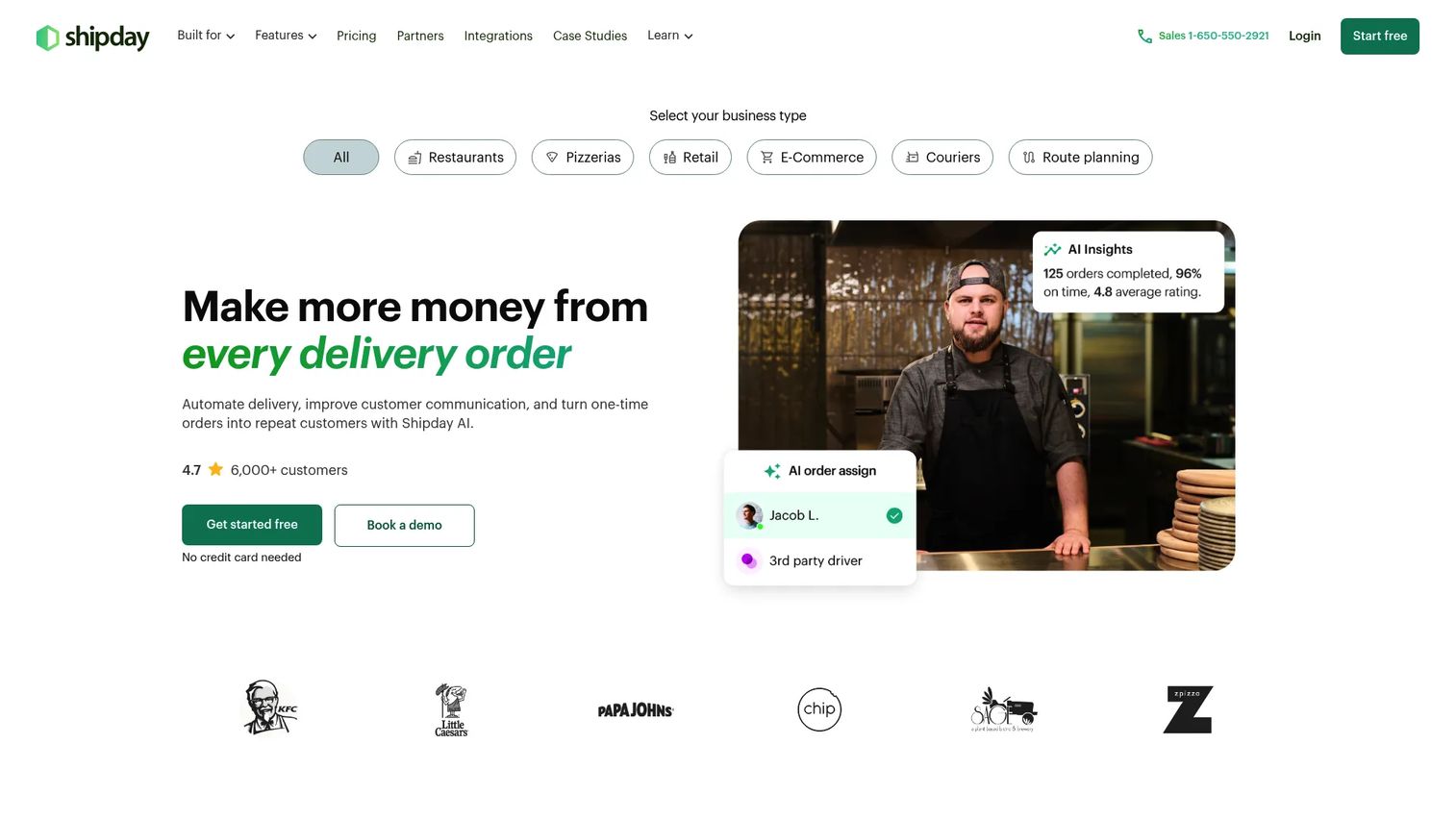
Shipday is local delivery management software built around dispatch, driver tracking, branded customer tracking, and route optimization. It's not propane-specific, but its delivery core, assign, route, track, deliver, maps cleanly onto a propane operation that wants a fast, operations-first system with a strong driver app.
For operators who care most about getting stops routed and drivers moving, Shipday keeps the workflow lean. Real-time driver tracking and route optimization handle the dispatch side, while branded customer tracking and SMS notifications close the loop with the customer, the same "where's my delivery" answer your office fields all day, delivered automatically.
Best for: Operations-first teams that want dispatch, a driver app, and real-time tracking without heavy configuration.
Key strengths
- Route optimization: sequence stops efficiently to cut miles and truck-hours.
- Real-time driver tracking: see where every truck is and which stops are done.
- Branded customer tracking and SMS notifications: keep customers informed without office phone calls.
Why choose Shipday: Choose Shipday when you want routing software for propane deliveries that's quick to stand up and priced to start small. It won't replace a full propane back-office with tank rentals and cylinder exchange, but for the dispatch-and-delivery layer, it's a fast, affordable option.
Shipday pricing: Shipday publishes public pricing with a free Basic plan at $0/month. Paid tiers run $19/mo (Professional Lite), $39/mo (Professional), $79/mo (Branded Premium), $99/mo (Elite), and $349/mo (Business AI), all billed monthly. A verified G2 rating was not available at the time of writing.
5. DispatchNode
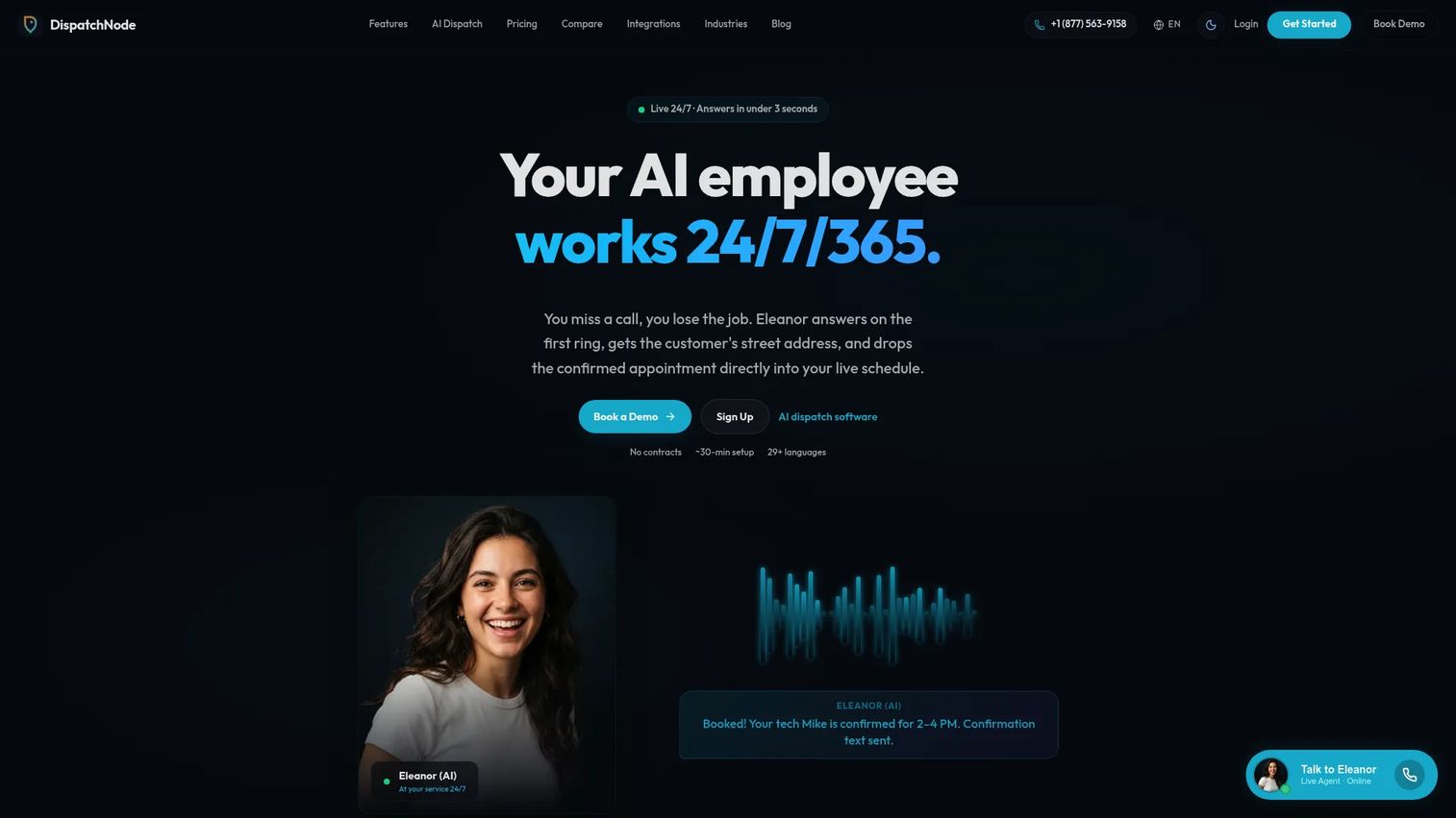
DispatchNode is AI-powered field service dispatch and automation software. Its distinguishing angle is an AI voice agent that answers calls, books jobs, and feeds them into dispatch, which is a different starting point from conventional propane systems that assume a human at the phone and a dispatcher at the board.
For a propane operation buried under inbound calls during peak season, that automation-first approach is the draw. The AI handles call intake and booking, Stripe collects deposits, and Google Calendar sync plus crew dispatch push the work to the field. It's less a full propane back-office and more an automation layer for teams testing where AI can absorb the repetitive front end of dispatch.
Best for: Small to midsize field service teams that want AI-assisted call answering, booking, and dispatch.
Key strengths
- AI voice agent: answer calls and book jobs automatically, even during peak-season call spikes.
- Stripe deposit collection: capture payment at booking without manual follow-up.
- Google Calendar sync and crew dispatch: route booked jobs to the field cleanly.
Why choose DispatchNode: Choose DispatchNode when automating call intake and booking is the pain you feel most. It differs from traditional propane software systems by leading with AI-assisted dispatch rather than back-office accounting, so it fits operators experimenting with automation more than those needing tank rentals and cylinder tracking.
DispatchNode pricing: DispatchNode publishes flat monthly tiers: Starter at $99/mo, Professional at $899/mo, and Enterprise at $1,499/mo. The site notes unlimited team members at $0 per seat. A verified G2 rating was not available at the time of writing.
6. PDI Technologies
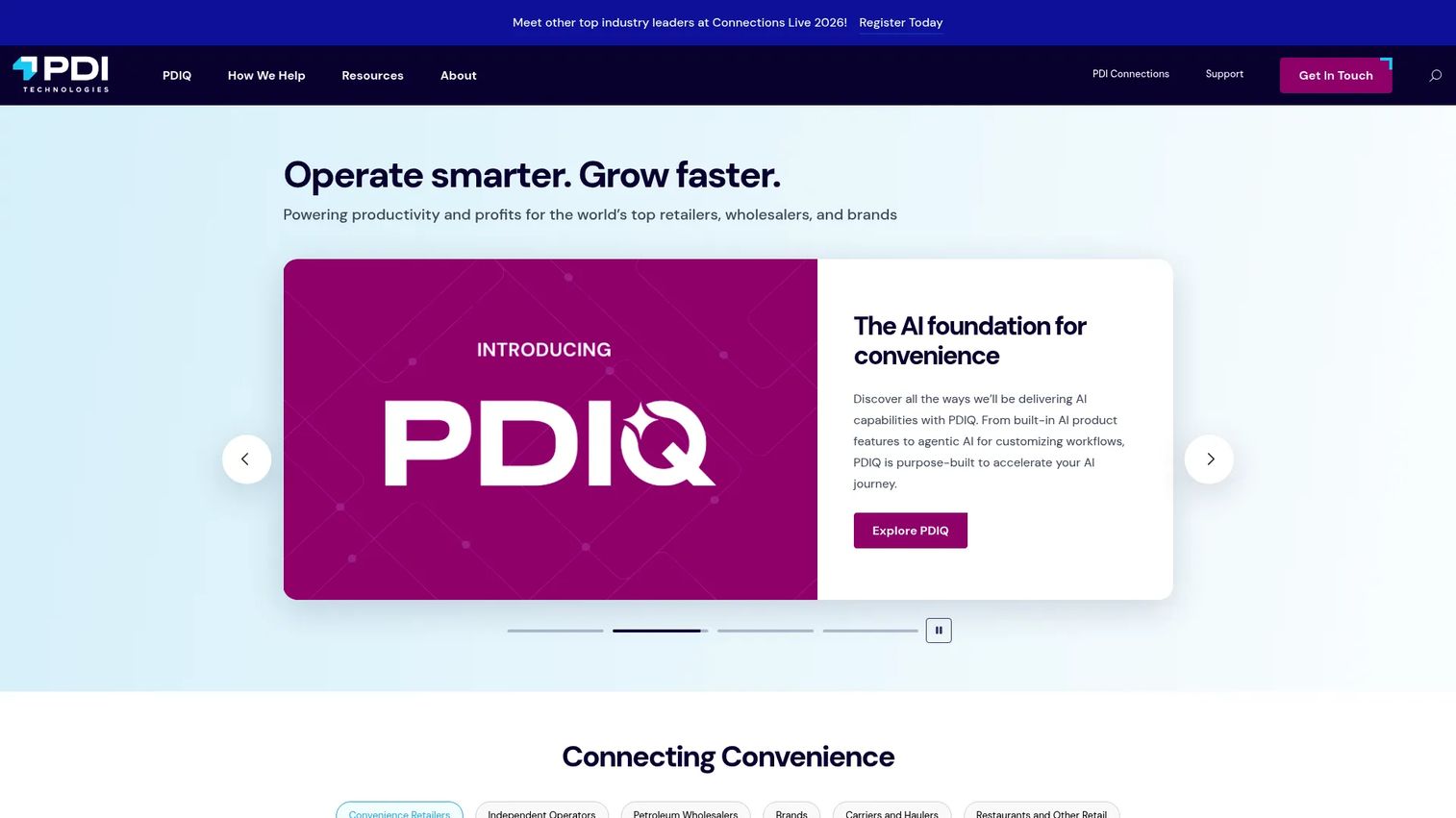
PDI Technologies is an enterprise software provider for convenience retail, petroleum wholesale, logistics, and related energy workflows. It sits at the larger end of this list, built for operators whose needs extend well beyond propane delivery into broader fuel management and commercial operations.
That breadth is the point. PDI covers convenience retail solutions, petroleum wholesale operations software, and fuel pricing and back-office workflows, so a diversified fuel operator can run interconnected parts of the business on one vendor. For a pure propane delivery operation, that depth may be more than you need, but for operators with wholesale and retail arms, the integrated coverage is hard to match.
Best for: Large fuel, convenience retail, and wholesale operators needing integrated industry software.
Key strengths
- Convenience retail solutions: manage retail operations alongside fuel workflows.
- Petroleum wholesale operations software: handle wholesale distribution at scale.
- Fuel pricing and back-office workflows: connect pricing and accounting across the operation.
Why choose PDI Technologies: Choose PDI when your operation spans more than propane delivery and you want enterprise-grade back-office depth across fuel, retail, and wholesale. Expect an implementation effort that matches the breadth, this is infrastructure for a larger, diversified fuel business.
PDI Technologies pricing: PDI does not publish public pricing, and its pricing archive is empty, so expect a custom quote tied to the products and scale you need. On G2, PDI holds a 4.3/5 seller rating.
7. Gorilla Fleet Intelligence
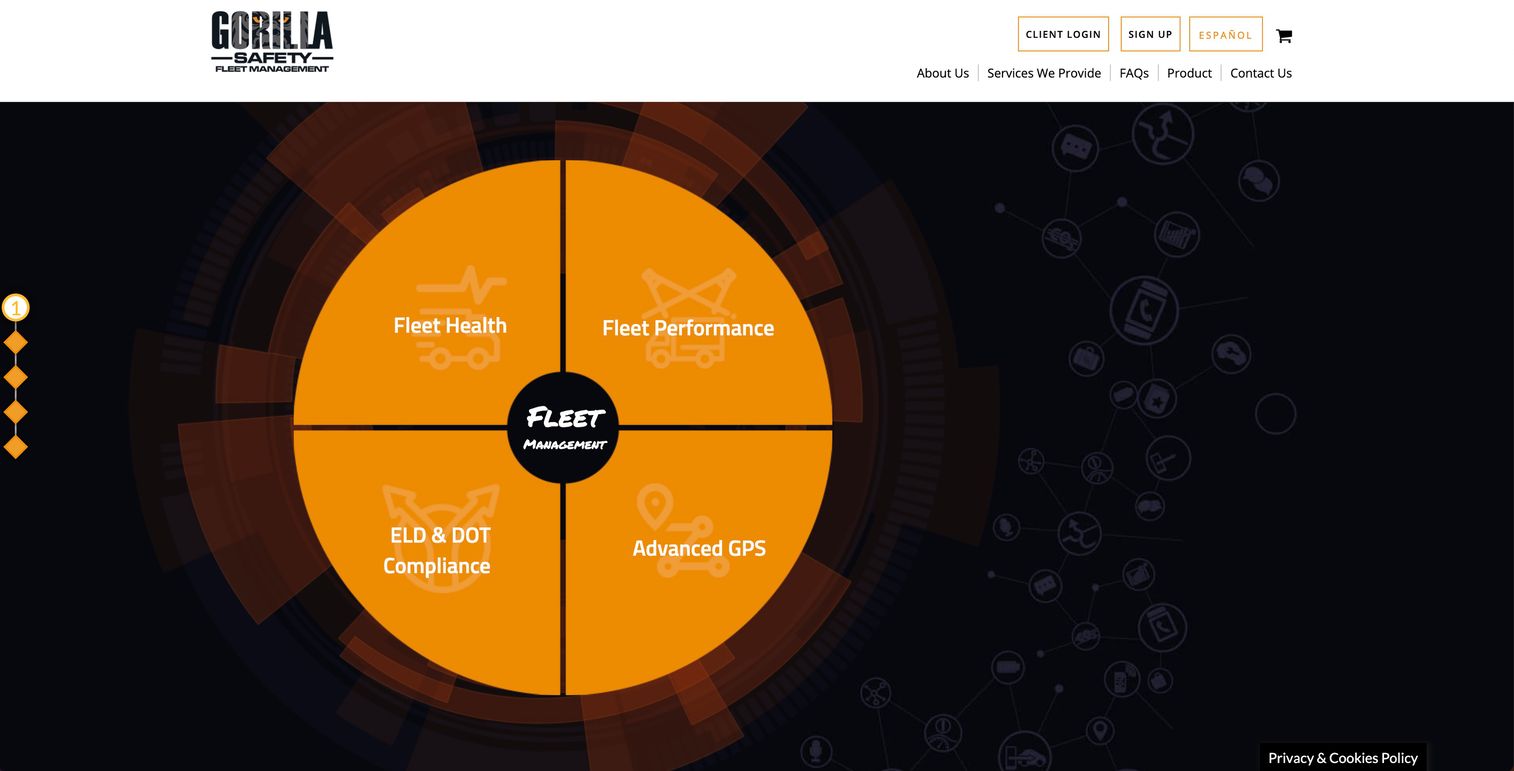
Gorilla Fleet Intelligence is fleet management, ELD, safety, and maintenance software for trucking and mobile fleets. It's adjacent to propane delivery software rather than a delivery platform itself, but for tracking-heavy operations that prioritize fleet intelligence, compliance, and vehicle uptime, it's a useful part of the stack.
Where a delivery platform handles stops and invoices, Gorilla focuses on the vehicles and drivers. ELD-compliant logs and GPS tracking cover compliance and location, while Fleet Xpress adds DVIR, DOT inspections, and fuel and IFTA reporting. The Xtreme tier layers on accident reporting, repair and maintenance, a mechanic portal, and document management, useful for operators whose real risk is downtime and compliance exposure across the fleet.
Best for: Trucking and fleet operators needing compliance, telematics, and maintenance workflow tools.
Key strengths
- ELD-compliant logs and GPS tracking: cover compliance and real-time vehicle location.
- Fleet Xpress: add DVIR, DOT inspections, and fuel and IFTA reporting.
- Xtreme: manage accident reporting, maintenance, a mechanic portal, and company documents.
Why choose Gorilla Fleet Intelligence: Choose it when fleet visibility, compliance, and maintenance are your priorities and you already have delivery software for stops and billing. It complements a propane delivery system rather than replacing it, adding the telematics and safety layer that keeps trucks compliant and on the road.
Gorilla Fleet Intelligence pricing: Gorilla lists product tiers, Prime8 ELD, Fleet Xpress, and Xtreme, with feature comparisons, but no public numeric prices are shown, so pricing comes via quote. A verified G2 rating was not available at the time of writing.
What to consider before you buy
A feature list won't tell you whether a system fits your operation. These criteria will.
Match the tool to your operating model
A delivery-only operation, a delivery-plus-service business, and a diversified fuel company have different needs. Cargas Energy and RCC lean toward broad operational coverage, Shipday toward lean dispatch and routing, and PDI toward enterprise fuel breadth. Start from how you run deliveries, not from a feature checklist.
Test routing and dispatch on your real routes
Route optimization only matters if it handles your geography, your delivery windows, and your reschedule patterns. Ask each vendor to run a demo against a real day of your stops. The difference between good and generic routing shows up in truck-hours saved, not in marketing copy.
Check the driver app and field workflow
Your drivers will use the driver app more than anyone touches the back office. Evaluate proof of delivery, offline behavior in low-signal areas, and how cleanly field updates sync back. If the mobile device experience is clunky, adoption stalls and the data suffers.
Confirm access model and integrations
Decide whether you need cloud-based, browser-based access for remote work, and confirm the tool integrates with your accounting, tank monitoring, and payment tools. A modular architecture helps if you expect to add capability over time rather than replace the system.
Conclusion
The right propane delivery management software depends on how your operation runs today. Cargas Energy and RCC suit operators wanting broad, connected coverage across office and field. FuelMor fits teams prioritizing browser-based, remote-ready access. Shipday is the fast, affordable pick for route optimization and a strong driver app, while DispatchNode appeals to teams testing AI-assisted dispatch. PDI Technologies serves diversified fuel operators needing enterprise depth, and Gorilla Fleet Intelligence adds fleet visibility and compliance to a delivery stack.
Rather than chasing the longest feature list, shortlist the two systems that best match your current workflow gap, whether that's routing waste, weak field visibility, or a fragmented office. Then demo both against a real day of your operation. The system that saves the most truck-hours and removes the most rekeying is the one worth buying.
FAQs
Look for dispatch, route optimization, a driver app with proof of delivery, real-time tracking, and reporting, plus customer records and invoicing connected in one place. Tank monitoring integration and a customer portal are strong additions as more tanks report their own levels. The goal is one connected workflow from scheduled delivery to invoice, not a set of disconnected tools.
Yes. Manual routing tends to add miles, strand trucks, and create missed delivery windows, all of which cost truck-hours and margin. Route optimization sequences stops efficiently and recovers time that goes back into deliveries. For any operation running multiple trucks daily, it's usually the fastest source of measurable savings.
For most growing operations, yes. A driver app replaces paper manifests and phone check-ins with real-time delivery details, digital proof of delivery, and field updates that sync back to the office instantly. That means faster billing, accurate answers when customers call, and less end-of-day paperwork.
Propane delivery software centers on dispatch, routing, driver mobility, and delivery execution, the office-to-field motion of getting fuel to customers. Propane management software is broader, adding back-office functions like accounting, customer records, billing, and service management. Many propane software systems combine both, so the line often depends on how wide the platform's scope runs.
Cloud-based propane software removes the server and the capital expense while giving office staff browser-based access from anywhere. For small operators, that lower upfront cost and remote flexibility often make cloud systems the practical starting point. It also simplifies updates and lets you scale capability without new hardware.
Dispatch software and route optimization pull scheduling, stop sequencing, and driver assignment into one board, so office teams stop rebuilding routes by hand each morning. Combined with real-time tracking, the office can answer delivery questions instantly and adjust routes on the fly. That connected propane dispatch and routing workflow removes rekeying between scheduling, delivery, and billing.
Match the tool to your operating model, then test routing on your real routes, evaluate the driver app your team will use daily, and confirm the access model and integrations fit your stack. Ask each vendor for a demo against a real day of your stops rather than a canned walkthrough. The best propane company software is the one that saves the most truck-hours and removes the most manual reconciliation for how you actually operate.