Your board does not care that the data lives in five systems. They care whether the forecast is believable.
For most Series B finance teams, the gap between "we have data" and "we can trust the forecast" is still enormous. Spreadsheets handle the past well. They handle the future poorly. And when a strong quarter is followed by a weak one with no clear explanation, that gap becomes a board-level problem fast.
According to PwC's 2025 treasury survey, 64% of treasury functions already use predictive analytics in their operations. The tools exist. The harder question is which one fits your actual finance job, because predictive analytics for finance is not a single category. AR forecasting, fraud detection, FP&A scenario modeling, and custom ML pipelines are all different buying decisions.
This guide maps the category honestly so you buy the right tool for the right problem.
What's inside
This guide compares 10 predictive analytics tools for finance in 2026, covering finance analytics platforms across six distinct types:
- Who it's for: SaaS founders, CFOs, Heads of Finance, FP&A leaders, and RevOps teams
- Selection criteria: Finance use-case fit, predictive capability depth, implementation effort, and pricing transparency
- Tool types covered: Finance operations, BI and dashboards, market analytics, ML platforms, fraud detection, and enterprise data
- What we checked: Verified G2 ratings and pricing from each vendor's current pricing page
TL;DR
- Best for AR and working capital: HighRadius, the strongest option for payment prediction, collections prioritization, and cash-flow visibility tied to receivables
- Best for board-ready dashboards: Tableau, with the widest data-source connectivity and clean visualization for scenario review
- Best for budget-conscious teams: Zoho Analytics starts at $24/month (billed annually) with a free tier and a built-in AI assistant
- Best for governed analytics at scale: Qlik Sense, with an associative engine that handles complex cross-functional data exploration
- Best for market and trading analytics: TradingView, purpose-built for price action, technical indicators, and portfolio signal monitoring
- Best for teams with ML capacity: Amazon SageMaker and Azure Machine Learning for custom model development; DataRobot for AutoML with governance baked in
What is predictive analytics for finance?
Predictive analytics for finance uses historical financial, operational, market, and customer data to estimate likely future outcomes, such as cash flow, payment timing, fraud risk, credit default, revenue variance, or portfolio movement.
It differs from reporting. Reporting tells you what the balance sheet said last quarter. Predictive analytics tells your finance team what the collections rate is likely to be next month, which invoices carry the highest default risk, and where cash will get tight before it shows up in actuals.
Core finance use cases
The most common applications across the tools in this guide include:
- Cash-flow forecasting and predictive cash-flow modeling
- FP&A budget variance and scenario analysis
- Accounts receivable payment prediction and collections prioritization
- Fraud and anomaly detection
- Credit scoring and default-risk assessment
- Treasury, liquidity, and FX exposure forecasting
- Market and portfolio analysis
Common predictive models
Understanding which model type solves which problem helps you evaluate tools more honestly:
- Time series models: Predict future values based on historical sequences, used for revenue forecasting and cash-flow prediction
- Classification models: Sort records into risk categories, used for credit scoring and collections triage
- Regression models: Estimate a continuous outcome, used for budget variance and churn-risk revenue impact
- Anomaly detection models: Flag statistical outliers in real time, used for fraud and payment irregularities
- Decision trees and neural networks: Handle complex, nonlinear relationships, used in fraud prevention and customer-risk modeling
How it differs from descriptive analytics
Most finance teams operate at the first two levels of the analytics maturity curve. Descriptive analytics explains what happened (revenue was down 12% in Q3). Diagnostic analytics explains why it happened (enterprise renewal rate dropped). Predictive analytics estimates what is likely to happen next (two accounts in that segment carry elevated churn-risk signals). Prescriptive analytics recommends the specific action to take.
The tools below sit across this curve. Some are purely predictive. Others do all four.
When to use predictive analytics for finance
Forecast cash before it becomes a board issue
Finance teams that rely on monthly actuals to spot cash risk are always reacting. Predictive cash-flow forecasting layers in invoice-level payment probability, collections history, renewal timing, and pipeline assumptions to give treasury and leadership a 60- to 90-day forward view. For a Series B company managing burn rate carefully, this turns runway from a lagging metric into an active operating signal.
Spot risk before it hits revenue
Fraud spikes, delayed enterprise payments, and credit concentration rarely appear in a dashboard before they damage revenue. Predictive models flag these patterns early, using behavioral signals, historical payment curves, and anomaly scores. The most useful tools in this space generate alerts before an invoice ages rather than after.
Replace spreadsheet planning with scenario models
FP&A teams at growing companies often spend more time maintaining forecast models than analyzing them. Predictive analytics platforms allow finance leaders to run hiring-plan scenarios, pipeline sensitivity analyses, and budget variance reviews without rebuilding the spreadsheet each cycle. The goal is to give your Head of Finance and your board a shared model they can trust, not one person can explain.
Predictive analytics tools for finance comparison
The 10 tools below span six distinct categories. Picking the wrong category wastes more time than picking the wrong vendor within the right one.
| # | Product | Best for | Key differentiator | Pricing | G2 rating |
|---|---|---|---|---|---|
| 1 | HighRadius | AR, treasury, and working capital | Predictive payment and credit intelligence for order-to-cash | Outcome-based; contact sales | 4.0/5 |
| 2 | Tableau | Finance dashboards and scenario visibility | Broad data-source connectivity with interactive visualization | From $15/user/month (annual) | 4.4/5 |
| 3 | Zoho Analytics | Budget-conscious finance and SaaS teams | Low-cost BI with free tier and built-in AI assistant | From $24/month (annual) | 4.2/5 |
| 4 | Qlik Sense | Governed analytics across finance and operations | Associative analytics engine for complex exploration | From $300/month for 10 users (annual) | 4.4/5 |
| 5 | TradingView | Market analytics and trading teams | Charting, technical indicators, strategy scripts, and alerts | Free plan; from CHF 12.95/month (annual) | 4.5/5 |
| 6 | Amazon SageMaker | Data teams building custom finance models on AWS | End-to-end ML with MLOps, monitoring, and free tier | Usage-based; free tier available | 4.3/5 |
| 7 | Azure Machine Learning | Microsoft-stack finance and data teams | Enterprise ML development with no additional service charge | $0 service fee; compute billed separately | 4.3/5 |
| 8 | DataVisor | Fraud and financial crime detection | Supervised and unsupervised fraud detection with real-time decisioning | Contact sales | 4.4/5 |
| 9 | DataRobot | AutoML and governed predictive modeling | Automated model building, comparison, and explainability | Contact sales; 30-day free trial | 4.4/5 |
| 10 | Teradata | Enterprise-scale finance data and analytics | Governed data platform with AI/ML support across hybrid environments | From $0.22/minute (Sovereign); storage from $23/TB/month | 4.3/5 |
Best 10 predictive analytics tools for finance in 2026
1. HighRadius
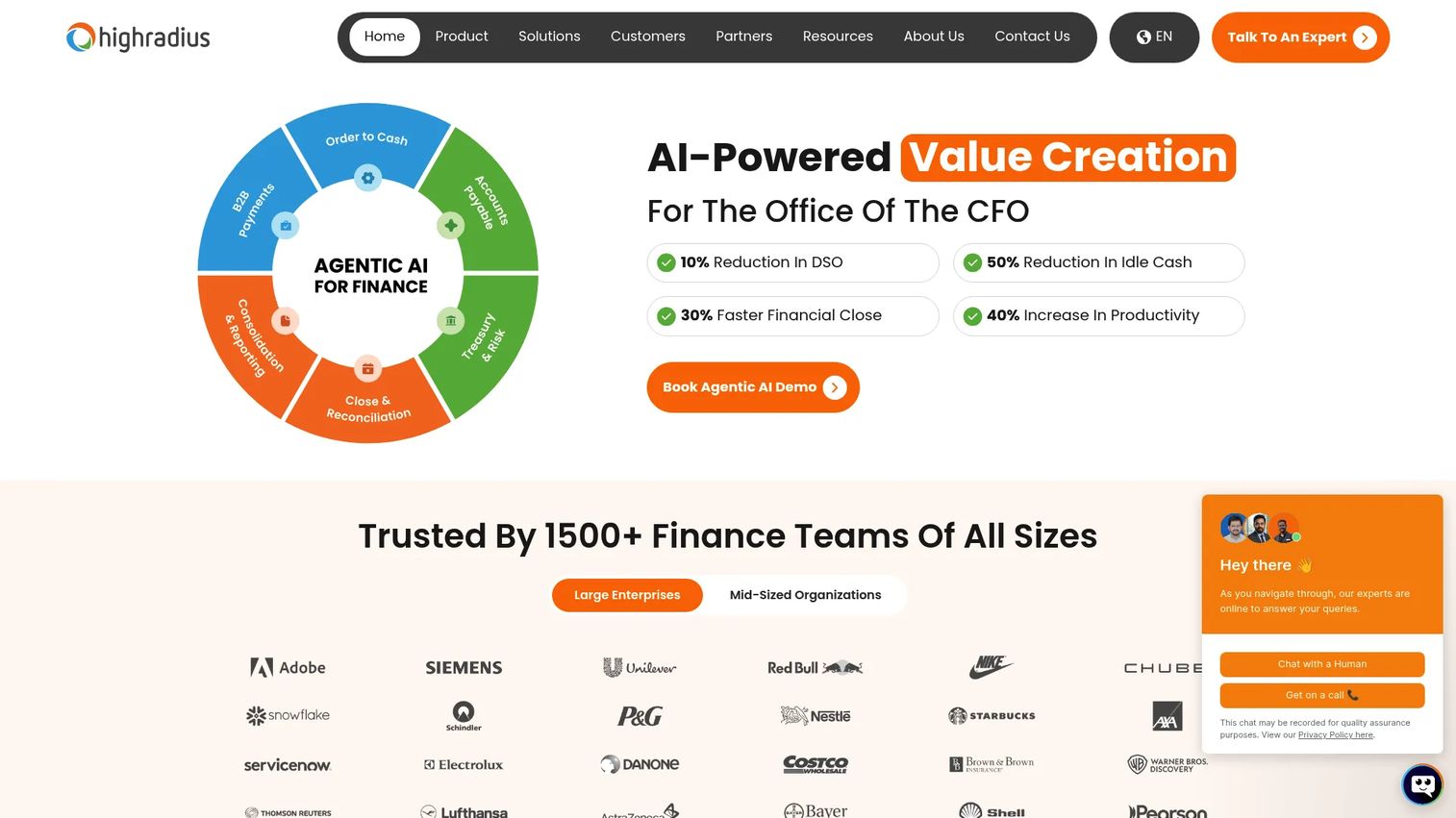
HighRadius is a finance operations platform built for order-to-cash, treasury, and accounts payable automation. Its predictive analytics layer focuses on payment-date prediction, credit risk scoring, collections prioritization, and cash-flow visibility. Rather than offering general BI, it concentrates entirely on the financial workflows where prediction has a direct working-capital impact.
Best for: Mid-market and enterprise finance teams whose core problem is AR complexity, collections volume, and cash-flow uncertainty tied to receivables.
Key features
- Payment-date prediction using historical invoice behavior
- AI-based credit risk scoring and monitoring
- Intelligent collections worklist prioritization
- Cash forecasting tied to AR and treasury positions
- Financial close and reconciliation automation
Why choose HighRadius: Choose HighRadius when the finance problem is specifically about getting paid faster and forecasting cash more accurately from invoice data. It is not a general analytics platform; it is purpose-built for CFO workflows across receivables, payables, and treasury.
HighRadius pricing: HighRadius offers outcome-based pricing with no implementation fee and no subscription fee until go-live. Post-go-live fees are based on a fraction of realized gains rather than a fixed monthly rate. Contact sales for scope-specific packaging.
G2 rating: 4.0/5
2. Tableau
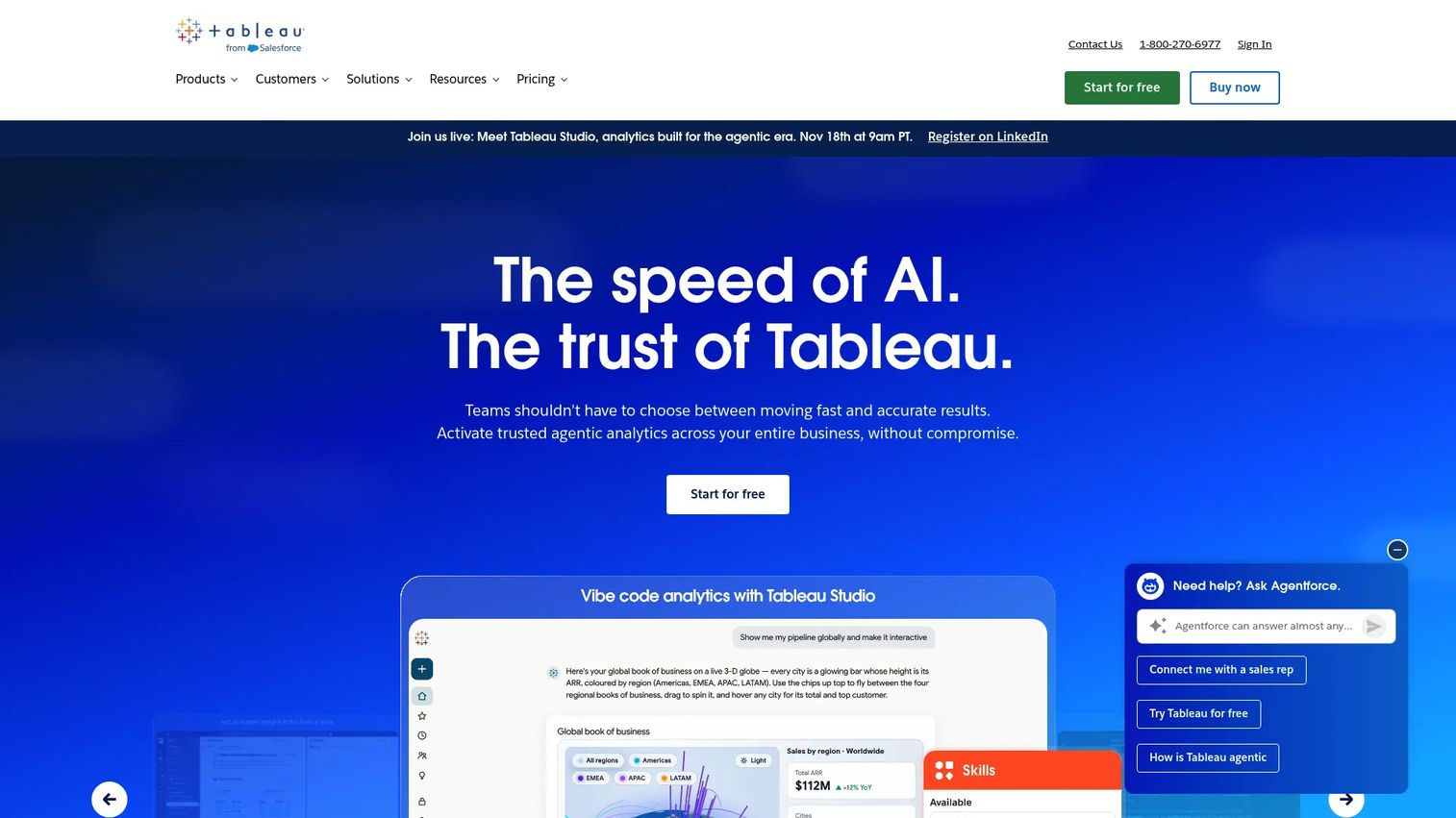
Tableau is a visual analytics platform used by finance teams to unify data from CRMs, billing systems, ERPs, and spreadsheets into interactive dashboards. It is not a finance-specific tool, which is both its strength and its boundary. Teams that need to pull together fragmented sources and present clean forecasting or variance views to leadership rely on it for exactly that reason.
Best for: Finance teams that have data spread across multiple systems and need board-ready dashboards without buying a custom development project.
Key features
- Interactive finance dashboards with drill-down and filter controls
- Built-in forecasting functions and trend projection
- Connections to flat files, databases, and cloud data warehouses
- Scenario visualization for financial planning reviews
- Tableau Pulse for real-time metric monitoring
Why choose Tableau: Choose Tableau when the finance team already has the data and needs a trusted, shareable way to present it. It fits teams tired of screenshotting spreadsheets for board decks and wanting a live view that updates without manual export cycles.
Tableau pricing: Tableau Standard starts at $15 per user per month, billed annually. Tableau Enterprise runs $35 per user per month on the same billing cadence. Cloud+ and the Tableau+ bundle require contacting sales. Every deployment needs at least one Creator license.
G2 rating: 4.4/5
3. Zoho Analytics
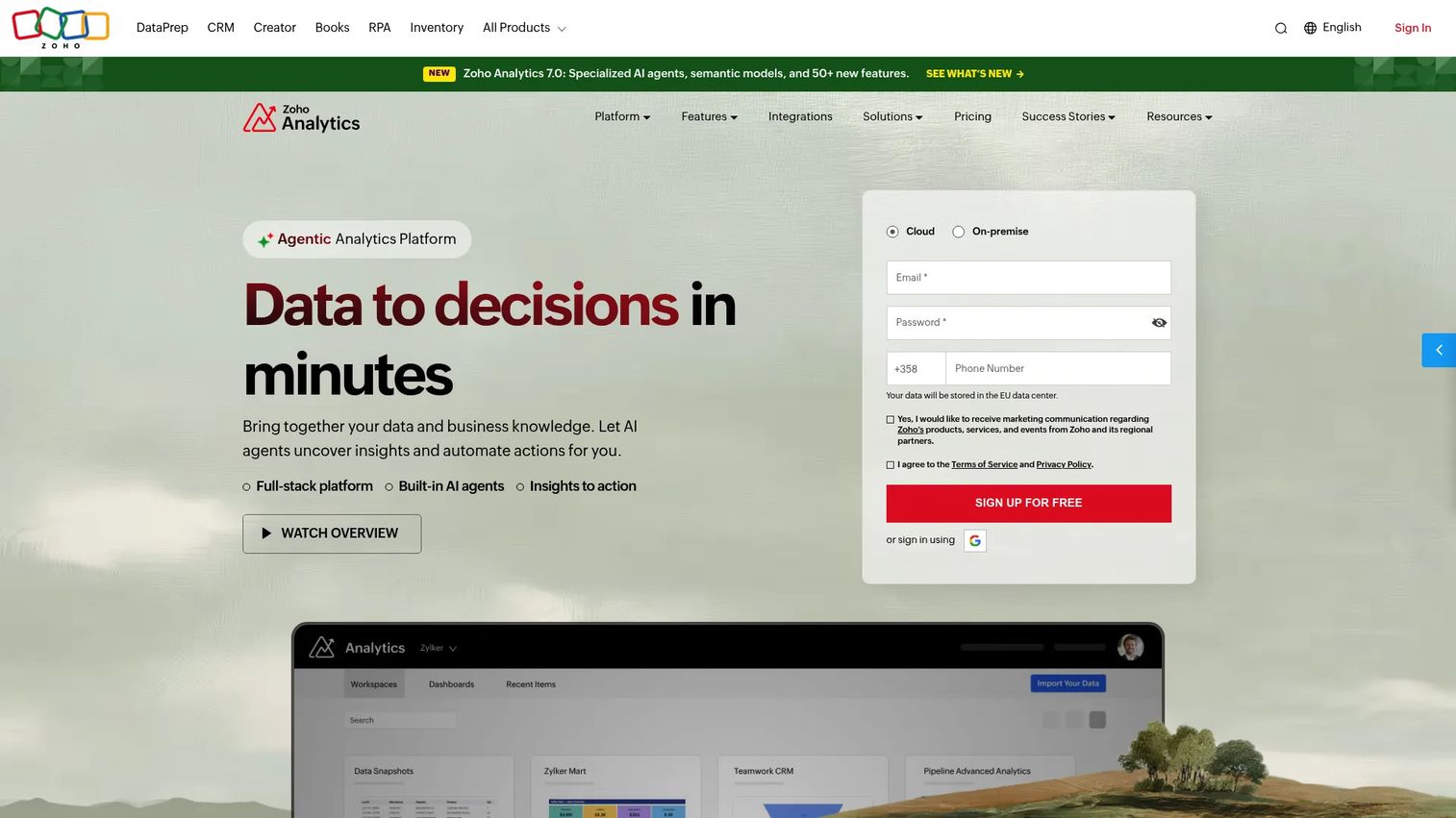
Zoho Analytics is a self-service BI and analytics platform with a free tier, an AI assistant, and the ability to connect to over 500 data sources. For finance teams that need to move data out of spreadsheets and into repeatable reporting without a large implementation budget, it covers a surprisingly wide range of use cases. It works well for teams already in the Zoho ecosystem, but is not limited to them.
Best for: Smaller and budget-conscious finance teams that need reporting, forecasting widgets, and AI-assisted analysis without enterprise-level investment.
Key features
- Self-service BI with no-code report and dashboard building
- Built-in AI assistant (Zia) for natural-language data queries
- Forecasting widgets with trend and seasonality modeling
- Connections to spreadsheets, cloud databases, and 500+ business apps
- Shared workspaces for collaborative finance reporting
Why choose Zoho Analytics: Choose Zoho Analytics when the first job is getting finance data visible and repeatable before committing to a heavier platform. The free tier supports two users and 10,000 rows, which is a real starting point for a small team, not just a trial.
Zoho Analytics pricing: A free plan is available. Paid plans start at $24 per month for the Basic tier, billed annually. Standard runs $48/month, Premium $115/month, and Enterprise $455/month on annual billing. A Dedicated Compute option requires a custom quote.
G2 rating: 4.2/5
4. Qlik Sense
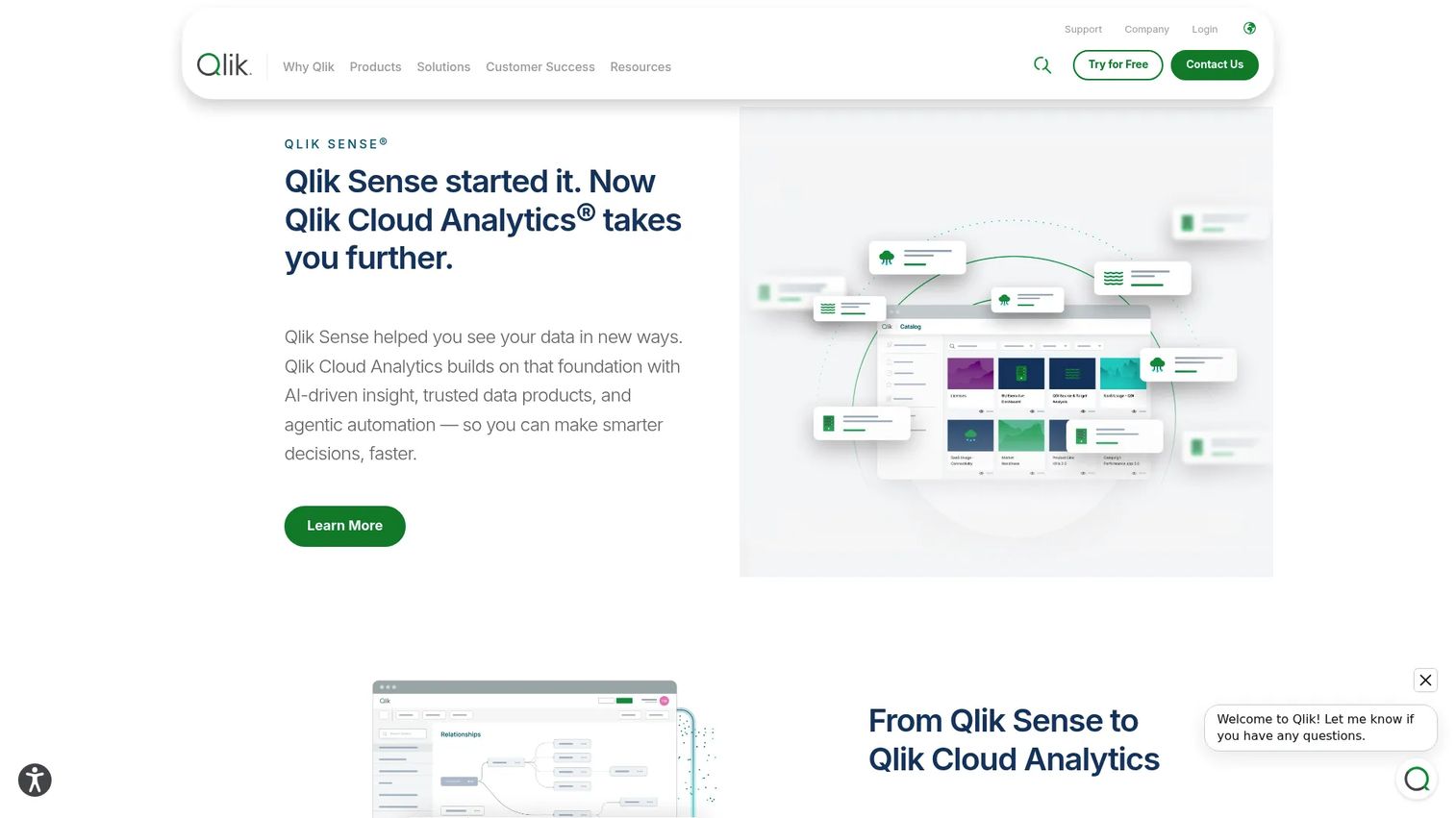
Qlik Sense is a governed analytics platform built around an associative analytics engine. Where most BI tools require a fixed dashboard structure, Qlik lets finance teams explore relationships across pipeline, bookings, invoices, collections, and expense data without being constrained by pre-built views. Its augmented analytics layer also generates AI-assisted insights from the data as users explore.
Best for: Larger finance and operations teams that need governed self-service analytics across complex, cross-functional data sets that change frequently.
Key features
- Associative analytics engine for open-ended data exploration
- Augmented analytics with AI-generated insight suggestions
- Embedded dashboards and reporting for finance workflows
- Data integration across multiple sources and formats
- Governance controls including access management and lineage
Why choose Qlik Sense: Choose Qlik Sense when finance questions change every week and static dashboards can no longer keep up. It fits organizations where finance, RevOps, and data teams need to explore the same source of truth from different angles without filing a ticket each time.
Qlik Sense pricing: Qlik Cloud Analytics Starter starts at $300 per month for 10 users, billed annually. Standard runs $825/month and Premium $2,750/month on the same cadence. Enterprise requires a custom quote. Client-managed Qlik Sense pricing requires contacting Qlik directly.
G2 rating: 4.4/5
5. TradingView
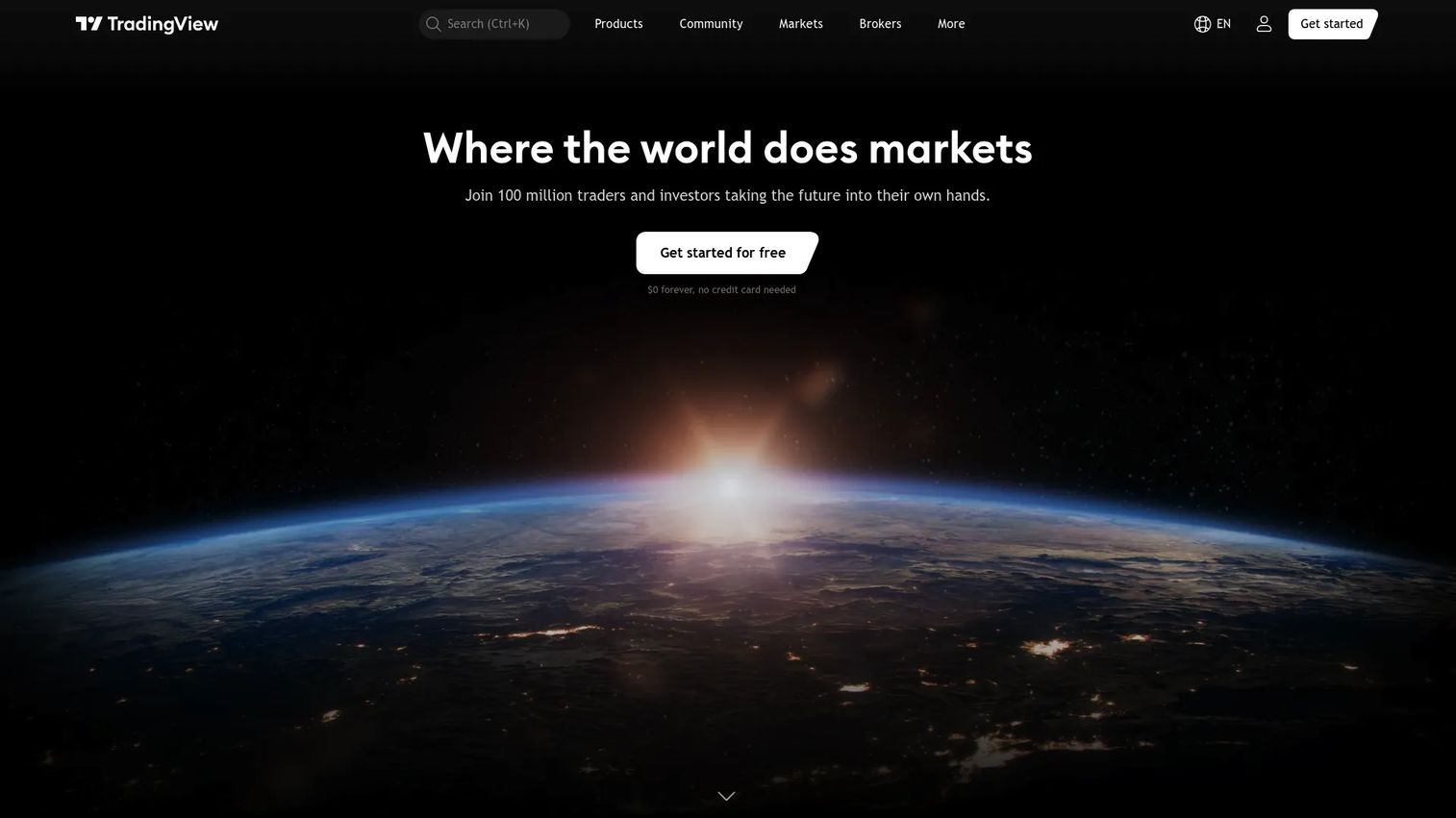
TradingView is a market analysis and charting platform. It is not a corporate FP&A tool or an AR automation system, and that clarity matters for category fit. Finance teams, investors, fintech companies, and trading desks use it to track price action, FX exposure, public-market comps, and portfolio signals with real-time charting and customizable scripting.
Best for: Market-facing teams that need predictive charting, technical indicators, and portfolio signal monitoring rather than internal budget variance or cash-flow analytics.
Key features
- Interactive charts with up to 16 panels per screen
- Technical indicators and strategy scripts via Pine Script
- Financial screeners and real-time market data
- Customizable price and volume alerts
- Web, desktop, and mobile access
Why choose TradingView: Choose TradingView when predictive analytics means market movement, currency exposure, or public-company comparables. If the finance question is about SaaS board metrics or AR forecasting, this is the wrong tool. For trading desks and fintech teams watching price action, it covers the need cleanly.
TradingView pricing: A free Basic plan is available permanently. Paid tiers start at CHF 12.95 per month for Essential, billed annually. Plus runs CHF 29.95/month, Premium CHF 59.95/month, and Ultimate CHF 199.95/month on annual billing. Enterprise pricing requires contacting sales.
G2 rating: 4.5/5
6. Amazon SageMaker
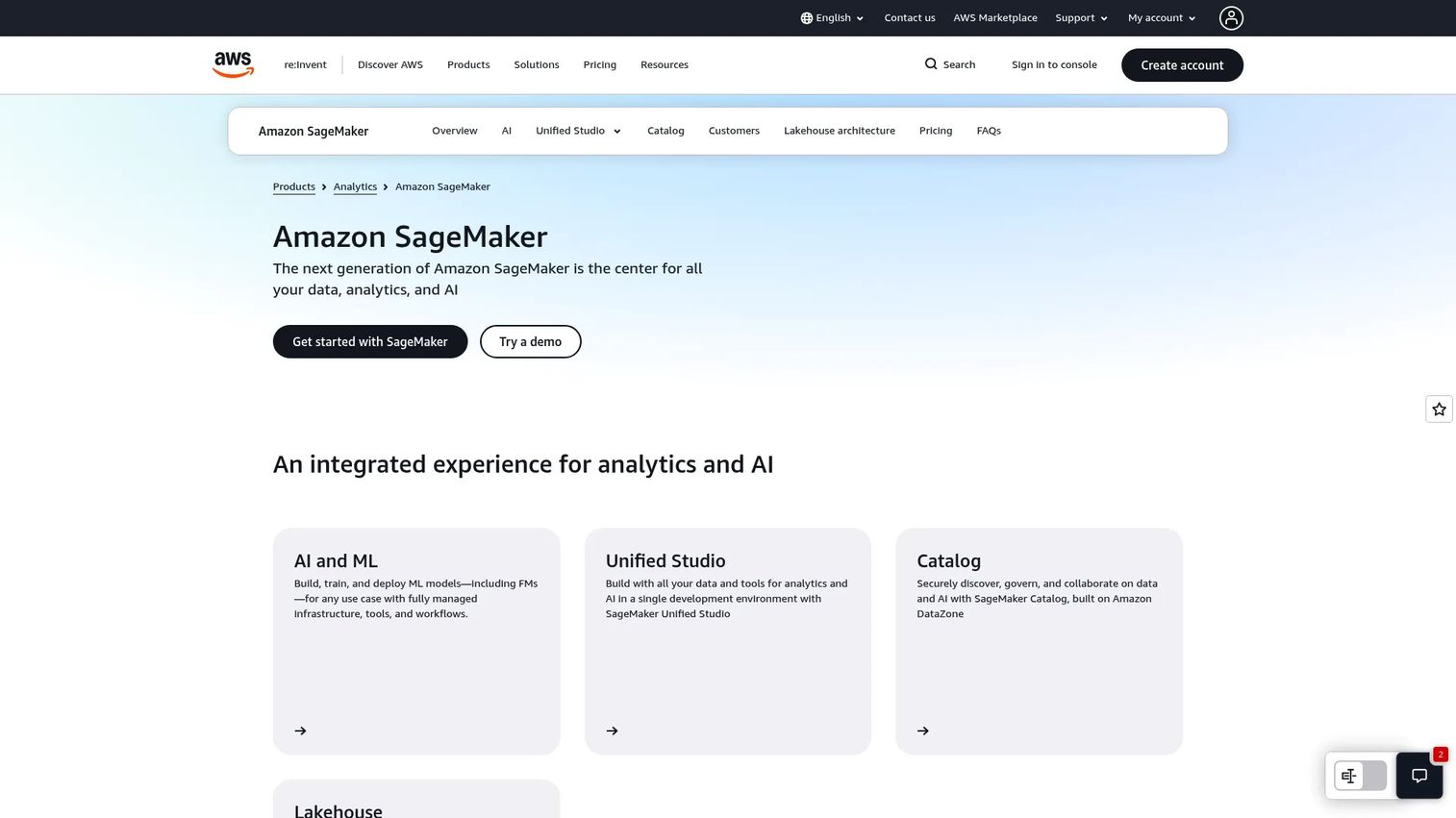
Amazon SageMaker is AWS's unified platform for data, analytics, and machine learning. For finance teams with data science capacity, it supports custom model development for time series forecasting, credit scoring, anomaly detection, and churn-risk financial modeling. It does not come pre-configured for finance workflows; the finance team or engineering team builds and maintains the models.
Best for: Finance and data teams with AWS infrastructure and machine-learning expertise who need custom predictive models for proprietary data sets.
Key features
- Managed model training, tuning, and deployment on AWS
- Time series forecasting support within model development workflows
- Feature engineering and store for reusable model inputs
- MLOps with model monitoring, drift detection, and governance
- SageMaker Unified Studio for analytics and AI development
Why choose Amazon SageMaker: Choose SageMaker when packaged finance analytics cannot answer the question and the team has the data science capability to build something specific. It fits companies with proprietary risk, payment, or customer data that requires custom model architecture rather than a configured finance platform.
Amazon SageMaker pricing: SageMaker uses usage-based AWS pricing rather than fixed tiers. A free tier is available, and SageMaker Catalog compute starts at $1.776 per compute unit after 0.2 free units. Training, hosting, and storage each incur separate AWS charges depending on instance type and region.
G2 rating: 4.3/5
7. Azure Machine Learning
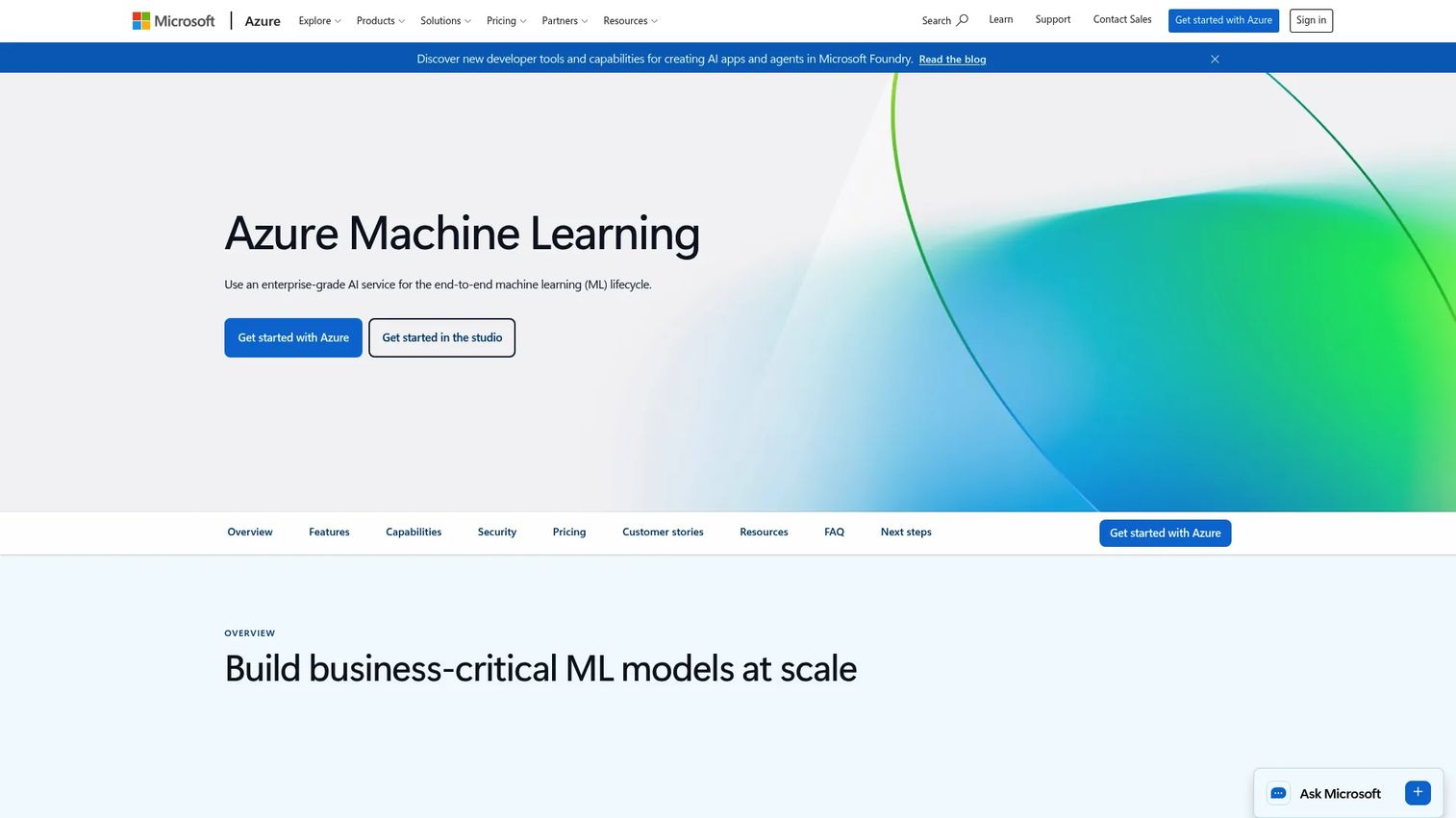
Azure Machine Learning is Microsoft's enterprise ML development environment. For finance teams already running Azure, Microsoft Fabric, or on-premises Microsoft infrastructure, it provides an integrated path for model development, deployment, and governance without adding a separate vendor. The platform includes automated ML, responsible AI tools, and a managed model registry.
Best for: Microsoft-centered finance and data teams building custom predictive models who want development, governance, and deployment consolidated inside Azure.
Key features
- Automated machine learning for model selection and tuning
- Responsible AI assessment for fairness and interpretability
- Model registry and pipeline orchestration for operationalization
- Managed endpoints for safe, staged model deployment
- Prompt flow for language-model and AI workflow development
Why choose Azure Machine Learning: Choose Azure Machine Learning when the finance data stack already lives inside Microsoft. It reduces vendor sprawl for teams that need ML development and governance without leaving the Azure environment. The service itself carries no additional charge; costs come from underlying compute resources.
Azure Machine Learning pricing: Azure Machine Learning has no additional service charge per month. Customers pay for the underlying compute and Azure services consumed. A D2 v3 compute instance costs approximately $70.08/month at pay-as-you-go rates; actual costs vary by instance type, region, and usage volume.
G2 rating: 4.3/5
8. DataVisor
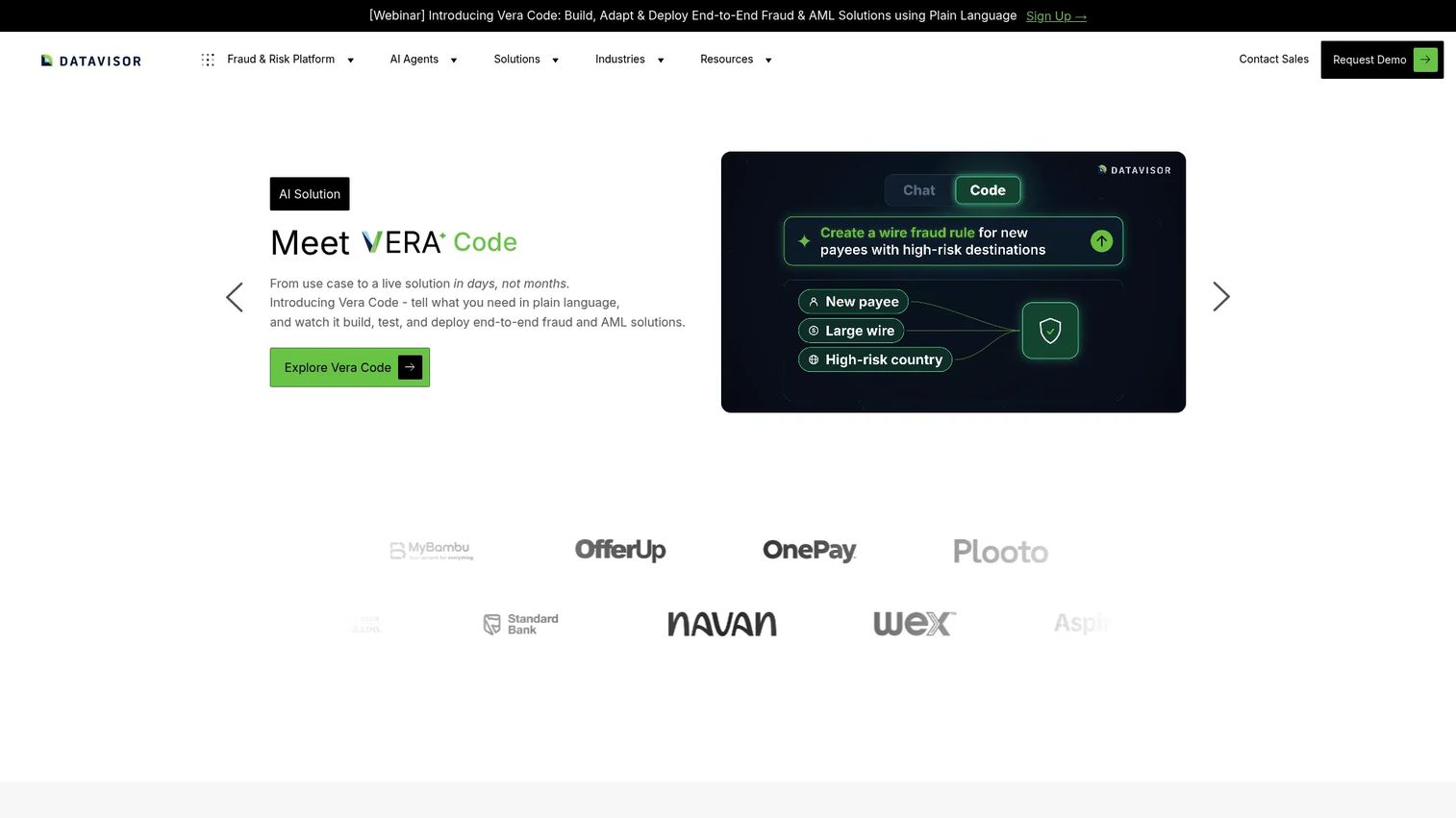
DataVisor is a fraud and financial crime platform for financial institutions, fintechs, payment providers, and marketplaces. Its approach combines supervised and unsupervised machine learning with device intelligence, behavioral signals, and Knowledge Graph analysis to detect fraud patterns in real time. It covers transaction monitoring, account takeover, and AML compliance alongside case management tools for investigation teams.
Best for: Finance and fintech teams with a specific fraud or financial crime detection mandate, including payment fraud, AML, and anomaly detection at transaction volume.
Key features
- Real-time fraud decisioning with supervised and unsupervised ML
- Device and behavioral intelligence for account risk assessment
- Knowledge Graph for cross-entity link analysis
- Rules and workflow automation for risk operations
- Investigation and case management for fraud teams
Why choose DataVisor: Choose DataVisor when the predictive analytics requirement centers on catching fraudulent behavior before it becomes loss. This tool is built for risk and compliance mandates, not FP&A forecasting. The fraud detection analytics it offers go significantly deeper than what a general BI or ML platform provides out of the box.
DataVisor pricing: DataVisor does not publish pricing. The cost is driven by use case scope, transaction volume, and deployment configuration. Contact DataVisor sales directly for a quote.
G2 rating: 4.4/5
9. DataRobot
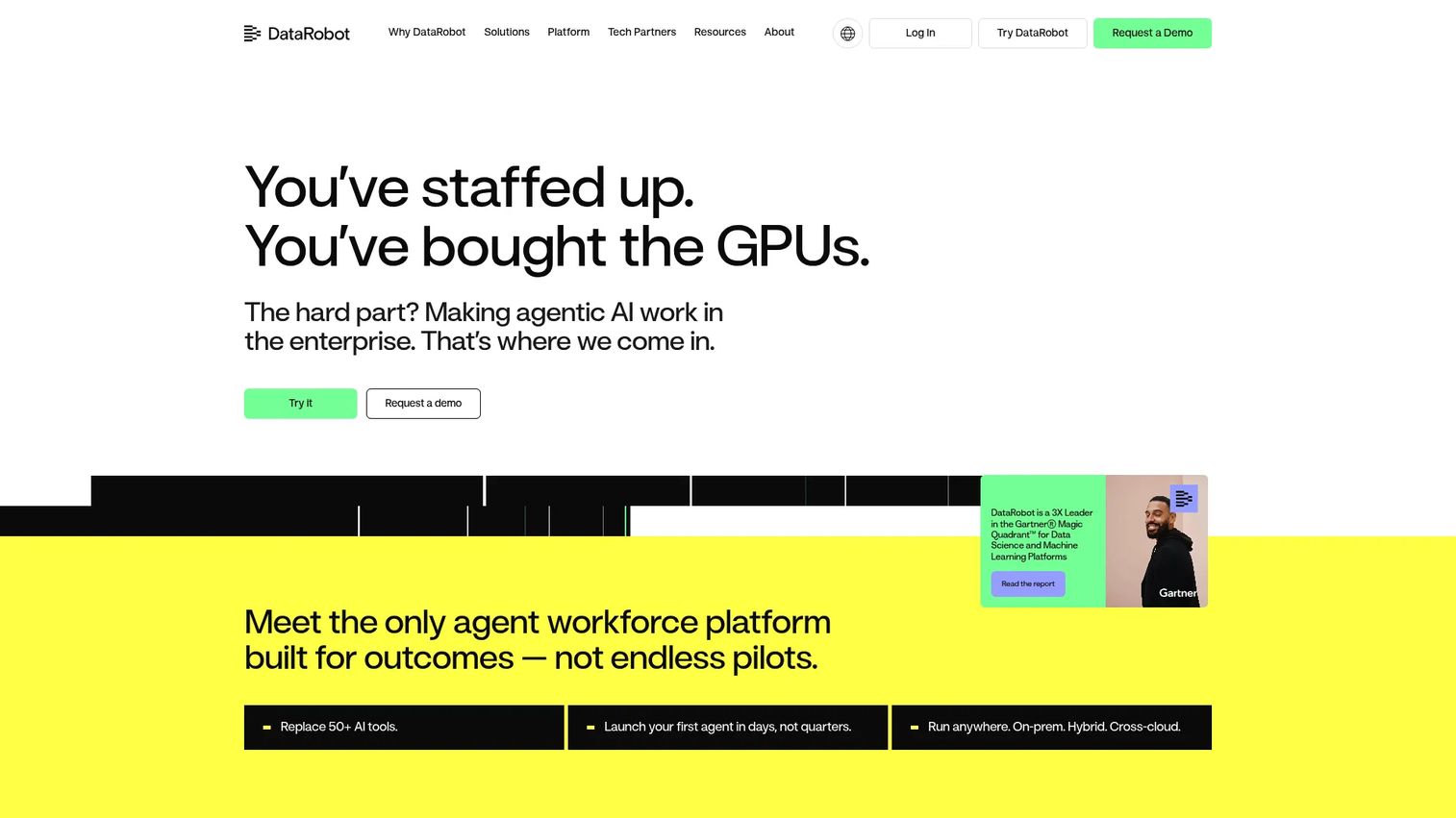
DataRobot is an enterprise AI platform for building, deploying, monitoring, and governing predictive models. Finance use cases include default prediction, demand and revenue forecasting, fraud detection modeling, and forecast variance analysis. Its AutoML layer handles data preparation, feature engineering, and model comparison without requiring data scientists to code each step from scratch.
Best for: Finance teams that have data maturity and want faster predictive modeling without building every workflow from the ground up, with governance requirements that standard ML notebooks cannot satisfy.
Key features
- Automated machine learning with model comparison and selection
- Time series forecasting with built-in seasonality handling
- Model explainability tools for regulated finance environments
- Model monitoring and drift detection post-deployment
- Deployment options across cloud, on-premises, and hybrid environments
Why choose DataRobot: Choose DataRobot when the finance team has clean enough data to run predictive models but does not have the engineering bandwidth to maintain a fully custom pipeline. The 30-day free trial gives a realistic preview of the platform before any contract commitment.
DataRobot pricing: Packaging is sales-led and depends on platform scope, user count, and deployment model. A 30-day free trial with full platform access is available, with no contract required to start.
G2 rating: 4.4/5
10. Teradata
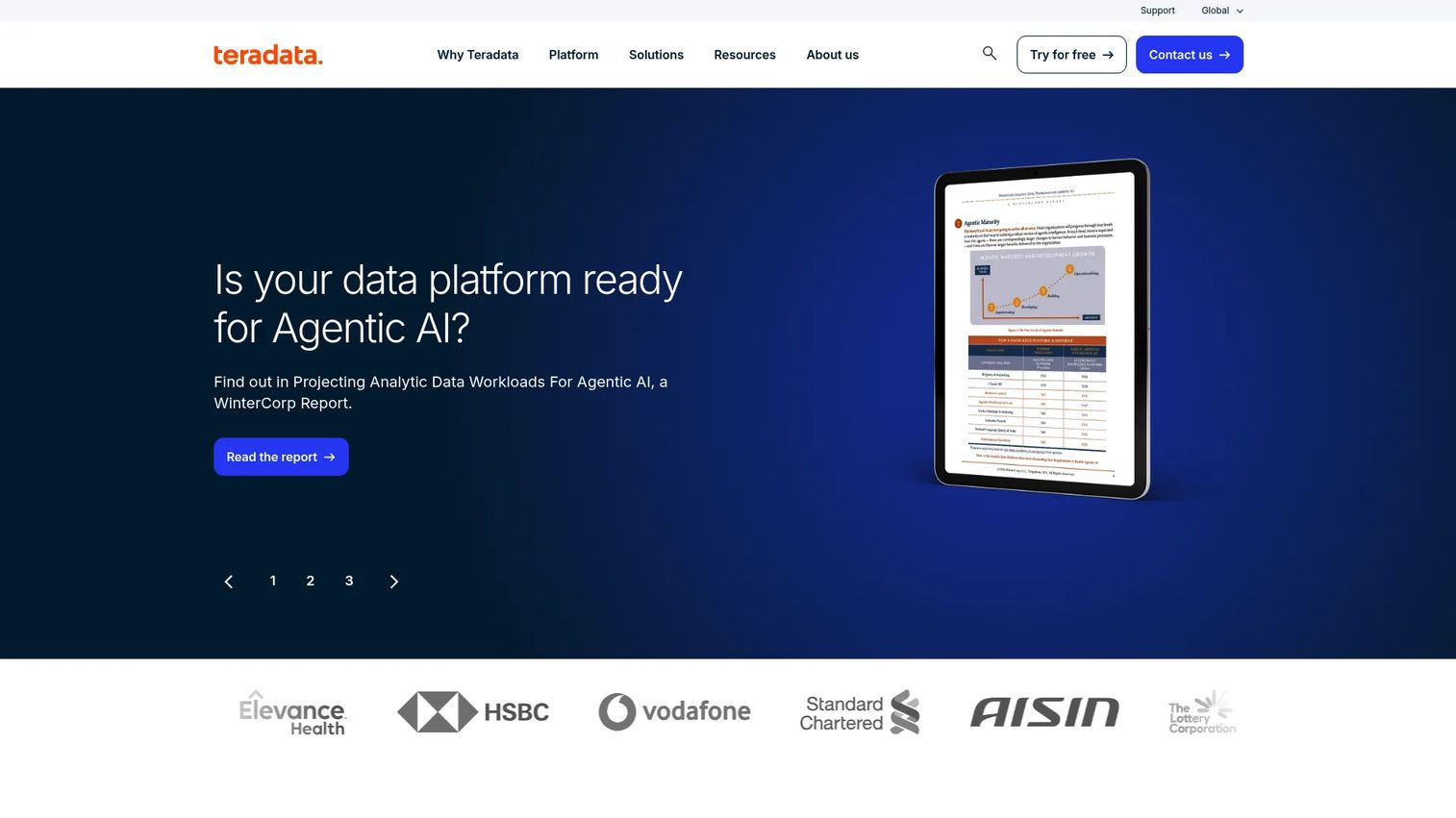
Teradata is an enterprise data and analytics platform for large organizations that need governed analytics across high-volume financial data. It combines a data warehouse architecture with AI and ML support, an enterprise vector store, and agentic AI development capabilities. For finance teams whose bottleneck is trusted data infrastructure rather than a specific predictive model, it addresses the foundation.
Best for: Enterprise finance organizations with large-scale data, compliance requirements, and analytics complexity that exceed what standard BI or ML platforms can handle.
Key features
- Enterprise data warehousing with scalable compute and governed access
- AI and ML model training, deployment, and lifecycle management
- Enterprise Vector Store for structured and unstructured finance data
- Agentic AI development with governance, permissions, and audit controls
- Deployment across cloud, on-premises, and hybrid environments
Why choose Teradata: Choose Teradata when predictive finance analytics depends on consolidating large, governed data sets across the organization. It fits companies where the data infrastructure itself is the constraint, not the choice of model or dashboard tool.
Teradata pricing: Teradata uses Fixed + Flex pricing. The Sovereign package starts at $0.22 per minute for compute, billed on usage. Storage starts at $23 per TB per month. Pricing varies by deployment model, cloud provider, region, and package selection. Contact sales for a full scope estimate.
G2 rating: 4.3/5
Considerations when choosing predictive analytics tools for finance
Match the tool to the finance job
AR prediction, market charting, BI dashboards, fraud detection, and custom ML pipelines are genuinely different buying decisions. Buying SageMaker to fix an AR forecasting problem adds an engineering dependency that takes months to resolve. Buying HighRadius to fix a fraud detection problem misaligns the product entirely with the risk. Start by naming the specific finance workflow causing the most uncertainty, then evaluate which category of tool addresses it.
Check the data work before the software contract
Predictive analytics only produces useful output when inputs are clean and connected. Before evaluating platforms, assess whether your CRM, billing, ERP, banking feeds, and collections history can reach the same system. Data quality issues do not get better after a software contract; they become more visible and more expensive to fix.
Decide who will own the model
Some tools in this guide are designed for finance users. Others require data scientists, ML engineers, or analytics engineers to build and maintain the models. Identify the model owner before the buying decision, not after. A tool like DataRobot reduces the engineering requirement significantly compared to SageMaker, but it still needs someone accountable for data preparation and ongoing model performance.
Test forecast accuracy against a baseline
Before rolling any predictive output into board reporting, run the tool's forecast against your existing spreadsheet model for one or two planning cycles. If the tool consistently produces a materially different output, understand why before trusting it. Forecast credibility with the board is built over quarters, not in a demo.
Treat governance as a finance feature
Access control, audit trails, model explainability, and data lineage are not nice-to-haves in a finance context. Bad forecasts can become board-level risk events, and unexplainable model outputs create compliance exposure in regulated environments. Tools that offer governance controls alongside predictive capability are worth the premium over those that do not.
Conclusion
Predictive analytics for finance is not a single category. HighRadius addresses the AR and working-capital workflow directly. Tableau, Zoho Analytics, and Qlik Sense each handle BI-style finance reporting with different tradeoffs on cost, flexibility, and governance depth. TradingView serves market-facing teams tracking price action and portfolio signals. Amazon SageMaker and Azure Machine Learning are for data teams building custom models on existing cloud infrastructure. DataVisor covers fraud and financial crime with dedicated detection capability. DataRobot gives finance teams with clean data a faster path to governed predictive modeling. Teradata addresses the data infrastructure layer for enterprise organizations where foundation is the constraint.
The right choice starts with the finance workflow causing the most uncertainty, not the tool with the most impressive feature list. If the board is asking for cleaner metrics this quarter, start there. The best predictive analytics software tools for your team are the ones that turn that specific uncertainty into a signal your finance leader can act on.
For teams evaluating the broader big data analytics software landscape or reviewing options in adjacent accounts receivable software categories, those guides cover the neighboring tool categories in the same format.
FAQs
Predictive analytics for finance uses historical financial and operational data to estimate likely future outcomes, including cash-flow positions, payment timing, credit default risk, budget variance, and fraud signals. It differs from standard financial reporting in that it produces forward-looking estimates rather than backward-looking summaries. Common applications include AR payment prediction, revenue forecasting, collections prioritization, and anomaly detection in transaction data.
The answer depends on the finance job. HighRadius fits AR, collections, and working-capital teams. Tableau and Zoho Analytics serve teams that need clean dashboards across fragmented systems. Qlik Sense handles complex, governed analytics at scale. TradingView is built for market-facing teams tracking portfolio signals. DataVisor addresses fraud and financial crime detection. Amazon SageMaker, Azure Machine Learning, and DataRobot serve teams building or automating custom predictive models. Teradata supports enterprise finance organizations where governed data infrastructure is the foundation.
Predictive cash-flow forecasting works by layering historical payment behavior onto open invoices to estimate collection timing, then combining that with pipeline assumptions, renewal schedules, and planned expenses to produce a forward cash position. Rather than waiting for actuals to close at month-end, finance teams can see likely cash outcomes 60 to 90 days out. This turns runway from a lagging metric into an operating signal, which is particularly relevant for SaaS companies managing burn rate carefully.
The most useful inputs are accounts receivable aging data, invoice payment history, CRM pipeline and renewal data, billing and subscription records, banking transaction feeds, collections activity history, and product usage data for churn-risk signals. For fraud detection, transaction-level behavioral data and device signals become essential. The bottleneck in most finance analytics projects is not the choice of platform but the cleanliness and connectivity of these underlying data sources.
Rarely at first, and usually not fully. Most finance teams run predictive tools alongside existing spreadsheet models for one or two planning cycles before trusting the output for board reporting. The more realistic framing is that predictive analytics improves the assumptions, variance analysis, and scenario modeling that feed the spreadsheet rather than replacing the spreadsheet entirely. Teams that try to skip the validation period often end up with two conflicting models rather than one trusted one.
Financial forecasting is the planning output: A projected P&L, cash position, or revenue target for the next quarter or year. Predictive analytics is the method used to estimate those outputs, applying statistical models, historical patterns, and machine learning to available data. A forecast can be built with or without predictive analytics. Teams that use predictive models in their forecasting process typically produce more accurate outputs, catch variance earlier, and can run scenario sensitivities faster than teams working from static assumptions.
DataVisor is purpose-built for fraud and financial crime detection, with supervised and unsupervised machine-learning models, real-time transaction monitoring, and case management. For teams that need fraud detection as one application within a broader custom ML environment, Amazon SageMaker and Azure Machine Learning can support anomaly detection model development with the right data science investment. DataRobot's AutoML layer can also accelerate fraud model development for teams that want faster time-to-model without building every pipeline component manually.
Start with the specific uncertainty causing the most operating friction. If collections and cash timing are the problem, HighRadius addresses that directly. If the board needs a cleaner shared view of finance data across systems, Tableau or Zoho Analytics is a faster path. If the finance team is analytically mature and needs scenario modeling with governance, Qlik Sense or DataRobot is worth evaluating. Avoid buying an ML platform without an ML owner, and avoid buying enterprise data infrastructure when the problem is a single forecasting workflow. The evaluation should also include data readiness, ownership of the model post-launch, and time-to-value within the first quarter.