The recovery plan passed every tabletop review. Then an actual incident hit, and the sequence of approvals, system dependencies, and team handoffs that looked fine on paper fell apart under pressure.
That gap is where organizations lose hours, or days. According to The State of Backup and Recovery Report (2025), only 35% of organizations recovered from downtime within hours, despite more than 60% expecting to. The difference between expectation and reality usually comes down to one thing: Static plans versus executable workflows.
IT resilience orchestration automation software closes that gap. It turns documented recovery procedures into automated, testable, repeatable workflows that coordinate systems, people, and dependencies during an actual event, not just in a slideshow. For presales and solutions engineering teams supporting buyers in this space, understanding the tool landscape helps you ask better discovery questions, guide technical validation, and build a credible shortlist faster.
Which IT resilience orchestration automation software is worth evaluating in 2026? This guide answers that.
What's inside
- Scope: 19 tools covering disaster recovery orchestration, cyber recovery, identity recovery, high availability, and workload automation
- Selection criteria: Recovery automation depth, infrastructure coverage, validation evidence, integration fit, and buyer-review visibility
- Evaluation angle: What presales and technical buyers should verify before a proof of concept
- Data verified: Vendor pricing pages and G2 ratings checked at drafting time
TL;DR
- Best overall for enterprise backup and recovery orchestration: Veeam Data Platform, with broad hybrid-workload coverage and verified G2 rating of 4.6/5
- Best for event-based recovery coordination: Cutover, purpose-built for human and technical runbook orchestration across complex events
- Best for continuous data protection: HPE Zerto Software, with journal-based recovery and near-zero RPO positioning
- Best for VMware-heavy environments: VMware Live Recovery, with native ransomware recovery and site-recovery automation built for VMware Cloud Foundation
- Best for identity-first recovery: Semperis Active Directory Forest Recovery and Quest Recovery Manager for Active Directory Disaster Recovery Edition, both targeting AD forest recovery after cyberattacks
- Best for workload automation tied to DR runbooks: Stonebranch Universal Automation Center, with event-driven orchestration across hybrid IT
What is IT resilience orchestration automation software?
IT resilience orchestration automation software helps organizations coordinate, automate, test, and document recovery workflows across infrastructure, applications, data, identity systems, and cloud environments.
In plain terms: It turns a static disaster recovery plan into an executable workflow. Rather than relying on a team to read from a document and manually execute steps under pressure, the software drives the sequence, tracks completion, captures evidence, and manages approvals in real time.
The category overlaps with several adjacent areas. Backup stores recoverable copies of data. Replication keeps environments synchronized. Resilience orchestration coordinates the people, systems, dependencies, and recovery steps needed to resume operations after those layers have done their work. Some tools in this space are full recovery platforms. Others solve a narrower problem, such as identity recovery, high availability, or workload automation as applied to DR runbooks.
Core capabilities to look for:
- Automated failover and failback workflows
- Recovery runbook creation and execution
- Recovery testing without disrupting production
- RTO (Recovery Time Objective) and RPO (Recovery Point Objective) tracking
- Dependency mapping and workload sequencing
- Backup, replication, and recovery integration
- Audit trails and compliance reporting
- Role-based approvals and operational handoffs
- Hybrid and multicloud infrastructure support
The market for IT resilience orchestration is growing at pace: Verified Market Reports (2025) put the category at $1.52 billion in 2025, with a projected reach of $4.01 billion by 2033. For presales teams, that growth means buyers are actively evaluating, budgets exist, and the shortlisting conversation is happening now.
When to use IT resilience orchestration automation software
Automate recovery across hybrid infrastructure
Many enterprises run workloads across VMware, cloud platforms, physical servers, identity systems, and critical applications simultaneously. A manual sequence of recovery steps creates timing gaps at every handoff. Orchestration software reduces the number of decisions operators must make under pressure by pre-sequencing dependencies and automating execution where approvals are not required.
Test recovery plans before the incident
Tabletop exercises identify gaps in theory. Actual recovery tests find gaps in practice. The best tools support non-disruptive testing, generate runbook evidence, and produce reports you can show security reviewers, auditors, or enterprise buying committees. Presales teams should ask vendors how testing works, whether it touches production, and what evidence the test generates.
Coordinate human approvals and technical runbooks
Most recovery processes still require human decisions at specific points: Who approves the failover, who owns the network change, who confirms the service is back. Good orchestration tools support approval gates, escalation paths, task ownership, and audit trails. This matters for regulated environments and is often a key question in enterprise procurement reviews.
IT resilience orchestration automation software comparison
The table below covers all 19 tools in this guide. Pricing reflects information verified from each vendor's official pricing page at drafting time. G2 ratings are sourced from live G2 listings. Where no public pricing figure exists, the vendor's contact-sales path is noted. Where no current G2 listing exists, the rating is marked N/A.
| # | Product | Best for | Key differentiator | Pricing | G2 rating |
|---|---|---|---|---|---|
| 1 | Veeam Data Platform | Enterprise backup and recovery orchestration | Broad hybrid-workload protection with recovery automation | From $95/license/year (Essentials); enterprise editions by quote | 4.6/5 |
| 2 | Cutover | Event-based runbook coordination | Human and technical runbook orchestration for complex events | Custom pricing | N/A |
| 3 | HPE Zerto Software | Continuous data protection and rapid recovery | Journal-based recovery with near-continuous replication | Custom pricing (subscription, by quote) | 4.7/5 |
| 4 | VMware Live Recovery | VMware-centric disaster recovery | Integrated ransomware and site recovery for VMware Cloud Foundation | Custom pricing | 4.5/5 |
| 5 | VMware vSphere Replication | VMware VM replication | Hypervisor-level asynchronous VM replication | Custom pricing | N/A |
| 6 | Veritas InfoScale | Application availability and storage resilience | Unified HA platform across physical, virtual, and cloud | Custom pricing | 4.5/5 |
| 7 | Semperis Active Directory Forest Recovery | Identity-first disaster recovery | Automated malware-free AD forest recovery | Custom pricing | N/A |
| 8 | Druva Data Security Cloud | SaaS backup and cyber recovery | Cloud-native, fully managed backup with anomaly detection | Custom pricing (consumption-based) | 4.7/5 |
| 9 | Quest Recovery Manager for Active Directory Disaster Recovery Edition | Active Directory recovery | Granular and forest-level AD recovery with phased RTOs | Custom pricing | 4.6/5 |
| 10 | OpenText Availability | Application and data availability | Real-time byte-level replication with automated failover | Custom pricing | 3.5/5 |
| 11 | IBM Resiliency Orchestration | Enterprise resiliency management | DR monitoring, testing, reporting, and one-click failover | Custom pricing (Passport Advantage) | 4.0/5 |
| 12 | Infrascale Disaster Recovery | DRaaS for mid-market teams | Cloud and local failover with drag-and-drop runbook orchestration | Per-terabyte/month, by quote | 4.3/5 |
| 13 | Cayosoft Guardian | Microsoft identity protection | AD and Entra ID change monitoring with instant rollback | Free tier (Protector); paid plans by quote | N/A |
| 14 | LINBIT HA | Linux high availability | DRBD-based replication and Pacemaker clustering | From $1,000/2 nodes/year (Starter) | 4.2/5 |
| 15 | RackWare Management Module | Cloud migration and DR automation | Agentless workload mobility across cloud and on-premises | Custom pricing | 4.3/5 |
| 16 | Rubrik Security Cloud | Cyber recovery and ransomware resilience | Immutable backup with threat analytics and mass recovery | Custom pricing (Foundation, Business, Enterprise editions) | 4.6/5 |
| 17 | Commvault | Enterprise backup and cyber resilience | Unified data protection with cleanroom recovery automation | From $0.75/enabled user/month (AD workload); broader platform by quote | 4.4/5 |
| 18 | Stonebranch Universal Automation Center | Workload automation and DR runbooks | Event-driven, real-time orchestration across hybrid IT | Custom pricing | 4.5/5 |
| 19 | SIOS LifeKeeper | Application high availability | Application-aware clustering and automated failover | Custom pricing | N/A |
Best 19 IT resilience orchestration automation software tools for 2026
1. Veeam Data Platform
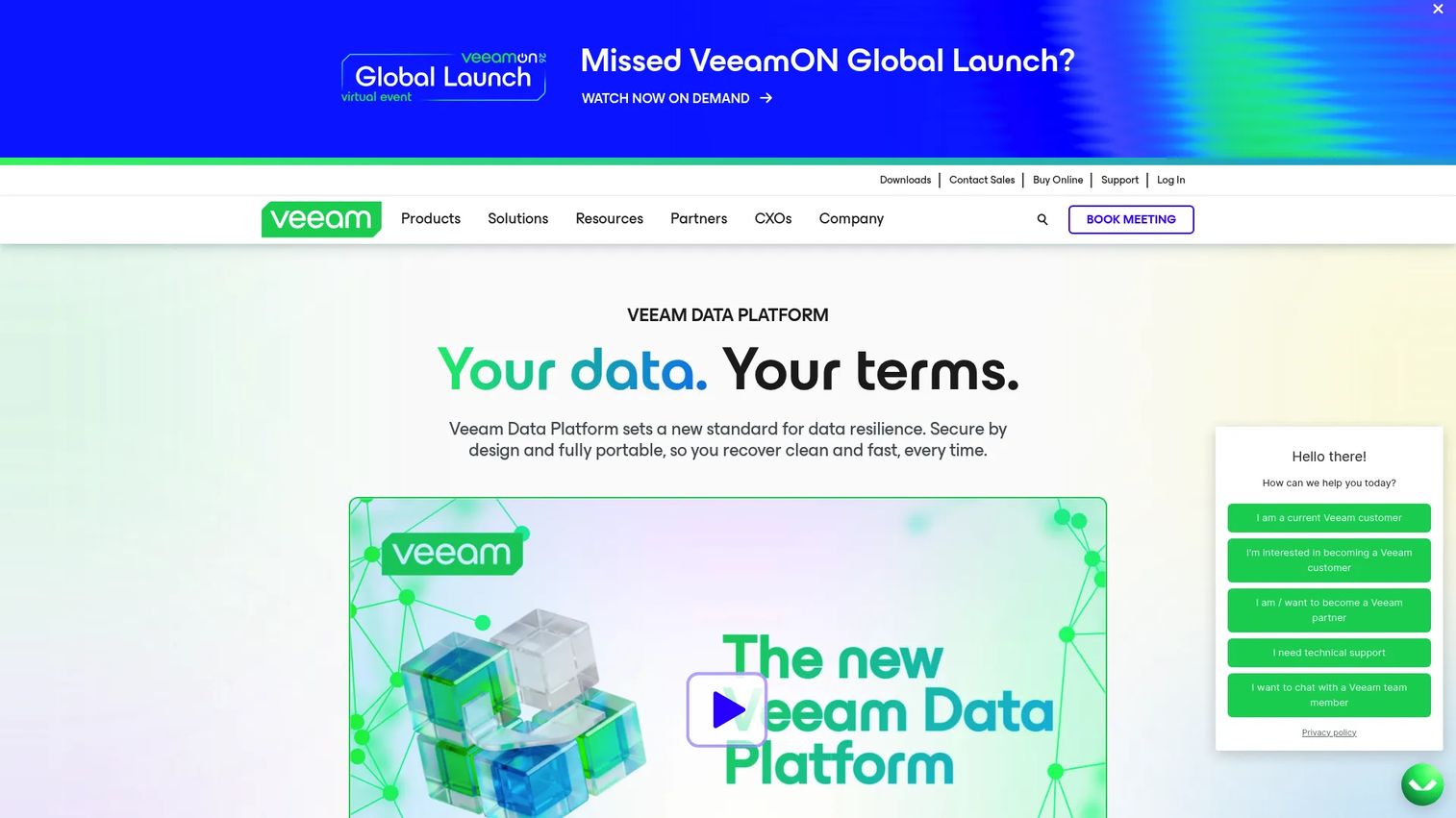
Veeam Data Platform is a data-resilience platform for protecting, managing, and recovering workloads across on-premises, cloud, and hybrid environments. It combines backup, recovery, ransomware protection, and monitoring into a single platform. Veeam covers VMware, cloud workloads, Microsoft 365, Kubernetes, and physical servers, making it a common anchor in enterprise backup evaluations.
Best for: Organizations that need portable backup, recovery, and threat protection across hybrid and multicloud workloads.
Key features
- Multicloud workload protection across VMware, cloud, and physical servers
- AI-powered threat detection and anomaly monitoring
- Governance, risk, and compliance reporting
- Recovery verification and testing
- Ransomware recovery controls with immutability support
Why choose Veeam Data Platform: Veeam is a strong shortlist candidate when buyers need credible recovery proof across an existing backup and resilience workflow. Its breadth across workload types reduces the number of point solutions required.
Veeam Data Platform pricing: Veeam Data Platform Essentials starts at $95 per license per year, sold in increments of five licenses. Enterprise editions (Foundation, Advanced, Premium) are priced by quote through sales.
G2 rating: 4.6/5
2. Cutover
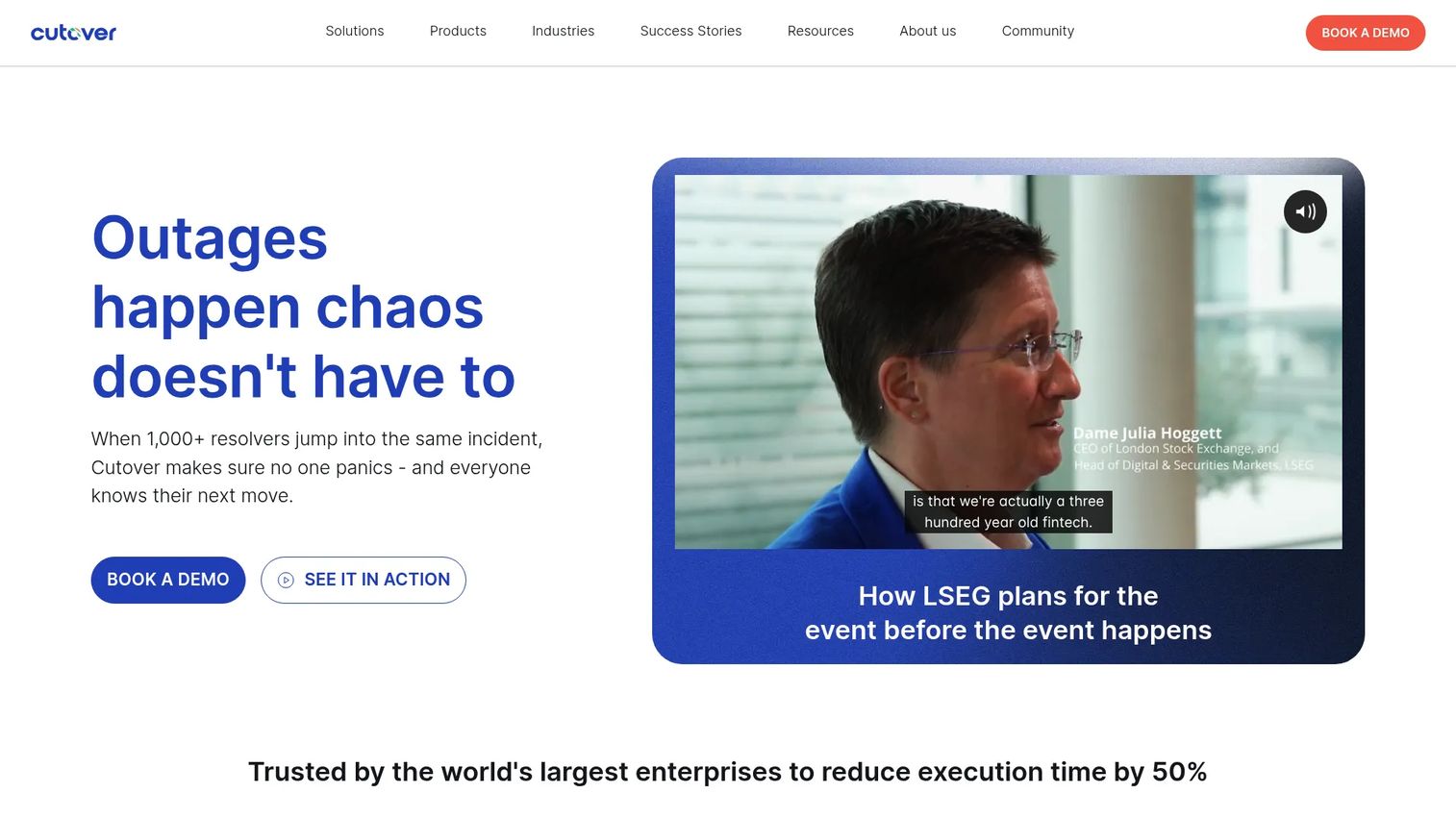
Cutover is a collaborative automation platform for coordinating complex technology events, including disaster recovery exercises, cloud migrations, and application releases. It connects human task ownership with technical automation in a single runbook environment. Banks, regulated enterprises, and large technology organizations use it for high-stakes events that require both system actions and human approvals at each step.
Best for: Enterprise technology teams managing complex DR exercises, resilience rehearsals, or transformation events with tight audit requirements.
Key features
- Dynamic runbook orchestration with dependencies and critical paths
- Human approval gates and task ownership
- Real-time dashboards and live visualization
- Bi-directional integrations and API connectivity
- AI Assistant for runbook creation and analysis
Why choose Cutover: Cutover excels when recovery coordination involves multiple teams, approval gates, and real-time visibility into who owns each step. It fills the gap between pure automation tools and spreadsheet-based runbook management.
Cutover pricing: Cutover prices by team size, usage, integrations, and governance requirements. Buyers receive a tailored quote through sales.
3. HPE Zerto Software
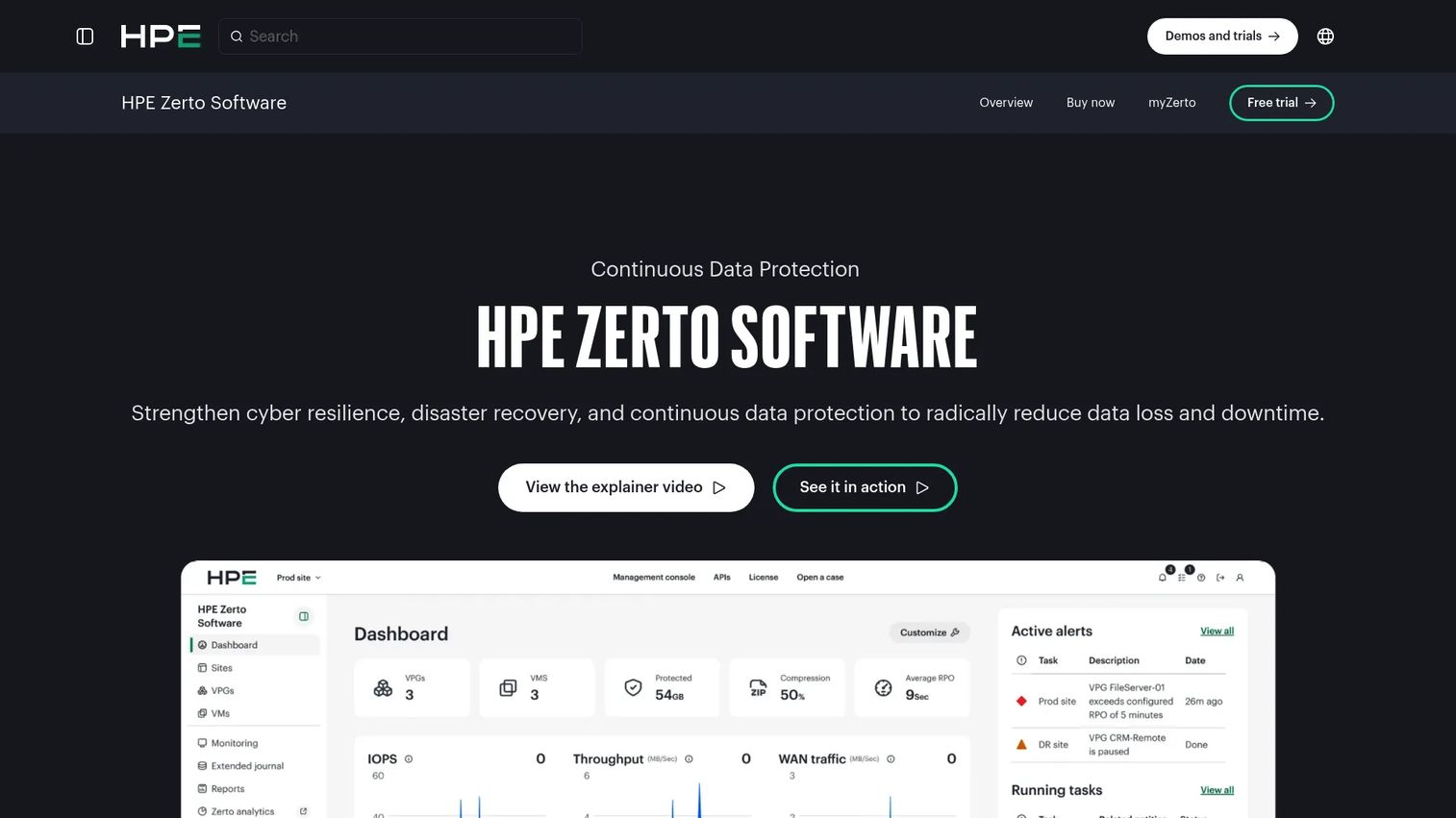
HPE Zerto Software delivers continuous data protection, disaster recovery, ransomware recovery, and workload mobility across on-premises, hybrid, and multicloud environments. Its journal-based replication engine enables granular point-in-time recovery with near-zero RPOs. HPE Zerto supports VMware, Microsoft Hyper-V, and major cloud platforms including Azure and AWS.
Best for: Organizations prioritizing rapid recovery from ransomware or data corruption, with granular rollback and low RPO requirements.
Key features
- Continuous data protection with real-time replication
- Journal-based recovery and near-zero RPO targeting
- Non-disruptive DR testing without affecting production
- Workload mobility across on-premises and cloud
- Real-time encryption detection and immutable data copies
Why choose HPE Zerto Software: Zerto's journal-based architecture lets buyers pick a precise recovery point rather than accepting the last scheduled backup. That granularity is a strong proof point in ransomware recovery conversations.
HPE Zerto Software pricing: HPE offers Enterprise Replication and Advanced Resilience Edition subscriptions. Pricing is by custom quote; buyers should contact HPE or an authorized partner for terms and volume-based rates.
G2 rating: 4.7/5
4. VMware Live Recovery
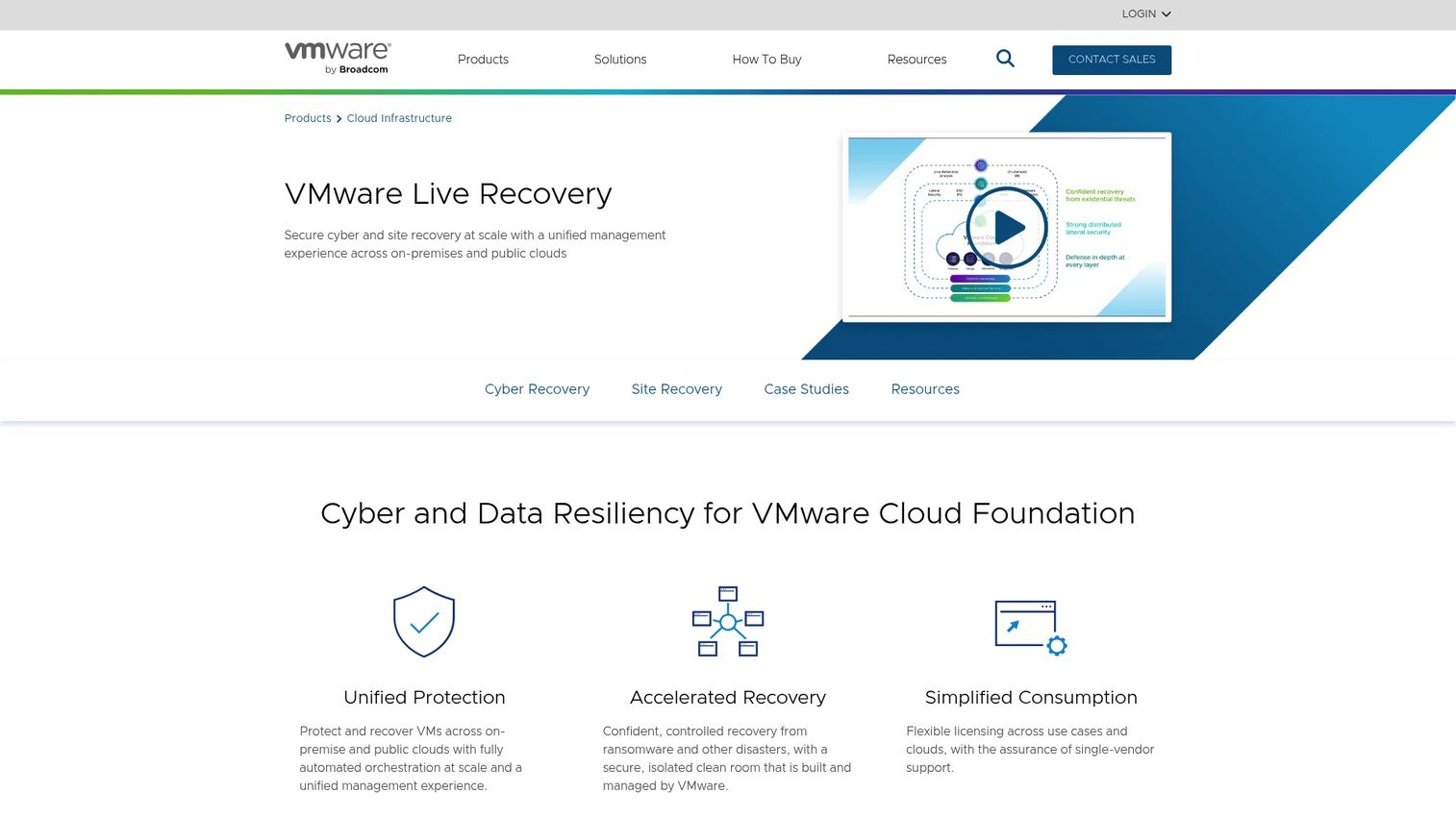
VMware Live Recovery provides unified cyber and site recovery for VMware Cloud Foundation across on-premises and public clouds. It supports automated site-recovery orchestration, guided ransomware recovery workflows, isolated recovery environments with behavioral analysis, and one-click failback. The product is positioned for VMware-heavy estates that need both disaster recovery and cyber recovery from a single control plane.
Best for: Enterprise IT teams running VMware Cloud Foundation that need integrated ransomware protection and DR orchestration.
Key features
- Isolated recovery environment with live behavioral analysis
- Guided ransomware recovery with restore-point selection
- Automated site-recovery orchestration and failback
- VM network isolation during recovery
- Policy-based recovery plan management
Why choose VMware Live Recovery: For buyers deeply invested in VMware infrastructure, the native integration reduces operational overhead compared to third-party orchestration layers. Presales teams should verify current Broadcom packaging and supported cloud targets before recommending.
VMware Live Recovery pricing: VMware directs prospects to contact sales for current pricing under Broadcom packaging.
G2 rating: 4.5/5
5. VMware vSphere Replication
VMware vSphere Replication is a hypervisor-integrated VM replication solution for VMware environments. It provides asynchronous, host-based replication with per-VM recovery point objectives ranging from 5 minutes to 24 hours. vSphere Replication is often used as the replication layer beneath broader disaster recovery orchestration.
Best for: Organizations with VMware-centric workloads that need VM-level replication as part of a broader DR stack.
Key features
- Host-based asynchronous VM replication integrated with vCenter
- Per-VM recovery point objectives from 5 minutes to 24 hours
- Changed-data replication to reduce network utilization
- vSAN, SAN, NAS, and local storage compatibility
- Microsoft VSS and Linux file-system quiescing support
Why choose VMware vSphere Replication: Replication alone does not deliver full orchestration, but vSphere Replication is a logical starting point for teams already in the VMware estate who need to establish a replication baseline before layering DR automation. Confirm current packaging and bundling status under Broadcom before quoting.
VMware vSphere Replication pricing: Buyers should request current packaging details through Broadcom or a VMware partner.
6. Veritas InfoScale
Veritas InfoScale is a unified platform for application resilience, availability, threat detection, and recovery across physical, virtual, cloud, and hybrid environments. It has moved from traditional a-la-carte licensing to a unified subscription model. InfoScale covers application clustering, storage management, and automated failover for mission-critical workloads, including Kubernetes-hosted applications.
Best for: Enterprises running mission-critical applications that need continuous availability, automated failover, and cyber resilience across hybrid infrastructure.
Key features
- Automated failover and recovery for clustered applications
- AI-powered anomaly detection for early threat identification
- Kubernetes and container availability support
- Immutable restorable data checkpoints
- Application-consistent snapshots with encryption at rest
Why choose Veritas InfoScale: InfoScale sits at the application availability layer rather than functioning as a broad DR command center. It's the right evaluation when buyers need HA-level protection for specific application stacks, not just VM replication.
Veritas InfoScale pricing: InfoScale moved to a unified platform subscription. Pricing is by quote through the vendor or authorized partners.
G2 rating: 4.5/5
7. Semperis Active Directory Forest Recovery
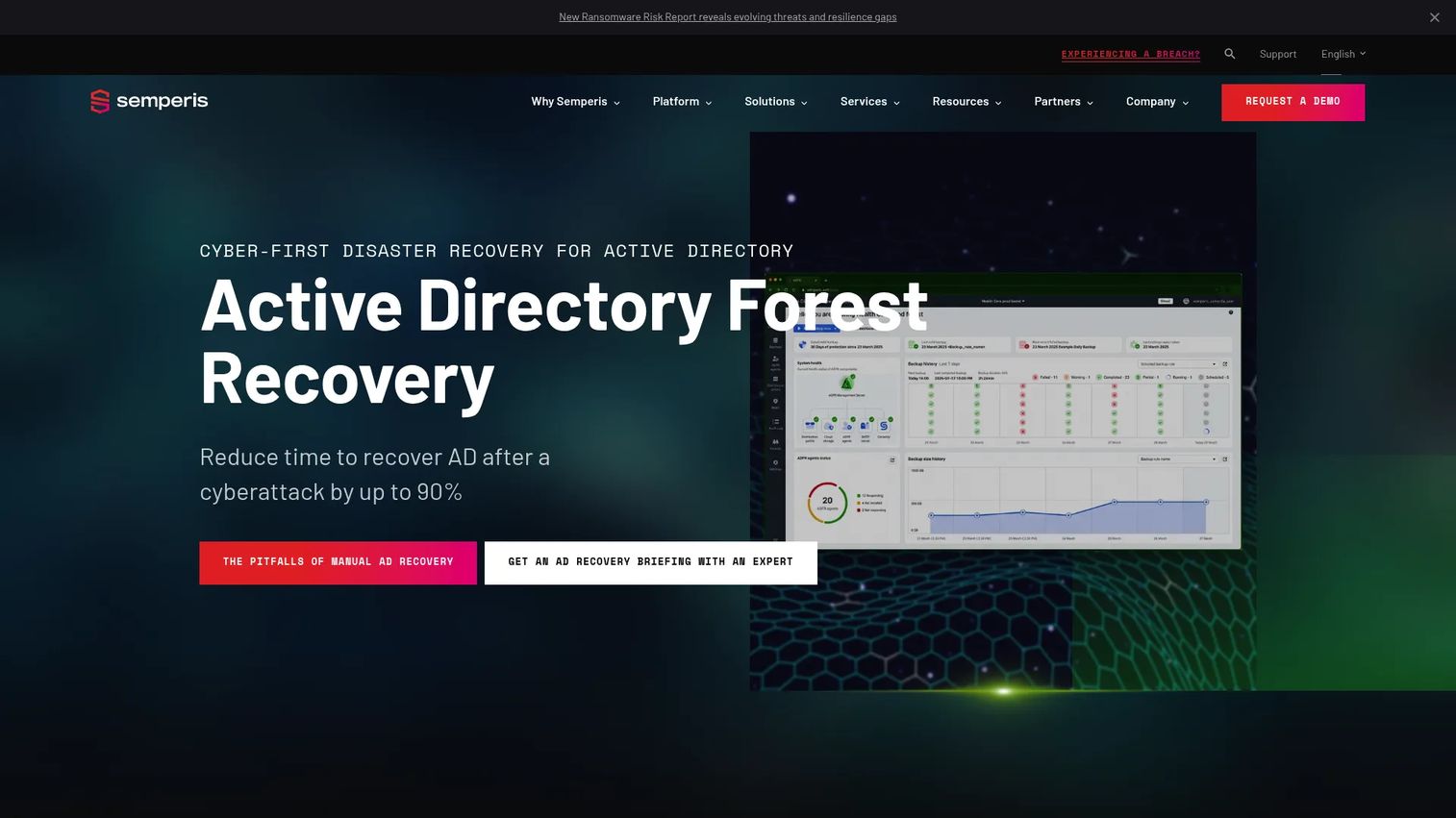
Semperis Active Directory Forest Recovery automates malware-free Active Directory forest recovery after cyberattacks. The product creates immutable cloud backups in Azure Blob Storage or AWS S3 and supports recovery to virtual or physical hardware. It also provides object-level recovery, post-breach forensics, and multi-forest support.
Best for: Enterprise organizations that need rapid, trusted AD recovery after ransomware or cyber disaster, with malware-free restore confidence.
Key features
- Automated AD forest recovery with malware-free restore
- Immutable cloud backups to Azure Blob or AWS S3
- Object-level and forest-level recovery paths
- Multi-forest support and Windows Server 2025 compatibility
- Post-breach forensics and change tracking
Why choose Semperis Active Directory Forest Recovery: If Active Directory goes down, nearly every downstream application and authentication process stalls. Semperis addresses that single-point-of-failure risk with an automated recovery path that bypasses potentially infected domain controllers.
Semperis Active Directory Forest Recovery pricing: Pricing is by quote through the Semperis sales team.
8. Druva Data Security Cloud
Druva Data Security Cloud is a fully managed SaaS platform for protecting and recovering data across SaaS applications, endpoints, cloud workloads, and data centers. It uses air-gapped, immutable storage and includes AI-powered anomaly detection and threat hunting. Druva's consumption-based model removes the need for dedicated hardware or infrastructure management.
Best for: Organizations seeking fully managed, SaaS-based cyber resilience and unified data protection across enterprise workloads, without appliance overhead.
Key features
- Air-gapped and immutable backup across SaaS apps, endpoints, and cloud workloads
- AI-powered anomaly detection and threat hunting
- Ransomware response and rapid recovery
- Centralized data governance, encryption, and compliance support
- Role-based access controls and audit reporting
Why choose Druva Data Security Cloud: Druva is a strong candidate in evaluations where buyers want backup and cyber recovery evidence without managing backup infrastructure. The SaaS Universal License model simplifies purchasing for organizations protecting diverse workload types.
Druva Data Security Cloud pricing: Druva uses consumption-based pricing. The SaaS Universal License and Essentials Pack (for organizations with 250 or fewer employees) are available; specific rates require a quote from the Druva sales team.
G2 rating: 4.7/5
9. Quest Recovery Manager for Active Directory Disaster Recovery Edition
Quest Recovery Manager for Active Directory Disaster Recovery Edition automates Active Directory forest recovery and supports phased, clean-OS, and bare-metal recovery paths. It includes malware and backup-integrity checks, centralized remote administration, and immutable cloud backup storage. The Disaster Recovery Edition is purpose-built for organizations that treat AD recovery as a board-level resilience concern.
Best for: Microsoft identity-heavy organizations that need phased AD domain or forest recovery with verifiable backup integrity.
Key features
- Automated AD forest recovery with phased RTO support
- Bare-metal and clean-OS restore paths
- Malware and backup-integrity validation
- Immutable cloud backup storage (Secure Storage)
- Centralized remote administration and simultaneous system recovery
Why choose Quest Recovery Manager for Active Directory Disaster Recovery Edition: Quest's phased recovery model lets teams restore the most critical domains first, reducing time-to-authentication for business-critical applications even before full forest recovery completes.
Quest Recovery Manager pricing: Quest displays a "Request pricing" path; no public price is shown. Buyers should contact Quest for sizing based on AD environment scale and required recovery modules.
G2 rating: 4.6/5
10. OpenText Availability
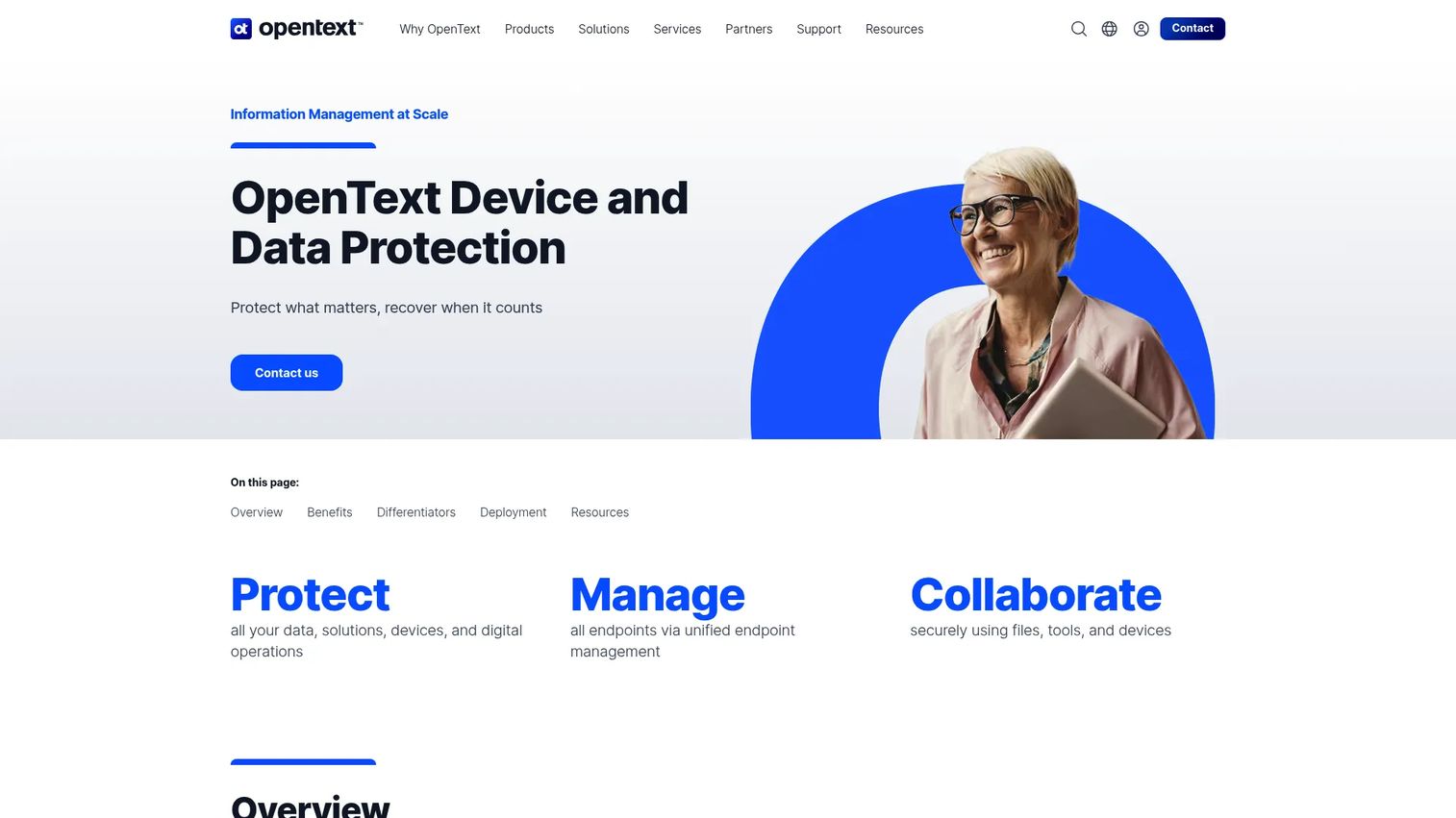
OpenText Availability provides high-availability and disaster-recovery software with continuous replication, automated failover and failback, and recovery support for Windows and Linux systems across physical, virtual, and cloud environments. The product family includes capabilities formerly associated with Micro Focus assets and addresses business continuity for critical server workloads.
Best for: Organizations needing business continuity and disaster recovery for critical Windows and Linux workloads with automated failover.
Key features
- Real-time asynchronous byte-level replication
- Automated failover and failback
- Physical, virtual, and cloud environment support
- Availability monitoring
- Recovery controls for Windows and Linux servers
Why choose OpenText Availability: OpenText Availability covers server-level HA and DR for buyers that need to protect Windows and Linux workloads without a full enterprise backup platform. Presales teams should verify current product naming under OpenText's portfolio before positioning.
OpenText Availability pricing: Contact OpenText sales for current licensing terms.
G2 rating: 3.5/5
11. IBM Resiliency Orchestration
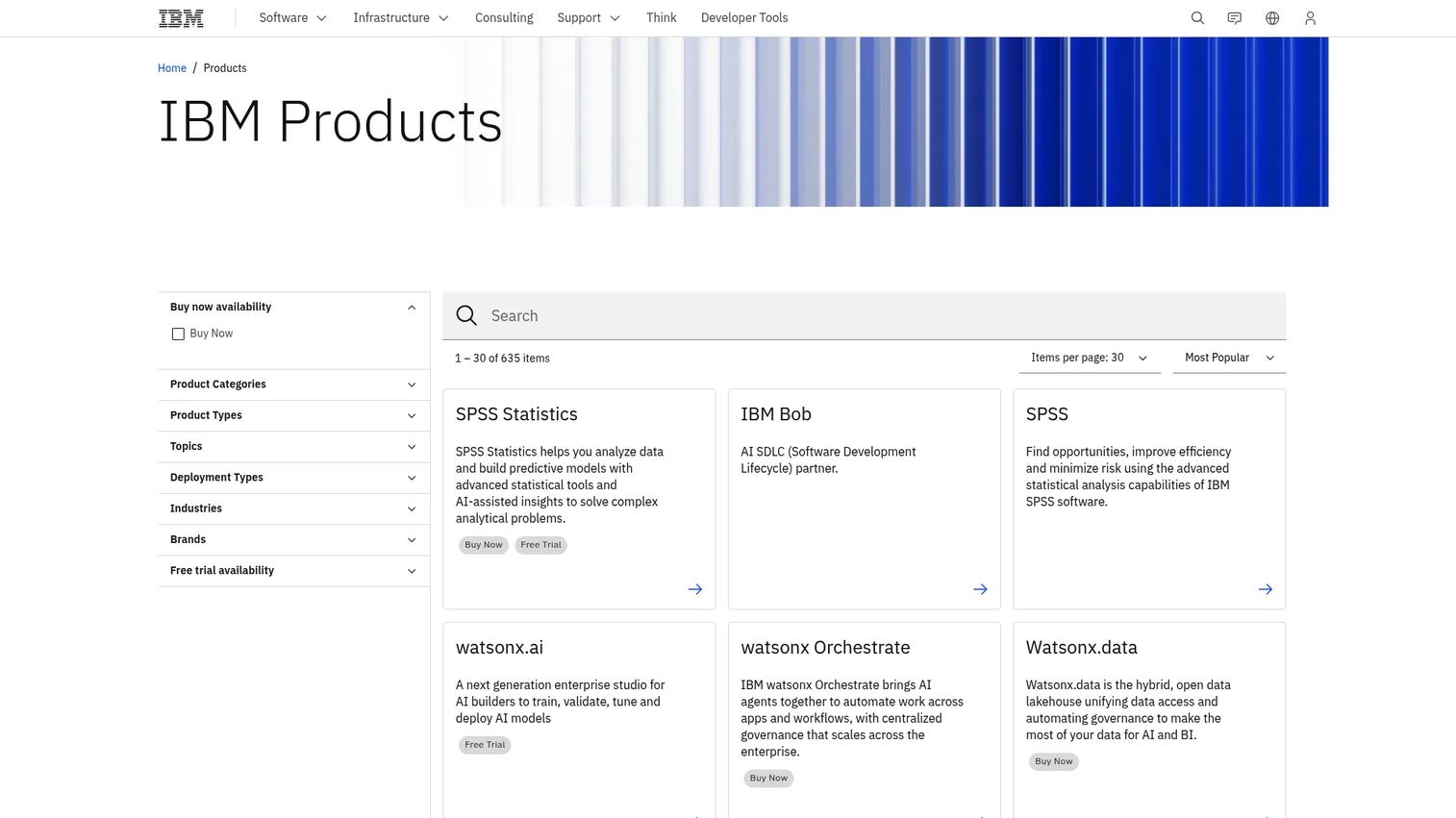
IBM Resiliency Orchestration is an enterprise disaster-recovery management solution for monitoring, testing, reporting, and automating recovery workflows across complex hybrid environments. It provides real-time DR readiness validation, alignment of DR infrastructure to RTO and RPO targets, and cyber incident recovery support with one-click failover.
Best for: Large enterprises needing automated, validated disaster recovery with governance and reporting across heterogeneous or hybrid IT environments.
Key features
- DR monitoring, reporting, and testing automation
- Real-time readiness validation against RTO and RPO targets
- Cyber incident recovery and one-click failover
- Workflow automation for complex recovery sequences
- Alignment reporting for continuity operations
Why choose IBM Resiliency Orchestration: IBM's platform suits organizations that need both advisory-level continuity planning and technical DR orchestration under one engagement. Pricing is available through IBM Passport Advantage; buyers should engage IBM directly for scoping.
IBM Resiliency Orchestration pricing: Pricing is available through IBM Passport Advantage. Contact IBM for current terms.
G2 rating: 4.0/5
12. Infrascale Disaster Recovery
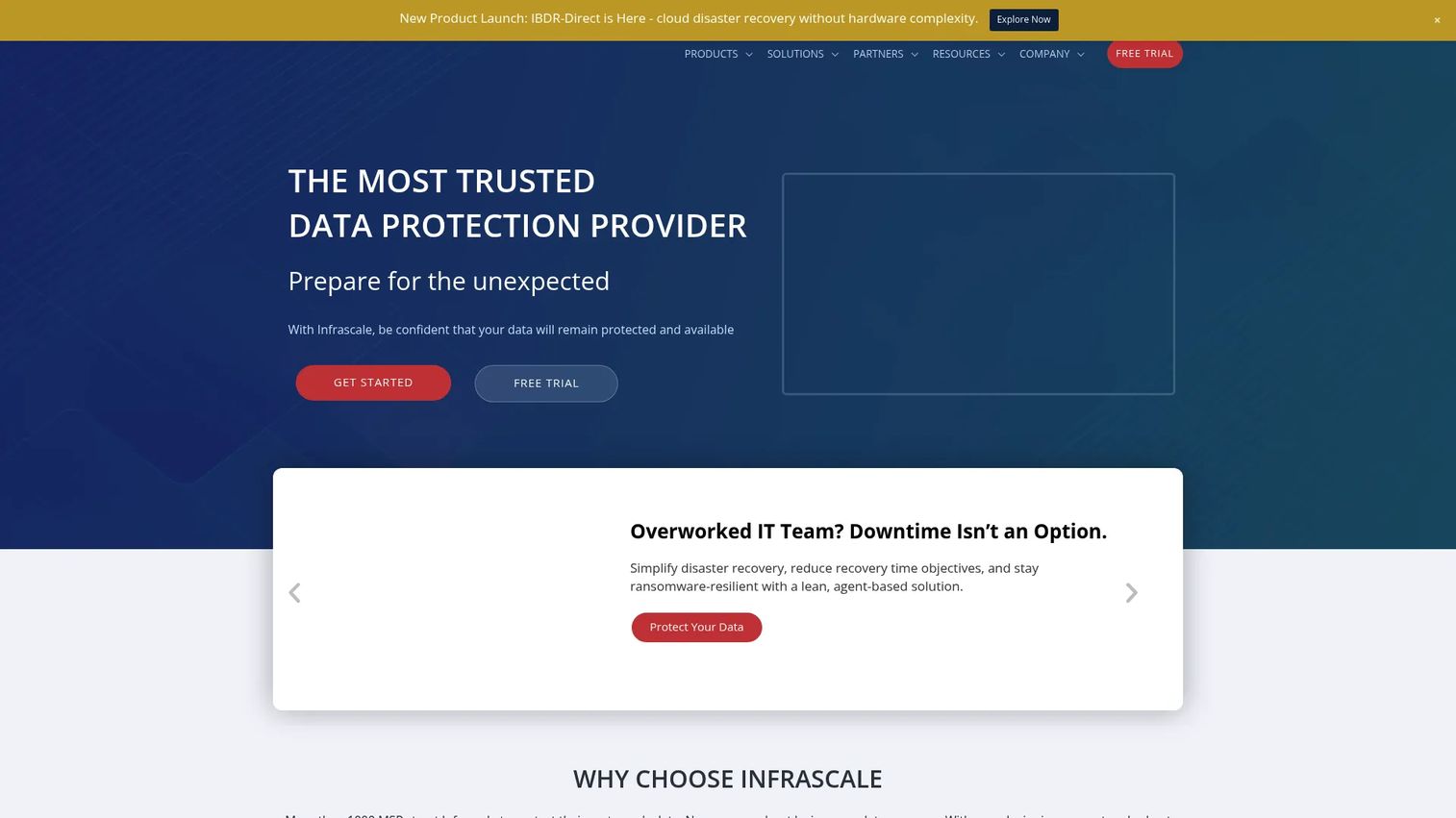
Infrascale Disaster Recovery is a hybrid-cloud disaster recovery as a service platform that backs up and restores files, folders, servers, and virtual machines locally or in the cloud. It supports unlimited failover testing, drag-and-drop DR runbook orchestration, and a centralized management dashboard for scheduling and recovery-network configuration. Infrascale covers Windows, Linux, VMware, and Hyper-V environments.
Best for: Organizations and managed service providers that need hybrid-cloud backup, rapid server failover, and business continuity without heavy infrastructure overhead.
Key features
- Cloud and local failover for physical and virtual servers
- Unlimited DR and failover testing
- Drag-and-drop runbook orchestration
- Deduplicated and encrypted backup storage
- Centralized scheduling and recovery-network configuration
Why choose Infrascale Disaster Recovery: Infrascale packages backup, failover, and DR in a managed service model that suits mid-market teams without dedicated DR engineering resources. The unlimited testing capability removes the common hesitation around testing frequency.
Infrascale Disaster Recovery pricing: Infrascale prices per terabyte per month with a small upfront setup fee. Contact Infrascale for current rates and workload-specific quotes.
G2 rating: 4.3/5
13. Cayosoft Guardian
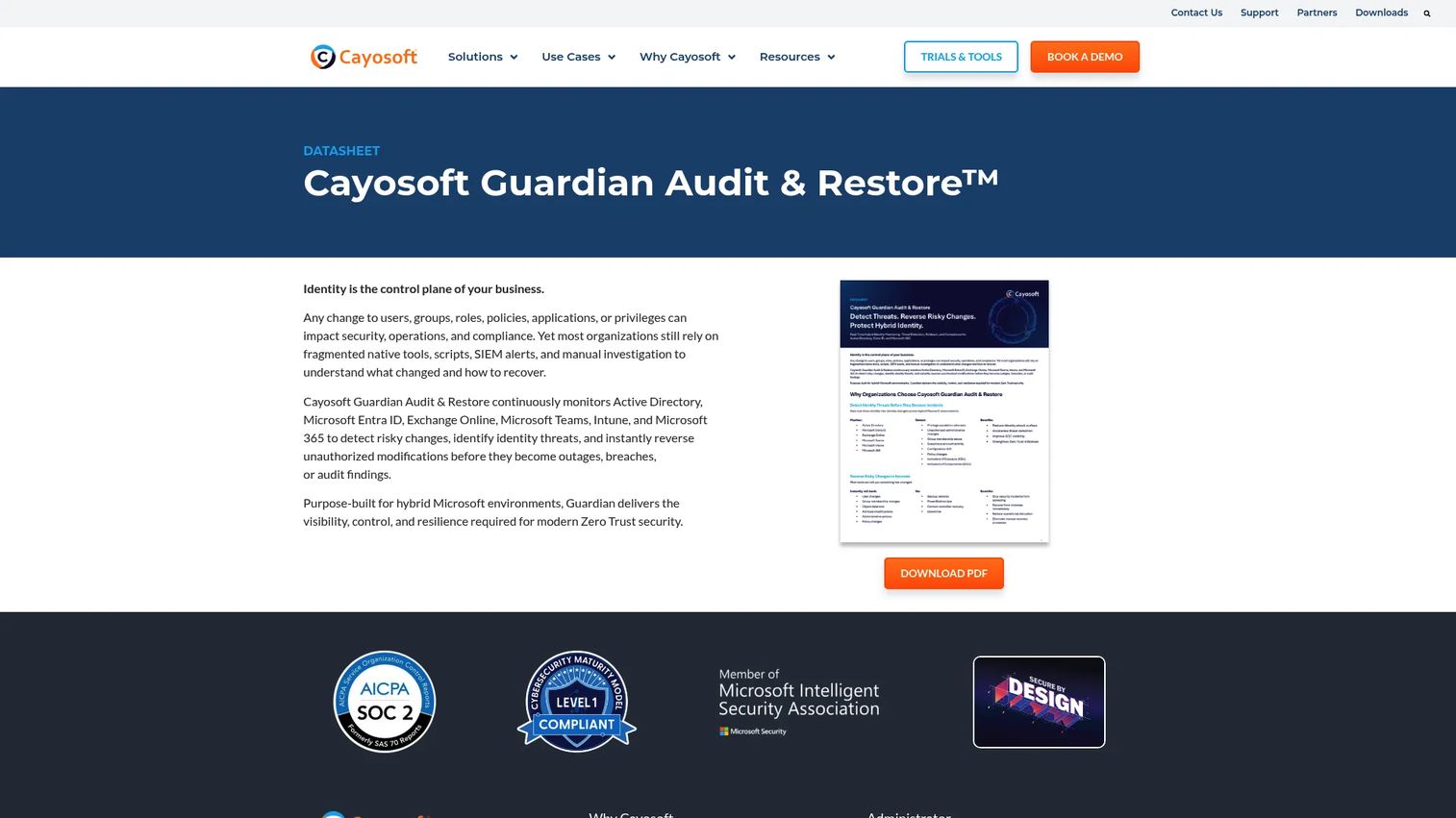
Cayosoft Guardian is a Microsoft hybrid identity resilience platform that monitors identity changes across Active Directory, Entra ID, Microsoft 365, and related services, then enables immediate rollback of unwanted or malicious changes. The product maintains an isolated, continuously validated standby AD forest for rapid recovery.
Best for: Organizations needing continuous protection, rollback, and disaster recovery for hybrid Microsoft identities and Active Directory.
Key features
- Continuous monitoring across AD, Entra ID, Microsoft 365, and Intune
- Immediate rollback of malicious or unwanted identity changes
- Isolated, validated standby AD forest for rapid recovery
- Policy rollback and security alerting
- Object-level and forest-level recovery support
Why choose Cayosoft Guardian: Cayosoft Guardian targets the Microsoft identity layer with change monitoring and instant rollback, which is distinct from broader infrastructure recovery tools. It's worth evaluating alongside Semperis or Quest when the buyer's primary concern is identity change control rather than full-forest DR.
Cayosoft Guardian pricing: Guardian Protector is free. Guardian Audit & Restore and Guardian Instant Forest Recovery plans are available on 12, 36, or 72-month subscriptions; contact Cayosoft for pricing on paid tiers.
14. LINBIT HA
LINBIT HA is an enterprise high-availability framework combining DRBD block replication with Pacemaker or DRBD Reactor for resilient Linux server clusters. It supports databases, file servers, storage targets, and application stacks with synchronous block-level replication and network redundancy. LINBIT HA is built on open-source software with broad Linux distribution support.
Best for: Organizations requiring highly available Linux applications, databases, or file services across clustered commodity servers, with an open-source-oriented architecture.
Key features
- Synchronous block-level data replication with DRBD
- Failover clustering using Pacemaker or DRBD Reactor
- Support for databases, file servers, storage targets, and application stacks
- Network redundancy, data deduplication, and low RTOs
- Open-source foundation with broad Linux distribution support
Why choose LINBIT HA: LINBIT HA suits technical buyers who want control over their HA stack and are comfortable with Linux infrastructure. The Starter tier at $1,000 per 2 nodes per year provides a low-cost entry point for smaller clusters before scaling to higher support tiers.
LINBIT HA pricing: LINBIT Starter is $1,000 per 2 nodes per year (annual billing). Basic, Plus, and Enterprise tiers add progressively higher support levels and are priced per node per year by quote.
G2 rating: 4.2/5
15. RackWare Management Module
RackWare Management Module is an enterprise platform for assessing, migrating, protecting, and recovering workloads across physical, virtual, cloud, and container environments. It provides agentless discovery, dependency mapping, wave planning, policy-based disaster recovery with configurable RPO and RTO targets, and multi-cloud cost estimation.
Best for: Large enterprises, government organizations, and service providers managing hybrid or multicloud workload mobility and DR automation.
Key features
- Agentless migration across physical, virtual, cloud, and Kubernetes environments
- Policy-based DR with failover, fallback, testing, and configurable RPO/RTO
- Automated workload discovery and dependency mapping
- Wave planning and multi-cloud cost estimation
- Multi-platform support including cloud-to-cloud and on-prem-to-cloud
Why choose RackWare Management Module: RackWare's strength is workload mobility combined with DR, which makes it relevant when buyers are migrating infrastructure while also needing to maintain recovery capabilities across both source and target environments. Pricing is by quote; buyers should describe workload volume and cloud targets to receive a relevant estimate.
RackWare Management Module pricing: RackWare offers PAYG, subscription, and enterprise licensing models. Contact RackWare for current rates.
G2 rating: 4.3/5
16. Rubrik Security Cloud
Rubrik Security Cloud is a unified data security platform for protecting, monitoring, and recovering enterprise, cloud, and SaaS data. It combines air-gapped and immutable backups with anomaly detection, threat hunting, sensitive data monitoring, and cyber recovery orchestration. Rubrik offers Foundation, Business, and Enterprise editions with publicly compared feature sets.
Best for: Organizations that need unified cyber-resilient protection and recovery across on-premises, cloud, and SaaS workloads, with strong security-team alignment.
Key features
- Air-gapped and immutable backups
- Anomaly detection, threat monitoring, and threat hunting
- Sensitive data discovery and classification
- Cyber recovery orchestration and mass recovery automation
- Role-based access controls, MFA, and quorum authorization
Why choose Rubrik Security Cloud: Rubrik is a strong candidate in evaluations where security teams have a seat at the table. Its threat analytics capabilities let buyers demonstrate that recovered data is clean, which is a key proof point in ransomware resilience discussions.
Rubrik Security Cloud pricing: Rubrik lists Foundation, Business, and Enterprise editions with feature comparisons, but rates require a sales conversation. Contact Rubrik for current pricing.
G2 rating: 4.6/5
17. Commvault
Commvault is an enterprise cyber-resilience platform covering data security, backup, recovery, identity resilience, and hybrid-workload protection. Commvault Cloud supports backup and recovery across cloud, on-premises, hybrid, SaaS, virtual machines, containers, databases, applications, and endpoints from a unified control plane.
Best for: Large and midsize enterprises needing unified cyber resilience, backup, and recovery across complex hybrid and multicloud environments.
Key features
- Backup and recovery across cloud, on-premises, SaaS, VMs, containers, and endpoints
- Ransomware protection with immutable storage and air-gapped copies
- Sensitive data discovery, classification, governance, and eDiscovery
- Cleanroom recovery and enterprise-scale cyber-recovery automation
- Unified visibility across multicloud and on-premises environments
Why choose Commvault: Commvault's platform depth suits buyers who want to consolidate backup, governance, and cyber recovery into one vendor relationship. Presales teams should check current product naming and plan details, as packaging has evolved with the Commvault Cloud rebranding.
Commvault pricing: Active Directory protection starts at $0.75 per enabled user per month. Microsoft 365 backup starts at $1.70 per user per month. Broader platform pricing is by quote.
G2 rating: 4.4/5
18. Stonebranch Universal Automation Center
Stonebranch Universal Automation Center is a real-time IT service orchestration and automation platform for centrally managing tasks and processes across hybrid IT environments. It supports event-driven automation, visual drag-and-drop workflow orchestration, jobs-as-code, and self-service automation with role-based permissions. UAC is a broader workload automation platform that teams apply to DR runbooks as one use case.
Best for: Enterprise organizations needing centralized, real-time orchestration across complex hybrid IT, including DR runbooks as part of a broader automation strategy.
Key features
- Hybrid IT workload orchestration across on-premises, cloud, and containers
- Event-driven real-time automation
- Visual drag-and-drop workflow orchestration
- Self-service automation with role-based access controls
- Jobs-as-code and infrastructure-as-code support
Why choose Stonebranch Universal Automation Center: Stonebranch is the right evaluation when buyers want DR runbook automation as part of a broader operational automation platform, rather than a dedicated DR tool. Its event-driven model maps well to the detection, approval, failover, and restoration workflow that most DR scenarios follow.
Stonebranch Universal Automation Center pricing: Stonebranch prices by enterprise quote. Contact the vendor for rates based on automation scope and hybrid IT footprint.
G2 rating: 4.5/5
19. SIOS LifeKeeper
SIOS LifeKeeper is high-availability clustering and disaster-recovery software for protecting critical applications, databases, and ERP systems across Windows and Linux environments. It provides application-aware monitoring of the full application stack, automated failover using application-specific best practices, and both SAN and SANless clustering options with SIOS DataKeeper replication.
Best for: Organizations requiring application-aware high availability and disaster recovery for critical enterprise workloads, including SAP, Oracle, and SQL Server environments.
Key features
- Application-aware monitoring of the full application stack
- Automated failover using application-specific recovery logic
- SAN and SANless clustering with SIOS DataKeeper replication
- Windows and Linux platform support
- Monitoring and recovery for databases and ERP applications
Why choose SIOS LifeKeeper: SIOS LifeKeeper targets application-level HA rather than broad infrastructure DR. It's a fit when the buyer's priority is protecting a specific critical application, such as SAP or Oracle, rather than orchestrating recovery across an entire environment.
SIOS LifeKeeper pricing: SIOS directs buyers to request pricing directly. Contact SIOS for current terms based on platform, application, and deployment configuration.
Considerations when choosing IT resilience orchestration automation software
Match the tool to the recovery layer
Backup, replication, high availability, identity recovery, workflow orchestration, and full DRaaS each solve a different layer of the resilience problem. Start by identifying which layer breaks first in the buyer's environment, then select a tool designed for that layer. Trying to use a backup tool as a runbook coordinator, or vice versa, creates operational gaps that appear during an actual incident.
Verify environment coverage before shortlisting
Platform support claims vary significantly in depth. Ask vendors for a supported-platform matrix covering VMware, cloud targets, physical servers, Linux and Windows, databases, identity systems, and Kubernetes. A broad claim of "hybrid support" is not the same as documented support for the specific combination the buyer runs.
Test the runbook before trusting it
The best tools support non-disruptive rehearsal, evidence capture, and repeatable validation. During evaluation, request a sample recovery test report. If a vendor cannot produce one, the tool may not support the evidence standard that regulated industries and enterprise audit teams expect. According to The State of Business Resilience (2025), 41% of organizations have never performed a full business-resilience simulation.
Check approval gates and operational handoffs
Many recovery processes require human decisions at specific points: Failover approvals, network change confirmations, and service validation sign-offs. Pure replication or backup tools often require a coordination layer on top. Evaluate whether the tool supports approval gates, task ownership, escalation paths, and audit trails before assuming full automation is possible.
Measure RTO and RPO against the buyer's critical services
Validate the business service, not just the VM or the dataset. The practical question is whether the customer-facing workflow comes back within the required target, not whether a technical recovery job completed. Ask vendors for proof of end-to-end RTO across a realistic workload profile, not a single-VM test.
Conclusion
The 19 tools in this guide cover the full spectrum of IT resilience orchestration automation software, from full recovery platforms to specialized tools for identity, availability, and runbook coordination.
For data protection and cyber recovery conversations, Veeam, Commvault, Rubrik, Druva, and HPE Zerto are the natural shortlist. For runbook coordination and operational resilience, Cutover, Stonebranch, and IBM Resiliency Orchestration each address different aspects of that workflow. VMware Live Recovery and vSphere Replication belong in VMware-centric evaluations. Semperis, Quest, and Cayosoft Guardian are the identity-recovery specialists. InfoScale, LINBIT, SIOS, OpenText, and RackWare cover application availability, replication, and workload mobility.
The practical starting point for any evaluation is to map the critical services that must recover first, identify the recovery layer that needs automation, and shortlist three to five tools for a proof of concept. Then test recovery evidence, not vendor claims.
For presales teams supporting these conversations, the right questions are about supported platforms, test frequency, sample recovery reports, RTO proof against real workloads, integration with existing ITSM and CRM tools, and who owns each runbook step during an actual event.
If you sell complex infrastructure or security software and need to explain technical recovery workflows to prospects without spinning up a live environment, interactive demos let you build guided, clickable product experiences presales teams can share before, during, and after the discovery call.
Start your journey with Guideflow today!
FAQs
IT resilience orchestration automation software coordinates, automates, tests, and documents recovery workflows across infrastructure, applications, data, identity systems, and cloud environments. It turns static disaster recovery plans into executable sequences that manage failover, human approvals, system dependencies, and recovery validation in real time. Some platforms are full recovery suites; others target a specific resilience layer such as identity recovery or high availability.
Traditional disaster recovery software focuses on backup, replication, or failover mechanics. IT resilience orchestration coordinates the broader recovery process, including dependency sequencing, team approvals, compliance evidence, and validation across multiple systems and workloads. The distinction matters when buyers ask how recovery actually happens end-to-end during a major incident rather than just whether their data is protected.
The most consequential features are automated runbook creation and execution, non-disruptive recovery testing, RTO and RPO tracking against real services, dependency mapping, audit trails, integration with existing IT tools, and support for the specific infrastructure types the buyer runs. Compliance reporting and approval gate support become critical in regulated environments.
VMware Live Recovery and VMware vSphere Replication are the native options for VMware-centric estates. HPE Zerto Software supports VMware alongside Microsoft Hyper-V and major cloud platforms. Veeam Data Platform also covers VMware workloads with backup and recovery orchestration. RackWare Management Module adds workload mobility for VMware-to-cloud scenarios. Verify current Broadcom packaging and supported cloud targets before recommending any VMware-branded product.
Semperis Active Directory Forest Recovery and Quest Recovery Manager for Active Directory Disaster Recovery Edition are both purpose-built for AD forest recovery after cyberattacks. Cayosoft Guardian addresses identity resilience through change monitoring, instant rollback, and a standby AD forest, which is a complementary capability rather than a full DR replacement. Identity recovery is a critical evaluation point because most application access depends on AD or Entra ID being functional.
They can, but the reduction depends on how recovery is designed, not just which tool is purchased. Orchestration software reduces RTO by automating recovery steps, eliminating manual handoffs, allowing regular rehearsal, and providing real-time visibility into which steps are running or blocked. Actual RTO figures depend on architecture, data volume, workload dependencies, and recovery sequence design. Ask vendors for proof of RTO against a workload profile similar to the buyer's environment.
Key questions include: Which platforms, workload types, and cloud environments does the tool support? How does recovery testing work, and does it affect production? Can you provide a sample recovery test report? What RTO has been demonstrated in comparable environments? How are approval gates, task ownership, and failback handled? Which ITSM, CRM, or monitoring tools does it integrate with? What evidence does the tool generate for auditors and security reviewers?
Backup is necessary but not sufficient for many enterprise resilience requirements. Organizations also need recovery sequencing across dependent systems, identity access restoration, application dependency awareness, regular validation, and operational coordination across teams. According to The State of Business Resilience (2025), 41% of organizations have never completed a full resilience simulation, which means their recovery capability is theoretical rather than proven. Business continuity software and orchestration tools address the execution and validation gaps that backup alone cannot cover. For further reading on related orchestration and approval workflow software, the Guideflow blog covers adjacent categories in depth.