Most companies still treat employee feedback like a fire drill. One survey a year, a slide deck of results, a few all-hands promises, and then silence until the next cycle. By the time the data lands, the people who flagged the problem have already updated their resumes.
The market has moved past that. The global employee experience management market reached USD 6.7 billion in 2025, with the software segment alone holding a 63% share, according to Global Market Insights (2026). That spend is going toward a specific shift: away from annual snapshots and toward continuous listening, lifecycle feedback, and tools that put insight in a manager's hands while they can still act on it.
That last part is where most platforms either earn their keep or collect dust. Collecting sentiment is easy. Turning a flagged comment into a manager conversation, a retention save, or a process fix is the hard part, and it is the part that separates a real employee experience platform from a glorified survey tool. If you have ever watched engagement scores drop with no clear owner for the follow-up, you already know the gap.
This guide evaluates eight platforms through that lens. Not just who collects the cleanest data, but who closes the loop. We looked at continuous listening depth, lifecycle coverage from onboarding to exit, analytics that surface attrition risk, integrations into the systems people already work in, and how well each tool drives manager actioning. If you want a parallel view on adjacent tooling, our roundups on feedback software and employee advocacy cover neighboring categories worth scanning while you build a shortlist.
What's inside
This guide is for HR, people-ops, and operations buyers comparing employee experience tools at the shortlist stage. We selected eight platforms based on four criteria that matter most when feedback has to turn into action:
- Continuous listening and lifecycle coverage across onboarding, engagement, and exit
- Analytics depth, from basic sentiment to trend analysis and attrition risk
- Manager actioning support, including action plans, dashboards, and follow-through
- Integrations with HRIS, communication, and identity systems
Each tool below includes a clear overview, key strengths, who it fits, and current pricing where a public figure exists. The comparison table near the top speeds up shortlisting.
TL;DR
Short on time? Here is the decision shortcut:
- Best for enterprise listening and analytics: Qualtrics, for configurable experience management at scale
- Best for continuous voice tied to HCM: Workday Peakon Employee Voice, for real-time sentiment and manager insights
- Best for Microsoft 365 shops: Microsoft Viva, for communications, communities, and workplace analytics in one place
- Best for distributed and frontline teams: Workvivo, for mobile-first communication and engagement
- Best for performance-linked experience: Lattice, for engagement surveys tied to manager workflows
- Best for research-backed culture measurement: Culture Amp, for engagement, development, and action planning
- Best for recognition-led culture: Bonusly, for peer recognition, rewards, and light engagement analytics
What is employee experience software?
Employee experience software is a category of HR and people-ops tools that collects employee feedback across the lifecycle, turns it into analytics, and helps managers act on it to improve engagement and retention.
Think of it as the connective tissue between what employees feel and what the organization does about it. A standalone survey tool measures. An employee experience platform measures, analyzes, and routes the insight to someone who can change the outcome.
The category spans a few core capability groups:
- Surveys and listening: pulse surveys, lifecycle surveys, onboarding and exit feedback, always-on comment channels, and continuous listening that replaces the once-a-year snapshot
- Analytics and insight: sentiment analysis, trend tracking, benchmarking, retention analytics, and in stronger platforms, predictive attrition modeling
- Action planning and manager actioning: dashboards, recommended actions, goal tracking, and accountability so feedback does not die in a spreadsheet
- Lifecycle management: structured listening at hire, ramp, milestones, and exit, so you understand experience at every stage
- Engagement and workplace communications: recognition, internal comms, communities, and content that reach a mobile and hybrid workforce
- Integrations: HRIS integrations, identity, collaboration tools, and analytics platforms that let data flow and trigger action
The line between an employee experience platform and a narrow employee survey tool is action. The best platforms make the path from feedback to intervention short, owned, and measurable. Strong analytics that drive ROI are what separate a tool that reports from a tool that changes outcomes.
When to use employee experience software
Not every organization needs the full stack on day one. Here is how to pattern-match your situation to the category.
Fixing low response and weak feedback loops
If your annual review is the only time you hear from employees, you are missing most of the signal. Sentiment shifts in weeks, not years. Pulse surveys and continuous listening catch problems early, while there is still time to act. This matters most when response rates are low and managers have no structured way to follow up. The fix is not more surveys. It is shorter feedback loops paired with manager actioning, so a flagged comment becomes a conversation instead of a data point. A good employee feedback platform closes that gap by routing insight to the person who owns the relationship.
Supporting hybrid and frontline teams
Desk-based survey links do not reach a deskless workforce. Frontline and hybrid teams need mobile access, multilingual support, and asynchronous feedback that fits around shifts. Workplace communications matter here too: reaching people where they actually are, on a phone, in their language, on their schedule. If half your workforce never opens a laptop, prioritize mobile-first listening and internal comms over desktop dashboards.
Reducing attrition and improving manager effectiveness
There is a point where the business case shifts from measuring sentiment to predicting risk. When leadership wants to know which teams are likely to churn and why, you need retention analytics, attrition modeling, and manager coaching built in. The strongest platforms prioritize interventions: they tell a manager not just that engagement dropped, but what to do about it. That is the difference between a dashboard and a system that protects retention.
Comparison table
This table is built to speed up shortlisting. Scan the intent and key differentiation columns to find the two or three platforms worth a deeper look, then read their full sections below. Pricing and ratings reflect verified values at the time of writing.
| # | Product | Intent | Key differentiation | Pricing | G2 rating |
|---|---|---|---|---|---|
| 1 | Qualtrics | Enterprise experience management | Configurable surveys and analytics across CX and EX | Custom | 4.4/5 |
| 2 | Workday Peakon Employee Voice | Continuous listening at scale | Real-time sentiment with HCM context | Custom | Not published |
| 3 | Microsoft Viva | Microsoft 365 employee experience | Comms, communities, and analytics in one suite | From $2.00/user/mo | 3.6/5 |
| 4 | Workvivo | Distributed and frontline engagement | Mobile-first comms and community | Custom | 4.8/5 |
| 5 | Lattice | Experience tied to performance | Surveys linked to manager workflows | From $4/seat/mo | 4.7/5 |
| 6 | Culture Amp | Research-backed culture measurement | Engagement, development, action planning | Custom | 4.5/5 |
| 7 | Bonusly | Recognition-led culture | Peer recognition and rewards | Free; from $3/user/mo | 4.7/5 |
| 8 | Betterworks | Experience tied to performance | Goals, feedback, and 1:1s | Custom | 4.3/5 |
1. Qualtrics
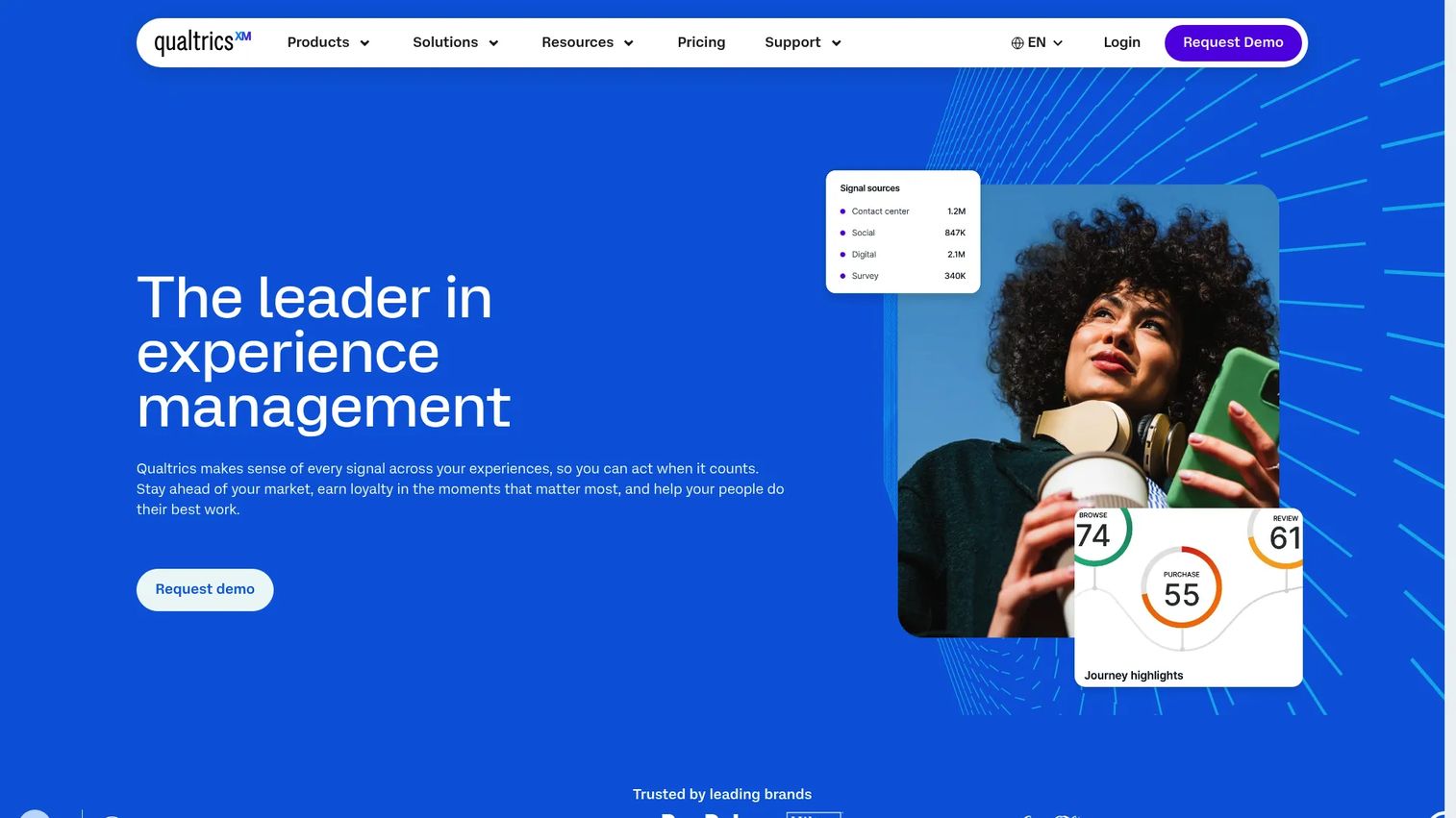
Qualtrics is experience management software for collecting and acting on customer, employee, market, and brand insights. On the employee side, it covers broad employee experience management with continuous listening, lifecycle intelligence, and AI-powered analysis. It is built for large or complex organizations that run sophisticated listening programs and need the configurability to match.
The platform's strength is depth. If you want to design custom survey logic, segment results across thousands of employees, and connect EX data to broader experience programs, Qualtrics handles it. The same engine that powers its customer experience work carries over to employee listening, which is why enterprises with mature programs gravitate to it.
Best for: Enterprises needing configurable experience-management surveys and analytics across CX and EX programs.
Key strengths
- Experience management platform: A single configurable engine for employee, customer, brand, and market insight
- Customer and employee experience: Cross-program data that connects how employees feel to how customers experience the business
- AI-powered analysis: Sentiment and text analytics that surface themes across large comment volumes
Why choose Qualtrics: Pick Qualtrics when your listening program is complex enough that configurability matters more than out-of-the-box simplicity. It fits organizations with dedicated people-analytics teams who want to build, not just deploy. Smaller teams may find it more platform than they need.
Qualtrics pricing: Qualtrics uses suite- and product-based pricing with a request-pricing flow. The pricing page does not list public numeric starting prices, so plan on a sales conversation to scope cost to your program. Qualtrics holds a 4.4/5 rating on G2.
2. Workday Peakon Employee Voice
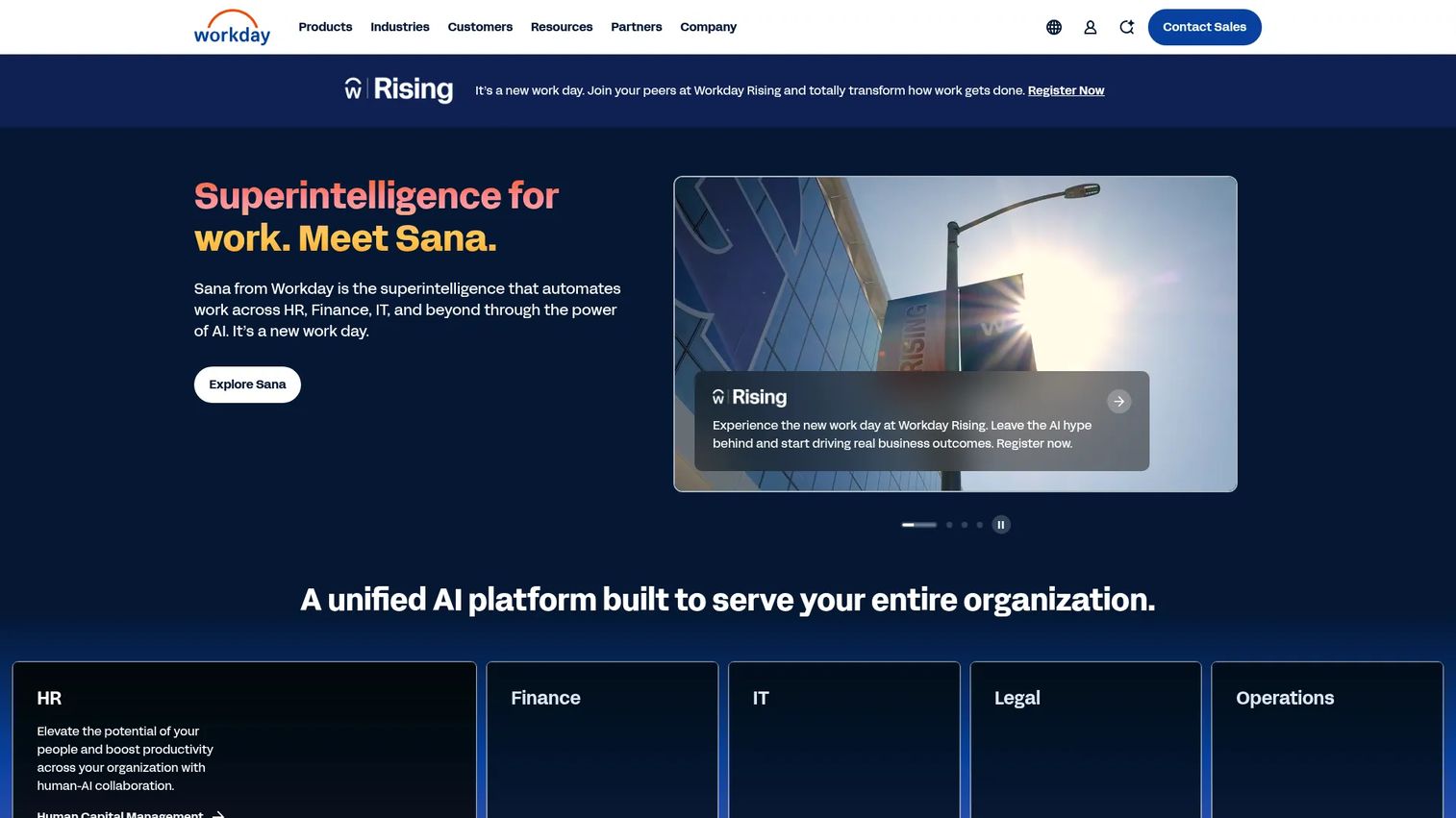
Workday Peakon Employee Voice is AI-powered employee listening and engagement software from Workday. It centers on continuous listening, real-time sentiment, and manager insights, with the added advantage of tight HCM context when you run on Workday. That connection between voice data and the system of record is what sets it apart for organizations that want employee feedback to live next to the rest of their people data.
The manager experience is a focal point. Rather than handing leaders a raw score, Peakon surfaces predictive analytics and prioritized insights so frontline managers know where to focus. For people teams chasing deeper employee voice analytics, that actioning layer is the draw.
Best for: Organizations wanting continuous employee feedback and engagement insights at scale.
Key strengths
- AI-powered listening and insights: Continuous feedback analyzed for themes, drivers, and sentiment in real time
- Engagement and retention analytics: Signals that connect sentiment to retention risk across teams
- Manager and employee dashboards: Predictive analytics that route the right insight to the right manager
Why choose Workday Peakon Employee Voice: Choose it when continuous listening and manager actioning matter and you value HCM context. It is a natural fit for existing Workday customers who want voice data connected to their people system without stitching tools together.
Workday Peakon Employee Voice pricing: Workday uses a request-a-demo sales motion, and no public numeric pricing or tier list is published on its site. Expect custom pricing scoped to headcount and program needs.
3. Microsoft Viva
Microsoft Viva is Microsoft's employee experience platform for communications, insights, learning, and engagement. It spans a broad ecosystem: employee communications and communities, workplace analytics, employee feedback, plus learning and insights apps that live across Microsoft 365. For organizations already standardized on Microsoft, Viva meets employees inside the tools they open every day.
That embedded model is its biggest advantage. There is no separate platform to drive adoption for when comms, communities, and pulse feedback surface inside Teams and the wider Microsoft 365 environment. Engagement and listening become part of the daily flow rather than a destination employees have to remember to visit.
Best for: Enterprises standardizing employee communications, insights, and learning in Microsoft 365.
Key strengths
- Employee communications and communities: Reach and engagement built into the tools employees already use
- Workplace analytics and employee feedback: Pulse listening plus analytics on collaboration and work patterns
- Learning and insights apps: Development and personal insight delivered across Microsoft 365
Why choose Microsoft Viva: Choose Viva when your organization runs on Microsoft 365 and you want employee experience built into the existing environment rather than bolted on. The fit is strongest for enterprises that value consolidation over best-of-breed specialization.
Microsoft Viva pricing: Microsoft lists three paid offerings: Employee Communications and Communities at $2.00 per user per month, Workplace Analytics and Employee Feedback at $6.00 per user per month, and the Viva Suite at $12.00 per user per month, all billed annually. Adding Viva to an existing Microsoft 365 enterprise subscription requires a conversation with a Microsoft representative. Viva Engage holds a 3.6/5 rating on G2.
4. Workvivo
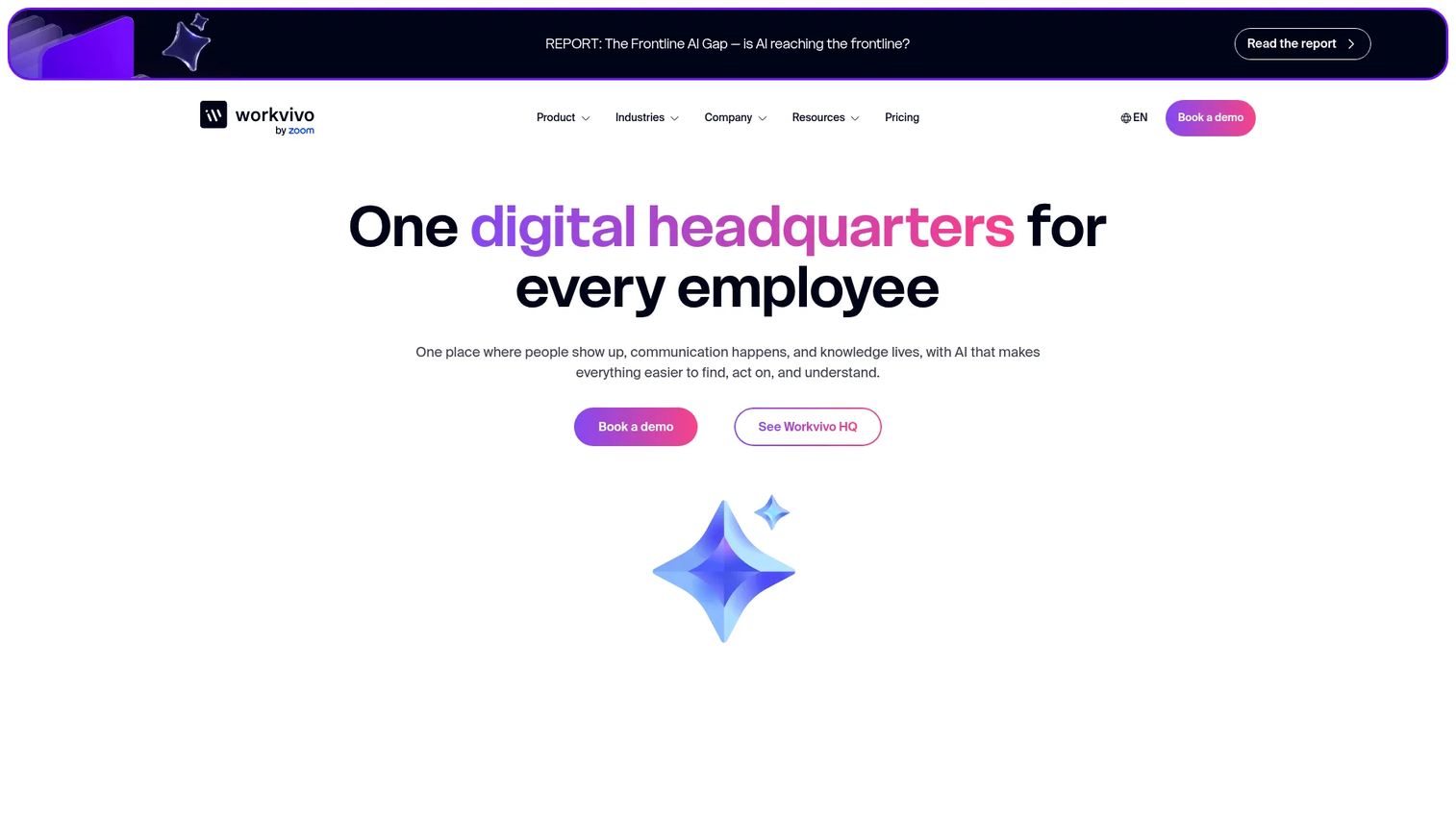
Workvivo is an employee experience platform for internal communications, engagement, intranet, and employee listening. Its identity is a social-style, mobile-first experience that feels closer to a consumer app than a corporate intranet. That design choice makes it especially relevant for distributed, hybrid, and frontline teams who live on their phones rather than at a desk.
Where many platforms lead with surveys, Workvivo leads with communication and community. The listening and analytics layer is there, but the center of gravity is reach: getting the whole workforce, including deskless staff, into one branded space where comms, recognition, and feedback all live together.
Best for: Mid-to-large organizations wanting a mobile-first employee communication and engagement hub.
Key strengths
- AI-powered internal communications: Content and workflow built to reach the entire workforce, including frontline staff
- Modern intranet: AI search, pages, documents, and knowledge hubs in one branded space
- People intelligence and surveys: Engagement analytics and listening built into the communication hub
Why choose Workvivo: Choose Workvivo when workplace communications and frontline reach are the priority and you want engagement to ride on top of a place employees actually visit. It is a strong fit for organizations where a large share of the workforce is deskless or distributed.
Workvivo pricing: Workvivo uses custom, quote-only pricing that depends on license count and organizational needs, and it does not offer a free trial. Plan on a scoping conversation. Workvivo holds a strong 4.8/5 rating on G2.
5. Lattice
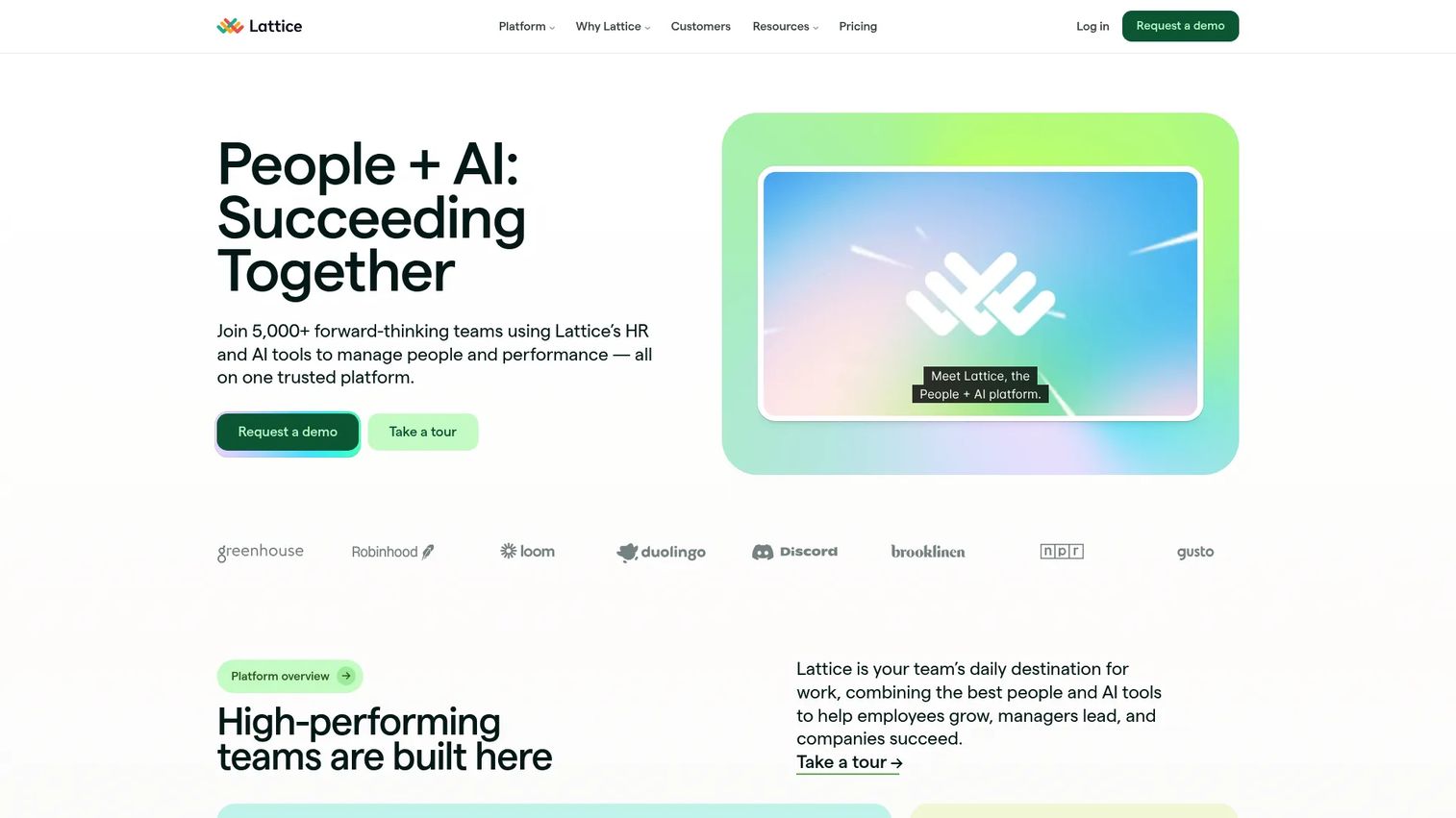
Lattice is a people management and AI platform spanning performance, engagement, goals, compensation, and growth. Its differentiation for employee experience buyers is how tightly engagement surveys connect to manager workflows. Feedback does not sit in a separate listening silo; it lives next to reviews, goals, and 1:1s, which is exactly where managers can act on it.
That integration is the point. When a manager sees an engagement signal in the same place they run performance conversations, the path from insight to action shrinks. For teams that want employee experience woven into how managers already operate, rather than added as a parallel process, Lattice fits.
Best for: HR teams wanting modular people-management software with performance, engagement, and goals workflows.
Key strengths
- Engagement surveys: eNPS, onboarding and exit surveys, and AI-assisted analysis tied to manager context
- Performance management: Reviews, succession planning, talent reviews, and calibration in one place
- Goals and OKRs: Cascading goals and progress updates that connect experience to outcomes
Why choose Lattice: Choose Lattice when you want employee experience tied closely to performance management and manager workflows. Its modular structure lets you start with engagement and add performance, goals, or growth as you scale.
Lattice pricing: Lattice prices modularly in USD, billed annually. Engagement starts at $4 per seat per month, Performance and Goals & OKRs at $8 per seat per month, and Foundations at $11 per seat per month, with Compensation and Grow available as add-ons. Enterprise is a custom quote, and Lattice requires a minimum annual agreement of $4,000. It holds a 4.7/5 rating on G2.
6. Culture Amp
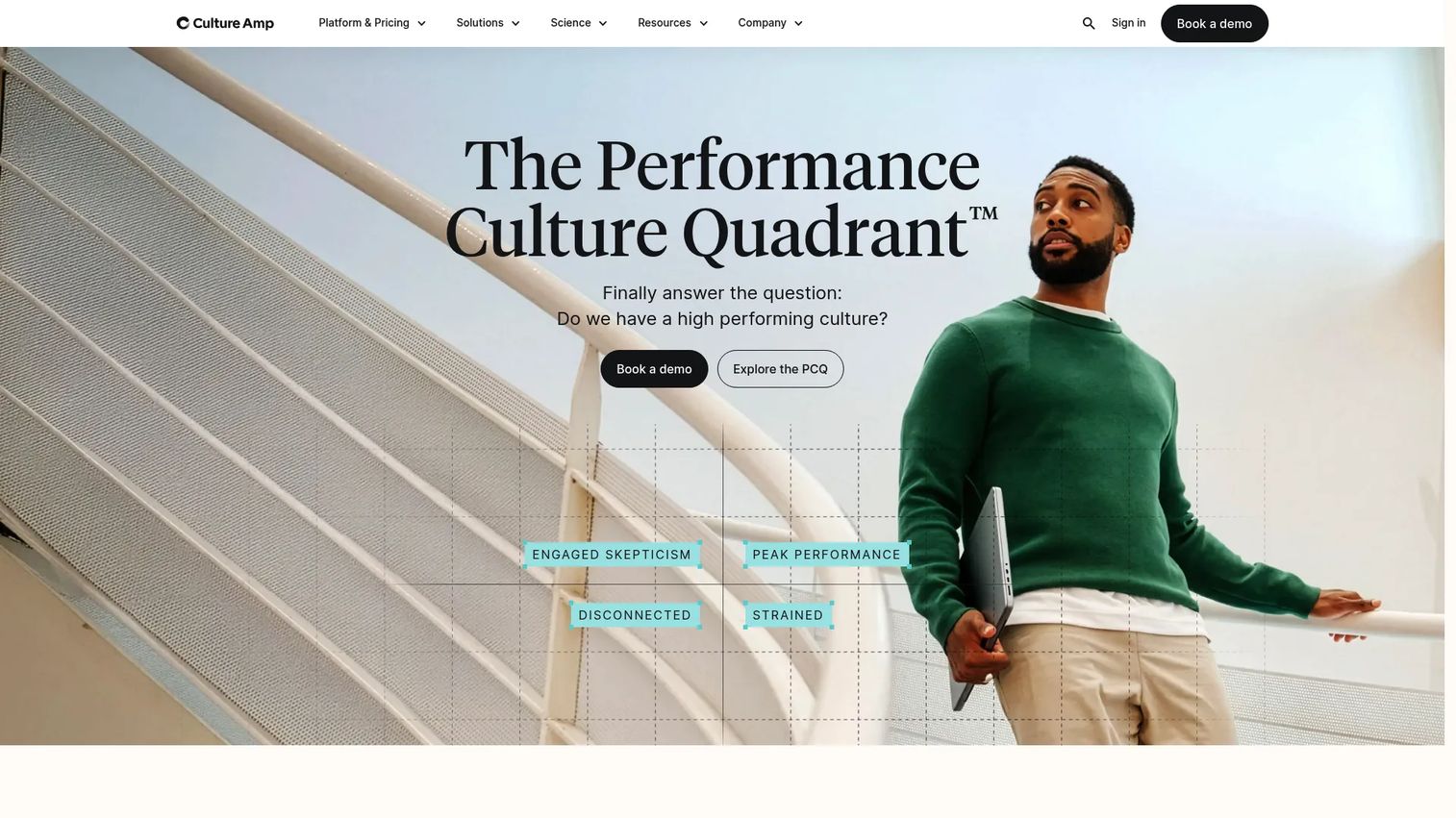
Culture Amp is an employee experience platform for engagement, performance, and development. Its reputation is built on research-backed listening: survey design and benchmarks grounded in people science, paired with action planning that helps managers translate results into next steps. For companies that want their culture measurement to stand up to scrutiny, that rigor matters.
The platform balances measurement with movement. Engagement surveys and action planning sit alongside performance management and development tools, so the same system that surfaces a problem also helps managers respond. AI features like feedback summaries and insights speed up the read on large comment volumes.
Best for: Mid-market and enterprise teams needing a combined employee engagement, performance, and development platform.
Key strengths
- Engagement surveys and action planning: Research-backed survey design with built-in steps from result to action
- Performance management: Goals, feedback, reviews, and 1:1s in one connected platform
- Development tools and AI: Growth support plus AI feedback summaries and insights
Why choose Culture Amp: Choose Culture Amp when you want research-backed employee listening and a clear bridge from survey results to manager action. It fits mid-market and enterprise teams that value benchmarking and people-science credibility alongside practical action planning.
Culture Amp pricing: Culture Amp uses quote-based pricing that depends on employee count, product choice, and service tier, with all products billed annually. No public numeric pricing is listed, so a scoping conversation is required. Culture Amp holds a 4.5/5 rating on G2.
7. Bonusly
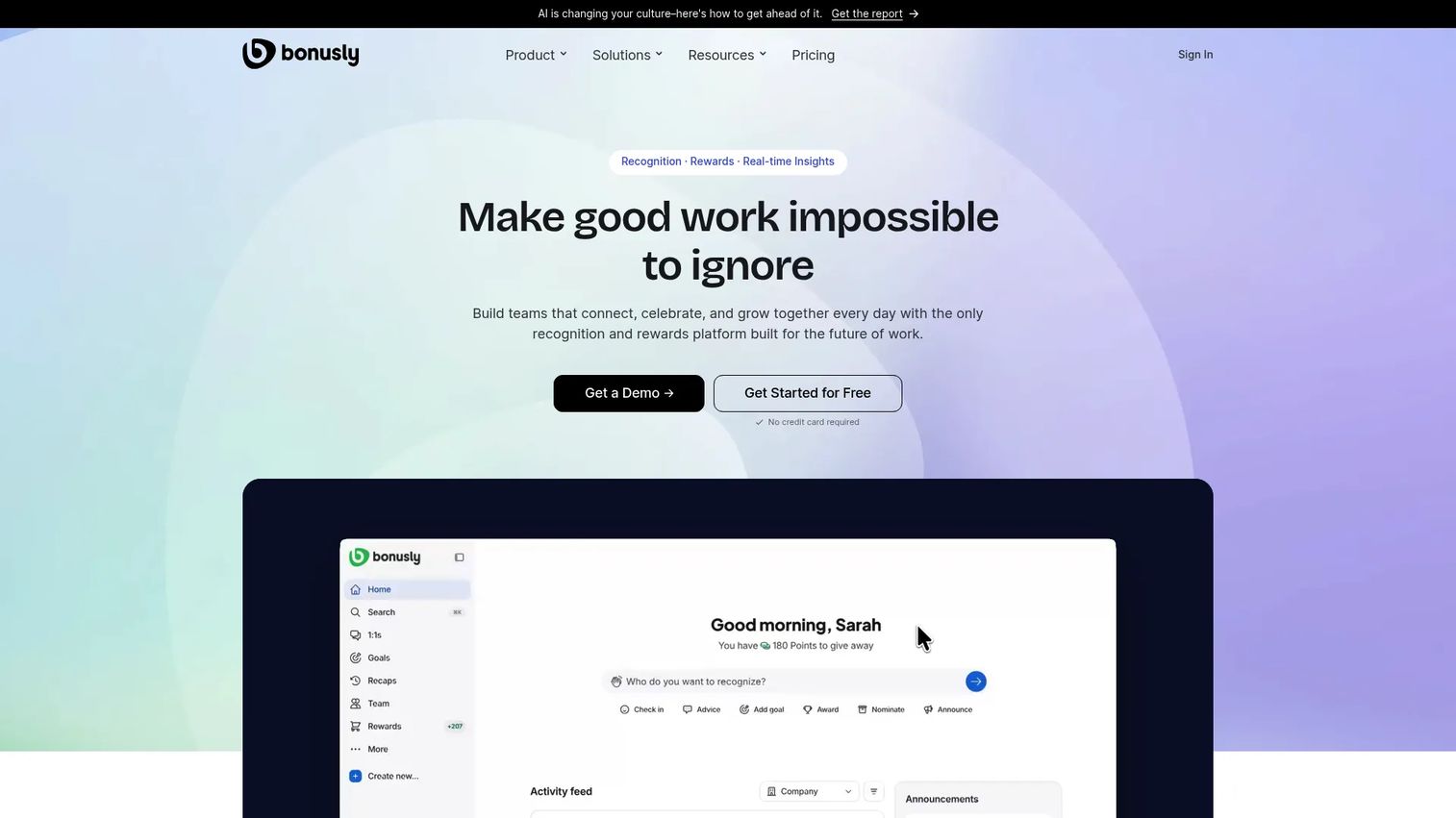
Bonusly is an employee recognition and rewards platform built around peer recognition, milestones, rewards, and people insights. It takes a different angle on employee experience: rather than leading with surveys, it builds culture through visible, frequent recognition and light engagement analytics on top. For teams that want everyday culture rituals more than heavy listening infrastructure, that focus is the appeal.
The mechanics are simple and that is intentional. Peers recognize each other, recognition flows into Slack or Teams where people already work, and a rewards marketplace turns appreciation into something tangible. The analytics layer surfaces patterns in who is recognized and how engagement trends over time.
Best for: Teams that want peer recognition, rewards, and engagement analytics in one platform.
Key strengths
- Peer-to-peer recognition: Frequent, visible appreciation that reinforces culture in the daily flow of work
- Rewards and milestones: A rewards marketplace plus automated recognition of work anniversaries and milestones
- Integrations and analytics: Slack, Teams, and HRIS integrations with engagement insights layered on top
Why choose Bonusly: Choose Bonusly when recognition-led culture and peer appreciation are your priority and you want a fast path to visible adoption. It is a strong fit for teams that want culture rituals working in weeks rather than a long listening rollout.
Bonusly pricing: Bonusly is free forever for up to 8 users. The Team plan runs $3 per user per month, or $30 per user per year, without Bizy AI, and $5 per user per month, or $50 per user per year, with Bizy AI included. The Organization plan uses custom pricing on request. Bonusly holds a 4.7/5 rating on G2.
8. Betterworks
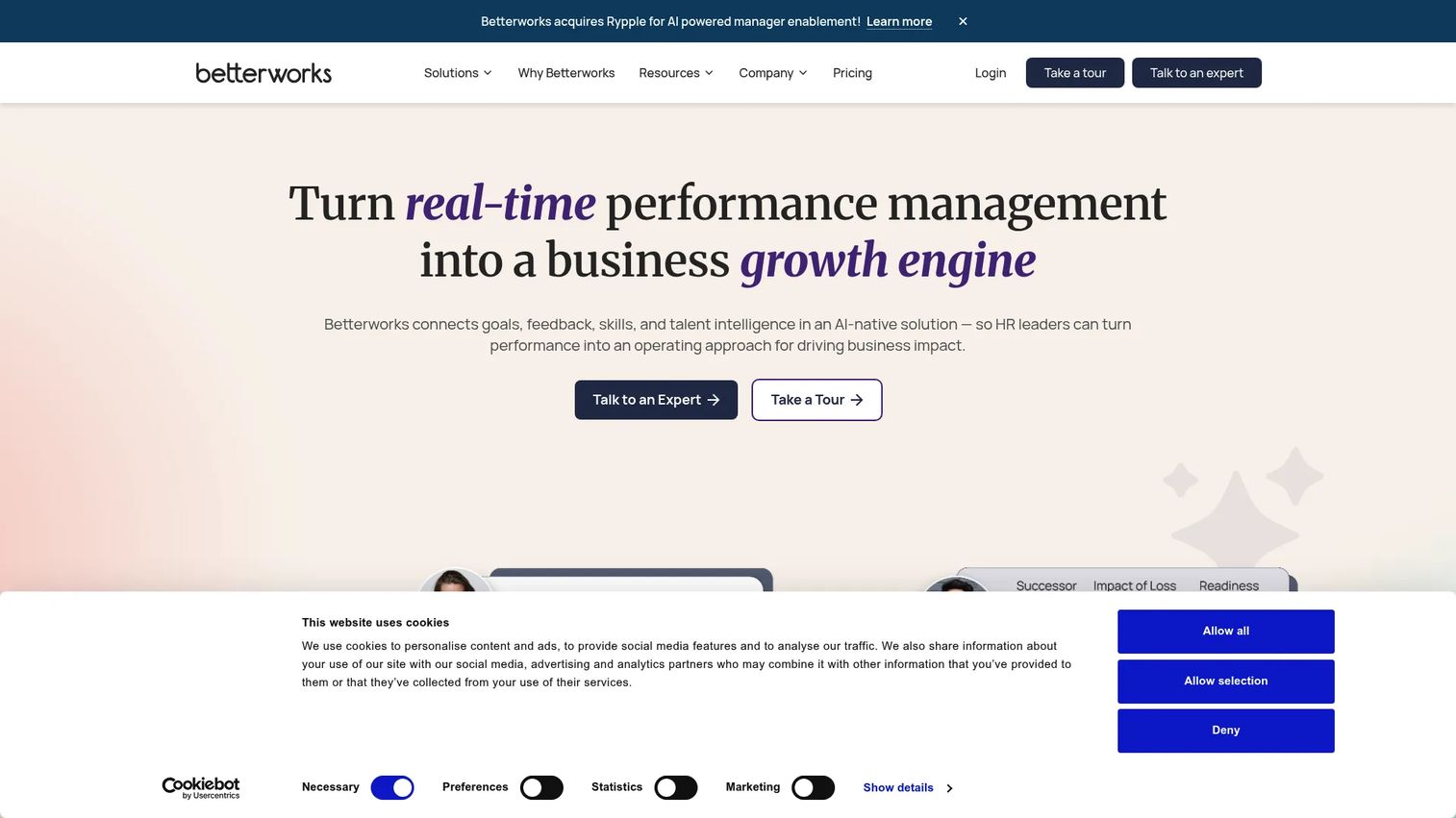
Betterworks is performance management software for goals, feedback, 1:1s, skills, and talent decisions. Its connection to employee experience runs through performance: goal-setting, continuous feedback, and performance conversations that tie how people feel to how they grow. For organizations trying to connect experience to performance and development, that linkage is the core value.
The platform leans into continuous performance rather than annual reviews. Goals and OKRs, ongoing feedback, and AI-driven performance insights keep the conversation going year-round, which is where employee experience and growth management overlap. When experience data and performance data sit in one system, managers get a fuller picture of each person.
Best for: Mid-market and enterprise teams needing continuous performance management.
Key strengths
- Goals and OKRs: Aligned, cascading goals that connect individual work to company outcomes
- Continuous feedback and 1:1s: Ongoing conversations that replace the once-a-year review
- AI-driven performance insights: Analytics that surface patterns across goals, feedback, and talent decisions
Why choose Betterworks: Choose Betterworks when you want to connect employee experience to performance and growth in one continuous system. It fits mid-market and enterprise teams that treat performance management as an always-on motion rather than an annual event.
Betterworks pricing: Betterworks shows two entry points: Mid-Market, starting at 500 employees, and Enterprise, starting at 2,500 employees, both with custom quotes. No public numeric pricing is listed, so cost is scoped through sales. Betterworks holds a 4.3/5 rating on G2.
Considerations
A shortlist is only as good as the questions you ask before signing. Here is the buyer's checklist that matters most for employee experience software.
Governance and ownership
Decide who owns surveys, action plans, and reporting before you buy. The best platform stalls if no one is accountable for follow-through. Verify admin workflows, approval steps, and how ownership of action plans is assigned, so a flagged issue has a clear owner rather than drifting between HR and line managers.
Integrations and system fit
Employee experience data has to flow, not pool. Check for HRIS integrations, identity and SSO, collaboration tools, and communication platforms. The goal is activation: feedback that triggers an alert in Slack or Teams, or syncs with your HR system of record, beats a dashboard no one logs into. Map the integrations you need against what each tool supports natively.
Analytics depth
There is a real difference between a tool that measures sentiment and one that explains it. Ask whether the platform supports trend analysis, benchmarking, attrition risk, and action tracking, not just a single engagement score. Predictive attrition and retention analytics are what move you from reporting on the past to preventing the next resignation.
Mobile and distributed workforce support
If you have a mobile workforce, desktop-only listening will miss most of it. Verify mobile access, push notifications, translations for a multilingual workforce, and offline-friendly engagement. Frontline and hybrid teams need feedback that fits their reality, not a survey link buried in an email they never open.
Adoption and change management
The strongest platform underperforms if managers ignore the insights. Treat adoption as a project, not an afterthought. Look for onboarding support, manager training, and internal champions who keep the program alive. A tool that managers actually use beats a more powerful one that sits idle.
Conclusion
There is no single winner here, and that is the honest read. The right employee experience software depends on what job you are hiring it to do.
If you run a complex, large-scale listening program, Qualtrics and Workday Peakon Employee Voice bring the depth and continuous listening you need. If you live in Microsoft 365, Viva meets employees where they already work. For distributed and frontline teams, Workvivo's mobile-first reach is hard to beat. If you want experience tied to performance and manager workflows, Lattice and Betterworks fit. For research-backed culture measurement, Culture Amp delivers. And for recognition-led culture with fast adoption, Bonusly works.
Your next step is to narrow on three things: lifecycle coverage from onboarding to exit, manager actioning that turns insight into follow-through, and integrations into the systems your people already use. Shortlist the two or three platforms that map to your operating model, then run a focused pilot before you commit. The tool matters less than whether your managers act on what it surfaces.
FAQs
Employee experience software is a category of HR and people-ops tools that collects employee feedback across the lifecycle, analyzes it, and helps managers act on it. Unlike a one-off survey tool that only measures sentiment at a single moment, an employee experience platform connects continuous listening, analytics, and action planning so feedback turns into change.
The core benefits are better retention, higher engagement, clearer visibility into how employees feel, and stronger manager actioning. By catching sentiment shifts early and routing insight to the people who can respond, these platforms shorten the gap between a problem surfacing and someone fixing it. The result is fewer surprise resignations and more consistent manager follow-through.
Most platforms combine three layers. Continuous listening collects feedback through pulse surveys, lifecycle surveys, and always-on channels. Analytics turn that raw feedback into trends, sentiment, and retention signals. Action planning then routes prioritized insights to managers with recommended next steps, so the loop from feedback to intervention actually closes.
Prioritize five things: integrations with your HRIS and communication tools, analytics depth that goes beyond a single score, lifecycle coverage from onboarding to exit, mobile access for distributed teams, and governance that assigns clear ownership of action plans. The right mix depends on your operating model, so weight the criteria that match your workforce.
Engagement software focuses on measuring and improving how motivated and committed employees feel, usually through surveys. Employee experience software is broader: it covers the full lifecycle from hire to exit, layers in communications, recognition, and development, and ties everything to manager actioning. Engagement is one part of employee experience, not the whole of it.
They shorten the path from feedback to intervention. Continuous listening catches early warning signs, retention analytics flag which teams or individuals are at risk, and manager actioning prompts a conversation before someone decides to leave. Instead of learning why people quit in an exit interview, you learn while there is still time to act.
Start with clear goals: what outcome are you trying to change, retention, engagement, or manager effectiveness. Run a pilot with one or two teams to validate the workflow. Train managers on how to read and act on insights, since adoption lives or dies with them. Then measure against your goals and iterate, expanding the rollout once the loop is working.