You spent three hours counting receptacles and measuring conduit runs off a PDF. Then you priced the whole thing off last year's supplier sheet. The bid came in low, you won it, and now the margin is gone before the first roll of wire hits the truck.
That is the real cost of slow, manual estimating. It is not just wasted hours. It is underbidding you do not catch until the job is already bleeding, or bids you never submit because takeoff took too long. According to the NECA Electrical Contractor Business Survey (2024), electrical contractors using dedicated estimating software hit bid-to-win ratios of 30 to 40 percent, compared with 18 to 22 percent for teams still working by hand. That is roughly a 22 percentage-point gap, and it compounds across every job you chase.
The category exists to close that gap. Good electrical estimating software takes the full workflow off your plate: import plans and specs, run takeoff on devices and conduit runs, calculate materials and labor against real constants, then generate a quote and bid you can defend. The global market for these tools was valued at $1.8 billion in 2025 and is projected to reach $4.1 billion by 2034, growing at a 9.6 percent CAGR, per Dataintelo (2025). Contractors are moving fast, and cloud tools are now the majority of that spend.
The problem with most roundups is they dump a feature list and let you sort it out. This one is organized around the bottleneck each tool solves. Read on to find the electrical estimating software for contractors that matches how your team actually works.
What's inside
This guide covers seven electrical estimating programs, ranked by the estimator bottleneck each one clears. We look at contractor fit, workflow stage, pricing model, and support quality, so you can match a tool to your job type instead of chasing the longest feature list.
Tools were selected on four criteria: how they handle electrical-specific takeoff, how flexible their pricing and assemblies are, how well they report and export, and how fast a team can adopt them. The list spans residential-focused takeoff tools, estimating-first platforms, buy-once desktop software, and broader construction platforms that fold estimating into project management. Whether you run a two-person residential shop or a multi-branch commercial operation, there is a fit here.
TL;DR
- Best overall for most electrical contractors: PlanSwift, for its flexible takeoff-to-estimate workflow and Excel export.
- Best for automated takeoff-to-estimate workflows: Countfire, which counts symbols across PDFs and auto-populates pricing.
- Best for buy-once pricing: Best Bid, a one-time purchase built specifically for electrical estimators.
- Best for document collaboration and markups: Bluebeam Revu, for PDF measurement and Studio collaboration.
- Best for multi-trade estimating and pricing depth: Trimble Accubid Anywhere, for spec-driven estimating across branches.
- Best for enterprise construction workflow alignment: Procore, when estimating needs to live inside project management.
- Best for teams needing broader project visibility: STACK, cloud takeoff and estimating with field collaboration.
If you want a free electrical estimating software starting point, Countfire and STACK both offer trials or free account tiers to test the workflow before you commit.
What is electrical estimating software?
Electrical estimating software is a tool that turns plans and specs into a priced, defensible bid by automating takeoff, material and labor calculation, and quote generation for electrical work.
In practice, the electrical estimating workflow moves through a few clear stages. You import the plan set, run device and symbol counts, measure conduit and wire runs, apply material libraries and labor constants, then produce pricing and a bid output you can send to the general contractor or owner. Some tools own the whole chain. Others specialize in one stage, like electrical takeoff software that feeds counts into a separate pricing engine.
Core capabilities to expect from a solid electrical pricing software or estimating platform:
- Plan import and on-screen takeoff: Load PDFs or drawings and count symbols, measure runs, and scale directly on the page.
- Conduit and wire takeoff: Measure linear runs and auto-calculate the wire, conduit, and fittings each run requires.
- Material libraries: Pre-built or custom databases of parts with current pricing you can update.
- Labor constants: Standardized labor hours per item so estimates stay consistent across jobs and estimators.
- Assemblies: Bundled material and labor units (a full receptacle, say) you drop in once instead of building from scratch.
- Reporting and bid output: Clean quotes, cost breakdowns, and exports, usually to Excel, for the final bid.
- Revision tracking: Flag spec changes and re-price affected sections without redoing the estimate.
The distinction that matters most: some products are takeoff-first, some are estimating-first, and some are broad construction platforms where estimating is one module among many. Knowing which stage is your bottleneck tells you which tool to buy.
When to use electrical estimating software
Not every contractor needs the same thing. Here is how to match the tool to the pressure you are actually feeling.
Speed up takeoff from PDFs
If your estimators spend hours counting symbols and measuring runs by hand, takeoff is your bottleneck. Manual counting caps how many bids you can put out, and every hour on a count is an hour you are not chasing the next job. Tools that automate symbol counting and run measurement directly on the PDF turn a half-day takeoff into a fraction of that. For high-volume shops, that turnaround is the difference between bidding ten jobs a week and bidding three.
Standardize pricing and labor assumptions
If two estimators price the same job differently, or your branches each carry their own private spreadsheet, your margins are being decided by inconsistency. Shared material libraries and locked labor constants make estimates repeatable no matter who builds them. That repeatability is what protects margin and kills the surprises that show up mid-project. When pricing lives in one place and updates once, everyone bids off the same numbers.
Separate residential, commercial, and broader contractor workflows
A two-person residential shop and a multi-branch commercial contractor do not need the same estimating software for electrical contractors. Small residential jobs reward speed and simple assemblies. Large commercial and industrial work rewards spec-driven depth, change management, and multi-user collaboration. The mistake is buying on brand familiarity instead of workflow stage. Match the tool to your estimate complexity, not to what the biggest contractor in your market happens to run.
Comparison table
Here is the shortlist at a glance. Use it to narrow to two or three tools, then read the full sections for fit. Pricing and G2 ratings reflect the most recent verified figures at the time of writing; always confirm current pricing with the vendor.
| # | Product | Intent | Key differentiation | Pricing | G2 rating |
|---|---|---|---|---|---|
| 1 | PlanSwift | Takeoff plus estimating | Flexible drag-and-drop takeoff with trade assemblies and Excel export | From US$2,000/year | 4.3/5 |
| 2 | Countfire | Automated takeoff to estimate | Auto-counts symbols across PDFs and auto-populates pricing | 7-day free trial; pricing on request | 4.9/5 |
| 3 | Best Bid | Buy-once electrical estimating | One-time purchase, unlimited license, lifetime updates | From $1,999.95 one-time | Not listed on G2 |
| 4 | Bluebeam Revu | Document markup and takeoff | PDF measurement and real-time Studio collaboration | From $260/user/year | 4.5/5 |
| 5 | Trimble Accubid Anywhere | Multi-trade estimating depth | Spec-driven estimating with multi-branch change management | Quote-based | 4.3/5 |
| 6 | Procore | Estimating inside project management | Bid management and budgeting within a full construction platform | Quote-based | 4.6/5 |
| 7 | STACK | Cloud takeoff plus preconstruction | AI takeoff with integrated estimating and field collaboration | From $249/user/month | 4.4/5 |
1. PlanSwift
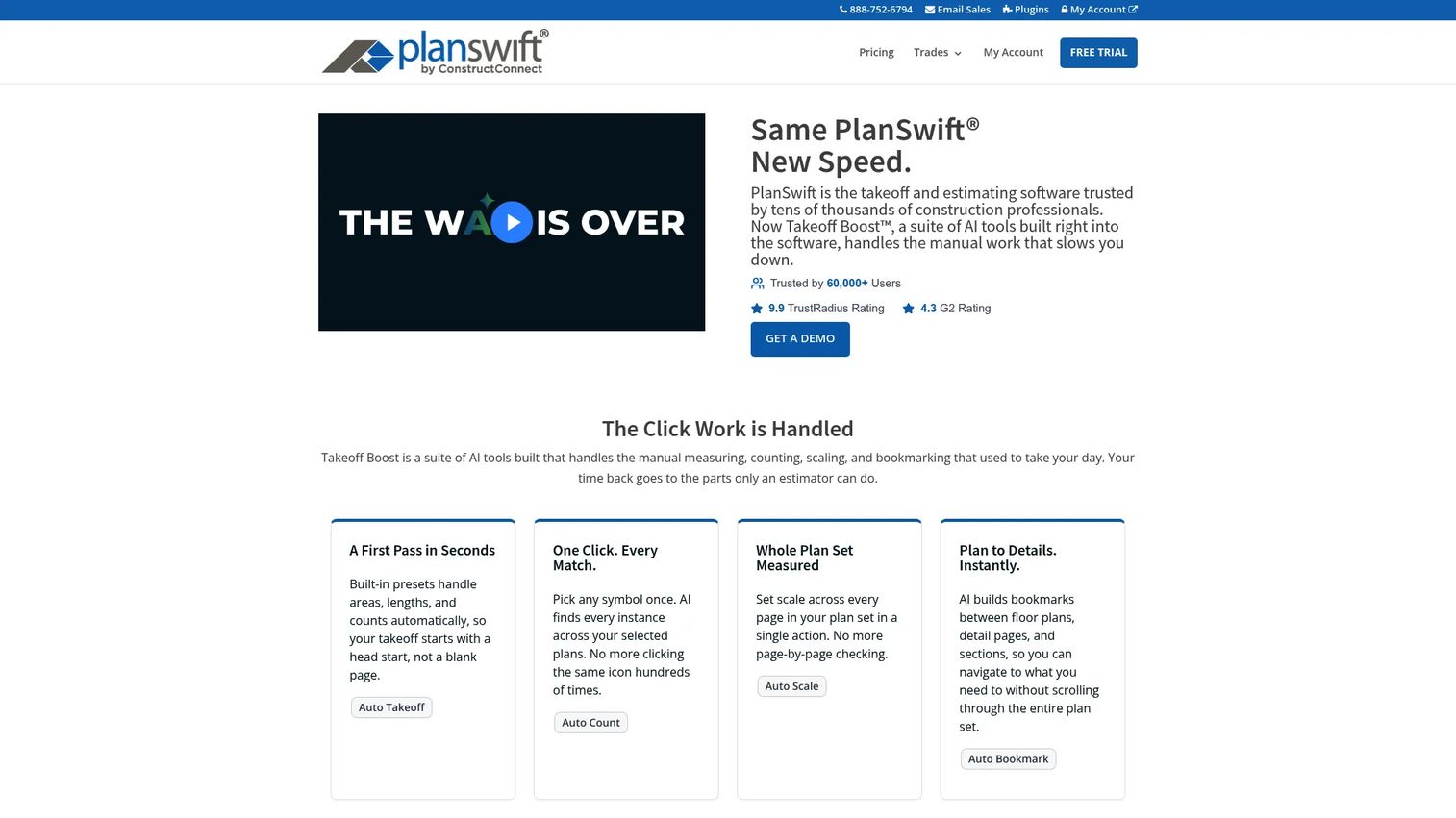
PlanSwift is construction takeoff and estimating software built for contractors and estimators who want one tool to carry a job from plans to bid. It is not electrical-only, which is exactly why so many electrical shops reach for it: the takeoff engine is flexible enough to handle conduit and wire runs, device counts, and panel work, then hand the numbers straight into an estimate. For contractors who do more than electrical, or who want a takeoff tool that does not box them into one trade, it is a natural default.
The workflow is straightforward. Import the plan set, use the point-and-click takeoff tools to count symbols and measure runs, drop in trade-specific assemblies, and let PlanSwift roll material and labor into a running total. Because it exports cleanly to Excel, teams that already live in spreadsheets for final pricing do not have to abandon their process.
Best for: Contractors and estimators who want flexible takeoff and estimating in one tool without being locked to a single trade.
Key strengths
- AI-assisted takeoff: Measure, count, scale, and bookmark plan sections quickly to cut hours off manual counting.
- Drag-and-drop assemblies: Build trade-specific assemblies once and reuse them across every bid for consistent pricing.
- Excel integration: Export takeoff and estimate data straight to Excel so your existing bid process stays intact.
Why choose PlanSwift: If your bottleneck is takeoff speed and you want a tool that adapts to how you already estimate, PlanSwift fits. The drag-and-drop workflow has a shallow learning curve, and the Excel export means you are not forced into a rigid pricing engine. It is the pragmatic pick for shops that value flexibility over trade-specific depth.
PlanSwift pricing: The Professional subscription starts at US$2,000 per year, billed annually, and includes software updates and two hours of training. Additional updates and support run US$200 per year, and a three-hour web training package is US$295 one-time. There is no free tier, though the vendor offers demos.
2. Countfire
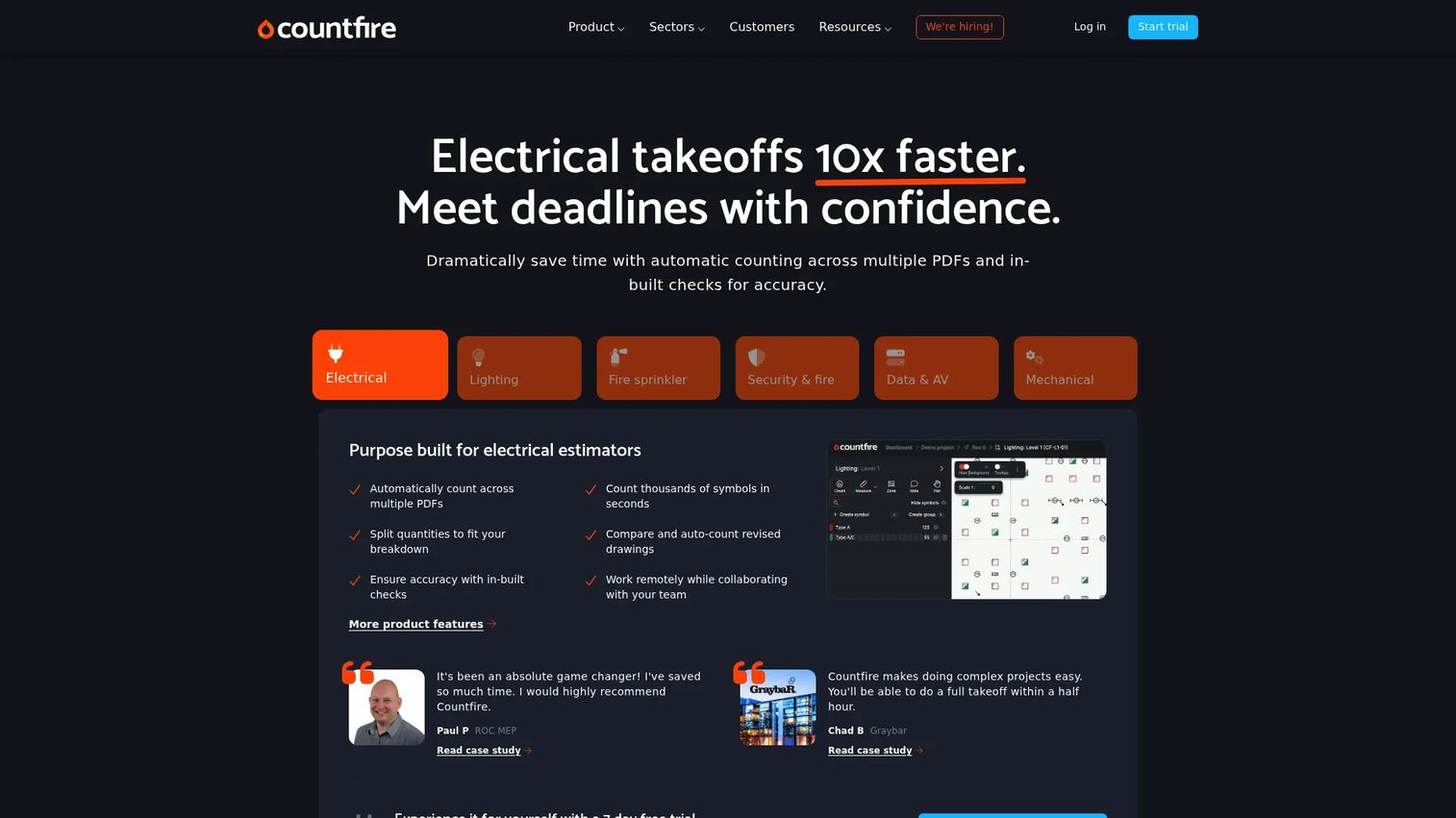
Countfire is cloud-based estimating software built specifically for electrical estimators, and its whole pitch is automation. Where most tools speed up manual counting, Countfire aims to remove it: point it at a set of PDFs and it counts matching symbols across all of them at once. For teams drowning in device counts on large drawing sets, that is the single biggest time sink gone.
From there, the workflow carries into estimate building. Countfire auto-populates prices from your previous estimates, so pricing gets faster with every job you run. It also compares specifications and tracks revisions, which matters when a drawing set changes late and you need to re-price only what moved. The result is an audit trail from count to bid, and clean output you can push to Excel.
Best for: Electrical estimating teams that want to cut manual symbol counting to a minimum and speed up bid prep.
Key strengths
- Bulk symbol counting: Automatically count symbols across multiple PDFs at once instead of one drawing at a time.
- Price auto-population: Pull prices from previous estimates so repeat items price themselves.
- Spec comparison and revision tracking: Compare specifications and flag changes so late drawing revisions do not force a full re-estimate.
Why choose Countfire: If takeoff volume is what caps your bid output, Countfire attacks that directly. It is the strongest pick for teams that want automated takeoff-to-estimate workflows rather than faster manual work. Its 4.9/5 G2 rating reflects how well the automation lands with estimators who live in high-volume counting.
Countfire pricing: Countfire offers a 7-day free trial so you can test the automated takeoff before committing. Public pricing is not listed on the site; the vendor works from subscription plans quoted on request. For teams evaluating free electrical estimating software as a starting point, the trial is a low-risk way to see the workflow on your own drawings.
3. Best Bid
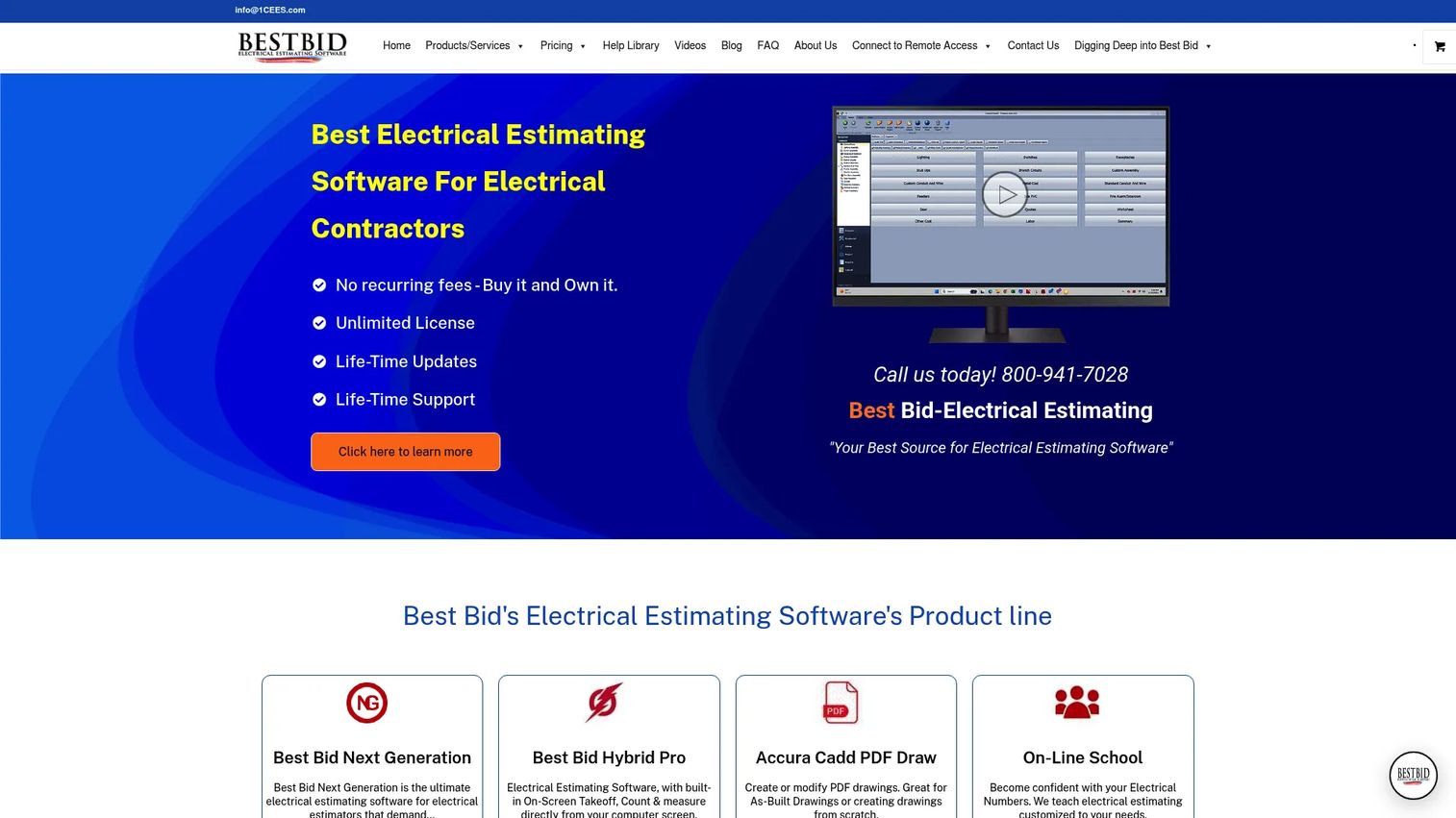
Best Bid is electrical estimating software built around one clear promise: buy it once and own it. In a market that has largely moved to annual subscriptions, that one-time purchase model is the differentiator, and for cost-conscious contractors who do not want a recurring line item, it is the whole reason to look here.
The software is electrical-specific, with built-in on-screen takeoff and adjustable assemblies you can tune to how your shop prices work. You count and measure directly on the plans, apply your assemblies, and produce a bid, all inside a tool that was designed for electrical estimators rather than adapted from a general construction platform. The unlimited license and lifetime software updates mean the number you pay up front is the number you pay.
Best for: Electrical contractors who want a dedicated estimating tool without an ongoing subscription.
Key strengths
- Built-in on-screen takeoff: Count and measure directly on plans inside a tool made for electrical work.
- Adjustable assemblies: Tune material and labor assemblies to match your shop's pricing.
- Unlimited license with lifetime updates: Pay once, own it, and keep getting software updates.
Why choose Best Bid: The math is simple. If you plan to run the same estimating tool for years, a one-time purchase can cost far less than stacking annual subscriptions. Best Bid is the pick for contractors who value predictable, buy-once electrical pricing software and want the tool built for their trade specifically. The vendor also backs it with training resources, a help library, and video support.
Best Bid pricing: Best Bid uses a one-time purchase model. Best Bid Hybrid Pro starts at $1,999.95, Best Bid Next Generation runs $2,500.00, and a Next Generation Server Addition is $3,500.00, all one-time. There is no ongoing subscription and no verified free-tier plan. Capterra reviewers rate it highly, though the product is not listed on G2.
4. Bluebeam Revu

Bluebeam Revu is a Windows desktop tool for PDF markup, measurement, and collaboration across architecture, engineering, and construction workflows. It is not a dedicated estimating platform, and that is the honest framing: Revu shines as document control and takeoff support, feeding measurements into whatever pricing process you already run. For electrical estimators, that means precise on-screen measurement and clean markups you can share with the whole project team.
Its standout capability is Studio, which lets multiple people mark up and review the same document set in real time. That collaboration layer is why so many AEC teams standardize on Revu even when they price elsewhere. Add document compare, batch processing, and robust measurement tools, and it becomes the connective tissue between the plans and the estimate.
Best for: Electrical estimators and AEC teams who need precise PDF takeoff, markup, and real-time document collaboration.
Key strengths
- PDF markup and measurement: Measure runs and count devices directly on drawings with accurate on-screen tools.
- Real-time Studio collaboration: Mark up and review the same documents with your team live.
- Document management and compare: Batch process, compare revisions, and manage large drawing sets in one place.
Why choose Bluebeam Revu: Choose Revu when your gap is document control and takeoff measurement rather than a full pricing engine. Many electrical estimators pair Revu for takeoff and markups with a separate estimating tool for pricing. If your team already collaborates on drawings and needs measurement it can trust, Revu is the standard for a reason, reflected in its 4.5/5 G2 rating.
Bluebeam Revu pricing: Revu is priced per user per year. Basics is $260, Core is $330, Complete is $440, and Max, the premium AI plan, is $590, all per user per year. Every plan includes Revu for Windows plus web and mobile access. There is no free tier.
5. Trimble Accubid Anywhere
Trimble Accubid Anywhere is cloud-based estimating and change-management software built for electrical and industrial mechanical contractors. This is the tool for depth. Where lighter takeoff tools speed up counting, Accubid Anywhere is built for spec-driven estimating on complex commercial, industrial, and multi-trade work, the kind of jobs where the estimate itself is a serious document.
The workflow centers on estimating structure and pricing integrity. It supports multi-user, multi-branch collaboration, so distributed estimating teams work from the same database. Its change management syncs the database across the operation, meaning when material pricing or labor assumptions update, they propagate everywhere. For larger electrical teams, that database discipline is what keeps estimates consistent across offices and jobs.
Best for: Electrical and MEP contractors running complex commercial or industrial estimates who need cloud collaboration and change control.
Key strengths
- Spec-driven estimating and takeoff: Build detailed, specification-based estimates for complex electrical and mechanical work.
- Multi-user, multi-branch collaboration: Distributed teams estimate from one shared database.
- Change management with database sync: Update pricing and constants once and propagate them across every estimate.
Why choose Trimble Accubid Anywhere: Pick Accubid Anywhere when your estimates are large, spec-heavy, and shared across a team or multiple branches. It carries included tools like LiveCount, Submittal Manager, and Supplier Xchange that support the broader electrical contractor workflow. This is enterprise-grade estimating depth, backed by a 4.3/5 G2 rating, for teams that outgrow lighter takeoff tools.
Trimble Accubid Anywhere pricing: Trimble does not publish public pricing for Accubid Anywhere. The product page directs you to request a demo or contact sales for a quote. Expect quote-based, contract pricing sized to your team and needs.
6. Procore

Procore is a construction management platform where estimating is one part of a much larger system covering planning, coordination, and operations. Be clear-eyed about that: Procore is not a dedicated electrical estimating tool. It is a platform for teams that need estimating plus bid management, budgeting, document control, and project coordination in one place. If estimating alone is your problem, this is more than you need. If fragmented project data is your problem, this is the point.
Inside the platform, bid management, budgeting, and analytics tie the estimate to everything downstream, so the number you bid connects to the budget you track and the analytics you report on. For contractors already running projects in Procore, or for those where the founder or ops lead wants one source of truth instead of five disconnected tools, folding estimating into the platform removes handoff friction.
Best for: Construction and electrical teams that want estimating to live inside a full project management platform.
Key strengths
- Bid management: Solicit, track, and compare bids inside the same system that runs the project.
- Budgeting: Connect the estimate directly to the project budget for tighter cost control.
- Analytics: Report across estimating and project data without stitching dashboards together.
Why choose Procore: Choose Procore when your bottleneck is project visibility, not takeoff speed. It is the honest answer for teams that want estimating, budgeting, and coordination unified rather than a best-in-class electrical takeoff engine. Its 4.6/5 G2 rating reflects platform breadth, and contracts include unlimited users, support, and storage.
Procore pricing: Procore uses quote-based pricing that depends on the products you need and your annual construction volume. Contracts include unlimited users, support, storage, and product enhancements at no extra cost. There is no public starting price; you request a quote sized to your operation.
7. STACK

STACK is cloud-based construction software that combines takeoff, estimating, and field and project management, so preconstruction and the field run on the same system. For electrical contractors who want more than a standalone estimating tool but do not need the full weight of an enterprise platform, STACK sits in a useful middle ground: strong takeoff, integrated estimating and proposals, and collaboration that reaches into the field.
The workflow starts with AI-powered takeoff, moves into integrated estimating and proposal generation, and connects to field collaboration so what you estimate ties to what gets built. Being cloud-based, it fits distributed teams and lets estimators and field crews work from the same current data. For teams whose bottleneck is broader project visibility rather than pure takeoff speed, STACK covers a lot of ground in one subscription.
Best for: Construction and electrical contractors who want cloud takeoff, estimating, and field collaboration in one tool.
Key strengths
- AI-powered takeoff: Speed up measurement and counting with assisted takeoff tools.
- Integrated estimating and proposals: Move from takeoff to estimate to client-ready proposal without switching tools.
- Field collaboration: Connect preconstruction estimates to field and project management on one platform.
Why choose STACK: Pick STACK when you want takeoff and estimating plus a path into field and project management, without committing to a heavier enterprise system. It also offers a free account option on the takeoff side, making it one of the more accessible ways to test cloud takeoff. Its 4.4/5 G2 rating reflects a solid balance of capability and usability.
STACK pricing: STACK splits pricing across products. On the Takeoff and Estimate side, Premium starts at $249 per user per month and Pro at $299 per user per month, both billed annually, alongside a free account option. On the Build and Operate side, Essential runs $599 per user per year and Pro $699 per user per year, with a currency selector for USD or CAD on-page.
Considerations before you buy
Before you commit, run your shortlist against the criteria that actually predict fit.
Match the tool to your bottleneck
The single most important question: what slows you down most? If it is counting symbols off PDFs, a takeoff-first tool like Countfire or STACK earns its price. If it is inconsistent pricing across estimators, prioritize shared material libraries and labor constants. If it is fragmented project data, a platform matters more than a takeoff engine. Buy for the bottleneck, not the feature count.
Pricing model fit
Subscription versus one-time purchase is a real decision, not a detail. Annual subscriptions like PlanSwift or STACK spread cost and bundle updates. A buy-once model like Best Bid can cost less over several years if you stick with one tool. Run the multi-year math for your team size before you sign.
Contractor type and estimate complexity
A residential shop and a multi-branch commercial contractor need different depth. Simple assemblies and fast takeoff suit residential volume. Spec-driven estimating and change management suit large commercial and industrial work. Be honest about your estimate complexity so you do not overbuy or underbuy.
Support, training, and adoption speed
The best tool your team never fully adopts is wasted money. Check training resources, help libraries, and onboarding support. Tools with shallow learning curves get used; tools that sit half-configured do not. Factor first-week setup and how fast a new estimator can get productive.
Conclusion
The right electrical estimate software is the one that clears your specific bottleneck. If takeoff speed caps your bid volume, Countfire and STACK attack manual counting directly. If inconsistent pricing eats your margin, PlanSwift and Trimble Accubid Anywhere bring shared assemblies and labor constants. If you want to own your tool outright, Best Bid's one-time purchase is the cleanest path. If document collaboration is the gap, Bluebeam Revu is the standard. And if fragmented project data is the real problem, Procore folds estimating into a full platform.
For most electrical contractors weighing bid accuracy against ease of adoption, PlanSwift is the broadly useful starting point: flexible takeoff, trade assemblies, and Excel export that fits how teams already estimate. Whatever you pick, start with the bottleneck, not the longest feature list. The 22 percentage-point bid-to-win gap between software-equipped and manual estimators is real money, and closing it starts with matching the electrical cost estimating software to how your team actually works.
FAQs
Electrical estimating software is used to turn plans and specs into a priced, defensible bid. It handles the full workflow: importing drawings, running takeoff on device counts and conduit and wire runs, applying material libraries and labor constants, and generating quotes and bid reports. The goal is faster, more consistent estimates and fewer underbidding surprises.
The features that move the needle are symbol and device counting, conduit and wire run takeoff, adjustable labor constants, editable material libraries, and clean reporting or Excel export. Revision tracking matters too, so late drawing changes do not force a full re-estimate. Prioritize the features tied to your specific bottleneck rather than the longest checklist.
Not exactly. Electrical takeoff software focuses on the measurement and counting stage: symbols, runs, and quantities pulled off the plans. Electrical estimating software adds pricing, labor, assemblies, and bid output on top. Some tools do both in one workflow, while others specialize in takeoff and hand quantities to a separate pricing engine.
Small and residential contractors usually want ease of use, low or predictable cost, and fast setup. PlanSwift is flexible and quick to learn, STACK offers a free takeoff account to start, and Best Bid's one-time purchase keeps costs predictable with no subscription. Match the choice to your job volume and how much you can spend up front.
Commercial and industrial work rewards estimate depth, pricing flexibility, and collaboration. Trimble Accubid Anywhere is built for spec-driven, multi-branch estimating on complex jobs, and Procore fits teams that need estimating tied into full project management. For heavy commercial bids, prioritize database discipline and change management over raw takeoff speed.
Fully free, full-featured electrical estimating software is rare, but there are real entry points. Countfire offers a 7-day free trial, and STACK includes a free account option on its takeoff side. These let you test the electrical bidding software workflow on your own drawings before committing to a paid plan. Most other tools offer demos rather than a free tier.
Decide based on where your pain is. If your problem is takeoff speed and pricing accuracy alone, a dedicated tool like Countfire, Best Bid, or PlanSwift gives you focused depth. If your problem is fragmented project data across estimating, budgeting, and the field, a broader platform like Procore or STACK earns its place. Buy the depth you need for your estimator workflow, not the breadth you might use someday.