Your finance team can close the month. The harder question is whether your intercompany pricing would survive a tax authority review six months from now.
Most Series B SaaS companies reach this moment the same way: A new entity in Ireland or Canada, a cost-sharing arrangement sketched on a call, and a spreadsheet that made sense at the time. Then the board asks about the transfer pricing position before a fundraise, and the CFO realizes the documentation is three advisor PDFs and a lot of institutional memory.
The urgency is real. According to EY's International Tax and Transfer Pricing Survey (2024), 73% of senior tax and finance executives say more sophisticated operational transfer pricing technology could moderately or significantly improve risk management. And 88% expect transfer pricing technology to save their organization money over the next three years.
Transfer pricing software exists to close the gap between what your policy says and what your actual intercompany transactions show. This guide covers 17 tools, explains the category clearly enough to help you shortlist, and frames the decision in terms a founder can forward to the CFO.
What's inside
This guide is for founders, CFOs, controllers, and heads of tax or finance at multinational software companies evaluating transfer pricing tools for the first time or replacing a spreadsheet-based approach.
Tools were selected based on:
- Relevance to transfer pricing documentation, operational monitoring, benchmarking, or intercompany workflows
- Market presence and verifiable product information
- Fit for companies scaling across multiple entities and countries
- Availability of pricing transparency or meaningful G2 evidence
Pricing and ratings reflect verified sources at time of writing. Check each vendor's current page before finalizing a shortlist.
TL;DR
- Best for end-to-end lifecycle management: Ryan transfer pricing software covers policy, operational monitoring, documentation, and audit defense in one platform
- Best for royalty and license-agreement benchmarking: RoyaltyStat is the specialist database for IP-related transfer pricing research
- Best for multinational operational TP at scale: Aibidia connects policies, intercompany agreements, and financial results across many entities
- Best for treasury and intercompany finance: Zanders Transfer Pricing Suite handles loans, guarantees, and cash pooling with automated OECD-compliant reporting
- Best for AI-assisted benchmarking: Armslength.ai offers structured comparable screening with documented reviewer overrides and audit trails
- Best starting point for SaaS founders: Prioritize tools that connect your ERP data, apply your pricing policy to actual transactions, and produce documentation your advisors can defend
What is transfer pricing software?
Transfer pricing software helps multinational companies set, calculate, monitor, document, and defend prices for transactions between related legal entities.
When one subsidiary sells software licenses to another, charges a management fee, provides R&D services, or lends money to a parent entity, the price of that transaction must follow the arm's length principle: It should reflect what an independent third party would charge under comparable conditions. Tax authorities in most jurisdictions require documentation proving that standard was met.
For a SaaS company, transfer pricing typically surfaces through IP ownership arrangements, cross-border R&D cost allocation, support and customer success services provided by one entity for another, sales commissions between a local entity and a headquarters, and intercompany loans or guarantees.
Spreadsheets work at low transaction volumes. They break when entity count grows, when ERP data needs to flow automatically into transfer pricing calculations, or when a tax authority asks for evidence that margins stayed within the agreed range throughout the year.
The category has two distinct jobs. Documentation software produces master files, local files, and country-specific reports. Operational transfer pricing software monitors whether actual transaction margins match policy targets, flags exceptions, and supports year-end adjustments. Some platforms cover both; many specialize in one.
Key features to look for
- Policy management and intercompany agreement storage
- Transaction-level calculations and margin monitoring
- Benchmarking databases and comparable-company research
- Master file and local file generation with jurisdiction-specific templates
- ERP and financial-system data integration
- Audit trail, version control, and workflow approvals
- Dashboards and exception alerts
- AI-assisted analysis and documentation drafting (where defensible)
- Country-by-country reporting support
When to use transfer pricing software
Manage cross-border growth before spreadsheets break
A two-entity structure with a simple cost-plus arrangement can run on a spreadsheet for a while. Add a third entity, a royalty arrangement, and a headcount allocation across functions, and the model becomes fragile. Founders preparing for a fundraise or a new market entry should get transfer pricing infrastructure in place before the complexity makes documentation retroactive.
Monitor operational transfer pricing during the year
Annual documentation tells you what your policy was. Operational transfer pricing software tells you whether your actual margins tracked that policy through the year. Without real-time or monthly monitoring, year-end adjustments become large, visible, and hard to explain to an auditor. Tools with ERP integration surface this drift as it happens.
Prepare defensible documentation for audits and investor diligence
A tax authority requesting documentation wants master files, local files, comparable research, and an audit trail showing the policy was followed. An investor running diligence wants the same thing framed as risk evidence. The right software makes the file traceable, version-controlled, and grounded in documented methodology rather than advisor recollection.
Transfer pricing software comparison
Tools in this category vary significantly by focus. Some are documentation platforms; others prioritize operational monitoring; others are benchmarking databases or intercompany accounting systems. The table below maps each tool to its primary job.
| # | Product | Best for | Key differentiator | Pricing | G2 rating |
|---|---|---|---|---|---|
| 1 | Ryan transfer pricing software | End-to-end lifecycle management | Lifecycle, operational TP, and documentation in one suite | Custom pricing | 4.6/5 |
| 2 | RoyaltyStat | Royalty and license benchmarking | Royalty-rate and license-agreement database with statistical analytics | Custom pricing | N/A |
| 3 | Aibidia | Multinational operational TP | Connects policies, agreements, transactions, and financials in one model | Custom pricing | N/A |
| 4 | Zanders Transfer Pricing Suite | Treasury and intercompany finance | Automated OECD Chapter X-compliant financial-transaction pricing | Custom pricing | N/A |
| 5 | Armslength.ai | AI-assisted benchmarking | Comparable screening with documented audit trails; from €469/month | From €469/month | N/A |
| 6 | EXA AG | Event technology (see entry) | Not a transfer pricing tool (see entry) | N/A | N/A |
| 7 | TaxModel | Tax compliance and reporting | Acquired by Tax Systems; website no longer active | N/A | N/A |
| 8 | ARKK | Tax automation and regulatory reporting | Source-agnostic tax automation with XBRL and digital tagging | Custom pricing | N/A |
| 9 | Insightsoftware Longview Transfer Pricing | Enterprise operational TP | Integrated operational TP inside Longview finance performance management | Custom pricing | 4.3/5 |
| 10 | Reptune | Multi-country documentation automation | AI-assisted documentation with 170+ country regulations and 28-language translation | Custom pricing | N/A |
| 11 | Optravis Transfer Pricing Management Tool | Product-level operational TP for manufacturers | Automated ex-ante and year-end price calculations for physical goods | Custom pricing | 5.0/5 |
| 12 | Intercompany.io | Intercompany workflows | Unverified at time of writing (see entry) | N/A | N/A |
| 13 | t0 by Supernomial | AI-native TP for consultancies | Customizable AI-assisted platform from planning through filing | Custom pricing | 5.0/5 |
| 14 | SyncDay Transfer Pricing Platform | Transfer pricing operations | Website unverifiable at time of writing (see entry) | N/A | N/A |
| 15 | nicetec Operational Transfer Pricing Software | Intercompany service charging | insightpro automates cost allocation, invoicing, and true-ups | Custom pricing | N/A |
| 16 | PlaidCloud Intercompany and Transfer Pricing software | Intercompany invoicing and operational TP | Multi-ERP intercompany automation; free plan available | From $0 (free plan) | 4.6/5 |
| 17 | VSTN OTP Suite | Continuous operational TP monitoring | Real-time transaction monitoring and automated adjustments | Custom pricing | N/A |
Best 17 operational transfer pricing software tools for 2026
1. Ryan transfer pricing software

Ryan offers a transfer pricing suite covering three interconnected layers: Transfer Pricing Lifecycle Management, Transfer Pricing Operational, and Transfer Pricing Documenter. The platform is built for multinational tax teams that want to manage the full arc from policy design through real-time transaction monitoring to audit-ready documentation, without stitching together separate tools.
Best for: Multinational tax teams that need centralized, automated transfer pricing lifecycle management and defensible documentation.
Key features
- AI-assisted benchmarking and comparable-company research
- Centralized workflow management and collaborative drafting
- Real-time dashboards and exception monitoring
- Intelligent report rollforward for documentation efficiency
- Configurable allocation rules and complete process automation
Why choose Ryan: The lifecycle framing matters for companies that currently manage policy in one place, transactions in an ERP, and documentation in a separate advisor engagement. Ryan consolidates those layers, which reduces the risk of margin drift going undetected until year-end.
Ryan transfer pricing software pricing: Ryan does not display pricing on its website. Contact sales and ask specifically about entity count, module scope, and implementation timeline.
G2 rating: 4.6/5 (for the tax.com platform).
2. RoyaltyStat
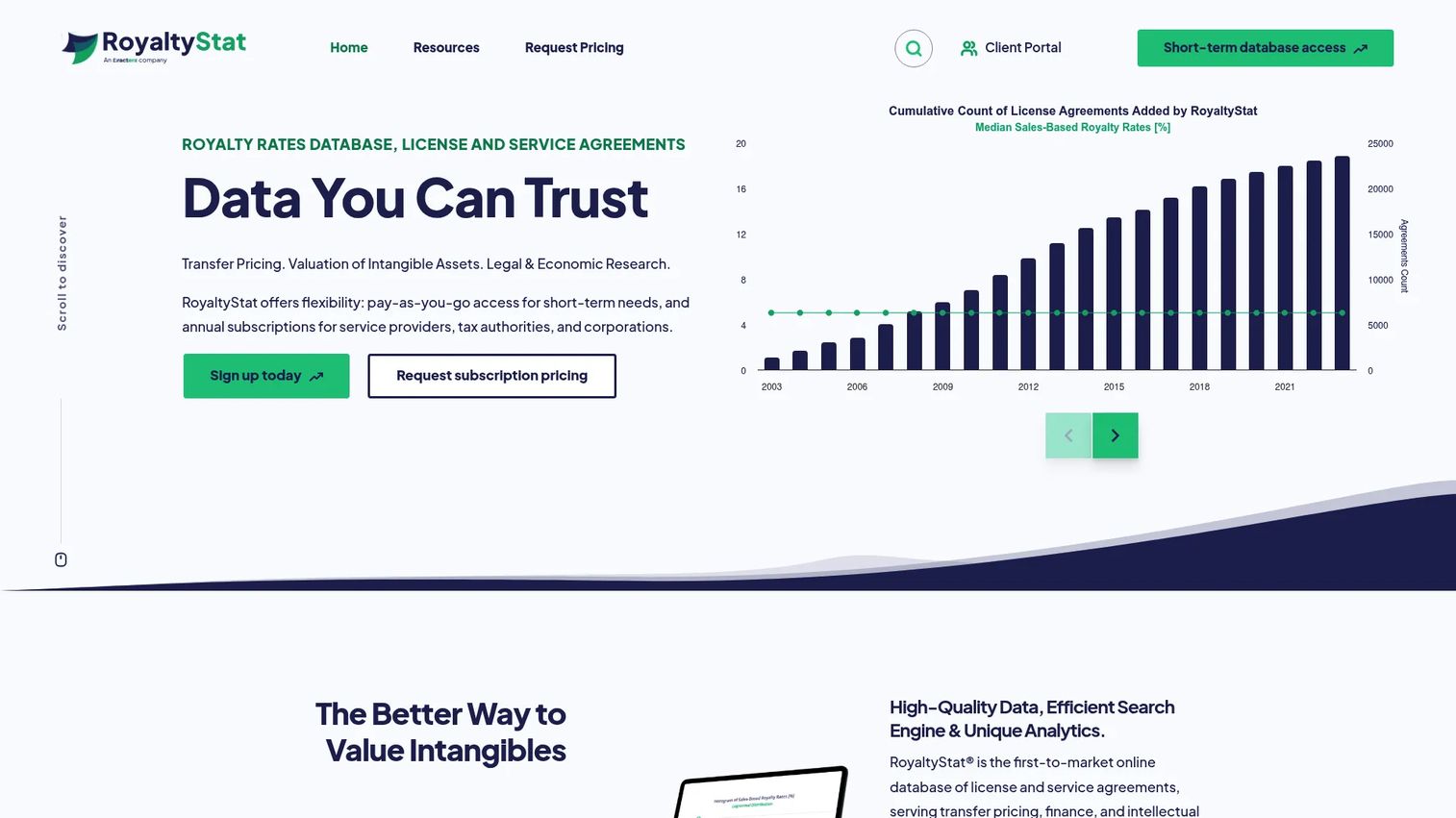
RoyaltyStat is a premium database platform built specifically for royalty-rate and license-agreement benchmarking. It aggregates actual license agreements filed with the SEC, allowing transfer pricing professionals to find comparable transactions for IP, software, technology, and intangible assets. For SaaS companies with cross-border IP arrangements, this is where defensible royalty-rate evidence lives.
Best for: Tax advisors, in-house transfer pricing teams, and valuation professionals benchmarking royalty rates and license agreements for IP-related transactions.
Key features
- Full-text license agreement database with granular industry and technology filters
- Royalty-rate analytics including interquartile range and statistical methods
- Company-level licensing data, subsidiary structure, and financial information
- Industry analysis and patent scatterplot tools
- Unlimited searches and agreement access for subscribers
Why choose RoyaltyStat: If your transfer pricing file relies on royalty-rate evidence, RoyaltyStat gives you sourced, filterable comparables rather than generic benchmarks. It works alongside a documentation platform rather than replacing one.
RoyaltyStat pricing: The subscriptions page does not display pricing figures. Contact RoyaltyStat directly to discuss subscription terms and database access scope.
3. Aibidia
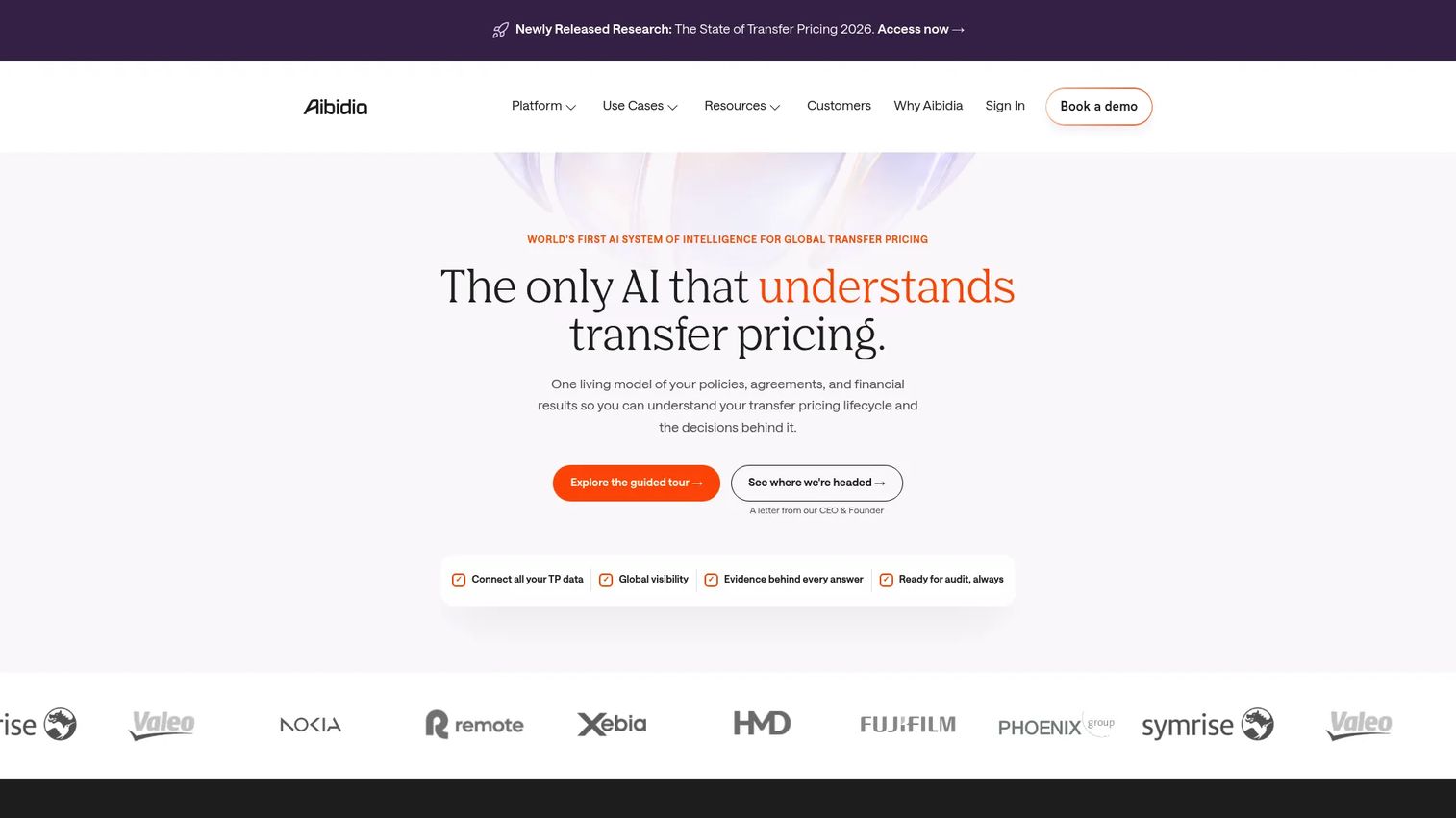
Aibidia is an AI-powered transfer pricing intelligence platform designed for multinational enterprises managing compliance and operational transfer pricing across multiple entities. It connects transfer pricing policies, intercompany agreements, transaction data, and financial results inside a single model, so changes in policy flow through to documentation and monitoring consistently.
Best for: Multinational tax and transfer pricing teams that need a governed, connected platform spanning policy management, documentation, and operational monitoring.
Key features
- Unified model connecting policies, agreements, transactions, and financial results
- Master File, Local File, and Country-by-Country Reporting workflows
- Operational TP monitoring, profitability analysis, and transaction analytics
- Data collection and standardization across entities
- AI-powered analysis supporting documentation and benchmarking
Why choose Aibidia: The platform's strength is connecting the dots that spreadsheet workflows leave disconnected: A policy change in one module propagates correctly to documentation and monitoring. For teams with ten or more entities across multiple jurisdictions, that consistency has real audit value.
Aibidia pricing: Aibidia does not display pricing on its website; fees are agreed in customer contracts. When you contact sales, ask about entity count, jurisdiction coverage, documentation modules, and ERP integration scope.
4. Zanders Transfer Pricing Suite

Zanders provides cloud-based software that automates pricing and documentation for intercompany financial transactions, including loans, cash pools, guarantees, and leases. Where most transfer pricing tools focus on goods and services, Zanders is purpose-built for the treasury side: Bespoke credit rating models, debt capacity analysis, and OECD Chapter X-compliant report generation.
Best for: Multinational treasury and tax teams managing intercompany loans, guarantees, and other financial transactions that require specialized benchmarking and documentation.
Key features
- Automated intercompany loan pricing with Refinitiv comparable search
- Bespoke credit rating models and debt capacity analysis
- Cash pool, guarantee, and lease pricing methodologies
- Automated OECD Chapter X-compliant transfer pricing report generation
- Multi-jurisdiction compliance support for financial transactions
Why choose Zanders: Treasury transfer pricing is a distinct sub-category. Most operational TP platforms handle goods and services well but struggle with the specific benchmarking methodology for intercompany loans. Zanders solves that precise problem. A free trial is available according to the vendor's website.
Zanders Transfer Pricing Suite pricing: Tailored subscription pricing; no numerical figures are displayed. Contact Zanders and ask specifically about financial transaction types, entity count, and report volumes.
5. Armslength.ai
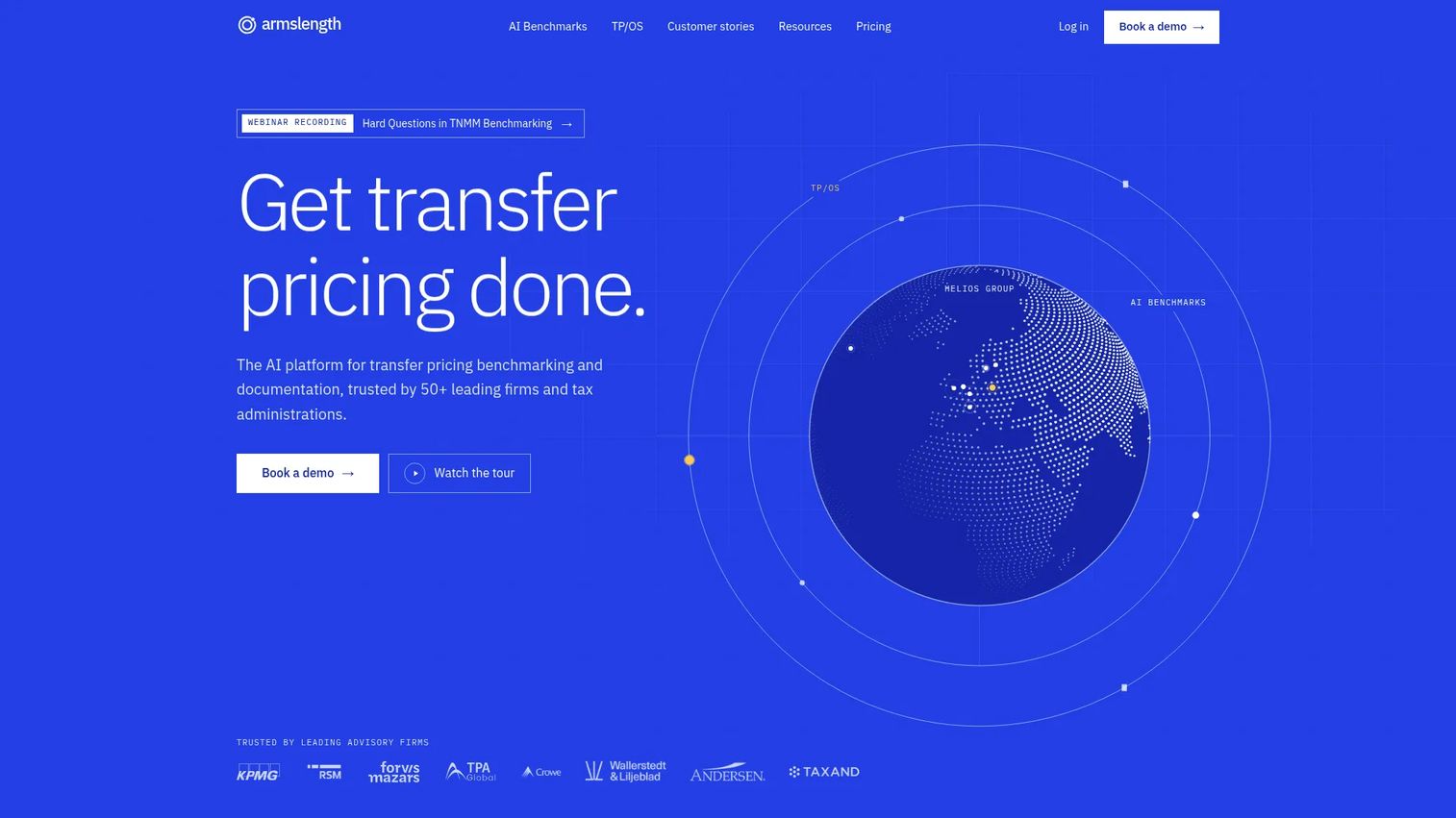
Armslength.ai is an AI-powered platform for transfer pricing benchmarking studies and documentation. It automates comparable-company screening with accept/reject decisions documented in an audit trail, generates branded benchmark reports in PDF and Excel, and supports centralized Local File management with workflow approvals. The emphasis on documented reviewer overrides is a meaningful design choice: The AI accelerates the work, but a human's judgment is recorded at each decision point.
Best for: Transfer pricing advisory firms and in-house tax teams that want AI-assisted benchmarking without sacrificing the documentation trail an auditor will ask for.
Key features
- AI-assisted comparable-company screening with linked evidence
- Accept/reject decisions with rationale and reviewer override logging
- Branded PDF and Excel benchmark report generation
- Centralized Local File management with approvals workflow
- AI-assisted drafting and updating of transfer pricing documentation
Why choose Armslength.ai: The audit trail built around AI decisions is the differentiator. For teams that need to show a tax authority exactly why a comparable was accepted or rejected, that documentation record matters more than raw screening speed.
Armslength.ai pricing: Published plans start at €469 per team per month (Standard, up to 7,500 comparables per year, billed annually). The Pro plan is €829/month and the Max plan is €1,499/month. Custom volume-based pricing is available above the Max tier.
6. EXA AG

EXA AG is Exa Light & Sound GmbH, an event production and media technology company based in Switzerland. Verified research found no operational transfer pricing software or SAP integration offering associated with this entity. The company provides event logistics, equipment rental, and media-technology system integration for live events and installations.
Best for: Event organizers and businesses needing professional AV production or media technology services in Switzerland.
EXA AG pricing: Quote-based for event and installation services. No software pricing applies.
7. TaxModel
TaxModel was a tax software company offering transfer pricing, tax reporting, regulatory compliance, VAT automation, and tax data solutions. The company's website now states that TaxModel has moved following acquisition by Tax Systems, and the original domain is no longer active as an independent product.
Best for: Tax professionals seeking international tax compliance software should investigate what capabilities have been absorbed into Tax Systems' product portfolio following the acquisition.
TaxModel pricing: N/A. The original product is no longer available as a standalone offering.
8. ARKK
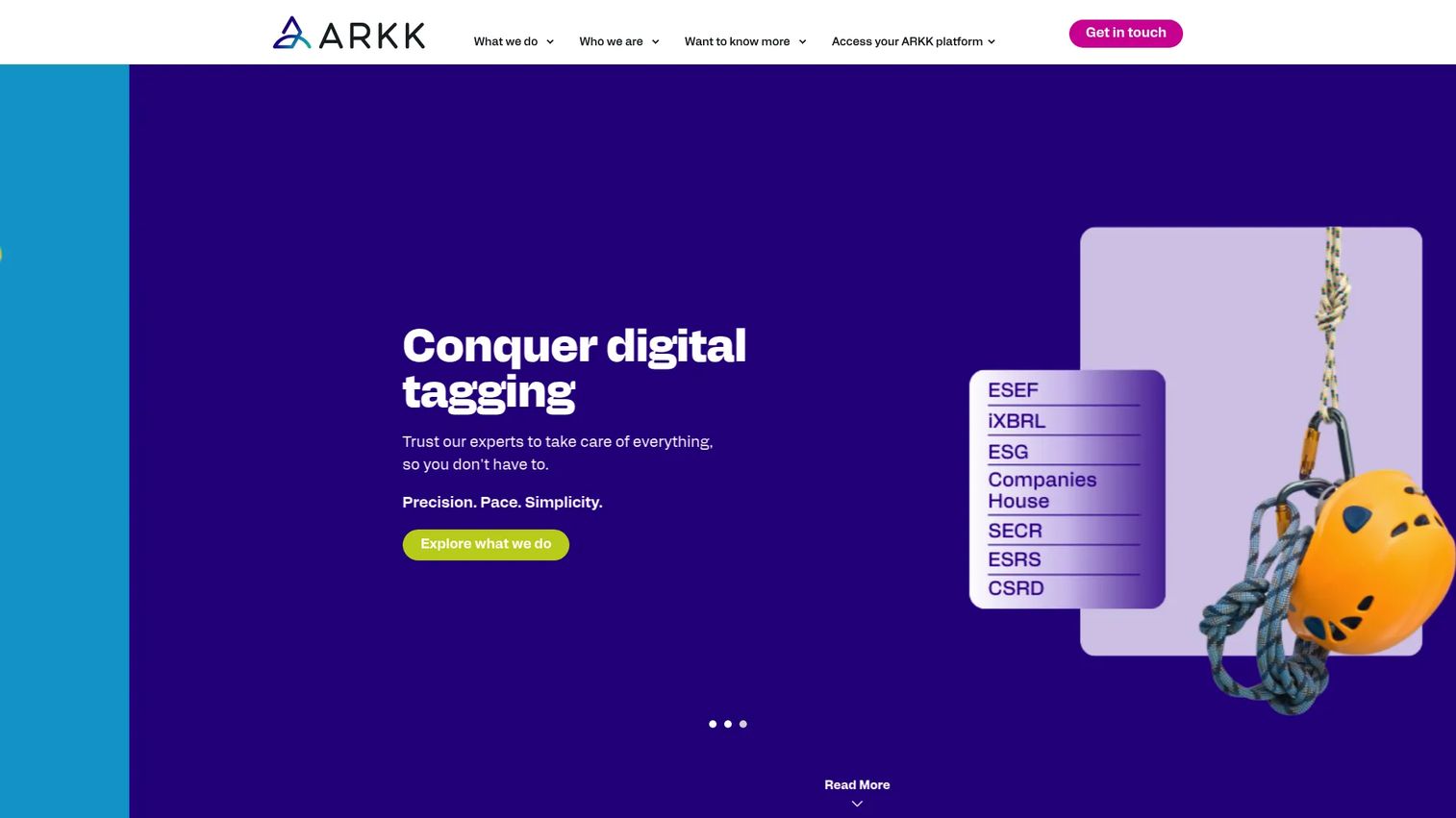
ARKK provides tax automation, regulatory reporting, and digital tagging for finance and compliance teams. The platform is source-agnostic and handles XBRL and XML conversion for regulatory filings, along with ESEF, UKSEF, ESRS, and ISSB digital tagging. ARKK's positioning sits primarily in tax reporting automation rather than operational transfer pricing management or benchmarking.
Best for: Enterprise tax and compliance teams managing regulatory reporting, digital tagging, and automated tax data operations across jurisdictions.
Key features
- Source-agnostic tax automation platform
- XBRL and XML regulatory reporting conversion
- Digital tagging for ESEF, UKSEF, ESRS, and ISSB standards
- Four subscription tiers: Bronze, Silver, Gold, Platinum (for digital tagging)
- Finance and compliance workflow integration
Why choose ARKK: If your primary need is connecting transfer pricing outputs to broader tax reporting and regulatory filing workflows, ARKK addresses that operational layer. It is not a standalone transfer pricing documentation or benchmarking tool, so evaluate it alongside a dedicated TP platform.
ARKK pricing: Digital tagging subscription tiers are described on the website, but numerical prices are not displayed. Contact ARKK sales to discuss which tier fits your reporting volume and jurisdiction scope.
9. Insightsoftware Longview Transfer Pricing
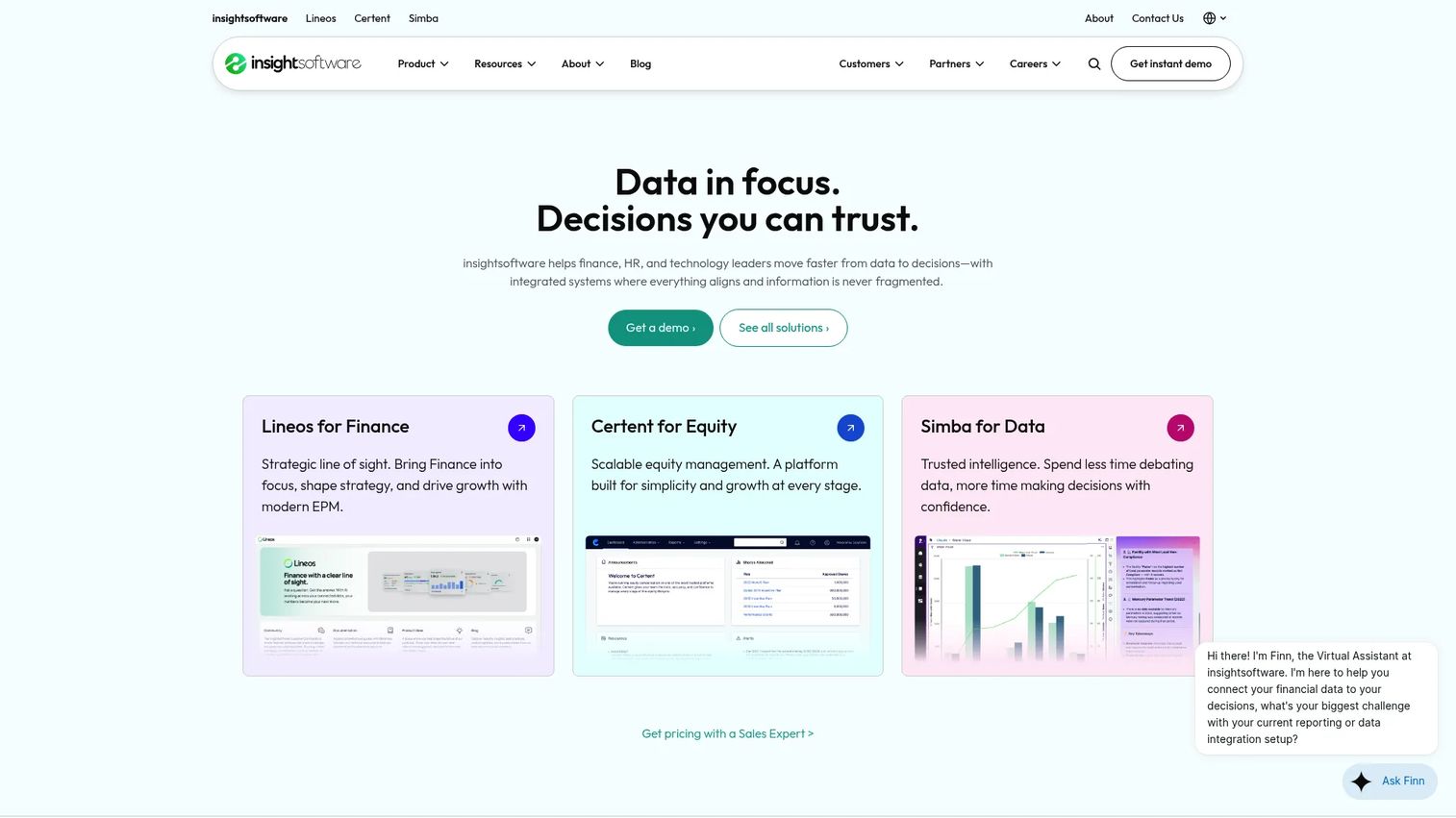
Insightsoftware Longview Transfer Pricing is an operational transfer pricing module built within the Longview finance performance management environment. It integrates data from multiple sources, applies rule-based allocations and segmentation, manages transfer price targets and counterparty adjustments, and automates transfer pricing journal entries. For large organizations already running Longview for tax or financial consolidation, this adds operational TP without introducing a separate system.
Best for: Enterprise finance teams already using or evaluating Longview-style planning and tax infrastructure who want operational transfer pricing integrated into their existing environment.
Key features
- Multi-source data integration with rule-based allocations and segmentation
- Transfer price targets and automated counterparty adjustments
- Automated transfer pricing journal entries across entities
- Reporting and audit support within the Longview environment
- Scenario analysis and planning workflows
Why choose Insightsoftware Longview: The integration case is straightforward: If your finance team already runs Longview for consolidation or tax provisioning, adding operational TP inside the same system avoids a parallel data pipeline. The product earns its place when that integration value is real for your stack.
Insightsoftware Longview Transfer Pricing pricing: Contact Insightsoftware for pricing. The product page directs visitors to request a quote rather than displaying figures.
G2 rating: 4.3/5
10. Reptune
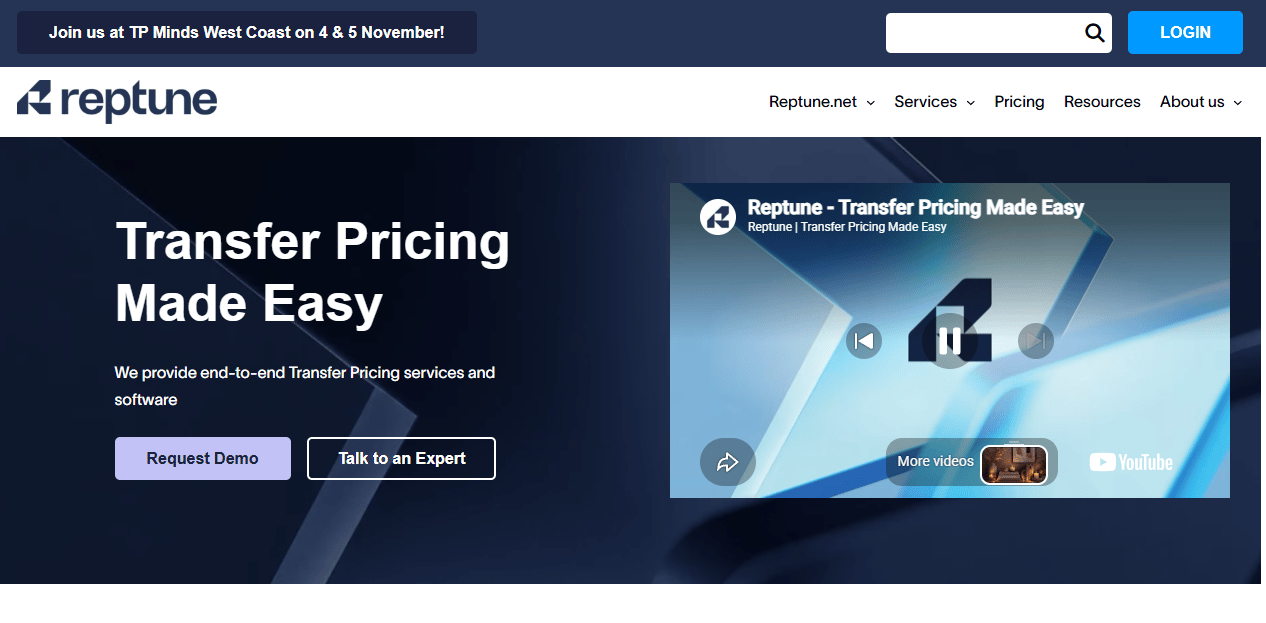
Reptune is a transfer pricing documentation platform that automates Master File and Local File generation, Country-by-Country Reporting, and multi-country documentation workflows. The platform covers regulations for over 170 countries, provides machine translation into 28 languages, and uses an AI writing assistant to draft and update documentation. ISO 27001 certification and Excel-based data exchange make it practical for teams working across jurisdictions with varying data formats.
Best for: Multinational enterprises and tax advisory teams automating multi-country transfer pricing documentation across many entities and jurisdictions.
Key features
- Automated Master File and Local File generation
- Country-by-Country Reporting (CbCR) support
- AI-assisted writing with R-AI assistant
- Country regulations database covering 170+ jurisdictions
- Machine translation into 28 languages and ISO 27001 certification
Why choose Reptune: Documentation at scale is the core use case. If your team manages Local Files for 30 or more entities across different jurisdictions, the automation and translation capabilities reduce the manual effort significantly. A two-week free trial is available for qualifying companies.
Reptune pricing: Three tiers are available (Core, Advanced, Enterprise), differentiated by local-file volume and feature scope. Numerical prices are not displayed. Contact Reptune and ask about local-file count, add-on modules, and service level.
11. Optravis Transfer Pricing Management Tool

Optravis is a SaaS platform built for automated operational transfer pricing at the product and trading-partner level. It handles ex-ante price setting, year-end adjustment calculations, and margin monitoring for manufacturing and product-heavy multinationals. The rules engine covers transfer pricing methods, customs tariffs, and anti-dumping rules, and the system processes data from SAP R/3, SAP S/4HANA, and non-SAP environments.
Best for: Large multinational manufacturing groups that need automated, product-level transfer price calculations and year-end adjustment management.
Key features
- Automated transfer price calculation per product and trading-partner relationship
- Ex-ante price setting, forecasting, and year-end adjustment support
- Rules engine covering TP methods, customs tariffs, and anti-dumping rules
- Data modeling for SAP R/3, SAP S/4HANA, and non-SAP systems
- Invoice- and material-level drill-down for audit and customs documentation
Why choose Optravis: The product-level granularity is what distinguishes Optravis from documentation-first platforms. For manufacturing-heavy multinationals, transfer price calculations at the SKU or trading-partner level directly affect customs, landed costs, and audit exposure. Software-focused SaaS companies with simpler intercompany structures may find the manufacturing depth unnecessary.
Optravis Transfer Pricing Management Tool pricing: Pricing is contact-based and depends on entities, modules, and service frequency. Contact Optravis directly for a scoped proposal.
G2 rating: 5.0/5 (based on 1 review).
12. Intercompany.io
Intercompany.io appears in multiple transfer pricing software roundups as an intercompany process automation platform. At the time of writing, the official website could not be verified, and no matching G2 or Capterra profile was confirmed. Feature information was not verifiable from first-party sources during research.
Best for: Cannot be confirmed at this time.
If you are evaluating this tool, check the vendor's current website and request documentation of features, integration scope, and pricing directly from their sales team before including it in a shortlist.
13. t0 by Supernomial

t0 by Supernomial is an AI-native transfer pricing platform for consultancies and in-house tax teams. It covers the full workflow from planning through filing: Client and engagement management, a secure data vault, dynamic information requests, AI-assisted economic analyses, and audit-defensible reports with live-linked data. The platform is highly configurable, with implementation scoped to the team's workload, agent selection, and data environment.
Best for: Transfer pricing consultancies and in-house tax teams that need a customizable, AI-assisted platform spanning compliance, planning, analysis, and operational workflows.
Key features
- Client, engagement, timeline, and custom-property management
- Secure data vault with advisory and client storage
- Dynamic information requests with real-time editing
- AI-assisted economic analyses connected to vaults and external systems
- Audit-defensible reports, memos, and tax forms with live-linked data
Why choose t0: The platform is designed for teams where the transfer pricing work itself is the product, whether that is an advisory firm or a sophisticated in-house function. The live-linked data across reports means a single source update propagates to all dependent documents, which reduces the version-control risk that plagues large documentation engagements.
t0 by Supernomial pricing: Customized pricing includes a one-time implementation fee plus recurring license and upkeep fees. Contact Supernomial with details on team size, workload volume, and integration requirements.
G2 rating: 5.0/5 (based on 1 review).
14. SyncDay Transfer Pricing Platform
SyncDay appears in transfer pricing software directories as a dedicated platform for transfer pricing operations and documentation. At the time of writing, the vendor's homepage resolved to a domain-for-sale page rather than an active product website. No first-party feature information, pricing, or G2 profile could be verified.
Best for: Cannot be confirmed at this time.
SyncDay Transfer Pricing Platform pricing: N/A (website unverifiable at time of writing).
If you are researching this tool, verify current website status and contact the vendor directly before including it in any evaluation.
15. nicetec Operational Transfer Pricing Software
nicetec offers insightpro, an operational transfer pricing solution focused on automating intercompany service charging for multinational companies. The platform integrates with ERPs and other systems via REST, SQL databases, flat files, and XLSX, then automates cost allocation, invoicing, ERP posting, foreign currency handling, markups, and true-up calculations. The end-to-end value-flow analysis and transfer pricing matrix give finance teams visibility into where margins land across entities.
Best for: Multinational companies needing automated, auditable intercompany service charging and operational transfer pricing controls for shared services and cost allocations.
Key features
- ERP integration via REST, SQL, flat files, and XLSX
- Configurable cost allocation with approval workflows and simulation
- Automated charging, invoicing, and ERP posting with foreign-currency support
- Markup and true-up calculation automation
- End-to-end value-flow analysis and transfer pricing matrix dashboards
Why choose nicetec: If your transfer pricing problem is primarily about allocating shared service costs across entities correctly and automatically, insightpro addresses that operational layer specifically. It is not a documentation or benchmarking tool, so expect to use it alongside a documentation platform for Master File and Local File work.
nicetec pricing: Pricing was not displayed on verified product pages. Contact nicetec directly and ask about entity count, integration complexity, and implementation timeline.
16. PlaidCloud Intercompany and Transfer Pricing software
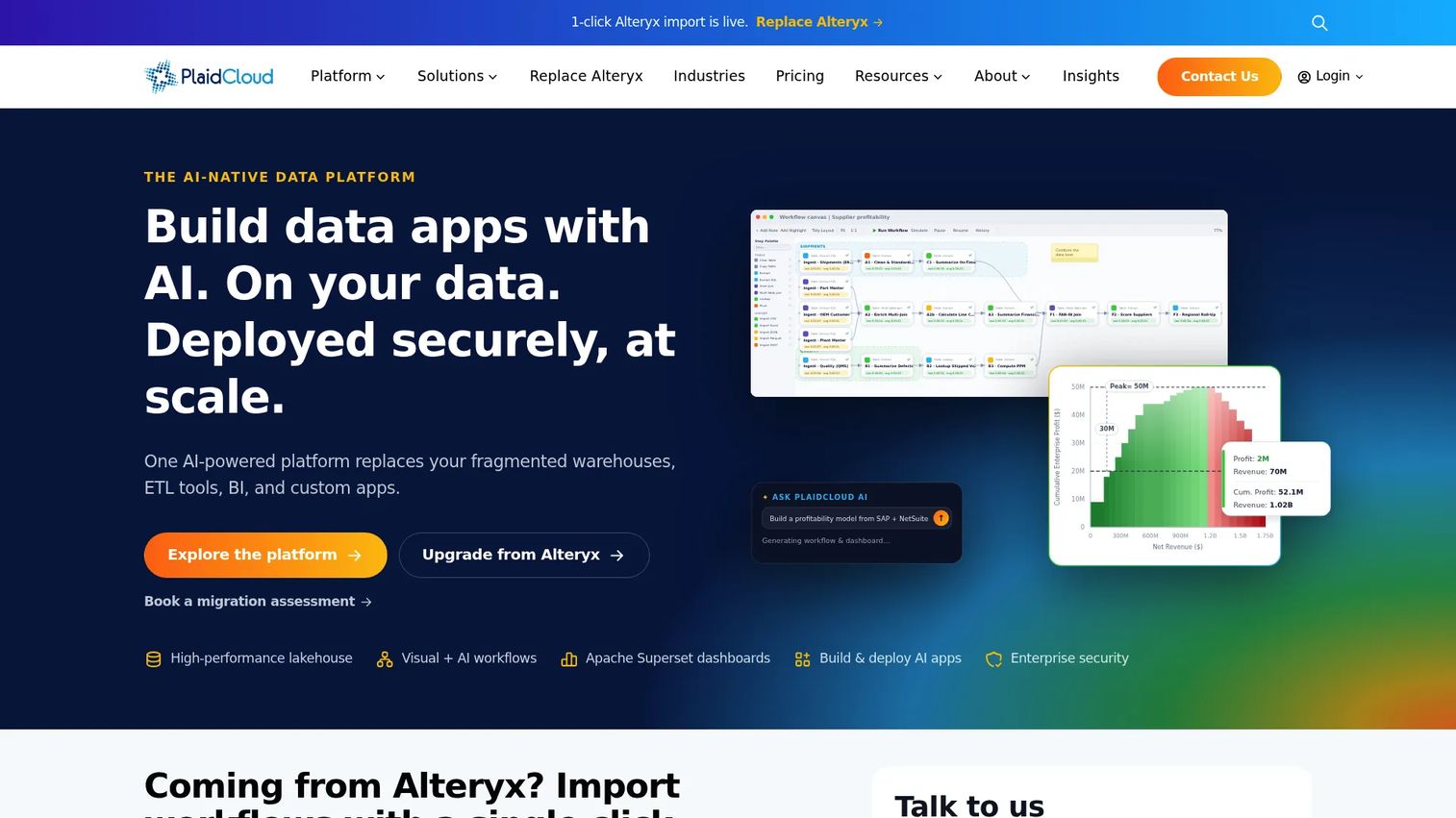
PlaidCloud automates intercompany invoicing and operational transfer pricing across multiple ERP systems and entities. The platform handles automated transfer pricing calculations, price recommendations, coordinated journal entries across ERP systems, driver-based allocations, segmented P&L reporting, and VAT/GST/withholding-tax calculations. Country-by-country reporting and detailed audit traceability are also included.
PlaidCloud is notable in this list for having the most transparent pricing structure among the tools covered.
Best for: Multinational finance and tax teams that want intercompany invoicing, operational transfer pricing, and multi-ERP coordination in a single cloud platform.
Key features
- Automated transfer pricing calculations and price recommendations
- Intercompany invoicing with coordinated journal entries across ERP systems
- Driver-based allocations and segmented P&L reporting
- VAT, GST, withholding tax, and local tax calculations
- Country-by-country reporting and audit traceability
Why choose PlaidCloud: The combination of multi-ERP intercompany automation and transfer pricing calculations in one platform is unusual. For finance teams managing high intercompany transaction volumes across different ERP environments, PlaidCloud reduces the reconciliation work that otherwise falls on the controller's team at month-end.
PlaidCloud pricing: A permanent free workspace is available. Paid plans start at $800/month (Starter, billed annually) or $900/month billed month-to-month. The Team plan is $5,000/month annually or $6,000/month billed monthly. Business and Enterprise tiers use custom pricing.
G2 rating: 4.6/5 (based on 6 reviews).
17. VSTN OTP Suite
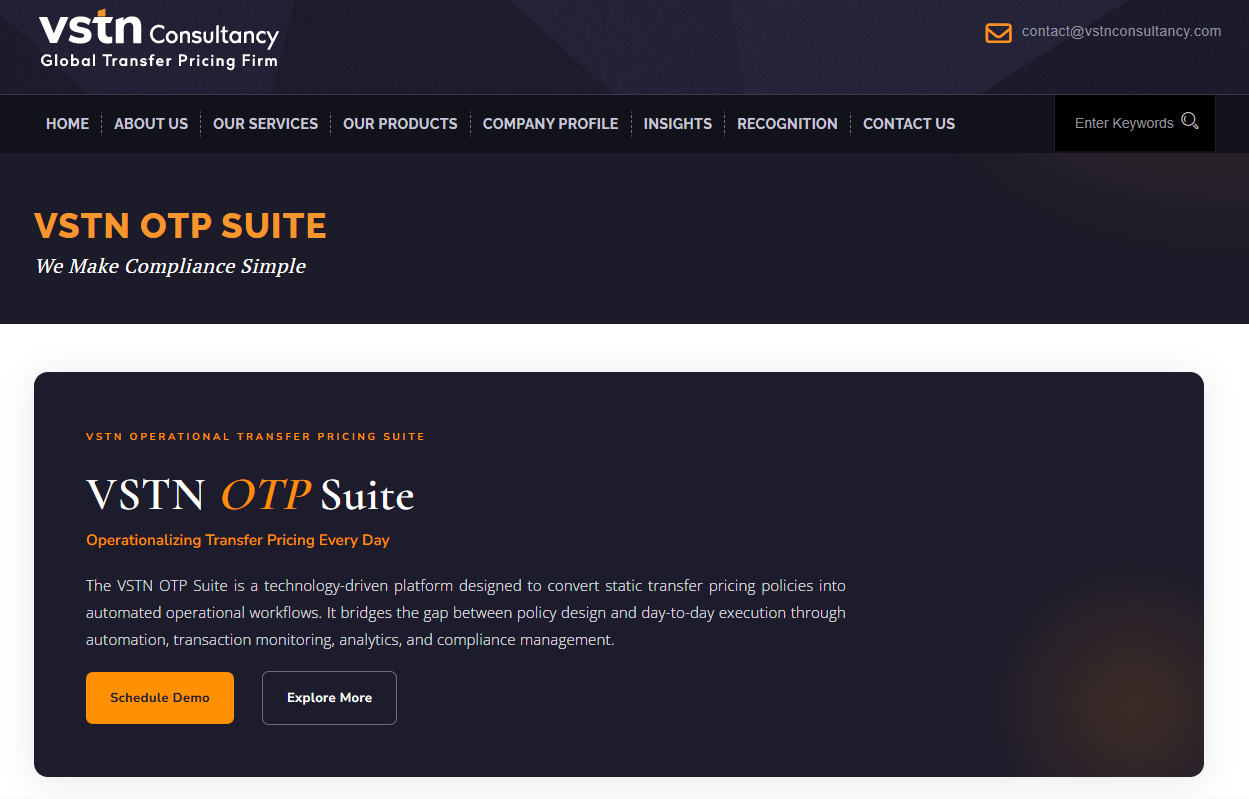
VSTN OTP Suite is a technology-driven operational transfer pricing platform that converts transfer pricing policies into automated operational workflows. Core capabilities include ERP and financial-system integration, real-time intercompany transaction monitoring, automated transfer pricing calculations, margin monitoring and variance analysis, periodic and year-end adjustments, and centralized documentation storage. The platform is built for continuous operational TP management rather than annual documentation cycles.
Best for: Multinational organizations needing continuous operational transfer pricing monitoring, automated calculations, and adjustment management across entities and jurisdictions.
Key features
- ERP and financial-system integration with automated transaction extraction
- Real-time intercompany transaction monitoring
- Automated transfer pricing calculations and margin monitoring
- Periodic and year-end transfer pricing adjustment workflows
- Centralized documentation repository and compliance reporting dashboards
Why choose VSTN OTP Suite: The operational framing distinguishes VSTN from documentation-first tools. For finance teams that have a documented policy but lack the infrastructure to verify that actual transactions follow it throughout the year, continuous monitoring closes that gap.
VSTN OTP Suite pricing: Pricing was not displayed on verified product pages. Contact VSTN directly and ask about entity scope, ERP environments, monitoring frequency, and implementation approach.
Considerations when choosing transfer pricing software
Match the tool to the transfer pricing job
Documentation software, benchmarking databases, operational TP platforms, and intercompany accounting tools are different purchases for different problems. A benchmarking database like RoyaltyStat will not monitor whether your actual intercompany margins track policy. An operational TP platform like VSTN or Longview will not replace the royalty-rate research your IP documentation requires. Identify your primary gap first, then shortlist tools built for that job.
Check ERP and financial-system integration
Ask every vendor how the tool pulls transaction data from your ERP, billing system, and general ledger. For SaaS companies, the relevant data points are recurring revenue recognized by entity, R&D costs by cost center, support headcount allocation, sales commission flows, and management fee calculations. A tool that requires manual data uploads will become a bottleneck the moment your transaction volume grows.
Verify documentation coverage by jurisdiction
Not all documentation software covers every country format equally. Ask specifically about the jurisdictions where you have entities or plan to open them. Confirm the tool generates Master Files and Local Files in the formats your advisors expect, and check whether language support is machine translation or human-reviewed. Avoid any vendor that implies their software guarantees compliance: Documentation supports defensibility, but tax positions still require expert judgment.
Evaluate workflow controls and audit trail depth
Approvals, version control, change logs, and user permissions matter in two scenarios: A tax authority audit and an investor diligence process. Both require you to show not just what the documentation says, but when it was created, who reviewed it, and what changed. Tools without granular version history create a documentation gap that advisors cannot easily close after the fact.
Model implementation cost alongside subscription cost
The subscription fee is rarely the largest cost in the first year. Data cleanup, entity mapping, ERP integration work, advisory support to configure the policy rules, and finance-team adoption time all add up. Ask vendors for a realistic implementation timeline and the typical profile of internal effort required. For a Series B company with a lean finance team, tools that can produce meaningful output within the first quarter are materially more valuable than complex platforms with six-month implementation cycles.
Conclusion
Transfer pricing software is not one category. The right tool depends on which part of the job is currently most exposed.
For end-to-end lifecycle management, Ryan transfer pricing software covers policy, monitoring, and documentation. For royalty and license benchmarking, RoyaltyStat provides the sourced comparable evidence that IP-heavy documentation requires. For multinational operational TP across many entities, Aibidia and Longview both offer governed, connected platforms. For treasury-specific transactions, Zanders handles the financial-transaction benchmarking that general TP tools skip. For AI-assisted benchmarking with documented audit trails, Armslength.ai offers published pricing and a clear methodology. For intercompany invoicing and multi-ERP coordination, PlaidCloud is the most transparent on price and provides a free entry point.
Several tools in this list (EXA AG, TaxModel, Intercompany.io, SyncDay) could not be verified as active transfer pricing products at the time of writing. Confirm current status directly with each vendor before investing evaluation time.
The decision memo to your CFO should start with one question: Is the biggest risk documentation completeness, operational drift during the year, benchmarking defensibility, or intercompany process control? Shortlist around that answer.
FAQs
Transfer pricing software helps multinational companies set, calculate, monitor, document, and defend prices for transactions between related legal entities, including intercompany services, royalties, loans, and management fees. It supports the arm's length standard by providing benchmarking data, documentation workflows, and audit trails. The category ranges from benchmarking databases to full operational transfer pricing platforms.
Operational transfer pricing software monitors whether actual intercompany transaction margins track the company's agreed pricing policy throughout the year. Unlike documentation software, which produces annual compliance files, operational TP platforms pull data from ERP and financial systems, flag margin deviations as they occur, and support period-end adjustments before year-end corrections become large.
A SaaS company typically needs transfer pricing infrastructure when it adds a second legal entity in a different tax jurisdiction. Common triggers include opening a sales subsidiary in Europe, moving IP ownership to a low-tax holding entity, hiring R&D staff through a foreign entity, or charging intercompany management fees between a parent and operating subsidiaries. Involve a tax advisor before the structure becomes complex; software organizes and monitors the position the advisor designs.
Documentation software produces the compliance files tax authorities request: Master Files, Local Files, country-specific annexes, and benchmarking reports. Operational software monitors the calculations and margin outcomes against policy targets during the year. Some platforms cover both; many specialize in one. A company that only produces documentation but does not monitor operational margins may find year-end adjustments are large and poorly evidenced.
No. Software supports consistency, documents workflows, maintains audit trails, and applies the policies your advisors design. Tax positions still require expert judgment, jurisdiction-specific regulatory interpretation, and review by qualified advisors. No software vendor can guarantee that a tax authority will accept a transfer pricing position, and this article does not constitute legal or tax advice.
The most decision-relevant features for a growing SaaS company are ERP data integration (so the system pulls real transaction data rather than relying on manual uploads), benchmarking access or comparable research support, Master File and Local File generation for the jurisdictions where you operate, and an audit trail that documents who approved what and when. For companies with significant intercompany service allocations, cost-allocation automation and true-up calculation support become important.
Most vendors use custom pricing because the cost changes significantly based on entity count, jurisdictions covered, ERP integration complexity, module scope, and implementation services required. When you contact vendors, ask specifically about per-entity pricing, whether documentation modules are priced separately from operational monitoring, what implementation typically costs, and what renewal terms look like. PlaidCloud is the exception in this list, with a published free plan and paid tiers starting at $800/month. Armslength.ai publishes benchmarking plan pricing starting at €469/month.
No. Software organizes data, runs calculations, automates workflows, and produces documentation. Advisors design the transfer pricing policy, interpret evolving regulations in each jurisdiction, advise on structuring decisions, defend positions in audits, and handle the complex judgment calls that software cannot make. The right relationship is software handling the operational and documentation work that advisors used to do manually, so advisor time goes toward higher-value review and defense work rather than file assembly.