You open five teletherapy tabs. They all look the same. Licensed therapists, secure video, insurance accepted, matched in minutes. So you close the tabs and tell yourself you will decide next week.
That is the real problem with choosing therapy online. Not scarcity. Sameness. Every option promises the same headline, so the actual differences hide in the fine print: which insurance they take, whether they offer psychiatry, how fast you get matched, and what you actually pay after the first month.
The market keeps growing because the demand is real. The global online therapy services market was valued at over USD 5.1 billion in 2025 and is expected to reach USD 17.6 billion by 2035, according to Research Nester (2025). More people are choosing teletherapy every year, which means more platforms, and more decisions that look interchangeable until you dig in.
This guide cuts through that. We compare seven teletherapy platforms on the criteria that actually change your experience, so you can pick the best online therapy fit without opening a dozen tabs again.
What's inside
This guide is for anyone comparing online therapy platforms before committing, plus providers evaluating software to deliver teletherapy. We included both consumer therapy services and provider-facing platforms for telehealth, because the keyword covers both.
We chose the seven based on four criteria:
- Insurance support and pricing transparency
- Care modalities offered (video, messaging, therapy plus psychiatry)
- Privacy, security, and HIPAA posture
- Breadth of support and how matching or onboarding works
Every price, rating, and feature comes from each platform's own pages, verified in 2026.
TL;DR
- Best for insurance-first buyers: Grow Therapy, built around in-network matching and low insured session costs.
- Best for therapy plus psychiatry: Brightside Health, which offers talk therapy, medication, and combined care paths.
- Best for practice management and provider workflows: TheraPlatform, an all-in-one EMR with HIPAA-compliant video for therapists.
- Best for messaging-first care: Talkspace, where async messaging and live video sit side by side.
- Best for fast self-serve booking: Sesame Care, a cash-pay marketplace with upfront prices and no insurance billing.
- Bottom line: The right platform depends on your insurance, whether you need psychiatry, and how you want to talk to a therapist. Shortlist two or three and compare on those three axes.
What is a teletherapy platform
A teletherapy platform is software that delivers mental health care remotely, connecting clients with licensed therapists online through video, messaging, or phone, and in some cases psychiatry and medication management.
Readers run into two categories when they search for one.
Consumer therapy services and care platforms. These are the platforms you sign up for as a patient. You get matched to a therapist, book sessions, and pay through subscription, insurance, or per-visit fees. Talkspace, BetterHelp, Grow Therapy, Brightside Health, Amwell, and Sesame Care fit here.
Provider software for delivering teletherapy. This is what a therapist or practice uses to run their business. It bundles the video, scheduling, notes, and billing into one back-office system. TheraPlatform is the example on this list.
Core features you will see across both categories:
- Video sessions with a licensed therapist
- Secure messaging, sometimes async, sometimes live chat
- Therapist matching by specialty, availability, and style
- Insurance support or cost estimates
- Scheduling and automated reminders
- Psychiatry or medication management, where relevant
The line between the two blurs sometimes. Marketplaces like Grow Therapy handle the provider workflow behind the scenes so you never see it. But knowing which side you are shopping on saves you a lot of wasted clicks.
When to use a teletherapy platform
When you want care without commuting
The obvious win is speed. No drive, no waiting room, no coordinating your day around a 50-minute slot across town. You take the session from your living room or your car on a lunch break.
The quieter win is privacy and flexibility. Nobody sees you walk into an office. You can book evenings and weekends on many platforms, which matters when your schedule does not bend for standard clinic hours.
When insurance matters
If you have coverage, insurance changes the whole calculation. A platform that takes your plan in-network can drop a session from a few hundred dollars to a copay, sometimes zero.
Before committing, check three things: whether the platform bills your specific plan, what your copay looks like, and whether their claims process actually works with your insurer. Headline pricing is meaningless if your plan covers it differently.
When you need different care formats
Not everyone wants the same thing. Some people want a weekly video call. Others want to message a therapist through the week and get a reply the next working day. Some need audio-only because video feels like too much.
And some need more than talk therapy. If you want therapy and psychiatry together, whether that is medication management alongside counseling, only a subset of platforms support both under one roof. Decide what format you need first, then filter.
Comparison table
Here is how the seven platforms stack up on the criteria that matter. Pricing reflects public rates or insured estimates as of 2026. Ratings come from each platform's live G2 listing where one exists.
| # | Product | Best for | Key differentiator | Pricing | G2 rating |
|---|---|---|---|---|---|
| 1 | Talkspace | Messaging-first therapy with optional live video | Async messaging plus psychiatry under one account | From $69/week; psychiatry priced per session | 3.9/5 |
| 2 | TheraPlatform | Providers and small practices running teletherapy | All-in-one EMR with HIPAA-compliant video and billing | From $19.50/month; 30-day free trial | 3.9/5 |
| 3 | BetterHelp | Individuals wanting flexible, accessible therapy | Large therapist network with switch-anytime matching | $70–$100/week subscription | Not listed |
| 4 | Grow Therapy | Insurance-first buyers prioritizing cost | In-network matching with insured cost estimates | Avg $21/session with insurance | Not listed |
| 5 | Brightside Health | Therapy plus psychiatry and combined care | Structured depression and anxiety treatment paths | From $95/month (psychiatry) | Not listed |
| 6 | Amwell | Broad telehealth including behavioral health | Enterprise virtual care across primary, urgent, and mental health | Contact for pricing | 3.5/5 |
| 7 | Sesame Care | Fast, cash-pay self-serve booking | Upfront per-visit pricing with no insurance billing | From $34 per visit | Not rated |
Best teletherapy platforms for 2026
1. Talkspace
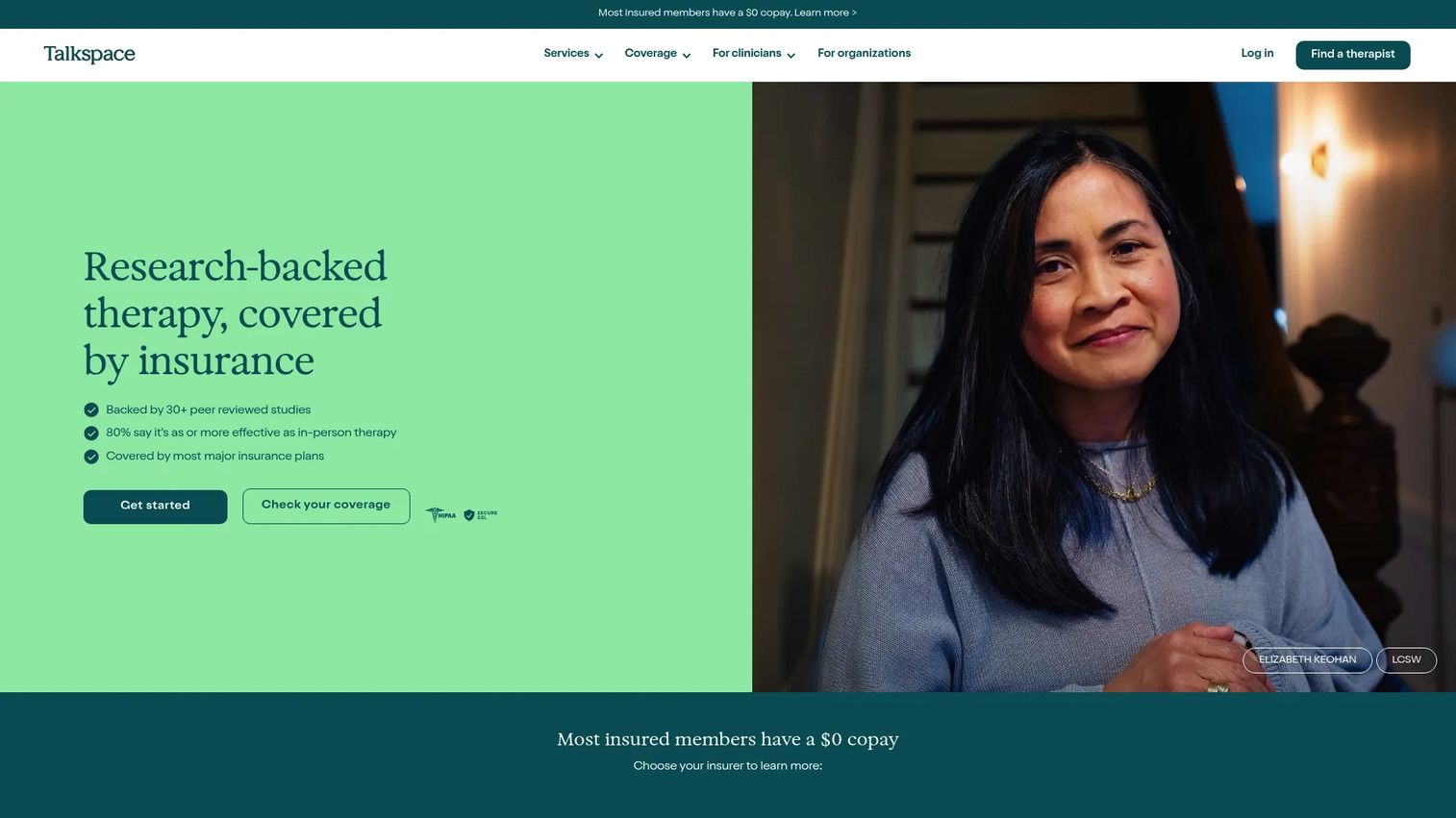
Talkspace is an online therapy and psychiatry platform built around flexible messaging. You get matched to a licensed therapist and can send text, voice, and video messages, with a response typically within one working day, then layer live video sessions on top. It supports therapy and psychiatry, so you can add medication management without leaving the app.
Best for: People who want messaging-first support with the option to book live video and psychiatry in the same place.
Key strengths
- Async text, voice, and video messaging with therapist replies within one working day
- Live video therapy sessions on higher plans
- Psychiatry evaluations and medication management
Why choose Talkspace: If you value writing to your therapist between sessions more than a fixed weekly call, Talkspace fits. The messaging-first model suits people who process in writing and want care that flexes around a busy week.
Talkspace pricing: Out-of-pocket therapy plans start at $69/week for messaging only, $99/week for video plus messaging, and $109/week for video, messaging, and workshops. Psychiatry is priced separately, with an initial evaluation at $299 and follow-up video sessions at $175. Insurance may reduce your copay, and some members see a $0 copay depending on their plan.
2. TheraPlatform
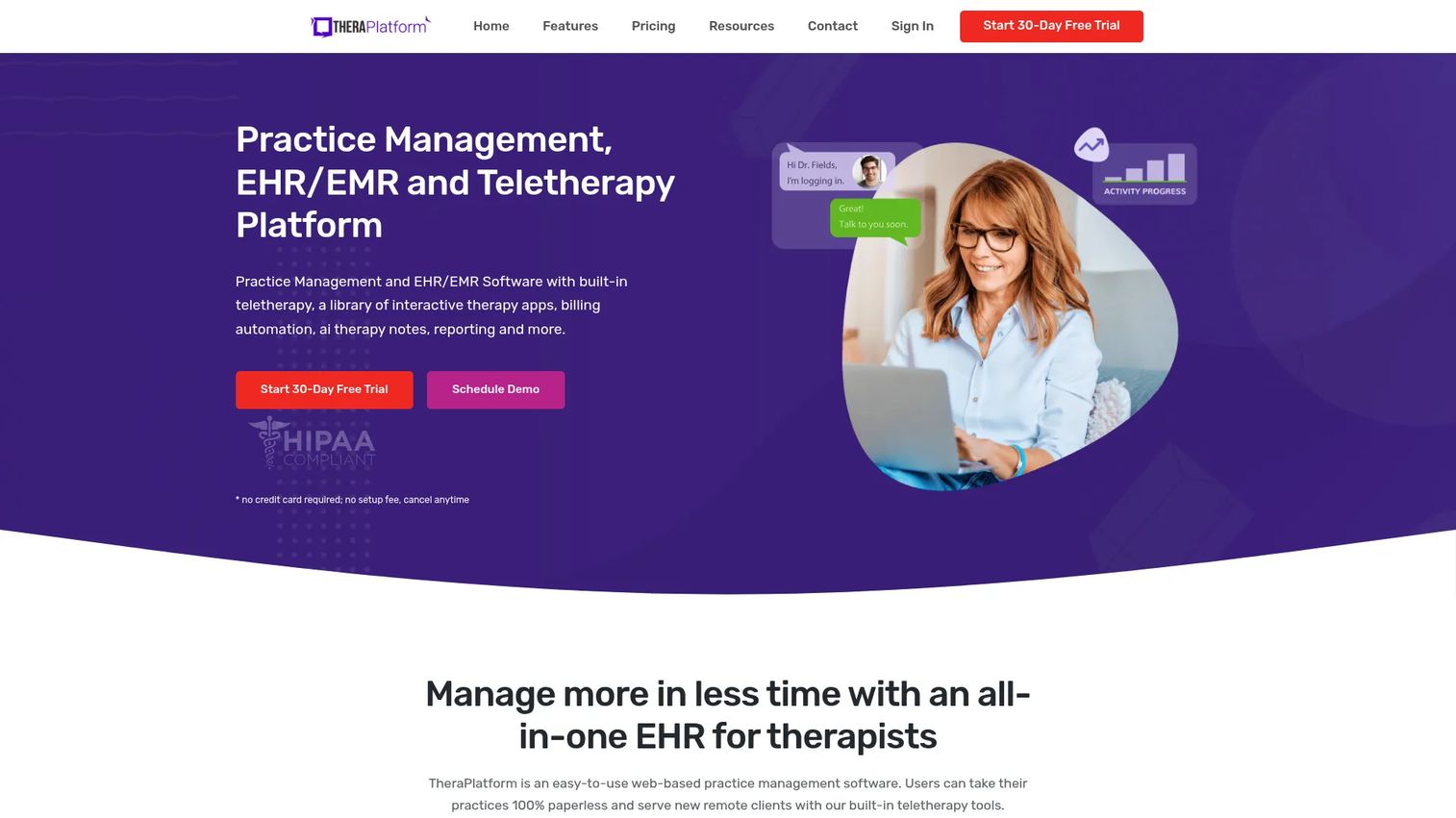
TheraPlatform is the provider side of the equation. It is a practice management, EHR/EMR, and teletherapy platform built for therapists and mental health practices. Instead of matching you with a counselor, it gives clinicians the back office to run their own remote practice: HIPAA-compliant video, scheduling, documentation, billing, and insurance claims in one system.
Best for: Therapy and mental health practices that need an all-in-one EMR with telehealth built in.
Key strengths
- HIPAA-compliant video conferencing for sessions
- Scheduling and a client portal
- Documentation, billing, and insurance claims in one place
Why choose TheraPlatform: If you are a provider rather than a patient, this is the operational layer that ties the workflow together. It suits solo therapists and small practices who want scheduling, notes, and claims without stitching together three separate tools.
TheraPlatform pricing: The Basic plan starts at $19.50/month, Pro at $34.50/month, and Pro Plus at $39.50/month. All plans include scheduling, documentation, billing, and teletherapy features, with a 30-day free trial to test the workflow before committing.
3. BetterHelp

BetterHelp is one of the largest online counseling services, connecting people with licensed therapists through messaging, phone, live chat, and video. The pitch is accessibility: a short questionnaire, a therapist match, and care that starts fast. If your first match does not click, you can switch therapists anytime without restarting the whole process.
Best for: Individuals who want remote, flexible therapy with licensed counselors and an easy way to start.
Key strengths
- Licensed therapist matching from a large network
- Messaging plus live chat, phone, and video sessions
- Switch therapists anytime
Why choose BetterHelp: The strength here is convenience and reach. Starting care takes minutes, and the large network means shorter waits for a match. Because it runs on a subscription rather than insurance billing, check that the format and cadence fit how you actually want to work with a therapist before you commit.
BetterHelp pricing: Individual therapy runs on a subscription model, billed weekly or monthly, in the range of $70–$100/week. The exact price varies by location, therapist availability, preferences, and any active promotions or discounts.
4. Grow Therapy

Grow Therapy is an insurance-first marketplace that connects clients with in-network providers for both therapy and medication support. The whole experience is built around coverage and cost transparency. You filter therapists by specialty, availability, and style, then see an insurance-based estimate of what you will actually pay before you book.
Best for: People who want therapy or medication support with clear, insurance-backed cost transparency.
Key strengths
- Find therapists by specialty, availability, style, and more
- Insurance-based cost estimates with self-pay options
- Talk therapy and medication support
Why choose Grow Therapy: If insurance is the deciding factor, this is the model built for you. The upfront insured estimate removes the biggest anxiety in online therapy, which is not knowing the real cost until the bill arrives.
Grow Therapy pricing: Grow's public site reports an average session cost of $21 with insurance. Self-pay options exist, and estimates are shown per provider based on your coverage, so what you see is tied to your specific plan rather than a flat subscription.
5. Brightside Health
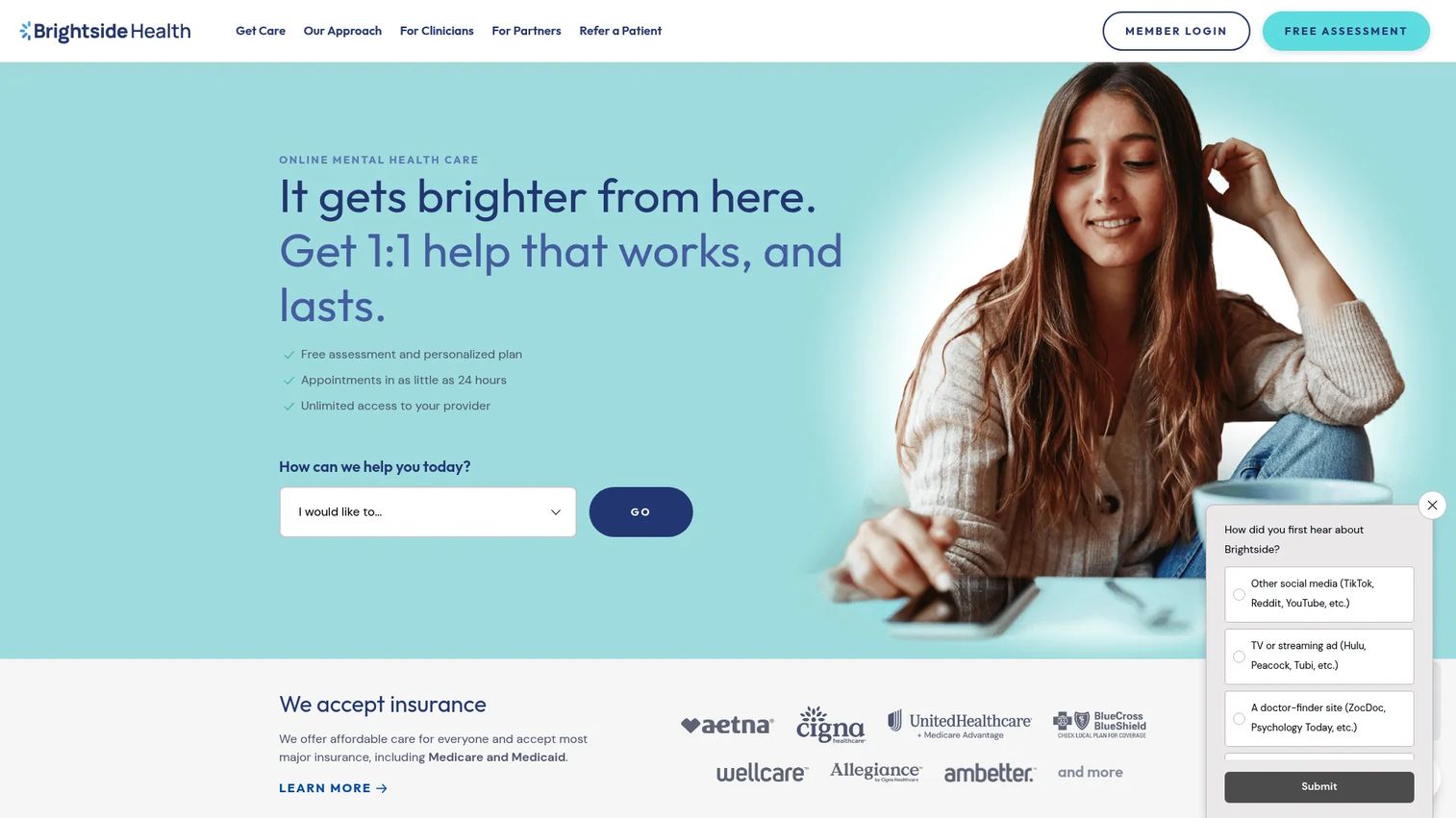
Brightside Health is an online mental health provider focused on treatment for depression, anxiety, and related conditions. It offers psychiatry, therapy, and combined care, which makes it a strong fit when you want structured treatment rather than open-ended counseling. You start with a free three-minute assessment, get matched to a licensed provider, and continue through secure video visits and in-app messaging.
Best for: People seeking online treatment for depression, anxiety, or related needs, especially those who want both talk therapy and medication.
Key strengths
- Free three-minute assessment to start
- Licensed provider matching
- Secure video visits and in-app messaging
Why choose Brightside Health: The combined care path is the differentiator. If you know you want therapy and psychiatry working together, having both under one provider avoids the coordination headache of managing two separate services.
Brightside Health pricing: Self-pay plans are listed at $95/month for psychiatry, $299/month for therapy, and $349/month for psychiatry plus therapy. Insurance may reduce out-of-pocket cost, and some services may be covered depending on your plan.
6. Amwell
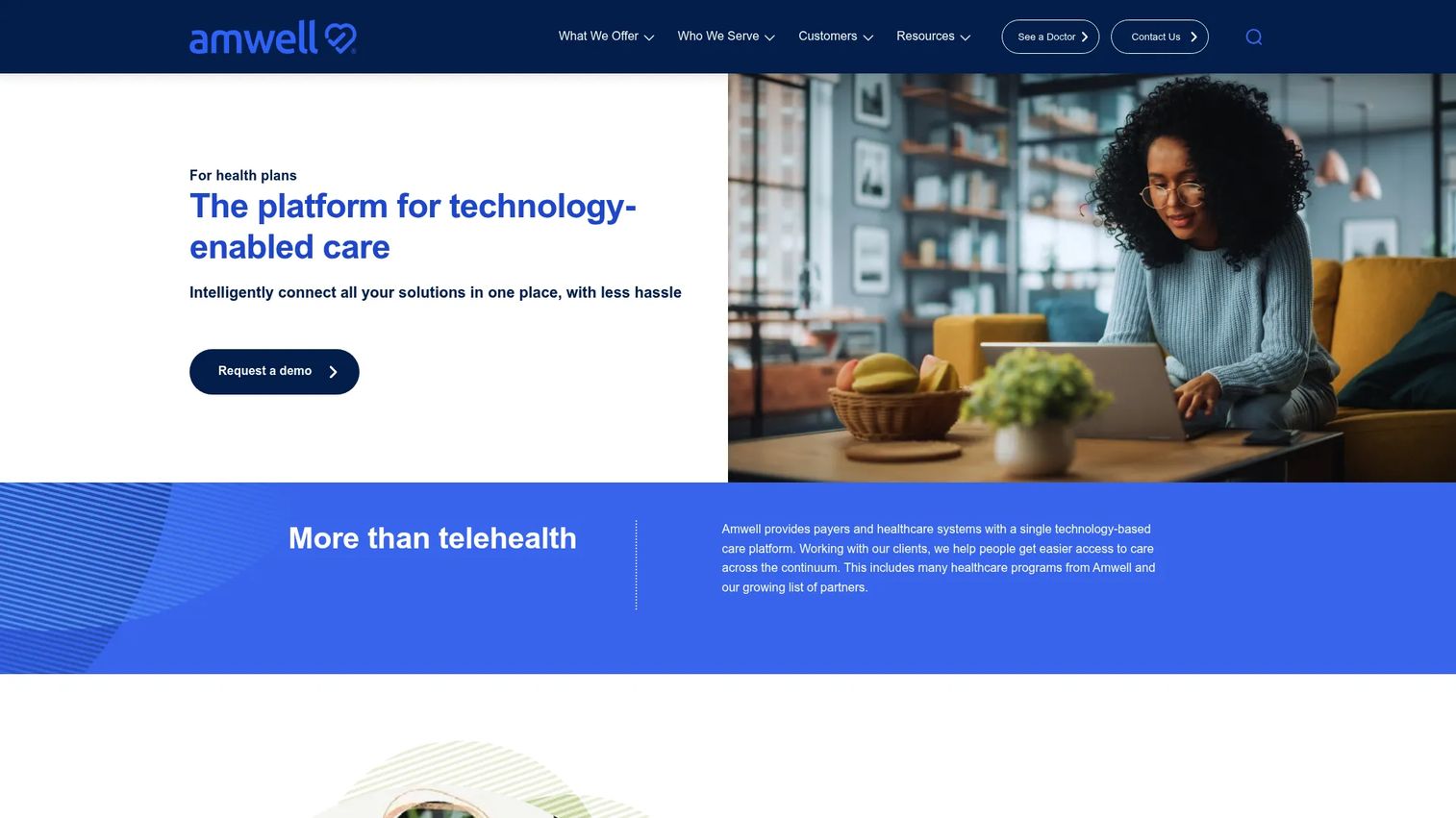
Amwell is a broader telehealth company offering a virtual and hybrid care platform that spans primary care, urgent care, and behavioral health. Mental health is one part of a wider virtual care offering, which makes Amwell relevant when you want therapy inside a general telehealth relationship rather than a standalone therapy subscription.
Best for: People who want behavioral health as part of broader virtual care, and health systems or payers seeking an enterprise platform.
Key strengths
- Virtual primary care
- Behavioral health and therapy
- On-demand urgent care
Why choose Amwell: The breadth is the point. If you already use Amwell through an employer or health plan for general telehealth, adding behavioral health keeps everything in one place and often ties into existing insurance compatibility.
Amwell pricing: Amwell's site directs individual and enterprise buyers to contact the company, and public per-session pricing is not listed. Cost often depends on your health plan or employer arrangement, so verify coverage and copays through your insurer or benefits portal.
7. Sesame Care
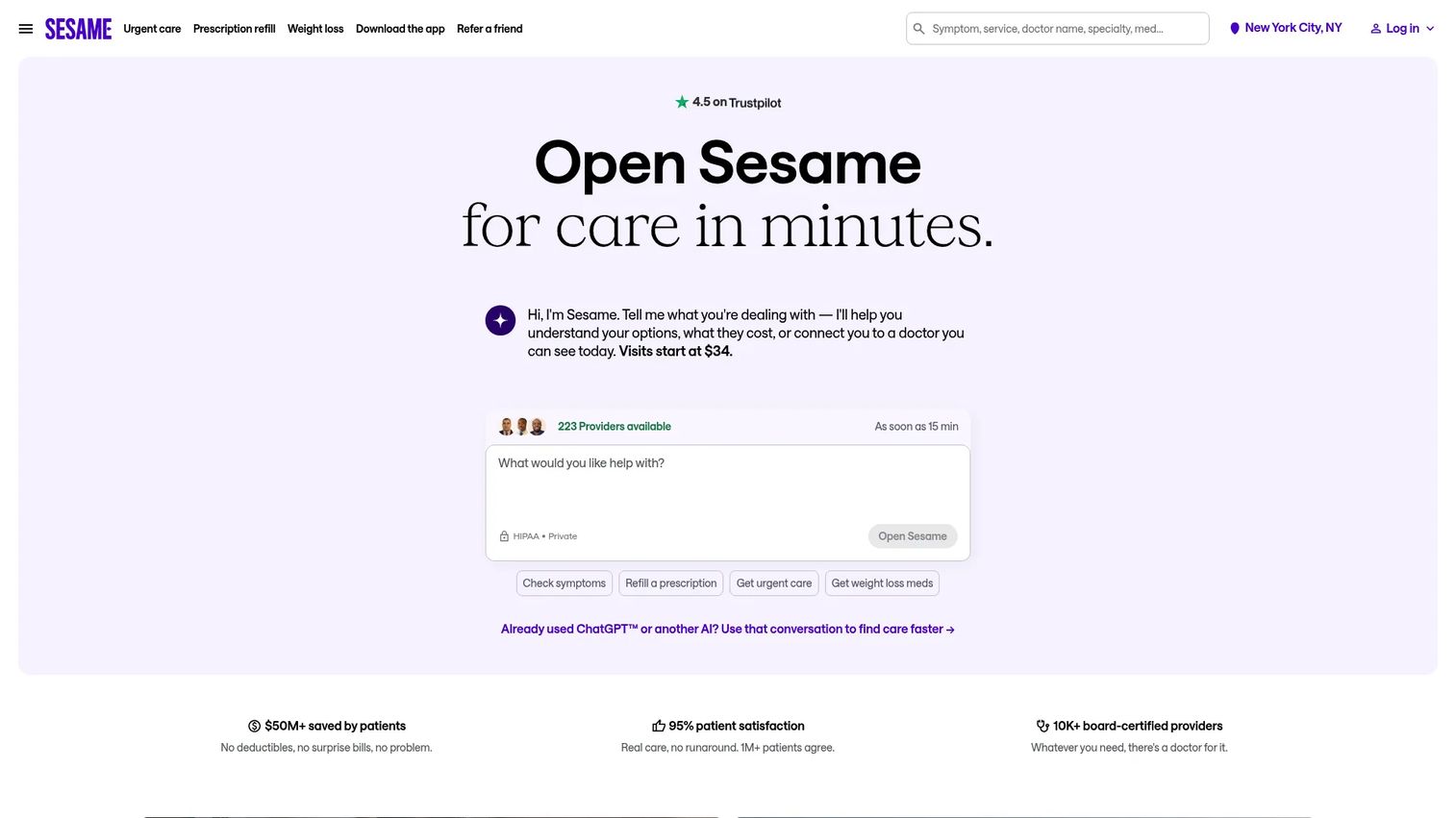
Sesame Care is a cash-pay healthcare marketplace for booking same-day virtual and in-person care with transparent upfront pricing. It skips insurance billing entirely. You see the price, book the visit, and pay directly. For mental health, that means you can compare providers and manage cost without waiting on claims or verifying network status.
Best for: People who want cash-pay telehealth and in-person care with upfront prices and no insurance billing.
Key strengths
- On-demand doctor and provider visits
- Prescription refills and medication management
- Labs, imaging, dental, and specialty care alongside mental health
Why choose Sesame Care: The transparency is the draw. If you are uninsured, have a high-deductible plan, or just want to know the exact cost before booking, the flat per-visit model removes the guesswork that insurance billing introduces.
Sesame Care pricing: Visit pricing starts at $34 per visit. A Sesame Plus membership is available at $10.99/month or $99/year, and subscription plans like Everyday Rx run $29/month on an annual plan or $59 month-to-month. All prices are shown upfront with no insurance billing.
Considerations
Insurance compatibility
Verify before you commit. Confirm the platform bills your specific plan in-network, not just that it "accepts insurance" generally. Ask about your copay, whether out-of-network reimbursement is an option, and how their claims process works with your insurer. A platform that looks expensive on the surface can cost less than a cash-pay competitor once your coverage kicks in.
Care type and modality
Decide what you actually need before you filter. Do you want weekly video, async messaging, audio-only, or therapy and psychiatry together? Not every platform supports every format. Messaging-first platforms and psychiatry-capable platforms serve very different needs, and choosing the wrong modality is the fastest way to abandon care.
Privacy and compliance
Even consumer therapy handles sensitive data, so HIPAA compliance and security practices matter. Check that sessions are encrypted, that the platform is HIPAA compliant, and what safeguards protect your account and records. Read how they handle data sharing. Privacy is not a nice-to-have in mental health care; it is a baseline.
Scheduling and therapist matching
Speed to first session is a real factor. Check how quickly you can get matched, whether you can switch therapists if the fit is wrong, and what wait times look like for your preferred format. A platform with a large network and easy switching removes the friction of starting over when the first match does not work.
Pricing transparency
Compare total cost, not headline price. A $69/week plan billed monthly, a per-session insured rate, and a per-visit cash-pay fee are three different math problems. Factor in psychiatry fees if you need them, and confirm whether insurance changes the number. The cheapest sticker is not always the cheapest outcome.
Conclusion
There is no single best teletherapy platform. There is the one that fits your insurance, your preferred format, and whether you want consumer care or provider software.
If insurance is your top priority, Grow Therapy is built around in-network matching and insured cost estimates. If you want therapy plus psychiatry in one place, Brightside Health offers combined care paths. If you prefer messaging-first support with optional live video, Talkspace fits. For fast, cash-pay booking with upfront prices, Sesame Care removes the insurance guesswork. And if you are a provider rather than a patient, TheraPlatform gives you the practice management and teletherapy workflow to run your own remote practice.
The move now is simple. Shortlist two or three from this list, then compare them head to head on the three things that actually change your experience: insurance, privacy, and session format. Verify coverage with your own plan before you commit, and you will land on the right fit without opening a dozen tabs again.
FAQs
It depends on the model. Subscription therapy services like BetterHelp and Talkspace run roughly $69–$100 per week out of pocket. Insurance-first platforms like Grow Therapy can bring insured sessions to around $21. Provider software like TheraPlatform starts near $19.50/month for clinicians. Prices vary widely, so match the model to your situation.
Often, yes, but it varies by platform and plan. Some platforms bill your insurance in-network, which can reduce a session to a copay or even $0. Others are out-of-network or cash-pay only. Always verify your specific plan's coverage, copay, and claims compatibility before committing, since employer benefits and individual plans differ significantly.
For many common concerns like anxiety and depression, teletherapy is a well-established care option that many people find works for them. Effectiveness depends on fit: the therapist, the format, and your specific needs. Some situations still call for in-person or higher-acuity care. If you are in crisis, contact emergency services or a crisis line rather than starting an online subscription.
Teletherapy is remote mental health care, specifically talk therapy and sometimes psychiatry delivered online. Telehealth is the broader category that covers all remote medical care, including primary care, urgent care, and specialty visits. Platforms like Amwell and Sesame Care offer telehealth broadly, with behavioral health as one part of a wider set of services.
Yes. Several platforms offer both therapy and psychiatry under one account, including Talkspace, Brightside Health, and Grow Therapy. This is a major buying criterion. If you want medication management alongside counseling, filter for platforms that support combined care so you are not coordinating across two separate services.
Reputable platforms are HIPAA compliant, encrypt sessions and messages, and protect your account with access controls. Security matters even for consumer-facing therapy because you are sharing sensitive health information. Before signing up, check that the platform states it is HIPAA compliant and read how it handles and shares your data.
Start with your constraints, not the marketing. Compare platforms on four things: whether they take your insurance, the care format you want, total cost after coverage, and how fast you can get matched to a licensed therapist online. Shortlist two or three that fit your actual situation, then verify coverage with your own plan before you decide.