
You decided to build a marketplace. Then you opened ten browser tabs and every option looked wrong in a different way. One platform wants a developer team you do not have. Another locks you into a rigid template that fights your business model. A third promises everything and explains nothing about how vendor payouts actually work.
That friction is real, and it has consequences. Picking the wrong marketplace platform can cost you months of rebuild time and a launch window you cannot get back. The global digital commerce platform market, the infrastructure layer beneath most online marketplaces, is expected to grow from USD 13.20 billion in 2026 to USD 26.56 billion by 2033 at a 10.5% CAGR, according to Coherent Market Insights (2026). More buyers means more tools, and more tools means a noisier decision.
This guide cuts through it. The right marketplace software choice comes down to three forces in tension: speed to launch, hosting reliability, and how much you can customize once you outgrow the defaults. Founders who want to test demand fast weigh those forces differently than enterprise teams governing hundreds of vendors. So instead of ranking by raw feature count, this article maps each tool to the buyer it actually fits. If you also research how to demo and educate buyers on complex platform products, the same evaluation discipline shows up in adjacent stacks like digital adoption platforms and community management software.
Here is what you will compare:
- What marketplace software is and how it differs from a standard ecommerce store
- The buyer criteria that actually matter: deployment, customization, payments, trust, and scale
- 12 real platforms, each mapped to a clear use case, with verified pricing and ratings
- A decision framework to narrow your shortlist fast
What marketplace software is
Marketplace software is a platform that lets you build, host, and operate a website where multiple independent sellers list products or services and transact with buyers, while you manage payments, commissions, and the rules of the exchange. It is the engine behind any site where you are not the only seller.
That last part is what separates it from a standard ecommerce platform. A regular online store sells your inventory. A marketplace platform coordinates many vendors, splits revenue, routes payouts, and moderates listings. The complexity lives in the relationships, not just the catalog.
Most online marketplace software covers a core set of functions buyers expect out of the box:
- Vendor onboarding: registration, approval workflows, and self-service seller dashboards
- Listings and catalog management: product or service creation, categories, search, and filtering
- Payments and payouts: split payments, commission logic, and scheduled vendor disbursements
- Order handling: cart, checkout, order routing, and status tracking across vendors
- Shipping and returns: label generation, fulfillment workflows, and dispute handling
- Moderation and admin: content review, vendor controls, and platform-wide governance
Here is the quick contrast between the two categories:
If you only sell your own goods, an ecommerce store is enough. The moment you need third-party sellers, you need marketplace management software.
Why buyers choose marketplace software in 2026
Three pressures push teams toward dedicated marketplace platform software this year. None of them is about adding features for their own sake.
First, launch expectations compressed. Founders no longer get a year to validate an idea. The U.S. marketplace apps software market is projected to grow at roughly an 8.8% compound annual rate from 2026 to 2033, per a LinkedIn market analysis (2024), and that demand rewards teams that ship and learn fast. A platform that gets you live in weeks beats one that gets you live in quarters.
Second, multi-vendor complexity broke the spreadsheet. Manually tracking commissions, payouts, and vendor disputes across dozens of sellers does not scale past your first handful of partners. Multi-vendor marketplace software automates the parts that used to consume your operations team.
Third, infrastructure has to hold up under growth. The broader e-commerce software market that underpins marketplace operations is projected to climb from USD 10.43 billion in 2026 to USD 34.18 billion by 2033 at an 18.5% CAGR, according to Grand View Research (2025). Buyers expect a reliable marketplace that stays online during traffic spikes and protects payment data.
The business outcomes buyers actually buy:
- Faster time-to-market when validating a new model
- Lower operational overhead on vendor and order management
- A trust layer (payments, moderation, compliance) that buyers and sellers rely on
- Room to customize and scale without a full replatform later
This is also where product marketing and go-to-market teams get involved. Launching a marketplace is a positioning exercise as much as a technical one, and the same buyer-education discipline applies whether you are explaining a marketplace to vendors or running a product launch narrative.
What to look for in marketplace software
Treat this section as a scorecard, not a feature checklist. The goal is to rank what matters for your specific model before you compare any tools.
Deployment model
How a platform is delivered shapes your launch speed, your control, and your ongoing maintenance.
- Cloud-hosted (SaaS): the vendor runs the infrastructure. Fastest to launch, lowest maintenance burden, predictable monthly cost.
- Self-hosted / on-premise: you run it on your own servers. Maximum control over data and customization, with full ownership of uptime.
- No-code builders: visual setup with no engineering required. Best when speed-to-launch is the priority and your model fits common patterns.
- Headless / API-first: the commerce backend is decoupled from the front end. Best when you want full control of the buyer experience and plan to build custom interfaces.
Quick guidance: if you are validating demand, lead with cloud-hosted or a no-code marketplace builder. If data residency or deep customization is non-negotiable, weigh self-hosted or a headless marketplace.
Customization and extensibility
Every marketplace has rules no template anticipates. Check how far you can bend the platform.
- APIs: does the platform expose REST or GraphQL APIs for custom workflows and integrations?
- Data-schema flexibility: can you add custom fields to listings, vendors, and orders?
- Modular features: can you add or remove capability without breaking the core?
- Third-party integrations: native connections to payment providers, shipping carriers, analytics, and CRM systems matter more than a long feature list.
If your marketplace has unusual commission logic, conditional pricing, or vertical-specific workflows, prioritize an API-first marketplace or open-source foundation you can extend.
Payments, vendor, and order workflows
This is where marketplaces live or die operationally. Verify each item before you commit:
- Split payments and automated commission calculation
- Scheduled vendor payouts and payout reporting
- Vendor onboarding and approval flows
- Catalog and bulk listing management
- Shipping label generation and multi-vendor fulfillment
- Returns, refunds, and dispute resolution
Trust, security, and scale
Buyers and sellers extend trust to your platform before they trust each other. Validate the platform's posture.
- Security and compliance: PCI DSS for payments, SOC 2 or ISO 27001 where relevant, GDPR handling
- Uptime and hosting assurances: published SLAs, status pages, redundancy
- Proof of scale: customer counts, transaction volume, and named references
- Independent validation: G2 and Capterra ratings, plus reviewer-reported context
Do not take scale claims at face value. Cross-reference the vendor's own numbers against third-party review platforms and customer stories before you shortlist.
When to use marketplace software
Three scenarios make this category the right call. Pattern-match to your own situation.
Launch a marketplace faster
When the priority is validating demand, a no-code or hosted platform removes the engineering bottleneck. You can create a marketplace, onboard a few vendors, and process real transactions in weeks instead of quarters. With U.S. marketplace app demand growing at roughly 8.8% annually through 2033 (LinkedIn, 2024), the cost of a slow launch is a missed window. Speed-first buyers should weigh hosted SaaS and no-code marketplace makers above everything else.
Support complex vendor operations
When you already have vendors and the spreadsheet is breaking, you need operational depth. Verify the platform handles:
- Multiple vendors with distinct commission tiers
- Automated payout scheduling and reconciliation
- Content moderation and listing approval queues
- Vendor performance tracking and dispute workflows
This is the moment teams move from manual marketplace management to platform software.
Scale and customize after launch
When you have product-market fit and need the platform to bend to your model, extensibility outranks setup speed. APIs, custom data schemas, and architecture flexibility decide whether you can grow without a replatform. If your roadmap includes unique workflows, multiple storefronts, or a headless front end, prioritize open-source or API-first systems now rather than migrating under pressure later.
Comparison table
This table sorts the 12 marketplace platforms by buyer intent so you can scan to your situation fast. Pricing and G2 ratings are verified from each vendor's pricing page and live G2 listing. Use the Intent column to find your lane, then read the full section for the two or three that fit.
One read on the table: G2 ratings reflect reviewer sentiment, not a verdict on fit. A 4.8 platform can be the wrong choice if it does not match your deployment model. Weigh Intent and deployment first, rating second.
1. Sharetribe
Sharetribe is marketplace software built for founders who want to launch and run an online marketplace without writing code, with a clear upgrade path to custom development when they outgrow the defaults. It handles the full loop: listings, transactions, online payments through Stripe, and live marketplace management. The pitch is speed without a dead end, since you can start no-code and extend with code later.
Best for: Founders and teams launching a marketplace business that want no-code setup with room to add custom code as they scale.
Key strengths
- No-code marketplace builder: stand up a working marketplace and configure listings, categories, and commissions without engineering.
- Live marketplace management: run vendors, transactions, and content from one admin once you go live.
- Stripe-powered transactions: accept payments and route them with a payment stack that is built in, not bolted on.
Why choose Sharetribe: It removes the classic founder tradeoff between launching fast and keeping options open. You validate demand on the no-code build, then graduate to custom code without abandoning the platform. The 4.7/5 G2 rating and a strong base of founder adoption back the speed-to-market claim.
Sharetribe pricing: Plans start with Build at $39/month. Lite runs $99/month billed yearly, Pro is $199/month billed yearly, and Extend is $299/month billed yearly. There is a 14-day free trial, and the FAQ also lists a Hold plan at $49/month for pausing an inactive marketplace.
2. CS-Cart Multi-Vendor
CS-Cart Multi-Vendor is self-hosted ecommerce marketplace software for building Amazon-style multi-vendor marketplaces with deep functionality out of the box. It ships with an admin panel, individual vendor panels, a storefront, and a large library of ecommerce features, so much of what you would otherwise build is already there.
Best for: Businesses launching and scaling a self-hosted multi-vendor marketplace that want broad capability without heavy custom development.
Key strengths
- Unlimited sellers on one marketplace: onboard as many vendors as your model needs without per-seat penalties on the core platform.
- Three-panel architecture: a built-in admin panel, vendor panels, and storefront cover the full operational loop from day one.
- 500+ ecommerce features: catalog, promotions, payments, and storefront tools come pre-built rather than assembled from plugins.
Why choose CS-Cart Multi-Vendor: If you want the Amazon-like marketplace experience with vendor storefronts and central governance, and you prefer to host and control your own instance, this delivers depth without forcing you to integrate a dozen separate tools. The 4.8/5 G2 average reflects strong satisfaction among self-hosted operators.
CS-Cart Multi-Vendor pricing: The Standard plan starts at $725/year. Lifetime license options are also offered: Plus at $3,590 billed once, Ultimate at $7,990 billed once, and Unlim at $19,990 billed once. There is no free tier, so the entry point is the annual subscription.
3. Dokan Multivendor Marketplace
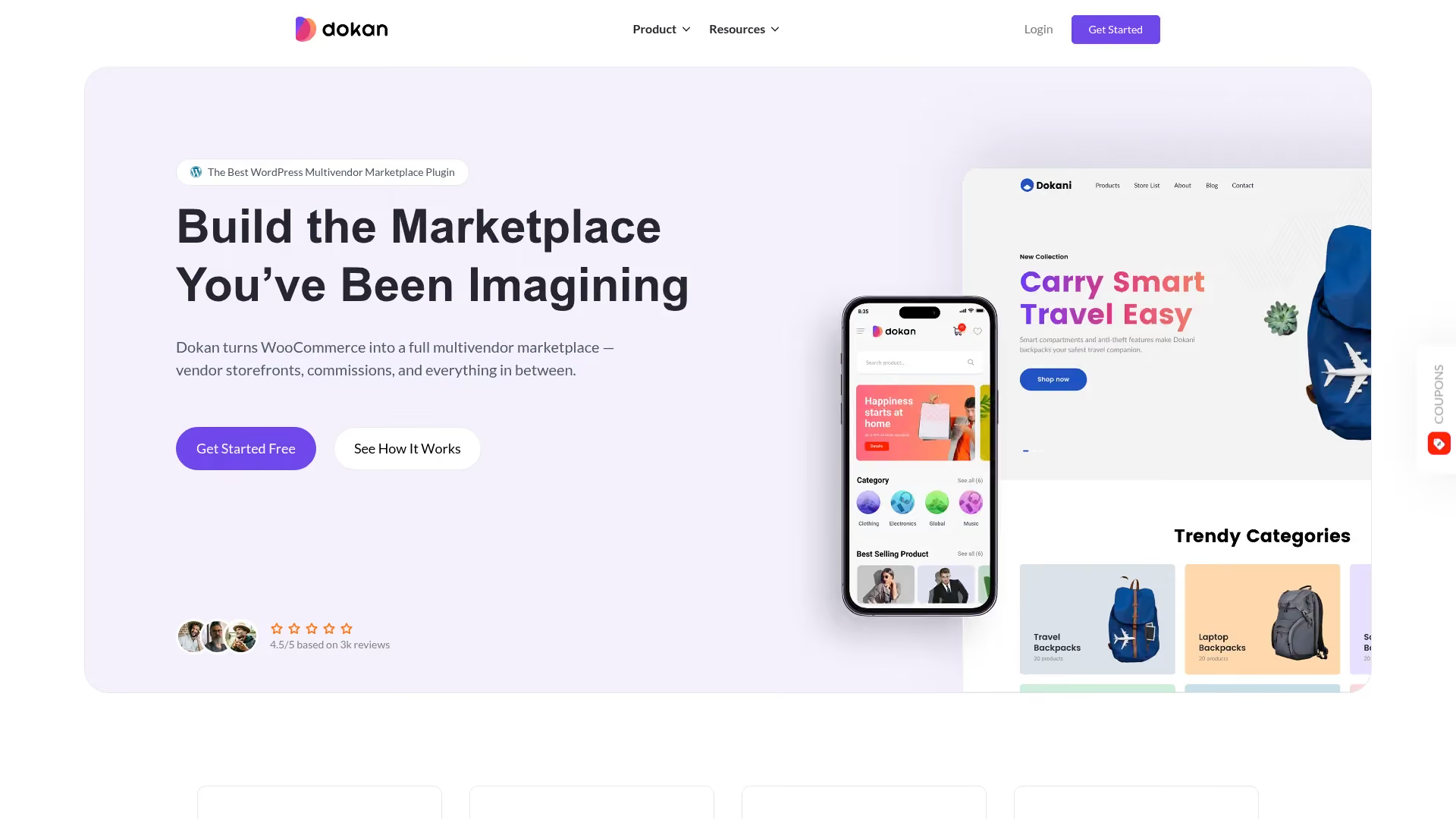
Dokan Multivendor Marketplace turns a WordPress and WooCommerce site into a multi-vendor marketplace. For teams already running on WordPress, it adds vendor management, commissions, and order control on top of the ecommerce environment they already know, instead of forcing a migration.
Best for: Teams building a WooCommerce-based multivendor marketplace on WordPress who want to extend an existing site rather than replace it.
Key strengths
- Vendor storefronts and self-service dashboards: each seller gets a branded storefront and a dashboard to manage their own products and orders.
- Commission and order control: set commission rules and keep central oversight of orders across every vendor.
- 42+ premium modules: extend functionality with modular add-ons for subscriptions, bookings, shipping, and more.
Why choose Dokan: The case is continuity. If your stack is already WordPress and WooCommerce, Dokan lets you add multi-vendor workflows without learning a new platform or rebuilding your catalog. The 4.6/5 G2 rating reflects steady adoption among WordPress site owners.
Dokan pricing: The Lite plan is free forever. Paid annual plans are Starter at $149/year, Business at $499/year, and Enterprise at $999/year, which unlock progressively more modules and vendor capabilities.
4. Mirakl

Mirakl is enterprise commerce software for launching and scaling marketplaces, dropship programs, catalog onboarding, retail media, and multichannel selling. It is built for large organizations that need marketplace governance, supplier management, and scale across thousands of sellers and SKUs.
Best for: Large B2B or retail teams that need enterprise marketplace and dropship infrastructure with governance built in.
Key strengths
- Marketplace and dropship platform: run third-party marketplace selling and dropship programs from a single enterprise system.
- AI-powered multichannel selling: distribute and optimize listings across channels with AI assistance.
- Supplier catalog onboarding: ingest, normalize, and manage large supplier catalogs and product data at scale.
Why choose Mirakl: When your marketplace spans thousands of vendors and your buyers include enterprise procurement, governance and catalog management matter more than setup speed. Mirakl is positioned squarely for that scale, with a digital marketplace platform built for operators who treat the marketplace as core infrastructure.
Mirakl pricing: Core platform pricing is contact-sales. The Mirakl Connect seller platform lists public plans: Growth at $699/month and Pro at $2,299/month, billed monthly with a 12-month engagement, plus an Enterprise tier handled by sales. Expect a custom quote for the full marketplace platform.
5. Rithum

Rithum is a commerce operations platform that helps brands and retailers manage listings, inventory, orders, pricing, and retail media across channels. For teams running a marketplace motion alongside other sales channels, it centralizes the orchestration so listings and inventory stay in sync everywhere they sell.
Best for: Brands and retailers that need multichannel commerce operations at enterprise scale.
Key strengths
- Listings across 600+ marketplaces: publish and manage product listings on a wide network of marketplaces from one place.
- Inventory management with low-latency sync: keep stock accurate across channels with fast synchronization.
- Order management with smart routing: route and fulfill orders intelligently with integrations into your existing systems.
Why choose Rithum: If your marketplace strategy is really a multichannel commerce strategy, Rithum's strength is orchestration: keeping listings, inventory, and orders consistent across hundreds of channels. That breadth suits brands and retailers managing complex commerce operations rather than a single standalone marketplace.
Rithum pricing: Public numeric pricing is not listed on the site. Engagements run through a demo and quote process, with terms referencing subscription and service fees. Plan on a custom proposal scoped to your channel mix and volume.
6. Yo!Kart
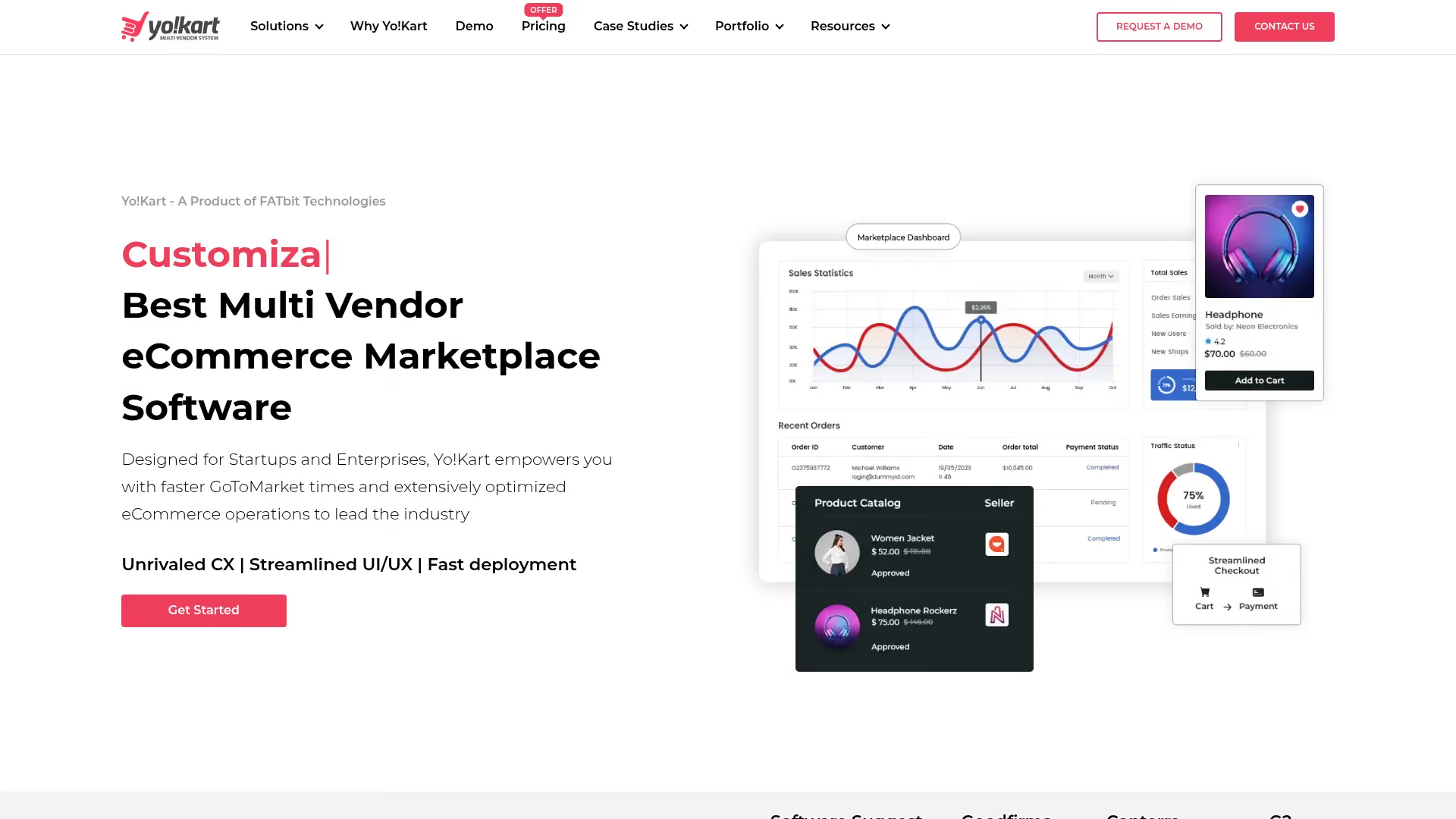
Yo!Kart is self-hosted, white-label multi-vendor marketplace software that supports B2B, B2C, and hybrid (P2P) marketplace models. It is sold with one-time license ownership and customizable source code, so you pay upfront and own the platform instead of carrying recurring SaaS fees.
Best for: Businesses that want to launch a self-hosted marketplace with upfront license ownership rather than ongoing subscription costs.
Key strengths
- Multi-role dashboards: dedicated admin, buyer, and seller dashboards cover every participant in the marketplace.
- White-label, self-hosted source code: own and customize the codebase to match your brand and business rules.
- Multi-language and multi-currency: support cross-border marketplaces with built-in localization.
Why choose Yo!Kart: The model fits buyers who recognize their marketplace as B2B, B2C, or P2P and want to own the asset outright. One-time licensing appeals to teams that prefer a capital purchase over recurring fees, and the self-hosted code gives you full customization control. The 4.6/5 G2 rating reflects solid satisfaction.
Yo!Kart pricing: Yo!Kart uses one-time, lifetime license pricing across tiered packages. Publicly visible options include GoQuick Lite at $499 and GoQuick at $1,249, both one-time purchases. Higher tiers add more customization and support.
7. ChannelEngine
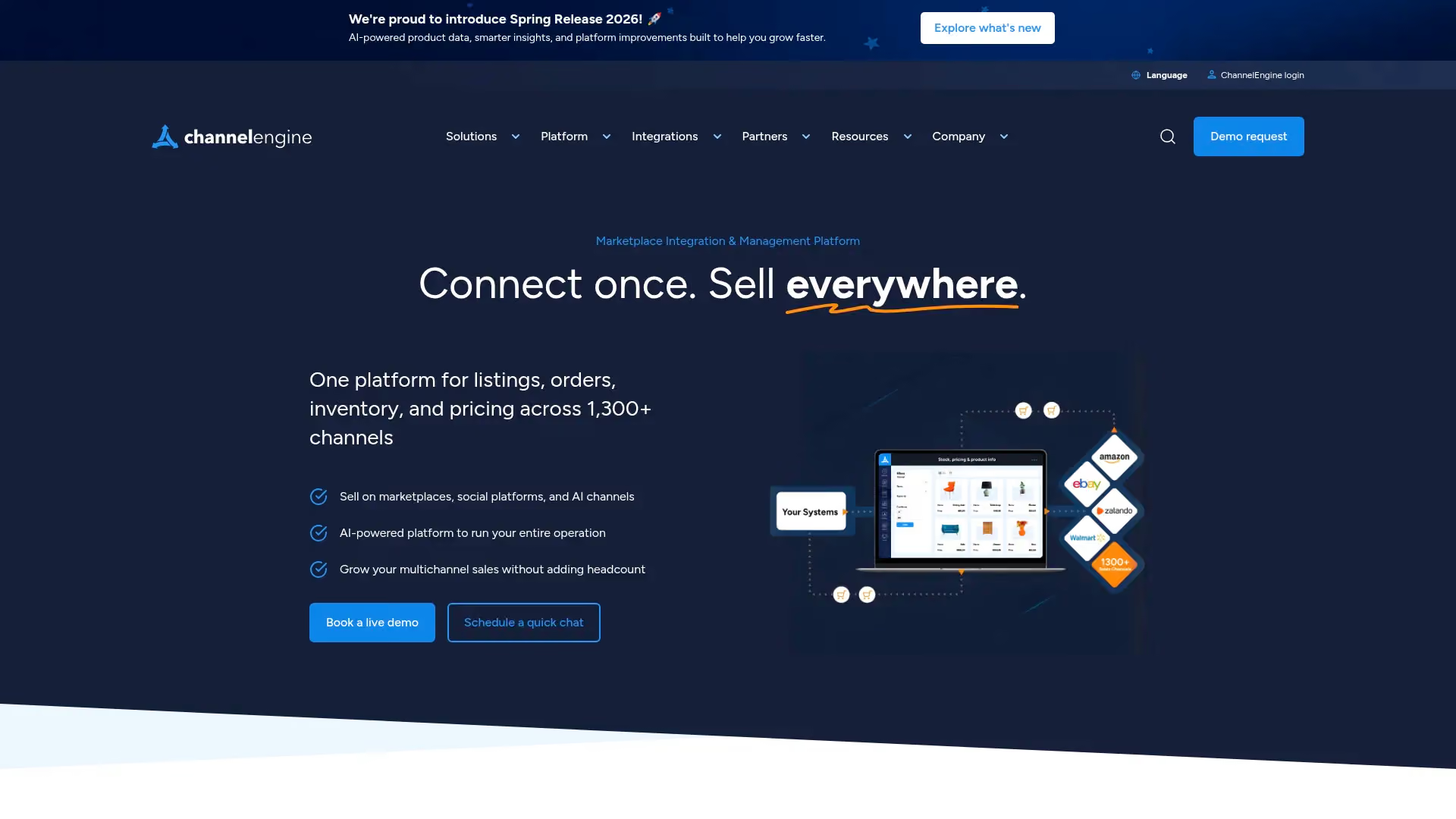
ChannelEngine is a marketplace integration and multichannel ecommerce platform for managing product data, pricing, inventory, and orders across sales channels. It sits between your catalog and the marketplaces you sell on, automating feed management and order flow so distribution scales without manual work.
Best for: Brands and retailers scaling marketplace sales across many channels.
Key strengths
- Product information and syndication: manage and publish product data accurately across every connected channel.
- Pricing and promotion automation: automate repricing and promotions to stay competitive on each marketplace.
- Order management and fulfillment automation: centralize and automate order processing across channels.
Why choose ChannelEngine: The strength is operational commerce and channel management. If your priority is distributing products across many marketplaces and keeping feeds, pricing, and orders synchronized, ChannelEngine focuses on exactly that integration layer rather than building a standalone storefront.
ChannelEngine pricing: The public pricing page lists three plans: Start, Grow, and Scale, with figures shown at 8, 16, and 149. Pricing is also tailored by GMV and integration requirements, combining an onboarding fee, a monthly license fee, and a success-based fee. Expect a scoped quote for higher volumes.
8. Shipturtle
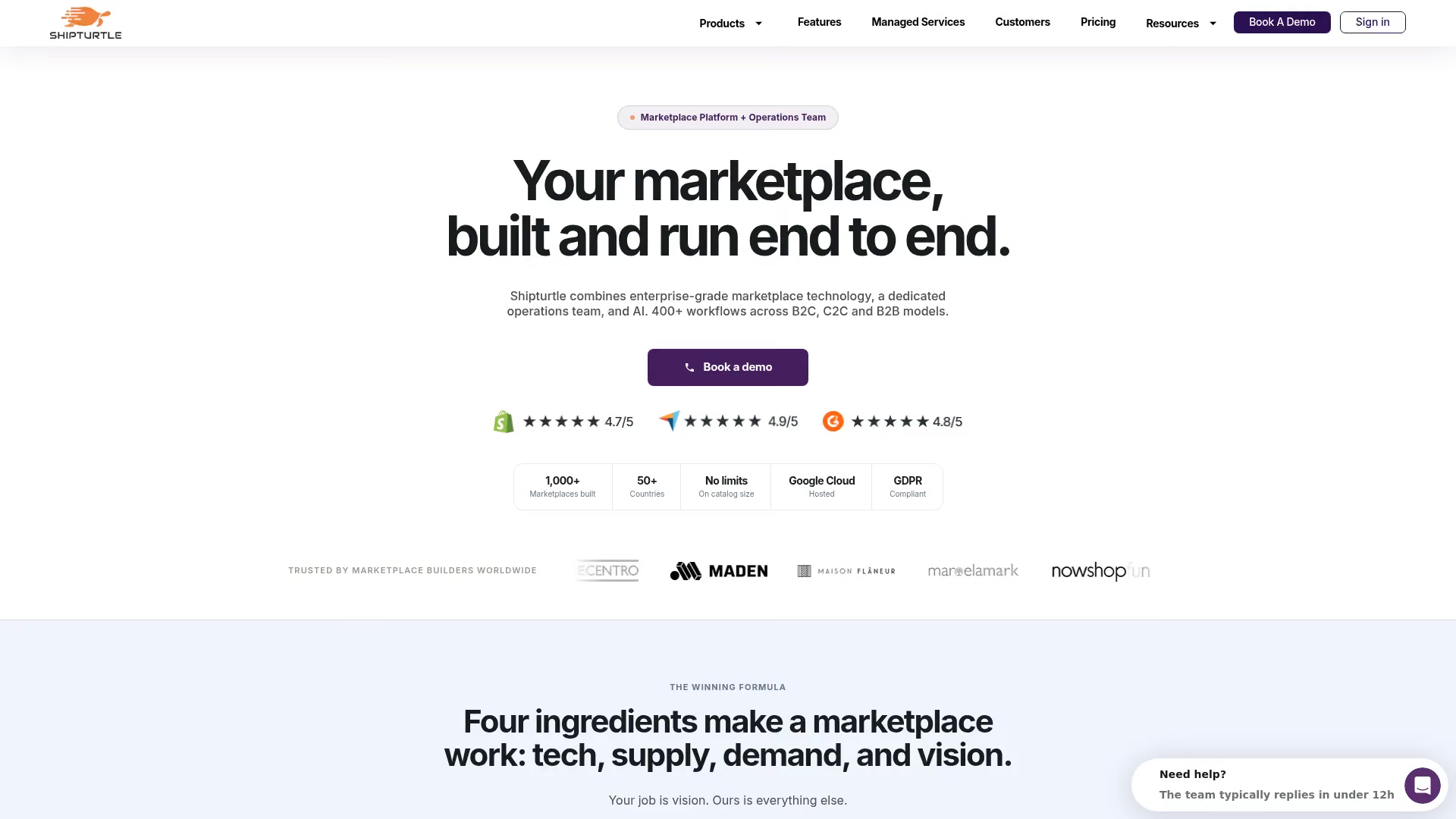
Shipturtle is multi-vendor marketplace and shipping software for ecommerce brands, combining vendor management, shipping automation, and fulfillment workflows. It is well suited to custom vertical marketplaces and brand collaboration models where you need to coordinate many vendors and their shipments under one operation.
Best for: Marketplace operators that need multi-vendor management, shipping, and payout automation in one platform.
Key strengths
- Vendor dashboards and pages: give each vendor a dashboard and storefront page to manage their own catalog and orders.
- Shipping automation: generate labels, track orders, and automate shipping across multiple vendors.
- Payout and commission automation: automate vendor payouts and commission tracking, with white-labeling support.
Why choose Shipturtle: For vertical marketplaces, brand collaborations, and curated multi-vendor stores, the operational triad of vendor management, shipping, and payouts is the hard part. Shipturtle puts those workflows in one place, with white-labeling to keep the experience on-brand. The 4.5/5 G2 rating backs the fulfillment focus.
Shipturtle pricing: Plans start with the Business Plan at $49/month, then Peak at $149/month, Enterprise at $229/month, Elite at $349/month, and an Operations Track at $1,099/month. There is a 14-day trial, and the site notes a 50% startup discount across plans.
9. Selldone
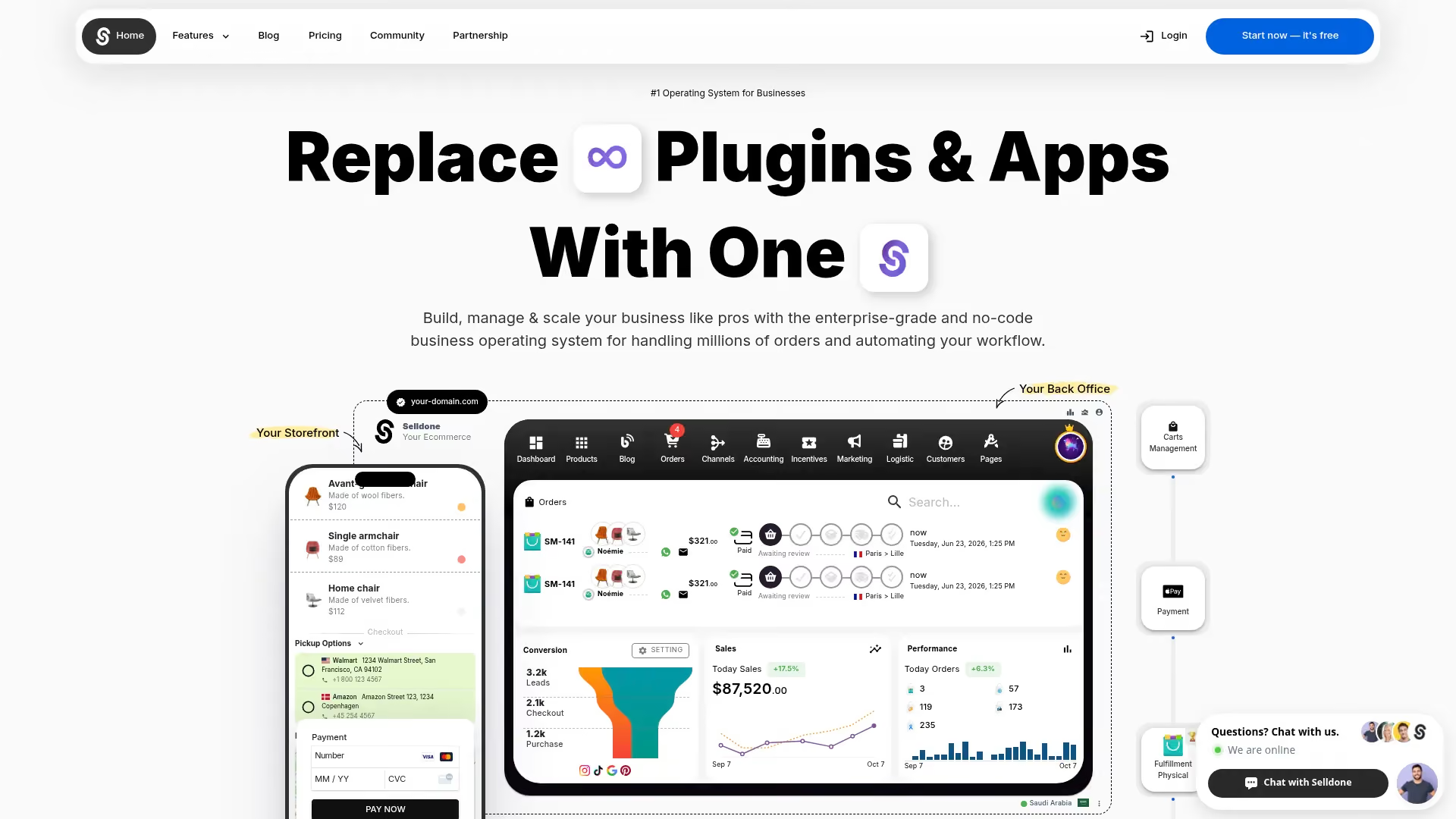
Selldone is a no-code ecommerce business operating system for building, managing, and scaling online stores, communities, and POS. It pairs a drag-and-drop builder with order processing, automation, and APIs, making it a fit for teams that want marketplace builder workflows and listing-based business models without engineering.
Best for: SMBs that want an all-in-one no-code ecommerce OS with built-in storefront, automation, and POS tools.
Key strengths
- No-code drag-and-drop builder: design landing pages and storefronts visually, with no development required.
- CMS, blog, and order processing: manage content and fulfill orders in the same system.
- Automation, workflows, and APIs: automate operations and connect to other tools through APIs when you need to extend.
Why choose Selldone: For service marketplaces, local marketplaces, and listing-based models, Selldone offers an all-in-one no-code path that covers storefront, automation, and even POS. SMBs that want one operating system rather than a stitched-together stack are the natural fit. The 4.8/5 G2 rating reflects strong user satisfaction.
Selldone pricing: The Personal plan is free with a 2% transaction fee. Paid plans are Startup at $9.99/month, Company at $69/month, and Enterprise at $299/month, all billed yearly, with transaction fees dropping to 1.5%, 1%, and 0.5% respectively.
10. WCFM Marketplace
WCFM Marketplace is a free WooCommerce multivendor marketplace plugin with frontend vendor management and a library of paid extensions. It turns a WooCommerce store into a multi-vendor marketplace, with admin and vendor controls handled from the front end.
Best for: WooCommerce stores that need a multivendor marketplace with a free core plugin.
Key strengths
- Frontend vendor dashboard: vendors manage products, orders, and settings from a frontend dashboard without backend access.
- Commission management: configure commission structures across vendors and product types.
- Store hours and shipping controls: give vendors operational controls like store hours and per-vendor shipping rules.
Why choose WCFM Marketplace: The appeal is a free core plugin grounded in vendor management and admin workflows for WooCommerce stores. You can start without licensing cost and add paid extensions only as your operational needs grow. It fits teams that want WordPress multivendor control on a tight budget.
WCFM Marketplace pricing: The core marketplace plugin is free. Paid extensions are sold separately, including Ultimate at $59, Group & Staff at $39, Delivery at $29, and Affiliate at $29, each a one-time purchase.
11. Nautical Commerce

Nautical Commerce is multi-vendor marketplace software for building and operating online marketplaces, built on a headless, API-first architecture. It pairs a no-code storefront builder with multi-vendor checkout, giving teams flexible commerce infrastructure that can scale with the business.
Best for: Businesses launching or scaling a multi-vendor marketplace that want modern, headless commerce infrastructure.
Key strengths
- No-code storefront builder: launch a marketplace storefront without engineering, then extend through APIs.
- Multi-vendor checkout: handle carts and checkout that span multiple vendors in a single order.
- Headless, API-first architecture: decouple the front end so you can build custom buyer experiences on flexible infrastructure.
Why choose Nautical Commerce: For teams that want headless flexibility without starting from a blank codebase, Nautical pairs an API-first backend with a no-code storefront. That combination suits operators who need commerce architecture built to scale while keeping launch speed reasonable. The 4.6/5 G2 rating reflects positive early reviews.
Nautical Commerce pricing: A 14-day free trial is available. Paid plans start with Growth at $59/month, Business at $375/month, and Professional at $1,500/month, with discounts for one-year terms and a two-year option on Professional.
12. Spree Commerce, the open-source extensible foundation
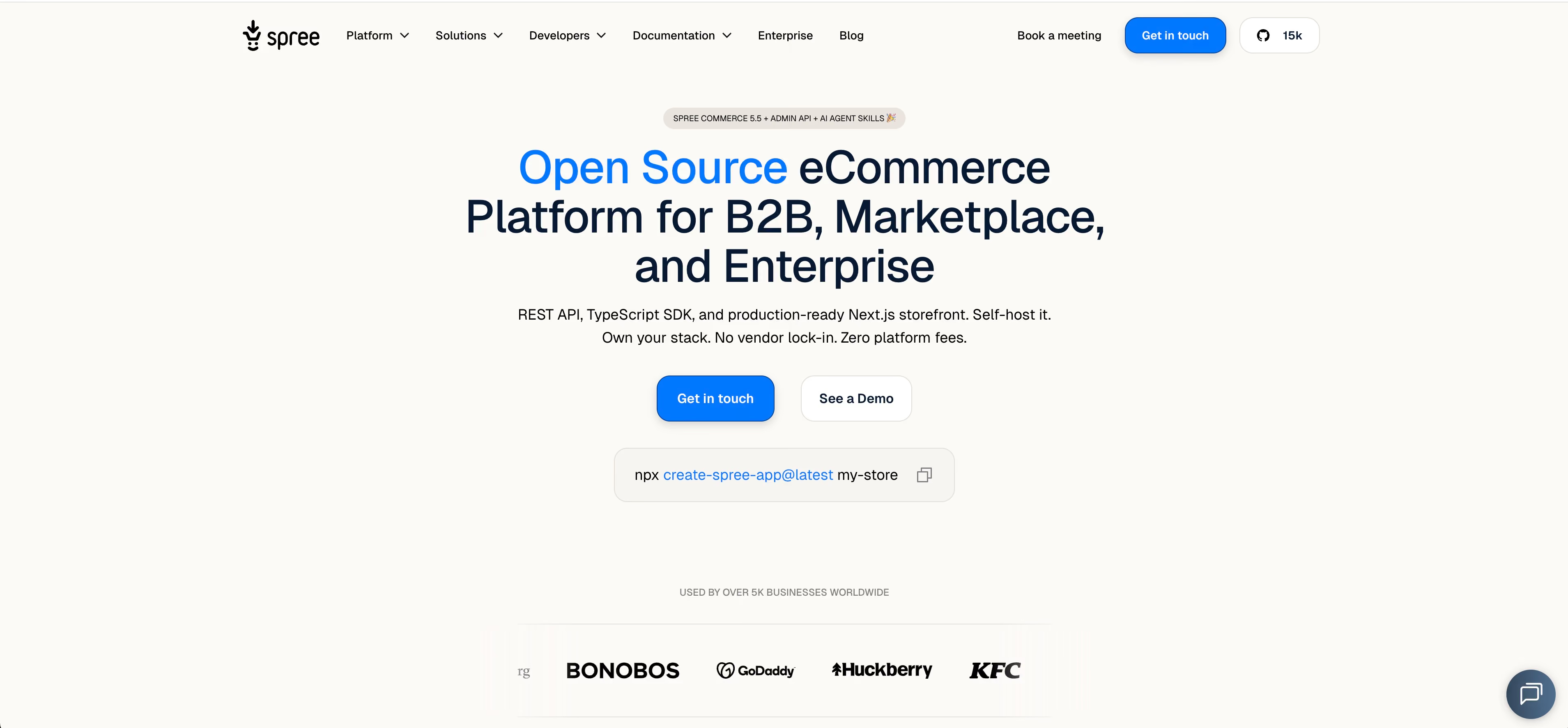
Spree Commerce is an open-source, headless ecommerce platform that supports B2B, marketplace, multi-store, and cross-border commerce. For teams that want full ownership of a customizable backend, it offers advanced product management and developer-friendly APIs as the foundation for a marketplace build.
Best for: Teams that need a customizable open-source ecommerce backend with B2B and marketplace capabilities.
Key strengths
- Advanced product management: handle complex catalogs, variants, and product data at scale.
- Flexible pricing engine: support price lists, volume tiers, and customer-specific pricing for B2B and marketplace models.
- Store and Admin REST APIs: build custom front ends and integrations with documented APIs and TypeScript SDKs.
Why choose Spree Commerce: The case is ownership and API-first customization. With a free Community Edition and no platform fees, Spree fits engineering-led teams that want to build a headless marketplace on a foundation they fully control rather than rent.
Spree Commerce pricing: The site indicates a free Community Edition with no platform fees. Public numeric pricing for commercial editions was not listed at review time, so plan to scope commercial support directly.
How to choose the right marketplace software
Narrow the shortlist by answering three questions in order: how fast do you need to launch, how much do you need to customize, and what does your buyer side look like (consumer or business)? Those answers map cleanly to the platforms above.
If speed matters most
When validating demand is the priority, lead with no-code or hosted platforms.
- Sharetribe for a founder-focused, no-code launch with a path to custom code
- Selldone for an all-in-one no-code OS covering storefront, automation, and POS
- Nautical Commerce when you want a no-code storefront on headless infrastructure
These get you live in weeks and keep maintenance low while you learn what works.
If control and customization matter most
When you need the platform to bend to your model, open-source and self-hosted systems win.
- OpenCart for a free open-source base you extend through plugins
- Spree Commerce for a headless, API-first foundation with full code ownership
- Yo!Kart for one-time license ownership of a customizable self-hosted marketplace
- CS-Cart Multi-Vendor for deep out-of-the-box capability on your own servers
If you are building B2B or enterprise workflows
When corporate buyers, approvals, and integrations define your model, prioritize governance and B2B depth.
- Verify negotiated pricing, quoting, and account hierarchy support
- Confirm catalog onboarding and supplier management at scale
- Check deployment flexibility (cloud, private cloud, on-premise) for IT requirements
- Validate compliance posture (PCI DSS, SOC 2, GDPR) before procurement gets involved
For that profile, Mirakl suits large-scale marketplace governance, and Rithum or ChannelEngine suit multichannel commerce operations. The shortlisting discipline here mirrors how teams evaluate any complex platform purchase, the same way you would scope a customer data platform or contract management software against your real workflows.
Whichever you choose, the buyer-education work that follows, explaining the marketplace to vendors and the value to buyers, often runs through an interactive demo so prospects can experience the platform before they commit, and Guideflow helps teams build those experiences without engineering.