Most presales teams don't have a process. They have habits.
You're juggling 12 active deals. You spent time prepping a custom interactive demo for a prospect who canceled 10 minutes before the call. A security questionnaire from three weeks ago just resurfaced, and an AE is pinging you about scoping a deal that hasn't been qualified. Meanwhile, a $200K enterprise opportunity sits in your pipeline with a recycled deck because you ran out of time.
The difference between habits and a process shows up in win rates, deal velocity, and how many hours you burn on opportunities that were never going to close. According to Gartner, the average B2B buying committee now includes 6 to 10 decision-makers, each needing different proof. That's your job. And without a structured pre-sales process, you're rebuilding from scratch on every deal.
This guide covers how to build a presales process from qualification through measurement. It's written for Sales Engineers and presales leaders working in B2B SaaS, not for a generic business audience. If you're evaluating tools to support this process, our roundup of the best presales software tools covers the current landscape.
What's inside
This is a practical framework for building or improving a presales process, with specific steps, metrics, and examples drawn from real SE workflows. You'll find a qualification framework, a step-by-step build guide, common mistakes to avoid, measurement benchmarks, and tactical best practices you can implement this week.
The content is organized so you can read linearly or jump to the section that matches your current pain.
TL;DR
- A presales process is only as good as its qualification step. If you're spending equal time on every deal, you're likely wasting 40%+ of your week on opportunities that won't close.
- Discovery is where deals are won or lost, not in the demo. Separating discovery from demo calls tends to improve demo-to-advance rates by 15 to 25 percentage points.
- The best presales teams measure three things: SE utilization, demo-to-close rate, and time spent per deal stage.
- Interactive demos reduce prep time and let prospects evaluate on their own schedule, which shortens cycles when buying committees can't all attend one call.
- Process without iteration is just documentation. Build measurement into every step from day one.
What is the presales process?
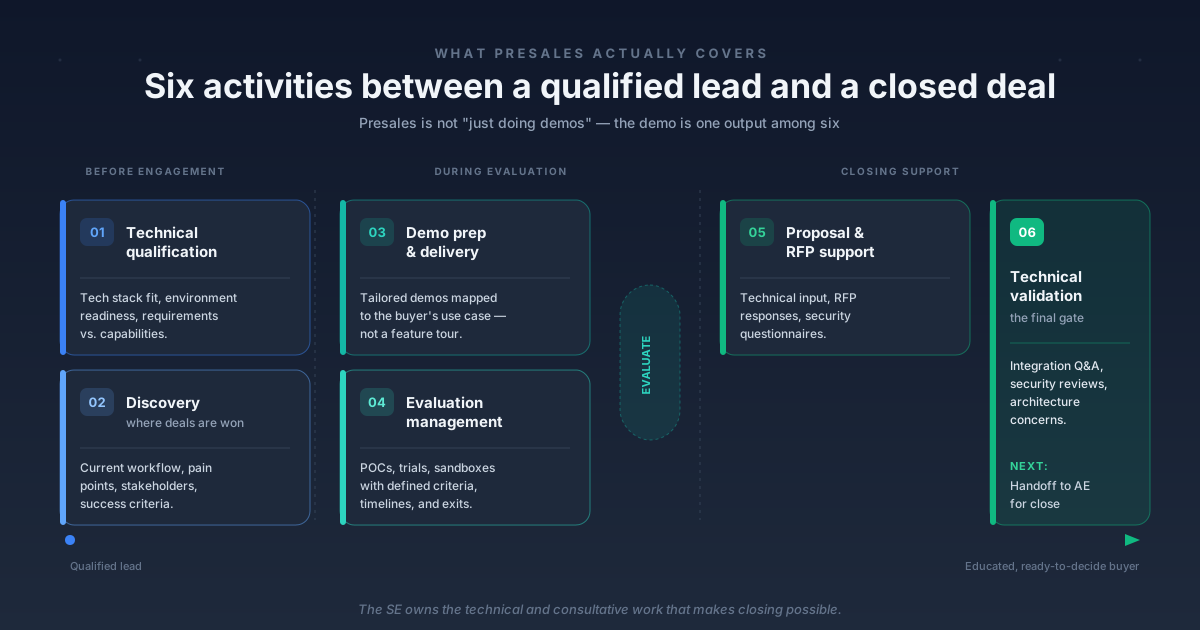
The presales process is the structured set of activities that happen between identifying a potential buyer and handing a qualified, educated opportunity to the sales team for closing. In most B2B SaaS companies, the Sales Engineer owns the majority of this work.
That's the plain-English definition of pre sales. Now here's what it actually includes.
What presales covers
To define presales properly, you need to understand its scope. The pre-sales process spans several distinct activities:
- Technical qualification: Assessing whether the prospect's environment, tech stack, and requirements are a fit for your product
- Discovery: Understanding the buyer's current workflow, pain points, technical landscape, and success criteria
- Demo preparation and delivery: Building and presenting product demonstrations tailored to the prospect's specific needs
- Evaluation management: Running POCs, trials, or sandbox environments with defined success criteria and timelines
- Proposal and RFP support: Providing technical input for proposals, responding to RFPs, and completing security questionnaires
- Technical validation: Addressing integration questions, security reviews, and architecture concerns
The pre sales meaning is broader than most people assume. Presales is not "just doing demos." That's the most common misconception about the role. The demo is one output of a much larger process that includes understanding the buyer's technical environment, mapping requirements to capabilities, and building credibility with technical stakeholders.
What presales is not
Presales is not lead generation. That's marketing and SDRs. It's not closing. That's the AE. Presales is the technical and consultative work that makes closing possible. When someone asks "what is presales," the answer is: it's the function that turns a qualified lead into an educated buyer who's ready to make a decision.
Why it matters now
B2B buying has gotten harder. According to Forrester research on B2B purchase stakeholders, the average B2B purchase now involves 6 to 10 stakeholders. Each stakeholder needs different proof. The CFO wants ROI numbers. The CISO wants a security review. The end users want to see the product in action. The IT team wants integration details.
The SE is the person who provides that proof across all of these stakeholders. Without a defined process, you're rebuilding your approach from scratch on every deal, which means inconsistent quality, wasted hours, and deals that stall because someone in the buying committee didn't get what they needed.
The definition of pre sales hasn't changed. But the complexity of executing it well has increased significantly. That's why a structured presale process matters more now than it did five years ago.
Presales vs. sales: how they differ and where they overlap
Every competitor article covers this comparison, so let's keep it practical.
| Dimension | Presales | Sales |
|---|---|---|
| Primary owner | SE / Solutions Consultant | AE / Account Manager |
| Core focus | Technical fit, value proof | Commercial terms, closing |
| Key activities | Discovery, demos, POCs, RFPs | Negotiation, contracts, pricing |
| Success metric | Demo-to-close rate, technical win rate | Revenue closed, win rate |
| Buyer interaction | Technical stakeholders, evaluators | Economic buyers, procurement |
The presales vs sales distinction matters, but the overlap matters more. Both participate in discovery. Both need to understand the buyer's business context. And misalignment between sales and presales teams is the number one cause of deal stalls.
When an AE qualifies on budget and timeline but the SE hasn't assessed technical fit, you get deals that look healthy in the pipeline but die during evaluation. That's a process problem, not a people problem.
Common mistakes that break presales processes
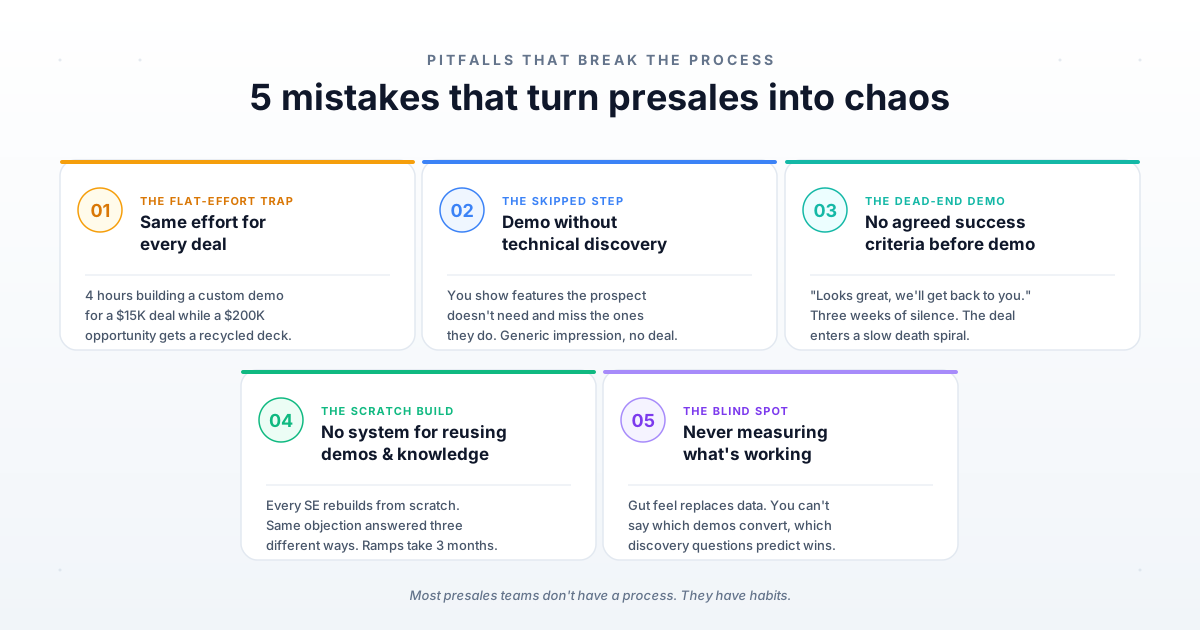
These aren't hypothetical failure modes. If you've been in presales for more than a year, you've lived at least three of these.
1. Treating every deal like it deserves the same effort
What it looks like: You spend 4 hours building a custom demo for a 10-person company with no budget timeline. Meanwhile, a $200K enterprise deal gets a recycled deck because you ran out of time. Every opportunity gets the same level of SE involvement regardless of deal size, stage, or likelihood to close.
What works instead: Tier your deals. Create 2 to 3 engagement levels that match SE effort to deal size, complexity, and qualification score. A $15K deal that could close with a recorded demo shouldn't compete for your time with an enterprise opportunity that needs a full custom POC.
2. Skipping technical discovery and jumping straight to the demo
What it looks like: The AE books a "demo call" before anyone has asked the prospect a technical question. You show features the prospect doesn't need and miss the ones they do. The prospect leaves the call with a generic impression instead of a specific conviction.
What works instead: Separate discovery from demo. Even 20 minutes of technical discovery changes the quality of every presales demo that follows. You learn what to show, what to skip, and what objections to address before they come up.
3. Running demos without clear success criteria
What it looks like: You finish a 45-minute demo. The prospect says "looks great." Nothing happens for three weeks. The AE follows up. The prospect says they're "still discussing internally." The deal enters a slow death spiral.
What works instead: Before every demo, agree on what "success" looks like with both the AE and the prospect. What do they need to see to move forward? What's the specific next step if the demo goes well? This prevents the "looks great, we'll get back to you" dead end.
4. No system for reusing demo assets and knowledge
What it looks like: Every SE on the team builds demos from scratch. The same objection gets answered differently by three different people. New SEs take 3 months to ramp because nothing is documented. Knowledge lives in individual heads, not in shared systems.
What works instead: Build a demo library. Standardize answers to common objections. Use templates that can be personalized, not rebuilt. This is how teams with 8 SEs operate as efficiently as teams with 12. Demo automation platforms make it possible to maintain and update these libraries without rebuilding flows every time the product changes.
5. Never measuring what's working
What it looks like: You have no idea which demos convert, which discovery questions predict wins, or where deals stall in your process. When leadership asks what's working, you rely on gut feel and anecdotes.
What works instead: Track three things at minimum: SE hours per deal, demo-to-advance rate, and stage-specific conversion. You can't improve what you don't measure. Even a spreadsheet gives you more signal than nothing.
Key principles that drive presales success
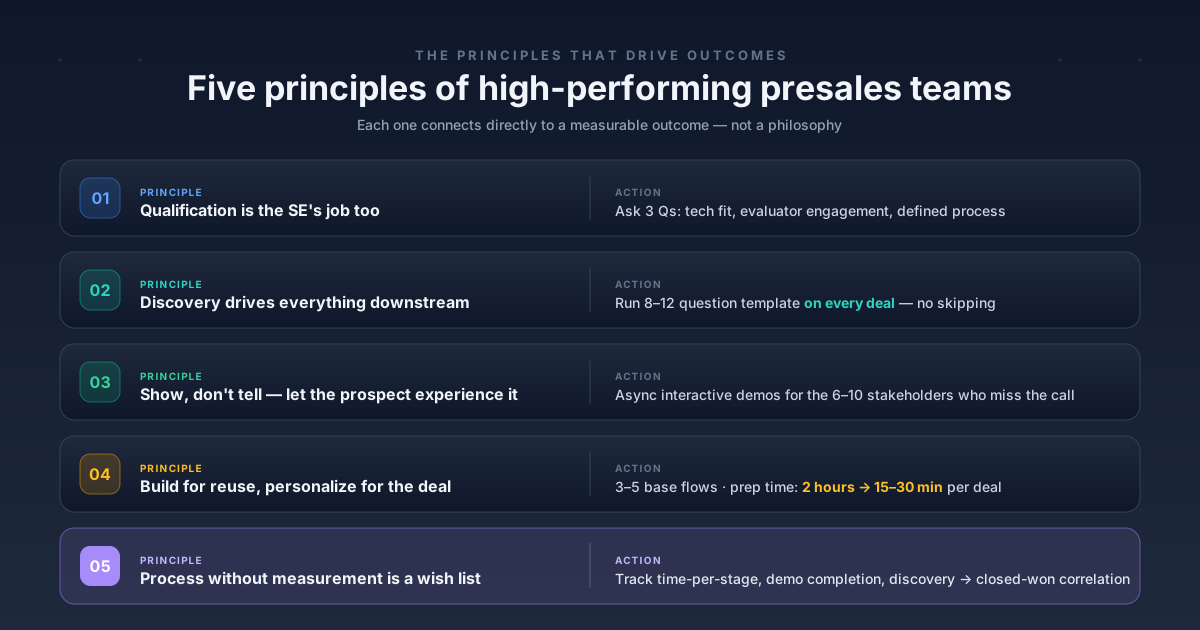
These aren't philosophical statements. Each one connects directly to a measurable outcome.
1. Qualification is the SE's job too, not just the AE's
AEs qualify on budget, authority, and timeline. SEs need to qualify on technical fit, implementation complexity, and whether the prospect's environment can actually support the product. If you skip technical qualification, you'll spend weeks on a POC that was never going to work.
Before accepting a deal, ask three questions: (1) Does their tech stack support our integration? (2) Do they have a technical evaluator who will engage in the process? (3) Is there a defined evaluation process, or are they "just looking"? If any answer is no, flag it before investing hours.
2. Discovery drives everything downstream
The quality of your demo, your proposal, and your POC is directly proportional to the quality of your presales discovery. Most SEs under-invest here because the AE wants to "get to the demo" fast. That pressure is real, but it's counterproductive.
Build a discovery template with 8 to 12 questions that cover current workflow, pain points, technical environment, stakeholders, and success criteria. Use it on every deal. Adapt it based on what you learn, but never skip it entirely. Teams that run structured discovery before demos tend to see demo-to-advance rates 15 to 25 percentage points higher than teams that combine the two calls, a pattern consistent with research on how structured discovery improves win rates.
3. Show, don't tell (and let the prospect experience it)
Static slides and feature lists don't build conviction. Prospects need to see the product in the context of their problem. Even better: let them interact with it on their own time, especially when you're dealing with a buying committee of 6 to 10 people who can't all attend one call.
Build demos that map to the prospect's use case, not your product's feature list. Where possible, use interactive demos or sandbox environments that prospects can explore asynchronously, so the stakeholders who missed the live call can still evaluate. Platforms like Guideflow let you capture and share interactive product experiences that prospects can click through on their own schedule, which keeps deals moving instead of waiting for the next available calendar slot.
4. Build for reuse, personalize for the deal
The best presales teams don't start from zero on every deal. They maintain a library of demo flows, objection responses, and technical documentation that can be personalized quickly. This is how you scale from 1 SE supporting 5 AEs to a team of 8 SEs supporting 30.
Create 3 to 5 "base demo" flows for your most common use cases. Personalize the data, the industry context, and the specific pain points for each prospect. But don't rebuild the structure every time. The goal is to cut demo prep from 2 hours to 15 to 30 minutes per deal while maintaining quality.
5. Process without measurement is just documentation
A presales process that nobody measures is a wish list. You need to know which presales steps predict wins, where deals stall, and where SEs are spending time that doesn't convert.
Instrument your process. Track time-per-stage, demo completion rates, and which discovery questions correlate with closed-won deals. Review monthly with the team. The first version of your process will have gaps. Measurement tells you where they are. Using analytics features on your demo platform can show you exactly which flows resonate and where prospects drop off.
How to build your presales process step by step
Six sequential steps. Each one produces a specific artifact you'll use in the next step.
Step 1. Define your deal tiers and SE engagement criteria
What to do: Create 2 to 3 deal tiers based on deal size, complexity, and strategic value. Define what level of SE involvement each tier gets.
Why it matters: Without tiers, every deal gets the same effort. That means your $500K enterprise opportunity competes for your time with a $15K deal that could close with a recorded demo. This is the most common source of SE burnout and capacity challenges in presales.
Output: A one-page engagement matrix that maps deal tier to SE activities. For example: Tier 1 (enterprise) gets full custom demo plus POC. Tier 2 (mid-market) gets a personalized interactive demo. Tier 3 (SMB) gets a self-serve demo only. Post this where every AE can see it.
Step 2. Build a technical discovery framework
What to do: Create a structured set of 8 to 12 discovery questions that cover the prospect's current workflow, technical environment, pain points, evaluation criteria, and decision process.
Why it matters: Presales discovery is where you earn the right to demo. It's also where you identify red flags early enough to save your time. Without a framework, discovery quality varies wildly across the team, and junior SEs often skip the questions that matter most.
Output: A discovery question template your entire SE team uses, with guidance on when to adapt and when to follow the script. Include prompts for technical environment, current tooling, integration requirements, stakeholder map, and evaluation timeline.
Step 3. Create your demo library
What to do: Build 3 to 5 base demo flows for your most common use cases, personas, or verticals. Each should be a repeatable starting point that can be personalized in minutes, not hours.
Why it matters: Demo prep is the number one time sink for most SEs. A library cuts prep from 2 hours to 15 to 30 minutes per deal. It also ensures consistency across the team, so a junior SE can deliver the same quality as a senior one.
Output: A demo library with named flows (for example, "Fintech admin workflow," "Enterprise security review"), each with a standard structure and clear personalization points. Consider using interactive demo platforms like Guideflow to capture and maintain these flows without rebuilding them every time the product UI changes. You can also explore our demo showcase to see examples of interactive demos across different products and use cases.
Step 4. Standardize your evaluation and POC process
What to do: Define what a POC looks like at your company: duration, success criteria, check-in cadence, and exit criteria (what happens if the POC stalls), following POC best practices for B2B SaaS evaluations.
Why it matters: Open-ended POCs are where deals go to die. "We're still evaluating" is the most expensive sentence in presales. Without defined boundaries, POCs drift for weeks or months, consuming SE time on deals that have effectively gone cold.
Output: A POC playbook with a standard timeline (for example, 14 days), a success criteria template co-created with the prospect, and a check-in schedule. Include a clear protocol for what happens when a POC goes silent for 2 weeks.
Step 5. Document your handoff and follow-up process
What to do: Define the handoff point between presales and sales. What information does the AE need from the SE to close? What follow-up does the SE own post-demo?
Why it matters: The gap between "great demo" and "closed deal" is where most opportunities leak. Clear handoffs and follow-up ownership prevent deals from stalling in no-man's-land. When nobody owns the follow-up, nobody does it.
Output: A handoff checklist that includes technical requirements confirmed, stakeholder concerns addressed, next steps agreed, and outstanding questions documented. Pair it with a follow-up cadence template that defines who sends what and when.
Step 6. Instrument, measure, and iterate
What to do: Define 3 to 5 KPIs for your presales process. Set up tracking. Review monthly with the team.
Why it matters: You can't improve what you don't measure. And the first version of your process will have gaps, guaranteed. Measurement tells you where those gaps are so you can fix them before they cost you deals.
Output: A simple dashboard or spreadsheet tracking SE utilization, demo-to-advance rate, and stage conversion by deal tier. Review it monthly. Adjust your process based on what the data shows, not what you assume.
Best practices for presales teams
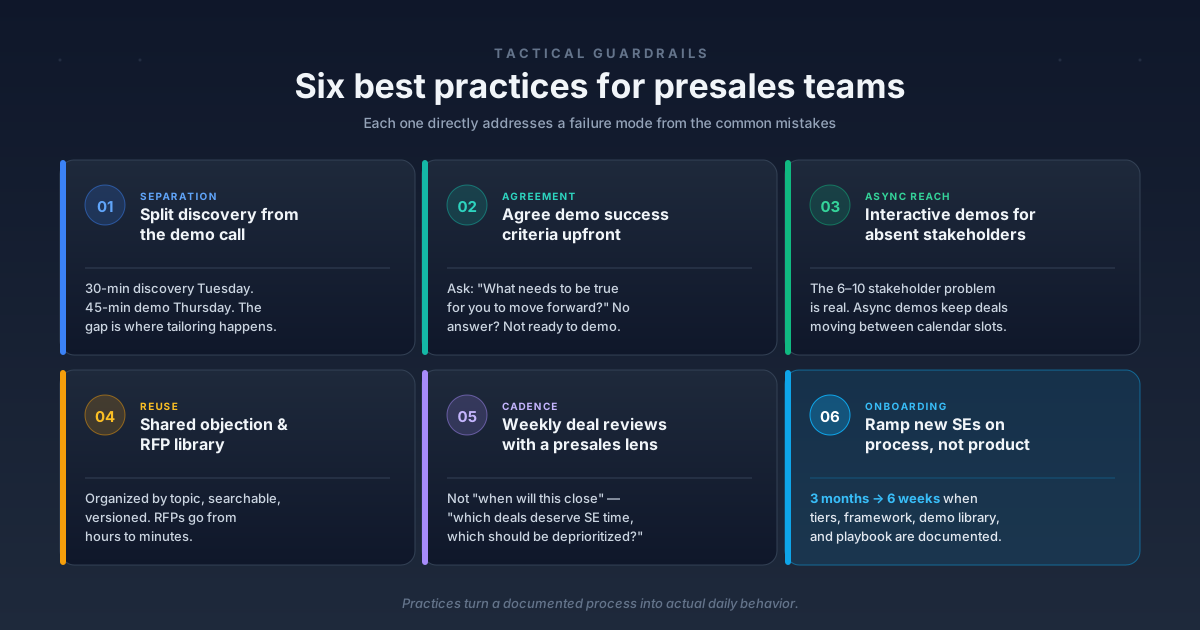
These are tactical guardrails, not strategy. Each one directly addresses a failure mode from the common mistakes section above.
Separate discovery calls from demo calls
Combining discovery and demo into one call hurts both. Discovery gets rushed because everyone wants to "see the product." The demo is generic because you haven't learned enough to personalize it.
A better pattern: 30-minute discovery on Tuesday, 45-minute demo on Thursday. The gap gives you time to tailor the demo to what you learned. It also gives the prospect time to align their stakeholders for the demo call.
Agree on demo success criteria before every presentation
Before every demo, ask the prospect: "What needs to be true for you to move forward after this call?" This one question prevents the "looks great, we'll get back to you" dead end.
If the prospect can't articulate success criteria, that's a signal. It often means they're not far enough in their evaluation process to warrant a full demo. A discovery conversation or a self-serve interactive demo might be a better use of everyone's time.
Use interactive demos for asynchronous stakeholder coverage
The 6-to-10 stakeholder problem is real. Not everyone can attend the live demo. And waiting for the next available calendar slot where all decision-makers are free can add weeks to your cycle.
Interactive demos or sandbox environments let absent stakeholders evaluate on their own time. This keeps deals moving instead of stalling on scheduling. Tools like Guideflow let you capture product flows and share them as clickable, interactive experiences that any stakeholder can explore independently, with analytics that show you who engaged and where they spent time.
Build a shared objection and RFP response library
The "starting from scratch" problem kills team efficiency. When every SE writes their own response to the same security question, you get inconsistent answers and wasted hours.
Build a library organized by topic (security, integrations, compliance, pricing, competitive). Make it searchable. Version-control it. Assign owners for each section. A good library cuts RFP response time from hours to minutes and ensures your team speaks with one voice.
Run weekly deal reviews with a presales lens
Presales needs its own review cadence, separate from the AE pipeline review. The questions are different. Instead of "when will this close," ask: Which deals need SE time this week? Which are stalled in evaluation? Which should be deprioritized because they're poorly qualified?
A 30-minute weekly review focused on presales priorities prevents the most common failure: spending your best hours on the wrong deals.
Invest in onboarding new SEs with process, not just product
A new SE who knows the product but not the process takes 3 months to ramp. A new SE with a documented process, a demo library, and clear engagement criteria ramps in 6 weeks, a significant improvement in reducing new hire ramp time in sales engineering. That's 6 weeks of additional productive capacity per hire. For more on structuring onboarding flows, see our guide on the best onboarding flow software.
Your onboarding should include: deal tier criteria, the discovery framework, the demo library, the POC playbook, and the handoff checklist. Product training matters too, but process training is what gets a new SE contributing to pipeline fast.
What to do next
Five specific actions you can take in the next 24 hours.
1. Audit your current deals. List your active opportunities. Assign each a tier (high, medium, or low effort). Compare the time you're spending on each to the tier it belongs in. If there's a mismatch, adjust this week. You'll likely find you're over-investing in 2 to 3 deals that don't justify the effort.
2. Write your discovery template. Take 30 minutes. List the 10 questions you always wish you'd asked before the demo. That's your starting framework. Share it with the team and iterate from there.
3. Build one base demo flow. Pick your most common use case. Record or capture a standard demo flow that any SE on your team could personalize in under 30 minutes. If you don't have a demo automation tool, Guideflow lets you capture and edit interactive demos in minutes, so you can build your first reusable flow today.
4. Define your POC boundaries. Write down: max duration, required success criteria, and what happens when a POC goes silent for 2 weeks. Share it with your AEs so everyone operates from the same playbook.
5. Set up basic tracking. Even a spreadsheet works. Track hours per deal, demos delivered, and demo-to-advance rate for the next 30 days. You'll have a baseline within a month.
How to measure your presales process
Measurement is where most presales teams stop short. They build the process but never instrument it. Here's what to track, what the numbers mean, and what to watch for.
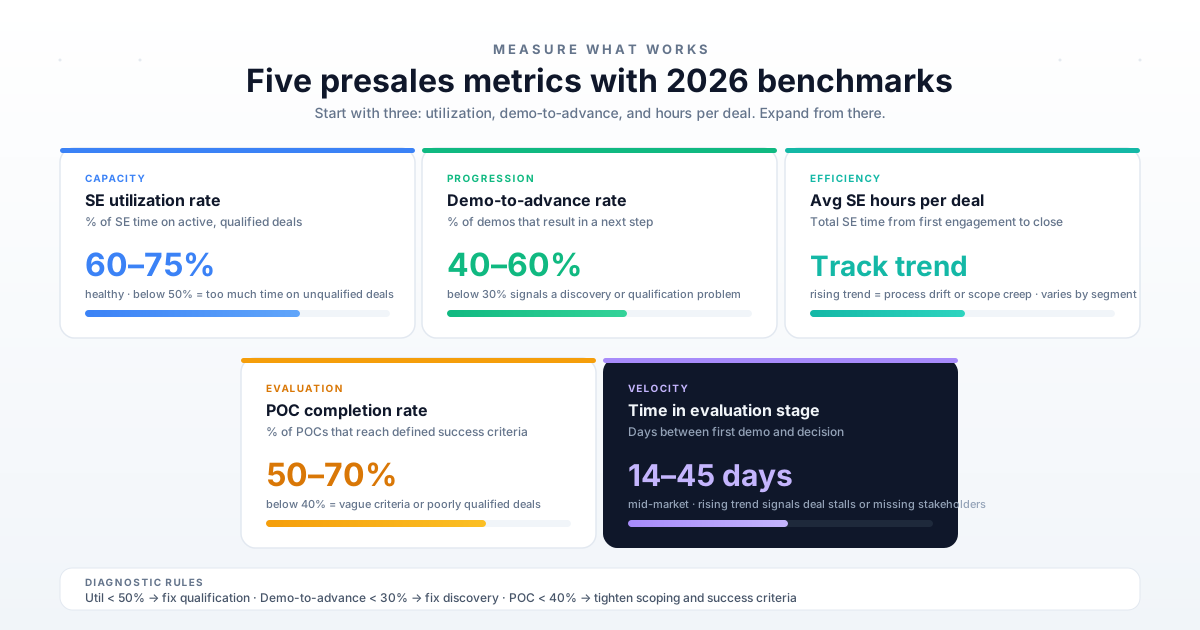
| Metric | What it measures | Benchmark range | Watch for |
|---|---|---|---|
| SE utilization rate | % of SE time on active, qualified deals | 60-75% | Below 50% means too much time on unqualified deals or admin |
| Demo-to-advance rate | % of demos that result in a next step (POC, proposal, etc.) | 40-60% | Below 30% signals a discovery or presales qualification problem |
| Average SE hours per deal | Total SE time from first engagement to close or loss | Varies by segment | An increasing trend suggests process inefficiency or scope creep |
| POC completion rate | % of POCs that reach defined success criteria | 50-70% | Below 40% means POC criteria are too vague or deals are poorly qualified |
| Time in evaluation stage | Days between first demo and decision | 14-45 days (mid-market) | An increasing trend signals deal stalls, missing stakeholders, or unclear next steps |
These benchmarks vary by segment. SMB deals move faster. Enterprise deals take longer. The first month of measurement is about establishing your baseline, not hitting targets.
If your SE utilization is below 50%, look at qualification. Your SEs are likely spending too much time on deals that shouldn't have reached them. If your demo-to-advance rate is below 30%, look at discovery. Your demos aren't landing because you don't know enough about what the prospect needs.
The goal is trend improvement over time, not perfection on day one.
Conclusion
A presales process is not a document you write once. It's a system you build, measure, and improve continuously. The SEs and presales teams that treat it this way close more deals, waste less time, and scale without burning out.
Pick one action from the "what to do next" section and do it today.
Start your journey with Guideflow today!
FAQs about presales process
Presales focuses on technical validation, discovery, and demo delivery. Sales focuses on commercial negotiation and closing. In most B2B SaaS companies, the SE owns presales while the AE owns the close, but they collaborate throughout the deal on shared activities like discovery and stakeholder management.
The core presales steps are: qualification, technical discovery, demo or presentation, evaluation (POC or trial), proposal support, and follow-up. The exact steps vary by company and deal complexity, but these six cover most B2B SaaS presales motions.
For mid-market SaaS deals, expect 2 to 6 weeks from first SE engagement to technical decision, consistent with average B2B SaaS sales cycle length benchmarks. Enterprise deals can take 2 to 6 months. If your presales cycle is significantly longer than your peers, look at qualification and POC management as the likely bottlenecks.
Technical depth in your product domain, strong communication skills (especially translating technical concepts for non-technical buyers), structured discovery and questioning ability, and time management. The best SEs also develop commercial awareness so they can prioritize deals that will actually close. Exploring sales coaching software can help teams build these skills systematically.
Beyond the AE’s BANT or MEDDIC qualification framework, SEs should assess technical fit (does the prospect’s environment support the product?), evaluator engagement (is there a technical champion?), and evaluation readiness (do they have a defined process and timeline?). If any of these are missing, flag it before investing hours in a custom demo.
Interactive demos let prospects experience the product on their own time, which is critical when buying committees have 6 to 10 stakeholders who can’t all attend a live call. They also reduce SE prep time by providing reusable, personalizable demo flows instead of rebuilding from scratch for every deal. Learn more about how interactive demos boost product adoption across the buyer journey.
Start with three: SE utilization rate (% of time on qualified deals), demo-to-advance rate (% of demos that create a next step), and average SE hours per deal. These give you a baseline for identifying where your process is efficient and where it leaks time or opportunities.
Document your process, build a demo library, standardize your discovery framework, and create engagement criteria so new SEs know how much effort each deal tier deserves. The combination of documented process and reusable assets is what cuts SE ramp time from 3 months to 6 weeks.