Your fleet is not what it was three years ago. Laptops moved home, servers moved to the cloud, and half your endpoints now sit outside any network you control. Traditional antivirus was built to block known files on machines behind a firewall. That model does not hold when the threat is a living-off-the-land script, a stolen credential, or ransomware that mutates faster than a signature can ship.
The money follows the problem. The global endpoint security market is projected to grow from about USD 17.8 billion in 2026 to USD 34.4 billion by 2034, an 8.6% CAGR, according to Fortune Business Insights (2026). Software-based endpoint security is forecast to account for roughly 66.5% of that spend in 2026, which tells you where budgets are going: platforms, not point tools.
That growth also means more vendors, more overlapping acronyms, and more decks that all claim the same thing. Most evaluations stall here. A buyer opens five tabs, sees EPP, EDR, XDR, and NGAV thrown around interchangeably, and cannot tell whether they are comparing prevention engines, response consoles, or entire security operations platforms. This guide fixes that. If you are also shaping a broader security posture, our roundup of ai security posture management tools is a useful companion, and teams standardizing how they report on tooling often pair it with a business intelligence layer.
What's inside
This guide ranks seven endpoint protection products for 2026 and gives you the framework to choose between them. We selected tools based on protection breadth (prevention plus behavioral detection), detection and response depth (EDR and XDR capabilities), deployment fit across mixed device fleets, integration scope with the rest of a security stack, and trust signals from peer reviews on Gartner and G2.
It is built for the person who has to validate technical fit before procurement signs anything: IT leaders, security managers, sysadmins, MSPs, and the presales and sales engineering teams who field endpoint security objections during deals. You will get a definition of the category, a decision framework, a comparison table, seven detailed profiles, and answers to the questions buyers actually ask. For teams unifying customer and telemetry data downstream, a customer data platform can sit alongside these tools.
TL;DR
- Best for Microsoft-heavy environments: Microsoft Defender for Endpoint, native to Microsoft 365 and Azure.
- Best for AI-driven detection and automation: SentinelOne Singularity Endpoint, with autonomous response and rollback.
- Best for balanced SMB to mid-market coverage: Sophos Endpoint, strong endpoint protection software for business with simple admin.
- Best for multilayered protection with broad platform support: Bitdefender GravityZone.
- Best for enterprise EPP with XDR-style visibility: CrowdStrike Falcon Endpoint Protection Platform.
- Best for cross-domain threat context: Cortex XDR, correlating endpoint with network, cloud, and identity.
- Best endpoint security software for a Fortinet stack: FortiClient, endpoint protection plus ZTNA and VPN in one agent.
What endpoint protection software is
Endpoint protection software is a security platform that prevents, detects, investigates, and responds to threats on endpoint devices such as laptops, desktops, servers, and mobile phones. It combines malware prevention with behavioral detection and response so a team can stop known threats and catch suspicious activity that no signature would flag.
Modern endpoint security software runs an agent on each device and reports to a centralized console. Prevention blocks malicious files and exploits in real time. Behavioral detection watches how processes act, so a legitimate binary being abused for a malicious chain still gets caught. Response capabilities let an analyst isolate a device, kill a process, or roll back changes from one screen. This is why the category is often called an endpoint protection platform rather than antivirus.
Antivirus vs endpoint protection
The clearest way to understand the shift is antivirus vs endpoint protection. Legacy antivirus is signature-based: it compares files against a database of known malware and blocks matches. That works until a threat is new, fileless, or hides inside a trusted process. An endpoint security platform adds cloud-assisted analysis, behavioral detection, and active response on top of prevention.
Concretely: antivirus blocks a known ransomware executable. Modern endpoint protection also notices when a signed, legitimate process suddenly starts encrypting hundreds of files, halts it, isolates the machine, and gives an analyst the timeline to investigate. One blocks. The other blocks, detects, investigates, and responds.
CapabilityTraditional antivirusEndpoint protection platformKnown malwareBlocks by signatureBlocks by signature plus reputationUnknown or fileless threatsLimitedBehavioral detectionResponseQuarantine fileIsolate device, kill process, roll backVisibilityPer-device alertsCentralized console and timelinesScopeSingle machineFleet-wide policy and reporting
Where EPP, EDR, XDR, and NGAV fit
These four acronyms cause most of the confusion in an evaluation, so here is the plain-language version.
- EPP (endpoint protection platform): the prevention-first layer. It blocks malware, exploits, and malicious behavior before execution. This is the foundation.
- NGAV (next-generation antivirus): modernized detection inside an EPP. Instead of signatures alone, NGAV uses machine learning and behavioral models to catch threats antivirus misses.
- EDR (endpoint detection and response): adds continuous monitoring, investigation, and response. When something gets through, EDR gives you the timeline, the root cause, and the tools to contain it.
- XDR (extended detection and response): widens the lens beyond the endpoint to correlate signals across network, cloud, identity, and email so one alert reflects the whole attack, not a fragment.
Most serious tools on this list combine EPP prevention with EDR response. XDR is where several extend into broader threat detection and response.
Core capabilities buyers should expect
- Real-time malware and exploit prevention (EPP, NGAV)
- Behavioral detection of suspicious activity, not just known files
- A centralized console for policy management across the fleet
- Automated remediation and response (isolate, kill, roll back)
- Reporting and forensic visibility for investigations and audits
- Integration with SIEM, identity, and the wider security stack
When to use endpoint protection software
Standardize protection across distributed endpoints
Mixed fleets are the norm now: Windows laptops, macOS designers, Linux servers, remote contractors, and mobile devices that never touch the office network. A centralized console lets you push one policy set to every device and see coverage gaps in one view. If you cannot answer "which machines are unprotected right now" in under a minute, this is your use case.
Replace legacy antivirus with layered detection and response
Teams running signature-only antivirus hit a wall when a fileless attack or a credential-based intrusion sails past. The common upgrade path is to a layered platform that keeps prevention but adds behavioral detection and EDR response. You are not just blocking more, you are gaining the ability to investigate what happened and contain it fast.
Support security reviews, audits, and incident response
Regulated and enterprise buyers need to prove control, not just claim it. Reporting, forensic timelines, and documented response workflows matter during SOC 2, ISO 27001, or customer security reviews. For presales teams, this is often the moment a deal stalls: a prospect's security team wants evidence of endpoint controls. Strong reporting turns that from a blocker into a checkbox.
Comparison table
Use this table to filter fast before you read the full profiles. Pricing and G2 ratings reflect current vendor and peer-review data at the time of writing. Endpoint protection pricing shifts often and several vendors quote per environment, so confirm figures with the vendor before you commit. These are among the most-referenced endpoint protection vendors on Gartner and G2.
| # | Product | Intent | Key differentiation | Pricing | G2 rating |
|---|---|---|---|---|---|
| 1 | Microsoft Defender for Endpoint | Microsoft-native EPP and EDR | Deep Microsoft 365 and Azure integration | P1 and P2 plans, no public standalone price | 4.4/5 |
| 2 | SentinelOne Singularity Endpoint | Autonomous AI detection and response | Behavioral AI with one-click rollback | From $69.99 per endpoint annually | 4.7/5 |
| 3 | Sophos Endpoint | SMB to mid-market layered protection | Deep learning prevention, simple admin | Custom per-user quote | 4.7/5 |
| 4 | Bitdefender GravityZone | Multilayer protection, broad platforms | Single agent, EU-hosted option | Packages by business size | Not listed |
| 5 | CrowdStrike Falcon EPP | Cloud-native enterprise EPP | Lightweight agent, layered prevention | From $7.99 per device monthly | 4.6/5 |
| 6 | Cortex XDR | Cross-domain detection and response | Correlates endpoint, network, cloud, identity | Contact sales | 4.6/5 |
| 7 | FortiClient | Endpoint plus secure access | ZTNA and VPN in one agent | Contact sales | Not listed |
1. Microsoft Defender for Endpoint
Microsoft Defender for Endpoint is a cloud-native endpoint security platform for preventing, detecting, investigating, and responding to threats across multiple device types. Its biggest advantage is gravity: if your organization already lives in Microsoft 365 and Azure, Defender plugs into identity, email, and cloud signals you already own, so endpoint alerts arrive with context instead of in isolation.
Best for: Enterprises already running Microsoft 365 or Azure that want integrated endpoint security and EDR without adding a separate vendor.
Key strengths
- P1 foundational protection: Microsoft Defender for Endpoint P1 delivers the core prevention layer for organizations starting their endpoint program.
- P2 advanced response: P2 adds EDR, exposure management, automatic attack disruption, and vulnerability management on top of everything in P1.
- Cross-platform coverage: One platform protects Windows, macOS, Linux, Android, iOS, and IoT devices from a single console.
Why choose Microsoft Defender for Endpoint: For a Microsoft-heavy shop, the integration story is hard to beat. Endpoint signals correlate with identity and email natively, which shortens investigation time and reduces the tool sprawl presales teams often have to defend during security reviews. Teams that live outside the Microsoft ecosystem will weigh the fit differently, but inside it, the value compounds.
Microsoft Defender for Endpoint pricing: Microsoft lists two plan names, P1 and P2, where P2 includes all P1 capabilities plus advanced EDR, exposure management, and vulnerability management. A standalone public price for Defender for Endpoint was not visible on the product page at the time of writing, and it is frequently bundled into Microsoft 365 E5 and security suites. A free trial is available, so you can validate fit before committing. Confirm current endpoint protection pricing directly with Microsoft or your licensing partner.
2. SentinelOne Singularity Endpoint
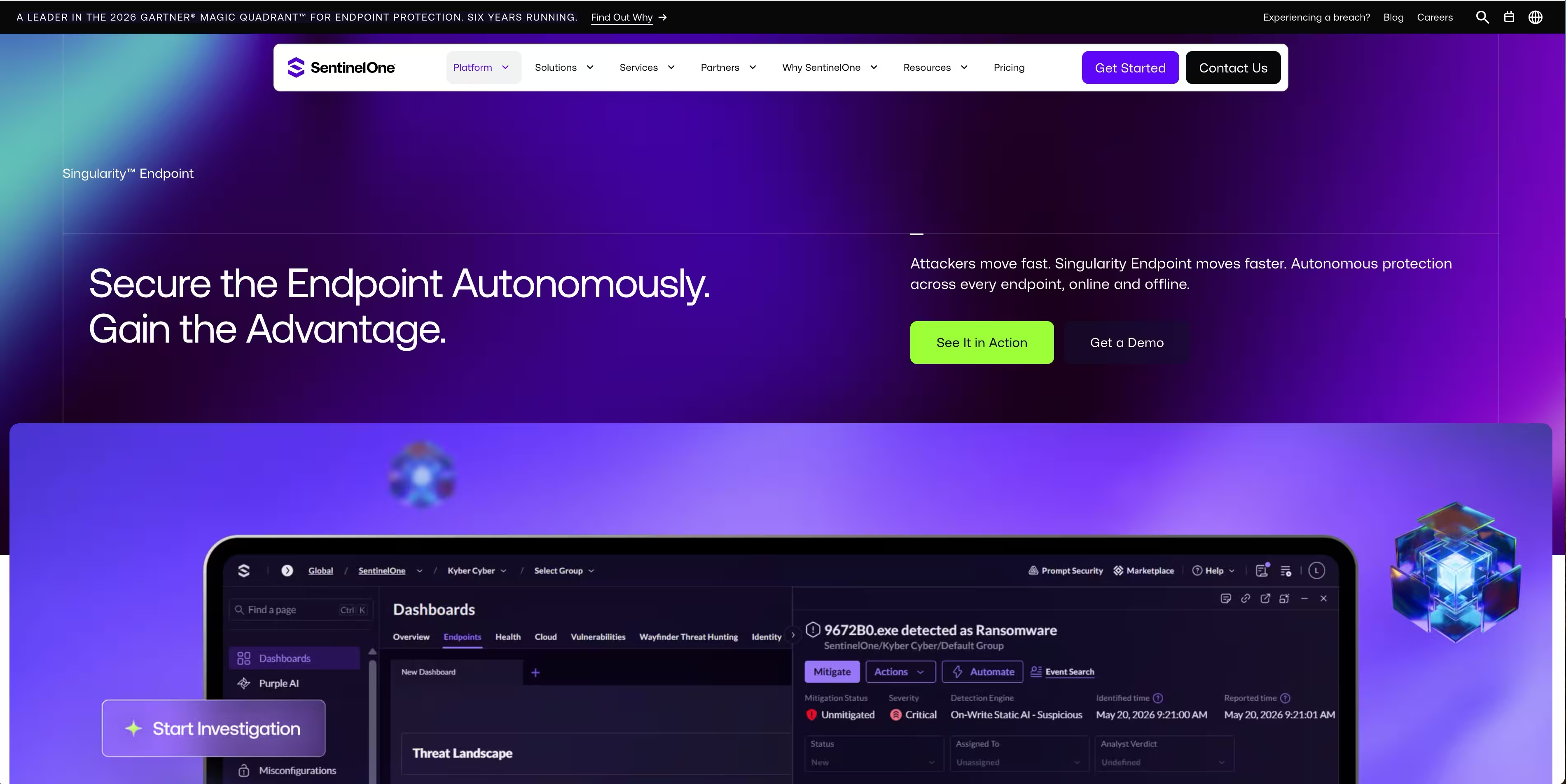
SentinelOne Singularity Endpoint is an AI-powered endpoint security platform for prevention, detection, response, and remediation. It leans hard into automation: behavioral AI models detect threats on the endpoint itself, and when something malicious runs, the platform can remediate and roll the machine back to its pre-attack state with minimal analyst effort.
Best for: Organizations that want autonomous endpoint protection with AI-driven detection and response and less manual triage.
Key strengths
- Single unified agent: One lightweight agent handles prevention, EDR, and response, which simplifies deployment across a mixed fleet.
- Behavioral AI detection: Threats are identified by how they behave, catching fileless and novel attacks that signatures miss.
- Automated remediation and rollback: After a ransomware event, one-click rollback restores affected files, cutting recovery time dramatically.
Why choose SentinelOne Singularity Endpoint: The automation story matters most to lean security teams and to presales engineers who need to prove containment speed during a POC. When a prospect asks "what happens after ransomware detonates," a live rollback demonstration is a strong validation moment. The 4.7/5 G2 rating reflects how much users value that autonomous response.
SentinelOne Singularity Endpoint pricing: Public pricing is available on SentinelOne's own pricing page. Singularity Core starts at $69.99 per endpoint annually, and Singularity Commercial is listed at $229.99 per endpoint annually. Singularity Enterprise is contact-sales. SentinelOne notes that listed prices apply to 5 to 100 workstations and that final purchase pricing runs through partners, so validate your specific tier and seat count before budgeting.
3. Sophos Endpoint
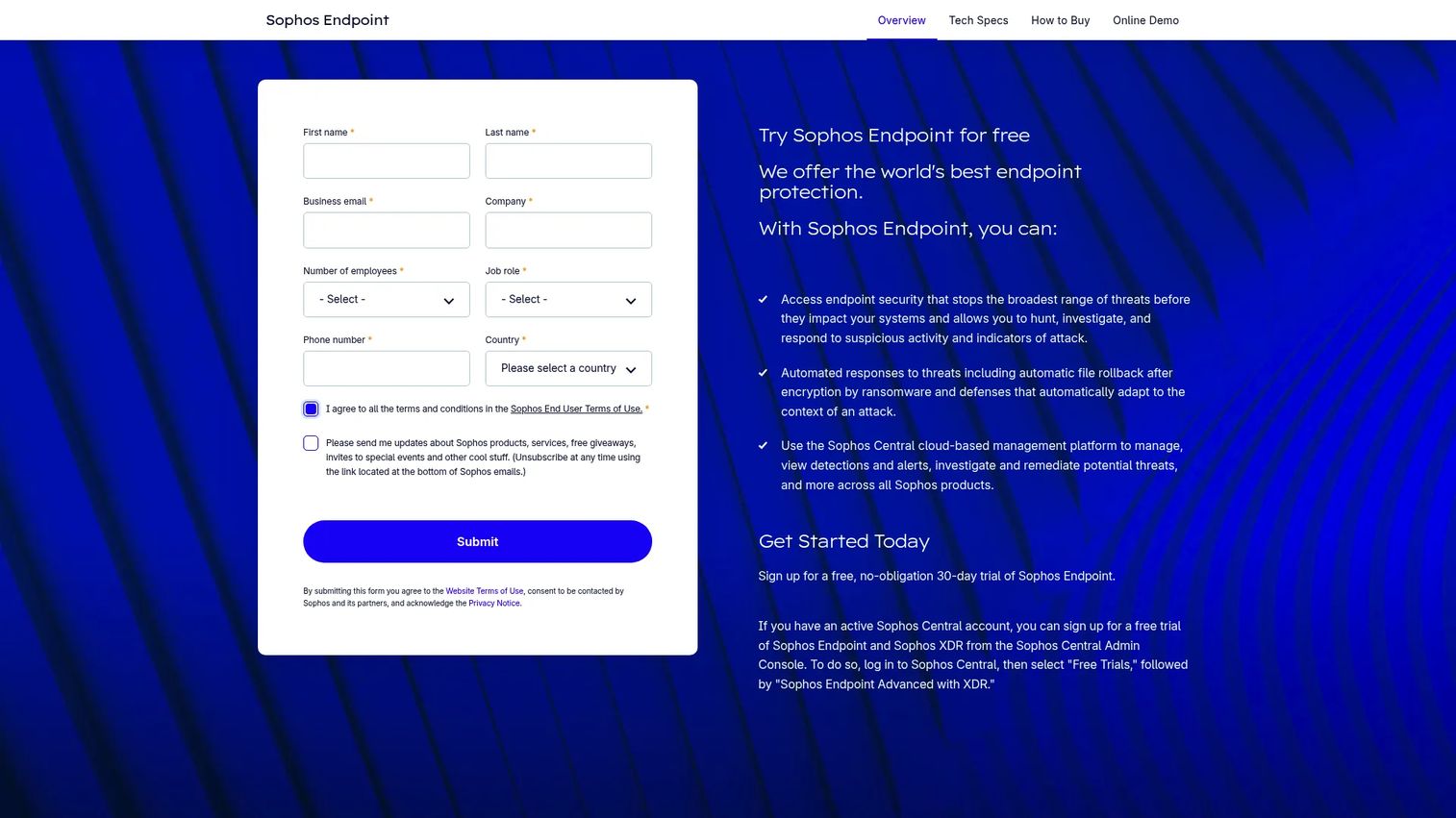
Sophos Endpoint is AI-powered endpoint security for preventing breaches, ransomware, and data loss. It hits a sweet spot for smaller teams: deep-learning prevention that competes with heavier platforms, wrapped in a cloud console that a lean IT team can actually manage without a dedicated SOC.
Best for: SMB and mid-market organizations that want cloud-managed endpoint protection with clear EDR and XDR upgrade paths.
Key strengths
- Deep learning AI prevention: Neural-network models block malware and ransomware before execution, including threats never seen before.
- Web, application, and peripheral controls: Granular policy controls limit attack surface across browsers, apps, and USB devices.
- EDR and XDR upgrade path: Start with prevention, then add detection and response as your program matures, without switching vendors.
Why choose Sophos Endpoint: This is strong endpoint protection software for business teams that lack a large security staff. Admin is straightforward, ransomware defenses are solid out of the box, and the upgrade path means you are not boxed in as you grow. The 4.7/5 G2 rating reflects that balance of protection and manageability.
Sophos Endpoint pricing: Sophos uses simple per-user, quote-based pricing rather than a public list price. You request a quote through the how-to-buy flow, and endpoint protection pricing scales with user count and the tier you choose. Because there is no published number, get a written quote for your seat count and confirm which EDR or XDR modules are included at your tier.
4. Bitdefender GravityZone
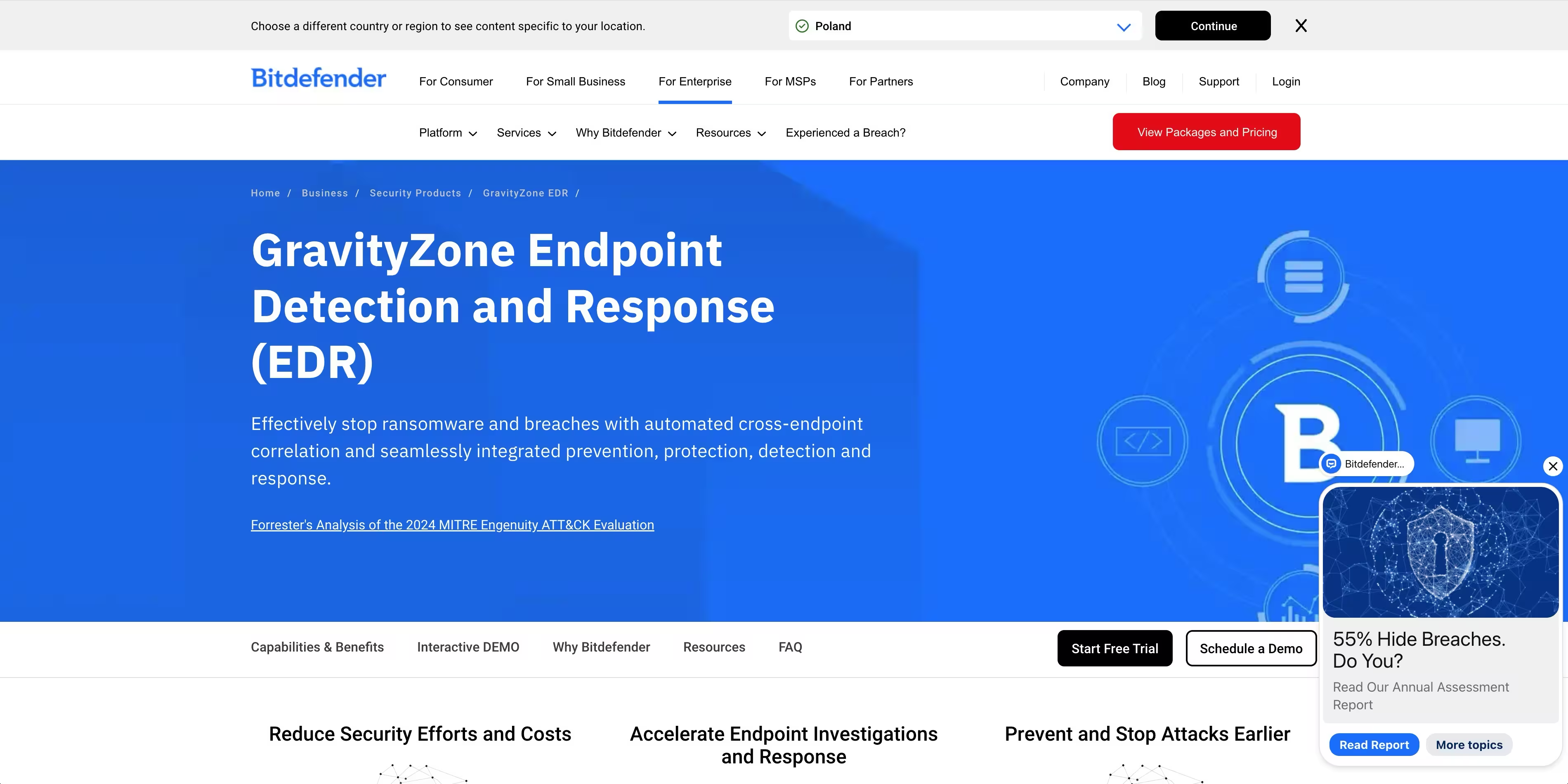
Bitdefender GravityZone is Bitdefender's unified cybersecurity platform for endpoints and broader attack-surface protection, spanning prevention, detection, response, and MDR. It consistently earns high marks in independent detection testing, and it pairs that detection quality with a single lightweight agent that keeps overhead low across large fleets.
Best for: IT and security teams that want one platform for endpoint protection plus advanced detection and response across broad device coverage.
Key strengths
- Unified cross-surface protection: One platform covers endpoints, identity, cloud, email, and network for correlated threat detection and response.
- Single lightweight agent: A cloud-hosted console with optional EU-hosted or on-premises deployment fits varied compliance needs.
- Risk and patch management: Built-in risk management, vulnerability assessment, patch management, XDR, and MDR options reduce the number of separate tools.
Why choose Bitdefender GravityZone: GravityZone appeals to teams that want strong detection without stitching together five products. The EU-hosted and on-premises options matter for data-residency-sensitive buyers, a common sticking point in European security reviews. Centralized management keeps operational effort down as the fleet grows.
Bitdefender GravityZone pricing: Bitdefender offers GravityZone packages structured by organization size: Small Business Security, Business Security, and Business Security Premium, each available on one, two, or three-year terms, plus dedicated MSP options. Public numeric pricing was not exposed on the comparison page at the time of writing, and a trial is available. Request a quote for your device count and term length to get an accurate figure.
5. CrowdStrike Falcon Endpoint Protection Platform
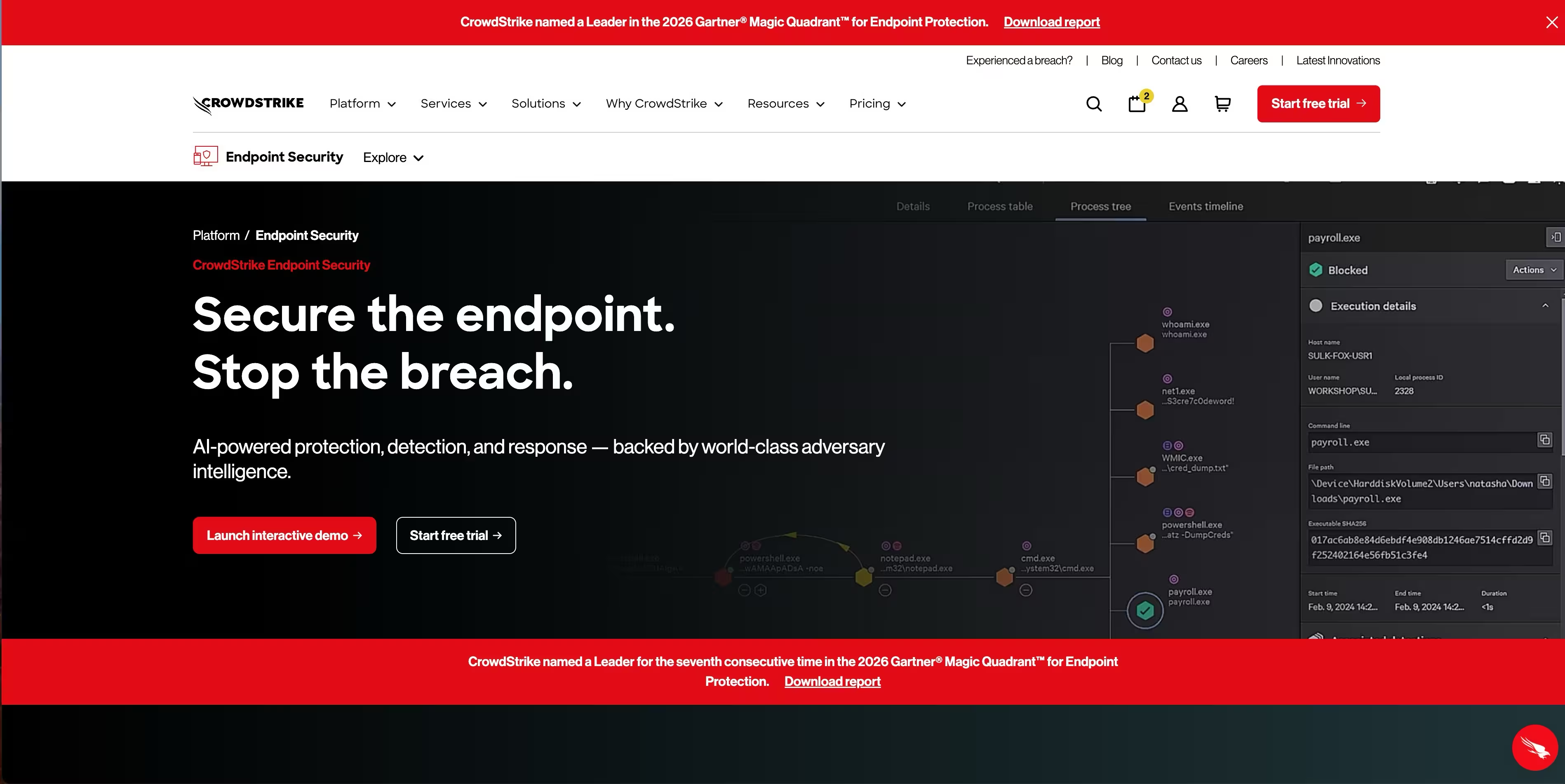
CrowdStrike Falcon Endpoint Protection Platform is a cloud-delivered endpoint protection platform for preventing, detecting, and responding to attacks. Its cloud-native architecture and famously lightweight agent are why Falcon shows up on so many serious enterprise shortlists, and why security teams cite it during high-stakes evaluations.
Best for: Organizations that want a cloud-native endpoint protection platform with layered prevention and response at enterprise scale.
Key strengths
- Next-gen antivirus (Falcon Prevent): Cloud-delivered NGAV blocks known and unknown threats without heavy on-device scanning.
- Endpoint detection and response: Continuous monitoring and rich telemetry give analysts the timelines they need to investigate fast.
- Device control and firewall management: Centralized control over devices and host firewalls tightens the endpoint attack surface.
Why choose CrowdStrike Falcon: Falcon's reputation for detection quality and low agent overhead makes it a frequent enterprise default, and its tiered packaging lets smaller teams start affordably. For presales engineers, the transparent public pricing is a rare gift during budget conversations. The 4.6/5 G2 rating backs the market position.
CrowdStrike Falcon pricing: CrowdStrike publishes tiered pricing. Falcon Go starts at $7.99 per device billed monthly ($59.99 per device annually), Falcon Pro at $14.99 monthly ($99.99 annually), and Falcon Enterprise at $19.99 monthly ($184.99 annually). Falcon Complete is contact-sales, and a 15-day free trial is available. Match the tier to the detection and response depth you need, since NGAV and full EDR sit at different levels.
6. Cortex XDR

Cortex XDR is AI-driven endpoint security from Palo Alto Networks that correlates endpoint, network, cloud, identity, and email data for detection and response. Where a pure EPP focuses on the device, Cortex XDR is built to connect the dots across your environment so one alert reflects the full attack chain rather than a single symptom.
Best for: Organizations that want unified XDR endpoint security tied into broader security operations, not just endpoint-only visibility.
Key strengths
- Cross-source correlation: Connects data from endpoint, network, cloud, identity, and email to surface complete attack stories.
- AI-based detection and prioritization: Machine learning ranks threats so analysts spend time on what matters, cutting alert fatigue.
- Prevention plus native automation: Prevention modules combine with built-in automation for faster investigation and response.
Why choose Cortex XDR: Cortex XDR fits teams that treat the endpoint as one input into a larger security operations picture. If you already run other Palo Alto Networks products, the correlation across domains compounds. For presales teams supporting a SOC-mature buyer, the cross-domain threat detection and response story often clears the technical validation bar that endpoint-only tools cannot.
Cortex XDR pricing: Palo Alto Networks does not expose public numeric pricing for Cortex XDR. The official product page routes buyers to a demo and contact flow rather than a price list. Because packaging depends on data sources, retention, and add-on modules, request a scoped quote that reflects your endpoint count and the log sources you plan to correlate.
7. FortiClient
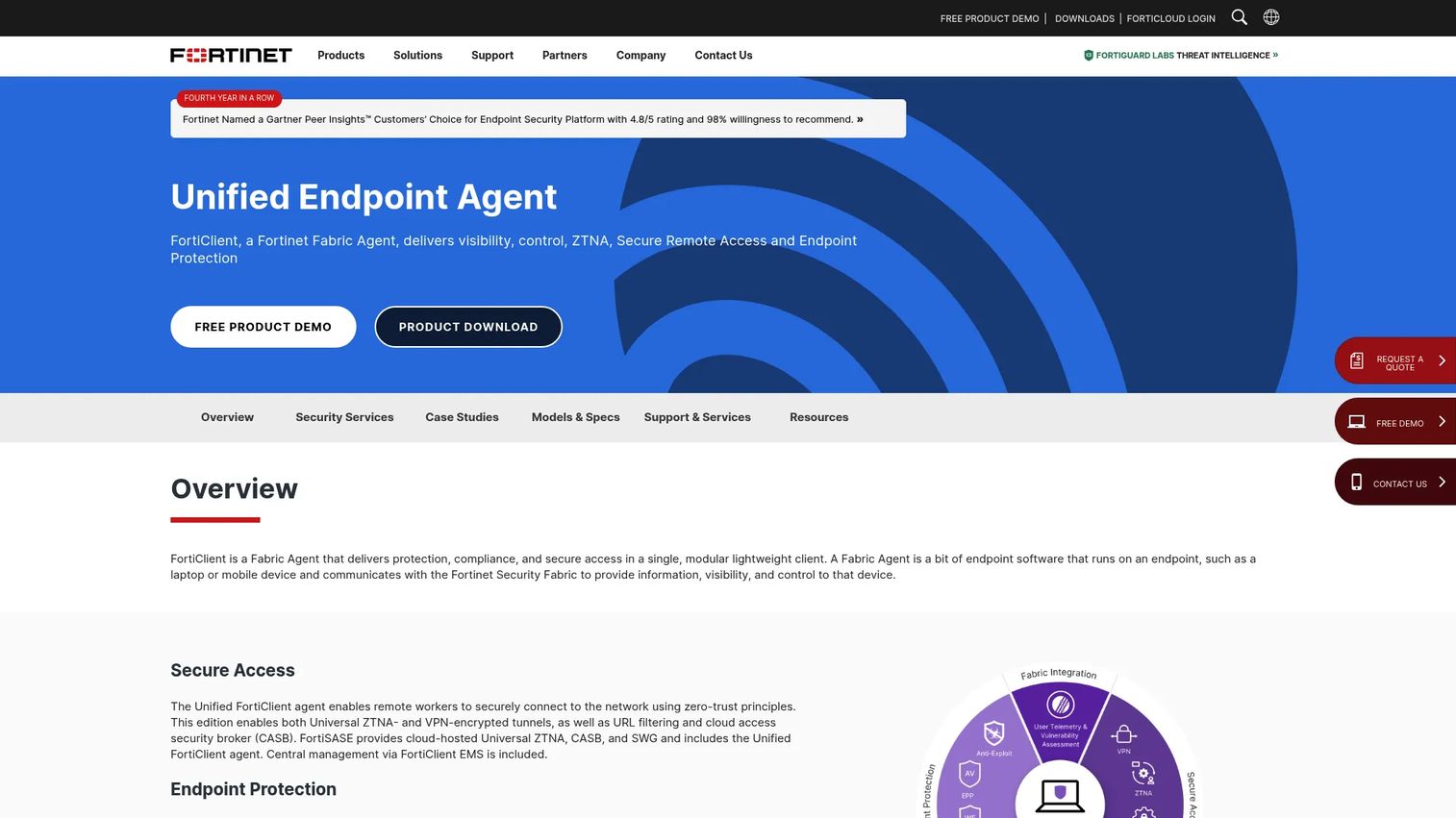
FortiClient is Fortinet's unified endpoint agent for secure remote access, ZTNA, and endpoint protection. Its differentiator is consolidation: instead of running a separate VPN client, a ZTNA agent, and an endpoint protection agent, FortiClient combines them, which is a strong pull for teams already invested in the Fortinet Security Fabric.
Best for: Organizations already using Fortinet that need endpoint security plus VPN and ZTNA from a single agent.
Key strengths
- ZTNA and secure remote access: A built-in ZTNA agent and VPN handle secure access without a separate remote-access tool.
- Endpoint protection and vulnerability assessment: Endpoint prevention pairs with vulnerability scanning to flag weak spots before they are exploited.
- Centralized management: FortiClient Cloud or EMS gives one console for policy, deployment, and reporting across the fleet.
Why choose FortiClient: The case for FortiClient is strongest when it slots into an existing Fortinet stack. Consolidating endpoint protection, VPN, and ZTNA into one agent reduces the number of clients on each device and keeps management inside the Fabric you already operate. Teams without Fortinet infrastructure will weigh the endpoint capabilities on their own merits.
FortiClient pricing: Fortinet does not publish numeric pricing for FortiClient on the product page. Buyers are directed to contact sales or request a quote, while the ordering guide lays out licensing SKUs and deployment options like FortiClient Cloud versus on-premises EMS. Because pricing tracks the SKU and seat count you choose, get a quote scoped to your endpoint total and the ZTNA or EPP modules you need.
Considerations before you buy
Before you shortlist, pressure-test each option against the realities of your environment, not the vendor deck.
Endpoint mix and platform coverage
List every device type you actually run: Windows, macOS, Linux, mobile, servers, and any IoT. A tool with excellent Windows coverage but thin Linux support will leave gaps. Confirm the agent supports every platform in your fleet at the tier you can afford.
Detection and response depth
Decide whether you need prevention only, prevention plus EDR, or full XDR. Behavioral detection and automated response separate a true endpoint protection platform from repackaged antivirus. Ask vendors to demonstrate containment during a POC, not just describe it.
Integrations and centralized management
Endpoint protection rarely lives alone. Check how each tool integrates with your SIEM, identity provider, and ticketing, and whether the centralized console gives you fleet-wide policy control. Weak integrations create manual work that erodes the automation you paid for.
Reporting, scalability, and reviews
Confirm the reporting supports your audits and incident response workflows, and that the platform scales from your current seat count upward without a pricing cliff. Cross-reference vendor claims against endpoint protection reviews on Gartner and G2 before you commit budget.
Pricing transparency and total cost
Some vendors publish per-device pricing; others quote per environment. Factor in modules that unlock EDR or XDR at higher tiers, plus any managed-service add-ons. Get every figure in writing scoped to your device count.
Conclusion
The shortlist breaks down cleanly by decision pattern rather than by any single "winner." If you already run Microsoft 365 and Azure, Defender for Endpoint gives you native integration and less tool sprawl. If you want automation and fast rollback, SentinelOne earns its 4.7/5 rating. Sophos and Bitdefender suit teams that want strong, manageable protection without a large SOC, while CrowdStrike Falcon and Cortex XDR anchor enterprise shortlists where detection depth and cross-domain visibility matter most. FortiClient is the clear pick when endpoint protection needs to consolidate with VPN and ZTNA inside a Fortinet stack.
To choose the best endpoint security software for your team, do four things before the pilot: confirm your full endpoint mix, decide on your deployment model (cloud, on-premises, or hybrid), map your integration requirements against your existing security stack, and define what a successful incident response workflow looks like. Then run a scoped POC against those criteria. The right tool is the one that proves fit on your endpoints, not the one with the loudest deck.
FAQs
Endpoint protection software is a platform that prevents, detects, investigates, and responds to threats on devices like laptops, desktops, servers, and phones. It runs an agent on each endpoint and reports to a centralized console. Unlike basic antivirus, it combines prevention with behavioral detection and active response so teams can both block known threats and catch suspicious activity.
Legacy antivirus is signature-based: it blocks files that match a database of known malware, which leaves it exposed to new, fileless, or credential-based attacks. In the antivirus vs endpoint protection comparison, modern endpoint protection adds behavioral detection, cloud analysis, and response. For example, it can spot a trusted process suddenly encrypting files, halt it, and isolate the device, something signature scanning alone would miss.
Prioritize platform coverage for every device type you run, detection depth (behavioral detection and EDR, not just signatures), and a centralized console for fleet-wide policy. Then check integrations with your SIEM and identity stack, automation and response capabilities, reporting for audits, and how the pricing scales. Use these criteria to shortlist an endpoint protection platform before you run a pilot.
Usually, yes. EDR (endpoint detection and response) is a capability within or alongside an endpoint protection platform. EPP handles prevention, and EDR adds continuous monitoring, investigation, and containment. Some vendors bundle both in one agent; others gate EDR behind a higher tier. The terms overlap because a complete platform typically delivers prevention and response together.
For small teams, prioritize ease of use, simple admin, and clear pricing. Sophos Endpoint suits SMBs that want strong protection with manageable admin and an upgrade path, and CrowdStrike Falcon Go offers transparent per-device pricing at an accessible entry point. SMEs are the fastest-growing endpoint security buyers, projected at a 10.7% CAGR from 2026 to 2031 according to MarketsandMarkets (2026), so vendors increasingly cater to this segment.
Enterprises should focus on scale, granular policy control, deep integrations, reporting, and mature incident response. CrowdStrike Falcon and Cortex XDR frequently anchor enterprise shortlists for detection depth and cross-domain visibility, while Microsoft Defender for Endpoint fits Microsoft-centric estates. The best fit depends on your existing stack and operating model, so validate against your own environment.
Many teams upgrade because threats, devices, and workflows have grown more complex than antivirus was built for. Signature-based tools miss fileless attacks, credential abuse, and novel ransomware. Endpoint protection adds behavioral detection and response so you can investigate and contain what gets through, not just block known files. If your fleet is distributed or you face security audits, the upgrade is usually worth it.