

It's Monday morning. Your quota just reset. The sequencer shows 200 prospects who haven't replied. Three emails bounced overnight. Your AE pinged you Friday at 5pm to say last week's meeting "wasn't really qualified." And your manager wants to know why your call connect rate dropped.
You're caught between two pressures that never let up: activity volume and outcome quality. More calls, more emails, more LinkedIn touches. But also better meetings, cleaner handoffs, stronger pipeline. The job of a sales development representative demands both, simultaneously, every single week.
Most content about the SDR role reads like a job posting. Generic responsibilities, vague skills lists, no real numbers. This guide is different. It's built for the person doing the job (or about to start), not the person posting it. SDR-sourced pipeline drives a significant share of new business revenue in B2B SaaS, with Bridge Group research showing that 60% or more of SaaS companies operate dedicated SDR teams, and that number climbs to 89% for companies with average contract values above $100K.
Whether you're in your first 90 days, trying to hit quota consistently, or leading a team of sales development representatives, this is the resource that covers the reality, the math, the craft, and the trajectory.
What you'll learn
- The precise definition of an SDR and how the role fits into a modern sales org
- The real difference between inbound and outbound SDR work, and why it matters for your career
- How SDR compensation actually breaks down by company stage, segment, and geography in 2026
- The specific skills, tools, and qualification frameworks that separate top performers from average
- What a realistic day looks like for both inbound and outbound SDRs
- Career progression timelines and what gets you promoted
- KPI benchmarks with actual numbers you can measure yourself against
- Guidance for leaders hiring, structuring, and coaching SDR teams
TL;DR
- A sales development representative is the first human touchpoint in most B2B sales processes, responsible for qualifying leads and booking meetings for account executives.
- SDR compensation in the US ranges from $50,000 to $85,000 OTE in 2026, with base salary making up roughly 70% and variable tied to meetings booked or pipeline generated.
- The two highest-impact skills for SDRs in 2026 are personalization at scale and speed-to-lead for inbound.
- The average SDR tenure is roughly 1.4 years, making career progression planning critical from day one.
- Interactive demos are a core SDR tool because they let prospects experience the product before committing to a live call, giving SDRs engagement data that strengthens every AE handoff.
What is a sales development representative (SDR)?
A sales development representative (SDR) is a top-of-funnel sales professional who identifies, qualifies, and engages potential customers to create pipeline for account executives.
That's the clean definition. Here's what it means in practice.
The SDR sits between marketing and the closing team. Marketing generates awareness and inbound interest. Account executives run demos, negotiate, and close deals. The SDR connects those two worlds by doing the work most people skip: researching accounts, reaching out to the right people, qualifying whether there's a real fit, and booking meetings that actually convert.
The SDR title is sometimes used interchangeably with BDR (business development representative). In some organizations, BDR refers specifically to outbound prospecting while SDR handles inbound lead qualification. In others, the titles mean the same thing. The function is what matters: pipeline creation through prospecting and qualification.
Why does this role exist as a separate function? The modern SDR model traces back to Aaron Ross's Predictable Revenue framework, which argued that separating prospecting from closing allows each function to specialize. AEs focus on running deals. SDRs maintain pipeline flow. The result is a more predictable revenue engine where neither function is stretched across the entire funnel.
In SDR sales, the scope of work typically includes:
- Lead generation: Building target account lists, identifying the right contacts, and initiating outreach
- Qualification: Confirming pain, urgency, fit, and authority through structured conversations
- Meeting booking: Scheduling qualified meetings between prospects and AEs
- Pipeline contribution: Influencing revenue by creating the top-of-funnel motion that feeds the entire sales org
The SDR meaning in sales is straightforward: this is the person who makes sure the pipeline never runs dry. And in a market where B2B buyers complete the majority of their evaluation before ever talking to a salesperson, the quality of that first SDR interaction determines whether the prospect engages or disappears.
Why sales development representatives matter in 2026
Sales development representatives are the revenue engine that most B2B SaaS companies can't grow without.
Three forces make this role more important now than at any point in the last decade.
Revenue impact
SDR-sourced pipeline is not entry-level busywork. Bridge Group research shows that 60% of B2B SaaS companies run dedicated SDR teams, and adoption climbs to 67% for companies above $5M ARR and 89% for those with average contract values exceeding $100K. The pattern is clear: as companies scale, they invest more in dedicated sales development because it works.
Buyer behavior shift
B2B buyers are doing more of their evaluation independently before engaging with sales. By the time a prospect talks to your SDR, they've already read your website, compared you against competitors, and formed opinions. The SDR is often the first human interaction in the buying process. That first touch sets the tone for the entire deal. A generic, poorly researched outreach kills the relationship before it starts. A relevant, well-timed message earns the next conversation. Increasingly, teams are investing in buyer enablement strategies to meet prospects where they are in their self-directed research.
The 2026 context
AI is changing how SDRs work. Automated research, AI-written first drafts, intent signal routing, and prospecting agents are becoming standard tools. Salesforce's 2026 State of Sales report found that high performers are 1.7x more likely to use prospecting agents than underperformers. The landscape of AI SDR tools is expanding rapidly. But the core job, building human relationships and qualifying fit, remains. The SDR role is evolving, not disappearing. AI handles the repetitive work. The SDR handles the judgment calls.
Inbound SDR vs. outbound SDR
The SDR title covers two distinct jobs. Managers, writers, and SDRs themselves need to know which motion they're discussing because the day-to-day, the metrics, and the tools differ meaningfully.

Inbound SDR
An inbound SDR works marketing-sourced leads: form fills, demo requests, content downloads, and trial signups. The job is fast qualification and conversion of existing interest into AE meetings.
Speed-to-lead is the dominant metric. Every minute that passes after a form submission reduces conversion rates. The best inbound SDR teams respond in under 60 seconds. Days are call-heavy because most work involves reaching back out to people who raised their hand. The challenge isn't breaking through noise. It's responding fast enough and qualifying accurately enough to route the right leads to the right AEs.
Inbound SDRs typically handle higher volume but shorter interactions. A single inbound SDR might process 30 to 50+ leads per week, with most conversations lasting under 10 minutes.
Outbound SDR
An outbound SDR generates pipeline from cold. The job is account research, target list building, and multi-channel outreach (email, LinkedIn, phone, video) at volume.
The challenge here is breaking through. The prospect didn't ask to be contacted. Personalization matters more because you're earning attention, not responding to it. Days are heavier on list-building, sequencing, and persona research. An outbound SDR might work 50 to 100+ accounts per month, running multi-step sequences across channels. Choosing the right outreach software is critical for managing this volume effectively.
The skill is balancing volume with quality. Spray-and-pray outreach kills deliverability and reply rates. Hyper-personalized outreach at low volume doesn't generate enough pipeline. The best outbound SDRs find the middle ground.
Hybrid SDR
Common at smaller companies where headcount is limited. The hybrid SDR handles both inbound and outbound. This works at small scale but hurts both metrics as volume grows. Most scaling SDR orgs eventually specialize because the skills, workflows, and pacing are different enough that splitting focus degrades performance on both sides.
SDR vs. BDR vs. inside sales rep vs. account executive
SDR, BDR, inside sales rep, and account executive are related but distinct roles. Here's how they differ.
In practice, SDR and BDR are used interchangeably at most companies. Where a distinction exists, BDR typically refers to outbound prospecting while SDR handles inbound qualification. The titles vary by company. The core function is the same.
Inside sales reps are full-cycle closers. They prospect, qualify, demo, and close, all without field sales. This model is common in SMB segments where deal sizes don't justify splitting the functions.
Account executives receive qualified meetings from SDRs and own the deal through close. The key distinction: SDRs create pipeline. AEs convert it. Understanding this split matters for your career because the SDR role is designed to prepare you for the AE seat.
Core responsibilities of a sales development representative

This is what the sales development representative job description looks like when you strip away the corporate language and describe what you actually do every day.
1. Prospecting and account research
You build and maintain target lists that match your company's ideal customer profile. This means identifying the right accounts (firmographic fit, technographic signals, intent data) and the right contacts within those accounts (the people who feel the pain your product solves).
Research is not optional. It's what separates SDRs who hit quota from those who don't. You're using LinkedIn Sales Navigator to map org charts, enrichment tools to find verified emails and direct dials, and CRM filters to avoid accounts already in pipeline. The five minutes you spend researching an account before your first touch pays back in reply quality and meeting conversion.
2. Multi-channel outreach execution
You run sequences across email, LinkedIn, phone, and sometimes video or voice notes. The average SDR executes 80 to 120 activities per day across these channels, according to industry benchmarks tracked by sales analytics platforms.
The skill is personalization at scale. You're writing openers that reference something specific about the prospect's company, role, or recent activity, then connecting that to a relevant pain point your product addresses. The rest of the email can follow a template. But the first two sentences need to earn the read. Using personalization software can help SDRs tailor outreach without sacrificing volume.
You're also testing constantly: subject lines, openers, CTAs, send times, sequence length. The SDRs who improve fastest are the ones who treat outreach like a series of experiments, not a script to follow.
3. Qualification and discovery
When a prospect responds or picks up the phone, you run lightweight discovery to confirm fit. This isn't a full 45-minute discovery call. It's a focused 5 to 10 minute conversation to confirm pain, urgency, authority, and basic fit.
Common frameworks include BANT (Budget, Authority, Need, Timeline) and MEDDIC-lite (focusing on Identify Pain and Champion). The SDR's job is not to run a full discovery. It's to confirm enough fit to warrant an AE's time. Fast disqualification is as valuable as qualification. A meeting that doesn't convert to pipeline wastes AE time and erodes trust between you and your closing team.
4. Pipeline hygiene and CRM management
You log every activity, update deal stages, and write handoff notes. This is the least glamorous part of the job and the one most often skipped.
Here's why it matters: AEs need context to run effective first calls. Forecasts need accurate data. The SDR who logs clean notes ("Prospect confirmed they're evaluating three vendors, timeline is Q2, CISO needs to approve security review") gets better feedback from AEs and better coaching from managers. The SDR who logs "Had a good call" gets neither. Having the right CRM software as the foundation makes this discipline much easier to maintain.
5. Collaboration with AEs, marketing, and enablement
You coordinate with marketing on lead quality feedback. You use enablement content (battlecards, proof points, competitive snippets) to handle objections during outreach. You provide field feedback on what messaging is landing and what's falling flat. The best SDR orgs have a weekly feedback loop between SDRs and marketing. SDRs report which messages get replies. Marketing adjusts targeting and content. This loop is where pipeline quality improves fastest.
Skills every SDR needs in 2026

The skills that separate high-performing sales development representatives from average ones fall into two categories: communication and research on the soft side, and tool proficiency and data literacy on the hard side.
Understanding these sales development representative skills and requirements is what accelerates your ramp.
Hard skills
- CRM proficiency: You need to navigate Salesforce or HubSpot without slowing down. Creating views, logging activities, updating stages, and running basic reports should be muscle memory.
- Sales engagement platforms: Your sequencer is your daily workspace. Knowing how to build multi-channel sequences, A/B test steps, and read performance data is non-negotiable. Explore the best sales engagement tools to find the right fit for your workflow.
- Data enrichment tools: Finding verified contact data, firmographic signals, and technographic details. The quality of your list determines the quality of your pipeline.
- LinkedIn Sales Navigator: Account mapping, lead filtering, and InMail strategy. This is where outbound SDRs spend significant research time.
- AI-assisted research and writing: In 2026, AI sales tools for account research, email drafting, and call prep are becoming table stakes. SDRs who use them effectively produce more output per hour.
- Email deliverability basics: Understanding SPF, DKIM, domain warming, and send volume limits. Bad deliverability kills outreach before the prospect ever sees it.
Soft skills
- Written communication: Email is still the primary outreach channel. Clear, concise, relevant writing is the single most important SDR skill.
- Active listening: On qualification calls, the ability to hear what the prospect is actually saying (not just waiting for your turn to talk) determines meeting quality.
- Objection handling: "We're not interested," "We already have a tool for that," "Send me an email." You hear these dozens of times per week. Knowing how to respond without being pushy is a craft.
- Resilience: The average SDR faces rejection constantly. The ability to maintain energy and focus through a string of "no" responses is what keeps you dialing.
- Coachability: This is the #1 predictor of SDR success according to most sales leaders. The SDRs who improve fastest are the ones who actively seek feedback, apply it, and iterate.
The modern SDR tech stack
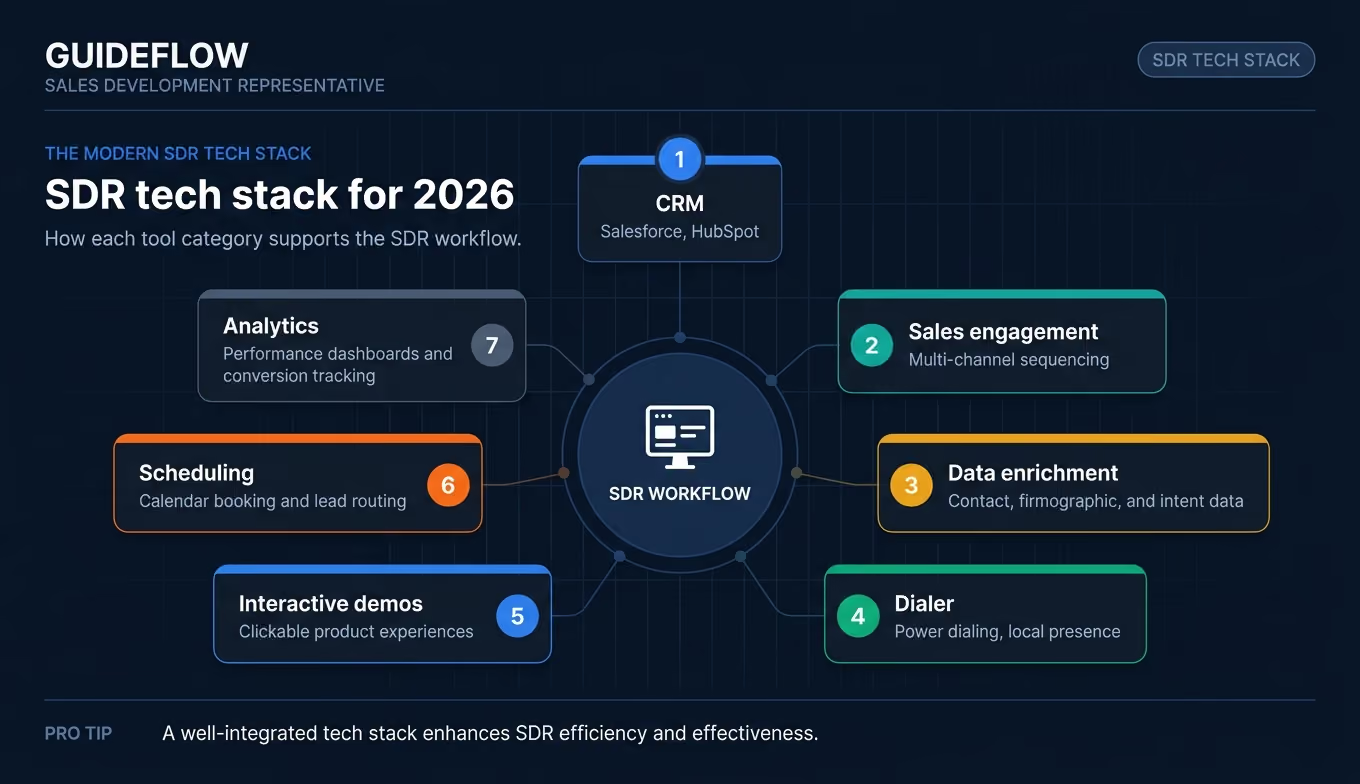
The right tools don't make a bad SDR good. But they make a good SDR faster. Here's what a complete SDR stack looks like in 2026, organized by category.
CRM
The system of record. Salesforce and HubSpot are the most common in B2B SaaS. Every other tool feeds data into or pulls data from the CRM. Your CRM discipline is what makes everything else work. If your data is messy here, it's messy everywhere.
Sales engagement and sequencing
This is where outreach happens at scale. Multi-channel sequences, automated follow-ups, A/B testing on subject lines and CTAs. Your sequencer is your daily workspace, the tool you spend the most time in. The best SDRs know their platform deeply enough to build, test, and optimize sequences without asking for help.
Data enrichment and prospecting
Contact data, firmographics, technographics, and intent signals. The quality of your list determines the quality of your pipeline. If you're reaching out to the wrong people at the wrong companies, no amount of personalization fixes it. Enrichment tools give you verified emails, direct dials, tech stack data, and hiring signals that inform your outreach.
Dialer and calling tools
Power dialers, local presence, voicemail drop. Still critical for inbound SDRs especially, where speed-to-lead depends on getting the prospect on the phone within minutes of a form fill. Outbound SDRs use dialers to maximize connect rates during calling blocks.
Interactive demos and product experiences
Here's a pain point no other SDR guide addresses: the demo bottleneck. You're on a call with a prospect who says, "Can I see the product before we schedule a meeting with your AE?" You can't run a live demo yourself. You don't have access to a demo environment. So you either stall ("Let me set that up for next week"), hand off prematurely, or lose momentum entirely.
Interactive demos solve this. You share a clickable product experience via email, LinkedIn, or during the call itself. The prospect clicks through real product flows on their own time. You get engagement analytics showing what they explored, which features they spent time on, and where they dropped off. That data directly informs your AE handoff.
Guideflow lets SDRs capture product flows in minutes, personalize them per prospect (with dynamic text, images, and variables), and share via link or embed. Interactive demos perform best when the SDR needs to give the prospect a product experience without scheduling a separate call with an SE. Instead of describing what the product does, you let the prospect experience it. The engagement data you collect makes every handoff note sharper and every AE conversation more productive.
Scheduling and routing
Calendar tools and round-robin routing. Especially critical for inbound SDRs where every minute matters. The difference between a 60-second response and a 5-minute response can be the difference between booking the meeting and losing the prospect to a competitor who responded first.
Analytics and reporting
Dashboard tools that show what's working. Conversion rates by channel, sequence performance, activity-to-outcome ratios. The SDRs who track their own data weekly improve faster than those who wait for their manager's feedback. The right sales analytics software gives you visibility into what's converting and what's not.
SDR salary and compensation in 2026
Sales development representative salary is one of the most searched topics for people evaluating the role. Here are real numbers.
SDR compensation in the US typically ranges from $50,000 to $85,000 OTE (on-target earnings) in 2026, with base salary making up roughly 70% and variable compensation tied to meetings booked or pipeline generated. RepVue's 2026 data shows a median OTE of $85,000, with top performers reaching $128,000. BuiltIn reports a national average of $57,754 base with $25,054 in variable, totaling approximately $82,808 OTE.
Compensation by company stage and segment
Geographic variation is significant. Trellus's 2026 data shows San Francisco base salaries ranging from $65K to $95K and New York from $60K to $90K, roughly 15-25% above national averages. Austin, Chicago, and Boston cluster in the $48K to $85K base range. Remote roles are increasingly benchmarked to national or regional rates rather than the candidate's location.
What affects SDR compensation
Five factors drive the range:
- Company stage: Later-stage companies pay more because deal sizes are larger and the SDR function is more proven.
- Deal size: Enterprise SDRs generating $200K+ pipeline per meeting earn more than SMB SDRs booking $5K deals.
- Inbound vs. outbound: Outbound often pays slightly more due to higher difficulty and skill requirements.
- Geography: Major metro areas still command premiums, though the gap is narrowing with remote work.
- Experience level: A first-time SDR earns less than someone with 12+ months of quota attainment history.
Some organizations are moving toward pipeline-influenced compensation rather than pure meeting count. This means your variable pay is tied to the pipeline dollars your meetings generate, not just the number of meetings you book. This trend rewards meeting quality over quantity. Teams evaluating sales compensation software are increasingly building these pipeline-influenced models into their comp plans.
Check Glassdoor, RepVue, or Comparably for current data specific to your market and segment.
A day in the life of an SDR
No competitor on the SERP provides this. Here's what the job actually feels like, hour by hour.
Outbound SDR day
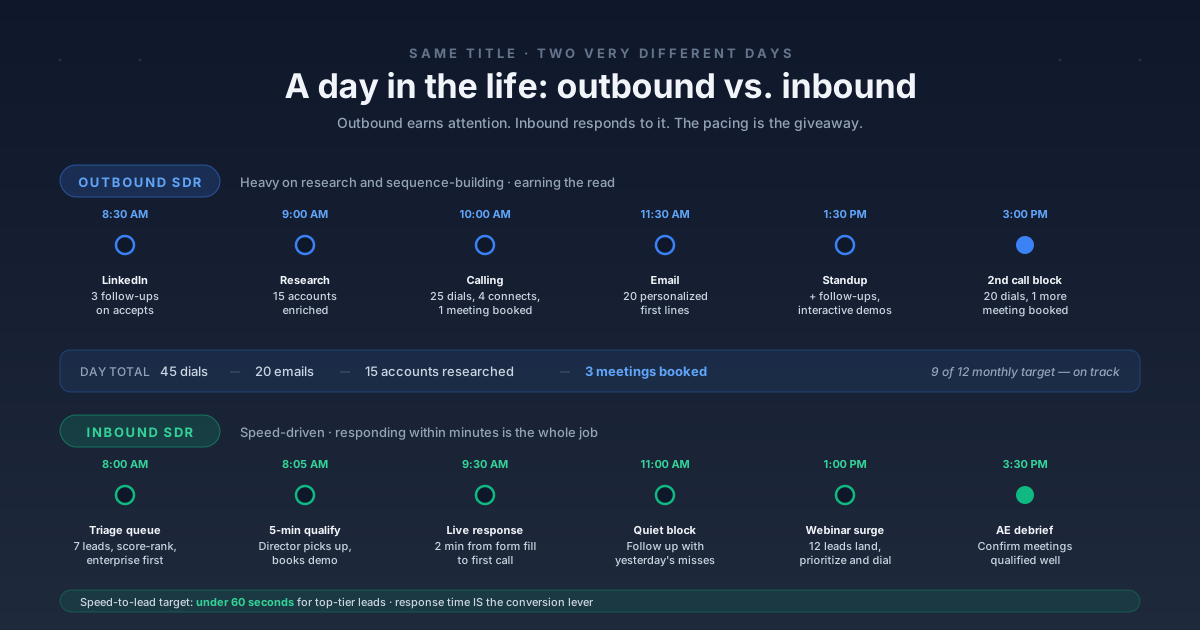
8:30 AM: Review overnight LinkedIn connection accepts. Three people accepted. You personalize follow-up messages referencing their recent posts or company news. Send all three before 9.
9:00 AM: Research block. Pull 15 new accounts from your intent signal data. Enrich contacts: find the VP of Operations and the Head of IT at each. Verify emails. Add to your target list with notes on why each account fits.
10:00 AM: Calling block. 25 dials. 4 connects. 1 turns into a real conversation. The prospect confirms they're evaluating tools in your category and agrees to a meeting next week. You log detailed notes: pain point (manual reporting consuming 10 hours/week), timeline (Q2 decision), and who else is involved (CFO signs off).
11:30 AM: Email block. Launch a new sequence for 20 accounts. Personalize the first line of each email based on your morning research. The rest follows your tested template.
12:30 PM: Lunch.
1:00 PM: Team standup. Share what messaging is landing this week. Your manager coaches you on an objection you struggled with on a morning call: "We already have a tool for that."
1:30 PM: Follow-up block. Reply to 6 email responses. Two are interested. One asks, "Can I see the product before we meet?" You send a personalized interactive demo link so they can explore the product on their own time. You'll check the engagement analytics tomorrow to see what they clicked on.
3:00 PM: Second calling block. 20 dials. 2 connects. One books a meeting for Thursday.
4:00 PM: CRM hygiene. Update stages, log notes from today's conversations, prep tomorrow's call list.
4:30 PM: Review metrics. 3 meetings booked today. 9 for the month. Need 3 more in 8 business days. You're on track.
Inbound SDR day
8:00 AM: Check the queue. 7 demo requests came in overnight. Prioritize by lead score. The enterprise demo request from a Director of Engineering goes first.
8:05 AM: Call the Director. She picks up. Five-minute qualification: confirmed pain (current tool doesn't scale), timeline (needs a decision by end of Q2), and authority (she owns the budget). You book a meeting with your enterprise AE for tomorrow at 2pm.
8:15 AM: Work through the remaining 6 leads. Three qualify. Two are students downloading content (disqualify). One is a competitor (mark and move on).
9:30 AM: New leads trickling in. You're responding within 2 minutes of each form fill. Speed is everything. The prospect who requested a demo 90 seconds ago is still on your website. Call now, not later.
11:00 AM: Quiet period. You use the time to follow up on yesterday's leads who didn't pick up. Leave voicemails. Send follow-up emails with relevant case studies.
1:00 PM: Afternoon surge. Marketing webinar just ended. 12 new leads hit the queue. You prioritize by company size and title, then start dialing.
3:30 PM: Debrief with your AE on this morning's meetings. She confirms the Director of Engineering meeting was well-qualified. Good feedback. You note what worked in your qualification approach.
4:00 PM: Log everything. Update CRM. Prep for tomorrow.
SDR qualification frameworks
Qualification is the skill that separates SDRs who book meetings from SDRs who book meetings that convert. Here are the three most common frameworks.
BANT
Budget, Authority, Need, Timeline. The classic framework.
- Budget: Does the prospect have money allocated for this type of purchase?
- Authority: Are you talking to someone who can make or influence the buying decision?
- Need: Is there a specific, confirmed pain your product addresses?
- Timeline: When do they need to make a decision?
Practical example: "You mentioned your team is spending 10 hours a week on manual reporting. Is fixing that something your team has budget allocated for this year, or would this need to go through a separate approval process?"
BANT is falling out of favor in some orgs because budget is often the last thing confirmed, not the first. Prospects rarely know their budget until they've evaluated options. Starting with need and timeline often produces better conversations.
MEDDIC-lite for SDRs
Metrics, Economic Buyer, Decision Criteria, Decision Process, Identify Pain, Champion. The full MEDDIC framework is typically an AE tool. SDRs focus on two elements:
- Identify Pain: What specific problem is the prospect trying to solve? How is it affecting their business?
- Champion: Is there someone inside the organization who will advocate for your product?
Practical example: "It sounds like the manual process is costing your team significant time. Who else on your team feels this pain most acutely? Would they be open to joining the next conversation?"
SDRs who can identify a clear pain and a potential champion in the first conversation set their AEs up for faster deal progression.
Custom qualification models
Many SDR orgs build internal qualification checklists tailored to their specific ICP and deal motion. The best ones include:
- Confirmed pain (not just "exploring")
- Identified next step (specific date and attendees)
- Right persona/title (matches ICP)
- Timeline within 6 months
The specific framework matters less than consistency of application. Pick one, use it on every call, and iterate based on which qualified meetings actually convert to pipeline.
How to succeed as an SDR: best practices
1. Personalize the first line, not the whole email
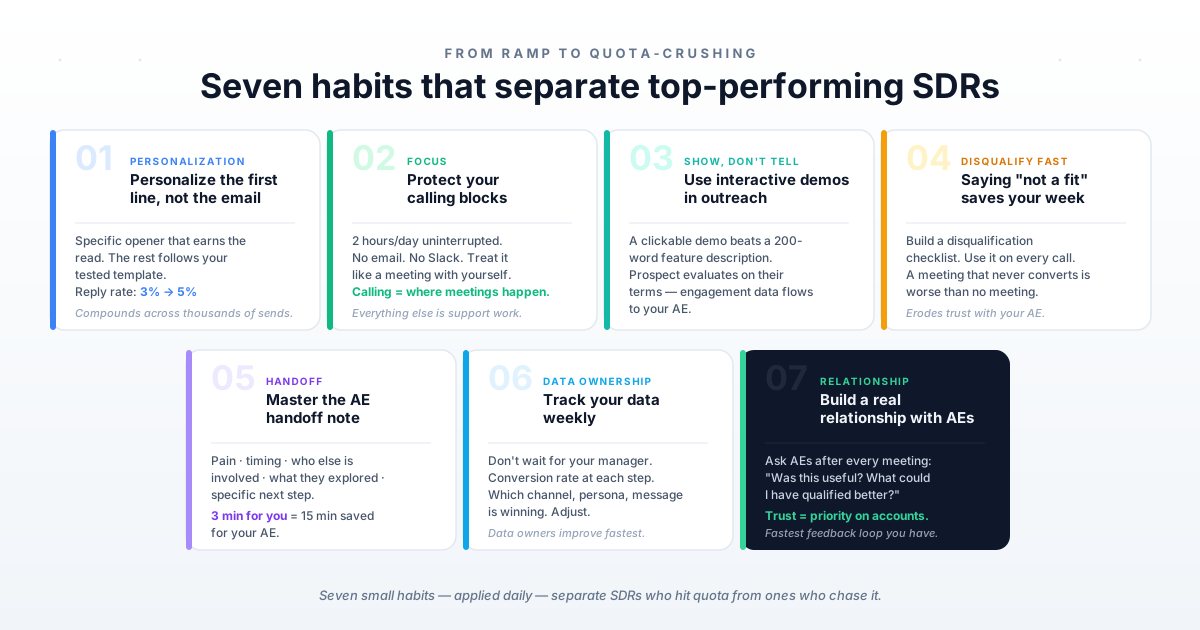
The biggest ROI on personalization is in the first one to two sentences. Research the prospect's company, recent news, LinkedIn activity, or job postings. Write a specific opener that shows you did your homework. The rest of the email can follow a tested template. Industry data suggests personalized first lines increase reply rates by 30-50% compared to fully templated emails. That's the difference between 3% and 5% reply rates, which compounds across thousands of sends.
2. Protect your calling blocks
Block two hours per day for uninterrupted calling. Treat it like a meeting. Don't check email. Don't respond to Slack. The SDRs who hit quota consistently are the ones who protect their high-value activity time. Calling blocks are where meetings get booked. Everything else is support work.
3. Use the "show, don't tell" approach in outreach
Instead of describing what the product does in a cold email, share a link to an interactive demo that lets the prospect experience it. This approach works especially well when the prospect is evaluating multiple vendors and wants to see the product before committing to a call. SDR teams using interactive demos in outreach sequences report higher reply rates because the prospect can evaluate on their own terms. You're not asking for 30 minutes of their time. You're giving them something valuable in 3 minutes.
4. Disqualify fast
A meeting that doesn't convert to pipeline is worse than no meeting because it wastes AE time and erodes trust. Build a disqualification checklist: no confirmed pain, no budget process, no timeline, wrong persona. Use it on every call. The discipline to say "this isn't a fit" saves you and your AE hours per week.
5. Master the AE handoff
The handoff note is the SDR's second product. Include: the prospect's specific pain, why they're looking now, who else is involved in the decision, what they've already seen (including any interactive demos they've explored and which features they spent time on), and the specific next step the AE should take. A clean handoff note takes 3 minutes and saves the AE 15 minutes of re-discovery.
6. Track your own data weekly
Don't wait for your manager to tell you what's working. Build a simple weekly tracker: emails sent, replies, calls made, connects, meetings booked, meetings held. Calculate your conversion rates at each step. Identify which channel, which persona, and which message is converting best. Adjust. The SDRs who own their data improve faster than those who rely on monthly pipeline reviews.
7. Build a relationship with your AEs
Ask AEs for feedback on every meeting. "Was that meeting useful? What could I have qualified better?" This feedback loop is the fastest way to improve meeting quality and earn more pipeline credit. The AEs who trust your qualification will fight to keep you on their accounts.
Common mistakes that hold SDRs back

1. Spraying and praying
Sending the same generic email to 500 people. What it looks like: high send volume, low reply rate, declining deliverability. Your domain reputation suffers. Your numbers get worse every month.
The fix: Reduce volume by 30%. Increase personalization by 50%. Net result is more replies with fewer sends. A 5% reply rate on 200 emails beats a 1% reply rate on 500.
2. Skipping research
Jumping straight to outreach without understanding the account. You send a message about "improving sales productivity" to a company that doesn't have a sales team.
The fix: Spend 5 minutes per account before the first touch. Check LinkedIn, recent funding, job postings, tech stack. This investment pays back in reply quality and avoids embarrassing mismatches.
3. Treating every lead the same
Using the same sequence for a VP of Engineering and a Marketing Manager. Their pain points, language, and buying authority are different. Your outreach should be too.
The fix: Build persona-specific sequences with different messaging, channels, and cadence. The VP gets a shorter, more direct sequence. The Manager gets more educational content and social proof.
4. Neglecting the phone
Over-relying on email and LinkedIn. Phone connects still convert at a significantly higher rate than email replies in most B2B segments. The phone feels uncomfortable. That's exactly why it works: your competitors are avoiding it too.
The fix: Make calling a non-negotiable daily habit. Two hours of protected calling time. Every day. No exceptions.
5. Poor CRM hygiene
Not logging calls, skipping notes, leaving stages outdated. Your manager can't coach you. Your AEs don't trust your handoffs. Your forecast is fiction.
The fix: Update CRM within 5 minutes of every interaction. Build it into the workflow, not as an end-of-day task you'll "get to later."
6. Not asking for the meeting
Having a good conversation but ending with "I'll send you some info" instead of proposing a specific next step. You just had a qualified prospect on the phone and you let them go without a commitment.
The fix: Always end with a concrete ask. "Does Thursday at 2pm work for a 20-minute call with our account executive to walk through how this would work for your team?"
SDR career path and progression
The SDR role is designed to be a launchpad, not a destination. The average SDR tenure is roughly 1.4 years, and the most common next step is account executive.

Typical SDR career trajectory
The AE path is most common but not the only option. SDRs who develop strong analytical skills move into RevOps. Those who love messaging move into product marketing. Those who enjoy coaching move into enablement or SDR management. The SDR role teaches prospecting, qualification, communication, and resilience, and those skills transfer to every revenue function.
What gets you promoted
Consistent quota attainment (3+ months in a row) is the baseline. Beyond that, managers look for:
- Meeting quality: Are your AEs satisfied with the meetings you book? Do they convert to pipeline?
- Coachability: Do you actively seek feedback and apply it?
- Leadership behaviors: Are you helping teammates, contributing to playbooks, sharing what works?
- Pipeline influence: Not just meetings booked, but the pipeline dollars those meetings generate.
The shift toward pipeline-influenced metrics (not just meeting count) is accelerating in 2026. The SDR who books 12 meetings that generate $500K in pipeline gets promoted faster than the one who books 18 meetings that generate $200K.
SDR KPIs and benchmarks for 2026
Knowing what "good" looks like is the fastest way to improve. Here are the benchmarks high-performing SDR teams hit in 2026.
A few important caveats. These benchmarks vary significantly by segment (SMB vs. enterprise), deal size, and industry. An enterprise SDR booking 8 meetings per month that each generate $100K+ in pipeline is outperforming an SMB SDR booking 20 meetings at $10K each.
Track your own numbers and compare against your team's median, not generic benchmarks. The shift toward pipeline-influenced metrics means activities per day matters less than activities-to-pipeline ratio. The SDR who books 10 high-quality meetings from 80 daily activities is more valuable than the one who books 15 low-quality meetings from 150 daily activities.
How to hire and manage SDRs (for leaders)
What to look for when hiring SDRs
Coachability, curiosity, resilience, and written communication skills. Prior sales experience is less important than attitude and learning speed. The best SDR hiring processes include a mock cold call or email writing exercise, not just behavioral interviews. Ask candidates to write a cold email to a specific persona. Ask them to role-play a qualification call. These exercises predict on-the-job performance better than "tell me about a time you overcame adversity."
Structuring the SDR org: inbound, outbound, or hybrid
Hybrid works at small scale (under 4 SDRs). Once the team exceeds 4, specialize. Inbound SDRs optimize for speed-to-lead and conversion rate. Outbound SDRs optimize for reply rate and meetings booked from cold. Splitting focus between both motions hurts performance on both sides because the workflows, metrics, and daily rhythms are different.
Coaching and enablement that sticks
Weekly 1:1s with call reviews are the foundation. Pair them with shared libraries of best-performing sequences and emails so new hires can learn from what's already working. Investing in sales coaching software helps managers scale their coaching beyond 1:1 sessions.
Teams that organize product walkthroughs by persona and use case in a demo center reduce SDR ramp time because new hires can self-serve their product education. Instead of waiting for an SE to walk them through the product, new SDRs click through interactive demos on their own, building product knowledge at their own pace. They can also share these same demos with prospects during outreach, turning product education into a pipeline-generating activity from day one.
Conclusion
The SDR role is the engine of B2B pipeline. In 2026, the sales development representatives who win are the ones who personalize at scale, respond to inbound leads in under 60 seconds, use interactive product experiences to stand out from competitors, and track their own data to improve weekly.
The best SDRs don't just pitch. They let prospects experience the product. This is what separates a booked meeting from a held meeting, and a held meeting from a closed deal. Show, don't tell. It applies to outreach emails, qualification calls, and every handoff note you write.
If you're building or improving your SDR motion, start by auditing three things: your current tech stack (are there gaps?), your qualification framework (is it consistent?), and your speed-to-lead for inbound (is it under 5 minutes?). Pick one area to improve this week. Measure the result. Iterate.
Start your journey with Guideflow today