You already know the problem. A clinician spends 40 minutes on progress notes for a 50-minute session. Billing kicks back a claim because a required field was empty. An auditor asks for treatment plan signatures from three months ago, and nobody can produce them in under an hour. The software was supposed to fix this. Instead it added clicks.
That is the reality most teams face when they evaluate substance abuse treatment software. The category promises less admin and cleaner compliance, but the wrong platform buries clinical staff in documentation and leaves operations chasing audit gaps. More than two-thirds of U.S. substance use and mental health treatment facilities now run on EHRs exclusively, with no paper charts, according to the Office of the National Coordinator for Health IT (2024). The move to digital is basically finished. The open question is which platform actually fits how your program treats patients.
That fit matters more as the market scales. The global substance abuse treatment market is projected to grow from USD 15.12 billion in 2026 to USD 32.91 billion by 2034, a 10.21% CAGR, per Fortune Business Insights (2024). Vendors are adding features fast, and the gap between a platform that matches your care model and one that fights it keeps widening. If you build shortlists the way a product manager does, by mapping workflows to outcomes rather than counting features, this guide is built for that lens. The same discipline applies whether you evaluate an addiction treatment EHR or a behavioral health platform.
What's inside
This guide covers three clinical platforms that surface when buyers search for substance abuse treatment software. We chose them on four criteria that matter to clinical and operations teams: clinical documentation depth (progress notes, treatment planning, assessments), MAT and MOUD workflow support, billing and revenue cycle fit, and compliance plus audit readiness. Each entry states who it fits best, its verified strengths, and pricing where a public figure exists. This is a decision guide, not a feature dump.
TL;DR
- Best configurable EHR for human services and mixed-model programs: Foothold Technology, for agencies that need case management alongside clinical documentation.
- Best enterprise platform for whole-person care at scale: Netsmart, for larger behavioral health providers needing MAT/MOUD, interoperability, and automation.
- Best straightforward EHR with transparent pricing: BestNotes, for smaller addiction treatment teams that want documentation, treatment planning, and a built-in CRM.
- How to decide: Match the platform to your care model and billing complexity first, then validate the top two in a live workflow test.
What is substance abuse treatment software?
Substance abuse treatment software is a clinical and operational system that helps addiction treatment programs document care, plan treatment, manage medications, bill payers, and stay compliant with behavioral health regulations. Most options in this category are an addiction treatment EHR or EMR built for substance use disorder workflows rather than general medical practice.
The distinction matters. A general EHR captures encounters. A substance use disorder software platform understands the specific documentation, level-of-care, and regulatory requirements that addiction programs live with, from 42 CFR Part 2 consent handling to outcome tracking across an episode of care.
Core capabilities most buyers evaluate:
- Clinical documentation: progress notes, group notes, assessments, and configurable forms that match your program's clinical model.
- Treatment planning: goals, objectives, interventions, and review cycles tied to level of care.
- Medication management: MAT and MOUD workflows, ePrescribing, and medication administration records.
- Billing and revenue cycle: claims, eligibility checks, and payer-specific rules that reduce denials.
- Compliance and audit readiness: consent management, access controls, and reporting that hold up during state and accreditation reviews.
- Interoperability: E-Labs and toxicology integration, HIE connectivity, and data exchange with referral partners.
The category sits inside the broader behavioral health software market, projected to grow from USD 4.14 billion in 2024 to USD 8.61 billion by 2030 at a 13.0% CAGR, per Grand View Research (2024). Substance abuse EMR software specifically is expected to rise from USD 2.35 billion in 2025 to USD 5.0 billion by 2035, per Wise Guy Reports (2025). Growth means more choice, and more need for a clear evaluation framework.
When to use each type of platform
Not every program needs the same system. The right fit depends on care model, scale, and billing complexity.
Run a mixed-model or human services program
If your organization delivers addiction treatment alongside other human services, like housing, mental health, or case management, you need an EHR that flexes across programs. Configurable forms and unified client tracking matter more than a rigid, addiction-only template. A single record across service lines reduces duplicate data entry and keeps reporting clean.
Scale whole-person care across sites
Larger behavioral health providers running multiple locations, telehealth, and integrated MAT/MOUD workflows need enterprise-grade interoperability and automation. At this scale, the priority shifts to workflow automation, analytics, and connectivity that hold up across a distributed team without constant manual maintenance.
Stand up a focused outpatient practice
Smaller or newer addiction treatment teams often want documentation, treatment planning, and medication management that work out of the box. Transparent pricing and fast implementation beat deep configurability here. A built-in CRM for referrals and intake can matter as much as the clinical record when you are building census.
Comparison table
Here is how the three options compare across intent, core use case, pricing, and public rating. Pricing and ratings reflect verified, first-party or G2-listed values as of 2026. Where a vendor does not publish pricing, the field notes that.
| # | Product | Intent | Key use case | Pricing | G2 rating |
|---|---|---|---|---|---|
| 1 | Foothold Technology | Configurable EHR | Case management plus clinical documentation for human services | Not publicly listed | 4.8/5 |
| 2 | Netsmart | Enterprise care platform | Whole-person care, interoperability, MAT/MOUD at scale | Not publicly listed | 3.6/5 |
| 3 | BestNotes | Straightforward EHR/CRM | Documentation, treatment planning, and built-in CRM | From $58/user/month | 4.1/5 |
The table is a starting filter, not a verdict. A 4.8 rating on a configurable platform means little if your program needs enterprise interoperability, and a lower enterprise rating often reflects the complexity of large deployments rather than the software itself. Read the sections below against your own workflow requirements.
1. Foothold Technology
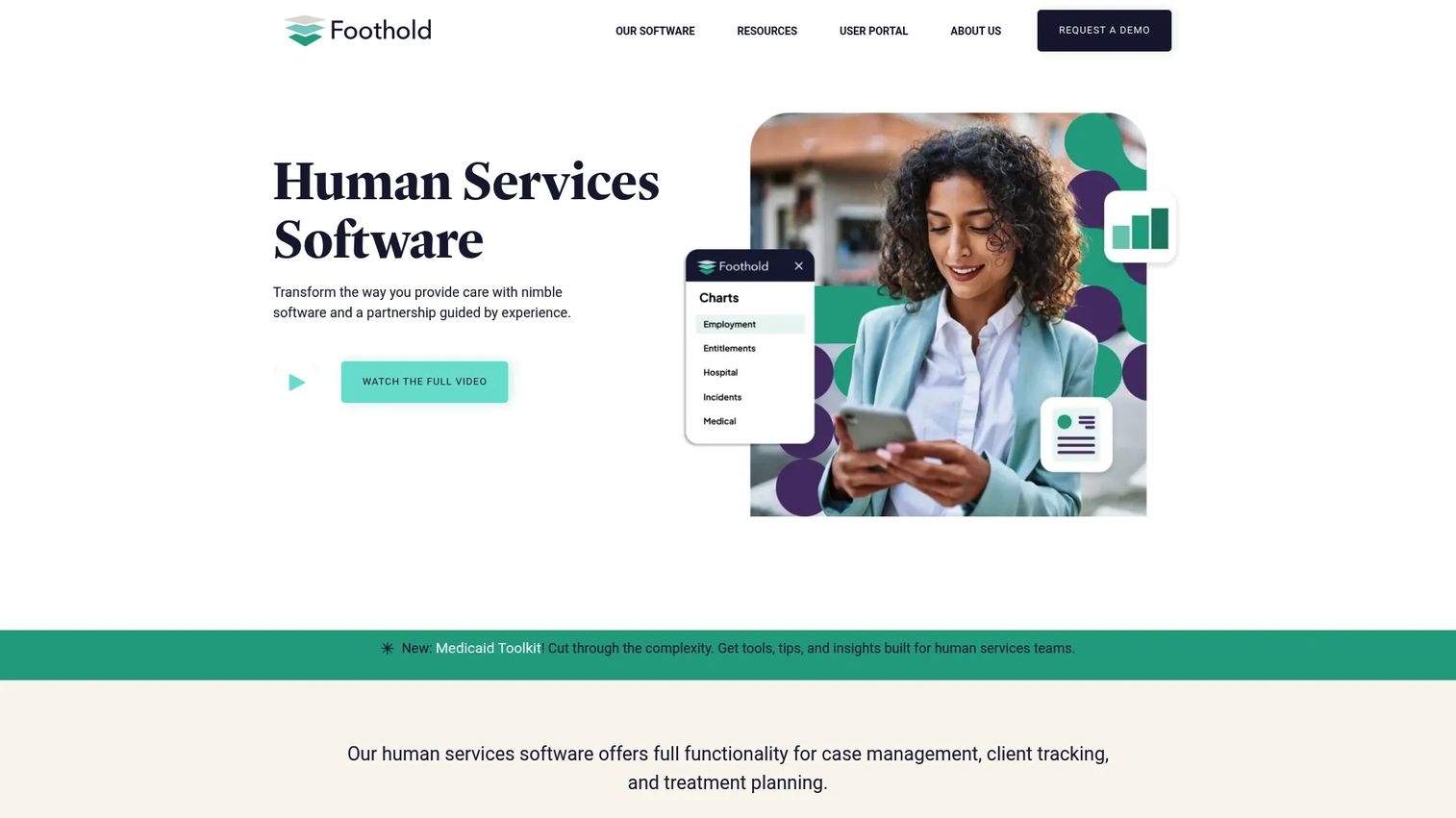
Foothold Technology is a cloud-based addiction treatment EHR and care management platform built for human services and behavioral health agencies. It is designed for organizations that deliver substance use disorder treatment alongside other services, where case management and clinical documentation need to live in one record. The platform is now part of Radicle Health.
Its strength is configurability. Rather than forcing your program into a fixed template, Foothold lets teams shape forms, service plans, and workflows around how they actually deliver care. That matters most for mixed-model programs juggling multiple funding sources and reporting requirements.
Best for: Human services and behavioral health organizations needing an EHR with case management.
Key strengths
- Case management and client tracking: Keeps a unified client record across programs and service lines.
- Service planning and customizable forms: Adapts documentation and treatment planning to your clinical model.
- Security and compliance controls: Supports the access and consent requirements behavioral health programs face.
Why choose Foothold Technology: Choose Foothold when your program spans more than addiction treatment and you need one system that flexes across service lines. The configurability rewards teams that know their workflows and want the record to match them. Its 4.8/5 G2 rating reflects strong satisfaction among human services agencies that value that adaptability.
Foothold Technology pricing: Foothold does not publish a numeric price. Its site discusses EHR pricing models and support considerations, so plan to scope pricing directly with the vendor based on your programs and user count.
2. Netsmart
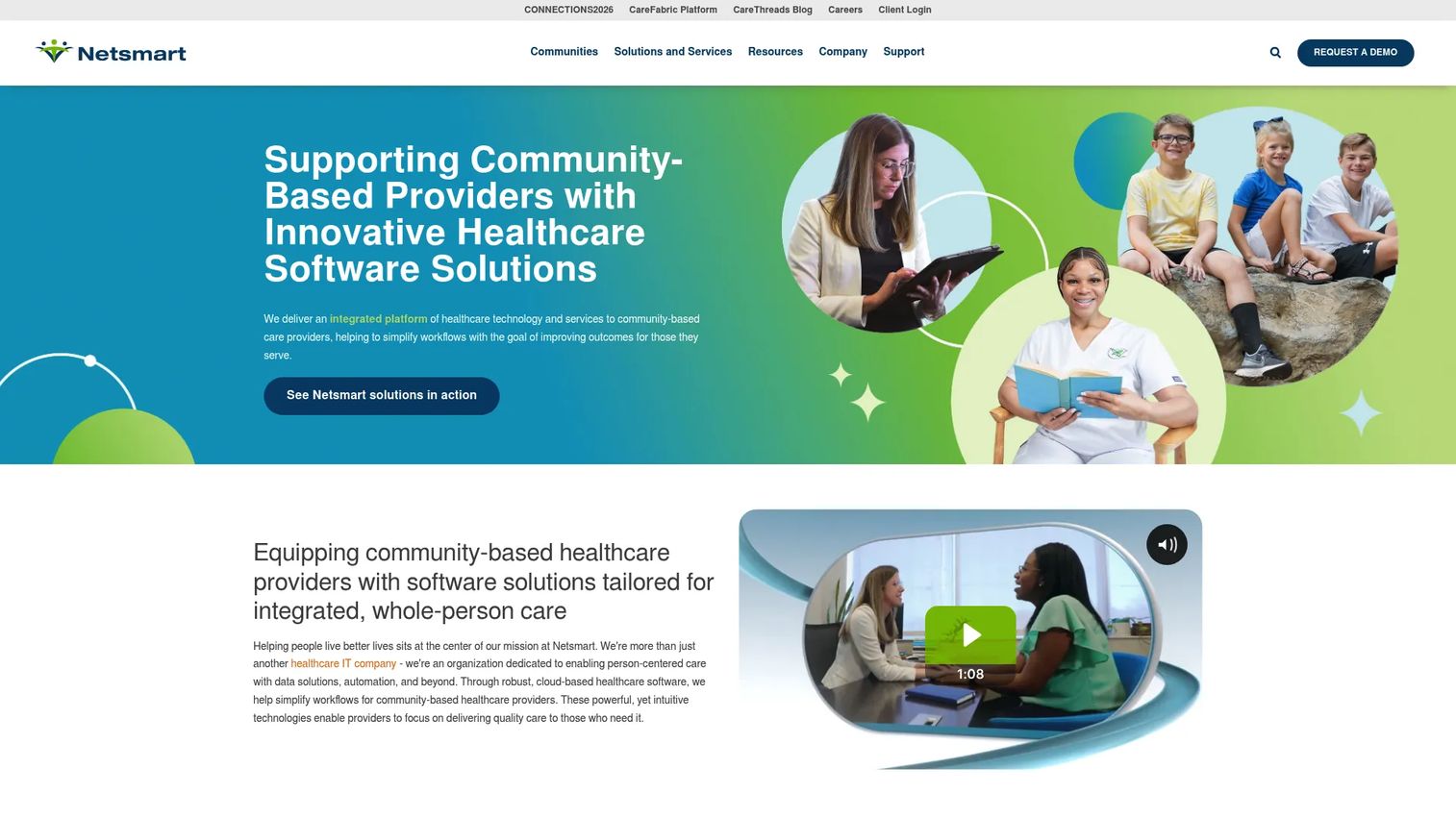
Netsmart is the broadest, most enterprise-oriented platform in this set. It is a healthcare software and services provider built for community-based care organizations, spanning EHR, care coordination, and interoperability across behavioral health, addiction treatment, and adjacent care settings.
Where the other options focus on a specific care model, Netsmart is built for scale. Larger behavioral health providers running multiple sites, telehealth, and integrated MAT/MOUD workflows use it to connect clinical, operational, and analytics data across a distributed organization. That whole-person care framing is the point: one platform that follows a patient across services and settings.
Best for: Community-based healthcare providers needing integrated clinical and operational software.
Key strengths
- EHR software: Anchors clinical documentation, treatment planning, and medication workflows in one system.
- Care coordination: Connects care teams across programs and settings for whole-person care.
- Interoperability: Exchanges data across systems and referral partners to keep records aligned.
Why choose Netsmart: Choose Netsmart when your organization operates at enterprise scale and needs interoperability, automation, and analytics that hold up across many sites. The breadth that makes it powerful for large providers also makes deployment a bigger project, which its 3.6/5 G2 rating partly reflects, larger implementations carry more complexity. For a distributed provider, that trade favors capability over simplicity.
Netsmart pricing: Netsmart does not publish public product pricing. Expect a custom quote scoped to your organization's size, programs, and integration needs, and budget time for a longer enterprise evaluation.
3. BestNotes
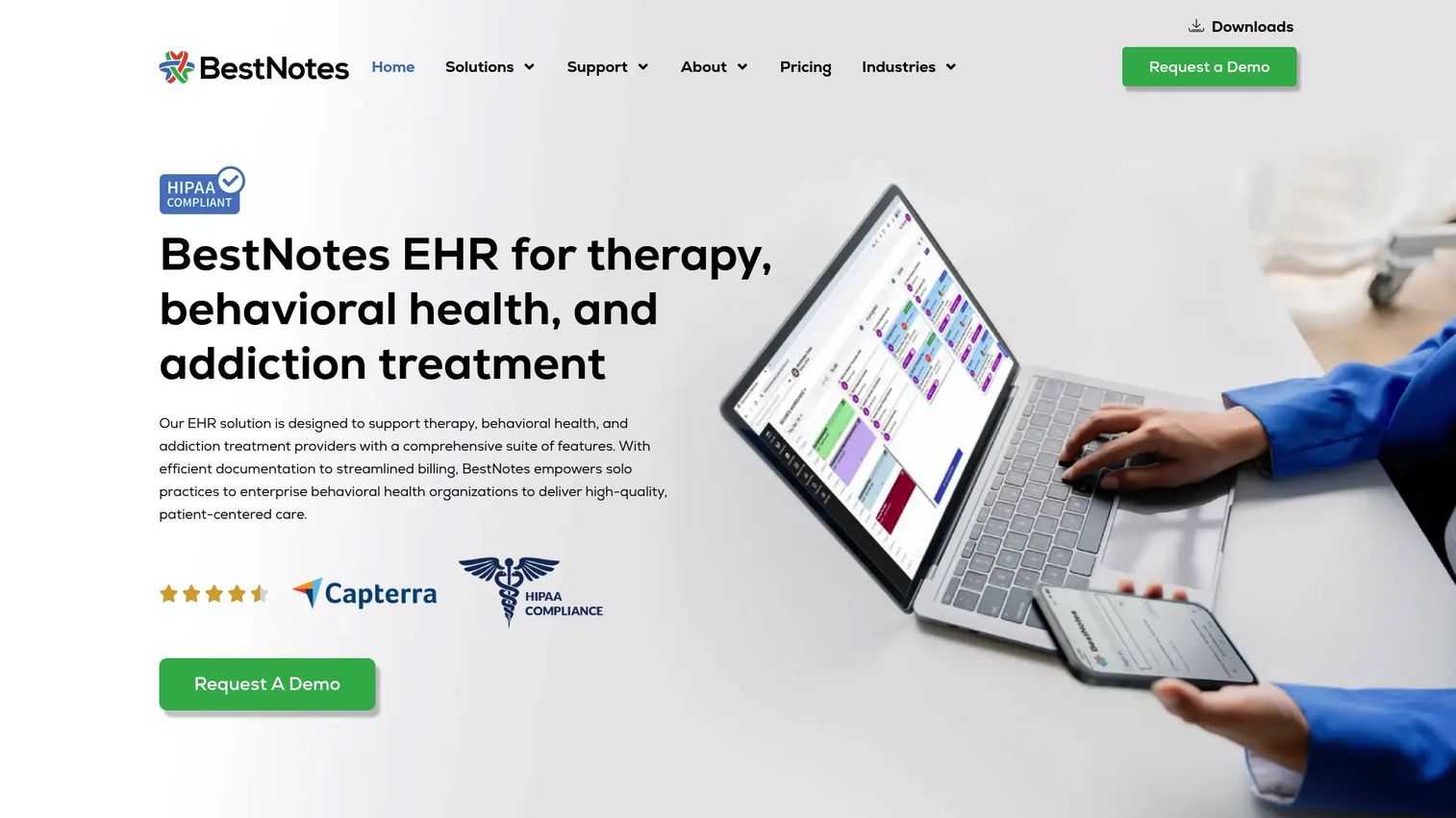
BestNotes is a behavioral health EHR and CRM built for therapy, addiction treatment, and related care workflows. It is the most straightforward option here, and the one with the clearest public pricing. For smaller addiction treatment teams that want a working system without a long configuration project, it hits the practical sweet spot.
What sets BestNotes apart is the built-in CRM. Addiction treatment programs live and die on referrals and census, and having lead and referral tracking in the same system as the clinical record means intake and treatment share one source of truth. That reduces the handoff friction that fragments smaller operations.
Best for: Behavioral health and addiction treatment providers needing an all-in-one EHR/CRM.
Key strengths
- Built-in CRM: Tracks leads and referrals alongside the clinical record for cleaner intake.
- Configurable clinical record: Supports customizable assessments, treatment plans, and progress notes.
- Full operational toolkit: Includes patient portal, calendar, billing, telehealth, and outcomes tracking.
Why choose BestNotes: Choose BestNotes when you want documentation, treatment planning, and medication management that work out of the box, plus referral tracking to build census. Its 4.1/5 G2 rating and month-to-month contracts make it a lower-risk entry point for teams that do not want a multi-year enterprise commitment.
BestNotes pricing: BestNotes publishes clear, per-user pricing billed month to month. The first 1 to 10 users are $58 per user per month. Additional users from 11 to 100 are $24 per user per month, and users beyond 101 are $12 per user per month. Plans include unlimited data, unlimited training and support, and a $100 upfront fee. There is no free tier.
Considerations before you buy
A shortlist is only useful if you pressure-test it against how your program actually runs. Work through these criteria before you commit.
Clinical documentation fit
Map the platform's progress notes, group notes, and assessment forms to your clinical model. If clinicians have to work around the software to document a session, activation and adoption suffer, and documentation quality drops. Ask to see your exact note types in a live workflow, not a canned demo screen.
MAT and MOUD workflow depth
If you deliver medication-assisted treatment, confirm the platform supports your ePrescribing, medication administration records, and MAT/MOUD documentation without manual workarounds. Medication management is where a mismatch creates real clinical and compliance risk.
Billing and revenue cycle
Denials are expensive and slow. Evaluate how the billing workflow handles eligibility checks, payer-specific rules, and claim scrubbing. Ask for denial-rate benchmarks from similar programs, and confirm the system supports your payer mix, not just commercial insurance.
Compliance and audit readiness
Behavioral health carries heavier consent and privacy requirements than general healthcare, including 42 CFR Part 2. Verify how the platform handles consent management, access controls, HIPAA compliance, and audit trails. The real test is producing signed treatment plans and access logs on demand during an audit.
Implementation and maintainability
A configurable platform is only an asset if your team can maintain it as your programs change. Weigh implementation effort, training, and ongoing admin load against your internal capacity. For lean teams, out-of-the-box simplicity often beats deep configurability.
Conclusion
The best substance abuse treatment software is the one that matches your care model, not the one with the longest feature list. Foothold Technology fits mixed-model and human services programs that need case management inside a configurable EHR. Netsmart fits enterprise behavioral health providers scaling whole-person care with interoperability and automation. BestNotes fits smaller addiction treatment teams that want documentation, treatment planning, and a built-in CRM with transparent, month-to-month pricing.
Your next step is simple. Build a two-platform shortlist based on your care model and billing complexity, then run each through a live test with your actual note types, MAT/MOUD workflows, and an audit scenario. The platform that fits your workflow with the fewest workarounds is the one worth buying.
FAQs
It is a clinical and operational system that helps addiction treatment programs document care, plan treatment, manage medications, bill payers, and stay compliant with behavioral health regulations. Most options are an addiction treatment EHR or EMR built specifically for substance use disorder workflows rather than general medical practice.
Mostly yes. Most substance abuse treatment platforms are a specialized addiction treatment EHR or EMR. The difference from a general EHR is that these systems are built around substance use disorder documentation, level-of-care requirements, and behavioral health regulations like 42 CFR Part 2.
Clinical documentation, treatment planning, medication management, billing, and compliance are the core five. The right weighting depends on your care model. A MAT-heavy program prioritizes medication workflows, while a mixed-model agency prioritizes configurable forms and case management.
Strong platforms handle ePrescribing, medication administration records, and MAT/MOUD documentation inside the clinical workflow, without manual workarounds. Before buying, confirm the system supports your specific medications, prescribing process, and administration tracking, since a mismatch creates clinical and compliance risk.
Look for consent management that supports 42 CFR Part 2, granular access controls, HIPAA compliance, and complete audit trails. The practical test is whether you can produce signed treatment plans, consent records, and access logs on demand during a state or accreditation review.
Very important, because denials directly hit revenue and staff time. Evaluate eligibility checks, payer-specific rules, and claim scrubbing, and confirm the platform supports your full payer mix. Ask similar programs about their denial rates before and after implementation.
Outpatient programs often prioritize scheduling, referral tracking, and billing throughput, while residential programs weigh bed management, level-of-care documentation, and longer episodes of care. Match the platform's default workflows to your dominant care setting, then confirm it flexes for the other.
Ask to see your exact note types, MAT/MOUD workflow, and billing scenario run end to end, not a generic tour. Then probe implementation timeline, ongoing admin load, denial-rate benchmarks, and how the system produces audit records on demand. The goal is workflow fit and maintainability, not a feature checklist.