Scheduling lives in one system. Imaging lives in another. Billing sits in a third, and patient reminders go out from a fourth. Every handoff between them is a place where a treatment note gets lost, a payment slips, or a patient no-shows because the reminder never fired.
That fragmentation carries a real cost. The global orthodontic software market sat at roughly USD 1.74 billion in 2023 and is projected to reach USD 3.95 billion by 2032 at a 9.2% CAGR, according to Dataintelo (2024). Practices are consolidating tools because the operational tax of running five disconnected systems compounds as you add chairs, staff, and locations.
If you run or operate a practice, the question is not which tool has the most features. It is which system removes the most manual work while keeping patient data protected. The right orthodontic software should give you cloud access across locations, HIPAA-compliant patient communication, workflow automation that cuts admin time, and clean integrations with the tools you already run. Those four criteria separate a platform that scales from one that becomes another silo.
This guide compares seven orthodontic practice management software platforms actively used in real practices. Each one earns its place for a specific operational reason, not a generic feature count. We evaluate them the way a serious buyer should: by what they replace and where they fit in your workflow.
What's inside
This guide covers seven orthodontic software programs chosen for operational fit, not marketing polish. We looked at four things: cloud readiness and multi-location access, HIPAA compliance and data protection, patient communication and workflow automation, and integration depth with existing dental and financial systems.
We favored tools that orthodontic practices actually run day to day, whether that means a full practice management suite, an imaging-and-management hybrid, or a specialized treatment-planning platform. The goal is to help you narrow the field before you book demos, so you spend your evaluation time validating workflows instead of sitting through generic pitches.
TL;DR
- Best all-in-one cloud ortho PM: Ortho2 Edge Cloud, purpose-built for orthodontics with communication, imaging, and analytics in one subscription.
- Best cloud-first web platform: Greyfinch, browser-based with no plugins, HIPAA-compliant texting, and self-service patient tools.
- Best for imaging-heavy practices: Dolphin, deep clinical imaging plus practice management and patient education.
- Best for AI aligner planning: SoftSmile, treatment planning and clear aligner design priced per case.
- Best for multi-location dental groups: Dentrix Enterprise and Planet DDS Denticon, centralized cloud practice management built for DSOs and multi-site operations.
- Best established all-in-one PM: Tops, a mature orthodontic practice management platform with payments, reminders, and iPad check-in.
What is orthodontic software?
Orthodontic software is a category of practice management and clinical tools that handle scheduling, patient communication, imaging, billing, treatment planning, and reporting for orthodontic and dental practices. Some platforms cover the entire operation as an all-in-one suite; others specialize in imaging or aligner design and integrate with a core practice management system.
Most orthodontic practice management software includes a common set of capabilities:
- Scheduling and appointment management: Chair time, recurring visits, and online self-scheduling.
- Patient communication: Two-way texting, email, automated reminders, and self-service portals.
- Imaging: Capture, storage, and presentation of clinical images and radiographs.
- Billing and payments: Insurance claims, payment plans, collections, and revenue cycle tools.
- Treatment planning: Case setup, aligner design, and clinical workflow tracking.
- Integrations: Connections to imaging hardware, payment processors, and reporting stacks.
- Cloud access: Browser or hosted access so staff can work from any location.
- Security and compliance: HIPAA-aligned data handling, access controls, and audit trails.
The distinction that matters most in 2026 is cloud versus on-premise. Cloud-based orthodontic software lets a growing practice add locations without standing up servers at each site, and it centralizes patient data so a front desk in one office sees the same record as the clinical team in another. HIPAA compliant orthodontic software is table stakes: any platform touching PHI needs encryption, access controls, and a signed business associate agreement.
When to use orthodontic software
When you need cloud access across multiple locations
A practice with one chair can survive on a local install. A practice adding a second or third location cannot. When staff need to see the same patient record, schedule, and billing status from any office, cloud-based orthodontic software removes the friction of syncing servers and reconciling duplicate records. This is the trigger for most DSOs and expanding groups: they hit a wall where local software stops scaling and centralized cloud practice management becomes non-negotiable.
When patient communication is the bottleneck
If your front desk spends hours on reminder calls, rescheduling, and form chasing, the bottleneck is communication, not staffing. Orthodontic patient communication software with two-way texting, automated reminders, and self-service scheduling shifts that work off your team and onto the patient. The payoff is fewer no-shows and less phone tag, which frees staff for higher-value work like collections and treatment coordination.
When admin tasks are consuming staff time
Manual claim entry, payment posting, and appointment confirmation eat hours that never show up on a P&L until you count turnover and overtime. Orthodontic workflow automation handles the repetitive tasks: auto-posting payments, triggering reminders, generating claims, and routing forms. The capability to watch for is rules-based automation that runs without a staff member clicking through each step.
Comparison table: 7 best orthodontic software for 2026
Here is how the seven platforms compare on intent, primary use case, orthodontic software pricing, and rating. Pricing for several vendors is custom-quoted, so we show verified figures where a public price exists and note custom pricing otherwise.
| # | Product | Intent | Key use case | Pricing | G2 rating |
|---|---|---|---|---|---|
| 1 | Tops | All-in-one ortho PM | Payments, reminders, iPad check-in | Custom quote | Not verified |
| 2 | Greyfinch | Cloud-first web PM | HIPAA texting, patient self-service | Month-to-month per user | Not verified |
| 3 | Dolphin | Imaging + PM | Clinical imaging, patient education | Contact sales | 4.4/5 |
| 4 | SoftSmile | AI treatment planning | Clear aligner design, case planning | $50 per exported case | Not verified |
| 5 | Dentrix Enterprise | Enterprise multi-site PM | Centralized DSO operations | Contact sales | 4.7/5 |
| 6 | Ortho2 Edge Cloud | Cloud ortho PM | All-in-one orthodontic operations | From $384/month | 3.5/5 |
| 7 | Planet DDS Denticon | Cloud multi-site PM | DSO revenue cycle, scheduling | From $795/month | 4.7/5 |
The split is clear. If you want a purpose-built orthodontic PM suite, look at Ortho2 Edge Cloud, Greyfinch, and Tops. If imaging or aligner planning drives your decision, Dolphin and SoftSmile earn the evaluation. If you run multiple locations as a group, Dentrix Enterprise and Planet DDS Denticon are built for centralized control.
1. Tops
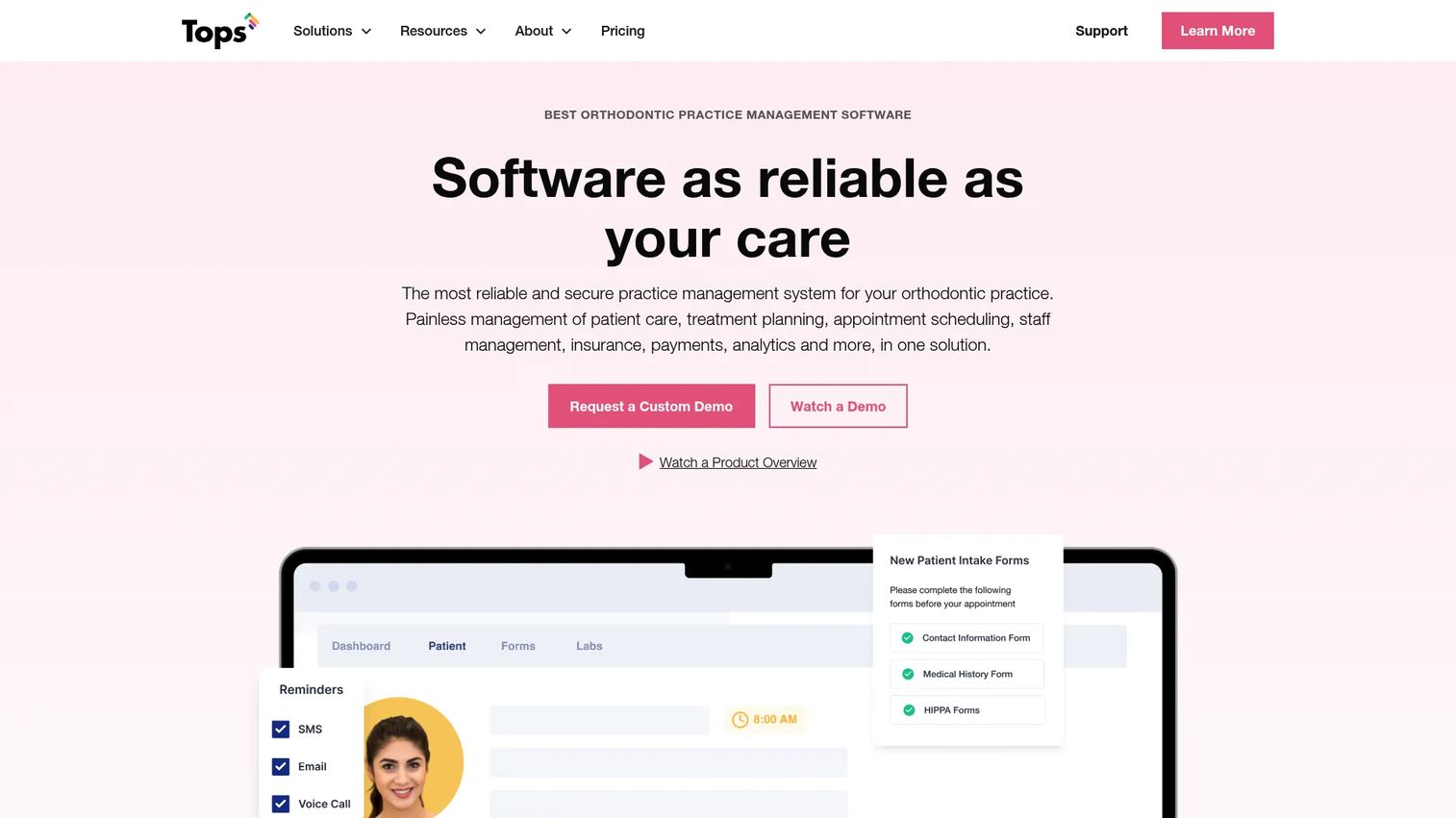
Tops is an orthodontic practice management platform built around the daily operations of a busy ortho office: scheduling, patient care, billing, and engagement in one system. It has a long track record in the specialty, and its pitch centers on running the front desk and back office without stitching together separate tools. Practices switching from older systems tend to cite the operational breadth as the reason.
Best for: Orthodontic practices that want a mature, all-in-one practice management platform with strong payment and reminder workflows.
Key strengths
- Payments and billing: Handles collections and payment workflows inside the same system that manages the schedule.
- Appointment reminders: Automated reminders reduce no-shows without manual phone follow-up.
- iPad patient check-in: Patients check in on an iPad, cutting front-desk data entry and wait-room friction.
Why choose Tops: Tops fits practices that value a proven, orthodontics-specific system over a general dental tool. If your priority is consolidating scheduling, billing, and patient engagement under one roof and you want a vendor that has served orthodontists for years, Tops is worth a demo. It suits single and multi-doctor practices that want operational depth without assembling their own stack.
Tops pricing: Tops uses custom, tailored pricing. There is no public numeric price on its site; the company asks you to complete a form and book a call for a quote based on your practice size and needs. Expect the quote to reflect the modules and support level you select rather than a flat published tier.
2. Greyfinch
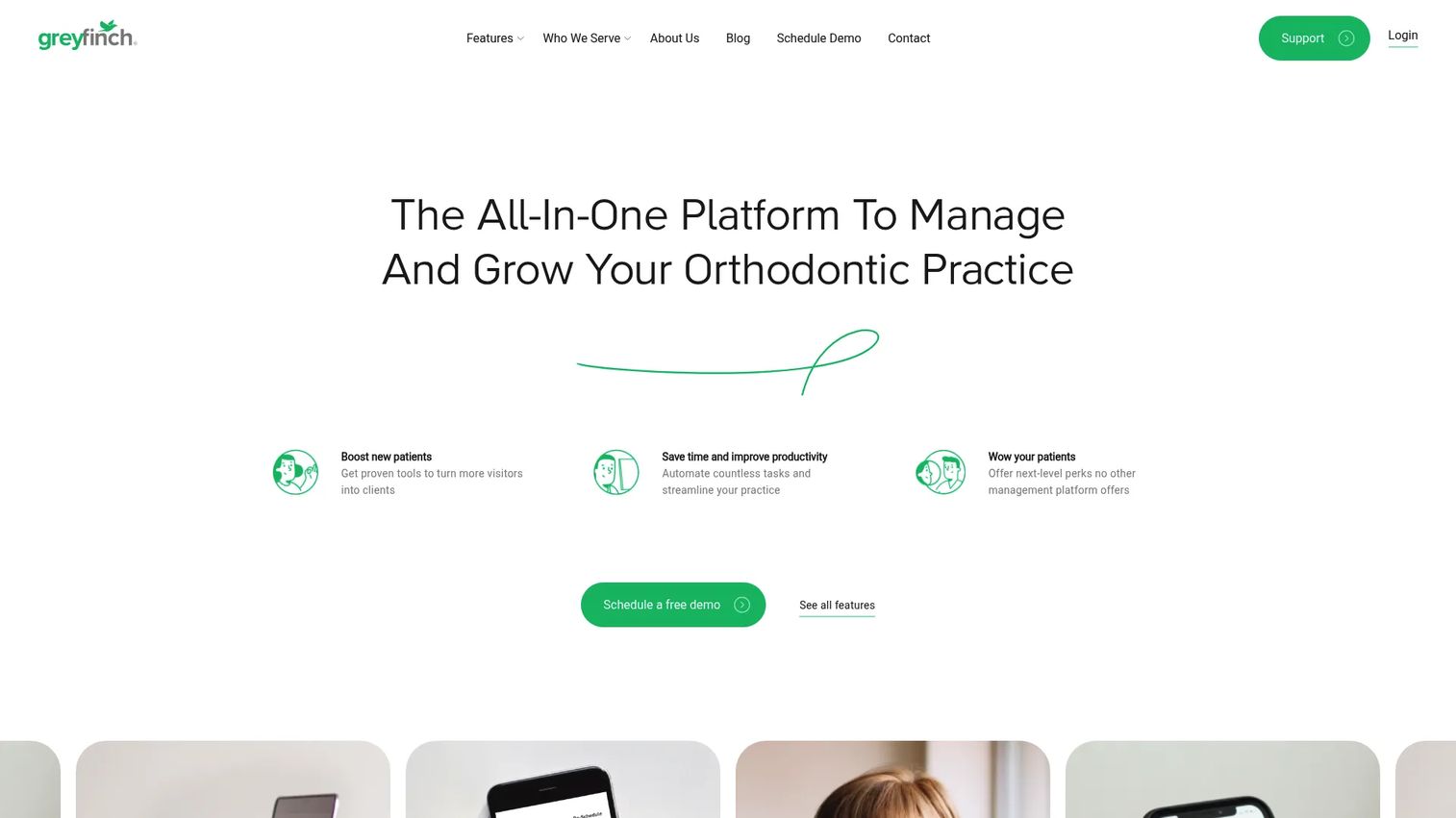
Greyfinch is cloud-based orthodontic software built for the browser with no plugins to install or maintain. It centers on practice operations, patient communication, and growth, and it leans hard into the web-native, no-download angle. For practices tired of managing local installs and updates, the architecture is the selling point.
Best for: Orthodontic practices that want an all-in-one, web-based platform with strong self-service patient tools.
Key strengths
- 24/7 appointment widget: Patients book online any time, which offloads scheduling from the front desk.
- Patient Hub self-service portal: Patients manage forms, appointments, and account details themselves.
- HIPAA-compliant two-way texting and email: Secure communication that keeps PHI protected while cutting phone tag.
Why choose Greyfinch: Greyfinch fits practices that want orthodontic patient communication software and cloud access without IT overhead. The no-plugin, browser-based model means staff work from any device, and the self-service tools shift routine communication onto patients. It suits growing practices that want to scale patient engagement without adding front-desk headcount.
Greyfinch pricing: Greyfinch states it offers a flexible month-to-month rate per user with no licenses or rigid contracts. We could not verify a public numeric price on its site, so request a current quote for your user count. The month-to-month structure appeals to practices that want to avoid long lock-in contracts.
3. Dolphin
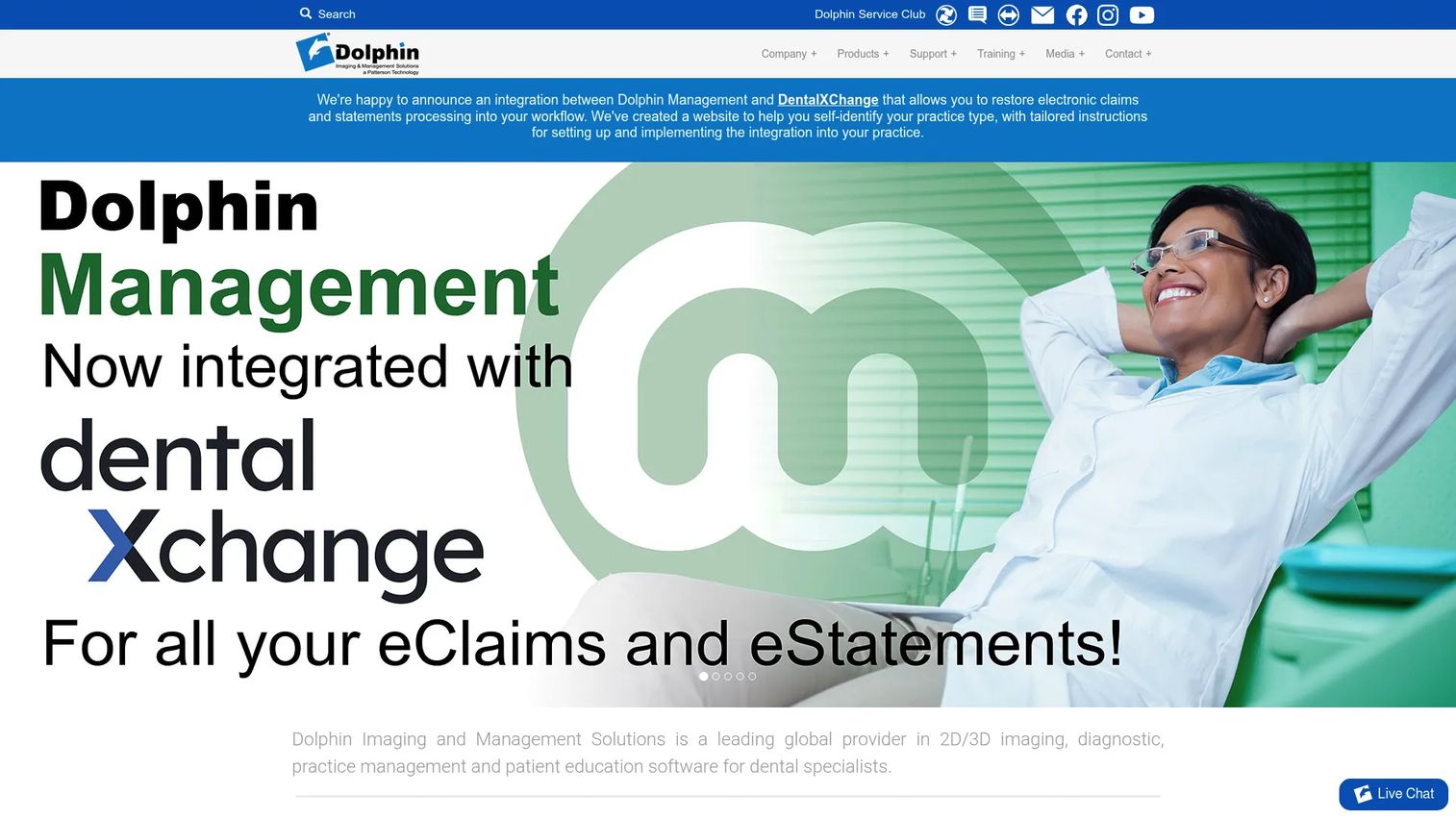
Dolphin is orthodontic imaging software paired with practice management, and it remains a standard for practices where clinical imaging drives the workflow. It handles image capture, storage, and patient-facing presentation, then layers on scheduling, eClaims, reporting, and SMS. For orthodontists who build treatment conversations around imaging, the depth here is the draw.
Best for: Orthodontic practices that need integrated imaging and practice management in one system.
Key strengths
- Patient imaging: Capture, store, and present clinical images and radiographs for treatment planning and case presentation.
- Practice management: Scheduling, eClaims, reports, and SMS in the same platform as imaging.
- Cloud-hosted access: Automatic updates and backups with cloud access, so staff work without managing local servers.
Why choose Dolphin: Dolphin fits practices that treat imaging as central, not as an add-on. Its patient education and imaging presentation tools help clinicians walk patients through treatment visually, which supports case acceptance. It suits established practices with imaging-driven workflows that want management tools attached to the same system rather than bolted on separately.
Dolphin pricing: Dolphin does not publish pricing. The site directs you to contact a sales rep for a quote. Its G2 rating sits at 4.4/5, reflecting an established user base. Because pricing is custom, factor in the imaging modules and hosting options you need when you request a figure.
4. SoftSmile
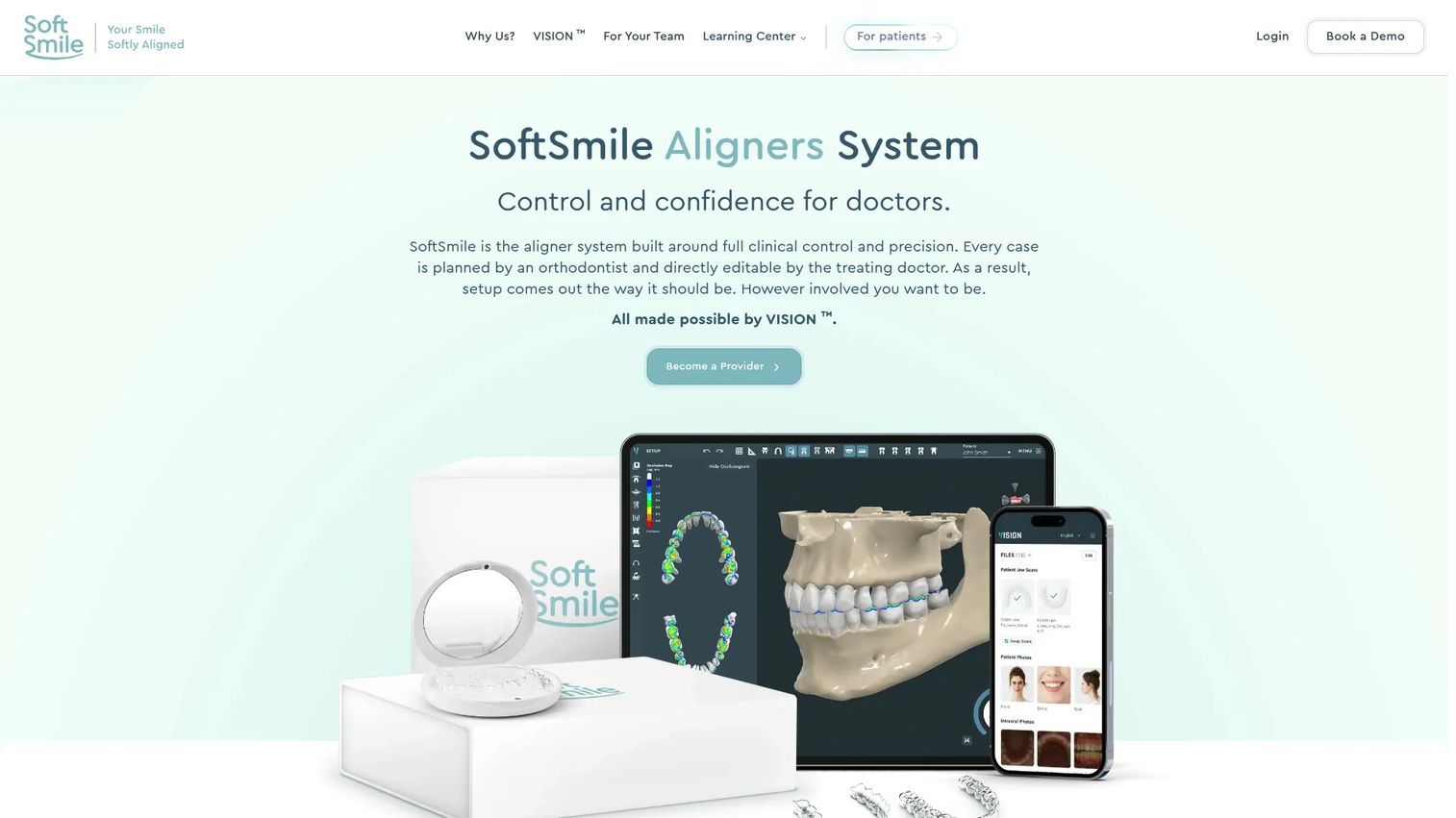
SoftSmile is orthodontic treatment planning software focused on AI-assisted clear aligner design rather than full practice management. Its Vision platform runs in the browser and automates tooth segmentation, anatomical restoration, and treatment-plan optimization with collision detection. For practices building in-house aligner workflows, it fills a specialized planning role.
Best for: Orthodontic practices that need AI-assisted aligner treatment planning and case management.
Key strengths
- Vision Viewer: Browser-based access to treatment plans without heavy local software.
- Automated tooth segmentation: AI handles segmentation and anatomical restoration, cutting manual planning time.
- Treatment-plan optimization: Optimization and collision detection improve plan quality before cases are exported.
Why choose SoftSmile: SoftSmile is more of a planning and design platform than a core PM suite, so treat it as a specialized layer that pairs with your practice management system. It fits orthodontists moving aligner planning in-house who want AI to accelerate case design without a per-month platform fee. The per-case model appeals to practices that want costs tied to actual case volume.
SoftSmile pricing: SoftSmile prices its VISION platform at $50 per exported case, with a full case design at $120 that includes three revisions. There are no monthly fees and no cap on cases, per its FAQ. This usage-based model suits practices that prefer to pay per case rather than commit to a subscription.
5. Dentrix Enterprise
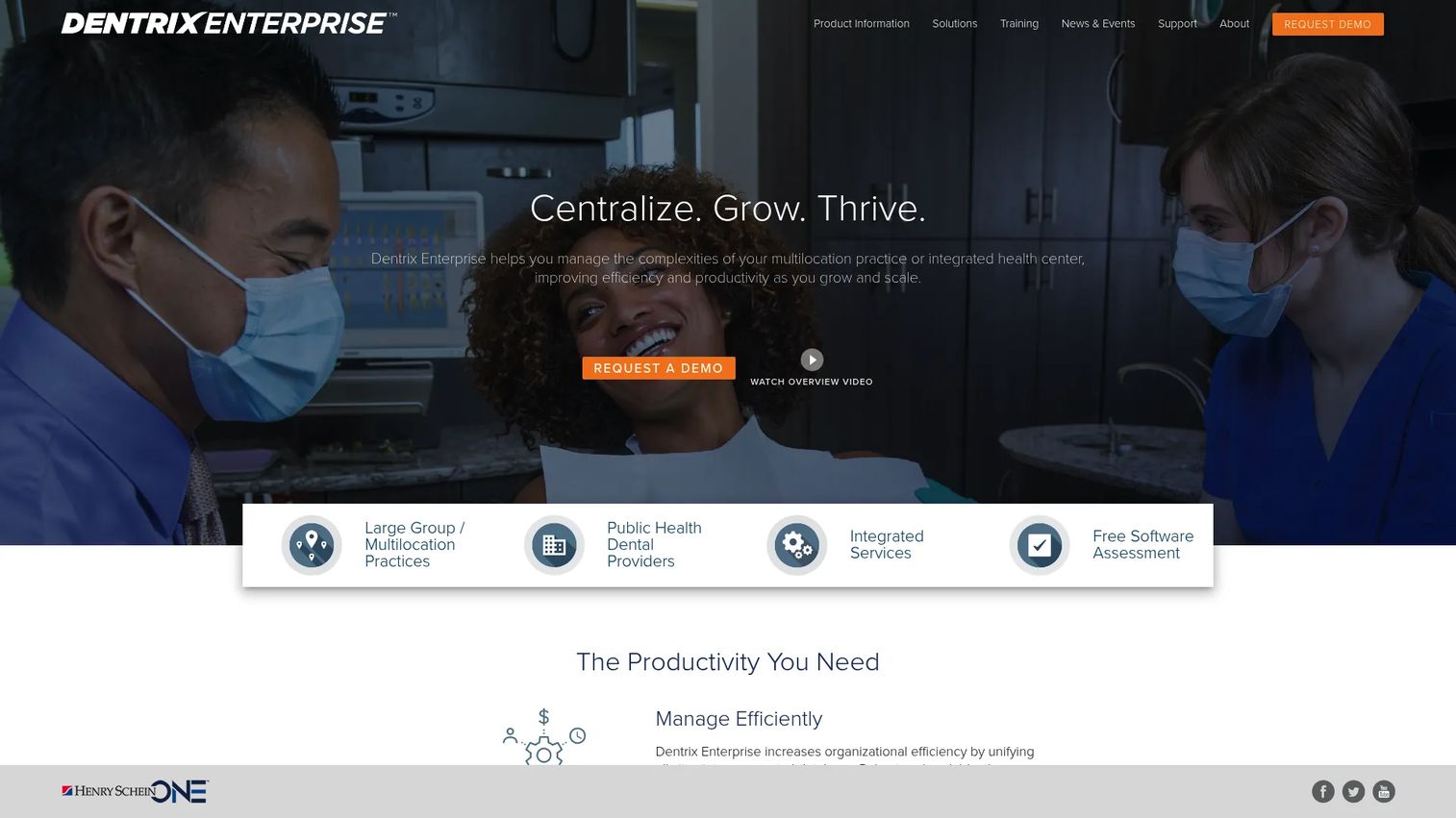
Dentrix Enterprise is dental practice management software built for large-group, multi-location, and public-health organizations. It runs on a centralized SQL database across sites, which gives multi-location groups a single source of truth for scheduling, billing, and clinical records. For DSOs and large public-health providers, that centralization is the core value.
Best for: Multi-location dental groups and public-health dental providers that need centralized workflows across sites.
Key strengths
- Centralized SQL database: One database across all locations, so records stay consistent group-wide.
- Practice administration: Scheduling, continuing care, and billing managed centrally across sites.
- HL7 interoperability: Clinical and financial workflow tools with HL7 support for connecting to broader health systems.
Why choose Dentrix Enterprise: Dentrix Enterprise fits organizations that need enterprise-grade control across many locations rather than a single-practice tool. If you run a DSO or a public-health network and need centralized reporting, billing, and clinical workflows with interoperability, its architecture is built for that scale. It suits operations leaders who prioritize governance and consistency across sites.
Dentrix Enterprise pricing: Dentrix Enterprise does not display public pricing. Service plans are available to existing customers on yearly or monthly contracts, and the company asks prospects to contact them for a quote. Its G2 rating is 4.7/5, one of the strongest in this list. Budget for an enterprise-level engagement rather than a per-seat monthly plan.
6. Ortho2 Edge Cloud
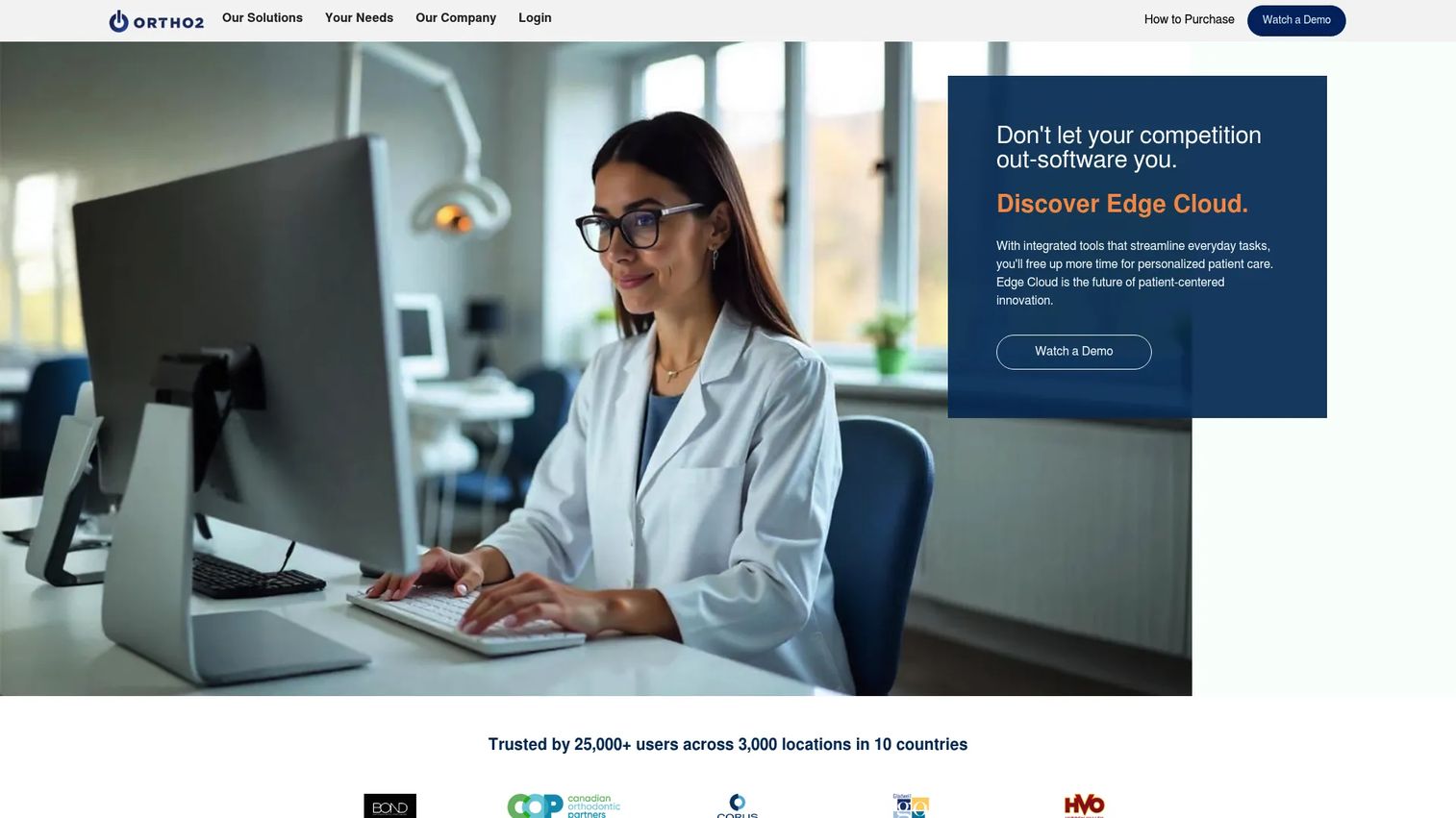
Ortho2 Edge Cloud is cloud-based orthodontic practice management software built specifically for orthodontics, covering scheduling, billing, imaging, communication, and analytics in one subscription. Unlike general dental tools adapted for ortho, Edge Cloud is designed around orthodontic workflows from the ground up. That specialization shows in features like the financial slider and treatment hub.
Best for: Orthodontic practices that want an all-in-one cloud practice management system purpose-built for the specialty.
Key strengths
- Patient communication and scheduling: Automated reminders with two-way texting, online scheduling, online forms, and a payment portal.
- Integrated imaging and treatment tools: Edge imaging, a treatment hub, and a patient tracker in the same platform.
- Virtual and mobile access: Virtual appointments with inVisit and Edge mobile for on-the-go access, plus an HR manager module.
Why choose Ortho2 Edge Cloud: Edge Cloud fits practices that want orthodontic-specific workflow automation rather than a repurposed dental suite. The financial slider proposal tool and treatment hub speak directly to ortho case presentation and financing conversations. It suits single and multi-location orthodontic practices that want communication, imaging, and analytics unified in one cloud system.
Ortho2 Edge Cloud pricing: Ortho2 Edge Cloud starts at $384 per month, with custom quotes that vary by practice size, modules, and onboarding needs. There is no free tier, and Ortho2 offers special pricing for new graduates. Its G2 rating is 3.5/5. The subscription model keeps costs predictable while scaling with the modules you add.
7. Planet DDS Denticon
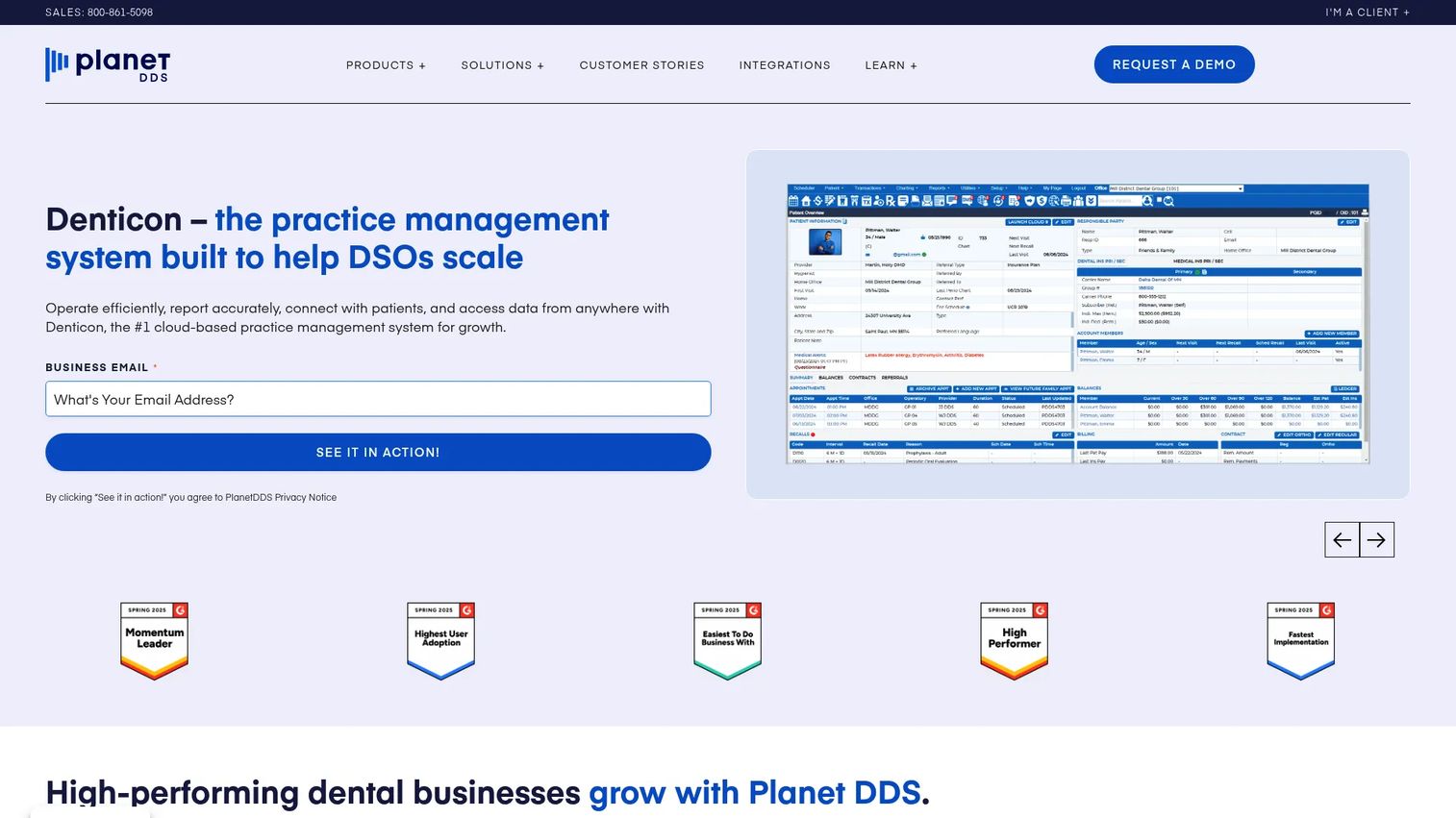
Planet DDS Denticon is cloud-based dental practice management software built for DSOs and multi-location or specialty practices. It centralizes practice management, scheduling, patient communication, and revenue cycle management across sites, giving operations leaders visibility into performance group-wide. For scaling organizations, the centralization and reporting are the draw.
Best for: DSOs and multi-location dental practices that need centralized cloud practice management with strong revenue cycle tools.
Key strengths
- Cloud-based practice management: Centralized operations accessible across every location from the browser.
- Scheduling and patient communications: Appointment management and communication tools in one platform.
- Revenue cycle management: Insurance tools and billing workflows built for multi-site collections.
Why choose Planet DDS Denticon: Denticon fits groups that need operational visibility and centralized control as they add locations. Its revenue cycle and insurance tools are built for the collections complexity of multi-site operations, and the cloud architecture keeps every office on the same record. It suits DSOs and expanding specialty practices that prioritize centralization and reporting over single-practice simplicity.
Planet DDS Denticon pricing: Denticon starts at $795 per month, with customizable packages, features, and add-ons based on practice size and needs. There is no free tier. Its G2 rating is 4.7/5, matching the strongest ratings in this list. The published starting price gives buyers a clearer budgeting anchor than the contact-sales vendors.
Considerations before you buy
Before you book demos, run every shortlisted platform through these criteria. They separate a system that scales from one that becomes another silo.
Cloud access and multi-location readiness
Decide whether you need true cloud access now or within your growth horizon. If you plan to add locations, prioritize cloud-based orthodontic software that centralizes records so every office works from one source of truth. Ask how the vendor handles data sync, offline access, and adding a new location.
HIPAA compliance and data security
Any platform touching PHI needs encryption, granular access controls, audit trails, and a signed business associate agreement. Confirm HIPAA compliant orthodontic software credentials directly, and ask where data is hosted and how breaches are handled. This is not a checkbox; it is a legal exposure if you get it wrong.
Patient communication and workflow automation
Evaluate how much manual work the system removes. Look for two-way texting, automated reminders, self-service scheduling, and rules-based automation for claims and payments. The test is whether staff stop clicking through repetitive tasks, not whether the feature exists on a slide.
Integration and interoperability
Map the tools you already run: imaging hardware, payment processors, insurance clearinghouses, and reporting. Confirm the platform integrates with them rather than forcing a rip-and-replace. Poor orthodontic billing software integration creates the exact fragmentation you are trying to escape.
Pricing model and total cost
Compare orthodontic software pricing on total cost, not headline price. A per-case model like SoftSmile suits variable volume; a monthly subscription like Ortho2 or Denticon suits predictable operations; custom-quoted enterprise tools suit large groups. Factor in onboarding, modules, and support.
Conclusion
The best orthodontic software for your practice depends on what you are actually trying to fix. If you want a purpose-built cloud ortho suite, Ortho2 Edge Cloud unifies communication, imaging, and analytics in one subscription. If you want a web-native platform with strong self-service tools, Greyfinch runs entirely in the browser. Tops remains a proven all-in-one option for practices that value operational depth.
If imaging drives your workflow, Dolphin pairs deep clinical imaging with practice management. For AI-assisted aligner planning, SoftSmile fills a specialized role priced per case. And if you run a multi-location group, Dentrix Enterprise and Planet DDS Denticon are built for centralized control across sites.
Your next step is simple. Shortlist two or three platforms that match your cloud, HIPAA, communication, and integration needs, then validate the workflows live. Do not evaluate on feature lists. Book demos, run your actual daily tasks through each system, and pick the one that removes the most manual work while keeping patient data protected.
FAQs
Orthodontic software runs the operational and clinical side of a practice: scheduling, patient communication, imaging, billing, treatment planning, and reporting. Some platforms cover everything as an all-in-one suite, while others specialize in imaging or aligner design and integrate with a core practice management system. The goal is to reduce manual admin work and centralize patient data.
At minimum, look for scheduling, two-way patient communication, billing and payment tools, imaging or imaging integration, and cloud access. Beyond that, prioritize workflow automation for claims and reminders, self-service patient portals, and HIPAA-compliant data handling. The features that matter most are the ones that remove repetitive work from your staff.
Yes, in most cases. Cloud-based orthodontic software centralizes patient records so every office works from one source of truth, without syncing local servers or reconciling duplicate records. For DSOs and expanding groups, this is usually non-negotiable. A single-location practice can still run local software, but growth almost always pushes toward the cloud.
It is essential and non-negotiable. Any platform touching protected health information needs encryption, access controls, audit trails, and a signed business associate agreement. HIPAA compliant orthodontic software protects you from legal exposure, not just data loss. Confirm compliance credentials directly with the vendor before you commit.
Yes. Most modern orthodontic patient communication software includes two-way texting, automated appointment reminders, email, and self-service scheduling. Greyfinch and Ortho2 Edge Cloud, for example, both offer HIPAA-compliant texting and automated reminders. These tools cut no-shows and shift routine communication off your front desk.
Orthodontic imaging software focuses on capturing, storing, and presenting clinical images and radiographs for treatment planning and case presentation. Practice management software handles scheduling, billing, communication, and reporting. Some platforms like Dolphin combine both, while treatment-planning tools like SoftSmile specialize in aligner design and integrate with a separate practice management system.
Compare on total cost, not headline price. Some vendors publish starting prices, like Ortho2 Edge Cloud from $384 per month and Denticon from $795 per month, while others such as Tops, Dolphin, and Dentrix Enterprise use custom quotes. SoftSmile uses a per-case model at $50 per exported case. Factor in onboarding, modules, support, and contract terms before deciding.
It depends on how you are growing. If you are adding locations, prioritize cloud practice management built for scale, like Ortho2 Edge Cloud, Planet DDS Denticon, or Dentrix Enterprise. If patient volume is the pressure, focus on communication and automation tools like Greyfinch. Shortlist two or three, then validate your actual workflows live before committing.