Your inventory says one thing. Your forecast says another. Your retailer scorecards say something else entirely. By the time you reconcile the three, the promotion window has closed and the margin is already gone.
That is the daily reality for consumer packaged goods teams running operations across spreadsheets, disconnected systems, and inboxes. The data exists. It just does not talk to itself. And every gap between systems becomes a guess, a stockout, or a deduction nobody catches in time.
The market is moving fast. The consumer goods sales software market is valued at USD 14.45 billion in 2025 and is forecast to reach USD 23.13 billion by 2033 at an 8.16% CAGR, according to a 2025 market analysis published on LinkedIn. The consumer packaged goods segment specifically is projected to post the fastest CAGR of 13.02% among category management software end users, per SNS Insider (2025). Translation: the tooling is maturing, and the teams that connect their stack early will have a structural advantage on cost, speed, and shelf execution.
This guide breaks down the best consumer packaged goods software for 2026 across the operational jobs that actually move margin: inventory management software for cpg, demand forecasting software, cpg ERP, trade promotion management, analytics, and procurement. The goal is not to crown one winner. It is to help you match the right tool to your real bottleneck and build a stack that scales without manual heroics.
What CPG software is and why it matters in 2026
CPG software is a category of operational tools that helps consumer packaged goods companies manage inventory, forecasting, trade promotion, distribution, analytics, ERP, and channel execution across the supply chain.
In practice, most teams do not buy a single "CPG platform." They assemble a stack. A cpg ERP anchors finance and order management. Inventory management software for cpg tracks stock across warehouses and channels. Demand forecasting software predicts what sells when. Trade promotion tools control retailer spend. Analytics layers turn it all into decisions. The work is connecting these so data flows instead of fragmenting.
Core capabilities you will see across the category:
- Inventory and replenishment: Stock visibility across multiple locations, reorder triggers, and channel-level availability.
- Demand forecasting: Predictive planning around seasonality, promotions, and demand swings to reduce waste and stockouts.
- ERP and financials: Order-to-cash, procure-to-pay, revenue recognition, and real-time reporting in one system of record.
- Trade promotion management: Promotion planning, trade spend tracking, deduction handling, and ROI visibility.
- Analytics and reporting: Dashboards that connect sell-through, channel performance, and margin into a single view.
- Channel and retail execution: Coordination across distributors, retailers, and field teams for shelf and assortment.
The reason this matters more in 2026 than in 2022 is margin pressure. Global sales analytics software, widely used by CPG and retail teams, is projected to grow from USD 5.5 billion in 2026 to USD 12.5 billion by 2033 at a 12.4% CAGR, per Persistence Market Research (2024). Teams are investing in cloud cpg software and cpg analytics and automation because guesswork is expensive when input costs are volatile and retailers expect precision. Connected ERP, WMS, OMS, and analytics is no longer a luxury. It is the baseline for competing on cost and execution.
What's inside
This guide is for founders, operators, and cross-functional leaders shortlisting CPG software for inventory, forecasting, ERP, trade promotion, analytics, and procurement. It is built for the evaluation stage, not the glossary stage.
We chose these 10 tools based on four criteria: operational breadth (how much of the CPG job each one covers), stack fit (how cleanly it integrates with the rest of your systems), analytics depth (whether it produces decisions, not just dashboards), and implementation reality (onboarding, migration, and time to value). Each entry names the specific operational job it solves so you can match a tool to your bottleneck instead of a feature list.
TL;DR
- Best for customer and account intelligence: CustomerGauge, for tying cpg customer feedback to revenue and retention risk.
- Best all-around cloud ERP for growing teams: NetSuite ERP, for consolidating finance, inventory, and order management.
- Best enterprise ERP: SAP S/4HANA, for global operations with complex manufacturing and supply chain.
- Best trade promotion management: Vividly, for promotion planning, deduction handling, and trade spend ROI.
- Best demand forecasting and inventory optimization: LEAFIO AI, for AI-driven replenishment across locations.
- Best low-code flexibility: Quickbase, for custom operational apps around your core stack.
When to use CPG software
Not every team needs the same tool. The trigger for buying usually maps to one of three operational pains.
Improve inventory visibility across locations
When stock lives in spreadsheets and siloed systems, you lose accuracy at exactly the moments that matter. Reorder timing slips. A SKU shows available in one channel and out in another. Field teams promise inventory that warehouse data does not support. Inventory management software for cpg fixes this by giving you a single source of truth across locations, so reorder triggers fire on real numbers and channel visibility reflects reality. This is the first thing to fix because every downstream decision depends on it.
Forecast demand and reduce operational surprises
Demand swings, promotions, and seasonality create planning chaos when you forecast in a spreadsheet. You either overstock and eat carrying costs, or understock and miss revenue. Demand forecasting software pulls historical patterns, promotion calendars, and seasonality into predictive planning. The payoff is fewer surprises, less waste, and tighter margin control. If your team is constantly reacting to demand instead of planning for it, this is your bottleneck.
Coordinate ERP, WMS, OMS, and analytics
At some point, point tools stop scaling. You need a connected operating stack where ERP, WMS, OMS, and analytics share data instead of fighting it. This is when multi-location distribution, supply chain software for cpg, and retail and channel network management have to work as one system. The signal is usually reporting pain: when every weekly number requires stitching five dashboards together, you have outgrown point tools and need an integrated layer.
Comparison table
The table below ranks the 10 tools by relevance to broad CPG software intent. Pricing for most enterprise CPG platforms is quote-based, so we have noted that where public figures are not disclosed. Use the Intent and Key use case columns to match a tool to your operational job, then read the full section before shortlisting.
| # | Product | Intent | Key use case | Pricing | G2 rating |
|---|---|---|---|---|---|
| 1 | CustomerGauge | Customer intelligence | Account-level feedback tied to revenue and retention | Quote-based | 4.6/5 |
| 2 | NetSuite ERP | Cloud ERP | Finance, inventory, and order management in one system | Quote-based | 4.1/5 |
| 3 | SAP S/4HANA | Enterprise ERP | Global operations, manufacturing, and supply chain | Quote-based | 4.2/5 |
| 4 | Vividly | Trade promotion | Promotion planning, deductions, and trade spend ROI | Quote-based | 4.8/5 |
| 5 | LEAFIO AI | Forecasting and inventory | AI replenishment and assortment optimization | Quote-based | 5.0/5 |
| 6 | Infor CloudSuite | Industry cloud ERP | Industry-specific ERP for manufacturing and distribution | Quote-based | Not listed |
| 7 | Epicor Kinetic | Manufacturing ERP | Operations, production, and supply chain control | Quote-based | 3.9/5 |
| 8 | Quickbase | Low-code workflows | Custom operational apps around the core stack | From $35/user/mo | 4.4/5 |
| 9 | Promomash | CPG trade and field | Trade promotion, deductions, and field marketing | Quote-based | 4.7/5 |
| 10 | Zycus | Procurement | Source-to-pay and supplier management | Quote-based | 3.7/5 |
1. CustomerGauge
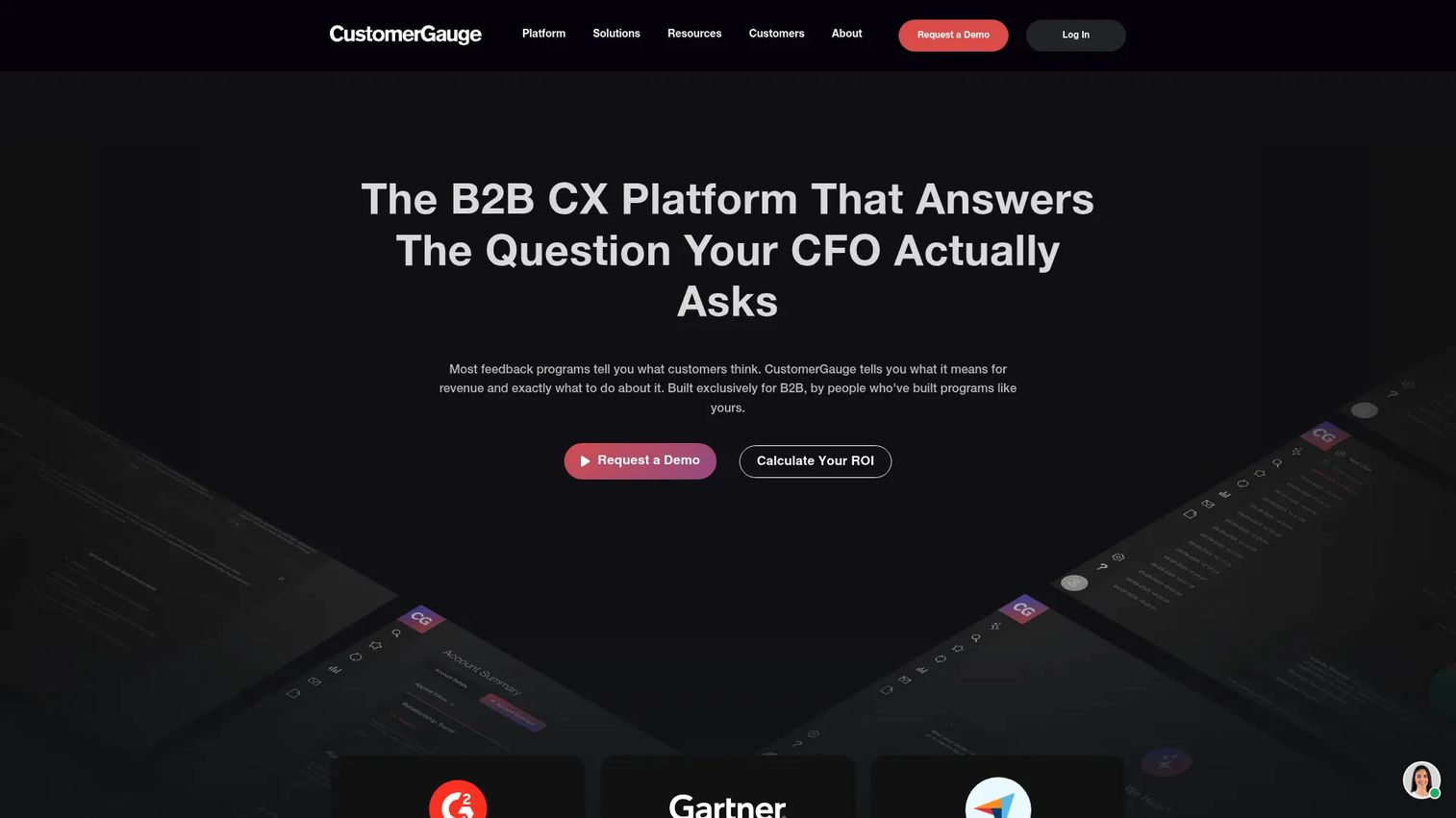
CustomerGauge is B2B account experience software that collects feedback, analyzes account health, and ties customer insight directly to revenue. For CPG teams that sell through distributors and retail accounts, the value is connecting cpg customer feedback to the dollars at risk, so retention work targets the accounts that actually matter to revenue.
Most CPG decisions are made with operational data alone. CustomerGauge adds the account-level voice that operational systems miss. When a key retail account signals dissatisfaction, you see it before it shows up as a lost listing or a slipped reorder. That early signal is where the platform earns its place in a stack.
Best for: B2B CPG teams that want account-level NPS and feedback tied to revenue and retention.
Key strengths
- Account-level feedback capture: Surveys and feedback structured around accounts, not just individual contacts.
- Revenue-linked dashboards: Analytics that map customer sentiment to revenue risk and retention exposure.
- AI-assisted follow-up: Closed-loop action workflows that route feedback to the right owner before churn sets in.
Why choose CustomerGauge: If your growth is stalling because churn is eating gains, CustomerGauge gives you the account intelligence to act before accounts leave. It fits teams that already have operational systems and need the customer signal layer on top, not another ERP.
CustomerGauge pricing: CustomerGauge does not publicly list pricing on its site. The buying flow routes to a demo and a tailored quote, which is standard for account-experience platforms scoped to your account base and feedback volume. CustomerGauge holds a 4.6/5 rating on G2.
2. NetSuite ERP
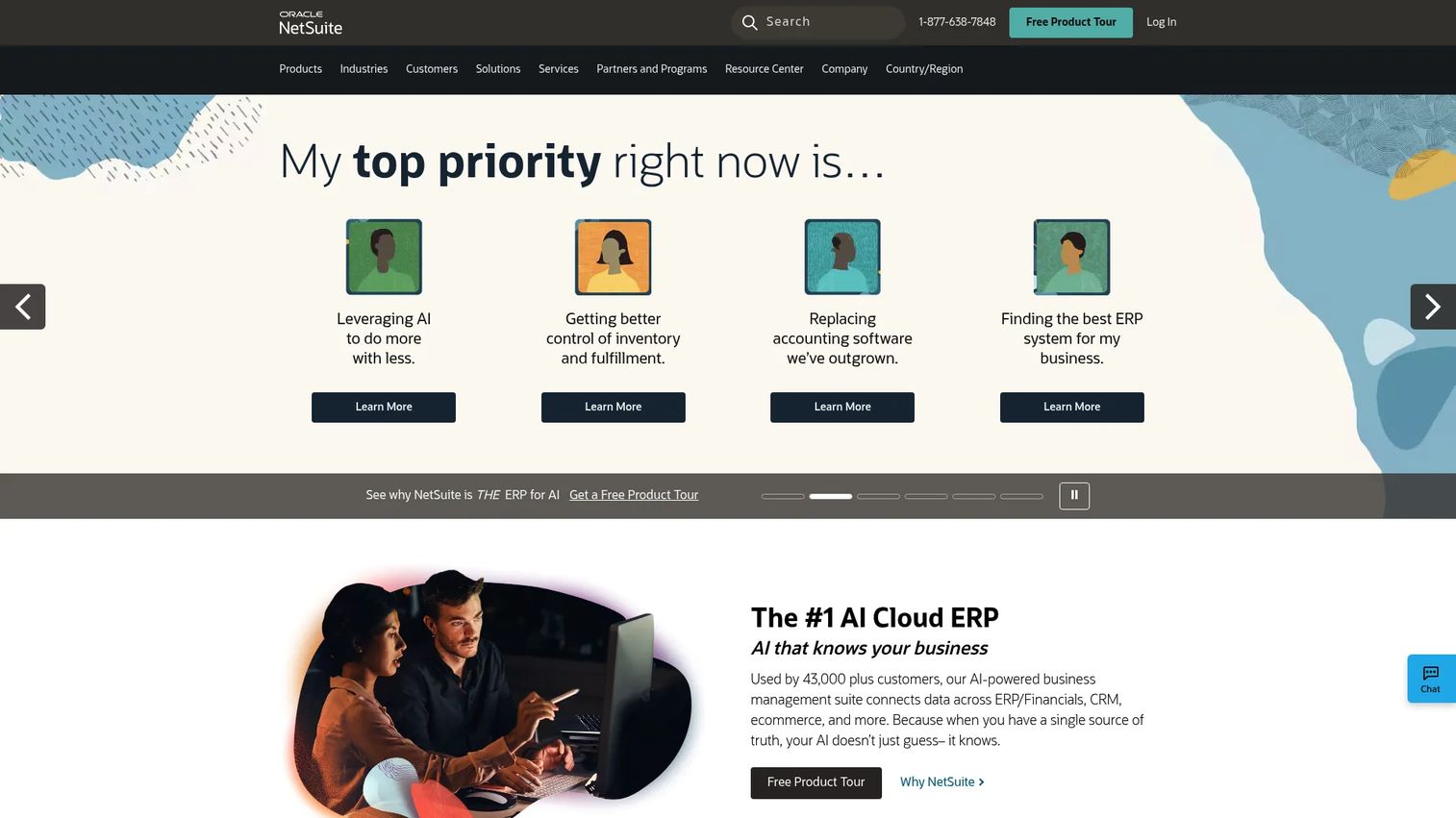
NetSuite ERP is a cloud ERP and business management platform covering finance, operations, inventory, and reporting in one system. For growing CPG teams, it is the most common choice when the goal is to consolidate fragmented finance, inventory, and order management onto a single source of truth.
The case for NetSuite is consolidation. When your financials live in one tool, inventory in another, and orders in a third, every close and every report becomes a reconciliation exercise. NetSuite collapses that into one system, which is exactly the kind of repeatability a scaling operation needs.
Best for: Growing mid-market and enterprise CPG teams that need an integrated cloud ERP.
Key strengths
- Financial management: Revenue recognition, close, and financials in a unified ledger.
- Order-to-cash and procure-to-pay: Connected order and procurement workflows across the business.
- Real-time dashboards: Reporting and analytics that update live instead of overnight.
Why choose NetSuite ERP: Choose NetSuite when the bottleneck is fragmented core systems and you want one operating backbone rather than a collection of point tools. It suits teams ready to commit to a central system of record and invest in the implementation it takes to get there.
NetSuite ERP pricing: NetSuite does not publish a first-party price. Cost is quote-based and scales with modules, users, and configuration, which is typical for cloud ERP at this scope. NetSuite holds a 4.1/5 rating on G2.
3. SAP S/4HANA
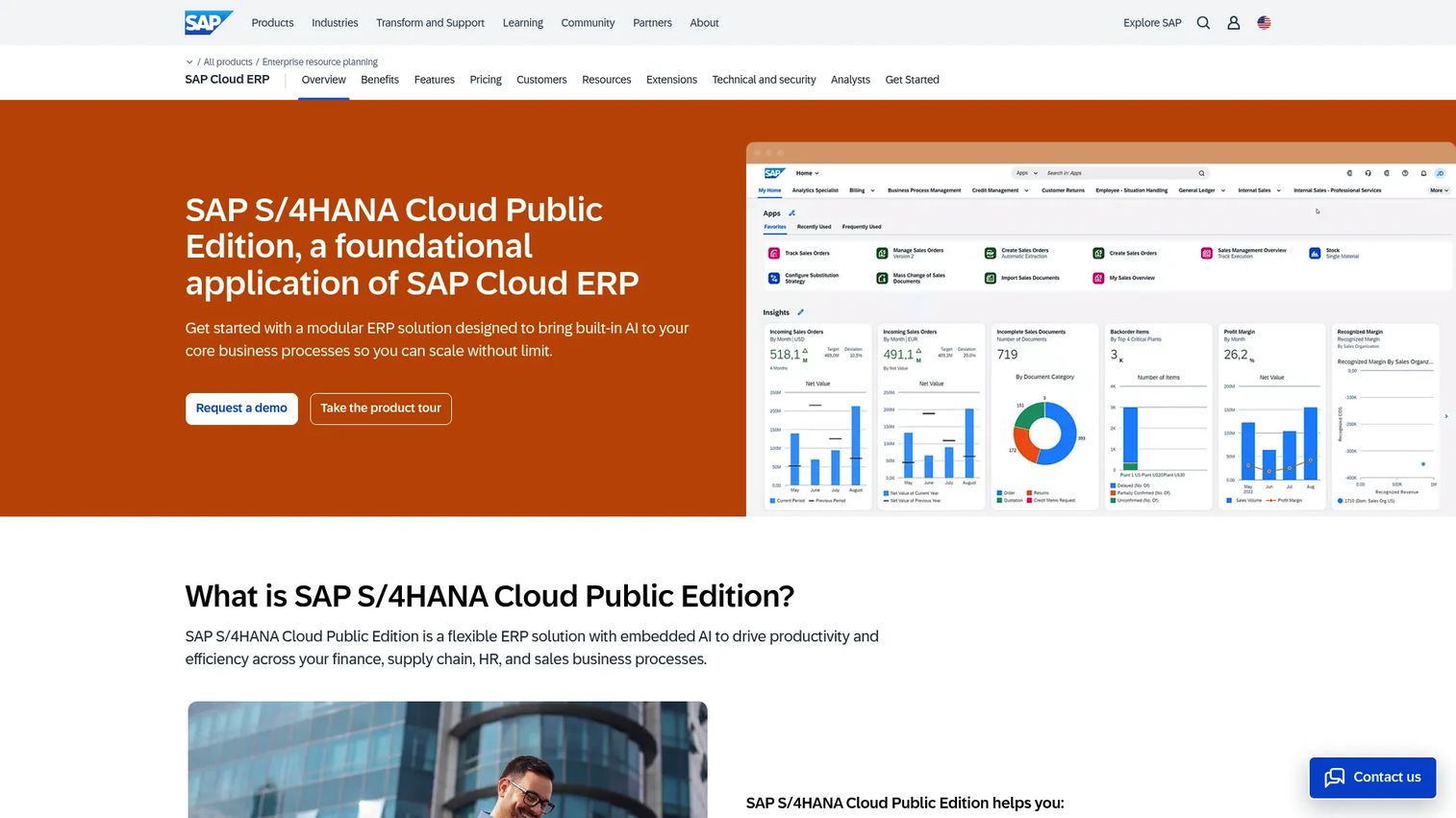
SAP S/4HANA is SAP's cloud ERP with public and private deployment options, built for enterprises that need deep process coverage. For large CPG organizations, it coordinates manufacturing, planning, finance, and supply chain at global scale with standardized processes across regions.
This is the heavyweight choice. When you run complex manufacturing, multi-region distribution, and high data volumes, S/4HANA's in-memory processing and built-in AI handle scale that lighter platforms are not designed for. The tradeoff is that it rewards organizations with the maturity and resources to standardize processes across the business.
Best for: Enterprises that need a scalable ERP with broad business-process coverage.
Key strengths
- In-memory processing: Handles large data volumes for real-time operations at scale.
- Built-in AI and machine learning: Embedded intelligence across planning and finance workflows.
- Flexible deployment: Public and private cloud options to match governance and infrastructure needs.
Why choose SAP S/4HANA: Choose S/4HANA when you operate at enterprise scale and need process standardization across global operations. It fits organizations that have outgrown mid-market ERP and need the depth that comes with an enterprise platform.
SAP S/4HANA pricing: SAP does not display numeric pricing on its product page and directs visitors to request a quote, standard for enterprise ERP. SAP Cloud ERP holds a 4.2/5 rating on G2.
4. Vividly
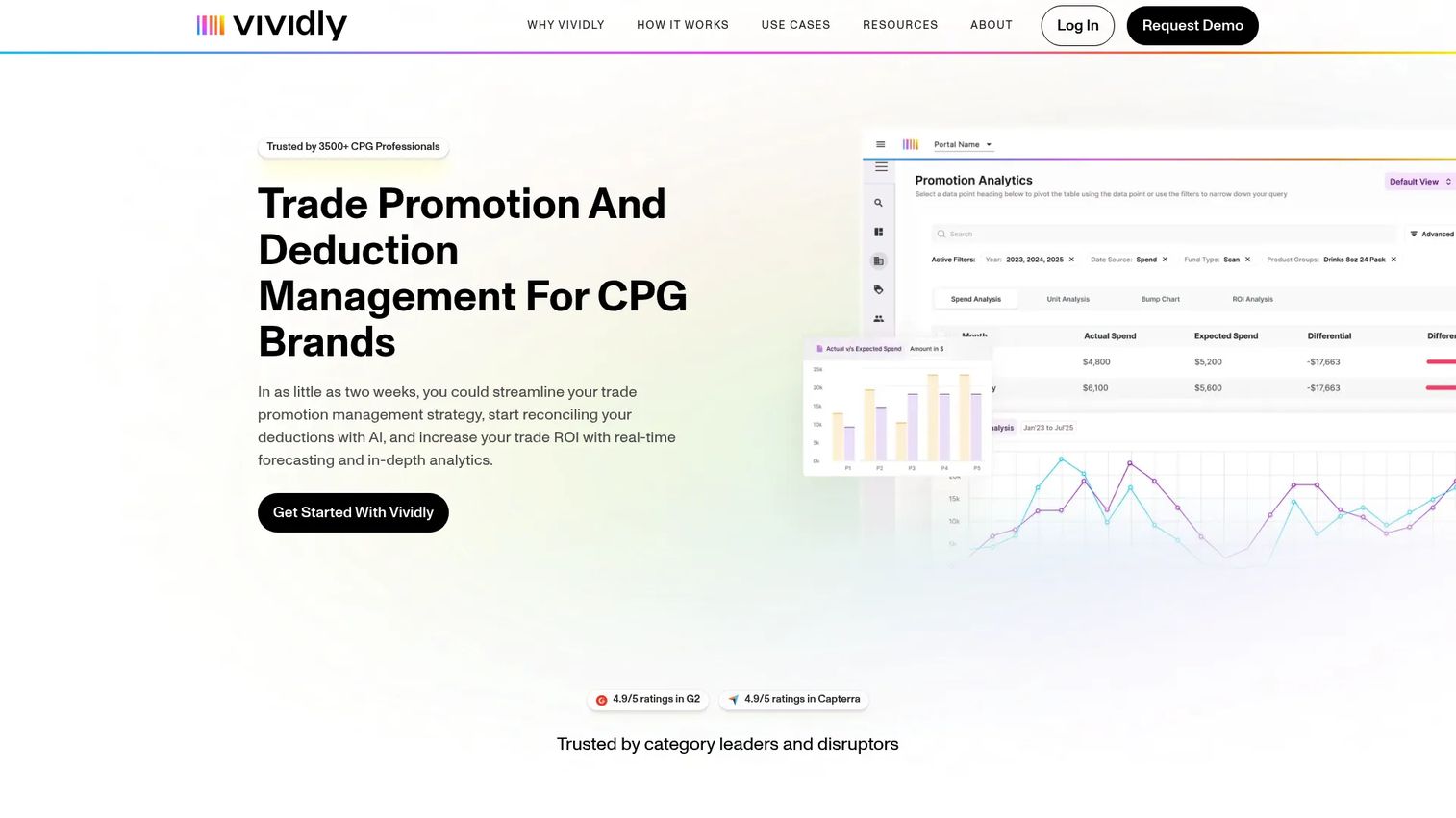
Vividly is trade promotion management software built specifically for CPG brands, covering forecasting, deductions, analytics, and AI-powered promotion optimization. Trade spend is often a brand's second-largest expense, and Vividly exists to make sure that spend actually returns margin instead of leaking through unmanaged deductions.
Trade promotion management matters because promotions drive volume but quietly erode profit when nobody tracks ROI or disputes invalid deductions. Vividly gives planning, spend, and deduction handling one home, so you can see which promotions worked and recover the money that retailers deducted in error.
Best for: CPG brands that need unified trade promotion and deduction management.
Key strengths
- Promotion planning and forecasting: Plan trade events and forecast their lift in one workflow.
- Deduction management: Track, dispute, and resolve deductions before they become permanent losses.
- AI-powered optimization: Analytics that surface which promotions drive real ROI.
Why choose Vividly: Choose Vividly when trade spend is large enough to hurt and disorganized enough to leak. It fits brands managing retailer promotions that need both planning visibility and deduction recovery in a single system. Vividly holds one of the highest ratings on this list.
Vividly pricing: Vividly states it offers transparent pricing with custom packages, but no public figures are listed on its site. Pricing is scoped to your trade spend and product needs. Vividly holds a 4.8/5 rating on G2.
5. LEAFIO AI
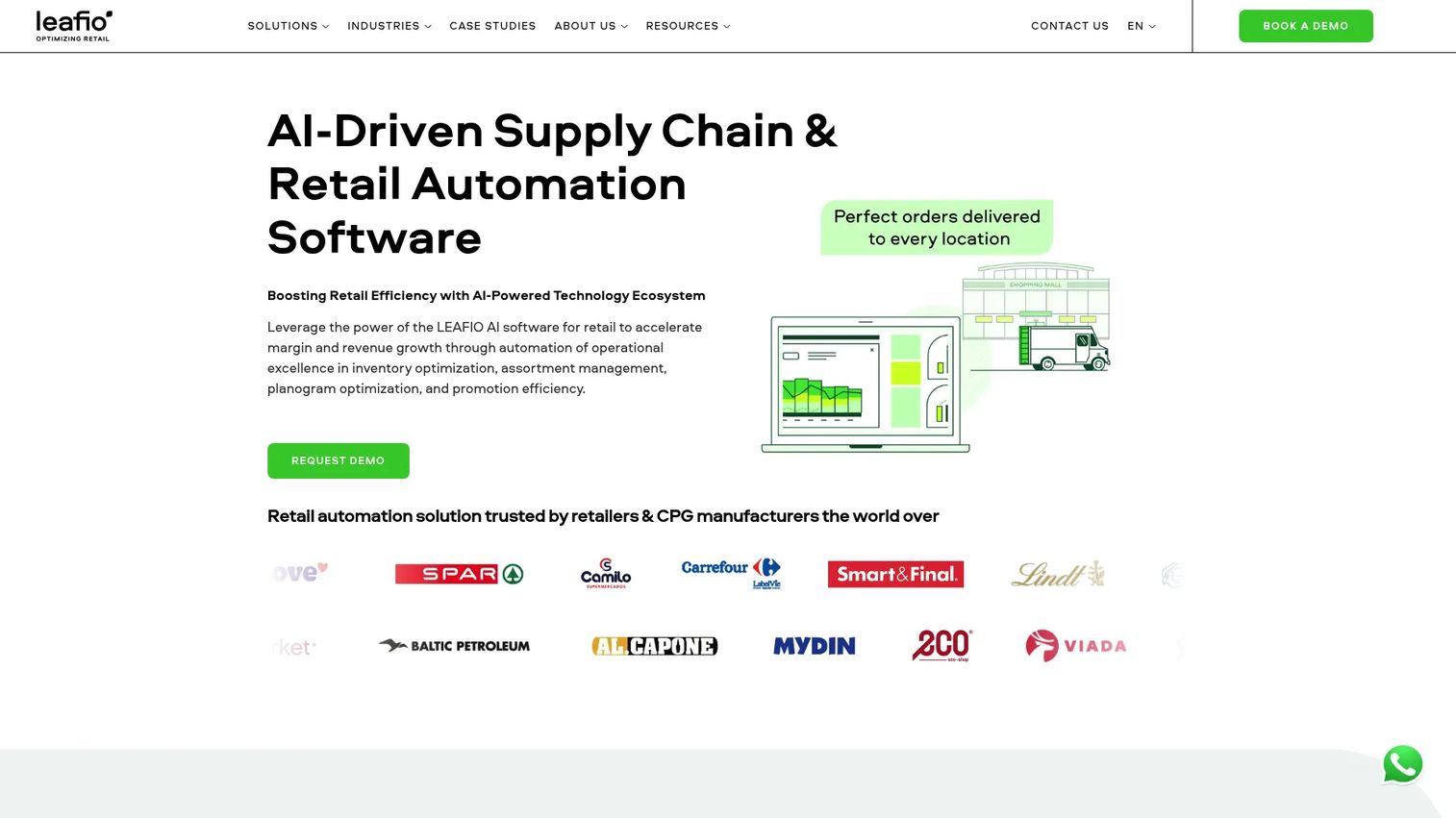
LEAFIO AI is AI-powered retail and supply chain automation software for retailers, distributors, and CPG manufacturers. Its core job is demand forecasting and inventory optimization, automating replenishment and assortment decisions that teams usually make by hand or by gut. As a set of cpg analytics tools, it turns planning into a continuous, data-driven process.
The reason forecasting tools like this earn their keep is simple: every percentage point of forecast accuracy translates into less waste and fewer stockouts. LEAFIO handles multi-location replenishment and planogram optimization, which is exactly where manual planning breaks down as SKU counts and locations grow.
Best for: Retailers and distributors needing AI-driven inventory, assortment, and merchandising automation.
Key strengths
- Inventory optimization: Automatic replenishment driven by demand signals, not static reorder points.
- Assortment and planogram optimization: Data-led decisions on what to stock and where to place it.
- Retail execution and analytics: Visibility into how product moves at the shelf across locations.
Why choose LEAFIO AI: Choose LEAFIO when forecast accuracy and inventory decisions are your operational bottleneck and manual planning no longer scales. It fits teams that want to move from reactive restocking to predictive replenishment across many locations.
LEAFIO AI pricing: LEAFIO does not display public pricing; the buying flow is contact-vendor based and scoped to your operation. LEAFIO holds a 5.0/5 rating on G2.
6. Infor CloudSuite
Infor CloudSuite is Infor's industry-specific cloud ERP suite covering sectors like manufacturing, distribution, healthcare, and public sector. For CPG operations, its appeal is industry-tailored functionality out of the box, so you start closer to your processes instead of configuring a generic ERP from scratch.
The differentiator here is the industry-specific angle. Rather than a horizontal platform you bend to fit, CloudSuite ships with planning, distribution, and analytics shaped for manufacturing and distribution workflows. For teams that want a cloud ERP aligned to how CPG actually runs, that head start matters.
Best for: Organizations needing an industry-tailored ERP and cloud suite.
Key strengths
- Industry-specific suites: Cloud ERP configured for manufacturing and distribution out of the box.
- AWS-native platform: Built on a modern cloud foundation for scale and reliability.
- Built-in AI and automation: Role-based workspaces and embedded intelligence across workflows.
Why choose Infor CloudSuite: Choose CloudSuite when you want an ERP that already speaks your industry's language and reduces the configuration burden of a horizontal platform. It fits operations-heavy CPG teams modernizing onto a cloud suite built for their sector.
Infor CloudSuite pricing: Infor does not list public pricing; cost is sales-led and scoped to your industry suite and deployment. A current G2 rating was not available at the time of writing, though third-party reviews on Capterra are positive.
7. Epicor Kinetic
Epicor Kinetic is cloud ERP for manufacturers, focused on operations, financials, supply chain, and production management. For CPG companies with real manufacturing complexity, Kinetic gives production and operations the control that finance-first ERPs often gloss over.
The case for Kinetic is operational depth on the production side. If your business is as much manufacturing as it is distribution, you need an ERP that treats production planning, inventory, and supply chain as first-class workflows. Kinetic is built around that reality, with a browser-based experience and configurable workflows.
Best for: Manufacturers needing a configurable ERP for operations and production.
Key strengths
- Manufacturing ERP: Financials and business intelligence built around production.
- Supply chain and planning: Production management and supply chain coordination in one platform.
- Configurable cloud platform: Browser-based experience with workflows you can adapt to your processes.
Why choose Epicor Kinetic: Choose Kinetic when manufacturing and production control is central to your operation, not an afterthought. It fits operations-heavy and industrial CPG teams that need an ERP built around how product is made, not just sold.
Epicor Kinetic pricing: Epicor does not publicly disclose Kinetic pricing; cost is quote-based and scoped to your operation. Epicor Kinetic holds a 3.9/5 rating on G2.
8. Quickbase
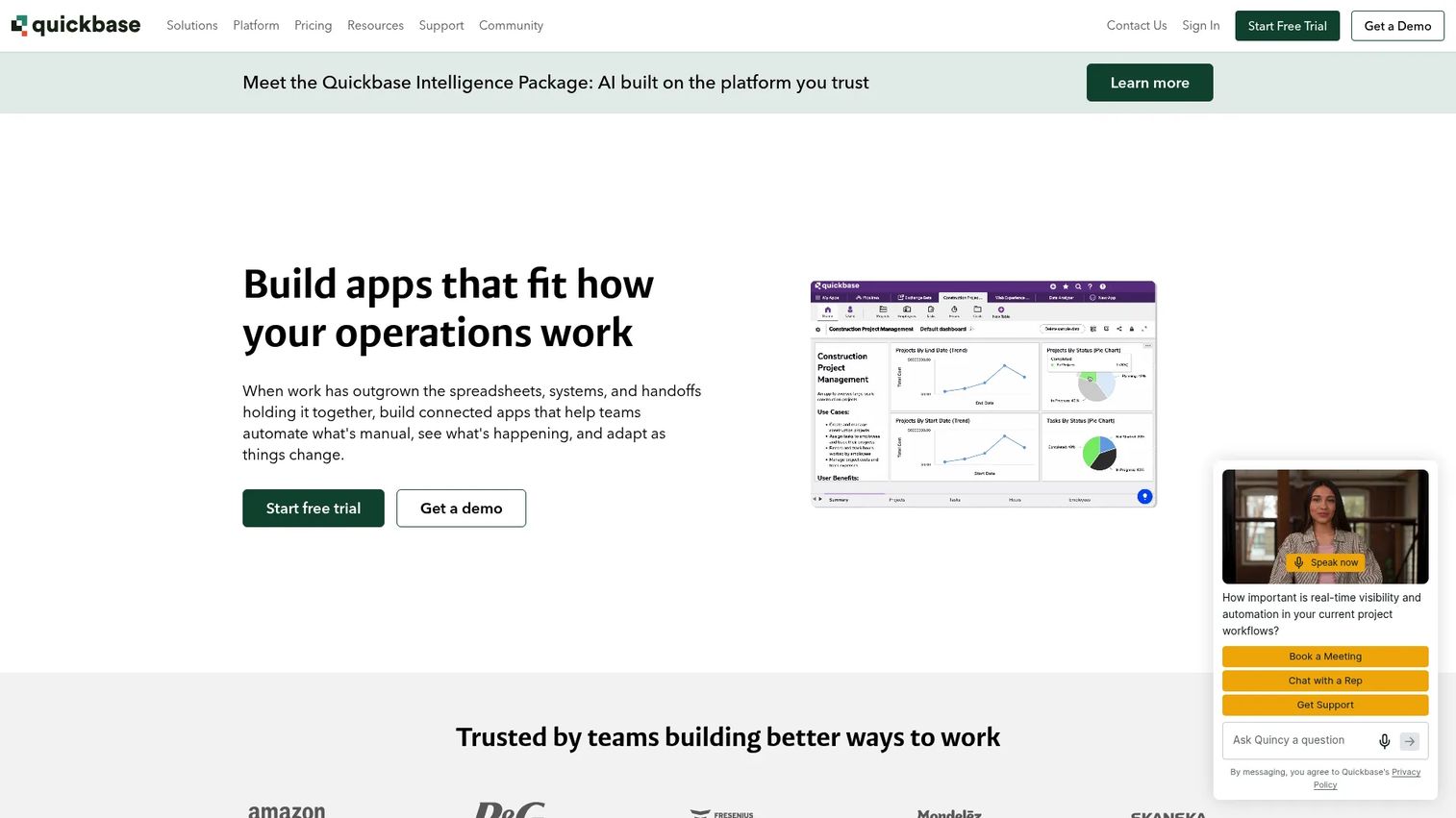
Quickbase is a low-code application platform for building and automating business workflows. It is the flexible layer in a CPG stack: when your ERP and inventory tools cover the core but leave gaps, Quickbase lets you build custom operational apps without heavy engineering.
The value here is adaptability. Every CPG operation has workflows that do not fit any off-the-shelf tool: a custom approval flow, a distributor tracker, a one-off reporting app. Quickbase lets operators build those quickly, which means you adapt processes without waiting on a dev backlog or stretching your ERP into something it was not built for.
Best for: Teams that need a customizable low-code platform for operational workflows and internal apps.
Key strengths
- No-code app builder: Visual builder for custom operational apps without engineering.
- Workflow automation: Automate the manual handoffs that slow operations down.
- Integrations and APIs: Connect Quickbase apps to the rest of your stack.
Why choose Quickbase: Choose Quickbase when your core systems cover the basics but you keep hitting workflow gaps that need custom apps. It fits teams that want to move fast on internal tooling without routing everything through engineering.
Quickbase pricing: Quickbase offers a 30-day free trial. The Team plan starts at $35 per user per month billed annually, Business starts at $55 per user per month billed annually, and Enterprise is fully customizable. Note a platform minimum fee applies that is not publicly listed. Quickbase holds a 4.4/5 rating on G2.
9. Promomash
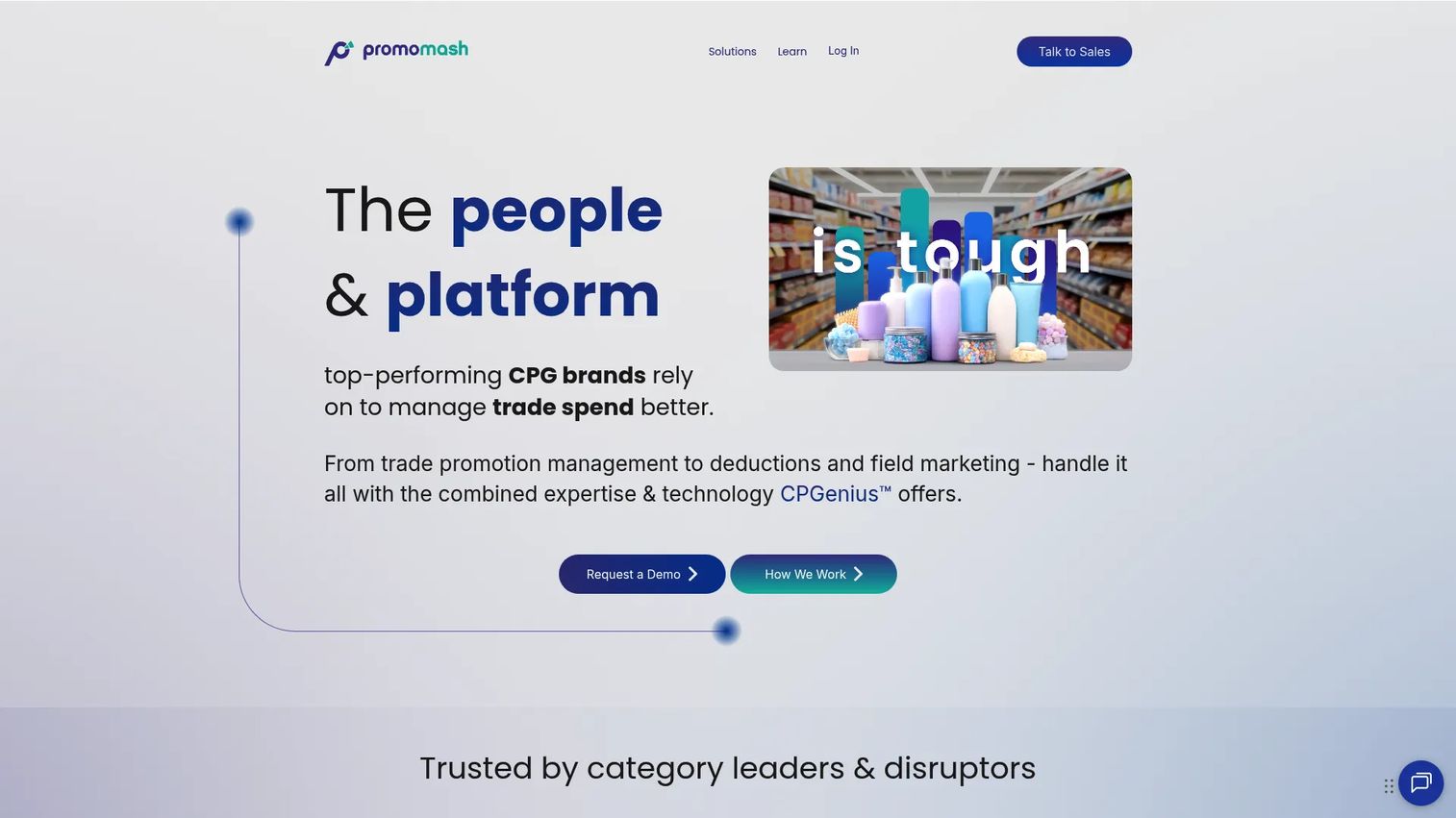
Promomash is CPG trade management software and services covering trade promotion, deductions, and field marketing in one place. It is purpose-built for emerging and growing brands that need trade, deduction, and in-store execution workflows without assembling them from separate tools.
What sets Promomash apart is the combination of software and managed services. Smaller CPG teams often lack the headcount to run trade promotion, chase deductions, and coordinate field marketing all at once. Promomash brings those workflows together and offers managed support, which matters when you are scaling and the team is lean.
Best for: CPG brands needing managed trade, deduction, or field marketing operations.
Key strengths
- Trade promotion management: Plan and track promotions in a CPG-native workflow.
- Deduction management: Handle and dispute deductions to protect margin.
- Field marketing: Manage in-store demos and events as part of retail execution software.
Why choose Promomash: Choose Promomash when you are a growing brand that needs purpose-built CPG operating workflows and the option of managed services to fill team gaps. It fits emerging brands that want trade, deductions, and field execution in one place.
Promomash pricing: Promomash bases subscription plans on annual revenue, monthly deduction invoice volume, or monthly event volume depending on the product. Figures are not publicly shown and require a quote. Promomash holds a 4.7/5 rating on G2.
10. Zycus
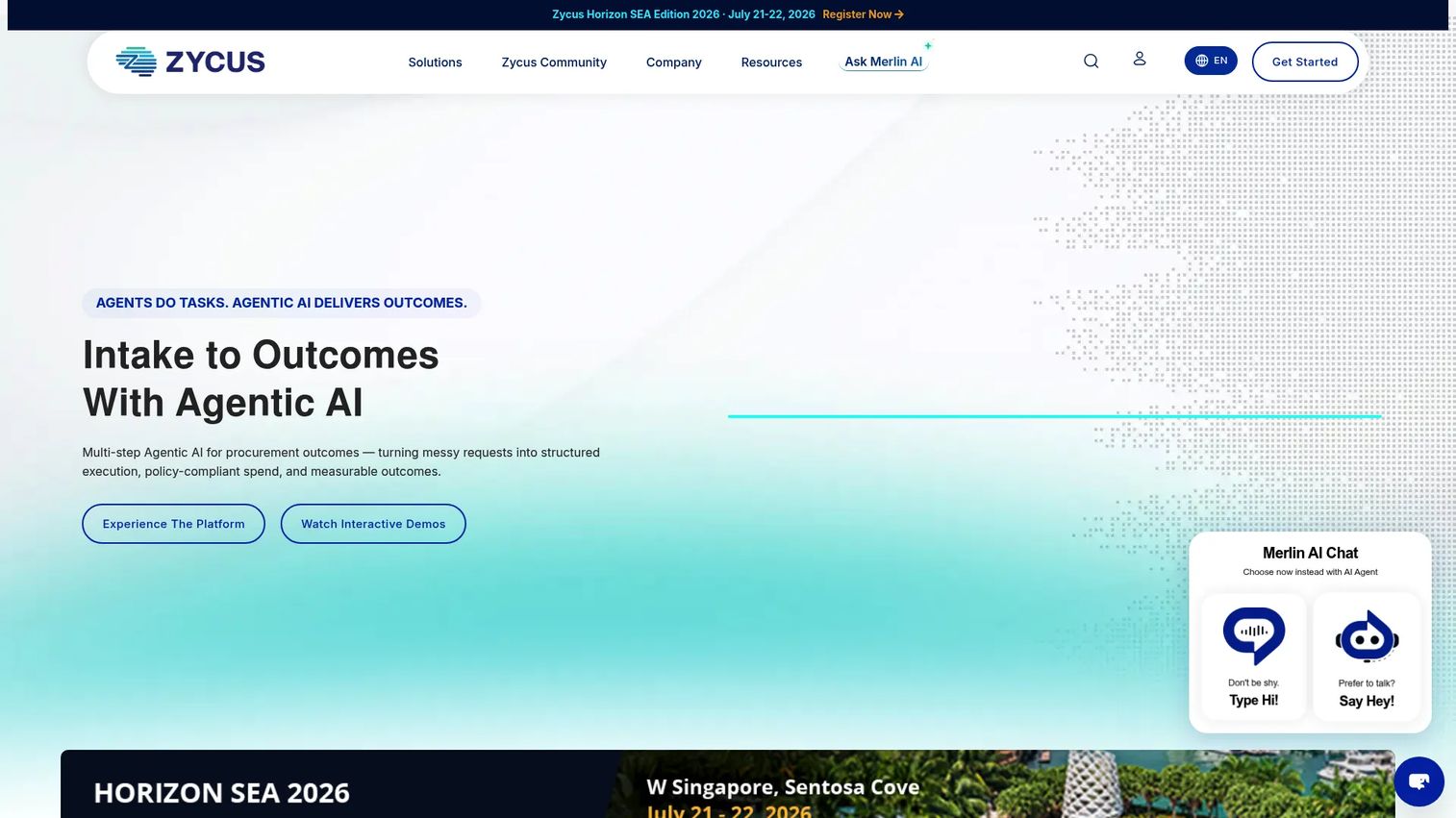
Zycus is an AI-powered source-to-pay procurement software suite for enterprise procurement teams. In a CPG stack, it owns the supplier side: sourcing, contracts, supplier management, and AP automation that bring discipline to how you buy ingredients, packaging, and materials.
Procurement is where margin gets made or lost before a product ever ships. Zycus gives sourcing and supplier operations the visibility and control that ad hoc purchasing lacks. Its Merlin agentic AI platform and source-to-pay suite cover the full cycle from intake to payment, which matters when supplier spend is a major line item.
Best for: Enterprises modernizing end-to-end procurement workflows.
Key strengths
- Merlin agentic AI: AI platform applied across the procurement lifecycle.
- Source-to-pay suite: Sourcing, contracts, and supplier management in one system.
- AP automation: Intake-to-payment workflows that bring control to spend.
Why choose Zycus: Choose Zycus when procurement discipline and supplier visibility are your priority and you operate at enterprise scale. It fits organizations that treat sourcing and supplier management as a margin lever, not just a back-office task.
Zycus pricing: Zycus does not display public pricing; cost is sales-led and scoped to your procurement scale. Zycus holds a 3.7/5 rating on G2.
Considerations before you buy
A CPG software decision is a stack decision, not a single-product decision. Before you commit, work through these five checks.
Define the job you need the software to do
Be precise about the bottleneck. ERP needs are different from inventory, forecasting, trade promotion, and procurement needs. A team drowning in deductions does not need a new ERP; it needs trade promotion management. A team stocking out needs demand forecasting software or inventory management software for cpg. Name the job first, then shortlist.
Check integration depth
A tool that does not connect to your stack creates a new silo. Confirm how the platform integrates with your current ERP, WMS, OMS, ecommerce, and analytics layers. Ask for specifics: native connectors, supported systems, and API depth. Shallow integration turns a promising tool into another manual export job.
Validate implementation reality
Demo polish is not operational readiness. Ask about onboarding, data migration, support, and training before you sign. The cleanest demo in the world means nothing if migration takes nine months and your data does not map. Get reference customers at your scale and ask them how long it actually took to reach value.
Measure ROI in operational terms
Tie the purchase to operational metrics, not feature counts. The right outcomes are higher inventory accuracy, lower carrying costs, faster planning cycles, fewer stockouts, or better trade spend control. If you cannot draw a line from the tool to one of those, you are buying a feature list, not a result.
Match the tool to company scale
Small teams need speed and simplicity; a heavyweight enterprise ERP will stall them. Larger teams need governance, scalability, and cross-system control that lightweight tools cannot provide. Match the tool to where you are, not where a vendor says you should be.
Conclusion
There is no single best cpg software solution, because the right pick depends entirely on your operational bottleneck. The category breaks down into clear jobs: CustomerGauge for customer and account intelligence, NetSuite ERP and SAP S/4HANA for the ERP backbone, Vividly and Promomash for trade promotion, LEAFIO AI for forecasting and inventory, Infor CloudSuite and Epicor Kinetic for industry and manufacturing ERP, Quickbase for low-code flexibility, and Zycus for procurement.
The trap is buying for the loudest feature list instead of your actual constraint. So name the bottleneck first. If it is fragmented core systems, start with ERP. If it is stockouts and waste, start with forecasting. If trade spend is leaking, start with trade promotion management. Then check integration depth, validate implementation reality, and measure ROI in operational terms before you commit.
Your next step: pick the one operational job costing you the most margin right now, shortlist two tools that solve it, and run reference calls with teams at your scale. Build the cpg software stack around your bottleneck, not the other way around.
FAQs
CPG software is a category of operational tools that helps consumer packaged goods companies manage inventory, forecasting, trade promotion, ERP, analytics, distribution, and channel execution. Most teams assemble a stack of these tools rather than buying a single platform, so data flows across the supply chain instead of fragmenting.
Look for inventory and replenishment, demand forecasting, ERP and financials, trade promotion management, analytics and reporting, and channel or retail execution. The exact mix depends on your operational job, but integration across these capabilities is what turns scattered systems into a connected stack.
No. ERP is one component of a CPG software stack. A cpg ERP anchors finance, inventory, and order management, but trade promotion, demand forecasting, analytics, and procurement usually live in specialized tools that integrate with the ERP rather than replacing it.
It depends on scale. LEAFIO AI excels at AI-driven inventory optimization and replenishment across locations, while NetSuite ERP and SAP S/4HANA handle inventory as part of a broader ERP. For inventory management software for cpg, match the tool to whether you need standalone optimization or an integrated system.
LEAFIO AI is purpose-built for demand forecasting and inventory optimization with AI-driven replenishment. Enterprise ERPs like SAP S/4HANA also include planning and forecasting modules. If forecasting is your core bottleneck, a specialized demand forecasting tool usually beats a general ERP module.
Confirm whether the platform connects natively to your ERP, WMS, OMS, ecommerce, and analytics tools, then check API depth for anything not covered by native connectors. Shallow integration creates manual export work and new silos, so treat integration depth as a primary criterion, not a footnote.
Founders should prioritize repeatability, stack fit, and ROI in operational terms. The goal is a system that runs without manual heroics: connected ERP, inventory, forecasting, and analytics that produce clean weekly numbers. Match each tool to a specific bottleneck and verify it earns its place within the first quarter.
Most enterprise CPG software is quote-based, scoped to your modules, users, and operational volume. Some tools publish starting prices; for example, Quickbase starts at $35 per user per month billed annually. ERP and trade promotion platforms typically require a custom quote, so budget for implementation and migration on top of license cost.