Picking a brokerage platform looks simple until you start pulling the thread. Commission-free stock trading sounds great until you notice the $0.65 options contract fee, the margin rate that isn't posted anywhere obvious, and the sweep yield that quietly underperforms a money market fund by 1.5 points.
Retail trading now accounts for 20% to 35% of daily equity market volume across the U.S., UK, and South Korea, according to the Edison Group (2026). That scale means brokerages compete hard on advertised pricing while burying real costs in fee schedules and account disclosures.
The result: Choosing a platform requires more than comparing commissions. You need to know where you'll keep cash, what reporting looks like at tax time, whether support answers the phone when a transfer breaks, and whether the platform creates weekly admin or runs quietly in the background.
This guide cuts through the marketing noise. It segments platforms by investor type, surfaces total-cost traps, and helps you pick the account that earns its place without creating a second job.
Verify current fees, promotions, and regulatory disclosures directly with each broker before opening an account. Nothing in this article is investment advice.
What's inside
This guide compares 10 brokerage trading platforms for founders, operators, active investors, and anyone choosing or consolidating an online brokerage account. Platforms were selected on four criteria:
- Asset access: Stocks, ETFs, options, mutual funds, bonds, futures, fractional shares, and crypto coverage
- Platform quality: Web, desktop, and mobile trading experience, order tools, and charting depth
- Total cost: Commissions, contract fees, margin rates, data subscriptions, and cash sweep economics
- Operational fit: Reporting, tax documents, support access, security controls, and account consolidation
Pricing changes often. Confirm live figures before funding any account.
TL;DR
- Best overall for most investors: Charles Schwab, broad platform, strong research, banking-adjacent features
- Best for research and long-term accounts: Fidelity, deep research, fractional shares, strong cash options
- Best for active and global traders: Interactive Brokers, global markets, Trader Workstation, APIs
- Best for options-focused traders: tastytrade, strategy tools, capped commissions, $0 to close
- Best mobile app for active traders: Webull, charts, paper trading, real-time data
- Best for beginners and financial consolidators: SoFi Invest, investing and banking in one app
What is a brokerage trading platform?
A brokerage trading platform is the web, desktop, and mobile infrastructure investors use to open online brokerage accounts, research investments, place trades, manage uninvested cash, and monitor portfolios.
It is not simply a trade button. The platform sits between the investor and every financial market they want to access, which means choosing it is an infrastructure decision, not a feature preference.
Core capabilities to look for:
- Account setup and funding: Opening speed, minimum requirements, transfer tools, and ACH or wire options
- Asset coverage: Stocks, ETFs, options, mutual funds, bonds, futures, fractional shares, and crypto access
- Order entry and execution: Market, limit, stop, and advanced order types; routing transparency; fill speed
- Research and screeners: Analyst reports, earnings data, charting, technical indicators, and market commentary
- Mobile trading app: iOS and Android stability, options chains, biometric login, and alert reliability
- Cash management: Sweep yield, money market access, CD options, checking-adjacent features, and transfer speed
- Margin and risk tools: Margin rates, risk analytics, and position-level exposure reporting
- Tax reporting: 1099 accuracy, lot-level tracking, and downloadable statements
- Support and security: Phone access, chat, two-factor authentication, and account permissions
For founders and operators, the platform is financial infrastructure. The question isn't which one has the most features; it's which one requires the least ongoing attention while handling real assets cleanly.
When to use brokerage trading platforms
Open a long-term investing account
If the goal is buying stocks, ETFs, mutual funds, or bonds over years rather than hours, the priority is research quality, account types (IRA, taxable, trust), and clean tax reporting. Founders often care about how uninvested cash is handled between contributions, since idle balances in a low-yield sweep account add up at scale. Platforms like Fidelity and Charles Schwab cover retirement accounts, fractional investing, and recurring contributions without requiring active management.
Trade actively with better tools
Active traders need charting depth, multiple order types, real-time data, options chains, and stable desktop platforms. API access matters for anyone running systematic strategies. This is where Interactive Brokers, TradeStation, and tastytrade separate from the general-purpose platforms. The tradeoff is complexity: These tools require setup investment, and the learning curve is real.
Manage cash and investing in one place
Some investors want a platform that handles both their brokerage activity and their cash management. That means comparing sweep yields, money market access, debit card features, and transfer speed alongside trading tools. Fidelity, Charles Schwab, and SoFi Invest all serve this use case to varying degrees. Verify current sweep rates before assuming they're competitive; they change without notice.
Brokerage trading platforms comparison
The table below gives a quick decision layer. G2 ratings are included only where a current relevant listing exists; brokerage platforms are more commonly reviewed on financial publisher sites and app stores than on G2.
Pricing reflects commissions verified from each platform's official pricing page as of November 2026. Verify before opening an account because brokerage fees, margin rates, and account features change.
| # | Product | Best for | Key differentiator | Pricing | G2 rating |
|---|---|---|---|---|---|
| 1 | Charles Schwab | Most investors, account consolidation | Broad platform, research, banking-adjacent services | $0 stocks/ETFs; $0.65/contract options | N/A |
| 2 | Fidelity | Long-term investors, research-heavy users | Research depth, fractional investing, cash options | $0 stocks/ETFs; $0.65/contract options | 3.9/5 |
| 3 | Interactive Brokers | Active, global, and professional traders | Global markets, Trader Workstation, APIs | $0 (Lite) or $0.005/share (Pro) | N/A |
| 4 | E*TRADE | Mobile traders, Morgan Stanley ecosystem | Power E*TRADE tools, options depth, banking integration | $0 stocks/ETFs; $0.65/contract options | 4.0/5 |
| 5 | Robinhood | Simple mobile-first investing | Low-friction app, fractional shares, Gold subscription | $0 stocks/ETFs/options trades; Gold at $5/month | N/A |
| 6 | Merrill Edge | Bank of America customers | Integrated banking and brokerage relationship | $0 stocks/ETFs/options trades; $0.65/contract | N/A |
| 7 | Webull | Active mobile traders | Advanced charts, paper trading, real-time data | $0 stocks/ETFs/options trades; Premium $3.99/month | N/A |
| 8 | TradeStation | Advanced desktop and strategy traders | Desktop tools, futures, backtesting | $0 stocks/ETFs; $0.80/contract options; $1.75/contract futures | N/A |
| 9 | tastytrade | Options-focused traders | Options strategy tools, $10 max per leg, $0 to close | $0 stocks/ETFs; $1/contract options (open); $0 to close | N/A |
| 10 | SoFi Invest | Beginners and financial-app consolidators | Investing, banking, loans, and planning in one app | $0 self-directed; 0.25%/year robo-advisor | N/A |
Best 10 brokerage trading platforms for 2026
1. Charles Schwab
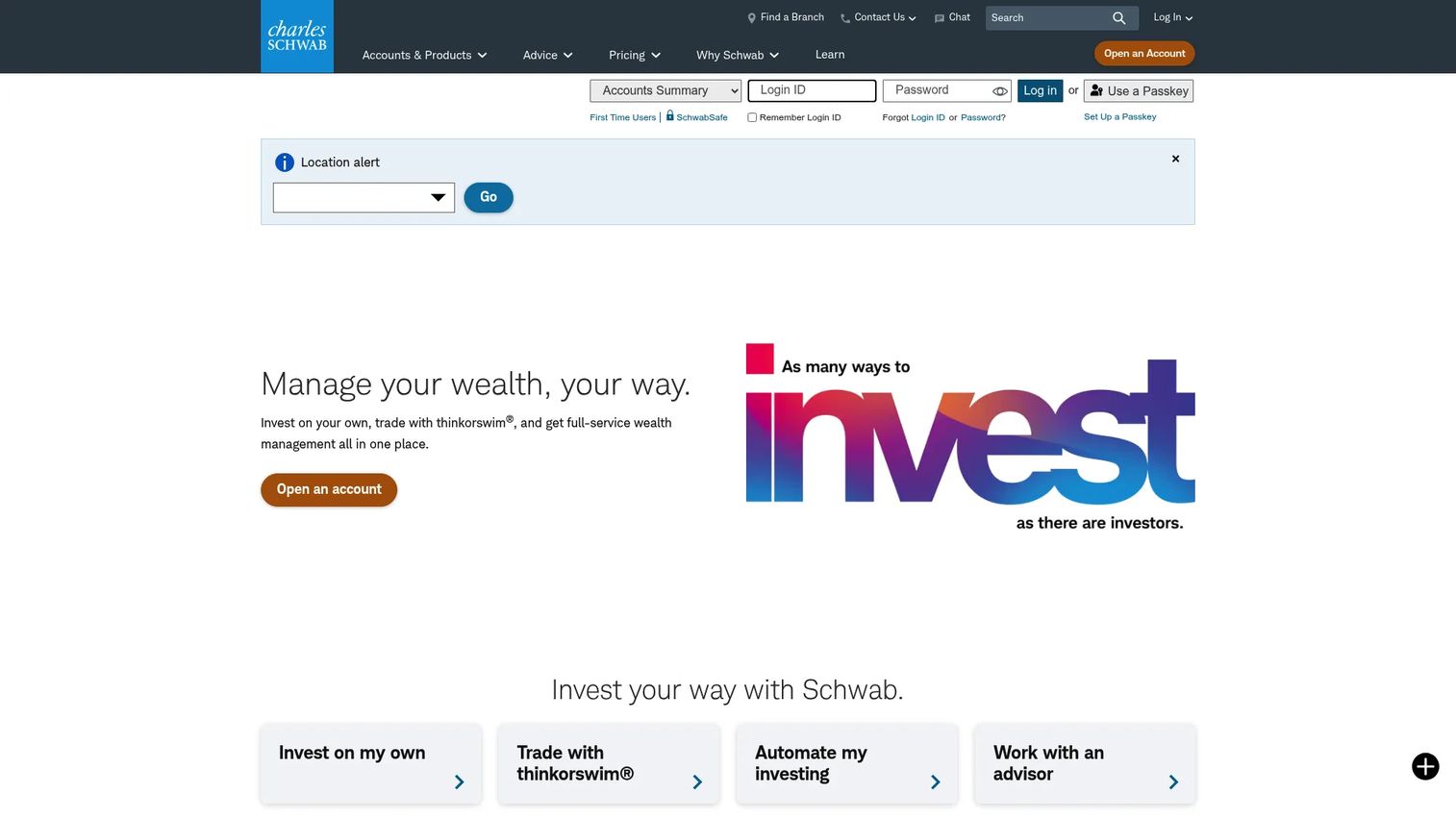
Charles Schwab is a full-service brokerage offering trading, retirement accounts, automated investing through Schwab Intelligent Portfolios, and banking-adjacent services. Its thinkorswim platform (inherited via TD Ameritrade) gives active traders professional-grade tools inside a broad consumer brokerage. For investors who want one relationship that covers taxable accounts, IRAs, cash management, and equity trading, Schwab is the most common default.
Best for: Investors who want a single brokerage relationship covering long-term accounts, active trading, retirement savings, and support.
Key features
- Commission-free online stock and ETF trades
- thinkorswim platform for advanced trading
- Schwab Intelligent Portfolios automated investing
- Broad account types: Taxable, IRA, trust, custodial
- Research, market commentary, and screeners
Why choose Charles Schwab: Choose Schwab when consolidation matters more than niche specialization. It is the strongest default for founders who want a reliable brokerage that handles multiple account types without requiring separate relationships.
Charles Schwab pricing: Online stock and ETF trades cost $0. Options contracts are $0 base commission plus $0.65 per contract. Schwab Intelligent Portfolios charges no advisory fee and requires a $5,000 account minimum. Schwab Wealth Advisory starts at 0.80% annually with a $500,000 minimum.
G2 rating: N/A (no current meaningful G2 listing for Charles Schwab's brokerage product).
2. Fidelity
Fidelity is a broad financial services provider covering brokerage, retirement, wealth management, and cash management. It stands out for research depth, a wide mutual fund selection, and strong tools for recurring investors who want clean account visibility. Fidelity Trader+ adds real-time data, advanced order routing, and portfolio tools for more active users.
Best for: Long-term investors who want deep research, strong fund access, fractional investing, and low-admin account management.
Key features
- Commission-free U.S. stock and ETF trading
- Fractional share investing (Stocks by the Slice)
- Research tools, screeners, calculators, and market insights
- Broad mutual fund selection with no-transaction-fee options
- Fidelity Go robo-advisor and wealth management tiers
Why choose Fidelity: Choose Fidelity when research depth and long-term account clarity matter most. It suits founders who want investing handled cleanly without turning it into a second job.
Fidelity pricing: Online U.S. stock and ETF trades are $0. Options contracts cost $0.65 per contract. Fidelity Go charges $0 on balances under $25,000, then 0.35% annually above that threshold. Fidelity Wealth Management runs 0.50% to 1.50% annually.
G2 rating: 3.9/5 (Fidelity, G2).
3. Interactive Brokers
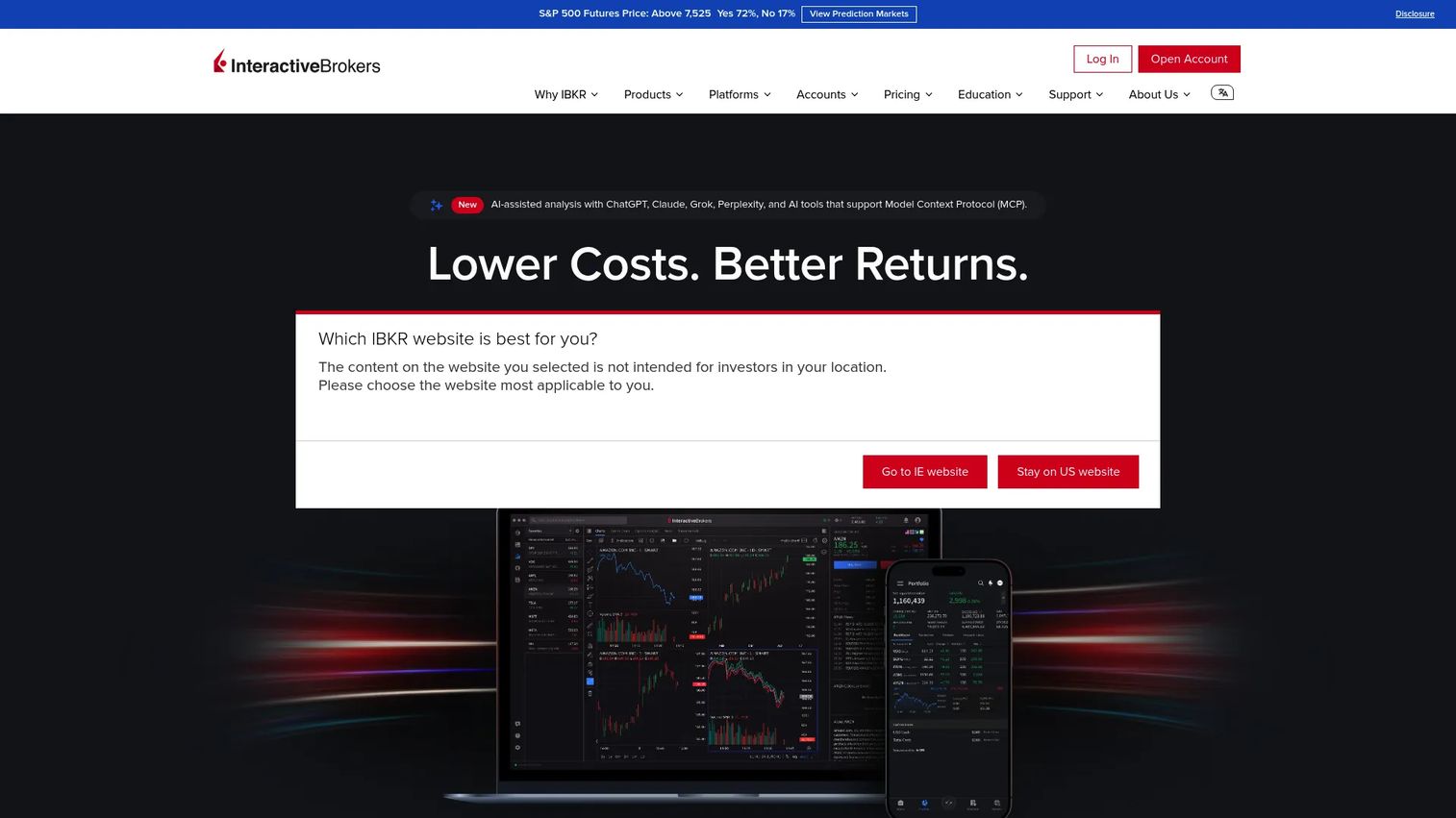
Interactive Brokers is built for traders who need global market access, sophisticated order types, API connectivity, and low margin rates. Its Trader Workstation (TWS) is one of the deepest desktop platforms available to retail investors. IBKR also offers IBKR Mobile, Client Portal, and GlobalTrader for different access levels. Paper trading is available for strategy testing without capital at risk.
Best for: Active traders, global investors, API users, and experienced investors who need advanced order tools and multi-asset access.
Key features
- Global trading across stocks, options, futures, currencies, and bonds
- Trader Workstation (TWS) desktop platform
- API connectivity for algorithmic and systematic strategies
- Advanced order types and portfolio analytics
- Paper trading environment for strategy testing
Why choose Interactive Brokers: Choose IBKR when platform depth and global access matter. Complexity is real: The interface rewards investment in learning. For someone who trades twice a month, it may be more than needed.
Interactive Brokers pricing: IBKR Lite offers $0 commissions on U.S.-listed stocks and ETFs for U.S. residents. IBKR Pro Fixed pricing is $0.005 per share with a $1.00 minimum per order. IBKR Pro Tiered pricing runs $0.0005 to $0.0035 per share with a $0.35 minimum. Additional exchange, regulatory, and clearing fees apply to tiered pricing.
G2 rating: N/A (no current verified G2 listing for Interactive Brokers).
4. E*TRADE
E*TRADE, now part of Morgan Stanley, offers a polished online brokerage experience across web, mobile, and its Power E*TRADE platform. Power E*TRADE adds options risk analysis, earnings move analysis, market depth, social sentiment, and a futures ladder for active traders. Morgan Stanley research integrates directly into the platform. Core Portfolios provides a managed portfolio option at a 0.30% advisory fee.
Best for: Investors who want a strong mobile and web experience with options depth and access to Morgan Stanley research.
Key features
- Power E*TRADE platform for active trading
- Options risk and earnings move analysis tools
- Futures trading access ($1.50 per contract, per side)
- Core Portfolios managed option at 0.30% annually
- Morgan Stanley research and market insights
Why choose E*TRADE: Choose E*TRADE when the mobile and web experience matters as much as product breadth. It fits investors who want mainstream-platform depth without stepping into the complexity of a professional trading terminal.
E*TRADE pricing: Online stock, ETF, and mutual fund trades are $0. Options contracts are $0.65 per contract, dropping to $0.50 with 30 or more trades per quarter. Bond trades are $1.00 per bond ($10 minimum, $250 maximum). Futures cost $1.50 per contract per side, plus applicable fees. Core Portfolios charges 0.30% annually with a $500 account minimum.
G2 rating: 4.0/5 (E*TRADE, G2).
5. Robinhood
Robinhood is a mobile-first financial platform built for self-directed investors who want a low-friction entry point to stocks, ETFs, options, and crypto. Robinhood Gold adds premium investing features including higher instant deposit limits, margin access, and additional research. Robinhood Legend and advanced charts serve users who want more analytical depth. Retirement accounts with an IRA match are also available.
Best for: Beginners and mobile-first investors who want a simple, fast way to start investing.
Key features
- Commission-free stocks, ETFs, and options trading
- Fractional share investing
- Crypto trading access
- Robinhood Gold subscription ($5/month or $50/year)
- Robinhood Legend and AI-powered research tools
Why choose Robinhood: Choose Robinhood when speed and simplicity are the priority. For complex options workflows, deeper research, or broad retirement account planning, compare it against fuller brokerage platforms before committing.
Robinhood pricing: Standard accounts trade stocks, ETFs, and options at $0 commission. Robinhood Gold costs $5 per month or $50 per year; the first 30 days are free. Other regulatory, exchange, and service fees apply separately.
G2 rating: N/A (no current verified G2 listing for Robinhood's brokerage product).
6. Merrill Edge

Merrill Edge is the self-directed brokerage arm of Bank of America and Merrill, giving existing Bank of America customers a tightly integrated investing account alongside their banking relationship. BofA Global Research access, guided investing options, and branch-based advisor support are differentiators for investors who value relationship convenience over platform depth.
Best for: Bank of America customers who want brokerage, banking, research, and advisor access in a single relationship.
Key features
- $0 online stock, ETF, and options trades
- BofA Global Research and Merrill investing insights
- Merrill Guided Investing robo option (0.45% annually)
- Merrill Guided Investing with an advisor (0.85% annually)
- Stocks, bonds, mutual funds, and ETF access
Why choose [Merrill Edge](https://www Merrill.com/investing/online-brokerage): Choose Merrill Edge when the banking relationship is already in place and operational convenience outweighs platform depth. It is a practical pick for investors who want fewer financial relationships, not specialized trading tools.
Merrill Edge pricing: Self-directed online stock, ETF, and options trades are $0, with a $0.65 per-contract fee on options. Merrill Guided Investing starts at 0.45% annually with a $1,000 minimum. Guided Investing with an advisor runs 0.85% annually with a $20,000 minimum.
7. Webull
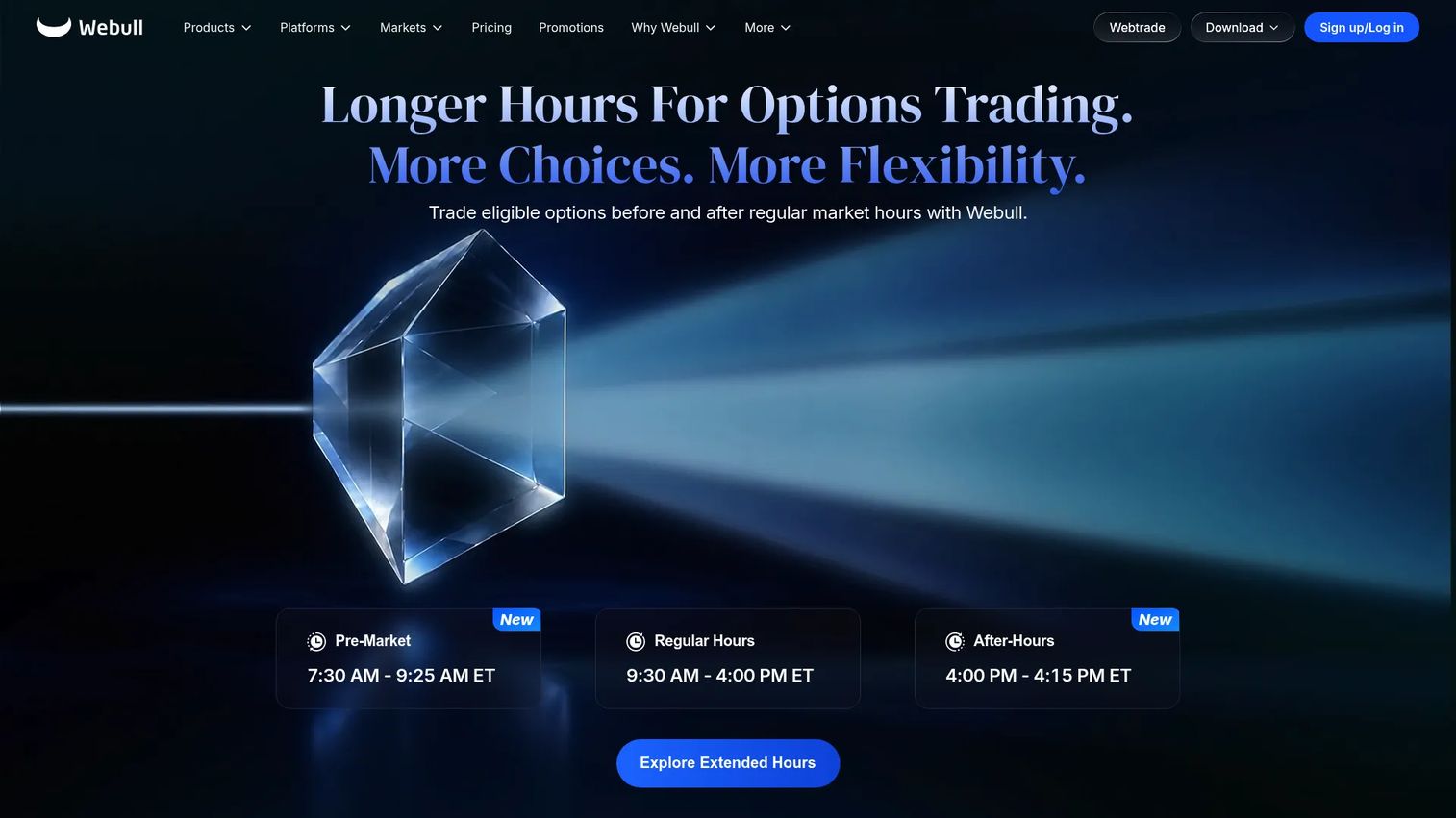
Webull is a self-directed trading platform built for active retail investors who want charting depth, paper trading, real-time data, and a mobile-first experience that goes beyond a basic investing app. It offers more than 50 technical indicators, customizable alerts, options chains, and extended-hours trading. A Premium subscription adds deeper features, while market data subscriptions are priced separately.
Best for: Active mobile traders who want advanced charting, paper trading practice, and real-time market data in a commission-free account.
Key features
- Advanced mobile charts with 50+ technical indicators
- Paper trading for strategy testing without capital risk
- Commission-free options trading
- Extended-hours and pre-market trading access
- Customizable alerts and watchlists
Why choose Webull: Choose Webull when active monitoring and charting depth matter more than advisor support or mutual fund breadth. It may not be the first choice for banking integration or long-term retirement account management.
Webull pricing: Eligible U.S.-listed stock, ETF, and options trades are $0 commission. Webull Premium costs $3.99 per month or $40 per year. NASDAQ TotalView Level 2 data runs $2.99 per month for non-professionals. NBBO real-time data is $9.99 per month for non-professionals. Regulatory and exchange fees apply separately.
8. TradeStation
TradeStation is an advanced brokerage and trading platform built for active traders who want desktop-grade tools, strategy automation, futures access, and analytical depth. Its RadarScreen monitors markets in real time, OptionStation Pro handles options analysis, and Portfolio Maestro runs strategy backtesting. Brokerage account holders get platform access at no additional charge; non-brokerage users pay $99.99 per month for the full TradeStation platform with RadarScreen.
Best for: Experienced traders who need desktop-grade tools, strategy testing, backtesting, and futures workflow.
Key features
- Desktop, web, and mobile trading platforms
- RadarScreen real-time market monitoring
- OptionStation Pro options analysis
- Portfolio Maestro backtesting
- Futures trading at $1.75 per contract per side
Why choose TradeStation: Choose TradeStation when advanced trading workflow and strategy automation matter more than beginner simplicity. Opening the account is straightforward; getting full value from the platform requires time investment.
TradeStation pricing: Stock and ETF trades are $0 per share. Options single-leg commissions are $0.80 per contract per side for 0 to 500 monthly contracts. Futures regular commissions are $1.75 per contract per side for the same volume range. The TradeStation platform with RadarScreen costs $99.99 per month for non-professionals without a brokerage account.
9. tastytrade
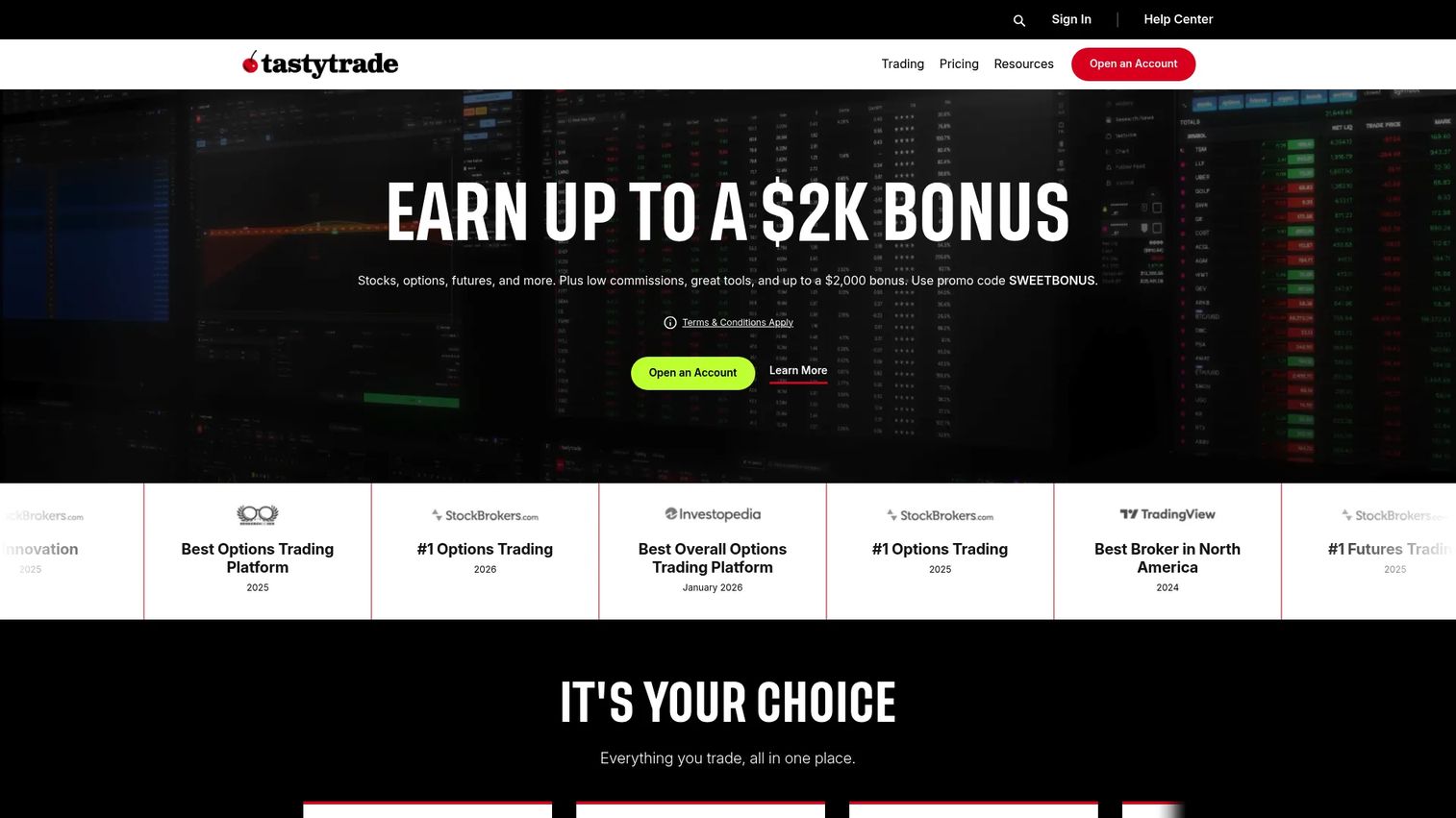
tastytrade is an options-focused brokerage built around probability-based trading, strategy analysis, and education. Its commission structure is designed specifically for options traders: $1 per contract to open, capped at $10 per leg, and $0 to close. Strategy builder, smart trade tracking, and 10-plus years of options backtesting data support traders who think in terms of defined-risk and undefined-risk structures. Stocks, ETFs, futures, and crypto are also supported.
Best for: Options traders who want a strategy-first platform built around derivatives workflow and education.
Key features
- Options strategy builder and smart trade tracking
- $1/contract to open, $10 max per leg, $0 to close
- Options backtesting with 10+ years of data
- Visual portfolio risk analysis
- E-mini and Micro E-mini futures access
Why choose tastytrade: Choose tastytrade when options are the center of the account. The platform is purpose-built for derivatives traders. For investors who primarily want mutual funds, broad retirement account tools, or banking integration, it is not the natural fit.
tastytrade pricing: Stocks and ETFs trade at $0 per trade. Stock and ETF options cost $1 per contract to open with a $10 maximum per leg; closing is $0 per contract. E-mini futures are $1 per contract for opening and closing. Micro E-mini futures are $0.75 per contract for opening and closing. Exchange, clearing, and regulatory fees apply.
10. SoFi Invest
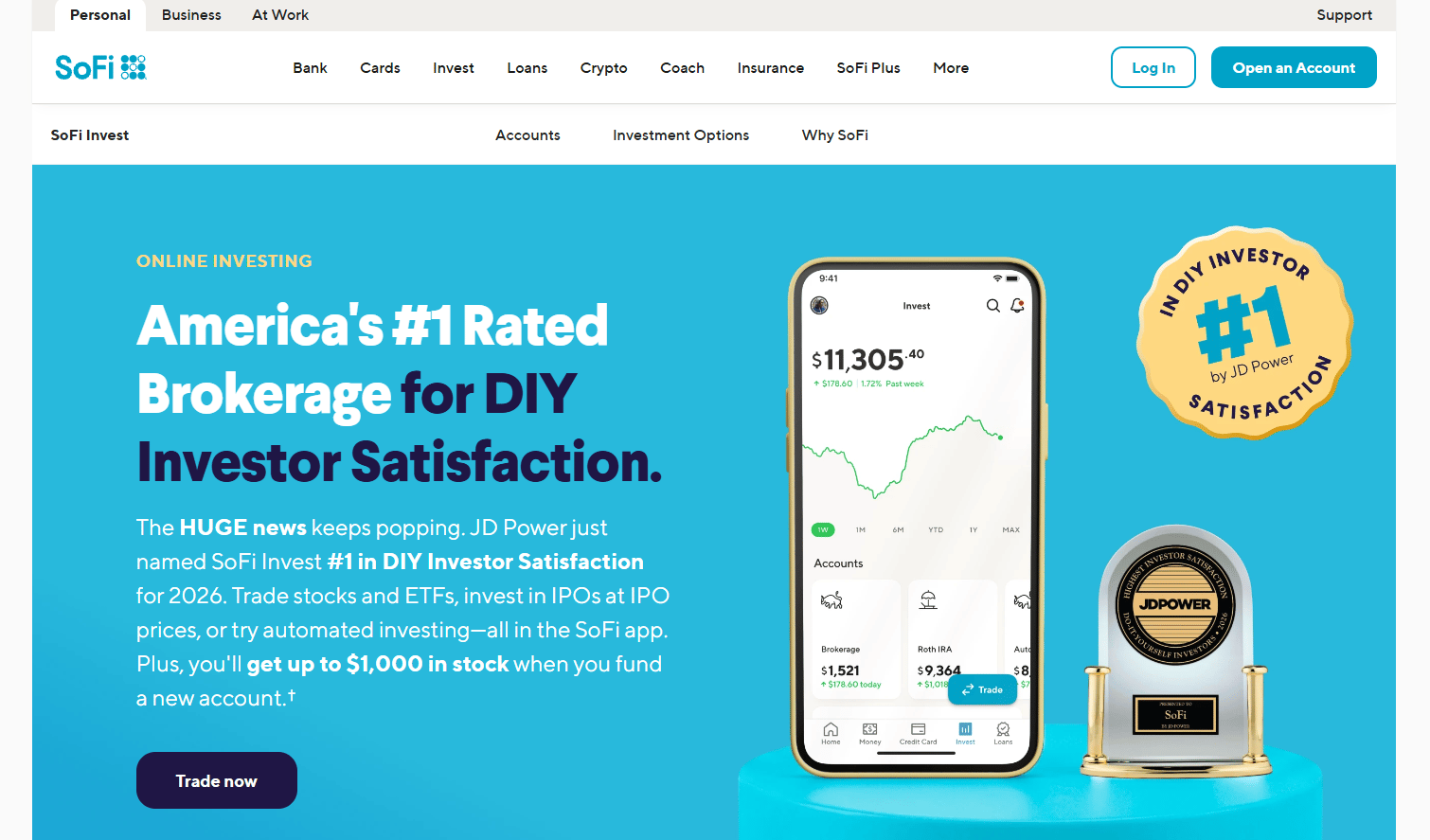
SoFi Invest is an investing product inside SoFi's broader personal finance app, which also covers banking, lending, and financial planning. Self-directed accounts require a $5 minimum to begin investing, with no opening or annual fee. The robo-advisor option charges 0.25% annually with a $50 minimum. Fractional shares, IPO investing, and margin trading are available. The appeal is consolidation: Banking, investing, and borrowing in one app without managing separate relationships.
Best for: Beginners and individuals who want investing, banking, and financial planning in a single app with low minimums.
Key features
- Self-directed investing in stocks, ETFs, and options
- Robo-advisor with automatically managed ETF portfolios (0.25%/year)
- Fractional shares and IPO investing access
- $5 minimum to begin self-directed investing
- Part of a broader banking and lending app
Why choose SoFi Invest: Choose SoFi Invest when fewer financial apps and simpler investing defaults matter more than advanced trading tools. Active traders who need deep options analysis, futures access, or professional charting should compare it against dedicated platforms before deciding.
SoFi Invest pricing: Self-directed accounts have a $0 opening fee, $0 annual fee, and require $5 to begin investing. The robo-advisor charges 0.25% annually with a $50 minimum to begin. Additional transaction and service fees may apply.
Considerations when choosing brokerage trading platforms
Total cost beats headline commissions
Commission-free stock and ETF trading does not mean free. Options contracts typically carry a per-contract fee ($0.50 to $0.80 is common for active traders; standard is $0.65). Margin rates, futures commissions, bond markups, mutual fund transaction fees, and market data subscriptions add up. Build a personal cost model based on what you will actually trade before comparing advertised pricing.
Match tools to your actual behavior
An advanced desktop platform is only worth the complexity if you use it. If you check positions twice a week and place limit orders on ETFs, a clean web and mobile interface outperforms a tool built for algorithmic options traders. Be honest about trading frequency and tool usage before choosing a platform that requires setup investment.
Check how uninvested cash is handled
Founders and operators often hold meaningful cash balances in brokerage accounts. Sweep yield, money market fund access, CD availability, transfer speed to checking, and whether higher yields require manual action all affect real returns. These details are rarely featured in platform marketing and change without notice. Check the current sweep rate and your alternatives before funding a large balance.
Verify product access before funding
Not every platform supports the same assets. Futures, international equities, specific mutual fund families, bonds, crypto, and fractional shares all vary by platform and account type. Some require separate approvals (options, margin, futures). Confirm access, eligibility requirements, and applicable fees before moving assets.
Pressure-test support and reporting
Support quality shows up in edge cases: A stuck transfer, a missing tax form, a margin call at 7pm. Check phone support hours, chat response times, and whether the platform has branch access if that matters to you. Review what tax documents look like, how lot-level reporting works, and what security controls are available for account permissions.
Conclusion
The best brokerage trading platform isn't the one with the longest feature list. It's the one that fits your investing behavior, asset mix, cash needs, and tolerance for admin.
Charles Schwab is the strongest default for investors who want one broad relationship covering retirement accounts, active trading, and cash management. Fidelity is the standout for long-term accounts where research depth, fund selection, and clean reporting matter most. Interactive Brokers, TradeStation, and tastytrade fit active and advanced traders who can work with complex platforms. Robinhood, Webull, and SoFi Invest serve mobile-first or simpler workflows. Merrill Edge and E*TRADE make sense when an existing banking relationship or Morgan Stanley ecosystem access drives the decision.
Shortlist two platforms, price your actual trading behavior against their fee schedules, and open the account that creates the least admin for the way you invest.
If you're looking for related financial infrastructure comparisons, our guide to brokerage management software covers operational tooling for brokerage firms, and our account management software roundup is worth reviewing for teams managing client accounts at scale.
FAQs
A brokerage trading platform is the web, desktop, and mobile software and account infrastructure used to research investments, place trades, manage uninvested cash, and monitor a portfolio. Most major platforms cover stocks and ETFs at minimum, with options, futures, mutual funds, bonds, and crypto available depending on the broker.
Beginners generally benefit from a simple mobile interface, strong education resources, fractional share access, low fees, and responsive support. Platforms with low or no account minimums reduce friction for first-time investors. Robinhood and SoFi Invest are frequently cited for beginner accessibility; Fidelity and Schwab serve beginners who also want depth as their portfolios grow.
Active traders should compare order types, margin rates, market data fees, options contract pricing, futures access, API availability, and desktop platform stability. Interactive Brokers, TradeStation, and tastytrade are purpose-built for high-frequency or complex trading workflows. Advanced platforms require learning investment; factor that into the decision.
Many platforms offer $0 online commissions on U.S.-listed stocks and ETFs. Other costs remain: Options contracts carry a per-contract fee (typically $0.50 to $0.80 for active traders), margin borrowing carries interest, futures contracts carry commissions, and bond trades often include markups. Market data subscriptions, account transfer fees, and foreign transaction fees are additional cost lines to check.
Founders should prioritize low ongoing admin, strong tax reporting, reliable support, clean cash management, security controls, and account consolidation. A platform that creates weekly friction to monitor is a bad fit regardless of features. Separate personal investing decisions from any company treasury or cap-table considerations, and consult a licensed professional for advice on complex personal finance situations.
Evaluate mobile apps on order entry reliability, charting quality, options chain access, biometric login, alert customization, and support reachability from within the app. Robinhood, Webull, and E*TRADE are frequently cited for strong mobile experiences. Fidelity and Schwab have improved their mobile apps significantly and are solid for investors who primarily use the desktop but need mobile access.
Some platforms support multiple asset classes in one account, but access varies by platform, account type, and eligibility approval. Interactive Brokers offers the broadest multi-asset coverage. Futures require separate approval at most brokers. Crypto availability has changed at several platforms over recent years. Always verify current product access, state restrictions, approval requirements, risk disclosures, and applicable fees before funding.
Build a personal cost model based on what you will actually do: Expected monthly trade count, options contracts, margin borrowing level, cash balance, fund purchases, data subscriptions, and account transfers. Comparing advertised commissions alone misses the fees that often drive total cost higher. Options contract fees, margin rates, and sweep yield together can outweigh the difference between $0 and $0.65 per stock trade for most investors.