

A letter of credit sits in someone's inbox for three days. A guarantee waits on a manual document check. A reconciliation break surfaces a week after the shipment cleared. Trade operations still run on email threads, spreadsheets, and PDFs stitched across time zones, currencies, and regulators.
That friction is expensive. Nearly 74% of financial institutions have now adopted automated trade finance workflows, and 68% use cloud-based platforms to manage trade operations, according to Global Growth Insights (2025). The market is moving because manual processing does not scale across geographies.
The problem is not awareness. Most banks and corporate treasury teams already know they need a digital trade finance platform. The harder question is fit. Should you buy an end-to-end system that covers every instrument, or a segment-specific tool built for one workflow? How much does compliance automation matter against integration depth? Where does straight-through processing actually pay off?
This guide is a decision framework, not a ranking. It sorts trade finance software providers by scope, deployment model, compliance posture, and working capital use case, so you can match a platform to whether you are a bank, a corporate, or a network operator.
What's inside
This guide is for bank trade finance leaders, corporate treasury operators, and fintech teams evaluating digital trade finance solutions. We selected platforms on the criteria that decide real deployments.
- Instrument coverage: letters of credit, guarantees, collections, and supply chain finance
- Automation depth: straight-through processing and trade finance workflow automation
- Integration flexibility: ERP, core banking, SWIFT, and API integrations
- Compliance posture: sanctions screening, audit trails, role-based access
- Deployment model: cloud-native, SaaS, on-premises, or hybrid
You will compare end-to-end platforms against segment-specific tools, then see which fits a bank versus a corporate.
TL;DR
- Best overall for large banks: Finastra, for broad end-to-end trade and supply chain finance.
- Best for modular bank workflows: Oracle, for cloud-native, multi-entity trade lifecycle support.
- Best for corporate digitization and trade portals: Comarch, for front-end and customer-facing workflows.
- Best for flexible deployment and integration-heavy teams: HES FinTech, for open APIs and cloud or on-prem builds.
- Best for network-style trade collaboration: Komgo, for multi-bank connectivity and document exchange.
- Best for working capital optimization and visibility: Mitigram, for financing demand meeting provider access.
- Best for guarantee and documentary specialization: Surecomp, for mature trade finance operations.
The right pick depends on breadth versus specialization, with compliance and integration as the non-negotiables underneath both.
What is trade finance software?
Trade finance software is a platform that manages international trade instruments and the workflows behind them, from issuance through settlement, across multiple currencies, entities, and jurisdictions. It replaces manual document handling with structured, trackable processing.
Core capabilities include:
- Letters of credit: issuance, amendment, and document examination
- Guarantees management: bonds, standby LCs, and demand guarantees
- Documentary collections software: clean and documentary collection workflows
- Supply chain finance software: payables and receivables financing programs
- Compliance and sanctions checks: automated screening against watchlists
- Transaction tracking: real-time status across the trade lifecycle
- Integration: connections to ERP, core banking, and document systems
The split between bank-led and corporate-led platforms matters. Bank-led trade finance solutions for banks handle issuance, correspondent messaging, risk, and correspondent workflows at scale. Corporate-led trade finance solutions for corporates focus on request initiation, financing visibility, and treasury control.
Digital trade finance solutions improve visibility because status stops living in inboxes. Straight-through processing means an instrument moves from request to booking with fewer manual touchpoints, which is where processing time and error rates drop.
When to use trade finance software
Automate manual trade operations
Use trade finance workflow automation when documents, approvals, and status updates still move through email or spreadsheets. If a guarantee amendment requires three people to forward the same PDF, you are paying for coordination, not processing. AI-assisted document checking and structured workflows cut that coordination cost.
Support multi-jurisdiction trade flows
Use a platform when one system must handle multiple currencies, regulations, and legal entities. Multi-jurisdiction operations break spreadsheets fast. A single platform enforces consistent controls across entities while adapting to local regulatory requirements and sanctions regimes.
Improve working capital and liquidity visibility
Use trade finance software when finance teams need clearer control over receivables, payables, and financing options. Working capital finance decisions depend on knowing what is outstanding, what is financeable, and at what cost, in real time rather than at month-end.
Comparison table
This table compares bank-focused and corporate-focused trade finance software providers side by side. Most vendors in this category use custom pricing, so confirm figures directly where public data is not shown. Ratings reflect current vendor listings where a value was verifiable.
| # | Product | Best for | Key use case | Pricing | G2 rating |
|---|---|---|---|---|---|
| 1 | Finastra | Global banks | End-to-end trade and supply chain finance | Custom | Not listed |
| 2 | Comarch | Banks digitizing front-end | Corporate portals and document handling | Custom | 4.4/5 |
| 3 | Oracle | Enterprise banks | Cloud-native trade lifecycle | Free tier, then pay-as-you-go | Not listed |
| 4 | HES FinTech | Integration-heavy teams | Configurable lending plus trade workflows | Custom | 4.8/5 |
| 5 | Surecomp | Trade finance specialists | Guarantees and documentary workflows | Free Starter, higher tiers on quote | Not listed |
| 6 | Komgo | Network-heavy ecosystems | Multi-bank trade collaboration | Custom | Not listed |
| 7 | Mitigram | Working capital optimization | Financing demand meets provider access | Free and paid plans | Not listed |
Best 7 trade finance software platforms for 2026
1. Finastra
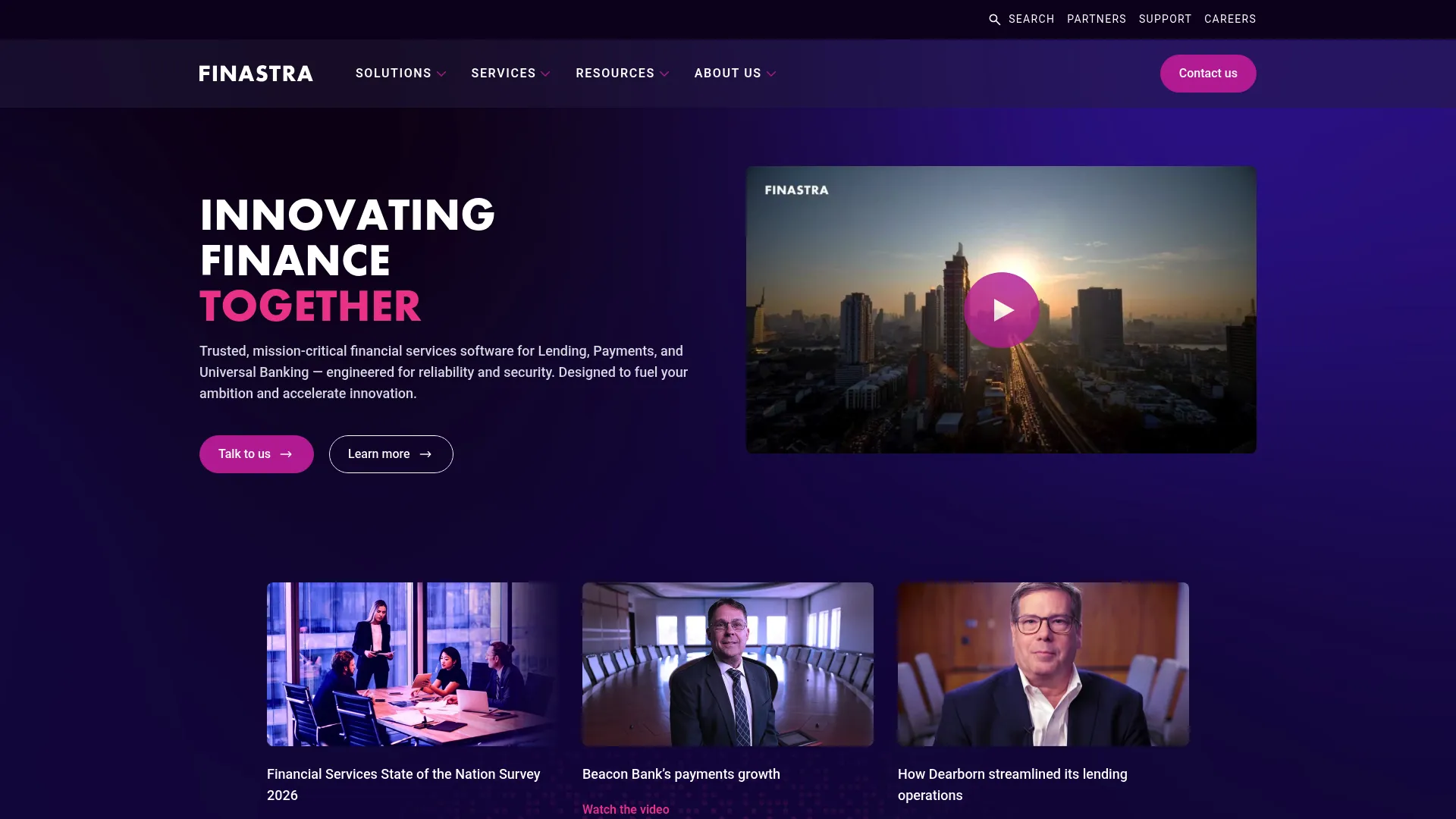
Finastra is a global financial software provider covering banking, lending, payments, and treasury, with Trade Innovation as its core trade finance platform. It targets large banks that need broad instrument coverage across a single system. The platform emphasizes end-to-end trade processing, supply chain finance, interoperability, and AI-assisted document support, and it carries analyst and award recognition in the category.
For a global bank running letters of credit, guarantees, and collections across dozens of markets, Finastra's breadth is the draw. One platform handles issuance, correspondent messaging, and risk workflows without stitching together point tools.
Best for: Global banks and large financial institutions needing end-to-end trade finance in one platform.
Key strengths
- Core banking, lending, and payments in one provider
- End-to-end trade and supply chain finance workflows
- AI-assisted document handling and support
- Interoperability across banking systems
Why choose Finastra: If you are a large bank consolidating fragmented trade systems, Finastra offers the widest coverage and the ecosystem depth to support multi-jurisdiction operations at scale.
Finastra pricing: Custom pricing. Finastra does not publish numeric pricing publicly and directs prospects to contact sales through its solution flows.
2. Comarch
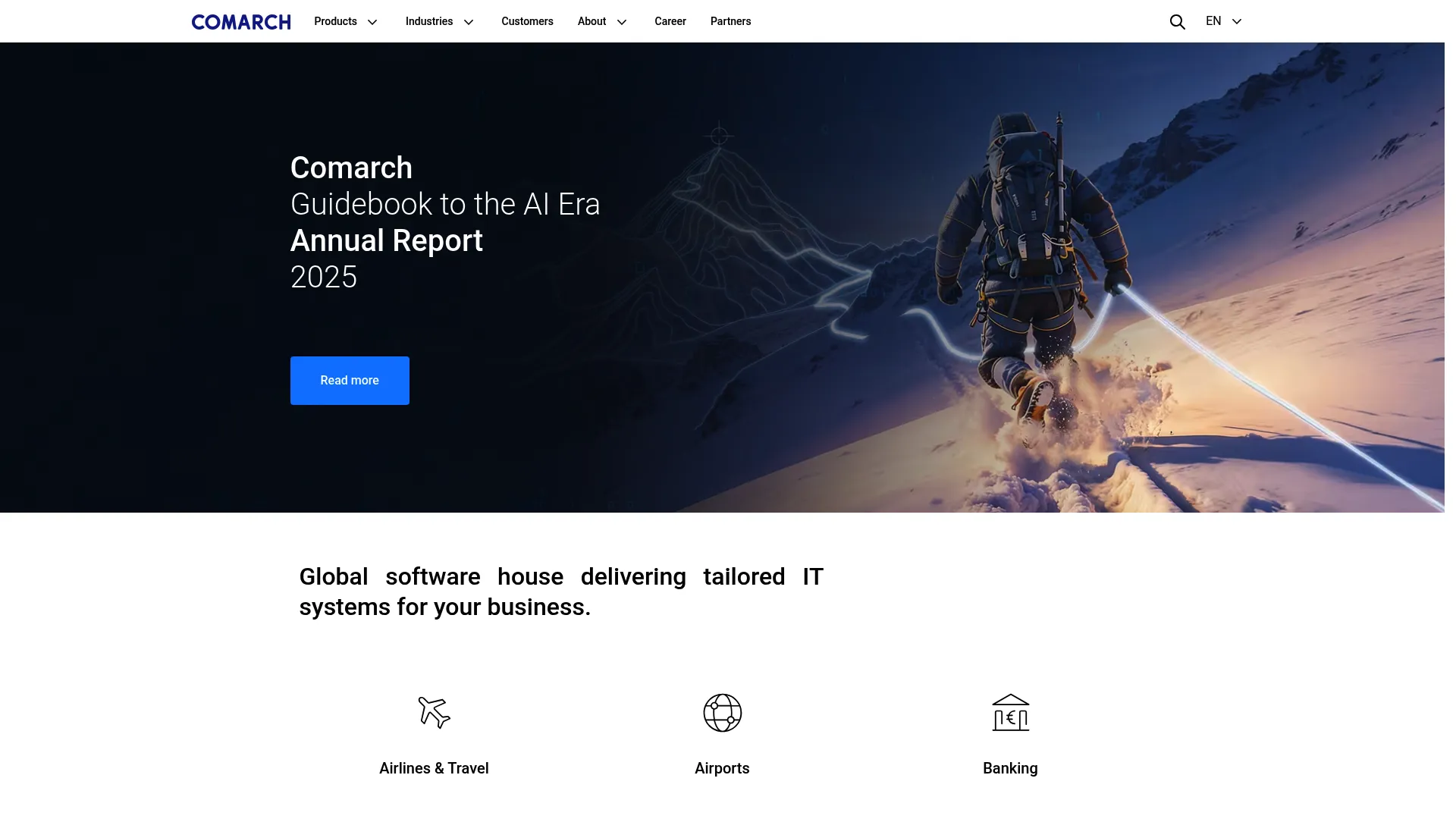
Comarch is a global IT solutions provider whose trade finance platform focuses on digitizing workflows for both banks and their corporate clients. It emphasizes customer-facing portals, transparency, document handling, and standards support. The portal-style access makes it a fit for institutions that want to move trade requests out of branches and into self-serve digital channels.
For a bank aiming to reduce branch dependency, Comarch puts trade finance requests, status, and documents in front of corporate clients directly. That front-end digitization shortens the request cycle and reduces manual intake.
Best for: Banks and institutions wanting front-end digitization and branch reduction for corporate trade clients.
Key strengths
- Customer-facing trade finance portals
- Document handling and workflow transparency
- Standards support for trade instruments
- Modular deployment across product lines
Why choose Comarch: Comarch suits institutions prioritizing the corporate-facing experience, where self-serve portals and transparency drive adoption more than deep back-office consolidation.
Comarch pricing: Custom pricing. Comarch does not expose a brand-wide public price and works from contact-based or model-based quotes. G2 lists Comarch at 4.4/5.
3. Oracle
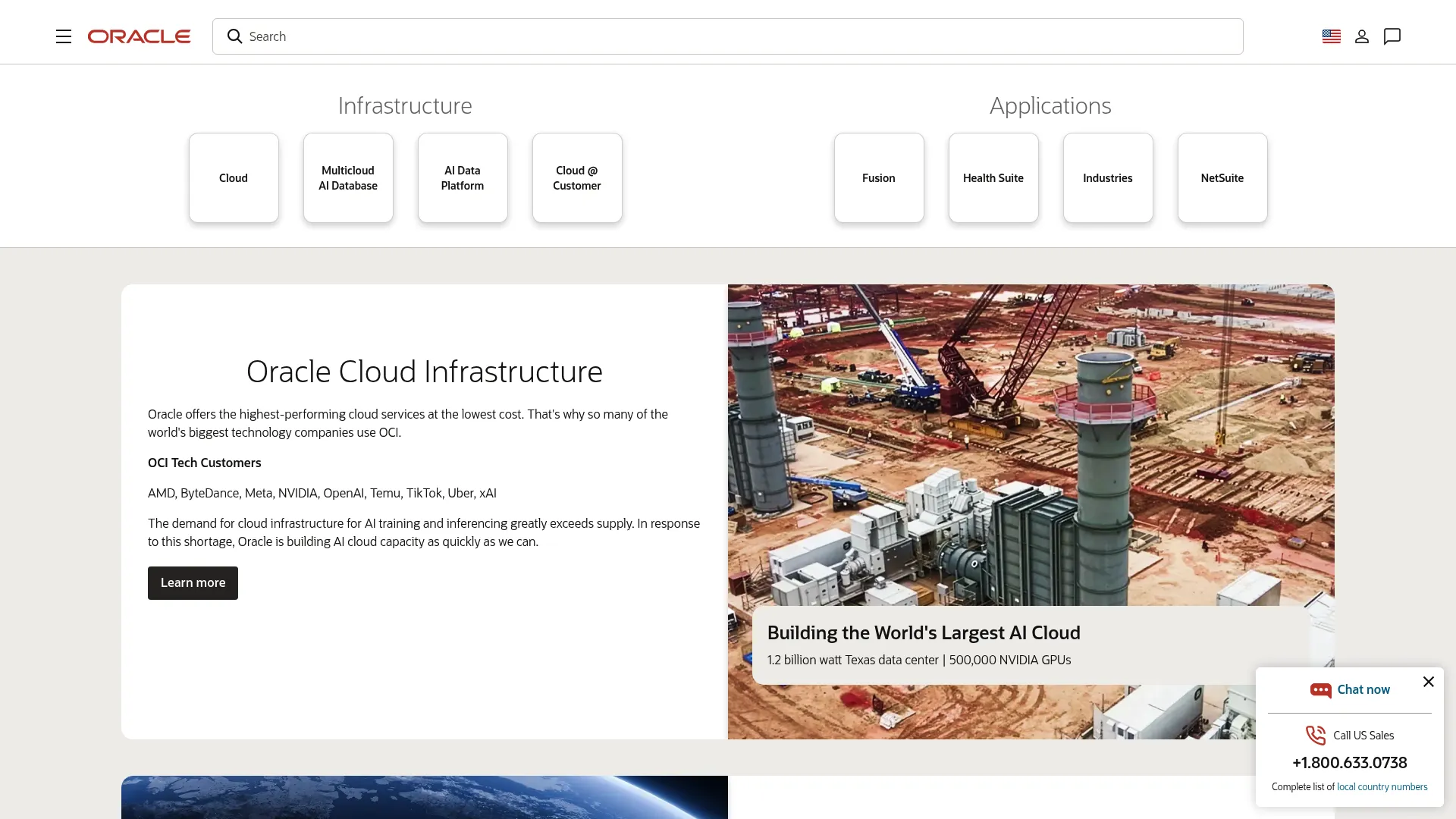
Oracle offers Oracle Banking Trade Finance Cloud Service as part of its enterprise software and cloud portfolio. The platform is cloud-native, with multi-entity and multi-currency support, automated workflows, real-time reporting, and modular deployment. Banks that want broad trade lifecycle coverage on enterprise-grade architecture are the core audience.
For an enterprise bank standardizing on cloud infrastructure, Oracle's modular approach lets teams deploy trade finance capabilities alongside databases and applications from one vendor. Real-time reporting and multi-entity support address multi-jurisdiction operations directly.
Best for: Banks needing broad trade lifecycle support on cloud-native, enterprise-grade architecture.
Key strengths
- Cloud-native architecture with 200+ OCI services
- Multi-entity and multi-currency trade support
- Automated workflows and real-time reporting
- Modular deployment across the trade lifecycle
Why choose Oracle: Oracle fits banks already invested in its stack, where trade finance sits within a broader cloud and data platform rather than as a standalone system.
Oracle pricing: Oracle Cloud Free Tier includes US$300 in credits for 30 days plus Always Free services with no time limit. Paid usage runs pay-as-you-go after free limits. Trade finance product pricing is quoted per deployment.
4. HES FinTech
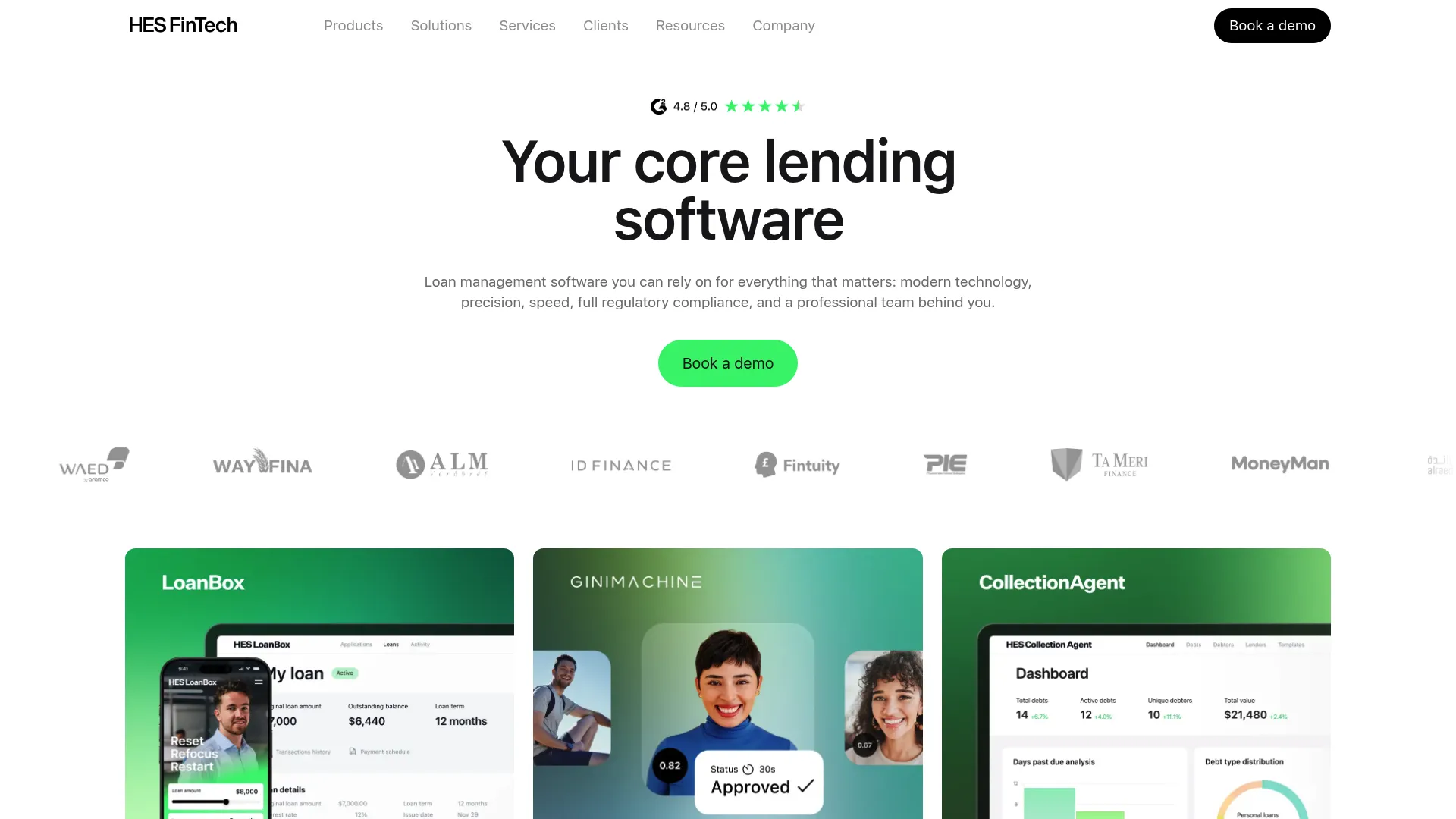
HES FinTech builds configurable lending and trade finance software, with LoanBox as its core platform for end-to-end loan and credit processing. The draw is deployment flexibility: open APIs, connectors, and cloud or on-premises options. For teams that run lending and trade workflows together and need deep customization, that flexibility matters more than a fixed feature set.
A bank or fintech with existing systems it cannot rip out will value the integration depth. Open APIs and sanctions or compliance integrations let HES FinTech slot into a stack rather than replace it.
Best for: Teams needing integration depth, customization, and combined lending plus trade workflows.
Key strengths
- Open API and connector-based integrations
- Cloud or on-premises deployment options
- Digital onboarding, KYC, and credit decisioning
- Loan servicing alongside trade workflows
Why choose HES FinTech: Choose HES FinTech when configurability and integration control outweigh out-of-the-box breadth, especially for teams blending lending and trade operations.
HES FinTech pricing: Custom pricing. HES FinTech does not list public prices; pricing depends on plan and features, and the vendor directs teams to contact sales. G2 lists HES FinTech at 4.8/5.
5. Surecomp
Surecomp is a trade finance specialist serving corporates, banks, and fintechs, with RIVO as its collaboration platform. It focuses on trade finance processing, guarantees management, and documentary workflows, with paperless processing, open API access, and data-driven decision support. For institutions that want a mature, dedicated trade finance platform rather than a module inside a larger suite, Surecomp is built for the job.
Its specialization shows in the workflow depth for guarantees and documentary collections. Digital collaboration across counterparties keeps trade requests moving without manual handoffs.
Best for: Banks and corporates wanting a mature, specialized trade finance platform.
Key strengths
- Paperless trade finance processing
- Open API access for integrations
- Guarantees and documentary workflow depth
- Data insights and decision support
Why choose Surecomp: Surecomp fits teams that want a focused specialist for guarantees and documentary collections, with digital collaboration built into the workflow.
Surecomp pricing: RIVO offers a Starter plan free of charge for both corporates and financial institutions. Business and Enterprise plans are contact-for-pricing.
6. Komgo
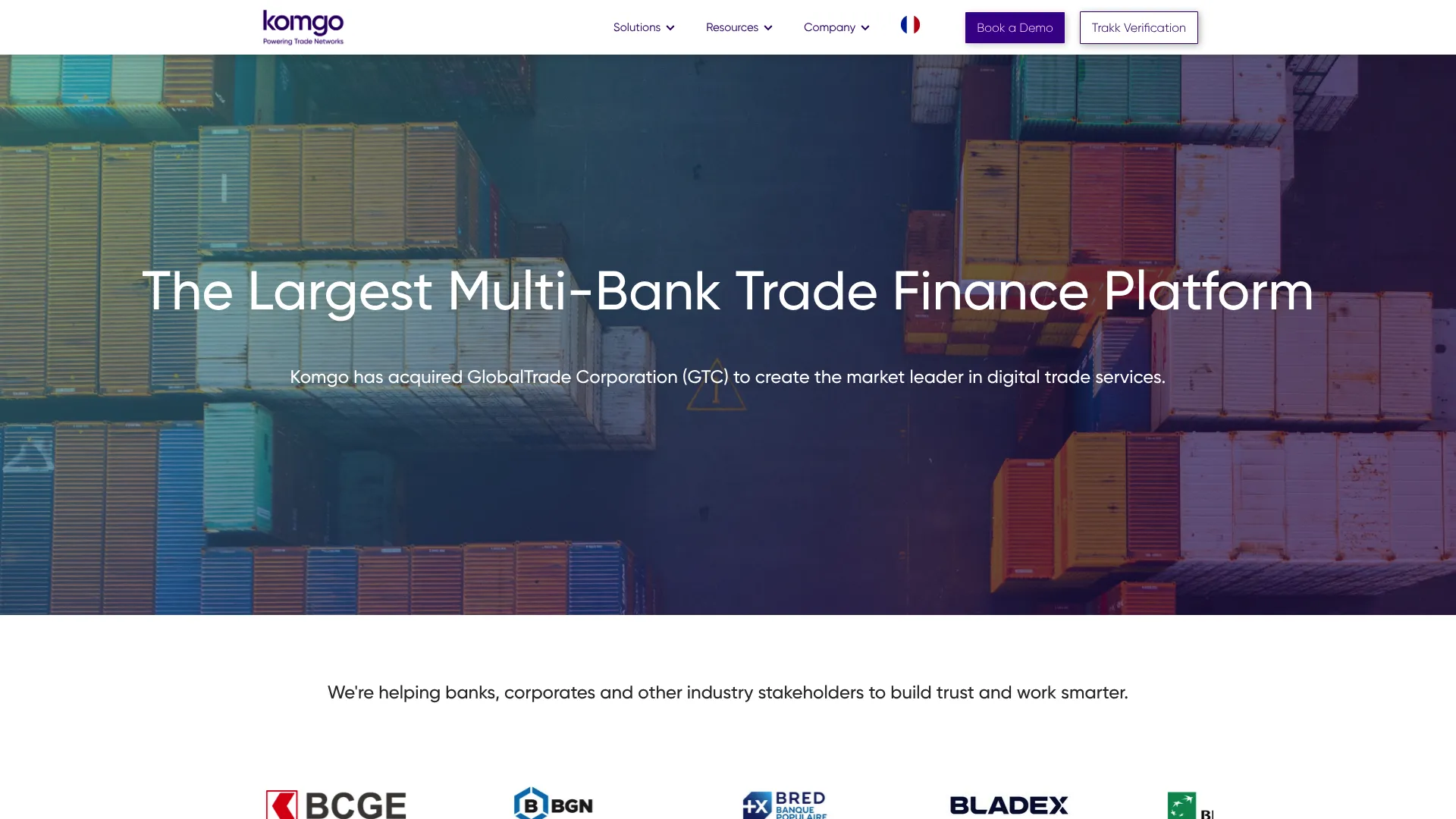
Komgo is a trade finance SaaS and network platform connecting corporates and financial institutions through multi-bank connectivity. It supports workflows for guarantees, letters of credit, and financing, with KYC-verified connectivity and digital document exchange. The network model fits commodity, trade, and ecosystem-heavy environments where counterparties need to collaborate securely.
For a corporate managing financing across multiple banks, Komgo centralizes the relationships and the documents. That collaboration layer gives visibility across counterparties that single-bank tools cannot.
Best for: Commodity, trade, and network-heavy ecosystems needing multi-bank collaboration.
Key strengths
- Multi-bank trade finance network
- Workflows for guarantees, LCs, and financing
- KYC-verified counterparty connectivity
- Digital document exchange
Why choose Komgo: Komgo suits teams whose trade finance runs across many counterparties, where network connectivity and document exchange matter more than a single-institution back office.
Komgo pricing: Custom pricing. Komgo does not publish public pricing on its site; contact the vendor for a quote based on network and usage requirements.
7. Mitigram
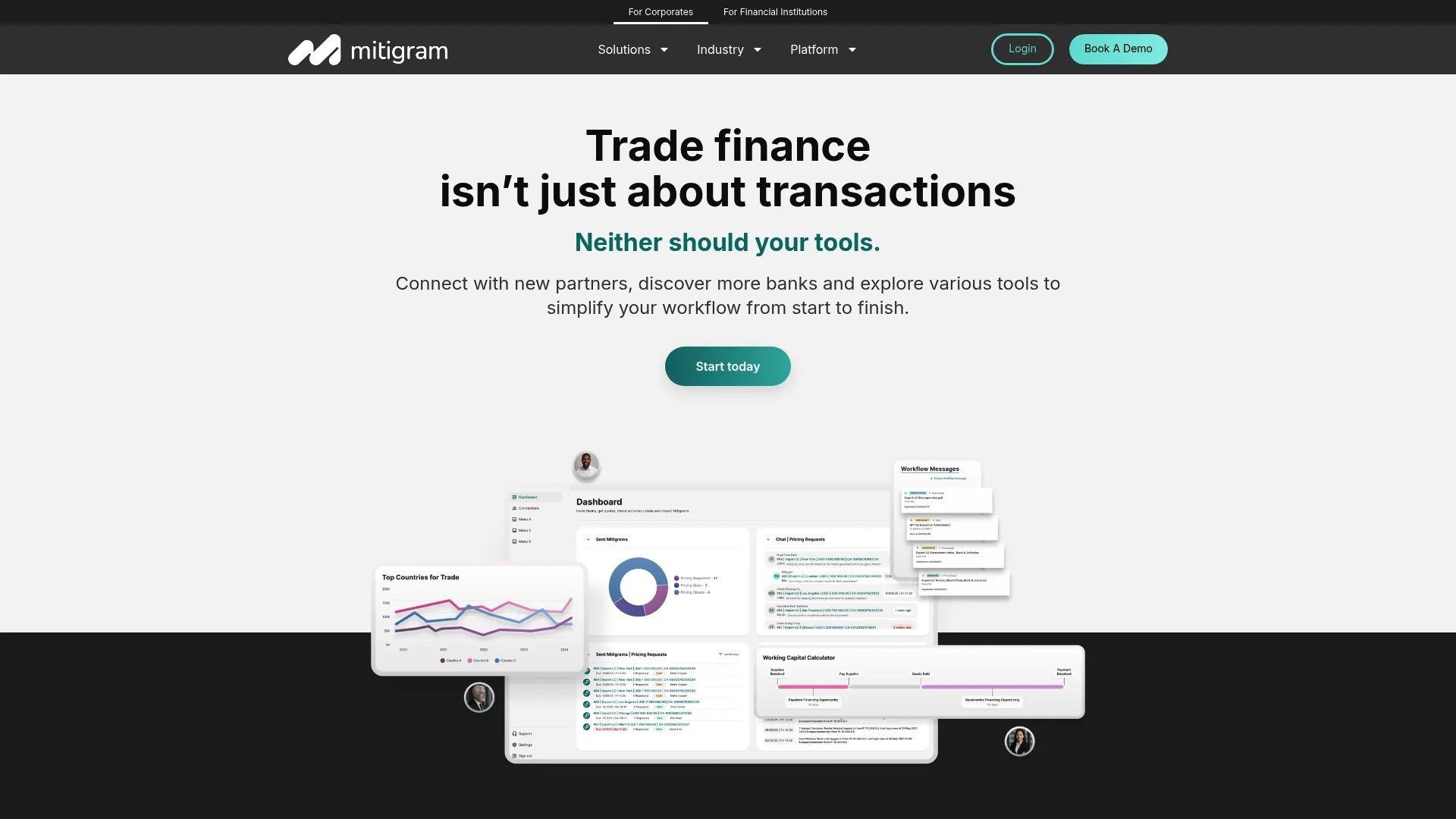
Mitigram is trade finance software for corporates and financial institutions, built around marketplace-style workflows that connect financing demand with provider access. It manages the trade finance lifecycle with AI-powered document upload and SWIFT, EBICS, and API connectivity. The platform is a fit for teams focused on working capital optimization and financing visibility.
For a corporate treasury team, Mitigram surfaces where financing is available and at what cost, then connects that demand to banks. That visibility supports working capital finance decisions in real time rather than through manual outreach.
Best for: Corporates and banks connecting financing demand with provider access for better working capital.
Key strengths
- AI-powered dynamic document upload
- Trade finance lifecycle management
- SWIFT, EBICS, and API connectivity
- Financing demand and provider matching
Why choose Mitigram: Mitigram fits teams that treat trade finance as a working capital problem, where connecting demand to competitive provider pricing drives the value.
Mitigram pricing: Mitigram offers free and paid plans, with pricing presented in its ordering flow rather than published on the site. Contact the vendor for current figures.
Considerations
Instrument coverage
Confirm whether the platform supports letters of credit, guarantees, collections, and supply chain finance, or only a subset. An end-to-end system covers all four; a specialist may go deeper on one. Map coverage to the instruments your desk actually processes, not the full theoretical list.
Integration depth
Check ERP, core banking, SWIFT, and API integrations before you commit. A platform that cannot connect to your systems of record creates the same manual re-keying you are trying to remove. Ask which specific systems the vendor has integrated in production, not which it can integrate in theory.
Compliance and risk controls
Verify sanctions screening, audit trails, role-based access, and configurable controls. Trade finance risk management lives in these details. Compliance automation only helps if screening runs against current watchlists and the audit trail satisfies your regulators across every jurisdiction you operate in.
Deployment model
Compare cloud-native, SaaS, on-premises, and hybrid options against your IT and regulatory constraints. Some jurisdictions require data residency that rules out certain cloud regions. Cloud-based deployment now accounts for 64.2% of trade finance software spend in 2025, per MarketIntelo (2024), but the right model is the one your compliance team can sign off.
Scalability across jurisdictions
Make sure the platform handles multi-entity, multi-currency, and multi-language operations if you run across borders. A tool that works for one entity can stall when a second legal entity, currency, or regulator enters the picture. Test the multi-jurisdiction scenario during evaluation, not after.
Total cost and implementation effort
Assess licensing, integration, migration, and configuration together, not as separate line items. Most trade finance software providers use custom pricing, so the sticker figure tells you little. Ask for a total implementation estimate that includes the integration and data migration work your team will own.
Conclusion
The strongest pick depends on who you are, not which vendor tops a list. For a global bank consolidating fragmented trade systems, Finastra and Oracle offer the end-to-end breadth and enterprise architecture to run letters of credit, guarantees, and collections at scale. For banks digitizing the corporate-facing experience, Comarch puts trade workflows in front of clients through self-serve portals.
For teams that need integration control, HES FinTech's open APIs and flexible deployment fit stacks that cannot be replaced wholesale. Surecomp is the specialist for guarantees and documentary depth. Komgo wins where trade runs across many counterparties, and Mitigram fits corporates treating trade finance as a working capital optimization problem.
The decision axis is breadth versus specialization, with compliance and integration as non-negotiables under both. Shortlist two or three platforms that match your buyer type, then run each through a real multi-jurisdiction scenario with your own instruments before you sign.
FAQs
The terms overlap in practice. Trade finance software usually refers to the application that processes instruments, while a trade finance platform implies a broader system that also connects counterparties, documents, and networks. Most trade finance software providers now market their tools as platforms because buyers expect connectivity, not just processing.
For large banks, Finastra and Oracle offer the widest end-to-end coverage and enterprise architecture. Comarch fits banks prioritizing corporate-facing digitization, and Surecomp suits banks wanting guarantee and documentary specialization. The best trade finance solutions for banks depend on whether you need breadth, front-end portals, or workflow depth.
Corporates focused on working capital and financing visibility tend to fit Mitigram, which connects financing demand with provider access. Komgo suits corporates managing multi-bank relationships. Trade finance solutions for corporates should prioritize request initiation, financing visibility, and treasury control over back-office issuance.
At minimum, evaluate coverage for letters of credit software, guarantees management, documentary collections software, and supply chain finance software. Not every team needs all four. Map the instruments your desk processes today, then confirm the platform handles them in production rather than on a roadmap.
Integrations decide whether the platform removes manual work or adds another silo. Check ERP, core banking, SWIFT, and API integrations against your systems of record. A platform that cannot connect forces the same re-keying you are trying to eliminate, so treat integration depth as a gating criterion.
Yes. Most platforms include sanctions screening, audit trails, and role-based access as core compliance automation. The quality varies. Confirm that screening runs against current watchlists, that the audit trail satisfies your regulators, and that controls are configurable across every jurisdiction you operate in.
End-to-end platforms cover the full range of instruments and the trade lifecycle in one system, which suits large banks consolidating fragmented tools. Segment-specific software goes deeper on one workflow, such as guarantees or supply chain finance. The trade-off is breadth versus depth, and the right call depends on your instrument mix.
It varies widely by scope, deployment model, and integration count. Cloud-native and SaaS deployments move faster than on-premises builds that touch core banking. Ask vendors for a realistic timeline that includes integration and data migration, and pressure-test it against a similar institution's reference deployment.
Ask the vendor to run your actual instruments through a live multi-jurisdiction scenario, not a scripted happy path. Push on how sanctions screening, audit trails, and role-based access behave under real conditions. Confirm which specific integrations are already in production, and where straight-through processing genuinely applies versus where manual steps remain.
Yes. By centralizing outstanding receivables, payables, and financing options in real time, trade finance software gives treasury teams the visibility that spreadsheets cannot. Platforms built around working capital optimization, such as Mitigram, surface where financing is available and at what cost, supporting faster and better-informed decisions.